
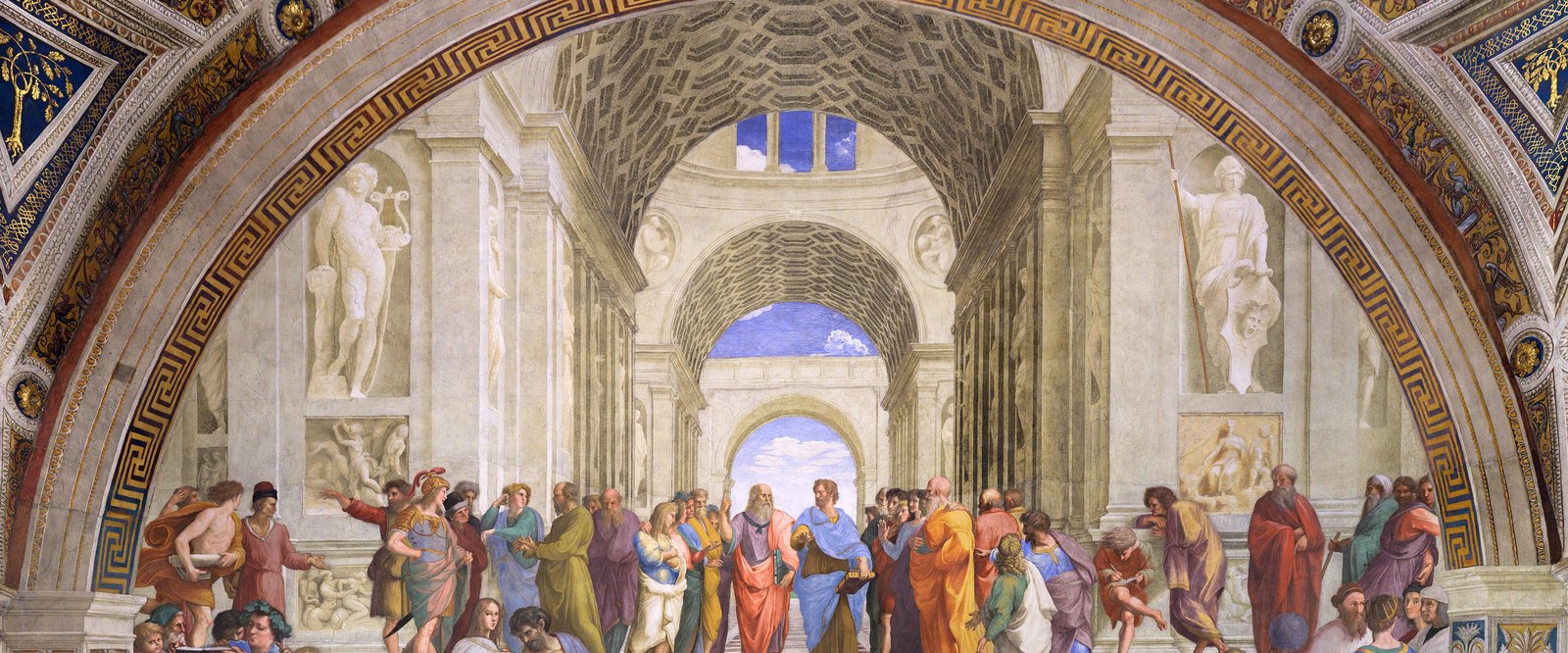
The Big Questions
Meaning, free will, death and whatever comes after it, and the nature of reality itself. This wing is where the questions almost everyone eventually asks in private get an honest, evidence-weighted hearing in public.
Does God Exist: The Arguments That Refuse to Die
Nine hundred years after Anselm the question is still open, and the arguments that keep coming back are the ones almost nobody can cleanly refute. Five families are set out here at their best: the cosmological, the ontological, the design argument and its move from the eye to the physical constants, Pascal's Wager, and the argument from religious experience. Each travels with the objection that has actually damaged it, and the objections carry their replies wherever one was found in print. The case against gets the same treatment, and it is larger than the problem of evil. What no section here does is announce a result, because the literature has not reached one.
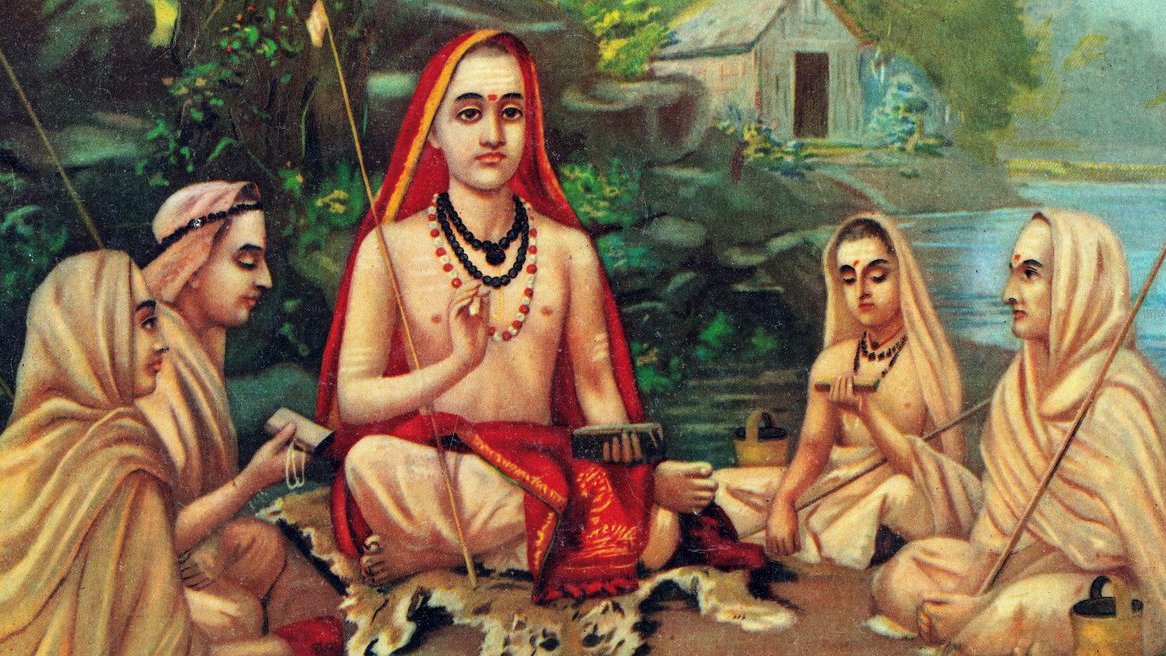
Non-Dualism: The Claim That You and the Universe Are Not Two
The name is negative on purpose: not two, which is not the same claim as one. Four traditions are set against one another here and they reached four different answers about what survives the refusal: consciousness for Advaita, nothing at all for Madhyamaka Buddhism, a process beyond description for Daoism, and a creator with a creation for Sufism. Whether they are saying one thing cannot be settled by comparing the doctrines, because the doctrines plainly disagree, and it cannot be settled by comparing the experiences either. One famous line attributed to Rumi is refused outright, and the quantum shortcut is refused with it.

Eternal Recurrence: Nietzsche's Test for a Life Worth Living
A demon puts a question in The Gay Science 341: this life again, an unlimited number of times, with nothing new in it. Whether that is a claim about the universe or a test applied to a single life is debated among scholars and is left open here. Nine passages are quoted with translator and locus, three translators of Nietzsche are named because they are not interchangeable, and the line about what does not kill a person is set beside what the 1911 English actually prints.
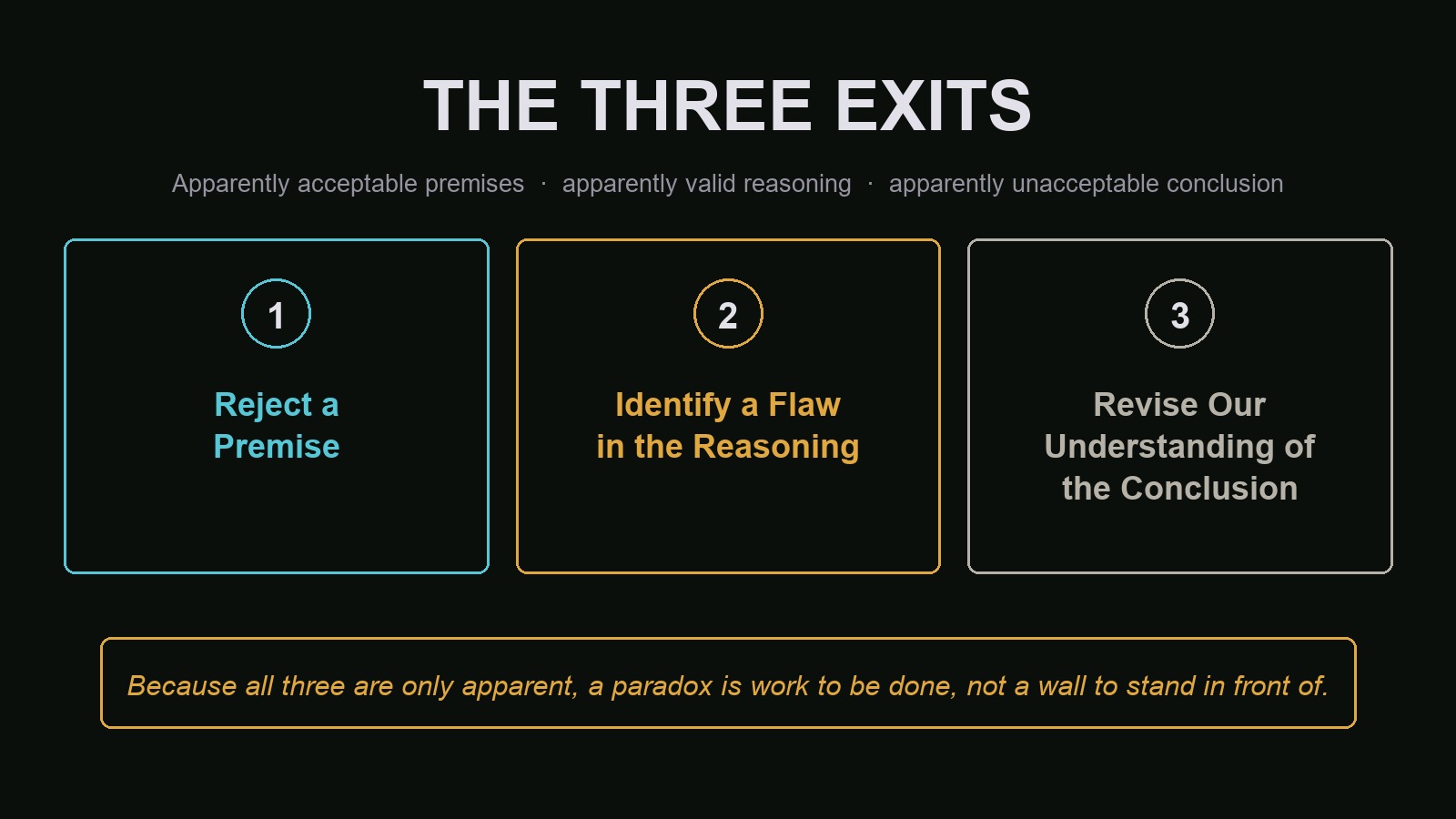
Paradoxes: What Is Settled, What Is Open, and What Is Neither
Two of these seven have accepted technical resolutions, four are genuinely open, and one derives no contradiction at all. This article says which is which case by case, states each argument in the form its own literature uses, and refuses both the claim that nobody has ever solved them and the claim that modern logic cleaned all of this up.
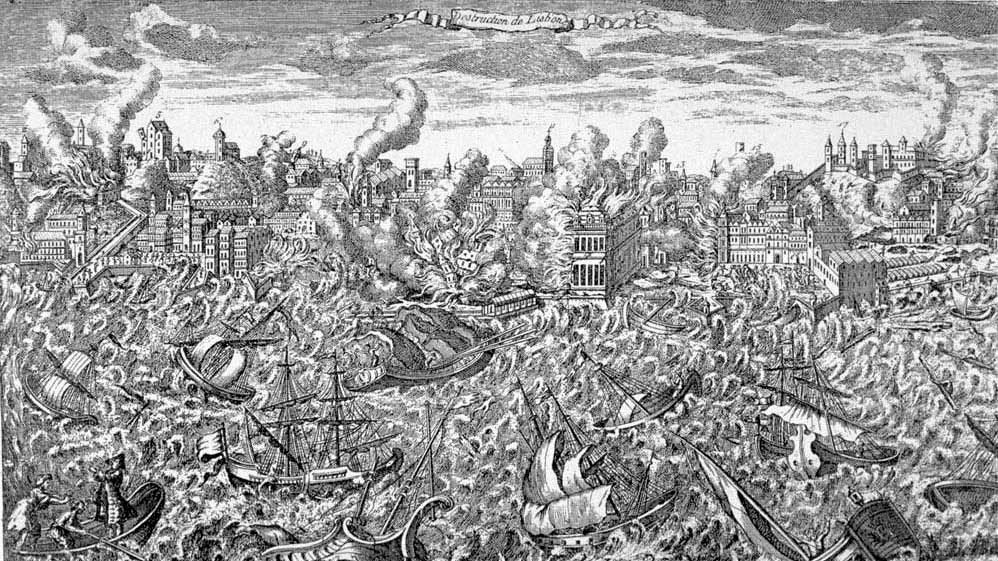
The Problem of Evil: One Argument, Two Forms, Seven Answers
Lactantius reports the argument in four branches around 313 to 315 CE and attributes it to Epicurus, and whether it is Epicurus's at all is disputed. Our own research file prints three branches inside quotation marks with no source named. What follows is one argument in two forms, seven answers to it, and two refusals that run in opposite directions: it is not established that suffering disproves God, and it is not established that any of the seven answers succeeds.
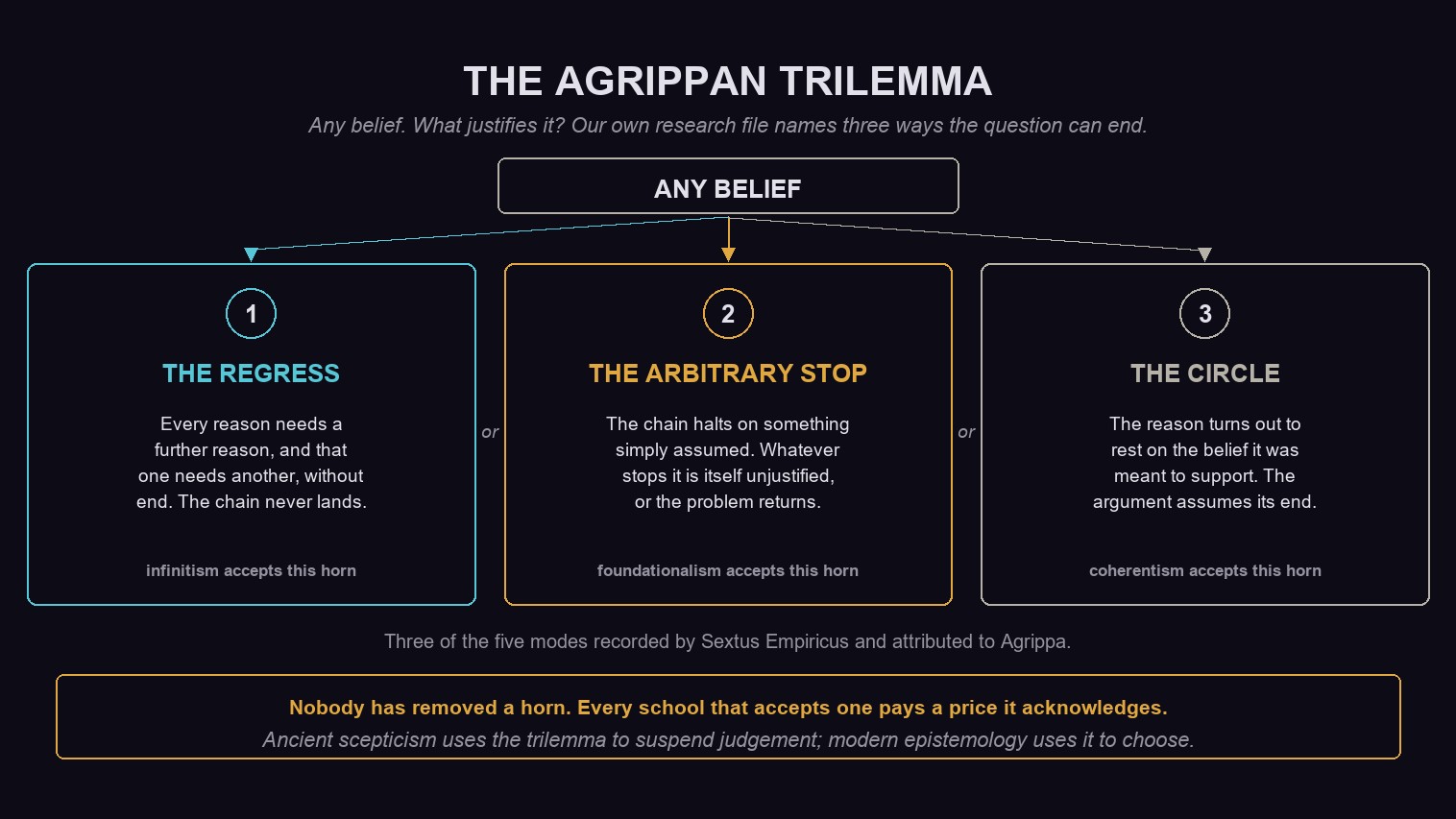
Radical Doubt: From Pyrrho to the Brain in a Vat
Ancient Pyrrhonism and Cartesian doubt are different projects, and the popular telling fuses them. Sextus suspends judgement in order to stop; Descartes doubts in order to start. Along the way this article corrects our own research file on which of Descartes's books actually contains the sentence he is remembered for, and refuses three quotations it could not source.
Existentialism: Condemned to Be Free
The name comes from a lecture in 1945, and most of the thinkers it collects either refused it or took it on reluctantly. The claim underneath is that a person arrives with no given nature, so the freedom left over is a sentence rather than a privilege: what it takes away is the excuse. Simone de Beauvoir answered from inside the tradition, arguing that a freedom with no means to exercise it is not yet freedom, and neither answer wins here. One of the four lines everyone quotes is refused outright, with the reason given, and a second is carried only in its shorter sourced form.

Is Time Real: The Block Universe and the Vanishing Now
Augustine said he knew what time was until somebody asked. McTaggart argued in 1908 that time is unreal, and the field has spent a century disagreeing about which premise to deny. Relativity removes the universal now, and Rietdijk and Putnam turned that into an argument that past, present and future are all equally real. Stein replied in the same journal one year later. Three positions are live, and this article crowns none of them.
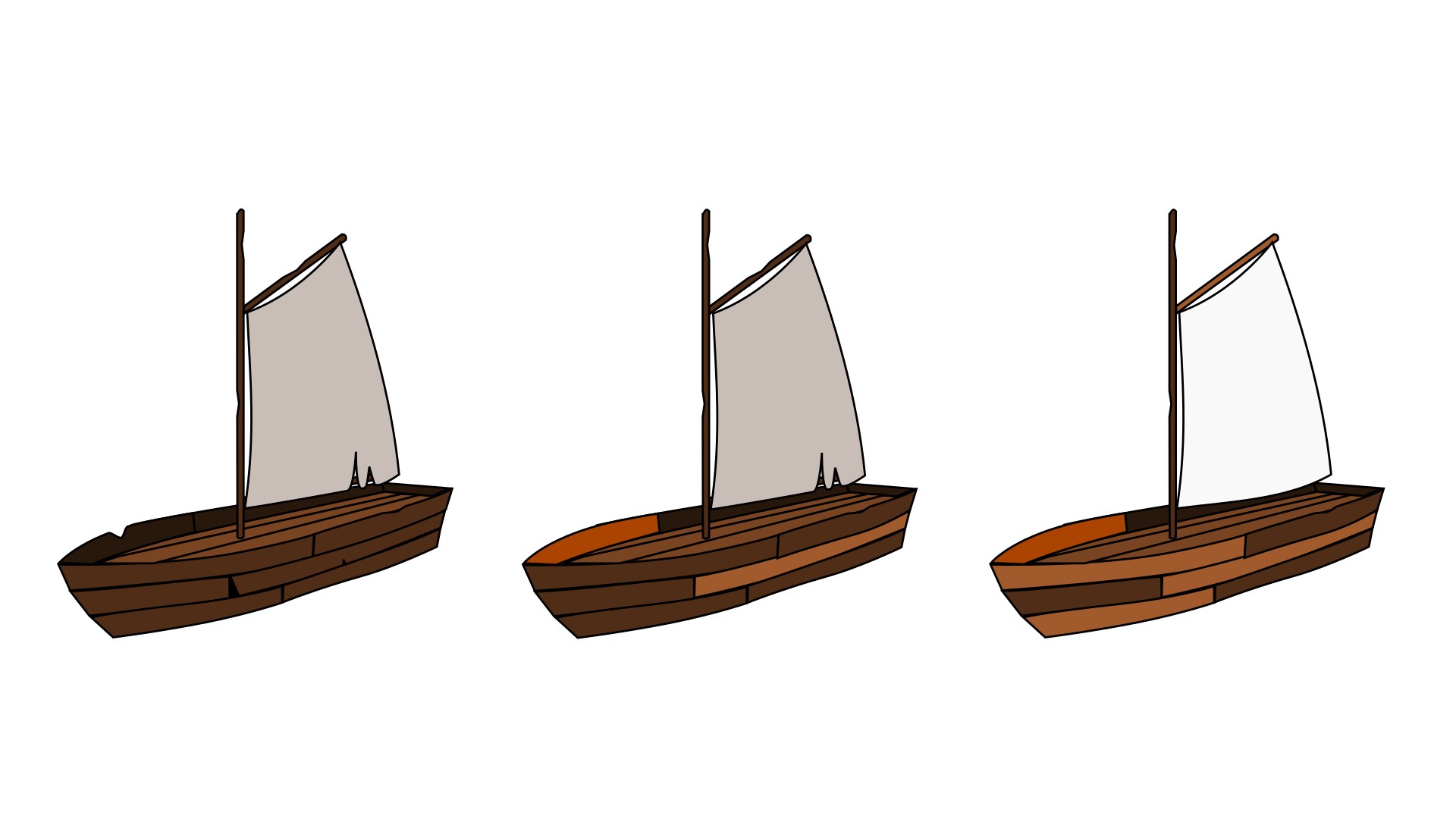
Personal Identity: The Puzzle of Whether You Are Still You
A ship has every plank replaced. A body replaces its molecules without being asked. Locke said the thread is memory, Reid pressed a case where that snaps, Hume looked inside and found nobody, and Parfit built a teletransporter to argue that identity is not what matters. Williams, Nozick and Olson each answer back, a survey of philosophy faculty in 2020 found no consensus, and this article does not tell a reader which one is right.
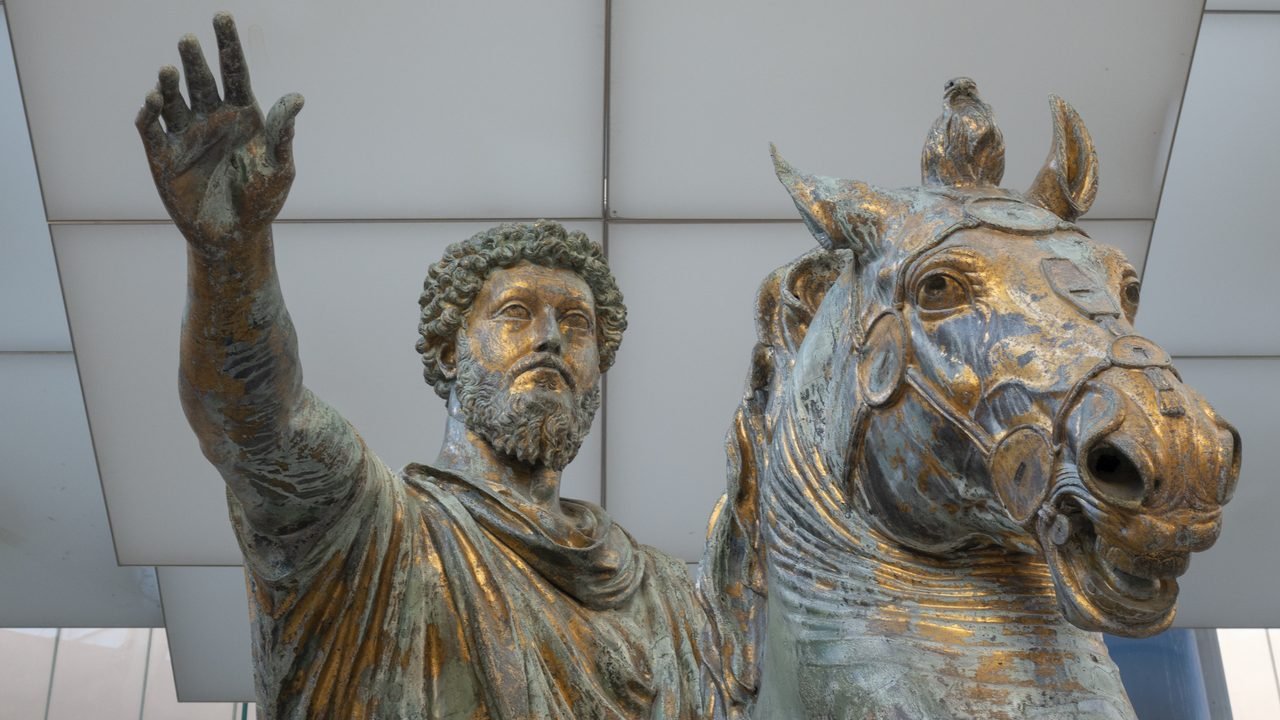
Stoicism: The Ancient Art of Facing Fate and Death
A merchant from Cyprus, a man born a slave, a senator compelled to kill himself, and an emperor writing to himself on a war frontier. The Stoic claim that only a person's own judgment is theirs rests on a cosmology that modern versions mostly drop, and nine widely repeated Stoic lines and tags are refused here, one at a time, with the reason for each.
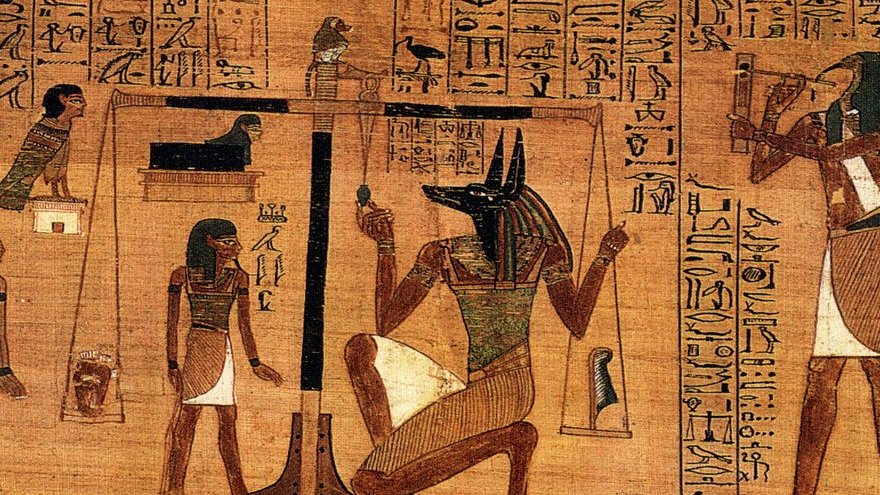
Death and the Afterlife: How Every Culture Answered the Unanswerable
Judgment, rebirth, joining the ancestors, or simply ending. Every culture has answered death, in a handful of recurring shapes. Here is the map, and the honest limit of what we can know.
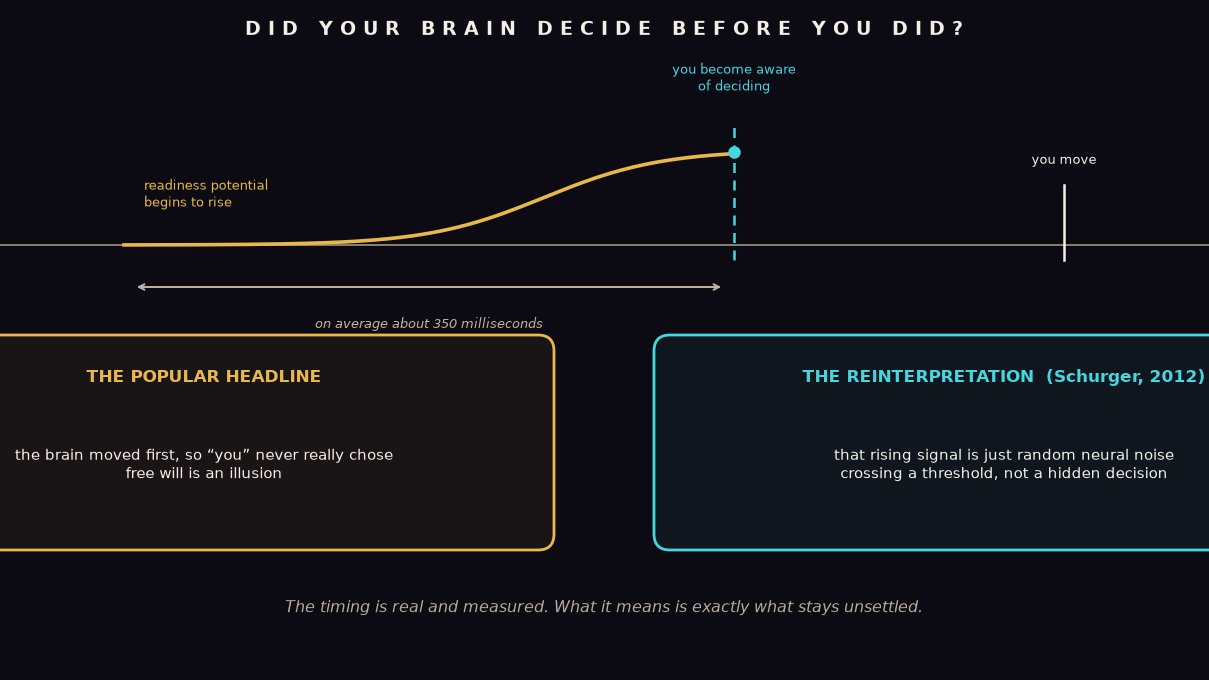
Free Will: The Choice You May Never Have Made
Brain scanners can see a 'decision' forming before you feel yourself choose. Does that kill free will? The experiments are real; what they prove is fiercely, honestly unsettled.
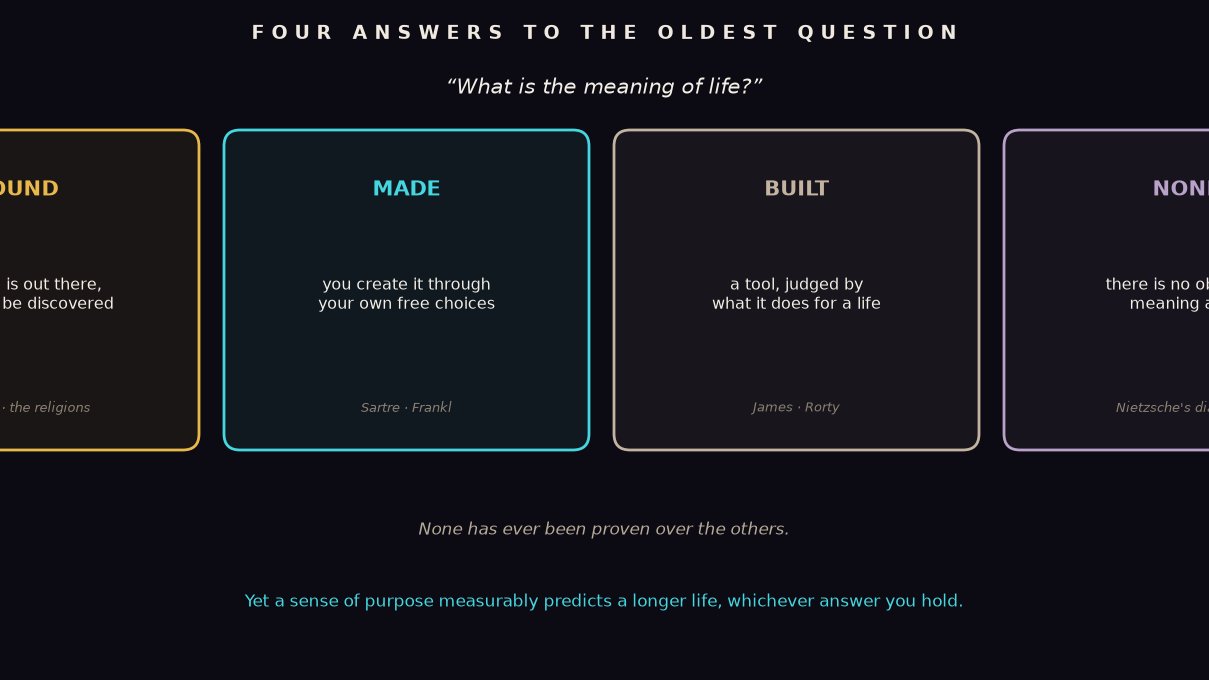
The Meaning of Life: Four Answers to the Oldest Question
Philosophy has given four rival answers to life's oldest question, and closed none of them. Here they are side by side, plus the one thing about meaning we have actually measured.
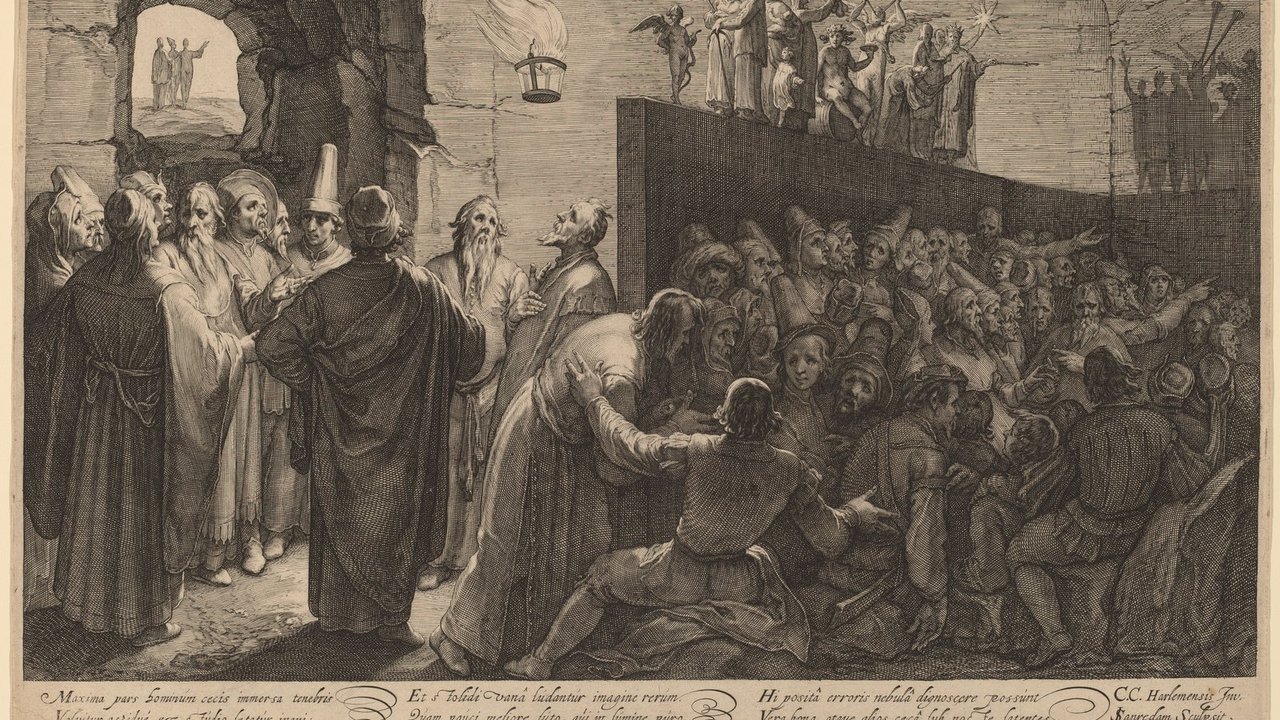
Plato's Cave: The First Warning That Reality Is Not What You See
Prisoners chained in a cave, mistaking shadows for reality. Plato's 2,400-year-old thought experiment is the first great warning that the world you see may not be the real one.
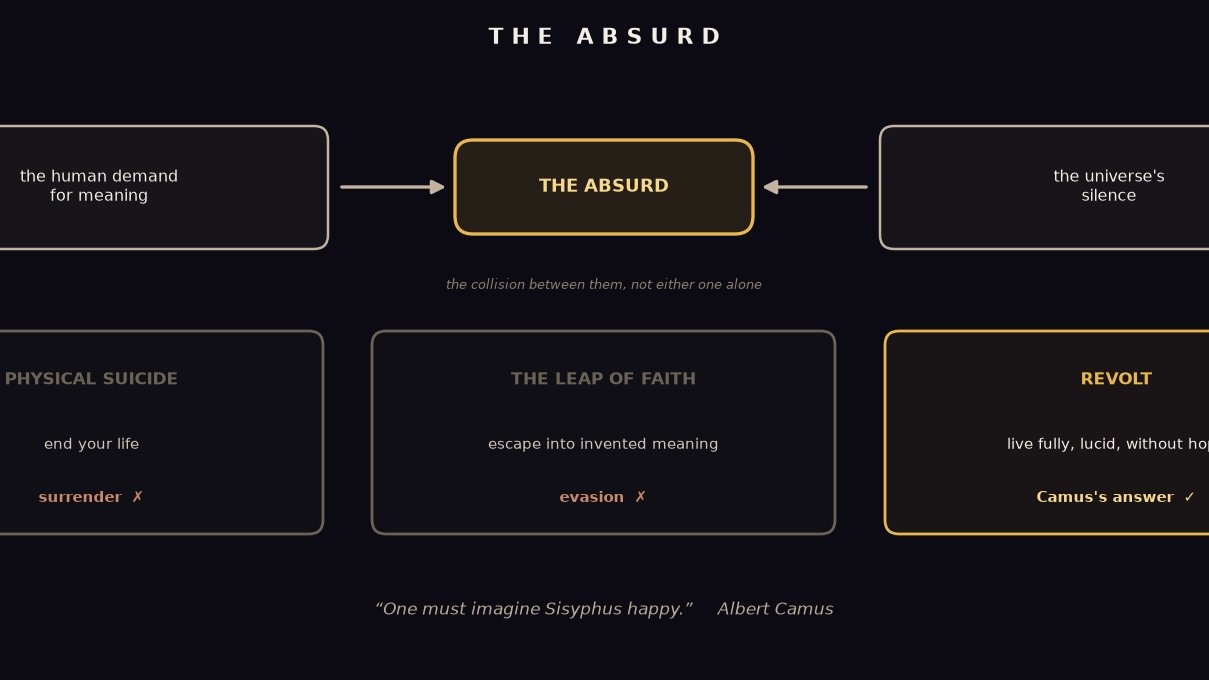
The Absurd: Camus, Sisyphus, and the Universe That Refuses to Answer
You demand meaning; the universe stays silent. That collision is Camus's Absurd. His answer was not despair or faith but revolt: stare it down and live fully anyway.