
Death and the Afterlife: How Every Culture Answered the Unanswerable
It is the one certainty and the one thing no one has ever come back to confirm. Every human culture we know of, from Ice Age hunters to the great religions, has looked at death and refused to believe it was simply the end, and the answers they built fall into a surprisingly small number of shapes: you will be judged, you will come back, you will join the ancestors, or you will simply dissolve. This is the map of those answers, the strange motifs they share across continents that never met, and the honest state of the evidence, which cannot prove there is an afterlife, and cannot prove there is not.
Here is a fact that should give any thoughtful person pause: no human culture has ever been found that fully accepted death as the simple, total end. From Neanderthals who may have laid their dead in flowers some sixty thousand years ago, to Ice Age hunters buried in red ochre with their tools, to every major religion alive today, our species has looked into the grave and insisted that something continues. That near-universality does not prove there is an afterlife, but it is a genuine and striking fact about human beings, and it is where any honest account has to start. What follows is not an argument that any particular answer is correct. It is a map of the answers themselves, which turn out to fall into just four broad shapes, plus the odd, recurring images they share, and a clear-eyed look at what the evidence can and cannot settle.
01The One Thing Every Culture Believes
The archaeology of belief runs deep. The world's oldest substantial religious literature, the Egyptian Pyramid Texts, dates to around 2400 BCE and is already concerned with the fate of the soul, and the burial record reaches back far further, to deliberately positioned bodies laid down with grave goods across Ice Age Europe and Africa. Anthropologists have simply never found a documented culture that lacks afterlife beliefs altogether.
Psychology offers a well-supported account of why the belief is so universal, though this is firmer as an explanation of the believing than as any verdict on the belief. Terror Management Theory, a large and much-tested research program, argues that awareness of our own mortality produces a deep anxiety we manage through culture, meaning, and belief. Studies by Jesse Bering and Paul Bloom go further, finding that humans, including young children with no religious instruction, are 'natural dualists': we intuitively treat the mind as separable from the body, and so intuitively expect the mind to outlast it. Whether that intuition tracks a truth or is simply a cognitive habit is exactly the open question. But it means the afterlife is not only something cultures teach; it may be something the human mind is built to reach for.
02Answer One: You Will Be Judged
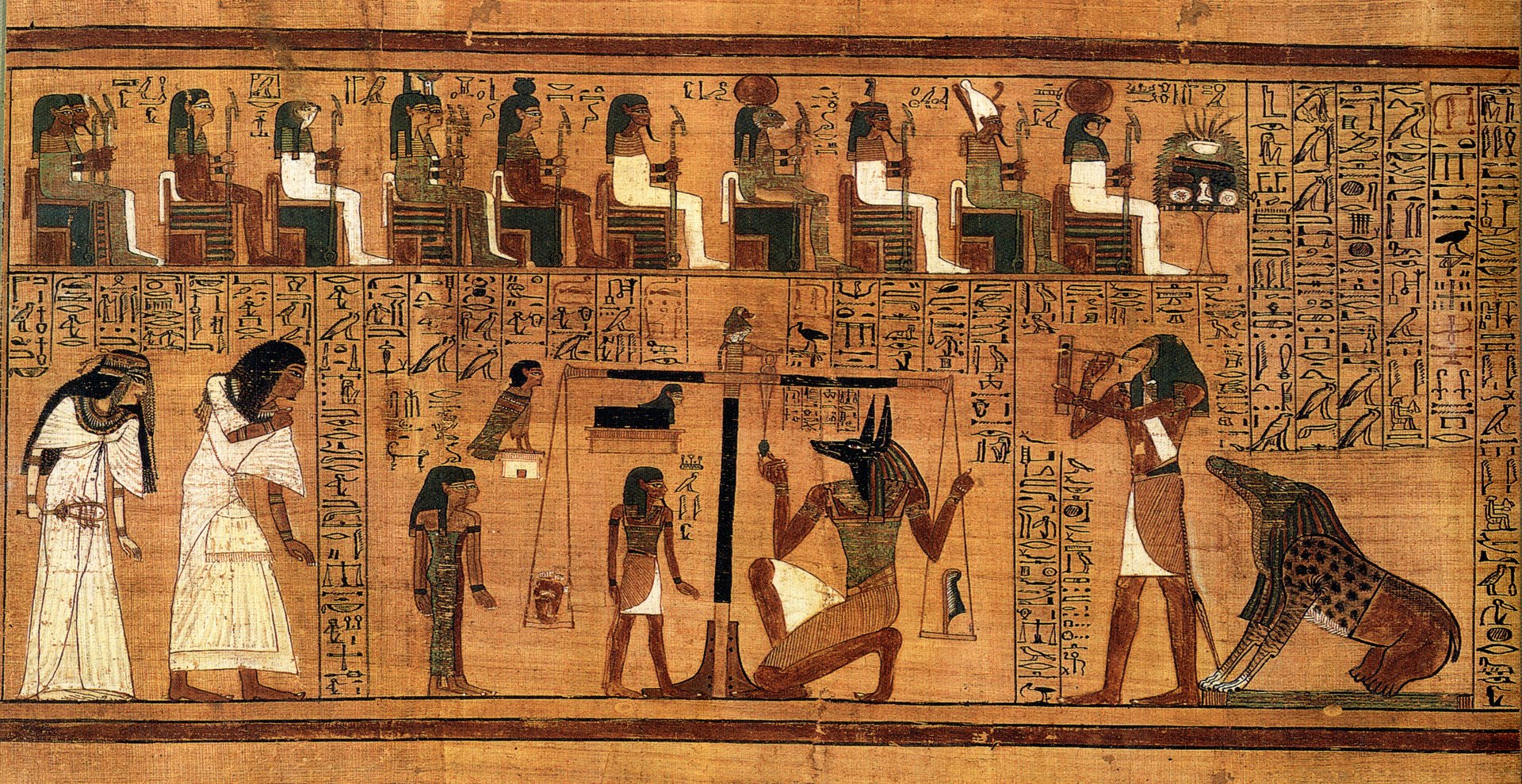
The first great shape is judgment: death as a courtroom, where how you lived decides where you go. The Egyptians drew it most vividly (see the scene above): the heart weighed against the feather of Ma'at, truth and cosmic order, after reciting the 'Negative Confession' of forty-two sins one has not committed. Zoroastrianism, whose founding is dated to a range scholars still debate, somewhere across the late second to mid first millennium BCE, gave the world arguably its first full heaven-and-hell binary, the soul crossing the Chinvat Bridge to the House of Song or the House of Lies, and deeply influenced the Abrahamic faiths that followed. In Christianity the framework becomes Heaven, Hell, and (for Catholics) Purgatory, reaching its imaginative peak in Dante's mapped-out realms around 1320. Islam sequences it precisely: questioning in the grave, an intermediate Barzakh, then the Day of Judgment and the crossing of the Sirat bridge to the gardens of Jannah or the fire of Jahannam. Judaism's own picture evolved, from a shadowy, undifferentiated Sheol for everyone toward later ideas of a World to Come.
Not every judgment-world judges, though, and the exceptions are revealing. The ancient Mesopotamians imagined Kur, the grim 'Land of No Return,' a dark realm of dust beneath the earth where every soul went regardless of virtue, to 'eat clay and drink muddy water,' with no reward and no punishment, only a diminished shadow-existence. Their afterlife was bleak precisely because their culture placed its hopes in glory and legacy among the living. The Greeks and Romans mapped their Hades in loving detail, five named rivers, the ferryman Charon demanding his coin, three-headed Cerberus at the gate, and a sorting into the grey Asphodel Meadows for the ordinary dead, blessed Elysium for heroes, and Tartarus for the punished. What all these share is the intuition that death is a threshold with a gatekeeper, and that the life you lived is the ticket you carry through.
03Answer Two: You Will Come Back
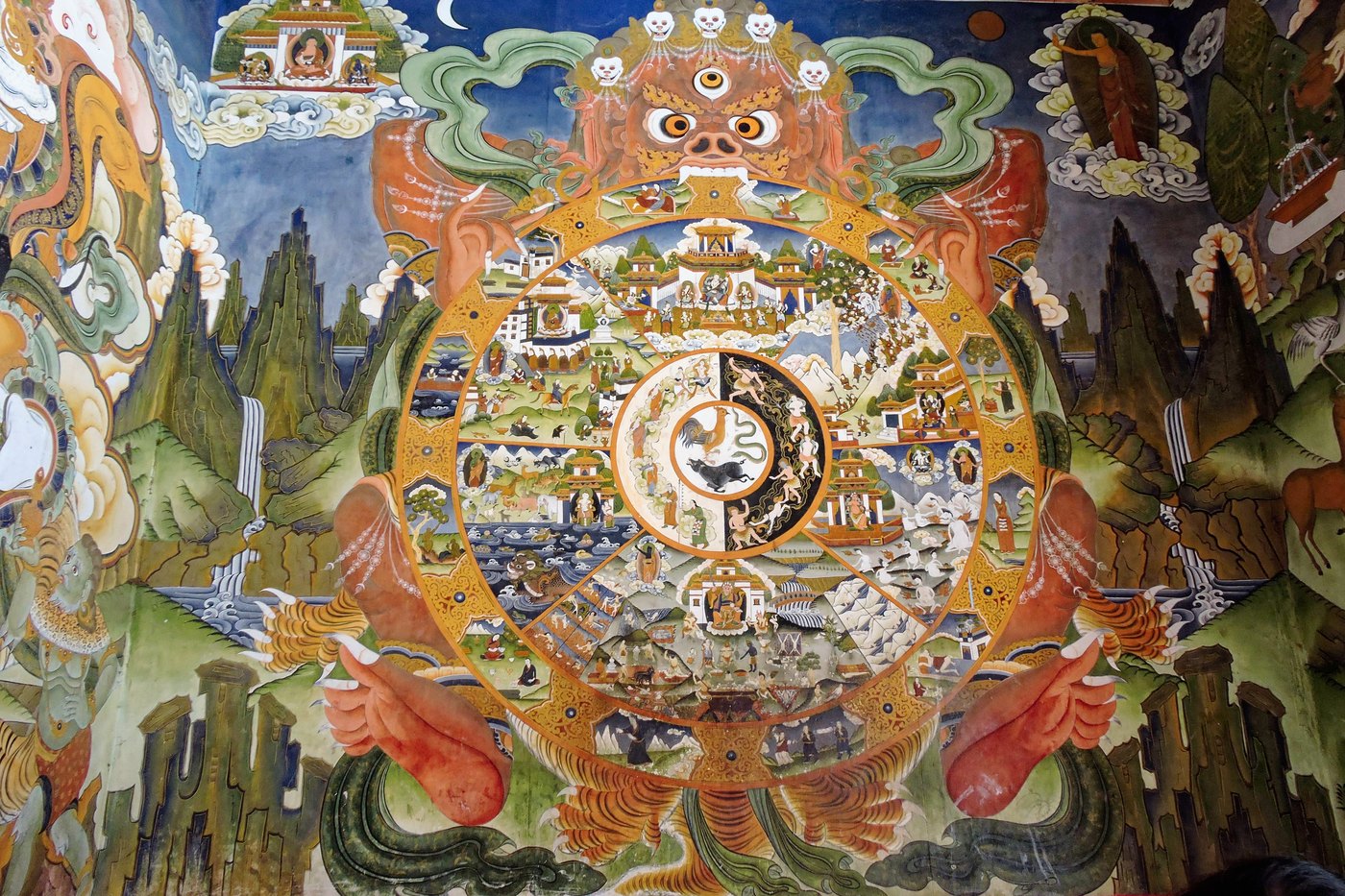
The second great shape replaces the one-way threshold with a wheel: you die, and you return, again and again. Hinduism calls the cycle samsara, in which the soul (atman) is reborn according to its karma, and the goal is not a good rebirth but moksha, escape from the wheel altogether, merging with the ultimate reality of Brahman. Buddhism teaches rebirth too, but with a crucial and often-missed difference: since it holds there is no permanent, unchanging soul, what continues is not a 'you' transmigrating but a causal stream, carried across six possible realms of existence, and the goal, nirvana, is the cessation of the craving that keeps the wheel turning. Jainism pictures karma almost physically, as fine particles clinging to the soul that severe discipline must burn away. The idea is old and widespread: the Greek Pythagoreans taught the transmigration of souls, and Plato's Myth of Er has souls choosing their own next lives. Across all of them, death is not an exit but a turn of the wheel.
04Answer Three: You Will Join the Ancestors
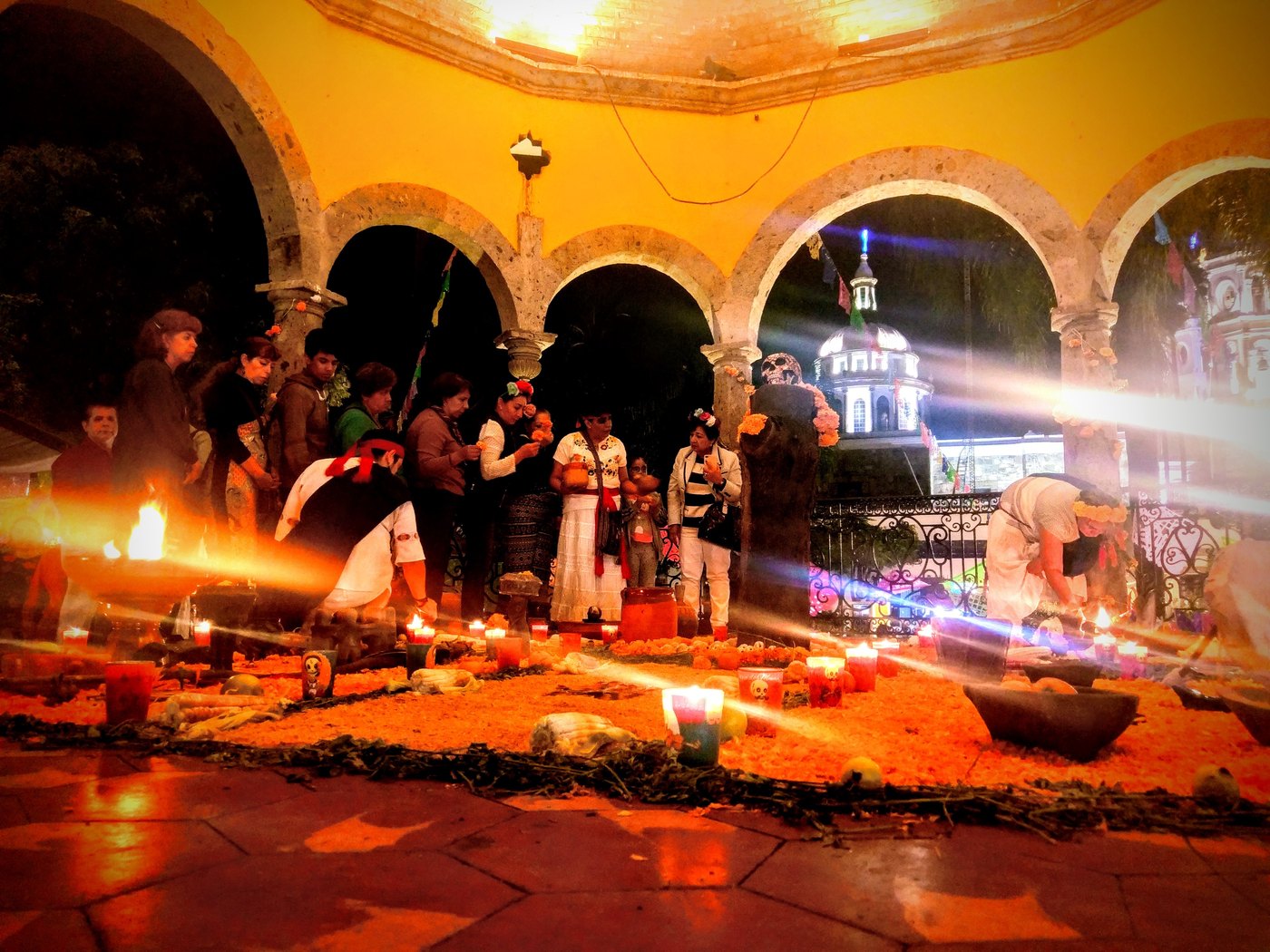
The third shape is quieter and, in daily practice, perhaps the most common on Earth: the dead do not go to a distant realm at all, but remain, as ancestors, part of the living community. Chinese traditional religion honors the deceased as ancestors who continue to influence their descendants, tended at festivals like Qingming. Japanese Shinto and Buddhist practice holds that the dead become kami or buddhas and return each year during Obon. Across Africa, as the scholar John Mbiti described, the recently dead become the 'living dead,' still individually remembered by name and consulted, until, over generations, they fade into a collective body of ancestors. Aboriginal Australian tradition returns the spirit to the Dreaming, the eternal reality from which all life comes and to which it goes back. In these frameworks there is no final departure and no distant heaven; there is continuity, memory, and an ongoing relationship across the thin line between the living and the dead.
05Answer Four: You Will Simply End
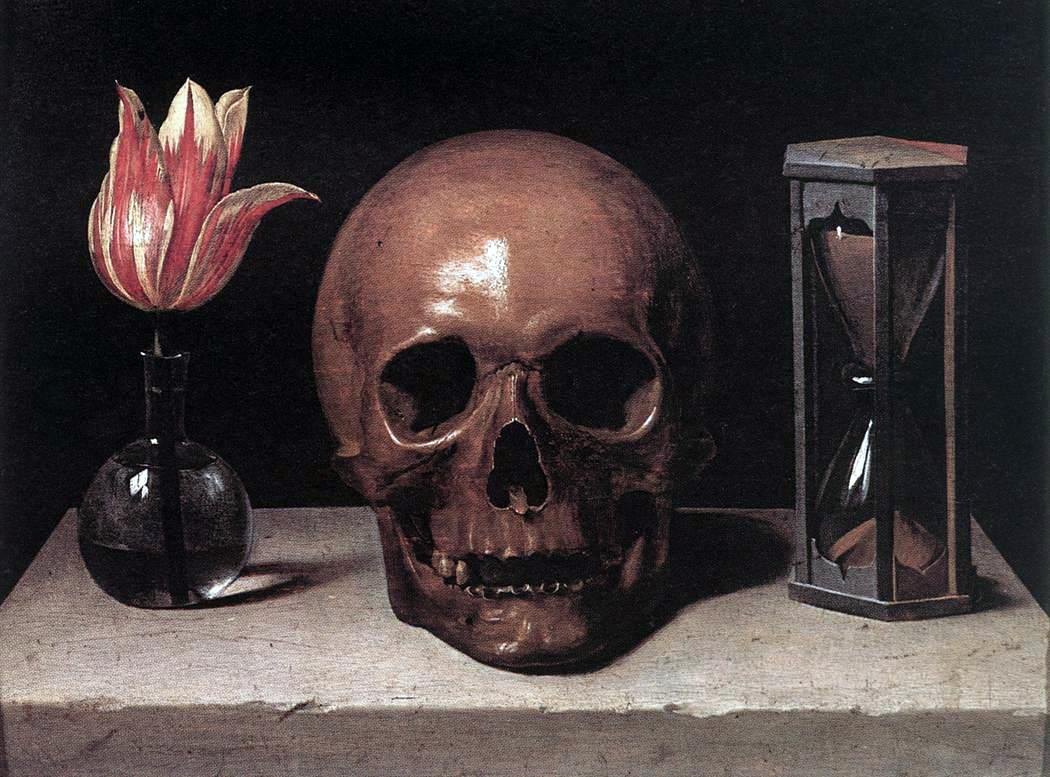
The fourth shape is the one the modern secular West knows best, and it is old too. The Stoics held that the soul is a kind of breath that persists briefly after death and then dissolves back into the substance of the cosmos. The Epicureans went further and cleaner: since the soul is made of atoms, it simply disperses at death, so, in Epicurus's famous formulation, 'death is nothing to us,' because where death is, we are not, and where we are, death is not, and a thing that cannot be experienced cannot be feared. This is a philosophical position, not a proven fact, and it is worth stating as exactly that, the mirror image of the traditions above. Buddhism's nirvana is sometimes mistaken for this dissolution view, but the tradition is careful to deny it: nirvana is not annihilation but the going-out of a fire, and the Buddha reportedly refused to say a liberated being either exists or does not after death, calling the question wrongly put. Ending, non-being, and release are not quite the same idea, and the dissolution family holds all three.
06The Same Dream, Dreamed Everywhere
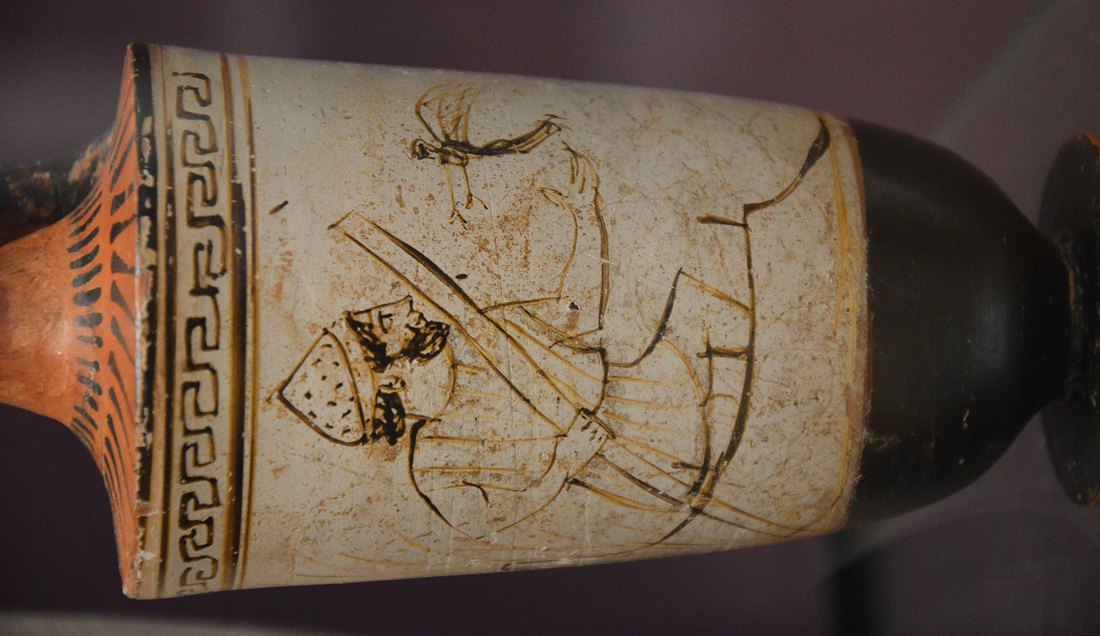
Lay these traditions side by side and something uncanny appears: the same handful of images, in cultures with no possible contact. There is almost always a journey the dead must make, the Egyptian Duat, the Greek crossing of the Styx, the Hindu river Vaitarna, the Aztec four-year trek through Mictlan. There is almost always a psychopomp, a guide or ferryman of souls: Anubis, Hermes, Charon, the Norse Valkyries, Islam's angel Azrael. There is a recurring judgment or life-review, the heart-weighing, the Chinvat Bridge, the Book of Life, the karmic account. And there is nearly always an underworld beneath the ground, Hades and Sheol and the Maya Xibalba and the Norse Hel. The Aztecs even sorted the dead by how they died rather than how they lived, and the Maya sent their souls through named houses of ordeal. Why the convergence? It may point at a shared human truth, or, just as plausibly, at a shared human mind, one that meets the same terror with the same handful of stories. This article does not pretend to know which.
07Is There Any Evidence?
Beyond tradition, is there anything to weigh? A handful of research programs try, and honesty requires reporting both what they find and why it stays inconclusive. Near-death experiences, the tunnel, the light, the life review, are real and remarkably consistent across cultures, and they are this article's cousin, not its subject; the full neuroscience, and the fierce debate over what causes them, lives in our companion article on the near-death experience, and we send you there rather than repeat it. Two further lines press harder on the question. Reincarnation research, associated with Ian Stevenson and Jim Tucker at the University of Virginia, has catalogued, by various counts, on the order of two thousand or more cases of young children who describe a specific past life, sometimes with details later found to match a real deceased person. And 'terminal lucidity,' a sudden return of clarity in dying patients with severe brain damage, sits awkwardly with the assumption that the mind is nothing but the brain. Both are genuinely striking. Neither is proof.
And each has a serious, mundane counter-explanation that has not been ruled out. The reincarnation cases come overwhelmingly from cultures that already expect reincarnation, and are vulnerable to unconscious cue-reading, memory contamination, and investigator bias. The consciousness-survival idea leans on the contested philosophical claim that consciousness might be fundamental rather than brain-made, and terminal lucidity may reflect a last neurochemical surge rather than a soul briefly unshackled. Even the eerie match between the Tibetan Book of the Dead's map of the after-death bardo and modern near-death reports, which some read as independent confirmation, is more cautiously read as two descriptions of the same dying brain rather than the same real terrain. The pattern across all this evidence is consistent: suggestive, patient, sincere, and stubbornly short of the one thing it would need to be, which is conclusive.
08What We Honestly Cannot Say
So here is the discipline this subject demands, and it cuts in both directions. It is an overclaim to say that near-death experiences prove an afterlife: they occur in brains that are impaired but not provably inactive, and the neurological explanations have not been excluded. It is an overclaim to say that Heaven and Hell are literal, locatable physical places; most serious theologians in these very traditions read them as states of being, not geography. And it is an overclaim to say that past-life memories prove reincarnation, when hidden ordinary memory and cultural suggestion remain live explanations. But, crucially, it is equally an overclaim to announce that science has proven death to be the final, total end. It has not, and in its strict metaphysical form the question, is there something after, may not be answerable by evidence at all. The honest position refuses both the confident yes and the confident no. What survives is a genuine, permanent open question, and the long, moving record of how our species has tried to live in the face of it.
Fast Facts
- The near-universal
- No documented human culture fully lacks afterlife beliefs
- Framework 1
- Judgment: the dead are judged (Egypt, Zoroastrianism, Christianity, Islam)
- Framework 2
- Rebirth: the dead return on a wheel (Hinduism, Buddhism, Jainism)
- Framework 3
- Ancestral continuation: the dead remain in the community (China, Africa, Aboriginal Australia)
- Framework 4
- Dissolution: the dead simply end (Stoicism, Epicureanism)
- Shared motifs
- A journey, a soul-guide, a judgment, and an underworld, across unconnected cultures
- The psychology
- Terror Management Theory and an innate 'natural dualism' in the human mind
- The honest limit
- Evidence can prove neither that an afterlife exists nor that death is the end
What We Can Actually Stand Behind
The cultural and historical record is solid. These traditions really hold the beliefs described here; the four frameworks (judgment, rebirth, ancestral continuation, dissolution) really do organize the world's answers to death; the shared motifs of journey, psychopomp, judgment, and underworld really do recur across unconnected cultures; and the deep archaeological antiquity of burial and afterlife belief is real. That every known culture answers death somehow is a genuine fact about our species.
The psychology of why we believe is on reasonably firm ground. Terror Management Theory's core findings, and the evidence that humans are intuitive mind-body dualists from childhood, are real research results. They explain the near-universality of afterlife belief without settling whether the belief is true, which is the point: a belief can be both psychologically natural and, separately, either correct or mistaken.
The evidence that presses on the metaphysics stays genuinely inconclusive. Near-death experiences (covered fully in our companion article), the reincarnation-case research of Stevenson and Tucker, and terminal lucidity are all real, all interesting, and all short of proof, each shadowed by a serious ordinary explanation that has not been ruled out. Take them as open questions, not answers.
This is the one place the discipline matters most. No, near-death experiences and past-life cases do not prove an afterlife, and no, Heaven and Hell are not established as literal places. But equally, no, science has not proven that death is simply the end. The strict metaphysical question may lie permanently beyond what evidence can decide. We refuse the confident believer's proof and the confident skeptic's dismissal alike, and leave the oldest question exactly as open as it honestly is.
There is a particular kind of humility in surveying all of this at once. Thousands of years, hundreds of cultures, some of the finest minds our species produced, and the sum of it is not an answer but a vast, gorgeous, contradictory library of hope. It would be easy to read that as failure. It is better read as testimony: whatever death is, human beings have never once been able to look at it and shrug. We build heavens and wheels and ancestral tables and philosophies of dissolution, not because we know, but because we cannot stop asking, and because the asking is itself a form of love for the lives and the people we are so unwilling to see end. The universe has not told us what happens next. But the record of everyone who ever wondered is, in its own way, an answer to a different and better question, which is what it means to be the kind of creature that wonders at all. On the first question, this article keeps its promise and stays silent, because that silence is the honest sound of the evidence. On the second, the whole of human history has already spoken.
Sources & further reading
Everything above is drawn from our research library on Theories of Anything. Open the full file to check the sourcing and go deeper.
Image credits
- The Weighing of the Heart, from the Book of the Dead of Ani (Papyrus of Ani), c. 1250 BCE, British Museum Ancient Egyptian, c. 1250 BCE; British Museum, via Wikimedia Commons. Public Domain Source.
- The bhavachakra (Buddhist Wheel of Life) mural at Tawang Monastery, Arunachal Pradesh, India Kingshuk Mondal, 2018, via Wikimedia Commons. CC BY-SA 4.0 Source.
- A Day of the Dead (Dia de los Muertos) ofrenda, a nighttime community observance Arturo Canez Gonzalez, 2017, via Wikimedia Commons. CC BY-SA 4.0 Source.
- Philippe de Champaigne, Still-Life with a Skull (Vanitas), 1646 Philippe de Champaigne (1602 to 1674), via Wikimedia Commons. Public Domain Source.
- Attic white-ground lekythos with Charon the ferryman, attributed to the Tymbos Painter, c. 500 to 450 BCE, Ashmolean Museum Photograph by Carole Raddato, 2014, via Wikimedia Commons. CC BY-SA 2.0 Source.
- Card crop of the Weighing of the Heart from the Papyrus of Ani Ancient Egyptian, c. 1250 BCE; British Museum, via Wikimedia Commons. Public Domain


_Lekythos_with_Charon,_attributed_to_the_Tymbos_painter,_ca_500_-_450_BC,_Ashmolean_Museum,_Oxford,_UK_(22681344331).jpg)