
Personal Identity: The Puzzle of Whether You Are Still You
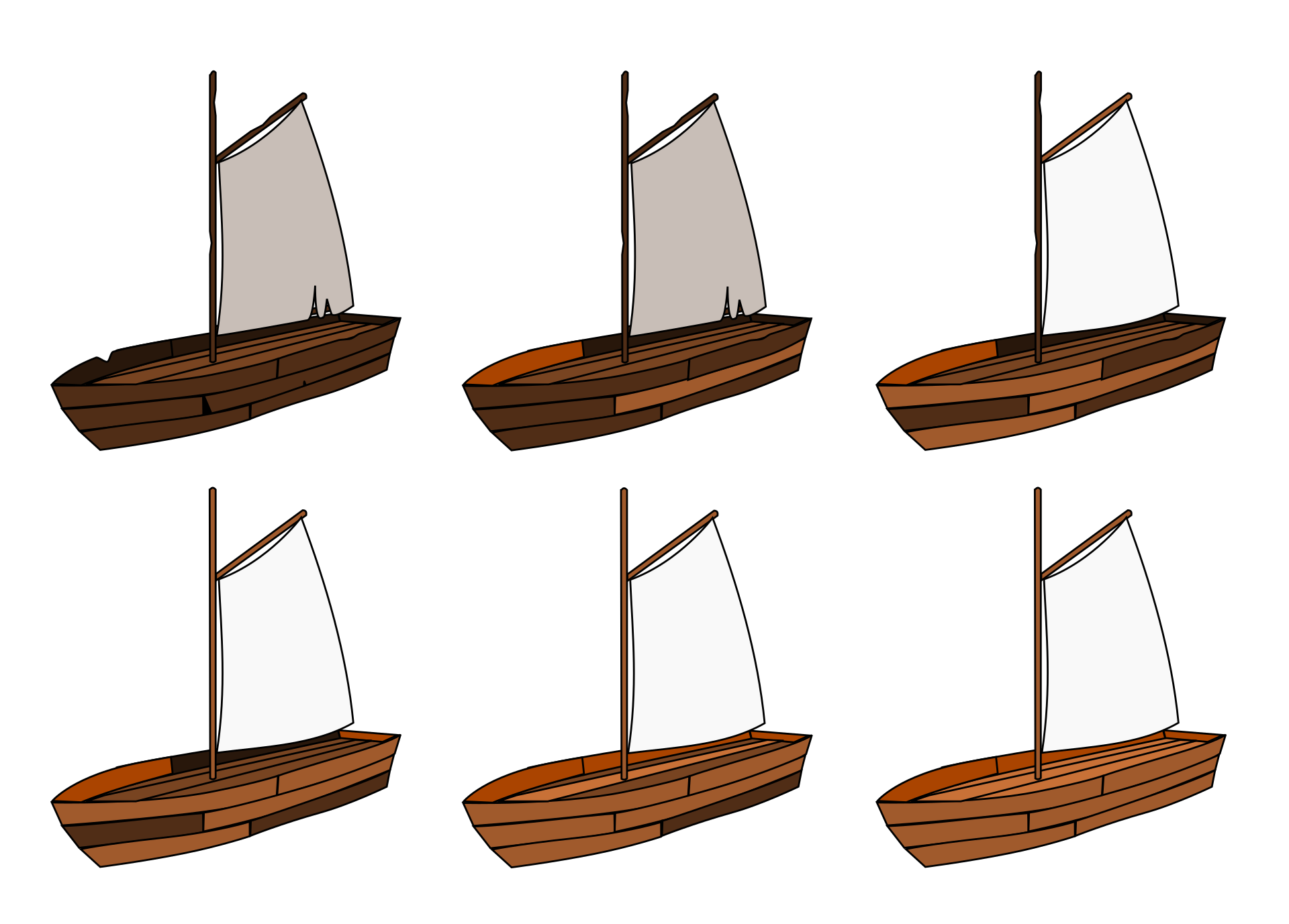
Replace every plank of a ship and the ship becomes a question. Replace every molecule in a brain, which happens without anybody's permission, and the question is about a person. Locke answered it with memory, Thomas Reid pressed the case that breaks memory, Hume looked for the self and found only perceptions, and Derek Parfit answered in 1971 by arguing that identity is the wrong question and that something else is what actually matters. Bernard Williams, Robert Nozick and Eric Olson each hold a named position against that, a survey of philosophy faculty in 2020 found no consensus, and this article crowns no winner. Every scenario set out below is a thought experiment, and a thought experiment settles nothing.
A photograph of a one-year-old is handed to the adult that child became. Nothing in the picture survives into the hand holding it: not a molecule, not a cell, not a memory of the afternoon it was taken. And the adult says, without hesitating and without feeling that anything strange has been said, that this is a picture of them. Something is being claimed there. It is not at all obvious what.
The claim is persistence, and it is the whole subject of this article. Our own research file on personal identity puts it in two halves: what makes a person at one time the same person as someone at another time, and under what conditions a person would cease to exist. The file names five families of answer that have been given to it. Continuity of consciousness. Continuity of the body or the biological organism. A bundle of perceptions with nothing underneath. A story told about a life. And no self at all.
One thing has to be said before any of them, because it governs every section below. This subject runs on thought experiments: bodies swapped, brains transplanted, people teletransported, hemispheres divided between two skulls. Our own file's assessment section says plainly what follows from that. Brain transplants have never been performed on a human being. The scenarios generate intuitions and not evidence, and there is no data at all on what a recipient would experience. Every thought experiment in this article is an instrument for finding out what a reader already believes and why. None of them is a result.
A note on the quotation marks, because they are unusually scarce here. Exactly one passage in this article sits inside quotation marks, Plutarch's sentence about the timbers, and it was fetched and read. Locke's definition of a person is set as a pull quote, attributed and cited, and carries no quotation marks either. Three further passages that our own research file presents inside quotation marks, two from Hume and one from Parfit, appear below in paraphrase and without quotation marks. That is deliberate, and it costs this article three lines it would rather have had. The research pass behind this piece could not reach a primary text for any of the three: one route to Hume's Treatise truncated before the relevant section, a second returned nothing at all, and Parfit's appendix was not reached in any form. An unverified quotation is a fabrication with punctuation on it, so the wording was loosened until it could not be mistaken for a transcription. That is why exactly one passage in this article sits inside quotation marks.
The tier marks follow our own research file where it assigns them and this article's own stated principle where it does not. A claim about what a philosopher published is Tier 1: settled text, safe to state flatly. A live scholarly position, or an empirical finding with real dispute attached, is Tier 2. The file labels its own section on uploading and substrate transfer Tier 3, and that label is carried here visibly rather than quietly dropped. Tier 4 is the file's own list of claims that do not hold, which is unusually strong in this document and is used at full length in section 14.
Several neighbouring subjects are not this one. The Split-Brain owns the surgical division of the corpus callosum and what philosophers made of it, so every case of division below is a thought experiment and nothing else. Children Who Remember owns the University of Virginia's case files in full, and this article takes only the philosophical puzzle sitting inside the idea of rebirth. Are We Living in a Simulation? owns the simulation argument, and Death and the Afterlife, in this same wing, owns the cross-cultural map of what is said to happen after death. One boundary is worth stating exactly, because it is the easiest of them to lose. Machine Consciousness asks whether anyone is home in the silicon. This article asks whether the someone at home would be the same person who went in. Those are different questions, and answering the second would not answer the first.
01The Ship That Was Rebuilt
The version of the problem easiest to hold in the hand is about a boat.
Plutarch, in his Life of Theseus, describes the ship the Athenians kept. The sentence, in the Loeb Classical Library edition of 1914 whose hosting page states the text is in the public domain and names no translator, runs: "They took away the old timbers from time to time, and put new and sound ones in their places, so that the vessel became a standing illustration for the philosophers in the mooted question of growth, some declaring that it remained the same, others that it was not the same vessel." Two details in it are worth keeping. Plutarch is not posing the paradox that later philosophy named after him; he is reporting that the ship had already become a stock example in an argument about growth. And the disagreement he reports, some saying it remained the same and others that it did not, is the same disagreement the rest of this article is about.
Our research file credits the classic paradox to that passage, and records the sharper version Thomas Hobbes added in 1655, in De Corpore, Part II chapter 11, Of Identity and Difference. Keep the discarded timbers. Reassemble them into a second ship. Now two vessels stand in the water, one with continuous history and new matter, one with original matter and no continuous history, and each has a claim. No amount of further looking at either hull decides between them, because nothing about the hulls is in doubt. No identifier was resolved for the Hobbes passage in the research pass behind this article, so it is cited by work and chapter and by nothing more.

A ship is a convenient object for the question. Ships are repaired in public, over years, by people who keep records, and nobody watching a shipwright fit a new strake feels that a metaphysical event has occurred.
The convenience is also the trap. It is easy to conclude that the puzzle is about words, that a ship is whatever a harbour master decides to call a ship, and that nothing further is at stake. The next section is where that reading stops working.
02And Then The Ship Is A Person
Our research file states that human neurons were long believed to be non-dividing and lifelong, and that the contents of those neurons are nonetheless replaced continuously. Synaptic proteins have half-lives measured in hours to days. The file says the molecular composition of a synapse turns over on the order of weeks, and that phrase is a summary rather than a measured constant, so it is given here as an order of magnitude and appears nowhere else in this article. The lipid components of the cell membrane are replaced continuously as well. The file cites nothing whatever for any of this. The measurement of synaptic protein turnover is real and published, by Cohen and colleagues in 2013, and it is listed in the sources below because our own file does not list it.
The popular version of this is wrong, and our own file says so in its own voice. The claim that every cell in a body is replaced every seven to ten years is an oversimplification. Some cells persist for a lifetime, and the file names certain neurons, the crystallins of the lens and the cells of tooth enamel among them, while the molecules inside even those long-lived cells are constantly recycled. The method behind the modern results is carbon dating applied to human tissue, published by Spalding and colleagues in 2005 and cited below. This matters here more than it would anywhere else, because the Ship of Theseus is exactly the place where a reader arriving with the seven-year belief would have it confirmed instead of corrected.
Whether the adult human brain makes new neurons at all is a live dispute and it has not been settled. Eriksson and colleagues reported new neuron formation in the adult human hippocampus in 1998. Spalding and colleagues put the rate at roughly 700 new hippocampal neurons a day in 2013. Sorrells and colleagues challenged the finding in adults in 2018, reporting that the process drops sharply during childhood and is undetectable later. All three papers are cited below and none of the three appears in our own file's bibliography. The 2013 figure does not travel without the 2018 challenge attached to it, and neither number appears anywhere else in this article, including in its summary blocks.
Our file draws the philosophical conclusion that the pattern rather than the matter is what grounds identity: memories, personality and skills persist while their substrate is exchanged, which favours psychological or functional continuity over material continuity. The file then supplies its own counter, and both belong on the page at full strength. Molecular turnover is what an organism does. Metabolism is not evidence against bodily continuity; it is bodily continuity, watched closely. On that reading the exchange of a body's molecules is the organism persisting rather than the organism being replaced, and the biological answer set out in section 08 absorbs the whole phenomenon without strain. Which of the two readings is right is precisely what this article does not settle.
So the ship problem is not a problem about ships, and it is not a problem about words either. It is a description of what a nervous system is doing at this moment, in the reader, without asking. Everything below is an attempt to say what the thread running through that is made of, and whether there is a thread at all.
03The Memory Criterion, And What Broke It
John Locke published An Essay Concerning Human Understanding in 1689, and the relevant chapter is Book II chapter 27, Of Identity and Diversity. Our research file states that Locke was the first major philosopher to separate personal identity from the identity of a substance, meaning the body, and from the identity of a human being, meaning membership of a biological species. That priority claim is our file's own, it is carried here as the file's and never as a finding, and nothing in this article depends on it. What is not in dispute is the criterion the chapter became famous for: personal identity consists in continuity of consciousness, and specifically in memory. A person is the same person as the being who had some past experience if that experience can be remembered from the inside.
One correction belongs here immediately, because the rest of the section is built on it. The Stanford Encyclopedia of Philosophy presents the memory criterion as a proposal commonly attributed to Locke, while saying it is uncertain whether Locke actually held it in that strong form. Our file states it flatly as Locke's criterion. The accurate description is that the memory criterion is the view standardly drawn from Locke, and that whether Locke held it in that shape is disputed. The argument below is unaffected either way: what the criterion says, what breaks it and what repairs it are the same whoever first wrote it down.
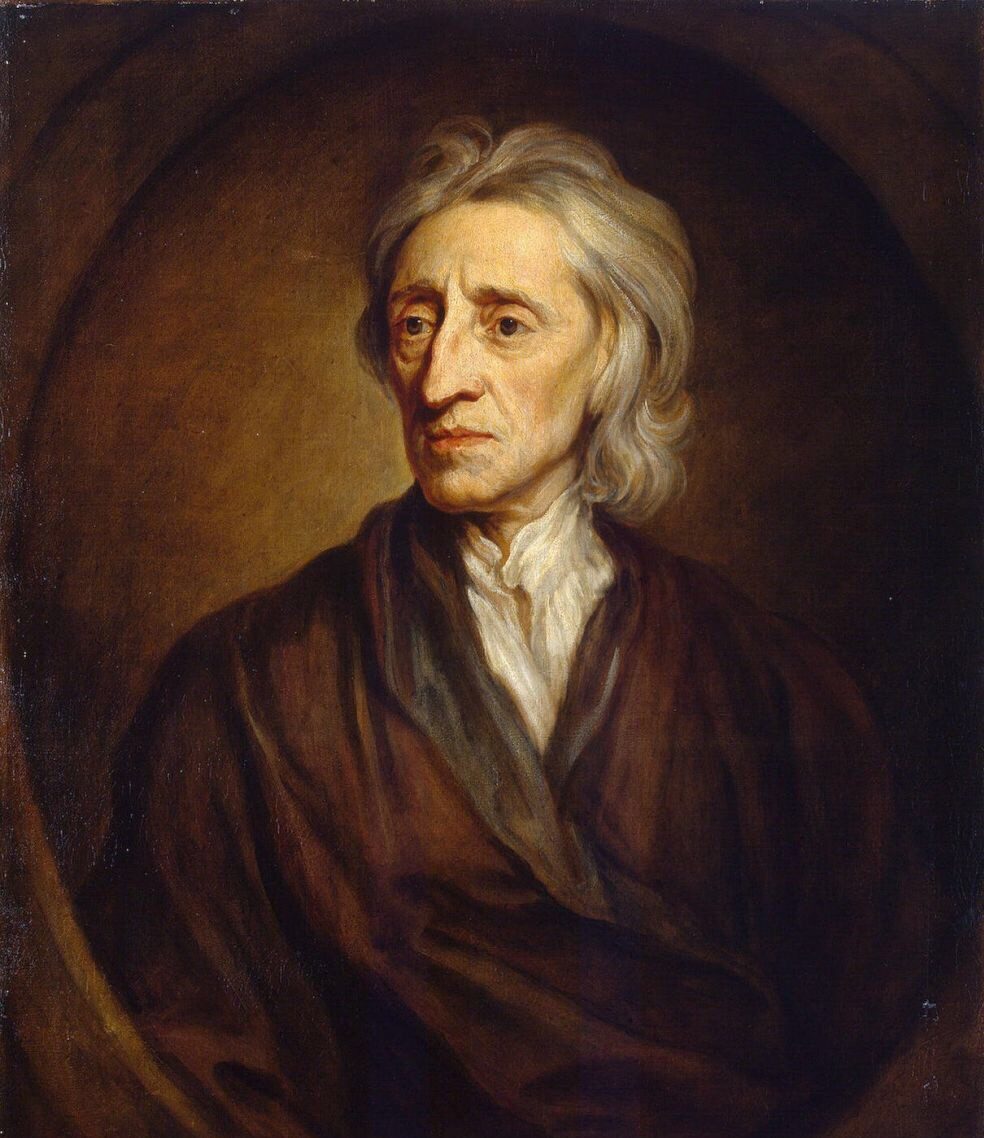
The illustration our file uses is Locke's own. A prince's soul, carrying all the prince's memories, is placed in a cobbler's body. The person is the prince, because the memories went with the soul. The man is the cobbler, because the body stayed where it was. That single case is why Locke needed three concepts where common sense uses one, and it is the cleanest statement in the whole literature of what a theory of personal identity is actually for.
The move being made there is larger than the case. Locke detaches the person from the soul and from the body at once, and puts the weight on a psychological relation instead. Every theory in this article is either an extension of that move or a refusal of it.
Those are the only words of Locke's quoted in this article, and they were taken from the encyclopedia's text rather than from a page of the Essay, which is why they are attributed to Locke and cited to the Essay rather than presented as a transcription. The last part of the definition carries the whole criterion. A thing that can consider itself as itself is a thing that can reach back into an earlier moment and claim it, and on Locke's account that reaching back is not evidence of identity. It is what identity consists in.
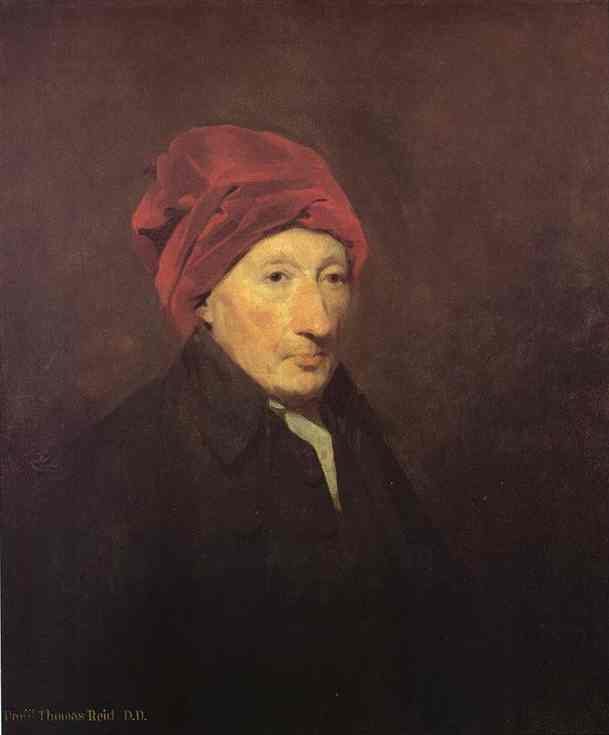
The Brave Officer objection is attributed by our file to Thomas Reid, in 1785. A boy is flogged for robbing an orchard. The boy grows into a brave officer who remembers the flogging. The officer grows into an old general who remembers being the officer but has lost all memory of the flogging. By the memory criterion the officer is the boy, and the general is the officer, and the general is not the boy. Identity does not behave like that. If A is B and B is C then A is C, and a criterion that produces the opposite has failed a condition it cannot negotiate.
Reid is not the origin of that objection. The Stanford Encyclopedia describes the transitivity problem as an eighteenth-century objection more famously discussed by Reid and Butler, which makes Reid the celebrated statement of it rather than its inventor. The encyclopedia also tells the case with a student, a lawyer and an elderly woman rather than a boy, an officer and a general, so a reader meeting both versions is meeting one argument twice and not two arguments.
The repair that saved the theory is the neo-Lockean move, credited by our file to Sydney Shoemaker in 1970 and to Parfit in 1984. Replace direct memory with overlapping chains of psychological continuity: memories, intentions, beliefs, desires and personality traits, each link connected to the next, no single link required to span the whole life. The general is connected to the boy through the officer, without any direct memory reaching from the general to the flogging, and transitivity survives. One citation caution goes with this. Our file's only Shoemaker entry is a book from 1963, its attached identifier resolves to a review of that book rather than to the book, and Shoemaker's 1970 paper is not in the bibliography at all, so it is named here by author and year and carries no identifier.
The second objection is that the criterion is circular. Memory can only reach experiences the rememberer actually had, so defining identity by memory looks like defining it by something that already presupposes it. Our file credits Shoemaker with the repair, in 1959: distinguish genuine memory from quasi-memory, a memory-like state that preserves both the content of an experience and its causal origin without presupposing that the rememberer is the person who had it. That distinction looks technical and it is load-bearing. Without quasi-memory the teletransporter case in section 05 cannot even be stated, because the replica's memories are quasi-memories by construction, and calling them memories would settle the question in the first sentence.
04Look Inside And Find Nobody
Locke moved the self out of the soul and into consciousness. The next move was to look into consciousness for the self and report what was there.
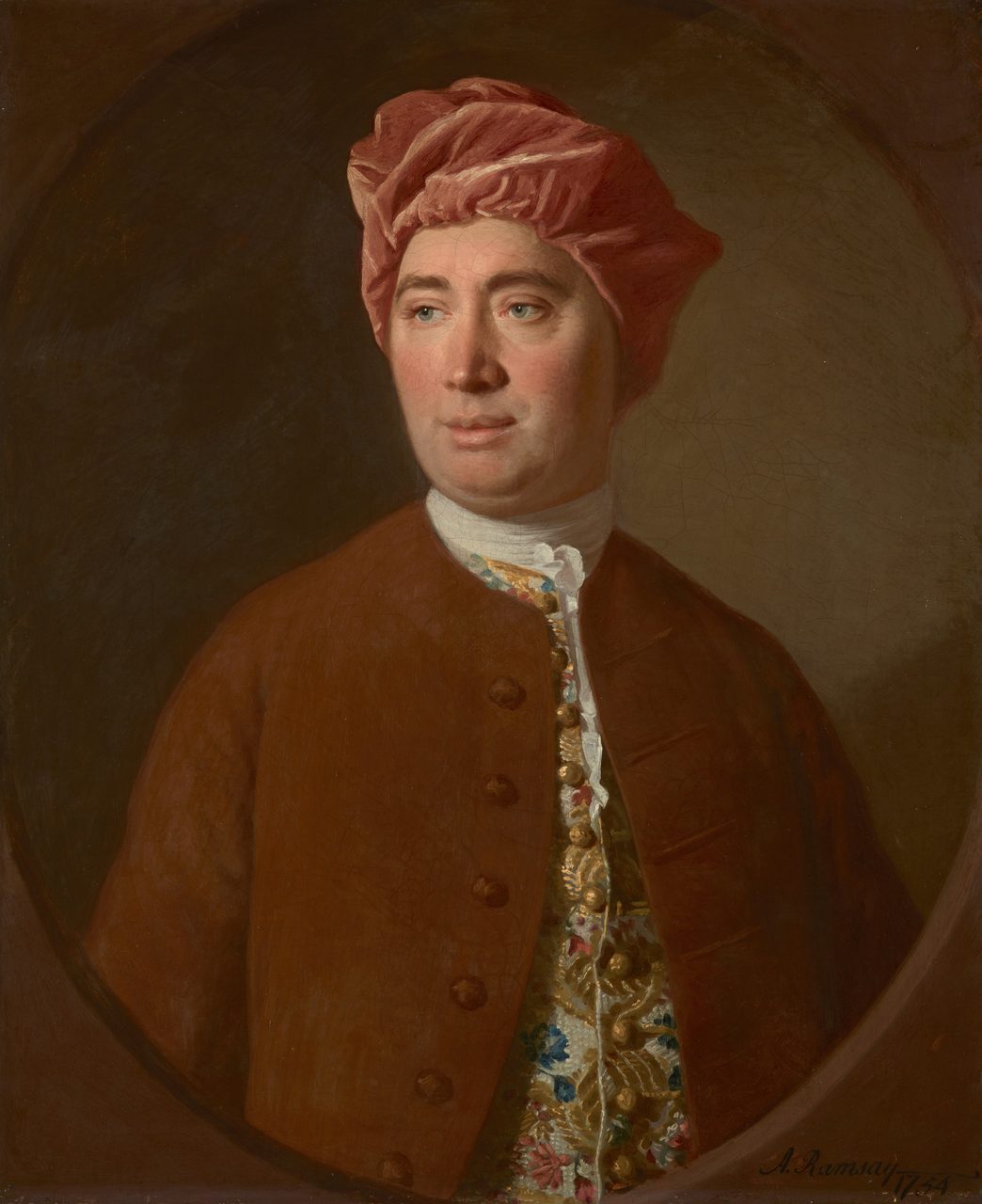
David Hume, in A Treatise of Human Nature of 1739, Book I Part IV Section 6, Of Personal Identity, reports that when he looks inward he never comes across a self. He finds particular perceptions and nothing else: a pain, a colour, a thought, a desire. There is no impression of a self lying underneath them, and on Hume's principles a term with no impression behind it has nothing to mean. The conclusion is bundle theory: a self is not a thing that has perceptions, it is a bundle or collection of perceptions succeeding one another with great rapidity and in perpetual flux. Our file presents part of that inside quotation marks. The research pass behind this article could not reach a primary text, so the wording above is deliberately loosened and carries no quotation marks anywhere.
The image our file draws from the same passage is a theatre in which perceptions successively make their appearance, and then the twist that does the work: there is no theatre. There is no stage, no auditorium and nobody in a seat, only the successive appearances themselves. The twist is what separates Hume from every stage metaphor a reader already carries, in which a self sits watching experience go by. It is also paraphrase, under the same constraint as the paragraph above, and it is not quoted here.
The strongest beat in the Hume material is the one he supplied against himself. In the Appendix to the Treatise, published in 1740, he admits that he cannot give a satisfactory account of what binds the bundle together, that is, of what connects one perception to the next so that they form one mind rather than a crowd. Our file says he calls this a labyrinth from which he cannot extricate himself. That single word is not quoted here either, for the same reason as the rest. The founder of the view published its unsolved problem himself, one year after publishing the view, which is a standard of intellectual honesty this article is in no position to improve on.
Kant's reply, from 1781, is the transcendental unity of apperception, and it is not a quibble. The I think that must be able to accompany all my representations is a condition of there being experience at all, so it cannot show up inside experience as one more object among the pains and colours. Our file's own gloss is that Hume was looking in the wrong place: he searched the contents of consciousness for the thing that makes those contents one person's, which is like searching a field of view for the eye. Whether that answer is a discovery or a redescription is exactly the sort of question the literature has never closed, and the Hume section is not a debunking without it.
05The Machine On Mars
Derek Parfit's position is reductionist. Personal identity consists in physical and psychological continuity and there is no further fact: no Cartesian ego, no soul, no deep metaphysical entity standing behind those relations, and nothing left over once every physical and psychological fact has been stated. Our file dates the position to Part III of Reasons and Persons, published in 1984, and calls that part the most influential work on personal identity in the twentieth century, which is our file's own superlative and is carried here as its judgment rather than as a finding. One date is worth correcting while the position is being introduced. Parfit published the core claim as a journal paper called Personal Identity in The Philosophical Review in 1971, thirteen years before the book, and that paper's identifier resolves exactly. Our file never mentions it. It is also the piece of this literature a reader can most easily go and check.
The teletransportation paradox, as our file states it. A traveller steps into a scanner on Earth. It records the position of every molecule in the body, destroys the original in the process, and transmits the information to Mars, where a replica is assembled from local matter. The replica has all the traveller's memories, personality, beliefs and intentions, wakes up believing without any doubt that it is the traveller, and would pass every test anyone could devise. Is the replica the traveller? Parfit's answer is that the question is the wrong one. Once every physical and psychological fact has been specified there is nothing further to discover, and asking whether the replica is numerically the same person is asking an empty question.
The plain case is not the argument. The Branch Line is. The scanner malfunctions and fails to destroy the original, so the traveller walks out of the booth on Earth while an equally continuous replica wakes on Mars. Both are psychologically continuous with the person who stepped in, and both have exactly the same claim. They cannot both be that person, because identity is one to one and nothing can be numerically identical with two different things. That is why this article gives the Branch Line the weight rather than the plain teletransporter: the plain case invites an answer, yes or no, and lets a reader keep whichever intuition they arrived with. The Branch Line makes both answers unavailable at once.
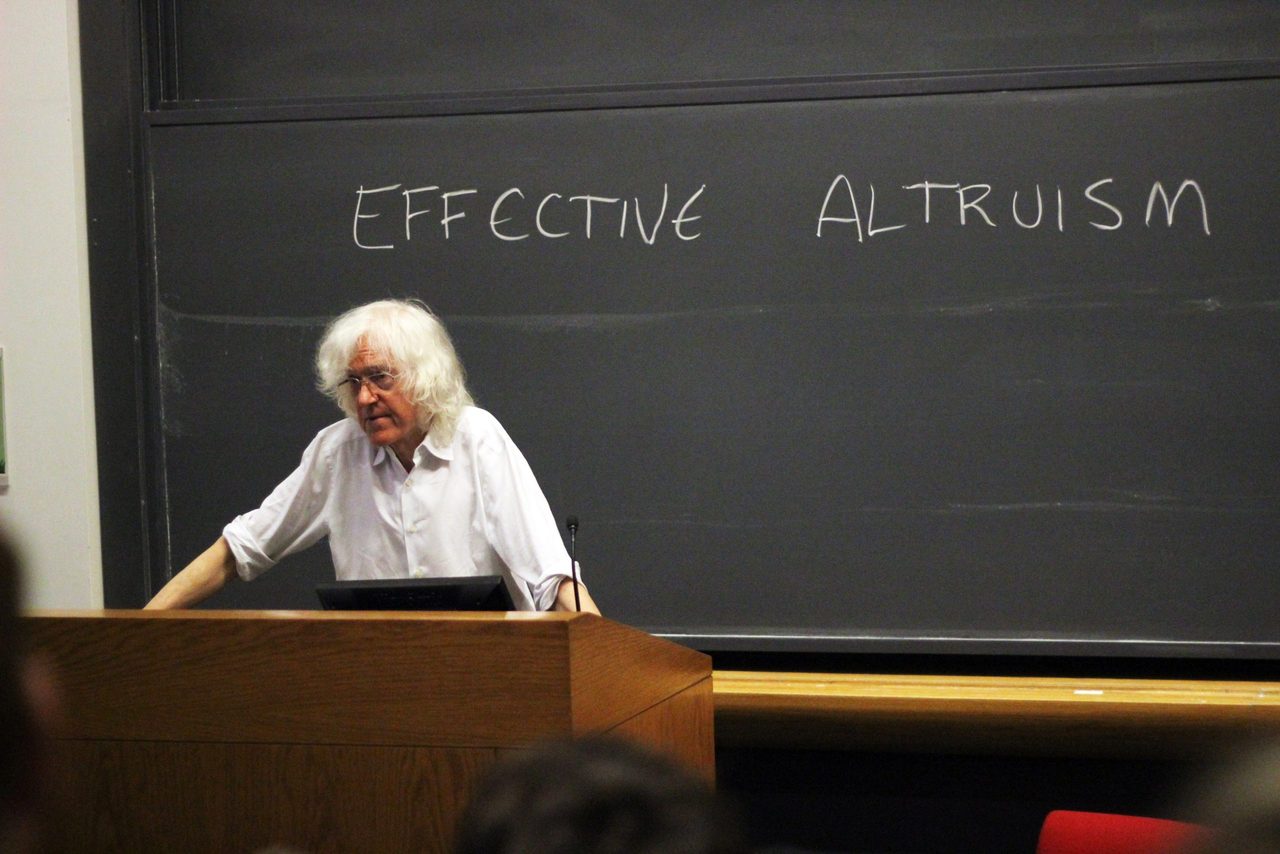
The conclusion is not that the replica is the traveller. It is that identity is not what matters. What matters is Relation R: psychological connectedness and continuity, with the right kind of cause. Relation R can hold one to many, as it does in the Branch Line, where identity logically cannot, so identity is the wrong concept to be asking about. Our file records the ethical payload as well, and it is not a footnote to the metaphysics. Parfit held that the dissolution of the self is liberating rather than frightening, freeing a person from excessive self-concern and supporting an impartial ethics.
Our file also states that Parfit drew explicit parallels between his reductionism and the Buddhist doctrine of anatta, and that in the Appendix to Reasons and Persons he wrote that the Buddha would have agreed with him. The famous four-word version of that is presented in our file as a direct quotation and the research pass could not reach the Appendix in any form, so it appears here as a paraphrase, without quotation marks, and attributed to our own file's reading rather than to Parfit's page.
06The Body Answers Back
The strongest counterweight to all of that is not a rival theory. It is a demonstration that a reader's intuition can be flipped by rewriting the same case.
Bernard Williams published The Self and the Future in The Philosophical Review in 1970, and it was collected in Problems of the Self in 1973. He argued against psychological continuity and for a bodily criterion, using one scenario told twice. The first telling is a body swap. Two people, A and B, are told that their memories, personalities and psychological traits will be exchanged, after which the person in A's body, now carrying B's psychology, will be tortured, and the person in B's body will be rewarded. Told that way, A should hope to end up as the B-body person, and psychological continuity looks obviously like what matters.
The second telling is the same operation described from the inside. A person is told, first, that their memories will be erased. Second, that they will then be given a set of false memories belonging to somebody else. Third, that they will then be tortured. At every step the prospect is terrifying, and it is hard to argue that the terror is a mistake. Nothing in the physical description has changed between the two tellings. What has changed is which end of the process the description starts from, and the intuition reverses completely: told the second way, the body looks like what matters.
Williams's conclusion is not that the body wins. It is that our intuitions are inconsistent, that the same case described differently elicits opposite judgments, and that this casts doubt on any simple criterion of identity. He argues further that anticipating a future experience is essentially bodily: a person can anticipate their own future pain only if it is going to be felt in their own body, which makes the body the primitive locus of self-concern rather than a container the self happens to be riding in. This is the argument in the article a general reader can test on themselves, inside a single paragraph, without owning a teletransporter.
07The Closest Continuer
Robert Nozick's closest continuer theory, from chapter 1 of Philosophical Explanations in 1981, is a serious answer to the Branch Line rather than a dodge around it. A person at a later time is the same person as someone at an earlier time if two conditions hold: the later one is sufficiently continuous with the earlier one, psychologically or physically or both, and no other candidate at that later time is as continuous or more continuous. Our file's own illustration is the one to use. If a perfect replica is created while the original continues to exist, the replica is not the original, because the original is a closer continuer of itself. If the original is destroyed and only the replica remains, the replica is the original. Same replica, same properties, different verdict, decided by what else exists.
That is also the theory's problem, and our file states it plainly. On Nozick's account whether a person survives depends not only on their own relation to their past but on whether anybody else happens to have a better claim, which makes identity extrinsic. Parfit's objection is that this leaves survival hostage to distant events: whether the replica on Mars is the traveller turns on whether somebody on Earth lived through the scan, even though the replica's own properties are identical in both cases. He takes it as further evidence that identity is not what matters. Nozick's theory is the price of holding on to identity as one to one, and Parfit's objection is the bill.
08The Animal In The Chair
The position most readers will not have met is also the one that contradicts the teletransporter case head on, and it does so without conceding a single premise to it.
Animalism, argued by Eric Olson in The Human Animal in 1997 and What Are We? in 2007, holds that each of us is identical with a human animal, a biological organism of the species Homo sapiens, and persists exactly as long as that organism persists. Its main positive argument is the thinking animal. There is a human animal sitting in the reader's chair right now. That animal has a working brain and is thinking the thoughts being thought there. If the reader is not identical with that animal, then two thinkers are sitting in the chair having the same thoughts, and there would be no way to tell which of the two the reader is. Since that is absurd, the reader is the animal.
Our file lists the consequences and they are not small. A person came into existence when the organism began, not when psychological capacities emerged. A person could survive in a persistent vegetative state, because the organism persists without consciousness. And uploading a mind to a computer does not preserve anybody, because the upload might well be a person but it would be a new one. That last consequence is why animalism belongs directly beside the teletransporter rather than in a list of also-rans: it is a complete, currently defended answer on which the replica on Mars is somebody else who is sincerely mistaken about their own past.
The transplant intuition is animalism's major objection, and our file states it: if a brain is transplanted into another body, most people judge that the person goes with the brain, while animalism says the person stays with the now brainless body and the recipient is a new person carrying somebody else's memories. Our file asserts what most people judge and cites nothing for it. There is a real study of exactly these intuitions, by Shaun Nichols and Michael Bruno in Philosophical Psychology in 2010, and it is cited below. Its record was verified for this article and the paper itself was not read, so this article says that the question has been tested empirically and does not say what the test found. That distinction is the difference between a citation and a decoration.
09Persons With Parts In Time
There is an escape hatch, and it works by changing what sort of thing a person is rather than by choosing between the criteria.
Four-dimensionalism, which our file traces through Quine in 1950, Lewis in 1976 and Sider's Four-Dimensionalism in 2001, holds that persons are four-dimensional entities extended through time in the way physical objects are extended through space. On that view a person has temporal parts, person-stages, one at each moment, exactly as a road has spatial parts, one at each location. Our file's road analogy is the clearest handle available: nobody asks which mile of a road is really the road.
David Lewis showed in 1976 what this does to fission. Before a split there are two overlapping four-dimensional persons who share their earlier temporal parts and diverge at the moment of division, so there is no crisis about which one survived: both did, and they shared a stretch. Two roads that run together for a while and then part raise no question about which road the shared stretch belonged to, because it belonged to both. Our file supplies the objection itself, and it is the right one. This multiplies people implausibly. On Lewis's account there were two persons all along, sitting in one chair, eating one breakfast, and neither of them had any way of knowing.
The version of fission this article uses is the Stanford Encyclopedia's, and it is hypothetical from beginning to end. If both cerebral hemispheres were transplanted into different bodies, the two recipients, which the encyclopedia calls Lefty and Righty, would each be psychologically continuous with the original, and they cannot both be that person because one thing cannot be numerically identical with two different things. The encyclopedia also states Parfit's position in the form worth carrying: what a person has reason to want is that there be somebody in the future who is psychologically connected or continuous with them, whether or not that somebody is them, and the further facts about numerical identity have no practical importance.
Underneath all of this sits an older metaphysical quarrel that our file names. Perdurantists hold that objects perdure, having different temporal parts at different times. Endurantists hold that objects endure, being wholly present at every moment they exist. Our file states that the persistence of persons is a key battleground in that wider dispute. It is mentioned here and not adjudicated, because the useful question for a reader is not which camp is right but what follows for a person either way, and what follows is this: on one view a life is a thing with parts, and on the other a life is one thing that keeps happening.
10The Story, And The People Who Do Not Tell One
Narrative identity, which our file traces through Paul Ricoeur's Oneself as Another in 1992, Alasdair MacIntyre's After Virtue in 1981 and Marya Schechtman's The Constitution of Selves in 1996, holds that personal identity is constituted by the narrative a person builds about their own life, integrating past, present and projected future into a coherent whole. MacIntyre's version makes a human life a narrative quest: to understand an action it must be located in the story of a life, and to understand a life it must be located in the narratives of a community, which makes identity inherently social and historically embedded rather than a private possession.
Two technical distinctions do the work here. Ricoeur separates idem-identity, sameness, the what that persists, from ipse-identity, selfhood, the who that acts and makes promises, and locates personal identity at their intersection: selfhood is maintained even as properties change. Schechtman's narrative self-constitution view holds that a person creates their identity by forming an autobiographical narrative that is more or less coherent, that they can articulate, and that fits reality. Her claim is not that the narrative is how a person knows who they are. It is that the narrative is what makes them who they are. That distinction between the epistemic and the constitutive is what makes this a rival theory rather than a description of a habit.
Our file's clinical illustration is the loss of narrative. It names Clive Wearing, whose herpes simplex encephalitis in 1985 destroyed his hippocampi and left him with virtually no episodic memory since, and patients with Alzheimer's disease, as cases where narrative identity is progressively lost, and it says Oliver Sacks explored neurological damage that fragmented or destroyed the narrative self in The Man Who Mistook His Wife for a Hat in 1985. One citation warning belongs with that. Sacks's book appears nowhere in our file's bibliography; what the bibliography carries under that title is a study guide about the book published in 2017 by a different author, whose identifier resolves exactly to the study guide. Nothing mechanical would ever have flagged it. This article cites Sacks and does not carry that identifier.
Galen Strawson's Against Narrativity, in Ratio in 2004, is the objection that lands hardest with a reader who does not recognise themselves in any of the above. Not everyone experiences a life as a narrative. Some people are episodic: they do not weave their experiences into a story, they do not feel much continuity with the person they were at twenty, and they have a perfectly robust sense of self anyway. Strawson's charge is that narrative theorists have taken a cultural norm, Western and literary, and mistaken it for a metaphysical condition. It is carried here at full strength and not converted into a caveat, because a theory of what a person is that quietly excludes some people is failing at exactly the point it was built to succeed.
11No Self At All
Anatta, in Pali, or anatman in Sanskrit, is the Buddhist doctrine that there is no permanent unchanging self, and it is one of the Three Marks of Existence alongside impermanence and suffering. Our file's illustration is the chariot. In the Milindapanha, around 100 BCE, King Milinda asks the monk Nagasena his name, and Nagasena replies that Nagasena is a conventional designation with no permanent self behind it, using a chariot to show what he means. A chariot is not its wheels, not its axle, not its yoke, not any single part, and not something separate from the parts either. It is a label applied to parts arranged a certain way, and so, he says, is a person. Buddhist psychology analyses a person into five aggregates, form, feeling, perception, mental formations and consciousness, none of which is a self and none of which persists unchanged. The translation in which the passage can be read is listed below; the passage itself was not fetched for this article, which is why nothing here is quoted from it.
Our file lists what Parfit's reductionism and anatta share, and the list is real rather than decorative. Both deny a further fact beyond physical and psychological relations. Both treat personal identity as conventional rather than ultimately real. Both draw the same ethical direction from it, less self-concern and more impartial benevolence. Our file names Mark Siderits, in 2003, and Miri Albahari, in 2006, as having developed the comparison, and James Giles argued in 1993 that Hume's bundle theory and Buddhist anatta are structurally identical, which is Giles's thesis and not a consensus and is attributed to him here for that reason. The difference our file also records is the one that must not be dropped. Buddhism offers a practical path, meditation, ethics and wisdom, for realising no-self experientially rather than only understanding it intellectually. Parfit's route is philosophical argument and nothing else. Without that sentence a religion becomes a footnote to an Oxford book. The experiential side, and what happens when a sense of self actually dissolves, belongs to Ego Dissolution.
The exact negative of reductionism is worth one paragraph because it makes the phrase further fact concrete. In the Gnostic framework of the Nag Hammadi texts the true self is a divine spark, a fragment of the transcendent trapped in material existence, so a person's real identity is not their body, not their personality and not their memories. Parfit says there is no further fact of identity beyond physical and psychological continuity. Gnosticism says the further fact is the only fact that matters and everything else is costume. Those two are exact negatives of one another, and the pair defines the phrase better than a definition would.
Our file tabulates ten traditions and draws a pattern from them, and this article takes one observation from that table and nothing else. Virtually all of the traditions distinguish a surface self, the empirical personality with its memories and its body, from a deep self, named as soul or atman or divine spark or consciousness or qi, and the Western argument between psychological and bodily continuity maps onto that distinction rather than escaping it. Parfit's move was to deny that either level constitutes a real self. The reverse observation is worth one line as well: every doctrine about what happens after death is an implicit theory of personal identity, because what survives death and what constitutes identity are the same question asked twice. The map of those doctrines belongs to Death and the Afterlife, in this same wing, and this article does not reproduce it. And a shared distinction across traditions is not evidence that the deep self exists; it is evidence that the distinction is natural to make.
12What Actually Turns On It
Three places where the question stops being a seminar exercise, and one place where it has a real clinical neighbour that belongs to another article.
Punishment presupposes that the person punished is the person who committed the crime. If identity comes in degrees, as Parfit holds, then punishing somebody decades after an offence may be punishing a substantially different person, connected to the offender by overlapping chains but psychologically remote from them. Our file records that Parfit explicitly endorsed reduced punishment for temporally distant crimes, and names Nickel in 2009 and Shoemaker in 2012 as having explored diminished responsibility through temporal distance. Neither work appears in our file's bibliography and no identifier was resolved for either, so both are named here and nothing more is claimed about them. The separate question of whether anyone is responsible for anything at all belongs to Free Will, in this same wing.
The sharpest case is an advance directive. A competent person signs a document refusing life-sustaining treatment in the event of severe dementia. Years later the person with advanced Alzheimer's disease appears content, is not in distress, and expresses a wish to go on living. Which self has authority? Our file names two answers and both are defensible. Ronald Dworkin, in Life's Dominion in 1993, argued that the competent self's values should prevail, and called it precedent autonomy. Jeff McMahan argued in 2002 that the demented person is a different person, so that the directive binds somebody else. This article crowns neither, because families and clinicians make this decision without a settled theory and pretending otherwise would be worse than useless. Neither work appears in our file's bibliography and no identifier was resolved for either.
Our file states that the medical literature documents children, and some adults, who have had an entire cerebral hemisphere surgically removed, usually for intractable epilepsy, and that these patients retain personal identity, form new memories and often function remarkably well, which it takes as evidence that identity does not require the whole brain. The file attaches a case count and cites no source for it, and that count is not reproduced here because the research pass behind this article could not verify it. What can be offered instead is a real study of exactly this population, by Kliemann and colleagues in Cell Reports in 2019, on the functional connectivity of the brain in adults living with a single cerebral hemisphere. Its record was verified for this article and its findings were not read, so this article cites it as the place the question has been studied and says nothing about what it found.
One real phenomenon sits next to all the fission cases and is not one of them. Thomas Nagel asked in 1971 whether a patient whose corpus callosum has been divided has one consciousness or two, and Parfit used the same cases to argue that the unity of consciousness, and with it personal identity, is a matter of degree rather than all or nothing. The surgery, the experiments and both philosophers' arguments about them belong to The Split-Brain, which carries them in full. Everything in this article that looks like a divided person is hypothetical.
13The Silicon Question
Our file labels this whole territory Tier 3, speculative, and most of what follows carries that label. Two blocks do not, and deliberately: where the engineering has actually been done it is checkable, and a checkable fact inside a speculative territory is carried at the tier the fact deserves rather than the tier the topic has. It is speculation with a serious argument inside it, which is a different thing from speculation with nothing inside it, and the difference is where this section starts.
Suppose the neurons of a brain were replaced one at a time by silicon devices, each performing exactly the input and output behaviour of the neuron it replaced, until the brain was entirely artificial and functionally identical. David Chalmers offers two arguments that experience would survive the process. Fading qualia: if consciousness dimmed as the replacement proceeded while function stayed identical, there would have to be some single swap that made an enormous difference to experience, which is implausible. Dancing qualia: if the silicon brain had different experiences despite identical function, a switch toggling one region between substrates would make experience lurch while nothing functional changed, which is also implausible. The implication drawn from the pair is that a transition from biological to silicon need not interrupt a person at all. This article uses that argument for substrate continuity and for nothing else. Whether a program can have any experiences belongs to Machine Consciousness and Qualia. The identifier cited below is for the anthology reprint of Chalmers's paper and not for its first publication.
Mind uploading is the teletransporter in engineering dress, and our file separates three cases that behave differently. Destructive uploading destroys the original during the scan, which is Parfit's case exactly. Non-destructive uploading leaves the original alive alongside the upload, so on Nozick's closest continuer theory the original body-person is the person and the upload is somebody new carrying their memories. Gradual uploading, which our file traces to Moravec's Mind Children in 1988, replaces neurons incrementally so that nobody ever dies at any step. The file also states the branching trilemma: if an upload is a person and can be copied, then either only one copy is that person, which is arbitrary, or all copies are, which the logic of identity forbids, or identity is not what matters, which is Parfit.
Where the engineering actually stands is checkable, and our file overstates it in two places. The OpenWorm project has worked since 2014 from the complete connectome of the nematode Caenorhabditis elegans, an animal with 302 neurons and several thousand connections, mapped by White and colleagues in 1986. Our file writes that the worm has been simulated. The accurate statement is that the project works from the connectome, and the two are not the same claim. Human scale is a different order of problem: a human brain holds roughly 86 billion neurons, a figure measured by Azevedo and colleagues in 2009, and the synapse count our file prints beside it could not be verified and is not reproduced here. The Blue Brain Project at EPFL has simulated cortical columns of rat brain since 2005 and is not close to whole-brain emulation.
Susan Schneider, in Artificial You in 2019, takes the other side of this in the technological register, and our file reports her position rather than endorsing it: uploading probably does not preserve identity, and an upload would be a copy that believes it is the original. Her proposal is to wait, and to enhance the biological brain with brain-computer interfaces before attempting anything wholesale. That position keeps the Tier 3 material from reading as advocacy, which matters, because a speculative section with only enthusiasts in it is a brochure.
Progressive consciousness transfer is the idea that gradualness does the work instantaneous copying cannot: extend a mind into a new substrate slowly enough, keeping subjective experience continuous at every step, and nothing is ever interrupted. Our file's stated precedent is the molecular turnover of section 02, on the reasoning that a brain already replaces itself gradually. The mechanisms it lists are brain-computer interfaces progressively integrating digital processing with biological networks, neuromorphic chips assuming more of the computational load, and bridge neurons operating in both substrates at once. Our file states plainly that no empirical test of any of this is currently possible and that the whole proposal is theoretical. The real implant work, with real patients and real numbers, belongs to Reading the Mind. The good material here is our file's own open question: is there a threshold of replacement beyond which a person is lost, or is any amount of replacement safe provided it is gradual enough?
Two further arguments in the same section, both carried as our file carries them. Quantum indistinguishability: particles of the same type are fundamentally identical rather than merely similar, and a multi-particle state must be antisymmetric under exchange, so there is no fact about which electron is which. Our file's implication is that none of the atoms in a body are anybody's in any deep sense, and that what makes a brain a particular brain is the arrangement rather than the specific atoms, which supports substrate independence. It also notes that Leibniz's Identity of Indiscernibles, from 1686, is challenged at this level, and that in Bohmian mechanics, set out by Bohm and Hiley in 1993, particles do have definite trajectories and individuality, so identity might in principle be grounded in trajectory. Our file itself calls that extraordinarily speculative, and the atom count it prints alongside was not verified and is not reproduced here.
Two subjects owned elsewhere touch this section at exactly one point each. If a person were a simulated being, their identity would already be substrate-independent, and every question about copying, pausing, restoring from backup and running at different speeds would be the same question as uploading, asked from the inside; the argument for thinking anybody is in that position belongs entirely to Are We Living in a Simulation? and is not stated here. And rebirth is an identity puzzle before it is anything else: in the Hindu atman doctrine the self transmigrates carrying karmic imprint but typically not episodic memories, which raises our file's own sharp question, in what sense a person with none of the memories is the same person. By psychological criteria they are not. By soul or substance criteria they are. That is the Locke argument in a different vocabulary. Plato's Phaedo and the Myth of Er make the same move, with souls drinking from the River Lethe and losing their memories while keeping their nature. The case files, the counts and the evidence belong to Children Who Remember and none of them appears here.
14Four Claims That Do Not Hold
Our file's own Tier 4 section is the strongest part of the document, and it is used here at full length rather than compressed into a sentence.
Naive soul theory, the view that a simple indivisible immaterial substance constitutes personal identity and persists unchanged through every physical and psychological change. Our file names Plato's Phaedo, Descartes's res cogitans and some interpretations of Christian, Islamic and Jewish theology, and lists five problems. Interaction: how an immaterial thing acts on a material body, to which Descartes offered the pineal gland, which explains nothing. Pairing, which our file credits to Jaegwon Kim: even granting that immaterial souls exist, nothing says which soul goes with which body, because material things are individuated by spatial location and immaterial ones have none. Identity without criteria: if the soul has no observable properties, nobody could ever discover that theirs had been swapped, which makes the identity it supplies empirically empty. Fission: a simple indivisible soul cannot split, though minds divide functionally. And Hume's objection, that there is no impression of a soul to begin with. Our file's status line is worth keeping exactly: virtually no contemporary analytic philosopher defends the simple soul view, and even most religious philosophers working on personal identity, our file names Swinburne, who is a substance dualist, adopt more sophisticated versions of it.
Genetic essentialism, the idea that a person is their DNA. Our file gives four counters. Identical twins share a genome and are plainly different people with different identities, memories and personalities. Gene expression varies enormously with environment, development and experience. Somatic mosaicism means that different cells in one body may carry different mutations, so nobody has a single genome to be identical with in the first place. And a human body carries roughly 38 trillion bacterial cells, a figure from Sender, Fuchs and Milo in 2016 and the one paper in this part of our file that is actually named, which affect mood, cognition and behaviour, raising the question of whether a microbiome is part of an identity. The status line is that DNA establishes biological lineage and supports forensic identification, and does not constitute personal identity. That figure appears once, here, and nowhere else in this article.
The claim that memory makes the person, and therefore that amnesiacs are not persons. Our file marks this a straw man of psychological continuity theory and supplies three counters. Locke himself did not make the extreme claim, which is exactly why he distinguished person, defined by consciousness, from man, defined by biological species. Real amnesiacs remain persons: our file names Clive Wearing and Henry Molaison, known in the literature as H.M., who retained ongoing consciousness, preferences, emotional lives and procedural memories and were not blank slates. And neo-Lockean theories require overlapping chains rather than total recall, which is the whole point of section 03. Molaison lost the ability to form new episodic memories while keeping his personality, his skills and his memories from before the surgery. This is the article's necessary safety rail, because the memory criterion is an idea a general reader can easily take further than anybody ever meant it to go.
The claim that brain transplants prove psychological continuity. Brain transplants have never been performed on a human being. The thought experiments generate intuitions, not evidence, and there is no empirical data whatever on whether a recipient would experience continuity with the donor. Our file adds that head transplant proposals, and it names Sergio Canavero in 2017, remain highly controversial and have not been successfully performed on humans, and that the animal experiments in this area, it names Demikhov and White, involved head transplants with no long-term survival and severe ethical problems. Our file's status line is that these are powerful philosophical tools and that claiming they prove any theory of identity exceeds the evidence. That sentence governs every case in this article, the teletransporter included, and it is the reason none of them is described here as showing anything.
15Where It Actually Stands
The 2020 PhilPapers Survey, published by David Bourget and David Chalmers in 2023, asked 1,785 anglophone philosophy faculty what they accept across the field, personal identity included. Our file's stated takeaway is the safe and usable part and this article carries it: there is no consensus, personal identity remains among the most contested questions in the discipline, and the field is genuinely pluralistic. Our file also prints a set of percentages for the personal identity question, and this article prints none of them, for two independent reasons. One of the labels our file reports is not among the survey's own answer options for that question, so at least one figure is attached to the wrong thing. And the research pass behind this article could not reach the survey's results at all: three separate routes to them were blocked. The paper's identifier resolves exactly, so the source is real and correctly named, and only the extracted numbers are in doubt. The survey is cited below and is used qualitatively.
The Stanford Encyclopedia sorts the answers into three rather than our file's five, and the third is the one our own file gestures at only under a label the survey it cites does not use. The psychological-continuity view: persistence consists in some psychological relation, so a person is that future being which inherits their mental features, their beliefs, memories, preferences and capacity for rational thought. The brute-physical view: persistence consists in a physical relation not involving psychology, so a person is that past or future being which has their body or is the same biological organism, and animalism is the specific claim that we human people are organisms. And anticriterialism, the further-fact option: psychological and physical continuity are evidence for persistence but do not always guarantee it and may not always be required, and there are no informative, nontrivial, necessary and sufficient conditions for persistence at all. That third position is the honest home for a reader who finishes this article convinced that both of the first two are missing something.
| The Answer | What It Says A Person Is | The Named Objection | Where It Stands |
|---|---|---|---|
| Psychological continuity, standardly drawn from Locke, 1689, repaired by Shoemaker and Parfit | A chain of overlapping psychological connections: memories, intentions, beliefs, desires, traits | Reid's Brave Officer breaks the simple memory version on transitivity; the repair to overlapping chains is what survives it, and Williams argues the intuition behind the whole family reverses when the same case is told from the inside | Live. It is one of the two positions the Stanford Encyclopedia lists as standard, and the repair is accepted far more widely than the original |
| Bundle theory, Hume, 1739 | Not a thing at all: a bundle of perceptions in perpetual flux, with no impression of a self underneath them | Kant's transcendental unity of apperception, that the self is the subject of experience and so cannot appear inside it as an object. And Hume's own admission in the 1740 Appendix that he could not say what binds the bundle | Live, and unusually honest, because the founder published the unsolved problem himself one year later |
| Reductionism and Relation R, Parfit, 1971 and 1984 | Physical and psychological continuity, with no further fact behind them, and identity is not the thing worth caring about | Nozick's closest continuer keeps identity one to one and pays for it with extrinsicness; Williams denies that psychological continuity is what anticipation tracks; animalism denies the framing outright | Live and widely held. It is a position with named opponents on record, not a proof, and its own central case has never been performed |
| The bodily and biological answers, Williams, 1970, and Olson, 1997 and 2007 | A human animal, an organism of the species Homo sapiens, persisting exactly as long as the organism does | The transplant intuition: most people judge that a person goes with their transplanted brain, and animalism says they stay with the brainless body. Our file asserts what most people judge and cites nothing; Nichols and Bruno tested such intuitions in 2010 | Live. It is the second of the Stanford Encyclopedia's two standard views, and the one on which a replica assembled from other matter could not be anybody's survival |
| Narrative identity, MacIntyre, 1981, Ricoeur, 1992, Schechtman, 1996 | The story a person builds about their own life, held to constitute the identity rather than merely to describe it | Strawson's Against Narrativity, 2004: episodic people do not experience life as a story and have a robust sense of self anyway, so a cultural norm has been mistaken for a metaphysical condition | Live, and the objection is carried here at full strength rather than as a caveat |
| Four-dimensionalism, Quine, 1950, Lewis, 1976, Sider, 2001, and anticriterialism as the Stanford Encyclopedia states it | A four-dimensional entity with temporal parts, one at each moment; or, on anticriterialism, something with no informative persistence conditions at all | Lewis dissolves fission at the price of saying that two people shared one chair all along and neither knew. Anticriterialism's price is that it explains nothing, which its holders regard as the honest outcome | Live. Neither is a fringe position, and the third option is one our own file does not carry under that name |
16What The Answer Reveals
Our file closes with a device rather than a verdict, and it is the right way to end, because it hands the reader a genuine choice instead of a result. Take the copy problem, in whichever form fits: the replica on Mars, the upload, the person who wakes on the far side of the scanner. There are four answers, and each one exposes a commitment held long before the question was asked.
| The Answer Given | The Commitment It Reveals | The Position's Name |
|---|---|---|
| The copy is not the original. The original died in the scanner and something else woke up | A person is their body, and continuity of matter and organism is what survival means | Materialist or physicalist, and the family in which animalism sits |
| The copy is the original, or at least everything worth keeping came across | A person is a pattern, and survival is substrate-independent because the pattern is what was ever there | Functionalist |
| The copy has the memories but not the person | A person is a soul, and the further fact of identity is the only fact that matters | Dualist or spiritual |
| The question has no determinate answer and asking it is the mistake | There is no further fact to be right or wrong about; what matters is psychological continuity, and the copy has it | Parfitian, converging with the Buddhist no-self traditions |
Four answers, four commitments, and no arithmetic that decides between them. A reader who finds one of those rows obviously correct has learned something about what they already believe a person is, which is more than a verdict would have given them.
Fast Facts
- The Question
- Persistence: what makes a person at one time the same person as someone at another time, and under what conditions a person would cease to exist. Our research file names five families of answer and records that no consensus exists among them
- The Ship
- Plutarch reports the Athenians replacing the timbers of Theseus's ship one at a time, and says it had already become a stock example among philosophers arguing about growth. Hobbes added the second ship in 1655: reassemble the discarded planks and two vessels have a claim
- The Memory Criterion
- The view standardly drawn from Locke's Essay of 1689: personal identity is continuity of consciousness, and specifically memory. Whether Locke held it in that form is disputed, and Reid's Brave Officer case is the objection that broke the simple version, because by the criterion alone an old general is not the boy he once was
- The Repair
- Overlapping chains of psychological continuity in place of direct memory, credited by our file to Shoemaker and Parfit, with quasi-memory answering the separate charge that the criterion is circular
- The Teletransporter
- Parfit's case: a scanner destroys a body on Earth and a replica is assembled on Mars from local matter with every memory intact. The variant that does the argumentative work is the Branch Line, where the scanner fails to destroy the original, because two people cannot both be one person
- What Parfit Concluded
- Not that the replica is the traveller. That identity is the wrong question, and that what matters is Relation R, psychological connectedness and continuity with the right kind of cause, which can hold one to many where identity cannot
- The Standing Rivals
- Williams on the body and on the inconsistency of our own intuitions, Nozick's closest continuer, Olson's animalism and the thinking animal, four-dimensionalism and temporal parts, narrative identity and Strawson's objection to it, and the no-self traditions. Each has named holders and none has won
- The Third Option
- Anticriterialism: that psychological and physical continuity are evidence for persistence without always guaranteeing it, and that there are no informative necessary and sufficient conditions for persistence at all. The Stanford Encyclopedia lists it beside the psychological and the brute-physical views, and our own file does not carry it under that name
- The Governing Caution
- Brain transplants have never been performed on a human being. Every scenario set out in this article is a thought experiment, and our own file's own assessment section says that claiming any of them proves a theory of identity exceeds the evidence
- What Is Not Settled
- Whether identity is what matters. Whether a replica assembled from other matter would be anybody's survival. Whether a person is an animal, a psychological chain, a story, a bundle, a four-dimensional worm or none of these. A survey of philosophy faculty in 2020 found no consensus, and this article does not supply one
What Can Actually Be Stood Behind
What was published, and when, and what it argued, is settled and may be stated flatly. Locke published An Essay Concerning Human Understanding in 1689 and the chapter Of Identity and Diversity is Book II chapter 27. Hume published A Treatise of Human Nature in 1739 and the Appendix carrying his own unsolved problem in 1740. Kant's reply appeared in 1781 and Reid's Brave Officer objection in 1785. Shoemaker's paper on personal identity and memory appeared in 1959. Williams published The Self and the Future in 1970 and Nagel Brain Bisection and the Unity of Consciousness in 1971. Parfit published Personal Identity in 1971 and Reasons and Persons in 1984. Lewis published Survival and Identity in 1976, Nozick Philosophical Explanations in 1981, MacIntyre After Virtue in 1981, Ricoeur Oneself as Another in 1992, Giles his comparison of Hume and Buddhism in 1993, Schechtman The Constitution of Selves in 1996, Olson The Human Animal in 1997 and What Are We? in 2007, Sider Four-Dimensionalism in 2001, Strawson Against Narrativity in 2004 and Schneider Artificial You in 2019. That Plutarch's Life of Theseus contains the sentence quoted in section 01 was verified against a public-domain edition. Every one of those is a fact about a text and nothing more, which is the level at which this article states them.
The disputes are real, serious and unresolved, and every side has named holders. The psychological-continuity view and the brute-physical view are both standard, both currently defended, and neither has displaced the other. Narrative identity is a live theory with a live objection against it. Whether the adult human brain makes new neurons is itself an open empirical question, with a 1998 report, a 2013 rate and a 2018 challenge all on the record and none of them retracted. Whether molecular turnover favours the pattern or simply describes what an organism does is argued both ways inside our own file. Whether a competent person's advance directive should bind the person they later become has two named answers and no settled one. And the empirical papers cited here were verified as records rather than read, so nothing here reports what any of them found beyond what our own file already claimed; two of them, Nichols and Bruno on the folk intuition and Kliemann on the divided brain, are named only as the place a question has been investigated, with no finding attached.
Our file labels section 13's territory speculation, and most of it is. What has actually been built there is not. Mind uploading has never been attempted at any scale. Whole brain emulation of a human is not close: the state of the art works from the complete connectome of a nematode, and section 13 gives that animal's neuron count with the 1986 paper that measured it. Progressive substrate transfer has no empirical test available even in principle at present, on our file's own statement. Quantum indistinguishability is a genuine feature of physics whose application to personal identity is an interpretation and not a result, and our file itself calls the trajectory-based version extraordinarily speculative. Chalmers's fading and dancing qualia arguments are arguments, and they are used here only for the narrow question of substrate continuity.
No: four claims in this territory do not hold, on our own file's own assessment. A simple indivisible immaterial soul is not a workable account of personal identity, and virtually no contemporary analytic philosopher defends it, which is not the same as saying no religious account of the self can be defended, and our file names a substance dualist working on more sophisticated versions. A person is not their DNA: identical twins settle it, and mosaicism means nobody has a single genome to be identical with. The memory criterion does not entail that amnesiacs are not persons, and anyone arguing that it does is arguing against a position Locke explicitly did not hold. And brain transplants prove nothing about psychological continuity, because they have never been performed on a human being and there is no data at all on what a recipient would experience.
No: nothing in this article shows that the self is an illusion, that a person is not the child in the photograph, that a replica assembled on Mars would be the traveller, or that Parfit proved anything. The Branch Line is a thought experiment, and our own file's own assessment section states that thought experiments in this area generate intuitions rather than evidence. The reductionist conclusion is the most rhetorically attractive position in this literature, which is exactly why it is the easiest for a summary line to slip into, and it is a position with named opponents on the record rather than a result. Williams argues the intuition it rests on reverses under redescription. Nozick supplies a rival that keeps identity intact. Olson denies the framing entirely. If a reader finishes this article able to say correctly that this site holds there is no self, the article has failed.
No, and this refusal matters as much as the last one: the question is not empty, not merely verbal, not a philosophers' game and not already answered by common sense. It is not the case that of course a person is still the same person, and it is not the case that animalism simply wins because bodies are real. Animalism, the psychological view and anticriterialism are all held by working philosophers today, and the 2020 survey's own finding is that no consensus exists. The cross-cultural agreement of traditions on a surface self and a deep self is not evidence that a deep self exists; it is evidence that the distinction is natural to draw. And molecular turnover settles nothing in either direction, because our own file records the reply that metabolism is what an organism does rather than what happens to it. If a reader finishes this article able to say correctly that the answer is obvious and philosophers are overthinking it, the article has failed that way instead.
One thing in all of this is not a matter of opinion, and it is the shape of the disagreement rather than its content. Every position here was reached by asking what somebody would say about a case that has never happened, and every position was defended by adjusting the case until the intuition came out right. Locke needed three concepts to keep a prince distinct from a cobbler. Reid needed a general who had forgotten a flogging. Nozick needed a rule that looks outside a person to decide whether they survived. Parfit needed the scanner to malfunction, because the plain teletransporter still let a reader answer. Olson needed the animal in the chair to be thinking. This literature is not a set of findings; it is a long argument about which intuitions to keep when they cannot all be kept, conducted by people who agree on every physical fact. Which leaves the photograph at the top of this article exactly where it started. If nothing that made the child is present in the adult, and the claim to be that child is still not obviously false, what is the claim about?
Sources & further reading
Everything above is drawn from one research file in our own library, P_1_06, together with sources checked directly for this article. That file is where the work was done from; the external records below are where the work can be checked, and they are listed for that purpose rather than as a reading list. Twenty-six of the twenty-seven entries are external, and twenty-three of those carry a digital object identifier that was resolved live against CrossRef for this article with the returned title read against the claim it is attached to. Two identifiers our own file's bibliography carries are deliberately not reproduced here, because neither resolves to the work it is attached to: the one on Shoemaker's 1963 book resolves to a review of that book, and the one on The Man Who Mistook His Wife for a Hat resolves to a study guide about it published decades after Sacks wrote it. Two of that bibliography's three international standard book numbers could not be verified at all and are not carried either. Two limits belong on the record rather than being left to be discovered. The empirical papers listed here were verified as records, by identifier, title, journal, volume, pages and year, and were not read for this article, so nothing here reports what any of them found beyond what our own file already claimed; sections 02, 08, 12 and 13 say so where it matters. And the English translation of the Questions of King Milinda is listed because it is where the chariot passage can be read, not because the passage was read here, which is why nothing is quoted from it.
Image credits
- Illustration of the Ship of Theseus paradox, six ships in two rows Ship outline by Yosemite, edited and coloured by Belbury, own work, via Wikimedia Commons. CC BY 4.0 Source.
- The Olympias, a modern reconstruction of an Athenian trireme, Paleo Faliro, 23 February 2019 George E. Koronaios, own work, via Wikimedia Commons. CC BY-SA 4.0 Source.
- John Locke, painted by Sir Godfrey Kneller in 1697 Godfrey Kneller; State Hermitage Museum, Saint Petersburg, via Wikimedia Commons. Public Domain Source.
- Thomas Reid, painted by Sir Henry Raeburn in 1796 Sir Henry Raeburn; National Trust for Scotland, Fyvie Castle; this reproduction sourced from abcgallery.com, via Wikimedia Commons. Public Domain Source.
- Derek Parfit at Harvard, April 2015 Anna Riedl, own work, via Wikimedia Commons. CC BY-SA 4.0 Source.
- Card crop of the Ship of Theseus illustration Ship outline by Yosemite, edited and coloured by Belbury, own work, via Wikimedia Commons. CC BY 4.0 Source.
- David Hume, painted by Allan Ramsay in 1754, National Galleries of Scotland PG 3521 Allan Ramsay, National Galleries of Scotland, via Wikimedia Commons. Public Domain Source.


