
Free Will: The Choice You May Never Have Made
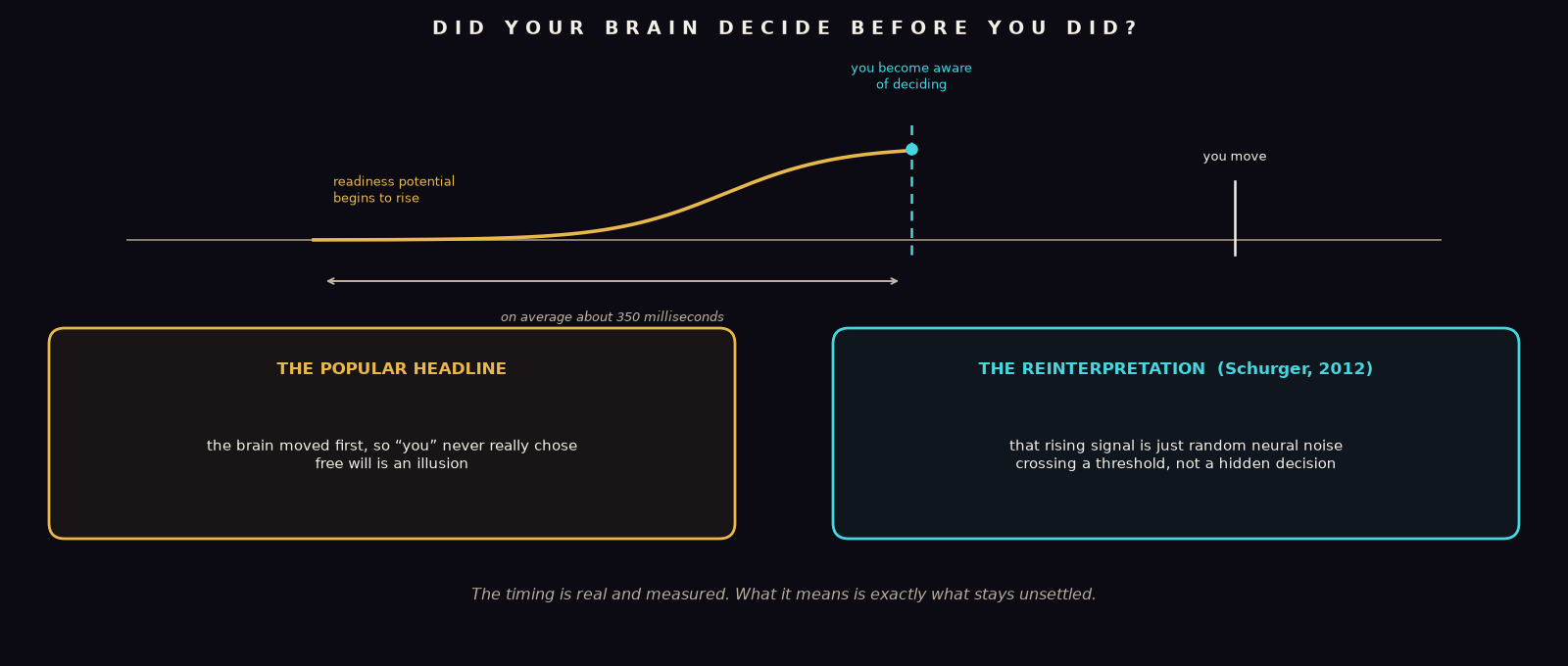
Somewhere in a laboratory, a brain scanner watches a person decide to move, and sees the decision forming a fraction of a second, sometimes several seconds, before the person feels themselves choose. That result launched a thousand headlines announcing that free will is dead. The truth is far more interesting and far less settled. The experiments are real and the timing is measured, but what they prove is one of the most fiercely contested questions in science and philosophy, and the honest answer is that they do not prove free will is an illusion at all. Here are the three serious answers, the famous experiments, and the exact point where the evidence stops and the interpretation begins.
Raise your hand whenever you like. Right now, whenever you feel the urge. It certainly feels like you just made a free choice, an uncaused decision that originated with you. The question this article circles is whether that feeling is true, or whether the sense of authorship is a story your brain tells after the fact about a decision it had already made. This is not an idle puzzle. Our entire moral and legal world, praise and blame, punishment and reward, rests on the assumption that people could have done otherwise. And in the last few decades, neuroscience has walked into the room carrying data that seems to threaten the whole structure. So let us do this carefully: first the science, then exactly what it does and does not show, and then the three serious answers reasonable people actually hold.
01The Setup: A Universe of Falling Dominoes
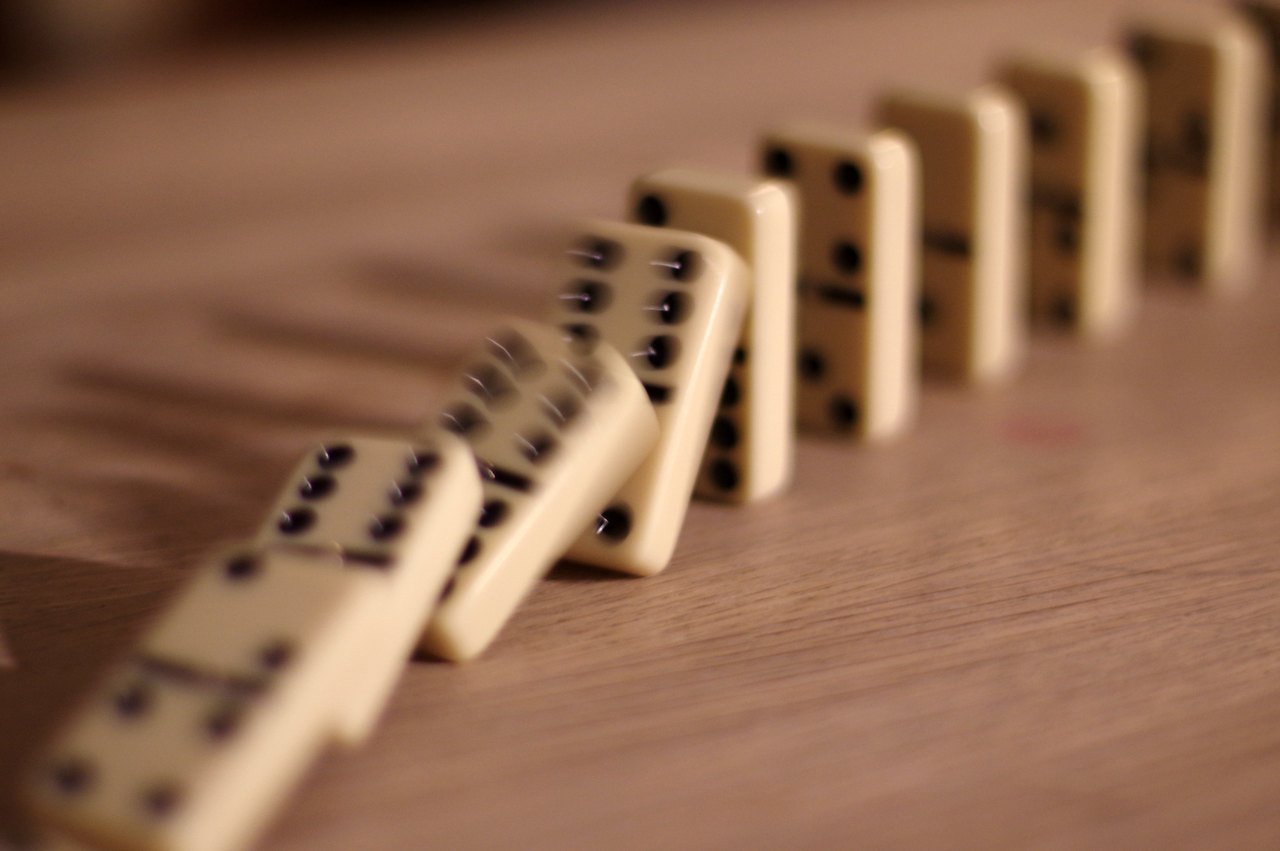
The threat starts with physics. In 1814 Pierre-Simon Laplace imagined an intelligence that knew the position and motion of every particle in the universe; such a mind, he argued, could calculate the entire future with perfect certainty, because classical physics is deterministic. Later writers named this hypothetical the 'Laplace's Demon.' Now add the modern premise: your brain is a physical object, its neurons are chemical and electrical systems obeying the same laws, so your thoughts and choices would seem to be as determined as any other physical process, the next domino in a chain reaching back to the beginning of time. This argument is coherent and genuinely unsettling. Note carefully, though, what it is: a premise that feeds the debate, not a resolution of it. Two of the three answers below fully accept that the brain runs on physics and still disagree sharply about what follows.
Doesn't quantum physics rescue us? Quantum mechanics is genuinely indeterministic under most interpretations; the timing of a radioactive decay has no hidden deterministic cause. But this rescue fails twice over. First, quantum effects are generally negligible at the warm, wet, noisy scale of neurons firing, so most neuroscientists treat the brain as effectively classical for behavior. Second, and more fundamentally, randomness is not freedom. If a quantum coin-flip in your head nudged your decision, that decision was not authored by you; it was just noise. An action you did not cause because a random event caused it is no more 'free,' in the sense that moral responsibility needs, than an action forced on you. This is the standard and widely accepted 'luck objection,' and it means the deep problem survives whether the universe is deterministic or not.
02The Experiments That Shook Everyone
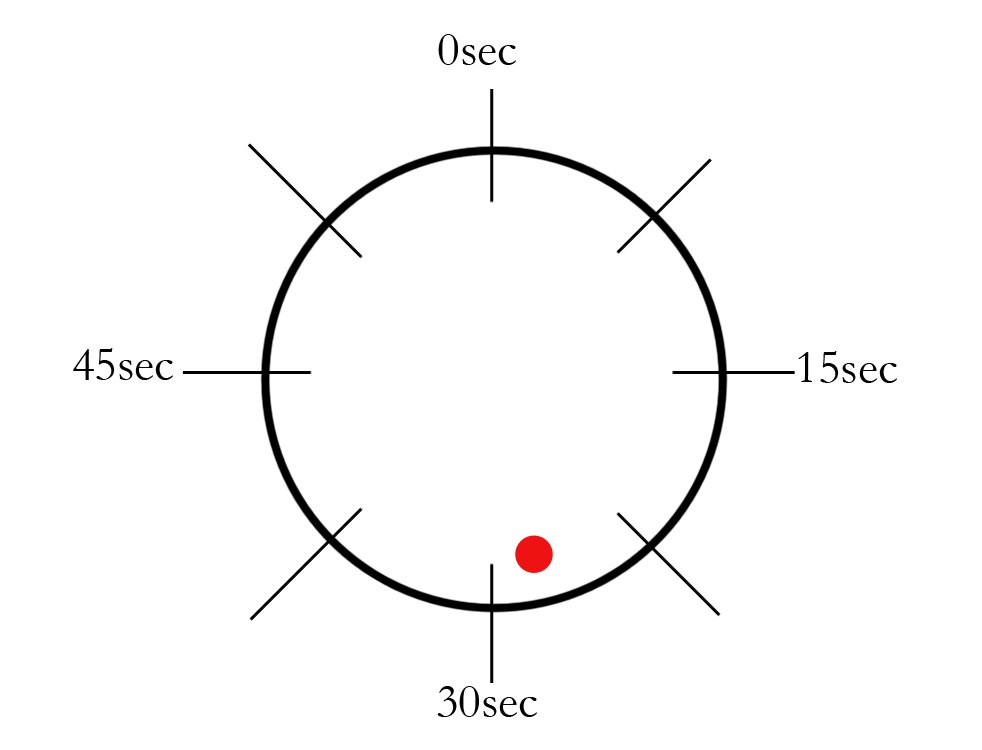
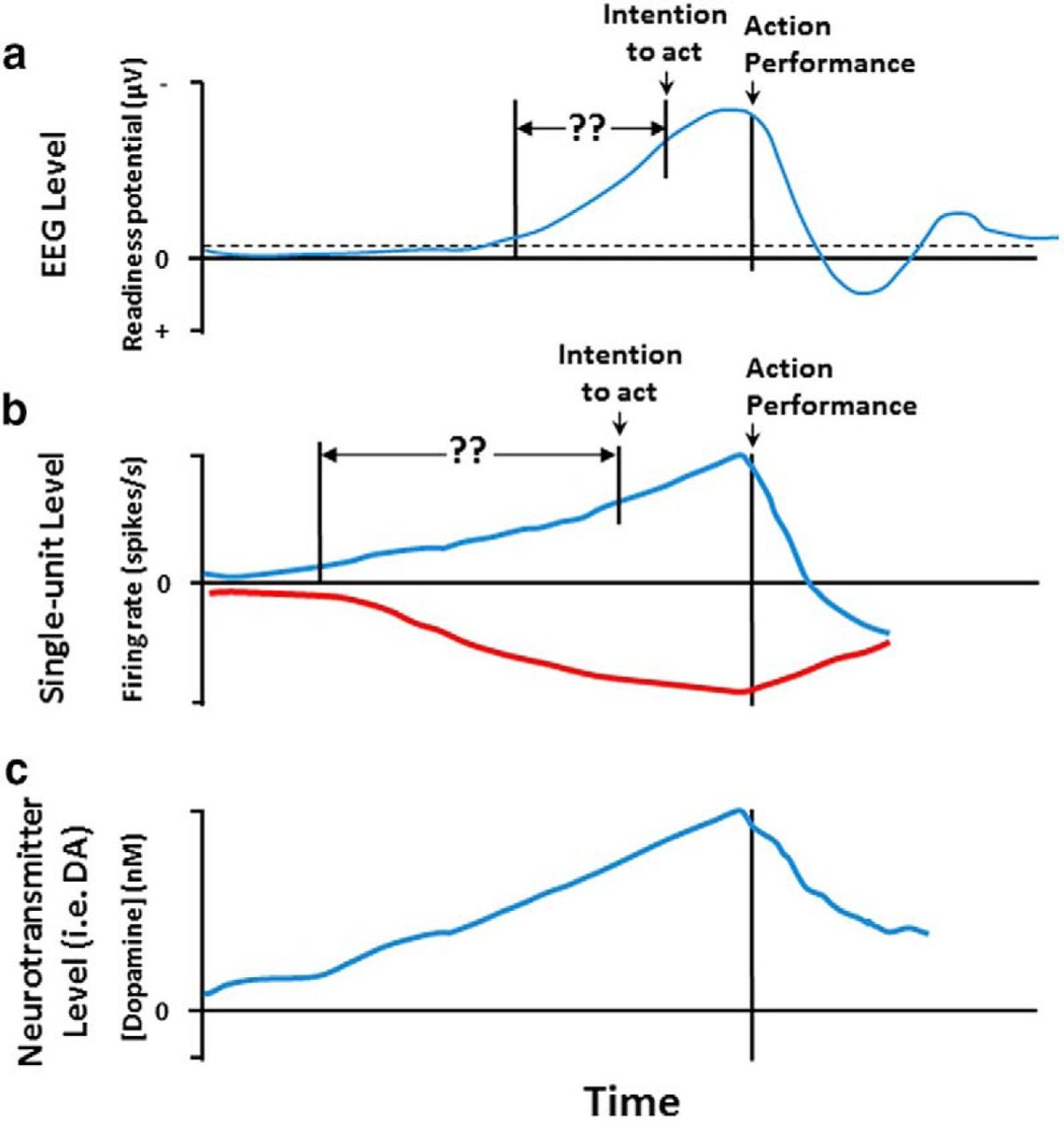
In 1983 the physiologist Benjamin Libet ran the experiment that started it all. Subjects were asked to flex a wrist whenever they spontaneously felt like it, and to note, on a fast-rotating clock, the exact moment they became aware of the intention to move. Meanwhile electrodes recorded a slow brain signal called the readiness potential. The result was startling: the readiness potential began to rise, on average, roughly 350 milliseconds before the subjects said they became aware of deciding. The brain, it appeared, was gearing up to act before the person consciously 'chose.' Libet himself, tellingly, did not conclude free will was dead. He argued a person could still consciously veto the movement in the gap before it happened, a power he called 'free won't.'
Later studies pushed the numbers further, and they are worth stating precisely rather than blurred together. In 2008, using fMRI, Soon and colleagues found that activity in the frontopolar and parietal cortex could predict which of two buttons a person would press up to seven to ten seconds before they reported deciding, though only with about 60 percent accuracy, where pure guessing scores 50. Separately, in 2011, Fried and colleagues recorded from individual neurons in the brains of neurosurgical patients and found that a population of cells in the supplementary motor area, which began ramping up as much as a second and a half before the person's reported awareness, could predict the coming decision with over 80 percent accuracy by about 700 milliseconds beforehand. These are real, replicated, remarkable findings. The mistake, which even careful writers make, is to treat 'the brain's activity predicts the choice' as identical to 'the person did not really choose.' It is not, and the next section is why.
03But What Do They Actually Prove?
Here is the single most important sentence in this article: the claim that 'neuroscience has proven we have no free will' is not true, and the researchers themselves are careful not to make it. The measured timing is real; the interpretation is contested, for four solid reasons. First, every task studied is a trivial, arbitrary motor twitch, when to flick a wrist, never a reasoned, high-stakes, deliberative choice, and there is no evidence these are the same neural process. Second, and most damaging, a 2012 reanalysis by Aaron Schurger and colleagues showed that the readiness potential is fully consistent with the brain being a 'leaky accumulator' of random background noise: the signal only looks like a decisive ramp because the data is time-locked to the movement after it happens, so the inference from 'the signal precedes awareness' to 'the brain already decided' collapses. Third, the fMRI prediction accuracy is around 60 percent, only slightly better than a coin flip, which is a bias, not a fixed fate. Fourth, the very idea of a single precise 'moment' of conscious decision to time against neural events was challenged decades ago by Dennett and Kinsbourne as possibly not even a coherent thing to measure. The honest state of the field is real data, genuinely unsettled meaning.
04Answer One: No, We Are Not Free
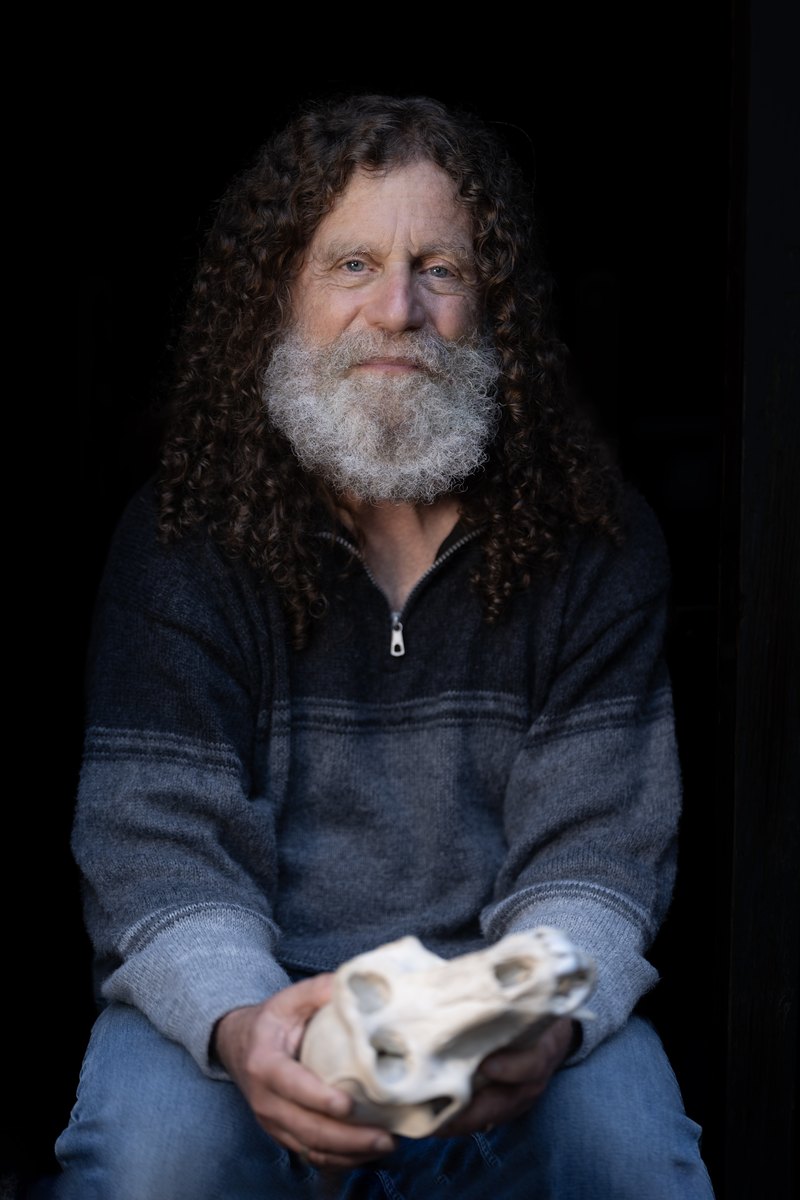
The first serious answer is that free will simply does not exist, a position called hard determinism or, in its subtler modern form, hard incompatibilism. The neuroscientist Robert Sapolsky made the fullest recent case in his 2023 book Determined: trace any decision back far enough, he argues, and you find only genes, prenatal environment, childhood, culture, hormones, and blood sugar, with no uncaused chooser anywhere in the chain. The philosopher Derk Pereboom sharpens the logic: determinism makes your choices the inevitable product of prior causes, and indeterminism only adds randomness, so neither one gives you the authorship that moral responsibility would require. Thinkers in this camp, including Pereboom and Gregg Caruso, tend to argue that we should therefore rebuild criminal justice around protection and rehabilitation, quarantining the dangerous the way we quarantine the contagious, rather than around retribution, which their view says no one ultimately deserves.
05Answer Two: Yes, and Determinism Is Fine
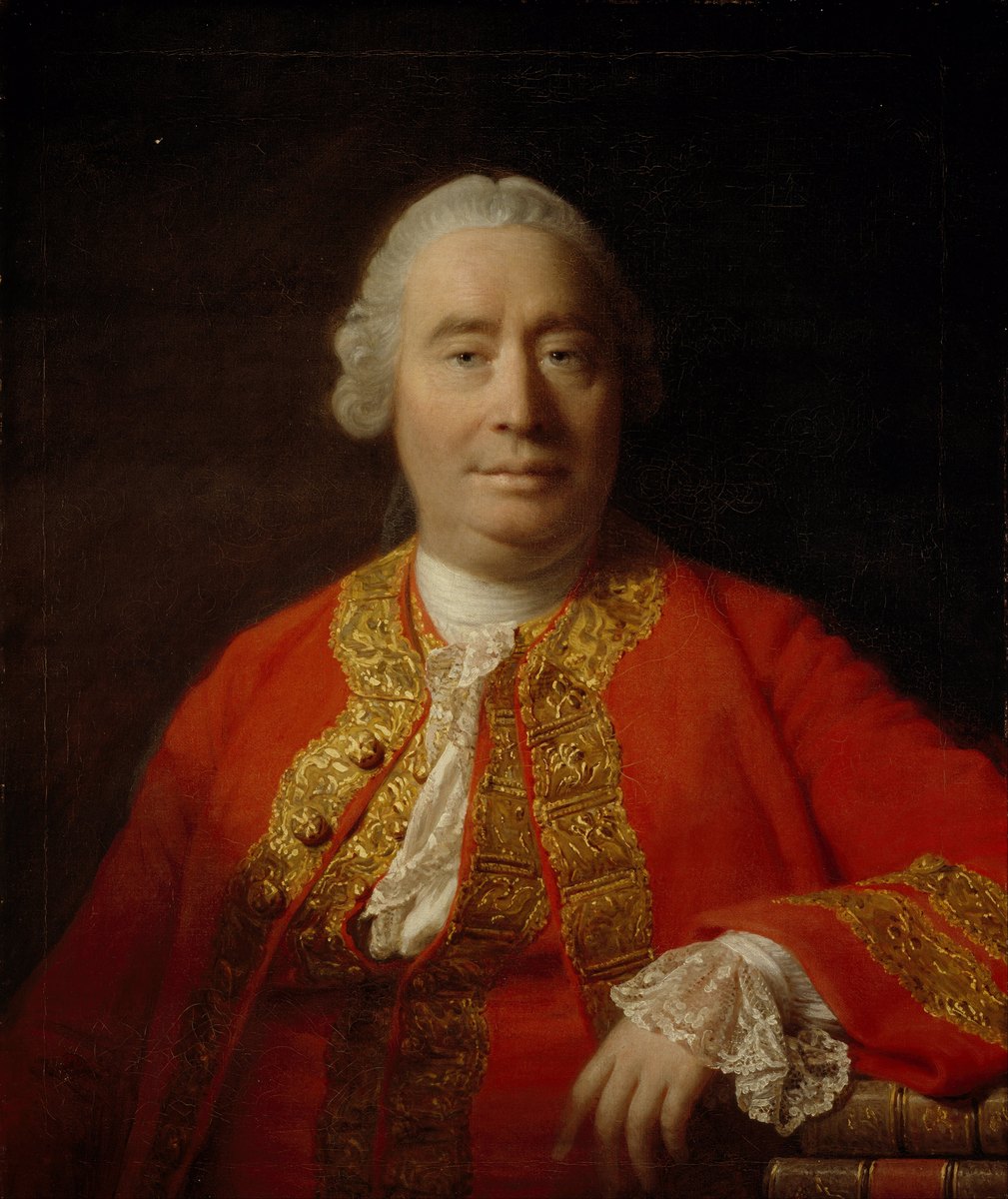
The second answer, and the most popular one among professionals, holds that free will and determinism are perfectly compatible, because we have been misunderstanding freedom all along. In the 2020 PhilPapers survey of philosophers, about 59 percent accepted or leaned toward compatibilism, against roughly 19 percent for libertarian free will and 11 percent for no free will. The founder of the view was David Hume, who argued in 1739 that a free action was never one without a cause; it was one without external coercion, an action flowing from your own desires and character, even if those were themselves shaped by prior causes. Harry Frankfurt sharpened it in 1969 with cases showing you can be morally responsible even when you could not have done otherwise, as long as you acted for your own reasons. Daniel Dennett, its leading living defender, argues the only freedom worth wanting, the capacity to act on reasons and respond to argument, is something a determined brain can absolutely have. The standard objection is that this redefines the word to dodge the real problem; whether it is a solution or a relabeling is genuinely unresolved.
06Answer Three: Yes, and It Is Real and Irreducible
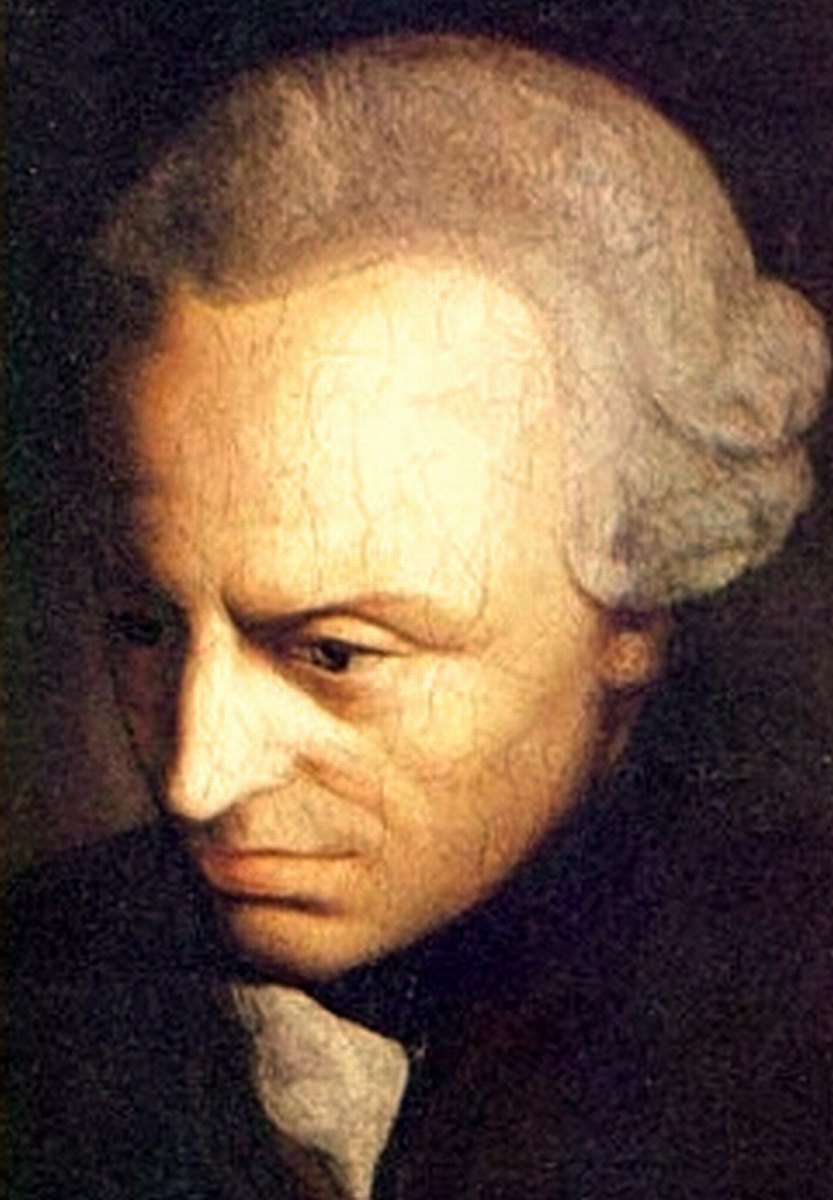
The third answer refuses the bargain: real, robust free will exists, the kind where you genuinely could have done otherwise, and it does not reduce to prior causes. This is libertarian free will (a metaphysical position with nothing to do with the political movement of the same name). Its defenders take different routes. 'Agent causation,' associated with Roderick Chisholm and Timothy O'Connor, holds that a person, as a substance rather than an event, can be an uncaused starter of new causal chains, though critics fairly ask how that works without something like a soul. Robert Kane locates freedom in rare 'torn decisions,' where genuine indeterminacy in the brain is resolved by the agent's own competing wills, making the outcome neither determined nor merely random. Immanuel Kant took the boldest line: the empirical world is fully deterministic, but the true self stands outside space, time, and causation and is free, a freedom he said morality forces us to assume even though no experiment could ever prove it. Each of these faces hard objections. None has been refuted.
07The World's Other Answers, and the Courtroom
The Western trilemma is not the only map. Classical Islamic theology argued for centuries over qadar, divine decree, splitting into the Ash'ari view (God decrees all, yet humans 'acquire' their acts in a way that grounds responsibility), the Mu'tazila view (real human freedom, to preserve God's justice), and the Maturidi middle path. Calvinist Christianity pushed predestination to its limit, God choosing the saved before creation, while still holding people responsible. Classical Hindu karma reads as a kind of semi-compatibilism, past acts shaping present circumstance while present choices remain free to shape the future. Buddhism dissolves the question differently: with no fixed separate self (dependent origination), there is no independent chooser to be free in the libertarian sense, yet liberation from the illusion of that self is exactly what is possible. And the Stoics relocated freedom inward entirely, to our judgments and responses, which they held remain ours even when events do not.
This is not abstract, because our courts run on it. Every modern legal system encodes a working theory of free will through concepts like mens rea, the 'guilty mind,' along with insanity, duress, and diminished-capacity defenses, all of which assume people are generally responsible for their choices except where that capacity is judged absent. The hard cases show the strain. In 1966 Charles Whitman killed sixteen people from the University of Texas tower, and his autopsy found a brain tumor pressing on the amygdala; whether, and how much, that tumor explains his acts has stayed genuinely disputed among experts ever since. In Roper v. Simmons (2005), the US Supreme Court cited adolescent brain-development research to rule the death penalty unconstitutional for crimes committed under age eighteen, a real case of neuroscience reshaping the law's picture of responsibility. Even the finding that merely reading a determinist argument made people cheat more (Vohs and Schooler, 2008) has to be reported with a caveat: later attempts to replicate it have largely failed.
Fast Facts
- The question
- Are our choices genuinely free, or the determined output of prior causes?
- The famous experiment
- Libet (1983): a brain signal rises ~350ms before reported awareness of deciding
- The key rebuttal
- Schurger (2012): that signal fits random neural noise, not a hidden decision
- Position 1
- Hard determinism / no free will (Sapolsky, Pereboom, Caruso)
- Position 2
- Compatibilism: free will and determinism coexist (Hume, Frankfurt, Dennett); about 59% of philosophers
- Position 3
- Libertarian free will: real, irreducible freedom (Kane, Kant, agent causation); about 19%
- The law's stake
- Mens rea, insanity, and diminished-capacity defenses all assume some free will
- The honest status
- Genuinely unresolved; the neuroscience has NOT proven free will is an illusion
What We Can Actually Stand Behind
The experiments happened and measured what they measured: readiness potentials and neural activity do reliably precede the reported moment of a simple decision, by hundreds of milliseconds to a few seconds. The three philosophical positions are real, seriously defended, and accurately described here, and by professional survey compatibilism is the most widely held. The law really does run on an assumed theory of responsibility. None of that is in dispute.
Whether we are free is genuinely open, and all three answers are held by serious, informed people. Compatibilism leads the professional headcount but a majority vote is not a proof, and the incompatibilist objection that it changes the subject has never been dispatched. Hard determinism and libertarianism both have real, current defenders and real, unanswered objections. Anyone who tells you the matter is settled, in any direction, is ahead of the evidence.
The frontier framings stay speculative: that a block universe fixes all future choices (compatibilists answer that your deliberation is one of the fixed events, so it is still you choosing), that consciousness collapses quantum possibilities to author decisions (a minority reading of physics), that simulated freedom inside a coded world would still count. Interesting, unresolved, not load-bearing.
No, neuroscience has not proven that free will is an illusion. The Libet-style results measure timing, not the metaphysics of authorship; the readiness potential may be noise, not a verdict; sixty-percent prediction is a lean, not a fate; and every task tested was a trivial twitch, not a considered choice. And no, quantum mechanics has not proven free will is real either: randomness is not freedom, and the Free Will Theorem is a statement about particles, not persons. Both triumphant headlines are refused. The real answer is that we do not yet know, and that is not a cop-out; it is the state of the evidence, honestly reported.
So did you really choose to raise your hand, back at the start? On the evidence, nobody can yet tell you for certain, and that uncertainty is not a failure of this article but the actual frontier of the question. What can be said is narrower and more honest than either headline. Your brain was busy before you felt yourself decide, which is strange and true and does not, by itself, mean the deciding was fake. The deepest thinkers who have looked hardest at this remain split three ways, and the science that was supposed to break the tie instead handed both sides ammunition. Perhaps the most useful thing to carry away is a kind of intellectual humility: the next time someone tells you, with a confident wave at a brain scan, that free will has been disproven, you now know enough to answer that the scan is real, the conclusion is not, and the oldest argument about who we are is still, genuinely, going on.
Sources & further reading
Everything above is drawn from our research library on Theories of Anything. Open the full file to check the sourcing and go deeper.
Image credits
- Original timeline diagram of the Libet experiment and its two rival interpretations Original diagram by Theories of Anything. CC BY-SA 4.0 Source.
- A line of dominoes falling in sequence (a visual metaphor for causal determinism) Kurt:S, via Wikimedia Commons. CC BY 2.0 Source.
- Illustration of the fast-rotating clock apparatus used to measure the reported moment of conscious intention in Libet's experiment Tesseract2, via Wikimedia Commons. CC BY-SA 3.0 / GNU Free Documentation License Source.
- Diagram of the distinct brain signals (readiness potential, single-neuron firing, neurotransmitter buildup) that precede a voluntary action Karim Fifel, via Wikimedia Commons. CC BY-SA 4.0 Source.
- Portrait photograph of the neuroscientist Robert Sapolsky, 2023 Christopher Michel, 2023, via Wikimedia Commons. CC BY-SA 4.0 Source.
- Allan Ramsay, portrait of David Hume (1766), Scottish National Portrait Gallery Allan Ramsay (1713 to 1784), via Wikimedia Commons. Public Domain Source.
- Painted portrait of Immanuel Kant (school of Anton Graff, c. 1790) After Anton Graff, c. 1790, via Wikimedia Commons. Public Domain Source.
- Card crop of the original Libet-timeline diagram Original diagram by Theories of Anything. CC BY-SA 4.0


.jpg)