
Does God Exist: The Arguments That Refuse to Die
Nine hundred years after Anselm, the arguments for and against the existence of God are still in print, still being answered, and still unresolved. This page maps them: the cosmological family from Aquinas and Leibniz and the Islamic kalam tradition, the ontological argument that needs no observation of the world at all, the design argument from Paley's eye to the fine-tuning of the physical constants, Pascal's Wager, which is not an argument that God exists, and the case against, which is larger than the problem of evil and is stated here at full strength. Every argument travels with the objection that has actually damaged it, and the objections travel with their replies wherever a published reply was found. Our own research file does not do that, and this page names where it departs from it and why. No winner is crowned here, in either direction, because the field has not crowned one either.
The arguments on this page are old and none of them is finished. Anselm wrote his in 1077 to 1078 and it is still being answered in journals; Aquinas set out five inside a work whose composition spans 1265 to 1274, and the objections to them are being published now; the design argument moved from the structure of the eye to the value of the physical constants and is argued over by philosophers using contemporary physics. That persistence is the subject here. These are not the arguments of a settled question, and they are not the arguments of a closed one either.
What this page does is set out five families of argument bearing on the existence of God, and the case against, at the strength their defenders and their critics actually give them. One of the five, Pascal's Wager, is not an argument that God exists at all but an argument about what it is rational to do without knowing, and section 05 is about why that difference matters. What it does not do is announce a result. That restraint is not diplomacy. The standard reference literature in the field does not announce a result either, and our own research file, in the section where it grades its own claims, marks the belief that philosophy of religion has solved this question as incorrect and says the field remains one of the most actively debated areas of philosophy. An article that resolved by tone what the literature leaves open would be reporting something false, whichever way it leaned.
A disclosure about the file this page is built on, because it changes how the page is organised. Our research document on the philosophy of religion is a good map of the arguments and a poor map of the objections to them. It states three cosmological arguments and records not one objection to any of them. It gives Plantinga's modal ontological argument without Plantinga's own statement that the argument does not prove its conclusion. It does not mention Gaunilo, the argument's oldest critic, at all. It states Paley's watchmaker with no counter and names Hume twice, once in a lineage list and once in a three-name list under a heading about conflict, never in connection with design. Its section on religious experience runs three defences and no objections. And every living philosopher named in its body is a defender of theism or of the evidential value of religious experience; Graham Oppy, one of the leading contemporary critics of theistic argument, sits in its bibliography and never appears in its text. Following that file's order and its silences would produce an apologetic without a single false sentence in it. This page therefore does not follow it, and section 13 lists all ten places where it departs.
One further defect in that file has to be named rather than quietly worked around. It carries a block headed Counter-Arguments and Criticisms which asserts that no significant counter-arguments exist in the scholarly literature for the claims it presents, and that the subject represents established philosophical consensus with no active scholarly dispute over the fundamental claims presented in it. Its own graded section says the opposite in terms. Both cannot be true, and the second is the true one. The paragraph is not a finding: the identical text appears word for word in another of our research files with the subject name swapped, which is what identifies it as generator boilerplate. It is refused here, it is refused in the verdict at the foot of the page, and it is worth stating plainly that a templated denial of dispute sitting inside a file about a question that same file calls one of the most actively debated in philosophy is exactly the kind of thing a reader is entitled to be told about a source.
A note on the quotation marks, which fail often on this subject. Every quotation below names whose words it is: a named translator's, a named philosopher's as a named reference work quotes them, or a reference work's own. Where the research behind this page could not read a passage off a primary text or a named reference work, the wording is loosened until it cannot be mistaken for a transcription and no quotation marks appear. Three refusals belong on the record before anything else. The closing sentence of chapter 2 of Anselm's Proslogion is not quoted here in any form, because the academic copy of Sidney Norton Deane's translation read for this article carries visible transcription damage in that very paragraph, including what appears to be a dropped negation that turns Anselm's conclusion into its own opposite; section 03 says what that means and what is quoted instead. Nothing is quoted from William James, because the public domain text truncated twice at the third lecture and the lectures where he gives the marks of mystical states were never read; in particular his four marks are not printed here as a quoted list. And no percentage of professional philosophers who believe in God appears anywhere on this page, because three separate routes to the survey results returned an error or a bot gate, and a remembered figure is not a source.
Two citations in the source list below deliberately carry no identifier at all. Not one of the eight identifiers in our own file's bibliography is usable exactly as printed, and section 13 gives the count; the replacements used here were resolved live and their returned titles read against the works they name. For two of them no correct identifier could be found, and a wrong identifier that resolves to a real paper is worse for a reader than no identifier at all, so those two ship bare.
Several neighbouring subjects are not this one. The problem of evil is the oldest and most developed argument against classical theism and it has its own article in this library, The Problem of Evil, which carries the transmission history, the taxonomy of evils and seven answers to it; section 06 here gives the argument one paragraph and a link, and nothing more, because the sibling states it in more detail and with better sourcing than our file on this subject can support. Descartes belongs to Radical Doubt, which is live in this library; his own arguments about God are not carried in our research file and are not imported here. And two arguments this library has not built yet are named rather than developed: Spinoza's identification of God with nature, and Leibniz's question of why there is anything at all, which appears below only as one leg of the cosmological argument.
01Which God Is On Trial
Philosophy of religion is the branch of philosophy that examines the concepts, arguments and experiences at the heart of religious belief and practice, and it does so from outside every particular faith tradition rather than from inside one. Our research file lists its central questions: whether God exists, and whether that can be demonstrated by reason, which is natural theology, or only accepted on faith, which is fideism; what the nature of God is; how the existence of evil and suffering squares with an all-powerful and all-good God; whether religious experience can provide evidence for the existence of God; whether there is one true religion or all religions contain partial truths about the same ultimate reality; and what the relationship between faith and reason is. That the discipline is defined by asking the question from outside every tradition is not a technicality. It is the only footing on which a page can carry both sides at full strength.
The God these arguments are about is classical theism's God: omnipotent, omniscient, perfectly good, necessary and personal. Our file's own question asks whether God is classical theism's or something else again, and names deism, pantheism and panentheism as the examples of something else. This matters in both directions. An argument that succeeds for a necessary first cause has not thereby succeeded for a personal and perfectly good God, and an objection that defeats classical theism does not touch deism or pantheism. Most of the popular argument about this subject is a scope confusion, and the sections below say each time which God is on trial in them.
The terms need fixing once, because half the public argument runs on two people using one word in two senses. The Stanford Encyclopedia of Philosophy's entry on atheism and agnosticism, by Paul Draper, defines the word rather than the position: "in philosophy, and more specifically in the philosophy of religion, the term \"atheism\" is standardly used to refer to the proposition that God does not exist". That is the proposition, not the psychological state of lacking belief in God. That entry acknowledges the lack-of-belief definition and argues against it. It also distinguishes two senses of agnosticism: the psychological one, suspending judgement, and the epistemological one, the claim that neither theism nor atheism is known to be true. On the philosophical definition atheism is a proposition and carries its own burden, which is the subject of section 06.
Every argument on this page, if it worked, would establish something narrower than the God its defenders believe in. The cosmological arguments reach a first cause or a necessary being. The design arguments reach a designer. The fine-tuning argument reaches a designer of constants. Religious experience reaches something experienced. None of those is automatically omnipotent, perfectly good, singular or personal, and Hume made exactly this objection in his Dialogues Concerning Natural Religion, published in 1779. Defenders have answers to it, and the answers are further arguments rather than extensions of the same one. This cuts against the arguments without refuting any of them, which is why it is stated here once, early, and not laboured afterwards.
Our file names two routes to belief, natural theology and fideism, and gives the lineage of the field's arguments: from Plato and Aristotle through Anselm, Aquinas, Pascal, Hume and Kant to modern figures including Alvin Plantinga on reformed epistemology, Richard Swinburne on inductive natural theology, John Hick on religious pluralism, and their critics. Note the last three words. The file's own summary promises critics; its body delivers no living one. Supplying them is most of what the sections below add.
02The Cosmological Family, And The Objections Our File Leaves Out
Cosmological arguments reason from the existence of the universe to a First Cause or a Necessary Being. Our file gives three. Aquinas's Five Ways, which argue from motion, from efficient causation, from contingency, from degrees of perfection and from teleology, and which the file dates 1265 to 1274; that range is the composition span of the Summa Theologiae as a whole rather than the date of the Five Ways passage, and it is printed here as such rather than implying Aquinas took nine years over one article. Leibniz's Principle of Sufficient Reason, that everything which exists must have a reason for its existence and that the universe as a whole requires one, which must be a Necessary Being. And the kalam cosmological argument, in the form that the universe began to exist, whatever begins to exist has a cause, and therefore the universe has a cause. A note that governs this whole page: our file grades these as its Tier 1 material, and that grading is correct, because what is verified is the textual and historical fact that these arguments were made, by whom, when and in what form. A Tier 1 tag on an argument is not a Tier 1 verdict on its conclusion.
The Five Ways are the reply to a single article of the Summa Theologiae, First Part, question 2, article 3, whose title is this page's own title in miniature: Whether God exists? In the standard English translation by the Fathers of the English Dominican Province, second and revised edition of 1920, read for this article at New Advent, the reply opens "The existence of God can be proved in five ways." The first of them runs "The first and more manifest way is the argument from motion.", and begins from an observation rather than from a definition: "It is certain, and evident to our senses, that in the world some things are in motion." The locus is the point. A reader who wants to check the Five Ways can be sent to a page and a half, and our file sends them to a work in five volumes.
The second leg of the family is Leibniz's Principle of Sufficient Reason. The Stanford Encyclopedia of Philosophy's entry on the cosmological argument, by Bruce Reichenbach, first published 13 July 2004, states the principle in Leibniz's own formulation as "no fact can be real or existing and no statement true without a sufficient reason for its being so and not otherwise", and reports that Leibniz used it to argue that the sufficient reason for the series of things comprehended in the universe of creatures must lie outside that series. That wording is quoted as the encyclopedia's rendering of Leibniz rather than as a translation checked against a Leibniz text. The larger question of why there is anything at all belongs to an article this library has not built, and is not developed here.
The Principle of Sufficient Reason is the pressure point of the entire cosmological family, and the Stanford entry names three lines of attack on it. Peter van Inwagen argues the principle is false, on the ground that no contingent proposition can adequately explain itself and necessary propositions cannot explain contingent ones. Hume challenged whether causation is an objective, productive, necessary power relation at all. And critics hold that the principle has no a priori justification and cannot be extrapolated inductively from things within the world to the world itself. An argument whose central premise is denied by named philosophers is not an argument with no counter. Everything in this claim is supplied from outside our research file, which records nothing here at all.
The kalam cosmological argument is Islamic in origin, not Christian. The Stanford entry gives al-Ghazali's dates as 1058 to 1111 and reports that he argued that everything which begins to exist requires a cause of its beginning, and that the world is composed of temporal phenomena preceded by other temporally ordered phenomena. The argument developed in Islamic theology among the mutakallimun and entered the medieval Christian tradition through Bonaventure. The argument now most closely identified with an American Christian apologist reached him through nine centuries of Islamic theology, and our file gives only a surname in brackets. The same entry names William Lane Craig as its primary contemporary defender and says he marshals multidisciplinary evidence for the truth of its premises.
The modern statement of the kalam argument is a hundred-page chapter rather than a slogan. Craig and James D. Sinclair's contribution to The Blackwell Companion to Natural Theology, published by Wiley in 2009, runs from page 101 to page 201. Our file lists that volume in its bibliography with no identifier and never cites it. The three-line syllogism is what makes the argument look easy to defeat and easy to accept, and neither is true; a reader who wants the case at full strength now has the chapter and its identifier in the sources below.
The kalam argument's live objections, as the Stanford entry records them with names attached. Quentin Smith argues from quantum phenomena that the causal premise is limited in its application, if it applies at all. Bede Rundle argues that the counterintuitive features of infinity are the defining characteristics of an infinite set rather than an absurdity, and separately that past and future series are symmetrical, both indefinitely extendible rather than actually infinite. Wes Morriston argues that an actual infinite future is possible, which undermines the distinction between potential and actual infinites that the argument's second premise rests on. Christopher Cohen challenges its temporal assumptions.
The argument's most exposed step is not the causal premise but the last one, the move from the universe has a cause to the cause is personal. Morriston put that objection in print in Faith and Philosophy in 2000, in a paper titled Must the Beginning of the Universe Have a Personal Cause?, running from page 149 to page 169. Craig published a rejoinder in the same journal in 2002 under the same title with the subtitle A Rejoinder, at pages 94 to 105. This pair is the model for how the whole page works: an objection and its answer, both dated, both citable, neither presented as final. A limit belongs on it. Neither paper was read for this article, only the two publication records, so nothing beyond the titles, journal, years and pages is attributed to either man, and neither argument is summarised here.
The Stanford entry's own summary of where the cosmological argument stands is not symmetrical, and the shape it actually has is the one carried here. It reports that "Both theists and nontheists in the last part of the 20th century and the first part of the 21st century generally show a healthy skepticism about the argument." It then introduces Robert Koons, William Lane Craig, Andrew Loke, Richard Gale, Alexander Pruss, Michael Almeida and Richard Swinburne with a single line: "Yet dissenting voices can be heard." Graham Oppy concludes that no current version of the argument is sound. And on the state of play the entry writes: "In short, in contrast to the first half of the last century, contemporary philosophers contribute increasingly detailed, complex, and sophisticated arguments on both sides of the debate as to the soundness, cogency, or usefulness of the cosmological argument." Broad scepticism, with named people dissenting from it in print.
The cosmological arguments are neither unanswered nor dead. Our file states three of them and records not one objection, while giving the ontological argument Kant's objection and the design argument the multiverse and anthropic replies. That asymmetry is an artifact of how the file was assembled rather than a report on the literature: this is the family with the largest live objection set, and the four claims above carry it. The mirror refusal binds just as hard. An article presenting this family as obviously refuted would be making the same mistake with the sign reversed, which is why Koons's and Craig's refined defences are named in the same breath as Oppy's conclusion.
03The Argument That Needs No World
Ontological arguments reason from the concept of God to God's existence, which is what sets them apart from every other argument on this page: they require no observation of the world at all. Our file gives three moments. Anselm's original. Kant's objection that existence is not a real predicate. And Plantinga's modal version, that if it is possible that a maximally great being exists then by S5 modal logic such a being exists in all possible worlds, including the actual one. The interesting question about this family is not whether it convinces, since the standard reference treatment concludes that no version of it gives a reason to anyone who does not already accept its conclusion, but why it will not die after nearly a thousand years of people being certain it is wrong.
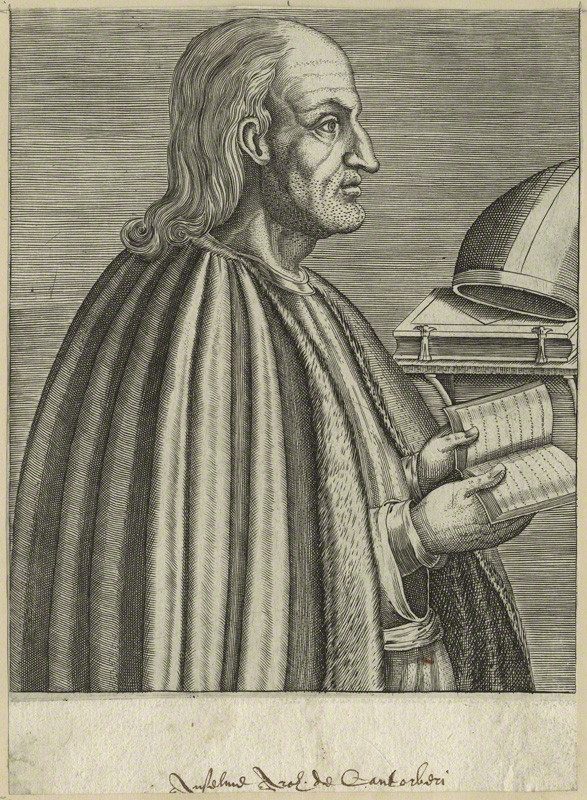
Our file prints a bare year for Anselm's argument, 1078. The Stanford Encyclopedia's entry on Anselm of Canterbury, by Thomas Williams, first published 18 May 2000 with a substantive revision of 16 July 2023, dates the composition of the Proslogion to 1077 to 1078, and the earlier Monologion to 1075 to 1076. This page prints the range rather than the bare year, because a single year that is the tail end of a two-year span reads as a precision the sources do not have. The distinction between the two books also matters for the argument itself: the Monologion argues for God from features of the world, and the Proslogion is Anselm's attempt at a single argument needing nothing but the concept.
Anselm's formula, in Sidney Norton Deane's 1903 translation, is "a being than which nothing greater can be conceived", and where the phrase stands alone he writes "that, than which nothing greater can be conceived". The argument turns on a distinction Deane's text puts plainly: "For, it is one thing for an object to be in the understanding, and another to understand that the object exists." Our file states the move correctly: if God existed only in the understanding and not in reality, then a greater being, one existing in reality, could be conceived, which is a contradiction. Those three fragments are the only wording quoted here from that passage, and the reason is a defect in the source rather than in the argument. The copy read for this article, Fordham University's Internet Medieval Sourcebook, prints in the same paragraphs several unmistakable transcription errors, and its closing sentence appears to have lost a negation, so that as printed it asserts the opposite of Anselm's conclusion. Whether that is the host's scanning or an artifact of the fetch could not be determined, and the rule is the same either way: that sentence is not quoted here in any form.
The oldest live objection to the ontological argument does not appear in our file at all. Gaunilo of Marmoutiers, a monk and a contemporary of Anselm, wrote a reply called In Behalf of the Fool which is printed alongside the Proslogion in every standard edition, including the one this article read. His counter-example is an island: run Anselm's reasoning on the greatest conceivable island and the reasoning appears to prove the island exists. It is the lost island, not the perfect island. Deane's translation reads that "it is said that somewhere in the ocean is an island, which, because of the difficulty, or rather the impossibility, of discovering what does not exist, is called the lost island", in a text whose host states it was modernised in spelling from the Christian Classics Ethereal Library etext; the Stanford entry renders Gaunilo's phrase as that island than which a greater cannot be thought. The popular retelling as a perfect island is a drift, and it is not repeated here. Omitting Gaunilo while including Plantinga's modern revival is the clearest single instance of our file's tilt.
Anselm did reply to Gaunilo, at length, in a text printed beside the Proslogion. What he did not do is answer the island directly, and the Stanford entry on Anselm gives the reason: "A more careful look at Anselm's reply to Gaunilo, however, shows that Anselm offered no rejoinder to the Lost Island argument because he rejected Gaunilo's interpretation of the original argument of the Proslogion." It adds: "In particular, Anselm insists that the original argument did not rely on any general principle to the effect that a thing is greater when it exists in reality than when it exists only in the understanding." The popular story is that Gaunilo refuted Anselm and Anselm had no answer. Anselm answered, at length and in writing, and that much is a matter of record. Why he never answered the island directly is a reading rather than a record, and the sentence quoted above is the entry arguing for one, as its own opening words concede. An article that simply told the popular story would have crowned a winner by omission exactly as our file does in the other direction. Whether Anselm's reply succeeds is precisely what is still argued about nine hundred years later.
Even the boundary of Anselm's argument is contested. The same Stanford entry reports that the single argument Anselm promised is commonly said to be the one in chapter 2 of the Proslogion, and adds that some interpreters understand the one argument as extending into chapter 3, where Anselm argues that God cannot be conceived not to exist. A thousand years of attention has not settled where the argument stops.
Kant's objection is that existence is not a real predicate: it adds nothing to the concept of a thing. On our file's account and on the Stanford Encyclopedia's, this is the most famous objection to the ontological argument. Notice what the encyclopedia does not do with it, and this page does not do it either. It does not endorse the objection. It reports it as famous and then immediately quotes Bertrand Russell on how much harder it is to say what is wrong with these arguments than to be persuaded that they are no good. Presenting Kant's line as the moment the argument died would be a verdict rather than a report.
Plantinga's modal version, as our file states it: if it is possible that a maximally great being exists, then by S5 modal logic such a being exists in all possible worlds, including the actual one. The parity point its critics make is easy to state and worth stating. The possibility premise is doing all the work, and someone who holds that a maximally great being is impossible can run the same modal machinery in reverse to the opposite conclusion. That is not a knockdown either, which is why what the argument's own author says about it matters so much.
Plantinga does not claim his argument proves God exists. Quoted in the Stanford entry on ontological arguments, he writes of his modal arguments: "They cannot, perhaps, be said to prove or establish their conclusion. But since it is rational to accept their central premise, they do show that it is rational to accept that conclusion." That quotation is second-hand, from the encyclopedia rather than from Plantinga's own book, and the original prints two of its words in italics, which this page could not reproduce. Our file places the modal argument immediately after Kant's objection and stops, which reads as the objection answered and the argument carried. That is not what its author says about it. The repair is not to weaken the argument but to let its author state its scope, and this is the single clearest place where our file tips the scale further than its own evidence goes.
The Stanford entry's conclusion about ontological arguments is that "none of them is persuasive, i.e., none of them provides those who do not already accept the conclusion that God exists and who are reasonable, reflective, well-informed, etc. with either a pro tanto reason or an all-things-considered reason to accept that conclusion". The clause in the middle is the one a shortened version of this quotation usually drops, and it narrows the claim twice over: the entry is talking about a particular class of hearer, and its own sentence scopes the criticism to the ontological arguments that have appeared so far. That is a narrower claim than the argument fails, and it is kept narrow here. An argument can be valid, can have premises its defenders rationally accept, and still persuade nobody who did not start where its defenders start. Set beside the sentence pulled out above and beside Plantinga's own limit, that gives the section its honest shape: not refuted, not persuasive, still alive.
04From The Eye To The Constants
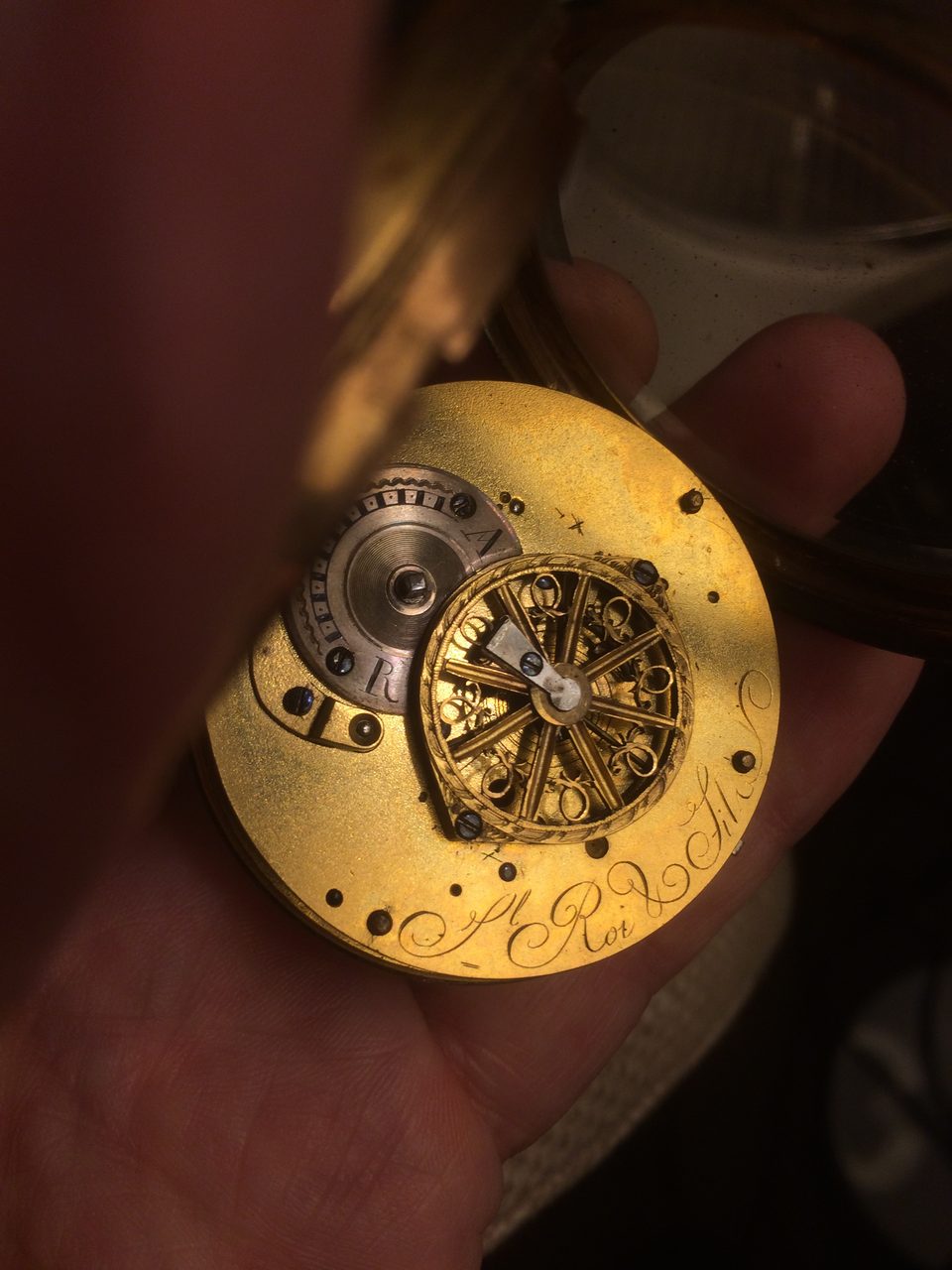
Teleological or design arguments hold that the universe exhibits apparent purpose, order or fine-tuning. Our file gives two. Paley's watchmaker of 1802, that the complexity of biological organisms implies a designer. And the fine-tuning argument, that the physical constants of the universe appear finely calibrated for life, taken by some, and it names Robin Collins and Richard Swinburne, as evidence of design, and by others as explained by the multiverse hypothesis or by anthropic selection. That fine-tuning sentence is the one place in the whole file where a case and its rebuttal appear in the same breath, and it deserves the credit. Its Paley sentence has no reply at all.
A correction to the standard retelling, and it decides whether the argument is easy to dismiss. The Stanford Encyclopedia's entry on teleological arguments for God's existence, by Del Ratzsch and Jeffrey Koperski, first published 10 June 2005 with a substantive revision of 5 April 2023, describes Paley's argument as deductive rather than analogical: the watch is a paradigm case in which a design inference is uncontroversial, and Paley then applies the same reasoning to natural objects such as the eye. In the entry's quotation of him: "There is precisely the same proof that the eye was made for vision as there is that the telescope was made for assisting it." Four of those words, precisely the same proof, are italicised in the original in a way this page cannot reproduce. The popular version, in which Paley argues from an analogy between watches and organisms, is the version Hume had already answered, and the entry suggests Paley structured his argument as he did precisely to avoid Hume's criticisms. An article that presents Paley as making the analogy argument is answering a book its author wrote around.
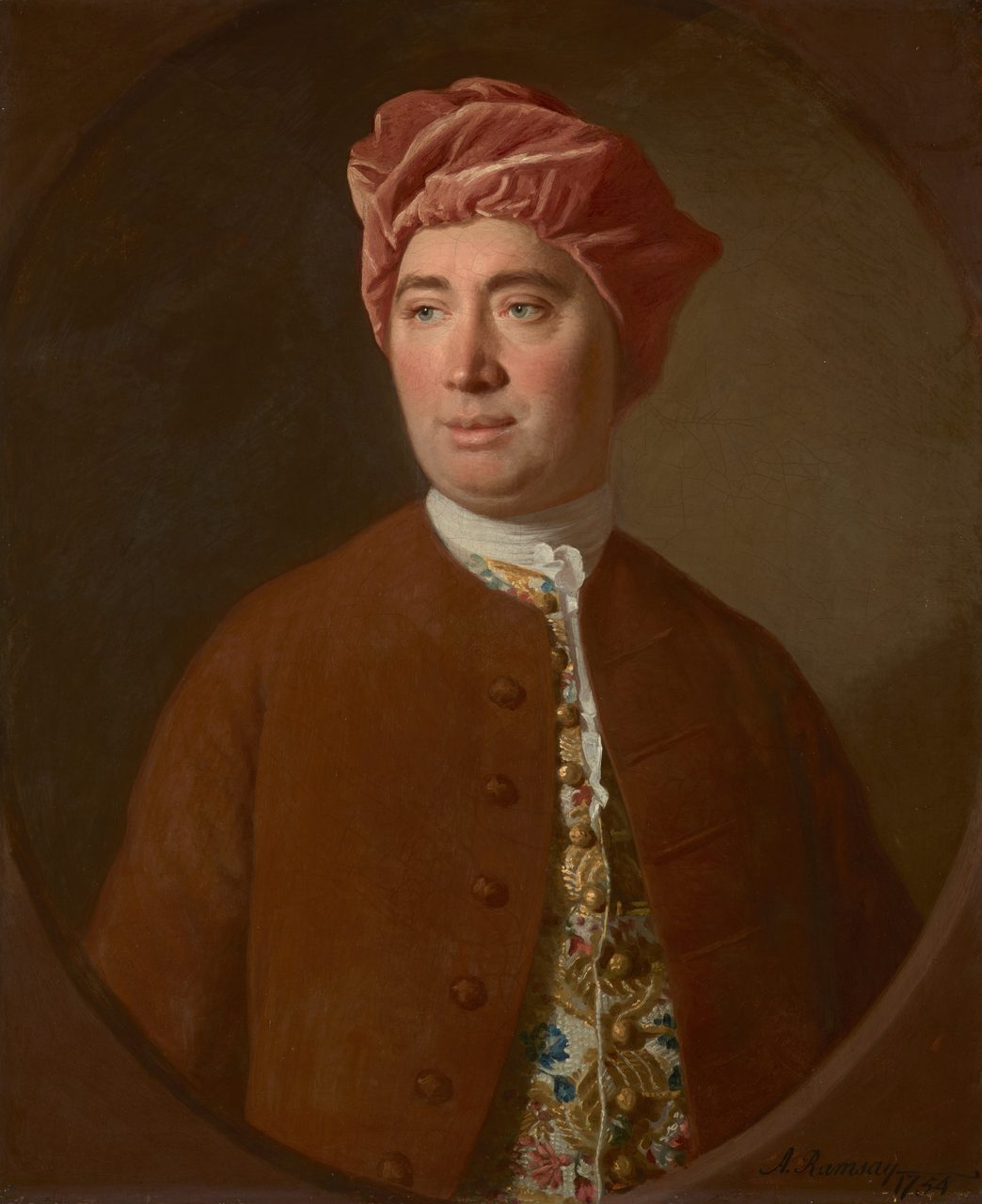
Hume's Dialogues Concerning Natural Religion was published in 1779. Paley's Natural Theology was published in 1802. The standard objections to the design argument are older than the version of the argument most people know, by more than two decades. This one date pair is the most efficient fact in the whole design section, and our file names Hume twice, once in its lineage of the field and once in a three-name list under a heading about conflict, and never in connection with design.
The Stanford entry records three Humean objections to design arguments. That natural phenomena do not closely resemble human artifacts, so the inference is weaker than it looks. That alternative explanations, including chance, are available. And that even if design were established it would not support the traditional conception of God, since the designer of a flawed and finite world need not be infinite, singular or good. The third is the one that survives Darwin, and it is the one this page most needs, because it applies to fine-tuning exactly as it applies to eyes: a successful design inference gets a designer, not the God of classical theism. The Dialogues themselves were not read for this article, so nothing is quoted from Hume and these objections are reported as the encyclopedia states them rather than as Hume phrased them.
Darwin's theory supplied a plausible and better alternative explanation for biological adaptation, which undercuts design arguments resting on gaps in the biological record. The entry immediately qualifies its own point, and the qualification travels here in its own words: "Undercutting and explaining away are not necessarily the same thing". The honest compressed form is that Darwin gave the design argument's biological version a rival it did not have in 1802, which is why the argument's centre of gravity moved to physics.
The fine-tuning argument holds that the physical constants of the universe appear finely calibrated for life. Our file names Robin Collins and Richard Swinburne among those who take this as evidence of design, and names the multiverse hypothesis and anthropic selection as the rival explanations. A scope limit binds this whole section. Fine-tuning is carried here as a design argument in philosophy. This page does not explain inflation or string landscapes, does not adjudicate any physics, and where the physics is contested says that the philosophers are arguing about contested physics, which is true and is the honest position. Collins's own defence is an eighty-page chapter in the same 2009 Wiley volume that carries Craig and Sinclair on the kalam argument, running from page 202 to page 281; our file attributes fine-tuning to him in a parenthesis and cites nothing. The chapter was not read for this article, and nothing is attributed to Collins beyond having written it, where, and how long it is.
The Stanford entry gives three example figures as illustrations of what fine-tuning claims: a cosmological constant said to be constrained to about one part in ten to the fifty-third; the strong nuclear force, of which the entry says, with carbon and oxygen as the one and the other, "If the strong nuclear force were different by 0.4%, there would not be enough of one or the other for life to exist."; and Lee Smolin's estimate of roughly one in ten to the two hundred and twenty-ninth for the probability of stars existing, on which Smolin comments, "In my opinion, a probability this tiny is not something we can let go unexplained." The tier here is lower than a reader would guess and the downgrade is deliberate, so the reason is stated on the claim rather than left in a note. The physics is not in doubt. The probability assignment is. Every one of these figures is a calculated probability whose value depends entirely on an assumed range and an assumed probability measure over that range, which is the exact thing the normalisation objection below says may be mathematically undefined. They are illustrations of what the argument asserts, not measurements of anything, and they appear nowhere else on this page for that reason.
Our file's own two replies to fine-tuning are the multiverse hypothesis and anthropic selection. The Stanford entry states the anthropic reply in its weak form: we should not be surprised to observe life-permitting constants, because we could not observe anything else. It also records that the multiverse reply is not free, since it requires knowing whether universe production is biased toward life-permitting values. Our file gets this right, and giving it credit where it is balanced is part of carrying it honestly.
The normalisation objection is the technical heart of the case against fine-tuning and our file does not carry it. The Stanford entry attributes it to McGrew and colleagues: the probabilities the argument depends on may be mathematically undefined over an infinite parameter space, because there is no way to spread a probability measure evenly over an unbounded range. If that is right, the argument does not lose, it fails to start, which is a different and harder kind of objection than the multiverse reply. The paper is Probabilities and the Fine-Tuning Argument: a Sceptical View, in Mind in 2001, and it has three authors, Timothy McGrew, Lydia McGrew and Eric Vestrup; the publication record returns only the first of them, which is a limit of the record and not a fact about the paper. The paper was not read for this article and the position is reported as the encyclopedia states it.
Two further live objections our file does not carry. Elliott Sober argues that the observer's own existence creates a selection effect which prevents the observation from confirming design at all. And Sean Carroll argues that a multiverse large enough to explain fine-tuning would likely contain more randomly generated conscious observers than ordinary ones, which is the Boltzmann brain problem, and which counts against the multiverse reply rather than for the design argument. The second is carried here precisely because it damages the side our file leaves undamaged: a page that only ever complicated the theist's arguments would be tipping the scale, and this is the clearest available difficulty on the other side. Neither paper was read; both positions are reported as the encyclopedia states them.
The Stanford entry's overall assessment is that design arguments are logically contestable and that the empirical evidence is inferentially ambiguous, while design intuitions remain durable despite the philosophical controversy, possibly reflecting involuntary cognitive mechanisms rather than any successful inference, in the way our convictions about the external world or about other minds do. That last clause is double-edged and it stays that way here. It can be read as explaining the intuition away, and it can be read as putting belief in design in the same epistemic company as belief in other minds, which is close to what reformed epistemology claims in section 08. Resolving the ambiguity in either direction would be adding something the source does not say.
05Pascal's Wager Is Not An Argument That God Exists
The Wager is not an argument that God exists. It is an argument about what it is rational to do given that one does not know. The Stanford Encyclopedia's entry on Pascal's Wager, by Alan Hajek, first published 2 May 1998, quotes Ian Hacking's description of it as "the first well-understood contribution to decision theory", which is the honest measure of its importance and is also why it belongs in an article with this title only with the caveat stated. Our file avoids that error, filing the Wager under faith and reason rather than among the arguments for God's existence, and the file deserves the point.
The Wager is a single passage of the Pensees, cited by the Stanford entry as section 233 in the 1910 Trotter translation, under the heading Infinite, nothing. Pascal died in 1662 leaving a bundle of notes for an apology for the Christian religion that he never wrote, and the Wager is one of those notes. It was not published in his lifetime and it is not a chapter of a finished argument. That is not a criticism of it. It is a fact about the object, and it explains why the numbering differs between editions, which is why the translation whose numbering is used gets named.
The single most useful thing to know about the Wager is that there is more than one argument inside it. The Stanford entry distinguishes several. An argument from superdominance, in which wagering for God is at least as good whatever the truth turns out to be. An argument from expectation at an assumed even chance. The generalised argument everybody knows, in which any positive finite probability suffices because the stake is infinite, and where Pascal writes, in Trotter's translation as the entry quotes it: "But there is here an infinity of an infinitely happy life to gain, a chance of gain against a finite number of chances of loss, and what you stake is finite." And a fourth wager about gains in this life. The popular version collapses all of these into one and then criticises the collapse.
The Wager's objections, as the Stanford entry groups them. On the decision table: different people have different utilities; infinite utility is conceptually problematic; multiple infinities appear in the outcomes; and the many gods objection, that rival theistic hypotheses generate identical infinite expectations, so the argument cannot tell anyone which God to wager on. On the probabilities: the probability of God's existence may be undefined, and a strict atheist may assign it zero. On the decision theory: expected utility maximisation is itself challenged, with the Allais and Ellsberg paradoxes as counterexamples. On validity: mixed strategies generate infinite expectations equally well, which produces paralysis across all possible actions. And moral objections: that the argument corrupts belief, that credulity harms society, which the entry attributes to Clifford, that the divine plan it implies is immoral, attributed to Penelhum, and that the self-interest in it is unseemly, attributed to Voltaire. Mixed strategies and many gods are the two that do real damage, and both are absent from our file.
The mixed-strategies objection has a citable home: Hajek's paper Waging War on Pascal's Wager, in The Philosophical Review in 2003, at pages 27 to 56. The same philosopher wrote the encyclopedia entry this section leans on, so the reader is told rather than left to discover it: the standard reference treatment of the Wager is by the author of the best-known technical attack on it. That is not a reason to distrust the entry, which is scrupulously even, and it is exactly the kind of thing a reader is entitled to know. The paper was not read for this article; nothing is attributed to it beyond its existence, title, journal, year and pages.
Our file places the Wager under fideism, the second of its three classical positions on faith and reason, alongside Kierkegaard's leap of faith, and glosses it in one clause: it is pragmatically rational to believe in God. The placement is defensible and the gloss is too short to be usable, which is why the four claims above exist. Note also what our file's grade there is about. It grades the faith-and-reason taxonomy, not the Wager's soundness.
06The Case Against, At Full Strength
Our file's account of the case against theism is the problem of evil and, apart from one three-name list, nothing else. That is not what the current literature contains. The four claims below give the rest of it: an argument our file misfiles as a defence of theism, and two probabilistic arguments by a living philosopher our file never names.
The problem of evil comes in two forms. The logical form, put by J. L. Mackie in Mind in 1955, holds that the propositions God is omnipotent, God is perfectly good, and evil exists are logically inconsistent. Plantinga's free will defence, published in God, Freedom, and Evil in 1974, blocks that form by showing it is at least logically possible that God could not create a world containing free creatures who never choose evil. The evidential form, put by William Rowe in the American Philosophical Quarterly in 1979, concedes the logical compatibility and argues that the sheer quantity and distribution of suffering makes God's existence improbable. That is the complete treatment on this page, deliberately: The Problem of Evil is live in this library, carries the argument's transmission history and seven answers to it, and states all of it in more detail and with better sourcing than our file on this subject can support.
Plantinga's free will defence is widely accepted to have answered the logical problem of evil, and that is a real, dateable result in a field with very few of them. Its scope has to travel with it. What is answered is the claim that theism and evil are strictly contradictory, not the claim that evil is evidence against theism. The debate moved to the evidential form and has stayed there. Two notes about our own file belong here. It calls the problem of evil the most formidable challenge to classical theism, which is its only evaluative superlative and it runs one way; this page reports that many philosophers regard it so and does not restate the superlative flat anywhere else. And it cites Mackie's 1955 paper in its body while listing only his 1982 book in its bibliography, under an identifier that resolves to a review of that book; the 1955 paper is in the sources below under an identifier that resolves to the paper.
Our file lists theodicies as soul-making, free will, greater goods, and divine hiddenness. The first three are theodicies. The fourth is an argument against the existence of God: that a perfectly loving God would not remain hidden from people who are open to belief and are seeking it, so the fact of non-resistant non-belief is evidence there is no such God. The misfiling costs twice, because it removes a live argument from the atheist column and invents a phantom in the theist column, inside a document whose whole tilt already runs that way. The correction is carried here and listed in section 13.
The hiddenness argument is associated above all with J. L. Schellenberg, and there is a whole Cambridge volume devoted to it, Divine Hiddenness, published in 2001, in which Schellenberg's own contribution runs from page 33 to page 61. The Stanford Encyclopedia carries a dedicated entry on the subject, titled Hiddenness of God, written by Daniel Howard-Snyder and Adam Green, both of whom are critics of the argument, which is itself a fair picture of the debate's shape. A hard limit belongs on this claim: only that entry's archive information page was read for this article and not the entry itself, so nothing about the argument's internal structure beyond the one-sentence statement above is carried, and no objection of theirs is reported here.
The case for atheism in the current literature is not just the problem of evil. The Stanford entry on atheism and agnosticism, by Paul Draper, rewritten 2 August 2017 with a substantive revision of 22 March 2022, sets out two arguments of his own. The low priors argument compares classical theism with source physicalism, the view that physical entities caused mental entities, and it runs in five numbered steps. Its second step is a premise: "Source physicalism is many times more probable intrinsically than omni-theism." The entry says in the very next sentence that steps (1) and (2) are the argument's only controversial ones. The conclusion is step (5): "Atheism (understood here as the denial of omni-theism) is very probably true." The decisive evidence argument compares classical theism with aesthetic deism, a creator motivated by aesthetic rather than moral concerns, and argues that the data of good and evil strongly favour the second. These are arguments about prior probability and evidential fit rather than about contradiction, which is where the whole debate now lives, and none of it appears in our file.
The burden-of-proof move is where most popular argument on this subject begins, and the standard reference work says of it: "Unfortunately, much discussion of the issue of which position is the correct \"default position\" or of who has the \"burden of proof\" gets sidetracked by bad analogies to Santa Claus, flying spaghetti monsters, and Bertrand Russell's famous china teapot in elliptical orbit around the sun". The entry's own handling is technical: the burden falls where the intrinsic probabilities fall, which is what the low priors argument is about. It writes that "If theism has a sufficiently low intrinsic probability, then atheism is arguably the correct default position in the sense that ambiguous or absent evidence will justify, not suspending judgment on the issue of God's existence, but instead believing that God does not exist." And then it declares no winner, which is worth saying out loud. It sets out modest agnosticism, local atheism about classical theism, and strong agnosticism, and turns on a distinction that runs against the atheist side rather than for it: if withholding judgement about omni-theism is rationally required, then atheistic belief is not rationally permissible. Someone with a position, not smuggling it.
Graham Oppy's Arguing about Gods, published by Cambridge University Press in 2006, is the standing book-length examination of theistic arguments from the critical side. Our file lists it in its bibliography without an identifier and never cites it. Its conclusion, as the Stanford entry on the cosmological argument reports, is that no current version of that argument is sound, and Oppy is also lead author of the Stanford entry on ontological arguments, which reaches the parallel narrow conclusion quoted in section 03. He is named in the body here rather than left in a bibliography, because a page that names Craig, Collins, Swinburne, Plantinga and Hick and no living critic has told its reader something false by omission whatever its sentences say. The book was not read for this article, only the record and the two encyclopedia reports of its conclusions.
07The One Argument Where The Reader Has First-Hand Data
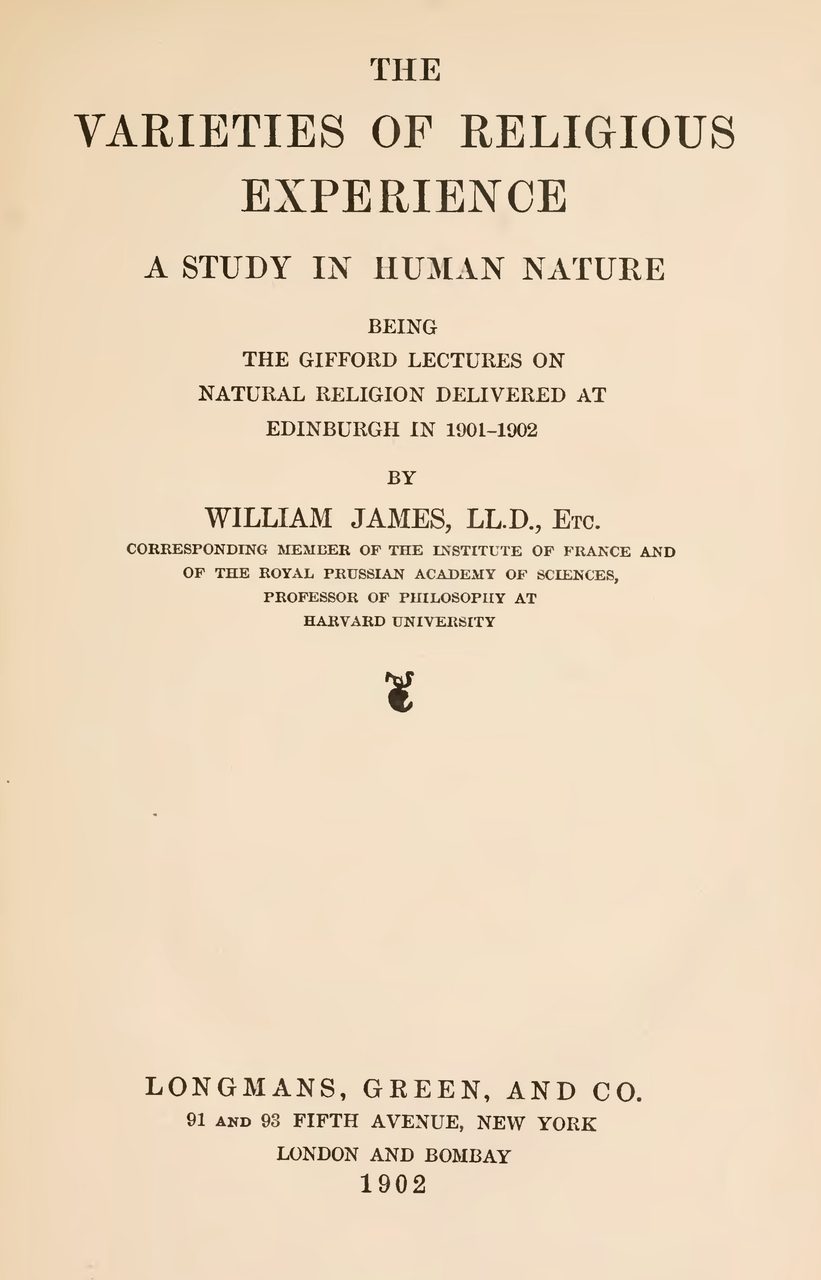
The Varieties of Religious Experience is subtitled A Study in Human Nature, and its title page states that it is the Gifford Lectures on Natural Religion delivered at Edinburgh in 1901 to 1902. Our file gives the year 1902 and does not mention the Gifford Lectures at all, and the omission costs an argument rather than a detail: James's book is a set of named lectures on natural theology delivered under an endowment for exactly that purpose, which places it inside the same project as Paley and Swinburne rather than beside it. A hard verification limit belongs on this claim. The public domain text truncated at the third lecture on two separate attempts, so the lectures where James gives the marks of mystical states were never read, and nothing from the body of the book is quoted anywhere on this page.
Our file's account of James: a classic study of mysticism, conversion, saintliness, and the healthy-minded against the sick-souled types, which argued that religious experiences, while not conclusive proof, are legitimate data. Those are two different claims and the second is the modest one. Legitimate data is not evidence for God, and our file's own hedge is kept intact here and in every summary at the foot of this page.
Rudolf Otto's The Idea of the Holy, published in German in 1917 and in Harvey's English translation in 1923, names the distinctive quality of religious experience the numinous, and characterises it with the Latin phrase mysterium tremendum et fascinans, a mystery both overwhelming and compelling. It is worth being clear about what that is and is not. Otto is describing what the experience is like, which is a contribution to phenomenology rather than to natural theology, and it becomes evidence only when someone builds an epistemology on it. Our file attaches an encyclopedia identifier to the Latin phrase which credits the publisher as the author and whose record carries no author and no year, so Otto's book is cited here by title, translator and the two dates, and that identifier is not leaned on.
William Alston's Perceiving God, published by Cornell University Press in 1991, argues that religious experience can function as a form of perception of the divine, mystical perception, analogous in structure to sense perception. The Stanford Encyclopedia's entry on religious experience, by Mark Webb, first published 8 November 2011 with a substantive revision of 26 August 2022, describes his machinery as doxastic practices: constellations of belief-forming mechanisms together with characteristic background assumptions and defeaters, which need not reduce to other practices and are justified by consistency and stability. If that is all there is to say about our ordinary practices, Alston argues, we ought to extend the same status to others with the same features. Our file gives him a single line and no identifier, and of the six identifier-free entries in its bibliography his is the one whose absence actually costs this page an argument.
The objections to treating religious experience as evidence, in the entry's own ranking: "The two most important defeaters on the table for claims of the epistemic authority of religious experience are the fact of religious diversity, and the availability of naturalistic explanations for religious experiences." A third, the disanalogy with sense perception, it treats separately. The diversity objection: experiential reports from different traditions conflict, and conflicting reports undermine each other's veridicality; the Stanford entry attributes versions of it to Axtell and to Hick, and the second name is notable, because Hick is one of our own file's theistic authorities. The naturalistic explanation objection: psychological, economic or neurological mechanisms explain the experiences without any external religious reality, and the entry names Freud, Marx and neurological theorists. And the disanalogy objection: religious experiences lack the independent public verification and the clarity that sense perception has, which is aimed directly at Alston's analogy. A section that runs James, Otto and Alston with no counter is not a section about evidence, it is a section about a case.
And an objection travels with its answer here as everywhere else on this page. To diversity, the entry reports that Alston and Plantinga argue that from inside a tradition a person acquires epistemic resources unavailable outside it, its own image being that travelling to the heart of a jungle lets one see what those who did not make the journey cannot, and it draws the conclusion that "As a result, even if people in other traditions can make the same argument, it is still reasonable to say that some are right and the others are wrong." To naturalistic explanation, it runs a section under the heading "There are general problems with all kinds of naturalistic explanations as defeaters." It notes with Gellman that most such explanations are offered as hypotheses rather than established facts, notes with Ellwood that every experience whatever its source has a corresponding neurological state, and writes that "Freud's theory of religion has few adherents, even among the psychoanalytically inclined, and Marx's view likewise has all but been abandoned, but that is not to say that something in the neighborhood might not be true." To disanalogy: "It is not enough, for example, to show that religious experiences do not typically allow for independent public verification, unless one wants to give up on other perfectly respectable practices, like rational intuition, that also lack that feature." And the reply that bears hardest on this page: "Some who are studying the neurological basis of religious experience do not infer that they are not veridical (see, e.g., d'Aquili and Newberg 1999), but many do." Those are the two researchers our own file names for its imaging claim, and the imaging cuts neither way on its own.
Brain imaging studies of meditation and prayer, and our file names Newberg and d'Aquili, reveal neural correlates of mystical states, and whether those findings support or undermine the veridicality of religious experience is philosophically debated. The hedge is the claim, and it must not be sanded off in either direction. A neural correlate of an experience is not evidence that the experience is illusory, any more than a neural correlate of seeing a chair is evidence that there is no chair, and it is not evidence that the experience is veridical either. The study behind our file's line is now identified: a SPECT study of regional cerebral blood flow during meditation, published in Psychiatry Research: Neuroimaging in 2001, whose own title calls it preliminary. Its abstract was not read for this article, so no participant count or other figure from it appears here.
Refuse that mystical experience is evidence for God because millions of people report it: the diversity objection is that they report incompatible things, and our own file elsewhere endorses Hick's pluralism, which is one attempt to live with exactly that problem. Refuse that neuroscience has explained religious experience away: our file's own grade says the interpretation of the imaging is debated, and the study named is a preliminary one from 2001. This is the one argument on the page where ordinary readers have first-hand data of their own, and it is the argument where that data helps least, which is true, is interesting, and is not a verdict.
08When The Question Changes Underneath The Argument
The evidentialist thesis is that a belief is justified only if it is proportioned to the evidence, and its most extreme statement is W. K. Clifford's dictum, quoted in the Stanford Encyclopedia's entry on the epistemology of religion by Peter Forrest, first published 23 April 1997 and revised, per the entry's own archive page, on 26 October 2025: "It is wrong always, everywhere, and for anyone, to believe anything upon insufficient evidence." The entry calls the resulting situation the hegemony of evidentialism, the thesis that epistemology gives an overriding reason to reject unjustified beliefs. Clifford's essay itself was not read for this article and the attribution runs through the encyclopedia. This has to come before the next claim, because reformed epistemology is a reply and a reply is unintelligible without the thing it answers.
Plantinga's Warranted Christian Belief, published by Oxford University Press in 2000, argues that belief in God can be properly basic: rationally justified without being based on evidence or argument, in the same way that belief in the reality of the external world or in other minds is properly basic. This challenges the evidentialist objection, the claim that belief without sufficient evidence is irrational. Notice what the move does to the whole of this page, because it is worth saying out loud. If it works, the arguments in the first half are not what belief in God rests on, and the question shifts from whether the arguments succeed to whether a belief of this kind needs arguments at all. The reader who came for cosmology has arrived at a dispute about knowledge in general, which is a genuine turn rather than a change of subject.
Objections to reformed epistemology, as the Stanford entry records them. Linda Zagzebski's accessibility problem, which the entry directs at Mavrodes rather than at Plantinga: the position would make warrant, and so knowledge, inaccessible both to the believer and to the believer's community. The entry then adds only this: "A similar criticism could be made of beliefs grounded in religious experience." The extension is its conditional and not its finding. Richard Swinburne's critique, notable because Swinburne is a theist and one of our own file's authorities: reformed epistemology largely ignores the question of justification or reasonableness. Justin Barrett's hyperactive agency detection device, which offers a natural explanation of supernatural belief and would undercut its proper basicality. And Sanford Goldberg on defeat: disagreement may defeat unargued grounds for religious faith. The entry delivers no verdict on whether any of this succeeds. What it says is about the field rather than about the position: "Much contemporary epistemology of religion seeks to avoid the extremes both of the Enlightenment thesis of the hegemony of evidentialism and of fideism." That is a description of what is being attempted, not a finding that it has worked.
The three classical positions on faith and reason, as our file gives them. Compatibility, attributed to Aquinas: reason and faith address the same reality, some truths about God being accessible to reason and others requiring revelation. Fideism, attributed to Kierkegaard and Pascal: faith transcends or even opposes reason, the leap of faith, and the Wager as the claim that belief is pragmatically rational. And conflict, attributed to Hume, Russell and an unnamed contemporary movement, whose holders claim that religious claims are vulnerable to rational criticism and cannot withstand scrutiny. Two cautions on that third row, and they are the reason it is restated here rather than reproduced. It flattens two major philosophers and an unnamed movement into one label, which is unfair to Hume and Russell rather than to anyone else, and the label is dropped here because our file names no member of that movement and neither can this page. And our file states the conclusion of the conflict position as though it were the position's definition; what is printed above is what its holders claim.
09One Truth Or Many, And A Dating Problem
John Hick's pluralist hypothesis holds that the Real, ultimate reality, is experienced differently through different religious and cultural lenses, so that no single tradition has exclusive access to truth. It challenges both exclusivism and inclusivism. Our file supplies its own counter here, which is rare enough in this document to deserve the credit: it records that the hypothesis is criticised for implying that all religions are equally adequate descriptions of the Real. One bibliographic problem must not be papered over. Our file's body dates An Interpretation of Religion to 1989 and its bibliography dates it to a second edition of 2004, and nothing in the file says both are true of different editions. This page names the first publication year, 1989, and says so.
10The Arguments Side By Side, With Their Objections
Set out in a row, the arguments look less like a case and more like a set of separate wagers on different premises, each with a live objection attached and each with something said back. The last three rows run the other way, and they are here for the same reason the first six are: an argument against the existence of God is an argument, and it gets its objection and its reply in the same row as the rest. One row carries no objection at all, and it says in its own cell why. And the sides are less tidy than a column of names suggests: this page does not sort its philosophers by personal belief, and at least two of the objections it carries are pressed by theists, Hick's against religious experience and Swinburne's against reformed epistemology.
| The Argument | What It Would Establish If It Worked | The Strongest Live Objection | What Is Said Back |
|---|---|---|---|
| Leibnizian cosmological (section 02) | A Necessary Being outside the series of contingent things, as the reason for that series | Van Inwagen argues the Principle of Sufficient Reason is false; Hume challenges whether causation is a productive necessary relation at all; and critics deny the principle has any a priori justification or can be extrapolated from things in the world to the world | Koons, Craig, Loke, Gale, Pruss, Almeida and Swinburne are named by the standard reference work as dissenting voices against a broad contemporary scepticism about the argument |
| Kalam cosmological (section 02) | A cause of the universe's beginning. Not, without a further argument, a personal one | Smith on quantum limits to the causal premise; Rundle on infinity and on the symmetry of past and future series; Morriston on the possibility of an actual infinite future; Cohen on the temporal assumptions; and Morriston in print in 2000 on the step to a personal cause | Craig published a rejoinder to Morriston in the same journal in 2002, and the full modern statement is his hundred-page chapter with Sinclair of 2009 |
| Ontological (section 03) | A being than which nothing greater can be conceived, existing in reality and not only in the understanding | Gaunilo's lost island, written in Anselm's own lifetime; Kant's objection that existence is not a real predicate; the parity point that the possibility premise can be run in reverse; and the reference work's conclusion that no version gives someone who does not already accept the conclusion a reason to accept it | Anselm answered Gaunilo at length and rejected the reading the island depends on; the same reference work quotes Bertrand Russell's observation of 1946 that it is much easier to be persuaded these arguments are no good than to say what is wrong with them; and Plantinga claims rationality for his version rather than proof |
| Paley's design (section 04) | A designer of biological structures such as the eye | Hume's three objections, published in 1779, more than two decades before Paley's book; and Darwin's rival explanation for biological adaptation | The reference work reads Paley's argument as deductive rather than analogical and suggests he structured it to avoid Hume; and it holds that undercutting and explaining away are not necessarily the same thing |
| Fine-tuning (section 04) | A designer of the physical constants. Again, not the God of classical theism without a further argument | The normalisation objection, that the probabilities may be mathematically undefined over an infinite parameter space; Sober's observation selection effect; and the multiverse and anthropic replies | Collins's eighty-page defence of 2009; the reference work's note that the multiverse reply is not free, since it requires knowing whether universe production is biased; and Carroll's Boltzmann brain problem, which counts against that reply |
| Religious experience (section 07) | Something experienced. What it is, and whether it is external to the experiencer, is a further question | The diversity of incompatible reports, versions of which the reference work attributes to Axtell and to Hick; naturalistic explanation, with Freud, Marx and neurological theorists named; and the disanalogy with sense perception, aimed at Alston | Alston's doxastic practices argument, that a practice justified by consistency and stability deserves the same status as our ordinary ones; the reply the same entry gives to each objection, including that a public-verification test would also disqualify rational intuition; and James's own modest claim, that the experiences are legitimate data rather than conclusive proof |
| The problem of evil, evidential form (section 06) | That the quantity and distribution of suffering make God's existence improbable | Plantinga's free will defence answers the logical form of the argument, which is why the evidential form is the one still standing | Seven answers to it, and the argument's transmission history, are carried in this library's own article on the problem of evil rather than here |
| Divine hiddenness (section 06) | That the existence of non-resistant non-belief is evidence against a perfectly loving God | None is stated here, and the gap is this article's rather than the argument's: the dedicated reference entry on the subject is written by two philosophers who are critics of it, and only that entry's archive page was read for this page, so their objections are not reported | Nor are Schellenberg's replies to them. A reader who wants the exchange has the Cambridge volume and the reference entry, both cited below |
| The low priors argument (section 06) | That classical theism is very probably false, on a comparison with source physicalism | Its own two premises. The entry marks steps (1) and (2), including the claim that source physicalism is intrinsically many times more probable than omni-theism, as the argument's only controversial steps | The same entry says much discussion of who carries the burden of proof is sidetracked by bad analogies, and puts the burden where the intrinsic probabilities fall |
11What Would Actually Move Any Of This
For the kalam argument: a settled answer on whether an actual infinite past is possible, and a defensible bridge from an impersonal cause to a personal one, which is exactly what Morriston and Craig were arguing about in print. For the Leibnizian argument: whether the Principle of Sufficient Reason survives van Inwagen's objection. For the ontological argument: whether the possibility premise can be supported without assuming the conclusion. For fine-tuning: whether a probability measure over the parameter space can be defined at all, which is the normalisation objection, and whether the multiverse reply survives the Boltzmann brain problem. For religious experience: whether a doxastic practice with no independent public check can be justified the way sense perception is. Those are five real questions with live literatures, and any of them moving would move an argument. For the question itself, the honest answer is that nothing in sight settles it, and that is a fact about the state of the field rather than a failure of this page.
A large survey of professional philosophers exists. Its report, Philosophers on Philosophy: The 2020 PhilPapers Survey, by David Bourget and David J. Chalmers, was published in Philosophers' Imprint in 2023, and its abstract states that "The 2020 PhilPapers Survey surveyed around 2000 philosophers on 100 philosophical questions." One of those questions is about theism and atheism. What the philosophers answered to it is not printed on this page and the reason is not editorial. Three separate routes to the results were tried for this article and all three failed: the survey's own results site returned an error, the journal's article page returned a bot-protection page rather than the article, and the archive copy returned an error too. The figure was therefore never read, and a half-remembered percentage is a fabrication rather than a source.
Even with the figure in hand, the argument would not be available. What professional philosophers believe about God is a fact about philosophers. It is genuinely interesting, it belongs on a page about where a question stands, and it settles nothing about whether God exists. An article that closed on a survey figure would have crowned a winner by polling, which is the least defensible way to do it and the easiest to reach for. If the figure is ever verified and printed here, it will be printed as a fact about the profession, framed as such in the same sentence, and it will not appear in the verdict.
12Two Potted Histories, Wrong In Opposite Directions
Refuse that Gaunilo refuted Anselm. Gaunilo raised the island; Anselm answered at length and specifically rejected the reading the island depends on; whether that answer works is still argued. Refuse that Hume and Darwin killed the design argument. Paley wrote after Hume and appears to have structured his argument to avoid Hume's objections; the standard reference work says undercutting and explaining away are not necessarily the same thing; and the argument's centre of gravity moved to physics, where it is live. These two are worth naming precisely because they are believed confidently, and correcting a reader's confident errors in both directions rather than one is the whole of the method this page is written under.
Refuse that science has disproved God. Refuse that science has proved God. Neither is a position in the literature this page surveys. The Big Bang is not the kalam argument's second premise established, and the standard reference work records live objections to that premise from named philosophers using the physics. Fine-tuning is not a measurement of design, and its own defenders present it as an inference to the best explanation, competing against a multiverse and against the claim that the probabilities are undefined. Neuroimaging of meditation is not a debunking, on our own file's grade of it. Stating only one of these two refusals would itself be a tilt, which is why they are printed together.
13Where This Page Departs From Its Own Research File
Ten departures, and every one of them adds an objection, corrects a category, or removes a citation that would have sent a reader to the wrong object. None of them contradicts a factual claim in the file, and that is the point worth taking away: a source can be accurate sentence by sentence and still leave a reader with a false impression of a field, purely through what it does not say and who it does not name.
| What Our File Does | What The Specialist Sources Show | What This Page Prints |
|---|---|---|
| States three cosmological arguments and records no objection to any of them | The Stanford entry on the cosmological argument names van Inwagen, Hume, Smith, Rundle, Morriston and Cohen, and reports a broad contemporary scepticism about the argument, with named defenders dissenting from it | The objections carried at Tier 2 in the same section as the arguments, with the Morriston and Craig exchange of 2000 and 2002 and with Koons's and Craig's refined defences named beside Oppy's conclusion. Section 02 |
| Gives Plantinga's modal ontological argument immediately after Kant's objection and stops, which reads as the objection answered | Plantinga, quoted in the Stanford entry on ontological arguments, says his arguments cannot perhaps be said to prove or establish their conclusion, only that accepting it is rational | The argument stated, then its author's own limit quoted from the encyclopedia, at Tier 1. Section 03 |
| Does not mention Gaunilo anywhere | Gaunilo's In Behalf of the Fool is printed beside the Proslogion in the standard edition, and Anselm answered it at length | The lost island quoted from Deane's translation and Anselm's answer carried with it, at Tier 1 and Tier 2. Section 03 |
| States Paley's watchmaker with no counter, and names Hume twice, in its lineage list and in a three-name list under a heading about conflict, never in connection with design | Hume's Dialogues Concerning Natural Religion was published in 1779, Paley's Natural Theology in 1802, and the Stanford entry on teleological arguments records three Humean objections and Darwin's rival explanation | The chronology and all three objections carried at Tier 1, with the entry's own qualification that undercutting is not explaining away. Section 04 |
| Runs its religious experience section as three defences with no objection at all | The Stanford entry on religious experience records the diversity, naturalistic explanation and disanalogy objections, and attributes a version of the first to Hick, who is one of our file's own authorities | All three objections carried at Tier 2 in the same section as James, Otto and Alston, with the reply the same entry gives to each. Section 07 |
| Lists divine hiddenness among the theodicies, alongside soul-making, free will and greater goods | Divine hiddenness is J. L. Schellenberg's argument against the existence of God, and has a Cambridge volume and a dedicated Stanford entry devoted to it | The category error corrected and disclosed at Tier 4, and the argument carried on the atheist side at Tier 2 with its chapter identifier. Section 06 |
| Carries a Counter-Arguments block asserting established consensus and no active scholarly dispute | The identical paragraph appears verbatim in another of our research files with the subject name swapped, and our file's own graded section says the field remains one of the most actively debated areas of philosophy | The graded section carried, the boilerplate refused, and the defect stated in the opening and again in the verdict. Front matter and section 14 |
| Names no living critic of theism in its body, while Graham Oppy sits in its bibliography with no identifier | Oppy's Arguing about Gods, Cambridge 2006, is the standing critical survey, and he is lead author of the Stanford entry on ontological arguments | Oppy named in the body in sections 02, 03 and 06, with the identifier his entry should have carried, and Draper's two arguments carried beside him. Sections 02, 03 and 06 |
| Attaches eight identifiers to its bibliography entries | None of the eight is usable exactly as printed: five DOIs resolve to a different work, four of those to a review of the book named; two ISBNs resolve to the right work in the wrong edition; and the one that resolves exactly carries no author and no year and has the publisher in the author field | Not one of them reproduced. The replacements below were resolved live and their returned titles read against the works they name, and two citations ship with no identifier at all rather than with a wrong one. Sources |
| Gives no figures at all for fine-tuning | The Stanford entry on teleological arguments gives three illustrative figures, including Smolin's estimate for the probability of stars existing | The figures carried once, at Tier 3 rather than Tier 1, by deliberate downgrade, with the reason stated on the claim: each is a calculated probability over an assumed measure, which is the very thing the normalisation objection says may be undefined. Section 04 |
14Where It Stands
The claim that philosophy of religion has solved the God question is marked incorrect in our own research file, and it is refused here in both of its popular forms. Neither theistic arguments nor atheistic objections have achieved consensus resolution. The field remains one of the most actively debated areas of philosophy, with sophisticated arguments on all sides. That is the file's own graded judgement, it is the sentence its boilerplate Counter-Arguments block contradicts, and it is the one thing on this page that genuinely is a verdict: a refusal, in both directions, of the belief most readers arrive holding in one direction or the other.
A reader who wants the whole field rather than this map of it has a standard modern textbook to open: Michael J. Murray and Michael C. Rea's An Introduction to the Philosophy of Religion, published by Cambridge University Press in 2008, which our file lists without an identifier. It is offered as a next step and not as evidence for anything above; it was not read for this article and nothing here is attributed to it. Its two authors are theists, which is said rather than hidden.
What the state of play actually looks like is this. Oppy argues in print that no current version of the cosmological argument is sound, and Koons and Craig publish refined versions of it. Morriston put an objection to the kalam argument in a journal in 2000 and Craig answered it in the same journal in 2002. Plantinga states his ontological argument and also states that it cannot be said to prove its conclusion. Collins defends fine-tuning across eighty pages and McGrew, McGrew and Vestrup argue that the probabilities it needs may not be definable at all. Alston builds an epistemology on religious experience, the standard reference work sets out three objections to it, one of them from Hick, who is on Alston's side of the larger question, and the same entry sets out a reply to each of the three. Draper argues that classical theism is very probably false, and in the same entry sets out the distinction that if withholding judgement about it is rationally required then atheistic belief is not rationally permissible. That is not a field waiting for one more argument. It is a field where the arguments and the objections have both been sharpened for centuries without either being disposed of, and where the five questions in section 11 are the places any movement would have to come from.
Fast Facts
- Which God Is On Trial
- Classical theism's: omnipotent, omniscient, perfectly good, necessary and personal. Our file sets that against something else again, naming deism, pantheism and panentheism as its examples, and the distinction cuts both ways. An argument that reaches a necessary first cause has not reached a personal and perfectly good God, and an objection that defeats classical theism does not touch deism or pantheism
- The Five Families
- Cosmological, reasoning from the universe to a first cause or a necessary being; ontological, reasoning from the concept alone and needing no observation of the world; teleological, from Paley's eye to the physical constants; Pascal's Wager, which is a decision-theory argument about what to do rather than an argument that God exists; and religious experience. Each is set out above with the objection that has actually damaged it, and the objections carry what is said back wherever a published reply was found
- The Oldest Objection, And Its Answer
- Gaunilo of Marmoutiers, a contemporary of Anselm, ran Anselm's reasoning on the greatest conceivable island and appeared to prove the island exists. It is the lost island in the translation this page quotes, not the perfect island of the retellings. Anselm replied at length and rejected the reading the island depends on rather than answering the island itself, and whether that reply works is still argued. Our own research file does not mention Gaunilo at all
- What Plantinga Says About His Own Argument
- That it cannot perhaps be said to prove or establish its conclusion, and that what it shows is that accepting the conclusion is rational given that accepting the premise is. Our file states the argument immediately after Kant's objection and stops there, which reads as more than its author claims for it
- What The Case Against Actually Contains
- More than the problem of evil, which is very nearly all our file names. Divine hiddenness, which our file misfiles among the theodicies and which is an argument against the existence of God. Draper's low priors and decisive evidence arguments, which are about prior probability and evidential fit rather than about contradiction. And Oppy's book-length examination of the theistic arguments, which sits in our file's bibliography and never in its text
- The Scope Jump
- Every argument here, if it worked, would establish something narrower than the God its defenders believe in: a first cause, a designer, a designer of constants, something experienced. Hume made that objection in 1779. Defenders have answers, and the answers are further arguments rather than extensions of the same one
- What Would Move It
- Five specific questions, one per argument: whether an actual infinite past is possible and whether a first cause can be shown to be personal; whether the Principle of Sufficient Reason survives van Inwagen; whether the possibility premise can be supported without assuming the conclusion; whether a probability measure over the parameter space can be defined at all; and whether a belief-forming practice with no independent public check can be justified the way sense perception is
- What Is Refused Here
- Five things, and they run in both directions. That the question is settled, in either direction. That science has proved or disproved God. That a head-count of philosophers settles it, whichever way the count runs. That Gaunilo refuted Anselm, or that Hume and Darwin killed the design argument. And the paragraph in our own research file which asserts that this subject carries no active scholarly dispute, which is generator boilerplate that appears verbatim in another of our files with the subject name swapped
- Why It Cannot Be Closed Here
- Because the standard reference literature does not close it. On the cosmological argument the reference work reports increasingly sophisticated arguments on both sides, and a broad contemporary scepticism with named defenders dissenting from it; on ontological arguments it concludes that none is persuasive to someone who does not already accept the conclusion, which is a narrower claim than failure; on design arguments it finds the evidence inferentially ambiguous; and on atheism it turns the question on what is rationally permissible rather than on what is rationally required, and declares no winner
What Can Actually Be Stood Behind
What these texts say, and what was written or published and when, is documented and can be stated flatly. Aquinas's Five Ways are the reply to one article of one question of the Summa Theologiae, and the reply opens by claiming that God's existence can be proved in five ways. Anselm composed the Proslogion in 1077 to 1078, after the Monologion of 1075 to 1076, and his formula is a being than which nothing greater can be conceived. Gaunilo's reply is printed beside it in the standard edition. The kalam argument is Islamic in origin, al-Ghazali lived from 1058 to 1111, the argument developed among the mutakallimun and reached the Christian tradition through Bonaventure. Hume's Dialogues Concerning Natural Religion was published in 1779 and Paley's Natural Theology in 1802. The Wager is one note in an unfinished book Pascal left at his death in 1662. Mackie put the logical problem of evil in Mind in 1955 and Plantinga's free will defence followed in 1974. James's Varieties is the Gifford Lectures on natural religion delivered at Edinburgh in 1901 to 1902. Otto's Idea of the Holy appeared in German in 1917 and in Harvey's translation in 1923. Every one of those is a fact about a text or a publication, and a Tier 1 mark on an argument means the argument exists in that form, never that it works.
The interesting questions are open and not one of them is closed here. Whether the Principle of Sufficient Reason survives van Inwagen's objection. Whether the kalam argument can reach a personal cause, which Morriston denied in print and Craig answered in print. Whether the possibility premise of the modal ontological argument can be supported without assuming the conclusion, and whether Anselm's answer to Gaunilo works. Whether Paley's deductive form escapes Hume, and whether Darwin's rival explanation does more than undercut the biological version. Whether the probabilities fine-tuning needs can be defined at all, and whether the multiverse reply survives the Boltzmann brain problem. Whether a doxastic practice with no independent public check can be justified as sense perception is. Whether reformed epistemology answers evidentialism or relocates the problem, with Swinburne, Barrett and Goldberg pressing it and Zagzebski's accessibility objection pressing a neighbouring position. And whether Draper's probabilistic case for atheism succeeds, whose own two premises the entry marks as its controversial steps. Named people, in print, now, disagreeing.
Two things on this page sit below the credible line. The fine-tuning figures are carried at Tier 3 by a deliberate downgrade from what a reader would guess, because the physics is not in doubt but the probability assignment is: each figure is a calculated probability over an assumed range and an assumed measure, which is the very thing the normalisation objection says may be undefined. They appear once, in section 04, and nowhere else on this page. And the neural correlates of mystical states carry our own file's grade of speculative, unchanged: the study behind the claim calls itself preliminary in its own title, and what the imaging shows about the veridicality of the experience is debated rather than established in either direction.
Neither theistic arguments nor atheistic objections have achieved consensus resolution, and the field remains one of the most actively debated areas of philosophy. That is our own file's graded judgement and it is carried here intact. The same file also carries a block asserting that this subject represents established philosophical consensus with no active scholarly dispute over the fundamental claims presented in it. That paragraph is refused. It contradicts the file's own graded section, and the identical text appears verbatim in another of our research files with the subject name swapped, which is what identifies it as generator boilerplate rather than a finding.
Both halves are refused and they are refused in the same breath, because stating only one is itself a tilt. The Big Bang is not the kalam argument's second premise established, and the standard reference work records live objections to that premise from named philosophers arguing from the physics. Fine-tuning is not a measurement of design, and its own defenders present it as an inference to the best explanation competing against a multiverse and against the claim that its probabilities are undefined. Neuroimaging of meditation is not a debunking, on our own file's grade of it.
A large survey of professional philosophers exists and its scale is on the record. Its figure for the God question is not on this page, because three separate routes to the results failed and the number was never read; a half-remembered percentage would be a fabrication. And even in hand it would settle nothing, because what philosophers believe about God is a fact about philosophers. An article closing on a poll would have crowned a winner in the least defensible way available.
Gaunilo did not refute Anselm: Anselm answered at length and rejected the reading the island depends on, and whether the answer works is still argued. Hume and Darwin did not kill the design argument: Paley wrote after Hume and appears to have structured his argument to avoid him, the reference work says undercutting and explaining away are not necessarily the same thing, and the argument's centre of gravity moved to physics, where it is live. Both of those are things a confident reader already believes, and correcting confident errors in both directions rather than one is the method this page is written under.
Sources & further reading
WHERE THIS PAGE WORKED FROM, AND WHERE IT CAN BE CHECKED. One file in our own research library stands behind it, P_5_10 on the philosophy of religion. That file is where the work started, and it is our own claim, so it cannot corroborate itself; the twenty-eight external entries below are where the claims can be checked, and each names the section it supports rather than standing as a reading list. THE IDENTIFIERS IN THAT FILE ARE NOT REPRODUCED HERE, AND THE REASON IS COUNTED. Its bibliography carries eight and not one of them is usable exactly as printed: five DOIs resolve to a different work, four of those to a review of the very book the entry names and the fifth to a 2009 anthology reprint presented as a 1979 journal article; two ISBNs resolve to the right work in the wrong edition, one a London printing where the entry names an American publisher and the other a modern reprint where the entry names the first edition; and the eighth resolves exactly, to an encyclopedia record carrying no author and no year, with the publisher sitting in the author field. Every identifier below was resolved live on 2026-08-26 and its returned title read against the work it names. TWO CITATIONS ON THIS PAGE DELIBERATELY CARRY NO IDENTIFIER AT ALL, and they are named here rather than dropped: Alvin Plantinga, God, Freedom, and Evil, 1974, cited in section 06 for the free will defence; and William L. Rowe, The Problem of Evil and Some Varieties of Atheism, American Philosophical Quarterly 16, number 4, 1979, pages 335 to 341, cited in the same section for the evidential form of the argument. The identifier our file attaches to the first resolves to a different edition, the one it attaches to the second resolves to a modern anthology at different pages, and no replacement for either was found. A wrong identifier that resolves to a real work is worse for a reader than no identifier at all. WHAT THIS PAGE DELIBERATELY DOES NOT PRINT: any percentage from the 2020 PhilPapers Survey, because three routes to the results returned an error or a bot-protection page and the figure was never read; the closing sentence of chapter 2 of Anselm's Proslogion, in any form, because the academic copy read for this article appears to have lost a negation from it and as printed asserts the opposite of Anselm's conclusion; anything from the body of William James's Varieties, including his four marks of mystical states, because the public domain text truncated twice at the third lecture; and any wording of Hume's, whose Dialogues are cited below for the location of his objections and were not read for this article.
Image credits
- Folio 2r of a fifteenth-century Basel manuscript of Aquinas's Summa theologiae, prima pars Basel, Universitätsbibliothek, A I 14; digitised by e-codices, Virtual Manuscript Library of Switzerland, University of Fribourg, via Wikimedia Commons. Public Domain Mark 1.0 Source.
- A late sixteenth-century line engraving of Anselm of Canterbury Artist unknown; National Portrait Gallery, London, portrait D23949, given by Mary Elizabeth Stopford in 1931, via Wikimedia Commons. Public Domain Source.
- A fusee pocket watch movement attributed by the photographer to Le Roi and Fils Photograph by KeepHumble, own work, 6 October 2018, via Wikimedia Commons. CC BY-SA 4.0 Source.
- David Hume, by Allan Ramsay, 1754 Allan Ramsay, 1713 to 1784; National Galleries Scotland, PG 3521, via Wikimedia Commons. Public Domain Source.
- The title page of the 1902 edition of The Varieties of Religious Experience Published by Longmans, Green and Co., 1902; scan via the Internet Archive and Wikimedia Commons. The Commons author field names a different William James, a Canadian photographer, and is not reproduced here. Public Domain Source.
- Card crop of Folio 2r of a fifteenth-century Basel manuscript of Aquinas's Summa theologiae, prima pars Basel, Universitätsbibliothek, A I 14; digitised by e-codices, Virtual Manuscript Library of Switzerland, University of Fribourg, via Wikimedia Commons. Public Domain Mark 1.0 Source.


