
The Meaning of Life: Four Answers to the Oldest Question
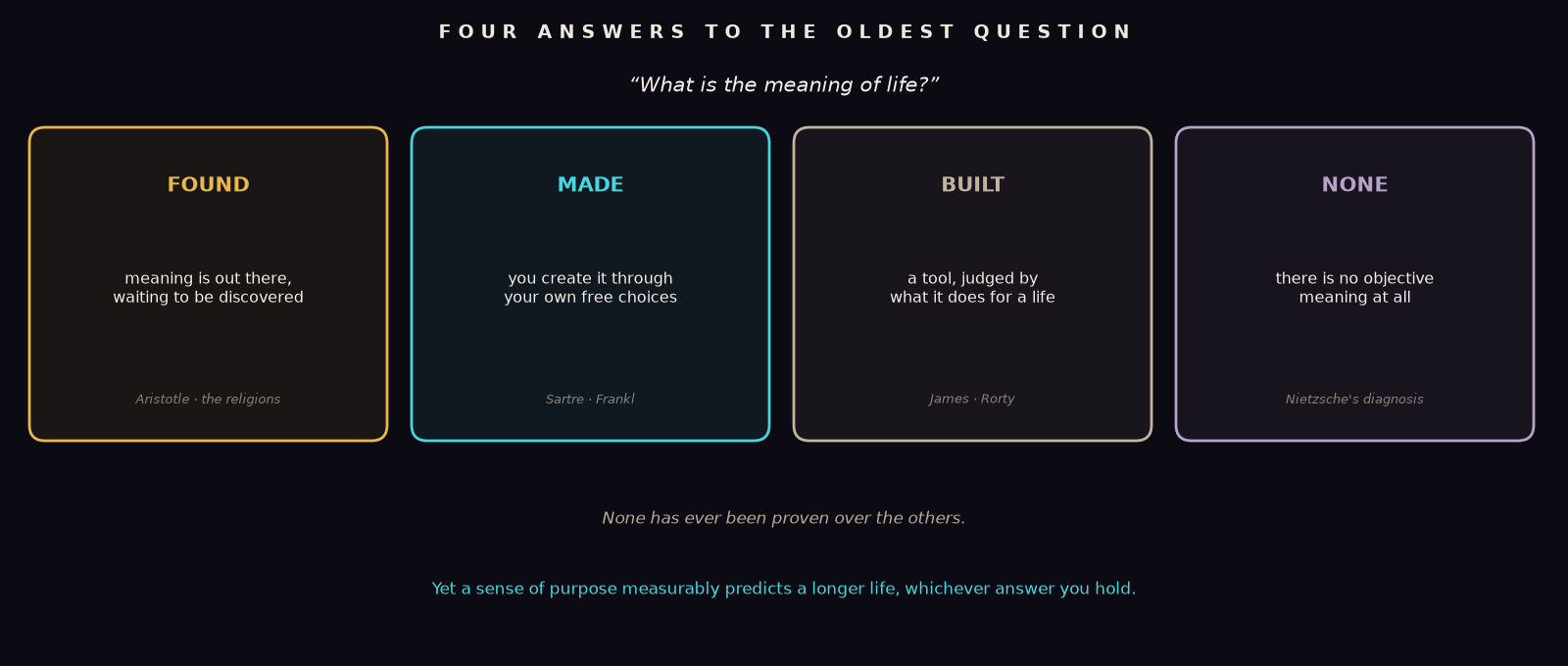
It is the question everyone eventually asks in the dark, and the one philosophy has never managed to close. Across three thousand years, serious thinkers have given four fundamentally different answers: that meaning is out there waiting to be found, that you have to make it yourself, that it is a useful tool judged by what it does, and that there is none. This article does not pretend to know which is right, because nobody does. What it can do is lay the four answers side by side, at their honest strength, and then point to the one thing about meaning that has actually been measured: that having a sense of purpose, whichever answer you hold, appears to lengthen your life.
Sooner or later everyone asks it, usually at night, usually alone: what is the point of any of this? It is the oldest question in philosophy and, tellingly, the one that remains most stubbornly open. That is not because thinkers have been lazy. It is because the question turns out to have several completely different answers, each defended by brilliant people, none of which can be proven over the others. The honest thing to do, then, is not to sell you one answer dressed up as the truth. It is to show you the real menu. There are four main answers, and they genuinely contradict each other. Then there is one thing about meaning that is not a matter of opinion at all, and we will end there, because it is the closest thing to solid ground the whole subject offers.
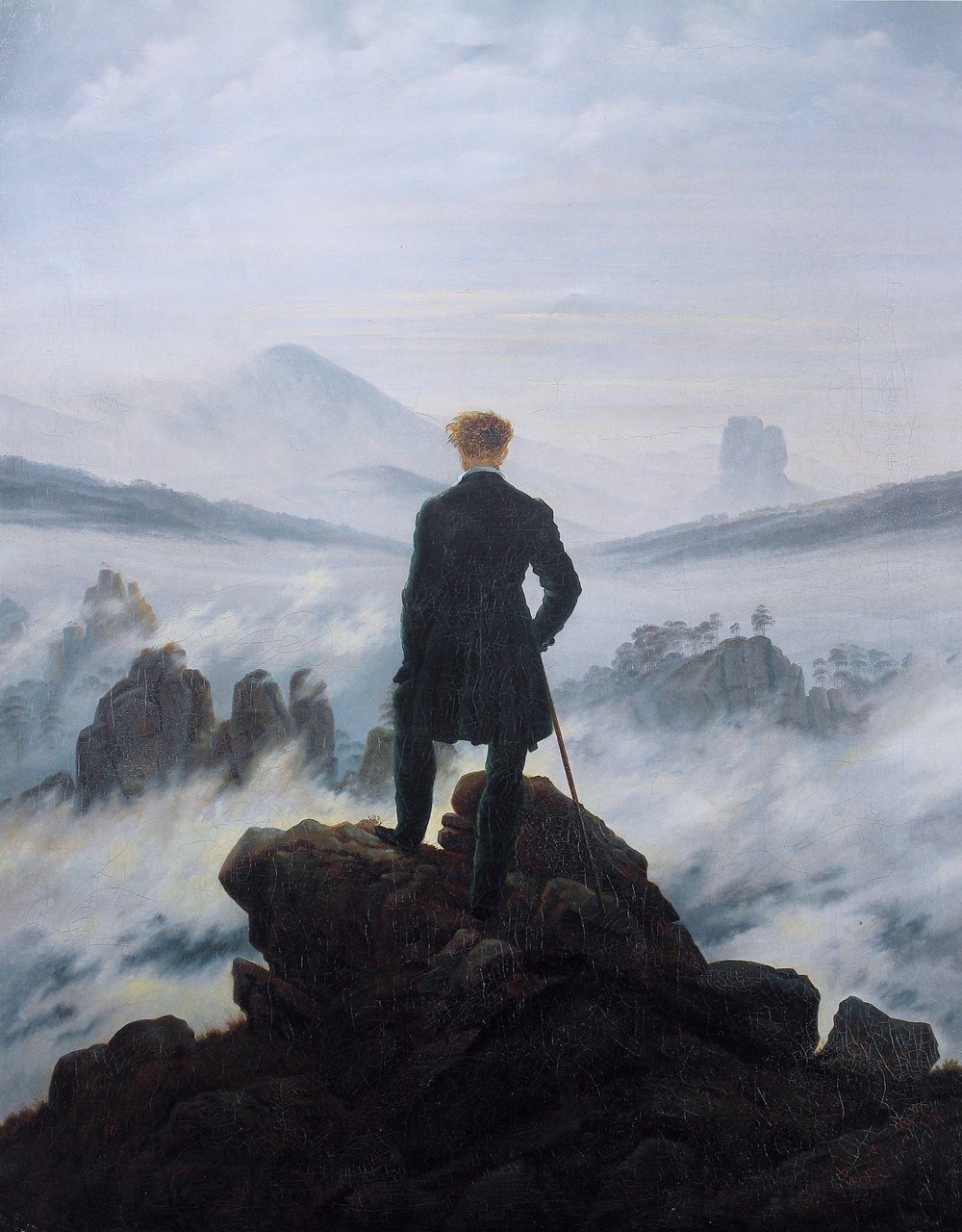
Before the four answers, one clarification that saves a lot of confusion. 'The meaning of life' bundles together two different questions that people constantly mix up. One is cosmic: does the universe as a whole have a purpose, and does human existence fit into it? The other is personal: what makes an individual life meaningful, worth living, good? A person can answer these oppositely, holding that the cosmos is purposeless and yet that their own life is richly meaningful. Keeping the two apart is the first step to thinking clearly about any of it, and most of the answers below are really answers to the personal question, with the cosmic one left open.
01Answer One: Meaning Is Found
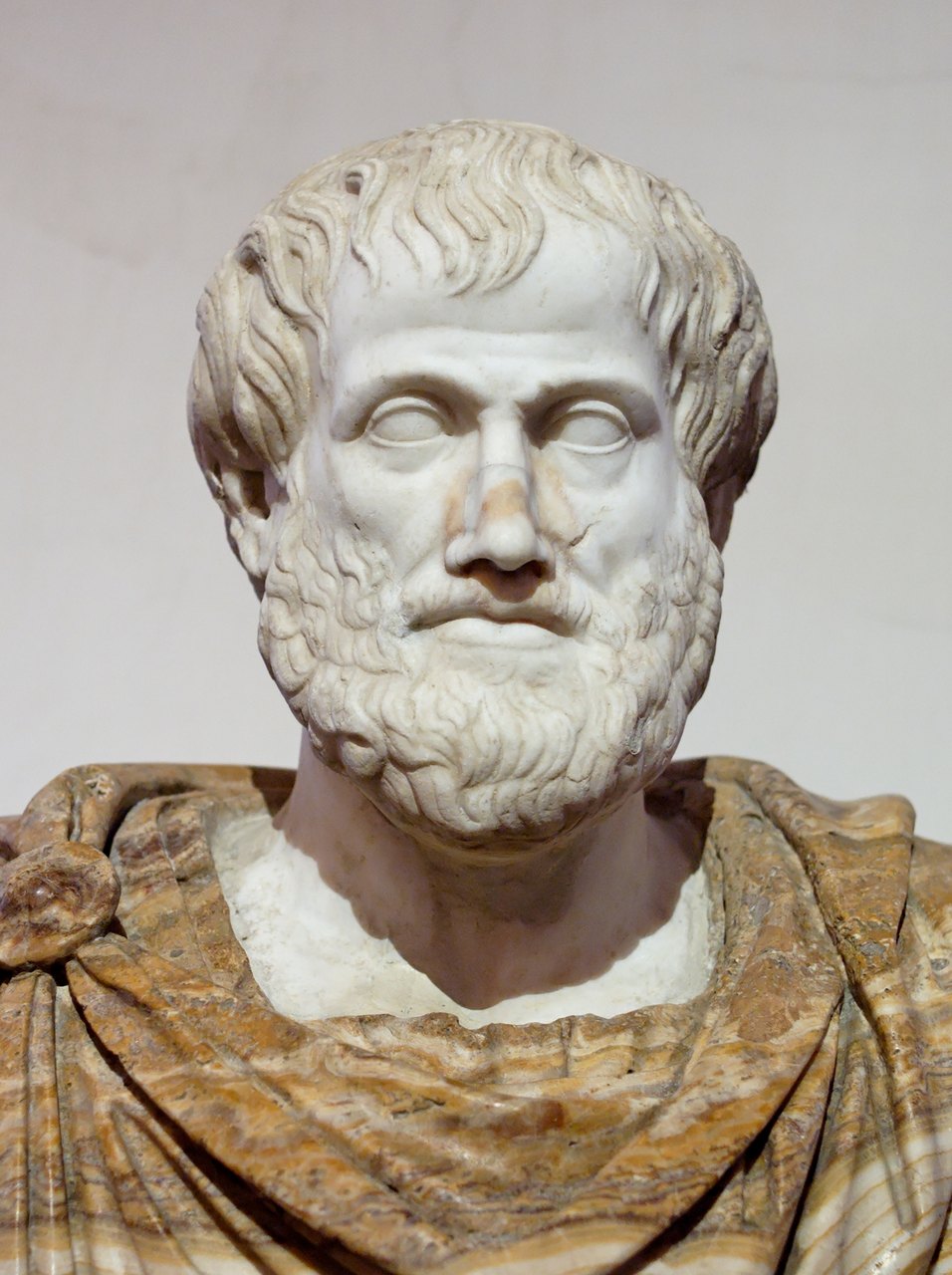
The oldest answer is that meaning is objective, built into reality, and waiting to be discovered rather than invented. Aristotle gave the secular version: he argued in the Nicomachean Ethics that the highest human good is eudaimonia, usually translated 'flourishing,' the full actualization of human potential through virtuous activity across a whole life. On his 'function argument,' just as a knife has a function, a human being has one, rational activity done well, and living meaningfully is performing that function excellently. The religious version is even more direct: in the Abrahamic traditions, God created human beings for a purpose, so meaning is given by the Creator, objective and the same for everyone, whether or not any individual recognizes it. What these otherwise very different views share is the conviction that meaning is out there to be found, not made up.
02Answer Two: Meaning Is Made

The second answer flips the first on its head: meaning is not found but made. This is the existentialist position, and Jean-Paul Sartre put it most sharply, existence precedes essence. There is no pre-written human nature or cosmic assignment; a person is thrown into the world and must define themselves through their choices, which is why Sartre said we are 'condemned to be free.' Even refusing to choose is a choice. Simone de Beauvoir extended this into an ethics: real freedom means actively supporting the freedom of others, and meaning is created through commitment to projects and people. Viktor Frankl gave the position its most humane and hard-won form. A survivor of Auschwitz, he argued in Man's Search for Meaning that even when everything is stripped away, one freedom remains, the freedom to choose one's attitude, and that a person can find meaning in creative work, in love and beauty, and in how they bear suffering that cannot be avoided.
03Answer Three: Meaning Is Built to Work
The third answer is quieter and very modern: stop asking whether meaning is true and start asking whether it works. This is the pragmatist tradition, largely American. William James held that 'the true is the name of whatever proves itself to be good in the way of belief,' and John Dewey located meaning in active engagement with real problems rather than in metaphysical certainty. Richard Rorty pushed it furthest, arguing there is no 'final vocabulary' handed down by the universe; meaning is something we construct together through language and solidarity, and the right question is not 'what is the meaning of life?' but 'what kind of life is worth building, and with whom?' On this view, the search for a single objective answer is itself the mistake. Meaning is a tool for living, and a tool is judged by what it does.
04Answer Four: There Is None
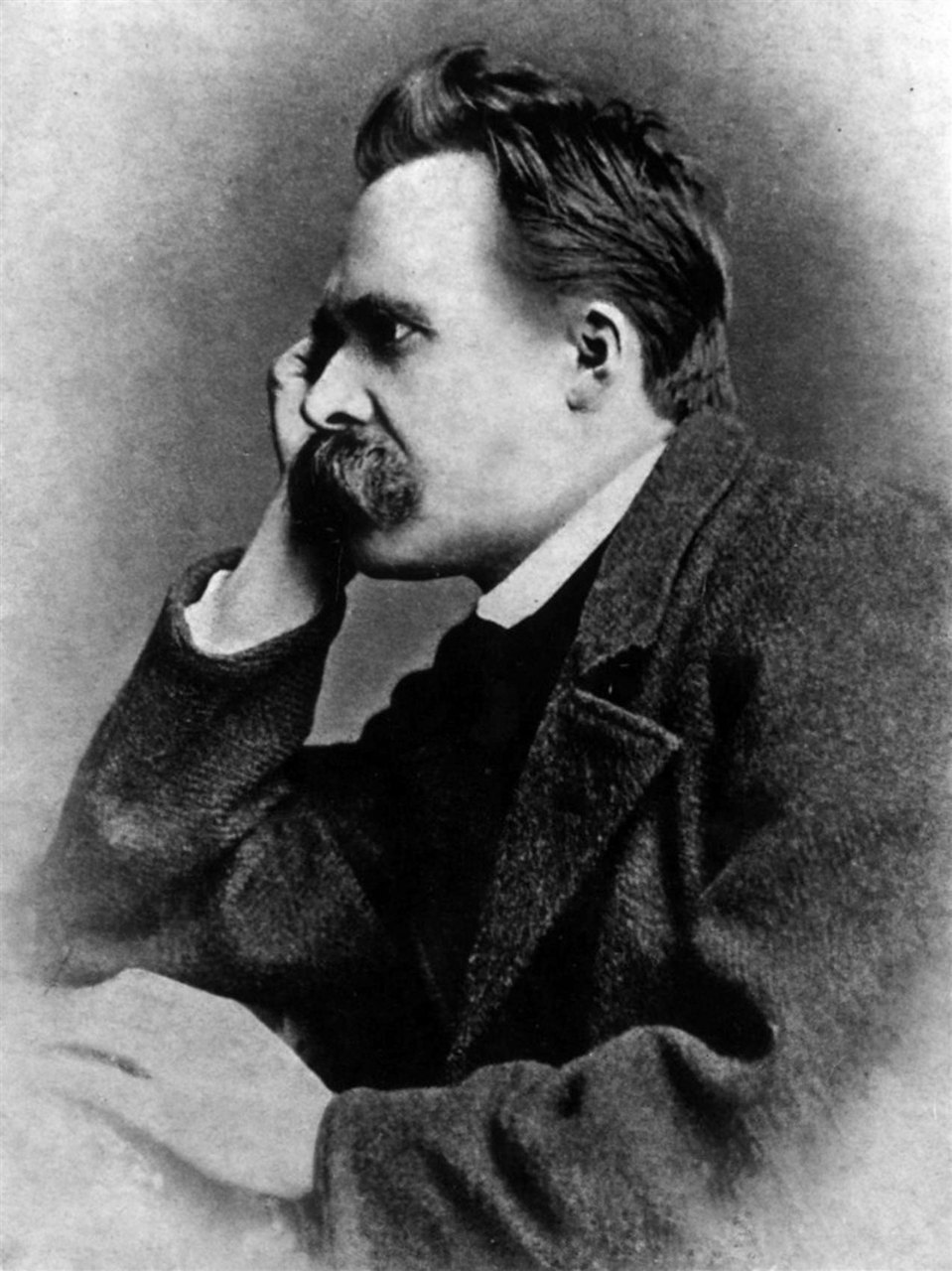
The fourth answer is that there is no answer: no objective meaning exists, full stop. This is nihilism, and it deserves to be stated at full strength rather than waved away. Nietzsche is its most famous herald, though, importantly, he was not himself a nihilist. His 'God is dead' was a diagnosis of a civilization whose source of objective meaning had failed, and he distinguished passive nihilism, despair curdling into paralysis, from active nihilism, the demolition of dead values to make room for new ones. Others went darker: Schopenhauer saw existence as driven by a blind, insatiable will that guarantees suffering, and the modern writer Thomas Ligotti argues consciousness itself is a kind of cosmic accident. Nihilism carries one well-known internal tension worth naming honestly: the claim 'nothing has meaning' is itself offered as a meaningful truth. That does not refute it, but it shows the position is harder to hold cleanly than it first appears.
05The Absurd: A Fifth Way to Stand
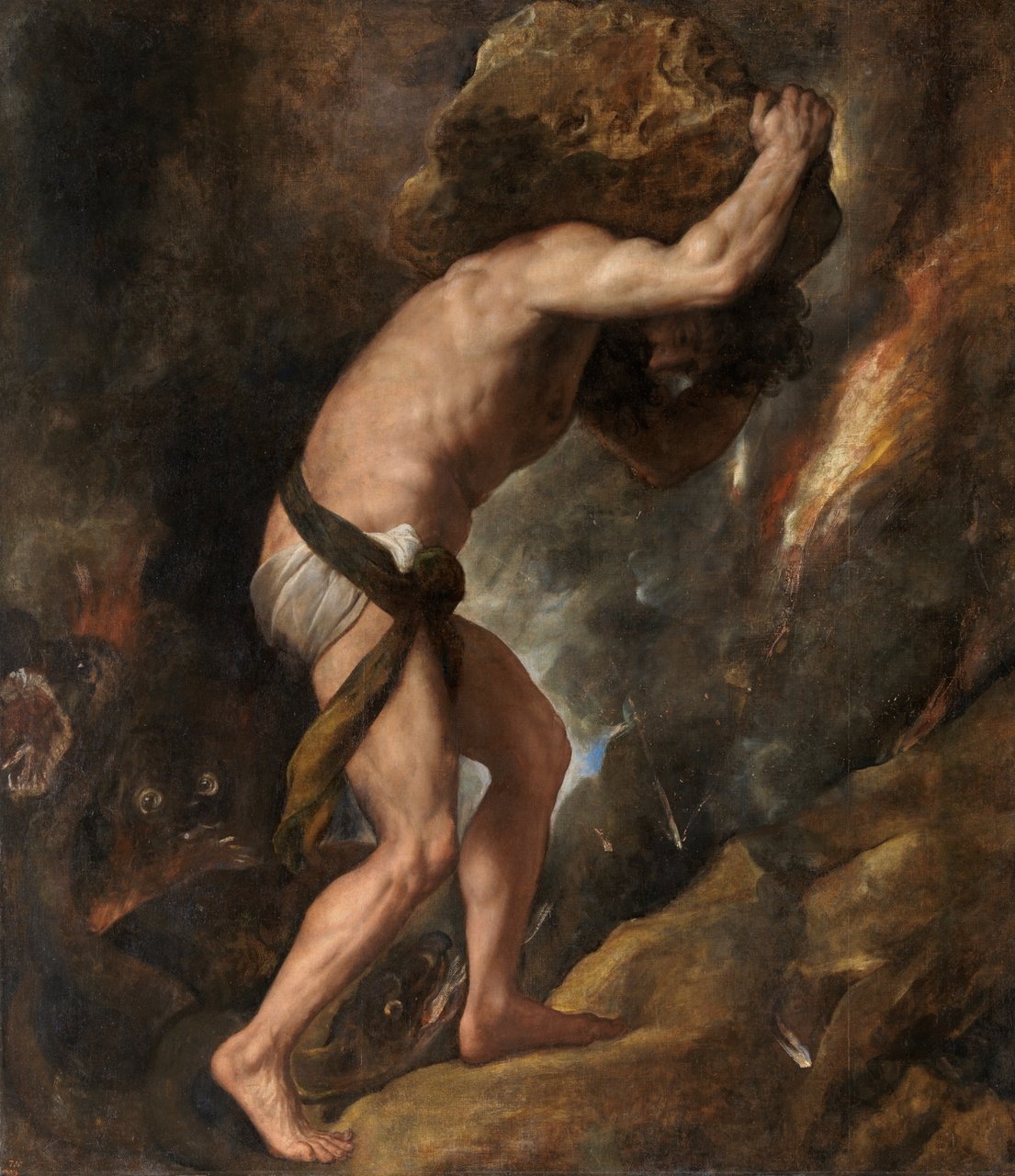
Albert Camus carved out a fifth stance that is often lumped in with existentialism or nihilism but is genuinely its own thing, and it is worth separating out. Camus named 'the absurd' as the collision between the human hunger for meaning and a universe that answers with silence. He saw three possible responses. Suicide he rejected. The 'leap of faith' into religion or metaphysics he also rejected, calling it a kind of philosophical suicide, a refusal to keep looking clearly at the situation. What was left was revolt: to face the absurd fully, refuse both false comfort and despair, and live anyway, with intensity. His image was Sisyphus, condemned to roll a boulder uphill forever, and his famous closing line was that we must imagine Sisyphus happy, because meaning, if it is anywhere, is in the struggle itself and not in any final arrival. Note the disagreement this creates: Camus explicitly rejected Sartre's idea that we 'create' meaning. For Camus you do not manufacture meaning to fill the silence; you revolt against the silence while living fully inside it. Absurdism and existentialism are cousins, not the same thing.
06The Answers From the East

The Western menu is not the whole menu, and several Eastern traditions reframe the question rather than answering it on its own terms. Buddhism locates the problem in attachment: its Four Noble Truths hold that suffering comes from craving, and its teaching of anatta, no-self, suggests the very 'self' demanding a meaning has no fixed, permanent essence, so the question partly dissolves when the questioner does. Daoism counsels wu wei, effortless action, and finding meaning by aligning with the Dao, the natural flow of things, rather than by forcing an answer out of it. Advaita Vedanta goes furthest, teaching that the individual self and ultimate reality are secretly identical, 'Tat Tvam Asi,' thou art that, so that meaning lies in realizing a unity that was always already the case. And the Stoics, though Western, share the flavor: Epictetus, Seneca, and the emperor Marcus Aurelius taught that we control not events but our judgments about them, and that a meaningful life is a virtuous response to a fate we did not choose. These are not softer versions of the Western answers; they are different maps of the same territory.
07The One Thing We Can Actually Measure
Here the ground changes under our feet, from philosophy to data. We cannot measure whether the universe has a purpose. But we can measure what a sense of purpose does to the person who has one, and the results are among the most striking in all of health psychology.
A sense of meaning is not just pleasant; it predicts how long you live. Researchers have built validated tools to measure how much purpose a person reports, chiefly the Meaning in Life Questionnaire, alongside broader well-being frameworks like Seligman's PERMA model, in which meaning is one measured component, and higher scores track lower rates of depression, anxiety, and substance abuse. More dramatically, two large longitudinal studies found that purpose predicts survival itself. Hill and Turiano (2014), following 6,163 American adults over fourteen years, found that a higher sense of purpose was associated with a lower risk of dying, on the order of a fifteen percent reduction per standard-deviation increase in purpose, even after accounting for other factors. Steptoe and Fancourt (2019), following roughly 7,300 older UK adults, found the same direction: people reporting more meaningful lives had lower mortality over the following years, independent of their health behaviors. Purpose behaves, statistically, a little like a health intervention.
Two honest refinements keep this from becoming a slogan. First, meaning is not the same as happiness. Baumeister and colleagues (2013) found the two partly come apart: happy lives tend toward ease and having one's needs met, while meaningful lives more often involve stress, effort, and deep concern for others, so a meaningful life can be a difficult one. Second, this is correlation drawn from large populations, not a promise to any individual, and the exact size of the effect varies between studies. But the direction is consistent and the samples are large, and it points at something quietly profound: whichever of the four metaphysical answers turns out to be right, or if none of them is, living as though your life has a purpose measurably changes how that life goes. The philosophers argue about the destination. The data is about the walking.
08Two Answers That Do Not Survive
Not every popular answer earns a place at the table, and two deserve to be named and dismissed. The first is the fashionable despair that says 'life is meaningless because the universe is vast and we are tiny.' That is a non-sequitur: the physical size of the cosmos says nothing about the value of what happens inside it, any more than a painting becomes worthless because the wall behind it is large. The second is the opposite error, the 'Law of Attraction' popularized by The Secret, the claim that positive thoughts directly manifest wealth and outcomes because 'the universe responds to your vibrations.' This has no support in physics; it misreads quantum measurement (which requires actual physical interaction, not wishful thinking) and dresses ordinary, real self-efficacy up in cosmic clothing it has not earned. Both are refused here, one for bad logic, the other for bad science.
Fast Facts
- The question
- Two questions, really: does the cosmos have a purpose, and what makes an individual life meaningful?
- Answer 1
- Objective: meaning is found, built into reality (Aristotle's eudaimonia; theistic purpose)
- Answer 2
- Subjective: meaning is made through free choice (Sartre, de Beauvoir, Frankl)
- Answer 3
- Constructed: meaning is a tool judged by what it does (James, Dewey, Rorty)
- Answer 4
- None: no objective meaning exists (nihilism; Nietzsche as its diagnostician)
- Camus's twist
- The Absurd: revolt against the silence and live fully; imagine Sisyphus happy
- The measured part
- A sense of purpose predicts lower mortality (Hill & Turiano 2014; Steptoe & Fancourt 2019)
- Meaning is not
- the same as happiness; meaningful lives often involve struggle (Baumeister 2013)
What We Can Actually Stand Behind
Two things here are genuinely solid. First, the positions are real and accurately described: these are the actual, documented answers serious thinkers have defended, and their disagreements (Camus against Sartre, existentialism against nihilism) are real disagreements, not our invention. Second, and more concretely, the link between a sense of purpose and better health and longer life is measured, replicated across large studies, and robust in direction. That part is not philosophy; it is data.
The four metaphysical answers, objective, subjective, constructed, and none, are all live, serious, well-defended positions held by intelligent people today, along with the Eastern reframings and Camus's absurdism. Each is strong on its own terms. We present them at full strength and with equal respect, the religious and the secular alike, because that is what the state of the question honestly warrants.
The grander framings stay speculative: that the universe is 'becoming conscious of itself,' that meaning would still count inside a simulation (the philosopher David Chalmers argues it would), that cosmic fine-tuning implies a purpose. These are genuinely open, actively debated questions, offered as provocations rather than findings.
No, this article will not tell you which answer is correct, because no one honestly can; anyone who claims the meaning of life is definitively X, whether X is God, self-creation, or nothing, has overrun the evidence. And two specific claims are simply wrong: that the universe's size makes life meaningless (bad logic), and that thoughts magnetically manifest reality (bad physics). Those we refuse. The four real answers we leave standing, undefeated and unreconciled.
So the oldest question closes the way it has always closed, which is to say it does not. You will likely leave this page believing whatever you believed when you arrived, and that is fine, because on the metaphysics nobody can honestly do better. But notice what survived the whole survey intact. The philosophers cannot agree on whether meaning is found, made, built, or absent, and they may never agree. Meanwhile, quietly, in the data, one fact refuses to go away: the people who live as though their lives have a purpose tend to live longer, healthier, more resilient lives, whichever camp they would name if you asked them. Perhaps that is the closest thing to an answer this question allows. Not a proof of what life means, but strong evidence that meaning, held and lived rather than merely solved, is one of the most powerful things a human being can carry. The universe may keep its silence. It turns out you do not need it to speak in order to live as if your one life matters, and to be measurably better off for doing so.
Sources & further reading
Everything above is drawn from our research library on Theories of Anything. Open the full file to check the sourcing and go deeper.
Image credits
- Original diagram mapping the four rival philosophical answers to the meaning of life, with the purpose-and-longevity finding noted below Original diagram by Theories of Anything. CC BY-SA 4.0 Source.
- Caspar David Friedrich, Wanderer above the Sea of Fog (c. 1817) Caspar David Friedrich (1774 to 1840), via Wikimedia Commons. Public Domain Source.
- Marble portrait bust of Aristotle, Roman copy after a Greek bronze by Lysippos, National Roman Museum (Palazzo Altemps) Photograph by Jastrow, 2006, via Wikimedia Commons. Public Domain Source.
- Portrait photograph of the psychiatrist Viktor Frankl, 1965 Prof. Dr. Franz Vesely, 1965, via Wikimedia Commons. CC BY-SA 3.0 DE Source.
- Studio portrait photograph of Friedrich Nietzsche, September 1882 Gustav-Adolf Schultze, 1882, via Wikimedia Commons. Public Domain Source.
- Titian, Sisyphus (1548 to 1549), Museo del Prado, Madrid Titian (c. 1490 to 1576), via Wikimedia Commons. Public Domain Source.
- The Dharma wheel (dharmachakra), traditional Buddhist symbol of the Eightfold Path Viniciuscb, via Wikimedia Commons. Public Domain Source.
- Card crop of the original four-answers diagram Original diagram by Theories of Anything. CC BY-SA 4.0


