
The Problem of Evil: One Argument, Two Forms, Seven Answers
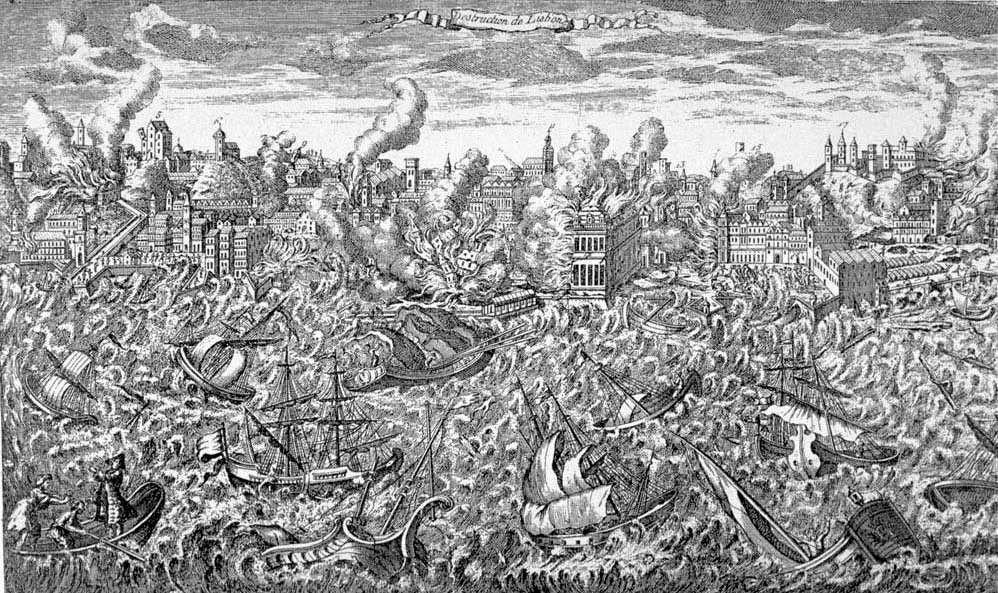
Around 313 to 315 CE a Christian apologist named Lactantius wrote an argument down in order to answer it, and his report is the earliest surviving statement of it. He gives four branches, not the three our own research file prints, and he attributes the argument to Epicurus, roughly six centuries before him, an attribution the scholarship disputes. The argument is narrower than it looks: it is aimed at one specific God, all-powerful and all-knowing and wholly good at the same time, and several of the answers to it work by declining one of those three. What follows is that argument in both of its modern forms, the seven answers our own file gathers, and a body of thought which holds that answering at all wrongs the person whose suffering is being explained. It crowns nobody, and that is a finding rather than a courtesy: it is not established that suffering disproves God, and it is not established that any of the seven answers succeeds.
Start with what is actually being claimed, because the argument is far more specific than its fame. It says that a being who is able to prevent suffering, who knows about it, and who is wholly good would prevent it; that suffering exists, in quantity; and that at least one of those first three things must therefore give. Nothing in that is aimed at religion in general. It is aimed at one conjunction of attributes, held together, and several of the answers below work by declining one of the three rather than by defending all of them.
This article is neither a case against faith nor a defence of it, and that is not a diplomatic posture. Every position below is attributed to the people who hold it and is stated as they would state it before anything is said against it, in both directions: the theodicies are arguments with premises, and so are the objections to them. It ends without a winner because serious people on both sides of it have not persuaded each other, and pretending otherwise in a closing line would be the easiest lie available on this page.
A note on the quotation marks, because on this subject they are load-bearing. Quotations here come from four places and no others: one sentence of Lactantius in the Ante-Nicene Fathers English, the paragraph of Darwin's letter to Asa Gray that the Darwin Correspondence Project holds, and two entries of the Stanford Encyclopedia of Philosophy, quoted as the encyclopedia's words and never as any philosopher's. Three passages our own research file prints inside quotation marks do not appear here in its wording: the argument at the head of its summary, which is a quotation of nothing; a line from Elie Wiesel's Night, whose translator our file does not name; and a criterion of Irving Greenberg's, for which our file names no work at all. A fourth, Darwin's, is printed here in full, because our file stops it in the middle of a sentence and closes the quotation mark there.
Several neighbouring subjects are not this one. Free Will, in this same wing, owns determinism, the experiments and the modern three-position map, and it already carries the cross-cultural religious argument about divine decree and human freedom, from qadar to Calvinist predestination. What sits here instead is one theodicy that takes freedom as its premise, which is a different question: not whether the causal order leaves room for choice, but whether choice is worth what it costs. The Meaning of Life owns the existential answers to suffering, including Viktor Frankl's, and the suffering in this article is theological rather than existential. Death and the Afterlife owns the map of what is said to happen after dying, including the Epicurean consolation about death, which is a different Epicurus from the one at the top of this page and must not be blended with him. Are We Living in a Simulation? owns the simulation argument, which appears here in a single clause. And the full map of the arguments for and against the existence of God is a separate article on this wing that has not been built yet, and it is therefore named here and not linked; this one is about a single argument against, and it does not run the ontological argument, the cosmological argument, Pascal's wager, or fine-tuning as a case for design.
The tier marks follow our own research file where it assigns them, and this article's stated principle where it does not. What a named philosopher published in a named year, and what a surviving text says, is Tier 1. The historical survey of the answers is Tier 2, which is where our file puts it, and it is not a weaker kind of claim than Tier 1, only a different one. Genuinely speculative inference is Tier 3, including our file's own thesis about what the pattern of gods across cultures is consistent with. Tier 4 is refusal, and on this subject the refusals run in two opposite directions at once, which the verdict sets out in full. One structural thing belongs on the record here rather than being left for a reader to trip over: our file's header bands the whole document at Tier 2 to 3 while its own first section is headed Tier 1 and carries fifteen bullets. A document cannot be both, so every claim below is carried at the tier of the section it came from.
01Four Branches, Not Three
The earliest surviving statement of the argument is not Epicurus's. It is a Christian apologist's report of it. Lactantius, writing A Treatise on the Anger of God around 313 to 315 CE, sets the argument out in order to answer it, introduces it as one that disturbs many of the philosophers who defend providence, and attributes it to Epicurus. In the Ante-Nicene Fathers English text, the passage begins: "God, he says, either wishes to take away evils, and is unable; or He is able, and is unwilling; or He is neither willing nor able, or He is both willing and able." The argument continues past that sentence in the original. What is printed above is the opening of the passage. It continues, in the same paragraph, through the consequence Lactantius draws from each branch in turn: feeble, envious, both envious and feeble and therefore not God, and then the question of where evils come from if God is both willing and able. The translation is William Fletcher's, from the Ante-Nicene Fathers, volume seven, edited by Roberts, Donaldson and Coxe and published in 1886. Both of those limits are stated here rather than smoothed over, because the whole of this section is about what happens when a passage travels without its paperwork.
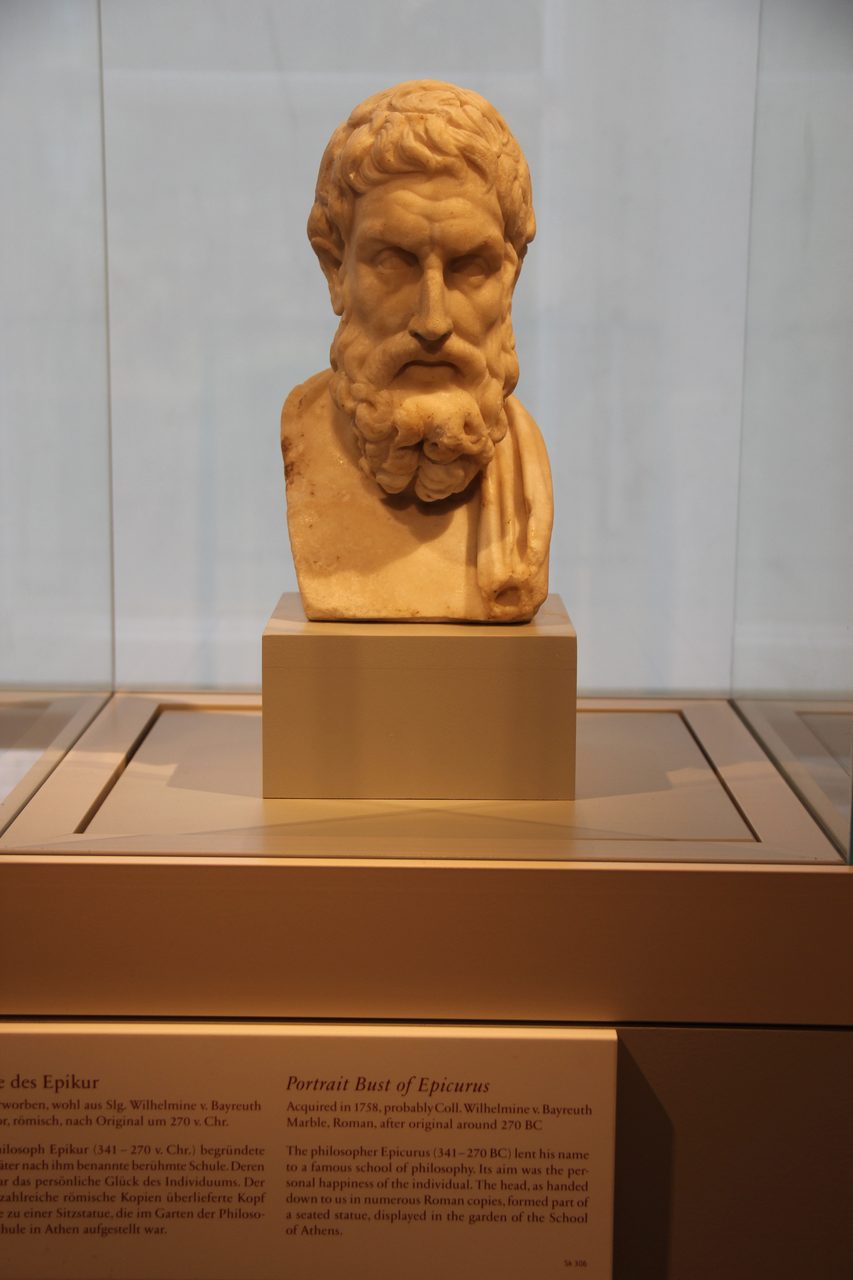
Count the branches. Lactantius gives four: willing to take evils away and unable; able and unwilling; neither willing nor able; both willing and able. Our own research file gives three, printed inside quotation marks, with no work, translation, editor or page named anywhere in the document, and the branch it loses is the third one. That is not a tidy-up. Neither willing nor able is precisely the branch that opens onto a maker who is neither strong enough nor good enough to be the God the argument is about, which is the territory our file's own speculative section goes on to explore, and which section 14 below carries. A passage inside quotation marks with no source behind it is a quotation of nothing, and this article does not reproduce that one.
| The Branch | What It Would Mean For a God Who Is All-Powerful, All-Knowing and Wholly Good | Where This Article Takes It Up |
|---|---|---|
| Willing to take evils away, and unable | That the power is not there | Section 10, where process theology gives up omnipotence deliberately, and where Zoroastrian dualism made the same trade in a completely different tradition |
| Able, and unwilling | That the goodness is not there | Section 10 again, where the flawed-maker answer holds that the maker of the material world is not the good God at all |
| Neither willing nor able | That neither is there | Section 14, where our own file's speculative section lists the cosmologies this branch would fit. This is the branch our file's own version drops |
| Both willing and able | That the attributes stand, and the question is why there is any suffering at all | Sections 03 to 13, which is the whole of the rest of the argument and every answer to it |
The branches in that table are Lactantius's; the middle column is this article's own plain gloss and not his wording. And whether the argument is Epicurus's at all is disputed in the scholarship, which our own file nowhere says. Reinhold Glei argued in Vigiliae Christianae in 1988 that the passage Lactantius reports is not an authentic fragment of Epicurus, and that paper is cited below. So the position at the start of this article can be stated precisely: there is a four-branch argument, transmitted inside a Christian work of the early fourth century CE, attributed by its reporter to a Greek philosopher who had died roughly six centuries earlier, and the attribution is contested. That is a better opening than a famous three-line version, because the argument's own transmission is the first evidence that this is a long fight rather than a settled point.
02The Gap, And Whose God The Argument Is About
Between Lactantius and the twentieth century our own file prints almost nothing, and the bridge it needs is sitting in its own bibliography, unused. Entry 4 is David Hume, Dialogues Concerning Natural Religion, 1779, and it specifies Part X. Hume appears nowhere in the body of the document. Part X, published posthumously, carries the argument's most famous modern statement in English, and where the character Philo presses the questions this article opened with. No wording of Hume's is quoted here, deliberately: the research pass behind this article did not read the text, and the standing joke about Hume's version of this argument is that everybody quotes it from memory. The record for the Oxford Scholarly Editions text is cited below and the paraphrase above is all that is claimed.
Our own file is exact about who the argument is aimed at, and this is where the article's fairness in both directions comes from. The argument applies to the God of classical theism, that is, to a God who is omnipotent and omniscient and omnibenevolent, all three at once, and it does not apply to limited gods, to indifferent gods, or to non-theistic frameworks. A reader who takes the problem of evil as an argument against religion in general has misread it. It is an argument against one specific conjunction of attributes, and once that is clear, an entire class of answers becomes legible: a response that declines one of the three attributes is not failing to meet the argument, it is stepping out of its range, and whether that counts as a solution or as changing the subject is a live question this article carries unresolved.
03The Logical Argument, And The Defence Built Against It
The argument has two modern forms, and the difference between them decides everything that follows. Of the first, the Stanford Encyclopedia of Philosophy's entry on the problem of evil says that "it can be formulated as a purely deductive argument that attempts to show that there are certain facts about the evil in the world that are logically incompatible with the existence of God". The sentence continues in the printed entry into the second form, and it is cut here at the end of its first half. That deductive form is the one J. L. Mackie formalised in Evil and Omnipotence, in Mind in 1955: the three attributes plus the existence of evil make an inconsistent set, so at least one member of the set must be false. Note exactly what is claimed. Mackie's claim is inconsistency, not disproof, and an inconsistency claim is answered by showing the set is consistent after all, which is what the next paragraph is about.
Alvin Plantinga's God, Freedom, and Evil, 1974, is where the Free Will Defence reached a general readership: God cannot create free beings who are guaranteed always to choose the good, because beings so guaranteed would not be free, so the possibility of evil is the cost of genuine freedom. Two things need saying about that sentence. The first is a word, and it is the one piece of vocabulary this article holds to throughout. A theodicy claims to give God's actual reasons for permitting suffering. A defence claims only that God and suffering can coexist without contradiction, which is a far smaller claim and a far harder one to refute, because it needs only to be possible. Our own file uses the two words interchangeably; this article does not, and Plantinga's is a defence. The second is the citation. No identifier for God, Freedom, and Evil exists in our file's bibliography and none was found for this article. The formal, possible-worlds presentation of the same argument is The Nature of Necessity, whose record is cited below, with the caveat that the record's year is 1978 against a print edition standardly dated 1974; that identifier is carried for that book and is not attached to the popular one.
Our file then states, in its own bold type, that most philosophers now regard Plantinga's defence as successful against the logical version. This article does not repeat that, and the reason is worth setting out, because it is the kind of sentence that travels furthest and is checked least. It is a claim about how an entire discipline is distributed, and two attempts to verify it are on the record. The Internet Encyclopedia of Philosophy's article on the logical problem of evil, the obvious place such a statement would be made, refused connection twice on 2026-08-07. The Stanford Encyclopedia's entry on the problem of evil was fetched successfully and asked directly whether it states that the logical formulation is now regarded as abandoned or as answered by the defence, and it makes no such statement. So no head-count appears anywhere in this article, in either direction. What can be said is narrower and is enough: the Free Will Defence is addressed to the logical version specifically, and the live argument since has run on the second form. That last part is not a head-count either, it is a bibliography: four of the papers cited below, published between 1979 and 1991, all engage the second form, and sections 05 and 06 are what they say.
04Five Kinds Of Evil
Before the answers, the vocabulary, because the shape of everything below is that different answers reach different members of one list and none of them reaches all five. Our file names five kinds. Moral evil is caused by free agents, and it lists murder, genocide, cruelty and deception. Natural evil is suffering caused by nature with no human agency, and it lists earthquakes, disease, predation and floods. Structural or systemic evil is suffering caused by institutions, systems and poverty, and is not reducible to individual choices. Horrendous evil is the subject of the next paragraph. Gratuitous evil is suffering that serves no greater good, which our file calls the crux of the second form of the argument. One of those five is worth an honest sentence rather than a silence: structural evil is the only category in the document with no answer attached to it anywhere.
| The Kind | What It Covers | What Our Own File Attaches To It |
|---|---|---|
| Moral | Suffering caused by free agents: murder, genocide, cruelty, deception | The free will defence is built for this category (section 03) |
| Natural | Suffering caused by nature with no human agency: earthquakes, disease, predation, floods | Our file states in its own voice that the free will defence does not reach it. Augustine's account tries to reach it through the Fall (section 08) |
| Structural or systemic | Suffering caused by institutions, systems and poverty, not reducible to individual choices | Nothing. No answer anywhere in the document is attached to this category |
| Horrendous | Evil so extreme that it gives its victim reason to wish they had never been born | Marilyn McCord Adams, a Christian philosopher who built the concept in order to answer it |
| Gratuitous | Suffering that serves no greater good | Named by our file as the crux of the evidential argument (section 05) |
Horrendous evil is Marilyn McCord Adams's concept, and it earns its space because it is not about quantity at all. It asks whether a life can be wrecked past the point at which any compensating good could make it worth having been lived. Our file gives the definition as evil so extreme that it gives its victim reason to wish they had never been born, and dates it to Adams 1999. Two records are cited below and they need different handling. The argument was put in print in a paper of 1989 in the Aristotelian Society Supplementary Volume, and that record carries two authors and a page range spanning both of them because it is a symposium: Adams's paper and Stewart Sutherland's reply printed together. The definition is Adams's. The book of the same title has its own record, which returns Cornell University Press and a record year of 2000 against our file's 1999, so no bare year for the book is printed here. And the fact that stops this concept reading as a debunk is that Adams herself was a Christian philosopher, building the sharpest available version of the objection in order to meet it.
Our file then says the thing that forces the rest of this article. The free will defence addresses moral evil but not natural evil, and it asks, in its own voice, why a God would design a world with tsunamis, cancer, and parasitic wasps that eat their hosts alive. That is a question rather than an answer, and it is asked from one side, so it settles nothing by itself. What it does is set the agenda: a defence that covers one of the five categories above has not finished the job, and sections 07 to 12 are where the seven attempts to finish it are laid out. Hold on to the wasps. A nineteenth-century naturalist reached for the same insect for the same reason, and section 14 is where he and our file meet without our file noticing.
05The Evidential Argument
William Rowe's move in 1979 is what kept the argument alive after the defence. Grant that suffering is logically compatible with the existence of God, he argues, and the amount and the distribution of it still make that existence highly improbable. That is a claim about probability, not about contradiction, and it cannot be met by showing that a consistent story exists. The citation situation is worth stating plainly rather than simplifying. The original is The Problem of Evil and Some Varieties of Atheism, American Philosophical Quarterly 16, 1979, pages 335 to 341, and no record for that printing was found for this article, so it is cited by journal, volume, year and pages with no identifier. A reprint of 2001 does have a record, carries a proper author field, and is cited below labelled as a reprint. The identifier our own file attaches to its 1979 entry is neither of those: it is a 2009 anthology reprint, and its publisher prefix contradicts the journal the entry itself names, which is visible on the face of the string without resolving it. It is not carried here.
Rowe's example is a fawn trapped in a forest fire, suffering for days before it dies. Our file gives it in three clauses: no human free will is involved, no soul is being made, and the suffering serves no apparent purpose. Look at how it is built, because every clause is engineered to close one door. The absence of any agent removes the free will defence, since nobody chose it. The isolation removes soul-making, since there is no observer to be improved by it. The duration removes the answer that brief suffering is a small price. What is left standing is a single question: is this suffering gratuitous, in the exact sense the previous section defined. This article did not read Rowe's paper, so the example is carried as our file states it and no wording of Rowe's is quoted anywhere.
Our file states the force of the argument by listing: a five-year-old dying painfully of leukemia, millions massacred in genocides, natural disasters killing indiscriminately, and it asks what greater good justifies this much suffering. Three things about that list belong in the open. The first is that the leukemia case is a hypothetical. It has no name and no date, our file supplies neither, and writing it as though it were reportage would fabricate a child. The second is that the general form, millions massacred in genocides, is used here as the general form: this article carries exactly one dated atrocity it can source, in section 13, and exactly one dated natural disaster, in section 09, and it reaches for no third. The third is the one that protects the argument from being a parade of horrors. What Rowe and Draper argue about is amount and distribution, which is a claim about the pattern and not about any individual. The argument's force does not depend on any particular case, which is precisely why it does not need anyone's death as an illustration.
Paul Draper's paper of 1989 sharpens the same move into a comparison. Our file gives it as: the probability of the suffering we observe under theism, set against its probability under the hypothesis that there is no being who cares about suffering, with the conclusion that what we observe is far more probable under the second. The word our file uses for that second hypothesis, and the gloss it attaches, are our file's and were not checked against Draper's own terminology, so neither is presented here as his. The record was resolved and is cited below, and it shows something our file's summary loses: the paper's title is Pain and Pleasure, and it treats the two together, which is a wider and more interesting argument than a survey of misery. This article read the record and not the paper, and says so rather than summarising an argument it has not read.
06The Reply That Says We Cannot See
The standing reply to the evidential argument is that we should not expect to be able to see God's reasons in the first place. Our file gives it with an analogy: an infant cannot understand why a parent permits a painful medical procedure, and we are in that position with respect to divine purposes, so our failure to find a justifying good is weak evidence that there is none. It names Wykstra 1984 and Alston 1991, and both records were resolved and are cited below. The Stanford Encyclopedia's entry on skeptical theism gives the lineage: "It was reintroduced into the contemporary literature in a 1984 paper by Stephen Wykstra. Since then, a variety of authors have developed and defended it including William Alston, Alvin Plantinga, Peter van Inwagen, Michael Bergmann, and Daniel Howard-Snyder." That entry is by Timothy Perrine and was first published on 13 January 2023.
Our file then does something worth keeping. It calls the position philosophically viable and unsatisfying in the same breath, and both halves of that are earned. It is viable because it attacks the inference rather than the observation: nobody has to deny that the fawn suffered to deny that our failure to see a reason establishes that there was none. It is unsatisfying because of what it costs. A mind whose reasons are that far beyond ours is a mind about which it is correspondingly hard to make claims in any direction, including the reassuring ones, and a reader who takes the reply seriously has to take that price seriously too. Read against our own file's own material this is the theist's strongest live move against the evidential argument, defended by serious philosophers, and it is not resolved here, because it is not resolved anywhere this article could check.
07Seven Answers, And What Each One Is Answering
Our file gathers seven answers, and they are not variations on one another. They disagree about what kind of thing is being explained, and two of them answer by giving up one of the attributes the argument needs in order to run. The table below is the map. Five sections follow it, and six of the seven answers are walked there at length, each stated at its strength before anything is said against it; the seventh, the free will defence, has already had section 03, and its older Augustinian form opens section 08. That order is deliberate and it is a correction to our own source: our file states most of these positions in one line and their problems in three, which produces a survey that looks balanced and reads as a prosecution. The objections here are our file's own and every one of them is carried. They are simply not given three times the room.
| The Answer | The Names Our File Attaches | The Objection Our File Attaches |
|---|---|---|
| The free will defence | Augustine, Plantinga | It addresses moral evil and not natural evil, which our file states in its own voice; and if God foresaw the Fall, why create beings he knew would fall |
| Soul-making | Irenaeus, John Hick in 1966 | Millions die young before any soul-making happens; the distribution of suffering is wildly disproportionate; and why not create souls already made |
| The best of all possible worlds | Leibniz, Theodicy, 1710 | Delivered historically rather than analytically: Voltaire's Candide of 1759, published after the Lisbon earthquake |
| The flawed maker | Gnostic cosmology; the Demiurge, called Yaldabaoth in Sethian Gnosticism | Orthodox Christianity rejected it as heresy, and it regenerates its own question: why does the true God permit the Demiurge to create suffering |
| Karmic justice | Hindu and Buddhist traditions | That the implications are morally repugnant, because they blame victims and can be used to justify caste |
| Divine mystery | The Book of Job | It supplies no reason, by design. Its modern descendant in form, skeptical theism, carries the cost named in section 06 |
| Process theology | Whitehead in 1929, with Hartshorne, Cobb and Griffin | A God who is not omnipotent is not the God of classical theism, so the answer changes the subject rather than meeting it |
08Privation, And The Vale Of Soul-Making
Augustine's answer, from the fourth and fifth centuries CE, comes in three moves, and the first is not a word game. Evil is a privation, privatio boni, the absence of a good that ought to be present, rather than a positive substance in its own right. If that is true then there is no stuff called evil for anyone to have made, and the question of who manufactured it dissolves; what remains is a question about absences, which is a different question. The second move is that all creation is good and that evil arises when the free will of creatures turns away from God. The third is that the Fall corrupted all of nature, which is how the account reaches natural evil and not only moral evil. This is the account that stood at the centre of Western Christian thought for more than a thousand years, and it did so because the privation move is genuinely load-bearing rather than decorative.
Our file's objection is in two parts and both are serious. The first is that the account makes a single event carry all of natural evil: every earthquake and every cancer is charged to one mythical episode, which is a very heavy load for a story to bear, and it leaves the account hostage to how that story is read. The second is the one that has never gone away. If God is omniscient, he foresaw the Fall before he made the beings who would fall, and creating them anyway needs an explanation that the privation move does not supply. Our file's bibliography gives Augustine's Confessions, books VII and XI, with no identifier and a damaged year field; this article did not read the text, so no wording of Augustine's is quoted here and the account is carried as our file states it.
The soul-making answer runs the other way round. Its root is in Irenaeus in the second century CE and its modern form is John Hick's book of 1966: the world was never meant to be a paradise, it is a vale of soul-making, and the qualities that make a person worth being cannot be installed at the factory. Courage exists only where there is something to fear. Compassion exists only where there is something to pity. Perseverance exists only where things are hard. A world built to spare its inhabitants every difficulty would produce, on this account, morally infantile beings who had never had to become anything, and the argument is that such a world is worse and not better. Our file's own identifier for Hick's book resolves to a review of it rather than to the book, and is not printed here; the record of a later edition is cited below and labelled as the later edition it is.
Three objections, and our file supplies all three. Millions die young, before any soul-making of any kind has occurred, and an account of suffering that explains nothing about the death of infants has left out a large part of what it was asked to explain. The distribution is wildly disproportionate: if suffering is a workshop, the tools are handed out with no relation to who needs them, and the people who get the most of it are not the people who become the most. And the third is the flat one. If the goods are worth having, why could an omnipotent being not create beings who already had them, given that the same being is supposed to have created everything else from nothing. None of the three is answered in our file, and none of them is answered here.
09The Best Of All Possible Worlds, And What Happened To It
Leibniz's Theodicy of 1710 is where the field got its name, and the position is routinely stated in a way that makes it sound complacent. It is not the claim that this world is nice. It is the claim that God, being perfect, necessarily created the best of all logically possible worlds, and the word logically carries the argument: the space of coherent alternatives is far narrower than intuition suggests, and a world with less suffering in it might be, taken as a whole, less free, less varied and worse. Removing a given evil from the world is easy to imagine and hard to specify, because what else changes when it goes is not something anybody can compute. Our file attaches an ISBN to the Theodicy which did not resolve and which is not printed here; the Theodicy is cited by title and year with no identifier, and a chapter of scholarship on it is cited below instead.
The objection our file attaches is not an argument but an event, and then a book. On 1 November 1755, All Saints' Day, an earthquake destroyed Lisbon while the churches were full, and Voltaire's satire Candide, published in 1759, made the best of all possible worlds into a punchline that has outlived the position it was aimed at. Something precise happened there and it is worth naming, because it is the one place in this whole article where a physical event moved a philosophical argument. Nothing about the logic of Leibniz's position changed on that morning. What changed was the plausibility of saying it out loud in Europe, and the difference between those two things is a large part of what section 13 is about.
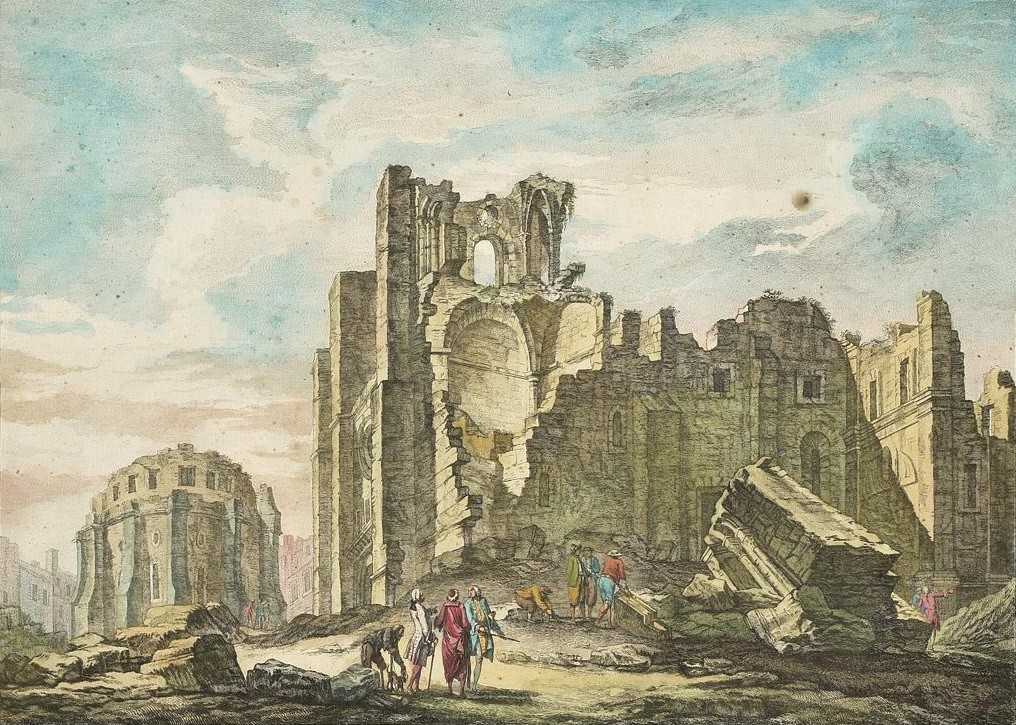
Our file gives a death toll for Lisbon and this article does not print it. The range it gives spans more than a factor of three, it carries no citation of any kind, and it could not be verified for this article: two papers on the earthquake were resolved and read as records, and neither supplies a casualty figure this article could read. What can be said is that the dead were in the tens of thousands and that published estimates vary widely, and that is said here on our own file's authority and on nobody else's. A range that wide is exactly the sort of number that hardens into a fact once it has been printed twice, which is why it appears in no summary, no table and no verdict line on this page.
One number about Lisbon can be given, and it is not a casualty figure. A reassessment published in the Bulletin of the Seismological Society of America in 2020 estimates the earthquake's moment magnitude at 7.7 plus or minus 0.5, derived from 1,206 macroseismic data points across Portugal, Spain and Morocco, and describes that as significantly lower than previous results. That paper's abstract was read for this article and its record is cited below. It is included for a specific reason: it shows what a sourced number about this event actually looks like, standing beside a death range that our own file prints with nothing behind it at all.
10The Answers That Give Something Up
Process theology answers by surrendering the attribute that generates the problem. Our file names Whitehead in 1929 with Hartshorne, Cobb and Griffin after him, and gives the position as: God is not omnipotent in the classical sense; God lures creation toward the good and cannot coerce it; God neither causes nor permits evil but suffers alongside creation and works persuasively toward healing; and evil is the price of creaturely freedom in a genuinely open universe. Read that against the scope limit in section 02 and it stops looking like a failed theodicy. The argument from evil is an argument against a specific conjunction of attributes, so a position that declines one of them is outside its range by construction. Our file's objection is the obvious one and it is a good one: a God who is not omnipotent is not the God of classical theism, so this may be an answer to a different question. Whether that is a solution or an evasion is exactly the sort of thing this article carries without settling. No identifier for Whitehead's Process and Reality of 1929 exists in our file and none was resolved here, so it is cited by title and year alone.
The same trade was made far earlier, and far more bluntly. In Gnostic cosmology, the maker of the material world is not the supreme God but a lesser being, ignorant or arrogant or malicious, called the Demiurge and named Yaldabaoth in Sethian Gnosticism; the true God is transcendent and had nothing to do with material creation. That dissolves the problem at a stroke, because a powerful creator who is not good is not a contradiction. Our file attaches two counter-arguments and both are carried: orthodox Christianity rejected the position as heresy, and the answer regenerates its own question one level up, since something has to be said about why the true God permits the Demiurge to make anything at all. The Gnostic material gets one movement here and no more, because the cosmology belongs to a different corpus document and to a separate article not yet built, and because two live articles on this site already carry a Gnostic paragraph each.
No, Satan is not an independent source of evil, inside a monotheism that also holds God to be omnipotent. Our file marks this one theologically problematic and gives the reason in a line: if God is omnipotent, then Satan exists by God's permission, and the question has simply been moved back a step to why that permission is given. What our file adds next is the interesting half, and it is not a refusal at all. Persian Zoroastrian dualism, Ahura Mazda against Angra Mainyu, escapes the regress by making the evil principle genuinely independent, at the cost of omnipotence. That is the same trade process theology makes, arrived at from a different direction and roughly two and a half thousand years earlier. What is refused here is a claim made inside monotheism. Zoroastrian dualism is not being refused; it is being named as the framework in which the claim is coherent, and the Zoroastrian material proper belongs to The Great Flood, which already carries it.
11The Traditions That Answer Differently
The karmic answer is that suffering is the working out of actions in previous lives, that all suffering is therefore earned, that the universe is perfectly just, and that what looks like injustice is a ledger we can see only one page of. Our file gives it in two bullets: the position, then the objection that its implications are morally repugnant because they blame victims and can be used to justify caste, then a reply that karma is not punishment but natural consequence, like gravity. That exchange is not a rhetorical flourish invented for a research file. It is a live argument in the philosophical literature, and three papers of it are cited below: Whitley Kaufman's article in Philosophy East and West in 2005, a response by Monima Chadha and Nick Trakakis in 2007, and Kaufman's reply to critics in the same volume. This article read the three records and not the three papers, so no specific argument is attributed to any of them here; what is claimed is that the exchange exists and where to find it. The cross-cultural religious argument about divine decree and human freedom, including karma read as a position about agency, belongs to Free Will and is not re-run here.
Buddhism declines the question. Suffering, dukkha, is inherent in conditioned existence; there is no omnipotent creator god, so there is nothing for a theodicy to defend; and suffering has a cause, craving and attachment, and a cure, the Eightfold Path. Our file's own summary is that the framework sidesteps the problem entirely by denying its theological premise, and that is exactly right, which is why this is not presented here as a solution. It is not offered as one. What it demonstrates is section 02 in practice: the problem of evil is not a universal human predicament that every thinking person must face, it is a problem generated by a specific set of claims about a specific kind of God, and an entire major tradition has no use for it.
Maya is the third of these: the material world is illusion, so suffering is real at the phenomenal level and ultimately illusory at the level of Brahman. Our file's counter belongs in the same breath as the claim and is given here that way. Suffering feels exactly as real whatever its ultimate metaphysical status, and an account that cannot say why the feeling is unaffected has not finished. The metaphysics belongs to another article on this wing, not yet built, and maya appears here only as an answer to suffering.
No, suffering is not all in your mind, and our file marks that formulation misleading. The line between the position above and this one is worth drawing exactly, because it is the kind of distinction this wing exists to make. Some Buddhist and Hindu traditions do emphasise the illusory nature of phenomenal experience, and that is a soteriological strategy aimed at liberation, held by serious philosophers, defended with arguments. It is not the claim that beings do not experience pain. Suffering is phenomenologically real even if it is metaphysically contingent, and a popular slogan that shares half a sentence with a serious position can mean the opposite of it.
12Job, And The Refusal From Inside The Tradition
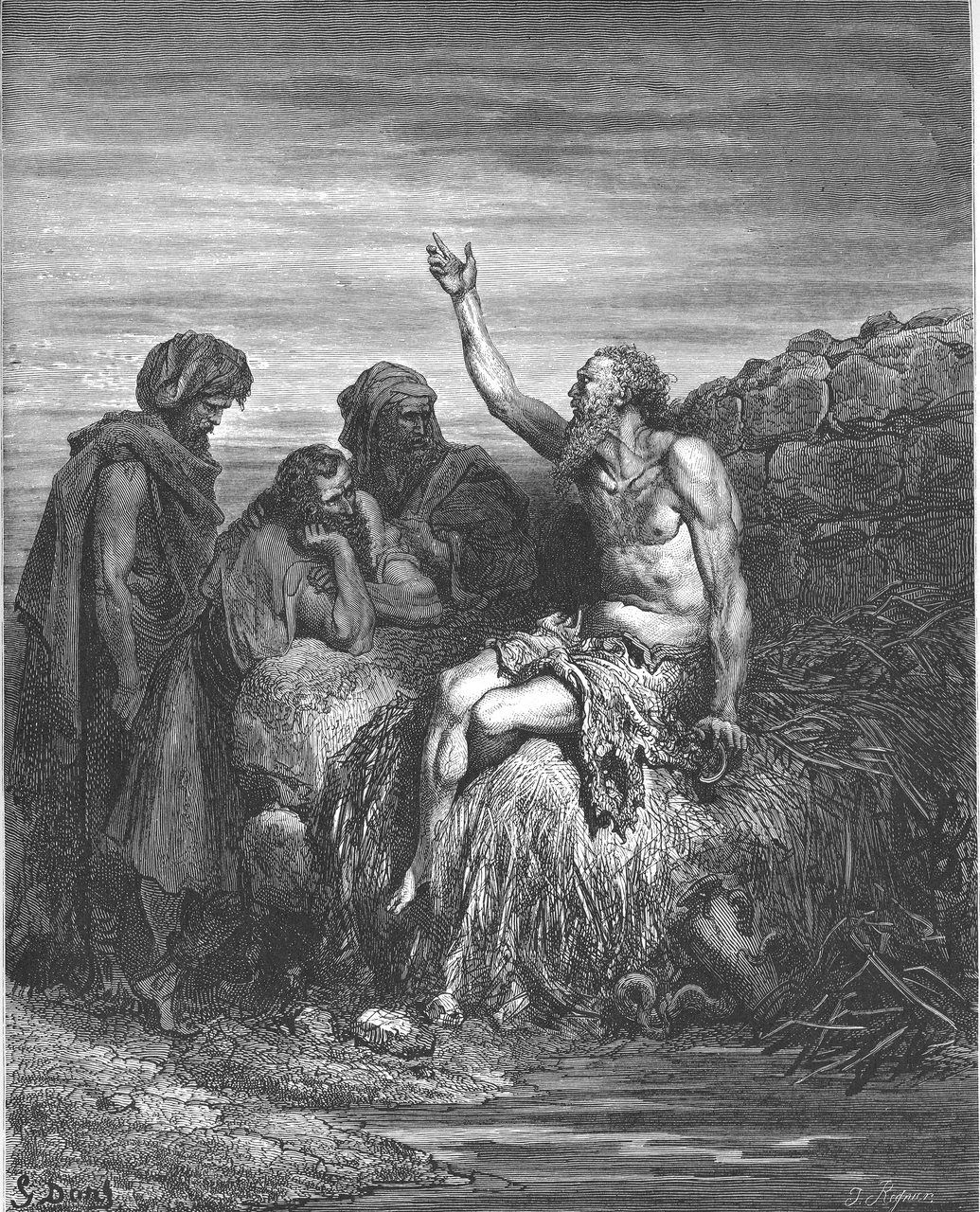
No, suffering is not punishment from God, and our file marks that answer debunked. What matters is who is doing the refusing. The Book of Job exists to refuse it: Job is innocent, his friends spend the book explaining that he cannot be, and the text has God endorse Job's innocence rather than theirs. In the Gospel of John, at 9:3, Jesus is asked whose sin caused a man to be born blind and rejects the premise of the question. Our file adds the plain modern form: earthquake victims and disease sufferers are not being punished. So this is not the article scoring a point against believers. It is an ancient text inside the tradition refusing the crudest available answer, roughly two and a half thousand years before Mackie wrote his paper. No wording of either text appears here in quotation marks: this article read no translation of Job and none of John, translations differ materially, and an unattributed rendering is the exact defect section 13 refuses twice more.
13What The Twentieth Century Changed
Our file states that the Holocaust forced a complete re-engagement with theodicy, and the nature of that change needs marking, because it is the hinge of this whole article. The logic did not move. Mackie's inconsistent set of 1955 would have been recognisable to Hume in 1779. What moved was the standing of the enterprise itself: a body of thinkers, most of them religious and several of them survivors, concluded that the attempt to justify God in the face of what had happened was not merely unsuccessful but wrong to attempt. Every position in this section is a named individual's, and each is carried as an argument. No statistic appears here for effect.

Elie Wiesel's Night, published in 1958, contains a passage in which a bystander asks where God is while a child hangs, and the narrator answers that he is there, on the gallows. That sentence is deliberately not in quotation marks. Night exists in materially different English translations, our own file names no translator, its bibliography entry for the book carries a stray slash and two years, and no published translation of the passage could be read for this article, so no wording is reproduced. What our file says about the passage is the part that matters philosophically and it is kept: this is not an argument but a testimony, and its claim is that traditional theodicy is morally obscene in the face of Auschwitz. An argument can be answered. A testimony has to be reckoned with differently, and the next three positions are three ways of doing it.
Richard Rubenstein's After Auschwitz, 1966, gives the first: God is dead, the covenant is broken, and meaning must be made without a divine guarantee. The phrase needs holding away from the one it resembles. This is a rabbi writing about a covenant, making a claim about a particular relationship between a particular people and a particular God, and it is not Nietzsche's announcement doing Nietzsche's work, which The Meaning of Life carries in its own place with its own evidence. Emil Fackenheim, in 1970, gives the second, and its structure is the interesting part: he proposes a 614th commandment, that Jews must survive so as not to grant Hitler a posthumous victory, and adds that God's presence is commanded rather than explained. That is not a theodicy. It is a refusal to produce one, with an obligation put in its place. The number 614 is Fackenheim's own designation and rests here on our file alone. No identifier for either work exists in our file and none was found.
Irving Greenberg, in 1977, supplies the third, and it does more work than any argument in this section. The criterion is that no statement, theological or otherwise, should be made that would not be credible if it were said in the presence of burning children. Our file prints that inside quotation marks; this article does not, because our file names no work, Greenberg appears in no bibliography entry at all, and no identifier and no primary text were found for it. As a paraphrase it is still the most practically useful idea in this article, because it converts an abstract dispute into a test that anyone can run on any sentence, including the sentences on this page. It has been run on them.
There is a fifth position and our file never reaches it. Hans Jonas published The Concept of God after Auschwitz in the Journal of Religion in 1987; our file's bibliography carries the entry, drops the subtitle, supplies no identifier, and its section on this subject runs four names and stops before him. The identifier was resolved for this article and is cited below, with the subtitle restored: A Jewish Voice, which matters, because Jonas is explicit that he is speaking from inside a tradition rather than about one. This article read the record and not the essay, so nothing is reported here about what he argues. It is named because a reader who wants to follow this section's strongest thread should have somewhere real to go.
Then there is a movement whose thesis is that sections 07 through 12 should not have been written. Anti-theodicy, which our file names in two lines and attributes to D. Z. Phillips and Kenneth Surin, is not an answer to the problem of evil and it is not a denial that the problem exists. It is a claim about the ethics of arguing about it: that constructing a justification for another person's suffering wrongs that person, whatever the justification's logical merits, so that a theodicy could in principle be valid and still be something one ought not to say. Betenson's survey of the movement, in Philosophy Compass in 2016, is cited below as the survey and nothing is attributed to him here. This is uncomfortable in the right way and the discomfort is not something to write around. An article that lays out seven answers and then reports, without flinching, that a serious body of thought holds the laying-out itself to be a moral error, is doing the thing this wing exists to do.
14What Our Own File Speculates, And What It Does Not Consider
Our file's third section asks a question the rest of the document does not: if the argument from evil tells against classical theism, what does the evidence fit instead. It lists five. Deism, where a creator does not intervene and suffering is what unattended physical law produces. Polytheism, multiple gods of limited power in conflict with one another, which our file says is the cosmology of most ancient traditions and where it names Sumerian, Greek, Norse and Hindu material. Gnosticism, which section 10 above already carried. A simulation, where a maker has no obligation to minimise suffering and possibly no awareness of it, an argument that belongs entire to Are We Living in a Simulation? and appears here in this clause and no other. And no creator at all, where there is no evil to explain and only suffering to address. This is a list of possibilities and not a menu of conclusions, and it is carried at the tier our file gives it. Notice what it is, though: every one of the five is a way of taking one of Lactantius's branches seriously, which is one more reason the branch our file drops was worth restoring.
Our file then makes a claim that belongs to the wider project it is part of, and it is flagged here rather than absorbed. It says that the pattern across cultures of describing gods as competitive, jealous, warlike and capable of cruelty is consistent with something other than classical theism. Consistent with is the hedge and it is the whole claim: it is not the same as evidence for, and our file's own summary states the idea considerably more strongly than its argued section does. Carried at Tier 3, with the hedge intact, it is a legitimate speculation. As a conclusion it would be a failure of this article's neutrality, so it is not one. And there is an objection our file does not consider anywhere, which belongs in the same breath: a pattern in how human beings have written about gods is at least as good evidence about human beings as it is about gods, and nothing in the pattern itself tells you which.
The last of our file's speculations is the most modern and the least established. A world without evil, it argues, would have lower information content, because there would be no contrast, no variation and no learning signal; suffering carries information about threats, injustice, fragility and the needs of others; and this is soul-making restated for a universe modelled as an information-processing system. Our file attaches its own counter and the counter is the reason the card is worth carrying: this instrumentalises suffering, treating persons as means to the generation of information. That counter is Greenberg's criterion from section 13 applied to a twenty-first-century idea, which is a fair demonstration that the criterion has teeth and is not merely a pious sentiment.
Our file's other speculation turns the design argument around. If the universe is designed, then the designer designed cancer, parasites, earthquakes and extinction events, so the same evidence that is offered for a designer is evidence about that designer's character. Fine-tuning as a case for God belongs to the unbuilt article this wing has rostered for it and to another corpus document, and it appears in this article only here, only turned against itself, and nowhere else. What lifts this from a debating point is the evidence our file reaches for next, and gets slightly wrong.
On 22 May 1860 Charles Darwin wrote to the botanist Asa Gray, and the Darwin Correspondence Project holds the letter as DCP-LETT-2814. The paragraph runs: "I had no intention to write atheistically. But I own that I cannot see, as plainly as others do, & as I shd wish to do, evidence of design & beneficence on all sides of us. There seems to me too much misery in the world." And then: "I cannot persuade myself that a beneficent & omnipotent God would have designedly created the Ichneumonidæ with the express intention of their feeding within the living bodies of caterpillars, or that a cat should play with mice." The ampersands, the abbreviation shd and the ligature in Ichneumonidæ are Darwin's own and are reproduced as the archive prints them rather than modernised. Our own file quotes that second sentence and stops it at caterpillars, closing the quotation mark there, which silently drops the cat and the mice: the half that moves the argument from an exotic parasite most readers have never seen to something anyone can watch in a garden. Note also what the first sentence does to the passage. A man who opens by saying he had no intention to write atheistically is recording a difficulty, not launching an attack, and that is the register this whole subject deserves.
Fast Facts
- The Argument
- That a being able to prevent suffering, aware of it, and wholly good would prevent it; that suffering exists; and that at least one of the first three must therefore give
- The Earliest Surviving Statement
- Lactantius, A Treatise on the Anger of God, chapter 13, written around 313 to 315 CE. He reports it in four branches in order to answer it and attributes it to Epicurus, roughly six centuries earlier. Whether it is Epicurus's is disputed: Glei argued in 1988 that it is not an authentic Epicurean fragment
- Whose God
- The God of classical theism, omnipotent and omniscient and omnibenevolent together. Our own file states that the argument does not apply to limited gods, indifferent gods or non-theistic frameworks
- Two Forms
- Deductive, that the claims form an inconsistent set (Mackie, 1955). Evidential, that the amount and distribution of suffering make that God's existence improbable (Rowe, 1979; Draper, 1989)
- Seven Answers
- The free will defence, soul-making, the best of all possible worlds, the flawed maker, karmic justice, divine mystery, and process theology. Our own file attaches an explicit objection to every one of them, and all seven objections are carried here
- The Standing Reply
- Skeptical theism, that we should not expect to see God's reasons. Reintroduced in a 1984 paper by Stephen Wykstra and developed since by named philosophers. Its cost is that a mind whose reasons are that opaque is hard to make claims about in any direction
- The Objection To The Whole Exercise
- Anti-theodicy: that justifying another person's suffering wrongs that person whatever the justification's merits. Named in our file as D. Z. Phillips and Kenneth Surin, surveyed by Betenson in 2016
- Not Established
- That suffering disproves God; that any of the seven answers succeeds; and how the profession is distributed on either question, which this article reports in no direction because it could not be checked
What Can Actually Be Stood Behind
The transmission and the paperwork are settled and may be stated flatly. The earliest surviving statement of the argument is Lactantius, A Treatise on the Anger of God chapter 13, written around 313 to 315 CE, who reports it in four branches, attributes it to Epicurus, and answers it. Glei argued in 1988 that it is not an authentic Epicurean fragment. Hume's Dialogues, Part X, published in 1779, carries the argument's most famous modern statement in English. Mackie formalised the deductive version in Mind in 1955 as an inconsistent set. Plantinga's Free Will Defence answers that version and is a defence rather than a theodicy. Rowe argued the evidential version in 1979 and Draper argued a comparative version in 1989. Wykstra reintroduced skeptical theism in 1984 and Alston developed it in 1991. Marilyn McCord Adams defined horrendous evil, in a symposium paper of 1989 and a book of the same title. Darwin wrote to Asa Gray on 22 May 1860 and the letter says what section 14 quotes, including the clause our own file drops. Every quotation on this page names its source in the sentence that carries it.
The disputes are real, serious and unresolved, and each has named holders on more than one side. Whether any of the seven answers meets the argument is argued in every case, and our own file attaches an explicit objection to all seven. Whether skeptical theism is a reply or a retreat is live, and the position's own cost, that it makes a mind hard to describe in any direction, is named here in the same paragraph as the position. Whether the karmic answer survives its moral objection is a current exchange in the journals, three papers of which are cited below. Whether a position that declines one of the three attributes has solved the problem or changed the subject is open, and it applies to process theology, to the flawed maker and to Zoroastrian dualism alike. And whether theodicy should be attempted at all is a serious position held by named people, aimed squarely at this article's own middle sections.
Three things stay speculative and our own file tiers them that way itself. The five cosmologies its third section lists, deism, polytheism, Gnosticism, simulation and no creator, are possibilities the evidence would fit and not conclusions the evidence supports. The claim that the cross-cultural pattern of competitive, jealous and cruel gods is consistent with something other than classical theism keeps the words consistent with, which is the whole of the claim, and it meets an objection our file never considers: a pattern in how humans wrote about gods is at least as good evidence about humans. And the argument that a world without evil would carry less information is our file's most modern speculation and its least established, and it arrives with our file's own counter attached, that it treats persons as means to the production of information.
No, twice, in opposite directions, and holding both at once is what this article is built for. No, it is not established that suffering disproves God. The deductive version claimed a strict contradiction and has an answer on the table that the literature took seriously enough to move past; the evidential version is explicitly probabilistic, since Rowe argues improbability and not impossibility and Draper argues comparative likelihood; and skeptical theism is a live reply that our own file itself calls viable. The argument from evil is the strongest and most durable objection classical theism faces, and it has not closed the question. And no, equally, it is not established that any theodicy succeeds. Our file attaches a standing objection to every one of the seven, records that the free will defence does not reach natural evil at all, records that soul-making cannot account for the distribution of suffering, and records an entire movement whose thesis is that the enterprise is illegitimate. Each answer meets part of the problem and each has an objection its defenders are still arguing about. Dropping either of these two refusals is how this subject gets written badly, and dropping one of them in a summary line is where it usually happens.
No, this article does not report how philosophers are distributed on any of this, and the omission is deliberate rather than coy. Our own file states in bold that most philosophers now regard Plantinga's defence as successful against the logical version. That is a claim about a discipline, no survey behind it was reached, and the two obvious places to check it came back as follows: one encyclopedia refused connection twice on 2026-08-07, and the other was fetched, asked the question directly, and makes no such statement. So no sentence here says most philosophers, the consensus is, or philosophers now agree, about the defence, about the argument, or about anything else. What is reported instead is what was actually published, by whom, and when.
No, suffering is not punishment from God, and the refusal is the Book of Job's before it is anyone else's: Job is innocent, his friends are the ones insisting otherwise, and the text endorses him rather than them. No, suffering is not all in your mind; the traditions that call the phenomenal world illusory are pursuing liberation, not denying that beings feel pain, and suffering is phenomenologically real whatever its metaphysical status. No, Satan is not an independent source of evil inside a monotheism that also holds God omnipotent, because the question only moves back a step. And that last one is a refusal of a claim made inside monotheism, not a refusal of Zoroastrian dualism, which pays for its independence with omnipotence and is coherent in doing so.
An apologist wrote the argument down in order to knock it over and preserved it by doing so. A naturalist who said he had no intention of writing atheistically could not make the wasps fit. A rabbi who lived through the twentieth century concluded that the covenant was broken, and another concluded that the right response was an obligation rather than an explanation, and a third proposed that the test of any sentence about God is whether it could be said in front of burning children. None of them was arguing in bad faith and none of them persuaded the others. What that record shows is that this is not a problem waiting for someone clever enough to solve it. It is a place where two things people have very good reasons to believe, that the world contains suffering nobody can justify and that the world was made by something good, will not sit down together, and every answer above is somebody deciding which of the two to hold onto more tightly. This article has not made that decision for anyone, and it would be worth less if it had.
Sources & further reading
One research file in our own library stands behind this article, P_2_01. That file is where the work was done from; the twenty-three external records below are where the work can be checked, and they are listed against the sections that use them. Three limits belong on the record rather than being left to be discovered. First, the quotations. Only four sources are quoted on this page, each named in the sentence that carries it, and three passages our own file prints inside quotation marks are refused here for stated reasons: the argument at the head of its summary, which names no work, translation, editor or page; a line from Wiesel's Night, for which it names no translator; and a criterion of Greenberg's, for which it names no work and whose author appears in no bibliography entry it carries. Second, the identifiers. Our file's bibliography carries five DOIs and one ISBN. Two of the five resolve exactly to the work named. One resolves to a review of the book it labels and is not reproduced here. One resolves to a 2009 anthology reprint presented as a 1979 journal article and is not reproduced here. One resolves to the right book with a record year of 2000 against the entry's 1999, and is carried below with that discrepancy stated. The ISBN did not resolve and is not printed anywhere. Every identifier below was resolved live against CrossRef on 2026-08-07 and the returned title was read against the claim it is attached to. Third, two entries are pointers rather than sources: Chester 2001 is cited as the scholarly review of the Lisbon earthquake and was not read for this article, and Jonas 1987 is cited as the place a reader should go and its argument is nowhere summarised here.
Image credits
- A copper engraving of the Lisbon earthquake, made in 1755, the year of the disaster Engraver unknown; the Jan Kozak Collection, Earthquake Engineering Online Archive, accession KZ128, via Wikimedia Commons. Public Domain Source.
- Marble bust of Epicurus, a Roman copy, Greek Gallery, Altes Museum, Berlin Gary Todd, 2016, via Wikimedia Commons. CC0 Source.
- The ruins of Lisbon Cathedral after the 1755 earthquake, engraved in 1757 Jacques-Philippe Le Bas, 1757; reproduction via Cabral Moncada Leiloes and Wikimedia Commons. Public Domain Source.
- Job Speaks with His Friends, a plate from Doré's English Bible, 1866 Gustave Doré, 1866, from Doré's English Bible, via Wikimedia Commons. Public Domain Source.
- The site of Auschwitz II, Birkenau, photographed on 20 September 2013 Oleg Yunakov, own work, 2013, via Wikimedia Commons. CC BY-SA 4.0 Source.
- Card crop of the 1755 copper engraving of the Lisbon earthquake Engraver unknown; the Jan Kozak Collection, Earthquake Engineering Online Archive, accession KZ128, via Wikimedia Commons. Public Domain Source.


_end_of_the_rail_tracks.JPG)