
Qualia: The Redness of Red and the Limits of Science
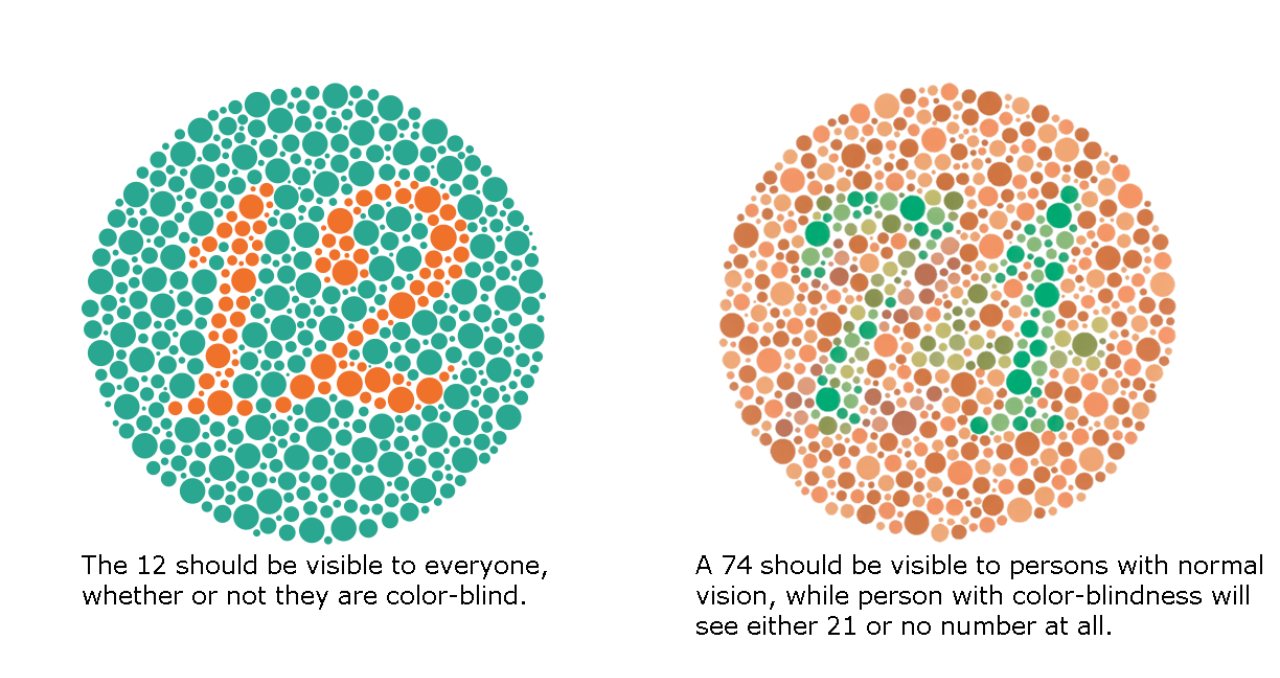
Look at something red and you get two things at once: a wavelength any instrument can measure, and a redness that nothing in the measurement seems to name. Philosophy calls that second thing a quale, and says it is ineffable, intrinsic, private, and known immediately by whoever has it. This is the file on qualia: the four properties they are alleged to have, the three famous arguments built on top of them, the real color science underneath, and the serious case that nothing at all answers to the description. It ends where the honest position ends, with the question open in both directions.
Find something red and look at it properly. A fire door, a pepper, the light behind your own closed eyelids. Two things are happening, and only one of them is easy to talk about. There is a physical event, light of a certain wavelength striking cells in the back of your eye and setting off a cascade you could in principle trace signal by signal. And there is the redness, the particular way that event shows up for you, which does not appear anywhere in the trace. Philosophy has a name for that second thing. A quale, plural qualia, is the felt quality of a conscious state: the redness of red, the hurt of a pain, the smell of coffee as it is for the one smelling it. This file is about those alleged properties, about the arguments built on them, and about the entirely serious position that there are no such things. Let's open the file.
01What A Quale Is Supposed To Be
Before anything can be argued, the term has to be pinned down, and the pinning down is where the trouble begins. The classical definition is not a description of something anyone has measured. It is a list of properties experience is claimed to have, and every item on the list has been contested by somebody.
Qualia are traditionally characterized by four properties, a list traced to Clarence Irving Lewis in 1929 and set out in this compact form by Daniel Dennett in 1988. They are said to be ineffable, meaning they cannot be fully communicated or captured in language: you cannot describe what red looks like to a congenitally blind person. Intrinsic, meaning non-relational: the redness of red is not defined by its relations to other things, it is simply what it is. Private, meaning directly accessible only to the subject having them: no one else can experience your qualia. And directly apprehensible, meaning immediately known by the subject: you know what your pain feels like simply by feeling it.
| Property | What It Is Supposed To Mean |
|---|---|
| Ineffable | It cannot be fully communicated or captured in language; you cannot describe what red looks like to a congenitally blind person |
| Intrinsic | It is non-relational; the redness of red is not defined by its relations to other things, it is what it is |
| Private | It is directly accessible only to the subject having it; no one else can experience your qualia |
| Directly Apprehensible | It is immediately known by the subject; you know what your pain feels like simply by feeling it |
That list is not a settled description of a known thing. The characterizations are themselves debated, and the philosopher who gave them their tidiest modern statement did so in order to attack them: Dennett argues that each of the four can be challenged. Keep that in view for everything that follows. The arguments in the next three sections all assume that something answers to this description, and the argument in section six is that nothing does.
02The Physical Story Of Red, All The Way In
It is worth laying out how much of color really is understood, because the philosophical claim is not that color vision is mysterious. It is that color vision is well understood and that the understanding still leaves something out. The science half of this is not in dispute.
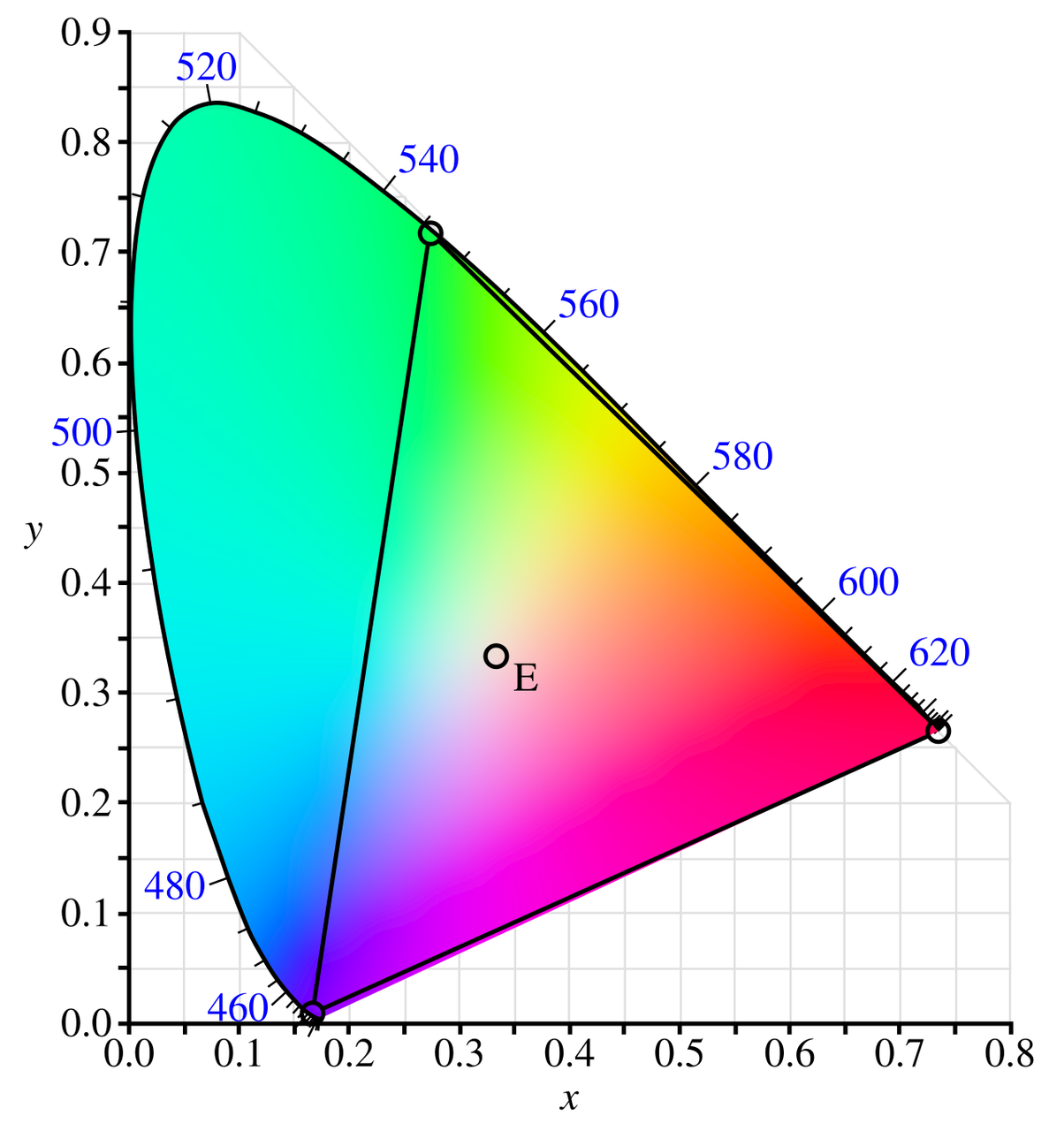
Human trichromatic color vision arises from three types of cone photoreceptor in the retina, sensitive to short, medium and long wavelengths, usually written S, M and L. Each type has its own distinct spectral absorption curve, so a given wavelength of light excites the three to different degrees, and the visual system uses the relative activation across the three to discriminate one wavelength from another. That signal is then processed onward through the visual system, including area V4. This is textbook vision science, and every step of it can be written down.
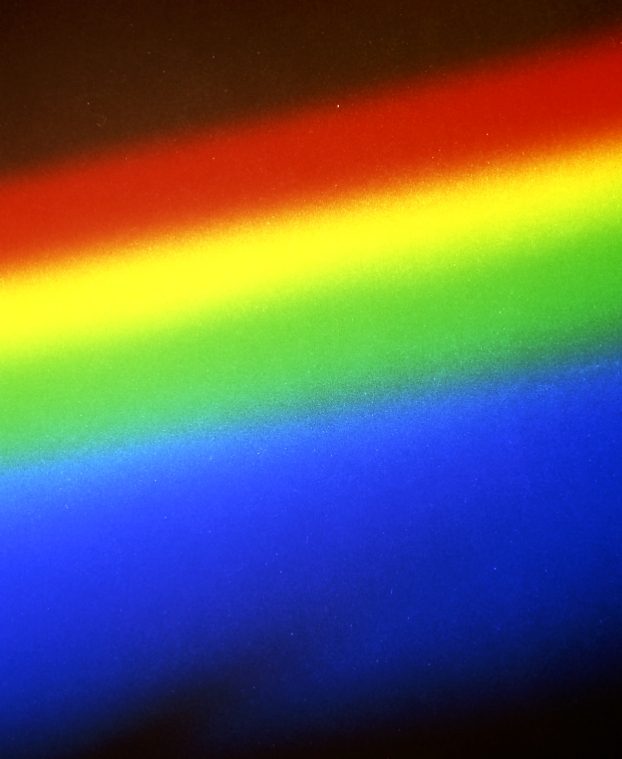
That is the point at which the philosophy starts. Everything in the paragraph above is objective, third-person, and in principle complete, and none of it says what red looks like. Whether physical processing is accompanied by any experience at all is the Hard Problem, and this wing keeps its own file on that question; this file is narrower. It asks what the felt part is supposed to be like, whether the properties claimed for it hold up, and whether the thing being described exists.
03Mary, Who Knew Everything About Color
One note about the chips before the arguments begin, because it matters here more than almost anywhere on this site. A Tier 1 mark on a thought experiment certifies that the argument is real, correctly attributed, and accurately stated. It never certifies that the conclusion is true. These are arguments, not findings. Nobody has run any of them in a laboratory, and, as you are about to see, the philosopher who invented one of the three later abandoned its conclusion.
Frank Jackson's knowledge argument, published in 1982 and sharpened in 1986, is the most influential argument for the existence of qualia as non-physical. Mary is a brilliant scientist who has lived her entire life inside a black-and-white room. She has learned every physical fact about the physics, chemistry and neuroscience of color vision: wavelengths, cone responses, neural processing, the lot. Then Mary steps outside and sees a red tomato for the first time. The intuition Jackson is pumping is that she learns something new, namely what red looks like. Since she already knew every physical fact, the argument concludes that this new knowledge must be non-physical, knowledge of a quale, and therefore that physicalism, the claim that all facts are physical facts, is false.
Jackson himself later recanted. In Mind and Illusion, published in 2003 in the collection Minds and Persons edited by Anthony O'Hear, he abandoned the anti-physicalist conclusion of his own 1982 and 1986 argument. His revised view is that Mary gains a new ability, the ability to recognize and imagine red, rather than any new factual knowledge, which puts him with the physicalist-friendly ability hypothesis. This is not a footnote and it is not optional. Mary's Room is still routinely presented as a standing refutation of physicalism, and the man who built it stopped believing it did that.
04What Is It Like To Be A Bat

The second argument comes at the same suspected gap from outside a single skull, and it is more careful than its reputation.
Thomas Nagel's 1974 essay What Is It Like to Be a Bat? argues that even if we knew every physical fact about a bat's brain and its sonar system, we would still not know what it is like to be a bat, to experience echolocation from the inside. The subjective character of experience, on this argument, is not captured by any objective third-person physical description. Nagel does not conclude from this that dualism is true. His conclusion is narrower and more careful than a flat anti-physicalist claim: the argument is meant to demonstrate that consciousness has an irreducible subjective dimension which current physics and neuroscience simply do not address. Reporting the bat as proof that the mind is non-physical overstates what its author wrote.
05The Inverted Spectrum, And What Really Varies
The third argument is the oldest worry in the family and the one most often mistaken for an empirical result. It is not one. It is a claim about what is conceivable.
The inverted spectrum is a thought experiment, not a finding. Could the quale you experience on seeing red be the one another person experiences on seeing green, with both of you calling the same physical stimulus red, behaving identically, and neither ever able to tell? If a spectrum inversion of that kind is genuinely conceivable while remaining undetectable in function and behavior, then qualia are not fixed by functional organization alone. Sydney Shoemaker developed the classic version in his 1982 paper The Inverted Spectrum; Ned Block's Inverted Earth, from 1990, is a related variant that runs the inversion through the environment rather than purely within one subject. No one has ever observed an inverted spectrum in anybody, and the argument does not require that anyone has.
Real color vision does vary between people, though, and it is worth being precise about what that variation does and does not show.
Two kinds of variation are genuinely documented. Red-green color blindness affects roughly 8 percent of men and roughly 0.5 percent of women of Northern European descent, with red-green variants accounting for the large majority of all color-vision deficiency; the sex skew follows from X-linked inheritance, since men carry only one X chromosome and a single defective opsin gene is therefore sufficient. And at the other end, a genuine human tetrachromat has been individually confirmed: a woman referred to in the literature as cDa29, identified by the Newcastle University neuroscientist Gabriele Jordan and colleagues after a multi-decade search that concentrated on mothers of color-blind sons, was shown under controlled testing to reliably discriminate colors that trichromats cannot tell apart, consistent with four functional cone types rather than three. This is real evidence that human color experience differs between people at the level of physiology. It is not evidence that settles the inverted-spectrum question, which is about whether two people with identical physiology could still differ in the quality itself, and that question remains open.
| Argument | Whose, And When | What It Would Show If It Worked | Where It Stands |
|---|---|---|---|
| The Knowledge Argument (Mary's Room) | Frank Jackson, 1982 and 1986 | If Mary learns something new on first seeing red, not every fact is a physical fact | Jackson abandoned the anti-physicalist conclusion himself in 2003 |
| What Is It Like To Be A Bat? | Thomas Nagel, 1974 | That the subjective character of experience escapes every objective physical description | Nagel draws no dualist conclusion, only that current physics does not address it |
| The Inverted Spectrum | Sydney Shoemaker, 1982; Ned Block's Inverted Earth variant, 1990 | That qualia are not fixed by functional organization alone | A claim about what is conceivable; never an observation of any person |
A fourth argument in this family, David Chalmers's philosophical zombie, asks whether a being physically and functionally identical to a conscious human but lacking qualia is conceivable, and it belongs to this wing's file on the Hard Problem, where its premises and the objections to it, from Dennett on conceivability and from physicalists on whether conceivability entails possibility, are set out properly.
06The Case That There Is Nothing There
It would be dishonest to present qualia as an agreed feature of the world with one contrarian arguing against it. The position that nothing answers to the classical definition is held by serious philosophers, has been developed at book length, and is one of the two poles this debate actually runs between. It gets its full weight here.
Daniel Dennett argues that qualia, understood as intrinsic, private, ineffable, immediately apprehensible properties, do not exist. The case is made in Quining Qualia in 1988 and at length in Consciousness Explained in 1991. What exists, on this account, is information processing: a complete account can be given of discriminatory behavior, memory, verbal report and reaction without invoking any mysterious raw feel at any point. The intuition that there is something more, some felt residue left over once all of that is explained, is in Dennett's view a persistent cognitive illusion. The verb in his title is deliberate. To quine qualia is to eliminate the concept from philosophy altogether, following Quine's proposal to eliminate the analytic and synthetic distinction, and the target is not a detail of the definition but the whole idea.

Notice what this does to the arguments above. If there are no qualia, Mary does not learn a new fact, the inverted spectrum has nothing to invert, and the bat's inner life is a question about a bat's information processing rather than about a private quality. The disagreement is not over the evidence. Both sides have the same neuroscience. It is over whether the thing the arguments are about is there at all.
07Naturalizing The Redness
Between the realists and the eliminativists sits a family of views that keeps qualia but tries to cash them out in terms a physical science can already handle.
Representationalist, or intentionalist, theories, associated with Michael Tye and Dretske, hold that qualia are identical with, or supervene on, the representational content of experience. When you see red, on this view, the quale just is that content: the experience represents the surface as having a certain reflectance property, and there is no further inner quality standing behind the representation. The attraction is that it naturalizes qualia, reducing them to information-bearing states of a kind physical science already deals with. The standing objection is that it moves the problem rather than solving it, because it does not explain why a representation should have any felt quality at all.
| Position | What It Claims | The Objection Pressed Against It |
|---|---|---|
| Qualia Realism (the classical four properties) | Experience carries intrinsic, private, ineffable, directly apprehended properties, the view Lewis helped fix in 1929 | Dennett argues that every one of the four properties can be challenged |
| Eliminativism (Dennett) | Nothing answers to that description; discrimination, memory, report and reaction exhaust what there is to explain | It owes an answer to the knowledge and bat arguments: it must hold that Mary learns no new fact on first seeing red, and that every physical fact about a bat would tell you what echolocation is like |
| Representationalism (Tye, Dretske) | A quale just is the representational content of the experience, so qualia reduce to information-bearing states | It does not explain why a representation has any felt quality at all |
08Machines, And The Inside Of Matter
Two further positions are worth naming for what they would mean if either turned out to be right. Both are speculative, and both are marked as such.
The answer to the qualia question decides, in advance, whether a machine could ever have an inner life. If qualia are real and non-functional, then no artificial system could have them however sophisticated it became, unless it possessed the right kind of physical substrate, a position in the neighborhood of biological naturalism. If instead qualia are functional or representational, then a sufficiently complex artificial system might have them, and consciousness would not care what it was made of. The question is empirically open, and at present it is untestable: nothing in the two scenarios differs in anything an outside observer could measure.
Panqualityism runs the other way and makes qualia basic. Some panpsychist philosophers, working in the tradition of Russellian monism, propose that qualia are fundamental features of all matter: what physics describes are the structural and relational properties of particles, and those are complemented by intrinsic qualitative properties that constitute the inside aspect of matter. On that picture the redness of red is not produced by the brain at some threshold of complexity; it is the sort of thing the world was made of all along. It is a real position in the literature and it is nowhere near established.
09Two Things It Is Wrong To Say
Both of these turn up regularly in popular accounts, in opposite directions, and both are false.
It is misleading to say that qualia have been scientifically detected. No scientific instrument has detected or measured a quale. Neuroscience identifies neural correlates of reported experience, which is a real and valuable achievement and an entirely different thing: it tells you which activity accompanies a report, not that the qualitative feel itself has been observed. The felt quality is not an observable in any current scientific framework, and a paper announcing a neural correlate has not found one.
It is inaccurate to say that the qualia debate is resolved, in either direction. The dispute between qualia realists, eliminativists, representationalists and the other positions on the field remains one of the most active and unsettled in philosophy of mind. No consensus exists. Anyone presenting the existence of qualia as an established fact, and anyone presenting their elimination as a completed piece of work, is ahead of the argument.
Fast Facts
- The Term
- A quale, plural qualia, is the felt qualitative property of a conscious state: the redness of red, the hurt of a pain
- The Four Properties
- Ineffable, intrinsic, private, directly apprehensible; the characterization traced to Clarence Irving Lewis in 1929
- The Knowledge Argument
- Jackson, 1982 and 1986: Mary knows every physical fact about color, then sees red and appears to learn something
- Jackson's Own Reversal
- In 2003 he argued Mary gains an ability rather than a fact, and dropped the anti-physicalist conclusion
- Nagel's Bat
- 1974: no physical description tells you what echolocation is like from the inside, and Nagel infers no dualism from it
- The Inverted Spectrum
- A thought experiment about undetectable color inversion, developed by Shoemaker and, in a variant, by Block
- The Eliminativist Case
- Dennett, Quining Qualia, 1988: nothing answers to the classical description, and the sense of something more is an illusion
- The Physical Basis Of Color
- Three cone types sensitive to short, medium and long wavelengths, their relative activation read out and processed onward through V4
- Documented Human Variation
- Red-green color blindness in about 8 percent of men and about 0.5 percent of women of Northern European descent
- A Confirmed Tetrachromat
- The subject known as cDa29, identified by Gabriele Jordan and colleagues, reliably tells apart colors trichromats cannot
- Detected By Instrument
- Never; neuroscience finds correlates of reported experience, not the felt quality itself
- State Of The Debate
- Genuinely unresolved between realists, eliminativists and representationalists
What We Can Actually Stand Behind
The arguments are real, and stated here as their authors stated them. Jackson published the knowledge argument in 1982 and 1986 and abandoned its anti-physicalist conclusion in 2003; Nagel's 1974 bat argument draws a narrower conclusion than it is usually credited with; Shoemaker and Block developed the inverted spectrum as a thought experiment and never as an observation. The color science is solid too: three cone types with distinct spectral sensitivities, wavelength discrimination from their relative activation, onward processing through V4. So is the documented variation in human color vision, including red-green color blindness at about 8 percent of men and about 0.5 percent of women of Northern European descent, and the individually confirmed tetrachromat cDa29.
Whether qualia exist at all is the live question, and it has no winner. Dennett's eliminativism, that nothing answers to the intrinsic, private, ineffable, directly apprehensible description and that the felt residue is a cognitive illusion, is a developed, well-defended position and not a fringe objection. Representationalism, that a quale just is the representational content of an experience, is a third serious option with its own standing objection, that it never explains why a representation should feel like anything. This article carries all three without crowning one.
The consequences are speculative in both directions. Whether an artificial system could have qualia turns entirely on which of the positions above is correct, and the question is currently untestable, since the competing scenarios differ in nothing an outside observer can measure. Panqualityism, the proposal within Russellian monism that qualitative properties are the intrinsic inside of matter itself, is a real position taken seriously in the literature and is nowhere near established.
No, qualia have not been scientifically detected. No instrument has measured one; neuroscience finds neural correlates of reported experience, and a correlate of a report is not an observation of a felt quality. And no, the debate is not resolved, in either direction: the dispute between realists, eliminativists and representationalists remains one of the most active and unsettled in philosophy of mind, and no consensus exists. Claims in either direction that the matter is closed are overreaches.
So this file closes with less than most files do, and it is worth being clear about why. The trouble is not a missing measurement. It is that the two sides disagree about whether there is anything to measure, and that they can both hold their ground while agreeing on every fact about cones, wavelengths, cortex and behavior. That is a rare shape for a disagreement to have, and it is why no measurement has moved it. Whatever is or is not happening when you look at something red, you are the only one with access to it, and that access is exactly the thing neither argument can hand to anyone else. What would it take to show that the redness is real, or that it never was?
Sources & further reading
Everything above is drawn from our research library on Theories of Anything. Open the full file to check the sourcing and go deeper.
Image credits
- Two Ishihara color-vision test plates RWhitwam, via Wikimedia Commons. CC BY-SA 4.0 Source.
- CIE 1931 chromaticity diagram BenRG, via Wikimedia Commons. Public domain Source.
- Daylight dispersed into a spectrum T.Voekler, via Wikimedia Commons. CC BY-SA 3.0 Source.
- Thomas Nagel, 1978 Nagelt, via Wikimedia Commons. CC BY-SA 4.0 Source.
- Daniel Dennett, 2008 Mathias Schindler, via Wikimedia Commons. CC BY-SA 3.0 Source.
- Card crop of Two Ishihara color-vision test plates RWhitwam, via Wikimedia Commons. CC BY-SA 4.0 Source.


.jpg)
