
Children Who Remember: Inside the University of Virginia's Case Files

A university division inside an accredited medical school has spent nearly sixty years doing something unusual: sending investigators to sit with families whose small children describe, in specific and checkable detail, a life that was not theirs. The archive holds over 2,000 documented cases, most commonly cited as roughly 2,500, and some of them are genuinely hard to explain away. In the large majority, though, the child's statements were reconstructed from family memory only after somebody had already been identified as the person the child was describing, and that single fact is the hinge the whole subject turns on. This is what is in the files, what the strongest cases actually contain, what the named critics actually charge, and the one question the programme has never answered: what would count against it.
Begin with what is actually on the table, because this subject is almost always argued somewhere else. The question here is not whether a soul returns. It is what one university research group has collected since 1967, how it collected it, and what a collection of that kind can and cannot show. The Division of Perceptual Studies at the University of Virginia's School of Medicine sends investigators to interview families whose small child has been talking, in specific and checkable detail, about a life that was not theirs. The archive that came back is real, it is large, and it is a sustained attempt to treat this as a matter of evidence rather than of belief. It is also, by its own account and by its critics', a body of case reports rather than a body of experiments. Both of those sentences are true, and the whole difficulty of this subject lives in the space between them. The wing's companion article on near-death experiences covers the other half of this territory; this one stays on the case files.
01A Lab, a Bequest, and Nearly Sixty Years of Fieldwork
The institutional facts are the least contested thing about this programme, and they are worth stating plainly, because most of what circulates about it treats it as either a fringe outfit or a vindicated science, and it is neither.

The Division of Perceptual Studies was founded in 1967 by Ian Stevenson, a psychiatrist, inside the University of Virginia School of Medicine. Jim Tucker, a child psychiatrist, directed it from 2007. Its archive consists of what the researchers call Cases of the Reincarnation Type, gathered from India, Sri Lanka, Myanmar, Thailand, Turkey, Lebanon, the United States, the United Kingdom, Brazil and more than thirty other countries. Notice what that description does and does not say. It is a division inside an accredited medical school, and what it holds is a case archive, which is a different kind of object from a laboratory result.
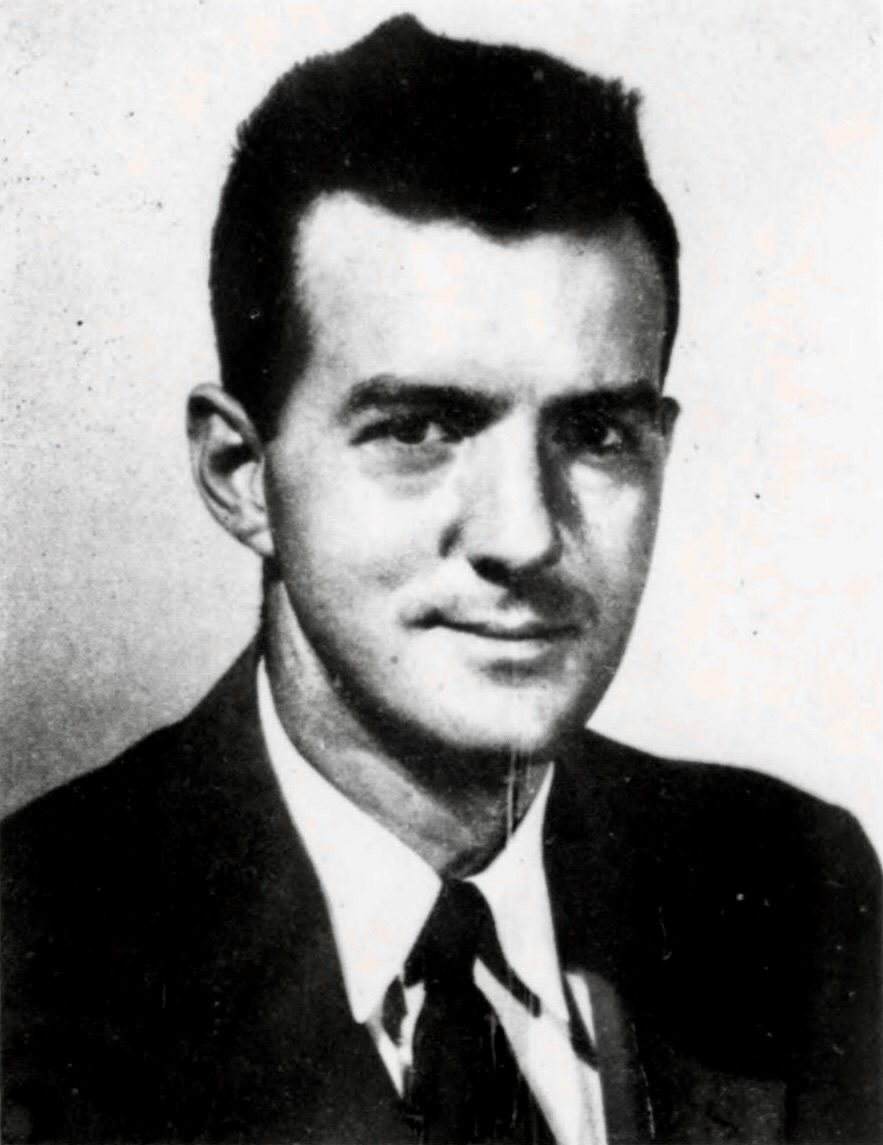
Ian Pretyman Stevenson (1918 to 2007) was born in Montreal, took his medical degree at McGill, and was Chairman of Psychiatry at the University of Virginia from 1957 to 1967. He established the division with a $1 million bequest from Chester Carlson, the inventor of xerography, and then spent the rest of his working life on the road: our research file records roughly 55,000 miles of travel a year across Asia, the Middle East, Europe and the Americas, and a published output of 14 books and roughly 300 papers on this one subject.
The books are the spine of the field. Twenty Cases Suggestive of Reincarnation (1966) is the founding study, a set of detailed case reports from India, Sri Lanka, Brazil and Lebanon. Cases of the Reincarnation Type ran to four volumes between 1975 and 1983, covering India, Sri Lanka, Thailand and Myanmar, and Lebanon and Turkey. Where Reincarnation and Biology Intersect (1997) presents 200 cases involving birthmarks or birth defects. Reincarnation and Biology, published the same year in two volumes, presents 225 such cases across 2,268 pages. Our file does not say whether the two describe the same body of cases. European Cases of the Reincarnation Type (2003) is the Western sample. Whatever anyone concludes about the contents, our file records no comparable body of work, though it names none to compare against.
Jim Tucker retired as director on January 1, 2025. The division continues its work within the University of Virginia School of Medicine, and its case database is, in the researchers' own description, regularly updated and pruned. That last word matters for the paragraph below.
The number of cases is quoted at three different values, and each of the three measures something different. Our own research file uses 2,500 and more throughout, which is also the figure Jim Tucker himself used as of 2018 and the one that has passed into popular accounts. A December 2024 public-radio feature quoting the division's own researcher Philip Cozzolino gives the current, actively pruned database as more than 2,200. Several retrospectives of Stevenson's career put the cases he personally investigated across forty years at roughly 3,000, which is a count of fieldwork rather than of files retained. The honest form, and the one used in this article, is that the archive holds over 2,000 documented cases, most commonly cited as roughly 2,500.
02How a Case Becomes a Case
The method is the part of this programme that deserves the most attention and gets the least, because everything downstream, every striking case and every objection to it, follows from how the information is collected in the first place.
The core method is field investigation. An investigator travels to the child and conducts in-person interviews with the child, with the child's family, and with the family of the person the child is said to have been. It is done on site, not by questionnaire and not by correspondence. That is a demanding standard for work of this kind. It is also, structurally, a method in which the investigator's own questions are part of the instrument.
Jim Tucker's contribution was to change what the archive was made of. He pushed the programme toward American and Western cases specifically to weaken the charge that the phenomenon is a product of cultures that expect it. He built a scale for rating case strength. He worked out how to analyse cases in which no previous personality was ever identified, using the internal consistency of the child's statements rather than an external match. And he opened a line on what the literature calls intermission memories, the claimed period between one death and the next birth.
The developmental window is narrow and consistent. Children in these cases typically begin speaking about a previous life between the ages of two and five, and the statements typically stop by seven or eight. The reports therefore begin at an age when a child is only just able to give them, and end before the age at which the same child could be re-interviewed as an older witness about what they said.
| Pattern | The Figure Our Research File Gives |
|---|---|
| First statements about a previous life | A mean age of 35 months |
| Memories fade | A mean age of 72 months, about 6 years; the file elsewhere puts the typical end between ages 7 and 8 |
| The previous personality died violently | Roughly 70 percent of cases, which our file notes is far above the base rate of violent death |
| Same sex as the previous personality | Roughly 90 percent of cases |
| Cross-cultural cases, where the claimed life was in another culture | Roughly 5 percent; the vast majority of cases stay within the same country and culture |
| Interval between the death and the birth | A median of roughly 16 months |
Our file ranks its own categories of evidence from strongest to weakest, and the ranking is more revealing than any single case. Verified statements come first, with a qualifier attached that carries the whole article: they are strongest when documented before the previous personality is identified. Birthmarks and birth defects corresponding to fatal wounds come second, checked against medical or autopsy records where those exist. Recognitions, in which a child picks out the previous personality's relatives, possessions or home, are rated strong when controlled. Behavioural memories, meaning phobias and skills and food preferences, are moderate and harder to verify exclusively. Xenoglossy, speaking or understanding a language never learned, is rated very strong and very rare: Stevenson documented roughly 5 such cases in a lifetime. Announcing dreams, common in South Asian cases, are called evidentially weak. Intermission memories are increasingly studied and hard to verify. Read that list again and notice that the two strongest categories are strongest only under conditions the file itself names, and section 6 is about how often those conditions actually held.
Tucker's Strength of Case Scale rates a case on six things: how many statements were verified, how specific they were, whether the child showed behaviours matching the previous personality, whether birthmarks or birth defects are present, how far apart the two families were geographically and socially, and how early the case was investigated relative to the claims. It is worth noticing what a scale like that concedes. One of its six axes exists purely to rule out ordinary transfer of information, and another exists purely to measure how much time a family had before anyone came to check. The programme's own instrument is built partly out of its critics' objections.
03Five Cases, and What Is Wrong With Each
These are the cases the programme is known for. Each is given below as our own file gives it, followed by what the critical literature says about it, because a case presented without its rebuttal is not evidence, it is advertising. Four of the five come from our own file. The fifth is one our file cites in its bibliography and never tells, and it is the best documented of the lot. Three of the four our file features carry a specific published caveat, one of those from the lead researcher himself. The fourth carries none that our checking found, and that absence is reported here as an absence rather than as a clean bill of health.
Imad Elawar, Lebanon, investigated in 1964. At the age of two the child began speaking about a previous life in a village 25 miles away, and made 57 specific factual claims about a person later identified as Ibrahim Bouhamzy. The detail that makes this the file's flagship case is procedural rather than dramatic: Stevenson recorded the claims before he visited the village. Of the 57 statements, 51 were verified correct, covering names, relationships, physical details and events. The child had never been to the village, and the two families had no prior contact.
This is also the case the critical literature targets most specifically. Leonard Angel's 1994 paper is titled 'Empirical Evidence for Reincarnation? Examining Stevenson's Most Impressive Case', and it is about this one. Angel's charge is that Stevenson's own investigation involved backward reasoning in matching the child's statements to the deceased man. Separately, D. Scott Rogo charged carelessness in several of Stevenson's cases, this one among them. The flagship case and the flagship rebuttal are the same case, which is worth knowing before either is quoted at you.
Swarnlata Mishra, India, investigated in 1961. At the age of three the child began describing a life as Biya Pathak in Katni, more than a hundred miles away. She is reported to have recognised more than twenty people from that life by correct name and relationship, and to have known intimate family details. The Pathak family were initially sceptical and became convinced only after meeting her. This is the case for which our checking turned up no case-specific published rebuttal, so the general objections in section 6 are the ones that apply. It is also worth remembering that our own file rates recognitions as strong only when controlled, and does not say what controls were in place here.
James Leininger, Louisiana. At the age of two the child began having nightmares of plane crashes, screaming that the little man could not get out. He drew pictures of a plane being shot down, spoke of flying a Corsair off a ship he called Natoma, and called himself James 3. He was identified with James Huston Jr., an American pilot killed in the Second World War flying off the USS Natoma Bay, shot down by the Japanese on March 3, 1945. He met Huston's surviving sister, who is reported to have confirmed details his parents could not have known. Tucker rated the case at the highest level of his own scale.
Two problems attach to this case that our own file does not mention. The first is an aircraft discrepancy: Huston was flying an FM2 Wildcat when he was shot down, not a Corsair, and a specialist history site maintained by the ship's veterans' association states that Natoma Bay's air group flew no Corsairs at all. We reached that second claim through a secondary summary rather than the association's own page, which returned an access error when we tried it, so treat it as secondary-sourced rather than confirmed at the source. The second problem is that reliable accounts disagree about where Huston was lost: a Louisiana newspaper feature and an essay in Harper's place it near Chichi Jima, while the Society for Psychical Research's own encyclopedia says Iwo Jima. We could not resolve that to a single authoritative answer, and would rather name the uncertainty than pick a side. Neither point sinks the case. Both belong beside it.
Ryan Hammons, Oklahoma. At the age of four the child began describing a life as a Hollywood agent, and pointed at a man in a still from a 1932 film, saying that was him. The man was eventually identified as Marty Martyn, a bit-part actor who became a talent agent and who is obscure by any measure. Our file records 55 verified statements, including Martyn's street address and how many sisters he had, a detail our file itself describes as correct but contradicted by public records, and later confirmed.
That last clause is worth slowing down on, because it is the mechanism critics describe, happening in the open. A statement was scored as wrong. The historical record was then found to be wrong instead, and the statement was rescored as right. That may be precisely what happened. It is also what a process with a thumb on the scale would look like from outside, and the write-up alone cannot separate the two. Tucker's own assessment, in his 2013 book Return to Life, is more careful than the retellings are: the case presented strong evidence for reincarnation but was certainly not definitive, and a number of the 55 recalled details were accurate while a number were not. Set that against our own file's phrase, 55 verified statements, and the gap between the two descriptions is this whole subject in miniature.
Purnima Ekanayake, Sri Lanka. The clearest birthmark case is one our own file cites in its bibliography and never tells. Erlendur Haraldsson published it in 2000. Purnima was born with light-coloured birthmarks over the left side of her chest and lower ribs. The autopsy report of a deceased incense maker named Jinadasa, killed when a bus struck him diagonally across the chest, records fractured ribs, a ruptured spleen and diagonal abrasions. Of her statements about Jinadasa's life, Haraldsson found 14 correct, 3 incorrect and 3 unclear. That scorecard is why this case is worth more than the ones told without one. It is also why nobody should call it clean.
04The Birthmarks, and the Denominator
The birthmark cases are where the programme reaches for something testimony cannot give it: a physical mark on a living body matching a wound on a dead one. It is the strongest-sounding part of the archive, and it has the most specific published number attached to it.
Stevenson's own published figure is 309 of 895 solved cases, about 35 percent, drawn from the nine societies that contributed the majority of his collection, published in Reincarnation and Biology in 1997. Hold on to the denominator, because it is doing work. That figure is not 35 percent of the whole archive. It is 35 percent of the solved cases in a nine-society subset, and a solved case is one in which somebody has already been identified as the previous personality. Our own file gives the same proportion with no denominator attached, which is how a number about a subset quietly becomes a number about everything.
Our file's own summary of this category is short and honest. The supporting evidence it enters is the body of medically documented cases in the 1997 volumes, matched against autopsy or wound records. The counter-evidence it enters, in the same table, is coincidence, selective reporting, and the absence of any known mechanism. Its own verdict on the category is that the correlation is impressive and the mechanism is unknown. Both halves of that are the file's own words.
05Where the Cases Come From, and Why That Is the Argument
The geography of the archive is the sceptics' single strongest observation and the programme's most direct answer to it. Both belong here at full strength, and neither one closes the matter.
| Region | Cases | What Our File Notes About It |
|---|---|---|
| India | About 700 and more, the largest single sample | Cases crossing caste lines are considered particularly evidential |
| Sri Lanka | 200 and more | Buddhist context; cases within the same village are common |
| Myanmar and Thailand | 200 and more | Buddhist context; cases in which the sex differs between the two lives are more frequent |
| Turkey | 150 and more | Concentrated in the Alevi community |
| Lebanon and Syria | 150 and more | Concentrated in the Druze community and its taqammus doctrine |
| United States and Europe | 100 and more | Important to the programme's own argument, because these are cultures without a general expectation of rebirth |
| West Africa | 50 and more | Igbo and Yoruba cases, with scarification marks |
| Alaska | 50 and more | Tlingit cases, announcing dreams, and typically within the same family |
| Brazil | 30 and more | Spiritist context |
The sceptical reading of that table is simple, and it is not weak. The cases cluster overwhelmingly in cultures that already believe in rebirth, South and Southeast Asia above all. A phenomenon distributed like a belief is what a belief would produce, and that is the whole objection in one line.
The mechanism behind the clustering is more interesting than the clustering itself, and it cuts in an unexpected direction. Families in cultures without a prior belief in rebirth are documented as less receptive to a child's claims, and sometimes actively hostile to them. That suppresses reporting. It does not suppress whatever is or is not happening. An evenly distributed phenomenon that is unevenly reported would produce exactly the map above, and so would a culturally manufactured one, and the map alone cannot separate them. The programme offers one partial answer, drawn from its own published reviews: the strength of a case does not correlate with how strongly the family already believed. That is a real answer to the version of the objection which says the families are inventing it. It is not an answer to the version which says we are only hearing from the places where anyone would listen.
Our file's own response to the cultural-conditioning charge runs on three points. American and European cases occur without any cultural expectation of rebirth, and the parents in them are often distressed rather than encouraging. Cross-cultural cases exist, including a child in India claiming a life in Scotland. And cases occur in families whose religion has no place for rebirth, Christian families among them, showing the same statistical pattern as everyone else's.

Our file's own summary of the cross-cultural pattern rates it as robust, and enters its own counter-evidence in the same breath: the pattern could reflect reporting bias, since only unusual cases get investigated at all. Both halves are the file's own words, and together they are the honest shape of this evidence.
06The Objections, and How They Actually Work
It would be easy to close a section like this with a line about sceptics having concerns. These are not concerns. Each objection below names a specific mechanism by which a genuine-looking case could be produced without anybody lying, and several of them come from inside the field, including from Stevenson's own research assistant and from a scholarly body broadly sympathetic to the research.
Start with the one that matters most, because it is a number rather than an argument. In the large majority of the archive, the child's statements were not written down before anyone went looking for a match. They were reconstructed from family memory after a matching deceased person had already been identified. The Society for Psychical Research's own encyclopedia, cataloguing the objections to this research, puts the number of published cases carrying a prior written record of the child's statements at roughly 32, and treats those as the strongest subset precisely because a record made in advance renders moot any question about the reliability of witness memory. Read that in the other direction and it is an admission about everything else. Roughly 32 published cases, set against an archive most commonly cited as roughly 2,500, is on the order of one percent. Those two figures do not count quite the same thing, one being published cases and the other the whole archive, so take the ratio as an order of magnitude rather than as a statistic. The sentence it illustrates is not rough at all. It also means that Imad Elawar, the case our file leads with, is not typical of the archive. It is one of the rare cases where the strongest form of documentation actually exists.
The second objection is about who does the matching. Leonard Angel's charge is backward reasoning: you begin with the child's statements, search for a deceased person those statements fit, and then count the fit as evidence, when the search was designed to produce it. Stephen Braude formulated a subtler version he calls the Problem of Investigative Intricacy: the sheer quantity of interpretive work required to identify a matching previous personality may itself introduce the bias the research claims to be ruling out. Neither of these requires anybody to be dishonest. Both would operate on a scrupulous investigator working in good faith.
The third is about who does the asking. Angel also charged Stevenson with backward reasoning in matching birthmarks to wounds, and with extending more credence to testimony that confirmed a case than to testimony that did not. Champe Ransom, who was Stevenson's own research assistant, wrote an internal critique faulting how testimony was presented and flagging both the potential for leading questions and the distortion of memory over time. D. Scott Rogo charged carelessness across several specific cases, naming Mounzer Haidar, Mallika Aroumougam, Imad Elawar and Uttara Huddar. When the person who worked the files says the files were presented badly, that is not an outside attack.
The fourth is about language, and it has a documented incident behind it rather than a hypothetical. Publication of one of Stevenson's books was delayed after one of the interpreters he had used in India was accused of dishonesty, and he returned to India and re-examined the affected cases with different interpreters. That is a real vulnerability and also a real correction: the problem was caught and the work was redone. Separately, the linguist Sarah Thomason challenged the linguistic-competence claims underlying the xenoglossy cases, the small handful our file rates as very strong and very rare.
Our own file lists four more objections in its closing pages and does not answer them. Leonard Angel (1994) challenged the case investigations for leading questions, cultural contamination and inadequate controls. Paul Edwards, in Reincarnation: A Critical Examination (1996), documented what he called systematic problems: translation errors, investigator bias, and an absence of independently confirmed claims. Champe Ransom's internal critique noted that many claims recorded as verified could not in fact be confirmed. And mainstream developmental psychology has a standing account of the entire phenomenon that needs none of this machinery, attributing children's past-life memories to fantasy, parental suggestion and confabulation rather than to genuine recall of a previous life.
In fairness to the programme, our file makes an observation about the criticism that is also true. Most published criticism of this research is theoretical rather than case-specific: it argues about what the evidence could be, rather than working through what a particular case actually contains. A few critics did the case-by-case work, Edwards among them, and Angel's paper on Imad Elawar is exactly that kind of work. Our file's own verdict on the exchange is that more critical engagement is needed from both sides, and that is the right verdict.
07Five Explanations, and What Each One Costs
Our file sets out five candidate explanations and states the price of each in its own words. It does not choose between them, and neither will this article. What is worth noticing is that none of the five is free.
| The Model | What It Handles Well | What It Cannot Handle |
|---|---|---|
| Survival, meaning actual rebirth | Fits the totality of the data better than the alternatives, the birthmarks and the behaviours included | Requires a mechanism unknown to physics |
| Super-psi: the child acquires the information by extrasensory means rather than by having lived the life | Stays inside a single theoretical framework instead of adding a second one | Must explain why extrasensory perception would specifically mimic rebirth, and does not explain the birthmarks or the behaviours |
| Social construction: families unconsciously build a narrative to fit what their culture expects | Explains a number of features of the Asian cases | Cannot account for the verified factual statements, the American cases, or the birthmarks |
| Fraud | Must always be on the list, and Stevenson specifically checked for collusion | Most families gain nothing from a case and many are embarrassed by it |
| Cryptomnesia: the child heard or read the information and forgot the source | Plausible for the weaker cases | Cannot explain claims made at very young ages, genuinely obscure details, or the birthmarks |
Our file also states what it thinks is at stake, and this article will cite that and stop there. It frames the research as bearing on the hard problem of consciousness, and writes: 'If even one case is genuine, it would demonstrate that consciousness can exist independently of a specific brain.' That is a conditional, and its condition is the entire question. What would follow from it belongs to another room in this library, and what it would mean for the soul belongs to a third. The case files are this article's subject, and its limit.
08What Would Count Against It
There is one question this article keeps returning to, and it is the question the house asks of everything: what would show this to be wrong?
Neither our own file nor the secondary literature we searched for this article names an explicit falsifier for the reincarnation hypothesis, or a prospective study design at scale in which children's statements are recorded before any attempt to match them. The closest the programme comes is a statement of ethic rather than of design. In a December 2024 feature, the division's Philip Cozzolino put the posture this way: 'We are always looking to refute as much, if not more, than we are looking to verify.' The researchers also describe examining more than 200 variables per case. Both of those are good things. Neither names an outcome that would count against the hypothesis. The gap is not only ours: the Society for Psychical Research's own catalogue of objections to this research, a document organised entirely around methodology, does not raise prospective design at all. That absence is itself a finding, and reporting it is the honest thing to do with it.
To its credit, our file puts the strongest possible version of the claim on its own summary table and refuses it. The row states the claim in its strongest form, that this research settles the question of reincarnation, and the entries beneath it are the reasons not to make it. Stevenson himself never claimed as much, and used the language of 'suggestive of', the phrase that titles his founding study. Strong cases, the file adds, are necessary but not sufficient. Its own verdict is that the evidence is suggestive, not conclusive. That is the most important sentence in the file, and it was written by the file's own author about the file's own subject.
One more piece of housekeeping, about our own file rather than about the research. Y_2_03 assigns a single tier to everything it contains. Its summary table rates the claim that some children have verified memories of previous lives, and the strongest claim on its own list, at the identical Tier 2, and the file never uses the tiers above or below it anywhere in its length. Our scale has four steps; this file uses one of them. We have carried the file's tier rather than invent finer ones on our own authority, which is why almost every claim above is marked Tier 2 no matter how different those claims are from one another. Readers should know that the flatness belongs to the file, not to the evidence.
Fast Facts
- The Programme
- The Division of Perceptual Studies, University of Virginia School of Medicine, founded in 1967 by Ian Stevenson
- Who Ran It
- Founded by Stevenson in 1967; our file does not say who directed it between then and 2007. Jim Tucker from 2007 until he retired as director on January 1, 2025. The division continues
- The Archive
- Over 2,000 documented cases, most commonly cited as roughly 2,500. The figure moves depending on what is being counted
- The Method
- Field investigation in person and on site, with the child, the child's family, and the family of the identified previous personality
- The Age Window
- First statements at a mean of 35 months, fading at a mean of 72 months
- The Birthmark Figure
- Stevenson reported correspondence in 309 of 895 solved cases across nine societies, about 35 percent. The denominator is solved cases in a subset, not the whole archive
- The Documentation Gap
- Roughly 32 published cases carry a written record of the child's statements made before any matching attempt
- The Falsifier
- None stated. Neither our own file nor the secondary literature we searched names a prospective design at scale, or an outcome that would count against the hypothesis
- The File's Verdict On Itself
- The evidence is suggestive, not conclusive
What We Can Actually Stand Behind
The programme is real, and so is the criticism of it. The Division of Perceptual Studies is part of the University of Virginia School of Medicine, Jim Tucker's retirement as director on January 1, 2025 is documented, and the division continues. Stevenson's own published birthmark figure is 309 of 895 solved cases across nine societies. The Purnima Ekanayake case carries a published scorecard, 14 statements correct, 3 incorrect and 3 unclear, alongside birthmarks set against a documented autopsy report. And the objections are not hand-waving: they are named, published, mechanism-level, and several come from inside the field, from Stevenson's own research assistant and from a scholarly body sympathetic to the work.
Everything drawn from our own research file sits at this tier, because that is the tier the file assigns to all of it, from the institutional facts through the case accounts to the strongest claim it examines. The cases are striking. The statistical pattern set out in section 2 is consistent across countries that have nothing to do with each other, and consistency of that kind is not nothing. Whether it is a signal or an artefact of who gets investigated in the first place is exactly what is unresolved, and this article does not choose. Both readings are held by serious people who have read the same files.
Four things this evidence does not support. No, the archive is not a body of verified cases. The figure most commonly cited, roughly 2,500, is a count of cases collected and investigated: in the large majority, the child's statements were reconstructed from family memory only after a matching deceased person had already been identified, and roughly 32 published cases carry a written record made before any matching attempt. A count of cases collected is not a count of cases verified. No, the research does not settle whether anybody is reborn. Our own file puts that exact claim on its own table and refuses it: the evidence is suggestive, not conclusive, and by the file's own account Stevenson never claimed more. No, no mechanism is known. The file's own summary calls the birthmark correspondence impressive and the mechanism unknown, and lists a mechanism unknown to physics as the survival model's own cost. And no, the headline cases do not stand unqualified. Three of the four cases our file features carry a specific published caveat, the strongest birthmark case in this article has 3 wrong statements and 3 unclear ones written into its own scorecard, and the programme has still not said what would count against it.
So the archive sits there, and it is not nothing. Nearly sixty years of investigators getting on aeroplanes, an archive most commonly cited at roughly 2,500 case reports, a rating scale, and a set of statistical regularities that hold from Lebanon to Louisiana. It is also, measured against the standard the programme itself names as strongest, a body of evidence whose typical case was written down after somebody already knew the answer. Both of those are true, and neither cancels the other. The temptation on one side is to read the striking cases as a door standing open and walk through it. The temptation on the other is to treat the methodological problems as a reason not to look at the cases at all. The position the evidence actually supports is the harder one to hold: something is being reported here, consistently, by very small children, in places with no connection to one another, and nobody has yet built the study that would tell us what it is. Until somebody writes down what would count against it, the file stays open. Open is not the same as settled in your favour.
Sources & further reading
Everything above is drawn from our research library on Theories of Anything, principally file Y_2_03, together with sources checked directly for this article. The depth of checking differs and the difference matters. Two of our file's own identifiers were resolved exactly against CrossRef and are linked below: Tucker's 2008 review article in Explore, and Tucker and Keil's paper on cultural belief and gender identity, whose year CrossRef records as 2002 against our file's 2001, the ordinary online-first against print-issue variance rather than an error worth more than a mention. Four corrections to our own file are carried here rather than buried. First, three of its twelve bibliography identifiers resolve not to the cited books but to reviews of them: the identifier attached to Stevenson's Twenty Cases Suggestive of Reincarnation (1966) resolves to D. J. West's 1967 review in the British Journal of Psychiatry, the one attached to Stevenson's Reincarnation and Biology (1997) resolves to Christopher F. Roth's 1998 review in Anthropology of Consciousness, and the one attached to Paul Edwards's Reincarnation: A Critical Examination (1996) resolves to Raymond Martin's 1997 review in Religious Studies. None of the three is carried forward here. Second, the ISBN our file gives for the 1966 first edition of Twenty Cases belongs to the 1974 second edition from University Press of Virginia; the book, its year and its original publisher, the American Society for Psychical Research, are cited correctly. Third, our file credits the 'Past-Life Experiences' chapter in Varieties of Anomalous Experience (2000) to Mills and Lynn; the co-author alongside Antonia Mills is Jim Tucker, this file's own central figure, and Steven Jay Lynn co-edited the volume rather than writing that chapter. Fourth, our file's cross-reference index mislabels two rows, pointing at unrelated consciousness files under the labels Y_2_01 and Y_2_02; the near-death-experience material is Y_2_01 and is linked correctly below. Three further sources used for this article carry no linkable identifier and are named here unlinked: Leonard Angel's 1994 Center for Inquiry paper 'Empirical Evidence for Reincarnation? Examining Stevenson's Most Impressive Case', whose title and framing were confirmed but whose full text was not machine-readable when we checked; the Society for Psychical Research's Psi Encyclopedia article 'Criticisms of Reincarnation Case Studies', which is the source for the mechanism-level detail in section 6 and for the count of published cases carrying prior written records; and a WHRO and WVTF public-radio feature on the division dated December 30, 2024, which is the source for the current case count, for Philip Cozzolino's quoted remark, and for Jim Tucker's retirement date. Open the full file to check the sourcing and go deeper.
Image credits
- The Rotunda at the University of Virginia Bestbudbrian, via Wikimedia Commons. CC BY-SA 3.0 Source.
- Portrait of Ian Stevenson published in Postgraduate Medicine, Vol 11 Issue 1, January 1952 Unknown photographer, originally published in Postgraduate Medicine (1952), via Wikimedia Commons. Public domain (US, copyright not renewed) Source.
- The main hospital building of the University of Virginia Medical Center cvilletomorrow (Flickr), via Wikimedia Commons. CC BY 2.0 Source.
- The south-eastern side of the Shwedagon Pagoda, Yangon, Myanmar Bjorn Christian Torrissen, via Wikimedia Commons. CC BY-SA 4.0 Source.
- Card crop of The Rotunda at the University of Virginia Bestbudbrian, via Wikimedia Commons. CC BY-SA 3.0 Source.

.jpg)

