
Reading the Mind: The Brain-Computer Interface
Cochlear implants have restored hearing function to more than a million recipients, and the FDA approved the first commercial one in 1984, the first device ever approved to replace a human sense. Deep brain stimulators, a retinal prosthesis, a vagus nerve stimulator and a closed-loop epilepsy implant followed, each with dates, indications and numbers on the record. The devices in the headlines are not in that group. Neuralink, BrainGate and Synchron operate under FDA Investigational Device Exemptions, in clinical trials only, and their published patient results are genuinely real and genuinely unapproved at the same time. Both halves of that sentence are load-bearing, and this file holds them apart in every section. And none of it reads a mind in the way the phrase is usually meant. Here is the record, opened claim by claim, each one wearing its evidence.
There is a version of this subject that is entirely about the future, and it is the version that usually gets written. The real one starts in an operating theatre in 1961 and has been in patients ever since. More than a million people are walking around with a device that bypasses a broken inner ear and speaks to the auditory nerve directly. Others carry electrodes in the basal ganglia that steady a tremor, or a stimulator wired to the vagus nerve as an added therapy for epilepsy that drugs could not control. Those devices are approved, legally sellable, and dull in the way that only proven things get to be. The devices that are famous are none of those. They are in clinical trials, under a regulatory instrument with a specific name and specific limits, and their results are genuinely remarkable and genuinely unapproved at the same time. Keeping those two categories apart is not pedantry here. It is the difference between what a person can be prescribed and what a person can volunteer for. Let's open the file.
01The Devices That Are Already Approved
Start with the hardware that has a regulatory file and a patient count behind it, because everything else in this article is measured against it.
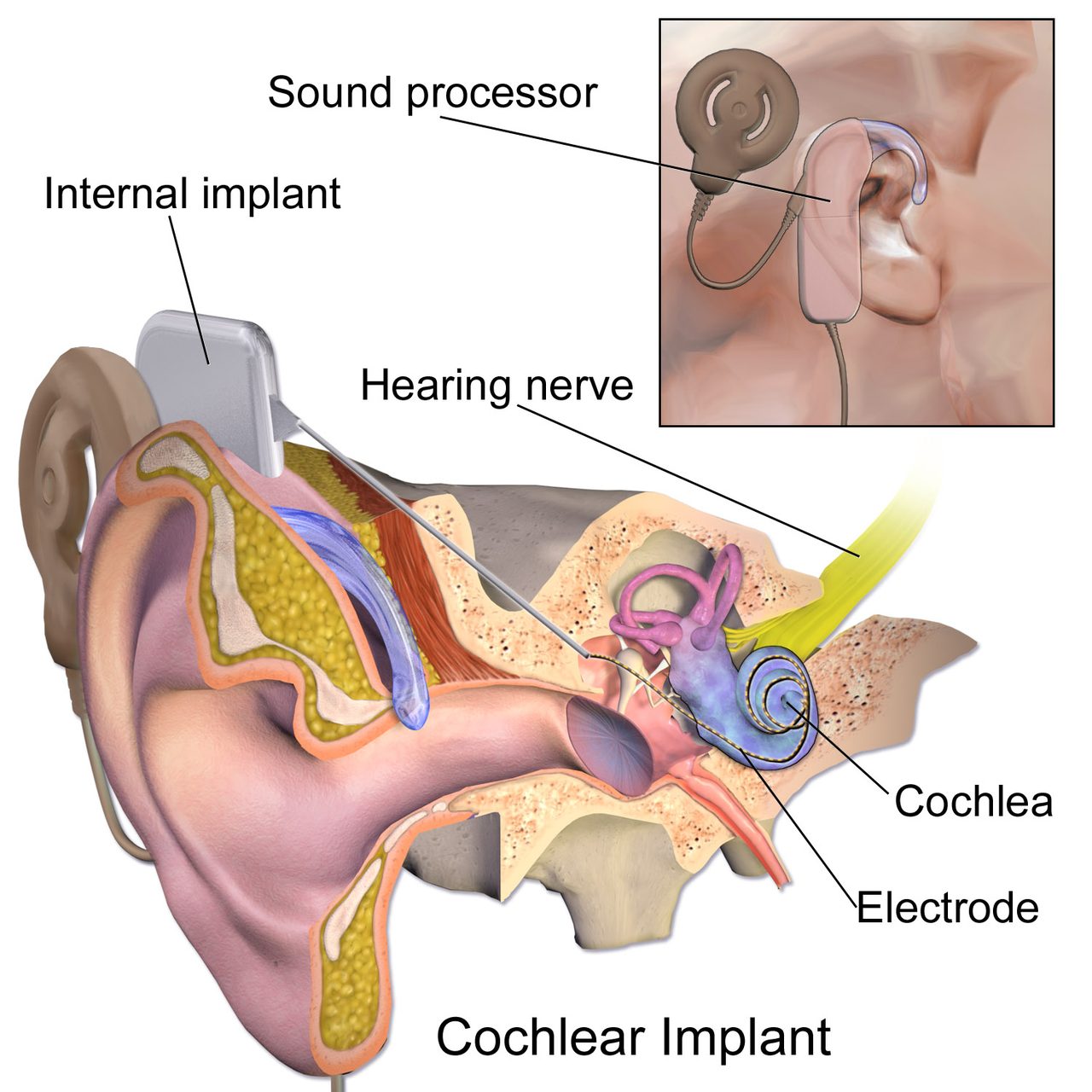
Cochlear implants have restored hearing function to more than a million recipients worldwide. The mechanism is worth stating precisely, because it is the mechanism the whole field rests on: the device bypasses damaged hair cells and stimulates the auditory nerve directly, which is the proof that a machine can interface with the nervous system and be useful. The record carries dates. The first crude implant was placed in 1961 by Dr. William House and John Doyle in California. The FDA approved the first commercial device, the House and 3M single-channel implant, in 1984, the first device ever approved to replace a human sense. That approval is now more than forty years old, which is rarely where coverage of this subject starts.
Deep brain stimulation places electrodes in the basal ganglia and runs current through them to treat movement and psychiatric disorders, and its approval history has to be stated in two parts rather than one, because our own research file compresses them into an error. The FDA approved Medtronic's Activa Tremor Control System in July 1997 for essential tremor. The Parkinson's-disease-specific indication, bilateral stimulation of the globus pallidus or the subthalamic nucleus, followed in January 2002. Our own file dates the Parkinson's approval to 1997, which attaches a real year to the wrong indication, and this article states the corrected version because it was independently verified rather than because the file says so. Deep brain stimulation is also FDA-approved for dystonia, obsessive-compulsive disorder and epilepsy. Studies report an average symptom-severity reduction of more than 50 percent for Parkinson's patients, with medication dosage reductions of up to 80 percent in some cases. One figure that travels with those does not get stated here as a fact: the commonly repeated count of roughly 200,000 patients worldwide is a widely repeated industry estimate that this research pass could not pin to any single authoritative dataset, so it appears here as an estimate and nothing firmer.
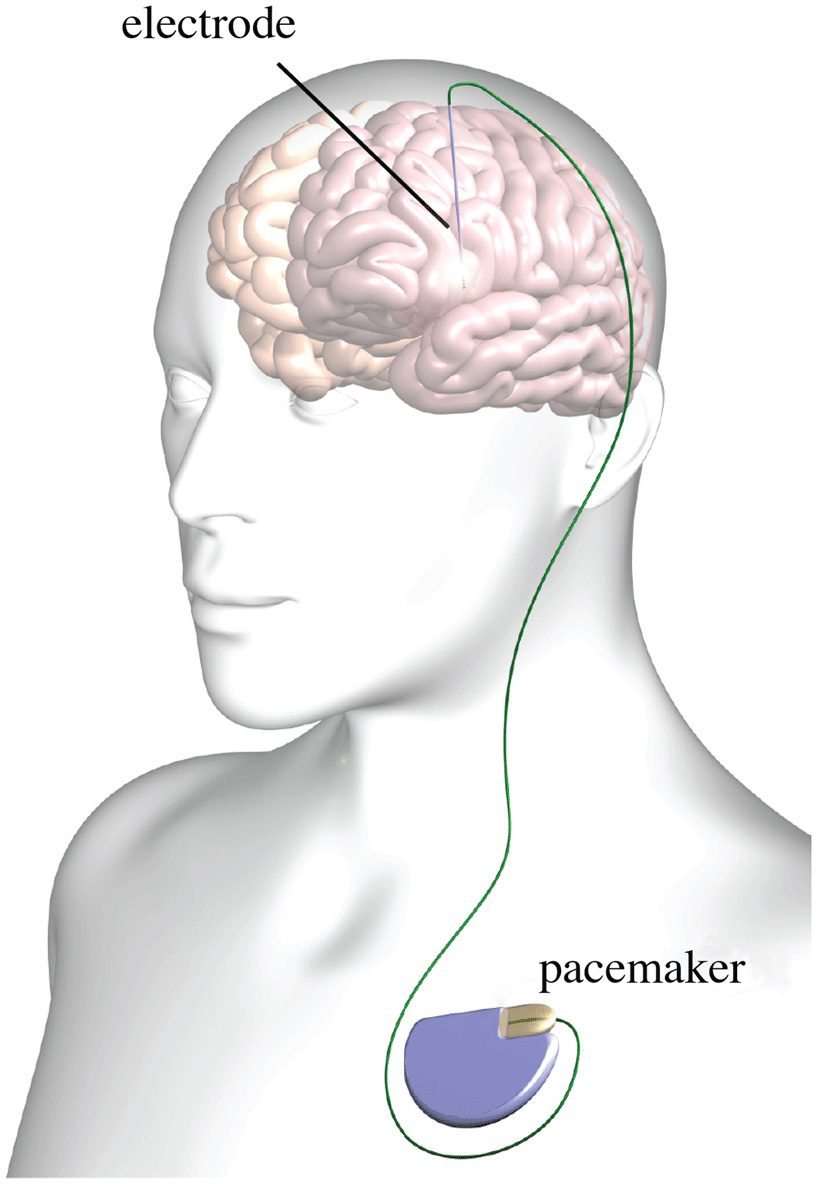
The full system, not just the part inside the skull.
Vision has been harder, and the one approved answer has already been through an entire commercial life cycle. The Argus II retinal prosthesis, made by Second Sight Medical Products, received FDA approval on February 14, 2013, through the Humanitarian Device Exemption pathway rather than a full premarket approval, as the first implanted device to treat adult patients with advanced retinitis pigmentosa. A 60-electrode array stimulates the retina, producing partial vision at roughly the equivalent of 20 pixels of resolution, on the evidence of a single-arm trial of 30 patients followed for as long as 38.3 months. More than 350 patients worldwide received the implant. Then Second Sight discontinued commercial operations for new patients in 2019 and wound down its broader operations in 2020, citing a small patient population and revenue shortfalls rather than any safety problem, and the successor company Cortigent took over the device's rights and support in 2023. Read that sequence carefully, because it is a failure mode this subject rarely discusses. The device worked, the approval stands, and the business underneath it did not survive.
Vagus nerve stimulation received FDA approval as an adjunctive therapy for drug-resistant epilepsy in 1997, and for treatment-resistant depression in 2005. Since that 1997 approval it has been implanted in more than 100,000 patients for epilepsy, including more than 30,000 children. Note what the epilepsy indication actually says, because the wording is the claim: adjunctive, and drug-resistant. It is an addition to a treatment that was not working, offered to people for whom the standard answer had already failed.
One approved device does something the four above do not: it listens before it acts. NeuroPace's RNS System, FDA-approved in November 2013, is closed-loop and bidirectional. It continuously monitors electrocorticographic activity through implanted leads, detects the abnormal electrical patterns that precede a seizure, and delivers brief stimulation to normalize activity before the seizure occurs, which makes it the first commercially available device to provide closed-loop responsive brain stimulation. Its approval rested on a 65-patient feasibility trial, a 191-patient double-blind randomized controlled trial, and a subsequent 230-patient open-label long-term trial running seven years. Our own research file carries this at Tier 2 rather than Tier 1, and this article keeps that grading rather than promoting it on the strength of an approval date. The approval is a fact. The tier is our file's judgment of the evidence, and quietly upgrading it here is exactly the move this site exists to refuse.
| Device | The Approval on the Record | What It Does | Scale, and Where It Stands |
|---|---|---|---|
| Cochlear Implant | First commercial device FDA-approved in 1984 (the House and 3M single-channel implant); first crude implant placed in 1961 | Bypasses damaged hair cells and stimulates the auditory nerve directly | More than 1 million recipients worldwide. The first device ever approved to replace a human sense |
| Deep Brain Stimulation | July 1997 for essential tremor (Medtronic Activa); January 2002 for Parkinson's disease, bilateral globus pallidus or subthalamic nucleus; also dystonia, OCD and epilepsy | Electrodes in the basal ganglia, stimulating to treat movement and psychiatric disorders | Average symptom-severity reduction above 50 percent reported for Parkinson's, with medication cuts up to 80 percent in some cases. The often-quoted 200,000-patient figure is an industry estimate, not a pinned count |
| Argus II Retinal Prosthesis | February 14, 2013, through the Humanitarian Device Exemption pathway | A 60-electrode array stimulating the retina, giving partial vision at roughly 20-pixel-equivalent resolution | More than 350 implanted, on a 30-patient single-arm trial followed up to 38.3 months. Second Sight stopped serving new patients in 2019 and wound down in 2020 for commercial reasons, not safety; Cortigent took over rights and support in 2023 |
| Vagus Nerve Stimulation | 1997 for drug-resistant epilepsy, as an adjunctive therapy; 2005 for treatment-resistant depression | Stimulation delivered to the vagus nerve | More than 100,000 patients implanted for epilepsy since 1997, including more than 30,000 children |
| NeuroPace RNS System | November 2013 | Closed-loop and bidirectional: monitors electrocorticographic activity, detects the patterns that precede a seizure, and stimulates to stop it before it starts | The first commercially available closed-loop responsive brain stimulation device. Approved on a 65-patient feasibility trial, a 191-patient double-blind randomized controlled trial and a 230-patient 7-year open-label trial. Carried at Tier 2 in this file |
02The Word Approved Is Doing Specific Work
Before the famous devices, the vocabulary. Three terms in this article are regulatory statuses with fixed meanings, and every section after this one depends on which term applies to which device.
FDA-approved and FDA-cleared are commercial-marketing statuses. They mean a device is legally sellable, which is what every device in section 01 is. An Investigational Device Exemption is not that. It is permission to run a clinical trial, and a device operating under one is legal to study in enrolled participants and not legal to sell. Breakthrough Device Designation is a third thing again, an expedited-review status, and it is neither an approval nor a trial permission. Synchron's regulatory history, in section 05, carries the second and third of those and not the first, and compressing them together is exactly how the research document behind this article ended up with the wrong chronology. Every device in the next three sections is investigational. Every one of their results below is real, published and peer-reviewed. Neither of those sentences cancels the other, and this file will not let either one be used to imply the other.
03Twenty Years of Arrays in the Cortex
BrainGate is a research programme rather than a company. Its first trial participants were enrolled in 2004, and the result that carried furthest came eight years later, with a bottle of coffee.
In 2012, Cathy Hutchinson, paralyzed by a brainstem stroke, reached out with a robotic arm, picked up a bottle of coffee and drank from it without help. She did it by thinking about it. The system was BrainGate: a 96-electrode Utah array implanted in her motor cortex, decoding the intention to move and passing it to the arm. It was published by Hochberg and colleagues in Nature on May 16, 2012, as Reach and Grasp by People with Tetraplegia Using a Neurally Controlled Robotic Arm. One number needs correcting on the way past. Our own research file says it was the first time she had done that in 14 years, while the contemporary press coverage of the paper itself, including Nature's own news report, describes it as nearly 15 years since her stroke. This article states roughly 15 years, on the primary coverage, and flags the discrepancy rather than passing it along.
Nine years later the same programme turned intention into text. BrainGate's 2021 Nature paper, by Willett, Avansino, Hochberg, Henderson and Shenoy, had a participant with a cervical spinal cord injury imagine handwriting individual letters while a Utah array in motor cortex recorded the attempt. Decoded, that produced typing at 90 characters per minute with 94.1 percent accuracy in real time, rising above 99 percent offline once a general-purpose autocorrect was applied to the output. That was more than double the previous brain-computer interface typing speed record. The result is worth reading twice for what it does not say. Nothing was read out of the participant's mind. What was decoded was an attempted movement of the hand, recorded at the place in cortex where hand movements are planned, and the fact that letters came out the other end is a property of what he was attempting, not of the machine's access to his thoughts.
One question decides whether any of this is practical: how long the hardware survives inside a living brain. In 2025 it got an answer covering 20 years. A long-term safety and durability analysis of the BrainGate and BrainGate2 pilot trials examined 2,319 recording sessions across 20 Utah arrays in the first 14 participants, enrolled between 2004 and 2021, with an average implant duration of 872 days. Across that record the arrays recorded neural spiking on an average of 35.6 percent of their electrodes, with only a 7 percent decline over as much as 7.6 years. Two caveats travel with those figures and both belong in the same paragraph. The first is that these are averages across arrays rather than a guarantee for any one of them. The second is provenance: this circulated as a 2025 preprint with a PubMed Central-indexed companion, so it should be read as a recent study rather than as decades-old settled consensus, and this file states it that way rather than dressing it up.
04Neuralink, Line by Line
This is the programme that generates the headlines, and the one where the documented record and the stated ambition are easiest to blur together. This section separates them by paragraph and labels which is which.
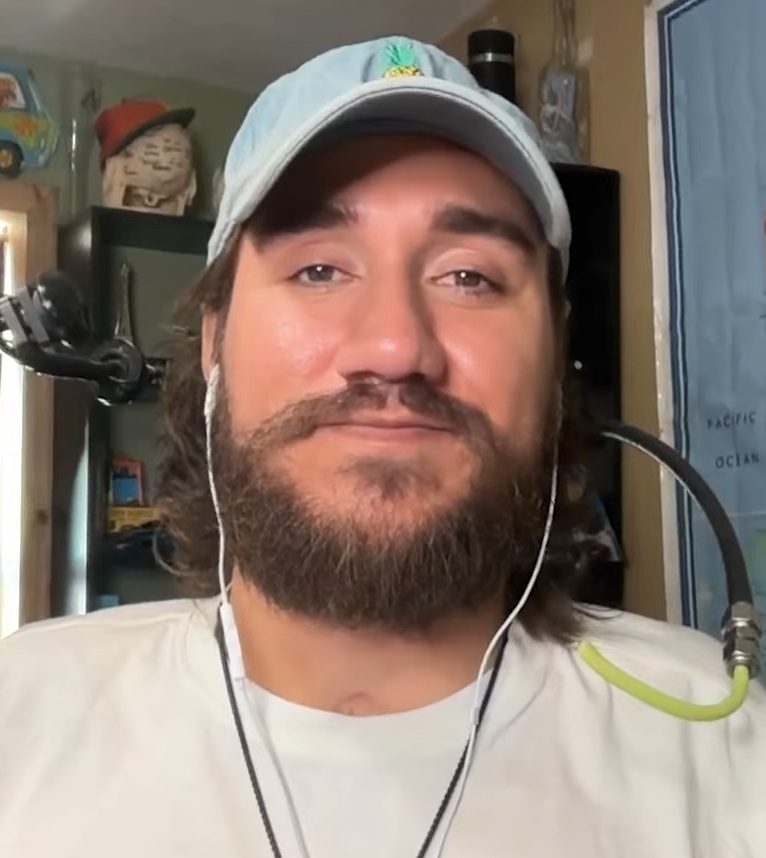
Neuralink's N1 implant carries 1,024 electrodes distributed across 64 ultra-thin polymer threads, each thread about 5 micrometers thick, thinner than a human hair, placed by a purpose-built surgical robot rather than by hand. The first human recipient was Noland Arbaugh, paralyzed by a diving accident in 2016, implanted on January 28, 2024 at the Barrow Neurological Institute in Phoenix as part of the PRIME Study. Within weeks he was moving a computer cursor by thought and playing online chess, Civilization VI and Mario Kart on a Nintendo Switch, for the first time since his injury. That is the achievement, and this file does not shrink it. It is also a clinical trial under an Investigational Device Exemption, and the next paragraph is why that distinction is not bookkeeping.
About three months after the surgery, roughly 85 percent of the N1's threads had retracted from Arbaugh's brain tissue. The likeliest explanation offered was that his brain moved inside the skull more than Neuralink had anticipated. The consequence was immediate: sharply fewer electrodes able to record a signal, and slower cursor control. Neuralink's response was to modify its decoding algorithms rather than remove the implant, and the device stayed in. Arbaugh went on using it 8 to 10 hours a day, and at 18 months after surgery was still using it, still playing games including Mario Kart. Both halves of that belong on the record. A serious hardware problem appeared in the very first patient, and the recovery from it was real.
The second PRIME Study participant, publicly known as Alex, was implanted in July 2024 with a revised architecture: 128 thinner threads carrying 8 electrodes each, the same 1,024 electrodes in total, engineered specifically to reduce displacement of brain tissue. Alex experienced zero thread retraction. He was discharged the day after surgery, was controlling a cursor within minutes of his first session, with that first day's cursor speed reported as passing the previous record held by a brain-computer interface outside Neuralink, and within two days was using Fusion 360, a computer-aided design package, to design a mount for his own charger. One patient's hardware failure, one engineering change, and a second patient without it. That is what iteration looks like when it works, and it is also a good reason not to read any single patient's result as a settled capability.
The current count is newer than the snapshot our own research file carries, and it is stated here because it was independently verified rather than because the file says so. As of January 28, 2026, two years to the day after Arbaugh's surgery, 21 people across four countries had received an N1 implant: the United States, Canada, Great Britain and the United Arab Emirates, across the PRIME, CAN-PRIME, UK-PRIME and UAE-PRIME studies, with no serious device-related adverse events reported to date. Our own file still describes a first patient and a second patient and stops there. Twenty-one people is a much larger number and a very small one at the same time, and the studies they are enrolled in are feasibility studies. Not one of those 21 people is a customer, because there is nothing to buy.
Everything above is documented clinical work. What follows is not, and the two must never be read in the same register. Neuralink has publicly stated ambitions well beyond cursor control, including restoring vision through an announced programme it calls Blindsight, and eventually restoring speech. Those are the company's own stated roadmap items. They are not achieved results, they are not independently verified, and nothing in the PRIME Study record above establishes them. This pipeline's own tier discipline grades company timeline promises at Tier 2 to 3; this article takes the more cautious end of that band and files them at Tier 3, attributed to Neuralink by name, which is the only honest place for a corporate intention the record has not yet met. If Blindsight delivers, the evidence will look like the paragraphs above it: a named patient, a date, a published outcome, and a complication reported alongside it.
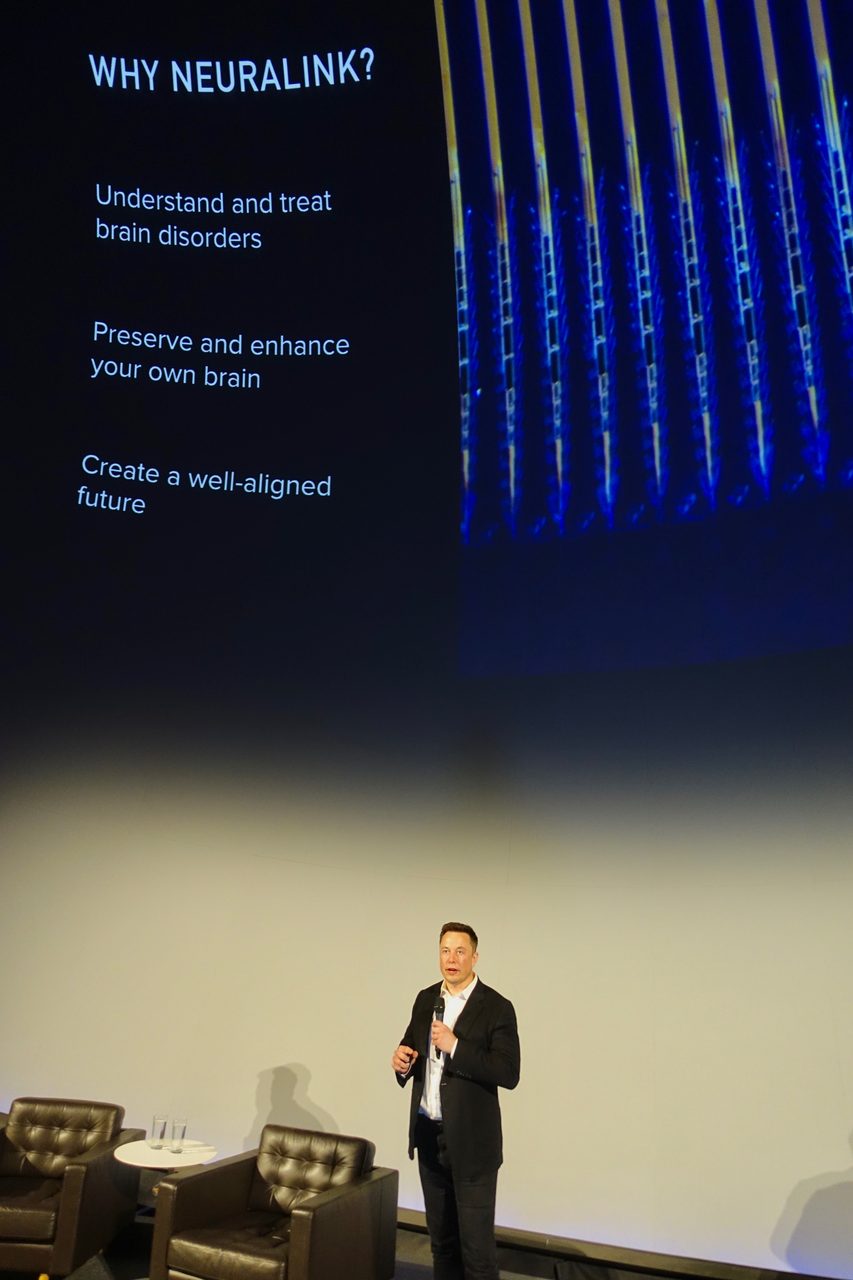
The company's own public statements are their own category of evidence, and this image is scoped to exactly that.
05In Through a Vein
The third programme reaches the brain without opening the skull, and its regulatory history is the exact place where our own file's chronology fails.
Synchron's Stentrode is a mesh electrode array delivered by catheter through the jugular vein and pushed into a blood vessel that runs alongside the motor cortex, the superior sagittal sinus. No open-brain surgery is involved. What happened next matters in its exact order, because our own research file compresses it into one line, "FDA approved for clinical trial (2020). First US patient: 2022," and that line is wrong twice over. The device's first human implants were not in the United States at all. Four patients received one in Australia's SWITCH trial at the Royal Melbourne Hospital, with enrollment beginning in 2019, and the results, published by Oxley and colleagues in the Journal of NeuroInterventional Surgery in 2021, showed patients texting, shopping online and managing their finances from home using thought alone. The FDA's action in August 2020 was a Breakthrough Device Designation, an expedited-review status rather than a trial approval. The actual Investigational Device Exemption for the US COMMAND trial came in July 2021, and Synchron describes that as the first IDE the FDA has awarded for a permanently implanted brain-computer interface. The first US patient was implanted in 2022, at trial sites including Mount Sinai and the University of Pittsburgh. Three separate events, three separate years, and our own file had them as one date and a country that was not first.
The COMMAND early feasibility study, which is newer than our own file, evaluated the Stentrode in six patients with severe paralysis against a 12-month primary endpoint. No serious adverse events were reported. The device reliably captured brain signals and converted them into what Synchron calls digital motor outputs, letting patients control a mouse cursor, an Apple Vision Pro headset and Amazon Alexa hands-free. In November 2025 the company raised $200 million in Series D funding to run a pivotal trial in 2026, which is the step it has to clear before it can seek premarket approval, the status that would make the device legally sellable. Which fixes the position exactly, as of this research pass in July 2026: Synchron's device is investigational. It is not FDA-approved for market, and the pivotal trial that would open that door has not concluded.
| Device and Programme | How It Reaches the Brain | What Is Documented | Regulatory Status |
|---|---|---|---|
| BrainGate and BrainGate2, pilot clinical trials | A 96-electrode Utah array implanted in motor cortex | 2012: robotic reach and grasp by a woman paralyzed by a brainstem stroke (Hochberg et al., Nature). 2021: typing at 90 characters per minute and 94.1 percent real-time accuracy from imagined handwriting (Willett et al., Nature). A 2025 durability analysis across 20 arrays and the first 14 participants | Investigational, in clinical trials. Not FDA-approved for market |
| Neuralink N1, the PRIME Study and its country programmes | 1,024 electrodes on 64 polymer threads about 5 micrometers thick, placed by a surgical robot; 128 threads of 8 electrodes each in the revised build | First patient January 28, 2024: cursor control and gaming within weeks, then roughly 85 percent thread retraction at about three months, recovered in software. Second patient July 2024: zero retraction, CAD work within two days. 21 patients in four countries as of January 28, 2026, with no serious device-related adverse events reported | Investigational, under an FDA Investigational Device Exemption. Not FDA-approved for market |
| Synchron Stentrode, the SWITCH and COMMAND trials | A mesh array delivered by catheter through the jugular vein into the superior sagittal sinus, with no open-brain surgery | Australia's SWITCH trial from 2019, 4 patients, texting, online shopping and managing finances from home (Oxley et al., Journal of NeuroInterventional Surgery, 2021). US COMMAND: 6 patients, a 12-month primary endpoint, no serious adverse events, cursor plus Apple Vision Pro plus Alexa control | Breakthrough Device Designation August 2020, an expedited-review status. US Investigational Device Exemption July 2021. $200 million raised in November 2025 for a 2026 pivotal trial. Not FDA-approved for market |
06Feeling, and Speaking
A brain-computer interface that only reads is half a device. Two published results close the other half, and neither of them is on the approved list in section 01.
In 2021, Flesher, Downey, Weiss and colleagues reported in Science that pressure signals from the sensors of a robotic hand had been fed back into a paralyzed patient's somatosensory cortex, and that the patient could feel the hand's grip strength in real time. That is the loop closing. The brain sends an intention outward, and the world sends a sensation back in through an electrode, which is a different and harder claim than moving a cursor, because it requires the machine to write something the brain will accept as sensation rather than merely read something the brain was already doing.
The same year, Moses, Metzger, Liu and colleagues reported in the New England Journal of Medicine that a neuroprosthesis had decoded attempted speech from a paralyzed man with anarthria, the loss of the physical ability to articulate, directly into text and a synthesized voice. He had no functional way to speak, and the device gave him a channel. This is a result our own research file lists in its bibliography and never narrates in its own text, which is a strange omission in a document about brain-computer interfaces, so it is stated here in full rather than left as a reference nobody reads. Neither this nor the touch result above appears on the approved-device list in section 01, and this file does not put them there. They are published clinical research, and that is the honest description of them.
07Reading From Outside the Skull
Everything so far requires a surgeon. The non-invasive branch is where the phrase reading the mind usually gets attached, and it needs stating exactly, because it is both more impressive and more limited than the phrase suggests.
In 2023, Tang, LeBel, Jain and Huth reported in Nature Neuroscience that continuous language a subject had heard or was imagining could be reconstructed from blood-oxygen-level-dependent fMRI signal alone. What came out was the semantic gist, not a word-for-word transcript. A related approach, from Takagi and Nishimoto at CVPR the same year, used diffusion models to reconstruct images a person was viewing from fMRI data, at low but recognizable resolution. And Meta's magnetoencephalography-based system, reported by Defossez and colleagues in 2023, demonstrated real-time, word-by-word decoding, using millisecond-resolution equipment that fills a room. Then the number that governs all three. An fMRI voxel is about 2 millimeters on a side and contains roughly 500,000 neurons. An implanted array reads individual neurons. The non-invasive methods are working from a signal averaged over half a million cells at a time, and every capability and every limit in this paragraph follows from that one fact.
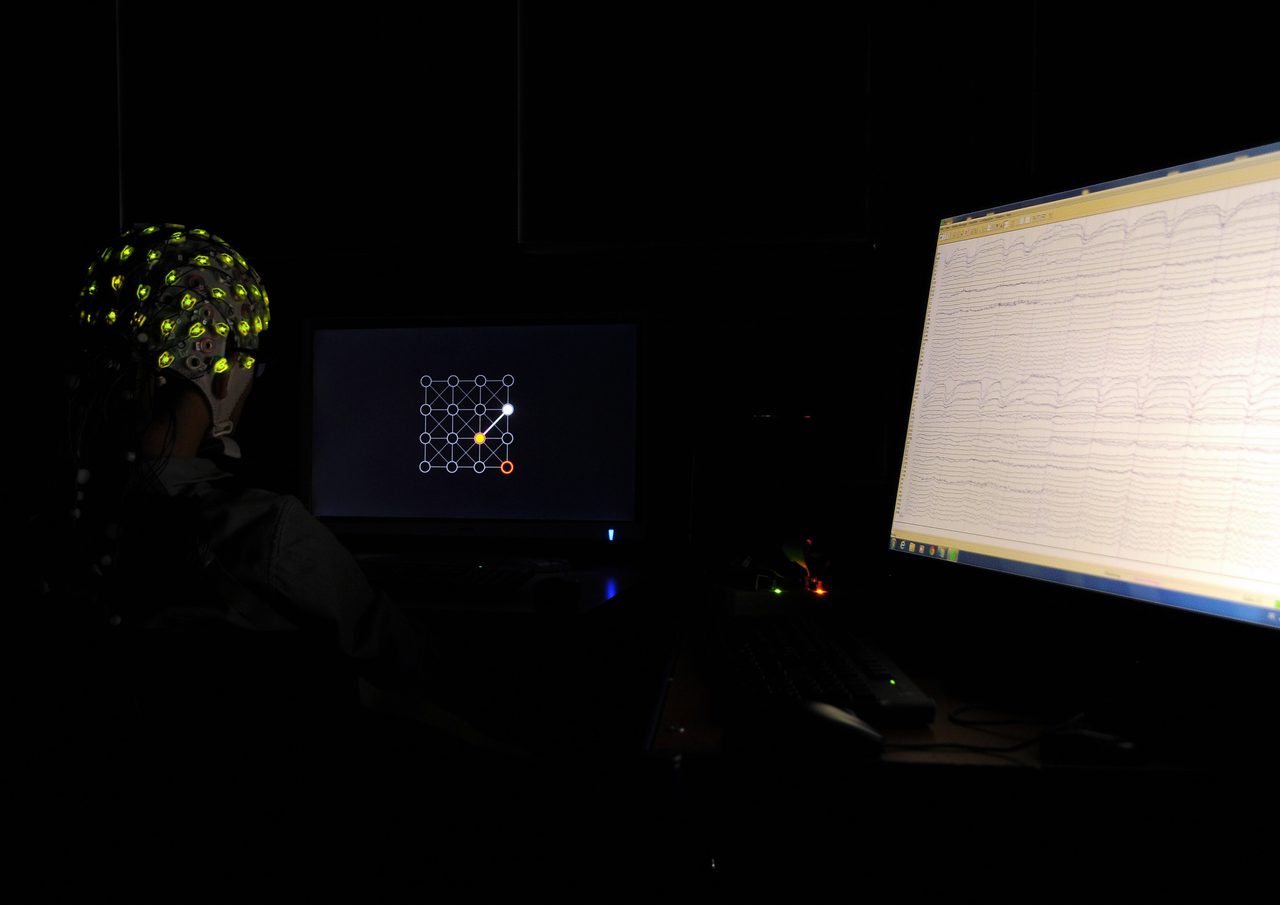
Non-invasive EEG headsets sold to the public, such as those from Emotiv and OpenBCI, can detect basic mental states and drive simple interfaces. Their spatial and signal resolution is far below implanted devices, and their reliability in real-world conditions outside laboratory settings is limited. Our own file carries this at Tier 2, and it is a useful correction to any assumption that a headset somebody can buy today is a small version of the array in section 03.
| Method | What It Reads | What It Has Produced | The Limit |
|---|---|---|---|
| Implanted microelectrode array (the Utah array, the N1) | Individual neurons in cortex | Cursor control, robotic reach and grasp, typing at 90 characters per minute, restored touch, decoded attempted speech | Requires brain surgery, and hardware in living tissue can move: roughly 85 percent of the first N1's threads retracted at about three months |
| Endovascular array (the Stentrode) | Signal from a vessel running alongside motor cortex | Texting, online shopping and managing finances from home; cursor, headset and voice-assistant control | Delivered by catheter with no open-brain surgery, and still investigational |
| fMRI | Blood-oxygen-level-dependent signal, in voxels about 2 millimeters across | The semantic gist of heard or imagined language (Tang et al., 2023); low-resolution reconstructions of viewed images (Takagi and Nishimoto, 2023) | Each voxel holds roughly 500,000 neurons. Gist, not transcript. Immobile, room-scale hardware |
| MEG | Magnetic fields at millisecond resolution | Real-time, word-by-word decoding (Defossez et al., 2023) | Room-sized equipment |
| Consumer EEG (Emotiv, OpenBCI) | Electrical activity at the scalp | Basic mental states and simple interface control | Spatial and signal resolution far below implanted devices, and limited real-world reliability outside the lab. Carried at Tier 2 in this file |
08Writing In
Reading a brain is one direction. Writing to one is the other, and it is where the ambition rises and the evidence thins at the same time. Every claim in this section is Tier 2.
One public programme aimed squarely at writing to a brain was run by a defence agency. DARPA's SUBNETS programme, roughly $70 million between 2014 and 2019, pursued closed-loop treatment for mental illness: detect the neural biomarkers of depression or anxiety, and stimulate in real time to normalize them. The model is the brain pacemaker of section 01 pointed at psychiatric rather than movement disorders. Our own file carries it at Tier 2, and the honest reason for that grading is that its clinical outcomes are considerably less publicly documented than the approved devices above.
Memory is the other target, and there are two named results. DARPA's Restoring Active Memory programme, running from 2017 to 2020, tested a targeted memory prosthesis for traumatic brain injury: intracranial electrodes identified the neural patterns associated with encoding a memory, and stimulation was applied to strengthen the encoding, with reported improvements of 15 to 25 percent on word-recall tasks. Separately, a hippocampal prosthesis developed at the University of Southern California, reported by Hampson, Song, Robinson and colleagues in the Journal of Neural Engineering in 2018, recorded the neural patterns produced during learning and played them back to strengthen consolidation, with a first human trial showing a 37 percent improvement in short-term memory. Both are real, published, and modest. A percentage gain on a word-recall task in a first trial is a long way from a memory prosthesis anybody could be offered.
Then the result this file will not allow to become a capability claim. Optogenetic techniques have selectively erased specific memories in mice, reported by Bhatt and colleagues in 2020, using light-activated proteins to deactivate the synapses that encoded one particular memory. In mice. This has not been tested in humans, and nothing in this article should be read as suggesting that it is close or imminent. What the result does earn is a question asked early rather than late: if a specific memory could eventually be removed, who decides which ones, and for what conditions. Post-traumatic stress disorder is the compelling case, and it is genuinely compelling. A memory that is politically inconvenient, or merely inconvenient to somebody with authority over the person carrying it, is not. This file poses that question and does not answer it, because the answer is not a scientific finding, and pretending it is one would be the dishonest move here.
09Two Brains, and the Far End of That Line
Everything above connects one brain to a machine. One line of work connects a brain to another brain, and its numbers are the reason this section is short.
Two brains have been connected directly, and the honest measure of that achievement is how much passed between them. BrainNet, reported by Jiang, Stocco, Losey and colleagues in Scientific Reports in 2019, let three people collaborate on a Tetris-like game using brain signals alone: two senders wearing EEG caps transmitted whether a block should be rotated, and one receiver took that decision in through transcranial magnetic stimulation, at roughly 81 percent accuracy. Earlier, in 2014, Grau and colleagues sent single words, hola and ciao, brain to brain between India and France over the internet, using the same EEG-to-TMS pairing. Both are genuine proof-of-concept demonstrations of direct brain-to-brain information transfer. Both run at bits per minute. That is closer to Morse code than to telepathy, and the distance between the demonstration and the fantasy is the thing worth carrying out of this section.
A short aside before the closing section, labeled as one and kept deliberately brief, because the deep version of this argument belongs to a different file. Ray Kurzweil has predicted, in the 2029 to 2035 window, nanoscale wireless sensors distributed throughout the brain, neural dust, connecting every neuron to the cloud and merging human cognition with machine intelligence. There is one real proof of concept underneath that idea, and it is smaller than the idea by a wide margin. Seo and colleagues at UC Berkeley published ultrasonic-powered, sub-millimeter wireless neural sensors in Neuron in 2016, demonstrated in the peripheral nerves of rodents. Not the cortex. Not humans. Getting from that experiment to millions of cortical sensors with microsecond latency and wireless bandwidth far exceeding current WiFi is, in our own research file's own words, decades away at minimum, and may require breakthroughs nobody currently has.
The two ideas that follow from it get this paragraph and no more. The first is progressive consciousness migration: the hypothesis that a mind could be moved to a digital substrate gradually, neuron by neuron, as artificial equivalents replace biological ones, preserving continuity of experience at every step and so avoiding the copy problem that instantaneous whole-brain scanning creates. Whether that would preserve a person depends entirely on whether consciousness is substrate-independent, which is an open philosophical question rather than a technical one, and if consciousness turns out to require specific biological processes then silicon replacement would not carry it across. The second is collective consciousness: if brain-to-brain bandwidth ever scaled far past the bits per minute above, networked minds could in principle share thought or experience directly, with the risks worth stating as plainly as the promise, loss of individual identity, vulnerability to manipulation at the level of the network, and extraordinary power for whoever operates it. No current technology is remotely close to either. Both belong to our research file S_1_02, The Singularity and Transhumanism, linked in the sources below, and to the separate article that carries that subject in this wing. This file records that the ideas exist, records that they are genuinely unresolved, and stops there.
10What This Technology Is Not
A file that has spent nine sections carefully sizing what these devices can do owes the reader the same care about what they cannot. Our own research document ends on exactly this, and its Tier 4 section is the plainest writing in it.
"We can read minds today" is misleading. What current systems decode are statistical patterns: an intended movement, read from motor cortex, or a broad semantic category, read from fMRI signal. The nearest thing in this whole article to reading language off a brain is the fMRI work in section 07, and what it recovers is the gist of language a subject heard or was deliberately imagining, not a transcript, from voxels holding roughly 500,000 neurons each. No system in this file reads thoughts in any colloquial sense. They cannot access memories. They cannot access an internal monologue. They cannot access subjective experience. That is our own file's Tier 4 statement, and every genuinely impressive result in the nine sections above sits underneath it.
There is no credible evidence of a deployed government mind-control brain-computer interface programme. The pieces people assemble into that claim are individually real, which is what gives it its grip. MKUltra was a genuine CIA programme, running from 1953 to 1973. DARPA genuinely funds brain-computer interface research, and two of its programmes are named in section 08 of this article. What does not follow is the conclusion. Current brain-computer interface resolution is nowhere near what anything resembling mind control, as popularly imagined, would require. The obstacle is not secrecy. It is resolution, and this entire article is a measurement of it.
Claims that 5G networks, injectable microchips or vaccines function as covert brain-computer interfaces are false, and they are false in a way that can be answered from physics rather than from trust. A brain-computer interface requires physical contact with neural tissue or very close proximity to it. Every device in this file is in exactly that kind of contact: implanted in the brain, threaded into a vessel beside it, implanted to stimulate the retina, wired to a nerve, worn on the scalp, or housed in room-scale equipment the person has to be inside. Electromagnetic signals attenuate, and that attenuation rules out a remote injectable device that reads a brain, with current or foreseeable technology. Everything that works in this article had to be implanted, threaded, placed, wired or worn, and that requirement is not an incidental detail. It is the answer to the claim.
Fast Facts
- The Oldest Approval
- The FDA approved the first commercial cochlear implant in 1984, the first device ever approved to replace a human sense. The first crude implant was placed in 1961 by William House and John Doyle
- The Patient Counts
- More than 1 million cochlear implant recipients worldwide; more than 100,000 vagus nerve stimulation patients for epilepsy since 1997, including more than 30,000 children; more than 350 Argus II implants
- The Corrected Date
- Deep brain stimulation was FDA-approved for essential tremor in July 1997 and for Parkinson's disease in January 2002. Our own file attaches 1997 to Parkinson's
- The Device That Listens First
- NeuroPace RNS, approved November 2013: closed-loop and bidirectional, detecting the patterns that precede a seizure and stimulating before it starts. Carried here at Tier 2
- The Coffee
- Cathy Hutchinson, 2012: BrainGate, a 96-electrode Utah array, a robotic arm, and the first drink she had taken unassisted in roughly 15 years
- The Typing Speed
- 90 characters per minute at 94.1 percent real-time accuracy, above 99 percent with autocorrect applied offline, decoded from imagined handwriting (Willett et al., Nature, 2021)
- The Durability Number
- Utah arrays recorded spiking on an average of 35.6 percent of electrodes with a 7 percent decline over as much as 7.6 years, across 2,319 sessions and the first 14 participants (a 2025 study, circulated as a preprint)
- The First Neuralink Patient
- Noland Arbaugh, implanted January 28, 2024. Cursor control and gaming within weeks, roughly 85 percent of threads retracted at about three months, recovered in software, used 8 to 10 hours a day
- The Second Neuralink Patient
- Alex, July 2024, 128 threads of 8 electrodes each. Zero retraction, discharged the next day, designing a charger mount in CAD within two days
- The Current Count
- 21 N1 recipients across four countries as of January 28, 2026, with no serious device-related adverse events reported
- The Vein Route
- Synchron's Stentrode enters by catheter through the jugular vein into the superior sagittal sinus. First in human: Australia's SWITCH trial, enrolling from 2019
- The Regulatory Line
- Cochlear implants, deep brain stimulation, the Argus II, the NeuroPace RNS system and vagus nerve stimulation are FDA-approved. Neuralink, BrainGate and Synchron are investigational, in clinical trials only
- The Resolution Gap
- An fMRI voxel is about 2 millimeters across and holds roughly 500,000 neurons. An implanted array reads individual neurons
- The Brain-to-Brain Bandwidth
- BrainNet moved a block-rotation decision between three people at roughly 81 percent accuracy, at bits per minute
- The Mouse Result
- Optogenetic erasure of a specific memory has been done in mice (Bhatt et al., 2020). It has not been tested in humans
- What Is Not Supported
- That any current system reads memories, an inner monologue or subjective experience; that a deployed government mind-control interface exists; that 5G, microchips or vaccines are covert interfaces
What We Can Actually Stand Behind
Brain and nerve interfaces are approved medicine and have been for decades. Cochlear implants have restored hearing function to more than a million recipients by bypassing damaged hair cells and stimulating the auditory nerve, with the first commercial device FDA-approved in 1984 and the first crude implant placed in 1961. Deep brain stimulation was FDA-approved for essential tremor in July 1997 and for Parkinson's disease in January 2002, and is also approved for dystonia, OCD and epilepsy, with reported symptom-severity reductions above 50 percent and medication cuts up to 80 percent in some cases. The Argus II retinal prosthesis was approved on February 14, 2013 through the Humanitarian Device Exemption pathway and reached more than 350 patients. Vagus nerve stimulation was approved for drug-resistant epilepsy in 1997 and for treatment-resistant depression in 2005, and has been implanted in more than 100,000 epilepsy patients including more than 30,000 children. These are approvals and patient counts, not projections.
The famous devices have real, published, peer-reviewed results, and none of them is approved for sale. BrainGate: a robotic reach and grasp in 2012 (Hochberg et al., Nature) and typing at 90 characters per minute with 94.1 percent real-time accuracy from imagined handwriting in 2021 (Willett et al., Nature), more than double the previous record. Neuralink: cursor control and gaming within weeks of the first implant on January 28, 2024, a second patient designing a charger mount in CAD two days after surgery in July 2024, and 21 recipients across four countries as of January 28, 2026 with no serious device-related adverse events reported. Synchron: four patients in Australia's SWITCH trial from 2019 texting, shopping online and managing finances from home, then six US patients in COMMAND controlling a cursor, an Apple Vision Pro and Alexa with no serious adverse events. None of those programmes is approved for sale; their US trials run under FDA Investigational Device Exemptions. The results are Tier 1. The regulatory status is investigational. Both statements are true at once.
The limits are documented as carefully as the successes, and this file weighs them the same. Roughly 85 percent of the first N1's threads retracted from brain tissue about three months after implantation, likely because the brain moved more than anticipated, and the fix was a change to the decoding algorithms rather than a second surgery. The Argus II's approval stands while the company that made it stopped serving new patients in 2019 and wound down in 2020, citing a small patient population and revenue shortfalls rather than safety. An fMRI voxel is about 2 millimeters across and holds roughly 500,000 neurons, which is the ceiling on every non-invasive result in section 07. And the durability evidence in this file, a 2025 analysis finding spiking on an average of 35.6 percent of electrodes with a 7 percent decline over as much as 7.6 years across 20 arrays and 14 participants, circulated as a preprint with a PubMed Central-indexed companion, which is how this file states it.
Two results establish that these systems can write as well as read. Flesher, Downey, Weiss and colleagues reported in Science in 2021 that pressure signals from a robotic hand's sensors, fed into a paralyzed patient's somatosensory cortex, let the patient feel the hand's grip strength in real time. Moses, Metzger, Liu and colleagues reported in the New England Journal of Medicine the same year that a neuroprosthesis decoded attempted speech from a paralyzed man with anarthria into text and a synthesized voice. Both are published clinical research. Neither is on the approved-device list, and this file does not put them there.
Several things here are graded Tier 2 in our own research file and stay there in this article. The NeuroPace RNS System, FDA-approved in November 2013 on a 65-patient feasibility trial, a 191-patient double-blind randomized controlled trial and a 230-patient 7-year open-label trial, is the first commercially available closed-loop responsive brain stimulation device, and its approval is a matter of record; the Tier 2 grading is our file's judgment of the evidence, and this article does not promote it. DARPA's SUBNETS programme, roughly $70 million from 2014 to 2019, aimed at closed-loop psychiatric treatment, with clinical outcomes far less publicly documented than the approved devices. DARPA's Restoring Active Memory work from 2017 to 2020, reporting 15 to 25 percent gains on word-recall tasks, and the USC hippocampal prosthesis reporting a 37 percent short-term memory improvement in a first human trial (Hampson et al., 2018), both real and both small. BrainNet's three-person brain-to-brain Tetris collaboration at roughly 81 percent accuracy (Jiang et al., 2019), and the 2014 Grau brain-to-brain word transfer between India and France, both running at bits per minute. And consumer EEG headsets, which detect basic mental states at resolution far below implanted devices and with limited reliability outside the lab.
Optogenetic techniques have selectively erased specific memories in mice, reported by Bhatt and colleagues in 2020, by using light-activated proteins to deactivate the synapses encoding one particular memory. That is the whole of the claim. It has not been tested in humans, and this file does not imply that human memory erasure is imminent or near. What it does is ask the question while asking is still cheap: if a specific memory could eventually be removed, who decides which ones and for what conditions. PTSD is the compelling case. A politically inconvenient memory is not. The question stays open here, because it is not the kind of question a laboratory result closes.
Neuralink has publicly stated ambitions beyond cursor control, including restoring vision through an announced programme it calls Blindsight and eventually restoring speech. Those are the company's own roadmap items, not achieved results and not independently verified, and nothing in the documented PRIME Study record establishes them. This pipeline's own tier discipline grades company timeline promises at Tier 2 to 3; this article files them at Tier 3, the more cautious end of that band, attributed to Neuralink by name, and keeps them strictly apart from the clinical results in the Tier 1 lines above.
The far end of this line is carried here as a labeled aside and nothing more. Kurzweil's neural dust, nanoscale sensors distributed through the brain in the 2029 to 2035 window, rests on one real proof of concept: ultrasonic-powered sub-millimeter sensors demonstrated in rodent peripheral nerves, not cortex and not humans (Seo et al., Neuron, 2016). Scaling that to millions of cortical sensors is, in our own file's words, decades away at minimum. Progressive consciousness migration, neuron by neuron, depends entirely on whether consciousness is substrate-independent, which is an open philosophical question; if it requires specific biological processes, silicon replacement would not carry it across. And collective consciousness through networked brains is a thought experiment with no current technology remotely close to it. The full futurist argument belongs to our research file S_1_02, The Singularity and Transhumanism, and to the separate article that carries that subject. This file records the ideas, records that they are unresolved, and does not re-argue them.
No, none of the three headline programmes has an FDA-approved product, and the claim that any of them does is false. Neuralink, BrainGate and Synchron all operate under FDA Investigational Device Exemptions, in clinical trials only. Synchron's August 2020 Breakthrough Device Designation is an expedited-review status, not an approval, and its July 2021 Investigational Device Exemption is permission to run a trial, not permission to sell; the 2026 pivotal trial it raised $200 million for in November 2025 is the step before it can even seek the approval that would make the device legally sellable. This is a statement about regulatory status and not about the results, which stand at Tier 1 in the lines above.
No, we cannot read minds today. Current systems decode statistical patterns: an intended movement from motor cortex, or a broad semantic category from fMRI signal. They cannot access memories, an internal monologue, or subjective experience. The closest result in this file recovers the gist of language a subject heard or was deliberately imagining, from voxels containing roughly 500,000 neurons each, and gist is not transcript and decoding is not reading. That is our own file's plain statement at Tier 4, and it does not diminish a single result above it.
No, there is no credible evidence of a deployed government mind-control brain-computer interface programme. MKUltra was a real CIA programme from 1953 to 1973 and DARPA does fund brain-computer interface research, and neither fact carries the conclusion. Current resolution is far too low for anything resembling mind control as popularly imagined, which is a claim about physics and engineering rather than about anybody's good intentions.
And no, 5G networks, injectable microchips and vaccines are not covert brain-computer interfaces. That claim is false and physically impossible with current or foreseeable technology. A brain-computer interface requires physical contact with neural tissue or very close proximity to it, and the attenuation of electromagnetic signals rules out a remote injectable brain-reading device. Every working device in this article had to be implanted, threaded, placed, wired or worn, and the difficulty of doing that is the answer to the claim.
So the file closes on a technology that has been approved medicine for more than forty years and is discussed in public as though it arrived the day before yesterday, and the two halves are not the same technology. The approved half is quiet: more than a million cochlear implants, electrodes in the basal ganglia steadying a tremor, a nerve stimulator for seizures the drugs could not reach, a device that catches a seizure before it arrives. The famous half is a set of clinical trials, with 21 people in one of them, a set of threads that pulled loose and were recovered in software, a mesh array pushed up a vein, and a man who drove a cursor with his thoughts and then designed a bracket for his own charger two days after surgery. Every one of those results is real. Not one of those devices can be bought. And underneath all of it sits the sentence this article has had to keep repeating: nothing here reads a mind. A cursor is an intended movement decoded from the part of the cortex that plans movements, and a decoded gist is not a thought. Which leaves the question this wing keeps arriving at from every direction, and this time it is a question about the inside of a person's head. If the decoding gets good enough to recover not just what somebody meant to do but what they meant to say, and the surgery gets safe enough that the trade starts to look reasonable, who owns the signal coming off the wire?
Sources & further reading
Everything above is drawn from our research library on Theories of Anything, cross-checked against the primary sources named in the text, with the clinical and regulatory specifics independently re-verified because this subject moves fast enough to age a document in weeks. Three notes belong here rather than being passed along quietly. Our own file dates deep brain stimulation's Parkinson's approval to 1997, which is the year of the essential tremor approval; the Parkinson's-specific indication came in January 2002, and this article states the corrected version. Our own file also compresses Synchron's regulatory history into a single 2020 line, merging the August 2020 Breakthrough Device Designation with the July 2021 Investigational Device Exemption and omitting the 2019 Australian SWITCH trial that carried the device's first human implants; the corrected chronology is in section 05. And the author-name fields in that file's bibliography are scrambled by an ingestion artifact, although every one of its DOIs was checked in this pass and resolves to the correct paper, so the citations below are given in clean form. Open the full file to check the sourcing and go deeper.
Image credits
- Noland Arbaugh, first human recipient of a Neuralink N1 implant Rational Optimist Society, via Wikimedia Commons (CC BY 3.0). CC BY 3.0 Source.
- Cochlear implant system, labeled medical diagram BruceBlaus / Blausen Medical, via Wikimedia Commons (CC BY 3.0). CC BY 3.0 Source.
- Typical deep brain stimulation setup, labeled diagram Shamir R, Noecker A, McIntyre C, via Wikimedia Commons (CC BY 3.0). CC BY 3.0 Source.
- Elon Musk presenting the Neuralink master plan, July 2019 Steve Jurvetson, via Wikimedia Commons (CC BY 2.0). CC BY 2.0 Source.
- Non-invasive brain-computer interface experiment, EEG cap and cursor control Laurens R. Krol, via Wikimedia Commons (CC BY 4.0). CC BY 4.0 Source.
- Card crop of the Noland Arbaugh portrait Rational Optimist Society, via Wikimedia Commons (CC BY 3.0). CC BY 3.0


