
Are We Living in a Simulation?
It is the question that launched a thousand late-night conversations: what if everything, this page, your body, the whole universe, is a computer simulation? In 2003 the philosopher Nick Bostrom turned the idea from science fiction into a startlingly precise argument, showing that at least one of three strange propositions must be true. Since then, physicists have pointed to features of reality that look suspiciously computational, and others have called the whole idea pseudoscience. The honest answer is stranger than either camp admits: the argument is real and clever, the 'evidence' is only suggestive, and the hypothesis may be built, almost by design, so that no experiment could ever settle it. Here is what the question actually is, and where it genuinely ends.
It is the question that launched a thousand late-night conversations, and, more recently, a good deal of confident nonsense in both directions. What if none of this is real? What if you, this page, the sky, the whole of history, are patterns of information running inside a computer built by someone, or something, in a truer world above our own? For most of human history this was the province of mystics and storytellers. Then, in 2003, an Oxford philosopher turned it into an argument precise enough to force serious people to take it seriously, and a handful of physicists began pointing to features of reality that, they claimed, look suspiciously like the fingerprints of a computed world. The result is one of the strangest questions on the border of science and philosophy, and one of the most misreported. The truth is more interesting than either the believers or the debunkers will tell you. Here is what the simulation hypothesis actually claims, what the 'evidence' really amounts to, and the honest reason the question may never be answered at all.
01The Argument
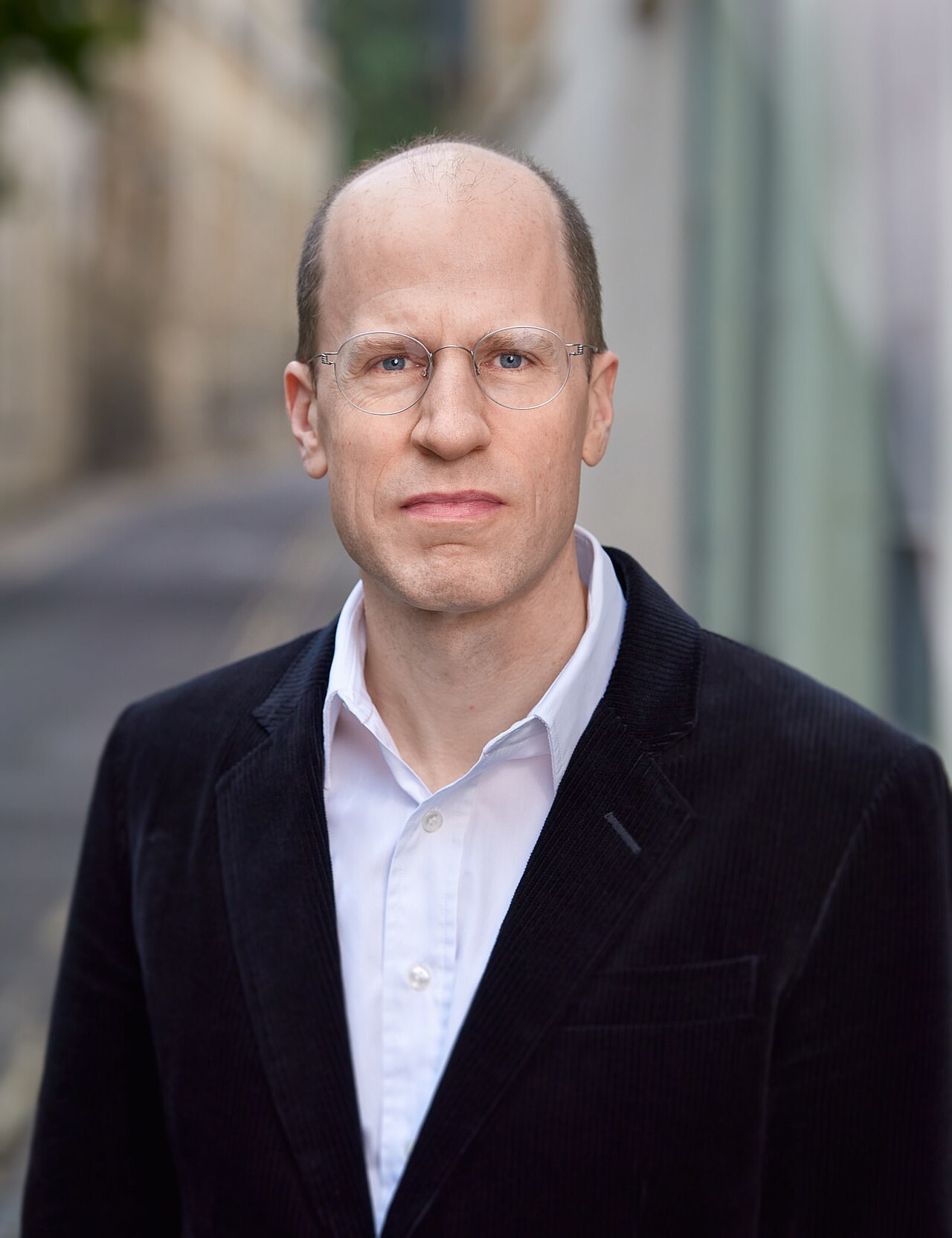
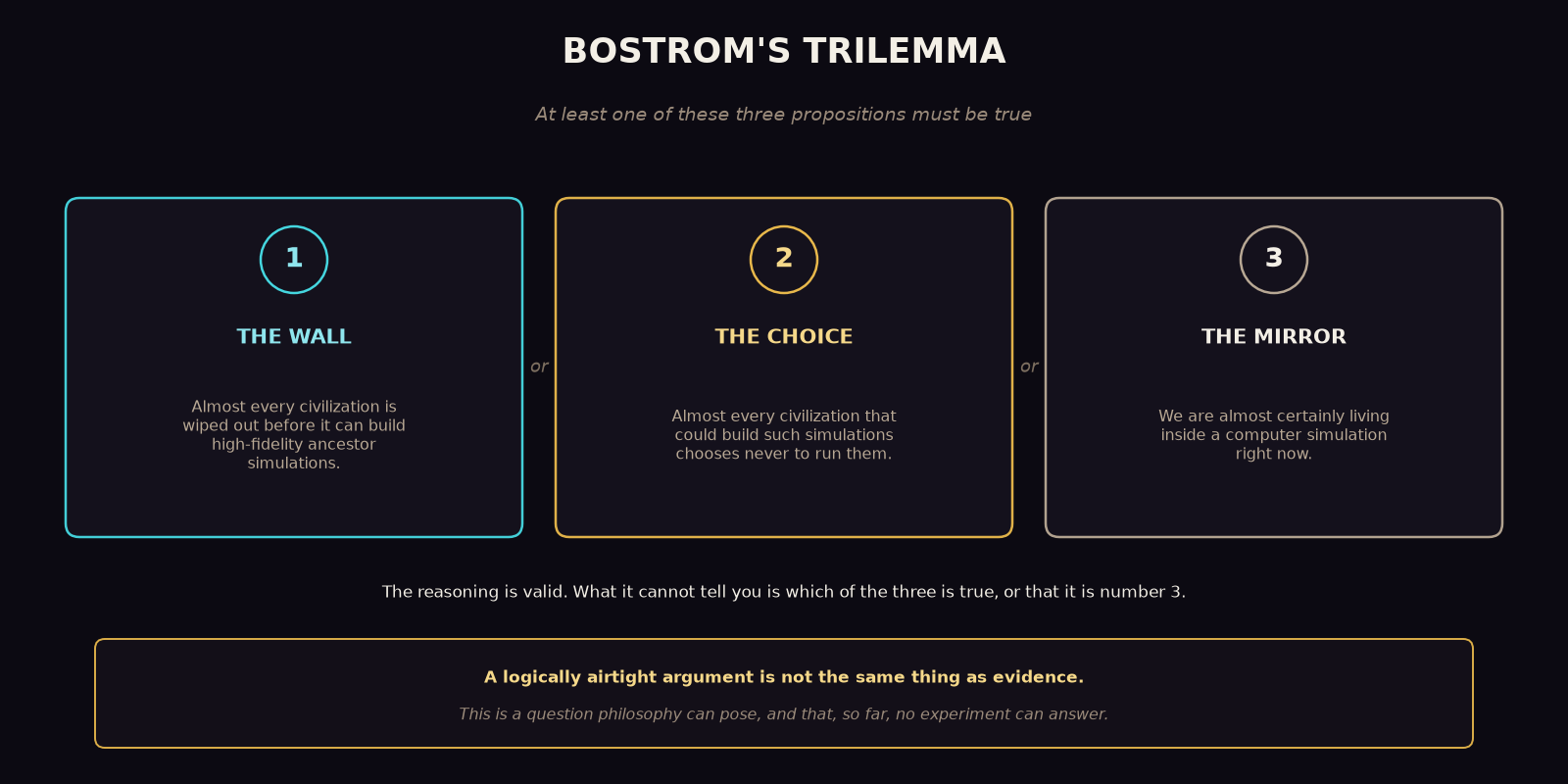
The modern version of the question was posed with unusual precision in 2003, by the Oxford philosopher Nick Bostrom, in a paper titled 'Are You Living in a Computer Simulation?' Bostrom did not argue that we are in a simulation. He argued something more careful, and in its way more unsettling: that at least one of three propositions must be true. Either almost every civilization like ours is destroyed before it becomes advanced enough to run high-fidelity 'ancestor simulations'; or almost every civilization that reaches that capability chooses not to run them; or we are almost certainly living in one right now. The reasoning rests on two premises. The first is substrate independence: the idea that a mind is essentially a pattern of information-processing, so that a sufficiently detailed simulation of a brain would be just as conscious as the brain, whatever hardware it runs on. The second is scale: a technologically mature civilization could, with something like a planet-mass computer, run an astronomical number of such simulations. If both premises hold, then simulated minds would vastly outnumber the original biological ones, and a random observer, you, should statistically expect to be one of the many rather than one of the few, unless one of the first two escape routes closes the door. The crucial thing to grasp, and the thing most retellings get wrong, is what this establishes. The argument is logically valid: grant the premises, and the trilemma follows. But it is not a proof that we are simulated. It does not tell us which of the three propositions is true, only that they cannot all be false. It is a beautifully built piece of reasoning, not a piece of evidence. (Bostrom's own research centre at Oxford, the Future of Humanity Institute, was closed by the university in 2024, but an argument stands or falls on its logic, not its author's address.)
02The Case For
Enthusiasts point to a list of features of physics that, they say, look suspiciously like the signatures of a computed world. It is worth walking through them honestly, because each one pairs a real, established piece of physics with a suggestive but strictly analogical reading. Energy, electric charge, and spin come in discrete units, and space and time may have smallest meaningful scales (the Planck length and Planck time), which invites the image of reality as 'pixelated,' like a screen. The speed of light is an absolute limit on how fast anything can happen or any influence can travel, which invites comparison to the maximum speed a game engine will allow. A quantum system seems to settle into a definite state only when it is measured, which invites the analogy of a game that renders detail only where a player happens to be looking, to save computation. Entangled particles stay perfectly correlated across any distance, which invites the metaphor of two variables pointing at the same location in memory. The amount of information a region of space can hold seems to scale with its surface area rather than its volume (the holographic principle), which invites the picture of a world 'rendered' from data on a distant boundary. The constants of physics appear finely tuned for stars, chemistry, and life, which invites the reading that the settings were deliberately chosen, the way a designer would choose them. And the universe is described with almost eerie success by mathematics, which invites the thought that it runs on mathematics because it is, at bottom, a computation. Every one of these is real physics. But not one of them is evidence of a simulation, and the honest objection is sharp: we built our computers using our knowledge of physics, so of course our computing metaphors fit physics. The arrow of explanation runs from the world to our machines, not the other way around. The analogies are also selective, quietly passing over the many features of physics, the smooth continuity of spacetime far above the Planck scale, for one, that look nothing like any computation we know how to build. Suggestive is not the same as true.
03The Codes in the Equations
One claim in this family sounds far stronger than the rest, and it deserves careful handling because it is the one most often oversold. The physicist S. James Gates Jr., studying the deep mathematics of supersymmetry, found that the equations, when represented as certain graphical objects he calls Adinkras, contain structures identical to the error-correcting codes used to keep data intact as it travels across a computer network, the same family of codes that lets a scratched disc still play. Error-correcting codes, buried inside the equations of fundamental physics: it is a genuinely startling, and genuinely real, mathematical discovery. But two cautions must travel with it, always. First, the codes were found inside the mathematics of supersymmetry, a proposed extension of the Standard Model that, despite decades of searching at the Large Hadron Collider, has never been experimentally confirmed; as of today the collider has found no supersymmetric particles at all. The codes are a real feature of an unconfirmed theory's equations, not a confirmed feature of the physical world. Second, even granting the structure is real, reading it as a sign that someone is running our universe is an interpretation laid on top of the mathematics, not anything the mathematics itself asserts. It is a fascinating result, and a favourite of documentaries. It is not proof of anything about simulations.
04Can It Be Tested?
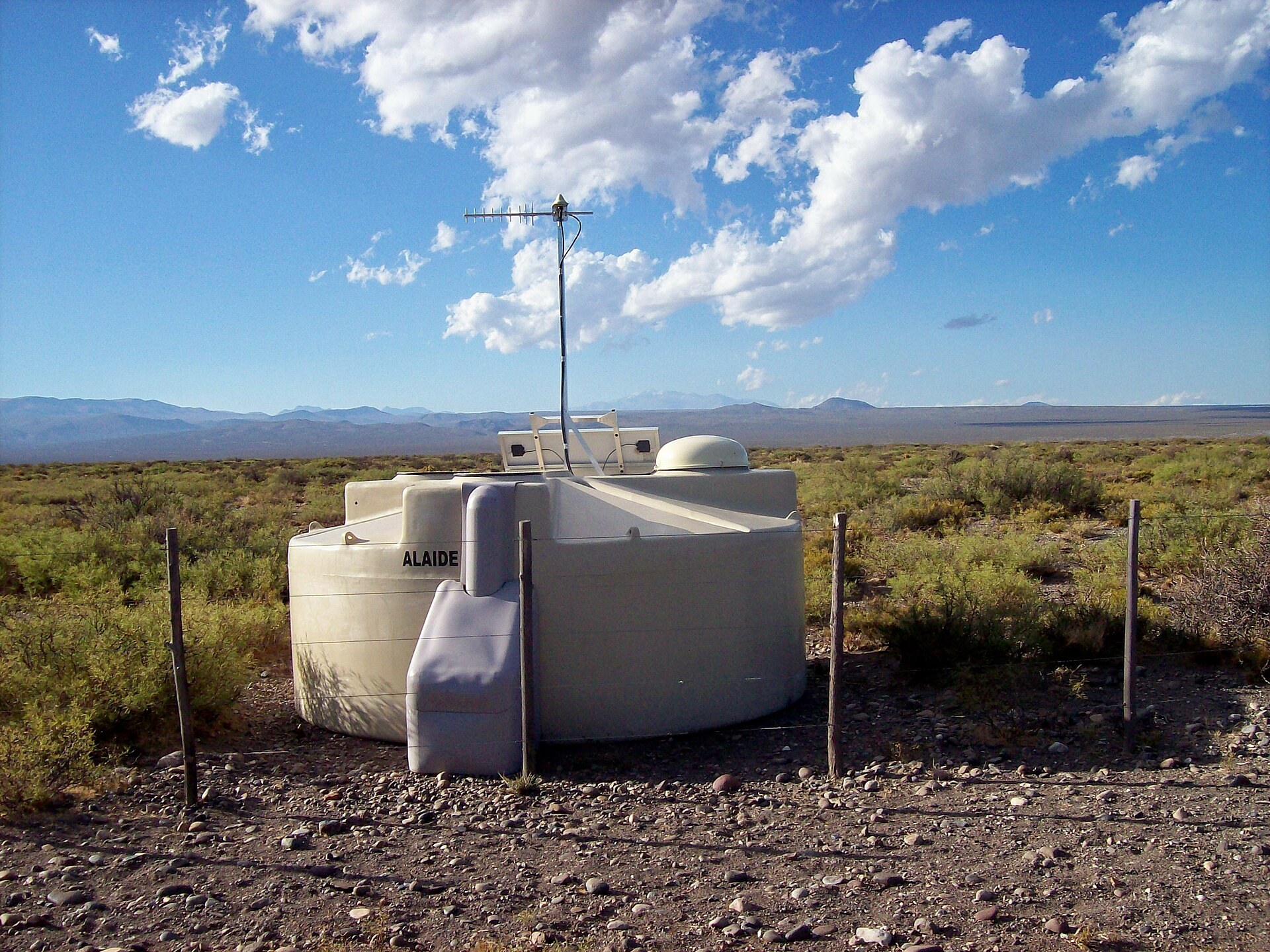
If the simulation hypothesis is to be science rather than metaphysics, it has to make a prediction someone could actually check. The most serious attempt came in 2012, when the physicists Silas Beane, Zohreh Davoudi, and Martin Savage noticed something suggestive about how physicists themselves simulate the strong nuclear force: they lay spacetime out on a discrete grid, or lattice, and that grid leaves a faint fingerprint, imposing a maximum energy and a slight directional bias on the particles within the simulation. If our own universe were running on such a lattice, they reasoned, the highest-energy cosmic rays might show a matching anisotropy, arriving very slightly more often from some directions than others. It was a genuine, testable proposal, precisely the kind of measurement observatories like the Pierre Auger array are built to make. But the test ran aground on a familiar problem, one the authors themselves acknowledged: the predicted signature depends completely on assumptions about the simulation's design. A different lattice, or a cleverer simulator, would leave a different fingerprint, or none at all. And more deeply, any anomaly we did find could always be blamed on ordinary physics we do not yet understand, rather than on a cosmic lattice. This is the hypothesis's central, and possibly permanent, difficulty. It has the same shape as Descartes' imagined all-deceiving demon, or the modern 'brain in a vat': a scenario carefully constructed so that no observation from inside could ever distinguish it from ordinary reality. A claim that no possible evidence could count against is, in the strict sense, unfalsifiable, and that is a statement about testability, not a verdict that it is false.
05The Critics, and a Twist

That unfalsifiability is exactly what draws the sharpest criticism, and it is important to be precise about what the critics do and do not say. The physicist Sabine Hossenfelder has called the simulation hypothesis 'pseudoscience,' arguing that believing it takes faith rather than evidence, and that no one has actually shown you could reproduce the known laws of physics with an algorithm without breaking the very symmetries those laws depend on. The Nobel laureate Frank Wilczek has pointed out that our universe encodes enormous hidden complexity at scales no one ever observes, a strange thing for an efficient simulation to bother computing, and that the idea invites an infinite regress, since the simulators would themselves need simulators. The cosmologist George Ellis dismissed it as 'totally impracticable,' with the line that a late-night pub discussion is not a viable scientific theory. But notice what these objections share: almost none of them claims to have proven the hypothesis false. They claim it is untestable, unmotivated, and therefore not science, which is a different and more careful charge than 'it is wrong.' And here is the twist: at least one major philosopher pushes the other way. David Chalmers argues that even if we are living in a simulation, it would not make our world an illusion. The trees and people and cities would be perfectly real; they would simply be made of information rather than fundamental particles, which, he notes, may not be so different from what physics was already telling us. On this view the question, even answered yes, might change less than it first appears.
06The Oldest Question
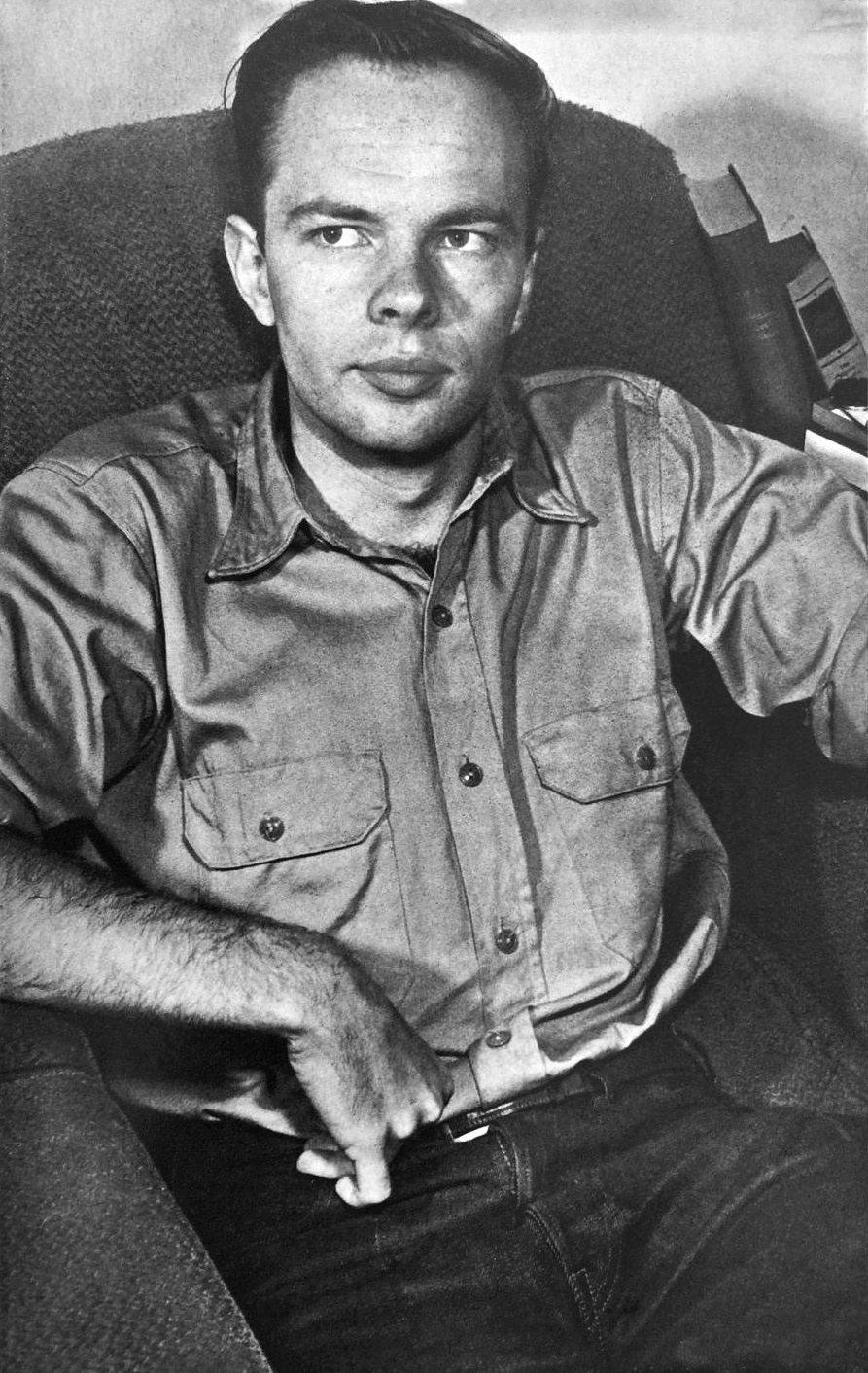
For all its modern digital dress, the suspicion at the heart of this question is very old, and it is worth honouring that lineage without mistaking it for evidence. Plato imagined prisoners in a cave who took flickering shadows on a wall for the whole of reality, a story told in full elsewhere in these halls. Hindu philosophy speaks of Maya, the veil of appearances drawn over the single underlying reality of Brahman. The Chinese sage Zhuangzi dreamed he was a butterfly and woke unable to say whether he was a man who had dreamed he was a butterfly, or a butterfly now dreaming he was a man. Buddhist, Aboriginal Australian, and Gnostic traditions each, in their own idiom, frame the visible world as not the deepest layer of what is. And in 1977 the science-fiction writer Philip K. Dick told an audience in Metz, 'we are living in a computer-programmed reality.' These are genuine and moving echoes of a perennial human intuition, that appearances may not be the whole story, and they are worth sitting with. But they are metaphors and intuitions, not evidence: not proof that any ancient sage anticipated computer science, and not proof that a simulation exists. One thing does need to be said plainly and then set firmly aside: the popular notion that a person can 'hack' or 'glitch' the simulation through meditation, drugs, or ritual has no basis whatsoever. It mistakes a careful philosophical argument for a movie plot.
Fast Facts
- The argument
- Bostrom's 2003 trilemma: at least one must be true, (1) civilizations die before running ancestor simulations, (2) they choose not to, or (3) we are almost certainly simulated. Valid logic, not proof of (3)
- The premises
- Substrate independence (a mind is a pattern, runnable on other hardware) and vast future computing power. The real debate is over the premises, not the logic
- The 'evidence'
- Quantization and the Planck scale, the speed-of-light limit, the observer effect, entanglement, the holographic principle, fine-tuning, all real physics, but each only a suggestive analogy, not evidence of a simulation
- Gates and the Adinkras
- Error-correcting codes really do appear in the equations of supersymmetry, a startling result, but inside an experimentally UNCONFIRMED theory, and the simulation reading is interpretation, not proof
- Testability
- A 2012 cosmic-ray-lattice test (Beane, Davoudi, Savage) was proposed but proved model-dependent; any anomaly could be blamed on unknown physics. Effectively unfalsifiable, like Descartes' demon
- The critics
- Hossenfelder ('pseudoscience'), Wilczek, Ellis, and Gleiser mostly argue the idea is UNTESTABLE, not that it is FALSE. Chalmers: even if simulated, the world would still be real
- The old echoes
- Plato's Cave, Hindu Maya, Zhuangzi's butterfly, Gnostic thought, and Philip K. Dick are evocative metaphors for the intuition that appearances may deceive, not evidence
- Refused
- That we are 'definitely' in a simulation; that the idea is 'definitely nonsense' or disproven; and that anyone can 'hack' or 'glitch' the simulation
What We Can Actually Stand Behind
Two things are solid. Bostrom's trilemma is a logically valid argument: given its premises, at least one of its three propositions must be true. And the physics it draws on, quantization, the Planck scale, the speed-of-light limit, entanglement, fine-tuning, and the real error-correcting-code structures Gates found in supersymmetry's equations, is all genuine. What the argument does not establish is that we are, specifically, living in a simulation.
Some serious work sits one step out. Concrete testability proposals like the 2012 cosmic-ray-lattice idea are real science, even though they turned out to be model-dependent and inconclusive. David Chalmers's 'simulation realism,' the argument that a simulated world would still be a genuinely real world, is serious academic philosophy. Both take the question seriously without pretending it is settled.
The heart of the matter is open. Whether any of the 'evidence' analogies, pixelated spacetime, the universe as computation, the holographic reading, points at anything real is genuinely unresolved, and mostly untestable. Informal odds from public figures, Elon Musk's estimate of one in billions, Neil deGrasse Tyson's roughly fifty-fifty, are opinions, not calculations. The ancient parallels are metaphor, not evidence.
Two opposite overclaims are both wrong. It is not established that we are living in a simulation; the trilemma proves no such thing. And it is not established that the idea is false or mere nonsense; its serious critics mostly argue that it is untestable, which is a different charge. Claims that one can 'hack the simulation' through drugs or meditation have no foundation at all. The honest verdict is the uncomfortable one: as things stand, the hypothesis is unfalsifiable.
Are we living in a simulation? The most honest answer this wing can give is that nobody knows, and that, as things stand, nobody can. The idea is neither the fever dream its detractors sometimes paint nor the near-certainty its boosters proclaim. It is a genuinely clever argument that runs aground on a genuinely hard problem: a claim constructed, almost by its own nature, so that no observation from inside could ever confirm or refute it. That places it, for now, on the far side of the border between science and metaphysics, in the company of Descartes' demon and Zhuangzi's butterfly, questions humans have always asked and never answered. There is something fitting in opening The Gold Thread, a wing about the deep patterns that seem to run through reality, with a question about whether those patterns were authored. The pattern is real. The mathematics is real. Whether either implies a programmer is exactly the kind of question that looks answerable and, on close inspection, quietly is not. The thread runs on from here, and this is one of the places where, for now, it disappears into the dark.
Sources & further reading
Everything above is drawn from our research library on Theories of Anything. Open the full file to check the sourcing and go deeper.
Image credits
- Bostrom's trilemma (original diagram) Original diagram by Theories of Anything. CC BY-SA 4.0 Source.
- Nick Bostrom, 2020 Ryan Cowan, via Wikimedia Commons. CC BY 4.0 Source.
- Pierre Auger Observatory surface-detector tank, Argentina Roberto Fiadone, via Wikimedia Commons (public domain). Public domain Source.
- Sabine Hossenfelder, 2017 Sabine Hossenfelder, via Wikimedia Commons. CC BY-SA 4.0 Source.
- Philip K. Dick, early 1960s Photograph by Arthur Knight, via Wikimedia Commons (public domain). Public domain Source.
- Card crop of the trilemma diagram Original diagram by Theories of Anything. CC BY-SA 4.0


.jpg)