
The Gold Thread
Where ancient pattern-recognition meets modern science: the simulation hypothesis, the mathematics that keeps turning up in nature uninvited, and information as a candidate for the most basic layer of reality. The site's own brand motif, followed all the way down.
Fibonacci and the Golden Angle
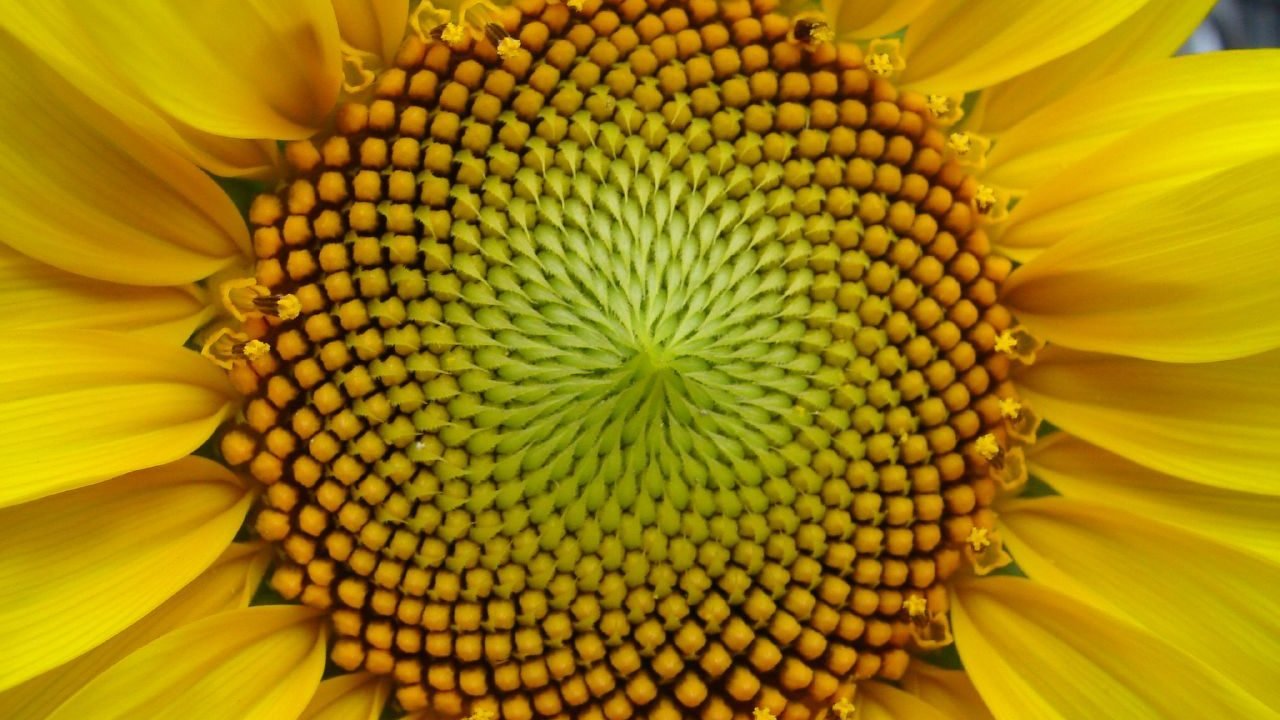
Sunflower heads tend to carry Fibonacci numbers of spirals, and the turn between one seed and the next sits close to 137.5 degrees. Both are measured. What is not there is arithmetic hidden in the plant: geometrically the numbers follow from a packing rule, each new element forming furthest from the ones already there, though which mechanism carries that rule inside a living plant stays open. The same subject carries a century of golden-ratio claims that measurement does not support, and this page keeps the two apart.
Are We Living in a Simulation?
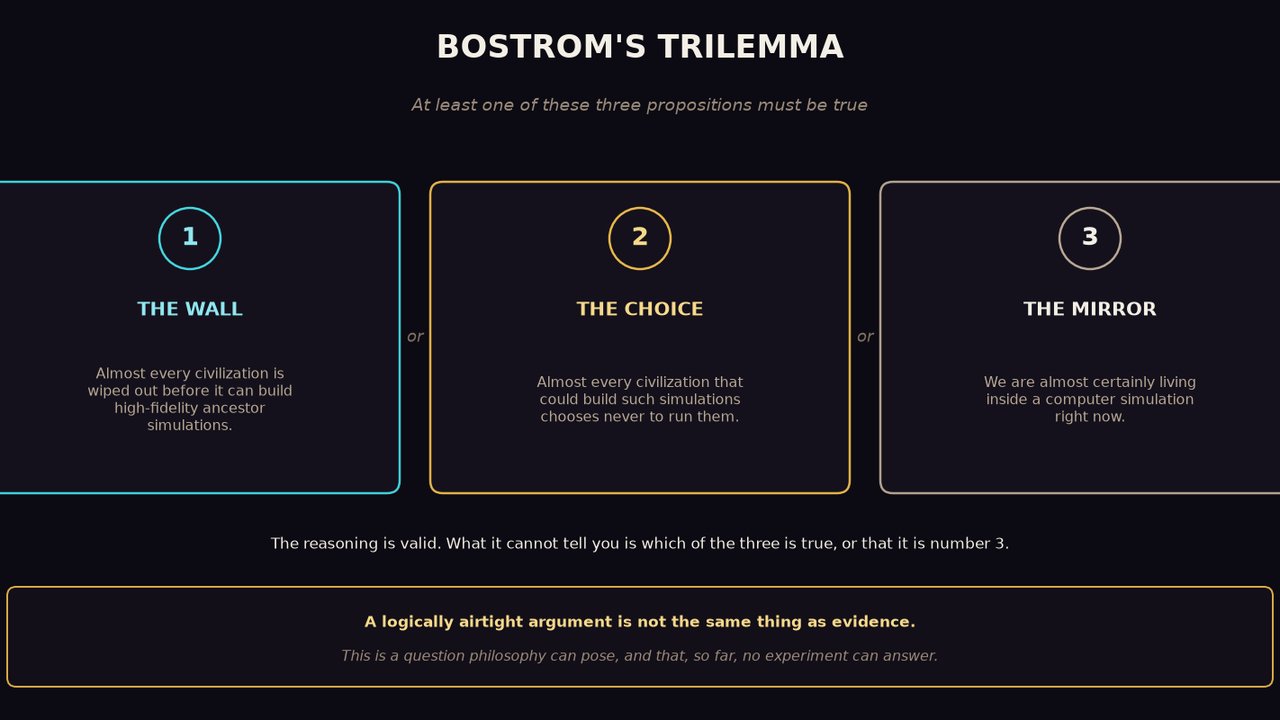
What if everything, your body, this page, the whole universe, is a computer simulation? In 2003 Nick Bostrom turned the science-fiction idea into a precise argument that at least one of three strange propositions must be true. But a valid argument is not evidence, and the hypothesis may be built so that no experiment could ever settle it. What the question really is, and where it ends.
Cellular Automata: Is the Universe Running on Rules?
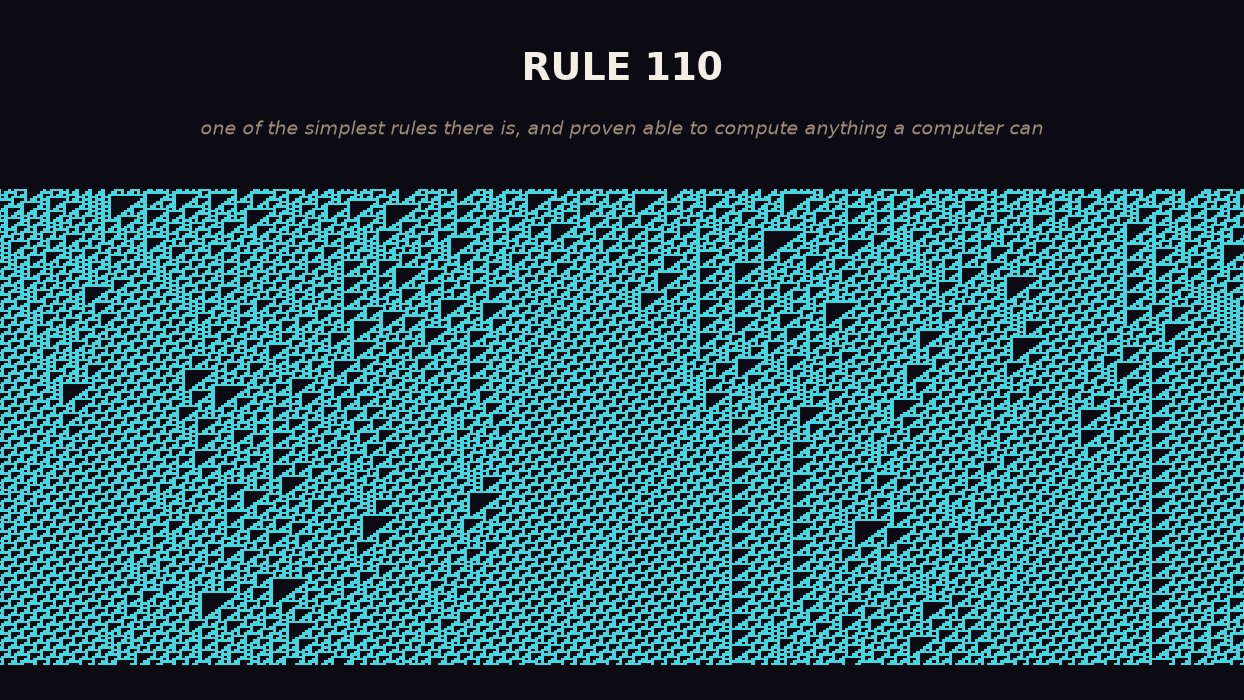
A grid of cells, a single local rule, applied everywhere at once: almost the simplest machine imaginable. Yet out of it pour gliders, self-replicating machines, and Rule 110, one of the simplest rules there is, proven able to compute anything a computer can. Which has led some to ask whether the universe itself runs on rules. What is proven, and how far the question can honestly go.
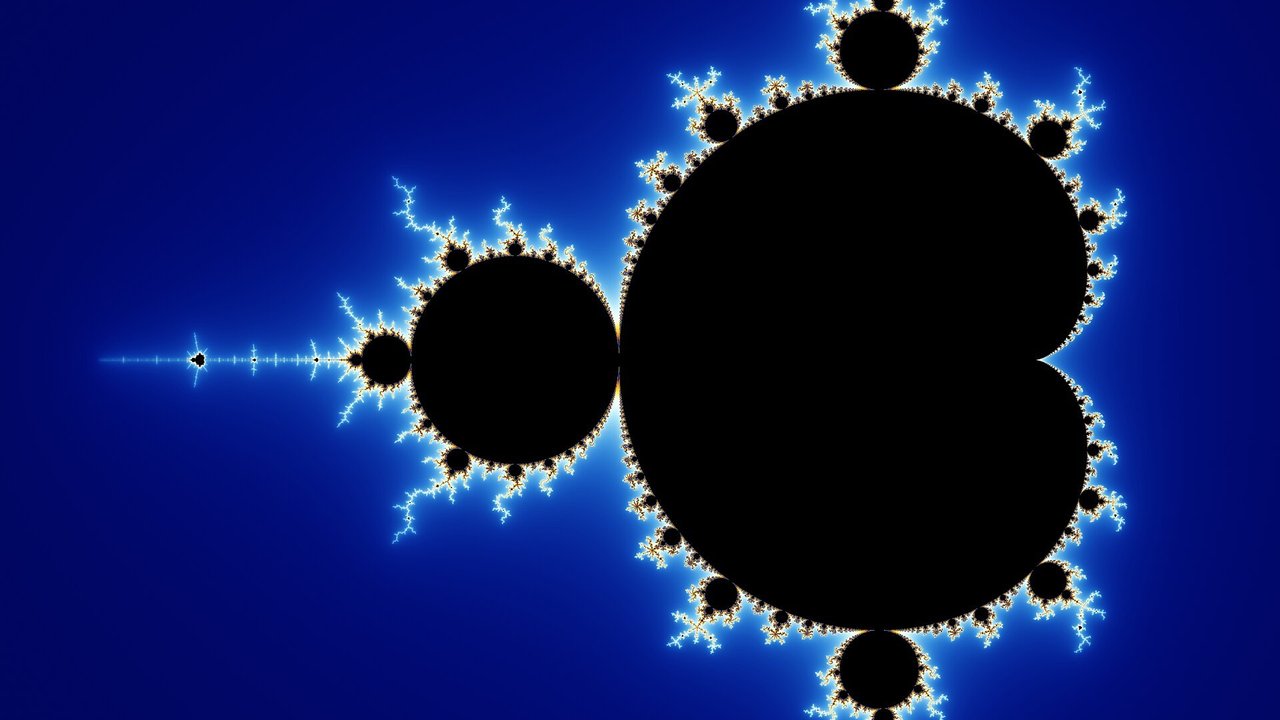
Fractals: The Geometry of Roughness
Clouds are not spheres and coastlines are not curves. Fractals are the mathematics of that roughness, shapes that repeat at every scale, where a two-line formula unfolds into infinite detail that also happens to describe lungs, river deltas, and galaxies. What a fractal really is, and where the wonder ends and the overreach begins.
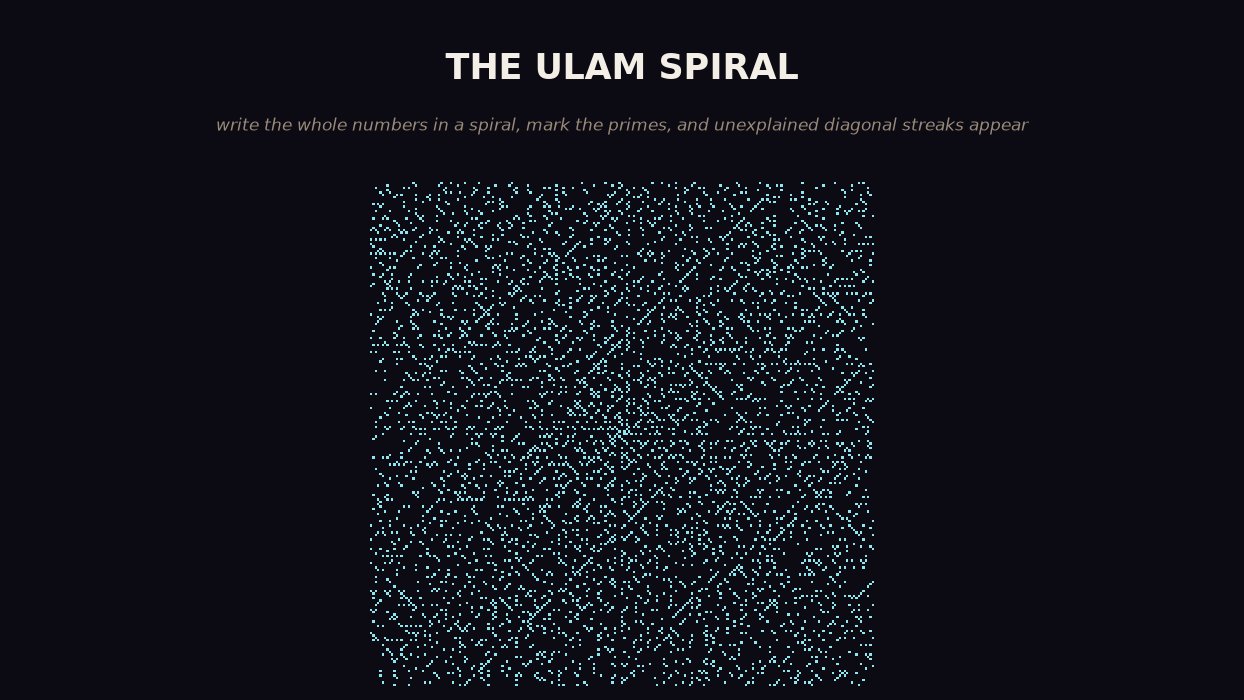
The Primes and the Million-Dollar Riddle
Primes, like 2, 3, 5, 7, are the simplest objects in mathematics: the indivisible atoms every other number is built from. They are also its most famous unsolved problem. They look random yet obey a precise law, they guard the internet, and the deepest question about them, the Riemann Hypothesis, has gone unsolved for over 160 years, with a million-dollar prize still waiting. What is proven, what is open, and where wonder ends and mysticism begins.
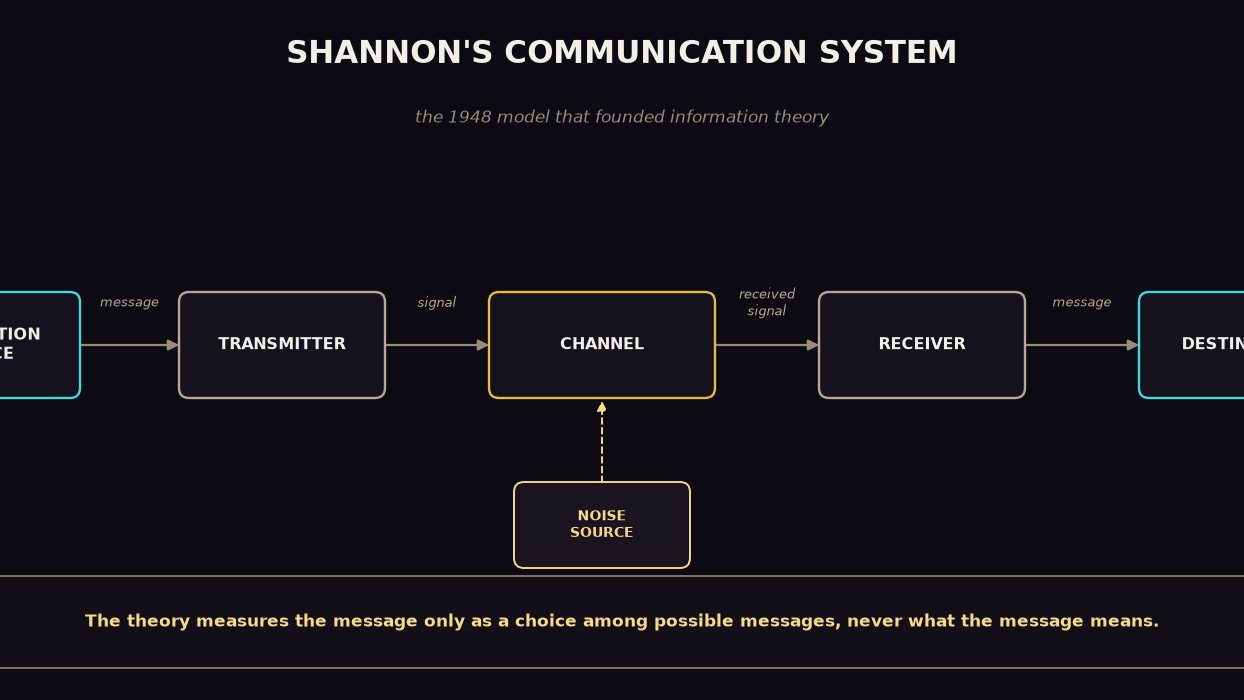
Shannon and the Birth of the Bit
In one 1948 paper, Claude Shannon turned 'information' into a measurable quantity counted in a new unit: the bit. From that austere idea, information is the resolution of uncertainty, and nothing to do with meaning, came the mathematics that built the digital world. What Shannon proved, the one deep link between information and physics, and the crucial thing his bit was designed never to measure.