
The Fabric of Reality
The Big Bang, quantum weirdness, black holes, and the ninety-five percent of the universe we still cannot directly see. This wing sits at the edge of what physics currently knows and says plainly where that edge actually is.
Gravitational Waves: Hearing Spacetime Ring
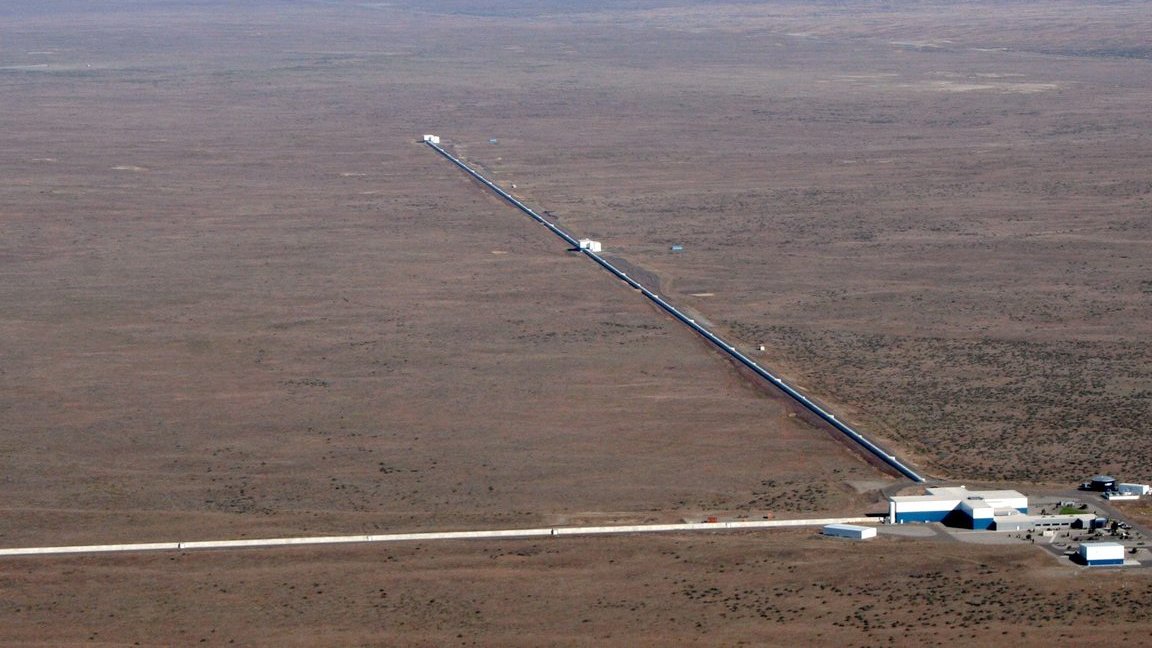
Two machines 3,000 km apart traced the same twitch seven milliseconds apart, for two tenths of a second, on 14 September 2015, and a hundred-year-old prediction became a measurement. What the instruments record is a fractional change in length, not a sound; nobody heard anything. This page keeps every number attached to what it is a number of, from the quadrupole formula to the roughly 390 events confirmed by May 2026, and it keeps evidence for a gravitational-wave background apart from detection of one.
Black Holes: The Places Where Physics Breaks
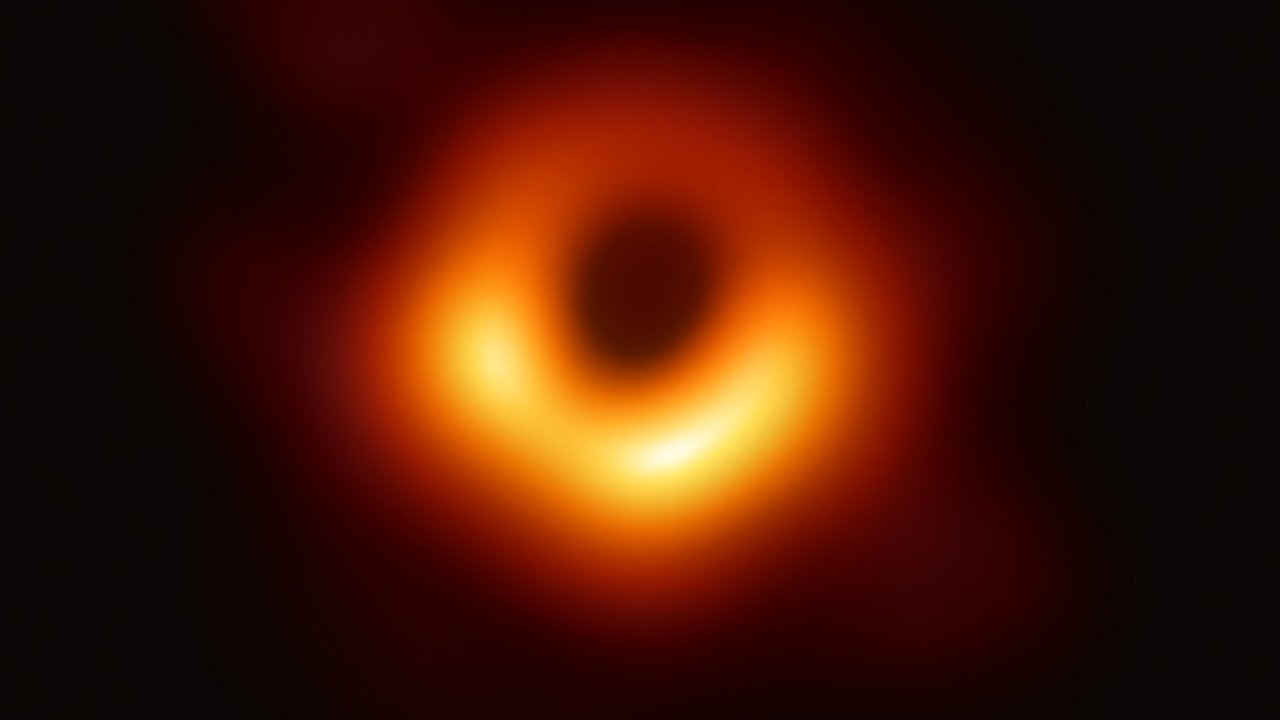
We heard two of them collide as a ripple in spacetime and photographed the shadow of one across the universe. Black holes are among the best-confirmed objects there are, and the one place physics points at its own limits. What we know, what we've seen, and where our knowledge honestly ends.
Dark Matter and Dark Energy: The Missing Ninety-Five Percent
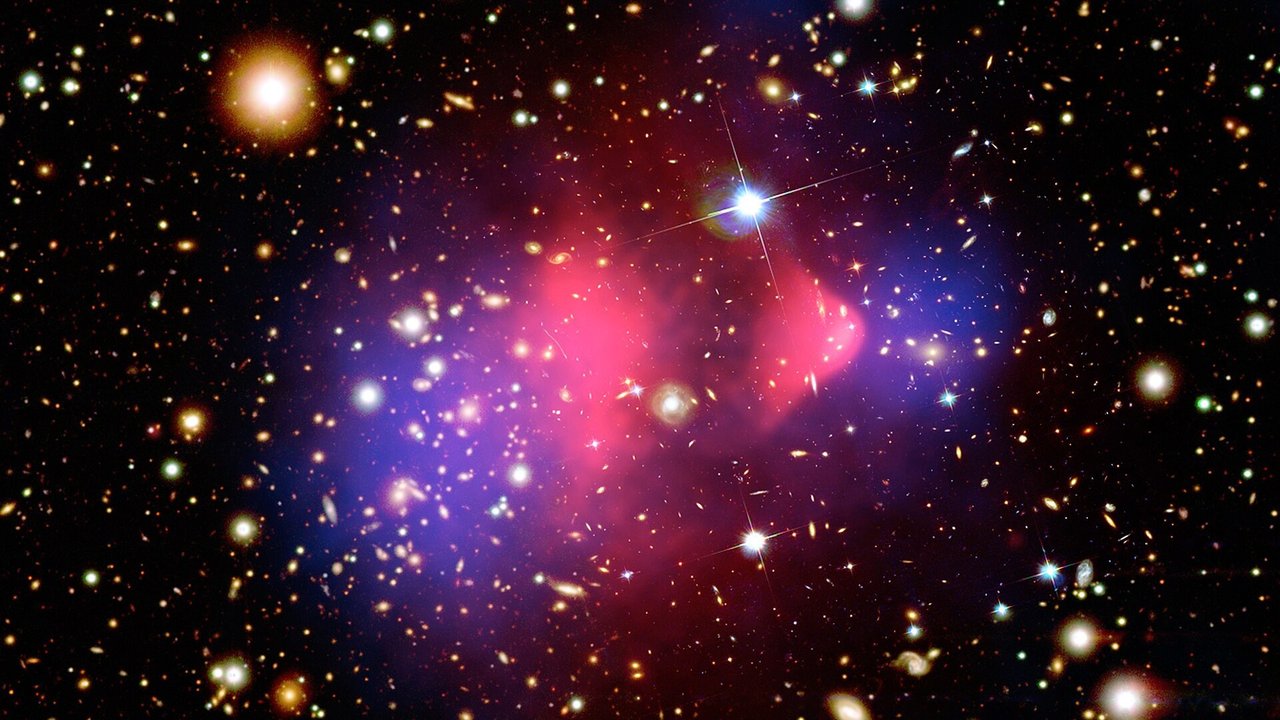
Everything we can see, every star and planet and person, is about five percent of the universe. The rest is dark: a quarter unseen matter, two-thirds a force pushing the cosmos apart. Six independent lines of evidence say both are real; after ninety years we still do not know what either one is. What the evidence proves, and where honesty stops.
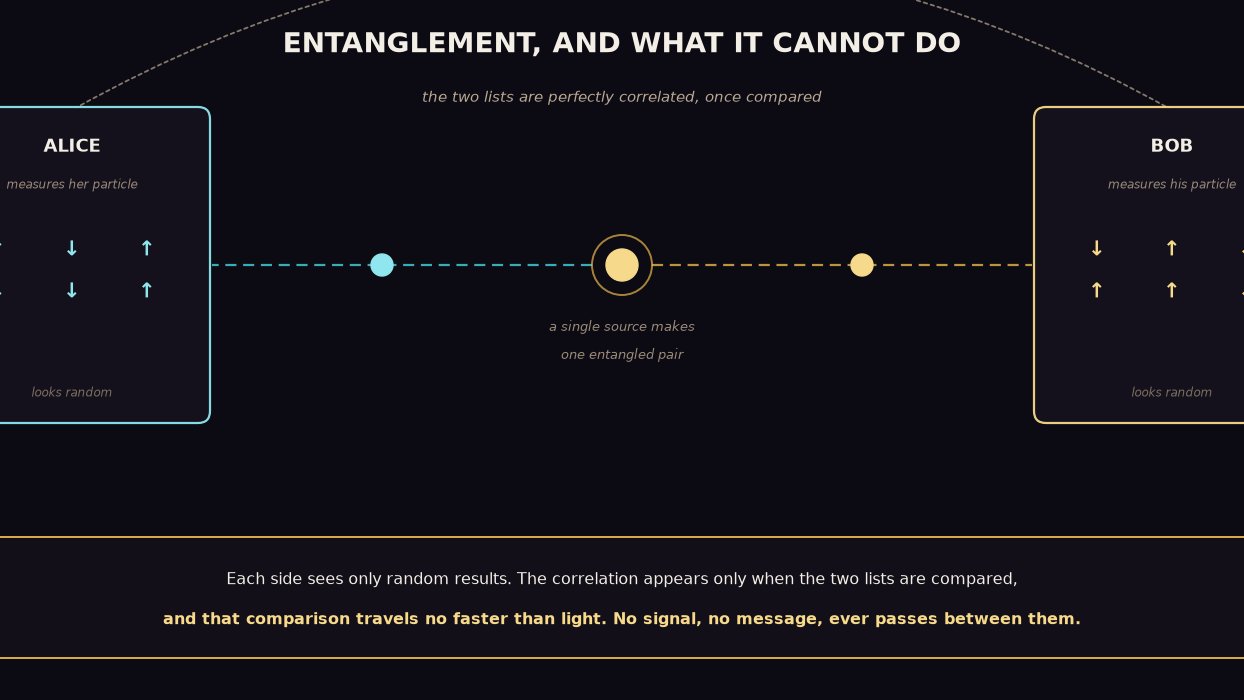
Quantum Entanglement: The Spooky Action That Sends No Signal
Einstein called it 'spooky action at a distance' and bet his reputation that it proved quantum theory incomplete. He lost the bet. Entanglement is real, confirmed by experiments that won the 2022 Nobel Prize, and yet the same mathematics forbids it, absolutely, from ever carrying a message faster than light. What it is, how we know, and what it cannot do.
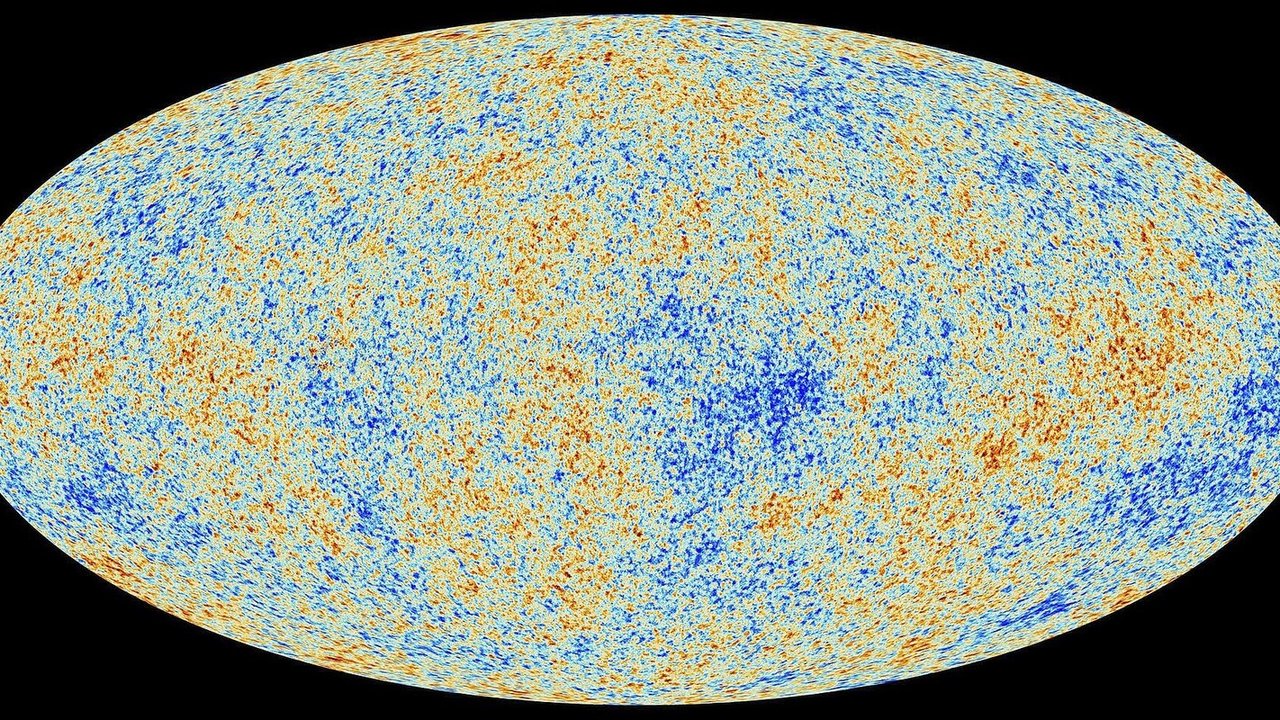
The Big Bang: The Day Without a Yesterday
The best-tested origin story we have, and badly misnamed: the Big Bang was not an explosion in space but the stretching of space itself, with no center. Three pillars of evidence, ninety-five percent of the universe still unidentified, and two measurements of its expansion that refuse to agree.
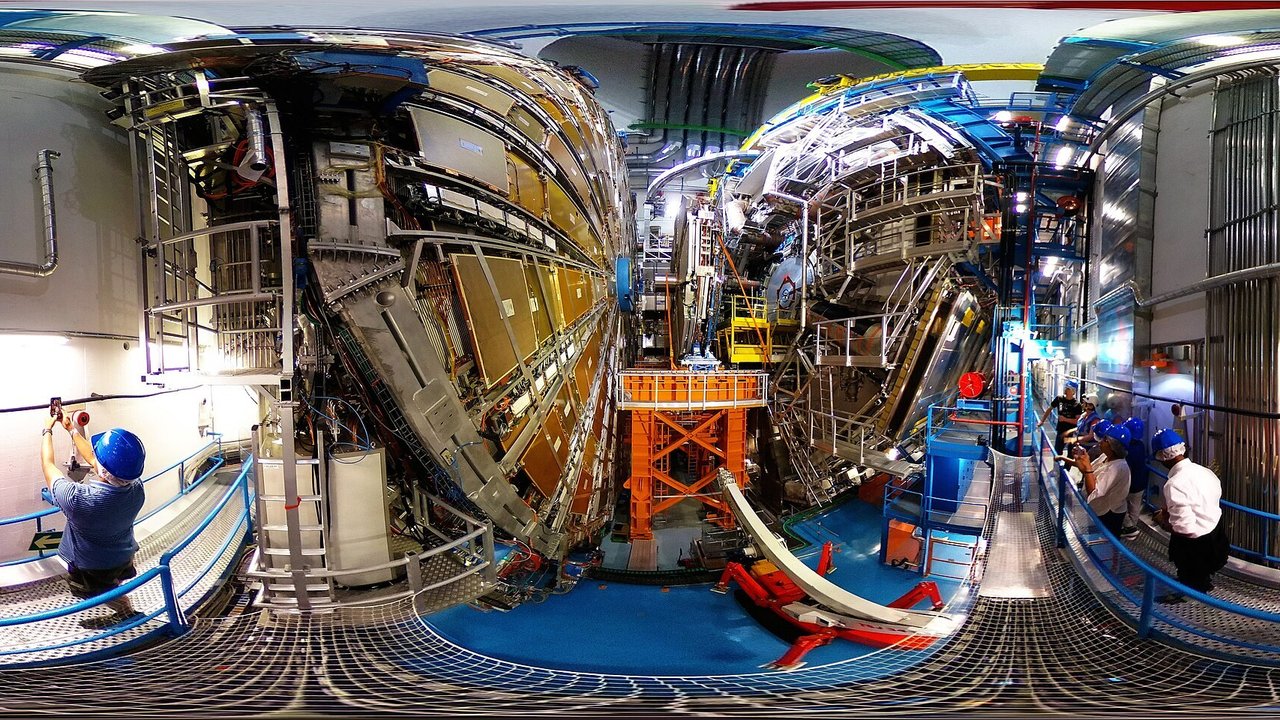
The Higgs Boson: The Field That Gives Particles Their Mass
On July 4, 2012, physicists at the world's largest machine found it, forty-eight years after it was predicted. The Higgs field gives the fundamental particles their mass. But it is also the source of one of science's most common misunderstandings, because it is not where most of your own weight comes from. What the Higgs is, how it was found, and what it does not do.