
The Great Flood: The Story Every Civilization Remembers
Put the flood stories side by side and the resemblance is the first thing anyone notices. Water is sent to end the world; one person is warned; something is built; animals and seed go aboard; the water rises and falls; high ground or a bird marks the end of it; the survivor is rewarded and the world starts again. That sequence turns up in Sumerian and Akkadian cuneiform, in Genesis, in the Quran, in Hindu scripture, in Greek, in Chinese, in Zoroastrian scripture, and in oral traditions across the Americas, the Pacific, Africa and Australia. Our primary research file for this article, C_3_01, catalogs those traditions one at a time; its companion, C_5_32, carries the comparative scholarship and the geology underneath them. This article carries the pattern at the tiers our files assign it, and it corrects two of their own numbers rather than repeating them. The texts themselves, their heroes, their vessels, their landing sites and their birds sit at Tier 1, as does the 120 to 130 meters of real post-glacial sea level rise underneath the whole question, and as do the twenty-one Aboriginal Australian traditions that appear to describe a coastline which drowned thousands of years ago. Alan Dundes' comparative catalog, the tight clustering of the three Near Eastern landing sites, the Black Sea breach proposal and the objections filed against it, and the argument over how long an oral tradition can hold a real event, sit at Tier 2. The five interpretive models our primary file lays out, and the serpent thread running through several traditions at once, sit at Tier 3. A single worldwide flood covering the planet roughly four thousand years ago sits at Tier 4, and is stated here as the no it is. Two numbers this article refuses to print as fact: the five hundred flood traditions claimed by our own primary file's summary, and any single figure for how much land the Black Sea event drowned.
A flood story is not a strange thing for a people to have. Rivers rise, seas surge, and anyone who has lived beside water has watched a piece of the world go under. What is strange is the shape the stories share. Across languages and continents with no demonstrated contact between them, the same sequence keeps appearing: a decision to destroy, a warning delivered to one person, a vessel or a refuge, a cargo of animals and seed, a rising and a falling of water, a landing on high ground, and a world that begins again. That pattern, and the three very different explanations offered for it, are this article's subject. Two corpus files were read in full for it. Where the text below says our primary file it means C_3_01, Global Flood Stories, and nothing else; where it says the companion file it means C_5_32, Flood Myths: Universal Deluge; where a fact came from independent checking during the research pass instead, it says so. And where our two files disagree with each other, which happens twice on numbers that matter, this article says so rather than quietly choosing the better-sounding one.
01The Evening the Question Opened
On December 3, 1872, George Smith of the British Museum announced to the Society of Biblical Archaeology that he had found an Assyrian flood narrative. The text sat on tablet K.3375, a seventh-century-BCE copy made for the library at Nineveh of a text already ancient when it was copied, and it is Tablet XI of the Epic of Gilgamesh. The parallels to the Genesis flood account were immediate and specific: a divine warning, an ark built to stated dimensions, birds released to find land. Our companion file records the result as an international sensation and states its consequence in one line, that the discovery demonstrated the Biblical account had Mesopotamian predecessors over a millennium older. Carry that last clause as the companion file's own wording rather than as arithmetic this article performed, because neither of our two files dates the composition of Genesis. What they date is the Mesopotamian side, precisely, and the two traditional dates they give for the biblical flood are datings of an event inside a chronology, not of a text. Note also where this fact comes from. The 1872 announcement appears in the companion file only; our primary file's body never mentions it, which is one of the reasons the second document was read in full.
A boundary belongs here, at the start, because the tablet that opened the question belongs to a different article. The Epic of Gilgamesh as literature, its manuscript tradition across four version families, its twelve tablets and the whole story of its recovery are the subject of a separate article in this same wing, built on corpus document A_1_08. Tablet XI appears below only as one of three Mesopotamian flood texts standing in a comparison, and the Atrahasis and Eridu Genesis tablets stand beside it for exactly the same reason. This article is about the pattern the tablet exposed, not about the poem that carries it. Two further boundaries are named here and kept throughout. The geology of ancient floods, including the Younger Dryas impact material, belongs to a separate wing, The Cataclysm Files, whose own documents our primary file cross-references by name; the geological sections below go exactly as deep as this article's verdict requires and stop. And the serpent figures that recur across several of these traditions get one paragraph as a pattern observation, because entity profiles belong to a different pool of documents entirely.
02Three Mesopotamian Floods, and They Are Not One Story Told Three Times
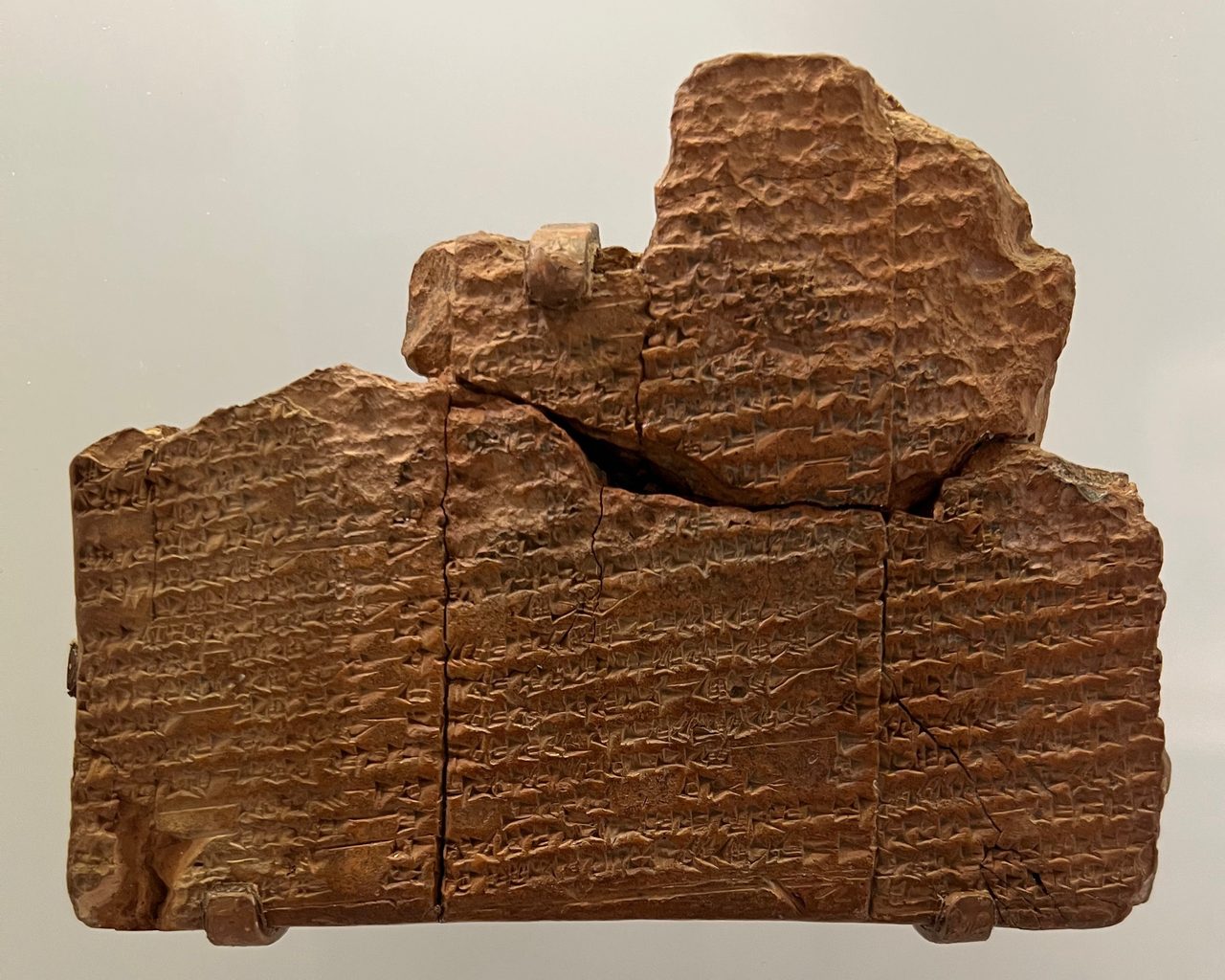
The three oldest Mesopotamian flood narratives share a common core, and our primary file sets them out separately rather than merging them. The Sumerian Eridu Genesis, surviving in copies from approximately 1600 BCE though the story is much older, names Ziusudra, life of long days, as its hero. He is warned by the god Enki speaking through a reed wall, the flood lasts seven days and seven nights, and Ziusudra settles in Dilmun afterward. The Akkadian Atrahasis Epic, from approximately 1700 BCE, names Atrahasis, extremely wise, and uses the same reed-wall device for Enki's warning, but it puts the flood at the end of a sequence: the gods try plague, then drought, then famine, and reach for water last. Its vessel is a bitumen-sealed circular boat, a coracle. The Babylonian Epic of Gilgamesh Tablet XI, whose core dates to approximately 2100 BCE with the standard version at approximately 1200 BCE, names Utnapishtim, he found life, gives him a cube-shaped seven-decked boat 120 cubits on each side, lands the boat on Mount Nimush, possibly modern Pir Omar Gudrun in Iraqi Kurdistan, and specifies three birds: a dove and a swallow that return, and a raven that does not. All three heroes are granted immortality afterward. Independent checking during the research pass confirmed the primary tablet identifiers behind those three texts, which the companion file carries more precisely than the primary one does: CBS 10673 at the University of Pennsylvania Museum for the Eridu Genesis, BM 78941 at the British Museum for Atrahasis, and K.3375 at the British Museum for Gilgamesh Tablet XI. Three different texts, three different physical artifacts, three different naming traditions for what is recognizably the same event.
| The Text | The Hero, and What the Name Means | Who Warns, and How | The Vessel | How It Ends | How This Is Carried Here |
|---|---|---|---|---|---|
| The Eridu Genesis, Sumerian. Copies from approximately 1600 BCE, the story much older. Tablet CBS 10673, University of Pennsylvania Museum | Ziusudra, life of long days | Enki, through a reed wall | Our files describe the warning and the flood but not the boat | Seven days and seven nights of flood; Ziusudra settles in Dilmun and is granted immortality | Tier 1, our primary file, with the tablet identifier from the companion file |
| The Atrahasis Epic, Akkadian, approximately 1700 BCE. Tablet BM 78941, British Museum | Atrahasis, extremely wise | Enki, through the same reed-wall device | A bitumen-sealed circular boat, a coracle | The flood is the fourth attempt after plague, drought and famine; the hero survives and is granted immortality | Tier 1, our primary file, with the tablet identifier from the companion file. The definitive critical edition of this text is the subject of the next block |
| The Epic of Gilgamesh, Tablet XI, Babylonian. Core approximately 2100 BCE, standard version approximately 1200 BCE. Tablet K.3375, British Museum | Utnapishtim, he found life | Not stated for this version in our two files | A cube-shaped boat with seven decks, 120 cubits on each side | Lands on Mount Nimush, possibly modern Pir Omar Gudrun in Iraqi Kurdistan. A dove and a swallow return, a raven does not; the hero is granted immortality | Tier 1, our primary file. The poem itself belongs to a separate article in this wing; it appears here only as one comparative data point of three |
Wilfred Lambert and Alan Millard published the definitive critical edition of the Atrahasis Epic, Atra-Hasis: The Babylonian Story of the Flood, in 1969, and it remains the standard scholarly edition of that text more than half a century later. This framing, that the Lambert and Millard edition is the critical edition rather than one translation among several, appears in our companion file and not in the primary one. It matters for a reason that has nothing to do with prestige. When an article compares flood narratives element by element, the comparison is only as good as the editions underneath it, and the Atrahasis column in the table above rests on a single scholarly reconstruction that has stood unreplaced since 1969.
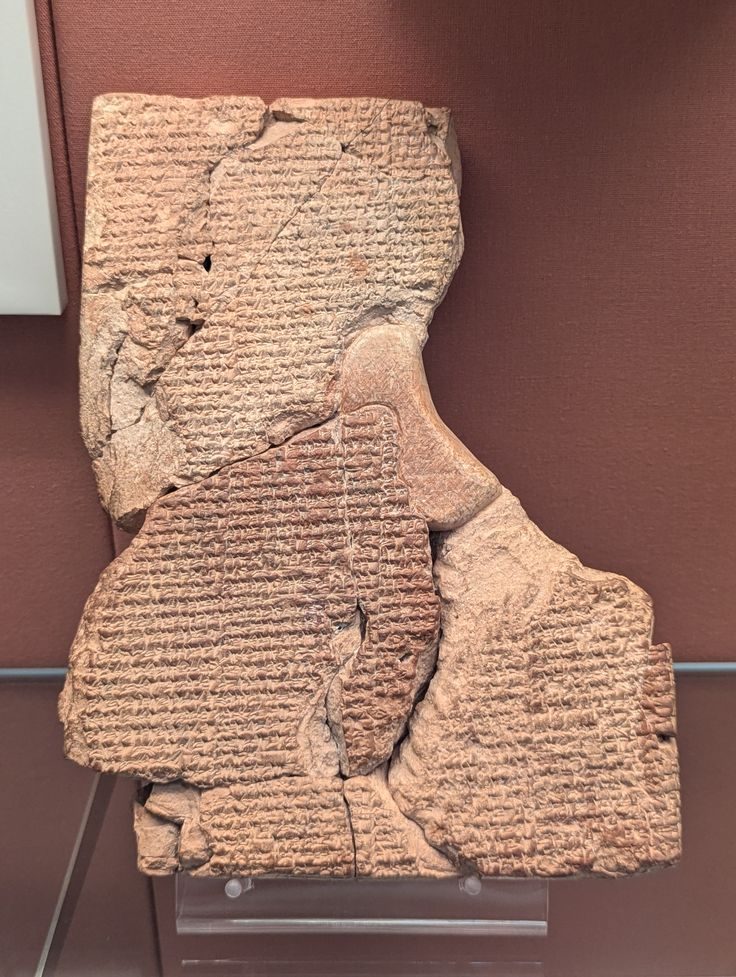
Three tablets, three museums, three names for the same event: this is what 'the Mesopotamian flood story' actually looks like once the comparison is done seriously rather than treated as one text.
03Noah, Nuh, and Three Mountains In One Region
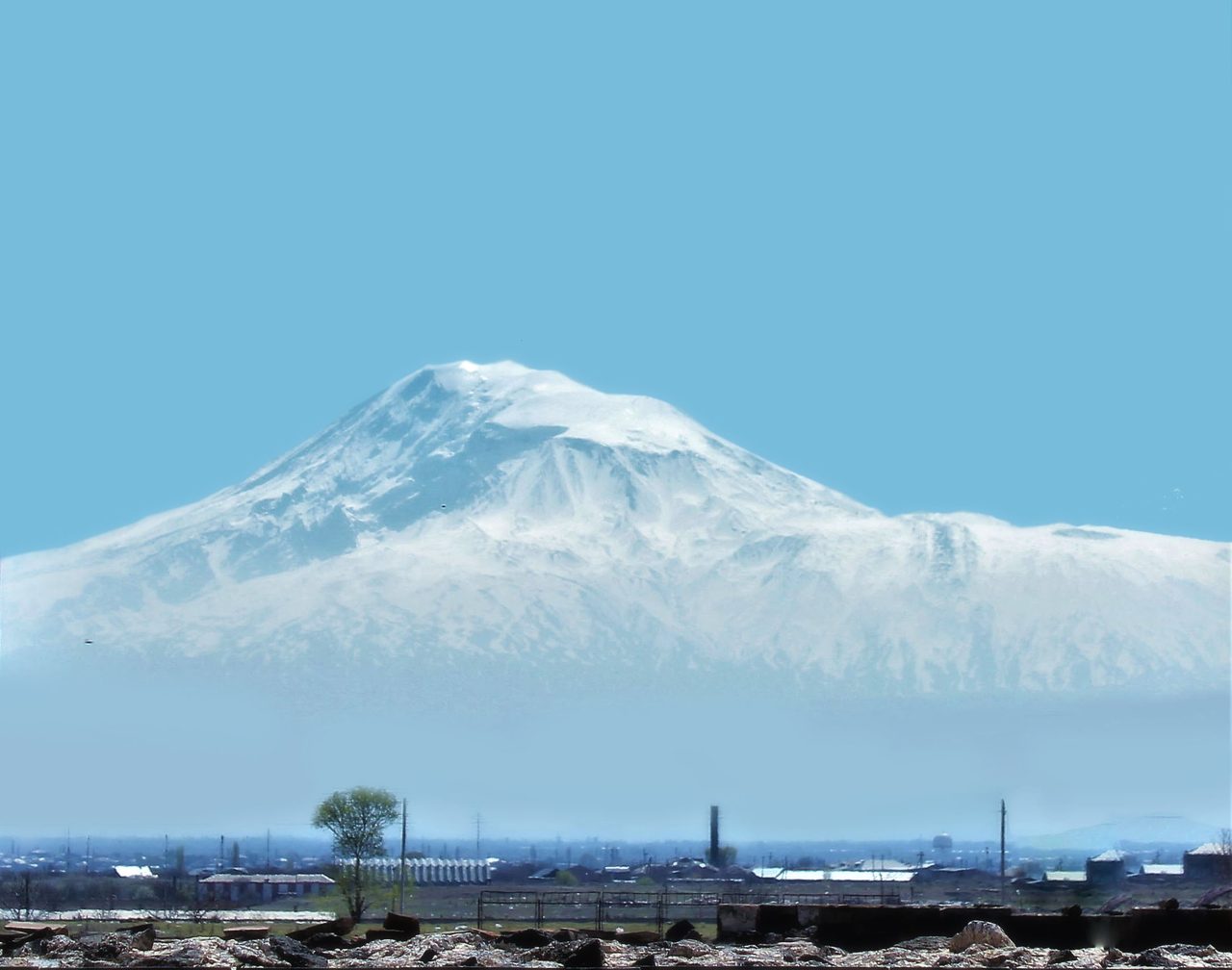
Genesis 6 to 9 names Noah, warned directly by God because the wickedness of man was great in the earth and the earth was filled with violence. The Ark is given as 300 by 50 by 30 cubits, roughly 450 by 75 by 45 feet, with three decks, pitched inside and out. Rain falls 40 days and nights, the waters prevail 150 days, and the total time aboard is about a year. The Ark lands in the mountains of Ararat, the Urartu region of eastern Turkey and Armenia. A raven goes out first, then a dove three times, the third time not returning, and the covenant sign afterward is the rainbow. Two traditional chronologies date the event: roughly 2348 BCE by Ussher, and roughly 3168 BCE by the Septuagint. Those are two datings of one narrative rather than evidence of two floods, and this article does not treat the gap between them as anything else. One further detail sits immediately before the flood decision in the text and is named here without being developed: the Nephilim passage at Genesis 6 verses 1 to 4, in which the sons of God take the daughters of men. It is part of the narrative's own sequence, so a comparison of flood texts has to acknowledge it is there. What those beings are said to be is entity territory, belonging to other corpus documents and a different pool, and no claim in this article rests on it.
The Quranic account names Nuh as one of the major prophets, with a dedicated surah of his own, Surah 71, plus material across nine others. Nuh's people reject his preaching for 950 years. Two departures from the Genesis version are worth stating precisely, because they are the sort of detail a comparison flattens if nobody is careful. First, Nuh's own son refuses to board and drowns, at Quran 11 verses 42 to 43, which turns the survivor's family from a given into a choice. Second, the landing site is Mount Judi, Cudi Dagi in southeastern Turkey, and the tradition is explicit that this is not Ararat. Two traditions set in the same broad region, sharing a hero's name and a narrative outline, name two different mountains. Whatever explains the resemblance has to explain the divergence as well.
The Biblical Ararat, the Islamic Mount Judi and the Babylonian Mount Nimush all lie within roughly 500 kilometers of each other, across modern Turkey, Iraq and Kurdistan. Our primary file marks this as a key finding and reads the clustering as strongly suggesting a common origin for these three specific traditions, or a single regional event underlying all three. Split that into its two halves, because they are not equally solid. The geography is checkable and consistent with each tradition's own stated landing site; that is the part that earns Tier 2. The move from clustering to common origin is our primary file's own interpretive conclusion rather than a separately sourced academic finding, and this article presents it as such. It is a good inference. Three traditions naming three mountains inside one region is a real fact that any explanation of the wider pattern will have to account for, and it is also, notably, an argument that only ever covers three of the traditions in this article.
04Manu, Deucalion, Yu, Yima
The Hindu tradition, in the Shatapatha Brahmana and the Matsya Purana, at approximately 800 to 300 BCE, names Manu, more fully Vaivasvata Manu, the seventh Manu of the current age. He is warned by Matsya, the fish avatar of Vishnu. The reason for the flood is cosmological rather than moral: the end of a yuga or kalpa cycle, a world reaching the end of its allotted term rather than a world being judged. The boat carries the Seven Sages, the seeds of all living things and the Vedas themselves, and it lands on a Himalayan peak. Our primary file adds a linguistic note, that Manu is the root of the word man in Indo-European languages, and a structural one, that the figure occupies the same sole-survivor-who-restarts-humanity role as Noah, Ziusudra and Deucalion. Separately, a Tamil tradition, Kumari Kandam, describes a submerged landmass south of India, which some researchers connect to the real post-glacial flooding of the Sunda Shelf. Keep the some researchers where our file puts it; that connection is a proposal about a real drowned shelf, not an established reading of the tradition.
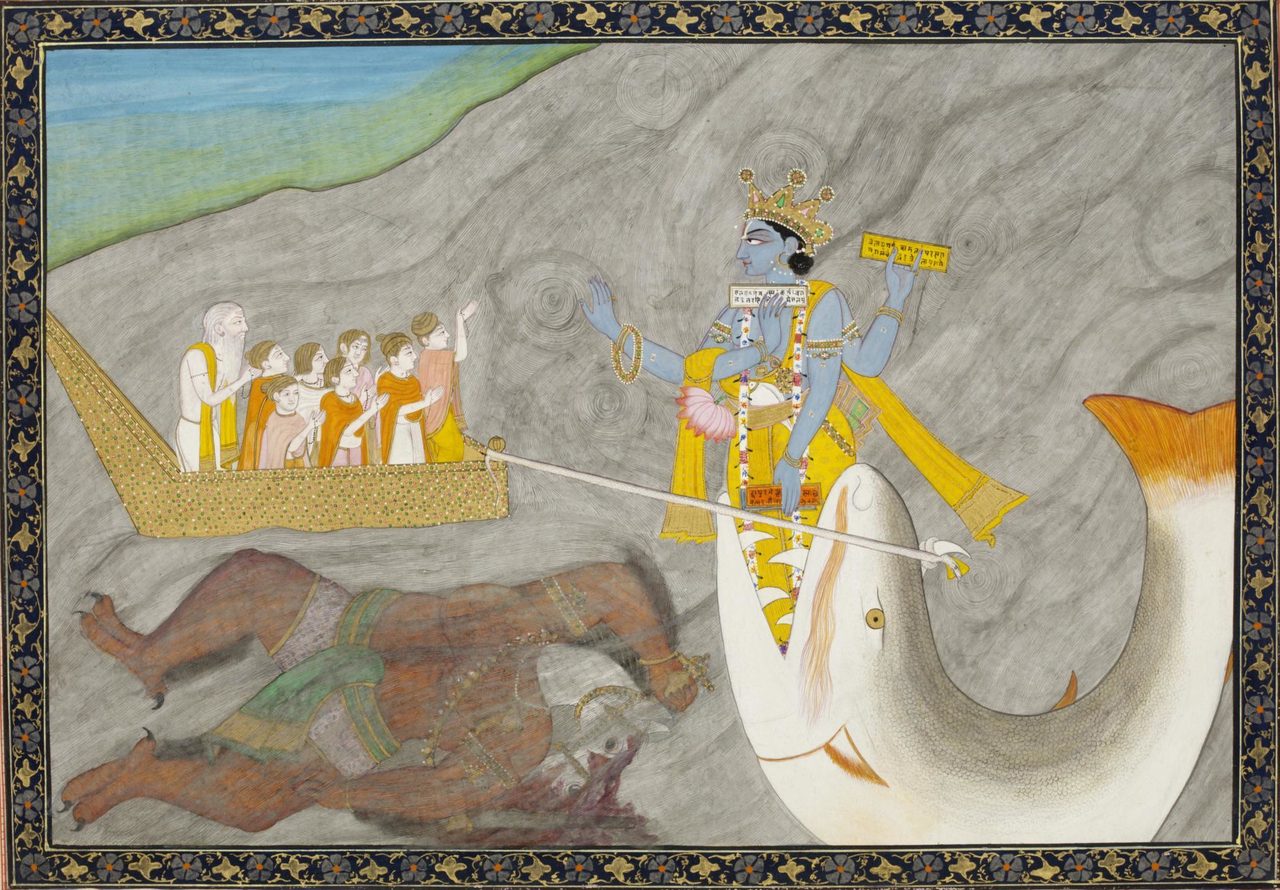
Same warning-and-vessel shape as the traditions above, and a completely different reason for the water.
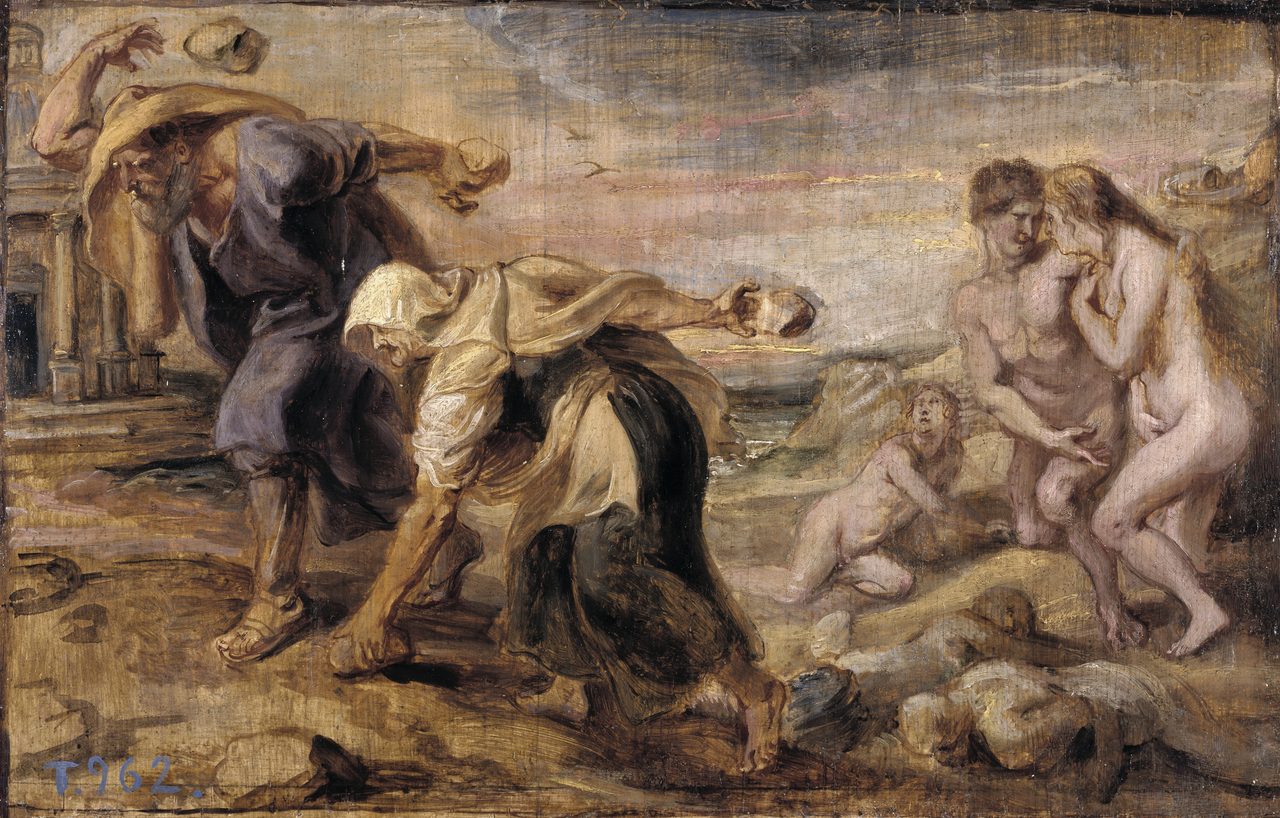
Two distinct Greek flood traditions exist, and the second one is the more interesting for this article's purposes. Deucalion, son of Prometheus, and his wife Pyrrha survive Zeus's destruction of a corrupt Bronze Age humanity inside a wooden chest, a larnax, landing on Mount Parnassus, with ancient sources also naming Othrys or Etna. They then repopulate the earth by throwing stones behind them, the bones of their mother Gaia, which become new humans. Greek chronographers dated this to roughly 1529 BCE by the Parian Marble. Separately, the Ogygian flood, under the legendary king Ogyges of Boeotia or Attica, is described by the Roman scholar Varro as the older of the two Greek deluges, and dated by some ancient chronographers to roughly 1796 BCE. Some ancient sources treated the two as separate events centuries apart. That is worth holding on to, because it is a documented ancient case of a culture reporting more than one great flood and keeping them distinct, which is precisely the behavior the multiple-events-compressed model in section 10 proposes for everyone else.
The Chinese tradition is structurally distinctive: it is the one major tradition in this article organized around controlling the flood rather than surviving it. Nuwa, a goddess with a human head and a serpent body, repairs a sky broken when the water god Gonggong rams the pillar of heaven, Mount Buzhou; she smelts five-colored stones and props up the sky's corners with a giant turtle's legs, and she is credited as humanity's creator besides. Yu the Great then works for 13 years, after his father Gun's failed 9-year attempt at damming, and channels and dredges the floodwaters away instead of holding them back, founding the Xia Dynasty as a direct result. The traditional date for that founding is approximately 2070 BCE, and it is not yet archaeologically confirmed. Then comes the single strongest correlation in this whole article between a flood tradition and a dated physical event. Independent checking during the research pass verified the citation directly: Wu and colleagues, publishing in Science in 2016, identified a landslide-dam outburst flood at Jishi Gorge on the Yellow River at 1920 BCE, releasing 12 to 17 cubic kilometers of water, the largest known freshwater flood of the past 10,000 years, at a date reasonably close to the traditional Xia founding date. That is a real, peer-reviewed, independently dated flood standing near the tradition that remembers one. It is also, so far, one case out of everything catalogued below.
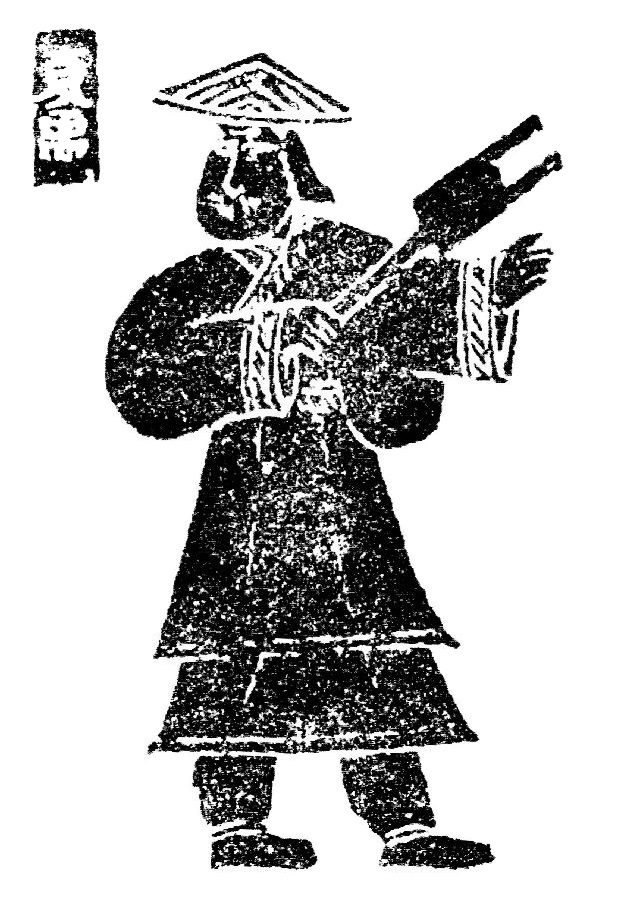
This is the tradition with a dated flood standing closest to it: the Jishi Gorge outburst flood of 1920 BCE, near the traditional founding date of the dynasty Yu's work is credited with founding.
The Zoroastrian tradition has Ahura Mazda warn King Yima, also called Jamshid, of a coming catastrophe framed as a great winter rather than a flood proper. Yima builds a vara, an enclosure, to preserve the best humans, animals and seeds until the world can be renewed. Structurally it is the same story: a divinely warned leader builds a protective vessel to carry life through the end of a world, even though the end in question is cold rather than water, which makes the tradition a useful test of how much of the pattern is actually about flooding. One honesty note belongs with this block rather than in a footnote. Our primary file tags most of its tradition sections with an explicit reliability tier directly under the heading, and this section is one of five that carry no tag at all. The Tier 1 above is inferred from the identically formatted, explicitly Tier 1 sections immediately before and after it, not read off the document. That inference is reasonable and it is still an inference, so it is stated where the claim is made instead of being smoothed over.
| The Tradition | The Reason Given | How This Is Carried Here |
|---|---|---|
| Mesopotamian, in Atrahasis | Not framed as a moral judgment. The gods try plague, then drought, then famine, and reach for the flood last | Tier 1, our primary file |
| Biblical, Genesis 6 to 9 | The wickedness of man was great in the earth, and the earth was filled with violence | Tier 1, our primary file |
| Quranic, Surah 71 and nine other surahs | Nuh's people reject his preaching for 950 years | Tier 1, our primary file |
| Hindu, Shatapatha Brahmana and Matsya Purana | Cosmological rather than moral: the end of a yuga or kalpa cycle | Tier 1, our primary file. This is the clearest counter-example to the idea that the flood is universally a punishment |
| Greek, Deucalion | Zeus destroys a corrupt Bronze Age humanity | Tier 1, our primary file |
| Chinese, Nuwa and Yu the Great | Not a punishment at all: a sky broken when Gonggong rams the pillar of heaven, and then water to be engineered away | Tier 1, our primary file. The one major tradition here organized around controlling the water rather than escaping it |
| Zoroastrian, Yima's Vara | A coming catastrophe described as a great winter rather than a flood | Tier 1 by inference rather than by tag: our primary file leaves this section untagged, and the tier comes from the sections around it |
05The Catalog Nobody Finishes
Our primary file catalogs dozens of named indigenous flood traditions across every inhabited continent, and the point of the list is the spread rather than any single entry. In North America, Ojibwe and Cree earth-diver traditions have Waynaboozhoo, also Nanabozho, and Wisakedjak survive on a log or a raft while animals dive for mud until the muskrat succeeds; Hopi and Navajo traditions describe prior worlds destroyed and humanity emerging into a new one through a hollow reed; the Mandan have Lone Man build a great canoe. In Mesoamerica the Maya Popol Vuh has the wooden first humans destroyed by flood, the survivors becoming monkeys, and Q'uq'umatz making a new humanity from maize; the Aztec and Nahua Fourth Sun ends in a 52-year flood, with Nene and Tata surviving in a hollow log and Quetzalcoatl creating the Fifth Sun's humanity. In South America, Viracocha floods the world to destroy giants and makes new humans from clay, while the Mapuche describe two serpents, Cai-Cai Vilu raising the water and Tren-Tren Vilu raising the land, shaping the landscape through their conflict. Across the Pacific, Nu'u's vessel lands on Mauna Kea and Paikea rides a whale to safety. In Africa, Obatala floods and Oduduwa restores order in the Yoruba tradition, and the Masai Tumbainot, a righteous man warned by God, saves his family and animals in a vessel. Two honest qualifications ride with this block. Our primary file presents this regional survey as its own compilation rather than sourcing this specific grouping to one named academic catalog, and several of these regional sections carry no reliability tag of their own, so the Tier 2 above is this article's read of a real but self-compiled list rather than a tier lifted from the document.
Patrick Nunn and Nicholas Reid documented 21 Aboriginal oral traditions describing coastline changes consistent with post-glacial sea level rise roughly 7,000 to 10,000 years ago, which would make them among the oldest verifiable oral histories in the world. Independent checking during the research pass confirmed the citation and resolved a small bibliographic confusion in the process: the paper is Aboriginal Memories of Inundation of the Australian Coast Dating from More than 7000 Years Ago, in Australian Geographer, volume 47, issue 1, pages 11 to 47, published online in September 2015 with a print issue dated 2016, which is why different sources cite it as both. Independent secondary sources confirm the paper presents accounts from 21 distinct coastal locations around the Australian coastline. This is the single most load-bearing entry in the whole comparative argument, and it is worth saying why. Australia is the case where diffusion from Mesopotamia has no plausible route, so if these traditions really do encode a real inundation, then at least one flood tradition on Earth arose independently from direct experience. Our primary file separately notes that the Rainbow Serpent flood tradition is directly serpent-associated, the serpent being the flood itself in that telling; that stays a named data point here rather than becoming a subject, for the reason given in the paragraph below.
Here is that paragraph, and it is deliberately the only one. Our primary file records a cross-cultural pattern in which serpent or dragon figures both cause and resolve floods: Enki, the serpent-associated Sumerian wisdom deity who saves humanity from the flood; Shesha Naga, the cosmic serpent holding the universe steady through dissolution; Nuwa, serpent-bodied, who repairs the sky and ends the water; the Mapuche pair Cai-Cai Vilu and Tren-Tren Vilu, one raising the sea and one raising the land; the Aboriginal Rainbow Serpent, identified with the flood outright; and the Feathered Serpent, Q'uq'umatz in the Maya tradition and Quetzalcoatl in the Aztec, who makes the humanity that follows. Our file carries this at Tier 3, as an interpretive pattern rather than an established finding, and cross-references its own dedicated document, C_2_02, for the full analysis. It is recorded here at that tier and left there. The reason is a scoping rule this wing observes deliberately: the subject of this article is a class of narratives and the arguments about where they came from, not a profile of the beings inside them, and being-level material belongs to a different pool of documents. A pattern worth noticing is not the same thing as a pattern worth building an article on.
06The Number This Article Will Not Print
Alan Dundes catalogued flood narratives from over 200 cultures in his 1988 edited volume The Flood Myth, and found recurring structural elements across them: a divine or cosmic warning, a moral cause, a single righteous family saved, animals preserved, a mountain landing point, and covenant or renewal. Crucially, he found those elements present in traditions with no demonstrated Mesopotamian contact, including Aboriginal Australian, several Native American traditions among them Hopi, Ojibwe and Caddo, and Andean material. That is the strongest single piece of evidence in this article that the resemblance is real rather than an artifact of how the stories get retold in English. It is also where a headline number has to be corrected rather than repeated. Our own primary file's summary states that over 500 independent flood traditions exist worldwide. Independent checking during the research pass traced that figure to popularized, non-peer-reviewed tallies rather than to any scholarly count, while the mainstream literature, consistent with the size of Dundes' own survey, clusters in the range of roughly 200 to 300. This article therefore says at least two hundred, by some counts more, and does not put the larger number in a reader's memory as though a discipline had ever certified it.
It is worth being explicit about why that correction matters more than a rounding argument usually would, because the number is doing rhetorical work in every popular version of this subject. A count in the hundreds and a count in the many hundreds imply different things about how thoroughly a story has saturated the human record, and the larger the count, the more irresistible the leap to a single global cause. Our own file's summary reached for the bigger figure. The catalog underneath it, tradition by tradition, supports the smaller one. When a document's headline statistic outruns its own contents, the contents are the evidence, and this article follows the contents. The same discipline applies to the article's title. The story every civilization remembers is a good headline and an overstatement, and the honest version is narrower and no less remarkable: a destruction-and-renewal-by-water narrative is attested in at least two hundred cultures, on every inhabited continent, including places that had no contact with the oldest written versions of it.
07The Water Really Did Rise
Global sea levels rose approximately 120 to 130 meters between the Last Glacial Maximum, roughly 20,000 years ago, and roughly 6,000 years ago. That is not a hypothesis; it is a measured process, and it affected every coastal population on Earth. The most dramatic single episode within it was Meltwater Pulse 1A, roughly 14,600 years ago, a rise of about 20 meters in about 500 years, which is catastrophically fast on the timescale of a human life or a village. Both of our files carry this consistently, and independent checking during the research pass confirmed the two underlying citations: Lambeck and colleagues in PNAS, volume 111, issue 43, pages 15296 to 15303, in 2014, for the sea-level curve, and Fairbanks in Nature, volume 342, pages 637 to 642, in 1989, for the coral-reef evidence behind Meltwater Pulse 1A's rate. Whatever else is arguable in this article, the world these traditions describe, one where the water came and the old coastline did not come back, is a world that physically existed.
Mainstream geology finds no physical evidence for a single flood covering the entire planet simultaneously. The problem is not a shortage of enthusiasm for looking; it is arithmetic and stratigraphy. The water volume required, roughly 4.5 billion cubic kilometers beyond the present oceans, has no known source and no known sink, and no global flood layer exists in the stratigraphic record. Both of our files carry this, and the companion file states it in its strongest form, which the next block reproduces without softening. Note what is and is not being denied. Real regional floods of enormous scale are not in question anywhere in this article; one of them is dated to 1920 BCE in section 04. What fails is the specific proposition that the whole planet went under at once.
No. Our companion file tags the literal Young Earth creationist reading, a worldwide flood covering the entire planet roughly 4,000 years ago, as dubious and debunked, and states the reason at every level it can be checked: the reading is contradicted by geological, biological and genetic evidence alike. This article carries that refusal at full strength rather than as a polite hedge, and it is the only Tier 4 claim in the article. Be precise about the target, though, because imprecision here is how a refusal turns into an insult. What is refused is a specific empirical proposition about the recent physical history of the planet. Nothing in this refusal touches the texts themselves, which say what they say and are Tier 1 throughout the sections above, and nothing in it touches the question of what those texts meant to the people who wrote and kept them, which is a different question that no stratigraphic column can answer.
08The Black Sea, and the Objections Filed Against It
William Ryan and Walter Pitman proposed, in a 1997 Marine Geology paper and their 1998 book Noah's Flood, that the Mediterranean broke through the Bosphorus around 5600 BCE and catastrophically flooded the then-freshwater Black Sea basin, displacing farming communities and possibly seeding the Near Eastern flood-tradition cluster. The evidence offered is real and physical: sonar shows a submerged ancient shoreline roughly 155 meters below the modern surface, and Robert Ballard and colleagues reported in 2000 finding well-preserved wooden structures and freshwater mollusk shells on the deep sea floor, consistent with rapid inundation. Independent checking during the research pass confirmed both citations, and also confirmed that the 1997 paper is missing from both of our files' bibliographies even though our primary file's own timeline cites it by year. Now the area figure, which is a different measurement entirely from the shoreline depth above, and the one number this article declines to print. Our primary file says the event flooded roughly 73,000 square kilometers of dry land; our companion file says roughly 155,000 square kilometers; and independent checking found secondary sources most commonly citing a third approximate figure, over 100,000 square kilometers. Three figures, two of them inside our own two documents, and no way to choose between them from the material in front of us. So this article states the disagreement and prints no single area as fact, which is the honest option and also the more informative one: a number this unsettled in the popular literature is itself a finding about how the hypothesis has been reported.
The Black Sea catastrophic-flood hypothesis has real, named academic counter-arguments rather than generic skepticism, and our companion file carries them where the primary file does not. Ali Aksu and colleagues argued in 2002, in GSA Today, that the reconnection was a persistent, gradual outflow rather than a single catastrophic inflow, and that Black Sea levels were already rising before any Bosphorus breach; the paper's own title names Noah's Flood and says the evidence contradicts it. Liviu Giosan, Florin Filip and Stefan Constantinescu found evidence in 2009, in Quaternary Science Reviews, pointing to a less dramatic flooding timeline than Ryan and Pitman's original proposal. Independent checking during the research pass confirmed both identifiers and had to locate the 2002 one from scratch, since neither of our files carried it. The verdict this article takes from that is deliberately unsatisfying: the hypothesis is genuinely contested among specialists, and it is not settled in either direction. It has not been shown that a catastrophic breach happened, and it has not been shown that one did not.
The Younger Dryas Impact Hypothesis, from Firestone and colleagues in 2007, proposes that a comet or asteroid impact or airburst on the North American ice sheet roughly 12,800 to 12,900 years ago destabilized glacial dams, including Lake Agassiz, and released catastrophic freshwater floods into the oceans. The cited evidence is a platinum anomaly, microspherules, nanodiamonds and meltglass at the Younger Dryas boundary layer at roughly 50 Clovis-age sites, and it is actively debated among geologists on its own terms. Independent checking during the research pass located and confirmed the citation, which our primary file gives without one. Graham Hancock and others argue that this event is preserved in global flood myths, and both of our files are explicit that this particular linkage remains undemonstrated in peer-reviewed literature, which is a separate matter from the impact evidence itself. That is as far as this article takes it, on purpose. Flood geology and the Younger Dryas story belong to a different wing, The Cataclysm Files, whose own documents our primary file cross-references by name in its header, and the geological deep dive is theirs to run. What this article needs from the material is only this: a real, published, contested proposal exists that a specific catastrophe near the end of the last ice age released enormous floods, and no peer-reviewed work has tied it to the traditions catalogued above.
09How Long Can a Story Hold?
Patrick Nunn argued in 2018, in The Edge of Memory, that oral traditions can preserve accurate geological information for up to roughly 10,000 years, building on the same Australian coastal-inundation accounts discussed in section 05. Skeptics counter that this exceeds plausible transmission fidelity for a purely oral, unwritten chain across that many generations. Both positions are carried here at strength, because the argument is live and this article cannot close it. Notice how much rides on it. If oral tradition can hold a real coastline for hundreds of generations, then the flood traditions of coastal peoples are candidate evidence about the past, and the whole comparative catalog becomes a data set about post-glacial history. If it cannot, then the resemblance among the traditions needs an explanation built out of text, contact and retelling rather than memory. The same 21 Australian traditions are the best evidence for one answer and the hardest test case for the other, which is exactly why they cannot be quietly assigned to whichever column an argument prefers.
Alan Dundes, whose catalog supplies the strongest structural evidence in this article, did not offer a single explanation for it. He favored diffusion for the Near Eastern and Mediterranean traditions specifically, while explicitly acknowledging independent origin as the more plausible account for geographically remote cultures with no plausible contact route. The comparative-mythology source most quoted in support of a universal flood pattern therefore declined the one-size-fits-all answer that gets attributed to the pattern. Beside that sits a sharper methodological objection, from John Greenway, which our companion file names where our primary file offers only generic caution about selection bias: some universal flood myths were introduced or reshaped by Christian missionaries during the colonial period, contaminating the very corpus of collected oral traditions that later comparative researchers draw on. That objection is specific, checkable and uncomfortable, because it cuts at the catalog itself rather than at any one entry, and it applies hardest to exactly the remote traditions that the independent-invention argument needs most. It is named here rather than paraphrased into something softer.
10Diffusion, Invention, or an Event
Our primary file lays out five explicit interpretive models for the cross-cultural flood pattern, states that they are not mutually exclusive, and declines to pick one. Cultural diffusion: the story originates in Mesopotamia and spreads through trade and migration, each culture adapting it to local geography. Independent post-glacial memory: sea levels rose 120 to 130 meters and every coastal civilization experienced catastrophic flooding on its own, with the geologically corroborated Aboriginal Australian traditions requiring no Near Eastern contact at all. A specific catastrophic event: a comet impact, a volcanic eruption or a glacial dam burst producing a global or near-global flood. Multiple events compressed: various floods at different times and places, remembered separately and folded into one great flood over generations. The Greek material in section 04 bears on this model without confirming it, and the distinction is worth keeping straight: ancient sources reported Ogyges' flood and Deucalion's as two separate events centuries apart and kept them distinct rather than folding them into one, which demonstrates the model's premise, that a culture can hold more than one real flood memory at a time, rather than the compression itself. And a theological or moral framework: the near-universal framing of the flood as cleansing for wickedness may reflect a psychological and narrative need rather than a historical memory. These sit at Tier 3 because they are interpretive frameworks rather than findings, and this article does not promote any of them by writing more confidently about it than the file does.
| The Model | What It Says | What Supports It | What It Has To Answer For |
|---|---|---|---|
| Cultural Diffusion | The story starts in Mesopotamia and spreads by trade and migration, adapting to local geography | The Mesopotamian versions are the oldest written ones, and the Biblical, Islamic and Babylonian landing sites cluster within roughly 500 kilometers of each other | Traditions in places with no plausible contact route, above all the Australian material this article carries at Tier 1 |
| Independent Post-Glacial Memory | Sea levels rose 120 to 130 meters and every coastal population lived through catastrophic flooding on its own | The sea-level rise is Tier 1 physics, and the Aboriginal Australian coastal traditions need no Near Eastern contact whatsoever | Why the structural elements recur so specifically, since Dundes' catalog finds the same sequence in traditions that share the experience but not the story |
| A Specific Catastrophic Event | One comet impact, volcanic eruption or glacial dam burst produced a global or near-global flood | The Black Sea breach and the Younger Dryas impact proposals are real published hypotheses with real physical evidence behind them | Both are contested by named specialists in named journals, and no peer-reviewed work ties either to the traditions |
| Multiple Events Compressed | Different floods in different places are remembered and folded into one great flood over time | The Greek tradition reports two separate deluges centuries apart, Ogyges' and Deucalion's, which shows a culture holding more than one real flood memory at once, the premise this model needs rather than the compression itself | It is offered by our primary file as one of five non-exclusive frameworks rather than as a testable proposal, and this article does not upgrade it |
| A Theological Or Moral Framework | The moral framing answers a narrative and psychological need rather than recording a historical memory | The flood-as-cleansing framing recurs across traditions with no shared history | The Hindu and Chinese traditions do not frame it morally at all, as the table in section 04 shows from our own file's material |
Set those five beside the evidence and the useful question stops being which one is right. Diffusion has the best case exactly where the traditions are closest together, in the Near Eastern cluster with its three mountains inside one region and its oldest written versions. Independent invention has the best case exactly where diffusion has none, in Australia, where the traditions are geologically corroborated and the contact route does not exist. A real event or several real events sits underneath both, because the sea genuinely rose 120 to 130 meters and coastal people genuinely lost their world, whatever they later said about why. The models are not competitors for one prize; they are answers to different subsets of the same catalog, which is what our primary file means when it says they are not mutually exclusive. What would actually settle things is not another retelling but a test: a tradition whose specific geographic details can be checked against an independently dated inundation, in a place where nobody could have brought the story in. Section 05 describes twenty-one candidates for that test, and section 09 describes the argument about whether they can bear the weight.
Fast Facts
- The Announcement (Tier 1)
- On December 3, 1872 George Smith of the British Museum announced an Assyrian flood narrative to the Society of Biblical Archaeology. The text is tablet K.3375, a seventh-century-BCE Nineveh library copy of an older text, and it is Tablet XI of the Epic of Gilgamesh
- The Three Mesopotamian Texts (Tier 1)
- The Sumerian Eridu Genesis with Ziusudra, copies from approximately 1600 BCE, tablet CBS 10673 at the University of Pennsylvania Museum; the Akkadian Atrahasis Epic with Atrahasis, approximately 1700 BCE, tablet BM 78941 at the British Museum; and Gilgamesh Tablet XI with Utnapishtim, core approximately 2100 BCE and standard version approximately 1200 BCE, tablet K.3375 at the British Museum. All three heroes are granted immortality afterward
- The Reed Wall (Tier 1)
- In both the Eridu Genesis and Atrahasis the god Enki warns the hero through a reed wall rather than face to face. In Atrahasis the gods try plague, then drought, then famine before resorting to water
- The Vessels (Tier 1)
- Atrahasis: a bitumen-sealed circular boat, a coracle. Gilgamesh Tablet XI: a cube with seven decks, 120 cubits on each side. Genesis: 300 by 50 by 30 cubits, roughly 450 by 75 by 45 feet, three decks, pitched inside and out. Yima's refuge is not a boat at all but a vara, an enclosure
- The Birds (Tier 1)
- Tablet XI sends out a dove and a swallow that return and a raven that does not. Genesis sends a raven first, then a dove three times, the third time not returning
- Noah (Tier 1)
- Genesis 6 to 9. Rain for 40 days and nights, the waters prevailing 150 days, about a year aboard in total, a landing in the mountains of Ararat in the Urartu region of eastern Turkey and Armenia, and the rainbow as the covenant sign
- The Two Biblical Dates (Tier 1)
- Traditional chronologies place the flood at roughly 2348 BCE by Ussher or roughly 3168 BCE by the Septuagint. Two datings of one narrative, not two events
- Nuh (Tier 1)
- Surah 71 plus material across nine other surahs. Nuh's people reject his preaching for 950 years, his own son refuses to board and drowns at Quran 11 verses 42 to 43, and the landing is Mount Judi, Cudi Dagi in southeastern Turkey, explicitly not Ararat
- Manu (Tier 1)
- Shatapatha Brahmana and Matsya Purana, approximately 800 to 300 BCE. Manu is warned by Matsya, the fish avatar of Vishnu; the cause is the end of a yuga or kalpa cycle rather than sin; the boat carries the Seven Sages, the seeds of all living things and the Vedas; the landing is a Himalayan peak
- Deucalion and Ogyges (Tier 1)
- Deucalion and Pyrrha survive in a wooden chest, a larnax, land on Mount Parnassus and repopulate the earth by throwing stones. Greek chronographers dated it to roughly 1529 BCE by the Parian Marble. Varro describes an older Greek deluge under Ogyges, dated by some ancient chronographers to roughly 1796 BCE
- Nuwa and Yu (Tier 1)
- Nuwa repairs a sky broken when the water god Gonggong rams the pillar of heaven, Mount Buzhou. Yu the Great channels and dredges the water for 13 years, after his father Gun's failed 9-year attempt at damming, and founds the Xia Dynasty, traditionally approximately 2070 BCE and not yet archaeologically confirmed
- A Flood With a Date (Tier 1)
- Wu and colleagues, in Science in 2016, identified a landslide-dam outburst flood at Jishi Gorge on the Yellow River at 1920 BCE, releasing 12 to 17 cubic kilometers of water, the largest known freshwater flood of the past 10,000 years, at a date reasonably close to the traditional Xia founding date
- Yima (Tier 1, By Inference)
- Ahura Mazda warns King Yima, also called Jamshid, of a great winter rather than a flood, and Yima builds a vara to preserve the best humans, animals and seeds. Our primary file leaves this section untagged; the tier is inferred from the identically formatted sections around it
- Twenty-One Coastlines (Tier 1)
- Patrick Nunn and Nicholas Reid documented 21 Aboriginal oral traditions describing coastline change consistent with post-glacial sea level rise roughly 7,000 to 10,000 years ago, in Australian Geographer, volume 47, issue 1, pages 11 to 47, published online 2015 and in print 2016
- The Sea (Tier 1)
- Global sea levels rose approximately 120 to 130 meters between the Last Glacial Maximum, roughly 20,000 years ago, and roughly 6,000 years ago. Meltwater Pulse 1A, roughly 14,600 years ago, was a rise of about 20 meters in about 500 years
- No Global Layer (Tier 1)
- Mainstream geology finds no physical evidence for one flood covering the whole planet at once. The water required, roughly 4.5 billion cubic kilometers beyond the present oceans, has no known source or sink, and no global flood layer exists in the stratigraphic record
- The Indigenous Catalog (Tier 2)
- Dozens of named traditions across every inhabited continent, including Ojibwe and Cree earth-diver accounts, Hopi and Navajo emergence traditions, the Mandan Lone Man, the Maya Popol Vuh, the Aztec Fourth Sun, Inca Viracocha, the Mapuche serpents Cai-Cai Vilu and Tren-Tren Vilu, Hawaiian Nu'u's vessel on Mauna Kea, Maori Paikea, Yoruba Obatala and Oduduwa, and Masai Tumbainot
- The Count (Tier 2)
- Alan Dundes catalogued flood narratives from over 200 cultures in his 1988 volume The Flood Myth, and roughly 200 to 300 is where the scholarly range sits. Our own primary file's summary says over 500, a figure that is not settled in any scholarly literature and is not repeated here as fact
- Three Mountains (Tier 2)
- The Biblical Ararat, the Islamic Judi and the Babylonian Nimush all lie within roughly 500 kilometers of each other across modern Turkey, Iraq and Kurdistan. Our primary file reads that clustering as strongly suggesting a common origin for these three traditions; the geography is checkable, the inference is the file's own
- The Black Sea Proposal (Tier 2)
- William Ryan and Walter Pitman proposed in 1997 and 1998 that the Mediterranean broke through the Bosphorus around 5600 BCE and flooded the then-freshwater Black Sea basin. Sonar shows a submerged ancient shoreline roughly 155 meters below the modern surface, and Robert Ballard and colleagues reported well-preserved wooden structures and freshwater mollusk shells on the deep sea floor in 2000
- The Area Nobody Agrees On (Tier 2)
- Our primary file says the Black Sea event flooded roughly 73,000 square kilometers of dry land; our companion file says roughly 155,000; independent checking found secondary sources most often citing over 100,000. The figure is contested even in the popular literature, so this article prints none of the three as fact
- The Objections (Tier 2)
- Ali Aksu and colleagues argued in 2002 for a persistent, gradual outflow rather than one catastrophic inflow, with Black Sea levels already rising before any breach. Liviu Giosan, Florin Filip and Stefan Constantinescu found evidence in 2009 for a less dramatic timeline than the original proposal
- The Younger Dryas Proposal (Tier 2 For the Evidence)
- Firestone and colleagues proposed in 2007 that a comet or asteroid impact or airburst on the North American ice sheet roughly 12,800 to 12,900 years ago destabilized glacial dams including Lake Agassiz. The cited evidence is a platinum anomaly, microspherules, nanodiamonds and meltglass at roughly 50 Clovis-age sites, and it is actively debated. The further claim that the event is preserved in global flood myths remains undemonstrated in peer-reviewed literature
- Oral Memory (Tier 2)
- Patrick Nunn argued in 2018 that oral traditions can preserve accurate geological information for up to roughly 10,000 years. Skeptics counter that this exceeds plausible transmission fidelity for a purely oral chain across that many generations
- Diffusion, With Its Own Advocate's Limit (Tier 2)
- Alan Dundes favored diffusion for the Near Eastern and Mediterranean traditions while explicitly allowing independent origin for remote cultures with no plausible contact route. John Greenway's objection is sharper: some universal flood myths were introduced or reshaped by Christian missionaries during the colonial period, contaminating the corpus later researchers draw on
- The Five Models (Tier 3)
- Cultural diffusion; independent post-glacial memory; a specific catastrophic event; multiple events compressed into one; and a theological or moral framework answering a narrative need. Our primary file states they are not mutually exclusive and declines to choose
- The Serpent Thread (Tier 3)
- Serpent figures both cause and resolve floods across several unconnected traditions, a pattern our primary file records at Tier 3 and cross-references to its own dedicated document. Recorded in section 05 as a pattern and nothing more; the entity-level material belongs to corpus document C_2_02 and a different pool
- The Literal Global Flood (Tier 4)
- No. Our companion file tags the literal Young Earth creationist reading, a worldwide flood roughly 4,000 years ago, as dubious and debunked, contradicted by geological, biological and genetic evidence at every level
- The Files Themselves (Not a Tiered Claim)
- Two corpus files, read in full. Across their bibliographies four books carry an identifier that resolves to a review of the book rather than to the book, one wrong identifier is attached to two unrelated books inside a single file, one file gets the same identifier right in one place and wrong in another, and five tradition sections carry no reliability tag at all. None of the wrong identifiers were carried into this article
What Is Settled Here, and What Is Not
The Sumerian Eridu Genesis with Ziusudra, the Akkadian Atrahasis with its coracle and its sequence of plague, drought and famine, and Gilgamesh Tablet XI with Utnapishtim's cube-shaped boat, Mount Nimush and its three birds, are physical texts on identified tablets: CBS 10673, BM 78941 and K.3375. Genesis 6 to 9 gives Noah, a three-decked ark of 300 by 50 by 30 cubits, 40 days of rain, 150 days of prevailing water, Ararat and the rainbow. The Quran gives Nuh, 950 years of rejection, a son who refuses to board, and Mount Judi rather than Ararat. The Shatapatha Brahmana and Matsya Purana give Manu, Matsya and a boat carrying the Seven Sages and the Vedas. The Greek tradition gives Deucalion, Pyrrha and a larnax, and separately Ogyges. The Chinese tradition gives Nuwa's repaired sky and Yu the Great's 13 years of dredging. The Zoroastrian tradition gives Yima's vara and a great winter. None of that is in dispute at any point in this article, and it is the foundation everything else argues over.
How far the pattern reaches is a Tier 2 question and is taken up below, because the catalog underneath it is partly our own primary file's compilation. One piece of that far-flung material, set out in section 05, stands at Tier 1 on evidence of its own, and it is the most load-bearing entry in the whole comparison. Patrick Nunn and Nicholas Reid documented 21 Aboriginal oral traditions describing coastline changes consistent with post-glacial sea level rise roughly 7,000 to 10,000 years ago, drawn from 21 distinct coastal locations around the Australian coastline, which would make them among the oldest verifiable oral histories in the world. The paper is checkable: Australian Geographer, volume 47, issue 1, pages 11 to 47, published online in September 2015 with a print issue dated 2016. Be exact about what that Tier 1 covers. The documentation is verified and the traditions describe what they describe; whether an oral chain can actually carry a real coastline across seven thousand years is the open argument of section 09, and it is carried at Tier 2 there rather than closed here. Australia matters because it is the one place in this article where diffusion from Mesopotamia has no route at all.
Global sea levels rose approximately 120 to 130 meters between the Last Glacial Maximum, roughly 20,000 years ago, and roughly 6,000 years ago, with Meltwater Pulse 1A at roughly 14,600 years ago delivering about 20 meters of that in about 500 years. Every coastal population on Earth lived through some version of that, and the land they lost did not come back. Set beside it the one flood tradition in this article with an independently dated physical event standing near it: the Jishi Gorge outburst flood on the Yellow River at 1920 BCE, 12 to 17 cubic kilometers of water, published in Science in 2016 and identified there as the largest known freshwater flood of the past 10,000 years, close to the traditional founding date of the dynasty that Yu the Great's flood-control story explains. Real water, real dates, and in one case a real correspondence.
Destruction-and-renewal-by-water narratives are attested across the Americas, the Pacific, Africa and Australia, in the traditions named individually in section 05 and in Alan Dundes' comparative catalog of flood narratives from over two hundred cultures. Both of those sit at Tier 2 rather than Tier 1, for reasons this article states where it makes the claims: our primary file presents its regional survey as its own compilation rather than sourcing that grouping to one named academic catalog, and several of its regional sections carry no reliability tag at all, so the tier is this article's read rather than a tag lifted off the document. One correction rides inside this yes rather than being left out of it. Our own primary file's summary claims over five hundred independent flood traditions worldwide; that figure traces to popularized tallies rather than to any scholarly count, and the defensible statement is at least two hundred, by some counts more, on every inhabited continent. The pattern does not need the inflated number, and this article does not use it.
For the Mesopotamian, Biblical and Quranic traditions specifically, diffusion from a shared source carries the most weight. The oldest written versions are Mesopotamian; the three named landing sites, Ararat, Judi and Nimush, sit within roughly 500 kilometers of each other; and the 1872 reading of Tablet XI is what first demonstrated to the wider world that these accounts had older Mesopotamian predecessors. Alan Dundes himself favored diffusion for exactly this regional cluster. Two limits are kept on that. Our primary file's inference from the geographic clustering to a common origin is the file's own interpretive step rather than a separately sourced finding, and the clustering argument covers three traditions, not two hundred.
For traditions with no plausible contact route to Mesopotamia, independent origin does the work diffusion cannot, and Dundes, whose catalog is the strongest evidence for the pattern in the first place, said so himself. The Australian material is the load-bearing case: coastal traditions apparently encoding real inundation, in a place no Mesopotamian text reached. Against it stands John Greenway's specific and uncomfortable objection, that some universal flood myths were introduced or reshaped by Christian missionaries during the colonial period, which contaminates the collected corpus precisely where the remote cases live. This article carries both at strength and crowns neither. What can be said is that the most-cited comparative source here refused a single answer for the whole catalog, and the evidence in front of us does not support one either.
William Ryan and Walter Pitman's proposal that the Mediterranean broke through the Bosphorus around 5600 BCE rests on real physical evidence: a submerged shoreline roughly 155 meters below the modern surface, and Robert Ballard's reported wooden structures and freshwater mollusk shells on the deep sea floor. Named specialists dispute it in named journals: Ali Aksu and colleagues in 2002 for a gradual, persistent outflow with levels already rising before any breach, and Liviu Giosan and colleagues in 2009 for a less dramatic timeline. No verdict is issued here in either direction, and no flooded area is printed at all, because our own two files give two different figures and the secondary literature adds a third. When the headline number for an event is unsettled, the honest move is to say the number is unsettled.
Cultural diffusion, independent post-glacial memory, a specific catastrophic event, multiple events compressed into one, and a theological or moral framework: our primary file offers all five, states that they are not mutually exclusive, and declines to choose. This article follows it. The Younger Dryas impact proposal sits here too in one specific respect: the underlying impact evidence is debated among geologists on its own terms and belongs to a different wing, while the further claim that the event is preserved in global flood myths remains undemonstrated in peer-reviewed literature, and is carried here as a named proposal rather than a finding. So does the serpent thread, one paragraph in section 05, at the tier our file gives it. Speculative here means proposed and unresolved, not refuted, in every case.
No. The literal reading, one flood covering the entire planet roughly 4,000 years ago, is tagged by our companion file as dubious and debunked, contradicted by geological, biological and genetic evidence at every level, and mainstream geology finds no physical evidence for a simultaneous global flood at any date: the water required, roughly 4.5 billion cubic kilometers beyond the present oceans, has no known source or sink, and no global flood layer appears in the stratigraphic record. What both of our files do accept is the sentence in the pull quote above, and it is not a consolation prize. Post-glacial sea rise, regional catastrophic floods, and impact events still under debate could together have produced the experience of a global flood across most populated coastal regions, over millennia, with no single planet-covering event ever happening. The refusal is aimed at one empirical proposition about the planet's recent physical history, and at nothing else in this article.
So here is the honest shape of the two files. There are hundreds of flood traditions, not the five hundred our own summary claims, and they reach every inhabited continent. The oldest written ones are Mesopotamian and they are three different texts rather than one, on three identified tablets, agreeing on a reed wall and a warning and a landing and disagreeing on the boat, the birds and the mountain. The Near Eastern cluster looks like diffusion and its three landing sites sit within roughly 500 kilometers of each other. Australia looks like independent invention and no route exists for it to be anything else. Underneath all of it the sea really did rise 120 to 130 meters, and in one case, at Jishi Gorge in 1920 BCE, a dated flood stands beside the tradition that remembers one. There was no planet-covering flood four thousand years ago, and that no is stated plainly. What is genuinely open is narrower and harder than the popular version of this question, and it comes down to a single test that our files cannot yet run: whether a story can carry a real coastline across seven thousand years without a written word to hold it. Twenty-one Australian traditions look like the evidence that it can. If that holds, then some of what sits filed under myth is not a story about the world at all, but a report from it, and the work of separating the two has barely started.
Sources & further reading
Two corpus files were read in full for this article. The primary file is C_3_01, Global Flood Stories, whose own header rates it Tier 1 to 2, established with some scholarly debate, at High confidence, with a source confidence of 3 out of 5, a weighted score of 29, and 13 bibliography entries, which is the figure in the source count above rather than a count of the links below. The companion file is C_5_32, Flood Myths: Universal Deluge, whose header rates it primary Tier 1, with 16 bibliography entries, a weighted score of 32 and a source confidence of 4 out of 5. Several entries appear in both bibliographies, so the two counts are not additive, and the stat above reports the primary file's own 13 rather than a summed figure. Where the article above says our primary file it means C_3_01 and nothing else; where it says the companion file it means C_5_32. Four things in this article come from the companion file alone and are worth naming, because they are the reason it was read in full: George Smith's December 3, 1872 announcement, which does not appear in the primary file's body text at all; the framing of Lambert and Millard's 1969 Atra-Hasis as the definitive critical edition rather than one translation among several; the two named academic counter-arguments to the Black Sea hypothesis, from Aksu and colleagues and from Giosan and colleagues; and John Greenway's missionary-contamination objection, which is sharper and more specific than the generic methodological boilerplate the primary file carries at the same spot. The companion file is also the document that tags the literal worldwide-flood reading Tier 4, dubious and debunked, which is the refusal the verdict above carries. Beyond the two files, an independent verification pass was run during the research phase against the most load-bearing dated, numeric and bibliographic claims, and its results are marked where they appear above rather than blended in. That pass confirmed the primary tablet identifiers for the three Mesopotamian texts, CBS 10673, BM 78941 and K.3375; confirmed the Wu and colleagues 2016 Science paper on the Jishi Gorge outburst flood; confirmed the Nunn and Reid paper on 21 Aboriginal traditions and resolved why it is cited as both 2015 and 2016, namely online publication in September 2015 with a print issue dated 2016; confirmed the Lambeck and colleagues 2014 sea-level curve and the Fairbanks 1989 coral-reef record; confirmed the Ryan and colleagues 1997 Black Sea paper and the Ballard and colleagues 2000 follow-up; located and confirmed the Aksu and colleagues 2002 GSA Today paper, whose identifier was absent from both corpus files; and located and confirmed the Firestone and colleagues 2007 PNAS paper, for which the primary file gives no identifier at all. Two headline numbers were corrected rather than repeated, and both corrections are stated in the article body where the numbers would otherwise have appeared. First, the flood-tradition count. The primary file's own Quick Summary states that over 500 independent flood traditions exist worldwide, while the companion file's summary says flood myths appear in over 200 cultures across every inhabited continent. Those are materially different headline figures for what both documents treat as the same claim. Independent checking during the research pass found that the larger figure traces to popularized, non-peer-reviewed estimates, commonly associated with the public writing of the geologist Robert Schoch and similar apologetics-adjacent tallies, while the mainstream scholarly literature, consistent with the size of Alan Dundes' own survey in The Flood Myth, clusters in the range of roughly 200 to 300. This article uses at least two hundred, by some counts more, and states plainly that it is declining its own primary file's number. Second, the Black Sea flooded area. The primary file states that the event flooded roughly 73,000 square kilometers of dry land; the companion file states that it inundated roughly 155,000 square kilometers of former shoreline; and independent checking found secondary sources most commonly citing a third approximate figure, over 100,000 square kilometers. Since even the popular literature does not converge, this article prints no single area figure and reports the disagreement instead. A third defect in the primary file is disclosed rather than smoothed over, because this article's tier labels depend on it. In Parts I and II of C_3_01, most tradition sections carry an explicit reliability tier directly under the heading, but five carry none at all: the Zoroastrian, South American, Pacific and Oceanic, African, and Other Asian sections. The Tier 1 on the Zoroastrian Yima material and the Tier 2 on the wider indigenous catalog above are therefore inferred from the tagging pattern of the identically formatted sections around them rather than read off the document, and both blocks say so where the claim is made. Now the identifier housekeeping, which belongs here rather than being passed along quietly. Four books in the primary file's bibliography carry an identifier that resolves to a review of the book rather than to the book itself, and the pattern has two unusually bad instances. Lambert and Millard's Atra-Hasis, Clarendon Press, 1969, carries an identifier in the primary file that resolves to J.J. Finkelstein's 1969 Journal of Biblical Literature review of that exact book; the companion file attaches a different wrong identifier to the same book, one that resolves to C.J. Gadd's 1969 Antiquity review of it, a different reviewer in a different journal the same year; and no correct identifier for the book itself was located, which is unsurprising for a 1969 monograph published before such identifiers existed. Worse, the same wrong identifier the primary file puts on Lambert and Millard is also attached, separately, to Ryan and Pitman's completely unrelated Noah's Flood, Simon and Schuster, 1998, in the primary file's own numbered bibliography, so one review identifier is misattached to two different books inside one document. Andrew George's The Babylonian Gilgamesh Epic, Oxford University Press, 2003, carries an identifier that resolves to Alhena Gadotti's 2005 review of that title, and the same document's own numbered bibliography identifies that same identifier correctly as Gadotti's review, so the file is right in one place and wrong in another about the same string. Stephanie Dalley's Myths from Mesopotamia, Oxford World's Classics, 1989, carries an identifier that resolves to a 1991 Classical World piece naming Fred Mench, Dalley and Maureen G. Kovacs, evidently a review or comparative discussion of the translations rather than an identifier for Dalley's own book. Irving Finkel's The Ark Before Noah, 2014, carries an identifier that resolves to A.R. George's 2021 Journal of the American Oriental Society review covering both Y.S. Chen's Primeval Flood Catastrophe and Finkel's book, published seven years after the book and written by a different person. All five of those works are named in this article by title, publisher and year and none of them is linked, because a reader following those identifiers today would land on a short review rather than on the cited work. Two smaller bibliographic notes complete the picture. The two files give different ISBNs for Ryan and Pitman's Noah's Flood, and both were independently confirmed as real Touchstone paperback printings from January 2000, so that one is most likely two print runs rather than an error; but the companion file's ISBN for Dundes' The Flood Myth fails check-digit validation, while the primary file's, 9780520059733, was confirmed as the real 1988 University of California Press hardcover. And the companion file's own bibliography table renders the Ballard 2000 and Giosan 2009 rows with the identifier and the volume and page numbers visibly scrambled across the wrong table columns, a table-generation artifact rather than a sourcing problem; both identifiers check out once the fragments are reassembled, and both papers are linked below. One further housekeeping item concerns navigation rather than sourcing: all four of the companion file's own cross-reference links point at file paths that do not exist, although every one of them names the correct document and a topically correct connection. The link to the Gilgamesh document drops part of the real filename; the links to the Ice Age Civilizations and Sea Level Curves documents name a subfolder that does not exist, and one of them also drops a filename suffix; and the Doggerland link drops a suffix as well. All four target documents were confirmed present on disk during the research pass. The one cross-reference in the primary file that this article actually relies on, to C_2_02 for the flood-serpent material, is correctly formed and resolves. Three scoping notes explain what this article deliberately does not attempt, each of them a wing-level boundary rather than an omission. The Epic of Gilgamesh as literature, its manuscript tradition and its recovery belong to a separate article in this wing built on corpus document A_1_08; Tablet XI appears above only as one of three comparative data points, and the Atrahasis and Eridu Genesis tablets stand beside it for the same reason. Flood geology, including the Black Sea and Younger Dryas material, belongs to a separate wing, The Cataclysm Files, whose documents the primary file cross-references by name in its own header; the sections above go exactly as deep as this article's verdict needs and stop, and the geological deep dive is that wing's to run. And the serpent figures that recur across several traditions get exactly one paragraph as a cross-cultural pattern, at the Tier 3 our file assigns it, because entity profiles belong to a different pool of documents entirely. The files' other named sources, none of them linked here, include Lambert and Millard's Atra-Hasis of 1969; Andrew George's The Babylonian Gilgamesh Epic of 2003; Stephanie Dalley's Myths from Mesopotamia of 1989; Irving Finkel's The Ark Before Noah of 2014; Ryan and Pitman's Noah's Flood of 1998; and Alan Dundes' edited volume The Flood Myth of 1988, which is the source of the comparative catalog this article leans on most heavily. Open the full files to check the sourcing and go deeper.
Image credits
- CBS 10673, the Eridu Genesis tablet, Penn Museum Onceinawhile, via Wikimedia Commons (CC BY-SA 4.0). CC BY-SA 4.0 Source.
- The Atrahasis Epic tablet, British Museum SpeakingArch, via Wikimedia Commons (CC BY-SA 4.0). CC BY-SA 4.0 Source.
- Mount Ararat, photographed from Zvartnots, Armenia Beko, via Wikimedia Commons (CC BY-SA 4.0). CC BY-SA 4.0 Source.
- Matsya Avatar, circa 1870, Uttar Pradesh Anonymous artist, circa 1870, via Wikimedia Commons (Public Domain). Public Domain Source.
- Deucalion and Pyrrha, Peter Paul Rubens, 1636 Peter Paul Rubens, 1636, via Wikimedia Commons (Public Domain). Public Domain Source.
- Yu the Great, anonymous monochrome ink line drawing Anonymous traditional Chinese artist, via Wikimedia Commons (Public Domain). Public Domain Source.


