
The Unbreakable Law: Kant and the Categorical Imperative
Immanuel Kant built an ethics with no if clause in it: a rule that binds every rational agent, whatever anyone happens to want and whatever happens to follow. In 1797, challenged in print by Benjamin Constant, he applied it to a murderer at the door and refused to allow the lie. That the essay takes that position is a fact about a text and is not in dispute. Whether he was right, and whether his own principles even require that answer, is a 240-year argument in which Hegel, Mill, Anscombe, Ross, Korsgaard, O'Neill, Varden and Parfit all hold named positions, and this article crowns no winner.
Someone is hiding in the house. There is a knock, and the man outside asks where he is, and intends to kill him. In an essay published in September 1797, Immanuel Kant answered that the lie is still forbidden. The duty of truthfulness, on his account in that essay, admits no exceptions at all, and not that one either.
That the essay says so is a fact about a text, and it is not in dispute. Whether Kant was right is a different question, and it has been argued continuously ever since by philosophers who are still arguing. This article keeps the two apart at every step, because the distance between them is the whole subject.
A word about the tier marks, because the research file behind this article made them unusual. That file carries a single reliability tier for the whole document and no tier marks on individual claims, and its own footer then contradicts its own header. The tiers below were therefore assigned on one stated principle, so that a reader can check it rather than trust it. A claim about what a philosopher published is Tier 1: settled, and safe to state flatly. The standing shape of a live dispute is Tier 2: real, serious, unresolved, with both sides given at strength and no winner crowned. A contested or minority reading, including any claim about what Kant really meant as distinct from what he wrote, is Tier 3. And an overclaim in either direction is refused outright, which is what the closing block does. Textual certainty is never allowed to launder itself into philosophical certainty here.
Three neighbouring subjects are not this one. Utilitarianism, the rival family that measures actions by their outcomes, belongs to this wing's The Greatest Good and is set out below in a single contrast table; after that it appears only where other writers' positions are reported. The Golden Rule and its convergence across civilizations belongs to The First Scales, which already carries Kant's own objections to it. And the murderer at the door appears here as a test of Kant's own system, which is a narrower thing than the ethics of lying in general: what counts as deception, the noble lie, and the ordinary daily kind belong to a separate article this wing has planned and not yet built.
01Duty Before Outcome
The family of ethical theories Kant belongs to has a name, and the name is already a claim.
Deontological ethics, from the Greek deon, meaning duty, holds that the morality of an action depends on whether it conforms to a rule or a duty, and not on its consequences. Its most influential exponent is Immanuel Kant (1724 to 1804), who argued that morality is grounded in pure practical reason: the moral law is not discovered through experience but is a requirement of rational agency itself.
Our research file names three core features of the position. First, agent-centered constraints: some actions are wrong regardless of how good their consequences might be, so murdering one person to save five is forbidden, torturing an innocent person to prevent a catastrophe is forbidden, and lying is forbidden even where lying would produce the better outcome. Second, moral rules bind categorically: not a conditional of the form if X is wanted then do Y, which is a hypothetical imperative, but a flat do Y, which is a categorical one, so that moral obligations are unconditional. Third, the right has priority over the good: what we are obligated to do constrains the pursuit of the best state of affairs rather than being derived from it.
Deontology is one of the three standing families of normative ethics, alongside consequentialism and virtue ethics, and it is not a historical curiosity: the Kantian line is actively worked today.
That third feature is the one doing the work in everything below. If the right constrains the good, then there are things a person may not do even when doing them would make the world better. How far that goes is the question the rest of this article turns on.
| The Question | Deontological Ethics | Consequentialism |
|---|---|---|
| What determines rightness | Conformity to duty and rules | Outcomes and consequences |
| Can good ends justify bad means | No. There are absolute constraints | Yes, if net outcomes are positive |
| The key question | What is my duty? | What produces the best outcome? |
| Treatment of persons | Always as ends, never merely as means | Some may be sacrificed for the greater good |
| Paradigm case | Kant | Bentham and Mill |
The case for the right-hand column is not made here. That column has an article of its own in this wing, argued at strength, and the table above is the only place this article sets that case out. Where utilitarian positions surface later, they are reported as other writers' views rather than argued for.
02The Only Thing Good Without Qualification
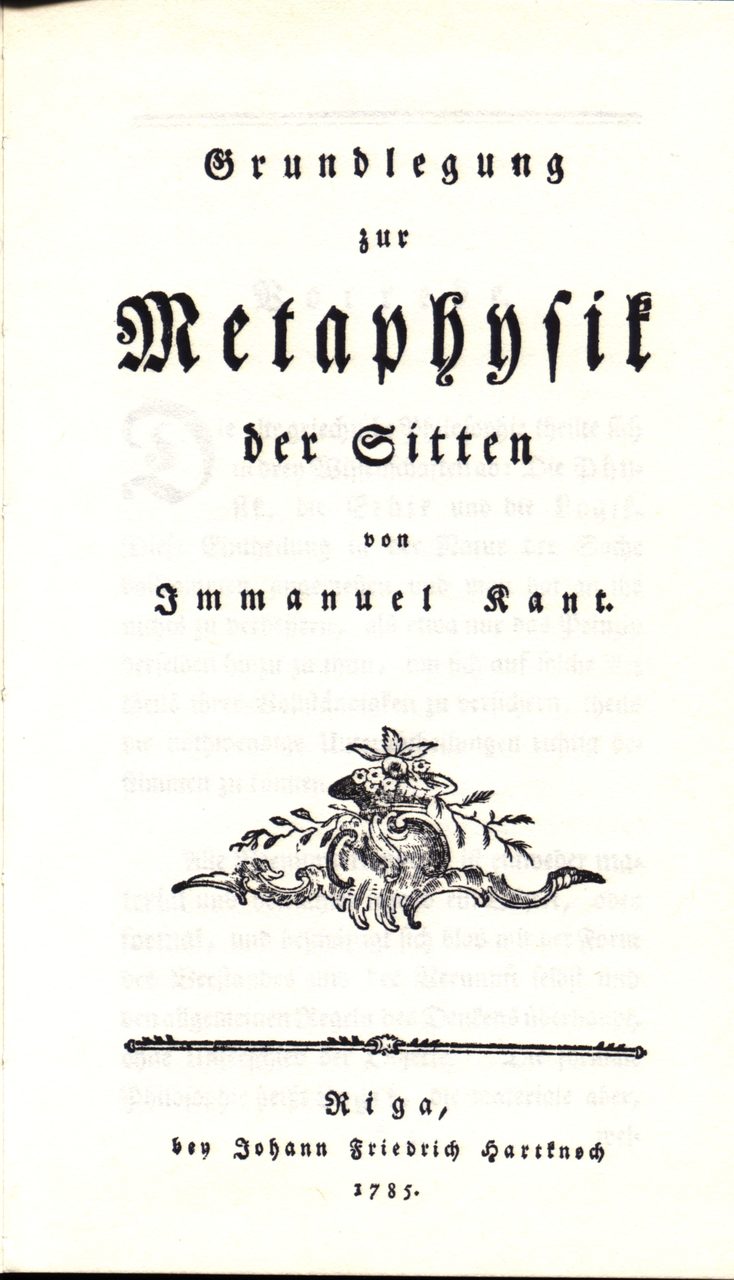
Kant's Groundwork of the Metaphysics of Morals, published in 1785, opens on a claim about value, and everything afterwards is built on it.
The Groundwork opens with the claim that nothing anywhere can be called good without limitation except a good will. The sentence our research file prints for it reads: "There is nothing it is possible to think of anywhere in the world, or indeed anything at all outside it, that can be held to be good without limitation, excepting only a good will." That English is Allen Wood's rendering of the passage at Ak 4:393, and not Mary Gregor's, although Gregor is the only translator our file's bibliography names.
The translation detail is not pedantry, and it recurs. Our file prints four block quotations of Kant and names a translator for none of them, so every Kant quotation in this article either names one or is marked as paraphrase. Section 15 carries the two cases where that mattered.
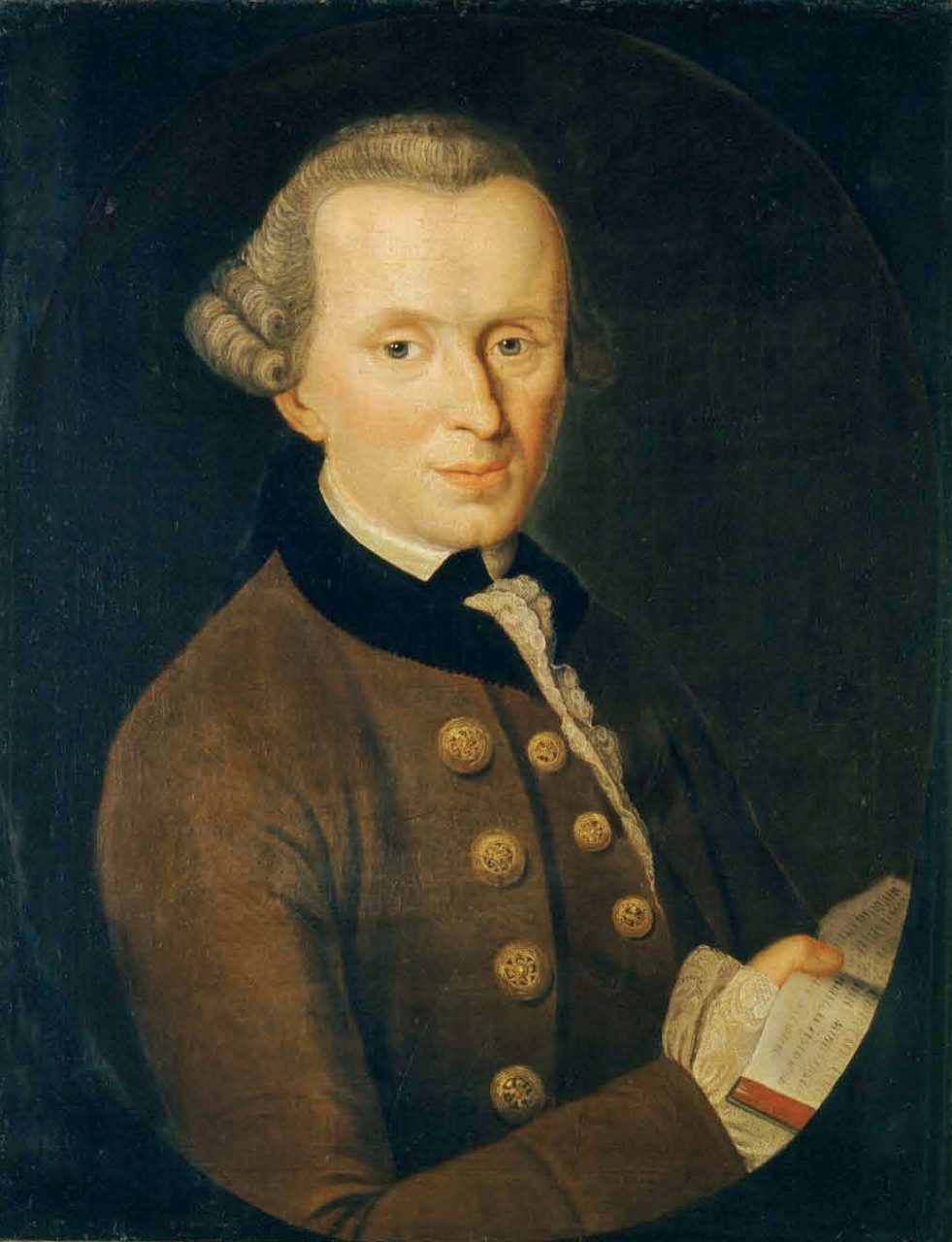
Intelligence, courage, wealth and even happiness can all be misused, so on Kant's account only the good will is intrinsically good. The good will is the will that acts from duty, aus Pflicht, rather than from inclination. Only actions done from duty, meaning motivated by respect for the moral law and not merely conforming to what duty requires, have genuine moral worth for Kant.
The distinction between acting in conformity with duty and acting from duty is the hinge of the whole first half of the argument.
Kant's own illustration is a shopkeeper. One shopkeeper gives correct change because he fears losing customers: he acts in conformity with duty, but not from it. Another gives correct change out of respect for honesty, even where cheating would be profitable: he acts from duty. On Kant's account only the second action has moral worth.
The first shopkeeper is not accused of breaking a duty; his action conforms to duty perfectly well. What it lacks, on this account, is moral worth. That is where the coldness people complain about enters, and it is worth being exact about what the coldness consists of: Kant is saying that what makes an action morally worth anything is neither the outcome nor the feeling, but the ground on which it was chosen.
03Where The Law Comes From
Kant argued that moral principles cannot be derived from experience, because empirical observation tells us what is and not what ought to be, and cannot be derived from human nature either, because the moral law must apply to all rational beings and not only to humans. Morality must therefore be grounded in pure practical reason: the same reason that enables us to think logically also legislates moral requirements.
The move to all rational beings rather than all humans is worth pausing on, because it explains two things at once. It is why Kant's ethics reads as cold, since it deliberately refuses to ground morality in anything about being human in particular. And it is why the ethics generates a universal claim at all: a law that held only for creatures with our appetites would not be a law of reason.
For Kant the moral law is not imposed from outside, neither by divine command nor by social convention. It is self-legislated: rational agents impose it upon themselves through their own reason. This is autonomy, meaning self-legislation, and our research file names it the fundamental moral capacity and the ground of human dignity. Autonomy in turn requires freedom. Kant argued that morality presupposes free will, so that we must regard ourselves as free even if the phenomenal world is deterministic, which connects his ethics to the phenomena and noumena distinction of the Critique of Pure Reason.
Whether that manoeuvre works is a question about free will, and this library treats it separately in Free Will. Nothing below depends on settling it.
04The Rule With No If Clause
Everything so far is preparation for a single distinction, and the distinction is this article's title in miniature.
A hypothetical imperative has a conditional form: if X is wanted, then do Y. It rests on a desire, our file's example being that a person who wants to pass the exam should study, and it binds only those who happen to have the relevant desire. A categorical imperative has the form: do Y. It is unconditional and binds all rational agents regardless of desires or circumstances. That, for Kant, is the form the moral law has.
A rule with no if clause is a rule with no exit. There is no antecedent that can fail, no desire that can go missing, no circumstance in which the condition is not met, because there is no condition. That structural fact, and not any special harshness of temperament, is where the unbreakability in this article's title comes from.
The first and most famous statement of that imperative is the Formula of Universal Law. Mary Gregor's translation renders it, at Groundwork Ak 4:421, as: "act only in accordance with that maxim through which you can at the same time will that it become a universal law."
Kant states a second and separate formula immediately afterwards, the Formula of the Law of Nature, in which the maxim is to become by one's own will a universal law of nature. The two are close enough that they are frequently run together, and our own research file runs them together in the sentence it prints, appending the words of nature to the Formula of Universal Law. Section 15 carries the correction, because the difference matters to anyone who goes looking for the sentence.
The test our file sets out runs in three steps. Formulate the maxim of the action: I will do X in circumstance Y to achieve Z. Imagine that maxim as a universal law, with everyone in that circumstance acting the same way. The action is morally impermissible if the universalized maxim involves either a contradiction in conception, where the universal law would make the action logically impossible, our file's example being that universal false promising would destroy the institution of promising, or a contradiction in will, where the universal law could not rationally be willed, our file's example being that nobody could rationally will that no one ever helps anyone, since anyone might need help.
The two contradictions are not a scoring system. They are meant to be a decision procedure, something a person could actually run before acting, and that ambition is precisely what the oldest objection in section 10 attacks.
05Humanity As An End, Never Merely As A Means
The second formulation is the one that escaped philosophy and entered ordinary speech, usually with a word missing.
The Formula of Humanity, in Gregor's translation, reads: "so act that you use humanity ... always at the same time as an end, never merely as a means." Our own research file prints it in a more modernised English, close to Thomas Kingsmill Abbott's rendering, and names no translator for it. The sense is not in dispute; the wording is not one single thing, and neither version should be left floating without a name attached.
Persons, in this framework, are rational agents with dignity, Würde, an unconditional and incomparable worth. Dignity is set against price, Preis: a thing with a price can be exchanged for an equivalent, and a person cannot. To use someone merely as a means is to treat them as a tool for one's own purposes, without respecting their rational agency.
The word merely is load-bearing, and our own file guards it explicitly. Kant does not prohibit all instrumental relationships; our file's example is using a taxi driver to get somewhere. What he prohibits is treating persons solely as instruments, without their rational consent or any regard for their own ends.
Dropping that word is the most common popular misstatement of Kant, and it converts a demanding principle into an unusable one. A rule against ever using another person's labour, skill or time would be unlivable, and it is not the rule. The rule is against treating a person as though the labour, the skill or the time were all there was.
A third formulation, which our file gives as the Formula of the Kingdom of Ends, asks that one act only on maxims that a universally legislating member of a merely possible kingdom of ends could adopt. That sentence is given here as paraphrase, and marked as paraphrase, because no translator is named anywhere in our file for the wording it prints. A kingdom of ends is an ideal community of rational agents, each treating every other as an end in themselves and co-legislating moral principles, and our file notes that it anticipates the contractualist approaches of Rawls and Scanlon.
The categorical imperative is not the Golden Rule; Kant's own objections to the Golden Rule are set out at length in this wing's The First Scales rather than here.
How many formulations there are is itself unsettled. Our research file names three, the Formula of Universal Law, the Formula of Humanity and the Formula of the Kingdom of Ends, under a heading that says three. The Stanford Encyclopedia of Philosophy entry on Kant's moral philosophy, in its substantive revision of 2 October 2025, names four, adding an Autonomy Formula that our file discusses at length under autonomy without ever calling it a formulation. Counts of three, four and five all appear in the literature depending on how the Formula of the Law of Nature and the Autonomy Formula are handled. This article therefore says several and states no number.
06Perfect Duties And Imperfect Duties
Kant divides duties into two kinds, and the division decides the hard cases. Perfect duties are strict and admit no exception. They are duties to refrain: no lying, no false promising, no suicide, no using others merely as means. Violating one is always wrong. Imperfect duties are wide and allow latitude in execution. They are duties to pursue: develop one's talents, help others in need. They must be adopted as ongoing maxims, but there is discretion in when and how, so nobody is required to help everyone at every moment, only to make beneficence part of a practical orientation.
The two contradictions of section 04 map onto that division in the standard reading: a contradiction in conception yields a perfect duty, a contradiction in will yields an imperfect one. Our own file does not draw that line explicitly, so it is offered here as the standard reading and not as our file's statement.
And this is what makes the case in section 08 bite. Lying sits on the perfect side. There is no latitude there to appeal to, no weighing, no threshold above which the duty relaxes, because latitude is exactly what a perfect duty does not have. Kant's answer to the murderer is not an eccentricity bolted onto the system from outside; it is continuous with the way the system classifies lying. Whether the system really forces it is section 09's question, and the answer there is not agreed.
07Dignity Beyond The Groundwork
Our research file states that Kantian ethics provides a powerful foundation for human rights, because the inherent dignity of rational agents is unconditional and cannot be overridden by any calculus of consequences, and that this underlies modern human rights discourse, the Geneva Conventions and medical ethics principles such as informed consent. The lineage is real and widely accepted. The causal version of it, that Kant's philosophy produced those instruments, is a much stronger historical claim than our file sources, so this article carries the point as intellectual descent and not as cause.
Informed consent has an article of its own in this wing, The Nuremberg Code, and the history there is a great deal messier than a line of descent from a book. What is safe to say is that the vocabulary is Kant's: the idea that a person has a worth which cannot be traded against an aggregate is his distinction between price and dignity, still in service.
The same principle produces a conclusion harsher than modern readers expect. On Kant's account even punishment must respect dignity, and retributive justice, meaning proportional punishment for a crime, does so by treating the criminal as a rational agent who chose to act. Deterrence-only theories, which punish one person in order to influence the behaviour of others, treat criminals as mere means to social ends.
That is a genuinely counterintuitive result and it is worth sitting with. Respect for persons, followed strictly, yields a theory of punishment that is stricter rather than kinder. This wing plans a separate article on punishment. It does not exist yet, so the matter stops here.
08The Man At The Door
What our research file calls Kant's most controversial application is not a treatise. It is a reply, published in a periodical, to a named critic who had used a single vivid case against him.
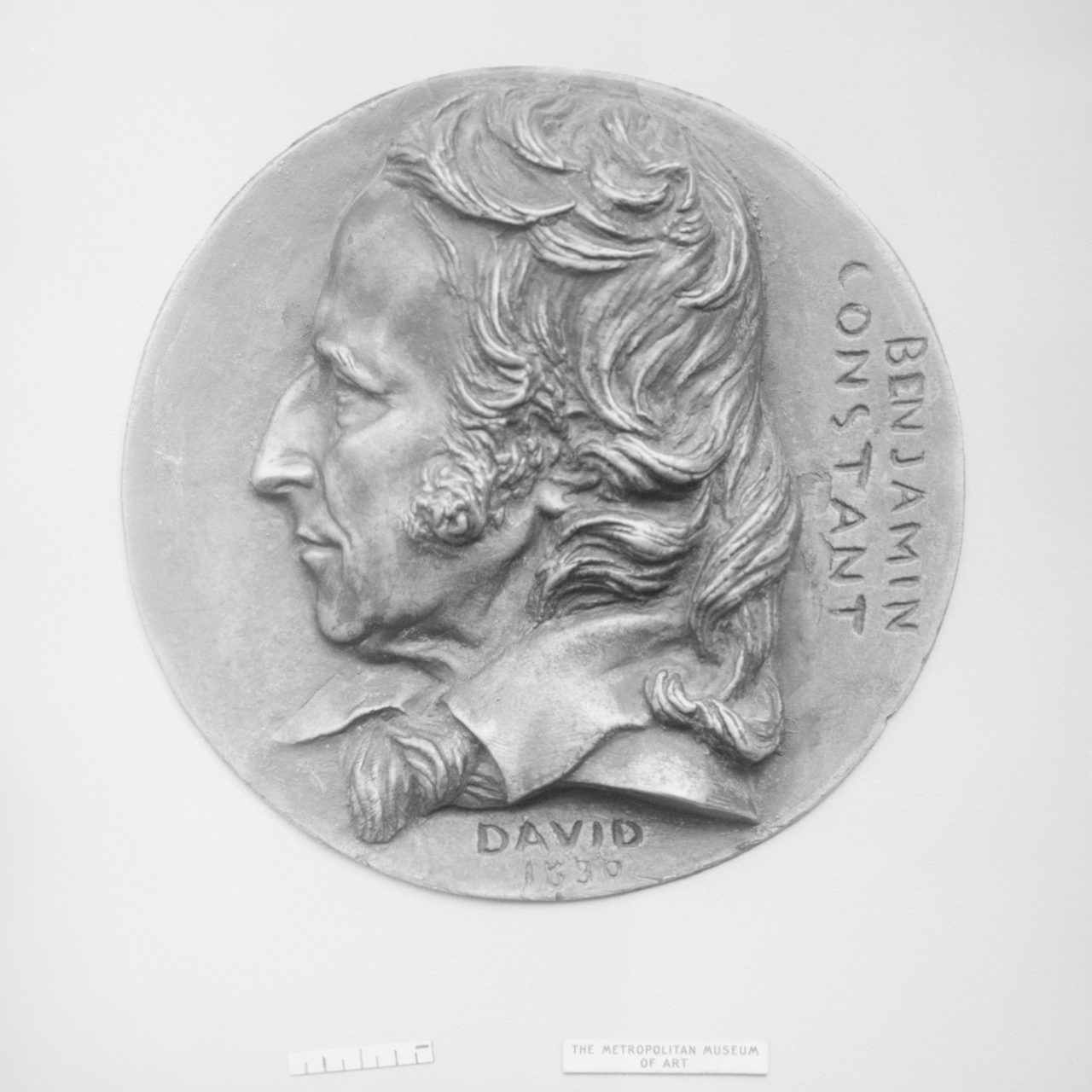
The case did not originate with Kant. The Swiss-French writer Benjamin Constant (1767 to 1830) raised the murderer-at-the-door challenge in an essay on political reactions, Des réactions politiques, usually given in English as On Political Reactions, attributing the objection to an unnamed German philosopher. Kant's response was published in the September 1797 issue of the Berlinische Blätter. Our research file mentions none of this: not Constant, not the exchange, not the essay's occasion.
The exchange is uncontroversial in the Kant literature, and the account here rests on that scholarship rather than on any inspection of the 1797 periodical itself. The occasion matters because it changes what kind of text the essay is. This is not a system-builder calmly deriving a corollary. It is an old man answering a specific public challenge in a specific month, and refusing to give ground.
In On a Supposed Right to Lie from Philanthropy (1797), Kant argued that lying is always wrong, including lying to a murderer who asks whether a friend is hiding in the house. The duty of truthfulness, on his account in that essay, admits no exceptions. Our research file calls it his most controversial application.
Our file gives his justification in two parts. The first is about responsibility: a person who lies takes on responsibility for the consequences of the lie, whereas a person who tells the truth leaves the bad outcome as the murderer's responsibility and not their own. The second is the universalizability argument: universal lying would destroy communication itself, which our file describes as a performative contradiction.
The responsibility argument is the one modern readers find hardest, and it should be given at full strength before anything is said against it. It denies the assumption almost everyone brings to the case, which is that telling the truth would make one a participant in the murder. On Kant's account the truth-teller does not become an accomplice, because the killing remains the murderer's act. The liar, by contrast, has taken the outcome into their own hands and now answers for what follows.
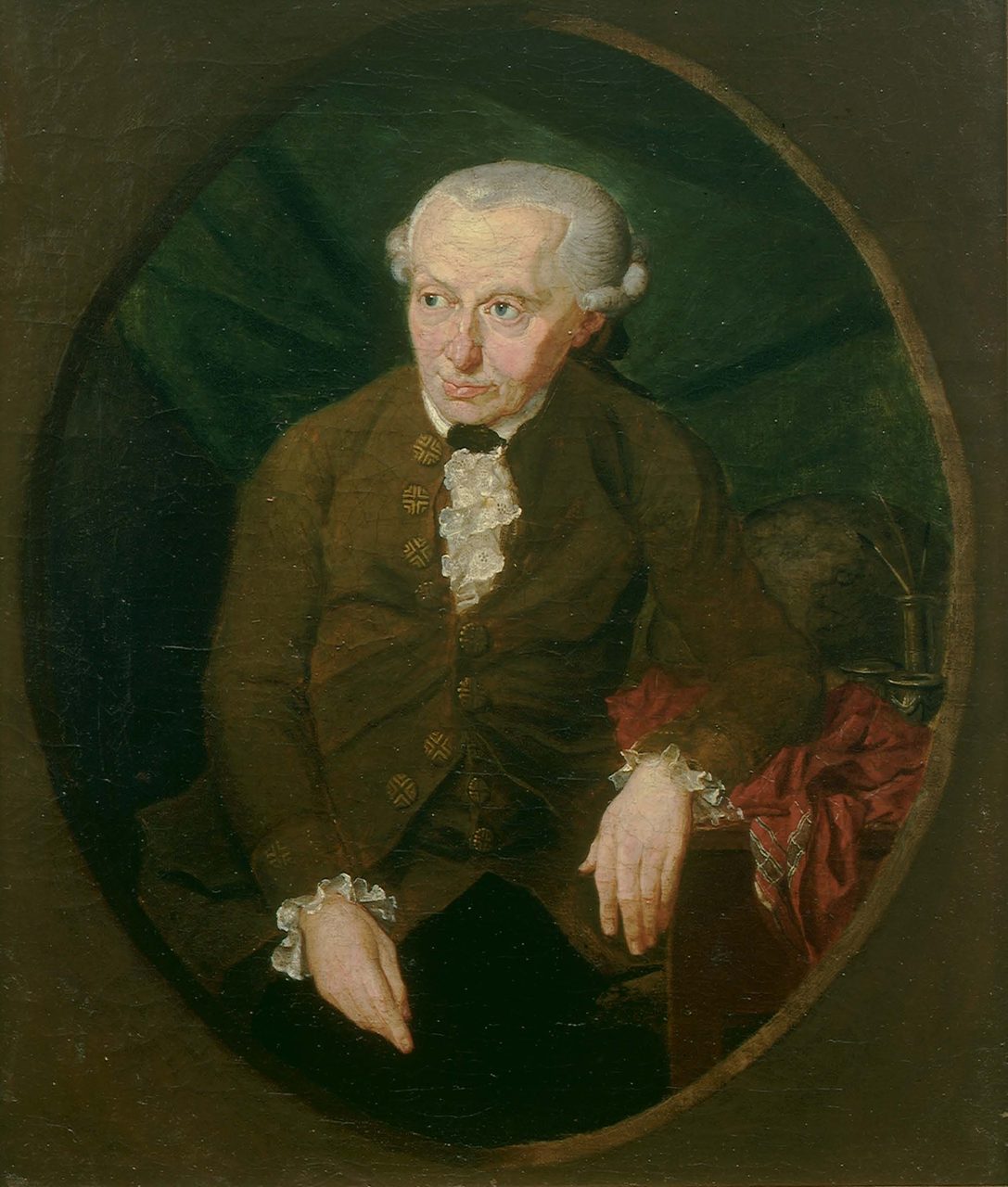
Kant was born on 22 April 1724 in Königsberg, then in Prussia, was appointed to his chair there in 1770, retired from teaching in 1796, and died on 12 February 1804. The Groundwork of the Metaphysics of Morals was published in 1785, the Critique of Practical Reason in 1788, and the Metaphysics of Morals in 1797.
The essay on lying belongs to that last year: written after he had stopped lecturing and seven years before his death. That chronology is not decoration. It is late work, which rules out reading the murderer essay as a young systematiser's overreach that a more careful Kant would later have softened.
The essay itself is short and citable. The standard scholarly English edition is in the Cambridge Practical Philosophy volume, translated and edited by Mary J. Gregor, at pages 605 to 616, and it is linked in the sources below. Our own research file discusses the essay as its most controversial example and carries no identifier for it at all, which is one of the corrections in section 15.
09Can The System Be Rescued From The Essay
Kant's 1797 answer is defended by no major contemporary Kantian in the form he gave it. That is a stronger statement than it sounds, because the people not defending it are the people who have spent careers defending almost everything else he wrote. What they have tried to do instead is show that his own principles do not require it.
Our research file records that the position has been criticized even by sympathetic Kantians, and that Korsgaard and others argue Kant's reasoning here is flawed and that his own principles could justify deception in extreme cases. It names no paper, no year and no argument for that, which is not enough to write from, so the two specific attempts below were found outside our file.
Christine M. Korsgaard, in The Right to Lie: Kant on Dealing with Evil (Philosophy & Public Affairs 15, no. 4, Autumn 1986, pages 325 to 349), argues that two of the formulations give different answers in this case. Under the Formula of Universal Law the lie to the murderer can be shown permissible, because the maxim of lying to a deceiver is universalizable, given that a murderer who conceals his purpose is himself relying on deception. Under the Formula of Humanity the same lie is impermissible, because on that formula coercion and deception are the most fundamental forms of wrongdoing. Her resolution is a distinction between ideal and non-ideal conditions: where strict compliance with the ideal embodied in the Formula of Humanity would make agents the tools of evil, agents should turn to the Formula of Universal Law for guidance.
That is her argument in outline and it is offered as an outline. The bibliographic record was verified directly for this article; the summary was assembled from secondary accounts of the 1986 paper rather than from a reading of the paper itself, so nothing here is quoted from it, and the open-access copy is linked below for anyone who wants the original.
Helga Varden, in Kant and Lying to the Murderer at the Door . . . One More Time: Kant's Legal Philosophy and Lies to Murderers and Nazis (Journal of Social Philosophy 41, no. 4, 2010, pages 403 to 421), argues from Kant's legal philosophy, as distinct from his ethics, that the standard reading of the essay is mistaken and that Kant's own position does not commit him to telling the murderer the truth.
This article states only that much of Varden's case, because the paper itself was not obtainable for this piece. The citation is verified and linked so that it can be checked.
Two attempts, 24 years apart, running on different parts of Kant's work and arriving at the same conclusion by different routes. That is what a live dispute looks like rather than a settled embarrassment. But it is worth being exact about what those attempts do and do not do. They are arguments that Kant's deeper principles do not require the answer he gave. They are not evidence that he did not give it. The 1797 essay says what it says, and no rescue reaches back and edits the text. Kant never really meant it is the most flattering reading available here, and it is refused in the closing block.
10The Objections That Never Went Away
Our research file names four objections to Kantian ethics and gives each a named reply. All four are still live. A fifth, which our file does not mention anywhere, attacks the whole family from outside.
The empty formalism objection, which our file attributes to Hegel and Mill, holds that the categorical imperative is merely formal: it says be consistent and supplies no content, almost any maxim can be universalized if it is described specifically enough, and it therefore generates no determinate obligations. The reply our file gives is that the universalizability test is not merely about logical consistency but about whether a maxim can rationally be willed as a universal law, which brings in human needs, vulnerabilities and the social conditions of action. Our file adds that O'Neill has shown the test has real moral content; that is her argued position rather than a settled result, and this article carries it as such.
Hegel's version of the objection appears in his Natural Law essay of 1802 and in the Philosophy of Right of 1821, where at paragraph 135 he objects that if the definition of duty is taken to be the absence of contradiction, then no transition is possible to the specification of particular duties. The paragraph attribution here follows the Hegel scholarship, Sally Sedgwick's chapter in A Companion to Hegel among it, and not a reading of the Philosophy of Right itself.
Mill's version is blunter. In chapter 1 of Utilitarianism, serialised in 1861 and published as a book in 1863, he states Kant's principle in his own paraphrase, "So act, that the rule on which thou actest would admit of being adopted as a law by all rational beings", which is Mill's rendering of Kant rather than a translation of Kant's German, and then charges that Kant cannot show any contradiction at all in the universal adoption of outrageously immoral rules.
The motivation objection, which our file attributes to Williams and Stocker, holds that acting from duty is cold and impersonal. Our file's illustration: a friend who visits a patient in hospital and explains that he came because it was his duty, rather than because he cared, has said something alienating, and Kantian morality seems to require suppressing natural affection. The reply our file gives is that Kant distinguishes acting from duty from acting merely from inclination and does not require the absence of feeling, only that duty and not feeling alone be the determining ground of the action, so that one can act from duty and with affection at the same time. Baron and Herman have developed sympathetic accounts of Kantian moral motivation.
The rigidity objection holds that Kantian absolutism produces absurd results: the truth must be told to the murderer, no lie is ever permitted, no promise may ever be broken, while real moral life requires sensitivity to circumstance. The reply our file gives is that many contemporary Kantians, Korsgaard, Herman and O'Neill among them, argue that Kant himself is misinterpreted, because the universalizability test requires careful attention to the maxim's description, so that a maxim of lying to protect an innocent life from a murderer may be universalizable; and that Ross's prima facie framework resolves conflicts without absolutism.
That reply is in tension with the objection above it, and naming the tension out loud is the strongest single thing this article can do. The rigidity reply says: describe the maxim carefully enough and the right answer comes out. The empty formalism objection says: describe a maxim specifically enough and any answer comes out. They are the same move, evaluated once as a rescue and once as a refutation, and our research file does not resolve which it is. Neither does anything else read for this article.
The problem of conflicting duties holds that when duties collide, keeping a promise against saving a life being the standard case, strict Kantianism supplies no resolution, because it insists that all duties are absolute. The replies our file gives are Ross's prima facie duties, which it calls the standard deontological resolution, and the Kantian constructivist claim that the categorical imperative itself can resolve conflicts through careful maxim formulation.
A fifth objection sits outside all of that. G. E. M. Anscombe's Modern Moral Philosophy (Philosophy 33, no. 124, 1958, pages 1 to 19), the founding document of the twentieth-century virtue-ethics revival, attacks the whole family of duty-based moral theories, Kant's included, on the ground that a notion of moral obligation and moral law is unintelligible outside the framework of a law-giver that modern moral philosophy has abandoned. Kant's own answer, that the agent legislates for himself, she treats as incoherent. That summary is the standard reading of the paper, assembled from secondary accounts rather than from the paper itself, and nothing here is quoted from it.
| The Objection | Who Presses It | The Reply Our File Gives | Where It Stands |
|---|---|---|---|
| Rigidity: absolutism produces absurd results, the murderer case first among them | The standing charge, and Kant's own 1797 essay is its exhibit | Contemporary Kantians including Korsgaard, Herman and O'Neill argue the test requires careful attention to how the maxim is described, so that lying to protect an innocent life from a murderer may be universalizable; and Ross's prima facie framework resolves conflicts without absolutism | Live. The reply's own move, redescribing the maxim, is the move the empty formalism objection says makes the test toothless |
| Motivation: acting from duty is cold and impersonal | Attributed by our file to Williams and Stocker | Kant does not require the absence of feeling, only that duty and not feeling alone be the determining ground of action, so an act can be done from duty and with affection at once; Baron and Herman have developed sympathetic accounts | Live |
| Empty formalism: the imperative says be consistent and supplies no content | Hegel, in the Natural Law essay of 1802 and at Philosophy of Right paragraph 135 in 1821, and Mill, in Utilitarianism chapter 1 | The test is not bare logical consistency but whether a maxim can rationally be willed as universal law, which brings in human needs, vulnerabilities and the social conditions of action; O'Neill argues the test has real moral content | Live, and the oldest of the five. Our file raises it in a bare parenthesis reading Hegel, Mill, and cites neither |
| Conflicting duties: when duties collide, absolutism gives no resolution | The standing objection to any absolutist duty ethics | Ross's prima facie duties are the standard deontological resolution; Kantian constructivists argue the imperative itself can resolve conflicts through careful maxim formulation | Live |
| The whole vocabulary: moral obligation and moral law are unintelligible without a law-giver | Anscombe, Modern Moral Philosophy, 1958 | Kant's own answer is that the agent legislates the law for himself, which is the autonomy argument of section 03; Anscombe treats that answer as incoherent | Live, and it comes from outside the Kant-versus-consequentialism axis. Our research file does not mention the paper at all |
None of the five has been answered to general satisfaction, and none has closed the subject. That is the honest state of it after 240 years of argument.
11Ross's Repair
There is a way to keep duty at the centre of ethics and drop the absolutism, and the standard version of it is nearly a century old.
W. D. Ross, in The Right and the Good (1930), rejected utilitarianism on the ground that consequences are not all that matters, and rejected strict Kantianism on the ground that duties cannot be absolute because they sometimes conflict. In place of both he proposed prima facie duties: duties that are binding unless overridden by a stronger duty in the particular situation. He named seven. Fidelity, keeping promises. Reparation, making amends for past wrongs. Gratitude, returning kindness. Justice, distributing benefits and burdens fairly. Beneficence, improving the condition of others. Self-improvement, developing one's own virtue and knowledge. And non-maleficence, not harming others, which he took to be generally stronger than beneficence.
On Ross's account, when duties conflict the agent must exercise judgment rather than follow a formula, to determine which duty is stronger in the particular case. Our research file records that Ross acknowledged this introduces an element of moral intuition and does not provide an algorithm.
That should not be read as a victory. Ross buys flexibility at exactly the price Kant was trying not to pay. A decision procedure anyone could run, one that did not depend on the judgment of the person running it, was the entire point of the categorical imperative. Ross gives that up and hands the hard cases back to intuition. Both positions are still occupied, and each one's weakness is the other one's motivation.
12Why A Promise Binds
Promising is the place to test all of this, because it is Kant's own worked example of a perfect duty and because he simply assumes the thing that most needs explaining: why words should bind anyone at all. Our secondary research file, on promising and contract, supplies the modern answers, and they do not agree with each other.
Charles Fried, in Contract as Promise (1981), gave the autonomy-based account: a promise is a moral act by which the promisor creates in the promisee a right to the promised performance, and its moral basis is respect for autonomy, the promisor exercising a capacity for self-binding commitment. The deliberate invocation of the promissory convention creates a genuine obligation, and Fried argued that the law of contract should be understood as the legal enforcement of voluntary promises. Our file names two critics, Atiyah (1981) and Craswell (1989), who argued that not all contracts are promise-like, since many are bargains, risk allocations or reliance-based arrangements that do not fit the promissory model.
That is Kant's dignity-and-autonomy argument applied to a single institution, and it is worth noticing what it shows: the categorical imperative doing modern legal work rather than sitting in the eighteenth century.
T. M. Scanlon, in What We Owe to Each Other (1998, chapter 7), gave the expectations-based account: the wrongness of breaking a promise derives not from a mysterious power to create obligations through words but from the principle of fidelity to expectations. If I deliberately create an expectation that I will do something, another person relies on it, and I know this, then it would be wrong for me to disappoint that expectation without adequate reason. The account is contractualist: the moral force of promises derives from principles no one could reasonably reject. Our file records the criticism that this is too thin, making promise-breaking wrong only because of harm to expectations rather than any intrinsic wrong in failing to keep one's word, and Kimel's reply in From Promise to Contract (2003) that promises are also valuable for the intimate, trust-based relationships they express and sustain.
David Hume, in Book III of A Treatise of Human Nature (1740), gave the convention-based account: promises are not natural acts but conventional ones, dependent on the existence of a social practice of promising, so that without the convention the mere utterance of words would create no obligation. Their moral force derives from the social utility of the convention. That is the empiricist alternative Kant was writing against.
John Rawls, in Two Concepts of Rules (Philosophical Review, 1955), distinguished justifying a practice from justifying actions within a practice. The practice of promising can be justified on utilitarian grounds, because promising is useful; an individual promise must nevertheless be kept because the practice requires it. Once the practice exists, individual obligations are not reducible to case-by-case calculations of utility.
A fourth line describes the mechanism rather than the obligation. Austin, in How to Do Things with Words (1962), and Searle, in Speech Acts (1969), analysed promising as a performative speech act: the utterance I promise does not describe a pre-existing state of affairs but creates an obligation through the act of speaking. Our file gives Searle's conditions for a valid promise as the speaker intending to do what they promise, the hearer understanding the promise, the promise creating an obligation that would not otherwise exist, and the speaker being sincere, and adds that this linguistic analysis clarifies the mechanism of promising without by itself explaining its moral force.
Ross treated fidelity, meaning promise-keeping, as a prima facie duty: a real moral obligation that can nevertheless be overridden by stronger moral considerations such as preventing serious harm, justice or beneficence. Our file's worked example is a promise to meet for lunch, a serious car accident encountered on the way, and a duty of beneficence that overrides the promise. The promise is not cancelled by being overridden. It generates a residual obligation, so the right response is to apologise, explain and reschedule. Our file sets limits on this: trivial convenience does not override a promise, the competing obligation must be genuinely compelling, and the chronic promise-breaker who always has more important things to do undermines trust and social cooperation.
The residual obligation is the most useful idea either of our research files supplies, because it names what Kant's absolutism was protecting and what Ross's flexibility manages to keep of it. An overridden duty is not a duty that was never there. It leaves a mark, and the mark is the thing an ethics of pure outcome has trouble accounting for.
It is also where the honest reader should notice two boundaries. Most moral theorists since Ross accept that promises can be overridden by sufficiently serious competing obligations, so promissory absolutism has few defenders in that literature. The same literature refuses the opposite extreme, in which promises are merely strategic communications with no binding force at all, since that cannot account for the experience of obligation, trust-violation and betrayal that accompanies promise-breaking across cultures. Both extremes are refused there. Our own two research files disagree about where Kant sits in that picture, and section 15 is where that is dealt with.
13The Kantians Who Kept Working
Kant died on 12 February 1804. The argument did not.

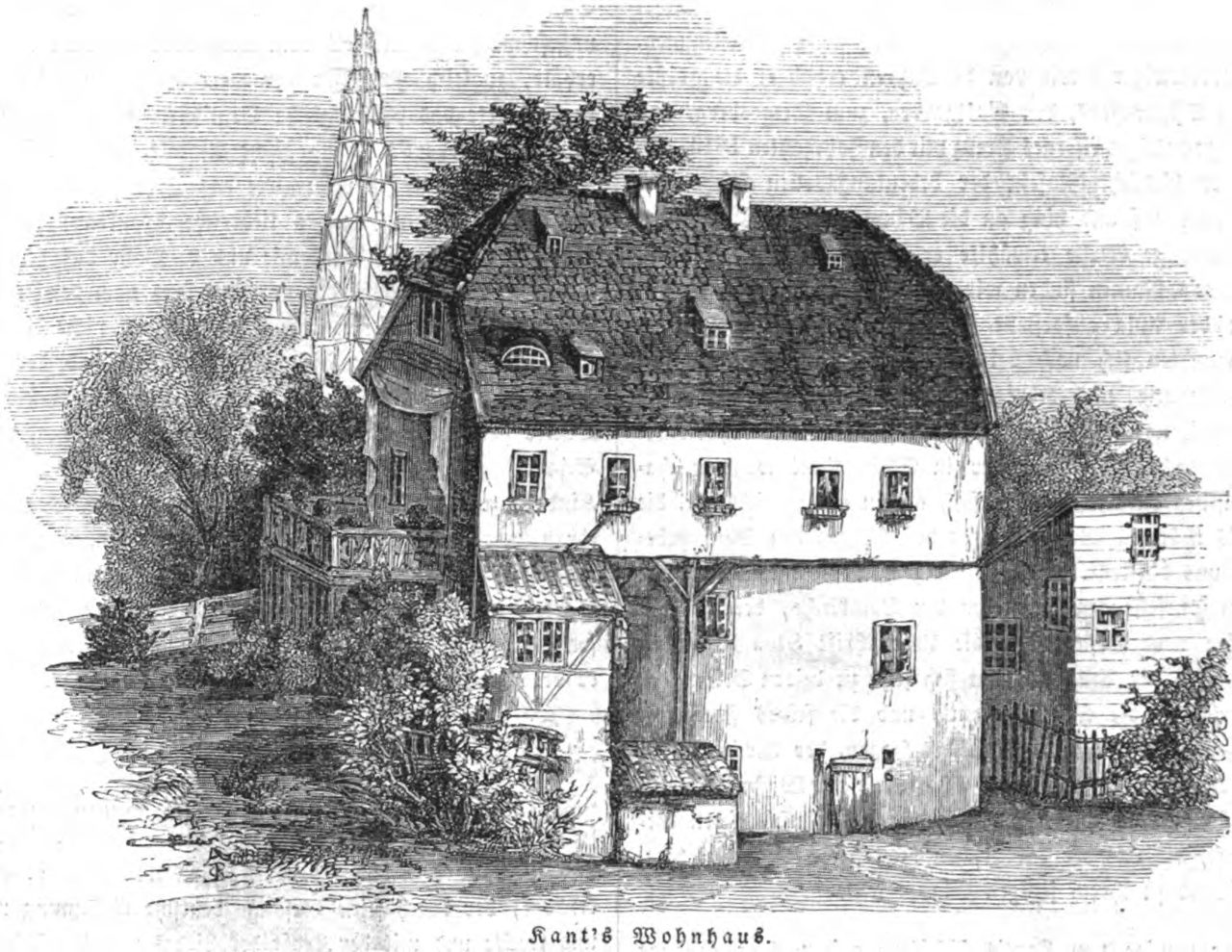
He is buried at the cathedral in what is now Kaliningrad, in Russia. The Königsberg of this article no longer exists, which is why every image here that shows the city carries its date: an 1844 printed illustration is a depiction of a place that is gone, and a 2024 photograph is a picture of what stands there instead.
The line of work he started did not end with him. What follows is what it currently looks like, and none of it is antiquarian.
Christine Korsgaard's The Sources of Normativity (Cambridge University Press, 1996) locates moral obligation in the structure of practical reason and in what she calls practical identity: an agent needs to act on principles it can endorse on reflection, and when it reflects on its motivations it must be able to endorse them as a self-legislating agent, so that morality is the condition of rational agency itself. Her constructivism holds that moral truths are not discovered but constructed through the activity of practical reason, and that the categorical imperative is the procedural principle by which rational agents generate specific moral obligations.
Onora O'Neill applied the universalizability test to questions of justice, poverty and institutional design, argued that Kant's ethics is not merely an individual morality but supplies principles for just institutions, and pressed the practical applicability of Kantian reasoning against the charge of excessive abstraction. Her Constructions of Reason (Cambridge University Press, 1989) is the work our file names.
T. M. Scanlon's contractualism, in What We Owe to Each Other (Harvard University Press, 1998), holds that an action is wrong if it would be disallowed by any set of principles that no one could reasonably reject as a basis for general agreement. This is not about maximizing welfare but about finding principles each person can accept as a free and equal participant. It is Kantian in spirit, respecting persons as rational agents and seeking universalizable principles, and it differs from Kant in being explicitly interpersonal rather than derived from individual practical reason.
Add Herman's and Baron's accounts of Kantian moral motivation from section 10, and Fried's Kantian theory of contract from section 12, and the picture is not of a defeated position. It is of a research programme with open problems, which is a different thing, and it is why the closing block refuses the obituary as firmly as it refuses the victory lap.
14One Mountain, Several Routes
The most ambitious recent move in this territory is not a defence of Kant against the consequentialists. It is an argument that the two sides were never really opposed.
Derek Parfit, in On What Matters (Oxford University Press, 2011), argued for what he called the Triple Theory: that the best Kantian principle, the best version of rule consequentialism and the best version of Scanlonian contractualism all agree about which actions are wrong. His image, which gave the book its original working title, is of climbers ascending the same mountain by different routes and finding at the summit that they were heading for the same place. In outline, the Triple Theory holds that an act is wrong just when such acts are disallowed by principles that are optimific, uniquely universally willable, and not reasonably rejectable. That formulation is given here as paraphrase and not as a quotation from the book.
It is filed as contested for good reasons. The convergence thesis is a major argued position and not a consensus, it has serious published critics, and this article did not read the book: the account above was assembled from published reviews and scholarly discussion. Our own research file lists On What Matters in its bibliography and never discusses it anywhere in its body. Taken as an argument rather than a finding, it is the most ambitious recent attempt to argue that the great rival systems were never really rivals, which would make the quarrel this article reports on a quarrel about routes.
15What We Corrected In Our Own File
This article rests on two research files from our own library, and both needed correcting before anything above could be written. The corrections are collected here rather than buried, because two of them change what a reader would find if they went looking for a sentence.
Our file prints the Formula of Universal Law as "Act only according to that maxim whereby you can at the same time will that it should become a universal law of nature." That string is a blend of two different formulations. Gregor's Formula of Universal Law at Ak 4:421 contains no words of nature; those words belong to the separate Formula of the Law of Nature, which Kant states immediately afterwards. Section 04 quotes the shorter form, which is also the form this wing's article The First Scales already quotes, so the two pages agree about the most famous sentence in the argument.
The good-will sentence our file quotes is Allen Wood's English rendering of Ak 4:393, while our file's bibliography credits the Groundwork to Mary Gregor's translation and names no other translator anywhere in the document. A reader would reasonably take the quotation for Gregor's. Section 02 attributes it to Wood.
Two of the five digital object identifiers in our file's fifteen-entry bibliography resolve to book reviews rather than to the works they are attached to. The identifier attached to Kant's Critique of Practical Reason resolves to a 2015 review in the journal Dialogue by Niels Feuerhahn; the identifier attached to Scanlon's What We Owe to Each Other resolves to David Sosa's 2004 review in Nous. Both review records carry the reviewed work's own title, which is exactly why a title check passes them, and the Feuerhahn record carries a page count and a price inside its title field, which is the tell. Neither identifier is carried in the sources below. Scanlon's book is cited here by publisher and year instead, and Kant's Critique of Practical Reason by year alone.
Our file's section on the formulations is headed with a bare count of three. The number is not settled in the literature, as section 05 sets out, and this article states none.
Our file also carries a footer stating that no significant counter-arguments exist in the scholarly literature for its core claims, sitting immediately below a section of its own that names four counter-arguments and gives each of them a reply. That footer is a template artifact, and nothing in this article leans on it. Separately, our two files disagree with each other. The file on promising lists the claim that all promises are absolute among its dubious claims, while the file on Kant reports without comment that Kant treated the prohibition on false promising as a perfect duty admitting no exception. That is a real tension between two of our own documents rather than a settled question, and section 12 handles it by carrying the substantive point, that most moral theorists since Ross accept that promises can be overridden, rather than by treating one of our own tier labels as a verdict on Kant.
Three further gaps are worth naming. Our file presents the 1797 essay as a freestanding Kantian position, never mentions that it was a reply to Benjamin Constant, never names him, and carries no identifier for the essay at all; all of that was found outside the file, and the essay's citation is in the sources below. Our file's mention of Korsgaard on the murderer case gives no paper, no year and no argument, so the 1986 paper cited in section 09 was found elsewhere too. And several of the cross-reference links in our file carry a correct topic label pointing at an entirely different but genuinely real document, so a reader following one of them lands on a plausible-looking unrelated page rather than a dead link. All of these have been logged for correction in the corpus rather than quietly fixed here.
Fast Facts
- The Philosopher
- Immanuel Kant, born 22 April 1724 in Königsberg, then in Prussia and now the site of Kaliningrad in Russia. Appointed to his chair there in 1770, retired from teaching in 1796, died 12 February 1804
- The Books
- Groundwork of the Metaphysics of Morals, 1785. Critique of Practical Reason, 1788. The Metaphysics of Morals, 1797. On a Supposed Right to Lie from Philanthropy, also 1797
- The Test
- Formulate the maxim of the action, imagine it as a universal law, and reject it if the universalized version involves a contradiction in conception or a contradiction in will. Gregor's translation of the first formula, at Ak 4:421: "act only in accordance with that maxim through which you can at the same time will that it become a universal law."
- The Formulations
- Our research file names three: Universal Law, Humanity, Kingdom of Ends. The Stanford Encyclopedia of Philosophy names four, adding an Autonomy Formula. Counts of three, four and five all appear in the literature, so this article states no number
- Dignity And Price
- Persons have dignity, Würde, an unconditional and incomparable worth; things have price, Preis, and can be exchanged for equivalents. To use a person merely as a means is to treat them solely as an instrument, without regard for their own ends. The word merely is part of the rule
- Perfect And Imperfect Duties
- Perfect duties admit no exception and are duties to refrain: no lying, no false promising. Imperfect duties allow latitude and are duties to pursue: develop talents, help others. Lying sits on the perfect side, which is why the 1797 case has no give in it
- The 1797 Essay
- Kant argued that lying is always wrong, including lying to a murderer who asks whether a friend is hiding in the house. He was answering Benjamin Constant, who had raised the case in an essay on political reactions; Kant's reply appeared in the September 1797 Berlinische Blätter. That the essay takes this position is a settled fact about a text
- The Standing Objections
- Rigidity, motivation, empty formalism and conflicting duties, all four named by our own research file and all four still live, plus Anscombe's 1958 charge that the whole vocabulary of moral law is unintelligible without a law-giver
- The Repair
- W. D. Ross, The Right and the Good, 1930: seven prima facie duties, binding unless overridden by a stronger duty. It drops absolutism and hands the hard cases back to judgment, which costs it the decision procedure Kant was trying to supply
- What Is Not Settled
- Whether the categorical imperative is the moral law. Whether Kant's own principles require the answer he gave in 1797. Whether the objections have been answered. 240 years of named positions and no winner
What Can Actually Be Stood Behind
What Kant published, and when, is settled and may be stated flatly. The Groundwork of the Metaphysics of Morals appeared in 1785, the Critique of Practical Reason in 1788, the Metaphysics of Morals in 1797, and On a Supposed Right to Lie from Philanthropy in the same year, in reply to a challenge Benjamin Constant had published. The Groundwork distinguishes hypothetical from categorical imperatives, states the imperative in several formulations, sets dignity against price, and guards the word merely. The 1797 essay argues that lying is always wrong, including to a murderer at the door. W. D. Ross proposed seven prima facie duties in 1930 and acknowledged that they come with no algorithm. Korsgaard published The Right to Lie in 1986 and The Sources of Normativity in 1996; Varden published her legal-philosophy reading in 2010; Anscombe published Modern Moral Philosophy in 1958. Every one of those is a fact about a text and nothing more, which is exactly the level at which this article states them.
The dispute about whether Kant was right is real, serious and unresolved, and both sides have named holders. Deontology is one of the three standing families of normative ethics and the Kantian line is actively worked. The four objections our own research file names, rigidity, motivation, empty formalism and conflicting duties, are all still live, and named Kantians have real replies to each of them. The reply to rigidity and the empty formalism objection turn on the same move, redescribing the maxim, evaluated once as a rescue and once as a refutation, and neither our file nor this article settles which it is. Ross's prima facie framework is the standard deontological repair, and it buys flexibility at the price of the decision procedure Kant wanted. Korsgaard's and Varden's readings of the 1797 essay are credible published positions, not settled results, and the summaries here were assembled from secondary accounts rather than from the papers.
Everything about what Kant really meant belongs here, including every claim that his own principles license a different answer from the one he gave. Our research file's line that sympathetic Kantians think his reasoning in the essay is flawed is carried without a citation of its own. Parfit's Triple Theory, the claim that the best Kantian principle converges with the best rule consequentialism and the best contractualism rather than losing to them, is a major argued position with serious published critics and is nothing like a consensus.
No: Kant did not prove that the categorical imperative is the moral law, and the objections to it have not been answered. Four objections named by our own research file remain live and unresolved, Hegel pressed the formalism charge in 1821 and Mill in 1861, Anscombe attacked the entire vocabulary in 1958, and Kant's own most famous application is defended by no major contemporary Kantian in the form he gave it. Nothing in this article settles ethics, and no sentence above should be read as though it had.
No: the murderer at the door does not refute Kant, and deontology is not a historical curiosity. Korsgaard's constructivism, O'Neill's institutional Kantianism, Scanlon's contractualism, Herman's and Baron's accounts of Kantian motivation and Fried's Kantian theory of contract are all live work in that line. Two separate serious attempts, 24 years apart, have been made to show that Kant's own principles do not require his 1797 answer. Parfit argues the best Kantian principle converges with its rivals rather than losing to them. And the language of dignity against price that Kant supplied is standard in modern rights discourse. A bad answer to one case is not a refutation of a system, and this article does not offer it as one.
No: Kant never really meant it is not available either, and it is the most flattering of the three errors, which is why it is the easiest one to make. What is genuinely disputed is whether Kant's deeper principles commit him to the answer he gave. What is not disputed is what the 1797 essay says. Korsgaard argues the Formula of Universal Law does not require it; Varden argues his legal philosophy does not; our own research file records that even sympathetic Kantians think the essay's reasoning is flawed. None of that reaches back and changes the text. He published it, the essay takes the position it takes, and the rescue attempts are arguments about the system rather than corrections to the essay.
One question stays open on purpose. Kant's answer at the door is defended by no major contemporary Kantian in the form he gave it, and yet the two serious attempts to escape it, Korsgaard's and Varden's, both work by going further into his system rather than by leaving it. That is a strange shape for a refuted idea to have. What he saw, and what every repair has to price in, is that once a duty can be set aside when the stakes are high enough, somebody has to decide when the stakes are high enough, and Ross, who built the standard repair, admitted he had no algorithm for it. So the question the whole argument turns on is not really whether to lie to the murderer. It is whether a rule that can be suspended in an emergency is still a rule.
Sources & further reading
Everything above is drawn from our research library on Theories of Anything, principally files ZE_1_06 and ZE_5_14, together with sources checked directly for this article. Thirteen sources are listed: two are our own research files and eleven are external, of which seven carry a digital object identifier that was resolved live and whose returned title was read against the claim it is attached to. Several works cited in the text carry no link here, on purpose. Kant's Critique of Practical Reason and Scanlon's What We Owe to Each Other are cited by publisher and year because the identifiers our own file attaches to them resolve to book reviews rather than to the works themselves, which section 15 explains. Korsgaard's The Sources of Normativity and O'Neill's Constructions of Reason carry no identifier in our file and none was added. The works cited in section 12 on promising, Fried, Hume, Kimel, Austin, Searle and Rawls, are cited in the text by author, title and year; several of the identifiers our secondary file carries for them were not resolved for this article and are therefore not reproduced here. And nothing in this article is quoted from the Korsgaard 1986 paper, the Varden 2010 paper, Anscombe 1958 or Parfit 2011: in each case the bibliographic record was verified, the argument is given in outline from secondary accounts, and the text says so where it matters.
Image credits
- Kant's house in Königsberg, Illustrirte Zeitung, volume 3 (1844), page 121 Unknown graphic artist of the period, via Wikimedia Commons. Public Domain Source.
- Immanuel Kant, portrait by Johann Gottlieb Becker, 1768, Schiller-Nationalmuseum, Marbach am Neckar Johann Gottlieb Becker, via Wikimedia Commons. Public Domain Source.
- Title page of the first edition of Grundlegung zur Metaphysik der Sitten, 1785 Immanuel Kant, 1785, via Wikimedia Commons. Public Domain (Creative Commons Public Domain Mark 1.0) Source.
- Henri-Benjamin Constant de Rebecque, medallion by Pierre-Jean David d'Angers, 1830, Metropolitan Museum of Art object 31520 Pierre-Jean David d'Angers; donated by the Metropolitan Museum of Art, via Wikimedia Commons. CC0 Source.
- Immanuel Kant, portrait by Gottlieb Doebler, 1791, second execution made for Kiesewetter, Ostpreussisches Landesmuseum, Lüneburg Gottlieb Doebler, via Wikimedia Commons. Public Domain Source.
- At Kant's grave, Kaliningrad, 15 April 2024 Alx. Morozov, via Wikimedia Commons. CC BY 4.0 Source.
- Card crop of Kant's house in Königsberg, Illustrirte Zeitung, volume 3 (1844), page 121 Unknown graphic artist of the period, via Wikimedia Commons. Public Domain Source.
.jpg)


,_Swiss-French_political_writer_and_politician_MET_31520.jpg)

