
The Nuremberg Code: Consent Written in Catastrophe
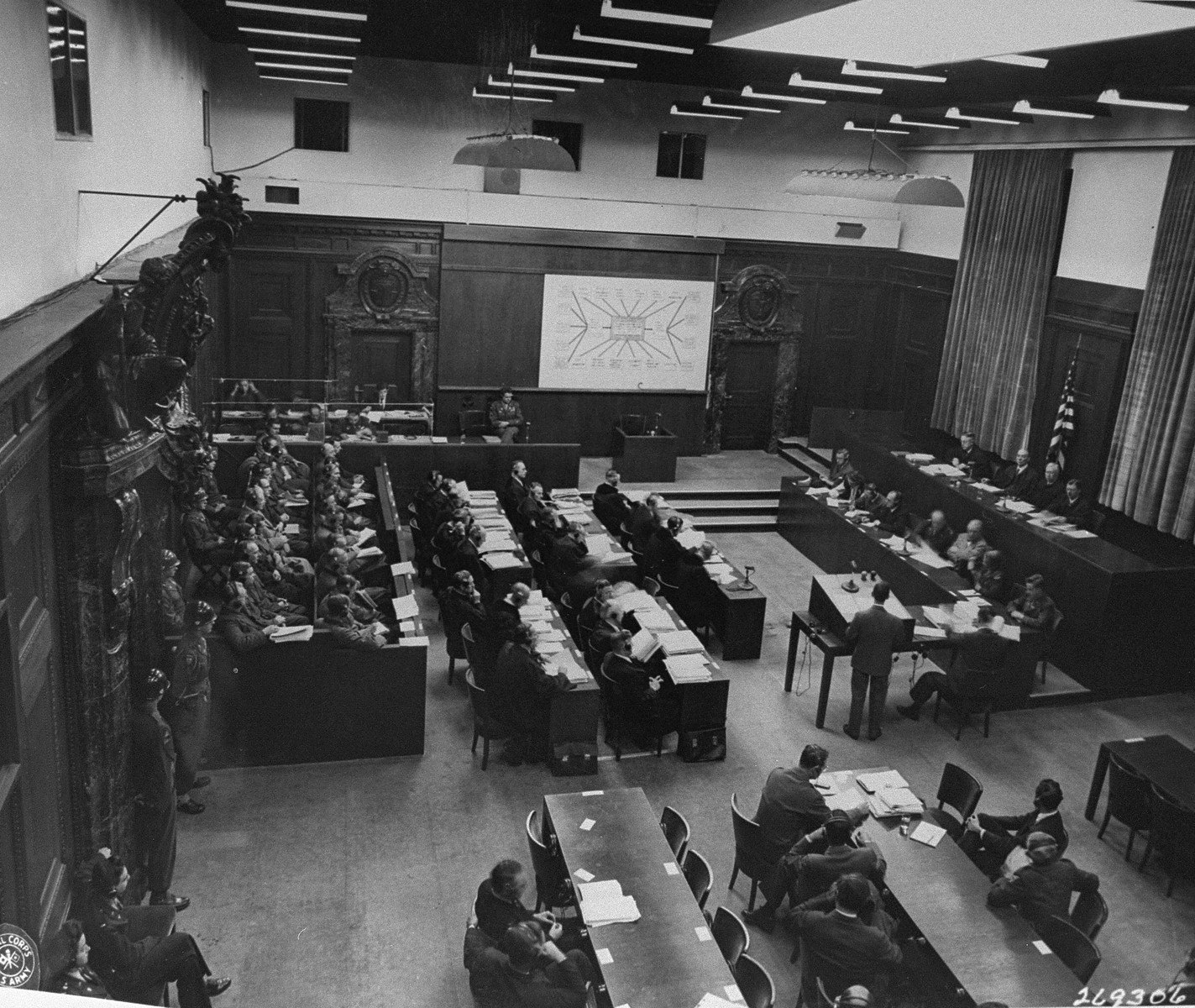
In 1947, at the end of a trial of Nazi doctors who had tortured and killed concentration-camp prisoners in the name of medicine, an American military tribunal wrote ten rules into its verdict. The first was the shortest and the heaviest: the voluntary consent of the human subject is absolutely essential. That sentence is the moral spine of all modern research on human beings, and it was paid for in atrocity. But the story does not end in triumph. The Code was never actually law, it did not stop the abuses that followed, including a forty-year betrayal by the United States' own government, and consent itself has turned out to be far harder than a signature on a form.
Almost every rule in this wing was argued into existence by philosophers at their desks. This one was written in a courtroom, over the testimony of people who had been frozen, burned, poisoned, and cut open without their consent, and it is the reason that if you have ever signed a form before a blood test, a drug trial, or a psychology experiment, someone was legally and ethically obliged to tell you what you were agreeing to. The Nuremberg Code is the moral foundation of all modern research on human beings. It is also a more complicated and more honest story than the triumphant version usually told: a set of rules that were never actually law, that failed to prevent the abuses they were written against, and that rest on an idea, consent, which turns out to be far more fragile than a signature suggests.
01The Trial That Wrote the Rules
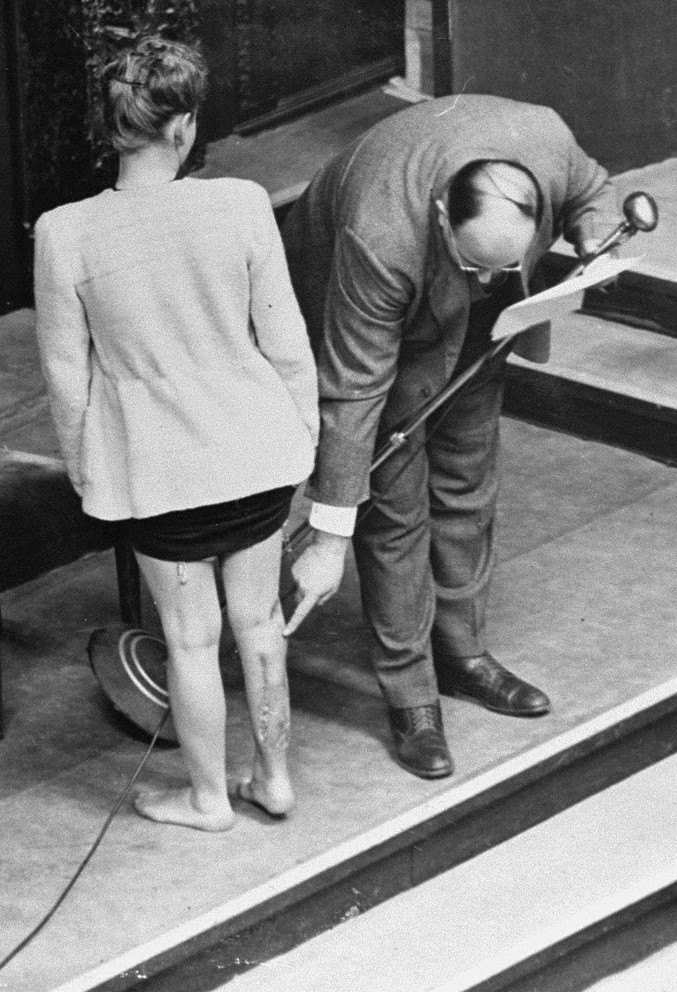
The Doctors' Trial (formally United States v. Karl Brandt et al.) was not the famous Nuremberg trial of Goering and the Nazi leadership; it was a separate, later proceeding, the first of twelve American-run trials, opening in December 1946. Twenty-three defendants, twenty of them physicians, answered for experiments that had maimed and killed prisoners. Sixteen were convicted and seven acquitted; of the convicted, seven were sentenced to death and hanged in June 1948, and nine were imprisoned. To explain why the defendants' conduct was criminal, the judges needed a standard of what ethical experimentation would have required, and so they wrote one into their verdict, under the heading 'Permissible Medical Experiments': ten numbered principles. The first states the whole moral core in a single line: 'The voluntary consent of the human subject is absolutely essential.' The others require that the research have real value, rest on prior study, avoid needless suffering, never expect death or disabling injury, and let the subject withdraw at any time. It is usually credited to two Americans attached to the trial, the physicians Leo Alexander and Andrew Ivy, though historians still debate exactly who wrote what, and the judges themselves clearly had a hand in it.
Here is the fact most people get wrong, and it matters. The Nuremberg Code was never law. It was never ratified as a treaty, never passed as a statute, never adopted by any legislature or international body. It exists only because a military tribunal wrote it into a single verdict, which makes it a product of a judicial opinion, not an enforceable code. Later courts have sometimes treated its central prohibition on nonconsensual experimentation as reflecting customary international law, and its principles are woven through the regulations that followed, but the Code itself never carried the binding force of an enacted law. Its authority is moral and precedential, and that authority turned out to be enormous. But calling it 'international law,' as is often done, gets both its nature and the reason it failed to stop what came next exactly wrong.
02The Rules Were Not Enough
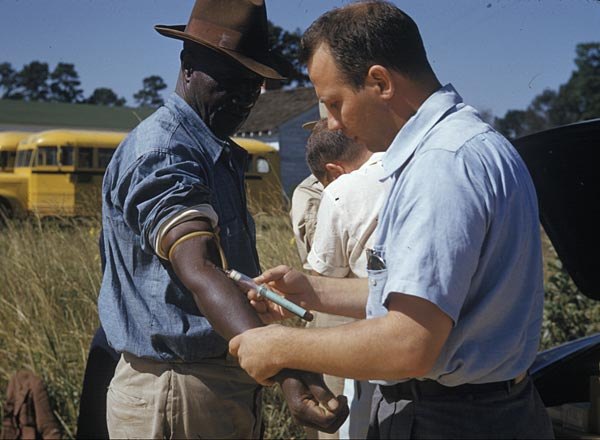
The most sobering fact about the Code is that it did not work as a shield. Unethical human experimentation continued for decades after 1947, and not only in distant or hostile places. The starkest case was American. From 1932 to 1972, the US Public Health Service ran the Tuskegee Syphilis Study in Macon County, Alabama, enrolling 600 Black men, 399 who already had syphilis and 201 without it as a comparison group. The men were told they were being treated for 'bad blood.' They were never told they had syphilis, and they were deliberately left untreated even after penicillin became the standard, effective cure in 1947, the very year of the Nuremberg Code, so that researchers could study the disease's full course to death. At least 128 of the men died of syphilis or its complications; by later accounts at least 40 of their wives were infected and at least 19 of their children were born with congenital syphilis. It was not exposed until the journalist Jean Heller published it in 1972, using information from Peter Buxtun, a Public Health Service worker who had objected for years. And Tuskegee was not alone: the Willowbrook hepatitis studies deliberately infected disabled children, and the US-run Guatemala experiments of 1946 to 1948, hidden until 2010, deliberately infected prisoners and patients with sexually transmitted diseases. The Code named the wrong; it could not by itself prevent it.
03What the Betrayal Built
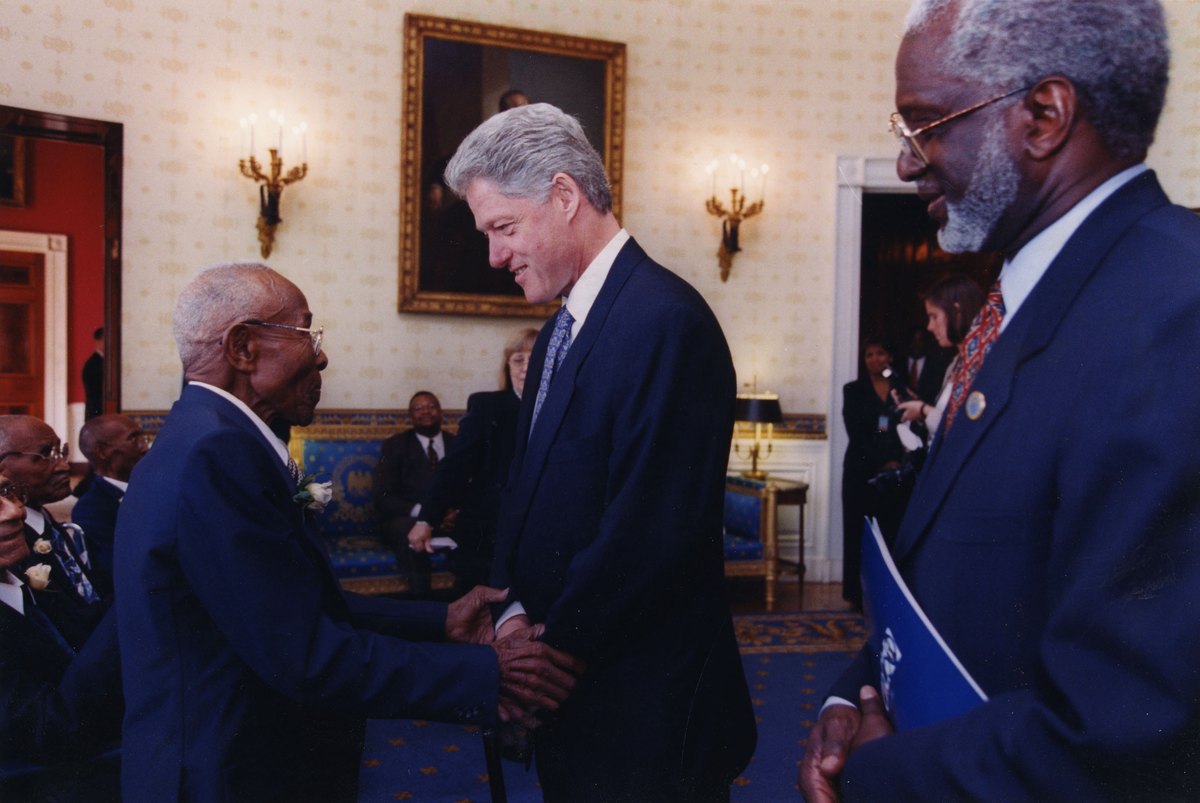
It was Tuskegee, not Nuremberg, that finally forced the United States to build real machinery. The public outrage after 1972 produced the National Research Act of 1974, which created a national commission, and that commission issued, in 1979, the document that governs American research to this day: the Belmont Report. Its lasting contribution was to refuse to rest everything on consent alone. It named three principles, not one: respect for persons (autonomy and informed consent), beneficence (maximize benefit, minimize harm), and justice (the burdens and benefits of research must be shared fairly, so that vulnerable groups are not made to bear the risks while others reap the rewards, which is precisely what Tuskegee had done). These principles were built into federal regulation: the government first issued its own human-subjects rule in 1981, then, a decade later in 1991, a uniform 'Common Rule' adopted across more than a dozen federal agencies, revised again in 2018. This is the origin of the Institutional Review Board, the ethics committee that must now approve human research at every university and hospital. In 1997, President Clinton delivered the nation's formal apology to Tuskegee's survivors in person.
04Consent Is Harder Than a Signature
The Belmont Report's refusal to rest on consent alone was wise, because the closer philosophers have looked at consent, the more fragile it turns out to be. Genuine informed consent, as the bioethicists Tom Beauchamp and James Childress formalized it, requires five separate things: disclosure of the relevant facts, comprehension of them, voluntariness, the competence to decide, and explicit authorization. A signed form guarantees none of these. In practice, research repeatedly finds that consent forms are written above the reading level of most patients, that time pressure crowds out real discussion, and that people frequently agree without understanding what they have agreed to. The philosopher Onora O'Neill argues that real consent needs genuine alternatives and the capacity to weigh them, conditions often absent under economic desperation or institutional power; Alan Wertheimer adds that even fully voluntary, informed consent can still be exploitative if the terms themselves are unfair. Most subtle of all is the 'therapeutic misconception,' identified by Paul Appelbaum and colleagues: research subjects naturally but wrongly assume that what happens to them is being decided for their own medical benefit, when a research protocol in fact serves the study. A person operating under that misunderstanding cannot truly weigh what they are agreeing to, no matter how many forms they sign. Consent is necessary. It has never been sufficient.
05The Global Frame, and Its Fault Lines
The Code's principles spread outward into a whole architecture of international standards. The World Medical Association's Declaration of Helsinki, first adopted in 1964, is the most important; it has been revised repeatedly, most recently in October 2024, and translates the Code's rules into working guidance for physicians running research. The Council for International Organizations of Medical Sciences added detailed guidance for research in poorer countries, and the ICH's Good Clinical Practice standard is now accepted for drug approval in over a hundred nations. But the frame has genuine fault lines that remain unresolved. Marcia Angell argued in 1997 that trials run in developing countries sometimes use placebo controls that would be forbidden in the sponsoring nation, calling it exploitation dressed as collaboration, a charge still debated. The 'replication crisis' revealed that a large share of published findings do not hold up when repeated, raising its own ethical questions about subjecting people to research that may be unsound. And the rise of population-scale data, health records, genomes, biobanks, social media, has strained the individual-consent model to breaking, since no one meaningfully consents to uses that have not yet been imagined, and virtually no one reads the agreements they click.
06The Overclaims
Four confident claims about all this are commonly made and should be refused. The first is that the Nuremberg Code was binding international law; it was not, and never has been, however profound its moral influence, and getting this right is not pedantry but the key to why it could be ignored. The second is that the Code was universally followed after 1947; Tuskegee, Willowbrook, and the Guatemala experiments prove otherwise, and Tuskegee alone ran for a quarter-century past it. The third is that Institutional Review Board approval prevents all research harm; oversight is real but imperfect, boards have approved dangerous studies, and only a small fraction of investigators are ever inspected. The fourth, and the deepest, is that voluntary informed consent, once obtained, resolves the ethics of research. It does not. Consent routinely fails on comprehension, bends under power and desperation, and dissolves under the therapeutic misconception, which is exactly why the Belmont Report built beneficence and justice alongside it rather than trusting a signature to carry the whole moral weight. The honest verdict is that the machinery built after Nuremberg and Tuskegee is a genuine and hard-won achievement, and that it is a floor, not a guarantee.
Fast Facts
- Where it was written
- Into the verdict of the Doctors' Trial (United States v. Karl Brandt et al.), August 1947
- Principle One
- 'The voluntary consent of the human subject is absolutely essential' (ten principles in all)
- Its legal status
- Never a treaty or statute; a judicial opinion with moral and precedential, not binding legal, force
- Tuskegee
- US Public Health Service, 1932 to 1972; 600 Black men deceived and left untreated; at least 128 died
- The response
- The Belmont Report (1979) and its three principles: respect for persons, beneficence, justice; the modern IRB
- Most recent global standard
- The Declaration of Helsinki, first adopted 1964, most recently revised October 2024
- The overclaims refused
- The Code was not law; not universally followed; IRBs are not infallible; and consent alone does not settle research ethics
What We Can Actually Stand Behind
The history is solid and precise. The Doctors' Trial ran from December 1946 to August 1947; sixteen of twenty-three defendants were convicted, seven executed; the Nuremberg Code's ten principles were written into that verdict, with voluntary consent as the first. The Tuskegee study ran from 1932 to 1972 with the figures given; the Belmont Report (1979) established its three principles; the Declaration of Helsinki was most recently revised in October 2024. And, load-bearing: the Code was never enacted as binding law.
The limits of consent are well documented, not speculative: the five elements of valid consent, the reading-level and time-pressure failures, the power-asymmetry critiques of O'Neill and Wertheimer, and the therapeutic misconception are all established findings. So are the live disputes: placebo controls in low-resource settings (Angell), the imperfections of IRB oversight, the replication crisis, and the strain that population-scale data places on the individual-consent model. These are unfinished arguments among serious people.
The frontier questions are genuinely open. Whether artificial intelligence can meaningfully assist or replace human ethical review, and whether emergency and big-data research can be justified by 'hypothetical' or 'broad' consent rather than the specific, informed kind, are debated without resolution. Dworkin's objection, that a hypothetical contract 'is no contract at all,' still bites.
Refuse all four. The Nuremberg Code was not binding law; it was not universally followed; IRB review does not prevent every harm; and informed consent, by itself, does not resolve research ethics. What is true is more modest and more durable: a hard-won system, built out of catastrophe and betrayal, that raised the floor beneath every person who has ever been asked to be a research subject, without ever making that floor a guarantee. The heart is still on the scale. The Code simply insisted that the person whose heart it is must first say yes, knowing what they are saying yes to.
There is a temptation, with a subject like this, to tell it as a story of progress: barbarism, then a code, then safety. The truth is graver and more useful. The Nuremberg Code did not descend as law and fix the problem; it was a sentence of moral clarity written by judges over the bodies of the tortured, and then it was ignored, most damningly by the very country whose tribunal had authored it, for another twenty-five years. What finally built real protection was not the eloquence of a principle but the shame of being caught, and even now the protection is partial, resting on a consent we know to be fragile and an oversight we know to be imperfect. That is not a reason for cynicism. It is a reason for vigilance. The men at Tuskegee were failed not because no one had written the rule, but because writing the rule was mistaken for keeping it. The Code's first principle remains exactly right, and exactly insufficient on its own, which is why every generation has to choose, again, to honor it.
Sources & further reading
Everything above is drawn from our research library on Theories of Anything. Open the full file to check the sourcing and go deeper.
Image credits
- Courtroom during the Doctors' Trial, Nuremberg, 1946-47 US Army photograph, via the US Holocaust Memorial Museum and Wikimedia Commons. Public Domain Source.
- Jadwiga Dzido shows scars from medical experiments to the Doctors' Trial, December 1946 US Army photograph, via the US Holocaust Memorial Museum and Wikimedia Commons. Public Domain Source.
- Blood draw during the Tuskegee Syphilis Study Centers for Disease Control and Prevention, via Wikimedia Commons. Public Domain Source.
- President Bill Clinton greets a survivor of the Tuskegee Syphilis Study, May 16, 1997 Sharon Farmer, White House Photograph Office, 1997, via Wikimedia Commons. Public Domain Source.
- Card crop of the Doctors' Trial courtroom US Army photograph, via the US Holocaust Memorial Museum and Wikimedia Commons. Public Domain


