
Conspiracy Thinking: Real Plots, Invented Patterns, and the Problem of Telling Them Apart

Some conspiracies are real, and the record proving it was published by the institutions that investigated them. Minds also assemble plots out of noise, and the machinery that does it has been measured in ordinary participants. This article carries both at full strength: five cases drawn from government archives and the courts, four cognitive mechanisms each set beside whatever stands against it, including a published null result and a failed replication, and the demarcation problem that philosophers have not solved. It adjudicates no contemporary dispute, treats nobody's belief as a symptom, corrects the errors it found in our own two research files in the open, and ends without the checklist you came for, because the evidence does not support one.
Something goes wrong in a way that feels too neat for luck. A run of decisions all falls the same direction; a document is missing from the file; the official account arrives quickly and fits well. Before any argument has been assembled, the mind has already offered a shape: somebody did this on purpose. That offer is the subject of this article, and it is worth saying at the outset that the offer is sometimes correct, and that the paperwork proving it was published by the institutions that investigated.
Two things are true at once and most writing on this subject drops one of them. Institutions have conspired against the people they were meant to serve, and the evidence is archived, indexed and downloadable. Minds also manufacture plots out of noise, and the machinery that does it has been measured in ordinary participants in ordinary laboratories. Neither fact cancels the other. What sits between them is a genuinely hard problem, older than the psychology and unsolved by the philosophy: how anyone tells a real plot from a pattern their own equipment invented.
Four boundaries and one rule before we start. Belief engineered from outside, by states and agencies and advertising, belongs to this wing's article on propaganda, and nothing below re-tells it: this article is the mirror case, a pattern-detecting mind meeting a noisy world with nobody necessarily engineering anything. Visual illusion belongs to the illusion of seeing. The Kahneman and Tversky bias programme belongs to the mind's blind spots and appears here in one sentence and a pointer. The research ethics of the Tuskegee study belong to the Nuremberg Code, which tells that story at length; it enters here for one narrow purpose and one paragraph. And the rule: this article names no current party, movement or leader, adjudicates no live controversy, and treats nobody's belief as a symptom. Every conspiracy documented below is closed, was investigated by a body with the power to compel a record, and is archived by that body or its successor.
01What Is Already On The Record
Start where the argument usually ends. The strongest objection to any general account of conspiracy belief as error is that some conspiracies happened, were denied while they were happening, and are now documented by the institutions that ran them. Five documents follow: four conspiracies that occurred, and one that was proposed and refused. They are here to establish a single load-bearing point, which is that suspicion of institutions is not by itself a cognitive defect, because institutions have earned some of it on the record.
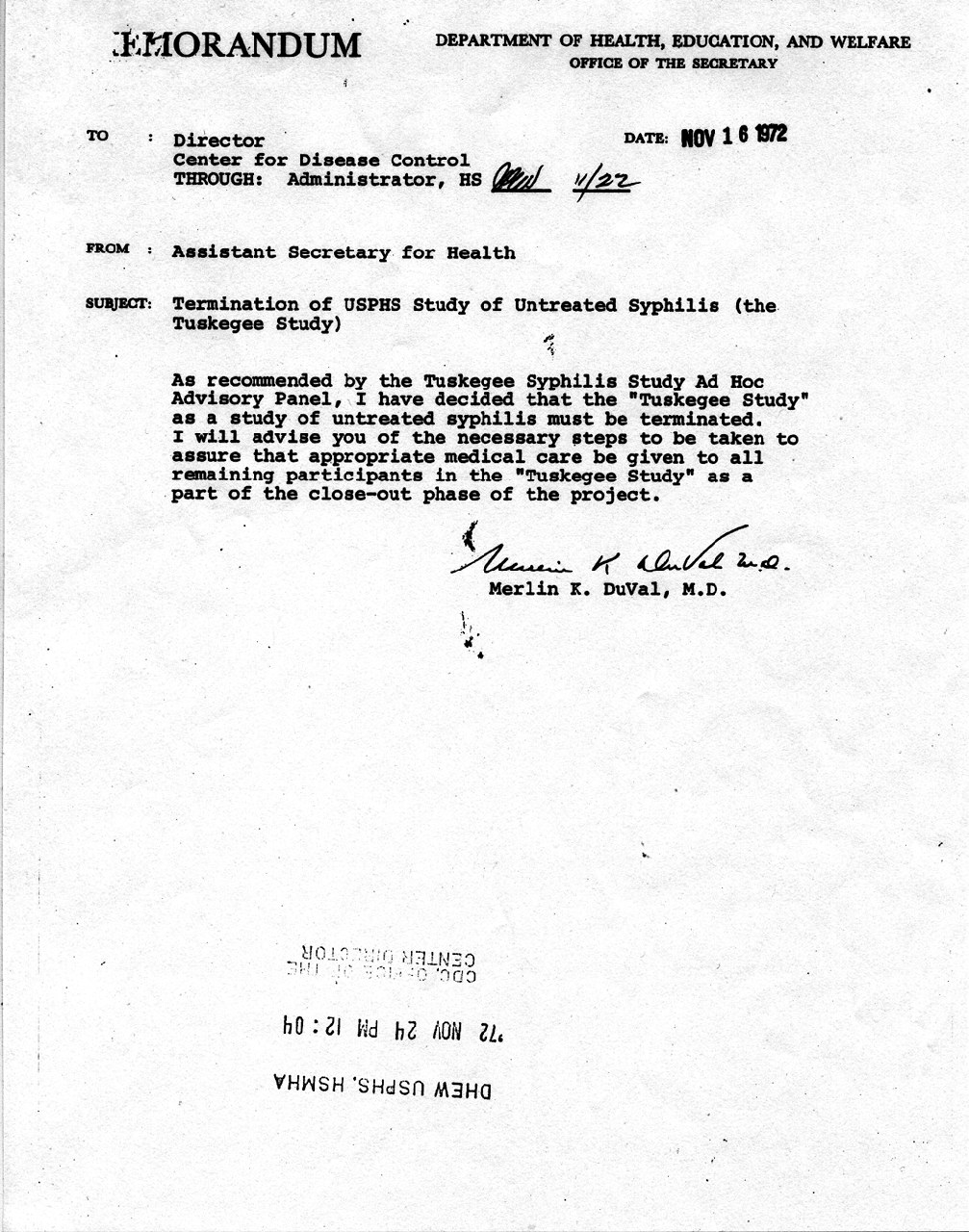
The United States Public Health Service ran an untreated syphilis study at Tuskegee from 1932 to 1972. On the account published by the Centers for Disease Control and Prevention, researchers did not collect informed consent from the participants and did not offer treatment even after treatment was easily available. The study ended in 1972 on the recommendation of an Ad Hoc Advisory Panel convened by the Assistant Secretary for Health and Scientific Affairs, following the publication of news articles about it; the panel's final report followed in 1973. A 1974 out-of-court settlement of ten million dollars was divided into four categories by group and survivorship, and President Clinton issued a formal presidential apology in 1997. The panel's own report records, as the CDC reproduces it, that "...the Macon County Health Department and Tuskegee Institute were cognizant of the study." The leading ellipsis there is the CDC's own and marks words omitted from inside the panel's sentence. The research-ethics story that follows from all this, the Doctors' Trial, the Belmont Report, the review-board system, is told by the Nuremberg Code and is not retold here.
The same CDC page carries a correction this article is obliged to make, because the correction is an instance of the article's own subject. Asked whether the men were purposefully infected for the study, the CDC answers with a plain No. The 399 men in the syphilitic group were recruited because they already had late-latent syphilis, and the 201 men in the control group did not have the disease. The version that circulates, in which a government infected people on purpose, is a false pattern laid over a true horror. The documented history is damning without the embellishment, and the embellishment is exactly the process the rest of this page describes. Both halves of that sentence have to be carried at once, which is what makes this the hardest paragraph in the article to write and the most necessary.
The CIA's MKULTRA programme of research in behavioural modification is documented in the record of a joint hearing before the Senate Select Committee on Intelligence and the Subcommittee on Health and Scientific Research of the Committee on Human Resources, held on August 3, 1977. That hearing record is the citable document, rather than any of the hundreds of retellings built on top of it, and the distinction between the two is this article's subject in miniature. The committee serves the scanned volume itself, from the path its documents moved to in 2024, and it is linked at the foot of this page; the older locator, which is the one that circulates, redirects there. What is linked is the volume and not a reading of it: nothing on this page is drawn from inside it, so the hearing is cited here for what it is and when it was held, and for nothing quoted from inside it.
The FBI's COINTELPRO operations against domestic political organisations are documented in the Church Committee's final report, Senate Report 94-755 of 1976. Book II covers intelligence activities and the rights of Americans; Book III carries the supplementary detailed staff reports. Both are linked at the foot of this page, and where they are hosted is part of the point. The Senate intelligence committee's own website serves its predecessor's report, fifty years on. A government's own machinery published, and still publishes, the evidence of what that government did.
Operation Northwoods is a declassified memorandum titled Justification for US Military Intervention in Cuba, provided by the Joint Chiefs of Staff to Secretary of Defense Robert McNamara on March 13, 1962, written in response to a request from Col. Edward Lansdale, Chief of the Cuba Project, as part of the covert anti-Castro programme known as Operation Mongoose. It runs to fifteen pages, was classified Top Secret, and is held by the National Security Archive at George Washington University. Two halves, and the document is misused whenever either is dropped. It is a record of proposals: it shows what was put forward, not what was carried out, and the proposals were not adopted. It is also public, which means plans of exactly the shape a conspiracy narrative describes have genuinely been drafted at the top of a government, and that this particular one was stopped and then released. An article that carries the first half without the second has misread its own source.
The fourth conspiracy is not a government at all. The tobacco industry's coordinated campaign to manufacture doubt about the health effects of smoking is documented in the peer-reviewed public-health history literature, including Allan Brandt's 2012 account of the industry's tactics in the American Journal of Public Health. It reached the record by a different route from the other three: civil litigation, and discovery, which put the companies' own internal documents into the open. Two sentences is all it gets here, and the analogy is deliberately not extended to any current industry dispute.
| The Case | What The Record Establishes | How It Became Knowable |
|---|---|---|
| The Untreated Syphilis Study at Tuskegee, 1932 to 1972 | No informed consent collected and no treatment offered even once treatment was easily available, on the CDC's own account. The men were not deliberately infected; the CDC's own page answers that question with a plain No | News articles were published, an Ad Hoc Advisory Panel convened by the Assistant Secretary for Health and Scientific Affairs recommended termination, the study ended in 1972, and the panel's final report followed in 1973 |
| Project MKULTRA, CIA research in behavioural modification | A real programme, placed on the public record through a congressional investigation | A joint hearing before the Senate Select Committee on Intelligence and the Subcommittee on Health and Scientific Research, August 3, 1977, whose scanned record the committee still serves from its own website |
| COINTELPRO, FBI operations against domestic political organisations | Documented in the Church Committee's final report, Senate Report 94-755 of 1976, Books II and III | A Senate select committee compelled the record and printed it, and the successor committee still serves it from its own website |
| Operation Northwoods, March 13, 1962 | A fifteen-page Top Secret memorandum from the Joint Chiefs of Staff to the Secretary of Defense. Proposals, not operations, and they were not adopted | Declassified, and posted by the National Security Archive at George Washington University |
| The tobacco industry's campaign to manufacture doubt | A coordinated campaign about the health effects of smoking, documented in peer-reviewed public-health history | Civil litigation and discovery, which put the companies' own internal documents into the open |
02The Words We Are Using
Before the psychology, a question the psychology cannot settle. M. Giulia Napolitano and Kevin Reuter, writing in Erkenntnis in 2021, work on what a conspiracy theory even is, and on whether the ordinary use of the phrase already carries an evaluative charge that a neutral definition would strip out. This matters because the phrase is doing two jobs at once. Descriptively it names a claim that some outcome was produced by a hidden coordinated plan. Dismissively it names a claim not worth examining. Most arguments about conspiracy theories are really arguments about which job the phrase is doing, and neither side tends to say so.
The label has been studied as a social move in its own right. Ginna Husting and Martin Orr, in Symbolic Interaction in 2007, analysed the term conspiracy theorist as a strategy of exclusion: a move that removes a speaker from the conversation without engaging anything the speaker said. That is the risk sitting over this entire page, and it is better named than managed. An article about the conspiracy mind can become, inside a single sentence, the machinery that paper describes.
The move also fails on its own terms. Michael Wood, in Political Psychology in 2016, tested whether attaching the label conspiracy theory to a claim reduces belief in it, and reported that it does not. Put the two findings side by side and the accounting is bleak. The label costs the person it is applied to, and buys the person applying it nothing.
So a note on the vocabulary of this page, because every choice in it is deliberate. In its own voice it carries no head count of believers and no characterisation of them as a population: no most people who, no tend to be, no them. Where one of our own research files does characterise them, the file is named and the claim is credited to it rather than asserted here. The single population figure this page states is a specific survey estimate with its country, its years and its design attached, and that figure is about how many people endorse at least one claim, not about who those people are. Nobody here is called gullible, deluded or unhinged, and nobody is described as having gone down a rabbit hole. Every mechanism below was measured in ordinary participants and describes a tendency, never a type of person.
03What The Science Actually Measures
The first thing to understand about this literature is what it puts a number on. It does not adjudicate any particular claim. It measures a disposition, on a continuous scale, independently of whether any given theory happens to be true. The Generic Conspiracist Beliefs Scale, published by Robert Brotherton, Christopher French and Alan Pickering in Frontiers in Psychology in 2013, was built to measure endorsement of conspiracist ideation in general rather than agreement with any named theory, and it is one of the standard instruments in the field. Everything downstream inherits that limit. A score is not a verdict about the world, and no finding below tells you whether a specific plot occurred.
The most quoted number in this field is smaller than the version in circulation, including the version in our own research file. J. Eric Oliver and Thomas Wood, in the American Journal of Political Science in 2014, drew on four nationally representative surveys sampled between 2006 and 2011 and reported that half of the American public consistently endorses at least one conspiracy theory. Half. Our own file T_4_01 prints a range topping out at seventy percent, and that upper bound has no source in the paper the file cites for it. The figure belongs to one country, to a window that closed in 2011, and to whichever specific statements those surveys put to respondents. Detached from all three it is not information, and this article never states it without them.
The same paper's headline negative result is the one popular writing never carries, and it forecloses three of the four stories a reader tends to arrive with. In Oliver and Wood's data, conspiracism was not a product of greater authoritarianism, not a product of ignorance, and not a product of political conservatism. What did predict it, on their analysis, was a willingness to believe in unseen intentional forces and an attraction to what they call Manichean narratives.
Why study a disposition at all, rather than particular beliefs? Because of a finding from 1994. Ted Goertzel, in Political Psychology, proposed that conspiracy beliefs form a monological belief system: a self-sustaining worldview in which endorsing one conspiracy theory predicts endorsing others, because each is supported less by its own evidence than by the general framework. A note on the name, since this article is about how errors propagate. Our file ZC_1_17 calls him Michael Goertzel; our file T_4_01 renders him as an editor rather than the sole author he is. He is Ted Goertzel, and the paper is his alone.
The strangest demonstration of that framework is also the most misreported. Michael Wood, Karen Douglas and Robbie Sutton, in Social Psychological and Personality Science in 2012, found that endorsement of mutually incompatible conspiracy theories was positively correlated. In their first study, of 137 participants, the more strongly people believed Princess Diana faked her own death, the more strongly they also believed she was murdered. In their second, of 102 participants, belief that Osama bin Laden was already dead before the compound was raided went with belief that he was still alive. The popular gloss is that believers hold flat contradictions at full strength. The paper does not say that. Its own hierarchical regression analysis attributes the correlation to a third thing both beliefs share, the view that the authorities are engaged in a cover-up, and concludes that the monological character of conspiracy belief is driven not by the theories supporting one another but by broader beliefs supporting conspiracy theories in general. The specific stories are downstream of a prior suspicion, which is a far more interesting claim and a far more defensible one. Two correlational samples from one laboratory, and the result should be read at that size.
Then the field qualified its own idea. Robbie Sutton and Karen Douglas, in a 2014 chapter examining the monological account directly, concluded that conspiracy beliefs do not all cluster equally, and that some are considerably more independent of the general disposition than the monological framing implies. Two of the three authors of the dead-and-alive study wrote the correction to the theory their own result had supported. That is worth noticing at least once, because it is the behaviour a reader is entitled to expect from a field and rarely gets shown.
Belief has measured downstream effects too, and the shape of the measurement matters more than the headline. Daniel Jolley and Karen Douglas, in the British Journal of Psychology in 2014, found that exposure to conspiracy theories decreased participants' stated intentions to engage in politics and to reduce their own carbon footprint. That is an effect of exposure on stated intentions, from one laboratory, and it is not a description of how anybody lives. Our file T_4_01 cites the paper to the wrong journal, the wrong volume and the wrong page range. The correct record is given in the source notes at the foot of this page, along with the reason this article names the study and does not link it.
Two general anchors, for a reader who wants the field rather than this article's slice through it. Karen Douglas, Joseph Uscinski, Robbie Sutton, Aleksandra Cichocka, Turkay Nefes, Chee Siang Ang and Farzin Deravi published a seven-author consolidated review, Understanding Conspiracy Theories, in Political Psychology in 2019, covering measurement, individual differences, group processes and consequences. Jan-Willem van Prooijen and Karen Douglas set out the basic principles the research domain has converged on, in the European Journal of Social Psychology in 2018. Our file ZC_1_17 attempts to cite that second paper and merges it with a different 2017 paper by the same two authors on societal crisis situations, producing one citation that points at neither work.
04The Machinery
Now the machinery, which is what the rest of this library leans on this page for. When another article here explains why a mistaken reading of a photograph, a recording or a coincidence felt overwhelmingly true to the person who made it, the explanation is drawn from the four mechanisms below. Each is set out with the evidence supporting it and with whatever stands against it, and in one case what stands against it is a published null result in a leading journal.
The first mechanism is pattern perception: the reading of meaning and intention into randomness. The technical term is apophenia, and the term needs handling before it can be used at all. It comes out of clinical psychiatry, and the study cited here for it, by S. Fyfe, C. Williams, O. Mason and G. Pickup in the journal Cortex in 2008, examines it alongside theory of mind and schizotypy in a clinical neuroscience setting. That is the word's origin, and the origin is not the sense used here. In conspiracy research the tendency is treated as normal range and present in everyone, which is how this article uses it. After this paragraph the plain phrase pattern perception does the work, and the clinical freight stays where it came from.
The evidence that pattern perception relates to conspiracy belief comes mainly from one collaboration. Jan-Willem van Prooijen, Karen Douglas and Clara De Inocencio, in the European Journal of Social Psychology in 2018, ran five studies: pattern perception in randomly generated coin toss outcomes; pattern-search instructions, with an indirect effect running through pattern perception; patterns perceived in chaotic as against structured paintings; agreement with texts supporting paranormal phenomena or conspiracy theories predicting pattern perception; and an experimental manipulation of belief in a specific conspiracy theory. Their conclusion is stated in their own words: "We conclude that illusory pattern perception is a central cognitive mechanism accounting for conspiracy theories and supernatural beliefs." Five studies from one collaboration are not five independent replications. This is the central mechanism claim of both our research files, and it does not travel on this page without the paragraph that follows it.

Three years earlier, in Psychological Science, Sebastian Dieguez, Pascal Wagner-Egger and Nicolas Gauvrit had published a null result whose subtitle states it outright: "A Low Prior for Randomness Does Not Explain Belief in Conspiracy Theories." It sits in the reference list of the five-study paper above. The two are not strictly the same test, and saying so is part of carrying the pair honestly: the five studies measure illusory pattern perception across several tasks, while the null targets the prior for randomness specifically. That distinction is real and it does not dissolve the problem. The honest statement is that this literature's central mechanism has real support and a real published challenge in a leading journal, and that the field has not closed the question. No winner is crowned here.
The sharpest available version of what connecting the dots means as a measurable behaviour comes from Reine van der Wal, Robbie Sutton, Jens Lange and Joao Braga, in the European Journal of Social Psychology in 2018. They approached the territory from the causal side, testing whether conspiracy thinking goes with perceiving causal connections between events that merely co-occur or are spuriously correlated. That is not seeing shapes in clouds. It is binding two real events into a causal pair the data does not license, which is much closer to what the argument is actually about, and much harder to laugh at.
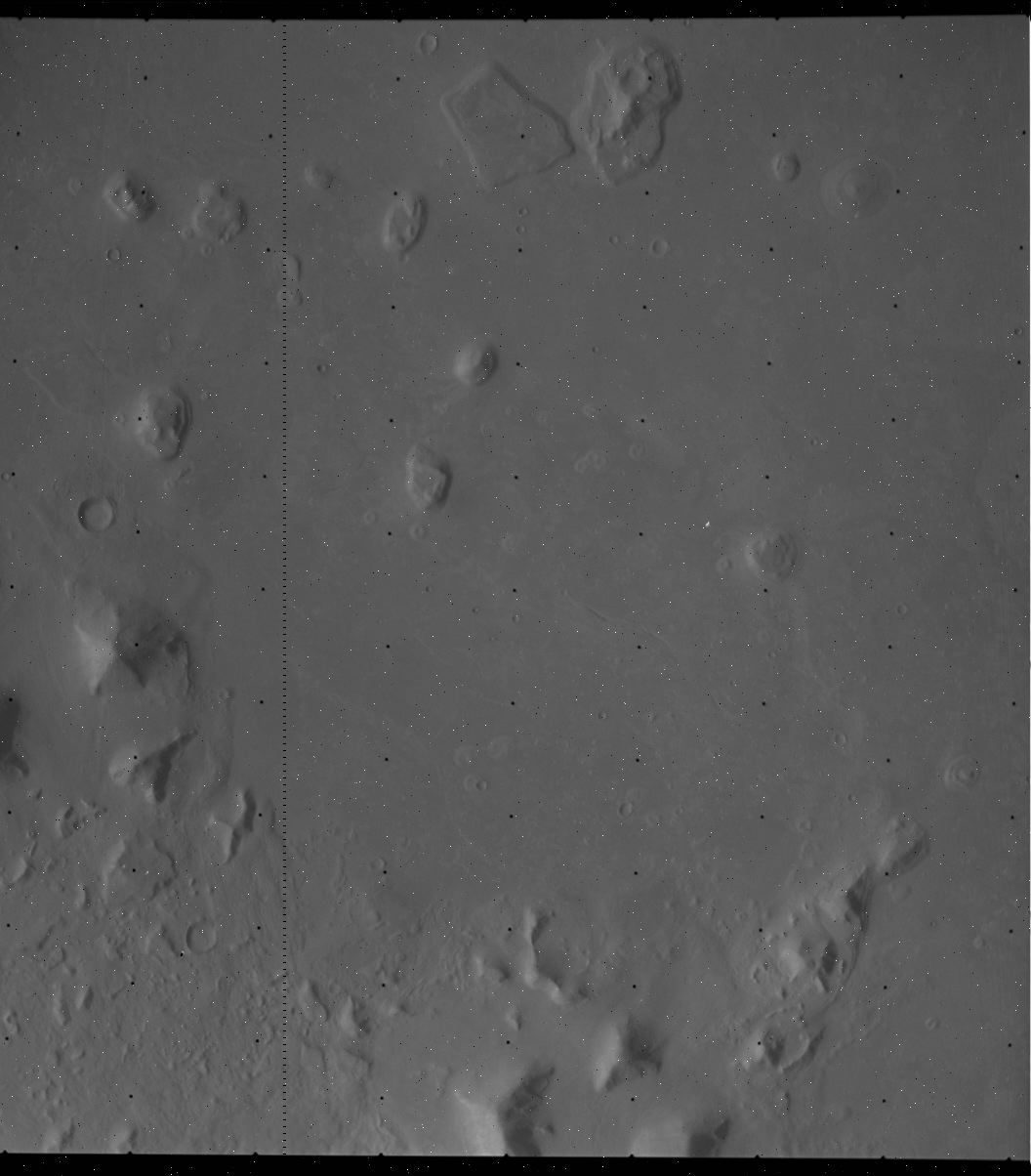
There is a test that applies to any perceived pattern, and it is not a psychological test. It is what happens to the pattern when the instrument improves. A shape that resolves into ordinary structure under better data was never in the world; it lived in the interaction between the world and a coarse look at it. A shape that survives better data is evidence, and it gets sharper rather than softer. That asymmetry is the entire reason the five documents in section 01 count as knowledge while a striking coincidence does not: somebody looked harder, and the shape stayed. It is also why the most useful thing to do with a pattern that feels overwhelming is not to argue about it but to go and find a better instrument.
The second mechanism is agency detection, and its intellectual history is a caution in itself. The account comes from the cognitive science of religion, where Justin Barrett, in Trends in Cognitive Sciences in 2000, argued that human minds carry a strongly biased device for inferring the presence of an intentional agent behind an ambiguous event. Barrett's paper is about the natural foundations of religion. It contains no conspiracy data of any kind. Both of our own research files import it as the source of the mechanism, which is right as intellectual history and wrong as evidence: it is a clean instance of an idea travelling between fields faster than the data behind it.
The evidence for the mechanism inside conspiracy research is more recent and much narrower. Karen Douglas, Robbie Sutton, Mitchell Callan, Rael Dawtry and Annelie Harvey, in Thinking and Reasoning in 2016, tested hypersensitive agency detection against conspiracy belief directly and reported an association: the tendency to read intention into ambiguous events goes with endorsement of conspiracy theories. One study, one laboratory, one association.
That laboratory is worth naming once. The University of Kent group stands behind the dead-and-alive study, the three-motive framework in section 05, the exposure experiment and this agency-detection test: four of the load-bearing findings on this page come from one research group. Saying so is not an attack on the group. It is a statement about the shape of the evidence, and a field whose main results concentrate in one collaboration is a field with a known fragility. A reader is entitled to know that before deciding how much weight these mechanisms will bear.
A second laboratory has tested the same tendency outside conspiracy research. Michiel van Elk, in Consciousness and Cognition in 2013, reported that paranormal believers were more prone to illusory agency detection than skeptics. That is a finding about paranormal belief and not about conspiracy belief, and it is carried here for exactly that reason: this is the seam where the machinery on this page is offered to the rest of the library. When a page elsewhere explains why a photograph, a voice on a recording or a run of coincidences felt like the work of something intending it, this is the mechanism it is reaching for, and this is the size of the evidence it is reaching for.
The third mechanism is proportionality, and it is older than the current literature by some distance. Clark McCauley and Susan Jacques published a Bayesian analysis of the popularity of conspiracy theories of presidential assassination in the Journal of Personality and Social Psychology in 1979. The question was being modelled formally almost half a century ago, which is worth knowing when the mechanism is presented as recent cognitive science.
Patrick Leman and Marco Cinnirella gave the effect its standard name and its standard demonstration in Social Psychological Review in 2007, in a paper titled A major event has a major cause. A large event feels as though it must have a large cause, so the assassination of a president fits a vast plot better than it fits a lone gunman. No effect size appears here: the paper is not open access and no magnitude was obtained for this article.
The same inference turns up a long way from any conspiracy. Robyn LeBoeuf and Michael Norton documented consequence-cause matching in consumer judgment, in the Journal of Consumer Research in 2012: people infer the size and the character of a cause from the size and the character of its consequences. That is the finding that stops proportionality sounding like a defect peculiar to a certain kind of person. It was measured in shoppers.
A fourth piece of machinery gets one sentence here because this wing already owns it properly. The conjunction fallacy, from Amos Tversky and Daniel Kahneman in Psychological Review in 1983, is the finding that a conjunction of specific details can be judged more probable than either of its parts, even though it cannot be: adding detail makes a story feel more likely while making it strictly less likely. The programme it belongs to is treated in the mind's blind spots.
Robert Brotherton and Christopher French, in Applied Cognitive Psychology in 2014, tested the link to conspiracy belief directly and reported that conspiracy belief goes with greater susceptibility to the conjunction fallacy. A single study on that specific link. Our file T_4_01 asserts the connection with no source attached at all, and this is the source. It also explains something a reader can feel from the inside: the elaborate version of a story, the one with the names and the dates and the motive filled in, is the persuasive version, and every detail added to it makes it less likely to be true.
The fourth mechanism is the one our own files most under-serve, and it is the one that keeps this article honest. Joseph Pierre, in the Journal of Social and Political Psychology in 2020, proposes a two-component socio-epistemic model in which conspiracy belief arises from epistemic mistrust of authoritative sources combined with exposure to misinformation that fills the gap the mistrust opens. On that account the mistrust comes first: it is the door, and the misinformation is what walks through it. Our file T_4_01 treats institutional trust only as a policy remedy in its closing line, which leaves three mechanisms describing a mind making errors and no account at all of the world that mind is responding to. Section 01 of this article is that world, and it is archived.
| The Mechanism | What Is Actually Measured | What Stands Against It, Or Limits It |
|---|---|---|
| Pattern perception | Perception of pattern and meaning in randomness: coin toss outcomes, chaotic as against structured paintings, and causal binding of events that merely co-occur or are spuriously correlated | A published null result in Psychological Science on the randomness account, cited in the supporting paper's own reference list. The supporting evidence is five studies from one collaboration |
| Agency detection | The tendency to infer an intentional agent behind an ambiguous event, tested against conspiracy belief and reported as an association | The founding paper is about religion and contains no conspiracy data. The conspiracy test is one study from one laboratory, and the second laboratory tested the tendency against paranormal belief instead |
| Proportionality | A large event is felt to require a large cause. Named and demonstrated in 2007, modelled formally as early as 1979 | No effect size is stated on this page. The same inference is documented in ordinary consumer judgment, which makes it a general feature of causal reasoning rather than a marker of anything |
| Epistemic mistrust | Mistrust of authoritative sources as the first component, exposure to misinformation as the second. A model of how the two combine, rather than a single measured effect | It is a proposed model, published in 2020, and it is carried here as one. Its first component has documented referents, and that is the point rather than a weakness |
05Motive, Control, And A Comfort That Does Not Arrive
The standard motivational frame in this field is three-part, and it is almost always repeated without its second half. Karen Douglas, Robbie Sutton and Aleksandra Cichocka, in Current Directions in Psychological Science in 2017, organise the evidence around three motives that conspiracy belief appears to serve: epistemic, understanding one's environment; existential, being safe and in control of it; and social, maintaining a positive image of the self and the group. Then their own review says this: "However, little research has investigated the consequences of conspiracy belief, and to date, this research does not indicate that conspiracy belief fulfills people's motivations. Instead, for many people, conspiracy belief may be more appealing than satisfying." The word appears, in their first sentence, is not padding either, and it is kept here. The motives are what the belief looks built for. Whether it delivers them is a separate question, and the evidence to date does not show that it does.
One existential account has a famous experiment behind it. Jennifer Whitson and Adam Galinsky, in Science in 2008, reported that experimentally reducing participants' sense of control increased their perception of illusory patterns, including in visual noise and in unrelated events. It is one of the most cited results in the area. It is also a single study, from a period in social psychology whose findings have been unusually hard to reproduce, and it does not travel on this page alone.
Michiel van Elk and Paul Lodder attempted the same manipulation and published the outcome in Collabra: Psychology in 2018, under a title that reports it: "Experimental Manipulations of Personal Control do Not Increase Illusory Pattern Perception." That journal's editorial model is built around replication and transparent reporting. A striking result in Science, a direct test ten years later, and a null. If a reader keeps one thing from this page, keep this pair, because it is what the difference between a finding and a fact looks like in practice. Note also that the researcher who reported the paranormal agency-detection association in section 04 is the researcher who published this null: that is not inconsistency, it is what a working scientist looks like.
A second and older construct is need for cognitive closure, from Arie Kruglanski and Donna Webster in Psychological Review in 1996: the desire for a definite answer and the discomfort of ambiguity, which they describe as seizing on an answer and then freezing on it. The construct is well established, and it is not about conspiracies.
Whether it predicts conspiracy belief is not settled, and our own file says so in its own words, which is the corpus at its best. T_4_01 files this at its second tier and states that some studies find no relationship, and that conspiracy beliefs may increase uncertainty rather than reduce it. The paper it anchors on is Patrick Leman and Marco Cinnirella in Frontiers in Psychology in 2013. Our file then proposes its own reconciliation, that timing matters, with a theory adopted early providing closure and one encountered later creating uncertainty. That is a hypothesis our file offers, not a result anybody has reported, and it is carried here as the hypothesis it is.
06Cognitive Style, Education, And What Neither One Fixes
Viren Swami, Martin Voracek, Stefan Stieger, Ulrich Tran and Adrian Furnham published a paper in Cognition in 2014 titled Analytic thinking reduces belief in conspiracy theories. The title is a causal claim, and the discipline of this page is to prefer what was measured to what was concluded. One of the studies in that package induced analytic thinking through a processing-disfluency manipulation, a technique whose general reliability has been questioned in the years since. So: carry it as the field's standard citation on cognitive style. Do not carry it as a demonstrated cause.
The refinement that makes that finding usable is Tomas Stahl and Jan-Willem van Prooijen, in Personality and Individual Differences in 2018: skepticism toward unfounded beliefs requires both sufficient cognitive ability and the motivation to be rational. Ability alone is not enough. Read that twice, because it applies to the reader of this page and to whoever wrote it. The remedy this literature offers is not intelligence and it is not information. It is a disposition, and dispositions are not handed out with education.
Education does show up in the data. Jan-Willem van Prooijen, in Applied Cognitive Psychology in 2017, examined why education predicts decreased belief in conspiracy theories, treating the association as real and as something requiring an explanation rather than as a solution.
The field's systematic review and meta-analysis is Andreas Goreis and Martin Voracek, in Frontiers in Psychology in 2019, covering field characteristics, measurement instruments and associations with personality traits. Our file ZC_1_17 describes it in its body as a 2018 meta-analysis in Psychological Bulletin, while its own bibliography gives the right year and the right journal. A document that contradicts itself between body and bibliography is a small thing, and correcting it in the open is the least this article can do while asking a reader to check anything.
And a figure this page refuses. The same sentence in ZC_1_17 attaches to that meta-analysis a specific correlation coefficient between conspiracism and analytical thinking. The research behind this article resolved the paper and its full title, which scopes it to field characteristics, measurement instruments and personality traits, and could not verify that coefficient against it. No coefficient for that meta-analysis appears anywhere on this page, including our own file's, because an unverified number is the most quotable thing an article can print and the hardest thing to withdraw. The qualitative association between analytic cognitive style and lower endorsement is carried above, without a number, which is all the evidence gathered here will support.
Refused: that education, intelligence or information eliminates conspiracy thinking. Education is associated with lower endorsement and does not abolish it. Skepticism toward unfounded beliefs has been reported to require the motivation to be rational as well as the ability. And ZC_1_17 marks as debunked the claim that conspiracy belief is confined to uneducated populations. Whatever this subject is, it is not a deficit that schooling closes.
One phrase is refused outright here, and naming the refusal is part of the method. Our file T_4_01 carries this argument through a coined phrase that treats the person it describes as a fool, attributed to a 2013 paper. This article does not reprint it. Three reasons, any one of them sufficient: it insults the person it describes, which is a standard this page has set itself rather than a matter of taste; the identifier behind the paper it comes from could not be resolved during the research for this article; and the substantive point survives intact on two papers whose identifiers did resolve, both cited above. Refusing a phrase costs nothing when the finding is carried elsewhere.
07Not An Illness
Roland Imhoff and Martin Bruder, in the European Journal of Personality in 2014, argue for treating conspiracy mentality as a generalised political attitude, a stance toward power, rather than as a personality defect or a symptom. That is a measurement claim and not a request for tolerance: their case is that the construct behaves like an attitude toward power and is better modelled as one. Their title also catches the ambivalence of this whole subject in four words, speaking untruth to power.
The comparison with paranoia has been taken seriously enough to be tested, which is better than either asserting it or denying it. Roland Imhoff and Pia Lamberty, in the European Journal of Social Psychology in 2018, asked how paranoid conspiracy believers are, and their title states their result: there is a connect and a disconnect between paranoia and belief in conspiracy theories. Related, and not the same thing. Both halves are the finding. This page uses the clinical word in this paragraph only, in the sense that paper uses it, as a construct being carefully distinguished from conspiracy belief, and never as a description of a person.
Daniel Freeman and Richard Bentall, two clinicians, examined what conspiracy concerns travel with, in Social Psychiatry and Psychiatric Epidemiology in 2017, drawing on national comorbidity survey methodology. Our file T_4_01 cites that paper for a negative claim: that mainstream conspiracy belief is not a psychiatric disorder. This article cites it for that same negative claim and for nothing else. Its positive findings about what conspiracy concerns co-occur with were not retrieved first-hand for this page, and summarising them loosely is precisely how an article that refuses to pathologise becomes one that pathologises.
Refused: that conspiracy theorists are mentally ill. T_4_01 states that mainstream conspiracy belief is not a psychiatric disorder, and that most believers are psychologically ordinary people responding to genuine uncertainty with imperfect tools. ZC_1_17 marks the claim debunked. The strongest answer, though, is not a denial at all but the measurement above: somebody took the comparison seriously enough to test it, and reported a connect and a disconnect. This refusal is not a courtesy extended to believers. It is what the cited evidence says, and the vocabulary that carries the claim is refused along with the claim.
08None Of This Is New
Richard Hofstadter's essay The Paranoid Style in American Politics appeared in Harper's Magazine in November 1964 and was expanded into a book the following year. Our file ZC_1_17 records the features he identified: a vast and insidious conspiracy as the motive force of history, an enemy who is perfectly evil and superhumanly competent, and a demand for the total elimination of the perceived threat. He traced the pattern through Anti-Masonic movements in the 1820s and 1830s, anti-Catholic nativism from the 1830s to the 1850s, populist anti-banking conspiracism in the 1890s, and McCarthyism in the 1950s. The caveat travels with the essay in our own file and it is not optional here: Hofstadter's psychological framing has been criticised as patronizing, while his documentation of the pattern's recurrence remains foundational. His central word is the vocabulary this article otherwise refuses, and carrying his term without his critics would contradict the standard this page has set for itself.
Jan-Willem van Prooijen and Karen Douglas, in Memory Studies in 2017, make the same point as a general one: conspiracy theories are a recurring feature of history rather than a modern aberration, and they surface particularly around societal crisis situations.
Whether they are becoming more common is a real question and this article does not answer it. Joseph Uscinski and Joseph Parent, in American Conspiracy Theories in 2014, argue that conspiracy theorising is not increasing, that it has been a consistent feature of American political culture since the founding era, and that what has changed is the speed of dissemination and the ability of conspiracy communities to organise. That is their argument, attributed to them, and not a settled finding; their book is named here and not linked, because its identifier could not be verified for this page. The question has since been put to a direct empirical test: Joseph Uscinski, Adam Enders, Casey Klofstad, Michelle Seelig, Hugo Drochon, Kamal Premaratne and Manohar Murthi published a paper in PLOS ONE in 2022 whose title is the question, Have beliefs in conspiracy theories increased over time? This article states that the paper exists and does not state what it found, because the result was not retrieved for this page. Even so the existence earns its place: a seven-author study asking the question tells a reader the assumption is open rather than background.
The lineage runs back further, in one sentence. Karl Popper's chapter The Conspiracy Theory of Society, in Conjectures and Refutations in 1963, is the standard philosophical starting point for the modern discussion, arguing against the view that social events are generally to be explained by the intentions of those who benefit from them. Nothing about that chapter was verified first-hand for this article and no identifier was obtained for it, so it is named as lineage and appears nowhere in the sources below. The philosophy this article actually leans on is sixty years newer and is in section 11.
One more entry from the academic literature, carried without a wink because the fact is enough on its own. Cass Sunstein and Adrian Vermeule, in the Journal of Political Philosophy in 2009, analysed conspiracy belief as arising from a crippled epistemology, meaning a limited and biased information environment rather than a defective mind. That half is a useful idea and it belongs beside the epistemic-mistrust mechanism in section 04. The same paper proposed that government agents might counter conspiracy theories by cognitive infiltration of the groups that hold them, a proposal that drew heavy criticism on civil-liberties grounds. Both halves are documented intellectual history, both are recorded by our own file, and this article draws no contemporary inference from either.
09The Question This Article Will Not Settle
There is one question every reader of a page like this wants answered, and it is genuinely open. Whether conspiracy belief is elevated at both ends of the political spectrum has named published work pulling in opposite directions. Jan-Willem van Prooijen, Andre Krouwel and Thomas Pollet, in Social Psychological and Personality Science in 2015, reported a quadratic relationship between the strength of political ideology and conspiracy beliefs across four studies conducted in the United States and the Netherlands, with belief in simple political solutions as a mediator and the effect not attributable to general attitude extremity. Roland Imhoff, Felix Zimmer, Olivier Klein and thirty-two further authors took the same question to 26 countries, in Nature Human Behaviour in 2022. The two are not reconciled. This page does not report which way the 26-country study came out, because that result was not retrieved for it. Our file T_4_01 calls the symmetry question contested and politically sensitive; this article agrees, and treats that as binding.
Set beside those two the negative result from section 03, which is the third leg of the same question: in four nationally representative American surveys sampled between 2006 and 2011, conspiracism was not a product of authoritarianism, ignorance or political conservatism. Three pieces of evidence, no agreement between them, and no verdict here. Reporting that scientists disagree is not taking a political side. Resolving their disagreement in prose, in an article carrying no data of its own, would be.
10What Correction Does, And What It Does Not
Our file ZC_1_17 states that fact-checking can produce backfire effects, in which a correction strengthens the false belief it was meant to remove. That claim traces to Brendan Nyhan and Jason Reifler, in Political Behavior in 2010. Thomas Wood and Ethan Porter, in the same journal, went looking for the effect at much larger scale and titled their paper The Elusive Backfire Effect. So this page does not carry backfire as an established caveat, and our file should not either. What is separately documented, and much better supported, is a different thing: the continued influence of misinformation after correction, set out by Stephan Lewandowsky, Ullrich Ecker, Colleen Seifert, Norbert Schwarz and John Cook in Psychological Science in the Public Interest in 2012. A correction that fails to fully remove a belief is not the same phenomenon as a correction that strengthens it, and the two are merged constantly. Nothing on this page demonstrates its own lesson better: a striking single finding entered the popular understanding, was repeated everywhere including in our own corpus, and then largely failed to survive a bigger test. Nyhan and Reifler published a real result. The field then did what a field is supposed to do.
On platforms, briefly, because this wing's propaganda owns what is done to an audience from outside. Manoel Horta Ribeiro, Raphael Ottoni, Robert West, Virgilio Almeida and Wagner Meira audited recommendation pathways on YouTube toward more extreme content, in the 2020 proceedings of the Conference on Fairness, Accountability, and Transparency. Andrew Guess, Brendan Nyhan and Jason Reifler measured actual exposure to untrustworthy websites during the 2016 United States election, in Nature Human Behaviour in 2020, and found that exposure concentrated in a small minority of users. Our file T_4_01's own section on this states that the relationship between exposure and belief change is weaker than commonly assumed, and cites the second of those papers without listing it anywhere in its bibliography, so a reader of the file cannot find it. The smaller true thing is the thing to say: platforms plainly shape what a heavily exposed minority sees, and mass algorithmic radicalisation is not what the exposure data shows.
The one practical technique with real experimental support here is prebunking, also called psychological inoculation: exposing people to a weakened form of a manipulation technique before they meet the real thing. Our file ZC_1_17 files it at its speculative tier with an explicit caveat that its scalability is untested, citing Jon Roozenbeek and Sander van der Linden's 2019 paper in Palgrave Communications. That caveat is now partly dated: the same two researchers, with Beth Goldberg, Steve Rathje and Stephan Lewandowsky, addressed the social-media setting directly in Science Advances in 2022. This article keeps our file's tier rather than upgrading it on its own authority, and states no effect size from either paper, because none was obtained for this page. The honest size of the remedy is small: a technique with experimental support, tested in a platform setting, whose durability and real-world reach remain open. Note also which side of the mirror it sits on. Inoculation appears in this wing's propaganda as a defence against persuasion aimed at you. Here it is a defence against a pattern you generate yourself.
11The Problem Of Telling Them Apart
Now the problem this whole article has been walking toward, and the honest news is that it is open. Brian Keeley, in The Journal of Philosophy in 1999, set the demarcation problem out directly: there is no clean formal criterion separating a warranted conspiracy hypothesis from an unwarranted one, because real conspiracies exist, and any rule strong enough to exclude the bad cases also excludes the true ones. Keeley's own move is toward the erosion of warrant. As a theory requires more and more independent institutions to be complicit, its warrant erodes. That is a real criterion, and it is a matter of degree rather than a test anybody can apply in an afternoon. This page promises no checklist, because the philosophy has not produced one.
And the counter-position is held by professional epistemologists too, which is the part most readers do not expect. Matthew Dentith, in Social Epistemology in 2016, argues that inferring a conspiracy can sometimes be the best available explanation, and that a general presumption against conspiracy explanations is not itself rationally justified. Keeley and Dentith between them are the shape of the philosophical dispute, and neither of them is a conspiracy theorist. Serious people take the demarcation problem seriously as a problem, which is more than most writing on either side of it manages.
What follows is this article's own argument rather than any researcher's finding, and it is built entirely on the five documents in section 01. Every one of them is knowable because an institution investigated and published. Tuskegee ended because journalists published and a federal advisory panel reported. COINTELPRO and MKULTRA are on the record because a Senate committee compelled the record and printed it. Northwoods is public because it was declassified. The tobacco case was proved through discovery in a courtroom. If that is the shape of every documented case, then what makes a conspiracy claim credible is not that it is exciting, and not that the accused are powerful. It is that the claim is the kind of claim that leaves traces which independent institutions can surface, and that somebody has gone and looked. Keeley's erosion of warrant is the mirror image of the same point: a theory that has to assume all those institutions are complicit has thereby explained away the only kind of evidence that could ever have supported it. This is not a formula, and it does not tell you what is true. It tells you where to look, and it is the most that an honest reading of this material supports.
Refused: that all conspiracy theories are false by definition. Our file ZC_1_17 states that this conflates the psychological study of conspiracism with the truth-evaluation of any particular claim, and that genuine conspiracies exist. The five documents in section 01 settle it from the primary record, and no psychological finding on this page has any bearing whatever on whether a given claim is true. The science measures a disposition. It does not audit the world.
Refused, and this refusal the article supplies rather than inherits from our files: that because some conspiracies are documented, any given conspiracy claim is therefore credible. The documented cases license something much narrower. They show that the presumption against such claims cannot be absolute. Every case here became knowable because independent institutions surfaced it, so a theory whose survival requires that all of those institutions are complicit has, by that very requirement, explained away its own evidence. Both refusals are needed and neither works alone. An article carrying only the first is an apologia; one carrying only the second is a lecture.
Our file ZC_1_17 raises two criticisms of its own field, and they are the strongest material in either of our documents. The first is asymmetric scrutiny: the standards of evidence used to dismiss a conspiracy claim are not always applied to the official account competing with it. The second is structural: reducing conspiracism to individual cognitive deficits ignores the conditions that make conspiracy explanations plausible to otherwise careful people, namely institutional secrecy, genuine corruption and unequal access to information. Those conditions are not hypothetical, which is what section 01 is for, and they are the first component of the mechanism at the end of section 04. A field that studies only the mind and never the conditions is measuring half of the thing.
One last thing, and it is not a disclaimer. Every mechanism on this page was measured in ordinary participants, which means every one of them applies to whoever wrote this and to whoever is reading it. Pattern perception, agency detection, proportionality and epistemic mistrust are not properties of other people. This article was assembled out of two of our own research files, both of which turned out to contain errors it had to correct, and the assembling was done with the same equipment described above. Our corpus carries a standing instruction at the foot of both those documents telling readers to verify claims independently. That instruction is this paragraph in another register, and it is meant.
12What A System Like This Might Be For
There is a question underneath all of this that the field asks and does not answer. Jan-Willem van Prooijen and Mark van Vugt, in Perspectives on Psychological Science in 2018, review two competing evolutionary hypotheses: that conspiracy beliefs are a by-product of mechanisms that evolved for other purposes, among them pattern recognition, agency detection, threat management and alliance detection, or that they are the output of a mechanism specifically shaped to detect dangerous coalitions. Their own paper describes the support for the second as tentative, and both hypotheses are carried here at the same weight because that is how the paper presents them. Our file T_4_01 adds a caution that travels with the idea: the retrospective nature of evolutionary explanations makes them hard to test, and the gap between ancestral coalition detection and modern theories about moon landings is substantial. This is the passage in an article like this that most wants to slip a tier, because the story is satisfying. It is at the speculative tier in both of our source documents and it stays there here.
Fast Facts
- The Two Facts Held At Once
- Institutions have conspired, and the evidence is archived by the bodies that investigated them. Minds also assemble plots out of noise, and that machinery has been measured in ordinary participants. Neither fact cancels the other, and dropping either one is how this subject is usually got wrong
- The Documented Cases
- The Untreated Syphilis Study at Tuskegee (1932 to 1972), Project MKULTRA (a Senate joint hearing record of August 3, 1977), COINTELPRO (the Church Committee's final report, Senate Report 94-755 of 1976), and the tobacco industry's doubt campaign, established through civil litigation. Plus one documented proposal: Operation Northwoods, a Top Secret memorandum of March 13, 1962, whose proposals were not adopted
- What The Science Measures
- A disposition on a continuous scale, not a verdict on any claim. The Generic Conspiracist Beliefs Scale (Brotherton, French and Pickering, 2013) measures conspiracist ideation in general, independently of any named theory. No finding on this page bears on whether a particular plot occurred
- The Survey Figure, With Its Denominators
- Half of the American public consistently endorses at least one conspiracy theory, from four nationally representative surveys sampled between 2006 and 2011 (Oliver and Wood, 2014). One country, one closed window, and whichever statements those surveys put to respondents
- The Finding Popular Writing Drops
- In that same data, conspiracism was not a product of greater authoritarianism, ignorance, or political conservatism. What predicted it was a willingness to believe in unseen intentional forces and an attraction to what the authors call Manichean narratives
- The Four Mechanisms, With Their Limits
- Pattern perception, which has a published null result against it on the randomness account; agency detection, which rests on one study from one laboratory for the conspiracy link and on a founding paper about religion; proportionality, which is documented in ordinary consumer judgment as well; and epistemic mistrust, a model proposed in 2020
- The Pair To Remember
- Lacking control increased illusory pattern perception, in Science in 2008. A direct test published in Collabra: Psychology in 2018 reported that experimental manipulations of personal control do not increase it. A famous result, a later null, and no winner crowned on this page
- What Correction Does
- The backfire effect is not carried here as established: the 2010 finding was followed in the same journal by a much larger search titled The Elusive Backfire Effect. Continued influence, where a correction fails to fully remove a belief, is a different phenomenon and better supported. Labelling a claim a conspiracy theory has been tested and reported not to reduce belief in it
- Refused In Both Directions
- That conspiracy theorists are mentally ill, and that education or intelligence eliminates conspiracy thinking. And, in the other direction, that all conspiracy theories are false by definition, and that documented conspiracies make any given conspiracy claim credible
- What Our Own Files Got Wrong
- A survey range whose upper bound is not in the paper cited for it; an author renamed and elsewhere marked as an editor; a journal, volume and page range all wrong on one citation; a meta-analysis given the wrong year and journal in the body while the same document's bibliography gets both right; two real papers fused into one citation; a cited paper missing from the bibliography entirely; and a backfire caveat asserted without its large-scale counterweight. Each is corrected in the open above
- Numbers This Page Will Not Print
- The correlation coefficient our file ZC_1_17 attaches to the 2019 meta-analysis, which could not be verified against that paper; any effect size for proportionality, for the 2014 analytic-thinking package, or for the 2022 inoculation study; and any result at all from the 26-country study on political orientation or from the direct test of whether belief has increased over time, both of which are named for their existence only
- Named And Not Named
- No current party, movement or leader is named, and no live controversy is adjudicated. The only election named anywhere is the one a measurement study published in 2020 took as its scope. Believers are nowhere characterised as a population by this article, and where one of our own files does characterise them the file is named. Clinical vocabulary appears only where a cited source uses it, and always with that source's own framing, as at the clinical origin of the word apophenia, the psychiatric-epidemiology paper cited for one negative claim and nothing else, the study that tested the paranoia comparison, the refusal that rests on that study, and the title of Hofstadter's 1964 essay, which is carried with the criticism our own file attaches to it
- Deliberately Not Covered
- Belief engineered from outside, which belongs to propaganda; visual illusion, which belongs to the illusion of seeing; the Kahneman and Tversky bias programme, which belongs to the mind's blind spots; the research ethics of the Tuskegee study, which belong to the Nuremberg Code; and mass formation, which this article leaves entirely alone
What We Can Actually Stand Behind
Real conspiracies are a matter of archive. An untreated syphilis study ran from 1932 to 1972 without informed consent and without treatment even once treatment was easily available, on the CDC's own account, and the same account states plainly that the men were not deliberately infected. A CIA programme of research in behavioural modification is documented in the record of a Senate joint hearing held on August 3, 1977. FBI operations against domestic political organisations are documented in the Church Committee's 1976 final report, which the successor committee still serves from its own website. A Top Secret memorandum of March 13, 1962 proposing justifications for military intervention is declassified and public, and those proposals were not adopted. A coordinated industry campaign to manufacture doubt about smoking is documented in peer-reviewed public-health history and was established through civil litigation. Suspicion of institutions is therefore not, by itself, a cognitive defect.
The psychology measures a disposition and not a verdict. A standard instrument scores conspiracist ideation in general, independently of any named theory, so nothing in this literature bears on whether a particular claim is true. The most quoted survey estimate is that half of the American public consistently endorses at least one conspiracy theory, and it comes from four nationally representative surveys sampled between 2006 and 2011: one country, one closed window, and whichever statements were put to respondents. In that same data, conspiracism was not a product of greater authoritarianism, ignorance, or political conservatism.
The mechanisms are real candidates and they are not settled explanations, and this page crowns no winner among them. Illusory pattern perception is supported by five studies from one collaboration and contradicted, on the randomness account, by a published null result in Psychological Science that sits in the supporting paper's own reference list. The 2008 finding in Science that lacking control increases illusory pattern perception was followed in 2018 by a direct test reporting that it does not. Agency detection has one study from one laboratory on the conspiracy link, and a founding paper containing no conspiracy data. Proportionality is documented, and it is documented in ordinary consumer judgment too, which is the point rather than a caveat. No effect size for any of them appears on this page, because none was obtained for it.
Whether conspiracy belief is elevated at both political extremes is unresolved. Four studies in two countries reported a quadratic relationship in 2015; a 26-country study appeared in Nature Human Behaviour in 2022, and this page does not report its result, which was not retrieved for it. Our own file calls the question contested and politically sensitive, and this article treats that as binding. Reporting that researchers disagree is not taking a political side; resolving their disagreement here would be, and it is not done.
Correction is neither futile nor clean. The backfire effect is not carried here as an established caveat: the 2010 finding was followed in the same journal by a much larger search that found the effect elusive, and our own file asserts the caveat without that counterweight. Continued influence, where a correction fails to fully remove a belief, is a different and better-supported phenomenon, and the two are merged constantly. Labelling a claim a conspiracy theory has been tested and reported not to reduce belief in it, while the label itself has been analysed as a move that removes a speaker from the conversation.
Two things stay at the speculative tier our files give them. Whether conspiracy belief is an evolved by-product of mechanisms shaped for other purposes, or the output of a mechanism for detecting dangerous coalitions, is reviewed as two competing hypotheses, with the support for the second described as tentative by the authors reviewing it. Prebunking has genuine experimental support, our file files its scalability as untested, and a 2022 study addressed the social-media setting; no effect size from it appears here, and the tier is not upgraded on this article's own authority.
No, conspiracy believers are not mentally ill. Our file T_4_01 states that mainstream conspiracy belief is not a psychiatric disorder and that most believers are psychologically ordinary people responding to genuine uncertainty with imperfect tools; ZC_1_17 marks the claim debunked; and the researchers who tested the paranoia comparison directly reported a connect and a disconnect between the two. The vocabulary that carries the claim is refused throughout this page along with the claim itself, and so is the phrase our own file uses for clever people believing foolish things.
No, education, intelligence and information do not eliminate conspiracy thinking. Education is associated with lower endorsement and does not abolish it, and skepticism toward unfounded beliefs has been reported to require the motivation to be rational as well as the cognitive ability. That finding applies to the writer of this page exactly as much as to anyone it describes, which is the least comfortable sentence in the article.
No, conspiracy theories are not all false by definition. That position conflates the psychological study of conspiracism with the truth-evaluation of any particular claim, our own file says so, and the primary record in section 01 refutes it outright.
No, the documented cases do not make any given conspiracy claim credible. They establish only that the presumption against such claims cannot be absolute. Every case on this page became knowable because independent institutions surfaced it, so a theory that requires all of them to be complicit has explained away the only kind of evidence that could ever have supported it. Neither refusal works without the other.
No, two widely repeated figures do not stand. The range our file T_4_01 gives for how many Americans endorse at least one conspiracy theory has an upper bound that is not in the paper cited for it, and the corrected figure is above with its survey years attached. The correlation coefficient our file ZC_1_17 attaches to a 2019 meta-analysis could not be verified against that paper, and appears nowhere on this page in any form.
So the shape of this is neither of the two shapes it is usually given. The machinery is real and it is ordinary: everyone runs it, it was built for a world where reading intention into movement in the grass was cheaper than being wrong once, and it produces patterns that better data dissolves. The plots are also real, and some of the worst of them are knowable only because a committee, a court or a journalist went and looked. What has no clean answer, on the evidence gathered here, is the question a reader arrives with: which of the ones in front of me are which. There is no test, philosophy has not produced a criterion, and the psychology measures a disposition rather than a world. What is left is smaller and more usable than a rule. Ask what would leave traces if the claim were true, ask who would have had to look and whether they did, and ask the question this library keeps ending on: if you are wrong about this, what exactly would you expect to see that you are not seeing now?
Sources & further reading
This article was written from two files in our own research library, T_4_01 and ZC_1_17. Those files are where it worked FROM; they are not where it can be checked. The 60 external entries below are where it can be checked: 52 published works cited by digital object identifier, and eight primary documents served by the United States government, two university archives and a magazine's own archive, each named with the section it supports and the claim it carries there. Several things are better said plainly here than left for a reader to find. This article corrects our own files in the open, above: the survey range in T_4_01 whose upper bound has no source in the paper it cites (§03); an author called Michael Goertzel in ZC_1_17 and marked as an editor in T_4_01, who is Ted Goertzel and a sole author (§03); a citation in T_4_01 giving the wrong journal, wrong volume and wrong page range for Jolley and Douglas, whose correct record is British Journal of Psychology 105(1): 35 to 56, corroborated by four independent reference lists rather than resolved first-hand (§03); a meta-analysis ZC_1_17 dates to 2018 in Psychological Bulletin in its body while its own bibliography gives 2019 in Frontiers in Psychology (§06); a citation in ZC_1_17 that fuses two real papers by the same two authors into one that points at neither (§03); a paper T_4_01 cites in its body with no bibliography entry anywhere in the document (§10); and ZC_1_17's assertion of the backfire effect as an established caveat, carried here only with the much larger study that found it elusive (§10). One figure our files print appears nowhere on this page in any form: a correlation coefficient ZC_1_17 attaches to the 2019 meta-analysis, which could not be verified against the paper. The upper bound of that survey range does appear once, at section 03, but only as the corpus's own unsupported claim being corrected in the open, never as an estimate this page carries. A phrase T_4_01 uses for clever people believing foolish things is refused and not reprinted (§06). Most of the external literature here was read at the level of a resolved record and a published abstract rather than in full, and where a result was not read this page states no result: that applies to the 26-country study on political orientation (§09), to the direct test of whether conspiracy belief has increased over time (§08), to the 2022 inoculation study's effect sizes (§10), to the proportionality paper's effect size (§04), and to the positive findings of the psychiatric-epidemiology paper at §07, which is cited only for the negative claim our own file cites it for. The 1977 MKULTRA hearing volume is linked and nothing on this page is drawn from inside it: it is a large scan, and this page cites the hearing for its existence, its parties and its date, quoting nothing from inside it (§01). Five works are referred to in the text and deliberately not linked, each because its identifier could not be confirmed for this article: Jolley and Douglas 2014, whose identifier failed to resolve first-hand although four independent reference lists agree on the record (§03); Uscinski and Parent's 2014 book, whose identifier could not be requested at all through the route available (§08); Karl Popper's 1963 chapter, for which no identifier was obtained (§08); the 1965 book edition of Hofstadter's essay, which has no valid identifier in our corpus, so the 1964 magazine text is linked from the publisher's own archive instead (§08); and the 2013 paper behind the refused phrase at §06. One further work is listed below although the body never cites it: a meta-analysis of the control question, Stojanov and Halberstadt (2020) in the European Journal of Social Psychology, which exists and was identified during the research for this page. Its pooled result was not retrieved, so the pair at §05 is left unresolved rather than closed by a source nobody here read, and the entry is there so a reader can go and settle it without us. A caution about dates: several of these records carry an online-first year and an issue year that differ, among them the education paper, the labelling paper, the backfire counterweight and the definitional paper. Each is given one form in the prose and the entry below carries the volume and pages, so a reader can always tell which record is meant.
Image credits
- A high resolution orbital view of the eroded mesa in the Cydonia region of Mars, with the coarse 1976 Viking view of the same mound inset at the lower right Composite assembled by Wikipedia contributors from two separate NASA datasets, a High Resolution Imaging Science Experiment observation by the Mars Reconnaissance Orbiter and a crop of the 1976 Viking 1 image of the same landform; the file page's Author field reads NASA / JPL / University of Arizona. NASA did not publish this composite.. Public Domain Source.
- The November 1972 memorandum ordering the termination of the United States Public Health Service study of untreated syphilis at Tuskegee Department of Health, Education, and Welfare. Public Health Service. Health Services and Mental Health Administration. Center for Disease Control. Venereal Disease Branch (1970 - 1973); U.S. National Archives, ARC Identifier 650716, via Wikimedia Commons. Public Domain Source.
- A full 1976 Viking 1 orbiter frame of the Cydonia region of Mars, uncropped NASA, 1976; frame 070A13 from the NSSDC planetary image archive, via Wikimedia Commons. Public Domain Source.
- The Kanizsa figure: three notched black discs and three open angle marks, with no triangle drawn Fibonacci, 2007, via Wikimedia Commons; rasterised from the source SVG and flattened onto white for this page. CC BY-SA 3.0 / GFDL 1.2 Source.
- Card crop of A high resolution orbital view of the eroded mesa in the Cydonia region of Mars, with the coarse 1976 Viking view of the same mound inset at the lower right Composite assembled by Wikipedia contributors from two separate NASA datasets, a High Resolution Imaging Science Experiment observation by the Mars Reconnaissance Orbiter and a crop of the 1976 Viking 1 image of the same landform; the file page's Author field reads NASA / JPL / University of Arizona. NASA did not publish this composite.. Public Domain Source.


