
Propaganda: The Engineering of Consent
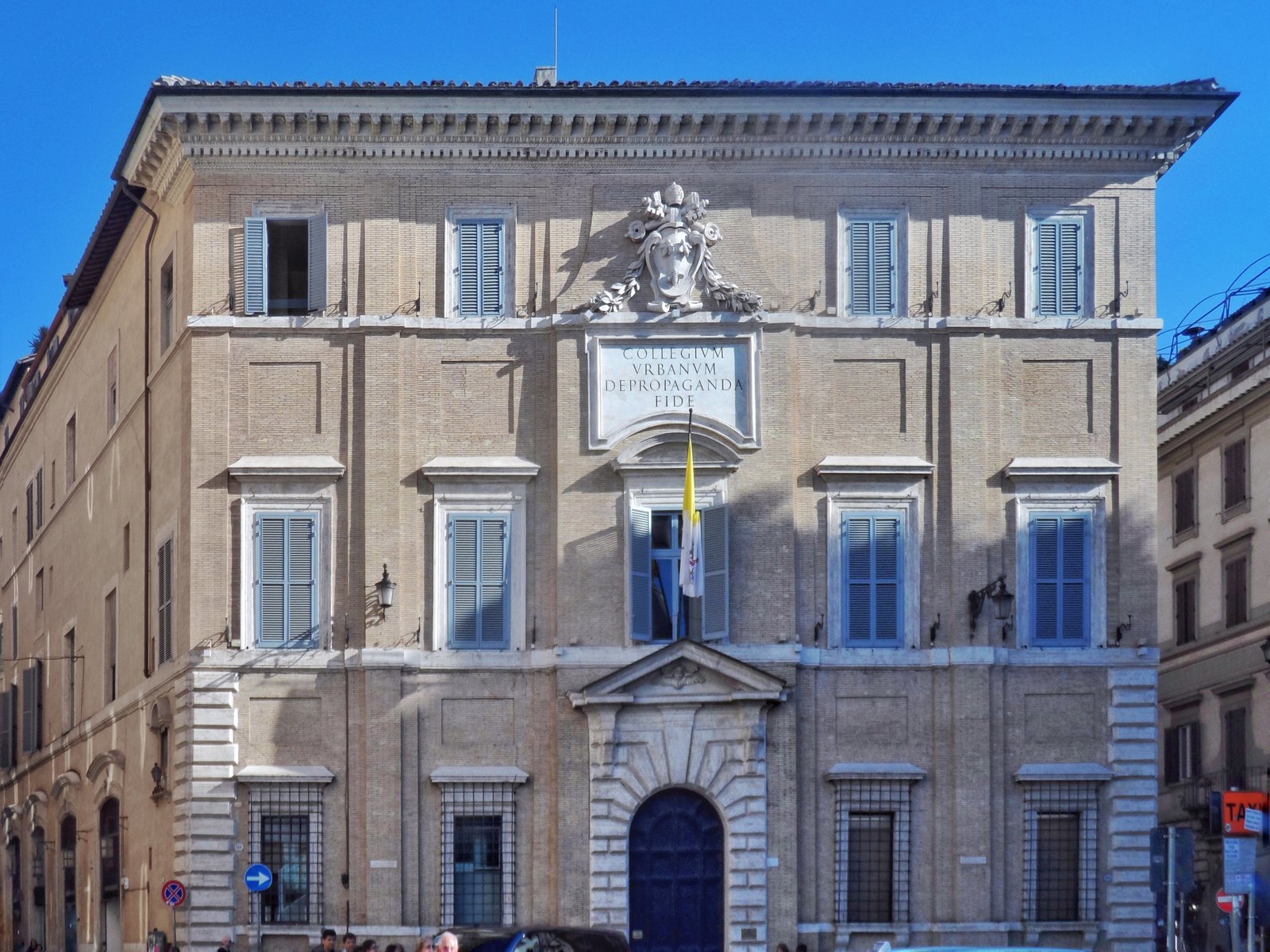
The word began as a blessing. In 1622 the Catholic Church founded an office for spreading the faith and called it, in Latin, the congregation for propagating belief. Three centuries later a nephew of Sigmund Freud took the same idea, married it to his uncle's psychology of the unconscious, and built an industry for manufacturing what the public wants and calling it their own idea. This is the story of that transformation, from a neutral word to a science of influence, through the war ministries and the tobacco campaigns and the troll farms, and the honest, unglamorous truth that sits between the two myths everyone believes: that propaganda is mind control, and that clever people are immune to it.
Almost nobody thinks of themselves as a target of propaganda. It is always the other side, the other era, the more gullible person, who is manipulated; we ourselves have simply reasoned our way to our views. That confidence is itself one of the things this subject should unsettle, because the people who built the modern machinery of persuasion did so on the explicit assumption that it is wrong. This is the history of that machinery, from a 17th-century church office to a 21st-century troll farm, and of the science that has tried, ever since, to answer a deceptively hard question: when someone sets out to shape what a whole population believes, how much can they actually do? The honest answer is neither of the two that circulate, that propaganda is a kind of mind control, or that it barely works on anyone who is paying attention. It is more interesting, and more useful, than either.
01A Word That Changed Its Meaning
The word carries its own history. It comes from the Congregatio de Propaganda Fide, the 'Congregation for Propagating the Faith,' which Pope Gregory XV founded by papal bull in 1622 to coordinate Catholic missionary work during the Counter-Reformation. Its Latin root, propagare, simply means to spread or propagate, as a gardener propagates plants, and for its first three centuries 'propaganda' was a neutral, even pious word: it meant spreading a belief you held to be true. The pejorative meaning we now hear in it, persuasion by manipulation and deceit, is surprisingly recent. It hardened between the two World Wars, driven above all by the shock of the First World War's vast, state-run persuasion campaigns, which showed for the first time what organized mass communication could do to a whole population's beliefs, and left the word permanently stained. The hero image above is that original office's palace in Rome. Everything darker in the word arrived later, and on purpose.
02The Father of Spin
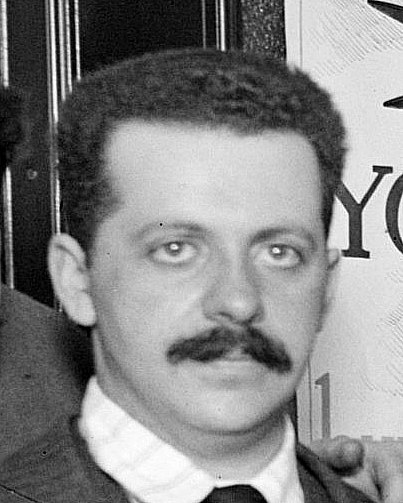
If modern propaganda has a founding father, it is Edward Bernays (1891 to 1995), and the fact he was Sigmund Freud's nephew is not incidental to the legend, though it should be held a little loosely: his documented link to his uncle ran more through arranging the American publication of Freud's work than through any personal training in psychoanalysis. Still, Bernays genuinely fused two ideas, Freud's picture of the irrational unconscious and Gustave Le Bon's psychology of crowds, into a method for moving the public by appealing to desires beneath its stated reasons. He set it out in two books, 'Crystallizing Public Opinion' (1923) and, bluntly titled, 'Propaganda' (1928), which opens with a sentence that still startles: 'The conscious and intelligent manipulation of the organized habits and opinions of the masses is an important element in democratic society.' The famous phrase most associated with him, 'the engineering of consent,' actually came later, as the title of a 1947 essay and a 1955 book, but it names the project exactly. His most quoted coup was the 'Torches of Freedom' campaign of 1929, in which he had women light cigarettes during New York's Easter parade, staged as a feminist gesture of liberation, to break the taboo on women smoking in public on behalf of a tobacco company; the campaign's exact causal effect on the real rise in women's smoking is impossible to isolate, but the technique, wrapping a commercial goal in the language of a social cause and letting the press carry it, became a template. He later applied the same methods to politics, helping a fruit company sell a 1954 coup in Guatemala. The theorist alongside him was the journalist Walter Lippmann, whose 'Public Opinion' (1922) argued that the world is too complex to know directly, so we all navigate by simplified mental 'pictures,' stereotypes, that elites and media inevitably shape.
03The Toolkit
The techniques of persuasion were catalogued long before anyone had a smartphone. As early as 1937, the Institute for Propaganda Analysis named seven devices that are still taught today: name-calling (attaching a bad label to something to make you reject it unexamined), glittering generalities (virtue words like 'freedom' that mean everything and nothing), transfer (borrowing the authority of a respected symbol), testimonial (endorsement by a liked figure), plain folks (the powerful posing as ordinary), card stacking (showing only one side), and the bandwagon (everyone is doing it, so should you). Academic psychology later mapped the same ground more precisely. Robert Cialdini distilled six principles of influence in 1984, reciprocity, commitment, social proof, authority, liking, and scarcity, later adding a seventh, unity, or shared identity. The Elaboration Likelihood Model (Petty and Cacioppo, 1986) explained why the same message persuades some people through careful argument (the 'central route') and others through surface cues like a confident source or a catchy slogan (the 'peripheral route'), with the peripheral route winning whenever the audience is distracted, rushed, or simply not that invested, which is to say, most of the time. And framing, demonstrated by Kahneman and Tversky, shows that the same fact ('90 percent survive' versus '10 percent die') moves decisions by wording alone. These are not dark arts. They are the documented mechanics of how attention and judgment actually work, which is exactly why they can be turned against you.
04When the State Takes Over
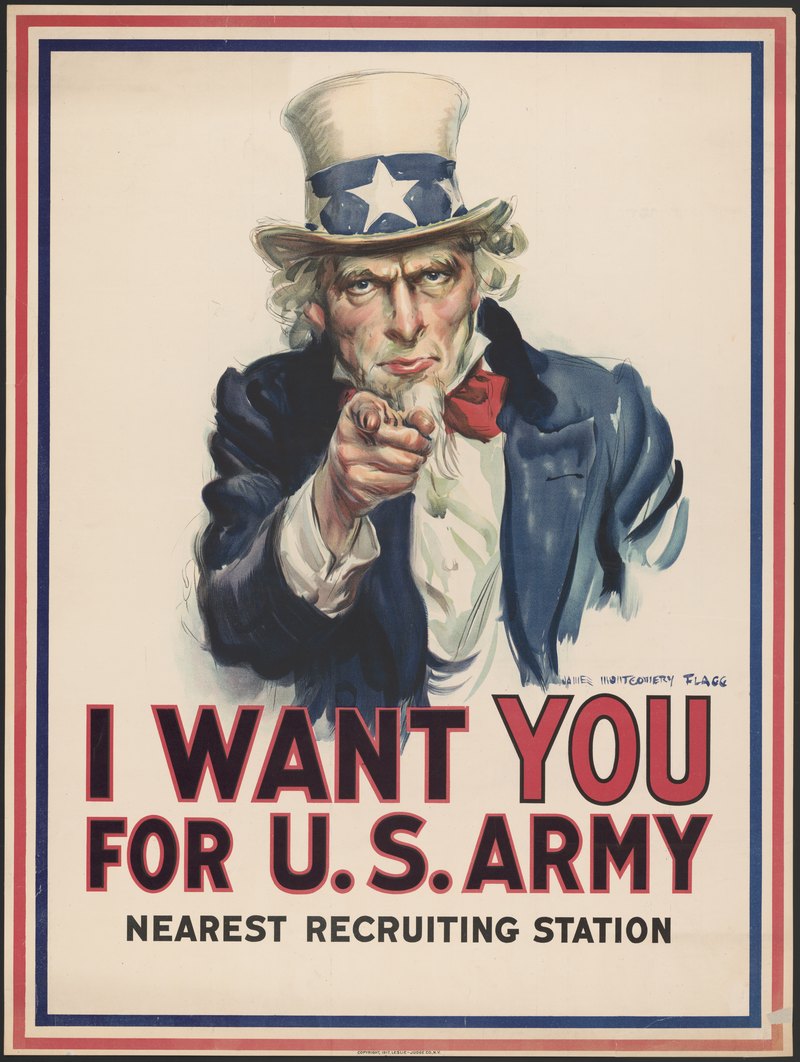
When governments took up these tools, the scale changed completely. The United States created its first great propaganda agency in a week: the Committee on Public Information, known as the Creel Committee, created by executive order in April 1917 to mobilize the home front for the First World War. It blanketed the country with posters, films, and press releases and deployed an army of tens of thousands of volunteer 'Four-Minute Men' to deliver short patriotic speeches in theaters and halls, an astonishing feat of coordinated mass persuasion built almost overnight. The darkest chapter belongs to Nazi Germany, where Joseph Goebbels ran the Reich Ministry of Public Enlightenment and Propaganda from 1933 to 1945 and seized total control of press, radio, film, and art. It is documented history, handled here only as such, that his methods included the 'big lie,' emotional spectacle on a vast scale such as the Nuremberg rallies, relentless repetition, the manufacture of enemies to blame, and the cinematic mythmaking of Leni Riefenstahl's 'Triumph of the Will' (1935). The lesson historians draw is sober and specific: propaganda is most dangerous not when it is cleverest, but when a single authority controls the entire information environment at once, so that no competing picture can reach the public at all.
05Does It Actually Work?
Here is where the honest complexity lives. Early theorists, and the public ever since, imagined propaganda as a 'magic bullet' or 'hypodermic needle,' a message injected straight into a passive mind that then believes as told. Decades of research demolished that strong-effects picture. The 'limited effects' tradition, beginning with Paul Lazarsfeld's studies of voters in the 1940s, found that media influence is heavily filtered: people attend selectively, discount what clashes with their existing views, and are swayed less by media directly than by trusted people in their own social circles, a 'two-step flow' in which opinion leaders mediate the message. Media, in this finding, shape which issues we think about and how they are framed, but they do not simply stamp beliefs onto a blank, receptive public. That does not mean propaganda is weak. Framing changes real decisions; agenda-setting research (McCombs and Shaw, 1972) shows that the sheer volume of coverage an issue gets predicts how important the public judges it to be, independent of the facts; and repetition and emotional cues move even motivated audiences. A more structural critique, Noam Chomsky and Edward Herman's 'Manufacturing Consent' (1988), argues that commercial media systematically reproduce elite consensus through five filters, ownership, advertising, sourcing, organized 'flak,' and ideology, without any need for conscious conspiracy. That model is itself genuinely debated: critics call it too deterministic, supporters point to real cases of media marching in step with government. The truth the evidence supports is a middle one. Propaganda has real, measurable, replicated effects on what we notice, how we frame it, and what we feel, and it is not, and has never been, a switch that installs beliefs in a helpless audience.
06The Digital Turn, and the Overclaims
The internet did not invent propaganda; it changed its speed, scale, and cost. Documented modern cases are real: Russia's Internet Research Agency ran thousands of fake American social-media accounts to inflame division, confirmed by US investigations; and Cambridge Analytica harvested data on up to 87 million Facebook users to build psychological profiles for targeted political advertising in 2016. But this is exactly where honesty has to sharpen, because the most famous claim about that scandal is the least supported. The scale of the data harvesting is not in doubt; the persuasive power of what was built from it very much is. Political-communication researchers with no stake in the answer have found little evidence that psychographic microtargeting actually changes political minds, and good reason to expect it would not, since most voters are already locked into stable loyalties; one scholar called treating the firm's own sales claims as proof of its power 'absurd,' another called the profiling 'snake oil at worst.' The forward-looking fears follow the same rule: AI can now generate persuasive text and convincing fake video (the 'deepfake'), and both could matter enormously, but their real-world effectiveness at scale has not actually been measured yet, and should be carried as a serious open question, not a settled doom. Encouragingly, the same science cuts the other way too: 'inoculation,' pre-exposing people to weakened versions of a manipulation with the refutation attached, reliably builds resistance to it, a defense that genuinely works.
Which leaves the overclaims to refuse, and this subject generates them in both directions. The first is the strong-effects myth: that mass media can simply control public opinion, that whoever owns the megaphone owns the mind. The limited-effects research above refutes it; audiences filter, resist, and reinterpret, and even the most total propaganda states have failed to produce the unanimous belief they sought. A close cousin, the fantasy of a single hidden hand (an 'Illuminati') coordinating all media, collapses on the plain facts of competition, leaks, and the investigative journalism that exposed Cambridge Analytica in the first place. But the opposite overclaim is just as false and more comfortable: that propaganda basically does not work, and that a critical, educated person is immune to it. The evidence forbids that too. Framing shifts decisions on identical facts; agenda-setting steers what a whole public worries about; and the very existence of inoculation as a needed defense proves that unprotected minds, which is most minds, most of the time, are genuinely movable. Finally, the claim that our 'post-truth' moment is historically unprecedented does not survive contact with yellow journalism, wartime atrocity hoaxes, or the forged Protocols of the Elders of Zion; the digital age changed the velocity, not the invention, of manufactured belief. The honest position holds the center against both flattering extremes: propaganda is neither a mind-control ray nor a spell that only fools fall for. It is the systematic exploitation of exactly the ordinary features of attention and judgment that this whole wing has been describing, which is why the belief that you, personally, are too smart to be influenced is not a defense. It is the opening the influence walks through.
Fast Facts
- The word
- From the Catholic Congregatio de Propaganda Fide (1622); neutral for 300 years, pejorative only after World War I
- The father of spin
- Edward Bernays (Freud's nephew): 'Propaganda' (1928) and the 'engineering of consent'
- The classic techniques
- The Institute for Propaganda Analysis's seven devices (1937); Cialdini's principles; central and peripheral persuasion routes
- State propaganda
- The Creel Committee (WWI) and Goebbels's Reich Ministry: most dangerous when one authority controls the whole information field
- Does it work?
- Not a 'magic bullet': audiences filter and resist (limited-effects), but framing and agenda-setting have real effects
- Microtargeting
- Cambridge Analytica's data harvesting was real; its actual persuasive power is seriously contested
- The double refusal
- Propaganda is neither total mind control nor something clever people are immune to
What We Can Actually Stand Behind
The history is solid and documented. The word really does descend from the Catholic congregation of 1622 and turned pejorative after World War I; Edward Bernays really did fuse Freudian and crowd psychology into modern public relations and write 'Propaganda' (1928); the Institute for Propaganda Analysis's seven devices, Cialdini's principles, and the Elaboration Likelihood Model are real, taught frameworks; and the Creel Committee and Goebbels's ministry are documented instruments of state persuasion. The Torches of Freedom campaign happened as described, with the honest caveat that its exact causal effect on women's smoking cannot be isolated.
The core science of effects is well established: the strong-effects 'magic bullet' model was refuted by the limited-effects tradition (selective attention, the two-step flow), while framing, agenda-setting, priming, and peripheral-route persuasion all have real, replicated effects. Chomsky and Herman's structural propaganda model is influential and genuinely debated. The overall verdict, that propaganda meaningfully shapes attention and framing without controlling belief outright, is the mainstream position, not a hedge.
The digital frontier is real but unsettled. The data-harvesting scale of Cambridge Analytica and the IRA operations is documented; the persuasive effectiveness of psychographic microtargeting is seriously contested and probably overstated. AI-generated propaganda and deepfakes are plausible large threats whose real-world impact has not yet been measured. Carry these as live, open questions, and note that 'inoculation' is a genuinely effective, evidence-backed defense.
Both flattering extremes fail. No, propaganda is not total mind control; audiences filter and resist, and no regime has ever achieved the unanimous belief it wanted. But no, propaganda is not something a smart person is immune to; framing, repetition, and agenda-setting move even careful minds, and the need for inoculation proves the unprotected are vulnerable. And no, the post-truth era is not unprecedented; only its speed is new. The honest truth sits in the contested middle: propaganda is the systematic use of the ordinary machinery of attention and belief, powerful, real, resistible, and never so dangerous as when its target is certain it could never work on them.
It is fitting that this is where a wing about the mind examining itself nearly ends, because propaganda is the point at which all the earlier subjects are turned into tools and aimed back at us. Everything the persuader exploits, the biases that make a vivid story beat a true statistic, the pull of the crowd and the authority, the way perception itself is built from expectation, has been the subject of the preceding articles. Propaganda is simply someone who has read that same manual and decided to use it. Which means the only real defense was never going to be cleverness or superior information; propagandists have always worked best on the confident and the well-informed, who mistake the feeling of having reasoned for the fact of it. The defense is humility of a specific, teachable kind: knowing the levers exist, knowing they are being pulled, and knowing, above all, that the conviction 'not me, I see through all this' is precisely the blind spot the whole enterprise depends on. The mirror's last and least comfortable lesson is that the most manipulable person in any room is usually the one most sure they are not.
Sources & further reading
Everything above is drawn from our research library on Theories of Anything. Open the full file to check the sourcing and go deeper.
Image credits
- Palazzo di Propaganda Fide, Rome Photograph by Wikimedia Commons user Sheila1988, 2019, via Wikimedia Commons. CC BY-SA 4.0 Source.
- Edward Bernays, 1917 portrait Bain News Service, 1917; public domain, via Wikimedia Commons. Public Domain Source.
- 'I Want You for U.S. Army' recruitment poster (1917) James Montgomery Flagg, 1917; public domain, via Wikimedia Commons. Public Domain Source.
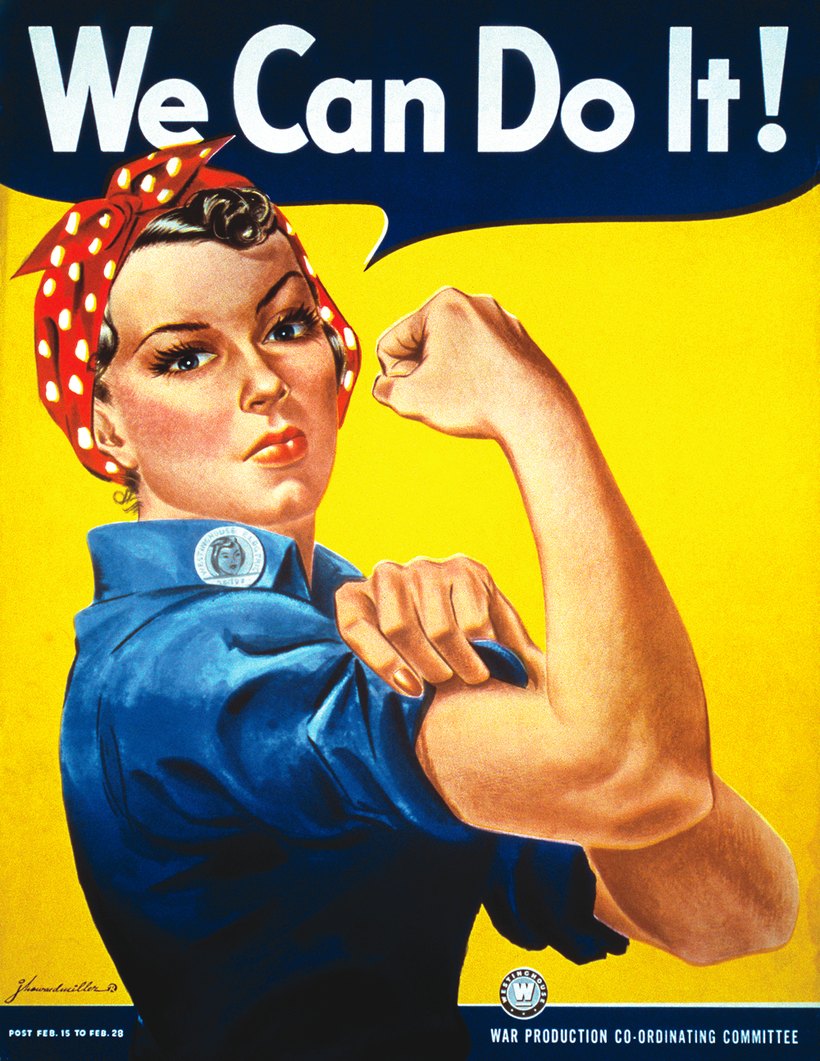
- 'We Can Do It!' Westinghouse poster (c. 1942 to 1943) J. Howard Miller, c. 1942 to 1943; public domain, via Wikimedia Commons. Public Domain Source.
- Card crop of the Palazzo di Propaganda Fide Photograph by Wikimedia Commons user Sheila1988, 2019, via Wikimedia Commons. CC BY-SA 4.0


.jpg)
