
Editing Eden: CRISPR and the First Designed Humans
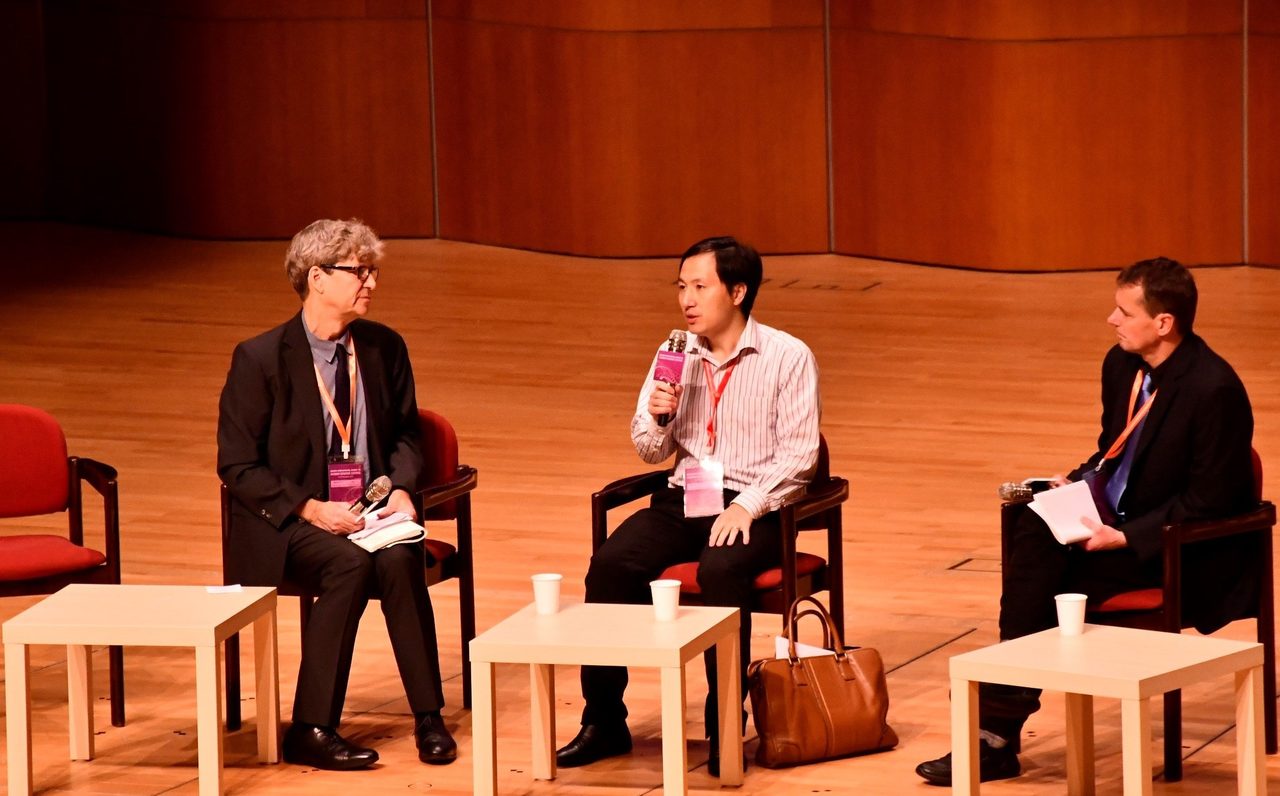
In November 2018 a researcher in Shenzhen announced that twin girls had been born from embryos he had edited, and the field he announced it to condemned the experiment within days. What followed is unusually well documented: a provincial investigation, a manuscript two journals declined whose own data showed the edits had not produced the variant the whole rationale rested on, a criminal conviction with a named court and a dated sentence, and a governance architecture assembled between 2019 and 2023. What is not documented, in either direction, is anything about the children's health, and the argument over whether heritable editing could ever be permissible is not finished either.
On 25 November 2018 a laboratory in Shenzhen posted a set of videos to YouTube. The first was titled About Lulu and Nana: Twin Girls Born Healthy After Gene Surgery As Single-Cell Embryos. Lulu and Nana are pseudonyms, and they are the only names for the children that appear anywhere in this article. The word healthy in that title is the announcement's own claim, made by the person who performed the procedure, and it is the first of several things this article declines to carry forward as a finding.
The tool itself is not the subject here. CRISPR-Cas9 was demonstrated as a programmable gene editor by Jinek and colleagues in Science in 2012, a bacterial immune mechanism reprogrammed to cut DNA at a chosen sequence using a synthetic guide RNA, and Jennifer Doudna and Emmanuelle Charpentier shared the 2020 Nobel Prize in Chemistry for it; how the mechanism works, what it has already treated, and where the therapeutic field is going are set out in this library's CRISPR: Rewriting the Human Blueprint, and this article does not repeat them. This article is about the other category. An edit made to a person's own cells reaches that person and stops there. An edit made to an embryo is present in the person who results in a form that can be passed on, to people who cannot be asked anything at all. Everything below concerns the second kind.
Two words in this article's title need handling before anything else. The word first is defensible only as first known: what stands on the public record is what was announced, investigated and prosecuted, which is not the same thing as a census. And designed does not mean chosen traits. What was done in 2018 was a deliberate, targeted change at one named gene for one stated purpose, which is design in the ordinary sense of the word. It was not the selection of intelligence, appearance or personality, and nothing available now is. Both of our own research files behind this article file the designer-baby framing among their dubious claims, and they are right to: complex traits are polygenic, involving hundreds to thousands of genes with small interacting effects, gene-environment interactions are poorly understood, and current technology cannot reliably engineer such traits. Single-gene disease prevention is feasible. Building to order is not.
The tier marks below follow this wing's convention for ethical material, so that a reader can check the standard rather than trust it. Tier 1 is an attributable, dated fact: who did, said, ruled, published or enacted what, and when. Tier 2 is a live normative position actually held and argued by a named person or body, given as a position and never flattened into settled truth. Tier 3 is a contested, minority or forward-looking reading. Tier 4 is an overclaim refused, and in this article it is refused in both directions.
Three disciplines govern how this article handles people, and they are stated once here rather than apologised for later. Every fact about the criminal case is given as a legal fact with its court, its date, its charge and its penalty attached, and this article makes no claim about anyone's character. The children are living people with protected identities, so no location, no family detail and no arithmetic that would place them appears anywhere in it. And no claim about their health appears in either direction, because nothing independent has been published about it. That last refusal is not a hedge. It is the state of the record, and section 06 is where the reason is set out.
Our own research file states the central question of the field in its own words: who decides what changes to the human genome are permissible, and under what conditions. Every governance document named below is an attempt to answer it, and not one of them fully does. The same file asks whether germline modification represents humanity's greatest tool or its most dangerous experiment. That framing is the file's own, and this article does not adopt the binary, because the record below refuses both halves of it.
01The Announcement Before The Journal
The order in which the claim was made is part of the ethics of the case, and not a detail of media history.

The affair broke on 25 November 2018, when Antonio Regalado published an exclusive in MIT Technology Review reporting that a Chinese team was creating CRISPR-edited babies, a story he found through entries in the Chinese Clinical Trial Registry. The same day, He Jiankui's own laboratory posted a set of videos to YouTube announcing the births, the first titled About Lulu and Nana: Twin Girls Born Healthy After Gene Surgery As Single-Cell Embryos. The Associated Press published a confirming report by Marilyn Marchione within hours. Three days later, on 28 November 2018, He Jiankui presented the work in person at the Second International Summit on Human Genome Editing in Hong Kong.
The claim was therefore made to a magazine, to a video platform and to a conference floor before it was made to any journal or any regulator. Our own research file records only the month.
That sequence has a consequence the rest of this article keeps running into. For more than a year the only account of what had been done came from the person who had done it. The two documents that eventually supplied anything independent, a provincial investigation and a manuscript no journal would publish, both arrived in 2019, and one of them arrived only because a magazine obtained it and gave it to people qualified to read it.
02The Committee Answered In Three Days
He Jiankui presented in Hong Kong on 28 November 2018. The organising committee of the summit he was presenting at issued its closing statement the same day.
The Organizing Committee of the Second International Summit on Human Genome Editing issued its closing statement on 28 November 2018, chaired by David Baltimore of the California Institute of Technology. On the work just presented, the statement says the procedure "was irresponsible and failed to conform with international norms," citing among its flaws "an inadequate medical indication, a poorly designed study protocol," a failure to meet ethical standards for protecting participants, and a lack of transparency. On the field as a whole it says that "proceeding with any clinical use of germline editing remains irresponsible at this time," and that "the scientific understanding and technical requirements for clinical practice remain too uncertain and the risks too great to permit clinical trials of germline editing at this time." The committee called for an ongoing international forum and an international registry.
Two judgements sit in that statement and they are easy to run together. The first is about one experiment. The second is about the whole field, and its operative words are at this time. The committee did not say that heritable editing is wrong in principle. It said the conditions for attempting it did not exist. Every governance document that follows in this article keeps that same shape, and the distance between those two claims is what this article ends on.
03The Gene He Chose
The objections were not one objection. They were four, and the honest structural point, which this library's other CRISPR article also makes, is that each of them is sufficient on its own.
He Jiankui announced the birth of twin girls whose embryos he had edited at the CCR5 gene with CRISPR, with the stated aim of conferring resistance to HIV. Our research file records that the experiment was universally condemned by the scientific community on four grounds, which it states separately: that a complete knockout of the target gene provides incomplete HIV protection while potentially increasing susceptibility to West Nile virus and influenza; that there was evidence of mosaicism, meaning incomplete editing; that there was no medical necessity, because the father was HIV positive and sperm washing provides a safe alternative; and that informed consent procedures were inadequate. The four-part structure belongs to the scientific consensus, not to any single critic.
| The Objection | What It Rests On |
|---|---|
| The target trades one risk for others | A complete knockout of CCR5 provides incomplete protection against HIV while potentially increasing susceptibility to West Nile virus and influenza. The West Nile half has a published finding behind it. The influenza half does not have one in this article, which says so rather than supplying a citation it has not checked |
| Mosaicism | Evidence of incomplete editing, meaning the change took in some cells and not others. Evidence of it was present in both embryos and in one placenta |
| No medical necessity | The father was HIV positive, and sperm washing provides a safe alternative route to an unaffected child. The procedure removed a risk the children were not facing |
| Inadequate informed consent | Our research file states this generally. The concrete basis arrived in January 2019 with a provincial investigation that found a forged ethical review certificate and blood samples provided by substitutes, and in December 2019 with a specialist assessment of the consent process itself |
The West Nile half of that first objection resolves to a specific paper. Glass and colleagues reported in the Journal of Experimental Medicine in 2006 that CCR5 deficiency increases the risk of symptomatic West Nile virus infection. That is the published finding behind the argument that disabling CCR5 trades one risk for another rather than simply removing one.
The influenza half of the same clause is a different matter, and this article states the difference rather than smoothing it. The objection was raised on the record, it is repeated in our own research file, in Henry Greely's peer-reviewed reconstruction of the affair, which attributes the concern about the target choice to Robin Lovell-Badge, and in this library's article on CRISPR. No verified paper for it was found in the research behind this article, so none is cited here.
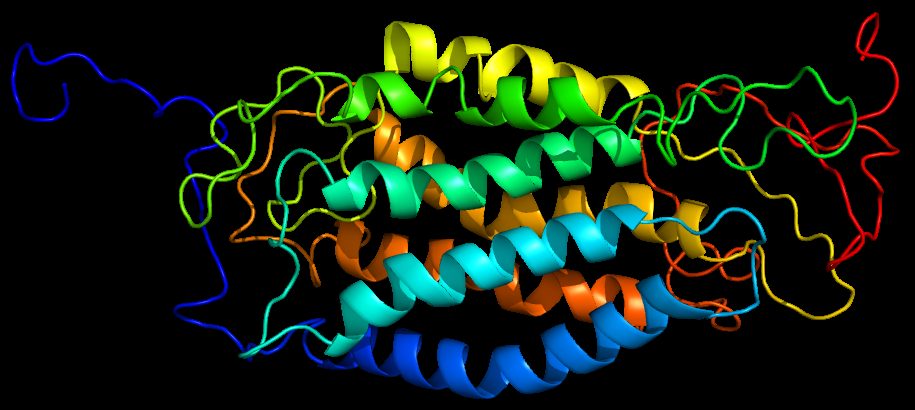
One further thing was said about this gene at the time, and it is better handled explicitly than left in the air. A 2016 study in eLife reported that CCR5 acts as a suppressor of cortical plasticity and of hippocampal learning and memory in mice, and that result fed a widely repeated speculation that disabling the gene might enhance cognition. The distance between a mouse learning result and a claim about edited human children is not one the evidence crosses. The speculation existed and was not supported, and this article does not carry it further than that sentence.
04What The Investigation Found
On 21 January 2019, Xinhua released the preliminary results of a provincial investigation in Guangdong. The investigation found that He Jiankui had deliberately evaded supervision and raised his own funds for work that was prohibited, that a forged ethical review certificate had been used, and that HIV-positive participants, who were legally ineligible for assisted reproduction in China, had been asked to have other people provide blood samples in their place. Southern University of Science and Technology in Shenzhen, where He Jiankui had been an associate professor, dismissed him the same day.
That third finding is the one that turns a general objection into a specific one. Our own research file says only that informed consent procedures were inadequate, which is true and unfalsifiable in equal measure. The investigation supplies the mechanism: a legal barrier to enrolment that existed precisely because of the participants' condition, and a documented workaround for it. None of this appears in our own file at all, and it is one of the additions logged for correction in section 16.
05The Manuscript Two Journals Declined
On 3 December 2019, MIT Technology Review published excerpts from He Jiankui's unpublished manuscript, titled Birth of Twins After Genome Editing for HIV Resistance, a paper of 4,699 words that Nature and JAMA had both declined to publish. The magazine gave the manuscript to four named specialists for comment: Hank Greely of Stanford Law School, Fyodor Urnov of the Innovative Genomics Institute at the University of California, Berkeley, Rita Vassena, then scientific director of the Eugin Group, and Jeanne O'Brien, a reproductive endocrinologist at Shady Grove Fertility.
Everything specific this article is able to say about the actual embryos comes from that document and from those readings. Without them the record would consist of an announcement video, a conference presentation and a court report.
On the central technical claim, Fyodor Urnov's assessment of the manuscript was: "The claim they have reproduced the prevalent CCR5 variant is a blatant misrepresentation of the actual data." The edited embryos did not carry the naturally occurring CCR5 delta-32 deletion that the experiment's HIV-resistance rationale depended on. They carried novel variants whose effects are not known.
Three further named assessments were given to MIT Technology Review in December 2019. Hank Greely: "That this is a plausible way to control the HIV epidemic seems ludicrous." Rita Vassena: "Approaching this document, I was hoping to see a reflective and mindful approach to gene editing in human embryos ... unfortunately, it reads more like an experiment in search of a purpose." Kiran Musunuru, who was not among the four specialists the magazine commissioned but commented on the manuscript in the same month: "It's time for the scientific community to fully understand what happened ... and to avoid stumbling down a path toward further ill-starred experiments." The ellipses are in the source as reproduced and are left as they stand.
On consent, Jeanne O'Brien's assessment questioned whether the couples were free from undue coercion, noting that HIV carries heavy social stigma in China and that the couples had no other route to fertility treatment. Greely's reconstruction records that He Jiankui claimed to have spent one hour and ten minutes with each participant after team members spent two hours with each woman, and reports an Associated Press figure of roughly 40,000 US dollars for the value of benefits offered to participants, including free fertility treatment and stipends. That last figure reaches this article at two removes, through Greely reporting the Associated Press, and it is stated that way rather than bare.
The claim that He Jiankui gave the twins the natural CCR5 delta-32 mutation, the variant that occurs in a substantial fraction of European populations and confers HIV resistance, does not survive contact with his own data. The analysis of the unpublished manuscript found that the edits did not reproduce that variant, and that the embryos received novel changes whose effects are not known. Almost every popular retelling of this case describes the edit as though the natural variant had been installed, and so do both of the research files behind this article. It was not. If one fact from this page is worth carrying away, it is that one.
06What The Test Could Not Answer
Off-target cutting is documented rather than hypothetical. Tsai and colleagues developed GUIDE-seq and reported in Nature Biotechnology in 2015 that CRISPR-Cas9 can cut at unintended genomic locations resembling the target sequence, finding hundreds of potential off-target cleavage sites per guide RNA. Newer variants including high-fidelity Cas9, base editors and prime editors substantially reduce off-target activity, but our research file states plainly that the risk cannot be eliminated entirely, and names this as a critical safety concern for any germline application.
The manuscript's claim that the edited embryos showed no off-target mutations rests on a test that cannot support it. Only biopsied cells were sequenced, and those are cells that would not go on to form the child's body, so the cells that actually developed were never examined. Urnov's point, reported by MIT Technology Review, is that it is technically impossible to establish that an edited embryo carries no off-target mutations without destroying that embryo to inspect every cell in it. Separately, evidence of mosaicism, meaning that the change took in some cells and not others, was present in both embryos and in one placenta, which makes it likely that the children themselves are mosaic.
The honest statement is neither that the embryos had off-target mutations nor that they did not. It is that the test performed could not answer the question it was asked, and that the mosaicism finding is real, documented, and distinct from it. Those are two different kinds of not knowing, and the difference matters, because the second one is a result and the first one is a gap where a result should be.
In June 2019 Xinzhu Wei and Rasmus Nielsen published a paper in Nature Medicine titled CCR5-delta32 is deleterious in the homozygous state in humans, reporting from UK Biobank data that people homozygous for the variant had a raised mortality rate. It was widely reported at the time as evidence that the edit might shorten the twins' lives. The paper was retracted on 8 October 2019, after an error was identified in the genotype data pipeline; the retraction notice is Nature Medicine 25:1796. The mortality figure it reported is not carried anywhere in this article, and it should not be carried anywhere else either.
That episode is worth the space it takes, because it is the clearest available demonstration of how this case has been reported. A finding appeared, was read worldwide as bearing directly on two children, and was withdrawn by its own authors inside four months. Neither of our research files mentions the paper or the retraction. A library whose whole architecture is evidence tiers ought to carry its own worked example of a finding that did not hold, which is why this one is logged for addition in section 16.
Nothing independent has been published about the health of the children since their birth. The claim that they are healthy is unsupported: the only source for it is the announcement made by the person who performed the procedure, in his own video and in a manuscript that two journals declined to publish. The claim that they have been harmed is equally unsupported: the mosaicism finding is real and documented, and the off-target question was never answerable by the test that was run, but neither of those is evidence of a health outcome, and the one published paper widely read as showing harm was retracted within four months. The honest and only defensible statement is that the world does not know, that the children's privacy is a legitimate reason it does not, and that the absence of any follow-up is itself one of the ethical failures of this case.
07The Verdict, As A Legal Record
On 30 December 2019 the Nanshan District People's Court of Shenzhen convicted He Jiankui of illegal medical practice. He was sentenced to three years in prison and fined 3 million yuan, reported at the time as approximately 430,000 US dollars. Two co-defendants were convicted in the same proceeding: Zhang Renli was sentenced to two years in prison with a fine, and Qin Jinzhou received an eighteen-month sentence with a two-year reprieve and a fine. The court's account, as reported by Xinhua, was that the three were not qualified to practise as doctors and had knowingly violated national regulations and ethical principles in applying gene editing to assisted reproductive medicine, and that they acted, in the court's own characterisation, in pursuit of personal fame and gain.
The source for that paragraph should be named as carefully as its contents. The account above is Xinhua's English-language reporting of 30 December 2019, corroborated by contemporaneous CNN, CBS News and China Daily reports of the same date. Xinhua is the Chinese state news agency reporting a Chinese court's verdict, which makes it simultaneously the closest available thing to the primary document and a source whose institutional position a reader is entitled to know. The characterisation of motive in the last clause is the court's, relayed by that agency. It is not this article's, and this article makes no claim about why anyone did anything.
The verdict reporting of 30 December 2019 states that three gene-edited babies were born as a result of the prohibited work, not two. A third child, from a separate pregnancy, is recorded in the court's account.
That is the whole of what this article says about the third child, and it is tied to the court's own account because that is the only place it comes from. Our own research file refers throughout only to twins. The record about the third child is thinner than the record about the twins, and thinner records are exactly where speculation goes when nobody stops it.
One structural fact about the conviction is easy to miss and is load-bearing for everything that follows. He Jiankui was prosecuted under a general offence, illegal medical practice, because in 2019 no specific provision covering what he had done existed anywhere in Chinese criminal law. The jurisdiction where it happened wrote one afterwards, and section 09 gives the instrument and its dates.
08A Moratorium, And The People Who Did Not Sign It
The Nuffield Council on Bioethics published Genome Editing and Human Reproduction: Social and Ethical Issues on 17 July 2018, four months before the announcement. It concluded that heritable genome editing could be ethically acceptable, subject to two overarching principles, stated on the Council's own page as: interventions "must be intended to secure, and be consistent with, the welfare of the future person," and "they should not increase disadvantage, discrimination or division in society." The report set prerequisites before any clinical use: broad and inclusive public debate, further research to establish clinical safety standards, and thorough assessment of risks to individuals, groups and society with monitoring and review in place. It envisaged strict regulation by the Human Fertilisation and Embryology Authority, introduction only within clinical studies with long-term follow-up, and case-by-case licensing. Our research file records that this cautiously permissive position has been praised for pragmatism and criticised for opening a slippery slope, and both readings are live.
The date is the part our own file does not make anything of. The most permissive major institutional position on heritable editing was published four months before the case that hardened everyone against it, and it was permissive with conditions attached that the case then violated one by one. That is a different story from a field that had always said no.
On 13 March 2019 a commentary titled Adopt a moratorium on heritable genome editing appeared in Nature, signed by eighteen scientists and bioethicists from seven countries: Eric S. Lander, Francoise Baylis, Feng Zhang, Emmanuelle Charpentier, Paul Berg, Catherine Bourgain, Barbel Friedrich, J. Keith Joung, Jinsong Li, David Liu, Luigi Naldini, Jing-Bao Nie, Renzong Qiu, Bettina Schoene-Seifert, Feng Shao, Sharon Terry, Wensheng Wei and Ernst-Ludwig Winnacker. The authors were explicit that they were not calling for a permanent ban and not seeking restrictions on basic research. What they proposed was that nations voluntarily commit, for a fixed initial period suggested as around five years, not to approve clinical germline editing while an international framework was built. Francis Collins, then director of the US National Institutes of Health, publicly backed the call.
The not-a-permanent-ban clause is routinely lost in summaries of that commentary, and losing it changes what the document is. Note also who signed: Emmanuelle Charpentier, one of the two scientists whose work made the tool programmable. And note who did not.
The moratorium call was not unanimous within the field, and two of the most prominent dissenters are among the people closest to the technology. Jennifer Doudna did not sign it, although her co-discoverer did. George Church of Harvard also pushed back on the idea of a fixed moratorium. A published academic case against it was made by G. Owen Schaefer of the National University of Singapore on 20 March 2019, on three grounds: that a moratorium is at best redundant where over thirty countries already prohibit germline editing by law, and risks confusing the public about what is already illegal; that a five-year pause is an arbitrary and blunt instrument compared with flexible regulatory frameworks that can track scientific progress; and that a moratorium should itself require broad societal consensus, so imposing one on expert judgement before public deliberation is internally inconsistent. Schaefer and the moratorium's authors agree on two things: that the 2018 work was unethical, and that public dialogue must precede any clinical use. The Doudna and Church positions reach this article through Schaefer's account and contemporaneous reporting, not in their own words, and are stated only that far.
George Church was the most prominent scientist to defend the experiment in part rather than condemn it outright. Greely's peer-reviewed reconstruction records Church saying he thought the HIV-prevention aim was justifiable, and comparing the case to Louise Brown, the first child born through in vitro fertilisation, rather than to Jesse Gelsinger, the young man whose death in a 1999 gene-therapy trial set that field back years. Greely's same account sets Church's position against the range of condemnations from within the field: Jennifer Doudna described herself as horrified, Francis Collins called the work profoundly disturbing, Julian Savulescu called it monstrous, Kiran Musunuru called it an experiment on human beings that is not morally or ethically defensible, and Greely himself called it criminally reckless. Every one of those is that person's word as Greely reports it, reaching this article through his account rather than from the speakers, which is why none of them stands here inside quotation marks.
The shape of that list is the most instructive thing in this article, and it is worth stating plainly. Church defended the aim in principle and did not defend the execution. Julian Savulescu, who argues in general for genetic selection and appears again in section 10 as the strongest advocate of it, condemned this particular experiment in the strongest terms of anyone Greely records. That is not a contradiction. It is the distinction between germline editing as a question and this instance of it as an act, and a reader who takes only one thing from this page could do worse than take that.
The 1975 Asilomar Conference set the precedent for scientific self-regulation in genetics: researchers voluntarily paused recombinant DNA work until safety guidelines were developed. Our secondary research file raises the obvious question directly and does not answer it, namely whether a comparable moratorium on germline editing can effectively govern a technology that is globally distributed and cheap. Neither our primary file nor this library's other CRISPR article makes that connection, and it is available here as a genuine rhyme rather than a settled analogy.
09The Architecture Built Afterwards
What follows is the answer the world actually produced to the question our own file poses. It is not a principle. It is a stack of instruments, each one narrower than the question, and reading them in order is the only way to see what has and has not been agreed.
On 3 September 2020 the International Commission on the Clinical Use of Human Germline Genome Editing, convened jointly by the US National Academy of Medicine, the US National Academy of Sciences and the UK's Royal Society, published its report Heritable Human Genome Editing. Rather than permitting or forbidding, it defined a narrow translational pathway. Its criteria for any initial clinical use are cumulative and must all be met: the use is limited to serious monogenic diseases, defined as those causing severe morbidity or premature death; the edit is limited to changing a known pathogenic variant to a sequence common in the relevant population and known not to cause disease; no embryo without the disease-causing genotype is edited; and the prospective parents have no option, or extremely poor options defined as 25 percent or fewer expected unaffected embryos, for having a genetically related child without the disease, and have already attempted at least one unsuccessful cycle of preimplantation genetic testing.
Read the second criterion against section 05 and the case fails it twice over. The 2018 edit was not aimed at a pathogenic variant in the embryos, and it did not change anything to a sequence common in the population and known not to cause disease. It is a striking piece of drafting: the pathway the field built after the case is one the case itself could not have entered.
The WHO Expert Advisory Committee on Developing Global Standards for Governance and Oversight of Human Genome Editing was established in 2019 and published its recommendations on 12 July 2021. It stopped short of a blanket ban. Instead it set out governance recommendations across nine areas, including human genome editing registries, international research and medical travel, illegal, unregistered, unethical or unsafe research, intellectual property, and education and engagement, and committed the WHO to convening a small expert committee on next steps for the registry.
China wrote the specific offence into its criminal code after the fact. Amendment (XI) to the Criminal Law of the People's Republic of China was adopted by the Standing Committee of the National People's Congress on 26 December 2020 and took effect on 1 March 2021. It adds Article 336a, creating a distinct crime of implanting gene-edited or cloned human embryos into a human or animal body, or implanting gene-edited or cloned animal embryos into a human body. Where circumstances are serious the penalty is up to three years of imprisonment or short-term detention with a concurrent fine; where they are especially serious, three to seven years with a concurrent fine.
| Date | The Instrument | What It Says |
|---|---|---|
| 17 July 2018 | Nuffield Council on Bioethics, Genome Editing and Human Reproduction | Heritable editing could be ethically acceptable subject to two overarching principles, with prerequisites, strict regulation and case-by-case licensing before any clinical use. Published four months before the announcement |
| 28 November 2018 | Second International Summit, organising committee statement | Judged the procedure irresponsible and non-conforming with international norms, and held that any clinical use of germline editing remains irresponsible at this time. Called for an ongoing international forum and an international registry |
| 13 March 2019 | Adopt a moratorium on heritable genome editing, Nature commentary, eighteen signatories from seven countries | Proposed a voluntary fixed-period pause, suggested at around five years, explicitly not a permanent ban and explicitly not a restriction on basic research |
| 3 September 2020 | International Commission on the Clinical Use of Human Germline Genome Editing, Heritable Human Genome Editing | Defined a narrow translational pathway with cumulative criteria rather than permitting or forbidding: serious monogenic disease, a known pathogenic variant changed to a common non-disease sequence, no unaffected embryo edited, and no or extremely poor alternatives |
| Adopted 26 December 2020, in force 1 March 2021 | Amendment (XI) to the Criminal Law of the People's Republic of China, Article 336a | Created a distinct crime of implanting gene-edited or cloned human embryos, with up to three years where circumstances are serious and three to seven years where they are especially serious, each with a concurrent fine |
| 12 July 2021 | WHO Expert Advisory Committee recommendations | Governance recommendations across nine areas including registries and unregistered or unsafe research, plus a commitment to a further expert committee on the registry. Stopped short of a blanket ban |
| 8 March 2023 | Third International Summit, organising committee statement | Heritable editing should not be used unless it meets standards for safety and efficacy, is legally sanctioned and sits under rigorous oversight, and at this time those conditions have not been met |
The most comprehensive published survey of the global policy landscape is Baylis, Darnovsky, Hasson and Krahn, Human Germline and Heritable Genome Editing: The Global Policy Landscape, in The CRISPR Journal in 2020. It surveyed 106 countries and found that 96 of them have policy documents, meaning legislation, regulations, guidelines, codes or international treaties, bearing on genome editing of human embryos, gametes or their precursor cells. Of those 96, seventy-five prohibit using genetically modified in vitro embryos to initiate a pregnancy, and five of those seventy-five provide exceptions. On laboratory research using genetically modified embryos, 23 prohibit it and 11 explicitly permit it, with most of the 96 having no specific policy either way. The survey's headline finding is that no country explicitly permits heritable human genome editing.
| The Measure | The Finding |
|---|---|
| Countries surveyed | 106 |
| Countries with a relevant policy instrument of any kind | 96 |
| Of those 96, prohibiting the use of genetically modified in vitro embryos to initiate a pregnancy | Seventy-five, of which five provide exceptions |
| Prohibiting laboratory research using genetically modified embryos | 23 |
| Explicitly permitting laboratory research using genetically modified embryos | 11, with most of the 96 having no specific policy either way |
| Explicitly permitting heritable human genome editing | No country |
Our own file says something different and looser: banned in more than seventy countries, permitted with restrictions in a few, unregulated in many. The first clause is compatible with the survey and uncited. The second is wrong, because the survey found no country that explicitly permits it. The third understates how much policy exists, since 96 of 106 countries have some relevant instrument. The survey's numbers are used above and our file's phrasing is logged for correction.
The Third International Summit on Human Genome Editing was held at the Francis Crick Institute in London from 6 to 8 March 2023. Its organising committee's closing statement of 8 March 2023 says: "Heritable human genome editing should not be used unless, at a minimum, it meets reasonable standards for safety and efficacy, is legally sanctioned, and has been developed and tested under a system of rigorous oversight that is subject to responsible governance. At this time, these conditions have not been met." On the other side of the line it says: "Remarkable progress has been made in somatic human genome editing, demonstrating it can cure once incurable diseases," and adds that "The extremely high costs of current somatic gene therapies are unsustainable. A global commitment to affordable, equitable access to these treatments is urgently needed."
That is the most recent authoritative statement of where the international consensus stands, and its grammar is the same as the 2018 statement's: a set of conditions, and a finding that they are not met. Between the 2018 statement and the 2023 one came three further instruments and one criminal statute, and nobody in any of them has said the thing could never be permissible. They have said it is not permissible now, and they have said why, and the reasons are conditions rather than principles. Section 14 is where that distinction stops being a technicality.
10Therapy, Enhancement, And What Cannot Be Done
The line between therapy, meaning correcting disease-causing mutations, and enhancement, meaning improving traits beyond the normal human range such as intelligence, athleticism or longevity, is philosophically contested and not settled. Julian Savulescu argues for a principle of procreative beneficence, that parents have a moral obligation to select the most advantaged child. Michael Sandel, in The Case Against Perfection: Ethics in the Age of Genetic Engineering (2007), counters that this commodifies human life and undermines the giftedness of human characteristics.
Our secondary research file adds a third name to that argument: Jurgen Habermas, in The Future of Human Nature (Polity, 2003), argues that genetic enhancement undermines autonomy and equality, on the ground that a person whose traits were chosen by another stands in a different relation to their own life than one whose traits were not. The same file records that the line may be fuzzy in practice, and offers as its test case whether correcting a gene associated with lower intelligence is therapy or enhancement.
Habermas is making a claim about self-authorship rather than about safety: the objection is not that the edit might go wrong but that somebody else chose it. What is owed to a person as an end in themselves rather than as a means is the subject of this wing's The Unbreakable Law. Two further neighbours are named here and left alone: the enhancement movement at large belongs to this wing's planned article Beyond Human, and the extension of life to its planned article The Death of Death. Neither exists yet. What belongs here is the narrower question of whether a genome may be rewritten, and Savulescu, Sandel and Habermas appear on this page as arguments about that and nothing wider.
Current editing capability is limited to single-gene, Mendelian conditions. Editing complex polygenic traits such as intelligence, which involve thousands of variants each contributing tiny effects, remains far beyond current technology. Our research file's speculative reading is that as polygenic score research and editing precision improve, the technical barriers may eventually be surmounted, which is what raises the prospect of babies edited for cognitive or physical enhancement.
The claim that CRISPR can create superhumans now is refused by our research file's own dubious-claims section, and this article refuses it too. No credible science supports the imminent creation of cognitively or physically enhanced humans by gene editing. Intelligence, personality and most desirable traits are polygenic, environmentally influenced and poorly understood at the mechanistic level. Current applications are limited to correcting known pathogenic mutations in single genes.
Those two blocks sit directly against each other and both belong on the page. It is not possible now. Nobody knows when or whether it will be. And the ethical argument is being had in advance of the capability, deliberately, which is unusual in itself: the argument is being had about a power before anyone has it, rather than after.
11Who Can Pay
In December 2023 the US Food and Drug Administration and the UK Medicines and Healthcare products Regulatory Agency approved Casgevy (exagamglogene autotemcel), developed by Vertex Pharmaceuticals and CRISPR Therapeutics, for sickle cell disease and transfusion-dependent beta-thalassemia. It edits a patient's own blood stem cells outside the body, which makes it a somatic and therefore non-heritable modification, and it is the sibling of everything else on this page rather than an instance of it. Vertex set the US list price, its wholesale acquisition cost, at 2.2 million dollars per patient, announced alongside the US approval on 8 December 2023. The trial results and the therapeutic story belong to this library's article on CRISPR; the price is here because the argument below needs a real number.
Access to CRISPR therapies is radically unequal, and our research file uses that price as its worked example: a cure for a genetic disease priced so that it is available only to wealthy nations and individuals. Francoise Baylis, in Altered Inheritance: CRISPR and the Ethics of Human Genome Editing (Harvard University Press, 2019), warns that if enhancement applications emerge, genetic modification could become a new axis of social stratification, a genetic divide laid over the inequalities that already exist.
The equity objection is not only made by outside critics. The organising committee of the Third International Summit stated on 8 March 2023: "The extremely high costs of current somatic gene therapies are unsustainable. A global commitment to affordable, equitable access to these treatments is urgently needed."
That pairing is the sharpest thing available on this subject and it deserves to be stated once, flatly. The same institutional body that holds the line against heritable editing says that the therapies which are permitted are priced unsustainably. The line the field defends is between somatic and heritable. The line a patient encounters is between funded and unfunded, and it is not the same line.
12The History The Critics Invoke
What follows is stated plainly and without dramatisation, because the people in it were real and were not consulted about anything that happened to them.
In the United States, the Supreme Court upheld compulsory sterilization in Buck v. Bell in 1927, and more than 60,000 people were sterilized across 32 states between 1907 and 1979. In Nazi Germany, roughly 400,000 people were sterilized and roughly 200,000 killed under the Aktion T4 programme. In Sweden, roughly 63,000 people were sterilized between 1934 and 1976. Those figures come from our secondary research file's own Tier 1 section.

The analogy itself, as distinct from the history, belongs to the critics who make it, and this article does not make it in its own voice. Our primary research file gives its shape: modern gene editing is conceptually distinct from state-imposed eugenics, but the social dynamics of who benefits and who decides remain uncomfortably similar.
The distinction between the counts and the comparison is the whole tiering question in this section. The sterilizations are documented history. Whether they illuminate a voluntary medical technology is a contested normative claim, and the next two blocks give the argument in both directions.
Disability rights scholars, our research file naming Rosemarie Garland-Thomson and Gregor Wolbring, argue that editing to eliminate conditions such as deafness, dwarfism or Down syndrome expresses ableist values that treat disability as a problem to be solved rather than a form of human diversity. The argument is that editing out a genetic condition carries the message that people living with that condition should not exist, a position the file notes has historical parallels with eugenics. It is a position held and argued, and it is neither a settled conclusion nor a slogan to be waved away.
Our secondary research file's own footer states three counter-positions against the material above, and it flags none of them as dubious. First, that restricting genetic technology may perpetuate avoidable suffering: parents who could prevent a child inheriting Huntington's disease, cystic fibrosis or sickle cell disease have strong moral reasons to use available technology. Second, that the eugenics analogy may be overstated, because historical eugenics was state-coerced and rested on pseudoscience, whereas modern genetic medicine is, ideally, voluntary, informed and evidence-based. Third, that disability rights arguments, while important, should not override individual reproductive autonomy, and that prospective parents rather than disability advocates should decide whether to use genetic technology.
Each of those three answers something specific above: the first answers the precautionary case for a moratorium, the second answers the eugenics parallel, and the third answers the disability-rights critique. None of them is a knockdown, and none of the positions they answer is either. This article crowns no winner in that exchange, because the argument has not produced one.
13Deafness, And The Argument's Live Test
Without binding international governance, germline editing may migrate to jurisdictions with weaker oversight, a pattern our research file says is already visible in stem cell tourism and in the 2018 case itself. A live test followed. In 2019 the Russian biologist Denis Rebrikov told Nature he intended to create gene-edited babies, first for HIV resistance and then, in an email to Nature dated 17 October 2019, that he had begun editing the deafness-associated gene GJB2 in donated human eggs, with the eventual aim of allowing deaf couples carrying GJB2 mutations to have hearing children. In October 2019 the Russian Ministry of Health stated that the use of heritable genome editing was premature and endorsed the position that using genome-edited embryos to initiate pregnancies would be irresponsible and unacceptable. Rebrikov said he would not implant edited embryos without regulatory approval, and as of the research behind this article no gene-edited birth had resulted from that work.
The collision inside that example is not decoration and this article will not smooth it. The proposed target was deafness, which is precisely the condition the disability-rights critics in section 12 use as their example of a trait that should not be treated as a defect. So the arbitrage worry and the ableism worry meet in a single proposal, and they point in different directions: one says the work should be stopped because oversight is weak, the other says it should be questioned even where oversight is strong. A reader who finds that uncomfortable has understood it.
14The Consent That Cannot Be Given
Germline edits affect all future descendants, who cannot consent to the modification. Our research file states that this distinguishes germline editing from every other medical intervention, which affects only the consenting patient, and that no ethical framework has satisfactorily resolved how to represent the interests of unconceived future persons.
This is the philosophical centre of the germline question and this article does not resolve it, because nothing in the record resolves it. Consent as a doctrine was built for a person who exists and can be asked; the history of how it was built is in this wing's The Nuremberg Code, and the frame it established is exactly the one that has no purchase here. It is worth noting in a single clause that the frame breaks down entirely once a modification is designed to spread beyond the individual, as gene drives are; that subject belongs to this library's article on CRISPR and is not developed here.
Emerging techniques for modifying epigenetic marks such as DNA methylation and histone modifications, without altering the underlying DNA sequence, could in theory enable reversible gene regulation and so avoid the permanence that drives much of the germline objection. Our research file records that CRISPR-dCas9 fused to epigenetic modifiers has been demonstrated in animal models but remains experimental for human applications.
Reversibility is not an answer to the consent problem and should not be offered as one. Nothing in the record says that the descendants of an epigenetically modified person could consent either, and a change that can in principle be undone has still been made to somebody who was not asked.
Our primary research file lists the objection that gene editing is playing God, and is inherently wrong, among its debunked claims. That filing is a category mistake and this article does not follow it. A theological or philosophical position about the limits of human action is not a factual claim that evidence can debunk, and the file's own text does not debunk it: it records that such arguments exist, that the framing has been challenged by bioethicists who note that all of medicine involves intervening in natural processes, and, in the file's own words, that whether germline editing is qualitatively different from other medical interventions is a legitimate debate and not a settled conclusion. It is carried here as a live debate with the challenge to it stated alongside, which is what it is.
15After The Sentence, Separately Dated
What follows happened after everything above and is kept apart from it deliberately. It is one journalist's account of one interview, it is dated, and none of it belongs in the narrative of 2018 and 2019.
He Jiankui was released from prison in 2022. As reported by MIT Technology Review on 31 July 2024: he sought to relocate to Hong Kong and was refused; he publicly announced a non-profit laboratory in Beijing that did not materialise; he was hired by Wuchang University of Technology in Wuhan and subsequently let go; and by July 2024 he had relocated to Hainan. In that reporting he said he was working on gene-editing approaches to Duchenne muscular dystrophy and to Alzheimer's disease, that his experiments were at that time confined to mice, monkeys and non-viable human embryos, and that his funding came from private donations by Chinese and American parties he declined to name. He said some donors had offered to pay for the research to be conducted in countries with lenient regulation, and that he refused. On his motive for the Alzheimer's work he told the magazine that his mother has Alzheimer's disease.
Everything in that block except the release year and the reporting date is his own account, relayed by a journalist and not independently verified, and it is stated that way rather than as a description of what is happening in a laboratory. This article also does not name a gene for the Alzheimer's proposal, because the secondary reporting on that point conflicts and no primary source for it was resolved. Where the record is thin, the honest move is to say what is thin about it.
16What We Corrected In Our Own Files
This article rests on two research files from our own library, and both needed work before it could be written. The corrections are collected here rather than buried, because several of them change what a reader would find if they went looking.
Both files describe the 2018 edit as disabling CCR5 to confer HIV resistance, and neither records that the edits did not reproduce the naturally occurring delta-32 variant. That omission propagates the popular account, which is wrong on the most technically important point in the case, and it is verified twice over: by the assessment of the unpublished manuscript reported in December 2019 and by Greely's peer-reviewed reconstruction, which records that neither twin achieved the intended deletion and that one was heterozygous. This is the highest-priority addition logged against our primary file.
Four content gaps sit alongside it. Our primary file records the sentence as three years in prison in December 2019 and carries no court, no date, no fine, no co-defendants and no third child; section 07 supplies all of them from the contemporaneous verdict reporting. It has nothing on the January 2019 provincial investigation, whose findings are the concrete basis for its own claim that consent was inadequate. It does not mention the CCR5 mortality paper or its retraction, which is a strange absence in a document whose whole architecture is evidence tiers. And its governance narrative stops in 2021, so the 2020 International Commission report, China's Criminal Law Amendment (XI), the 2020 global policy survey and the 2023 summit statement are all absent; that is the largest single gap in the file and it is the material that makes this article's ending possible.
Three smaller factual corrections. Our primary file's counter-arguments section states that heritable editing is banned in more than seventy countries, permitted with restrictions in a few, and unregulated in many; the published survey used in section 09 contradicts the second clause outright and qualifies the other two, and the file's phrasing carries no citation. The same file dates the Casgevy price to 2024 while dating the approval to December 2023; the price was announced on 8 December 2023 alongside the approval, so two entries in one document disagree about one event. And its bibliography spells the fourth author of the GUIDE-seq paper Matthew Lieber, where the publisher's record gives Matthew Liebers.
One tiering correction, made in section 14. Our primary file files the playing-God objection among its debunked claims while its own text concludes that the underlying question is a legitimate debate and not a settled conclusion. The recommended fix is to move the entry to the credible tier as a live debate, or to narrow the debunked entry to the claim it can actually support, which is that the slogan by itself is not an argument, because it does not distinguish germline editing from any other intervention in natural processes.
Four bibliographic and structural defects, all in our secondary file, are logged and not reproduced here. It attaches an identifier to Doudna and Sternberg's A Crack in Creation that resolves instead to a 2018 review of that book in another journal, which is the same class of error as a citation that looks right because the review record carries the reviewed work's own title; the book is cited by its verified international standard book number instead. It carries a cross-reference labelled gene therapy whose link points at a document about additive manufacturing, so a reader following it lands on a real page about the wrong subject. Its final bibliography entry is malformed past recovery, with author and title fields apparently inverted. And it attaches an identifier to Sandel's book that was not resolved in this research, so the verified book number is used above instead. Separately, our primary file's cross-references name neither our secondary file nor the corpus document behind this library's other CRISPR article, both of which are its nearest neighbours.
Two things stay open and are not corrected by this article. No verified citation was found for the influenza half of the pleiotropy objection, so section 03 states the objection and cites nothing for it. And the gene target of the post-release Alzheimer's proposal in section 15 is reported inconsistently by secondary outlets and was not resolved to a primary source, so no gene is named. Both are logged as standing research items rather than quietly filled.
Fast Facts
- The Announcement
- 25 November 2018. MIT Technology Review published the story, found through entries in the Chinese Clinical Trial Registry, and the laboratory posted its own announcement videos the same day. The claim was made to the press and to a video platform before it was made to any journal or regulator
- The Children
- Twin girls, publicly known only by the pseudonyms Lulu and Nana. The court's account of the December 2019 verdict records that three gene-edited babies were born. Nothing independent has been published about the health of any of them since birth, in either direction
- The Target
- CCR5, with the stated aim of resistance to HIV. Analysis of the unpublished manuscript found that the edits did not reproduce the naturally occurring delta-32 variant the rationale depended on; the embryos carried novel changes whose effects are not known
- What The Tests Showed
- Evidence of mosaicism in both embryos and in one placenta. On off-target mutations, only biopsied cells were sequenced, so the cells that developed were never examined, and the test performed could not answer the question it was asked
- The Verdict
- 30 December 2019, the Nanshan District People's Court of Shenzhen: convicted of illegal medical practice, sentenced to three years in prison and fined 3 million yuan, reported at the time as approximately 430,000 US dollars. Two co-defendants were convicted in the same proceeding
- The Law That Followed
- Amendment (XI) to the Criminal Law of the People's Republic of China, adopted 26 December 2020 and in force 1 March 2021, added Article 336a, a distinct crime of implanting gene-edited or cloned human embryos. In 2019 no such provision existed, which is why the prosecution used a general offence
- The Moratorium
- 13 March 2019, in Nature: eighteen scientists and bioethicists from seven countries proposed a voluntary pause for a fixed initial period, suggested at around five years. They stated explicitly that it was not a permanent ban and not a restriction on basic research
- Where The Line Stands
- The Third International Summit's organising committee said on 8 March 2023 that heritable editing should not be used unless it meets standards for safety and efficacy, is legally sanctioned and sits under rigorous oversight, and that at this time those conditions have not been met
- The Global Map
- A survey of 106 countries published in 2020 found 96 with some relevant policy instrument, seventy-five of those prohibiting the use of genetically modified in vitro embryos to initiate a pregnancy, five of those seventy-five providing exceptions, and no country explicitly permitting heritable human genome editing
- What Is Not Available
- Trait selection. Complex traits are polygenic, gene-environment interactions are poorly understood, and current technology cannot reliably engineer such traits. Single-gene disease prevention is feasible; building to order is not
- What Is Not Settled
- Whether heritable editing could ever be permissible, and on whose authority. How the interests of people not yet conceived are to be represented. Whether the eugenics analogy illuminates or misleads. The world has agreed on a moratorium in practice and has not agreed on a principle
What Can Actually Be Stood Behind
The events and the instruments are documented and may be stated flatly. The announcement was made on 25 November 2018, to a magazine and a video platform, and presented at a summit in Hong Kong on 28 November 2018, whose organising committee issued its closing statement the same day. A provincial investigation reported on 21 January 2019 and its findings included a forged ethical review certificate and substituted blood samples. MIT Technology Review published excerpts from an unpublished manuscript on 3 December 2019 and had it read by four named specialists, one of whom, Fyodor Urnov, assessed that the edits had not reproduced the natural CCR5 delta-32 variant. The Nanshan District People's Court of Shenzhen convicted He Jiankui of illegal medical practice on 30 December 2019, sentenced him to three years and fined him 3 million yuan, and convicted two co-defendants in the same proceeding; the same reporting records three edited children rather than two. The CCR5 mortality paper of June 2019 was retracted on 8 October 2019. The moratorium commentary appeared on 13 March 2019, the International Commission's report on 3 September 2020, China's Article 336a in force on 1 March 2021, the WHO recommendations on 12 July 2021, and the Third Summit statement on 8 March 2023. Each of those is a fact with a date attached, and that is the only level at which this article states them.
The normative argument is real, serious and unresolved, and every position in it has a name on it. The Nuffield Council concluded in July 2018 that heritable editing could be ethically acceptable under two principles. Disability rights scholars argue that editing out a condition carries a message about who should exist, and our own secondary file's footer answers that argument on three fronts, none of them decisive either. Francoise Baylis argues that genetic modification could become a new axis of stratification, and the Third Summit's own committee says the costs of the therapies that are permitted are unsustainable. Savulescu, Sandel and Habermas hold three distinct positions on the therapy and enhancement line and none has prevailed. Jennifer Doudna did not sign the moratorium call and George Church pushed back on it, both reported rather than quoted here; Schaefer published a case against it; and George Church defended the 2018 aim in principle while Savulescu, who argues in general for genetic selection, condemned that specific experiment in the strongest terms Greely records. No side of any of these is crowned on this page.
The forward-looking material stays here and does not migrate upward. That the technical barriers to editing polygenic traits may eventually be surmounted is a possibility our own file files as speculative, not a forecast with a date on it. That epigenetic editing might offer a reversible alternative rests on animal-model demonstrations and remains experimental for human applications. Neither is evidence about what will happen, and neither is offered here as a reason to expect anything in particular.
No: nothing is known about the health of these children, in either direction, and nothing on this page should be read as though something were. The claim that they are healthy rests entirely on the announcement made by the person who performed the procedure. The claim that they have been harmed rests on a mosaicism finding that is not a health outcome, an off-target question the test performed could not answer, and one paper that was retracted by its own authors within four months. The world does not know. Their privacy is a legitimate reason it does not, and the absence of any independent follow-up is itself one of the ethical failures of the case rather than a reassurance about it.
No: designer babies are not available and CRISPR cannot make superhumans. Complex traits are polygenic, involving hundreds to thousands of genes with small interacting effects; gene-environment interactions are poorly understood; and current technology cannot reliably engineer such traits. This article's own title says designed, and the word is defensible only in the narrow sense that a specific change was deliberately targeted at a specific gene for a stated purpose. It is not trait selection, no trait selection took place, and none is on offer. The primacy in the title is narrower still: first known is defensible, first is not, because the public record is what was announced and prosecuted rather than a census.
No: the edit did not install the natural CCR5 delta-32 variant. Almost every popular retelling of this case says or implies that it did, and both of our own research files describe the edit as though it had. The analysis of the manuscript found that the edits did not reproduce that variant and that the embryos carried novel changes whose effects are not known. The rationale for the whole experiment rested on a variant the experiment did not produce.
No: heritable human genome editing has not been settled as permanently impermissible either, and a verdict that said so would misread every document above. The Third Summit's 2023 formulation is that the conditions have not been met at this time. The 2019 moratorium call explicitly disclaimed a permanent ban and explicitly protected basic research. The 2020 International Commission defined a narrow pathway rather than closing one. The Nuffield Council concluded in 2018 that it could be ethically acceptable under two conditions. And the published survey found no country that explicitly permits it, which is a different fact from a settled international judgement that it never could be permitted. The honest statement is that the world has agreed on a moratorium in practice and has not agreed on a principle.
No: the phrase playing God is not by itself an argument, because it does not distinguish germline editing from any other intervention in natural processes, and that is the whole of what can be refused here. The underlying question, whether editing the germline is qualitatively different from the rest of medicine, is a live philosophical and theological debate that evidence cannot settle, our own file's debunked label notwithstanding. Refusing a slogan is not refusing a position, and this article does not confuse the two.
One question is left open here on purpose, because the record leaves it open. Every instrument in section 09 is written in the same grammar: a list of conditions, and a finding that the conditions are not met at this time. That is a sentence about safety and oversight, and safety and oversight are the kind of thing that improves. Nothing in the international record says what happens on the day the conditions are met, and the argument that would have to be settled first, whether a change can rightly be made to a person who cannot be asked and to everyone descended from them, is precisely the one our own file admits no framework has resolved. So the question this case leaves behind is not whether he should have done it, which every named body that examined the matter has answered. It is who would be entitled to say yes, and on what authority, if one day the only remaining objection were that nobody had ever said yes before.
Sources & further reading
This article draws on two research files from our own library, ZE_3_17 and ZE_3_05, and on sources checked directly for it. Twenty-seven sources are listed: two are our own research files and twenty-five are external. Fourteen of the external entries carry a digital object identifier or an international standard book number, and thirteen of those were resolved live with the returned title read against the claim it is attached to. The Second International Summit's closing statement, which supplies the four passages quoted in section 02, was fetched from the National Academies' own page and all four were checked against it word for word. Several deliberate absences are worth stating. Antonio Regalado's breaking story of 25 November 2018 is cited in the text by author, publication and date for the same reason. The Nature news report on Denis Rebrikov carries an identifier listed by the publisher which was not independently resolved for this article, and its entry says so. The identifier our secondary file attaches to A Crack in Creation is not reproduced anywhere here, because it resolves to a review of that book rather than to the book; the identifier it attaches to Sandel's book was not resolved either, and both works are cited by their verified book numbers instead. Habermas's The Future of Human Nature, Berg and colleagues on the Asilomar conference, and Kevles's In the Name of Eugenics carry no identifier in our files and none was supplied, so they are cited in the text by publisher and year. And of the quotations above, only those on cards the research explicitly marked as fetched verbatim from a primary or official source appear inside quotation marks; every other attributed judgement in this article, including every word in the list of reactions in section 08, is paraphrase or reported speech and is deliberately unquoted.
Image credits
- He Jiankui at his panel session at the Second International Summit on Human Genome Editing, Hong Kong, 28 November 2018 Tang Hui Yun for Voice of America, via Wikimedia Commons. Public Domain (Voice of America; also marked Creative Commons Public Domain Mark 1.0) Source.
- He Jiankui, still frame from his laboratory's own announcement video of 25 November 2018 The He Lab, via Wikimedia Commons. CC BY 3.0 Source.
- Structure of the CCR5 protein, rendered from Protein Data Bank entry 1ND8 Pleiotrope, own work, via Wikimedia Commons. Public Domain Source.
- Carrie Buck and Emma Buck at the Virginia Colony for Epileptics and Feebleminded, November 1924 Arthur H. Estabrook; M. E. Grenander Special Collections and Archives, University at Albany, via Wikimedia Commons. Public Domain Source.
- Card crop of He Jiankui at his panel session at the Second International Summit on Human Genome Editing, Hong Kong, 28 November 2018 Tang Hui Yun for Voice of America, via Wikimedia Commons. Public Domain (Voice of America; also marked Creative Commons Public Domain Mark 1.0) Source.


