
CRISPR: Rewriting the Human Blueprint
In 2012 two scientists showed that a bacterial defense system could be reprogrammed to cut any DNA sequence in any organism, and in 2020 they shared a Nobel Prize for it. In late 2023 the first therapy built from that discovery was approved, and in its pivotal trial 29 of 29 evaluable sickle cell patients went twelve months or more without the crises that define the disease. In 2018 a Chinese biophysicist used the same tool on human embryos, and a court later convicted him of illegal medical practice and sent him to prison. All three of those things are true, and they do not add up to one story. This is what CRISPR has actually done in medicine, what it has not, and the four claims about it this article refuses by name.
Most of the technologies that change medicine arrive wearing a name nobody outside the field recognizes, and CRISPR is the exception. It is a bacterial defense mechanism, found by people who were not looking for a medical tool, which turned out to be programmable. By late 2023 a therapy built from it had been approved for a human disease and was working. In 2018 the same tool had already been used on human embryos, and had produced an international scandal that ended with its author in prison. Both of those belong in one article, because they are the same tool, and because the difference between them is not technical. It is a question of what was edited, in whom, with whose consent, and whether the change stops with the patient. What follows is CRISPR's medical and ethical record, opened claim by claim, with each one carrying the evidence it actually has. Some of it is as settled as anything in modern biology. Some of the sharpest objections to it come from the people who built it. And four widely repeated claims about it are not true at all, and are refused here by name.
01A Bacterial Defense, Made Programmable
Before it was a medicine, it was a way for a bacterium to remember an infection.
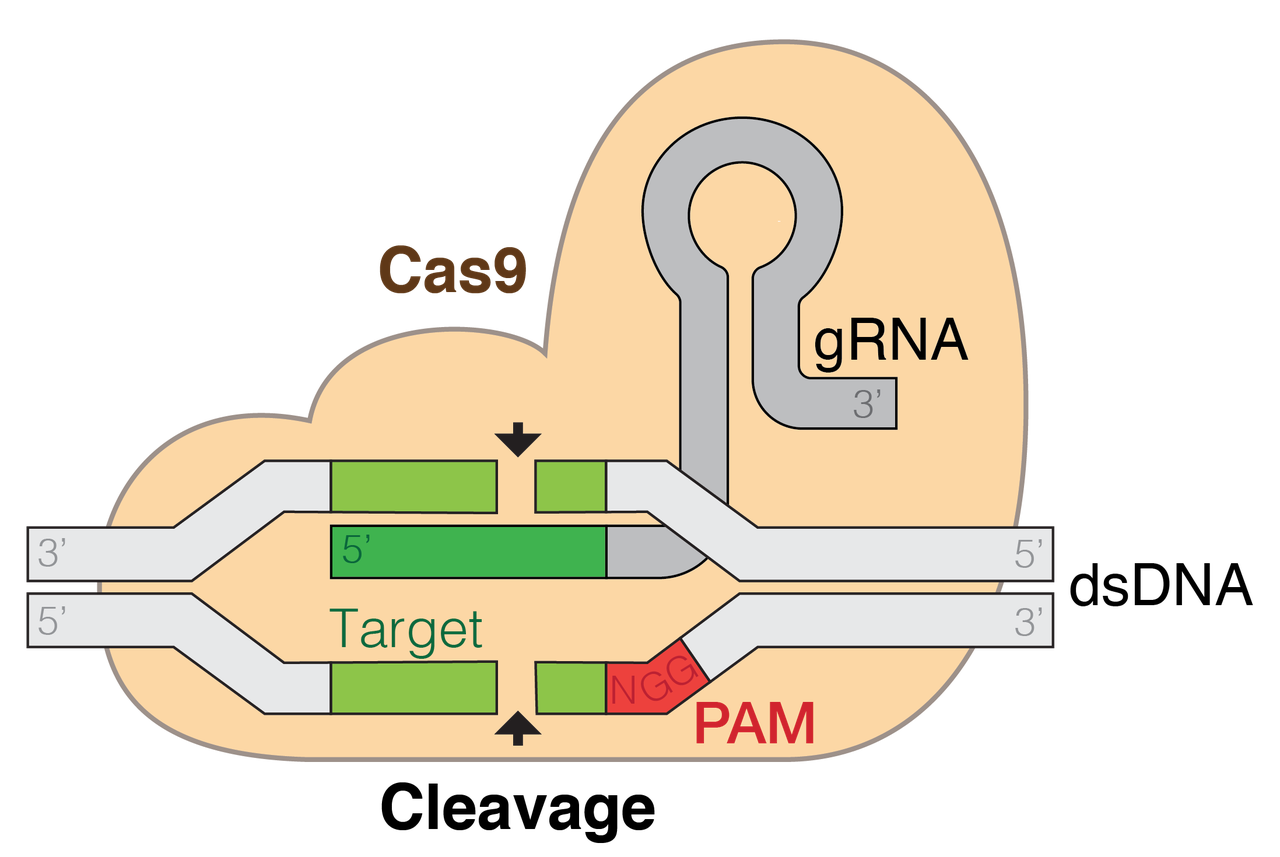
CRISPR stands for Clustered Regularly Interspaced Short Palindromic Repeats, which describes what the sequence looks like in a bacterial genome rather than what it does. What it does is remember. A bacterium that survives a viral attack stores snippets of the virus's DNA, called spacers, between repeat sequences in its own genome. When the same virus comes back, the bacterium produces a guide RNA matching the stored viral sequence, and that guide directs a protein called Cas9 to the matching stretch of invading DNA, where it cuts. This is an immune system with a memory, running inside a single cell. The repeats themselves were first identified in E. coli by Ishino in 1987, with no idea at the time what they were for. Their function as an immune mechanism was worked out through the 2000s, in work by Francisco Mojica and colleagues, whose landmark paper on the foreign origin of those spacers is dated 2005, and by Rodolphe Barrangou in 2007.
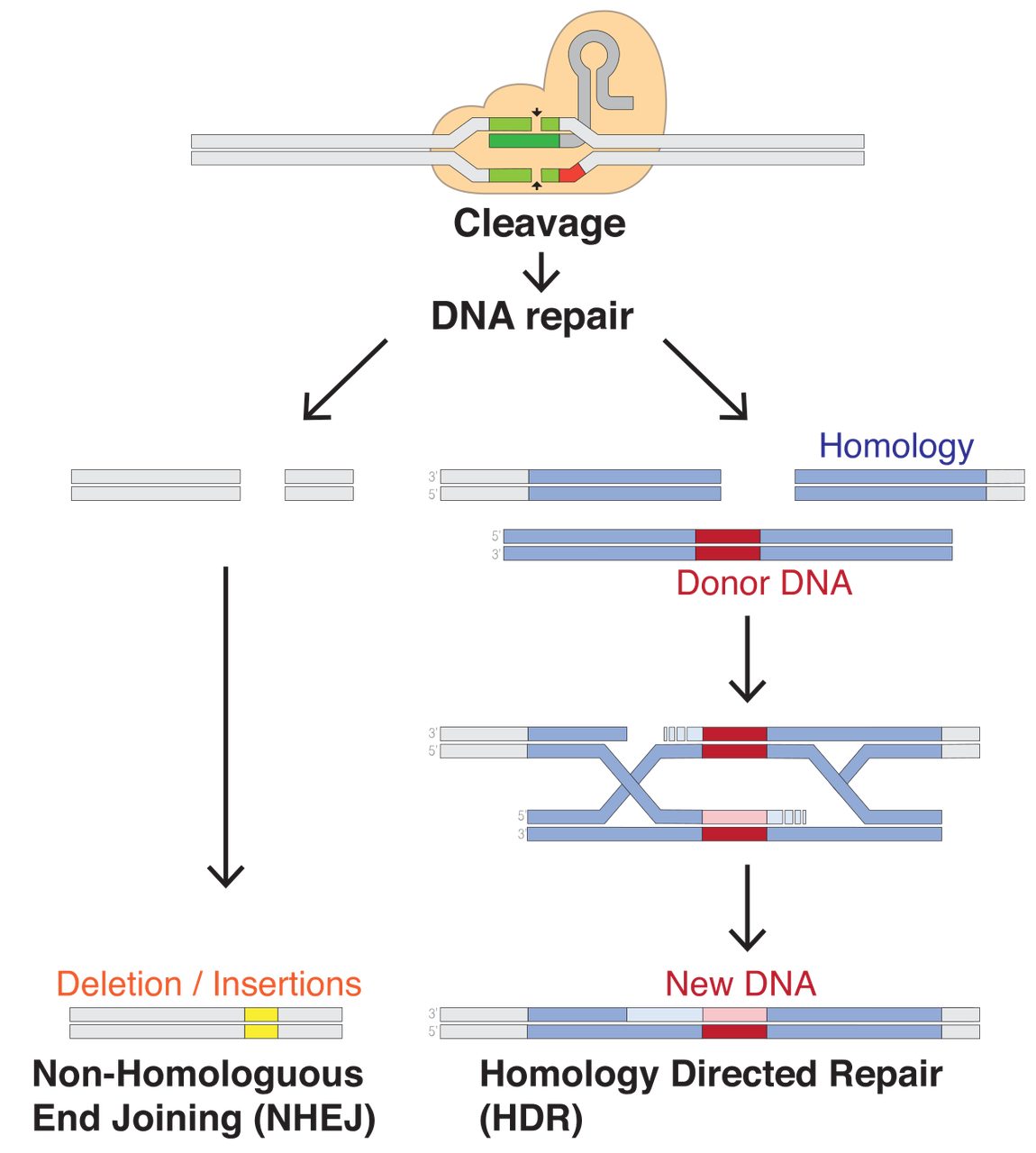
This is the step an experimenter steers, not one they invent from nothing.
The step that turned a curiosity into a tool was taken in 2012. Jennifer Doudna, Emmanuelle Charpentier and their colleagues, publishing as Jinek, Chylinski, Fonfara, Hauer, Doudna and Charpentier in Science, volume 337, pages 816 to 821, demonstrated that the guide RNA did not have to come from a bacterium's own stored memory. It could be synthesized. And if the guide can be written, then Cas9 can be sent to any DNA sequence, in any organism. Their title states the whole result: A Programmable Dual-RNA-Guided DNA Endonuclease in Adaptive Bacterial Immunity. The mechanism underneath is not hard to state. Cas9 is guided by a 20-nucleotide stretch of RNA to a matching stretch of DNA, and it cuts. The cell then repairs the cut with its own machinery, and it is that repair step, rather than the cut, that can be steered to delete a sequence, correct one, or insert something new. CRISPR does not write DNA. It makes a precise break and lets the cell's own repair crew finish the job under conditions the experimenter has arranged.
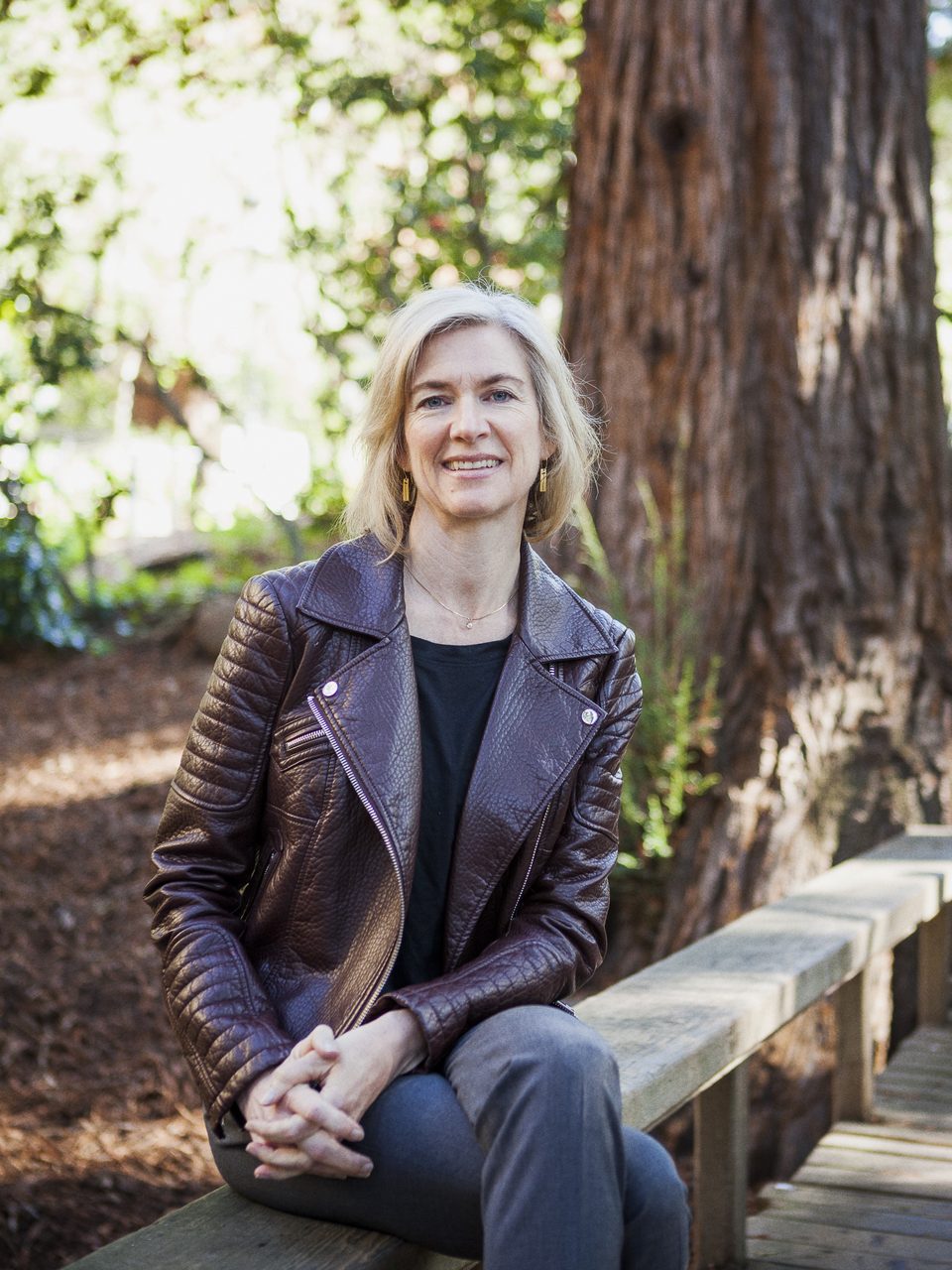
The 2012 paper carries six names. The two most associated with the result are the two who shared the Nobel eight years later.
The 2020 Nobel Prize in Chemistry was awarded jointly to Emmanuelle Charpentier and Jennifer Doudna for the development of a method for genome editing. They were the first two women to share a Nobel Prize in the sciences. It is worth registering how short the interval was between a paper about bacterial immunity and a prize for changing what biology can do, because that speed is the practical story of the tool, and it is the subject of the next paragraph.
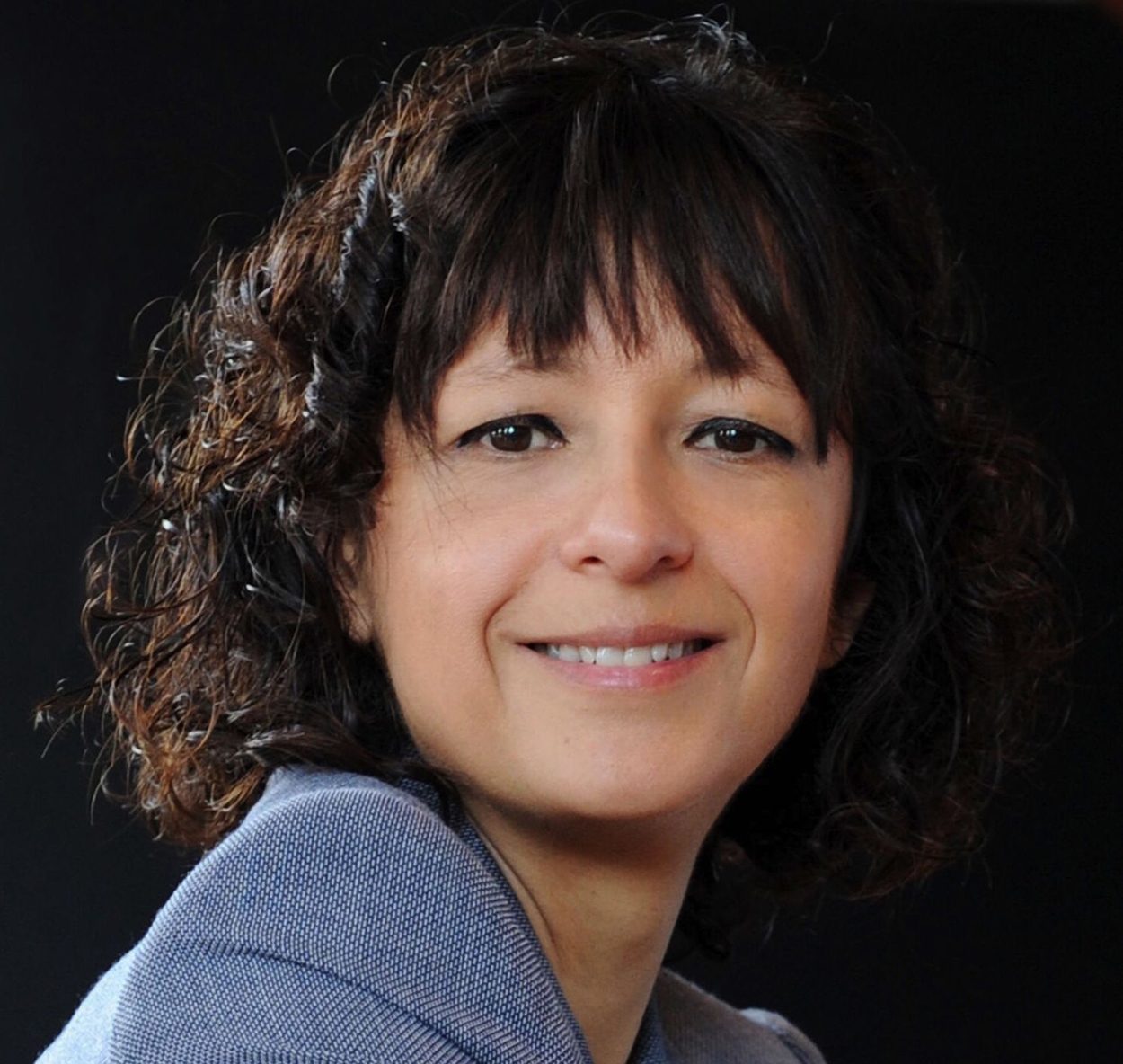
Two laboratories, two continents, one paper, one prize.
Two practical consequences followed almost immediately, and together they explain why CRISPR spread through laboratories faster than any technique in recent memory. The first is cost. The previous generation of gene-editing tools, TALENs and zinc finger nucleases, required engineering a new protein for every new target: a commonly cited approximate figure is $5,000 or more in reagents per edit, and an edit that took months. With CRISPR the protein stays the same and only the guide RNA changes, and a guide RNA is a short synthetic molecule: roughly $100 per edit, and days rather than months. Those numbers are approximate and widely repeated rather than audited industry averages, and the order of magnitude is the point. A laboratory that once needed a large budget to attempt gene editing could suddenly do it on a modest one. The second consequence is precision, which improved steadily after the tool's introduction: off-target effects, meaning cuts made at unintended locations, are now detectable at below 0.1 percent frequency using optimized guide RNAs and newer high-fidelity Cas9 variants such as eSpCas9. Hold that last sentence carefully. Detectable at below 0.1 percent is a statement about how good the measurement has become, and the people doing the measuring are not unanimous that the measurement sees everything. Section 06 returns to it.
02The First Approved Therapy
The proof that any of this reaches patients arrived in late 2023, in the form of a regulatory decision.
Casgevy, generic name exagamglogene autotemcel and often shortened to exa-cel, is the first CRISPR-based therapy to receive regulatory approval anywhere in the world. The United Kingdom's Medicines and Healthcare products Regulatory Agency approved it on 16 November 2023 for severe sickle cell disease in patients aged 12 and over, making it the first gene-editing treatment ever to receive regulatory approval, and in the same action granted conditional marketing authorization for transfusion-dependent beta-thalassemia. The US FDA approved it for sickle cell disease on 8 December 2023, making it the first medicine available in the United States to treat a genetic disease using CRISPR gene editing. One detail deserves stating precisely, because it is routinely collapsed: the FDA approved the two indications separately, and transfusion-dependent beta-thalassemia followed on 16 January 2024, a date outside the December 2023 window that shorthand accounts give. Our own research file makes exactly that compression, and it is corrected here rather than repeated.
| Regulator | Indication | Decision | Date |
|---|---|---|---|
| UK MHRA | Severe sickle cell disease, patients aged 12 and over | Approval, the first ever granted to a gene-editing treatment | 16 November 2023 |
| UK MHRA | Transfusion-dependent beta-thalassemia | Conditional marketing authorization, in the same action | 16 November 2023 |
| US FDA | Sickle cell disease | Approval, the first CRISPR medicine available in the United States | 8 December 2023 |
| US FDA | Transfusion-dependent beta-thalassemia | Approval, granted separately | 16 January 2024 |
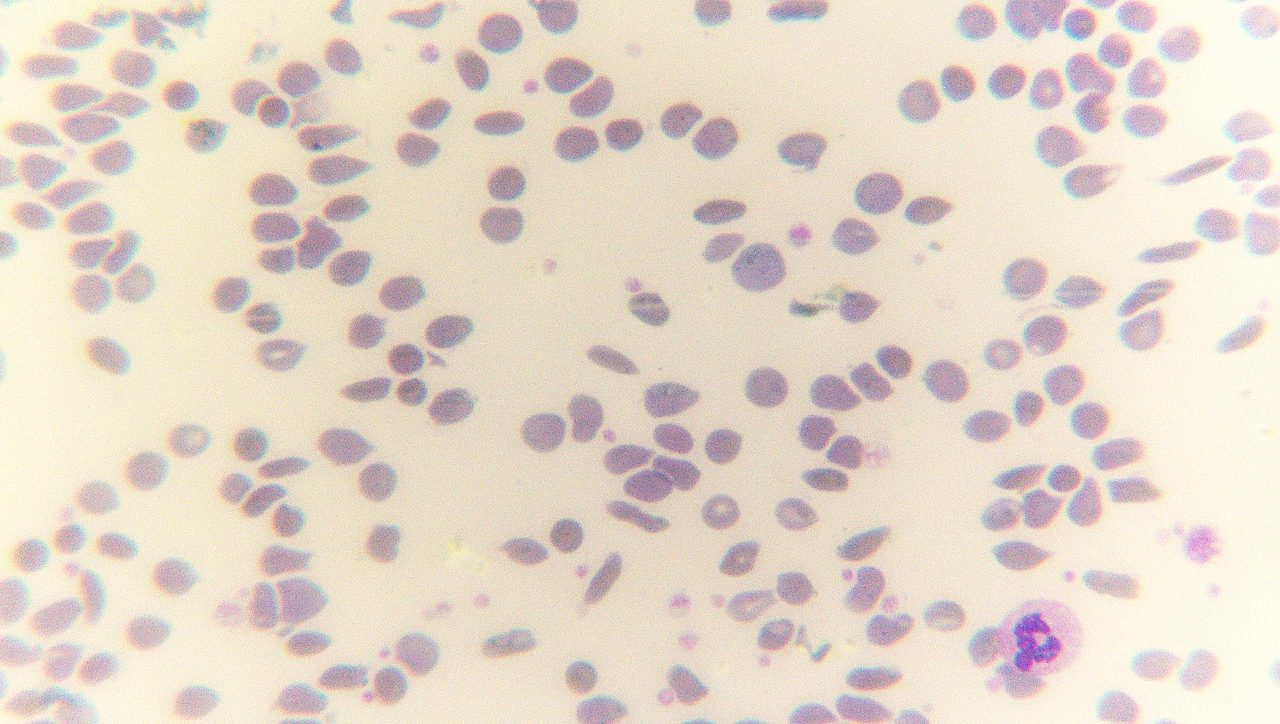
What Casgevy actually does is narrower and cleverer than fixing the sickle cell gene, which is not what happens. The patient's own hematopoietic stem cells, the blood-forming stem cells, are collected. Outside the body, CRISPR-Cas9 edits a gene called BCL11A in order to reactivate the production of fetal hemoglobin, which compensates for the patient's defective adult hemoglobin. The defective gene itself is not corrected; it is compensated for. The edited cells are then returned to the patient after a course of conditioning treatment. The pivotal clinical work behind the approval was published by Frangoul and colleagues in the New England Journal of Medicine in 2021, before any regulator acted on it.
The result is the reason this article exists. In Casgevy's clinical trials, 29 of 29 evaluable sickle cell disease patients were free from vaso-occlusive crises, the severe and often hospitalizing pain episodes that define the disease, for 12 months or more of follow-up. Twenty-nine out of twenty-nine is the kind of figure that should make a careful reader suspicious, and this one is real. It is also, exactly, a result in one trial cohort over one follow-up period. It is not the sentence CRISPR has cured sickle cell disease, and it is not a promise about any patient outside that cohort or any span longer than the follow-up. Those two sentences are different sizes, and keeping them different matters more than any enthusiasm about the first.
Then there is what it costs, and here the story stops being simple. Casgevy's United States list price is $2.2 million for a one-time treatment. That figure understates what the treatment actually costs a payer: once four months of hospital conditioning, apheresis and post-infusion monitoring are added, insurers and state Medicaid programs often pay closer to $3 million per patient in practice. Set against that, Vertex Pharmaceuticals and bluebird bio have separately estimated that lifetime management of sickle cell disease without this therapy runs $4 million to $6 million. Both framings are honest and neither is the whole picture. A price is not a bargain merely because a worse alternative costs more, and it is not automatically indefensible merely because it is enormous. What a price like that decides, in practice, is not whether the therapy works but who reaches it, and that question is where several of the arguments later in this article eventually land.
03Not Every Gene Therapy Is CRISPR
A clarification is needed before going further, because the terms get used interchangeably in coverage and they are not interchangeable. Gene therapy is older and broader than CRISPR. Luxturna, in 2017, was the first FDA-approved gene therapy for a genetic disease in the United States, treating an inherited retinal disease, and it uses an AAV viral vector rather than CRISPR editing. CAR-T cell therapy, in which a patient's immune T-cells are genetically modified to attack cancer, has been FDA-approved since 2017 and now spans six or more approved products, none of them CRISPR-edited; CRISPR-edited CAR-T products are a distinct and newer development, now entering clinical trials. So a headline reading gene therapy approved does not mean CRISPR approved, and Casgevy's claim to being first is specifically a claim about CRISPR editing, not about genetic medicine in general.
04Into the Body, and Past the Cut
Casgevy edits cells outside the body, which sidesteps one of the field's hardest problems: getting the editing machinery to the right cells inside a living person. In 2021 Intellia Therapeutics achieved the first in vivo human CRISPR editing, injecting CRISPR directly into a living patient's body and editing the transthyretin gene, known as ATTR, in place rather than in a dish. TTR protein levels dropped 87 percent in the treated patients. That is a different order of problem from an outside-the-body edit, and the result is the proof it can be done in a person at all.
Base editing has entered human trials as well. Verve Therapeutics used a CRISPR base editor in living patients to reduce PCSK9, a gene controlling cholesterol regulation, and their cholesterol fell. The stated aim of that research is a single injection that could take the place of a lifetime of statin medication. That is the aim under study, not a result already achieved and not a treatment anyone can currently receive, and this is precisely the distinction that tends to disappear somewhere between a press release and a headline.
Both of those trials point at the same underlying shift. The original Cas9 approach cuts both strands of the double helix and relies on the cell to repair the break, and repair is where errors, particularly small insertions and deletions, tend to creep in. Two refinements attack that directly. Base editing, introduced by Komor and colleagues in 2016, changes a single DNA letter without cutting the double strand at all. Prime editing, introduced by Anzalone and colleagues in 2019, works more like search and replace: it can make all 12 possible point mutations plus small insertions and deletions, again without creating a double-strand break. The field describes both as more precise successors to the original blunt cut, and the direction of travel is consistent, which is fewer breaks and less reliance on the cell's improvisation.
Two further directions go further still, by not altering the DNA sequence at all. Epigenome editing uses a catalytically dead Cas9, dCas9, which still binds where it is guided but cannot cut, fused to epigenetic modifiers that change how strongly a gene is expressed. The underlying sequence is untouched, which makes the change potentially reversible and lower-risk than a permanent edit. RNA editing applies the same machinery to RNA rather than DNA, which makes it inherently temporary and non-heritable. Both are active and credible research directions rather than clinical practice. Neither is in wide clinical use, and nothing here should be read as describing an available treatment.
| Approach | What It Does | Where It Stands |
|---|---|---|
| Cas9 Cut and Repair | A 20-nucleotide guide RNA sends Cas9 to a matching DNA sequence and it cuts both strands; the cell's own repair machinery finishes the job, which is where insertion and deletion errors tend to arise | The 2012 approach, and the one behind Casgevy |
| Base Editing | Changes a single DNA letter without cutting the double strand at all, which removes the error-prone repair step | Komor and colleagues, 2016. In human trials, including Verve's PCSK9 work |
| Prime Editing | A search-and-replace edit that can make all 12 possible point mutations plus small insertions and deletions, also without a double-strand break | Anzalone and colleagues, 2019. Described in the field as a more precise successor |
| Epigenome Editing | A catalytically dead Cas9 (dCas9) fused to epigenetic modifiers changes how strongly a gene is expressed, without altering the DNA sequence, which makes it potentially reversible | An active, credible research direction. Not in wide clinical use |
| RNA Editing | Applies the same machinery to RNA rather than DNA, which makes the change inherently temporary and non-heritable | An active, credible research direction. Not in wide clinical use |
05The Line That Was Crossed
Everything above is somatic editing: the cells of a living patient, edited to treat a condition that patient already has. In November 2018 someone crossed into the other category, and the field's reaction is the reason the categories are now drawn as sharply as they are.
In November 2018 the Chinese biophysicist He Jiankui announced the birth of twin girls, publicly given the pseudonyms Lulu and Nana, whose embryos he had edited with CRISPR to disable the CCR5 gene, with the aim of conferring resistance to HIV.
The scientific and ethical case against what he had done was immediate and comprehensive, and it was not one objection but a stack of them, each sufficient on its own. The edit was medically unnecessary: safe methods already existed to prevent transmission of HIV from an HIV-positive father to a child, so the children were never at the risk the procedure claimed to remove. The editing itself was imprecise and produced children who are mosaic, meaning some of their cells carry the edit and some do not, which undermines any benefit the edit could in theory have conferred. Off-target effects were detected and never fully characterized. And there was no proper ethics review and no adequate informed consent process. Remove any single item from that list and the act still fails on the others.
The choice of target compounds it. The specific CCR5 mutation he aimed at, the Delta-32 deletion, occurs naturally in about 10 percent of Europeans, so the variant itself is nothing exotic. But carrying it may increase susceptibility to West Nile virus and influenza. The procedure therefore traded a risk the children did not face for other risks they would carry, did so imprecisely, and did so in the germline, the one place where an edit can be passed down across generations.
In December 2019 a Chinese court convicted He Jiankui of illegal medical practice and sentenced him to three years in prison. He was released in 2022. A third baby, from a separate edited embryo, was reportedly confirmed to exist by the court's own sentencing report.
The consequence for the field was a hardening of position that has held since. Nearly all nations now formally ban heritable, or germline, human genome editing for clinical use, and in 2021 the World Health Organization established a governance framework through its Expert Advisory Committee on Developing Global Standards for Governance and Oversight of Human Genome Editing. That is about as close to consensus as bioethics ever gets, and it was not produced by an argument in the abstract. It was produced by somebody actually doing the thing.
| Question | Somatic Editing | Heritable (Germline) Editing |
|---|---|---|
| What Is Edited | The cells of a living patient, either outside the body and returned, as in Casgevy, or directly inside it, as in Intellia's 2021 result | An embryo, as in the 2018 He Jiankui case |
| How Far the Change Reaches | The patient who is treated | Potentially across generations: the specific danger named in the 2019 moratorium call is mutations passed down to people who cannot be asked |
| Where It Stands | Approved and in clinical use since late 2023, with in vivo and base-editing trials running | Formally banned for clinical use in nearly all nations, under a World Health Organization governance framework since 2021 |
| This Article's Position | A real medical advance, carrying real and unresolved cautions | Not endorsed here, in any framing |
The distinction that scandal turned on is the one worth carrying out of this article, because nearly every argument about CRISPR's ethics collapses without it. Somatic editing changes the cells of a person who already exists, who can be told what is being done and can agree to it, and the change reaches that person. Heritable, or germline, editing changes an embryo, so the change is present in the person who results in a form that can be passed down across generations, to people who cannot be asked anything at all. Casgevy is somatic. Intellia's in vivo work is somatic. The base-editing and prime-editing trials are somatic. Essentially everything real and good that CRISPR has done in medicine sits on the somatic side of that line, and the line is not a technicality. It is the difference between treating a patient and altering an inheritance.
06The Field's Own Cautions
None of the objections in this section come from outside the field. Every one of them is made by people who build, use, or helped invent these tools.
Start with the precision figure from the first section. Jennifer Doudna has herself acknowledged that comprehensive off-target detection remains genuinely difficult: the sites an algorithm predicts an edit might hit are not the same set that unbiased detection methods find. Techniques such as GUIDE-seq and CIRCLE-seq, along with whole-genome sequencing, reveal off-target activity that prediction undercounts. She makes the point in A Crack in Creation, the book she wrote with Sternberg. The honest reading of detectable below 0.1 percent is therefore not that we know an edit is clean. It is that the instruments have become very good, and that one of the two people who won the Nobel Prize for this is on record saying they may still be missing things.
In 2019 Eric Lander and 17 co-authors, Emmanuelle Charpentier among them, called in a Nature commentary for a global moratorium on clinical heritable genome editing. Their argument is technical before it is moral: off-target effects and mosaicism in edited embryos could introduce mutations passed down across generations, with consequences that cannot be predicted in advance and cannot be recalled once released into the human population. Note who signed it. One of the two people who made the tool programmable is asking the world to stop before using it on the germline.
Sheila Jasanoff and J. Benjamin Hurlbut raise a structural objection that no laboratory improvement can answer. Gene-editing governance is fragmented across national jurisdictions with inconsistent regulation, which creates the possibility of ethics shopping: a researcher who cannot obtain approval in one country moving to one with weaker oversight. Their proposal, published in Nature in 2018, is a global observatory for gene editing. The He Jiankui case is widely read as exactly the pattern they describe, and it is worth noticing that the case broke in the same year they published the warning.
07Therapy, Enhancement, and Who Can Pay
The line between therapy and enhancement sounds crisp and is not. Editing CCR5 for HIV resistance and editing PCSK9 to lower cholesterol both sit ambiguously between treating a specific medical risk and improving function beyond an ordinary healthy baseline. This is not a philosopher's puzzle invented to be difficult. It is a live and unresolved regulatory and ethical problem, because approving a therapy requires saying what counts as a disease, and the same edit can be described either way depending on who is asking and why.
Francoise Baylis presses the consequence. If genetic enhancement becomes technically available while remaining expensive and unevenly regulated, wealthy families could engineer inheritable biological advantages for their children, and inequality that is currently social would acquire a biological component that safety-focused regulation does not address at all. Her argument, made in Altered Inheritance, is worth separating from the science-fiction version of it: she is not predicting superhumans, and this article refuses that claim outright further down. She is pointing out that a technology's ethical footprint is set by who can afford it, and that a rule requiring an edit to be safe says nothing whatever about who gets one.
08How Many Diseases, and How Soon
Roughly 10,000 human diseases are caused by mutations in a single gene. Cystic fibrosis, Huntington's disease, phenylketonuria, sickle cell disease, Tay-Sachs disease and muscular dystrophy are on that list, and in principle each is a target gene editing could address, because there is one thing to change. That figure is the honest basis for optimism about CRISPR in medicine, and it is also exactly where the optimism has to stop. The diseases that kill the most people are not on it. Heart disease, diabetes, most cancers and most mental illness are polygenic, involving hundreds to thousands of contributing genes acting together, and they are far more complex to address. Multi-gene editing approaches may reach some of them in the future. Nothing about the sickle cell result implies they are close.
How soon the monogenic diseases actually get treated is a forecast rather than a finding, and this article labels it as one. Our own research file estimates 10 to 20 years for additional somatic gene therapies to reach broad clinical deployment, and frames the technology as already technically ready, with governance rather than capability as the present bottleneck. That is the file's own editorial judgment, not a citable external consensus, and it belongs here as one stated view to be weighed rather than a number to be quoted back. Read it as an informed opinion about the pace of a field, not as a schedule.
09Beyond Medicine
Two applications of the same tool sit outside the clinic entirely, and they are where the arguments about risk get sharpest.
A gene drive is a CRISPR-based system engineered to defeat ordinary inheritance. A normal gene has roughly a 50 percent chance of passing to any given offspring; a gene drive pushes transmission toward roughly 99 percent, which lets an engineered change spread through an entire wild population instead of dying out in it. The lead real-world target is Anopheles mosquitoes, which carry malaria, a disease that kills roughly 600,000 people a year, and the Target Malaria project, funded by the Gates Foundation, has pursued exactly this. Two results should be kept apart, because they are routinely conflated, including in our own research file. Hammond and colleagues, in Nature Biotechnology in 2016, achieved gene-drive transmission of 91.4 to 99.6 percent targeting female-fertility genes in caged Anopheles gambiae, which is a striking transmission result and not a population collapse. The complete-suppression result, a caged population driven to zero, belongs to a different and later paper: Kyrou and colleagues, Nature Biotechnology volume 36, pages 1062 to 1066, in 2018, using a drive that targets the doublesex gene. The correction matters because the collapse result is the one everyone cites, and citing it under the wrong paper makes it harder for a reader to check. No gene drive has ever been released into the wild. The approach is governed internationally under the UN Convention on Biological Diversity, and it remains deeply controversial for one reason above the others: release is effectively irreversible.
The clearest warning about that comes from inside the work. Kevin Esvelt, who helped develop CRISPR gene drives, has himself warned that releasing them into wild populations risks cascading ecological effects that are practically irreversible, and that the proposed containment strategies, split drives and daisy-chain drives, remain inadequately tested for real environmental release. His paper on the subject appeared in eLife in 2014. Notice the pattern that recurs here: two of the strongest cautions in this article, on off-target detection and on gene drives, are made by the people who built the tools in question. That is not a scandal. It is what a healthy field looks like from the inside.
The biosecurity concern is real and should be stated at its actual size. CRISPR's low cost and wide accessibility, the very properties that made it spread, raise genuine biosecurity questions, and in 2016 the then-Director of National Intelligence James Clapper listed gene editing in an assessment of technologies of concern relevant to weapons of mass destruction. That is a serious flag from a serious source. It is also not a claim that engineered bioweapons are easy: actually deploying one remains far harder than editing a gene in a laboratory, because containment, delivery and the stability of an engineered pathogen are major unresolved obstacles. The honest position is neither dismissal nor alarm. The barrier is high, it has been lowering over time, and it is that trend rather than any present capability that keeps the concern live.
De-extinction is CRISPR's other public face outside medicine, and it is doing something narrower than the word implies. The method is to edit a living relative species' genome toward the traits of an extinct one, which produces an edited proxy rather than a revived original. Colossal Biosciences, associated with George Church and Ben Lamm, is editing Asian elephant DNA toward mammoth-like cold tolerance, subcutaneous fat and hemoglobin traits, with a stated target of 2028 for first calves. A separate University of Melbourne project, funded at AUD $5 million, aims at a thylacine proxy, the Tasmanian tiger, using a dunnart as surrogate. Those dates are the projects' own targets rather than verified outcomes. Whether the result should be called a true resurrection of the extinct species or an edited hybrid proxy is contested even among the projects' own supporters, and there is a question the genetics cannot answer at all: in most cases the habitat these animals originally evolved for no longer exists.
10The Long Horizon, Labeled as Such
One scenario belongs here only because it is discussed seriously, and its label needs fixing to it before it is stated. If heritable germline editing ever became routine, decades from now, different populations could in principle make different and divergent editing choices, and over many generations that could in theory produce human sub-populations with meaningfully different capabilities. The example our research file gives is a hypothetical spacefaring population edited for radiation resistance or reduced oxygen consumption. That is speculation, offered as speculation. It is not a prediction, not a plan, and not a description of anything happening now. And it is emphatically not an argument for germline editing: observing that a technology could have long-range consequences is the opposite of endorsing its use. Nothing in this paragraph softens one word of the section that follows it.
11What the Evidence Refuses
Four claims about CRISPR circulate widely enough that they need answering by name. Three are refused in our own research file. The fourth is this article's own addition.
Designer babies are not here now. He Jiankui's twins were technically gene-edited, and that single fact is the whole basis for the claim; the edits were crude, mosaic and medically unjustified, and nobody anywhere is currently producing babies with deliberately selected or designed traits. The technology that does exist, and is legal and already in wide clinical use alongside IVF, is preimplantation genetic testing, which selects between embryos that already exist. It does not design or edit them. Selecting among embryos and designing one are different acts, and collapsing them is how a real ethical question about preimplantation testing gets quietly traded for a fictional one about designed children.
CRISPR cannot make superhumans, and saying so is not modesty. Most of the traits people have in mind, intelligence, athleticism and appearance among them, are polygenic, controlled by hundreds to thousands of gene variants acting together in ways that are not yet well understood. Current single-gene and few-gene editing cannot produce enhancement of that kind, and attempting it would be irresponsible even in the cases where something is technically conceivable. This is a claim about the state of the science rather than about the limits of nature, which makes it the stronger and more checkable objection: it is refused as premature, and it would have to be revisited if the science genuinely changed.
COVID vaccines do not edit your DNA. This one is simply false, and the way it is false is worth knowing because anyone can check it. mRNA vaccines are translated into protein in the cell's cytoplasm; the mRNA never enters the nucleus, which is where DNA resides, and the mRNA itself degrades within days. There is no guide RNA aimed at a human sequence in an mRNA vaccine and no Cas protein in it. The claim reflects a basic misunderstanding of molecular biology that happens to have borrowed CRISPR's vocabulary, and it has no place in a discussion of what gene editing actually does.
And heritable human genome editing is not endorsed anywhere in this article, in any framing. That refusal is our own addition to the three above, stated plainly so it cannot be read out of the piece. The near-universal position of the scientific and bioethics communities, expressed in the World Health Organization's 2021 governance framework, in the moratorium call from Lander and his co-authors, and in near-total national bans on clinical heritable editing, is that what He Jiankui did in 2018 was a violation of established scientific and ethical norms. It was not a template. It was not a precedent. It was not a brave first step to be half-admired while regulation caught up. Nothing in the speculative section above, and no argument about future capability, changes that, which is why this refusal is carried into the verdict below rather than left in a footnote.
Fast Facts
- What CRISPR Is
- A bacterial immune system with a memory: stored snippets of viral DNA direct a guide RNA, which directs the Cas9 protein to cut a matching sequence. First identified in E. coli by Ishino in 1987, understood as immunity through the 2000s in work by Mojica (landmark paper 2005) and Barrangou (2007)
- The Breakthrough
- In 2012 Doudna, Charpentier and colleagues showed the guide RNA could be synthesized, which meant Cas9 could be sent to any DNA sequence in any organism. Science, volume 337, pages 816 to 821
- The Nobel
- The 2020 Nobel Prize in Chemistry, awarded jointly to Charpentier and Doudna for the development of a method for genome editing. They were the first two women to share a Nobel Prize in the sciences
- The First Approved Therapy
- Casgevy (exagamglogene autotemcel), cleared by the UK's MHRA on 16 November 2023 and by the US FDA for sickle cell disease on 8 December 2023, with FDA approval for transfusion-dependent beta-thalassemia following separately on 16 January 2024
- How Casgevy Works
- The patient's own blood-forming stem cells are collected, the BCL11A gene is edited outside the body to reactivate fetal hemoglobin production, and the edited cells are returned after conditioning. The defective gene is compensated for, not corrected
- The Trial Result
- 29 of 29 evaluable sickle cell patients were free of vaso-occlusive crises for 12 months or more. That is this cohort's outcome over this follow-up period, and not a claim that CRISPR has cured sickle cell disease
- What It Costs
- A $2.2 million US list price for a one-time treatment; payers often pay closer to $3 million once conditioning, apheresis and monitoring are counted; Vertex and bluebird bio estimate lifetime management without the therapy at $4 million to $6 million
- Editing Inside the Body
- Intellia Therapeutics achieved the first in vivo human CRISPR edit in 2021, targeting the transthyretin gene. TTR protein levels dropped 87 percent in treated patients
- The 2018 Case
- He Jiankui announced CRISPR-edited twin girls in November 2018, disabling CCR5 for HIV resistance. Medically unnecessary, imprecise, mosaic, unreviewed and unconsented. Convicted of illegal medical practice in December 2019, sentenced to three years, released in 2022
- Where Germline Editing Stands
- Nearly all nations formally ban heritable human genome editing for clinical use, and the World Health Organization established a governance framework in 2021
- The Realistic Scope
- Roughly 10,000 monogenic diseases are, in principle, targets for gene editing. The polygenic diseases that kill the most people (heart disease, diabetes, most cancers, most mental illness) involve hundreds to thousands of genes and are far more complex
- Refused
- That designer babies are here now, that CRISPR can make superhumans, that COVID vaccines edit your DNA, and any framing that endorses heritable germline editing. This is science and history, not medical advice
What We Can Actually Stand Behind
The core of this is settled. CRISPR is a bacterial immune system, and in 2012 Doudna, Charpentier and colleagues showed it could be reprogrammed with a synthetic guide RNA to cut any DNA sequence in any organism; the 2020 Nobel Prize in Chemistry was awarded jointly to them for it, and they were the first two women to share a science Nobel. Casgevy is a real, approved therapy: the UK's MHRA cleared it on 16 November 2023 and the US FDA on 8 December 2023 for sickle cell disease, with FDA approval for transfusion-dependent beta-thalassemia following separately on 16 January 2024, and in its pivotal trial 29 of 29 evaluable patients were free of vaso-occlusive crises for 12 months or more. In 2021 Intellia performed the first in vivo human CRISPR edit and TTR protein levels dropped 87 percent. And He Jiankui did edit human embryos in 2018, was convicted of illegal medical practice in December 2019 and sentenced to three years, and was released in 2022. None of that is in dispute.
The arguments the field is actually having stay open here, with both sides at strength. Doudna herself says comprehensive off-target detection is harder than algorithmic prediction suggests, which sits in real tension with the below-0.1-percent detection figure above; both are carried rather than reconciled. Lander and 17 co-authors, Charpentier among them, called in 2019 for a moratorium on clinical heritable editing. Jasanoff and Hurlbut argue that fragmented national governance invites ethics shopping. Baylis argues that expensive, unevenly regulated enhancement would give inequality a biological form that safety rules do not touch. The therapy-versus-enhancement line is genuinely unsettled rather than merely philosophical. Roughly 10,000 monogenic diseases are addressable in principle, while the polygenic diseases that kill the most people are far more complex and are not close. The 10-to-20-year deployment estimate quoted above is our own research file's editorial forecast, not an external consensus. And gene drives, which push transmission toward roughly 99 percent and produced a complete caged-population collapse in Kyrou and colleagues' 2018 experiment, have never been released into the wild, with the co-developer Kevin Esvelt among those warning that release would be practically irreversible.
Three things here are labeled speculation and stay labeled. Biosecurity risk from cheap, accessible editing is a real flag, raised at national-intelligence level in 2016, and deploying an actual engineered pathogen remains far harder than editing a gene; the concern rides on a barrier that is lowering rather than on a present capability. De-extinction projects are real and funded, and what they can produce is an edited proxy rather than a revived species, on timelines that are the projects' own stated targets. And any scenario in which edited human populations diverge over many generations is a hypothetical presented as a hypothetical, with no bearing on what is permitted now and no weight as an argument for anything.
Four claims are refused outright. No, designer babies are not here now: He Jiankui's edits were crude, mosaic and medically unjustified, nobody is producing babies with deliberately selected or designed traits, and preimplantation genetic testing selects between embryos that already exist rather than editing them. No, CRISPR cannot make superhumans: the traits people mean are polygenic, current editing is not, and attempting it would be irresponsible where it is conceivable at all. No, COVID vaccines do not edit your DNA: mRNA is translated in the cytoplasm, never enters the nucleus, and degrades within days. And no, this article does not endorse heritable germline human editing in any framing: what happened in 2018 was a violation of established scientific and ethical norms, not a template, not a precedent and not a brave first step, and nothing in the speculative material above is offered as a softening of that. This article is science and history, not medical advice.
The Healing Arts describes itself as the long fight against pain, plague and death, from trepanation to CRISPR, and this file is the last word in that sentence. What is remarkable about CRISPR is not that it is powerful, because plenty of things are powerful. It is that the same short piece of synthetic RNA that lets a laboratory aim Cas9 at a chosen sequence for about a hundred dollars is also the thing that made every ethical question in this article urgent at once, and that both of those arrived in the same decade, out of the same discovery, largely through the same hands. The field's answer to that has been mixed, and worth stating without flattery: a real therapy for a real disease, at a price that decides who reaches it; a near-total ban on the one use nobody could take back, arrived at only after somebody took it; and a set of the loudest warnings issued by the very people who built the tools. What CRISPR has actually done, so far, is give twenty-nine people in one trial a year and more without the crises that had been defining their lives, and give everyone else a decision that has to keep being made carefully. The first of those is finished and counted. The second is not.
Sources & further reading
Everything above is drawn from our research library on Theories of Anything, with the specific studies below. Open the full file to check the sourcing and go deeper.
Image credits
- CRISPR-Cas9 guide RNA and DNA mechanism diagram Marius Walter, via Wikimedia Commons (CC BY-SA 4.0). CC BY-SA 4.0 Source.
- DNA repair pathways after a CRISPR-Cas9 cut Marius Walter, via Wikimedia Commons (CC BY-SA 4.0). CC BY-SA 4.0 Source.
- Jennifer Doudna, portrait (2016) Jussi Puikkonen/KNAW, via Wikimedia Commons (CC BY 2.0). CC BY 2.0 Source.
- Emmanuelle Charpentier, portrait Bianca Fioretti, Hallbauer and Fioretti, via Wikimedia Commons (CC BY-SA 4.0). CC BY-SA 4.0 Source.
- Sickle-cell blood film, giemsa-stained Dr Graham Beards, via Wikimedia Commons (CC BY-SA 4.0). CC BY-SA 4.0 Source.


