
Cults and Thought Reform: What the Record Documents, and What the Models Only Propose

The science of thought reform is contested and the history of these groups is not, and this article keeps the two apart deliberately. On the record: 918 dead in connection with one settlement in Guyana on 18 November 1978, a nerve agent released on the Tokyo subway at rush hour in March 1995, thirty-nine dead in a rented house in California in March 1997, and a federal jury in Brooklyn convicting a group's founder on all seven counts of a racketeering and sex-trafficking indictment in 2019. On the other side of the line: Lifton's eight criteria, Singer's six conditions and the BITE model, three descriptive checklists that no controlled study has validated and that none could ethically test, one of them the work of an author whose task force report the American Psychological Association's own board declined to accept in 1987 and whose coercive-persuasion testimony a federal court excluded in 1990. This page refuses the overclaim in both directions, corrects in the open the errors it found in our own two research files, and attaches no state of mind to any named person, living or dead.
Somewhere in almost every argument about cults, one word arrives and settles everything. Brainwashing. It accounts for why a person handed a group their money, their marriage, their name and in some cases their life, and it accounts for it so completely that nothing else seems to need saying. That word is also the one part of this subject that has failed in two of the places a claim about the mind gets tested. In 1987 the board of the American Psychological Association that had commissioned a task force on the question declined to accept the task force's report. In 1990 a federal court excluded expert testimony built on the same thesis, on the ground that it had not been shown to be generally accepted in the relevant scientific community.
And two things are true at once, which is where most writing on this subject breaks. The mechanism is contested science. The history is not. On 18 November 1978, 918 people died in connection with one settlement in Guyana. On 20 March 1995, five teams released a nerve agent on the Tokyo subway during the morning rush hour. In March 1997, thirty-nine people were found dead together in a rented house in California. In 2019 a federal jury in Brooklyn convicted the founder of a modern group on all seven counts of a racketeering and sex-trafficking indictment, and in 2020 a federal judge sentenced him to 120 years. None of that is a psychological theory. All of it sits on a record that a court, a coroner, a legislature or a government inquiry produced.
The boundaries first, and then one rule. Obedience to an authority inside a laboratory belongs to this wing's obedience, and this page does not re-argue it. Belief engineered from outside, at a public, belongs to propaganda. The anonymous street crowd, mass formation, and radicalisation into political violence are each their own subject in this wing and are left entirely alone here. What is left is the narrower thing: a mind inside a closed group that has a leader. This article describes mechanisms and delivers no moral verdict on anybody, which is a different job and a different wing of this library. And the rule, which is the strictest one any page here is written under. What a named person or organisation did, on a record a court, a coroner, a legislature or a government inquiry produced, is reportable and is stated flatly. What was inside anyone's head is not. No sentence on this page says that a named individual, living or dead, was brainwashed, was mentally disordered, or intended what a psychological model would predict them to intend. Where our own two research files carry a claim of that kind, or a claim about a named person that a court record contradicts, this page declines it and says so in the open.
01Why This Field's Evidence Looks Like This
Four constraints shape everything below, and stating them first is what lets the rest be read properly. Active high-demand groups restrict researcher access, so prospective longitudinal work is close to impossible and most data are retrospective self-reports from former members, with the recall bias that implies. Former members who seek therapy or volunteer for research are not a representative sample of everyone who has ever been in a group. Experimentally simulating coercive persuasion would be unethical, so there are no controlled trials of it and there will not be. And the subject sits on top of religious-freedom law, anti-discrimination law and child protection, so institutional interests press on the research from several directions at once. Our own file ZC_1_02 sets those out in its Methodological Notes and they are true on their face. A field under those four constraints can still produce knowledge. What it cannot produce is a demonstrated causal mechanism, and that is why this page splits the way it does.
So the page is built in two halves that never mix. What courts, coroners, legislatures and government inquiries have established is stated flatly, in the past tense, with the body that produced the record named. What psychologists have proposed is labelled a proposal every time it appears, including where the proposal is famous, useful, and probably describing something real.
02What Is Already On The Record
Four cases, each established by a body that could compel evidence or by a professional record built after the fact. They come first, before any model, to fix one point: whatever the science of thought reform turns out to be worth, the harm in these four cases is not in dispute, and none of it depends on a psychological theory being true.
On 18 November 1978, 918 people died in connection with the Peoples Temple settlement at Jonestown, Guyana. The figure breaks across three places: 909 at the settlement itself, five at the Port Kaituma airstrip, and four in Georgetown. Autopsy findings recorded cyanide poisoning administered in a flavoured drink. An audio recording made at the settlement, held in the federal record, captures Jim Jones directing the event and at least one member audibly objecting. The source for all of that is a staff investigative report to the Committee on Foreign Affairs of the United States House of Representatives, dated 15 May 1979: a government inquiry, not a psychological interpretation. One correction is owed to our own corpus here. File ZC_1_02 writes the figure as 918 dead at the settlement, which is wrong in a way any reader can check, and the three-way split above is the correction.
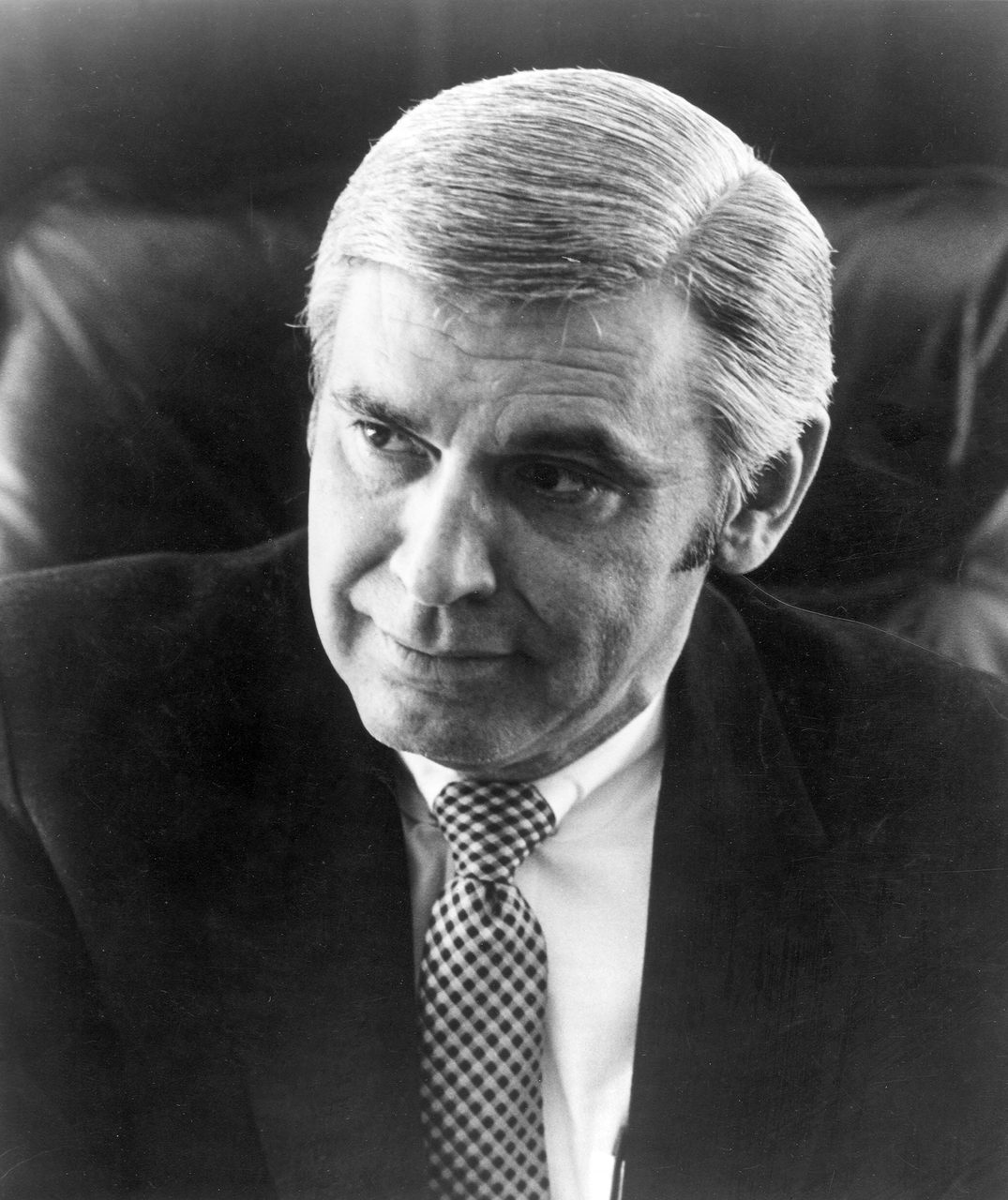
Representative Leo J. Ryan of California travelled to Guyana in November 1978 to investigate reports from his constituents about the settlement, and was shot dead at the Port Kaituma airstrip on 18 November 1978 as his party attempted to leave with members who had decided to defect. He was posthumously awarded the Congressional Gold Medal, and the enabling legislation was the subject of a House subcommittee hearing on 20 September 1983. One widely repeated superlative about his death is deliberately absent from this page, because the research behind the article did not verify it, and a claim that sounds definitive is exactly the kind that should not travel unchecked.

On 20 March 1995, five teams of Aum Shinrikyo members released sarin on three Tokyo subway lines during the morning rush hour. More than 5,000 people sought medical attention. St. Luke's International Hospital in Tokyo alone published a peer-reviewed report on 640 victims who presented on the day. The death toll needs its dates attached, because it moved: 12 people died at the time, the toll was later revised to 13, and a fourteenth victim died in 2020 after twenty-five years of severe after-effects. Our own file ZC_1_02 prints a bare 14 beside the 1995 date, which silently imports a death that occurred a quarter of a century later. A figure with a moving denominator has to carry its date or it is not a figure.
Chizuo Matsumoto, who led Aum Shinrikyo under the name Shoko Asahara, was convicted of murder and sentenced to death in 2004, and the sentence was finalised in 2006 once appeals were exhausted. He was executed by hanging on 6 July 2018, together with six other members of the group, and six further members were executed on 26 July 2018, which completed the 13 Aum members who had been under sentence of death. Our own file records the July batch and silently omits the second one. A wider figure that circulates for the totality of those convictions, counting crimes and deaths, is not printed here at all: the research behind this article did not confirm it independently.

Thirty-nine members of Heaven's Gate were found dead on 26 March 1997 in a rented house in Rancho Santa Fe, San Diego County, California: 21 men and 18 women. The deaths were self-administered over roughly three days, using phenobarbital mixed into applesauce and taken with vodka, followed in most cases by asphyxiation with a plastic bag. The group held that the physical body was a vehicle to be shed in order to board a craft they associated with the passage of Comet Hale-Bopp, and Marshall Applewhite's recorded exit statements and the group's own website document that belief in the members' own words. Applewhite spoke on the record, on camera, as the group's leader, which is why he is named. The others who died were private individuals, and none of them is named, described or pictured on this page.
Keith Raniere, founder and leader of the organisation NXIVM, was convicted by a federal jury in June 2019 on all seven counts of a superseding indictment: racketeering and racketeering conspiracy, sex trafficking, attempted sex trafficking and sex trafficking conspiracy, forced labor conspiracy, and wire fraud conspiracy. The racketeering count included predicate acts of extortion and identity theft. On 27 October 2020, United States District Judge Nicholas G. Garaufis sentenced him to 120 years in prison and a fine of 1.75 million dollars, in federal court in Brooklyn, and the Second Circuit affirmed the conviction in December 2022. This is the model of what this page will and will not say about a modern group. Name the counts, the court, the judge, the sentence and the appeal, because a jury found them and a judge imposed them, and then stop.
| The Case | What The Record Establishes | What Kind Of Record It Is |
|---|---|---|
| Jonestown, Guyana, 18 November 1978 | 918 dead across three locations: 909 at the settlement, five at the Port Kaituma airstrip and four in Georgetown. Autopsy findings recorded cyanide poisoning administered in a flavoured drink. Representative Leo J. Ryan was shot dead at the airstrip | A staff investigative report to the Committee on Foreign Affairs of the United States House of Representatives, 15 May 1979, and a later House subcommittee hearing of 20 September 1983 on his Congressional Gold Medal |
| Aum Shinrikyo and the Tokyo subway attack, 20 March 1995 | Five teams released sarin on three subway lines at the morning rush hour; more than 5,000 people sought medical attention; 12 died at the time, the toll was later revised to 13, and a fourteenth victim died in 2020. The group's leader was convicted of murder and sentenced to death in 2004, and 13 Aum members under sentence of death were executed in two batches in July 2018 | A peer-reviewed report in Annals of Emergency Medicine on 640 victims at one Tokyo hospital, a United States Senate subcommittee staff statement of 31 October 1995, and Japanese court records as reported in the international press of record |
| Rancho Santa Fe, California, 26 March 1997 | Thirty-nine members of Heaven's Gate found dead, 21 men and 18 women, the deaths self-administered over roughly three days | County coroner findings as reported, and a peer-reviewed university-press monograph on the group |
| United States v. Raniere, Eastern District of New York | A federal jury convicted the founder of NXIVM on all seven counts of a superseding indictment in June 2019; a federal judge imposed 120 years and a 1.75 million dollar fine on 27 October 2020; affirmed on appeal in December 2022 | A federal jury verdict, a federal sentencing and a court of appeals decision, reported in United States Department of Justice press releases |
Nothing above is an inference about anyone's mind. The Jonestown toll comes from a congressional staff investigation. The Tokyo casualty figures come from a peer-reviewed hospital report and a Senate subcommittee staff statement. The Aum sentences and executions come from Japanese court records. The Rancho Santa Fe deaths come from county coroner findings as reported and from a university-press monograph. The Raniere convictions come from a federal jury verdict and a federal sentencing. That is the standard this article holds itself to whenever it names a person, and it is the reason the rest of the page reads so much more cautiously than this section does.
03The Word, And The Dispute Over It
There is a live and unresolved dispute over the word cult itself, and it is not a quarrel about manners. Sociologists of religion including J. Gordon Melton and Massimo Introvigne argue that the label is inherently pejorative and that researchers should write new religious movement instead, on the ground that anti-cult activism projects harm onto people who may be exercising a genuine religious choice. Eileen Barker, who founded INFORM at the London School of Economics in 1988, advocates studying such movements without assuming that membership results from coercion. Clinical researchers on the other side argue that neutral terminology obscures documented harm. There is no agreed boundary between an intense but benign group and a harmful one, and our own file ZC_1_02 names that gap in its Research Gaps section as an unresolved empirical and ethical problem. Melton, Introvigne and Barker are living scholars, so what appears here is their published position and nothing about their motives. This page carries both sides and crowns neither.
One observation makes that boundary concrete, and it has to be stated in the past tense to be stated honestly. Scholars of religion have noted that several movements now regarded as mainstream religions began as small, persecuted, high-demand groups: early Christianity required communal property and total commitment, and early Mormonism combined secret temple ritual with authoritarian governance. Those are descriptions of movements in their first decades, drawn from the sociological literature, and they carry no statement whatever about the churches that exist today or about anybody now in them. What the observation does is show that telling a cult from a new religious movement involves a normative judgement about how much harm is too much, rather than a clean categorical test that anyone could apply from outside.
So a note on the vocabulary of this page. It uses the word cult where that is the word a reader is looking for, and high-demand group where precision matters, and it treats neither as a finding about anybody. The word brainwashing appears on this page as the name of a contested thesis and in the titles of the works that argue about it, and never as a description of what happened to a particular person.
04The Models, And What A Model Is
Robert Jay Lifton published Thought Reform and the Psychology of Totalism: A Study of Brainwashing in China in 1961, with W. W. Norton in New York. It is built on intensive interviews with 40 subjects, 25 Westerners and 15 Chinese, who had been through Chinese Communist re-education programmes, and it is the origin of the phrase thought reform in English-language psychology. No university is attached to that work anywhere on this page, and the reason is a defect in our own corpus rather than an oversight: file T_4_20 places the research at Yale, file ZC_1_02 places it at Harvard, neither attaches a source, and the research behind this article did not resolve which is right. Lifton is living, and this paragraph states only what he published and when.
Lifton's eight criteria of thought reform, in his own naming, are these. Milieu control: the regulation of all communication and information reaching a person. Mystical manipulation: the engineering of experiences that are then presented as spontaneous or divine. Demand for purity: an absolute, black and white moral world. Confession: required disclosure of private thought. Sacred science: the doctrine held as beyond question. Loading the language: a jargon of thought-terminating cliches that compress complicated reality into a phrase. Doctrine over person: the ideology overrides what a member actually experienced. And dispensing of existence: the group claims the right to say who deserves to exist. That list is a matter of publication record, and it is the whole of what this paragraph asserts.
The eight criteria are the most widely cited analytic framework in this field, and they have been applied by clinicians, courts and researchers to groups as different as religious movements, political organisations and multi-level marketing structures. They are a descriptive checklist derived from interview material. They are not an experimentally validated causal mechanism. Nothing in the framework has been tested in a controlled study, and it could not be: deliberately subjecting people to thought reform in order to observe it would be flatly unethical, which our own file ZC_1_02 states directly in its Methodological Notes. Read the verbs carefully from here on, because the difference between two available sentences is the whole of this subject. Lifton identified eight criteria is a matter of record and can be written flatly. Lifton showed how groups reshape identity would be a claim of an entirely different kind, and no evidence anywhere on this page supports it. A checklist that describes a pattern well and explains nothing causally is still useful, and this is what it is.
Take the sixth criterion, loading the language, because its claim is the easiest to state without mysticism. A group develops a specialised vocabulary in which complicated realities are compressed into short, absolute phrases, so that a phrase can end a line of thought rather than open one. Orwell had described the idea in fiction in 1949; Lifton documented it from interview material in 1961. The mechanism claimed is modest and not magical: when a person's whole conceptual vocabulary for a subject comes from one group, thoughts outside that vocabulary become harder to form. Our own file ZC_1_02 attaches three named organisations to this criterion as examples. This page carries none of the three as an illustration of it, and the source notes below say exactly why in each case, because the reason differs for each and one of them is an accusation rather than an observation.
Margaret Singer's six conditions for undue influence, set out in Cults in Our Midst, are: keep the person unaware that there is an agenda to change them; control their time and physical environment; create a sense of powerlessness; manipulate rewards, punishments and experiences to suppress the former identity; construct a closed system of logic that tolerates no dissent; and keep the person uninformed about, or unable to reach, their previous support systems. The book was first published in 1995, with Janja Lalich. The edition whose identifier the research behind this article resolved is the 2003 revision, and the source notes say so rather than quietly printing one year over the other. Singer testified as an expert in a number of civil cases involving high-demand groups before 1990, when a federal ruling closed that route in federal practice.
The third model in common use is more recent and more practical. Steven Hassan, a former member of the Unification Church who is now a licensed mental health counselor, built the BITE model as a checklist for identifying undue influence in any group. It sorts control tactics into four domains. Behaviour: the regulation of diet, sleep, finances, sexual life, work and relationships. Information: deception, restricted access to outside media, and an inner and an outer doctrine. Thought: loaded language, thought-stopping techniques, and black and white categories. Emotion: guilt, induced phobia about leaving, and love bombing. It is widely used by mental health professionals, exit counselors and lawyers. Everything in this paragraph is either Hassan's own published account of himself or a statement about his published model.
The validation status of that model is not a footnote to it. BITE has no independent peer-reviewed validation as a unified diagnostic instrument, and both of our research files say so. An external check confirms the position and sharpens it: the only quantitative study of the model is Hassan's own 2020 doctoral dissertation, which surveyed a self-selected sample of former members of groups that they themselves described as high-control, without a valid comparison group. Whatever the internal-consistency statistics in it report, a self-selected sample of people who already believe they were harmed cannot validate an instrument designed to detect that harm. The model derives from clinical observation and from Lifton's framework, not from controlled research. And the shape of the argument around it should be named rather than adjudicated. Hassan's model is his own and he sells services built on it. The loudest published critiques of it come from scholars associated with the new-religious-movements research camp, which has its own long-running quarrel with the anti-cult movement and its own critics. There is no neutral referee in this particular dispute, and this page is not one either.
| The Model | What It Sets Out | What Stands Behind It |
|---|---|---|
| Lifton's eight criteria of thought reform, published 1961 | Milieu control, mystical manipulation, demand for purity, confession, sacred science, loading the language, doctrine over person, dispensing of existence | Intensive interviews with 40 subjects who had been through Chinese Communist re-education programmes. A descriptive checklist, never tested in a controlled study, and it could not ethically be |
| Singer's six conditions for undue influence, published 1995 | Keep the person unaware of the agenda; control time and physical environment; create powerlessness; manipulate rewards and punishments to suppress the former identity; close the system of logic; cut off previous support systems | Clinical and forensic observation. Its author chaired the task force whose 1986 report the American Psychological Association's responsible board declined to accept in 1987, and a federal court excluded her proffered coercive-persuasion testimony in 1990 |
| Hassan's BITE model, first published 1988 | Control tactics sorted into four domains: Behaviour, Information, Thought and Emotion | Clinical observation and Lifton's framework. No independent peer-reviewed validation as a unified diagnostic instrument; the only quantitative study is its author's own 2020 dissertation, on a self-selected sample with no valid comparison group |
05What Happened When The Models Reached A Board And A Court
In 1983 the American Psychological Association commissioned a task force on Deceptive and Indirect Methods of Persuasion and Control, known as DIMPAC, and appointed Margaret Singer to chair it. The task force delivered its report in 1986. The Association's Board of Social and Ethical Responsibility for Psychology declined to accept it, in a memorandum dated 11 May 1987, on the ground that the brainwashing theory the report advanced lacked the scientific rigour and the evenhanded critical approach the Association would need before putting its name to it, and that the Board did not consider it had enough information to take a position on the issue at all. The Board asked task force members not to circulate the report without saying that the Board had found it unacceptable. Two cautions travel with that paragraph, and neither is optional. The Board's language is given here as it is reported in the peer-reviewed literature and in a later federal court opinion, not as a quotation this article verified word for word against the memorandum: the memorandum itself is reproduced online mainly on partisan sites from both camps, and the research behind this article did not locate it in a neutral archive. And the thing rejected was a report. It was not a finding that coercive influence does not exist, and reading it as one is the mistake this episode invites, in both directions at once.
In United States v. Fishman, 743 F. Supp. 713 (N.D. Cal. 1990), Judge D. Lowell Jensen excluded the proffered expert testimony of Margaret Singer and Richard Ofshe on coercive persuasion and thought reform. The defendant had sought to argue that his conduct was the product of undue influence. Applying the Frye general-acceptance standard, the court concluded that the thesis had not been shown to be generally accepted in the relevant scientific community, and its reported language is that at best the evidence established that psychiatrists, psychologists and sociologists disagree as to whether there is agreement about it. The ruling was widely followed and substantially ended the use of brainwashing-based expert testimony in United States federal and state courts. Two notes on how that reaches this page. The opinion is cited by reporter citation and is not linked below, because the research behind this article confirmed it in a public opinion index on 13 August 2026 but could not retrieve the full text from any of the three services it tried that day. And the sentence about disagreement is the court's language as reported in the peer-reviewed literature, not a quotation checked character by character against the opinion.
A second court record corrects our own corpus outright, and the correction matters because the corpus states the opposite of what happened. File T_4_20 says that Singer testified as an expert witness in landmark legal cases including the Patty Hearst trial of 1976. In United States v. Hearst, 412 F. Supp. 893 (N.D. Cal. 1976), Chief Judge Oliver J. Carter ruled her proffered expert testimony inadmissible, and the defence had pressed the point on at least three occasions. What she proffered there was psycholinguistics, a stylistic comparison of the defendant's known writings against the disputed tapes and texts, and not coercive persuasion at all. The court found her personally well qualified and rested the exclusion on the state of the field rather than on her credentials, noting that psycholinguistics might in future reach the general acceptance that would justify such testimony. Separately, she was one of the experts the court appointed to examine the defendant on her capacity to testify. That is the accurate sentence. The one in our file is not, and this page does not repeat it anywhere.
What those two rulings establish is narrower than either camp usually reports. A court applying a general-acceptance standard is not measuring whether a phenomenon is real. It is measuring whether a scientific community has agreed about it, which is a fact about the community. The Fishman ruling is strong evidence that the coercive-persuasion thesis had not been accepted by 1990. It is no evidence at all about what happens inside a closed group, and the four cases in section 02 are untouched by it.
06The Strongest Case On Each Side
Benjamin Zablocki made the strongest scholarly case for keeping the concept, and his argument is largely about what happened to it. He held that the sociology of religion had effectively blacklisted the brainwashing conjecture rather than test it, and that the concept had been distorted on the way out: what began as a claim about the manipulation of exit costs for existing members had been rewritten by its critics as a claim about the recruitment of new members, which is a far easier claim to refute. His own proposal was to study exit costs directly, using rational-action theory, and to treat charismatic authority combined with systematically raised costs of leaving as the thing worth measuring. The argument runs in two parts, in Nova Religio in 1997 and again in 1998, and both are listed below. Our own file T_4_20 describes the second part's content while its bibliography gives the first part's year and pages, which is why both appear here.
The opposing scholarly position holds that the brainwashing thesis functioned less as a scientific finding than as a legal instrument, used to create an exception to First Amendment protection for disfavoured religious movements, and that courts' descriptions of the brainwashing process were unsound from a social-science point of view. On that reading the concept did real work in litigation that it could not do in a laboratory. The interest is declarable in one clause and is declared here: Dick Anthony, one of the two authors of the paper this page cites for that position, has served as an expert witness in litigation involving new religious movements. That is documented, and it is neutral to state. What this page will not do is call him, or Melton, or Introvigne, an apologist, because that is an accusation rather than a fact, and several of the people who make it are themselves parties to the same dispute.
Which is the honest shape of this field: interested parties on both sides, and very few disinterested ones. Practitioners who identify undue influence sell services to people who believe they have suffered it. Scholars who study new religious movements have working relationships with the movements they study, and some have been retained in litigation. Neither observation refutes anybody's argument, and neither is offered as a rebuttal here. Both are things a reader is entitled to know before deciding how much weight to give either side. For the whole history rather than this page's slice through it, the neutral reference this article recommends is Joel E. Dimsdale's Dark Persuasion: A History of Brainwashing from Pavlov to Social Media, published by Yale University Press in 2021 and written by a professor of psychiatry as a history rather than as a brief for either camp.
07Who Joins, And What Distinguishes Them
The most useful number on this page comes from a study that watched people move through a recruitment sequence rather than asking former members to remember one. Marc Galanter studied the 21-day workshop sequence the Unification Church used to introduce prospective members, testing participants at several points along it. After the initial two-day workshop, 71 percent had dropped out. 9 percent of those who began the sequence ultimately joined the church. And the 9 percent who joined were distinguished from the people who dropped out later mainly by having weaker outside personal ties, not by stronger belief and not by greater cohesiveness. The published abstract does not state the total sample size, so no denominator appears here and none should: the percentages are what the paper reports.
Eileen Barker's study of the Unification Church in Britain, published in 1984 as The Making of a Moonie: Choice or Brainwashing?, combined participant observation, interviews and survey work across more than a thousand people who came into contact with the movement. Her central finding was that the overwhelming majority of people exposed to the movement's intensive residential recruitment workshops did not join, and that most of those who did join left within about two years, of their own accord. Our own file attaches a specific percentage to that work, which the research behind this article could not verify against Barker's text, so the number is not printed. What is printed is her finding in words, standing next to Galanter's independently peer-reviewed 9 percent, because two studies of the same movement landing on the same order of magnitude is a stronger sentence than one unverified percentage.
Refused: that only weak, gullible or psychologically damaged people join. A peer-reviewed critical review of the research literature finds that people entering such groups do not necessarily show pre-existing psychopathology, and that intelligence, education and prior mental health do not predict membership. What predicts susceptibility is situational: a life transition, social isolation, a break in existing ties, and simple coincidental exposure to recruitment. In the one prospective study on this page, the people who ultimately joined were distinguished from those who dropped out mainly by having weaker outside personal ties. That is worth sitting with, because it inverts the reassurance the question usually carries. The thing that separated the joiners was not something wrong with them. It was how thin their ties to people outside the group already were. One honest caveat travels with all of it: the studies here are mostly of Western groups, and our own file names cross-cultural coverage as a hole in the evidence.
08Staying, And Leaving
The most famous observation about why commitment can survive its own disconfirmation is not an experiment and should never be reported as one. Leon Festinger, Henry Riecken and Stanley Schachter covertly joined a small group that had predicted a world-ending flood for 21 December 1954. When the date passed and nothing happened, the most committed members did not abandon the belief. They reinterpreted the failure as proof that the group's own faith had spared the world, and they began proselytising far more actively than before. The authors read this as evidence for cognitive dissonance: when a disconfirmed belief carries heavy personal investment and strong social support, people escalate commitment rather than concede error. The design limits are visible from the design itself. This is covert participant observation of one very small group, and the observers were themselves a substantial fraction of the people in the room. It is a famous and illuminating case study, and that is the whole of what it is.
The closest thing this article has to practical advice comes from a 2017 review in Psychiatry Research that examined vulnerability factors in cult commitment and protective factors in departure, and drew explicit parallels with the literature on addiction. Two of its findings bear directly here. Social precariousness functions as a barrier to leaving, because a member with nowhere to go faces a materially harder exit than a member with somewhere. And the probability of departure rises when a member's family maintains contact in a spirit of mutual understanding while avoiding criticism. That second finding points away from confrontation, which is worth saying plainly, because it is the opposite of the deprogramming folklore that still shapes how most families imagine the problem.
Post-involvement difficulty among former members of charismatic groups has been documented as a recognisable cluster: uncertainty and indecision, blurred concentration and memory complaints, a sense of lost time, loneliness, guilt and fear, involuntary drift back into group-trained mental states, and difficulty in ordinary social relationships. That involuntary drift has a name in the practitioner literature, floating, which is Singer and Lalich's term. It is not a clinical diagnosis, it appears in no diagnostic manual, and the distinction is worth keeping: the term belongs to them, and the documented cluster belongs to the peer-reviewed literature.
A critical review of whether cultic environments are psychologically harmful reached three conclusions, and all three are needed together. People entering such groups do not necessarily show pre-existing psychopathology. Current members generally appear psychologically well-adjusted, although the review cautions that group pressure and demand characteristics may mask distress, a caveat that cuts directly against the reassuring reading of its own second finding. And a substantial minority of former members show significant adjustment difficulties after leaving. A substantial minority is the phrase the review supports, and it is the phrase this page uses.
Refused, and it is our own file's number. T_4_20 states that 60 to 80 percent of former cult members experience significant adjustment difficulties in the first 12 to 24 months after leaving, with most showing substantial improvement over two to five years. No source is attached to it anywhere in the file, the clause introducing it is ungrammatical in the same way as another sentence in the same document, which is the signature of a generation artefact rather than a transcribed finding, and the research behind this article could not find any study reporting that band. It appears here, and once more in the source notes at the foot of this page, in both places as our own corpus's unsupported claim being corrected in the open, and nowhere as an estimate this page carries. What the peer-reviewed review supports is a substantial minority, and that is what the paragraph above prints.
Refused: that former members are permanently psychologically damaged. A substantial minority do experience significant adjustment difficulty, and some experience complex trauma responses, dissociation and identity confusion. Most recover functionally, and recovery is helped by informed therapeutic support and by peer community. Overstating the damage does its own harm, because it tells people who have already left that they are ruined, which is both untrue and expensive to believe.
09The Same Machinery, Pointed The Other Way
During the Satanic ritual abuse panic of the 1980s and 1990s, therapists, police and media promoted claims of large underground networks conducting ritual abuse. The Federal Bureau of Investigation's own supervisory special agent for such cases, Kenneth V. Lanning, reviewed the allegations and found no corroborating evidence for the large-scale conspiracy claims; his guide for investigators was published by the Federal Bureau of Investigation's Behavioral Science Unit in 1992 and distributed through the Department of Justice. A Cambridge University Press monograph reached a corresponding conclusion about the English cases in 1998. This page carries that episode deliberately, because it is the article's immune system. The vocabulary of hidden coercion and secret control was used, within living memory and by professionals, to manufacture harm rather than to detect it. An article willing to carry that episode has earned the right to describe the documented harm in the four cases above. How a pattern of that kind assembles and spreads is the subject of this wing's conspiracy thinking.
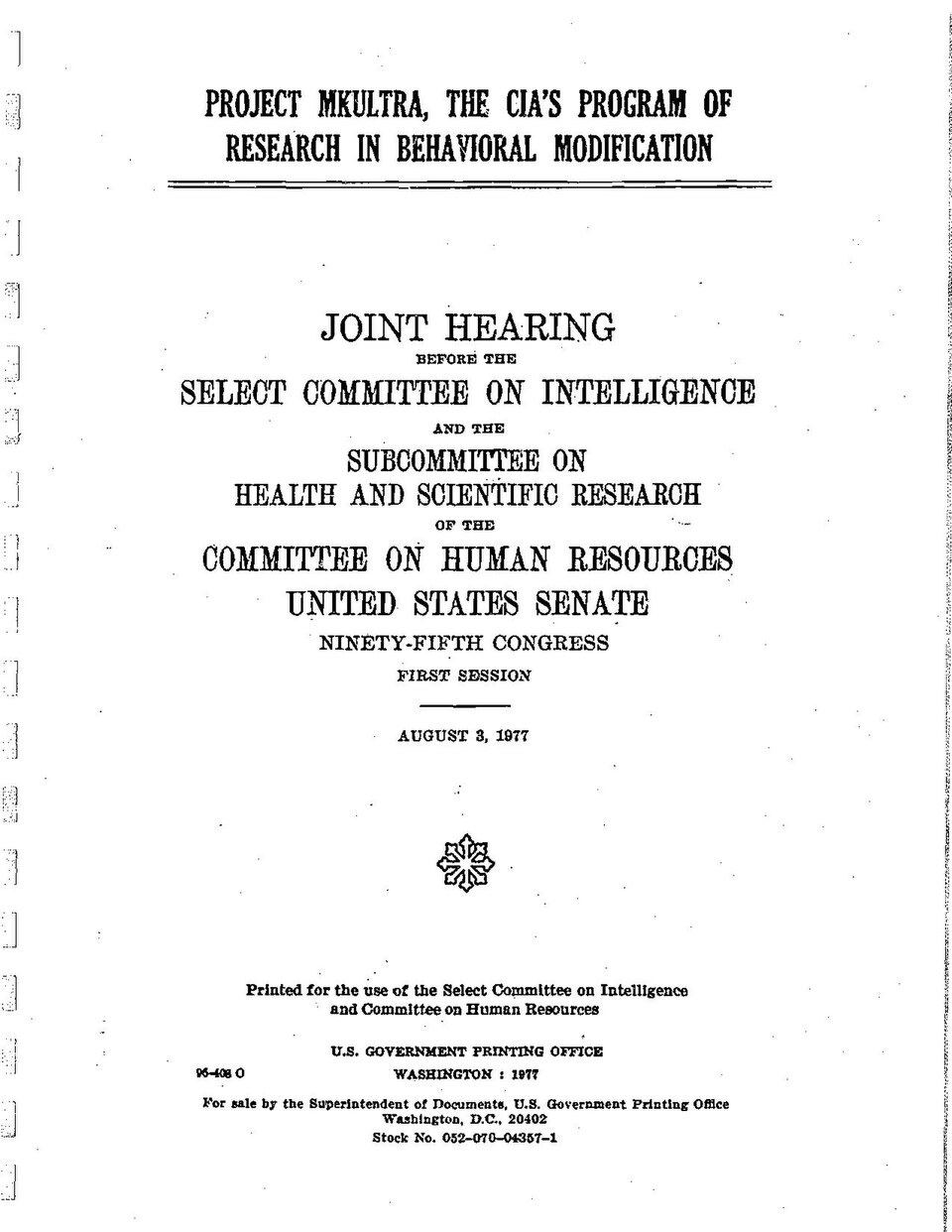
And the deliberate attempt this page can document, the one that ran longest and cost most of what is on the record, did not succeed. The Central Intelligence Agency ran a research programme designated MKULTRA from 1953 into the 1970s, testing drugs including LSD, sensory deprivation, hypnosis and electroshock as tools of behavioural modification, in some cases on subjects who had not consented. The programme became public through congressional investigation, and the surviving records were published in a joint Senate hearing volume in 1977, which is linked below. The programme did not produce a reliable technique for overriding a person's will, and that is one of the more useful things it established. Three scope notes. Both of our files date the programme from 1953 to 1973 without a source for the terminal year, so this page writes into the 1970s instead. Our file ZC_1_02 correctly labels as conspiratorial the further claim that intelligence agencies designed and deployed cult-formation techniques, and this page keeps that refusal. And nothing above is quoted from inside the hearing volume: the description comes from our own two research files, and the volume is linked as the place the surviving records were published.
10What Is Only Proposed
It has been proposed that intensive group ritual and repetition may produce neurological changes resembling those seen in addiction, involving dopamine and oxytocin signalling in response to group-belonging cues, and that indoctrination might produce structural brain change. No large-scale controlled study has tested any of it. Testing it properly would require longitudinal neuroimaging comparing the same people before and after involvement, and that work does not exist. Our own file ZC_1_02 states flatly that the systematic neuroscience of coercive influence is virtually nonexistent. No external identifier is carried for this paragraph, because there is no study to cite, and that absence is the paragraph's actual content. The nearest verified anchor is the 2017 review already cited above, which draws the addiction parallel at a behavioural level and claims no neural mechanism at all.
It has also been proposed that online radicalisation reproduces the shape of Lifton's criteria in digital form: information filtering by recommendation systems as a kind of milieu control, in-group jargon as loaded language, algorithmic reinforcement of belonging. The analogy is conceptually appealing and it has not been empirically validated at scale; our own file ZC_1_02 lists it as an open research question rather than as a finding. It is carried here unattributed on purpose. File T_4_20 credits the proposal to two named living academics, gives no citation for it, and the research behind this article found no published work by either of them proposing anything of the kind. Their names therefore do not appear on this page. Putting an unsupported claim into a named living scholar's mouth is not a citation problem, it is a claim about a real person, and this page will not make one.
One further proposal exists, and this page refuses it as a method rather than weighing it as evidence. Clinical profiling literature has suggested that leaders of high-demand groups often display narcissistic or psychopathic traits. Our own file ZC_1_02 raises that literature and then undercuts it in its own next sentence, correctly: retrospective diagnosis from reported behaviour is methodologically improper, not all effective charismatic leaders fit the profile, and the relationship between personality pathology and charismatic authority would need prospective research that does not exist. So no psychiatric or psychological label is attached to any named individual anywhere on this page, living or dead. Not to any of the leaders in the four cases in section 02, and not to anyone else. What a person did, on a record, is the whole of what this page will say about them.
11Where The Law Went Instead
While the brainwashing thesis was failing in an American courtroom, a different legal route opened in a different jurisdiction, and it did not need the thesis at all. Coercive control was made a criminal offence in England and Wales by section 76 of the Serious Crime Act 2015, headed Controlling or coercive behaviour in an intimate or family relationship, which came into force on 29 December 2015. The offence turns on repeated or continuous controlling or coercive behaviour and requires no physical violence whatever. It is legal recognition that a pattern of psychological control can itself constitute abuse. The scope has to be stated exactly, because it is easy to overstate and our own file invites the overstatement: the section covers intimate and family relationships, not group membership. File ZC_1_02 draws the parallel to closed groups, and as an analogy it is a legitimate one, but it is an analogy and not a statement that group coercion is criminal under this section. The framework source for the concept in the scholarly literature is Evan Stark's Coercive Control, published in 2007.
Which leaves the question the whole page has been circling. If the mechanism is unproven and the harm is documented, what exactly is established?
Fast Facts
- The Two Questions
- Whether thought reform is a sound psychological mechanism, and whether these groups did documented harm, are two separate questions with two different answers. The first is genuinely contested. The second is not contested at all
- Jonestown, 18 November 1978
- 918 dead across three locations: 909 at the settlement, five at the Port Kaituma airstrip and four in Georgetown. Autopsy findings recorded cyanide poisoning administered in a flavoured drink. The source is a staff investigative report to the Committee on Foreign Affairs of the United States House of Representatives, dated 15 May 1979
- Tokyo, 20 March 1995
- Five teams of Aum Shinrikyo members released sarin on three subway lines during the morning rush hour. More than 5,000 people sought medical attention, and one Tokyo hospital published a peer-reviewed report on 640 victims from that day. 12 died at the time, the toll was later revised to 13, and a fourteenth victim died in 2020
- The Aum Prosecutions
- The group's leader was convicted of murder and sentenced to death in 2004, and the sentence was finalised in 2006. He was executed on 6 July 2018 together with six other members, and six further members were executed on 26 July 2018, completing the 13 Aum members who had been under sentence of death
- Rancho Santa Fe, 26 March 1997
- Thirty-nine members of Heaven's Gate were found dead in a rented house, 21 men and 18 women, the deaths self-administered over roughly three days. Their leader spoke on the record on camera and is named. The others were private individuals and none of them is named on this page
- Brooklyn, 2019 And 2020
- A federal jury convicted the founder of NXIVM on all seven counts of a superseding indictment in June 2019, and on 27 October 2020 a federal judge imposed 120 years in prison and a fine of 1.75 million dollars. Affirmed on appeal in December 2022
- Lifton's Eight Criteria
- Milieu control, mystical manipulation, demand for purity, confession, sacred science, loading the language, doctrine over person, and dispensing of existence. Published in 1961 and built on interviews with 40 subjects. A descriptive checklist, not a validated causal mechanism, never tested in a controlled study, and not testable in one ethically
- The Other Two Models
- Singer's six conditions for undue influence, from Cults in Our Midst, first published in 1995. Hassan's BITE model, which sorts control tactics into Behaviour, Information, Thought and Emotion, first published in 1988. BITE has no independent peer-reviewed validation as a unified diagnostic instrument; the only quantitative study of it is its author's own 2020 dissertation on a self-selected sample with no valid comparison group
- What The Board And The Court Did
- The American Psychological Association's Board of Social and Ethical Responsibility for Psychology declined to accept the DIMPAC task force report, in a memorandum dated 11 May 1987. In 1990 a federal court excluded expert testimony on coercive persuasion under the Frye general-acceptance standard. A report was rejected and testimony was excluded. Neither event is a finding that coercive influence does not exist
- Who Joins
- In the one prospective peer-reviewed study on this page, 71 percent had dropped out after the initial two-day workshop, and 9 percent of those who began the sequence ultimately joined. The joiners were distinguished from the later dropouts mainly by weaker outside personal ties, not by stronger belief. Intelligence, education and prior mental health do not predict membership
- Leaving, And After
- A substantial minority of former members show significant adjustment difficulties after leaving, and most recover functionally. The probability of departure rises when a member's family maintains contact in a spirit of mutual understanding while avoiding criticism, which points away from confrontation rather than toward it
- Refused In Both Directions
- That brainwashing overrides free will and produces robot-like compliance, and that because the model failed scientifically and legally, nothing coercive happens in these groups and the subject is a moral panic. Also refused: that only broken people join, that former members are permanently damaged, and any psychiatric or psychological label attached to any named individual, living or dead
- What Our Own Files Got Wrong
- A claim about a named person that the court record contradicts; an unsourced percentage band sitting in a Tier 1 section; an uncited proposal attributed to two named living academics; six book identifiers that resolve to journal reviews of the books rather than to the books; a bibliography entry that could not be found at all; a death toll stated as one location when it spans three; a death toll that quietly imports a death from twenty-five years later; a set of executions given as one batch when there were two; and a boilerplate note in one file declaring that no significant counter-arguments exist, about one of the most openly contested subjects in social science
- Deliberately Not Covered
- Obedience to an authority inside a laboratory, which belongs to this wing's obedience; belief engineered at a public, which belongs to propaganda; the anonymous street crowd, mass formation, and radicalisation into political violence, each of which is its own subject in this wing; and any moral verdict on anybody, which is a different job entirely
What We Can Actually Stand Behind
The four cases are matters of record and can be stated flatly. On 18 November 1978, 918 people died in connection with the Peoples Temple settlement in Guyana, 909 at the settlement, five at the Port Kaituma airstrip and four in Georgetown, with autopsy findings recording cyanide poisoning administered in a flavoured drink, on a staff investigative report to a committee of the United States House of Representatives. On 20 March 1995, five teams of Aum Shinrikyo members released sarin on three Tokyo subway lines at the morning rush hour; more than 5,000 people sought medical attention; 12 died at the time, the toll was revised to 13, and a fourteenth victim died in 2020. Aum's leader was convicted of murder and sentenced to death in 2004, and 13 Aum members under sentence of death were executed in two batches in July 2018. Thirty-nine members of Heaven's Gate were found dead in a rented house in California on 26 March 1997. A federal jury convicted the founder of NXIVM on all seven counts of a superseding indictment in June 2019, and a federal judge imposed 120 years and a 1.75 million dollar fine on 27 October 2020.
Most people exposed to intensive recruitment do not join, and the people who do join are not a distinguishable kind of person. In the one prospective peer-reviewed study on this page, 71 percent had dropped out after the initial two-day workshop and 9 percent of those who began the sequence ultimately joined. The joiners differed from the later dropouts mainly in having weaker outside personal ties, not in believing more strongly. A peer-reviewed critical review finds no necessary pre-existing psychopathology in people entering such groups, and reports that intelligence, education and prior mental health do not predict membership. The caveat is that the studies here are mostly of Western groups.
The three frameworks in common use describe a pattern and explain nothing causally, and that is the honest ceiling on all of them. Lifton's eight criteria are a descriptive checklist drawn from interviews with 40 subjects; nothing in the framework has been tested in a controlled study, and it could not be, because deliberately subjecting people to thought reform in order to observe it would be flatly unethical. Singer's six conditions rest on clinical and forensic observation. Hassan's BITE model has no independent peer-reviewed validation as a unified diagnostic instrument, and the only quantitative study of it is its author's own 2020 dissertation, on a self-selected sample of people who already believed they had been harmed and with no valid comparison group. Useful is not the same as demonstrated, and this page keeps them apart.
Two institutions declined to certify the thesis, and what that does and does not mean has to be said carefully. The American Psychological Association's Board of Social and Ethical Responsibility for Psychology declined to accept the DIMPAC task force report in a memorandum dated 11 May 1987, and asked task force members not to circulate it without saying so; the Board's wording is carried on this page as reported in the peer-reviewed literature and in a later court opinion, not as a verified quotation. In United States v. Fishman, a federal court excluded coercive-persuasion testimony in 1990 under a general-acceptance standard, and the ruling was widely followed. A general-acceptance standard measures whether a scientific community has agreed, which is a fact about the community and not about the world. Neither event is a finding that coercive influence does not exist.
The scholarly dispute is live and it is carried here unresolved. Zablocki argued that the concept had been blacklisted rather than tested, that its critics had rewritten a claim about exit costs into a claim about recruitment, and that exit costs should be measured directly. Anthony and Robbins argued that the thesis worked as a legal instrument rather than as a scientific finding. The dispute over the word cult itself is equally unresolved, with sociologists of religion preferring new religious movement and clinical researchers arguing that neutral terminology obscures documented harm. There are interested parties on both sides of this and very few disinterested ones, which is stated on this page as a structural fact and not as a rebuttal of anybody.
Two proposals stay at the speculative tier our own files give them. That intensive group ritual produces neurological changes resembling those in addiction is untested, and the longitudinal neuroimaging that could test it does not exist; our own file says the systematic neuroscience here is virtually nonexistent. That online radicalisation reproduces Lifton's criteria in digital form is an appealing analogy with no validation at scale, and it is carried on this page with its attribution deliberately stripped, because our file credits it to two named living academics with no citation and no such published work by either could be found.
No, sophisticated brainwashing does not override free will and produce robot-like compliance. The evidence runs the other way, and it runs there from several independent directions at once. The Central Intelligence Agency spent from 1953 into the 1970s looking for exactly such a technique, and the surviving record, brought out by a Senate joint hearing in 1977, is a record of not finding one. Most people exposed to intensive recruitment do not join: 71 percent had dropped out after two days in the one prospective peer-reviewed study here, and 9 percent of those who began the sequence ultimately joined. Most of those who do join leave, and many leave unaided. A federal court found the coercive-persuasion thesis had not been shown to be generally accepted in the relevant scientific community, and the American Psychological Association's responsible board would not put the Association's name to the report advancing it. Resistance to coercion is substantial, and it is ordinary.
No, and this refusal is exactly as necessary as the one above. It does not follow that because the brainwashing model failed scientifically and legally, nothing coercive or harmful happens in these groups and the whole subject is a moral panic. That is refused by the record rather than by a theory. 918 people died in a single day in November 1978. Thirteen members of the group that attacked the Tokyo subway were executed in Japan in July 2018 under sentences of death. Thirty-nine people died together in a rented house in 1997. A federal jury convicted a group's founder of racketeering, sex trafficking and forced labour, and a federal judge sentenced him to 120 years. Whether thought reform is a sound psychological mechanism, and whether these groups did documented harm, are two separate questions with two different answers. An article that lands only one of these two refusals has got this subject wrong.
No, it is not only weak, gullible or psychologically damaged people who join. The peer-reviewed review finds no necessary pre-existing psychopathology, and reports that intelligence, education and prior mental health do not predict membership. What predicts susceptibility is situational: a life transition, social isolation, a break in existing ties, and simple coincidental exposure. The one prospective study on this page found the joiners differed from the dropouts mainly in how thin their outside ties already were. The comfort that a reader is safe because they are clever is not in the evidence.
No, former members are not permanently psychologically damaged. A substantial minority do experience significant adjustment difficulty, and some experience complex trauma responses, dissociation and identity confusion, but most recover functionally, and recovery is helped by informed therapeutic support and by peer community. This page also refuses a number that our own file T_4_20 prints for post-exit adjustment difficulty: it carries no source, its introducing clause is garbled in the pattern of a generation artefact, and no study reporting it could be found. The band appears twice on this page, at section 08 and in the source notes, in both places as the corpus's own unsupported claim being corrected in the open, and nowhere as an estimate this page carries.
No psychiatric or psychological label is attached to any named individual anywhere on this page, living or dead, and that is a refusal of a method rather than of a claim. Retrospective diagnosis from reported behaviour is methodologically improper, and our own file says so in the same breath as raising the profiling literature. Three further things our own files carry are withheld here and named in the open: a claim that a named expert testified in a 1976 trial, which the court record contradicts; a proposal attributed to two named living academics with no citation, whose names therefore do not appear; and an allegation about a currently active organisation resting on a bibliography entry that could not be found at all. What a person did, on a record, is the whole of what this page says about them.
So the shape of this is not the shape it is usually given, in either direction. There is no demonstrated mechanism by which a group takes a person's mind, and the agency that spent from 1953 into the 1970s looking for one left behind the record, brought out by a Senate joint hearing, of not finding it. There is also a settlement in Guyana, a subway in Tokyo, a house in California and a courtroom in Brooklyn, and none of those needs a mechanism to be true. What sits between them is a set of checklists that describe something real well enough to be recognisable and not well enough to be tested. Zablocki's proposal was to stop arguing about what happens inside a member's head and to measure the cost of leaving directly, and as far as the research behind this article could establish, nobody has yet done that at scale. So the question to carry out of here is not whether a group has taken somebody's mind. It is what it would cost that person to leave this week, who would still be there for them afterwards, and whether anyone has gone and looked.
Sources & further reading
This article was written from two files in our own research library, T_4_20 and ZC_1_02. Those files are where it worked FROM. They are not where it can be checked, and on this subject that distinction matters more than usual, because the article makes statements about real, named, often living people and about organisations that litigate. The 23 external entries below are where it can be checked. WHICH CLAIMS REST ON WHICH CLASS OF RECORD, stated plainly because the whole page is built on the distinction. Government inquiry: the Jonestown death toll and its three-way split, and Representative Ryan's death, rest on the staff investigative report to the Committee on Foreign Affairs of the United States House of Representatives of 15 May 1979 (§02); the Satanic ritual abuse finding rests on a 1992 Department of Justice publication by the Federal Bureau of Investigation's own supervisory special agent for such cases (§09); MKULTRA rests on the 1977 joint Senate hearing volume, which is linked and which nothing here is quoted from (§09). Court record: the Aum convictions, sentences and executions rest on Japanese court records as reported in the international press of record on the day (§02); the NXIVM convictions, the 120-year sentence and the appeal rest on a federal jury verdict, a federal sentencing and a Second Circuit decision, reported in United States Department of Justice press releases (§02); the 1990 exclusion of coercive-persuasion testimony and the 1976 exclusion of psycholinguistics testimony rest on two published federal district court opinions (§05). Statute: the coercive control offence rests on the text of section 76 of the Serious Crime Act 2015, read directly, and on its commencement regulations (§11). Peer-reviewed study: the Tokyo casualty report, the recruitment percentages, the review of psychological harm, the post-involvement difficulty cluster, the 2017 review of joining and leaving, and both halves of the scholarly dispute all rest on journal articles cited by digital object identifier below. Published monograph: Lifton's criteria, Singer's conditions, Hassan's model, Barker's field study, the Heaven's Gate monograph, the English ritual-abuse monograph and the coercive-control framework rest on books cited by ISBN and verified against Open Library. NOT LINKED, AND WHY, because a reader should not have to guess. Two federal court opinions are cited by reporter citation and are not linked: United States v. Fishman, 743 F. Supp. 713 (N.D. Cal. 1990) and United States v. Hearst, 412 F. Supp. 893 (N.D. Cal. 1976). Both were confirmed in a public opinion index on 13 August 2026, and on that date the full text of the Fishman opinion could not be retrieved from any of the three services the research tried. The reporter citation is itself the identifier a reader can take to a law library or a case database, and it is given here instead of a locator the research could not open. The two United States Department of Justice press releases for the NXIVM case, the 1983 House subcommittee hearing on Leo J. Ryan's Congressional Gold Medal (Serial No. 98-38), and the 1987 memorandum of the American Psychological Association's Board of Social and Ethical Responsibility for Psychology are named in the text with the identifiers the research did resolve, a case number, a hearing serial number, and press-release titles and dates, and are not linked, because no stable public locator for any of them was resolved for this article. The memorandum has a further problem worth stating: it is reproduced online mainly on partisan sites from both camps, so its wording is carried above as reported in the peer-reviewed literature rather than as a quotation checked against a neutral archive. WHAT THIS ARTICLE DECLINES FROM OUR OWN FILES, in the open. T_4_20's claim that Margaret Singer testified in the 1976 Patty Hearst trial is contradicted by the court record and is corrected at §05. T_4_20's figure of 60 to 80 percent for post-exit adjustment difficulty carries no source, and appears on this page once, at §08, only as the corpus's own unsupported claim being corrected, never as an estimate. T_4_20 attributes the online-radicalisation proposal to two named living academics with no citation; no such published work by either could be found, so the idea is carried unattributed at §10 and their names appear nowhere. T_4_20's bibliography entry for a paper on a named religion's rehabilitation programme could not be found in the journal it names, in that year, on any subject matching it, and the underlying allegation concerns a currently active, legally recognised organisation, so neither the citation nor the claim is carried; the same document also misspells that scholar's first name in its body text. ZC_1_02 names three organisations as examples of loaded language: this page carries none of them as an illustration, because the first is an accusation about an active religion that would need a citation this research did not resolve, the second attributes a specific practice to a named religious organisation and likewise did not resolve, and the third is a group whose conduct is adjudicated but whose vocabulary this research did not document from a primary source. Six of the seven book digital object identifiers our two files attach to books resolve to journal reviews OF those books rather than to the books, which is a defect a title match cannot catch, so every book here is cited by a separately verified ISBN instead; the one of those seven that is correct, the book digital object identifier for When Prophecy Fails, is used. Our two files also disagree about which university Lifton's 1961 research was conducted at, neither attaches a source, so no university appears (§04). And ZC_1_02's closing section states that no significant counter-arguments exist in the scholarly literature for its claims, which its own body contradicts in more than one place; T_4_20's counter-arguments section is substantive and correct, and it is the one this page used. WHAT WAS NOT READ. Most of the external literature here was read at the level of a resolved record and a published abstract rather than in full. Where a result was not read, this page states no result. Three books are cited for material this page reports from our own files and from the abstract-level record rather than from a first-hand reading: Lifton 1961, Singer and Lalich, and Hassan. On Singer and Lalich, the corpus cites the 1995 first edition and the ISBN below resolves to the 2003 revision, which is why both years appear. On Hassan, no ISBN could be verified for the 2015 Freedom of Mind Press edition, so the verified 1988 first edition is what is linked and the later edition is named without an identifier. Hassan's 2020 dissertation is described at §04 from the external check made during the research for this article and is not linked, because it is his own work and therefore his claim rather than corroboration of it. The 21-day recruitment study's total sample size is not stated in its abstract, so no denominator for the percentages appears anywhere on this page. WHAT IS MISSING, honestly. There is no controlled evidence for the central mechanism and there will not be, because the experiment is unethical. There is no longitudinal neuroimaging of anybody before and after involvement. There is no agreed boundary between an intense but benign group and a harmful one. The evidence base is overwhelmingly Western. And every quantitative study here except one asked people to remember, after the fact, an experience they had already decided how to feel about.
Image credits
- The structure photographed by FBI agents at Jonestown, Guyana, after 18 November 1978; the Commons file is titled Jonestown pavilion Federal Bureau of Investigation, released under the Freedom of Information Acts, via Wikimedia Commons. Public Domain Source.
- The official House of Representatives portrait of Congressman Leo J. Ryan of California, circa 1977 to 1978 Office of the Clerk, U.S. House of Representatives, via Wikimedia Commons. Public Domain Source.
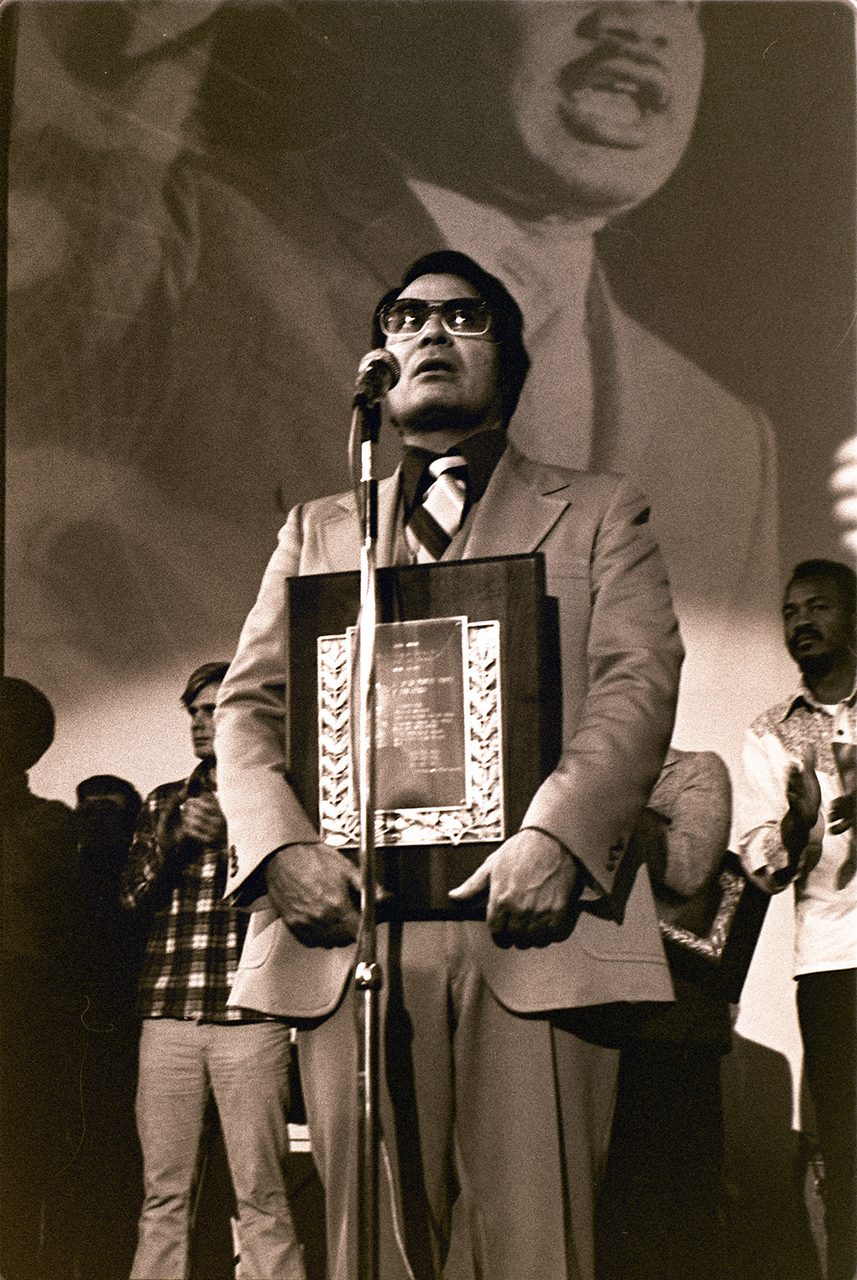
- Jim Jones receiving a Martin Luther King, Jr. Humanitarian Award from Glide Memorial Church, San Francisco, January 1977 Nancy Wong, 1977, via Wikimedia Commons. CC BY-SA 3.0 Source.
- Japan Ground Self-Defense Force personnel spraying decontaminant inside a Tokyo subway car, 20 March 1995 Japan Ground Self-Defense Force (陸上自衛隊), 20 March 1995, via Wikimedia Commons. CC BY 4.0 Source.
- Comet Hale-Bopp above a tree, photographed near Pazin in Istria on 29 March 1997 Philipp Salzgeber, 29 March 1997, via Wikimedia Commons. CC BY-SA 2.0 AT Source.
- The title page of the 1977 joint Senate hearing volume on Project MKULTRA Select Committee on Intelligence and the Subcommittee on Health and Scientific Research of the Committee on Human Resources, United States Senate, Ninety-Fifth Congress, First Session; published by the U.S. Government Printing Office, via Wikimedia Commons. Public Domain Source.
- Card crop of The structure photographed by FBI agents at Jonestown, Guyana, after 18 November 1978; the Commons file is titled Jonestown pavilion Federal Bureau of Investigation, released under the Freedom of Information Acts, via Wikimedia Commons. Public Domain Source.


