
The Veil of Ignorance: Justice as a Thought Experiment
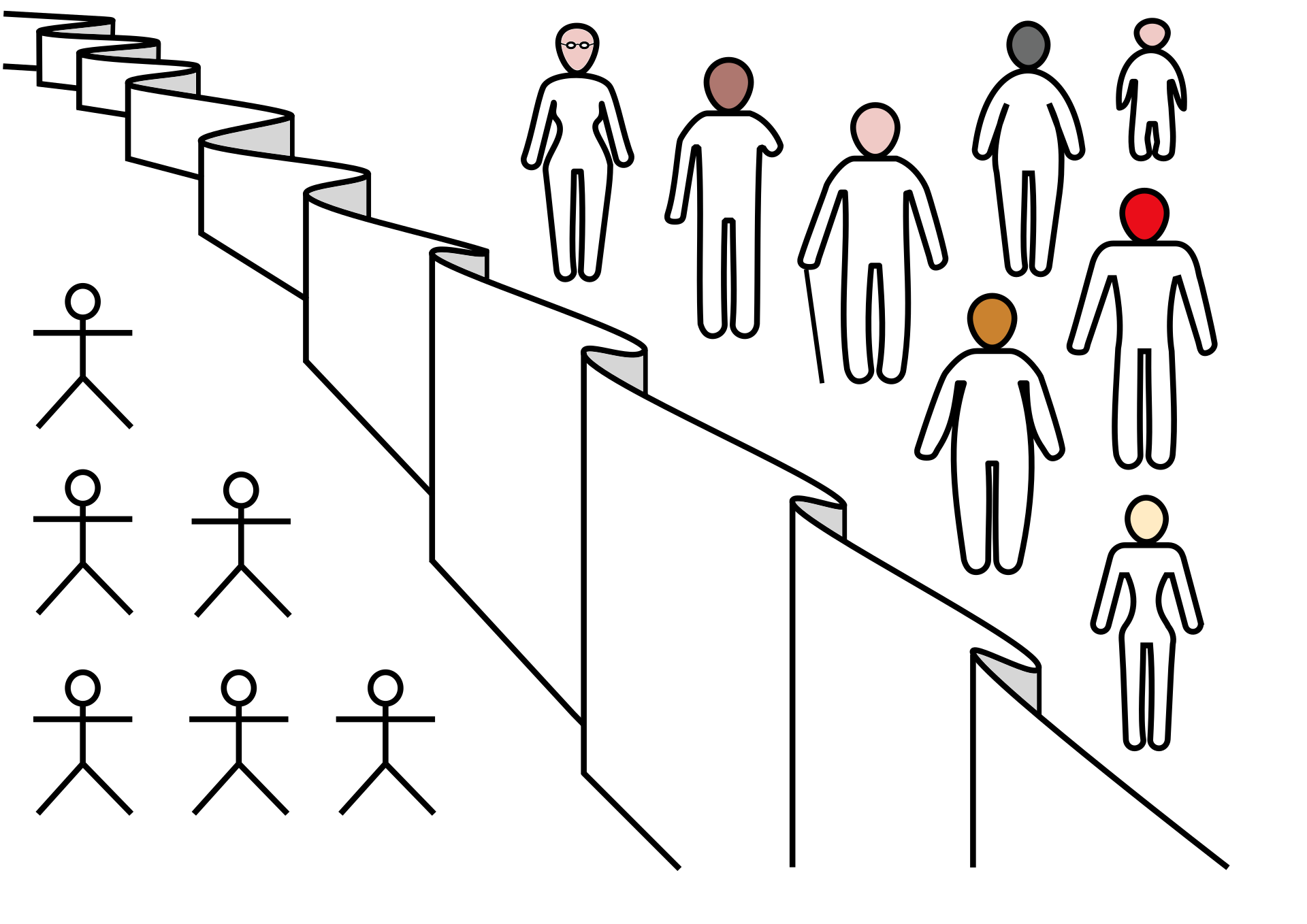
John Rawls asked what rules a person would write for a society if they were not told who in it they would be. What he argued from that question in 1971 is a settled fact about a book. Whether the argument works is not settled at all: the step it turns on, choosing as though one might be the worst-off person in the society being designed, is exactly what John Harsanyi denied, and the same device had already been run in the economics literature two decades earlier to argue for utilitarianism instead. Nozick, Sen, Cohen, Okin, Mills and the communitarians each hold a named position against it, Rawls has replies on the record, and this article crowns no winner.
A person is asked to settle the rules of a society: who owns what, who may say what, how the burdens fall and who carries them. They are told one thing only. When the rules are fixed they will be born into that society, and nothing they decide now can tell them as whom. Not their family, not their money, not their sex, not their race, not their talents, not even what they will come to believe is worth living for. The rules go on the table first.
That is the veil of ignorance. John Rawls set it out in A Theory of Justice in 1971, and what he argued from it there is a fact about a book: checkable, and not in dispute. Whether the argument works is a different question, and it is open. This article keeps the two apart at every step, because the distance between them is the whole subject.
A word about the tier marks, because the research file behind this article made them unusual. That file carries a single reliability tier for the whole document, assigns no tier to any individual claim, and then contradicts itself: its header declares Tier 1 while its own Source Tier Classification footer lists only Tier 3 and Tier 4. Neither statement is quoted here as the file's tiering. The tiers below were assigned instead on one stated principle, so that a reader can check it rather than trust it. A claim about what a philosopher published is Tier 1: settled text, safe to state flatly. The standing shape of a live dispute is Tier 2: real, serious, unresolved, both sides given at strength and no winner crowned. Nothing here is filed Tier 3, and that is deliberate rather than an omission, because the genuinely open questions in this subject, whether maximin is the right rule behind the veil, whether the chooser is coherent, whether primary goods are the right currency, all have named holders on both sides and are therefore live debate rather than minority readings. Overclaims are refused outright, and the closing block refuses one in each direction.
Three neighbouring subjects are not this one. Utilitarianism, the rival family that scores arrangements by the good they add up to, belongs to this wing's The Greatest Good; it appears here in exactly one passage, because the veil's own prehistory runs through it. Ma'at, the weighing of the heart and the convergence of moral rules across civilizations belong to The First Scales. And the argument about what the rich owe the poor, including the case against redistributive taxation at full strength, belongs to a separate article this wing has planned and not yet built, The Drowning Child; Robert Nozick appears here only as the objection to the veil and to patterned justice.
01The Contract Nobody Signed
Rawls did not invent the move he was making. He inherited it, and the inheritance is worth a short detour, because a common misreading of the social contract is exactly what makes him its heir rather than its departure.
The social contract is a thought experiment, not a historical claim. It asks what rational individuals in a pre-political condition, the state of nature, would agree to, and the hypothetical agreement is what establishes political legitimacy and moral obligation. Our research file frames the whole tradition around four questions: what the state of nature is like, why anyone would leave it, what they agree to, and what limits the resulting authority. The tradition supplies the dominant framework of liberal political philosophy, the idea that political authority requires the consent of the governed.
Thomas Hobbes did not claim the state of nature had ever existed. Our file states his position plainly: it is what would obtain if civil authority collapsed, and he pointed to civil wars, failed states and the relations among sovereign nations as approximations of it. This is the correction the rest of the article stands on. The contract tradition was already hypothetical three centuries before the veil, so the veil is not a strange modern liberty taken with an old historical story. It is the tradition saying plainly what our own file says it always was: a thought experiment.
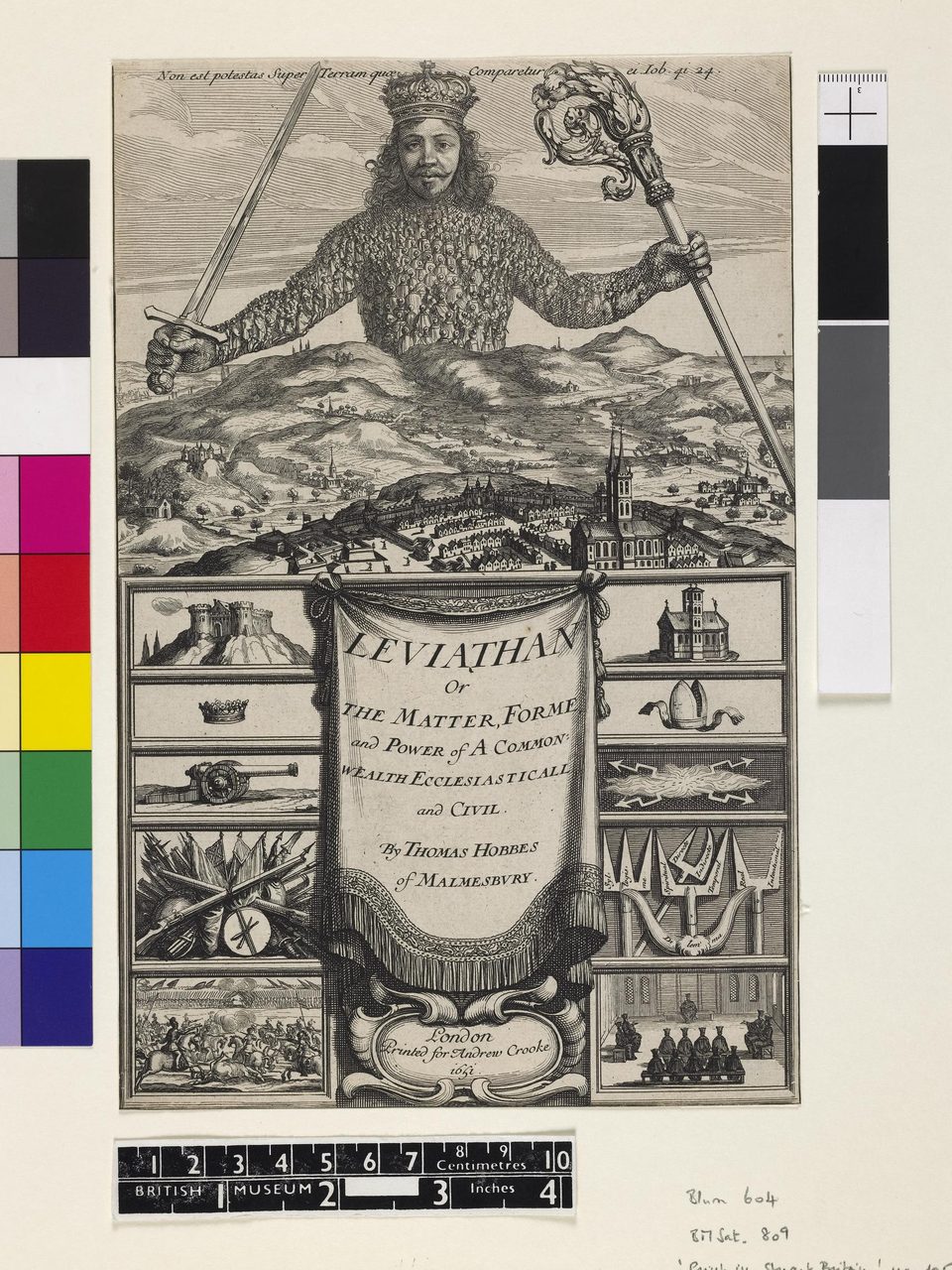
Hobbes published Leviathan in 1651. His state of nature is a condition of equality, in the sense that no individual is strong or clever enough to be secure against the rest, and that equality produces competition, diffidence, meaning distrust, and glory-seeking, ending in a war of all against all, bellum omnium contra omnes. The passage our file quotes for it runs: "In such condition there is no place for industry, because the fruit thereof is uncertain, and consequently no culture of the earth, no navigation... no arts, no letters, no society, and which is worst of all, continual fear and danger of violent death, and the life of man solitary, poor, nasty, brutish, and short." The ellipsis is our file's own.
The remedy is drastic, and its structure matters here more than its politics. What Hobbes describes is not a bargain struck with a ruler. It is a bargain struck among subjects, with the ruler standing outside it as the thing that makes it hold.
| The Question | Hobbes, Leviathan, 1651 | Locke, Two Treatises of Government, 1689 | Rousseau, The Social Contract, 1762 |
|---|---|---|---|
| What the state of nature is like | A condition of equality in which nobody is secure against anybody, producing competition, distrust and glory-seeking, and ending in a war of all against all | Not a war. It is governed by natural law, meaning reason; all are free and equal and hold natural rights to life, liberty and property. Our file's key phrase: inconvenient rather than intolerable | "Man is born free, and everywhere he is in chains." Civilization has corrupted a natural goodness rather than rescued anyone from a natural war |
| Why anyone leaves it | To escape continual fear and the danger of violent death | Because there is no impartial judge and no common authority to enforce the natural law each person already has | To gain civil liberty and moral freedom, which our file glosses as obedience to a law one prescribes to oneself |
| What is agreed | Individuals surrender their natural right to all things to a sovereign, monarch or assembly, who is not a party to the contract but stands outside it enforcing the agreement among subjects | A political community, and a government held as a trust whose power is conditional on protecting natural rights. Property is acquired by mixing labour with the commons, legitimately only where enough and as good is left for others | Natural liberty is surrendered to the community as a whole. Legitimate law expresses the general will, the volonte generale, which aims at the common good and is distinct from the will of all, the mere sum of private interests |
| What limits the authority | Nothing. The power must be absolute and indivisible, because any limitation recreates the problem of competing authorities. Our file states plainly that the sovereign can be unjust, and that Hobbes's argument is that the alternative, anarchy, is worse | If a government violates natural rights the people may dissolve it and constitute a new one. Locke also argued for separating legislative from executive power, an ancestor of the modern doctrine of checks and balances | Citizens who obey the general will obey themselves. But anyone who refuses to obey it shall be forced to be free, and our file names Berlin and Talmon as critics who argue that this contains the seed of totalitarianism |
Two lines from that table left the page and went into the world. Locke's language directly shaped the Declaration of Independence in 1776, where Life, Liberty, and the pursuit of Happiness echoes his life, liberty, and estate. Rousseau's Discourse on Inequality of 1755 is described by our file as a founding text of modern social criticism, the French Revolution drew heavily on him, and his attack on luxury and inequality ran on into the democratic and socialist traditions. Neither fact is why the tradition matters here. What matters is the shape all three answers share: an agreement nobody signed, doing work that nothing else in the theory can do.
Our file separates the tradition into two strands, and the distinction is what places Rawls. Contractarianism is grounded in self-interest and asks what rational, self-interested agents would agree to; its named proponents are Hobbes and Gauthier. Contractualism is grounded in fairness and justifiability and asks what principles no one could reasonably reject; its named proponents are Kant, Rawls and Scanlon. That is why the veil is a fairness device rather than a bargaining device, and why Rawls stands in the line that runs from Kant rather than the one that runs from Hobbes.
The consent problem is the standing objection to the whole tradition, and our file attributes it to Hume. No government was ever actually founded on consent; most political authority arose from conquest, inheritance or usurpation; the social contract is a fiction, and nobody can be bound by a contract they never signed. The reply our file gives is that the contract is hypothetical: it asks what rational agents would agree to rather than what anyone did agree to, Rawls explicitly uses a hypothetical original position, and the normative force comes from the fairness of the procedure rather than from any historical act.
That reply is the door, and everything after it is about whether the procedure is really fair. The tradition survives its founding objection only by moving the burden onto the design of the thought experiment. From here on, the design is the argument.
02The Room With No Names
John Rawls revived social contract theory as a method for determining principles of justice. The original position is a hypothetical situation in which rational agents choose principles for the basic structure of society from behind a veil of ignorance, and behind the veil they do not know their race, sex, class, intelligence, talents, or their conception of the good. That is our own research file's statement of the device, and it is the claim this article is built on.
The veil is a screen, not a blackout, and this is the correction that does the most work in everything below. What it removes: the parties do not know "their place in society, class position, wealth, or social status, nor does anyone know their race, gender, fortune or misfortune in the distribution of natural assets and abilities," nor their own conception of the good, nor their religious and philosophical convictions. What it leaves: the parties possess "general facts about persons and societies, including knowledge of relatively uncontroversial scientific laws and generalizations accepted within the natural and social sciences," meaning economics, psychology and biology. They know about primary social goods, about the circumstances of justice, and about their own higher-order interests in developing the two moral powers. The popular gloss, that the parties know nothing, is wrong.
The quoted phrases there are the Stanford Encyclopedia of Philosophy's, from its entry on the original position, which is where this article's account of the machinery comes from. Our own research file records the screening half and never the other one, and that asymmetry is not a detail: it is exactly what Rawls's reply to the communitarians in section 09 leans on.
Primary goods are the currency the parties are choosing over: "Rights and liberties; powers and diverse opportunities; income and wealth; and the social bases of self-respect," described as "all-purpose social means that are necessary to the exercise and development of the moral powers." The circumstances of justice are the background conditions that make justice a question at all: objectively, "rough similarity in mental and physical faculties" and "moderate scarcity of resources"; subjectively, "limited altruism" and "the burdens of judgment" that create reasonable pluralism. Neither the list nor the circumstances appear anywhere in our own research file, and both are load-bearing later, because the list is precisely what Amartya Sen's objection attacks.
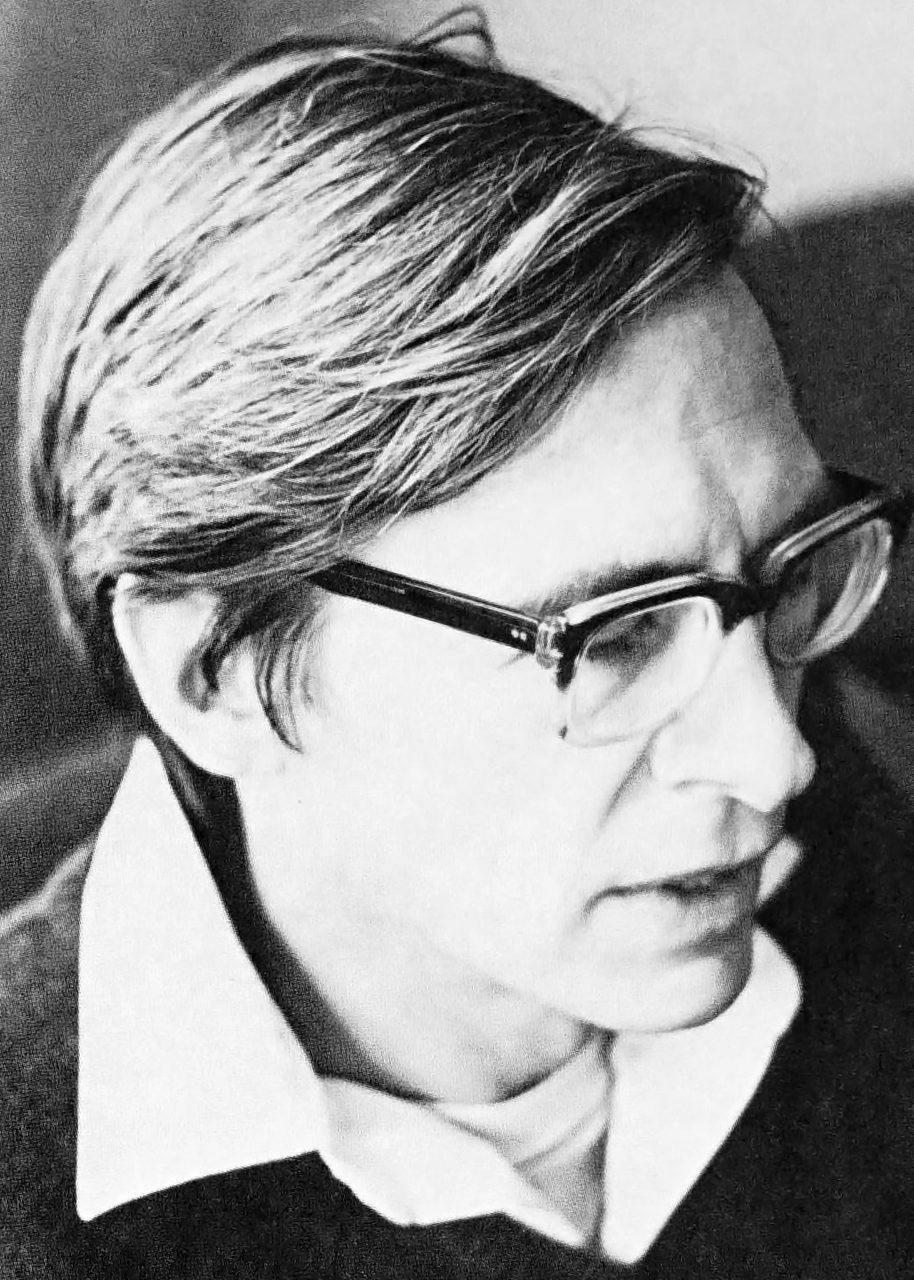
John Rawls was born on 21 February 1921 in Baltimore, Maryland, and died on 24 November 2002 at his home in Lexington, Massachusetts. He took his BA at Princeton in 1943 and served as an infantryman in the Pacific theatre of the Second World War, in New Guinea, the Philippines and Japan. The Stanford Encyclopedia of Philosophy's entry on him states that he "lost his Christian faith as an infantryman in World War II on seeing the capriciousness of death in combat and learning of the horrors of the Holocaust"; as a college student he had written what the entry calls "an intensely religious senior thesis" and had considered the priesthood. He studied at Cornell under Norman Malcolm, a student of Wittgenstein, and at Oxford with H. L. A. Hart, Isaiah Berlin and Stuart Hampshire, held early professorships at Cornell and MIT, joined the Harvard faculty in 1962, and taught there for more than thirty years.
That is biography and it is left as biography. The phrase about the capriciousness of death is the encyclopedia's rendering of Rawls's own stated reason for losing his faith, and nothing here says the war produced the thought experiment. It is a tempting line to draw between a man who watched death fall at random and a device that hides who anyone is going to be. This article does not draw it.
03The Two Principles, And Which Statement Of Them
Ask what the parties choose and the answer arrives as a pair of principles. Ask for the wording and the answer is that there is more than one wording, and that our own research file prints a blend of two without saying so.
Our research file states them as follows. The equal liberty principle: each person has an equal right to the most extensive basic liberties compatible with similar liberties for all, meaning freedom of speech, conscience, association, the vote and so on. The difference principle: social and economic inequalities are arranged so that they are, first, to the greatest benefit of the least advantaged members of society, and second, attached to positions open to all under conditions of fair equality of opportunity.
Rawls states the two principles more than once and the statements are not identical. The first, at section 11 of A Theory of Justice, is one he himself presents as tentative, saying he will approximate the final statement step by step later in the book. A later statement replaces the most extensive basic liberty with a fully adequate scheme of equal basic liberties, and names the least advantaged and fair equality of opportunity explicitly. The final statement, in Justice as Fairness: A Restatement of 2001, is different again. Our file's first principle tracks the earliest phrasing and its second principle tracks a later one, presented together as a single settled pair. No wording anywhere in this article is offered as the two principles full stop. The table says which statement each is.
| Where The Statement Appears | The First Principle | The Second Principle |
|---|---|---|
| A Theory of Justice, section 11, 1971. Rawls calls this formulation tentative and says he will approximate the final statement step by step later in the book | "each person is to have an equal right to the most extensive basic liberty compatible with a similar liberty for others" | "social and economic inequalities are to be arranged so that they are both (a) reasonably expected to be to everyone's advantage, and (b) attached to positions and offices open to all" |
| The later statement, as the Stanford Encyclopedia of Philosophy's entry on the original position gives it | "Each person has an equal right to a fully adequate scheme of equal basic liberties compatible with a similar system of liberty for all" | "Social and economic inequalities are to satisfy two conditions. First they must attach to offices and positions open to all under conditions of fair equality of opportunity; and second they must be to the greatest advantage of the least advantaged members of society" |
| Justice as Fairness: A Restatement, 2001, Rawls's final statement, as the encyclopedia's entry on him quotes it | "Each person has the same indefeasible claim to a fully adequate scheme of equal basic liberties, which scheme is compatible with the same scheme of liberties for all" | Not reproduced here. The source this article rests on quotes only the first principle from the 2001 statement, and nothing is supplied for the second that was not read |
| Our own research file ZE_1_07, which prints one pair and presents it as settled | Essentially the 1971 wording, the most extensive basic liberties | The later wording, with the least advantaged and fair equality of opportunity named explicitly |
The two principles are ranked, and the ranking is the structural point. The first principle takes absolute priority over the second, so basic liberties cannot be sacrificed for economic gains, and within the second principle fair equality of opportunity takes priority over the difference principle. That lexical priority is what stops the theory from being a trade-off calculus, and it is the feature that most sharply separates it from the utilitarian aggregation this wing covers in The Greatest Good.
That is the last of the three, and reading any one of them as the settled statement of the first principle is a common way to misquote him. The movement across the three is real and it is substantive: from the most extensive basic liberty to a fully adequate scheme, and from inequalities reasonably expected to be to everyone's advantage to inequalities that must work to the greatest advantage of the least advantaged. A reader who has only ever seen one of these has seen one draft of a sentence Rawls kept rewriting.
04The Step The Whole Argument Rests On
Between the room and the principles there is an inference, and the inference is where every serious objection lands.
Our file states the argumentative engine in a single line: behind the veil of ignorance, rational agents would adopt maximin, maximizing the minimum outcome, because they might end up as the worst-off member of society, and this is what yields the difference principle. Our file states it flatly and raises no objection to it anywhere.
That flatness is the problem. Maximin is the most contested step in the whole argument, and it is not presented here as an uncontested inference, because it is not one.
Rawls does not claim maximin is generally rational. The rule directs choosing "the alternative whose worst outcome leaves us better off than the worst outcome of all other alternatives," and he argues it is rational under three stated conditions. First, there is no secure basis for probability estimates. Second, the maximin choice is acceptable in itself, because "one cares relatively little by comparison for what is to be gained above the minimum conditions." Third, all the alternatives have worst outcomes that would be unacceptable. Rawls argues that those three conditions are met in the original position when justice as fairness is compared with utilitarianism. None of the three appears in our own research file.
Everything in the second half of this article turns on the first of those conditions. It is not a technicality bolted on to a finished argument. It is a premise, Rawls states it as one, and it can be denied.
Rawls also has an answer to the harder question of why the output of a thought experiment should bind anyone. It is reflective equilibrium: a method of working back and forth between considered moral judgments and general principles until they cohere, in which neither raw intuitions nor abstract principles have absolute priority, and moral theory is a process of mutual adjustment.
Which is an honest answer and a modest one, and it is worth noticing how modest. It does not claim the original position derives justice out of nothing. It claims that the device and our considered judgments correct each other, which means a reader who finds the output monstrous has been handed a reason to doubt the device. That cuts both ways, and Rawls says so.
05The Veil Was Older Than Rawls
Here is the sharpest fact in this article, and our research file does not contain it.
Rawls did not invent the device. A veil-of-ignorance style construction was already in the economics literature two decades earlier, and it produced the opposite conclusion. William Vickrey set out the shape in "Measuring Marginal Utility by Reactions to Risk" in Econometrica in 1945, and John C. Harsanyi developed it in the Journal of Political Economy in 1953 and again in 1955. In Harsanyi's construction, an impartial chooser who does not know which member of society she will be, and who assigns herself an equal chance of being any of them, will maximize average utility. Rawls, from a structurally similar starting point, derives the refutation of utilitarianism instead.
The same thought experiment, run by two serious people, yields utilitarianism and yields the difference principle. That is not a gotcha against Rawls. It is the reason the argument turns on the probability assumption rather than on the veil itself: the veil is a shared instrument, and what comes out of it depends on what a chooser is permitted to assume about the odds. The case for utilitarianism is argued at strength elsewhere in this wing, in The Greatest Good, and is not argued here.
Harsanyi pressed the point directly at Rawls. In "Can the Maximin Principle Serve as a Basis for Morality? A Critique of John Rawls's Theory," in the American Political Science Review in 1975, he argued that under complete uncertainty rationality requires the principle of insufficient reason, meaning that equal probability is assigned to every position one might occupy. Do that behind the veil and the rational choice is the arrangement with the highest average utility, not the difference principle. His wider charge is that maximin is not a generally rational decision rule at all: taken seriously it would forbid ordinary risks that any reasonable person accepts, because it attends only to the worst case and ignores both how improbable that case is and how large the forgone gains are. This is the strongest standing technical objection to the argument from the original position, and our own research file does not mention it.
Maximin, on Rawls's reply, is rational in choices that are unique, irreversible and made on behalf of fundamental interests. The parties need not be psychologically risk-averse; rather it is rational to "choose conservatively to protect certain fundamental interests against loss or compromise," and gambling one's basic liberties for the chance of greater gains would be reckless given what is at stake. The original position, he holds, is not a generic decision problem, so a rule that would be foolish in an ordinary gamble can be correct here.
That exchange is not settled, and this article does not settle it. Harsanyi says the parties have no warrant to treat the odds as unknowable, and that treating them as unknowable smuggles in the conclusion. Rawls says a once-only choice made on behalf of a whole life is not the kind of thing odds should govern. Both positions have held their ground for decades and both are still occupied. Everything downstream of the veil, including whether the difference principle is a result at all rather than a preference, depends on which of them is right.
06The Counter-Thought-Experiment
In 1974 the argument met a device of its own kind, built to reach the opposite verdict.
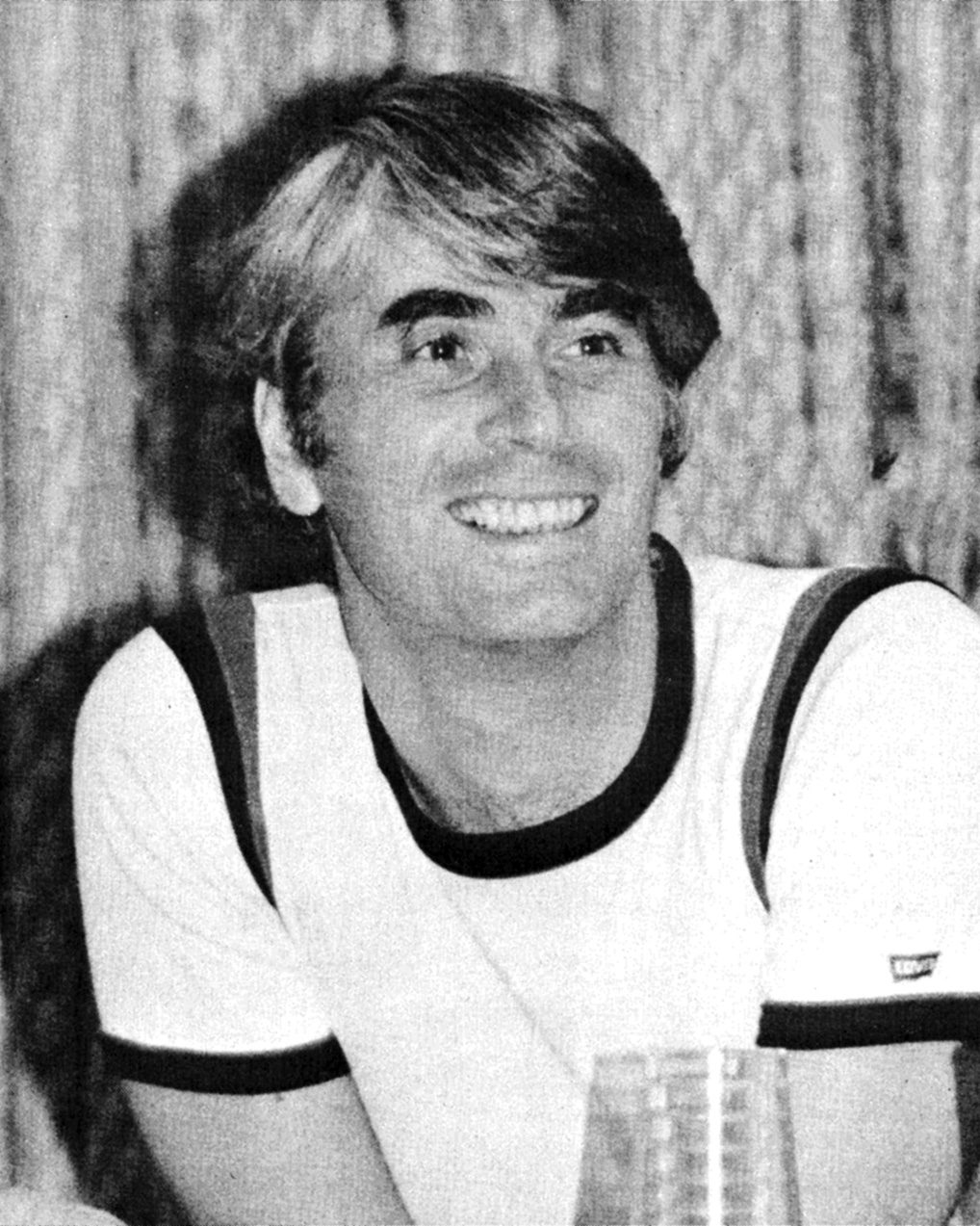
Robert Nozick published Anarchy, State, and Utopia in 1974. Only the minimal state is justified, on his account: protection against force, fraud and theft, and the enforcement of contracts. Any more extensive state violates individual rights, and taxation of earnings for redistributive purposes is "on a par with forced labor."
His entitlement theory of justice holds that holdings are just if they were acquired justly, that is by just acquisition and just transfer, so that historical patterns of acquisition rather than distributional outcomes determine whether a distribution is just. On that view the difference principle is unjust. Our own file renders the reason as taking from the productive to give to the unproductive; that is a polemical compression, it belongs to Nozick's argument, and this article does not state it in its own voice.
The Wilt Chamberlain argument is the counter-thought-experiment. Take a distribution that is just by whatever standard is preferred. Let people freely trade with Wilt Chamberlain, paying to watch him play; our neighbouring research file on wealth and poverty gives the figure concretely as millions of people voluntarily paying 25 cents each. The resulting distribution is unequal, and Nozick's conclusion is that it is nonetheless just, so that patterned theories of justice require continuous interference with freedom, because free exchange constantly breaks any imposed pattern.
Our neighbouring research file on the ethics of wealth and poverty states the framing more precisely than the file behind this article does. It is pattern versus process: Rawls's difference principle, and every patterned theory, must be constantly enforced, because free exchanges inevitably disrupt any imposed pattern.
Nozick's argument against redistributive taxation, and the whole question of what the rich owe the poor, belong to a separate article this wing has planned and not yet built, The Drowning Child. He appears here only as the objection to the veil and to patterned justice, which is the narrower thing.
Two thought experiments, opposite verdicts, and neither one a proof. The veil asks what rules a person would accept who does not know their own place; the Chamberlain case asks what happens to any pattern once people are left free to act inside it. Rawls's parties choose institutions, Nozick's argument runs on transactions, and each device was furnished by its author with exactly the fixtures its conclusion needed. What the pair establishes is not that one of them is right. It is that a thought experiment's verdict depends on what its author decided to hold still.
07The Wrong Currency
The next objection does not dispute what the parties would choose. It disputes what they are choosing over.
Amartya Sen delivered "Equality of What?" as a Tanner Lecture on Human Values at Stanford University on 22 May 1979, published in the first volume of The Tanner Lectures on Human Values in 1980. He examines three candidate notions of equality, utilitarian equality, total utility equality and Rawlsian equality, and argues that none of them provides a sufficient basis for the equality aspect of morality. Against Rawls specifically: primary goods are means, and people differ in how much they can convert means into actual functioning, so equal bundles of primary goods do not deliver equal real freedom. A person with a disability, a chronic illness, or a body with higher metabolic needs requires more of the same primary goods to reach the same place. Sen's constructive proposal is basic capability equality, in which what matters is "a person being able to do certain basic things."
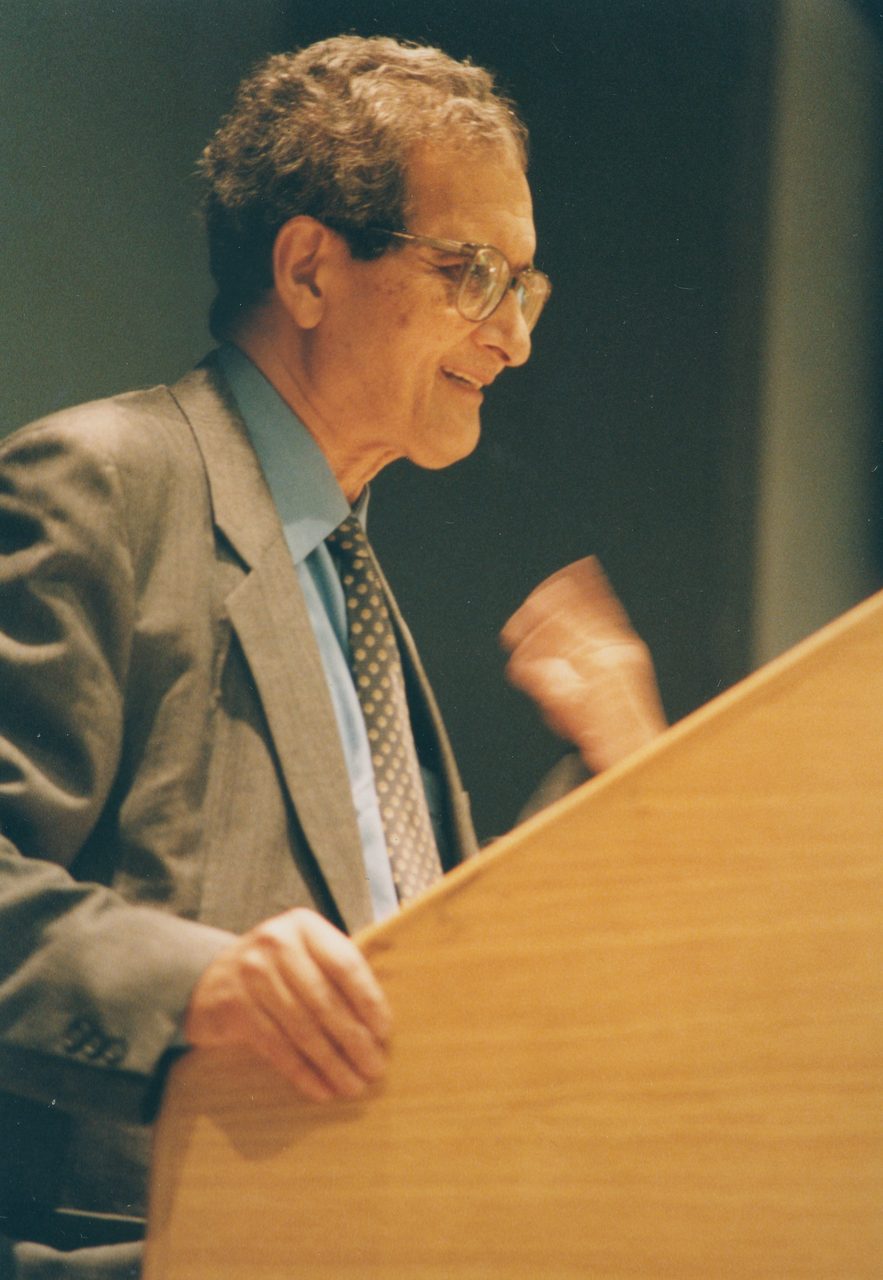
The capability approach grew out of that lecture, Sen elaborated it over the following decades, and Martha Nussbaum developed a list-based version which our own corpus records as requiring that all persons have access to core human capabilities including life, health, bodily integrity, education and political participation.
One sourcing note, because it affects what may be claimed. The lecture's venue and date are given here as the standard record, corroborated for this article against independent secondary sources and against a full text hosted online. The hosted document's own header line was not read directly, so nothing further is quoted from the lecture on the strength of it.
This is the objection most likely to land with a general reader, because it names a person the arithmetic misses. The parties behind the veil know they might be anyone. Sen's point is that knowing one might be anyone is not the same as knowing what being that person costs, and a rule that hands out identical bundles to unlike bodies has not treated them equally, it has only counted them equally.
It is also worth saying what the objection is not. It is not a claim that the veil is incoherent, and it is not an argument for abandoning the enterprise. It is a claim that the index the choice is made in is the wrong index, which is a repair aimed at the inside of the theory.
08The Objection From The Left
The objections so far come from Rawls's right or from outside him. The next comes from the other side, and our research file does not carry that axis at all.
G. A. Cohen's Rescuing Justice and Equality, published by Harvard University Press in 2008, attacks the difference principle from the egalitarian side. Two threads. The incentives argument: Rawls permits inequalities that make the worst-off better off, and the standard justification is that talented people need higher pay as an incentive to be productive. Cohen argues that most versions of that argument fail, because the talented could simply choose to be productive without the premium, in which case the inequality is not necessary but chosen, and the citizens of a genuinely just society would not make that demand. On his reading the difference principle, taken seriously, mandates a far more equal society than Rawlsians suppose. The basic-structure restriction: Cohen argues that Rawls misapplies his own principle by confining it to the design of institutions, when personal choices made inside just institutions also determine how unequal a society ends up.
That second thread has an exact target, which our neighbouring research file on wealth and poverty states more precisely than the file behind this article: Political Liberalism, in 1993, modified the theory so that justice as fairness applies to the basic structure of society, meaning institutions, constitutions and legal systems, rather than to individual acts of charity or personal morality.
Cohen's objection is the sharpest test of whether the run of critics in this article adds up to a verdict, because it points the opposite way from Nozick's. Nozick says the difference principle takes too much. Cohen says it licenses too little. They cannot both be corrections in the same direction, and neither of them is a demonstration that the device which produced the principle is broken.
09The Chooser Who Could Not Exist
The communitarian objection is not about the output. It is about whether there is anybody in the room.
Our research file names Sandel and MacIntyre. The objection: the social contract presupposes atomistic, pre-social individuals who choose their community, but humans are constituted by their communities, we do not choose our deepest values and obligations, and so the unencumbered self behind the veil of ignorance is an incoherent abstraction. The reply our file attributes to Rawls himself: the original position is a device of representation and not a description of actual persons, it models the constraints of fairness rather than the nature of persons, and the parties behind the veil do know general facts about human nature and society. Our file gives both sides and crowns no winner.

That reply is where the correction in section 02 earns its place. A chooser who knew literally nothing would be the incoherent thing the objection describes, a mind with no content deciding on behalf of lives it could not imagine. Rawls's parties know a great deal: economics, psychology, biology, the circumstances of justice, the primary goods and their own higher-order interests.
What they lack is one class of knowledge only, the class that would let them tilt the rules toward the person they turn out to be. Whether stripping exactly that much and no more produces a coherent chooser is the live question, and it is not answered here.
10Who Was Never In The Room
Two critiques in our own research file attack the tradition rather than the device, and they are among the reasons the device exists in the form it does.
Carole Pateman's The Sexual Contract, published in 1988, argues that the classical social contract simultaneously established political right and patriarchal right. On her reading the original contract is a fraternal pact among men to share access to women's bodies and labour, and the marriage contract, the employment contract and the prostitution contract are its modern forms. Women were never parties to the original agreement.
Charles W. Mills's The Racial Contract, published in 1997, argues that the social contract is a racial contract: an agreement among white people to categorize and subordinate non-white people, creating a system of white supremacy that structures the political, economic and epistemic order. Our file states that classical contract theorists accepted racial hierarchy, that Locke invested in the slave trade, that Kant held explicitly racist views, and that the state of nature was projected onto non-European peoples to justify colonization. The qualifier is our file's own and it is load-bearing: Mills does not reject contractualism. He argues for a non-ideal, racially aware contract theory that acknowledges actual historical domination rather than pretending the original position was racially neutral.
Our file states the exclusion problem as an objection with a reply. The objection, attributed to Pateman, Mills and feminist critics: the universal contract historically excluded women, non-white populations, Indigenous peoples, the poor and the disabled; it was a contract among propertied white men, and liberal universalism masked particular interests. The reply our file gives: the critique applies to historical contract theorists' application rather than to the method itself, Rawls's veil of ignorance explicitly strips away race, sex and class, and the contract method can be reformulated to be genuinely inclusive.
That reply is the neatest move our research file makes, and it is the one this article declines to leave standing as the last word.
11The Reply That Does Not Close It
Two arguments cut directly at that reply, and one of them is by the author our own file cites for the racial contract.
Charles W. Mills published "'Ideal Theory' as Ideology" in Hypatia in 2005. The argument is separate from The Racial Contract and aimed more directly at Rawls: the dominant post-Rawlsian practice of ideal theory, modelling a well-ordered society under conditions of full compliance, is not merely an incomplete first step but ideologically distorting, because it systematically obscures the actual histories of domination that produced existing distributions. The tension with our file's reply is real, and it sits inside our own source list. Our file answers the exclusion problem by saying the veil strips race and sex away, so the method survives. The file's own cited authority on the racial contract is on record arguing that the idealizing method is itself part of the problem.
Susan Moller Okin's Justice, Gender, and the Family, published in 1989, is a critique from inside the Rawlsian framework rather than against it. Her charge: Rawls treats the family as already just and outside the scope of the principles, and his parties in the original position were at points described as heads of households, which conceals the power relations within a household from precisely the standpoint that was supposed to see everything. Her constructive move is to extend the veil so that the parties do not know their gender either, and to argue that agents so situated would reject a gendered division of labour, authority and opportunity in the family. She called the family the first school of justice, and argued that a theory which exempts it cannot deliver what it promises.
Our corpus's file on political philosophy names four critique families against Rawls where the file behind this article names two: libertarians, that Rawls ignores property rights and self-ownership; communitarians, that the unencumbered self is a fiction; feminists, Okin in particular, that the family is a site of injustice the veil ignores; and global justice theorists, Pogge and Beitz, that justice should be global rather than limited to states. The fourth is named here and not argued. No article in this wing owns it yet.
Okin's move is worth marking, because it is the shape several of the sharpest critics take. She does not throw the veil away. She widens it, and then complains that Rawls did not widen it far enough. An objection that repairs a device is a different animal from an objection that discards it, and this article keeps the two apart, because the difference is exactly what a reader counting critics would otherwise lose.
12Contracts That Need No Veil
The veil is one option inside contract theory and not the whole of it. Two named alternatives in our own research file make that concrete, and they pull in opposite directions.
David Gauthier's Morals by Agreement, published in 1986, derives morality from rational self-interest. Morality is a set of constraints on self-interest that self-interested agents would agree to, because cooperation produces mutual advantage, so it is a rational bargain rather than a dictate of reason or sentiment. His constrained maximization holds that rational agents restrict their self-interest when dealing with others who are similarly constrained, which produces a cooperative surplus.
T. M. Scanlon's What We Owe to Each Other, published in 1998, holds that an act is wrong if its performance would be disallowed by any set of principles for the general regulation of behaviour that no one could reasonably reject as a basis for informed, unforced general agreement. Our file contrasts it with Rawls on two axes: Scanlon's contractualism applies to interpersonal morality rather than to the basic structure of society, and its standpoint is that of individuals with reasons to accept or reject principles rather than of parties behind a veil of ignorance.
Scanlon is the useful one here, because his is a fairness-based contract theory that does not need the veil at all. Gauthier is the other pole, a contract grounded in self-interest, standing in the line our file traces from Hobbes, where Rawls stands in the line it traces from Kant. Whatever the veil is doing, it is not the only way to make an agreement carry moral weight, and an argument that the veil fails is not by itself an argument that contract theory does.
13What Rawls Changed After 1971
The last serious objection to the veil is one Rawls raised himself, and he answered it by rebuilding the foundation rather than the principles.
In Political Liberalism, published in 1993, Rawls argued that justice requires only an overlapping consensus among citizens holding different comprehensive doctrines, religious, philosophical and moral, and that justice must be freestanding rather than dependent on any particular worldview. Our own research file records the revision in two clauses and does not say what problem drove it.
Our corpus's political philosophy file glosses the overlapping consensus with Rawls's own phrase, political, not metaphysical. The standard account of the problem behind the revision is legitimacy and stability under reasonable pluralism: the burdens of judgment, listed among the subjective circumstances of justice, are exactly the conditions under which a free society produces durable disagreement about the good, and on that account a conception of justice presented as one comprehensive doctrine among others could not be stable under them.
One assessment belongs here and it is quoted rather than adopted. Our corpus's file on political philosophy calls A Theory of Justice "the most important work of political philosophy in the 20th century." That is our own file's judgment. It is carried here as an attributed judgment and never as a finding, and nothing in this article rests on it.
Notice what the 1993 revision does to the shape of the whole thing. Rawls did not decide the two principles were wrong. He decided the ground they were standing on was too thick, and moved them onto thinner ground. A framework whose author goes back and rebuilds its foundations is not a proof. It is a research programme, and it should be read as one in both directions: not finished, and not finished off.
14Where It Stands
Seven standing objections, every one with a name attached, and an answer on the record for some of them and none for others. The table is the honest state of the argument, and the third column is the part that keeps it honest.
| The Objection | Who Presses It | The Answer On the Record | Where It Stands |
|---|---|---|---|
| Maximin is not the rational rule behind the veil. Under complete uncertainty rationality requires assigning equal probability to every position, which yields the highest average utility instead | Harsanyi, American Political Science Review, 1975 | Maximin is rational for a choice that is unique, irreversible and made on behalf of fundamental interests; the parties choose conservatively to protect what cannot be recovered, not because they are psychologically risk-averse | Live and unresolved, and it is the pivot of everything else. Rawls's own first condition for maximin is that there is no secure basis for probability estimates, and that condition is exactly what is denied |
| Entitlement, not pattern. Holdings are just if justly acquired and justly transferred, and any patterned principle must be continuously enforced because free exchange breaks patterns | Nozick, Anarchy, State, and Utopia, 1974 | No reply is carried in our own research file. The structural answer available is that the difference principle governs the basic structure, meaning institutions and constitutions and legal systems, rather than individual transactions | Live. It is a rival thought experiment reaching an opposite verdict from a different starting point, which is not the same thing as a demonstration that the veil is broken |
| Primary goods are the wrong currency. They are means, and people differ in how much they can convert means into what they can actually do and be | Sen, Equality of What?, delivered 22 May 1979 | Sen's own proposal is a repair from inside: basic capability equality, a person being able to do certain basic things | Live. It is a proposal to change the index the choice is made in, not an argument that the choice is incoherent |
| The difference principle licenses too little equality. The incentives argument fails, and confining justice to the basic structure wrongly exempts personal choices | Cohen, Rescuing Justice and Equality, 2008 | Rawls's restriction is deliberate: from 1993 justice as fairness applies to the basic structure rather than to personal morality | Live, and it pulls the opposite way from Nozick's, which is the reason these objections cannot simply be added together |
| The unencumbered self is an incoherent abstraction. Persons are constituted by communities they did not choose | Sandel and MacIntyre, named by our own research file | The original position is a device of representation and not a description of persons; it models the constraints of fairness, and the parties do know general facts about persons and societies | Live. Our own file gives both sides and crowns no winner, and neither does this article |
| The veil stops at the front door. The family is treated as already just, and the parties were at points described as heads of households | Okin, Justice, Gender, and the Family, 1989 | No reply from Rawls is carried in our research file. Okin's own move is to extend the veil so that the parties do not know their gender either | Live, and it is a repair from inside the framework rather than an attack on it |
| Ideal theory is ideologically distorting. Modelling full compliance obscures the actual histories of domination that produced existing distributions | Mills, 'Ideal Theory' as Ideology, 2005 | Our own file's reply to the exclusion problem is that the veil strips away race and sex, so the method survives. That reply is precisely what this objection attacks | Live, and unusually sharp, because it comes from the author our own file cites for the racial contract |
Read the left column alone and the veil looks finished. Read the third column alone and it looks untouched. Both readings are wrong, and the reason is in the shape of the list: the objections do not point the same way. Nozick says the difference principle takes too much and Cohen says it licenses too little. Sen wants the currency changed and Okin wants the veil widened, both of them from inside. Mills argues the idealizing method conceals what it should reveal, while Sandel and MacIntyre argue there is nobody behind the veil to do any choosing. An argument attacked from seven directions at once by critics who contradict each other is not a refuted argument. It is a live one, and counting critics is not a method of adjudication.
15What We Corrected In Our Own File
This article rests on one research file from our own library, ZE_1_07, and it needed a great deal of correcting before anything above could be written. The corrections are collected here rather than buried, because several of them change what a reader would find if they went looking.
Our file is not thin. It runs to 259 lines with eight populated sections. It is thin on the one subject this article is built from: its section on Rawls is roughly 13 lines, and it contains no critical assessment of the veil or the original position as a device beyond the communitarian objection. Harsanyi is absent. Sen is absent. G. A. Cohen is absent. Okin is absent. Maximin's three stated conditions are absent, the list of primary goods is absent, and so is the fact that the parties behind the veil do know general facts about persons and societies. Everything in sections 02 through 11 that our file does not carry was found and verified outside it, and the external records are listed below.
Our file's bibliography carries seven digital object identifiers. One resolves to the work it labels: the Cambridge edition of Leviathan edited by Richard Tuck. Six resolve to a different work, every one of them checked live against CrossRef for this article with the returned title read against the claim it was attached to. The identifier on Locke's Two Treatises of Government resolves to a one-page 1968 book review. The one on Rawls's Political Liberalism resolves to Susan Moller Okin's 1993 review of that book in the American Political Science Review. The one on Nozick's Anarchy, State, and Utopia resolves to a German handbook entry about the book, and the same wrong identifier sits in two further corpus documents, which points at a shared contamination during ingestion rather than three independent typos. The identifiers on Scanlon, Pateman, Sandel and MacIntyre resolve to reviews as well. None of the six is reproduced in the sources below. Okin's review is carried there, correctly labelled as her review, because it is a real and useful record in its own right.
Two further defects in the same bibliography. Its header declares a source count of 29, and the 29 numbered entries contain roughly 17 distinct works, because entries 16 through 29 substantially duplicate entries 1 through 15. And several entries have an author's middle initial migrated into the publisher column, so that Scanlon's initial and Mills's initial are printed where a publisher should be.
Our file's header declares Reliability Tier 1 while its own Source Tier Classification footer lists only Tier 3 and Tier 4. Both are template artifacts and neither is quoted anywhere in this article as the file's tiering. A separate footer block states that no significant counter-arguments exist in the scholarly literature for the document's core claims, and it sits in a document containing an entire section titled Counter-Arguments and Critical Assessment with three named objections and their replies, a section naming Pateman and Mills as critics, and a passage recording Berlin's and Talmon's charge against Rousseau. The boilerplate is false on the document's own evidence. It is the third document in our corpus found carrying that same line, and nothing in this article leans on it.
Four of our file's cross-reference links carry a correct-sounding label pointing at an entirely real but unrelated document, so a reader following one lands on a plausible page rather than a dead link. The label for deontological ethics resolves to a file on the philosophy of history. The label for utilitarianism resolves to a political philosophy file confirmed by search to contain no Rawls or utilitarianism body content at all. The corpus file on utilitarianism mis-links back in the opposite direction, which is what makes a batch-generation bug the better reading of the defect. Every cross-reference used for this article was resolved against the real document instead.
Two smaller items, recorded rather than fixed. Our file dates Rousseau's Discourse on Inequality to 1755 and calls it a founding text of modern social criticism, and no edition of it appears anywhere in the 29-entry bibliography. And a neighbouring file, on the ethics of wealth and poverty, carries an image table whose first row recommends a photograph of Rawls from the Harvard University Archives under fair use. This estate ships only open-licence imagery, so that row is a trap for a future build, and it is also unnecessary, because a free public-domain portrait of Rawls exists and this article carries one. All of these have been logged for correction in the corpus rather than quietly edited there.
Fast Facts
- The Device
- The original position: rational agents choose principles for the basic structure of society from behind a veil of ignorance that hides their race, sex, class, intelligence, talents and conception of the good. Set out by John Rawls in A Theory of Justice, 1971
- What The Veil Leaves In Place
- General facts about persons and societies, including uncontroversial scientific laws and generalizations from economics, psychology and biology; primary social goods; the circumstances of justice; and the parties' own higher-order interests. The parties do not know nothing, and the popular gloss that says they do is wrong
- The Two Principles
- Equal basic liberties first, with lexical priority over everything below them; then social and economic inequalities permitted only where they work to the benefit of the least advantaged and are attached to positions open to all under fair equality of opportunity. Rawls stated them more than once and the statements differ; section 03 gives three and says which is which
- The Contested Step
- Maximin. Rawls does not claim it is generally rational: he argues it holds under three stated conditions, the first being that there is no secure basis for probability estimates. Harsanyi denies exactly that condition, and the difference principle is what depends on it
- The Older Veil
- A veil-of-ignorance construction was already in the economics literature two decades before A Theory of Justice: Vickrey in Econometrica in 1945, Harsanyi in the Journal of Political Economy in 1953 and 1955. Run with equal probabilities assigned to every position it yields average utility, not the difference principle
- The Counter-Thought-Experiment
- Nozick's Wilt Chamberlain case, Anarchy, State, and Utopia, 1974: free exchange breaks any imposed pattern, so patterned justice requires continuous interference. Two devices, opposite verdicts, and neither one a proof
- The Standing Objections
- Harsanyi on maximin, Nozick on entitlement, Sen on the currency, Cohen from the egalitarian side, Sandel and MacIntyre on the unencumbered self, Okin on the family, Mills on ideal theory. Each has a named holder, some have an answer on the record and some have none, and they do not all point the same way
- Rawls's Own Revision
- Political Liberalism, 1993: justice as fairness must be freestanding and rest on an overlapping consensus among citizens holding different comprehensive doctrines, and it applies to the basic structure rather than to personal morality
- What Is Not Settled
- Whether the parties have any warrant to treat the odds as unknowable. Whether primary goods are the right currency. Whether the chooser is coherent. Whether the family falls inside the theory's scope. Whether the idealizing method conceals what it should reveal. None of the seven objections has been answered to general satisfaction, and none has closed the subject
What Can Actually Be Stood Behind
What was published, and when, is settled and may be stated flatly. Hobbes published Leviathan in 1651, Locke the Two Treatises of Government in 1689, Rousseau The Social Contract in 1762. Rawls published A Theory of Justice in 1971 and Political Liberalism in 1993, and restated the two principles again in Justice as Fairness: A Restatement in 2001. Nozick published Anarchy, State, and Utopia in 1974, Gauthier Morals by Agreement in 1986, Pateman The Sexual Contract in 1988, Okin Justice, Gender, and the Family in 1989, Mills The Racial Contract in 1997 and "'Ideal Theory' as Ideology" in 2005, Scanlon What We Owe to Each Other in 1998, and Cohen Rescuing Justice and Equality in 2008. Vickrey's paper appeared in Econometrica in 1945, Harsanyi's in the Journal of Political Economy in 1953 and 1955, and his critique of Rawls in the American Political Science Review in 1975. Sen delivered Equality of What? as a Tanner Lecture in 1979, at the venue and on the date its published record gives, which section 07 flags as the one item here this article could not read off the source page itself. What the veil screens and what it deliberately leaves in place is a matter of record, and so is the fact that Rawls stated the two principles more than once in wordings that differ. Every one of those is a fact about a text and nothing more, which is exactly the level at which this article states them.
The dispute about whether the argument works is real, serious and unresolved, and every side has named holders. Justice as fairness is one of the standing frameworks of contemporary political philosophy, and the objections to it are ongoing debate rather than settled verdicts in either direction. Harsanyi's expected-utility challenge and Rawls's reply about unique and irreversible choices have both held their ground. Sen's capability objection, Cohen's egalitarian objection, the communitarian objection and its device-of-representation reply, Okin's argument about the family and Mills's argument about ideal theory are all live. So is our own research file's reply to the exclusion problem, which is carried here as one position inside the argument and never as its conclusion.
No: the veil of ignorance does not prove that a just society is the one Rawls describes, and the softer version, that anyone behind the veil would choose the difference principle, is not available either. The inference from the original position to the two principles runs through maximin, and Rawls's own first condition for maximin is that there is no secure basis for probability estimates, which is exactly what Harsanyi denies. Run the same device with equal probability assigned to every position and average utilitarianism comes out instead, which is what the construction already in the economics literature two decades earlier had produced. Nozick's counter-thought-experiment reaches an opposite verdict from a different starting point. Sen argues the chosen currency is the wrong one. Cohen argues the principle honestly applied does not license what Rawlsians take it to license. Sandel and MacIntyre argue the chooser is incoherent. Mills argues the idealizing method obscures what it should reveal. Okin argues the veil stops at the front door. Rawls himself revised the theory's foundations in 1993 and restated its principles more than once. No neutral proof exists here, and no sentence above should be read as though one did.
No: the veil has not been refuted either, Nozick did not answer Rawls and end it, and the original position has not been shown to be an incoherent abstraction. Rawls has standing replies on the record: maximin is defended as rational for a unique, irreversible choice made on behalf of fundamental interests rather than as a general decision rule; the original position is defended as a device of representation rather than as a description of persons; and the parties are stipulated to know general facts about persons and societies, which blunts the caricature of a chooser who knows nothing. Our own corpus's file on political philosophy calls A Theory of Justice the most important work of political philosophy of the twentieth century, which is that file's judgment and is carried here as one. And several of the sharpest critics work inside the framework rather than against it: Okin extends the veil to gender rather than discarding it, Mills argues for a non-ideal contract theory rather than for abandoning contractualism, and Cohen's complaint is that the difference principle should be applied more strictly and not less. A living framework under sustained, serious, unresolved attack is not a refuted one, and no number of objections adds up to one while they contradict each other.
One question stays open on purpose. The veil was built to answer an old objection, that nobody ever signed the contract, by replacing a historical agreement with a fair procedure. It works only if the procedure is neutral, and every standing objection in this article is a version of the charge that it is not: what the parties may know, what they may assume about the odds, what counts as a good worth having, and where the theory's jurisdiction stops were all settled in advance by the person who built the room. Rawls never claimed a proof, which is why he offered reflective equilibrium instead, and why he rebuilt the foundations when they would not hold. Which leaves the question the device was meant to retire standing roughly where it started. If a thought experiment's verdict depends on how its author furnished it, what exactly is doing the justifying?
Sources & further reading
Everything above is drawn from one research file in our own library, ZE_1_07, together with sources checked directly for this article. The file is where we worked from; the external records below are where the work can be checked, and they are listed for that purpose rather than as a reading list. Eleven entries appear here and ten of them are external. Six carry a digital object identifier that was resolved live against CrossRef for this article, with the returned title read against the claim it is attached to. Six identifiers that our own file's bibliography carries are deliberately NOT reproduced, because each resolves to a review or a handbook entry about a book rather than to the book itself, which section 15 sets out in detail. Several works cited in the text carry no link, on purpose and not by oversight: G. A. Cohen's Rescuing Justice and Equality is cited by publisher and year because its identifier is an international standard book number, 9780674030763, confirmed against the publisher's catalogue record rather than resolved through the digital object identifier system that the rest of this list was checked against, and Okin's Justice, Gender, and the Family, Pateman's The Sexual Contract, Mills's The Racial Contract, Gauthier's Morals by Agreement, Scanlon's What We Owe to Each Other and Nozick's Anarchy, State, and Utopia are cited by author, title and year for the same reason. Nothing in this article is quoted from Harsanyi's 1975 paper, from Cohen 2008 or from Okin 1989: in each case the bibliographic record was verified and the argument is given in outline from the scholarly record, and the text says so where it matters.
Image credits
- Rawls's original position, a diagram of the device Philosophyink, own work, via Wikimedia Commons. CC BY-SA 4.0 Source.
- John Rawls, author portrait from the dust jacket of the first hardcover edition of A Theory of Justice, 1971 Photograph by Alec Rawls, published by the Belknap Press of Harvard University Press; retouched scan by Wikimedia Commons user Blz 2049. Public Domain (a United States book dust jacket first published between 1931 and 1977 without a copyright notice) Source.
- Frontispiece to the 1651 first edition of Hobbes's Leviathan Abraham Bosse, circa 1602 to 1676; British Museum 1858,0417.283, via Wikimedia Commons. Public Domain Source.
- Robert Nozick, from the cover of The Libertarian Review, December 1977 The Libertarian Review, December 1977 issue, via Wikimedia Commons. Public Domain (a United States work published between 1931 and 1977 with a defective copyright notice) Source.
- Amartya Sen, portrait dated circa 2000 LSE Library, via Flickr Commons and Wikimedia Commons. No known copyright restrictions (the Flickr Commons designation, applied by LSE Library) Source.
- Michael Sandel at Fronteiras do Pensamento, Mackenzie University, Sao Paulo, 7 August 2023 Fronteiras do Pensamento, via Flickr and Wikimedia Commons. CC BY-SA 2.0 Source.
- Card crop of the original position diagram, top anchored Philosophyink, own work, via Wikimedia Commons. CC BY-SA 4.0 Source.

.jpg)

.jpg)
.jpg)
.jpg)