
Terminal Lucidity: The Mind That Returns Before Death
People in the last stage of a disease that has taken their speech, their memory and their ability to recognise a face are sometimes reported to become clear again: to use names, to answer questions that follow from the answers, and in some accounts to use the interval to say goodbye. The reports have been appearing in the medical literature for about 250 years, and in June 2018 a United States government institute convened a workshop on them. Almost every one of those reports is a recollection, gathered after a death from nursing staff or from relatives, and no brain has ever been recorded during an episode. This is what the case collections, the caregiver surveys and the two 2025 prospective studies actually contain, what the field cannot yet agree to call the phenomenon, and where our own research file on it is wrong.
The claim is narrow, and it is worth stating exactly before anything is built on top of it. People in the last stage of a disease that has taken away their speech, their memory and their ability to recognise a face are sometimes reported to become clear again. They use names. They answer questions in a way that follows from what was asked. They sound, to the people in the room, like themselves. The reports come from nurses, from physicians and from families; they have been appearing in the medical literature for about 250 years; and in 2018 a United States government research institute convened a workshop to decide what to do about them. What almost none of those reports come from is a room in which anything was being measured. That is not a footnote to this subject. For now it is the subject.
This article sets out what has been reported, what has been established, and what has not. It concerns a phenomenon observed at the end of life, and it is not, in any part, guidance about the care of a dying person.
Two neighbouring subjects are not this one. A near-death experience is undergone by the patient during an acute crisis and reported afterwards by the patient, and this library covers it separately in The Near-Death Experience. Deathbed visions, the reported sight of deceased relatives or religious figures, are a third thing again and are not treated here. Terminal lucidity differs from both in the one way that governs all of its evidence: it is watched from outside. The person it happens to is not the witness. Somebody else in the room is, and the record is what that somebody remembered afterwards.
01What Is Actually Being Reported
Start with the definition, because a great deal downstream depends on how tightly it is drawn, and section 08 is about a live argument over exactly that.
Terminal lucidity is the unexpected return of mental clarity, coherent speech, recognition of loved ones and sometimes of personality traits, in patients who have suffered severe and long-term cognitive impairment. The impairment is typically from neurodegenerative disease, Alzheimer's above all, but the reported cases also include brain tumours, strokes and other conditions causing extensive brain damage. The episode is described as occurring in the final hours, days or occasionally weeks before death.
What the reported episodes are said to contain is specific, and it is consistent across the collections. Sudden recognition of family members not recognised for months or years. Coherent, contextually appropriate speech in patients who had been non-verbal. Requests for particular foods, discussion of past events, the expression of wishes. Emotional warmth, humour and characteristic personality traits that had disappeared during the illness. And in some accounts an apparent awareness that death is close, with the lucid interval used to say goodbye. That is a description of what witnesses have reported, assembled from the published case literature. It is not a description of what anybody should expect, and nothing in it is known to depend on anything anybody does.
Hospice nurses have their own words for it, which is itself a piece of evidence about how familiar the phenomenon is to them and how little of it reaches print. Our research file records the nursing terms: the rally, the surge, and lightening up. Staff are described as expecting it without understanding it, while systematic documentation of it remains limited.
From that gap our file draws an inference, and the inference is worth keeping separate from the observation. It reasons that terminal lucidity is far more common than the published case literature implies, because most episodes are never recorded: the staff present either do not witness them or do not consider them worth writing down. That is a claim about the archive rather than about the phenomenon, and it names its own mechanism. The case literature is built out of what somebody chose to write down.
02The Record, and How Old It Is
None of this is new. What is new, and it is very new, is that anybody is watching for it in advance.
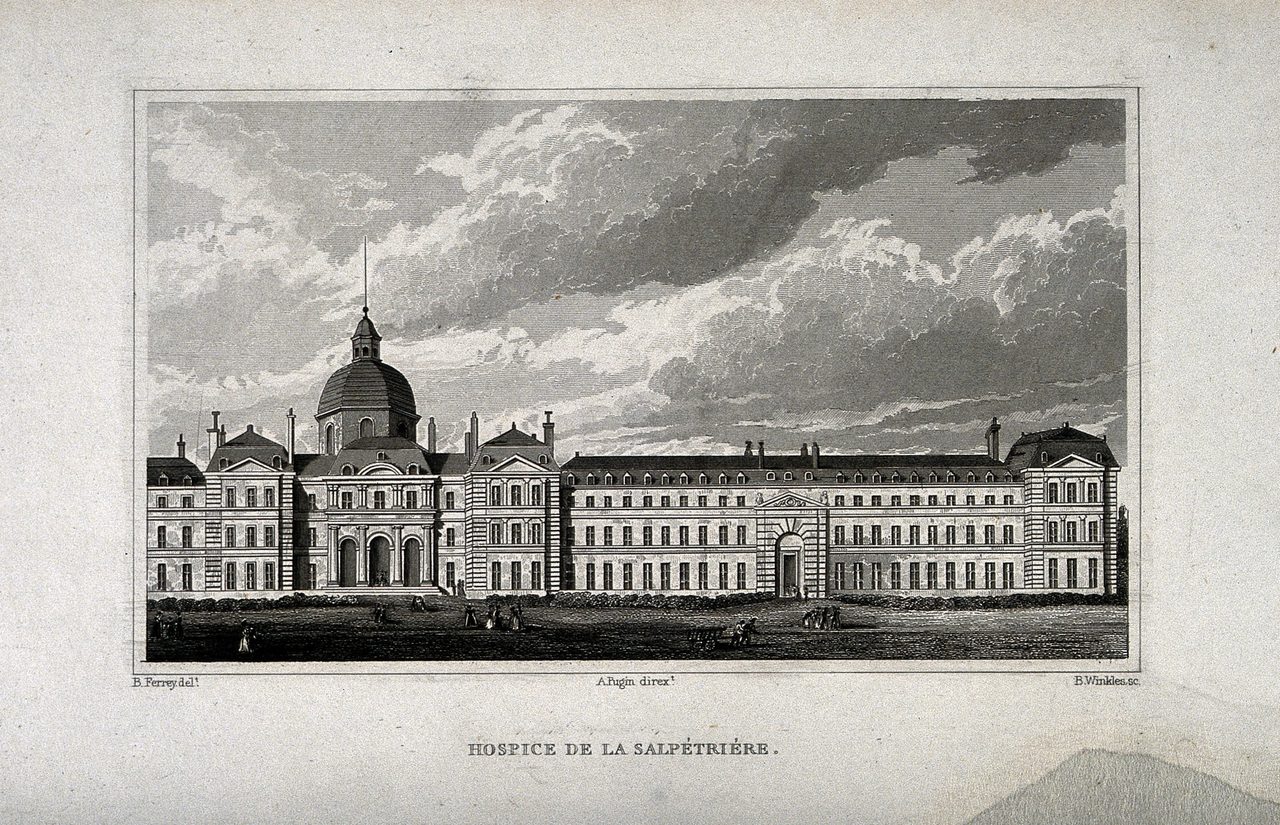
Our own research file traces the observation back a long way, and its account is carried here as its account. It states that Hippocrates, around 400 BCE, noted that sudden improvement in critically ill patients sometimes preceded death, read in the Greek tradition as a bad sign rather than a good one, and that Galen, around 200 CE, described mental clarity returning before death. Neither attribution could be verified against a primary or scholarly secondary source for this article, so both are reported as our file's claim and not as located texts. The same caution applies to the file's list of early modern documenters: Georg Ernst Stahl, Benjamin Rush, Jean-Etienne Esquirol at the Salpetriere in Paris, Wilhelm Griesinger, and Cesare Lombroso. All five are real physicians, and correctly dated but for Stahl's birth year, which our file gives as one of the two dates in circulation. The books our file names are real books. What could not be confirmed is that each of them wrote what our file says they wrote. Two short phrases our file places inside quotation marks and attributes to Rush appear nowhere in this article; section 09 explains why.
Our file's account of the twentieth century is an argument rather than a finding, and it should be read as one. It holds that the phenomenon was largely forgotten by twentieth century medicine for four reasons: a strict materialism that made it something which should not occur and was therefore dismissed or left unrecorded; the movement of dying out of homes and into hospitals, where deathbed phenomena were not systematically observed; publication bias against observations that contradict a paradigm; and, from the 1960s onward, a hospice movement that eventually brought end-of-life phenomena back into view. None of those four claims is sourced in the file. Only the last of them has an obvious anchor in the world.
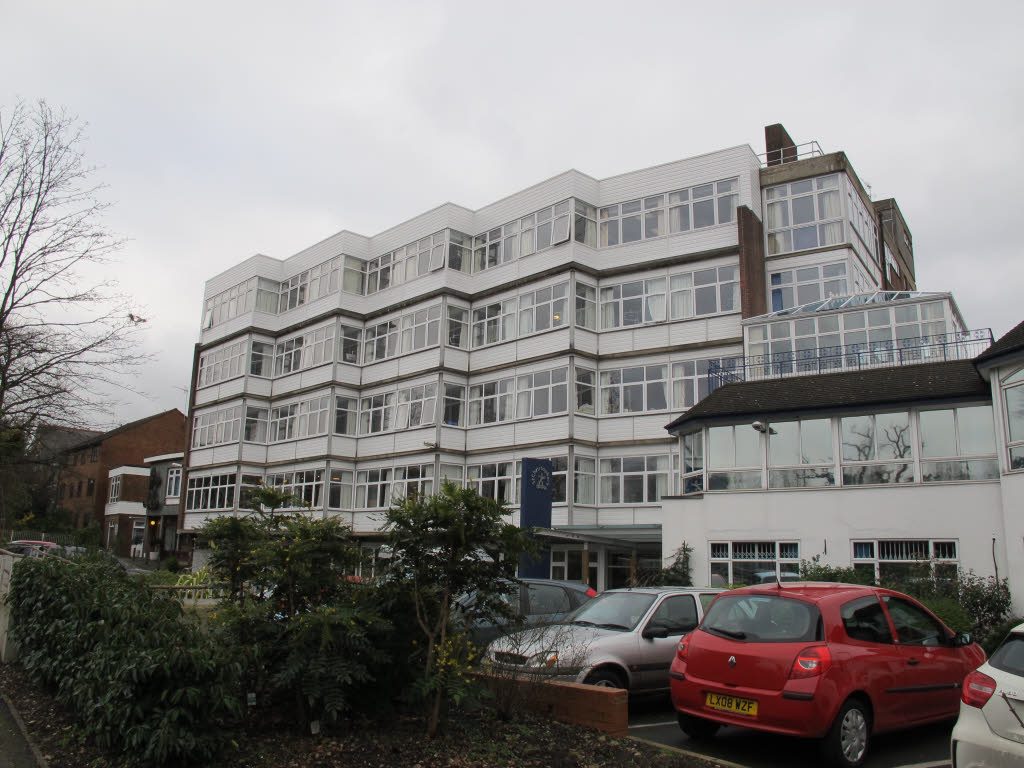
That anchor is an institution. St Christopher's hospice opened in Sydenham in south London in 1967, and the movement our file credits with the change is usually dated from it. On our file's account the change was in who was in the room: dying had moved into hospitals where deathbed phenomena were not systematically observed, and the hospice movement brought them back into view. That is also the likeliest reason the nursing vocabulary in section 01 exists at all. The phenomenon arrived as familiar language among hospice staff long before it arrived as data, and our file records that systematic documentation of it is limited still.
03What the Modern Evidence Actually Consists Of
Everything argued about this subject rests on a handful of records, and they are not equally strong. It is worth taking them one at a time, because the differences between them do more work than any single figure any of them contains.
The modern field has a starting date. The term terminal lucidity was coined in 2009 by Michael Nahm, a biologist at the Institute for Frontier Areas of Psychology and Mental Health in Freiburg, in the Journal of Near-Death Studies, volume 28, issue 2, pages 87 to 106. Three publications form its spine: that 2009 paper, which reviewed historical and contemporary cases; Nahm and Greyson in 2009, extending the analysis to chronic schizophrenia and dementia; and Nahm, Greyson, Kelly and Haraldsson in 2012, a review and case collection our file calls the most comprehensive study in the subject. Bruce Greyson is Chester F. Carlson Professor Emeritus of Psychiatry and Neurobehavioral Sciences at the University of Virginia, and directed its Division of Perceptual Studies from 2002 to 2014.
The 2012 collection is the field's core document, and what it is matters more than what is in it. It assembles 83 documented cases out of published medical literature reaching from the 1600s to the present, written up by 55 different authors, most of them medical professionals. The patients include people with Alzheimer's disease, brain tumours, strokes, abscesses, meningitis, schizophrenia, affective disorders and developmental disabilities; both sexes are represented, and the ages run from children to the elderly. Nobody observed an episode for this study. It is a review of what other people had already written down, in some instances centuries earlier. A later paper describes the same body of work as 80 mentions by 50 different authors, so even the count depends on who is counting what.
The timing figures from that collection are the most-quoted numbers in the subject. Of the episodes it collected, 43 percent occurred within the last 24 hours before death and 84 percent within the last week, with lucidity persisting for weeks or longer in rare instances. Duration ran from a few minutes to several hours, and some patients were described as staying lucid for days. Our file adds that in all of these cases death followed, and that the lucidity was therefore indeed terminal. That last sentence is true of this collection by construction. The cases were selected because they were cases of terminal lucidity, so a collection of them cannot say how often a lucid interval is followed by death, or how soon. Section 10 is about what happened when somebody finally approached the question from the other end.
The largest survey is not a study of patients at all but a study of the people who look after them. Alexander Batthyany, director of the Viktor Frankl Institute of Logotherapy in Vienna, and Bruce Greyson published it in 2021. It was an internet survey of nursing and medical staff across Austria, Germany and Switzerland: 900 were contacted, 187 responded, and between them they described 124 people with dementia who had experienced an episode of paradoxical lucidity. More than 80 percent of those cases were reported as a complete remission, with memory, orientation and responsive verbal ability returning. And 97 percent of the events were reported as occurring seven days or less before death. The response figure belongs beside the results rather than in a methods note: 187 of 900 is what this instrument actually reached.
A 2023 pilot study, funded by the United States National Institute on Aging under grant 1R21AG069748-01, surveyed health care professionals under a deliberately wide working definition, which it stated as unexpected episodes of spontaneous mental clarity such as the ability to communicate in persons who had seemingly lost such abilities, including a return to a higher level of communication even if only briefly. Among 29 reported events, 31 percent were described as lasting several days, 20.7 percent one day and 24.1 percent less than one day, and in 78.6 percent the person engaged in some unexpected activity. The outcome figures are the ones worth pausing on. Of these events, 22.2 percent were followed by death within three days, and 14.8 percent within three months.
| The Evidence | What Kind of Record It Is | What It Reports |
|---|---|---|
| Nahm, Greyson, Kelly and Haraldsson (2012), the core case collection | A review of 83 cases published by 55 different authors between the 1600s and the present. Nobody observed an episode for it | 43 percent of the collected episodes within 24 hours of death, 84 percent within a week; duration from a few minutes to several hours, in some instances days |
| Batthyany and Greyson (2021), the largest survey | An internet survey of nursing and medical staff in Austria, Germany and Switzerland. 900 contacted, 187 responded, describing 124 people with dementia. Recalled after the death | More than 80 percent of the described cases reported as a complete remission of memory, orientation and responsive verbal ability; 97 percent of events seven days or less before death |
| Teresi and colleagues (2023), a pilot funded by the National Institute on Aging | A survey of health care professionals covering 29 reported events, under a deliberately wide working definition. Recalled after the event | 31 percent lasted several days, 20.7 percent one day, 24.1 percent less than one day; 22.2 percent of events were followed by death within three days and 14.8 percent within three months |
| Gilmore-Bykovskyi and colleagues (2025), a prospective observational study | A 12-bed dementia care hospice unit, 20 participants, audiovisual recording with structured multi-informant validation. Watched as it happened. No physiological or brain monitoring of any kind | Nine validated lucid episodes evidenced by three of the 20 participants, two to four episodes each. Episodes ranged from 20 months before death to nine or ten days before death |
| Tollock, Leontovich, Gonzalez and Parnia (2025), a three-site prospective study | Primary caregivers at NYU Langone Health, VNS Health and Bellevue Hospital kept logs of perceived mental clarity. Prospective, but caregiver-reported rather than directly observed. 1,768 screened, 1,405 eligible, 151 enrolled | 93 of the 151, or 61.6 percent, reported lucidity, across 267 distinct events. A broader definition than the collections above, in moderate to severe dementia and not restricted to the days before death |
One property runs through all of that, and it should be stated plainly rather than filed as a caveat at the end. Almost all of this evidence is retrospective. The core collection is a review of what had already been published, sometimes long ago. The surveys are answered after the death, most often by nursing or medical staff and in some accounts by relatives. Memory formed around a death is not neutral memory: it is formed under exhaustion and grief, it is rehearsed in the telling, and it is asked about later by somebody who has already explained what they are looking for. None of that makes a witness unreliable in the ordinary sense, and none of it is an accusation against people who were doing something difficult and doing it kindly. It is a description of the instrument. The researchers say it themselves, and more precisely than we could.
04Four Kinds of Case, and One With a Name
Our file sorts the reported cases into four categories by what was wrong with the brain. The sorting matters, because the categories are not equally hard to account for.
Category A is neurodegenerative disease, and it is both the largest group and the one this subject is usually introduced by. Patients who have not recognised family for months or years are reported to do so suddenly. Alzheimer's disease dominates the category; our file also names frontotemporal, Lewy body and vascular dementia. It calls this the hardest category for neuroscience to absorb, on the grounds that the neural substrate here was not temporarily disrupted but physically destroyed over years, which is a permanent structural loss rather than a reversible one.
The other three categories are smaller and each carries a different kind of weight. Category B is brain tumours: large intracranial masses displace and destroy tissue, in some cases occupying significant portions of the cranial cavity, and patients are still reported to show an unexpected return of cognitive function shortly before death. Category C is acute brain insults, meaning strokes, abscesses and meningitis, with lucidity returning despite documented tissue destruction. Category D is chronic psychiatric conditions: patients described as psychotic for decades who are reported to show complete clarity before death, and a small number of documented cases of people with severe developmental disabilities who had never spoken and began to speak coherently before dying. Our file's gloss on that last group, that it suggests the person was present all along, is an interpretation rather than a case description, and it is dealt with in section 06 where it belongs.
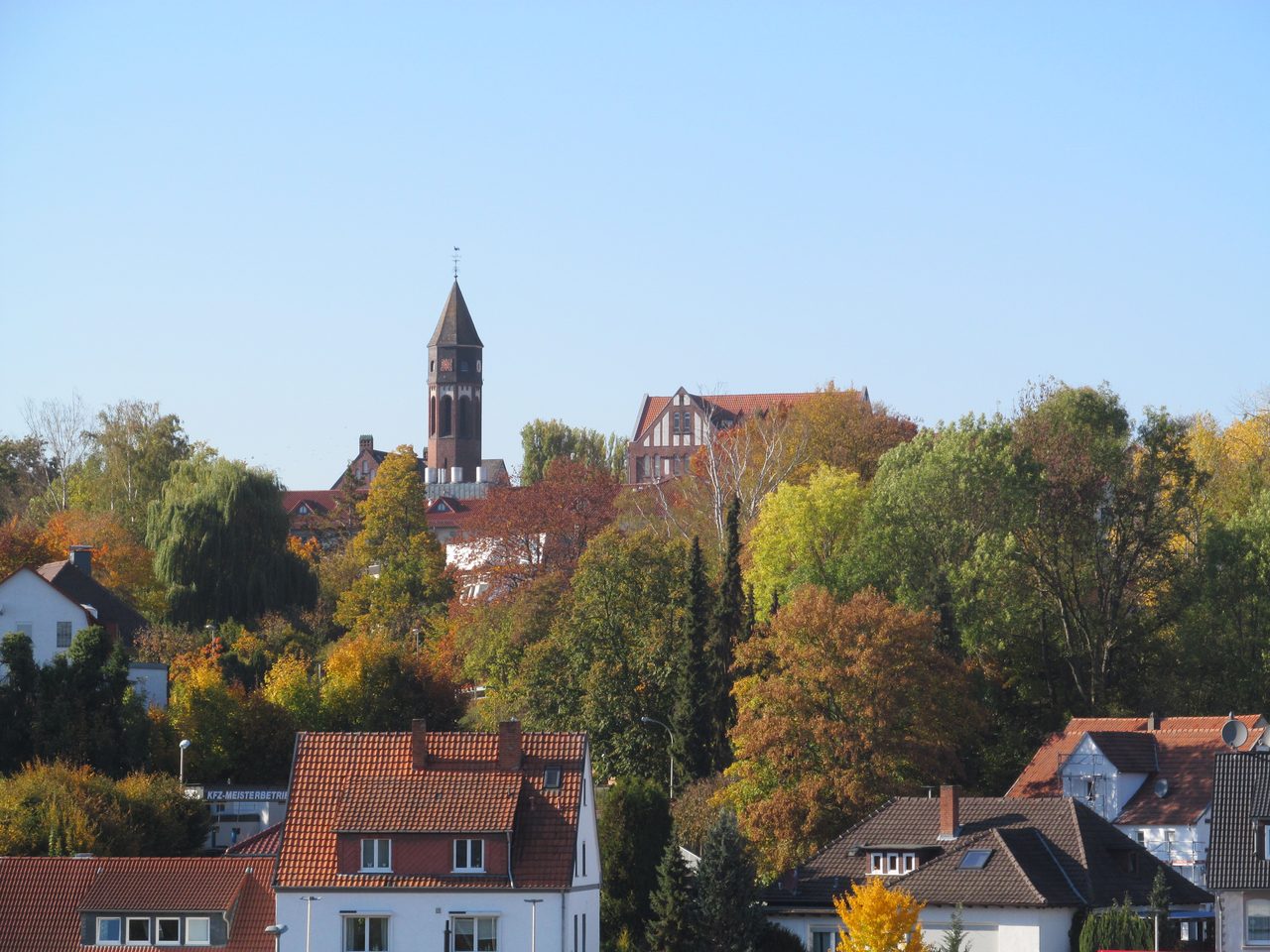
The best documented single case in the subject belongs to Category D, and it is a century old. Anna Katharina Ehmer, known as Kaethe, was a German woman who lived from 1895 to 1922 and spent most of her life at the Hephata institution near Schwalmstadt in central Germany, where she died at the age of 26. She had reportedly never spoken a single word in her life, and had suffered repeated and severe attacks of meningitis thought to have destroyed much of the brain tissue required for intelligent reasoning. Shortly before her death she is reported to have sung dying songs in an intelligible manner. The case was witnessed and repeatedly recounted by two figures at the institution, its chief physician Wilhelm Wittneben and its director Friedrich Happich, whose independent descriptions cross-verify each other, and it has its own dedicated peer-reviewed case study, published by Nahm and Greyson in 2014.
Two things are true of that case at once, and neither cancels the other. Two independent descriptions that agree is a genuine evidential strength, and it is more than most historical cases in this literature have. Both descriptions come from the leadership of the same institution where the event is said to have taken place, and both were retold in speeches and writings across the following decades, which is a genuine evidential weakness. Our own file attaches a hedge that deserves to survive into any retelling: if accurately reported, this is not the return of a lost function but the apparent emergence of a capacity nobody had observed her develop. If is the operative word there, and it is our file's own.
05Why This Is Supposed to Be Impossible
The reason any of this is treated as a puzzle rather than as a curiosity is a specific argument, and it deserves to be set out at full strength before it is tested.
The framework being tested is the standard one. Mental states are produced by, or are identical to, brain states. Memory requires functional hippocampal circuits, language requires functional Broca's and Wernicke's areas, personality and social cognition require functional prefrontal cortex, and recognition requires functional temporal lobes. In late-stage Alzheimer's disease all of those are severely damaged. Under the production model, then, the capacity for memory, language, personality and recognition should be irreversibly lost.
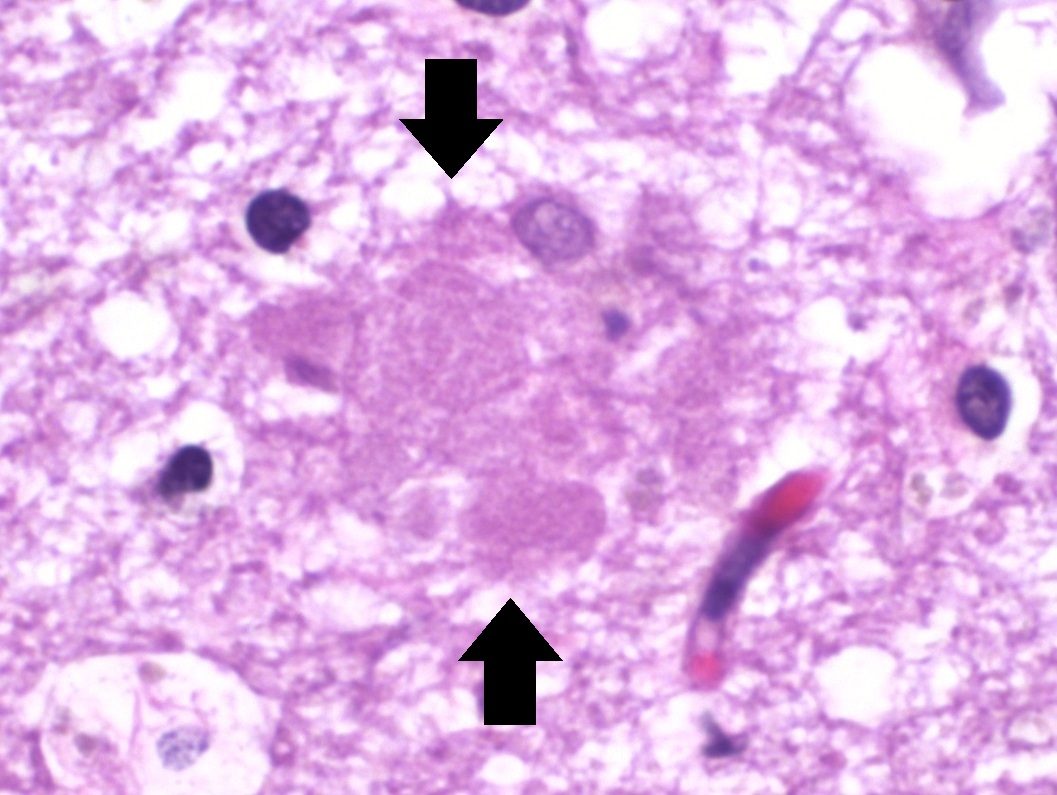
Our file's version of the puzzle follows directly from that. The substrate required for memory, language, personality and recognition has been physically destroyed in these patients, so under the production model there should be nothing left to produce the functions that reappear. The file then goes further and argues that terminal lucidity may be the single strongest empirical anomaly for the materialist production model, on the grounds that a near-death experience occurs during an acute physiological crisis and might be attributed to residual neural activity, whereas terminal lucidity occurs in brains that have undergone chronic, irreversible structural destruction over months or years. That is our file's argument and it is attributed as such. It is a reasonable one. It is not a measurement.
At this exact point our file reaches for a number, and the number does not hold. It states that by the late stages of Alzheimer's disease the brain has lost 30 to 40 percent of its cortical mass. No source is given for that figure and none could be found. It is not used in this article. The nearest published measurement located is a different quantity pointing a different way: cortical atrophy in Alzheimer's cases measured at autopsy by unbiased stereology ran 20 to 25 percent greater than in age-matched controls, which is excess loss over normal ageing rather than absolute loss of total cortical mass, and the two cannot be substituted for one another. The same literature adds something our file's framing leaves out. Among elderly subjects, and especially the very old, brain weight and cortical thickness overlap considerably between people with normal cognition and people with Alzheimer's disease. The structural picture in late disease is severe. It is not as cleanly separable from advanced ageing as a single dramatic percentage would suggest.
The argument's real force is not in any percentage anyway. It is in scale. What is reported in these episodes is not a marginal improvement on a cognitive test but full, integrated, contextually appropriate cognition: recognition of specific individuals, recall of specific autobiographical events, complex language, and characteristic personality. That would require the coordinated reactivation of massive distributed networks which have been structurally compromised for years. And there is the hinge on which the whole argument turns, which our file states in the same passage and which is easy to read past. The strength of the argument rests entirely on the quality of the reported episodes, and the quality is known only from retrospective description by witnesses. A powerful argument and a recollection are being asked to carry the same weight.
06The Explanations, and Where Each One Stops
Our file catalogues the candidate mechanisms and states the problem with each. What follows is that catalogue, and it should be read as what it is: a list of our file's stated objections, not a demonstration that no mechanism exists.
| The Proposal | What It Would Account For | The Problem Our File States |
|---|---|---|
| A catecholamine surge: dying triggers a massive stress response releasing adrenaline, norepinephrine and cortisol | A temporary enhancement of neural activity, and increased arousal | Arousal is not recovered memory, language and personality. A dying brain flooded with neurotransmitters should produce delirium rather than lucid conversation about specific past events |
| Cortical spreading depolarization: waves of depolarization crossing the cortex during dying could reactivate silent neurons | Late electrical activity, with animal evidence behind it | Depolarization in a severely atrophied brain should produce less electrical activity rather than more, and the timing does not match: it occurs during or after cardiac arrest, while these episodes are reported hours to days before death |
| Endogenous DMT: the brain may produce dimethyltryptamine during dying | The presence of an active compound at roughly the right moment | The quantities are very small, and no route is clear from them to organised, contextually appropriate cognition rather than to hallucination |
| Residual networks: islands of functional tissue persist and fire one last time | Recovery without requiring anything new of neuroscience | Imaging in severe Alzheimer's shows diffuse destruction, and positing enough surviving islands to support full cognition would undercut the basis for diagnosing the disease as causing cognitive loss in the first place |
| Neural plasticity: the brain reorganises around the damage | Genuine recovery of function, in other settings | Plasticity requires weeks to months, and does not explain a sudden onset lasting minutes to hours |
| Cortical disinhibition: dying releases activity that had been suppressed | A release phenomenon of roughly the right shape | In Alzheimer's the excitatory circuits themselves are destroyed, so there is nothing left to disinhibit |
| Quantum proposals of the kind associated with Penrose and Hameroff | Nothing specific to this phenomenon; they are proposals about consciousness in general | No developed model exists for restoring function in structurally destroyed tissue. Our file gives them a sentence, and so does this table |
Two of those rows rest on real experiments, and both experiments were done on rats. The depolarization row draws on Borjigin and colleagues in 2013, who recorded surges of gamma oscillations in dying rats after cardiac arrest; the DMT row draws on Dean and colleagues in 2019, who detected dimethyltryptamine in rat brains during cardiac arrest. Both are genuine findings, and neither was conducted on a human or on a terminal lucidity episode. The electrophysiology of the dying brain is a substantial subject of its own and this library will treat it separately; here it is one row in a table and a caution about what animal work at the moment of cardiac arrest can be asked to explain about a lucid conversation three days earlier.
There is one interpretation our file places above the mechanisms, at its own second tier, and it is the transmission or filter model. On this reading consciousness is not produced by the brain but transmitted through it or filtered by it, so the brain constrains and shapes consciousness rather than generating it. Brain damage then restricts the filter and reduces the consciousness that can be expressed, which matches progressive cognitive decline; and in terminal lucidity the dying brain's filtering function breaks down, paradoxically letting more through rather than less. Our file traces the lineage to Frederic W. H. Myers's threshold model in Human Personality and Its Survival of Bodily Death of 1903, and names Edward Kelly and colleagues, in Irreducible Mind of 2007 and Beyond Physicalism of 2015, as the most rigorous contemporary defence, one that uses terminal lucidity as key evidence.
William James made the underlying point in 1898: that the covariation of brain state with conscious experience is equally compatible with a brain that produces mind and a brain that transmits it. Our file quotes James on exactly this, and the passage it prints does not appear in the work it names. It is not reproduced here. What James does write in Human Immortality is this: 'According to the state in which the brain finds itself, the barrier of its obstructiveness may also be supposed to rise or fall. It sinks so low, when the brain is in full activity, that a comparative flood of spiritual energy pours over.' The argument is his. The sentence our file attributes to him is not one anybody has been able to find.
Our file gives three reasons the filter model fits: lucidity correlates with impending death, which is what a failing filter would predict; the lucidity is reported as full and integrated rather than fragmentary, which reads as a release of the whole rather than the recovery of a part; and the episode is brief, because the body can no longer sustain the transmission. Each of those is a fit found after the fact. And our file itself, in its section on its own weaknesses, states the cost of that: the filter model as currently formulated is unfalsifiable, because it can accommodate any correlation between mind and brain, and equally the absence of one. A model that cannot lose is not thereby winning. Section 10 also puts one of those three reasons under real strain.
Our file also puts a question to the phenomenon that has nothing to do with physics, and it is probably the one that brings most people to the subject at all. Where is the person during the years of dementia? If a patient who has not recognised her children for years suddenly calls each of them by name and recalls specific shared events, was the person there the whole time and unable to express it, or did the process of dying reconstruct something person-shaped out of fragments? Our file notes that the filter reading favours the first answer, and that the question bears on how people with dementia are regarded, and on whether they should be thought of as gone or as present and unable to communicate. This article carries the question and does not answer it, because the evidence set out above cannot answer it. Everything known about the content of these episodes is known from what witnesses described afterwards, and a description of an episode cannot distinguish between a person who was present throughout and a person assembled at the end. The question is real and it is open, and neither of those things is a comfort or a warning.
The position taken by researchers in the field, including by the man who named it, is narrower than either camp usually reports. Terminal lucidity is a real, documented phenomenon that current neuroscience cannot adequately explain, and whether the ultimate explanation will be found inside an expanded materialist framework or will require a fundamentally non-materialist model remains an open question. That is the whole of the claim its own originator makes, and it is a good deal less than the phenomenon is routinely used to claim on his behalf.
What the phenomenon would mean if the filter reading were right belongs to a different room in this library. Our file frames terminal lucidity as bearing on the hard problem of consciousness, in David Chalmers's 1995 sense, and then restrains itself in a way worth noticing: it says the phenomenon does not disprove materialism, only that the mind and brain may be more loosely coupled than standard neuroscience assumes. That argument is The Hard Problem's to make. What any of it would mean for the soul belongs to a third room again. The evidence is this article's subject, and its limit.
07The Year the Question Got Funded
The single hardest fact to argue with in this subject is not a case. It is a paper trail.
In June 2018 the National Institute on Aging convened a workshop on paradoxical lucidity. It produced Mashour and colleagues, 'Paradoxical lucidity: a potential paradigm shift for the neurobiology and treatment of severe dementias', in Alzheimer's and Dementia, 15(8), 1107 to 1114, in 2019. The author list is itself the story: George Mashour, an anaesthesiologist, leading; Lori Frank of the National Institute on Aging; Alexander Batthyany, Bruce Greyson and Michael Nahm from the small existing field; and alongside them a nursing scholar, a computational linguist and a bioethicist, ten authors in all. The Institute published a companion perspective in its own voice in the same issue, Eldadah, Fazio and McLinden, 'Lucidity in dementia: a perspective from the NIA'. Following the workshop it issued two funding opportunity announcements, RFA-AG-20-016 and RFA-AG-20-017.
Our file describes the workshop as concluding four things: that paradoxical lucidity is a real phenomenon rather than anecdote or wishful thinking by grieving families; that it has significant implications for the neurobiology of dementia and for the mind and brain relationship; that systematic prospective studies are needed, because the existing evidence is largely retrospective case collection; and that understanding it might reveal therapeutic pathways for dementia treatment. That rendering is our file's and is attributed to it. What the workshop actually did was convene to review the evidence for and against the phenomenon's existence and to propose a research agenda and a provisional definition, which is more measured than concluding that it is real. The third of the four, though, does not need our file's paraphrase and does not soften on inspection. The institution itself said that the existing evidence is largely retrospective case collection.
Our file reads the funder's interest as partly therapeutic, and the reading is worth stating exactly because it is the passage most easily misread. The research rationale runs: if a dying Alzheimer's brain can support lucid cognition, then establishing how might in principle open a route to triggering that state, which would matter enormously for the most devastating neurological diseases. That is a stated reason for funding a research programme. It is conditional on an explanation nobody has, no such treatment exists, and nothing about it bears on the care of anyone now living.
What our file claims for itself here is modest and it is checkable. It says this is one of the few topics in its collection where conventional scientific institutions are actively engaged with something previously considered fringe. The paper trail supports a firmer version than the file's own framing: the National Institute on Aging convened the workshop, published a perspective under its own name in a leading dementia journal, issued two funding announcements, and has since funded at least one published pilot study whose grant number appears in the paper. Institutional engagement with a receipt attached is a stronger claim than institutional interest, and it is the one the record will carry.
08Terminal, or Paradoxical
Our file opens by saying that terminal lucidity is also called paradoxical lucidity, and uses the two terms interchangeably throughout. In the journal where the field's institutional recognition was published, that equivalence is the subject of a live argument between the man who named the phenomenon and the group closest to the funder.
Nahm published a terminological clarification in Alzheimer's and Dementia in 2022 arguing that the two terms are conceptually distinct. On his account terminal lucidity is any kind of unusually enhanced mental clarity before death and is condition agnostic, occurring in people with or without neurodegenerative disease, so the word terminal describes timing relative to death. Paradoxical lucidity is clarity occurring specifically in people with a neurodegenerative condition, so the word paradoxical describes a qualitative state that defies a pathophysiologic condition. One term names when. The other names what.
Peterson and colleagues replied in the same journal in the same year, and their reply is not a quibble. They argue that all instances of terminal lucidity are paradoxical but not all instances of paradoxical lucidity are terminal, which inverts the relationship Nahm proposes. They note that in Nahm's own studies terminal lucidity appears exclusively in people with underlying brain conditions, which undercuts the condition-agnostic half of his definition. And they identify two problems with his framework: before death lacks temporal precision, and the definition conflates temporal and causal relationships without requiring that the lucidity actually relate to the dying process at all. This article does not adjudicate between them. Both papers are in the same journal, both are by people who have done the work, and the question is genuinely open.
The dispute is not academic housekeeping, and it is worth being explicit about why. How the phenomenon is defined decides what counts as a case, and what counts as a case decides every prevalence figure in the field. The 2023 pilot's deliberately wide definition, which admits a return to a higher level of communication even if only briefly, and the 2025 three-site study's category of perceived mental clarity in moderate to severe dementia, are counting something broader than the 2012 collection's dying patients in their final hours. That is a large part of why the figures in the table in section 03 run from three of twenty residents in one hospice unit to 61.6 percent of an enrolled multi-site cohort. Those two figures are not in conflict. They are answers to different questions, asked of different people, under definitions the field has not agreed on.
09What Our Own File Gets Wrong
The rule here is that our own sources are checked like anybody else's, and that what the check finds gets printed rather than quietly routed around. Research file Y_2_02 is a good document. It has a real bibliography, an unusually honest section on its own weaknesses, and a stated falsifier, which is more than most writing on this subject manages. It also carries four defects that would have travelled straight into this article if nobody had looked.
The first is the most instructive. Its section 5.1 is headed as a composite drawn from Nahm and colleagues, and the prose beneath the heading then reads exactly like a case report. It describes an elderly woman with a diagnosis of a stated number of years' standing, a stated span of not recognising her family, a stated period without speech, a specific hippocampal measurement, an episode of a specific length, and a death a specific number of days later. Six figures, and not one of them describes a real patient. They are invented for illustration, and the parenthetical in the heading is the only thing that says so. This article does not retell that scene and reproduces none of its numbers. It is the clearest example available of how a fabricated specific gets laundered into a literature: not by anybody lying, but by an illustration written in the register of a case report, where the next reader has no way to tell the difference.
The second is two quotations that do not appear to exist. The longer is attributed to William James in 1898; a full-text search of Human Immortality, the work our file names, returns nothing like it, and repeated targeted searches found no match anywhere. The argument it makes is genuinely James's, which is what makes it dangerous rather than obviously wrong, and section 06 above quotes instead a passage that is actually in the book. The others are two short phrases attributed to Benjamin Rush's Medical Inquiries and Observations upon the Diseases of the Mind of 1812. That book is entirely real, held in full by the United States National Library of Medicine, and the identifier our file gives resolves correctly to the 1830 fourth edition. The words could not be located in it or anywhere else. None of the three is reproduced in this article.
The third is a citation that looks like support and is not. Our file's section on the early documenters credits Wilhelm Griesinger with cataloguing cases in Die Pathologie und Therapie der psychischen Krankheiten of 1845, and its bibliography carries an identifier that resolves to a chapter in a De Gruyter book of a nearly identical title dated 1836, with no author recorded and the publisher's name sitting in the author field. Two different works, nine years apart. The net effect is that our file has no citation at all for its Griesinger claim while appearing to have one, and that row is not carried into the source list below. It is why section 02 names the tradition of documentation and cites none of it.
The fourth is two headline numbers with nothing behind them, both corrected above rather than repeated. One is the cortical mass figure dealt with in section 05. The other is a prevalence figure of 5 to 10 percent of terminally ill dementia patients, attributed in our file to Batthyany's survey work; it appears in no version of the published study and in no secondary account of it, and section 03 uses the study's own numbers in its place. And one more item, for completeness. Our file closes with a standing addendum stating that no significant counter-arguments exist in the scholarly literature for its core claims and that there is no active scholarly dispute over them. Its own section on weaknesses lists six, and section 08 above is an active scholarly dispute in a leading dementia journal. That sentence is boilerplate, it is false on the file's own terms, and it is not carried here.
One last piece of housekeeping, about tiers rather than about facts. Our file grades its own contents in three steps and then stops: the phenomenon itself is Tier 1; the filter reading of it is Tier 2; and the ultimate explanation is given no tier at all, because the file writes open question instead. Our own scale has four steps, and it would have been easy to fill that gap by assigning the mechanism a Tier 3 and moving on. We have not. Our file assigns no third-tier claim anywhere, and inventing one on our own authority, in the exact place where this subject is most tempting to overclaim, is the failure this whole apparatus exists to prevent. There is no Tier 3 claim in this article, and the absence is deliberate.
10What Would Settle It, and What Has Happened Since
Our file does something most writing on subjects like this never does: it says what would change its mind. That is to its credit, and it is also now partly out of date, which is the best thing that can happen to a stated falsifier.
Our file names four things that would settle the question. Prospective studies with brain monitoring, in which a patient in a lucid episode showed EEG patterns consistent with normal lucid cognition despite documented massive cortical atrophy on prior imaging, which it calls extremely challenging for the production model. Systematic documentation through larger standardised surveys. Post-mortem neuropathology correlating the degree of brain destruction with the quality and duration of the lucid episode. And real-time functional imaging during an episode, which it describes as extremely difficult logistically but potentially definitive.
Set beside those four is the single most important sentence in our file's account of its own weaknesses, and it has not changed. No brain imaging or recording has ever been conducted during a terminal lucidity episode. What the brain is doing during the lucid interval is, on the published record, unknown. Everything above about destroyed substrate and coordinated reactivation of distributed networks is inference from what the brain looked like before, and from what witnesses described afterwards.
Two prospective studies were published in 2025, and the field has therefore begun doing what it said it needed to do. The first observed a 12-bed dementia care hospice unit with 20 participants, using audiovisual recording and structured multi-informant validation. It found nine validated lucid episodes evidenced by three of the 20 participants, two to four episodes each. Its authors state their own limits: a small sample, a limited range of racial, ethnic and socioeconomic backgrounds, selection bias from recruiting at a single hospice, an inability to code non-English speech for multilingual participants, and a very wide confidence interval around the prevalence estimate. Three of twenty is not a rate, and the authors are the first to say so.
The second study is larger and looser. Three sites, 1,768 patients screened, 1,405 meeting inclusion criteria, and 151 enrolled; of those 151, 93, or 61.6 percent, reported lucidity across 267 distinct events. The episodes were logged by primary caregivers rather than observed by researchers, and the definition used was perceived mental clarity in moderate to severe dementia rather than clarity at the end of life, so the figure is not comparable to anything in section 03's earlier rows. Its most useful contribution is the funnel itself. Screening 1,768 people to enrol 151 is what studying this actually costs, and it is a concrete answer to the question of why the evidence base is as thin as it is.
Neither of the two conducted any physiological or brain monitoring during any episode. That is the finding to carry away from this section. The field has started meeting the second item on its own list and has not touched the first, the third or the fourth, so the measurement that would decide the question has still, as of the most recent prospective work, never been made.
The 2025 hospice study also complicates the phenomenon's own name, and it does so in a way that bears directly on the filter reading. Its validated episodes ranged from 20 months before death to nine or ten days before death, its episodes nearest to death logged nine or ten days out. A lucid episode 20 months before a death is not a terminal event in any ordinary sense of the word, and it is not what a filter dissolving at death predicts; the 2023 pilot points the same way, with 22.2 percent of its events followed by death within three days and 14.8 percent within three months. This does not refute the filter model, which as noted can accommodate most things. It does mean that the first of the three reasons our file gives for finding the model persuasive, that lucidity correlates with impending death, is now doing less work than it was.
Fast Facts
- The Phenomenon
- The reported return of mental clarity, coherent speech and recognition in patients with severe long-term cognitive impairment, described as occurring in the final hours, days or occasionally weeks before death
- Who Named It
- Michael Nahm, in 2009, in the Journal of Near-Death Studies. The named field is about as old as the term
- The Core Collection
- 83 documented cases assembled out of published literature reaching back to the 1600s, written up by 55 different authors. A review of records, not of observations. A later paper counts the same body of work as 80 mentions by 50 authors
- The Most-Quoted Timing
- 43 percent of the collected episodes within 24 hours of death, 84 percent within a week. Figures describing a retrospective collection of published reports, not a population rate
- The Largest Survey
- 900 nursing and medical staff contacted across Austria, Germany and Switzerland, 187 responded, 124 people with dementia described, 97 percent of the events reported as seven days or less before death
- The Prospective Studies
- Two, both 2025. A 12-bed hospice unit with 20 participants and nine validated episodes evidenced by three of them; and a three-site study that screened 1,768 people to enrol 151. Neither monitored a brain
- The Institutional Turn
- The National Institute on Aging convened a workshop in June 2018, published a perspective in its own voice, issued two funding announcements afterwards, and has funded at least one published pilot study
- What Has Never Been Measured
- A brain, during an episode. No imaging or recording has been made during a lucid interval, and the two 2025 prospective studies did none
- The Name Itself
- Disputed in print. Nahm argues terminal and paradoxical lucidity are distinct; Peterson and colleagues reply that the relationship runs the other way. How it is defined decides what counts as a case
- Our File's Own Verdict
- The phenomenon is real and unexplained; whether the explanation is an expanded materialism or something else is, in its own words, an open question
What We Can Actually Stand Behind
The reports exist in quantity, and so does the apparatus now built around them. The term was coined in 2009; the 2012 review assembled 83 cases out of published medical literature reaching back to the 1600s, written up by 55 different authors; a 2021 survey contacted 900 nursing and medical staff and returned 187 responses describing 124 people with dementia, 97 percent of those events reported as within seven days of death. The National Institute on Aging convened a workshop in June 2018, published a perspective under its own name, and issued two funding announcements afterwards. Two prospective studies appeared in 2025. And the best documented single case, Anna Katharina Ehmer at Hephata in 1922, has two witnesses whose descriptions cross-verify, both of them the institution's own leadership, and its own peer-reviewed case study. All of that is established. What kind of evidence it is, is the next line.
The transmission or filter reading sits here, at the tier our own file assigns it. On that reading the brain constrains consciousness rather than producing it, damage narrows what can be expressed, and a failing brain's failing constraint lets more through rather than less. It fits the reports. It is also, as our file says in its own section on its own weaknesses, unfalsifiable in its current form: it can accommodate any correlation between mind and brain and equally the absence of one, and a model that cannot lose is not thereby winning. One of the three reasons our file gives for finding it persuasive has weakened since the file was written, because validated episodes have now been recorded as much as 20 months before death. And there is no Tier 3 line below this one, deliberately. Our file assigns no third-tier claim anywhere; where it treats the mechanism as unsettled it writes open question, and we have carried that wording rather than invent a number to fill the gap.
Four things this evidence does not support. No, none of it shows that consciousness survives the body, or exists independently of it. The man who named the phenomenon does not claim that: his stated position is that terminal lucidity is real, that current neuroscience cannot adequately explain it, and that whether the explanation lies inside an expanded materialism or outside it is an open question. No, no mechanism is established. Seven candidates are listed in section 06 and our file states a specific problem with every one of them, and the two with real experiments behind them were done on rats at cardiac arrest, neither on a human and neither on a terminal lucidity episode. No, the prevalence of the phenomenon is not known. Three of twenty residents in one hospice unit and 61.6 percent of one enrolled multi-site cohort are answers to different questions under definitions the field has not agreed on, the largest survey reached 187 of the 900 people it contacted, and every timing figure from the case collections and the surveys quoted here describes a collection of selected cases rather than a population. And no, our own research file's headline figures do not stand. Its cortical mass figure has no source and is refused in section 05, its 5 to 10 percent prevalence figure appears in no version of the published study and is replaced in section 03, its Griesinger citation resolves to a different work, two of its quotations could not be found anywhere, and the case report at its centre is a composite whose every number was invented for illustration.
So the position is this. Something is being reported, consistently, across centuries and countries and by people with no connection to one another, in patients whose brains are known to be badly damaged. The reports are specific, they agree with each other, and the people making them mostly gain nothing by it. They are also, almost without exception, recollections: gathered after the fact, from people who were grieving or working, by researchers who had already explained what they were interested in. Two prospective studies now exist, and neither of them recorded a brain. Until somebody does, the honest description of terminal lucidity is a well-attested clinical report with no established mechanism and an unsettled name. And the strange thing about it is not that it might mean something enormous. The strange thing is that the measurement that would be decisive is described, in our own file's words, as extremely difficult logistically but potentially definitive, and in more than two centuries of reports it has still never been made.
Sources & further reading
Everything above is drawn from our research library on Theories of Anything, principally file Y_2_02, together with sources checked directly for this article. Nineteen sources are listed here and eleven carry a resolvable identifier; the depth of checking differs, which matters. Corrections to our own file are carried here rather than buried. First, its bibliography places Nahm and Greyson (2009) in Archives of Gerontology and Geriatrics; that entry's own identifier resolves to the Journal of Nervous and Mental Disease, 197(12), 942 to 944, which is the journal of the row immediately below misapplied to this one, and the correct journal is linked below. Second, our file credits the 2012 review to Kelly, E.F.; the third author is Emily Williams Kelly, confirmed by two independent indexes, and Edward F. Kelly is a different researcher in the same group whom the same file separately cites as an author of Irreducible Mind. Third, our file's body text gives the 2009 paper's title twice in a form its own bibliography contradicts; the resolved title is used here. Fourth, the bibliography row that appears to cite Griesinger resolves to an authorless 1836 De Gruyter chapter and is not carried at all. Fifth, our file cites a 2014 New York Times article on end-of-life dreams as evidence of hospice research into lucidity; it was published in 2016, the physician it names is its subject rather than its author, and the research it describes is on dreams and visions rather than on lucidity, so it is not used and not linked. Sixth, its identifier for Irreducible Mind resolves to a chapter inside that book rather than to the book, and three of its ISBNs belong to modern reprints rather than to the editions their rows describe, so no ISBN from it is carried. Seventh, its bibliography has no row for Dean and colleagues (2019) although the paper is cited in its text, and no identifier for Borjigin and colleagues (2013); both are supplied below. Two further things reported as absences. Our file's Kahlbaum case of 1890, its second strongest historical case, could not be confirmed by any search made for this article and is therefore not told here at all. And its attribution of Bruce Greyson's year of birth, and its dates for Georg Ernst Stahl, could not be settled, so no birth or death year for either man appears above. On the Ehmer case, our file says she sang hymns where the sourced accounts say dying songs; the sourced wording is used. Open the full file to check the sourcing and go deeper.
Image credits
- The Hospital of the Salpetriere, Paris: panoramic view. Engraving B. Winkles after Benjamin Ferrey after Augustus Charles Pugin, Wellcome Collection (V0014293), via Wikimedia Commons. CC BY 4.0 Source.
- St Christopher's hospice, Sydenham Stephen Craven, via Geograph Britain and Ireland and Wikimedia Commons. CC BY-SA 2.0 Source.
- View from the railway station in Treysa toward the tower of the Hephata church GeorgDerReisende, via Wikimedia Commons. CC BY-SA 4.0 Source.
- Histopathology of amyloid plaque in the hippocampus in Alzheimer's disease, annotated Mikael Häggström, M.D., via Wikimedia Commons. CC0 Source.
- Card crop of the Salpetriere panoramic engraving B. Winkles after Benjamin Ferrey after Augustus Charles Pugin, Wellcome Collection (V0014293), via Wikimedia Commons. CC BY 4.0 Source.


