
The Things That Can Hurt Earth From Space That Are Not Rocks
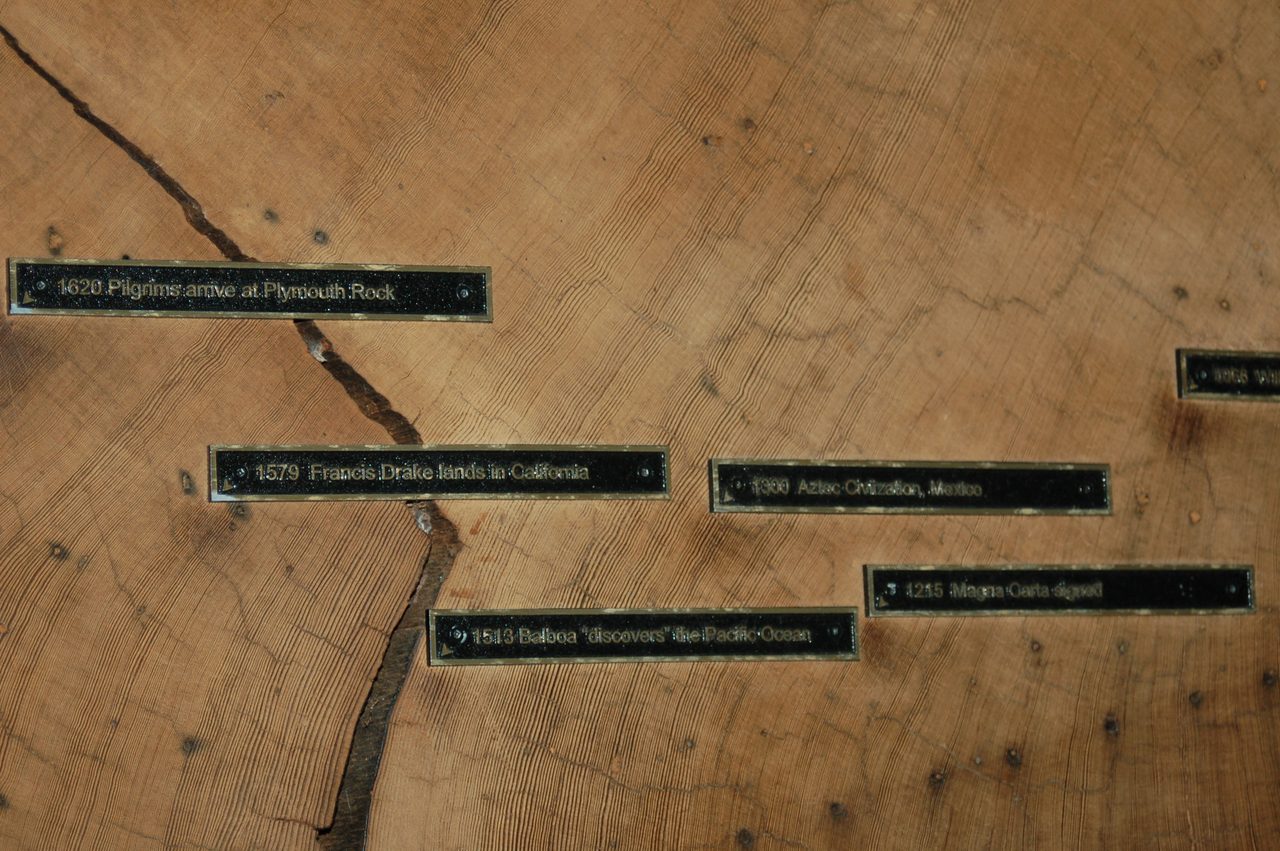
Between AD 774 and AD 775 the radiocarbon in Earth's atmosphere rose by about 12 parts per thousand in a single year, and the annual rings of a Japanese cedar recorded it. That measurement, reproduced since in wood on several continents and in ice at both poles, is the best-evidenced thing on this page, and it is also the least dramatic. This is the file for the hazards that are not solid: extreme solar particle events, superflares on stars like ours, exploding stars, and the narrow beams thrown off by the deaths of massive stars. It is ordered by evidence rather than by drama, and in this subject those two gradients run in opposite directions. The lowest rung by evidence holds the most energetic electromagnetic events in the universe, and its biggest claim rests on a hypothesis our own file calls theoretical and unfalsifiable with current methods. Every number here is carried with the condition that makes it true, because almost every number in this subject arrives stripped of one.
This page is about the things that can reach Earth from space without being solid. Radiation storms off the Sun, flares far larger than any the Sun has been seen to make, exploding stars, and the narrow beams thrown off by the deaths of massive stars and the mergers of dead ones. The rocks have their own files in this wing, among them The Near Misses, on the asteroids that did not hit. What follows is ordered by evidence rather than by drama, and in this subject those two gradients run in opposite directions. The first rung is a line in a tree ring: measured, dated to the calendar year, reproduced on several continents, and visually boring. The lowest rung by evidence holds the most energetic electromagnetic events in the universe, and its biggest claim rests on a hypothesis our own file calls theoretical and unfalsifiable with current methods. Reading in that order is the whole point, because a threat does not get to borrow credibility from the one above it. Almost every number in this subject also arrives stripped of the condition that makes it true, so every number here is carried with its condition attached, even when that makes the sentence longer.
01A Line In A Cedar, AD 774
In 2012 Miyake and colleagues reported that the radiocarbon content of annual rings in Japanese cedar rose by about 12 parts per thousand in Delta-14C between AD 774 and AD 775. The rings were measured at 1-year and 2-year resolution across AD 750 to AD 820. The paper describes that rise as about 20 times larger than the change attributed to ordinary solar modulation, and that comparison needs reading slowly. It is a ratio against the ordinary breathing of the solar cycle in atmospheric radiocarbon. It is not a statement that the event was twenty times any recorded solar event, and it is not the same quantity as the comparison against instruments that appears in the next section.
What the archives record is a spike in cosmogenic radionuclides. High-energy particles striking the atmosphere produce radiocarbon (14C) and beryllium-10 (10Be). The radiocarbon is taken up by trees and locked into the ring that formed that year. The beryllium falls out and is buried in polar ice. Both archives are laid down annually, so a spike in either can be dated to the year it happened. Chlorine-36 is the third radionuclide in the toolkit, and the ratio of 10Be to 36Cl is what constrains the energy of the particles that made them, which matters a great deal later on this page.
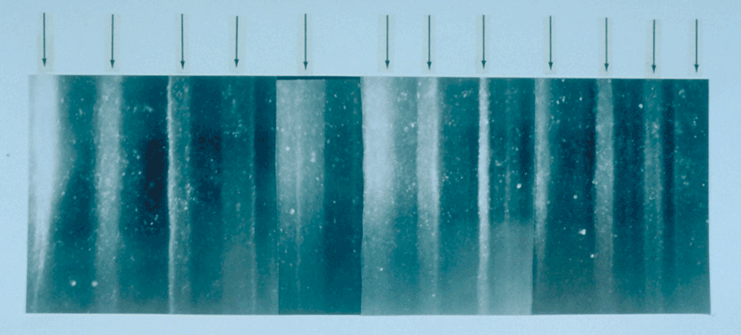
The paper that found the spike argued against both of the obvious explanations. Its abstract sets aside a solar flare and sets aside a local supernova as the likely cause. One year later a second team published a paper titled The AD775 cosmic event revisited: the Sun is to blame. The explanation the discovery paper rejected is the one the field now leads with, and the reason that happened is the subject of the next section.
02The Correction Inside The Discovery
In 2013 Usoskin and colleagues revisited the event and concluded that its strength had been significantly overestimated in the 2012 paper, which had used an inappropriate carbon-cycle model. Working from new annual 14C data together with independent 10Be and 36Cl series, they put the revised magnitude at a fluence above 30 MeV of about 4.5 times 10 to the tenth per square centimetre, and described that as a strong but not inexplicably strong solar energetic particle event, or a sequence of events. They also call it the greatest solar event on a multi-millennial timescale. Both halves of that matter. The 12 parts per thousand and the 20-times ratio in the section above are the discovery paper's figures, and this is the published correction to them. Our own research file cites this paper two lines after stating the original magnitude, and never applies it.
The same paper states that the various attempts to find an exotic source for the AD 775 event "are all based on incorrect estimates by M12", meaning the 2012 magnitude it had just shown to be too large. That sentence does not refute any of those proposals. It removes the reason they were reached for, which is a different and quieter thing, and it is the reason the exotic explanations sit where they sit on this page.
The spike is not one laboratory's result. It has since been reproduced in tree rings from Germany, Russia, New Zealand, North America and other regions, and in 2018 Buentgen and colleagues showed that both the 774 CE and the 993 CE events leave a globally coherent signature in tree rings. That reproduction is what lifts the measurement out of the single-laboratory category, and it is why this event sits at the bottom of the ladder rather than partway up it.
In 2015 Mekhaldi and colleagues reported annually resolved 10Be measurements from both Arctic and Antarctic ice cores, paired with 36Cl data. Their finding: the AD 774/5 and AD 993/4 events were most likely produced by extreme solar events with a very hard energy spectrum and high fluxes of solar protons above 100 MeV. On size, they state that the larger of the two, AD 774/5, was at least five times stronger than any instrumentally recorded solar event. That five-times figure is the comparison against instruments. It is a different quantity from the twenty-times ratio in section 01, which was against ordinary solar-cycle modulation, and the two must never be blended into one range. Our own file carries this at Tier 2 rather than Tier 1 because it uses the measurement as an argument for solar origin rather than as a bare number, and this page keeps the file's tier.
The leading hypothesis for the AD 774/775 event is an extreme solar proton event. The Sun, in other words, and not anything more exotic. Everything below this line is ordered so that nothing more exotic inherits this rung's evidence by sitting near it.
03The Shield That Makes The Numbers Comparable
Earth's magnetic field is generated by convection of liquid iron in the outer core. It deflects the solar wind, traps charged particles in the Van Allen belts, and reduces the cosmic-ray flux reaching the surface. The magnetopause sits at about 10 Earth radii on the sunward side, and the magnetotail stretches more than 100 Earth radii on the night side. This does two jobs on this page. It is why a large particle event does not simply sterilise the surface, and it is why the isotope numbers in the next section need a correction before they can be laid beside each other.
Mars lost its magnetic field around 3.8 billion years ago, then lost its atmosphere, and became uninhabitable for surface life.
The shielding is not a constant. The dipole moment has decreased about 9 per cent over the last 170 years, at a rate of roughly 5 per cent per century. That is why a raw isotope spike from 7176 BCE and one from 775 CE cannot be compared until the field strength of each period is accounted for. What the field has actually done across the deeper past has its own file in this wing, and this page does not re-tell it.
04The Whole Dataset, Which Is Small
A second event at AD 993 to 994 was confirmed by Miyake and colleagues in 2013. It is smaller than the 774/775 event but clearly distinguishable from background. It matters more than its size suggests, for a reason that comes two sections later.
An event around 660 BCE was identified by Park and colleagues in 2017. Our own file reports a radiocarbon increase of roughly 10 per cent for it; that figure is the file's and it was not independently confirmed when the sources for this page were checked, so it is carried here as our file's claim rather than as a number this page stands behind. The event itself is on firmer ground. It was subsequently confirmed as an extreme solar proton event by multi-radionuclide analysis (O'Hare and colleagues, 2019) and by prolonged 14C production measured in Japanese tree rings (Sakurai and colleagues, 2020).
In 2022 Brehm and colleagues reported that annual 14C concentrations in tree rings from Switzerland, Germany, Ireland, Russia and the USA carry two spikes, at 7176 BCE and 5259 BCE. The roughly 2 per cent increases in atmospheric 14C recorded for both events exceed all previously known 14C peaks. That is the sentence that travels. Here is the one that does not: after correction for the geomagnetic field, they are comparable to the largest event of this type known, at 775 CE. Raw, the ancient events are bigger. Corrected, they are comparable. Our own research file carries the raw reading as the final one and calls 7176 BCE the largest known Miyake event with an increase about twice the size of 774/775. That is an uncorrected number presented as a verdict, and this page does not repeat it.
A further single-year event at 5410 BCE was registered in tree-ring radiocarbon by Miyake and colleagues in 2021. Our own file credits the 5259 BCE event to a Bayliss et al. 2023 that could not be found under any query; A. Bayliss is a co-author of the Brehm paper above, which is almost certainly where that citation came from.
In 2023 Bard and colleagues reported that about 400 new radiocarbon measurements on 15 subfossil Scots pines from the Southern French Alps show an abrupt Delta-14C spike occurring in a single year at 14,300 to 14,299 calendar years before present, roughly 12,350 BCE. Comparison with the 10Be record in Greenland ice, run through a carbon-cycle model, led them to propose it as a solar energetic particle event. Popular coverage sometimes calls this the largest event of its kind. The paper's abstract makes no size comparison with 775 CE at all, and neither does this page.
In 2023 Koldobskiy and colleagues published integral energy-spectrum reconstructions for the four largest known extreme solar particle events: 7176 BCE, 660 BCE, 775 CE and 994 CE. That is the work to read if the question is how these events compare in units that can actually be compared, and it is absent from our own file.
| Event | Archive And Method | Reported By | What The Cited Work Says About Size |
|---|---|---|---|
| About 12,350 BCE (14,300 to 14,299 years before present) | About 400 radiocarbon measurements on 15 subfossil Scots pines, Southern French Alps, compared with the 10Be record in Greenland ice | Bard and colleagues, 2023 | Not carried: the abstract makes no size comparison with 775 CE |
| 7176 BCE | Annual 14C in tree rings from Switzerland, Germany, Ireland, Russia and the USA | Brehm and colleagues, 2022 | Roughly 2 per cent increase in atmospheric 14C, exceeding all previously known peaks; comparable to 775 CE after correction for the geomagnetic field |
| 5410 BCE | Tree-ring radiocarbon | Miyake and colleagues, 2021 | Not carried |
| 5259 BCE | Annual 14C in tree rings, the same five-country study as 7176 BCE | Brehm and colleagues, 2022 | Roughly 2 per cent increase, with the same geomagnetic correction applying |
| Around 660 BCE | Tree-ring radiocarbon, later confirmed by multi-radionuclide analysis and by prolonged 14C production in Japanese tree rings | Park and colleagues 2017; O'Hare and colleagues 2019; Sakurai and colleagues 2020 | Our own file says roughly 10 per cent; not independently confirmed for this page |
| AD 774 to 775 | Annual rings of Japanese cedar at 1-year and 2-year resolution across AD 750 to 820; 10Be and 36Cl in Arctic and Antarctic ice | Miyake and colleagues 2012; Usoskin and colleagues 2013; Mekhaldi and colleagues 2015 | About 12 parts per thousand in Delta-14C, about 20 times ordinary solar modulation, as first reported; revised down in 2013 to a fluence above 30 MeV of about 4.5 times 10 to the tenth per square centimetre; at least five times stronger than any instrumentally recorded solar event (Mekhaldi) |
| AD 993 to 994 | Tree-ring radiocarbon; 10Be and 36Cl in ice at both poles | Miyake and colleagues 2013; Mekhaldi and colleagues 2015 | Smaller than 774/775 and clearly distinguishable from background |
Statistical analysis of the tree-ring record suggests that Miyake-class events occur roughly once every 1,000 to 2,000 years, though the sample is small, and that smaller but still significant events probably occur every few centuries. Two things have to travel with that. Our own file names no source for the interval at all. And the sample it rests on is the handful of events in the table above, which this page counts as seven single-year spikes, the oldest of them about 14,300 years old. A rate estimated from a handful of events is an estimate with that handful inside it, and that is not a criticism of the estimate so much as a description of it.
05The Cause Is Not As Closed As It Looks
In 2022 Zhang and colleagues built an open-source carbon-cycle modelling package and used it to infer posterior parameters for all six Miyake events then known. Their finding is not a rival cause. It is that the events do not show a consistent relationship to the solar cycle, and that several display extended durations which challenge either astrophysical or geophysical models. Buentgen, who led the 2018 tree-ring work in section 02, is among the paper's authors, so this is an argument inside the field rather than an objection from outside it. Our own file's summary says the cause remains debated and then presents solar origin as effectively settled. This paper is the published reason the first half of that sentence is still true, and our file does not cite it.
One distinction does more work here than any other. An extreme solar energetic particle event and an extreme coronal-mass-ejection-driven geomagnetic storm are two different hazards. The tree-ring and ice-core record measures particles arriving at the atmosphere. The 1859 record measures a magnetic storm at the ground. A very large particle event is evidence that the Sun can do more than 1859. It is not evidence about how often it does 1859.
Hambaryan and Neuhauser proposed in 2013 that the 774/775 event could be explained by a short gamma-ray burst from a compact binary merger. No identified remnant or afterglow has been found. Our own research file carries this at Tier 2 and this page keeps that tier, but it cannot be presented on its own. The proposal was reaching for an exotic source to explain a magnitude that the 2013 re-analysis found had been significantly overestimated, and that re-analysis says the exotic-source attempts "are all based on incorrect estimates by M12". Two years later the multi-radionuclide ice-core work pointed at the Sun. The hypothesis is not refuted. It is unsupported, and it is no longer needed.
06The Spike As A Clock
The spikes are sharp enough to date wood to the calendar year. Kuitems and colleagues used the AD 993 event to date Norse-worked wood at L'Anse aux Meadows in Newfoundland to AD 1021, which they describe as the first known point at which humans encircled the globe. The event they used was 993, the second and smaller of the two spikes, and that is the entire force of the example: even the smaller line is sharp enough to date a settlement to the year. Our own file names the 774/775 spike here. The paper's abstract names "the cosmic-ray-induced upsurge in atmospheric radiocarbon concentrations in AD 993", and this page follows the paper.

A 2024 review in Nature by Heaton and colleagues sets out the state of the method: the discovery of extreme solar particle events has advanced radiocarbon dating to annual precision, and organic material carrying a distinctive event signature can now be dated to the year. Nothing is quoted from that review here. Its abstract reached this page's research pass in summarised rather than verbatim form, so the sentence above is a paraphrase, and a paraphrase that cannot be checked word for word against the original does not get quotation marks.
07The Star We Have, And The Stars We Watch
The Sun is a main-sequence G2V star whose total energy output varies by only about 0.1 per cent over the solar cycle. Its ultraviolet output varies far more, by roughly 6 to 8 per cent. Two of our own research files give the 0.1 per cent figure independently and agree on it, which is rarer in this subject than it should be.
In 2012 Maehara and colleagues reported that Kepler photometry shows superflares on solar-type stars: flares far more energetic than anything the Sun has been observed to produce, on stars broadly like the Sun. Okamoto and colleagues extended the survey in 2021 using all of the Kepler primary mission data. This entire rung is absent from our own corpus: a search for the word superflare across all 3,632 research documents returns nothing.
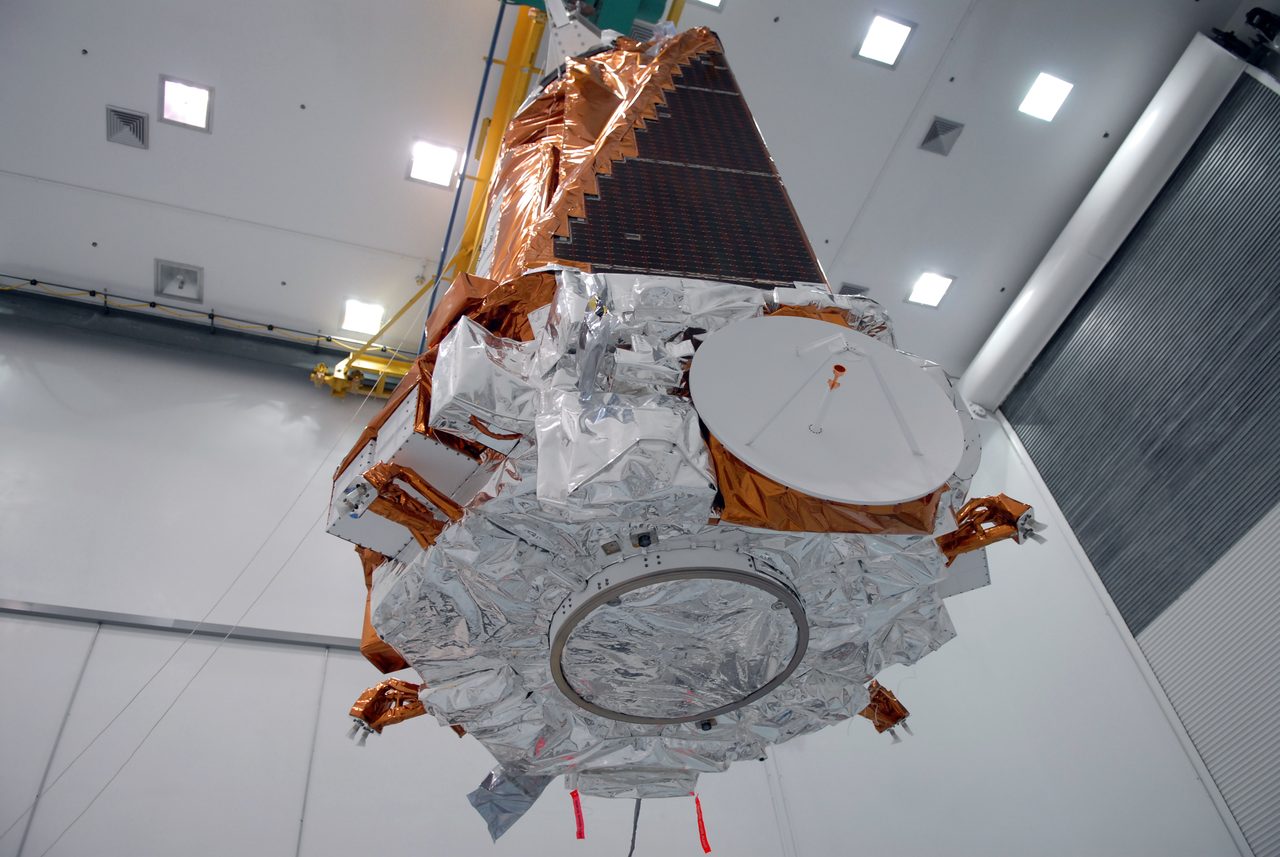
In 2024 Vasilyev and colleagues published a survey in Science that identified 2,889 superflares on 2,527 Sun-like stars out of 56,450 observed by Kepler. The detection rate indicates that superflares releasing more than 10 to the 34th ergs occur roughly once per century on stars with Sun-like temperature and variability. Read that with its denominator attached. It is a rate for a population of stars selected for Sun-like temperature and variability, and it is not a measured rate for the Sun. The resulting frequency-energy distribution is consistent with an extrapolation of the Sun's own flare distribution to higher energies, which led the authors to suggest that both are produced by the same physical mechanism. That is a suggestion about mechanism, not a count of solar superflares.
The same paper opens by saying what is not known: "It is unknown whether the Sun can generate superflares, and if so, how often they might occur." That sentence is the hinge of this rung. The evidence is real, it is good, and it is about other stars.
Stellar superflares release up to about 10 to the 36th ergs on main-sequence stars. Note the gap between that ceiling and the 10 to the 34th ergs threshold used for the once-per-century rate above: two orders of magnitude, and the two figures do not belong in one range.
The 2022 Living Reviews in Solar Physics survey of extreme solar events treats the question of whether superflare stars are genuinely Sun-like as open. It sits in the same list as a second open question: whether the Sun can produce impactful but unpredictable events that involve different physics from merely large ones. The review's own terms for those are "solar black swans" and "extreme dragon king solar phenomena", and the terms are the authors' rather than ours.
08Guest Stars
At least eight supernovae have been documented in written records over the past two millennia: SN 185, SN 386, SN 393, SN 1006, SN 1054, SN 1181, SN 1572 and SN 1604. Chinese astronomers called them guest stars.
SN 185 is the earliest confirmed supernova record. The Chinese Hou Han Shu describes a guest star that appeared in 185 CE and remained visible for eight months, and the remnant RCW 86 has been identified as its source through X-ray and infrared observation.
SN 1006 is the brightest stellar event in recorded history. Winkler, Gupta and Long measured proper motions in the remnant from CCD images taken in 1987, 1991 and 1998, combined them with shock-velocity measurements, and derived a distance of 2.18 plus or minus 0.08 kiloparsecs and a peak apparent magnitude of minus 7.5 plus or minus 0.4. They note that this lies squarely in the middle of the wide range of estimates based on the historical observations. Both of our own files state minus 7.5 bare. It is a back-calculation from the expansion of a remnant rather than a measurement of the event, and the plus or minus 0.4 belongs with it wherever it goes.
SN 1006 was recorded in China, where the Song Shi describes a huge star, and in Japan, and by the physician Ali ibn Ridwan in Cairo, who described a spectacle two and a half to three times as large as Venus that cast shadows and by whose light objects could be seen. A Benedictine monk at St Gallen in Switzerland also recorded it. European documentation is otherwise remarkably sparse, possibly because the star sat low on the southern horizon from mid-northern latitudes.
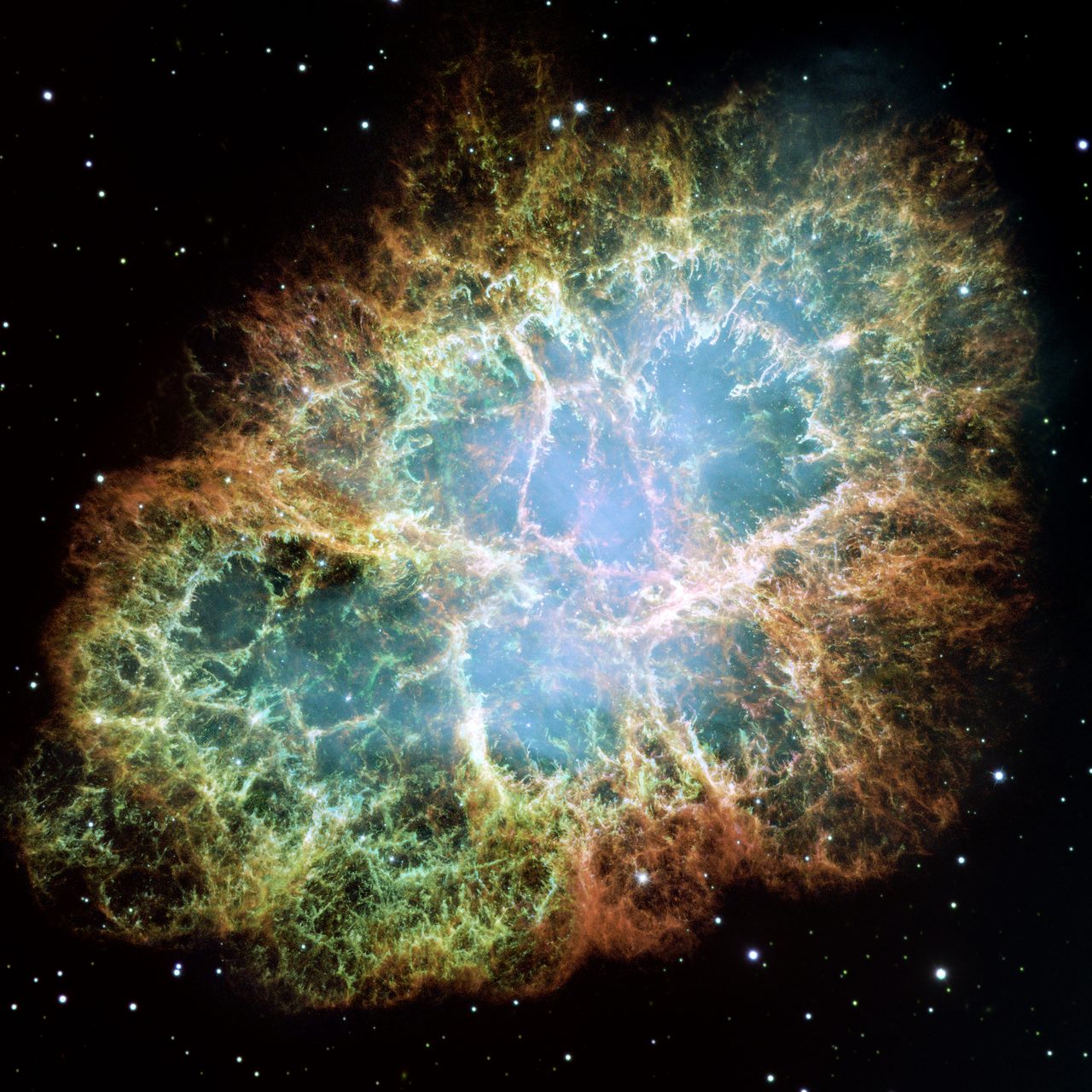
SN 1054 produced the Crab Nebula and the Crab Pulsar at its centre. Chinese sources record a guest star visible in daylight for 23 days and at night for approximately 653 days. A Japanese record survives in the Meigetsuki, copied from an earlier diary. There is no confirmed European record despite much searching. It was a core-collapse supernova at about 6,500 light-years. Our two supernova files disagree here by a factor of about thirty: one gives 23 days of daylight visibility and about 653 days at night, the other gives 23 months with 2 months of it in daylight. The 23-days and 653-days pair is the one that appears throughout the historical-supernova literature, and it is the pair this page carries.
The Crab Pulsar, PSR B0531+21, has a period of 33 milliseconds, about 30 rotations a second, and its energy powers the nebula's synchrotron emission. It was identified in 1968, which confirmed the supernova-to-remnant connection.
SN 1572 was observed by Tycho Brahe, who published De Nova Stella in 1573 and showed by parallax that the new star lay far beyond the Moon, contradicting the Aristotelian doctrine that the heavens do not change. SN 1604 was observed by Kepler and by Galileo. It was the last supernova in the Milky Way seen with the naked eye, more than 400 years ago. Our own file adds that the resulting gap of more than 420 years is statistically unusual against an expected rate of about 2 per century; that figure is the file's own and is carried here as the file's.
Cassiopeia A exploded around 1680, in a well-documented observational era, and no reliable contemporary naked-eye record of it exists. The likely explanation is that interstellar dust absorbed most of its visible light. A tentative association with a faint star catalogued by Flamsteed as 3 Cassiopeiae in 1680 remains uncertain. G1.9+0.3, discovered in 2008 and only about 110 to 150 years old, was never seen optically at all. A supernova can go off in our own galaxy, in an age of telescopes and record-keeping, and simply not be noticed. This claim rests on our own files alone; no external identifier for it survived the research pass, which is why it is one line here and not an argument.
09How Close Would It Have To Be
Gehrels and colleagues ran two-dimensional atmospheric model calculations of the ozone depletion caused by a supernova's gamma rays and cosmic rays at a range of distances and impact angles. Their result: for the combined ozone depletion to roughly double the biologically active ultraviolet flux reaching Earth's surface, the supernova must occur within 8 parsecs, about 26 light-years. On the latest data available to them, the time-averaged Galactic rate of core-collapse supernovae occurring within 8 parsecs is about 1.5 per billion years. Their own summing-up is that given the size of the effect, the rate of nearby supernovae, and the roughly billion-year timescale of multicellular life on Earth, this pathway to mass extinction may be less important than previously thought. Our own files convert that threshold into an ozone percentage, roughly 50 per cent depletion at 26 light-years and 10 to 30 per cent at 100 light-years, and the two files do not even agree with each other about the distance: one attaches the 50 per cent to 26 light-years and the other to a 30-light-year event. The paper gives none of those figures. The 8 parsecs is a threshold for a doubling of surface ultraviolet, not a percentage of ozone, and the paper's conclusion runs the opposite way from the direction that number usually travels.
Deep-sea ferromanganese crusts, deep-sea sediments and Antarctic snow carry spikes of the radioactive isotope iron-60, which has a half-life of 2.6 million years and is not produced on Earth in useful quantities. The spikes at about 2.6 million years ago and about 6 to 8 million years ago are attributed to supernovae within roughly 100 to 300 light-years. It is worth being explicit about why this outranks everything else in the supernova half. The guest stars are documentary. The ozone threshold is a calculation. Iron-60 in a manganese crust is a measured atom count. Nearby supernovae are not hypothetical: they have happened, they left a trace, and the trace does not sit on top of an extinction.
The 2.6 million year iron-60 event coincides approximately with the onset of Pleistocene glaciation, and one of our files adds a broad coincidence with shifts in African hominid evolution. Both files state that a causal link is debated or speculative. Coincides approximately with is doing all the work in that sentence, and this page is not going to take it out.
10The Nearest, And The One Everybody Watches
The Vela supernova remnant lies at about 800 light-years and its progenitor exploded roughly 11,000 to 12,000 years ago, which is close by astronomical standards. At peak it would have reached apparent magnitude minus 8 to minus 9, outshining a half-moon and visible in daylight for weeks. No confirmed cultural record of it exists. Our own files date it three different ways: 11,000 to 12,000 years ago in one, 11,000 to 12,300 years ago in another, and a section heading in that same file reading about 11,000 BCE, which is a different figure by roughly two thousand years. This page uses roughly 11,000 to 12,000 years ago and does not convert it to a BCE date.
That Vela was watched by Upper Paleolithic or early Neolithic people, and that an Aboriginal Australian oral tradition preserves a memory of it, is where our files place the speculation. One of them supplies its own standard in the same breath: a tradition preserving accurate astronomical memory for more than 10,000 years is extraordinary and requires extraordinary evidence. The source underneath both claims is a 2000 article in a popular astronomy magazine, and no identifier for it could be found.
A petroglyph in Chaco Canyon, New Mexico, shows a crescent moon symbol beside a star-like symbol. On 5 July 1054 the waning crescent Moon passed within about 2 degrees of the supernova's position, and the configuration matches. Similar star-and-crescent motifs appear at other Ancestral Puebloan sites and on Mimbres pottery. The interpretation is widely cited and it remains debated: the symbols could represent other astronomical phenomena, or carry meaning that is not astronomical at all. Our own files place this at Tier 2 while calling the reading debated in the same paragraph. This page carries it at Tier 3, because a positional coincidence read off a symbol is a positional coincidence read off a symbol, and neither of the two studies underneath it could be resolved to a checkable record.
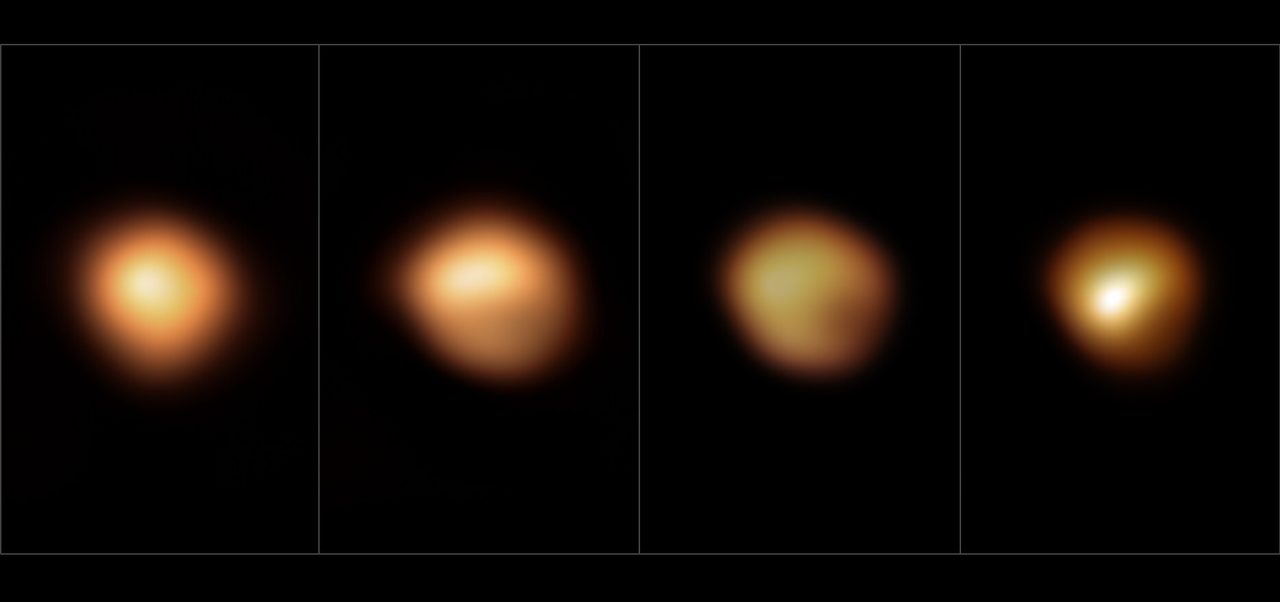
Betelgeuse, the red supergiant in Orion, is in an advanced evolutionary state and will eventually explode as a core-collapse supernova, but eventually could mean 100,000 years or more. When it does it will reach roughly magnitude minus 12 to minus 13, comparable to the full Moon, and be visible in daylight for weeks. At its distance it poses no radiation danger to Earth. That distance is itself contested. Our two files give about 650 and about 700 light-years; in 2020 Joyce and colleagues combined evolutionary, asteroseismic and hydrodynamic modelling with new photometry and derived 168 parsecs, with an upper bound of plus 27 and a lower bound of minus 15 parsecs, which is about 550 light-years with a range of roughly 500 to 640. They note the estimate agrees well with Hipparcos and less well with recent radio measurements. Roughly 500 to 700 light-years, and the estimates disagree, is the honest statement.
Betelgeuse's dramatic dimming in late 2019 and early 2020 was caused by a mass ejection and dust condensation together with surface cooling, not by an imminent explosion. Its brightness returned to normal in April 2020.
Claims that nitrate spikes in Antarctic ice cores correspond to historical supernovae have been largely refuted. Nitrate is mobile in ice cores and the claimed correlations are likely artefacts. Our own file credits this to Wolff 2012 and then supplies a Wolff 2012 that is a general review of chemical signals in ice cores. The paper that actually makes the argument is Wolff and colleagues, 2012, The Carrington event not observed in most ice core nitrate records. Right author, right year, wrong paper, and both papers are real, which is exactly why the wrong one survives an ordinary check.
11Beams That Were Never Aimed
Gamma-ray bursts are the most energetic electromagnetic events in the universe: brief, intense flashes of gamma radiation. They were found by accident in 1967 by American Vela military satellites watching for nuclear test violations, and declassified and published in 1973. The Compton observatory's BATSE instrument showed in 1991 that they are spread evenly across the sky, which ruled out an origin in our own galaxy's disc, and that they come in two duration classes. The first X-ray afterglow, in 1997, allowed optical follow-up and confirmed that they lie at cosmological distances. The instruments that found the most cinematic threat in the sky had been built to watch for something entirely terrestrial.
A gamma-ray burst is not a sphere of light. It is a relativistic jet, with a Lorentz factor of roughly 100 to 1,000, pointed in one direction. The jet's half-opening angle is typically about 3 to 10 degrees. When the jet slows enough for that geometry to become visible the afterglow light curve steepens, and correcting for the beaming reduces the energy release from an apparent isotropic figure of around 10 to the 47th joules to around 10 to the 44th joules. The correction cuts twice. It makes each burst far less energetic than the headline figure suggests, and it makes the chance that any given burst points at us far smaller than the burst rate suggests. An article that quotes the isotropic figure bare, or that treats every burst in the galaxy as aimed, has made the same mistake in both directions.
There are two kinds. Long bursts, more than about 2 seconds, come from the deaths of massive stars; the case was closed by GRB 030329, which coincided with a spectroscopically identified broad-lined Type Ic supernova, SN 2003dh. Short bursts, under 2 seconds, come from compact binary mergers; the case was closed on 17 August 2017 when GRB 170817A arrived alongside gravitational waves from a neutron-star merger. The short-burst channel is the one the AD 774/775 proposal in section 05 invoked.
The proposed mechanism by which a gamma-ray burst could harm Earth is not incineration. It is ozone loss: ultraviolet and X-ray flux, plus nitrogen oxides generated in the stratosphere, strip the ozone layer and raise ultraviolet at the surface. Melott and Thomas put the range at which this could cause a mass extinction at within about 2 kiloparsecs, which our other file renders as about 6,500 light-years, and Thomas and colleagues modelled the atmospheric, biological, climatic and biogeochemical effects of a Milky Way burst in detail. Say that mechanism out loud, because it is the opposite of what most readers expect and it is the same mechanism as the supernova case in section 09. Neither event burns the planet. Both thin the ozone.
The probability of a lethal gamma-ray burst at Earth's distance is estimated as very low, on the order of once per few hundred million years. Our own file names no source for that interval. A reader who wants the published treatment of the general question can go to Piran and Jimenez, 2014, in Physical Review Letters, but this page did not verify that the interval above comes from it, and does not attribute it to them.
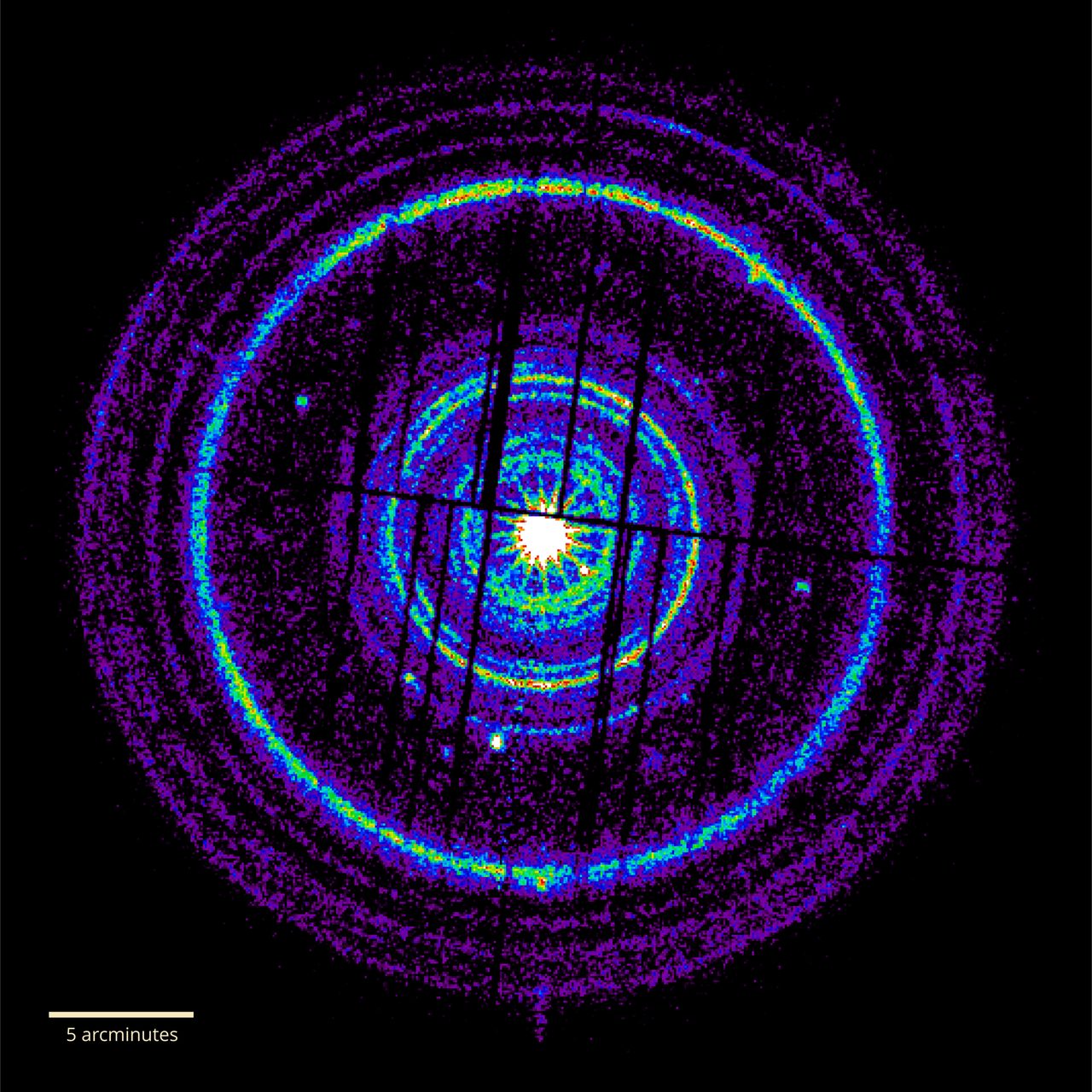
GRB 221009A, in October 2022, is the most energetic gamma-ray burst ever recorded. It nicknamed itself the BOAT, for Brightest Of All Time. Its redshift was 0.151. Photons of about 18 teraelectronvolts were detected, which pushes the limits of the standard emission models, and its exceptional brightness may reflect a particularly narrow jet aimed directly at Earth.
That burst measurably disturbed Earth's ionosphere. Hayes and Gallagher reported a significant sudden ionospheric disturbance associated with it, from a source at redshift 0.151, which is roughly two billion light-years away. Both halves of that belong together. Something that went off two billion light-years from here nudged the upper atmosphere of this planet in a way an instrument recorded, and a measurable ionospheric disturbance is not a hazard to anybody.
Claims that gamma-ray bursts represent interstellar weapons or alien warfare are not supported by any evidence: every observed property, the spectrum, the temporal profile, the afterglow, the host-galaxy associations and the identified progenitors, is consistent with natural astrophysical processes, and the conjecture is unfalsifiable and has no predictive power.
12Three Flares In Forty-Five Years
Magnetars are neutron stars with magnetic fields of roughly 10 to the 14th to 10 to the 15th gauss. About 30 are confirmed. Magnetic stress builds in the crust until it fractures in a starquake, the field reconfigures, and the trapped magnetic energy is released as X-ray and gamma-ray bursts. Giant flares involve global magnetic reconnection.
On 27 December 2004 the magnetar SGR 1806-20 produced the brightest extrasolar transient ever observed at Earth. The initial spike lasted about 0.2 seconds at a luminosity of roughly 2 times 10 to the 40th joules per second, followed by a pulsating tail with a 7.56 second period lasting about 380 seconds. The gamma-ray flux was intense enough to measurably ionise Earth's lower ionosphere, from a distance of about 15 kiloparsecs, which is about 49,000 light-years and most of the way across the galaxy. Our own file says the effect was on the night side; the paper on exactly this measurement has the word daytime in its title. This page states neither, because the two cannot both be right and neither was checked here.
Only three magnetar giant flares have been definitively observed from the Milky Way or the Large Magellanic Cloud: SGR 0526-66 on 5 March 1979, which was at first mistaken for a gamma-ray burst; SGR 1900+14 on 27 August 1998; and SGR 1806-20 in 2004. Three events in about 45 years of watching. That number belongs beside the seven single-year spikes tabled in section 04 as a reminder of how small every sample in this subject is.
Melott and colleagues proposed in 2004 that a nearby gamma-ray burst could have triggered the Late Ordovician mass extinction about 445 million years ago by destroying the ozone layer, generating further ozone-depleting nitrogen oxides, and cooling the planet. A burst origin could explain the speed of the first extinction pulse and the pattern of damage to shallow-water and planktic organisms. But there is no direct physical evidence for a gamma-ray burst at 445 million years ago: no iridium anomaly, no shocked quartz, no specific geological marker. Our own file on that extinction states plainly that the hypothesis is theoretical and unfalsifiable with current methods. This page carries the astrophysical question only, which is whether a burst could do such a thing. What actually ended the Ordovician is a separate file and a separate argument.
13The One With A Modern Price Tag
On 1 September 1859 Richard Carrington and Richard Hodgson independently observed a white-light solar flare, the first solar flare ever recorded, and about 17.6 hours later a coronal mass ejection struck Earth's magnetosphere. That is the whole of 1859 on this page. The aurora, the telegraph wires, the ground measurements, the recurrence probabilities and the modern cost estimates all belong to our Carrington Event article, which owns them and carries them properly.
That article sets the boundary in its own body. Geological proxies, beryllium-10 and carbon-14 spikes in ice cores and tree rings, record several solar particle events over the past 10,000 years that may have exceeded the Carrington Event, of which the Miyake events of 774 CE and 993 CE are the strongest identified. It attaches the caution that those were extreme solar energetic particle events rather than necessarily extreme coronal-mass-ejection-driven geomagnetic storms, so they are evidence that the Sun can do more than 1859 and not evidence about how often it does 1859. It then says that the deeper record has its own file in this wing. This is that file, and this is where it picks the thread up.
A Carrington-class event today would induce geomagnetically induced currents in long transmission lines and could destroy extra-high-voltage transformers, which have long manufacturing lead times and are not stockpiled in sufficient quantity. That is one paragraph and it is deliberately all this page carries. No cost figure appears here: our own file states one, the research behind the Carrington Event article established that our file's version of it is defective as stated, and repeating it would import a defect the sister article has already fixed. The scenario modelling and the recurrence work live in that article.
14What The Record Does Not Contain
A possible historical record of the 774 event exists in the Anglo-Saxon Chronicle, whose entry for 774 CE describes a red crucifix seen in the sky after sunset, potentially an auroral display. Possible and potentially are our own file's words and this page does not upgrade either. Usoskin and colleagues surveyed chronicles for the 770s and reported that their revised magnitude "is in agreement with increased auroral activity identified in historical chronicles", which supports the general auroral picture without settling that particular entry. There is a dedicated study of exactly this question, Stephenson 2015 in Advances in Space Research; its abstract was withheld by the publisher and could not be read during this page's research pass, so its verdict is not stated here and the identifier is given below so a reader with access can go and check.
What a Miyake-class event would have done to a pre-industrial society is poorly understood. Increased ultraviolet radiation, ozone depletion and, for modern societies, communications disruption are the modelled consequences. Poorly understood is our file's phrase, and it is the honest answer to the question this page's title asks.
It has been speculated that Miyake events or major coronal mass ejections were experienced as portents or catastrophes by ancient civilizations, and might have contributed to cultural memories of burning skies or divine wrath. The 660 BCE event roughly coincides with upheaval in the Neo-Assyrian Empire and with early Iron Age transitions, but no direct causal link has been established. The 7176 BCE event predates widespread written records, and its impact on Mesolithic populations, if any, is archaeologically invisible. That last phrase is the best line in our file and it is worth carrying whole.
Assertions that supernovae were interpreted in ancient texts as gods arriving or portals opening are modern retrojections without textual support, and claims that ancient observers had telescopic views of supernovae or of remnant structure have nothing supporting them at all.
| Rung | What Has Actually Been Measured | The Frequency Statement, With Its Denominator | Tier On This Page |
|---|---|---|---|
| Extreme solar particle events (Miyake events) | Single-year spikes in tree-ring radiocarbon and in 10Be and 36Cl in polar ice, reproduced across several continents and at both poles | Roughly once every 1,000 to 2,000 years, from a sample of seven single-year spikes, the oldest about 14,300 years old, with no source named in our own file | Tier 1 for the measurement, Tier 2 for the interval |
| Superflares on Sun-like stars | 2,889 superflares on 2,527 stars, out of 56,450 observed by Kepler | Roughly once per century above 10 to the 34th ergs, for stars selected for Sun-like temperature and variability. Not a measured rate for the Sun, and the paper opens by saying it is unknown whether the Sun can produce one at all | Tier 1 for the stellar survey, Tier 2 for whether those stars are genuinely Sun-like |
| Nearby supernovae | At least eight events in the written record over two millennia; iron-60 spikes in deep-sea crusts, sediments and Antarctic snow at about 2.6 and 6 to 8 million years ago | About 1.5 core-collapse supernovae per billion years within 8 parsecs, which is the modelled threshold for roughly doubling biologically active surface ultraviolet | Tier 1 for the historical record, Tier 2 for the isotope attribution and the modelled effects |
| Gamma-ray bursts and magnetar giant flares | A measured sudden ionospheric disturbance from GRB 221009A at redshift 0.151; three magnetar giant flares observed in about 45 years, one of which measurably ionised the lower ionosphere from about 15 kiloparsecs | On the order of once per few hundred million years for a lethal burst at Earth's distance, a figure our own file states without naming a source | Tier 1 for the observations, Tier 3 for the hazard estimates |
| The modern electrical grid | Not measured here. The mechanism is geomagnetically induced currents in long transmission lines and the vulnerability of extra-high-voltage transformers | Out of scope on this page. The recurrence work lives in the Carrington Event article | Tier 2, and handed off |
Fast Facts
- The Subject
- The hazards that reach Earth from space without being solid: extreme solar particle events, superflares, nearby supernovae, gamma-ray bursts and magnetar giant flares. The rocks have their own files in this wing
- The Best-Evidenced Event
- AD 774 to 775. About 12 parts per thousand in Delta-14C in the annual rings of Japanese cedar, reproduced in tree rings from Germany, Russia, New Zealand and North America and in ice at both poles (Tier 1)
- The Two Figures That Get Confused
- The 20-times ratio is against ordinary solar-cycle modulation of atmospheric radiocarbon. The at-least-five-times figure is against instrumentally recorded solar events. Different quantities, never one range (Tier 1 for the 20-times ratio, Tier 2 for the five-times comparison)
- The Correction Nobody Carries
- Usoskin and colleagues, 2013, found the 2012 magnitude significantly overestimated through an inappropriate carbon-cycle model, and stated that the exotic-source proposals all rest on it (Tier 1)
- How Often
- Roughly once every 1,000 to 2,000 years for Miyake-class events, with smaller ones every few centuries. The sample is the seven single-year spikes this page tables, the oldest about 14,300 years old, and our own file names no source for the interval (Tier 2)
- The Dating Payoff
- The AD 993 event dated Norse-worked wood at L'Anse aux Meadows to AD 1021. The smaller of the two spikes, which is the point (Tier 1)
- Superflares
- 2,889 on 2,527 Sun-like stars out of 56,450 observed by Kepler, giving roughly once per century for that selected population. The paper opens by saying it is unknown whether the Sun can generate one (Tier 1)
- Supernovae In The Written Record
- At least eight over two millennia, SN 185 through SN 1604. The last Milky Way supernova seen with the naked eye was more than 400 years ago (Tier 1)
- How Close A Supernova Would Have To Be
- Within 8 parsecs, about 26 light-years, for the modelled ozone depletion to roughly double biologically active surface ultraviolet. About 1.5 such events per billion years, and the paper's own conclusion is that this pathway may be less important than previously thought (Tier 2)
- Supernovae That Did Happen Nearby
- Iron-60 spikes in deep-sea crusts, sediments and Antarctic snow at about 2.6 and 6 to 8 million years ago, attributed to supernovae within roughly 100 to 300 light-years. A measured atom count, and no extinction sits on it (Tier 2)
- The Mechanism, For Supernovae And Bursts Alike
- Not incineration. Ozone loss, and ultraviolet at the surface (Tier 2 for supernovae, Tier 3 for gamma-ray bursts)
- The Beaming Correction
- A gamma-ray burst is a jet with a half-opening angle of about 3 to 10 degrees. Correcting for it drops the energy from an apparent isotropic figure of around 10 to the 47th joules to around 10 to the 44th (Tier 1)
- Something That Did Touch Us
- GRB 221009A, October 2022, at redshift 0.151, roughly two billion light-years away, produced a significant sudden ionospheric disturbance. Measurable, and harmless (Tier 1)
- Magnetar Giant Flares Observed
- Three, in about 45 years: 1979, 1998 and 2004 (Tier 1)
- What The Record Does Not Contain
- No evidence in either the geological or the biological record of a solar-caused mass extinction or civilizational destruction (Tier 4 refusal)
- Handed Off Deliberately
- 1859 and the modern grid to the Carrington Event article; the magnetic field's own history to the Laschamp Excursion article; impacts and asteroids to the rock files in this wing, The Near Misses among them
What We Can Actually Stand Behind
The archive is solid. Radiocarbon in annual tree rings rose by about 12 parts per thousand between AD 774 and AD 775, the spike has been reproduced in tree rings on several continents and in 10Be and 36Cl in ice at both poles, and the 993 to 994 event is a second, smaller, clearly distinguishable case. The 2013 re-analysis cut the size of the 774 event and said so. The multi-radionuclide work points at the Sun. Further single-year spikes are measured at 7176 BCE, 5410 BCE, 5259 BCE, around 660 BCE and at 14,300 to 14,299 years before present. The method has a payoff a reader can check: the 993 spike dated Norse-worked wood at L'Anse aux Meadows to AD 1021. Kepler photometry shows superflares on other Sun-like stars, 2,889 of them on 2,527 stars. At least eight supernovae are documented in written records over two millennia. Iron-60 spikes are measured in deep-sea ferromanganese crusts, in deep-sea sediments and in Antarctic snow at about 2.6 and 6 to 8 million years ago. GRB 221009A produced a measurable sudden ionospheric disturbance from roughly two billion light-years away, and SGR 1806-20 measurably ionised the lower ionosphere from about 15 kiloparsecs. Every one of those is a measurement somebody made.
The frequencies are the weak part, and they are weak in a specific way. Roughly once every 1,000 to 2,000 years for Miyake-class events rests on the seven single-year spikes this page tables, the oldest of them about 14,300 years old, and our own file names no source for it. The once-per-century superflare rate is a rate for a selected population of other stars, and the paper that produced it opens by saying it is unknown whether the Sun can produce one at all. The 8 parsec supernova threshold is a modelled distance for roughly doubling surface ultraviolet, not a percentage of ozone, and the modelling paper's own conclusion is that this pathway may be less important than previously thought. The iron-60 spikes themselves are a measured atom count, but the supernovae within roughly 100 to 300 light-years are an attribution rather than a measured distance, which is why they sit in this paragraph and not in the one above. The iron-60 coincidence with the onset of Pleistocene glaciation is a coincidence, and both of our files say so. The 774 to 775 event's cause is the Sun on the current evidence, and a 2022 re-analysis of all six then-known events found they do not show a consistent relationship with the solar cycle, which is a live argument inside the field and not a settled one. The short gamma-ray-burst explanation for that same event is carried here at our own file's Tier 2, where it belongs on paper, and it has no identified remnant, no afterglow, and no motivation left once the magnitude it was reached for had been cut.
The Chaco Canyon petroglyph reading is a positional coincidence between a rock carving and a sky position, and this page tiers it below our own files rather than above them. The Vela cultural memory rests on a popular-magazine article no identifier could be found for, against a standard our own file states and then does not meet. The Ordovician gamma-ray-burst hypothesis has no iridium anomaly, no shocked quartz and no geological marker of any kind, and our own file on that extinction calls it theoretical and unfalsifiable with current methods. Every one of these is more vivid than anything in the Tier 1 paragraph above, and that inversion is the single most useful thing on this page.
Claims that the Sun periodically undergoes micronova events that strip Earth's atmosphere or cause pole shifts are not supported by solar physics, by stellar astrophysics or by geological evidence. The Sun is a main-sequence G2V star whose energy output varies by about 0.1 per cent over solar cycles. The line falls in a precise place and is worth stating precisely: the extreme events are real, Carrington-class and Miyake-class both, and they are potentially devastating for technology. They do not produce civilizational extinction or planetary resurfacing.
There is no evidence of a solar-caused mass extinction or civilizational destruction in the geological record or in the biological record. Two independent archives, and neither carries one. The same files that establish extreme solar activity as a genuine hazard requiring serious infrastructure hardening are the files that say this.
Claims that specific ancient catastrophes, floods, collapses or plagues were caused by nearby supernovae lack evidence. No confirmed supernova within the past 10,000 years was close enough, within about 100 light-years, to have significant biospheric effects, and the historical supernovae were all thousands of light-years away. And even a genuinely nearby supernova exerts its effects over decades to centuries rather than instantaneously. That last clause is the one that never survives a retelling, and it is the one that matters.
Sources & further reading
WHERE THIS PAGE WORKED FROM, AND WHERE IT CAN BE CHECKED. Seven files in our own research library stand behind it: E_1_09 on solar storms and Miyake events, which is the case file this page belongs to; E_1_14 and E_1_08 on supernovae; O_1_02 for the magnetosphere and for the Sun's own variability; Q_2_14 for gamma-ray bursts; Q_2_15 for magnetars; and E_5_02 for the Ordovician hypothesis. Those are our own claims and cannot corroborate themselves, so they are listed as provenance, not as verification. The forty-one external entries below are where the claims can be checked independently of us, and each one names the section it supports rather than standing as general reading. Every identifier was resolved live against CrossRef during this page's research pass and the returned title, venue, author list and year were read against the work the citation names. THIS PAGE CORRECTS ITS OWN FILES ON THE CLAIMS THEY BELONG TO, AND THE LIST THAT FOLLOWS IS A FLOOR RATHER THAN A TOTAL. Our file names the 774/775 spike as the marker that dated L'Anse aux Meadows; the paper says AD 993. Our file calls 7176 BCE the largest known Miyake event at about twice the size of 774/775; the paper says the two are comparable once the geomagnetic field is corrected for. Our file reports the 2012 magnitude of the 774 event without the 2013 correction it cites two lines later. Our two supernova files disagree about SN 1054's visibility by a factor of about thirty, and this page follows the 23-days-and-653-days pair. Our files convert the Gehrels supernova threshold into ozone percentages the paper does not give, and drop the paper's own conclusion. And our file credits the ice-core nitrate refutation to a Wolff 2012 that is a different Wolff 2012. Sections 08, 09 and 10 carry further corrections in place rather than here: our two files both state SN 1006's peak magnitude of minus 7.5 without the plus or minus 0.4 that belongs with it; those same two files disagree with each other about the distance in the Gehrels result, one attaching the 50 per cent to 26 light-years and the other to a 30-light-year event; our files date the Vela supernova three different ways; and both of their Betelgeuse distances are older than the 2020 modelling estimate this page carries. WHAT THIS PAGE DELIBERATELY DOES NOT PRINT: any cost figure for a modern solar storm, because our file's version of the best-known one is defective as stated and the Carrington Event article already carries that material properly; a verdict from Stephenson 2015, whose abstract the publisher withholds; whether the SGR 1806-20 flare ionised the day side or the night side, because our file and the paper's own title disagree; any quotation from the 2024 Heaton review, whose abstract reached the research pass summarised rather than verbatim; a ranking of which single-year spike was largest, because two of the papers involved decline to make one; a single date for the Vela supernova beyond roughly 11,000 to 12,000 years ago, because our files give three; a single distance for Betelgeuse, because the published estimates genuinely disagree; and the roughly 10 per cent figure for the 660 BCE event as anything other than our own file's claim, since it was not independently confirmed. The sources in our files that could not be resolved at all are named where they arise rather than hidden: the Bayliss et al. 2023 our file credits with the 5259 BCE event, which appears to be a misreading of a co-author's name on the Brehm paper; the Griffith Observer article underneath the Vela cultural speculation in section 10; the two studies underneath the Chaco Canyon reading in that same section; and the Cassiopeia A material in section 08, for which no external identifier survived the research pass at all.
Image credits
- Labelled cross-section of a coast redwood, Henry Cowell Redwoods State Park Larry McElhiney, via Wikimedia Commons. CC BY-SA 2.5 Source.
- Annual layering in a section of the GISP2 Greenland ice core, lit from below National Oceanic and Atmospheric Administration (NOAA), via Wikimedia Commons. Public Domain Source.
- L'Anse aux Meadows National Historic Site, Newfoundland Larry Syverson, via Wikimedia Commons. CC BY-SA 2.0 Source.
- The Kepler spacecraft before launch, Astrotech, Titusville, Florida NASA/Troy Cryder, via Wikimedia Commons. Public Domain Source.
- The Crab Nebula, Hubble Space Telescope mosaic NASA, ESA, J. Hester and A. Loll (Arizona State University), via Wikimedia Commons. Public Domain Source.
- The surface of Betelgeuse before and during the 2019 to 2020 Great Dimming, SPHERE on ESO's Very Large Telescope ESO/M. Montargès et al., via Wikimedia Commons. CC BY 4.0 Source.
- X-ray dust rings around GRB 221009A, recorded by XMM-Newton NASA's Scientific Visualization Studio: Scott Wiessinger, Francis Reddy, Brad Cenko and Eric Burns, via Wikimedia Commons. Public Domain Source.
- Card crop of Labelled cross-section of a coast redwood, Henry Cowell Redwoods State Park Larry McElhiney, via Wikimedia Commons. CC BY-SA 2.5 Source.


.jpg)
.jpg)