
The Archetypes: Jung and the Figures in the Deep
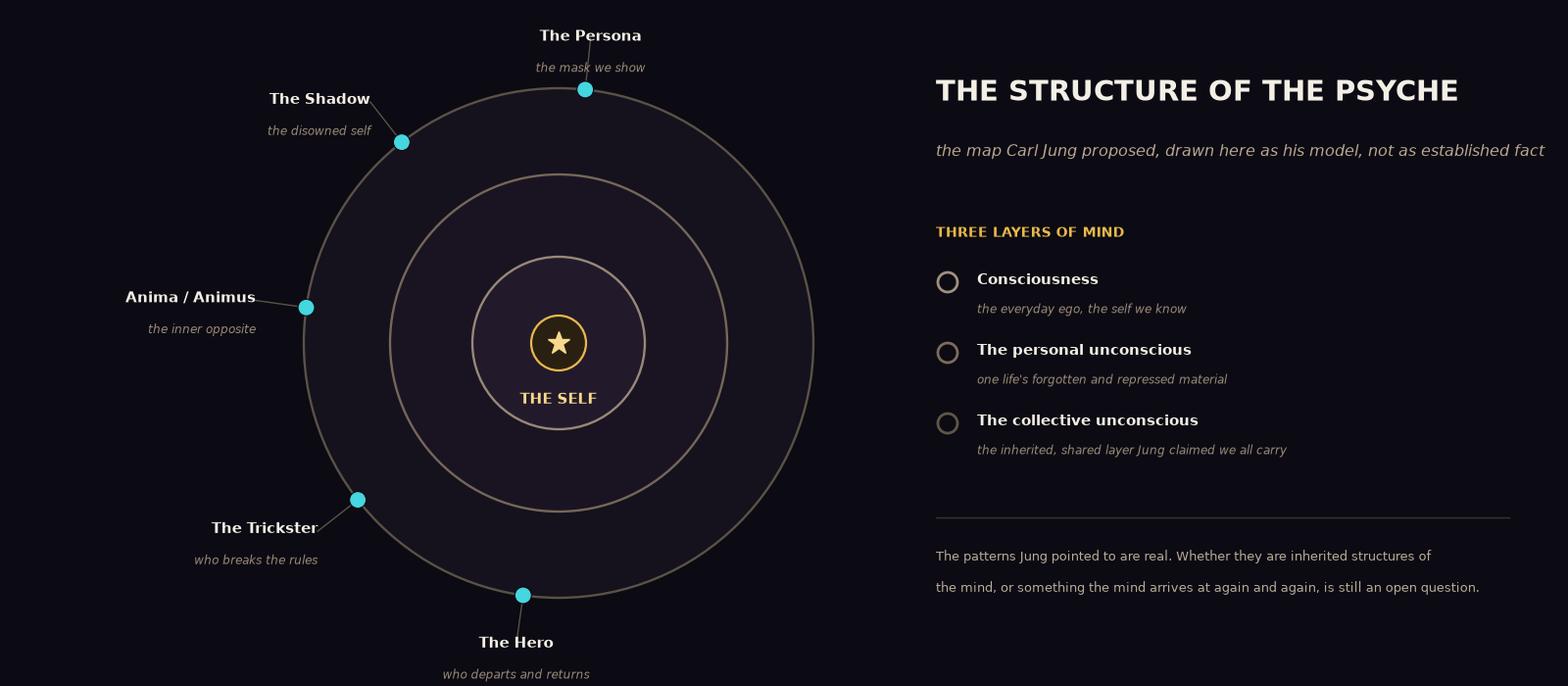
Carl Jung believed that beneath the personal mind lies a deeper, inherited layer shared by all of humanity, and that it is populated by recurring figures: the Shadow we refuse to see, the Trickster who breaks every rule, the Hero who ventures out and returns. A century later these ideas are everywhere, from the therapy room to the film-school lecture hall to the personality quiz that sorts the world into sixteen types. They are also, held to the standard of empirical science, mostly unproven, and one of them was worse than unproven. This is what Jung actually argued, what holds up, what does not, and the honest space between calling him a prophet and calling him a fraud.
Every age gives its inner life a map. Carl Gustav Jung drew one of the most influential maps of the twentieth century, and then spent fifty years insisting it was not his invention at all but a discovery, a chart of structures already present in every human mind. Beneath the personal unconscious that Freud described, Jung claimed, lies a far older and deeper layer we all share, the collective unconscious, and it is inhabited. Recurring figures move through it, the same ones that surface in the myths of peoples who never met: the Shadow, the Anima, the Trickster, the Hero, the Self. A hundred years later his vocabulary is so woven into the culture that people use it without knowing whose it is, in the consulting room, in film-school lecture notes, in the personality test that files humanity into sixteen boxes. The ideas are magnetic. They are also, measured against empirical science, mostly unproven, and some of what has been built on them is worse than unproven. This is the honest account: what Jung actually argued, what survives scrutiny, what does not, and why neither the worshipful reading nor the dismissive one tells the truth.
01The Break in the Consulting Room
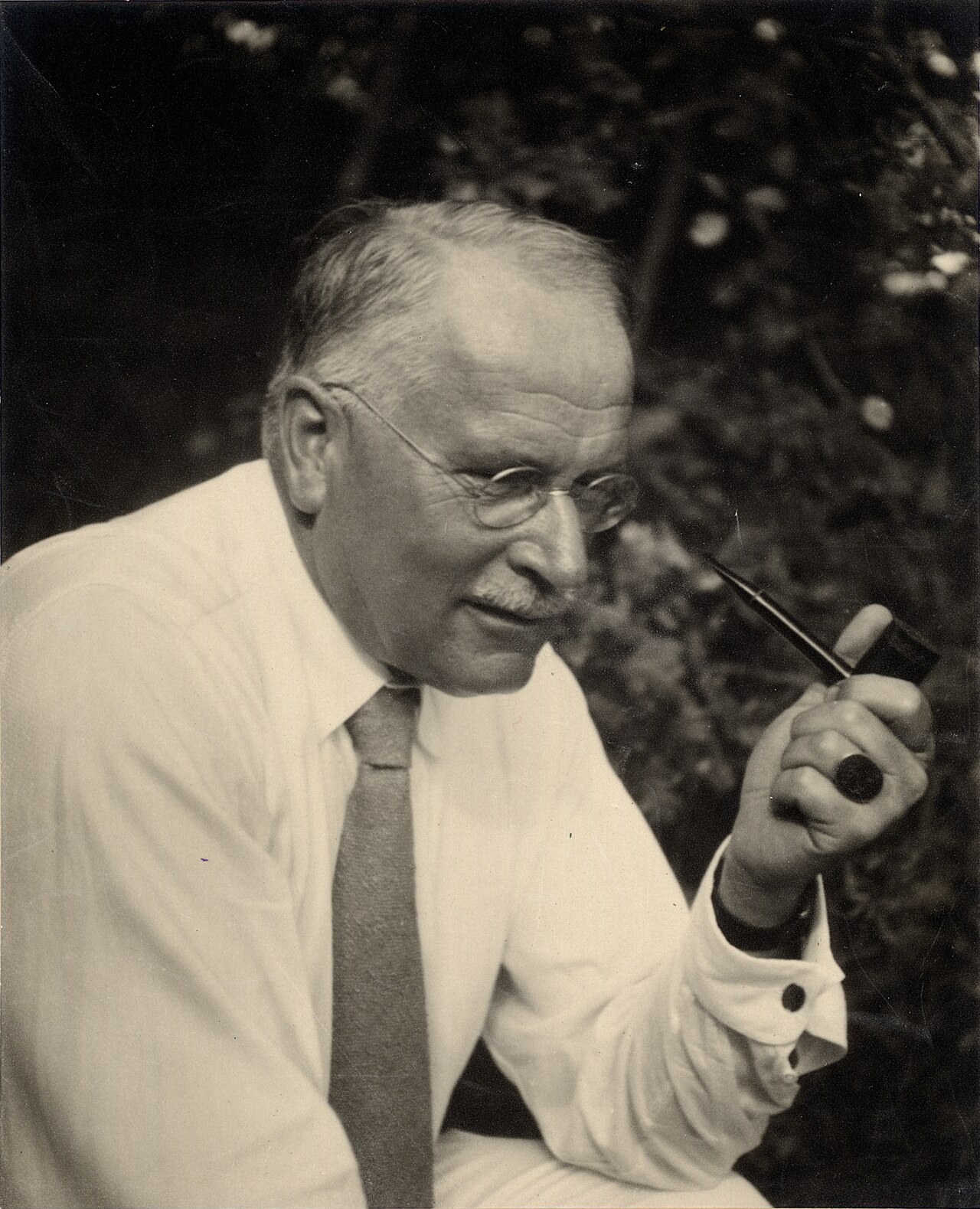
Carl Gustav Jung was born in Kesswil, Switzerland, in 1875 and died near Zurich in 1961. He trained in medicine at Basel and made his early name at the Burgholzli psychiatric hospital under Eugen Bleuler, where his word-association experiments between 1904 and 1909 gave empirical weight to an idea that would anchor everything after: that the mind contains 'feeling-toned complexes,' clusters of emotionally charged ideas that behave with a will of their own. In 1907 he met Sigmund Freud, nineteen years his senior, and the two formed one of the most intense partnerships in the history of psychology; Freud spoke of Jung for a time as his heir. The alliance came apart across roughly 1907 to 1913, foundering on theory. Jung refused to reduce the unconscious and its driving energy, the libido, to sexuality alone, and came to see it as something broader and more creative than Freud would allow. The break was bitter and permanent, and what followed for Jung was a period of intense inner upheaval out of which the rest of his ideas grew. It is worth marking the boundary at the outset: that Jung lived, trained, worked, and argued as described is documented fact. Whether the mind is actually built the way he came to argue is a separate question, and the one this article keeps in view throughout.
02The Deep We All Share
Jung's central and most contested claim is that the deepest layer of the unconscious is not personal but collective, inherited rather than acquired, and common to the species. His starting evidence was a pattern that is itself real and well documented: across cultures with no possible historical contact, the same mythic motifs recur. Flood stories appear in Mesopotamian, Hebrew, Hindu, Greek, Mesoamerican, and Aboriginal Australian traditions. The hero's journey of departure, ordeal, and return runs from ancient Sumer to medieval romance to living oral traditions. Trickster figures, Hermes and Loki and Coyote and Anansi and Eshu, share a family resemblance of boundary-crossing, shapeshifting, and mischief. This convergence is a genuine phenomenon that comparative mythologists have catalogued for over a century. But here the discipline of the thing matters, and the research file we draw on states it exactly: these parallels 'do not prove a collective unconscious; they establish the empirical phenomenon Jung sought to explain.' The pattern is solid. The explanation, an inherited reservoir of shared images, is Jung's hypothesis about the pattern, and a rival explanation fits the same evidence just as well: that similar human minds, facing similar problems in similar bodies, independently arrive at similar stories. The recurrence is the fact. Its cause is the open question.
One early version of this idea has to be named plainly, because it is a real stain and not a footnote. In some of his early writings on what he called 'primitive' psychology, Jung suggested that different racial groups carry different layers of the collective unconscious, with non-European peoples possessing thinner conscious overlays over the archaic depths. This claim is scientifically baseless and ethically indefensible, a product of colonial-era assumptions, and contemporary Jungians reject it without exception; as the research file puts it, the collective unconscious, if it exists at all, 'must be species-wide by definition.' Naming this is not a detour from assessing Jung honestly. It is part of it. An idea can be historically influential, personally sincere, and simply wrong, and this one was wrong in a way that did harm.
03The Figures in the Deep
An archetype, in Jung's mature definition, is not an image but a predisposition to form one, an inherited 'form without content,' a structural tendency to organize experience along certain lines. We never meet an archetype directly, he argued, only its culturally dressed instantiations, the archetypal images. Evolutionary psychology later described something with a similar shape, innate templates such as face recognition, snake detection, and attachment, and the parallel is genuinely suggestive, though it supports the narrow structural claim, not Jung's larger one about inherited meaning. Of the figures Jung named, one is the most practically important, and it is the darkest. The Shadow, in his account, is everything a person refuses to acknowledge in themselves, the disowned and repressed material the ego will not claim. Jung argued that we tend to project the Shadow outward, seeing our own denied traits in a despised other, a mechanism that maps closely onto social psychology's own well-established findings on scapegoating and out-group hostility. He held that consciously integrating the Shadow, owning what we would rather not, is necessary for maturity. This is the most durable of his clinical ideas: 'shadow work' remains a staple of Jungian therapy, and it helped shape the searching moral inventory at the heart of Alcoholics Anonymous. Its clinical usefulness is real. That does not, by itself, prove the metaphysics Jung wrapped around it.
Alongside the Shadow, Jung placed a contrasexual figure: the Anima, an inner feminine image he said every man carries, and the Animus, an inner masculine image in every woman, each meant to be a bridge to the unconscious. This is the part of his scheme that has aged worst, and the honesty is owed. Its original formulation rests on gender essentialism, a fixed equation of 'feminine' and 'masculine' with traits that later thought does not accept as fixed, or as gendered at all; the research file grants the criticism outright. Post-Jungian analysts have largely rebuilt the idea as contrasexual capacities present in everyone regardless of gender, patterns of relationship rather than a man's hidden woman or a woman's hidden man. Kept at all, it survives only in that revised form, and its evidential status is that of a clinical metaphor, not a measured structure of the mind.
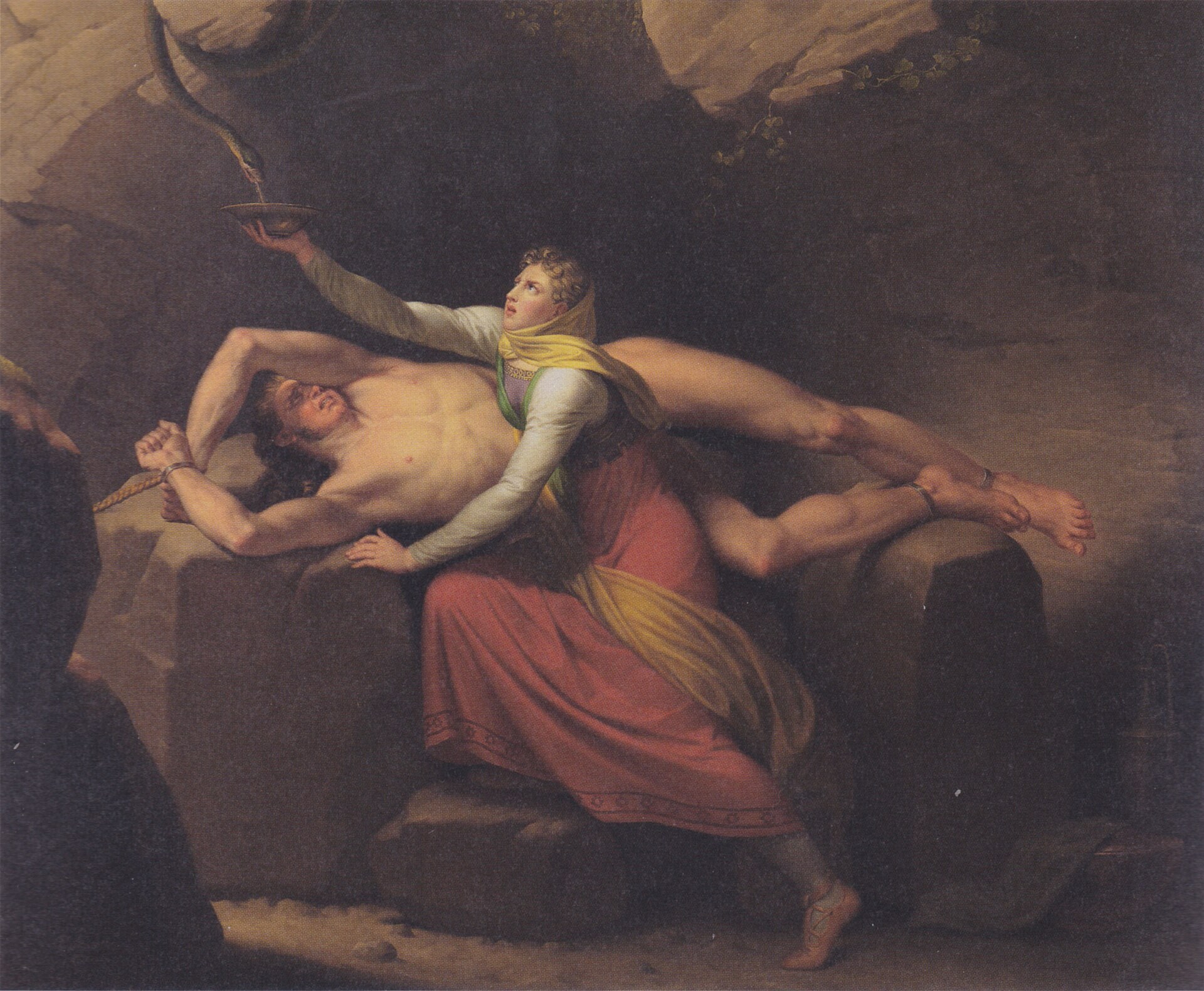
Two more figures carry the weight of the argument, because they are the most vivid and the most cross-cultural. The Trickster, Loki and Hermes and Coyote and Anansi, crosses every boundary, shifts shape, breaks the rules, and often creates by breaking them; Jung and the folklorists after him, Paul Radin and Lewis Hyde among them, tracked the same cluster of traits across Native American, West African, Norse, and Greek traditions. The Hero, departing into danger and returning transformed, so struck the mythologist Joseph Campbell that he built his famous 'hero's journey' directly on Jung's foundation. That these figures recur worldwide is not in dispute. What the recurrence means is. Jung read it as proof of a single shared archetype surfacing everywhere. But the honest state of the question, in the research file's own words, is that it remains unresolved whether such convergence reflects one inherited cognitive template or many independent cultures arriving separately at the same solutions to the same human tensions, managing transgression, negotiating order and chaos. The image can be Norse; the pattern is everywhere; the cause is genuinely undecided. To present the Trickster or the Hero as a proven, hardwired structure would be to answer a question the evidence leaves open.
04The Circle and the Self
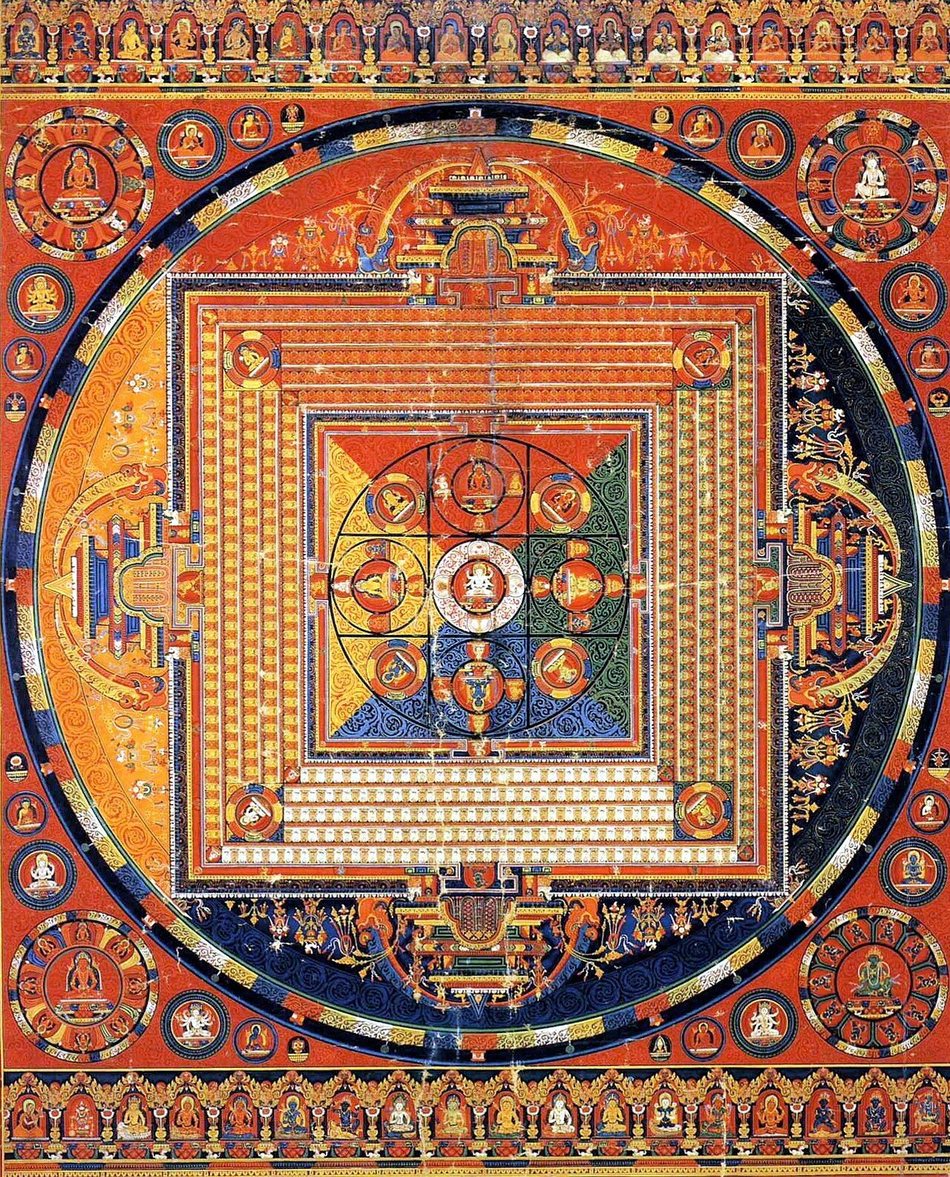
At the centre of Jung's map he placed the Self, his name for the archetype of wholeness, the organizing totality of conscious and unconscious together, distinct from the everyday ego. Its recurring symbol, he believed, was the mandala, the circle squared or quartered around a centre. Here too he began from a real pattern: mandalas appear independently in Tibetan Buddhist thangkas, Hindu yantras, Navajo sand paintings, Gothic rose windows, Aztec calendar stones, and Aboriginal ground designs, cultures with no shared source. Jung encountered the form spontaneously in his own drawings and his patients' during his years of turmoil, and read it as the psyche picturing its own wholeness. That the symbol recurs is documented; that it means what Jung said it means is his interpretation, not a fact the symbol carries on its face. The lifelong movement toward that wholeness he called individuation, the integration of the unconscious into a life that becomes fully and particularly one's own rather than a copy of collective expectation. Its therapeutic value is reported by those who practice it; its measurement is another matter, resting on case studies by Jungian scholars rather than on the kind of controlled evidence that would convince a skeptic.
The private engine of all of this became public only in 2009. For some seventeen years, from 1913, Jung kept a large red leather manuscript, the Liber Novus or Red Book, in which he documented an intentional descent into his own unconscious through a practice he called active imagination: entering a waking visionary state and holding conversations with the figures he met there, among them a winged old man named Philemon whom he credited with teaching him things he felt he 'could not have produced consciously.' The book is extraordinary as a human document, densely painted and calligraphed, and it is the experiential seedbed of nearly everything he later argued in theory; his first mandalas appear in its pages. It is also where his claims run past what evidence can follow. That these inner figures possess a real autonomy from the ego, that they are encounters with something and not elaborate productions of a single gifted imagination, is, as the research file puts it, a claim that stays 'within the phenomenological rather than empirical domain.' Powerful to undergo; impossible to verify. The same holds for the more speculative ideas of Jung's last decades, synchronicity and the notion of a unitary reality underlying mind and matter, which mainstream science treats as unfalsifiable rather than established.
05Sixteen Boxes
No idea of Jung's has travelled further in diluted form than his theory of psychological types. In a 1921 book, 'Psychological Types,' he described people as leaning toward introversion or extraversion and toward one of four functions, thinking, feeling, sensation, and intuition, but he described these as continuous tendencies, matters of degree, in a single psyche. What the culture actually knows is not Jung's book but the Myers-Briggs Type Indicator, and the difference between the two is the whole point. Katharine Cook Briggs and her daughter Isabel Briggs Myers, neither of them trained psychologists, took Jung's 1921 scheme, added a fourth either-or dimension he had never made explicit, and during the Second World War turned it into a questionnaire that sorts a person into one of sixteen discrete types, INTJ, ESFP, and the rest, first published in 1962. The lineage is real: the MBTI genuinely descends from Jung. But Jung described tendencies of degree, and Myers and Briggs built fixed boxes he did not propose.
As a psychological instrument, the result is weak, and this has to be stated plainly rather than softened, because the test is enormously popular and is often presented as science. Its reliability is poor. In one study, only about 47 percent of people who retook it just five weeks later received the same four-letter type, which means a majority came back a different type on a short retest, although the test's publisher cites its own later studies claiming better figures over longer spans, and both numbers deserve to be on the table. A 1993 review concluded flatly that the instrument 'does not conform to many of the basic standards expected of psychological tests,' finding no evidence that people fall into sixteen genuinely distinct kinds. And when researchers examined it against the model that personality science actually trusts, they found no support for discrete types at all: the four Myers-Briggs scales measure not either-or categories but continuous dimensions, and those dimensions line up with four of the five traits of the Big Five, the empirically grounded model built on exactly the kind of continuous, measurable variation Jung's own instinct had favoured. That last finding cuts both ways, and honestly. It means the Myers-Briggs is capturing something real about how people differ, because its raw material is real; the failure is in the packaging, the pretense of sixteen crisp types, not in the underlying observation that people vary along describable lines. The evidence-based standard in personality psychology today is the Big Five, whose traits show striking stability across decades, not Jung's types and not the test built from them.
06Prophet or Fraud, and Why Both Are Wrong
Jung invites two opposite verdicts, and both are overclaims. The first, popular among enthusiasts, is that the archetypes are proven, hardwired structures of the brain, ancestral memories stamped into every mind, scientific fact dressed in mythic language. They are not. Direct evidence for inherited psychic content does not exist; the human genome stores no narrative, no image of the Wise Old Man or the Great Mother. Whether the worldwide recurrence of tricksters and heroes comes from one shared template or many parallel inventions is, as we have seen, unresolved. Jung argued for these structures with immense erudition and clinical intuition, but arguing for a thing is not the same as establishing it, and the honest tier for archetypes-as-literal-biology is speculative, not proven. The opposite verdict is just as wrong, and fashionable now in the backlash: that Jung was simply a pseudoscientist, a mystic with nothing of value, safely dismissed. That will not survive contact with the record either. Shadow work is a living, useful clinical practice that helped reshape how millions in recovery take moral inventory. His influence on the study of myth, on art therapy, on the whole vocabulary we use for the inner life, is real and traceable. And the very critique that sinks the Myers-Briggs contains a point in his favour: its four Jungian dimensions do correlate with four of the Big Five's five, which means Jung's descriptive eye for how people differ was catching something the better science later confirmed. His error was never that he saw nothing; it was that he claimed more certainty, and more biology, than his evidence could bear. The truth is unspectacular and holds both halves at once: an original, influential, sometimes profound describer of the inner life, whose grandest claims about its structure remain unproven, and one of whose early ideas was genuinely wrong and worse. Neither prophet nor fraud. A brilliant, flawed cartographer of a country no one has yet been able to map.
Fast Facts
- Jung
- Swiss psychiatrist, 1875 to 1961; broke with Freud across roughly 1907 to 1913 over the nature of the unconscious
- Collective unconscious
- His claim of an inherited, shared layer of mind; the recurring myth-patterns are real, the inherited-reservoir explanation is unproven
- The figures
- Shadow (the disowned self), Anima and Animus (contrasexual, and gender-essentialist as first framed), Trickster, Hero
- The Self
- His archetype of wholeness, symbolized by the mandala; the lifelong goal of 'individuation'
- Shadow work
- His most durable clinical idea; it helped shape Alcoholics Anonymous's moral inventory
- MBTI
- Derived from Jung's 1921 typology but scientifically weak (~47% kept their type on a 5-week retest); the Big Five is the evidence-based model
- The dark note
- Jung's early 'primitive psychology' posited race-stratified unconscious layers; baseless, and rejected by Jungians today
- The double refusal
- Not 'proven hardwired structures,' and not 'pure pseudoscience with nothing of value'
What We Can Actually Stand Behind
The biography and the ideas themselves are documented. Jung lived from 1875 to 1961, trained in medicine, worked at the Burgholzli, collaborated with Freud and broke from him across roughly 1907 to 1913, and argued for the collective unconscious, the archetypes, individuation, and the Self. The Myers-Briggs Type Indicator really was built by Katharine Briggs and Isabel Briggs Myers from Jung's 1921 typology and first published in 1962. That the same mythic motifs, floods, hero-journeys, tricksters, mandalas, recur across unconnected cultures is a genuine, catalogued pattern.
Several of Jung's contributions have real, traceable standing. Shadow work is a durable clinical practice that influenced Alcoholics Anonymous's moral inventory. The MBTI is scientifically weak (about 47 percent kept their exact type on a five-week retest; no support for genuinely discrete types), while the Big Five is the evidence-based model, with trait stability rising toward roughly .74 across the middle decades of life. And the same research shows the MBTI's four Jungian dimensions do correlate with four of the Big Five's five, so Jung's descriptive observations were catching something real.
The core metaphysics is unproven. Archetypes as literally inherited, biological structures have no direct supporting evidence; whether cross-cultural convergence reflects one template or many independent inventions is unresolved; and the autonomy of the figures met in active imagination, along with synchronicity and the unus mundus of Jung's later years, sits in the phenomenological rather than the empirical domain. These are Jung's arguments and his defenders' claims, carried as such, not as established science.
Both extremes fail. No, the archetypes are not proven, hardwired mental structures wired into every brain; the evidence for inherited psychic content simply is not there. But no, Jung was not pure pseudoscience with nothing of value; his clinical and cultural influence is real, and the MBTI critique itself doubles as evidence that his descriptive eye caught something the better science later confirmed. Held together, and with his early race-stratification idea named plainly as the baseless error it was, the honest verdict is a single sober sentence: a gifted, flawed describer of the inner life whose grandest structural claims remain unproven. Neither prophet nor fraud.
There is a reason Jung belongs in a wing about the mind examining itself, and it is not that he got the answers right. It is that he took seriously the strangest fact about the psyche, that it is not transparent to itself, that it throws up dreams and symbols and compulsions from a source the conscious self cannot see, and he tried to draw the whole of it, unconscious included, in a single map. The map is almost certainly wrong in its literal claims. But the impulse behind it, and the honest trouble of testing it, expose something true about the mind looking at itself: that a description of the inner life can be moving, useful, even therapeutic, and still not be established science, and that we are strongly tempted to mistake the first for the second, because a map that feels true is far more satisfying than the admission that the territory is still largely unknown. Jung drew the country the way a gifted traveller sketches a coastline from the deck, vivid, evocative, and not to be trusted for navigation. The value is in the seeing. The error is in the certainty. Learning to tell those two apart, in his work and in our own convictions about ourselves, is exactly the discipline this wing is for.
Sources & further reading
Everything above is drawn from our research library on Theories of Anything. Open the full file to check the sourcing and go deeper.
Image credits
- The structure of the psyche, as Jung proposed it (original diagram) Original diagram by Theories of Anything. CC BY-SA 4.0 Source.
- Carl Gustav Jung, portrait photograph ETH-Bibliothek Zurich, Bildarchiv; public domain, via Wikimedia Commons. Public Domain Source.
- Loki and Sigyn (1810), Christoffer Wilhelm Eckersberg Christoffer Wilhelm Eckersberg, 1810 (Statens Museum for Kunst); public domain, via Wikimedia Commons. Public Domain Source.
- Vajradhatu mandala, Tibetan thangka, circa 1850 Anonymous Tibetan artist, circa 1850; public domain, via Wikimedia Commons. Public Domain Source.
- Card crop of the original psyche-structure diagram Original diagram by Theories of Anything. CC BY-SA 4.0

