
The Wood Wide Web: The Network That Feeds the Forest
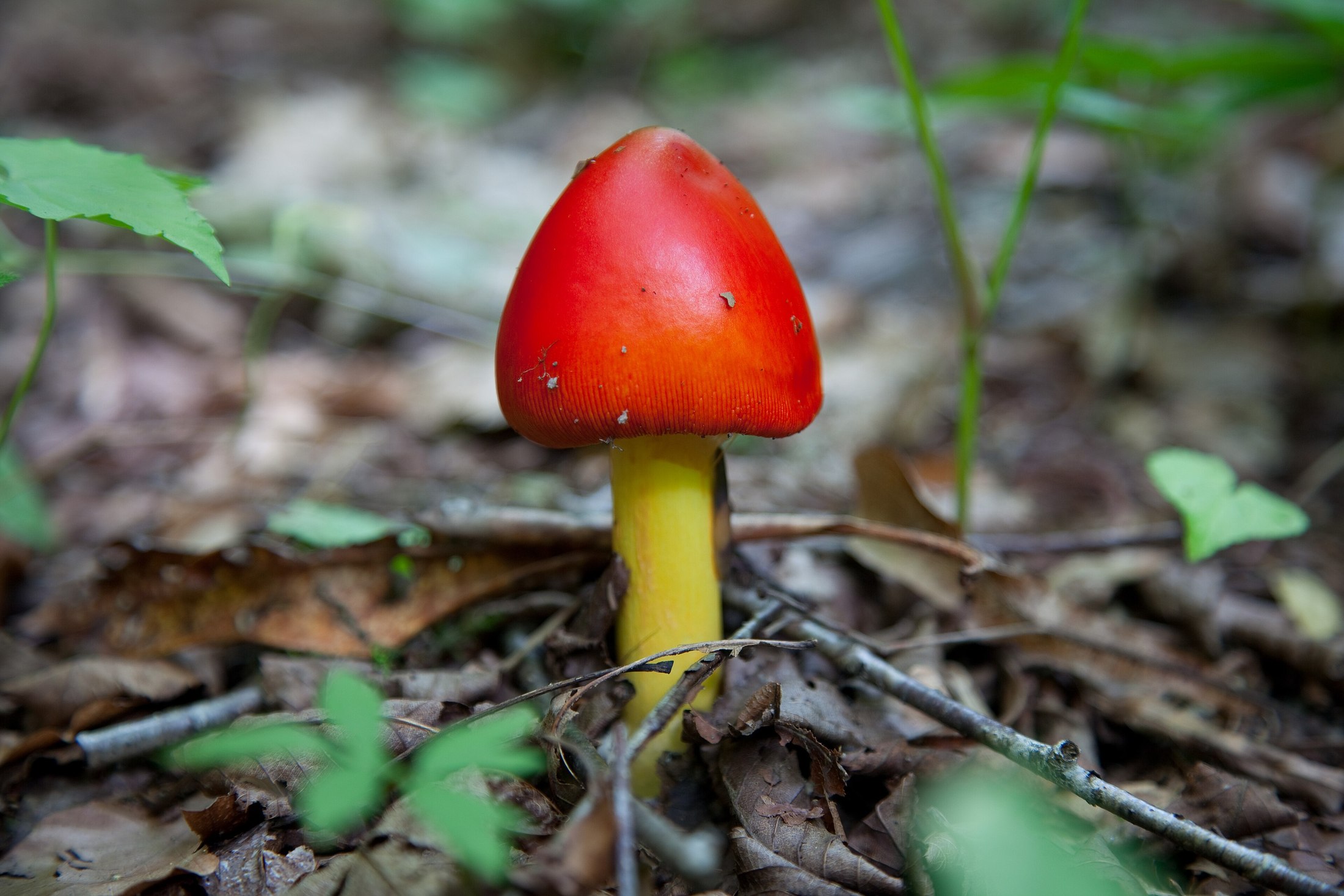
Beneath your feet in almost any forest runs a real, physical network: fungal threads knitting tree to tree, moving carbon, water, and nutrients through the soil, and even relaying chemical alarms between plants. That much is genuine, measured science, and it is astonishing. But the beloved story built on top of it, of wise 'mother trees' that deliberately nurture their own children through a cooperative underground internet, has run well ahead of the evidence, and a major 2023 review found the most popular version has almost no support at all. This is what the fungal network really is, what it demonstrably does, and exactly where the wonder ends and the wishful thinking begins.
It is one of the most enchanting ideas in modern science: that a forest is not a crowd of separate, competing trees but a single connected community, wired together underground by a living network of fungus. Through this 'wood wide web,' the story goes, trees share food and water, send each other chemical warnings of danger, and are watched over by great old 'mother trees' that recognize their own seedlings and deliberately feed them. It is a beautiful story, it has been carried into the world by hugely popular books, and it has genuinely changed how many people feel about a walk in the woods. It is also, in its most popular form, largely unproven, and a major scientific review in 2023 said so bluntly. This puts us in an unusually interesting position, because the honest account is not a simple debunking. A real, physical, astonishing fungal network genuinely does exist underground, and it genuinely does move resources between plants. The task is to separate that solid, measured wonder from the lovely narrative that has grown over it, and to be clear about exactly where the science stops and the wishful thinking starts.
01A Real Underground Network
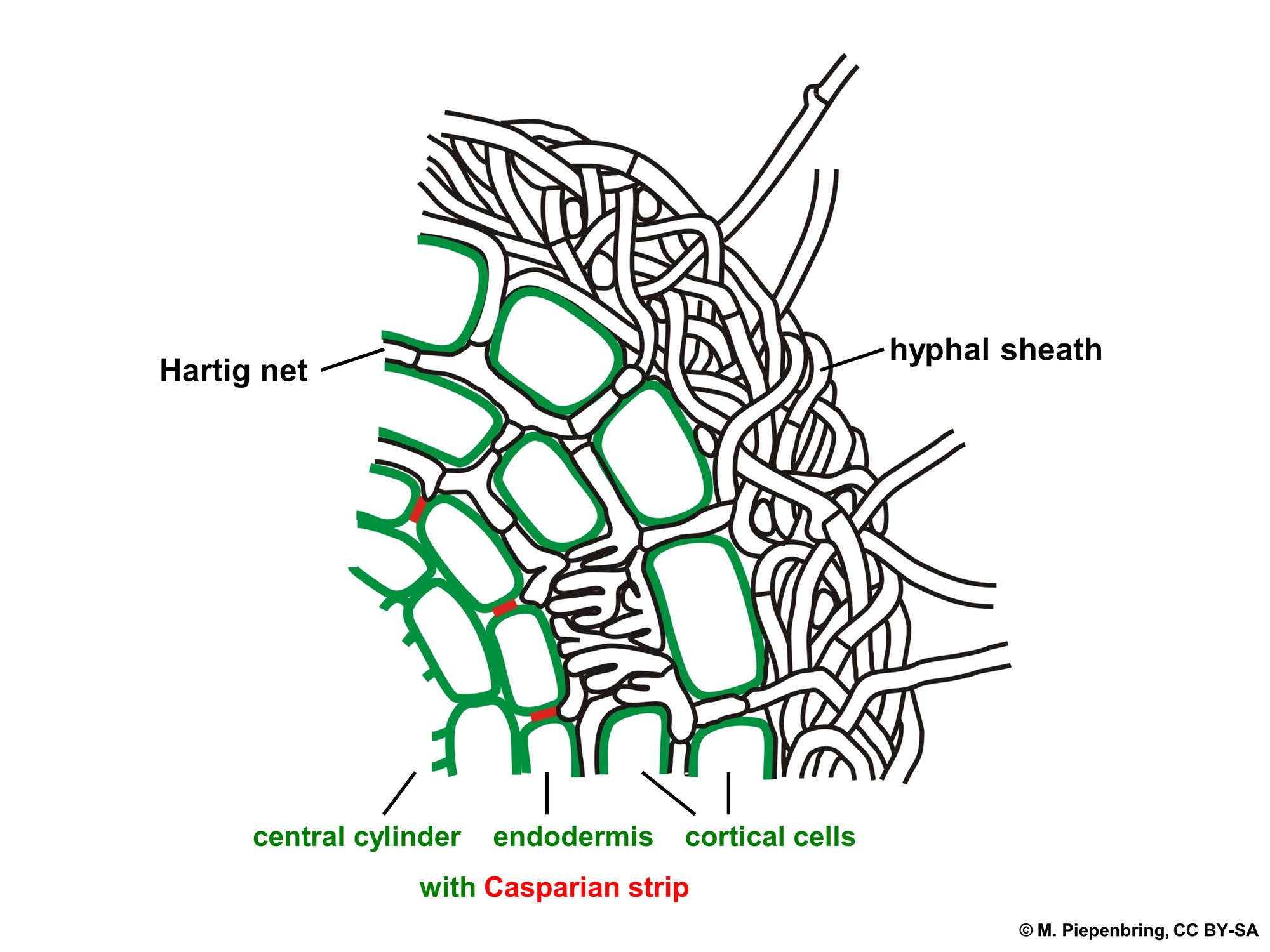
Start with what is unarguable, because it is remarkable enough on its own. Nearly all plants, roughly 90 percent of all land plant species, live in intimate partnership with fungi at their roots, a relationship called mycorrhiza, meaning simply 'fungus-root.' It is a genuine mutual exchange: the fungus threads its fine filaments, called hyphae, far out into the soil, hoovering up phosphorus, nitrogen, and water that the plant's own roots cannot reach, and hands them to the plant; in return, the plant pays the fungus in sugar, feeding it something like 4 to 20 percent of the carbon it captures from sunlight. This is not a fringe arrangement. It is how most of the plant kingdom actually eats, and it is ancient: fossils from the Rhynie chert in Scotland show plants already partnered with these fungi around 410 million years ago, among the very first life to colonize dry land. There are two main styles. In most plants the fungus grows right inside the root cells; in the trees of temperate and northern forests, oaks, pines, birches, firs, the fungus instead wraps each root tip in a dense sheath and weaves between the cells in a structure called the Hartig net. Either way, the root and the fungus become, functionally, one organ.
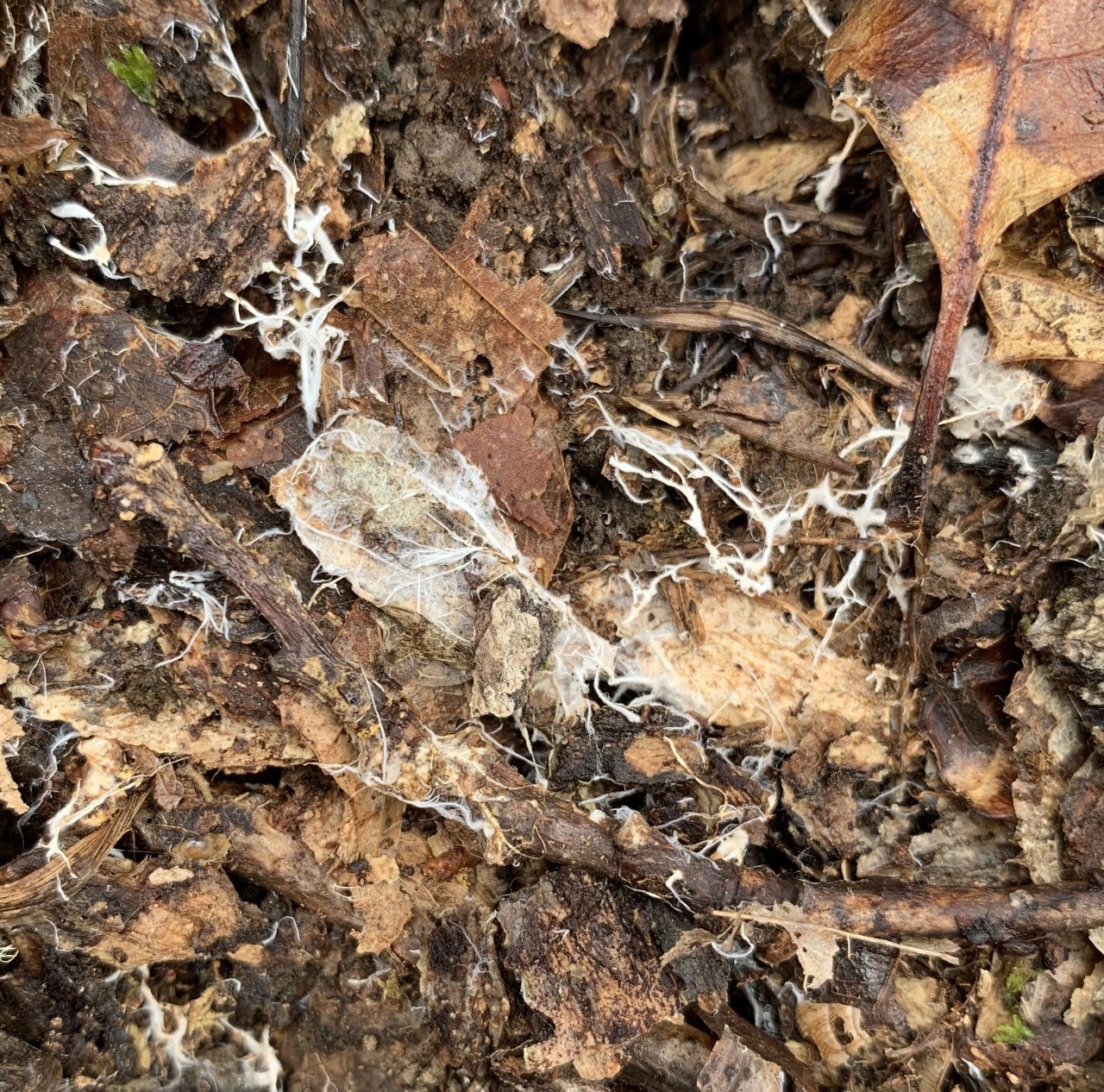
The leap from 'plants have fungal partners' to 'plants are networked to each other' is small and also well established. Because a single fungus can partner with several plants at once, its threads can physically link the root systems of two or more separate plants into a shared, continuous web of fungal tissue. That literal, physical connection is what the phrase 'wood wide web' actually, defensibly points to, and it has been directly observed. In one striking piece of work, researchers used DNA fingerprinting to map an entire real network in a Douglas fir forest and found it was 'scale-free,' the same mathematical shape as the internet or a social network: a few big, old, heavily-connected 'hub' trees, and many young trees hanging off them by just a link or two. So the wiring is real, and it is not even randomly arranged. Every honest part of the popular story starts here, on firm ground. The trouble begins only when we ask what, exactly, flows along those wires, and why.
02The Experiment That Started It All
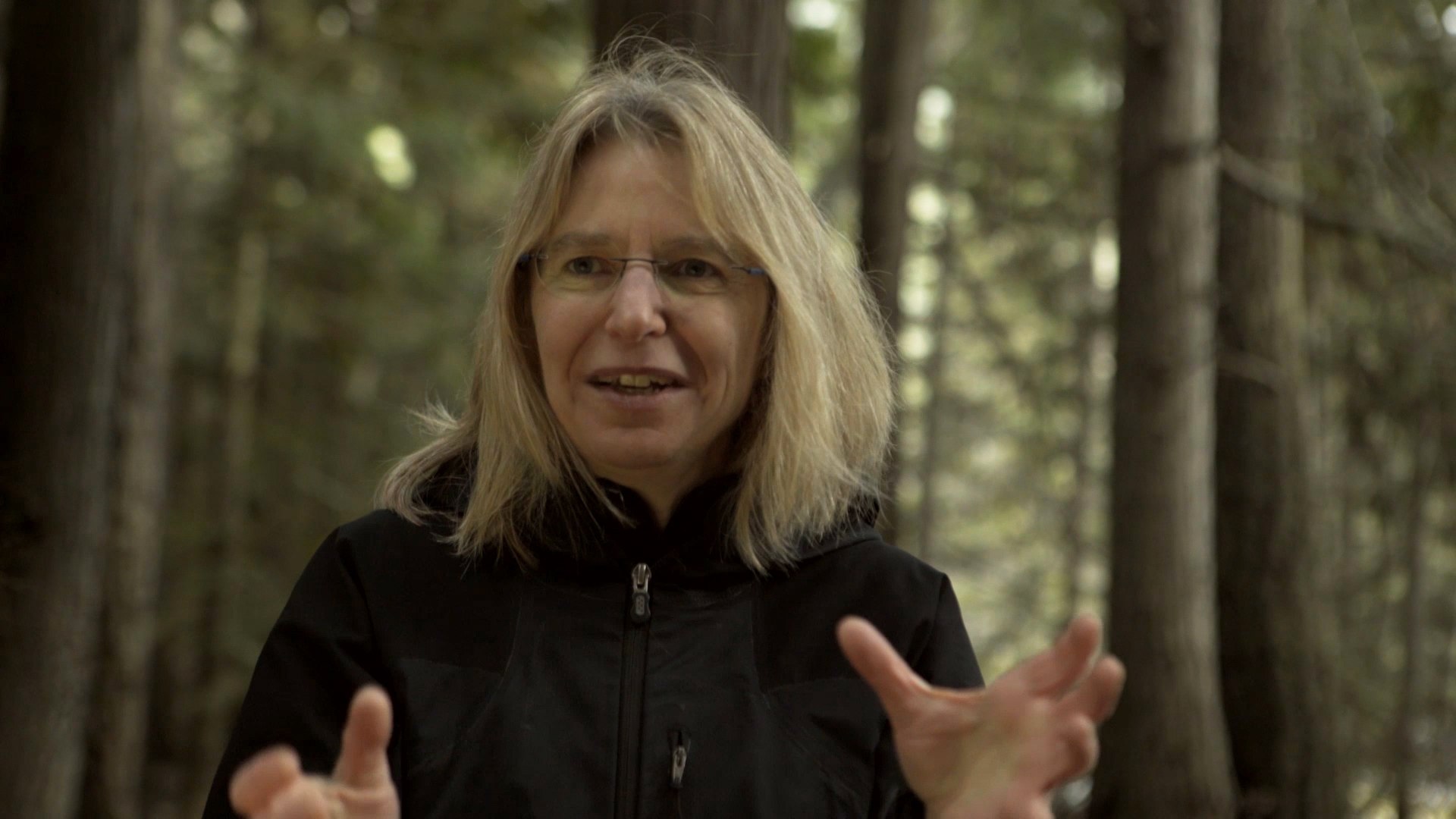
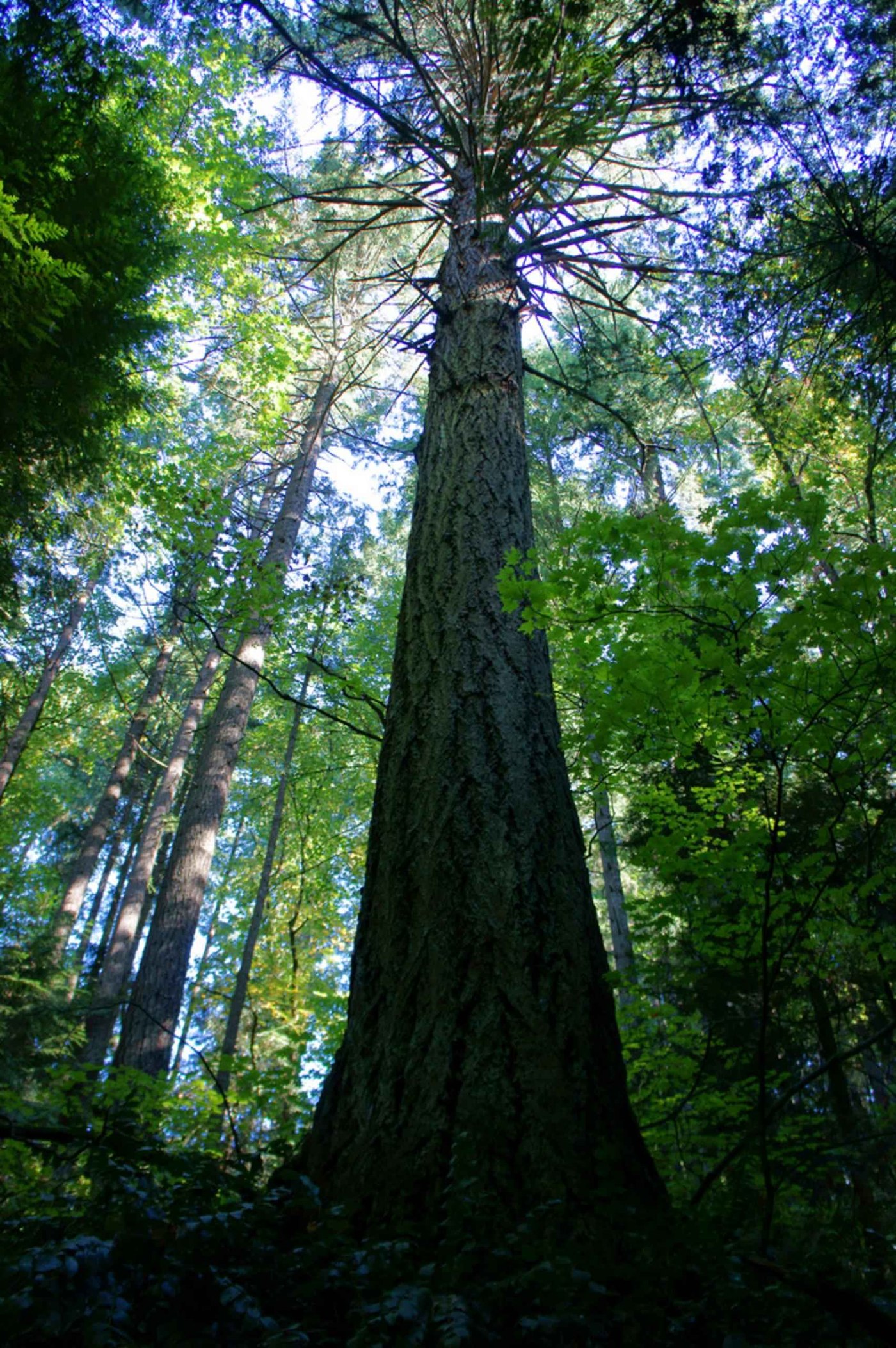
The whole modern story traces to a single elegant experiment. In 1997, the Canadian forest ecologist Suzanne Simard and her colleagues published a paper in Nature with the plain title 'Net Transfer of Carbon Between Ectomycorrhizal Tree Species in the Field.' Crucially, this was done in a real forest, not a laboratory pot. Simard's team fed paper birch and Douglas fir seedlings two different traceable isotopes of carbon, then measured where the carbon ended up. It moved: carbon flowed through the shared fungal network from one tree species to the other, and did so in both directions. This was a genuine, peer-reviewed, field result, and it is the bedrock the entire wood-wide-web concept rests on. Two points of precision matter enormously, though, and they are usually lost in the retelling. First, the net flow ran from the sun-lit birch to the shaded fir, which is exactly what you would expect from simple physics: carbon, like water, tends to move from where there is more of it to where there is less, down a 'source to sink' gradient. It was not evidence of a tree 'choosing' to help another. Second, the now-famous phrase 'wood wide web' was not Simard's. It was coined by an editor at Nature, writing up her result with a nod to the World Wide Web. The metaphor, in other words, arrived attached to the science almost from the very first day, and the two have been tangled together ever since.
In the decades since, real laboratory and field work has genuinely expanded what we know the network can do, and this middle layer of findings is solid even where its forest-scale importance is still argued over. Fungal networks carry a real nitrogen-transfer pathway between plants. When bean plants are attacked by aphids, unattacked neighbors linked to them by fungal threads have been shown to switch on their own chemical defenses in advance, apparently cued by a signal traveling through the shared network, and a similar defense relay has been demonstrated between tomato plants. Seedlings that tap into an established network tend to survive and grow better than those left to start alone. And richer fungal diversity underground measurably boosts the productivity, stability, and even the plant biodiversity of the community above. There is no serious doubt that mycorrhizal fungi are keystone players in how ecosystems work. What remains genuinely open is a narrower and more stubborn question: how much the direct tree-to-tree transfer of resources through these networks actually matters, out in a real forest, at a scale that changes which trees live and die.
03The Scale, and the Feats
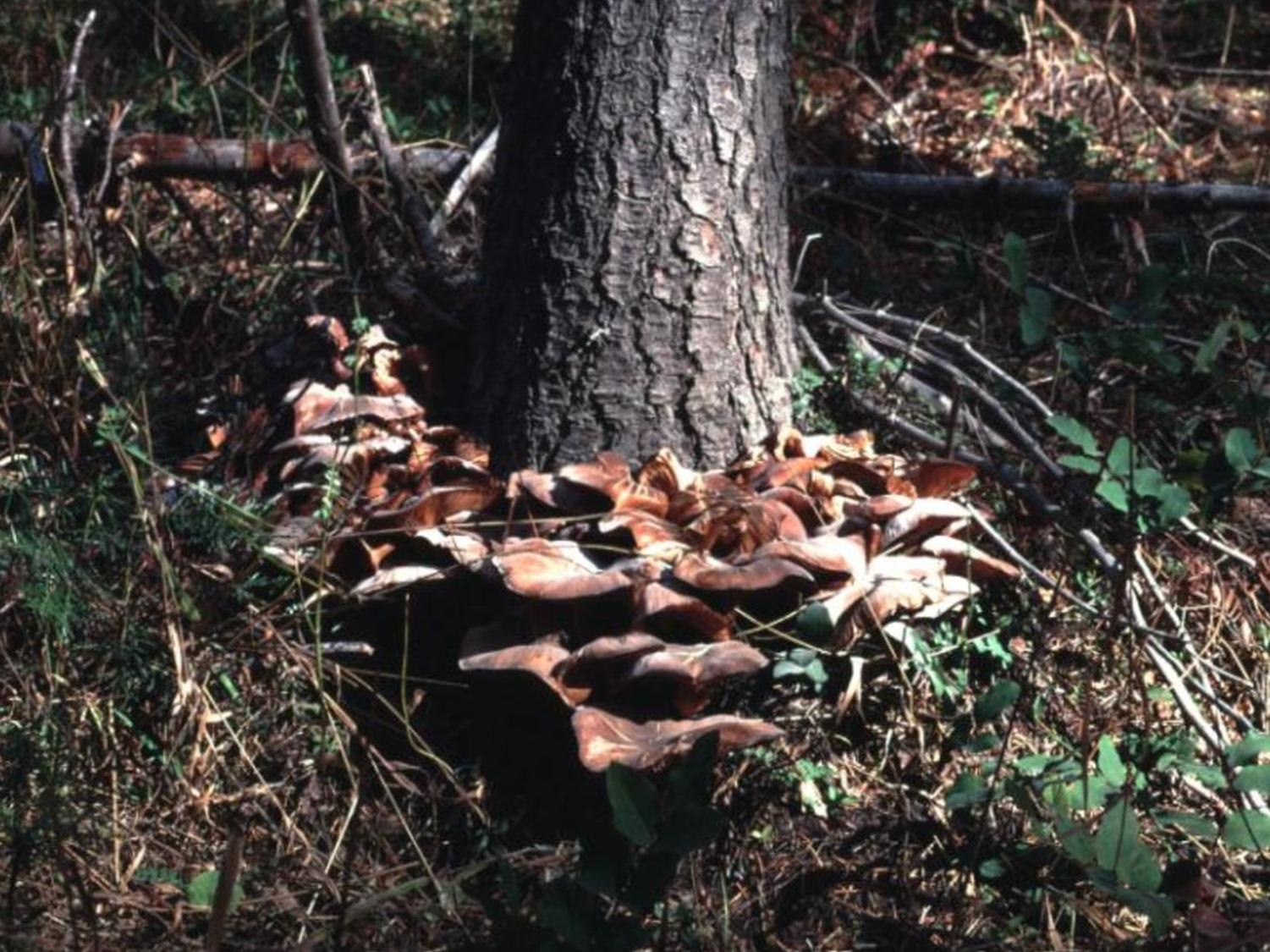
Before turning to the contested claims, it is worth pausing on just how physically vast a single fungus can be, because it makes the idea of an underground network viscerally real. In the Malheur National Forest in Oregon lives a single fungal individual, a honey fungus called Armillaria ostoyae, whose body spreads through the soil across an estimated 9.6 square kilometers, roughly 2,400 acres. By area, it is one of the largest living organisms on Earth, all of it a single genetic individual, mostly invisible, threaded through the forest floor and occasionally sending up clusters of mushrooms. That particular fungus happens to be a tree-killing parasite rather than a helpful partner, so it is not itself a mutualistic network. But it dramatizes the key physical fact underneath this whole subject: a single fungal body really can reach across a forest. The extensive, soil-spanning growth that makes a giant Armillaria possible is the same kind of reach that lets mutualist fungi wire many separate trees together. The stage on which the wood wide web plays out is genuinely enormous.
The network's reach shapes real forest chemistry, too, in ways that matter beyond the trees themselves. Forests dominated by the sheath-forming (ectomycorrhizal) fungi store markedly more carbon in their soils than other forests, because those fungi compete with decomposers for nitrogen and slow the rotting of dead matter, an effect with real weight for climate carbon models. And at the far edge of the network's biology sits one genuinely strange fact: around 400 plant species have given up photosynthesis entirely. Ghostly white plants like the aptly named Indian pipe, and many orchids, have no green in them at all; they survive by plugging into a fungal network and siphoning off carbon that the fungus obtained from nearby green trees. They are, in effect, plants that have learned to hack the network and live as freeloaders on it. This peculiar lifestyle has evolved independently more than 40 separate times, which tells you that exploiting the shared network for a free meal is not a freak accident but a recurring opportunity that evolution keeps rediscovering. The network is real, it is large, and things really do move through it. All of which makes it doubly important to be careful about the beautiful claims it cannot yet bear.
04Where the Story Outran the Science
Here is the heart of the matter, and the reason this article exists. The most beloved parts of the wood-wide-web story, the parts that made it a phenomenon, are precisely the parts the evidence does not currently support. The centerpiece is the 'mother tree': the claim that the largest, oldest trees act as network hubs and preferentially funnel carbon and defense signals to their own genetic offspring, recognizing kin and nurturing it. In 2023, three scientists, Justine Karst, Melanie Jones, and Jason Hoeksema, published a careful review in Nature Ecology and Evolution examining what the published evidence actually shows, and their findings were sobering. They reported that the specific claim, that mature trees preferentially send resources to their own offspring through these networks, has no peer-reviewed published evidence supporting it. Not weak evidence: none, at the level the popular story asserts. They also found that the physical existence of these networks in real forests is far less established than the confident retellings imply, only around five studies have ever actually mapped a mycorrhizal network in the field, across just two forest types and two of the world's roughly 73,300 tree species. And reviewing more than 1,500 papers, they found that the rate at which unsupported, cooperative-sounding claims were being cited approvingly had roughly doubled over 25 years, a snowballing of optimism outrunning the data. Notably, the authors pointed out that some of those overstated citations came from their own earlier work, an honest act of scientific self-correction, not a hit job.
The deflation goes further, and it is worth being specific rather than vague. Where carbon transfer between trees has actually been measured, the amounts are usually tiny, on the order of a fraction of a percent up to a few percent of what the giving tree makes, quite possibly too little to matter to the receiving tree's survival at all. Worse for the tidy story, several experiments claiming network transfer have not fully ruled out that the resources moved by another route entirely, directly through touching roots, or by simple diffusion through the soil, rather than through the fungal threads specifically. And the picture of a warm cooperative commons is contradicted by the network's own darker traffic: fungi appear to run something more like a market, steering scarce nutrients toward whichever tree pays them the most carbon, while trees can cut off underperforming fungal partners, and the very same threads that carry food can also carry poisons between plants or let a parasitic fungus prey on a weak seedling. None of this erases the network. It reframes it. The forest floor is not a nursery run on kindness; it is a churning, competitive, deeply interdependent marketplace, and, tellingly, this caution is not new or purely external. Simard herself co-authored a paper back in 2006 with a wry French title translating to 'Dangerous Liaisons,' flagging that a purely cooperative reading was too simple. The field's own skepticism is older than the backlash.
05The Wonder, Kept Honest
So the refusals need to be stated plainly, precisely because the temptation to believe otherwise is so strong. No, trees do not 'talk' to each other in any intentional sense; the transfers and signals that have been measured are driven by concentration gradients and ordinary chemistry, by physics and metabolism, not by will, choice, or awareness. No, a 'mother tree' does not consciously decide to feed her children; that specific claim, as we saw, has no supporting evidence at the level it is usually told. And no, the forest is not a giant brain or a conscious superorganism 'thinking' through its fungal wiring; that comparison, which appears throughout popular books on the subject, is an evocative metaphor, offered as a metaphor by its more careful authors, and it must not be mistaken for a demonstrated mechanism. The word 'web,' the word 'communication,' even the phrase 'mother tree,' are all figures of speech laid over a set of chemical and physical processes, and they quietly smuggle in intention that the biology does not contain. Refusing that smuggled intention is not cynicism. It is the only way to see the real thing clearly. Because the real thing needs no embellishment at all. Under the floor of nearly every forest on Earth runs an immense, ancient, living fungal network, hundreds of millions of years old, physically linking most of the plants on the planet to the fungi that feed them and, often, to one another. Resources and even warning signals really do move across it. That we are still arguing about exactly how much, and to whose benefit, is not a disappointment. It is what a genuine, unfinished scientific frontier looks like, and it is far more interesting than the fairy tale.
Fast Facts
- What is real
- Mycorrhizal networks physically exist: fungal threads link the roots of most plants (about 90% of land-plant species) to fungi and often to each other. The fungi trade soil nutrients and water for 4 to 20 percent of a plant's carbon. The symbiosis is ~410 million years old
- The founding result
- Suzanne Simard's 1997 Nature field study traced carbon moving between paper birch and Douglas fir through a shared fungal network, mostly from the sun-lit tree to the shaded one (a source-to-sink gradient, NOT trees 'choosing'). Nature's editors, not Simard, coined 'wood wide web'
- What it demonstrably does
- Carries a nitrogen-transfer pathway; relays chemical alarm signals between bean and tomato plants; boosts community productivity and biodiversity; improves seedling survival near established networks; and hosts ~400 plant species that gave up photosynthesis to live off it
- The scale
- A single Armillaria fungus in Oregon spans ~9.6 square kilometers, one of Earth's largest organisms (though it is a parasite, not a mutualist). Real networks are 'scale-free,' with a few highly connected hub trees
- What is contested
- A 2023 review (Karst, Jones & Hoeksema, Nature Ecology & Evolution) found the 'mother tree feeds her kin' claim has NO peer-reviewed evidence at the popular level; only ~5 networks have ever been field-mapped; measured transfers are usually tiny; and the network is a competitive market, not a pure cooperative
- Refused
- That trees consciously 'talk,' that a forest is a thinking superorganism, and that a mother tree deliberately nurtures her own offspring. These are metaphors and overclaims. The real underground fungal network is wondrous enough without them
What We Can Actually Stand Behind
The network is real. Fungi form root partnerships with about 90 percent of land plants, trading soil nutrients and water for the plant's carbon, in a symbiosis some 410 million years old. A single fungus can link several plants into a shared web, and real networks have been mapped as 'scale-free' hub structures. Simard's 1997 field experiment genuinely showed carbon moving between birch and Douglas fir through such a network. These are established facts.
The network demonstrably does real things: a nitrogen-transfer pathway, chemical defense-signal relays between plants (bean, tomato), higher seedling survival near established networks, and community-level boosts to productivity and biodiversity from fungal richness. What stays genuinely debated is how much direct tree-to-tree resource transfer actually matters at real forest scale, and whether recipient trees net-benefit.
The famous claims are contested. A 2023 peer-reviewed review found the 'mother tree preferentially feeds her kin' claim has no supporting published evidence at the level popularly told, that only about five networks have ever been field-mapped, that measured transfers are usually tiny, and that citation of unsupported cooperative claims had snowballed. The network also behaves as a competitive market, not a pure cooperative. These claims are open at best.
The fairy-tale version is refused. Trees do not consciously 'talk'; a forest is not a thinking superorganism; and a mother tree does not deliberately, knowingly nurture her offspring. Measured transfers run on concentration gradients and ordinary chemistry, not intent. 'Web,' 'communication,' and 'mother tree' are metaphors that smuggle in intention the biology does not contain. The genuine underground network is marvel enough on its own.
The wood wide web closes The Living World's web-of-life band, and it is the perfect note to end on, because it is a lesson not just about forests but about how to hold a wonderful idea honestly. The underground fungal network is one of the most genuinely astonishing facts in all of biology: a hidden, ancient, planet-spanning web that feeds most of the plants on Earth and knits them, physically, to one another. Real resources and real warnings move across it. And that is exactly why the temptation to gild it, to make the trees wise and the forest loving and the old mother tree a conscious guardian of her young, is so understandable, and so worth resisting. The story that has swept the world is mostly a projection of our own longing for nature to be kind, laid over a set of chemical gradients and fungal threads that neither know nor intend anything. Stripping that projection away does not shrink the forest. It reveals it: not a fairy tale of deliberate care, but something stranger and truer, a vast, blind, breathtakingly intricate web of life doing what life does, which is to connect, exchange, compete, and endure. The wonder was never in the intention. It was always in the network itself.
Sources & further reading
Everything above is drawn from our research library on Theories of Anything, with the specific studies below. Open the full file to check the sourcing and go deeper.
Image credits
- Red Amanita mushroom on a forest floor ForestWander, via Wikimedia Commons (CC BY-SA 3.0 US). CC BY-SA 3.0 US Source.
- Fungal mycelium in forest-floor litter PerytonMango, via Wikimedia Commons (CC BY-SA 4.0). CC BY-SA 4.0 Source.
- Ectomycorrhiza root cross-section (mantle and Hartig net) Meike Piepenbring, via Wikimedia Commons (CC BY-SA 3.0). CC BY-SA 3.0 Source.
- Suzanne Simard Jdoswim, via Wikimedia Commons (CC BY-SA 4.0). CC BY-SA 4.0 Source.
- Old-growth Douglas fir Patte David, U.S. Fish and Wildlife Service (public domain). Public domain Source.
- Armillaria ostoyae, the Malheur 'Humongous Fungus' USDA Forest Service (public domain). Public domain Source.
- Card crop of the forest-floor mushroom ForestWander, via Wikimedia Commons (CC BY-SA 3.0 US). CC BY-SA 3.0 US


.png)


_-_fsbdev3_033146_(page_5_crop).jpg)