
The Origin of Life: How Chemistry Became Biology
Life appeared on Earth almost the instant the planet stopped being sterilized by giant impacts, within a few hundred million years of becoming habitable at all. That single fact splits two ways: either life starts easily given the right chemistry, or it did not start here. We can make the building blocks in a flask and find them on meteorites. We can read the deep biochemistry of the common ancestor of everything alive. What no one has ever done is walk sterile chemistry all the way across the gap to a living, copying, evolving thing. This is what is genuinely known about how chemistry became biology, what stays wide open, and why neither a triumphant it-is-solved nor a quiet aliens-did-it will do.
It is the oldest question there is, and it is still open. How did the non-living become living? How did plain chemistry, atoms following the ordinary rules of physics, cross over into something that eats, grows, copies itself, and evolves? For most of history the only available answer was a miracle. The astonishing thing is that we can now say a great deal about the question without invoking one, and the even more astonishing thing is that the honest total of all that knowledge still does not add up to an answer. We can build the raw ingredients of life from scratch. We find those same ingredients on meteorites and asteroids. We can reconstruct, in real biochemical detail, the single ancestor from which every living thing on Earth descends. And yet no one, anywhere, has ever taken sterile chemistry and walked it all the way across the gap to a living cell. This is a guided tour of that gap: how narrow the window for life to appear turns out to have been, how far the real science has come, and why the two most tempting shortcuts, that it has all been explained, and that it must have come from somewhere else, are both refused.
01A Suspiciously Early Start
Begin with the clock. Earth is about 4.54 billion years old, a date pinned down by the radiometric dating of the oldest meteorites and rocks. For its first few hundred million years the young planet was repeatedly struck by enormous impacts, energetic enough to sterilize the surface, before that bombardment tailed off toward roughly 3.8 to 4.0 billion years ago. And here the timeline becomes startling. The oldest hard, widely accepted evidence for life, microfossils of sulfur-metabolizing cells from the Strelley Pool Formation in Western Australia, dates to about 3.43 billion years ago, and layered microbial structures called stromatolites from the nearby Dresser Formation reach back about 3.48 billion years. More contested signals push the date even earlier: carbon with a biological-looking isotope signature in 3.7-billion-year-old rocks at Isua in Greenland, and a truly extreme claim of biological carbon locked inside a 4.1-billion-year-old crystal from the Jack Hills of Australia. Those last two are genuinely disputed, and should be held as disputed, not fact. But even the conservative reading is remarkable: life seems to have appeared within a few hundred million years of the planet becoming habitable at all. In geological terms, that is almost the moment the door opened.
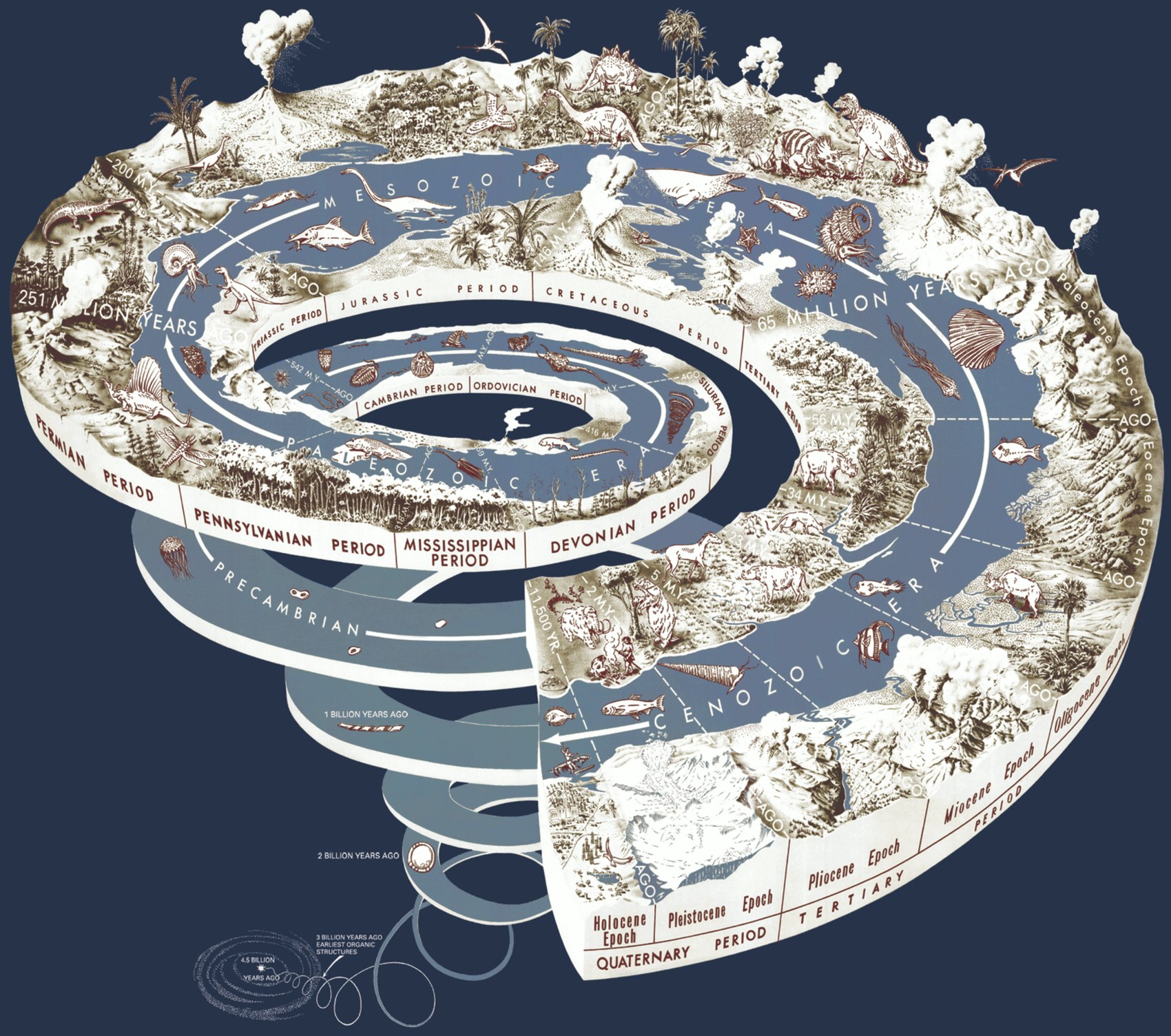
That tight timing is the hinge on which the whole subject turns, and it cuts two ways at once. One reading: if life got going almost as soon as it possibly could have, then abiogenesis may be comparatively fast and easy given the right chemistry and the right planet, which would imply a universe rich with life. The other reading: if the chemistry is really as hard as our laboratory struggles suggest, then life appearing so fast looks less like easy chemistry and more like something that did not have to start from scratch here at all, but arrived already formed, or nearly so. Neither reading is proven. Both are live, and a careful account has to hold them in tension rather than quietly pick one. One more honest caveat belongs right here, because it is often smoothed over: the idea of a single sharp 'Late Heavy Bombardment' ending cleanly at 3.8 billion years ago is itself contested among planetary scientists, some of whom see a gradually declining rain of impacts rather than one discrete cataclysm. The broad picture, high impact rates early, easing toward 3.8 to 4.0 billion years, and life present soon after, survives that debate. The neat single-date version does not.
02Sparks in a Flask
The modern science of the origin of life effectively begins with one famous experiment. In the fall of 1952 a graduate student named Stanley Miller, working under the chemist Harold Urey at the University of Chicago, sealed a mixture of water, methane, ammonia, and hydrogen, a guess at the early atmosphere, into a loop of glassware and ran a continuous electrical spark through it to stand in for lightning. Within days the water turned murky, and when Miller analyzed it he found amino acids, the building blocks of proteins, had formed from nothing but those simple gases and energy. Published in 1953, it was a genuine landmark: it showed that the molecules of life can assemble by ordinary chemistry, with no life present to guide them. It is worth stating the real result precisely, because the details get inflated. Miller's original 1953 paper reported five amino acids by name, not the eleven often quoted. The much larger numbers came decades later: in 2008 a team at Scripps reanalyzed Miller's own carefully saved sample vials with modern instruments and found many more, 14 amino acids from the classic apparatus he had published, and 22 from a separate, unpublished 'volcanic' version of the experiment he had also run. The lesson only grew: the building blocks form readily, and even more readily than Miller could measure at the time.
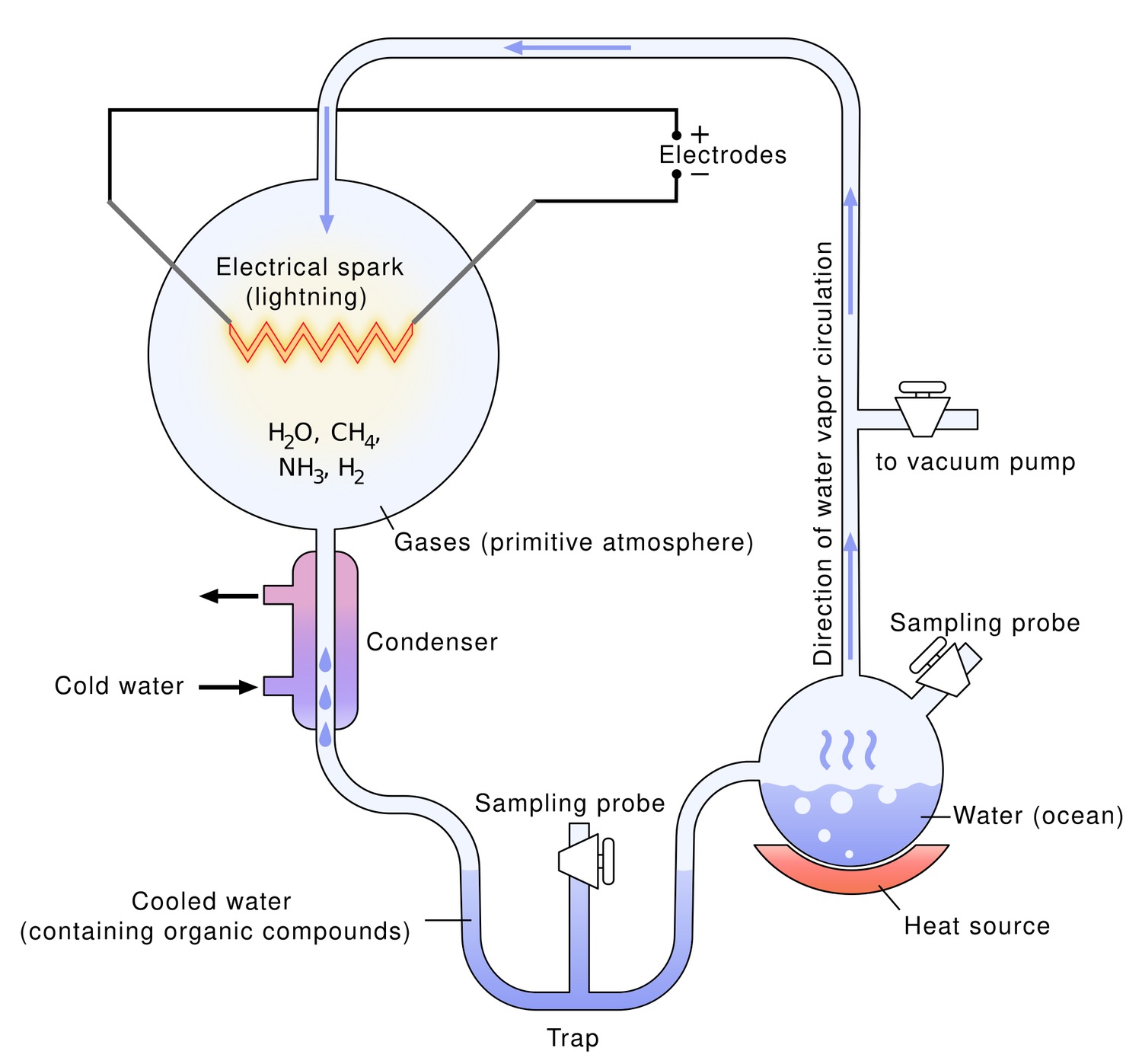
Two honest qualifications keep Miller-Urey in proportion, and both matter. The first is about the recipe. Earth's actual early atmosphere was probably not the strongly reducing methane-and-ammonia brew Miller used; it was likely richer in carbon dioxide and nitrogen. Rerun the experiment with that more realistic, more neutral mixture and amino acids still form, but in markedly lower yields. The core demonstration survives, organic building blocks arise from inorganic starting materials given energy, but the specific 1953 numbers do not describe the real early Earth. The second qualification is the one that opens the rest of this article. Miller made amino acids. He did not make a protein, or a membrane, or a gene, and above all he did not make anything that could copy itself. Between 'the building blocks form easily' and 'life begins' lies the entire unsolved problem. A pile of bricks, however freely it appears, is not a house, and nothing in that flask ever started building.
03Seeds from the Sky
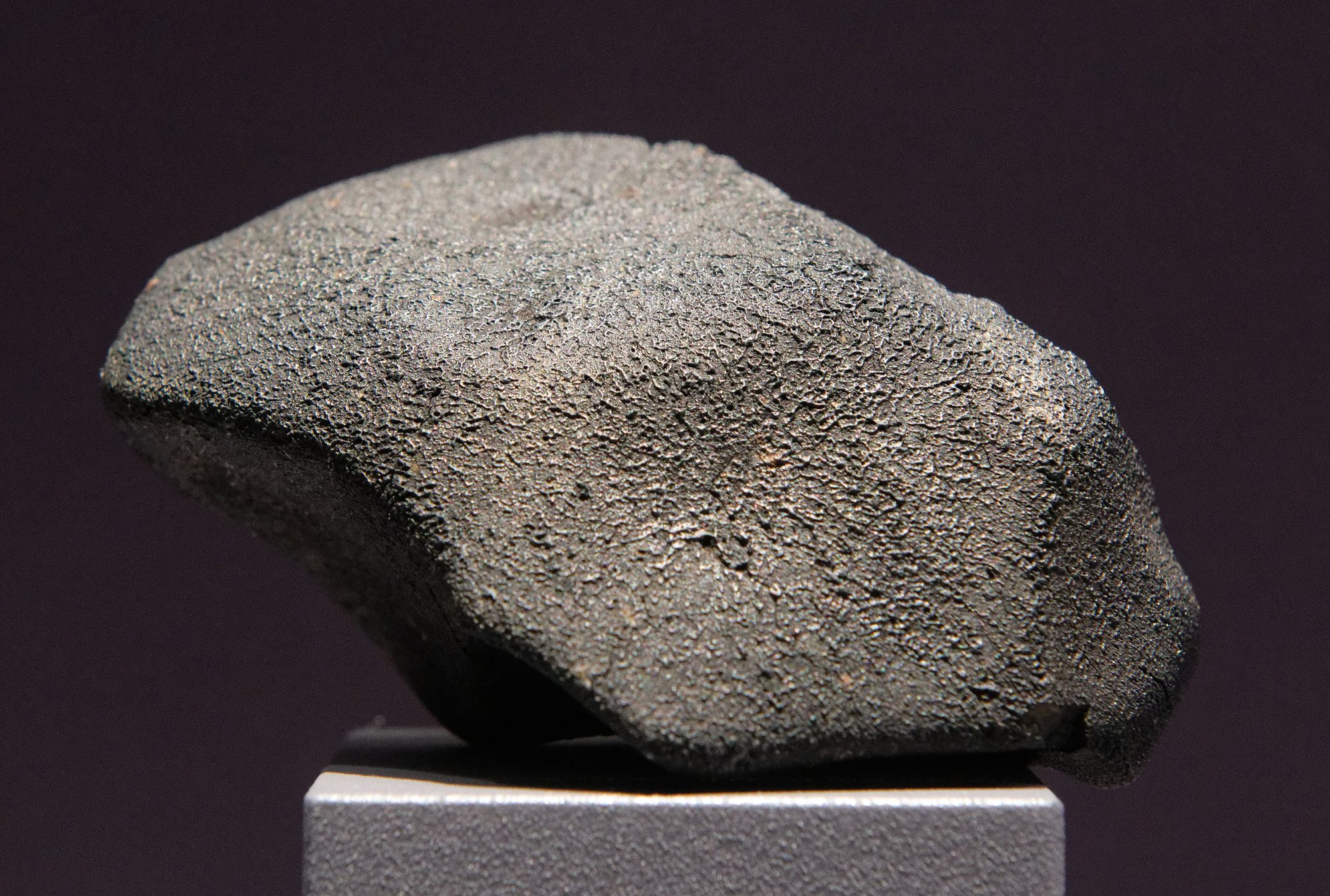
If the building blocks form easily in a flask, it turns out they form easily in space too, and this is one of the firmest and most beautiful results in the whole field. On 28 September 1969 a meteorite broke up over Murchison, in Australia, scattering fragments of a primitive, carbon-rich rock older than the Earth's own surface. Analyzed then and ever since, the Murchison meteorite has yielded more than seventy distinct amino acids, only nineteen of which are used by life on Earth, along with other organic molecules, all of it manufactured in space with no biology involved. A subtle but important detail: when Keith Kvenvolden and colleagues first reported these amino acids in 1970, the clinching evidence that they were genuinely extraterrestrial and not contamination was that they came in equal left- and right-handed mixtures, exactly what lifeless chemistry produces and living contamination would not. The evidence has only gotten cleaner. In 2023 NASA's OSIRIS-REx mission brought back 121.6 grams of pristine material from the asteroid Bennu, the largest such sample since Apollo, sealed against contamination. In it, analysts found 33 amino acids, including 14 of the 20 that life uses, along with all five of the nucleobases that spell out DNA and RNA, and unusually high amounts of ammonia; a later analysis even reported sugars, including the ribose that RNA is built from. Japan's Hayabusa2 found 15 amino acids and the nucleobase uracil in samples of the asteroid Ryugu, and the Rosetta mission sniffed the simplest amino acid, glycine, in the gas around a comet.
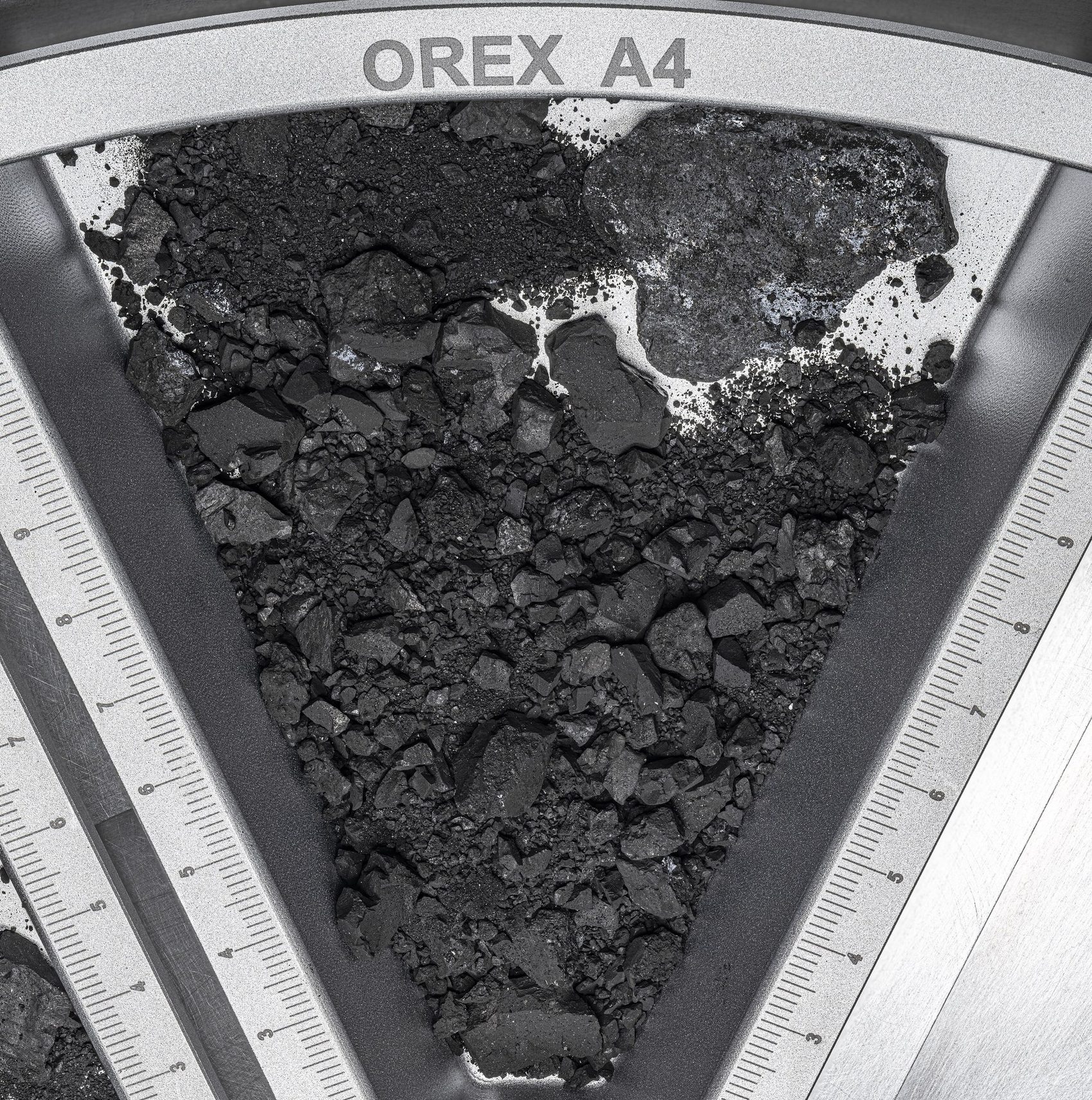
Put those results together and a genuinely profound conclusion follows, one that reshapes how the whole question should be framed. The building blocks of life, amino acids, the components of the genetic alphabet, even simple sugars, are not a rare, delicate, Earth-only fluke. They are ordinary products of cosmic chemistry, forming routinely in asteroids, comets, and the cold clouds between the stars, and raining onto every young planet. Whatever else is hard about the origin of life, getting the ingredients is not the bottleneck; the universe makes them in bulk and delivers them for free. That single fact does two things at once. It removes one of the old objections to life starting on Earth, and it lends real, sober weight to the milder forms of the idea that Earth's chemistry had a head start from space. What it does not do, and this is the drumbeat of the whole article, is bridge the gap. A world awash in amino acids is still a world with no life in it. Ingredients are not assembly.
04The Left-Handed World
Before the cradles, one deep and specific clue deserves its own section, because it is the kind of detail that any true account of life's origin will have to explain. Many of life's molecules come in two mirror-image forms, like a left and a right hand, identical in every chemical respect except their handedness. Louis Pasteur first demonstrated this molecular handedness in 1848. And life, universally, uses only one hand: proteins are built almost exclusively from left-handed (L) amino acids, and the sugars in DNA and RNA are exclusively right-handed (D). This is strange, because ordinary lifeless chemistry, including Miller's own spark experiment, makes both hands in equal amounts. Worse, any initial imbalance tends to erode: left over enough time, a batch of one-handed molecules drifts back toward a 50-50 mixture on its own. So life's absolute, universal commitment to one handedness is a real puzzle, not a curiosity. Something had to both create an initial bias and then amplify and lock it in.
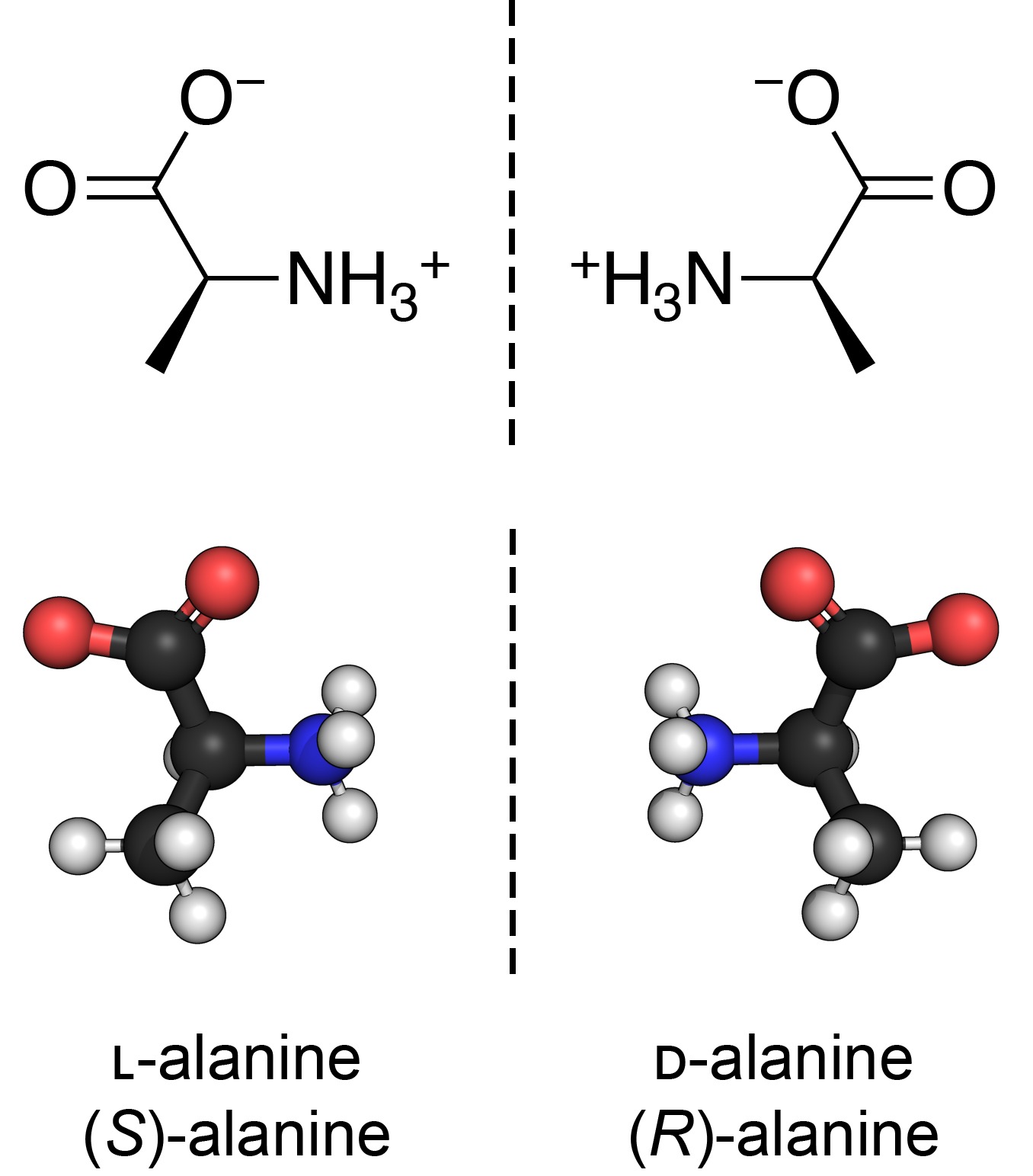
The most tantalizing clue comes, again, from space. The Murchison meteorite does not carry a perfectly even mix: several of its amino acids that life does not use, ruling out earthly contamination, show a genuine excess of the left-handed form, in one case (isovaline) by as much as 18.5 percent. Similar left-leaning excesses turn up in other meteorites. That hints the bias toward left-handedness may have been seeded in space, before Earth even formed, and several physical mechanisms could do it: circularly polarized starlight in the clouds where stars are born, which can preferentially destroy one hand; runaway chemical reactions that amplify a tiny imbalance into a near-total one; certain mineral surfaces that grip one hand more tightly than the other; and even a whisper of asymmetry from the weak nuclear force itself. The honest status is that this problem is partially explained but not solved. Real mechanisms exist that could bias and then amplify handedness; no single one, and no agreed combination, has been shown to actually produce the specific left-amino-acid, right-sugar pattern that life universally uses. The field is genuinely split on whether physics predetermined the outcome or a chance fluctuation got frozen in.
05Five Cradles, One Ancestor
So the ingredients are cosmic and abundant, and even life's handedness has candidate explanations. How, then, did molecules become a metabolism, and a metabolism become a self-copying, evolving cell? Here honesty means presenting several serious hypotheses side by side, none of them proven, and refusing to crown a winner. The RNA World proposes that life first ran on RNA alone, because RNA can both carry genetic information and, as 'ribozymes,' catalyze reactions, neatly sidestepping the chicken-and-egg problem of which came first, genes or enzymes. Its best evidence is that the core of the ribosome, the machine every cell uses to build proteins, is itself made of RNA, a likely molecular fossil of that era. Its weakness is that RNA is fragile and hard to assemble from scratch. The alkaline hydrothermal vent hypothesis locates life's start at deep-sea vents like the 'Lost City' field, where warm, mineral-rich, alkaline fluid meets seawater across thin mineral walls, creating a natural version of the very proton gradient that every living cell still uses to make energy, as though life inherited its central trick directly from the rock it was born in. Its weakness is explaining how molecules concentrate rather than simply wash away in the open ocean.
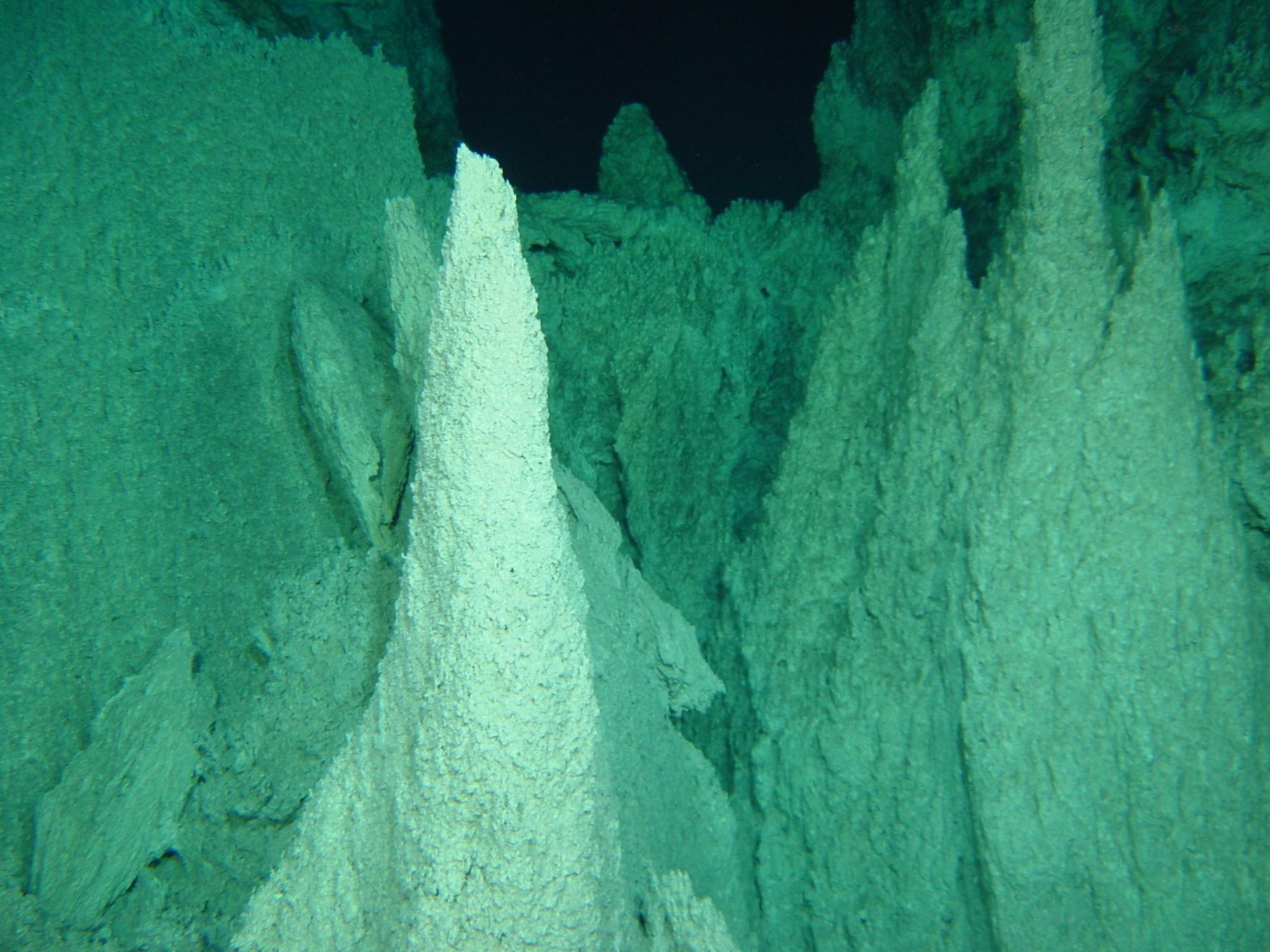
Three more hypotheses deserve equal billing rather than a footnote. The Iron-Sulfur World, proposed by Gunter Wachtershauser, flips the usual order and argues metabolism came first: self-sustaining chemical cycles running on the surfaces of iron-sulfide minerals, the same chemistry still buried in the core of many of life's enzymes today. The Lipid World, explored above all in Jack Szostak's lab, starts from the container: simple fatty acids in water spontaneously form hollow vesicles that grow, split, and even compete for material, protocells with behavior but no genes, and recent work has managed to get RNA to copy itself inside such vesicles for the first time. And the wet-dry cycling hypothesis returns to Charles Darwin's own 1871 guess about a 'warm little pond': at the edges of land-based hot springs, repeated drying and wetting could concentrate molecules, drive them to link into chains, and wrap them in membranes as the pool evaporates, directly attacking the dilution problem that troubles the ocean-vent ideas, though it needs early Earth to have had enough dry land. Each of these explains a real piece of the puzzle. None has been shown to walk chemistry the whole way across.
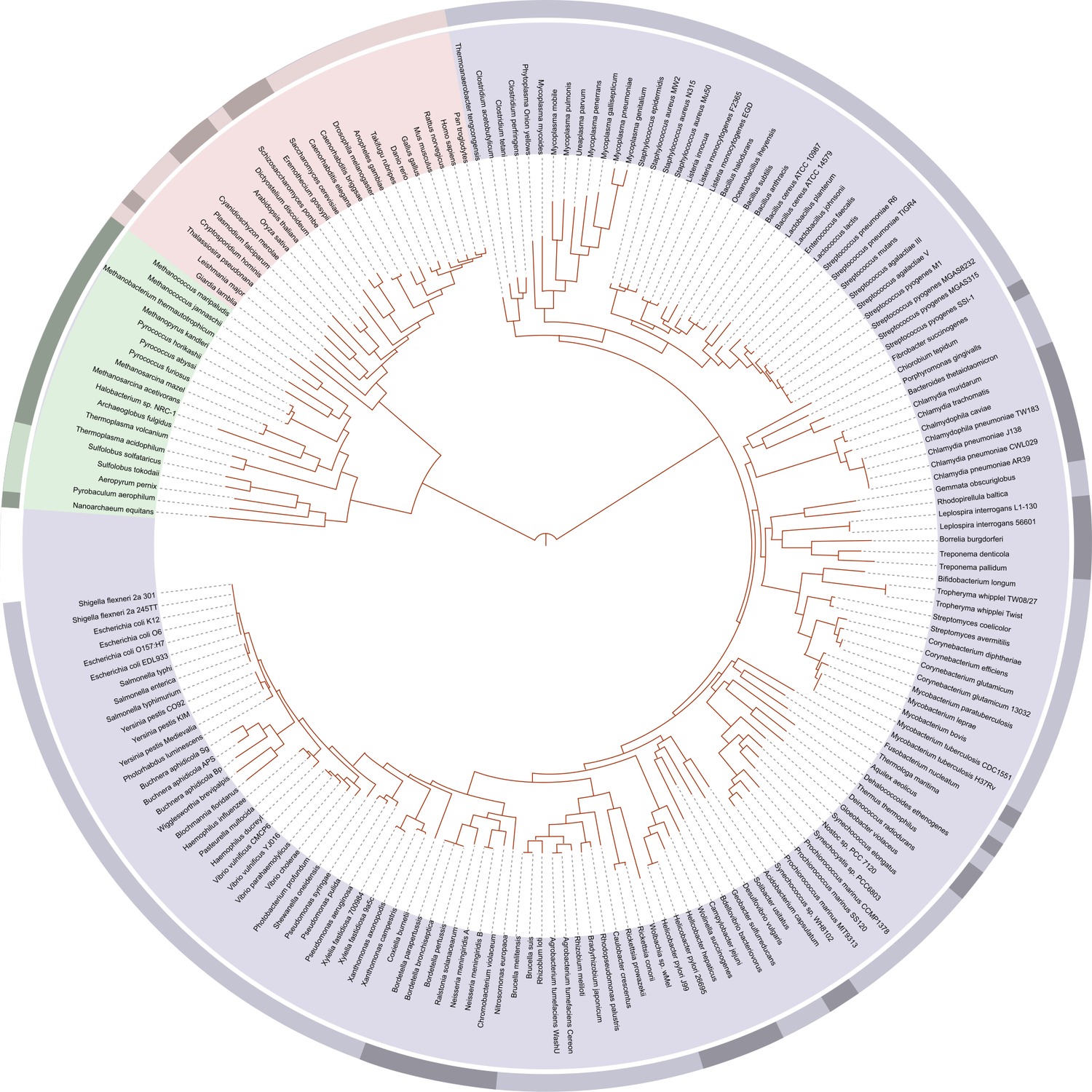
Whatever the cradle was, all the roads lead back to a single point, and it is one of the most powerful facts in all of biology. Every living thing yet studied, every bacterium, every redwood, every human, shares the same genetic code and the same core biochemistry, which means all of it descends from one common ancestor, nicknamed LUCA, the Last Universal Common Ancestor. LUCA is not a guess; its properties can be reconstructed by finding the genes shared across the whole tree of life. A landmark 2016 analysis identified 355 gene families tracing back to it and painted a specific portrait: LUCA lived without oxygen, thrived in heat, fed on hydrogen and carbon dioxide, and was rich in iron-sulfur chemistry, a lifestyle strikingly at home in a hydrothermal vent. A more recent reconstruction, in 2024, dated LUCA to roughly 4.2 billion years ago, astonishingly early, and estimated it already had some 2,500 genes, about as complex as a modern microbe, and lived as part of an ecosystem, not alone. Which carries a crucial and humbling implication: LUCA is the oldest ancestor our genetics can see, but it was already a sophisticated organism. It is emphatically not the first living thing. A long, hidden history of simpler life, and before that of pure chemistry, must have run before LUCA, in a period we currently cannot see at all.
06What Cannot Yet Be Claimed
Now the honest reckoning. Line up everything above, the flask, the meteorites, the handedness clues, the five cradles, the reconstructed ancestor, and one thing is conspicuously missing: not one of these hypotheses has been shown to actually carry chemistry across the specific, decisive gap from non-living molecules to a self-replicating, evolving system. Each illuminates a piece, where the building blocks came from, what energy sources and mineral surfaces were available, what LUCA's metabolism looked like once life already existed, without demonstrating the transition itself. That is the true open frontier, and it should not be papered over by confident phrasing. Two further ideas belong here as genuinely open, neither proven nor dismissible. The first is panspermia, the proposal that life or its building blocks came from elsewhere. It has real, named, serious versions: Svante Arrhenius imagined spores drifting between worlds, and in 1973 Francis Crick and Leslie Orgel floated 'directed panspermia,' deliberate seeding by some earlier civilization. The evidence genuinely cuts both ways. For the delivery of raw materials, it is strong: amino acids on meteorites are a fact, hardy microbes have survived years exposed in open space, and rocks are exchanged between Mars and Earth. For the delivery of actual living organisms, it is speculative: no extraterrestrial organism has ever been found, and space radiation shreds complex molecules. The second open idea is the reverse of a fluke: that life may be a near-inevitable outcome of physics, with matter under a steady flow of energy tending to self-organize, an intriguing hypothesis that is extremely hard to test.
Which leaves the two shortcuts to refuse by name, one from each direction. The first: that science has explained, or solved, the origin of life. It has not. The progress is real, substantial, and hard-won on every piece of the puzzle, but no laboratory has ever taken purely non-living chemistry all the way to a self-replicating, evolving system, and any phrasing that implies otherwise is an overclaim. The second, opposite shortcut: that life must therefore have been designed, or deliberately seeded by an advanced civilization. Directed panspermia is a real hypothesis, but it is not evidence, and it has nothing to distinguish it from ordinary undirected chemistry. More decisively, even if some form of seeding were true, it would not answer the question at all. It would only move it: whoever or whatever did the seeding would themselves have had to originate somehow, somewhere. Panspermia relocates the mystery; it does not solve it. And the fringe versions collapse outright. Zecharia Sitchin's claim that the Sumerian 'Anunnaki' genetically engineered humanity is rejected by every serious scholar of the ancient texts he mistranslated; the genetic record shows ordinary evolution, not manufacture. Michael Behe's 'irreducible complexity,' the argument that certain biological systems are too interdependent to have evolved, has been rebutted for every example he offered, and intelligent design was ruled not to be science in a United States federal court in 2005. The deep philosophical question of why there is something rather than nothing is entirely legitimate; dressing it up as a biology result is not the same thing.
Fast Facts
- The timing
- Earth is about 4.54 billion years old. Sterilizing impacts eased by roughly 3.8 to 4.0 billion years ago; the oldest widely accepted life (Pilbara microfossils and stromatolites) dates to about 3.43 to 3.48 billion years. Life appeared strikingly soon after the planet became habitable
- Miller-Urey (1953)
- Sparking simple gases (water, methane, ammonia, hydrogen) produced amino acids with no biology involved. The original paper named 5 amino acids (not 11); a 2008 reanalysis of Miller's vials found 14 from the classic setup and 22 from a separate 'volcanic' one
- Building blocks from space
- The Murchison meteorite (fell 1969) carries 70-plus amino acids, 19 of them biological. The OSIRIS-REx Bennu sample (2023) held 33 amino acids and all five DNA and RNA nucleobases. Ingredients are common cosmic chemistry, not an Earth-only event
- The handedness problem
- Life uses only left-handed amino acids and right-handed sugars, but lifeless chemistry makes both hands equally. Meteorites show a real left-handed excess in non-biological amino acids. Partially explained, not solved
- The cradle candidates
- RNA world, alkaline hydrothermal vents, iron-sulfur world, lipid-world protocells, and land-based wet-dry cycling are all serious, evidenced hypotheses. None has been shown to complete the journey to a living cell
- LUCA
- All life descends from one Last Universal Common Ancestor, reconstructable from shared genes: anaerobic, heat-loving, hydrogen-fed. A 2024 estimate puts it at ~4.2 billion years old with ~2,500 genes, already complex. LUCA is NOT the first living thing
- Refused
- That the origin of life has been 'solved' (it has not: no lab has crossed chemistry to a self-replicating system), and that it 'must have been' designed or seeded by aliens (a hypothesis, not evidence, and one that only relocates the question to another world)
What We Can Actually Stand Behind
The building-block chemistry is settled. Amino acids form from inorganic gases and energy (Miller-Urey, 1953), and amino acids, nucleobases, and sugars occur naturally on meteorites and returned asteroid samples (Murchison; OSIRIS-REx's Bennu sample, 2023). Life appeared strikingly early, within a few hundred million years of Earth becoming habitable. And all life descends from a single common ancestor, LUCA, whose deep biochemistry can be reconstructed. These are facts.
Much is strongly evidenced but genuinely contested among specialists: exactly which cradle (RNA world, vents, iron-sulfur, lipid world, wet-dry cycling), how to read the disputed earliest signals (Isua at 3.7, the Jack Hills zircon at 4.1 billion years), whether the Late Heavy Bombardment was one cataclysm or a long decline, and the precise reconstruction and age of LUCA (a 2024 study puts it near 4.2 billion years and already complex). Real progress, real disagreement.
The core transition is open. No hypothesis has been shown to actually take non-living chemistry all the way to a self-replicating, evolving system. Panspermia is plausible for the delivery of building blocks (well evidenced) but speculative for the delivery of living organisms. And the idea that life is a near-inevitable outcome of physics under an energy flow is intriguing but very hard to test. These are honest unknowns.
Both shortcuts get a clear no. Science has NOT 'solved' the origin of life; the progress is real but the decisive step has never been demonstrated. And it need not have been designed or seeded: directed panspermia is a hypothesis, not evidence, and even if true would only move the question to wherever the seeders arose. The Anunnaki-engineering myth and 'irreducible complexity' are both refused outright. Wonder at the open question is warranted; a false answer in either direction is not.
The origin of life sits at the head of The Living World because everything else in the wing, the octopus and the redwood, the tardigrade and the deep-sea vent worm, hangs from its answer, and because it is the cleanest possible illustration of this wing's whole way of seeing. The wonder here is real and needs no inflation: that ordinary chemistry, the same atoms obeying the same rules everywhere, somehow crossed over into something that could copy itself and begin to evolve, and did so almost the instant this planet allowed it. The progress is real too, real enough to fill a flask, to read on a meteorite, to reconstruct in the genes of a four-billion-year-old ancestor. And the gap is real, the specific, stubborn, still-unbridged step from chemistry to a living thing that no one has yet made in a laboratory. To pretend the gap is closed would be a lie, and to fill it with a miracle or a spaceship would be to stop looking. The honest stance is the interesting one: the ingredients are cosmic and cheap, the timing was fast, the ancestor is knowable, and the moment of ignition is still, for now, hidden from us. It is the oldest question there is, and it is still, magnificently, open.
Sources & further reading
Everything above is drawn from our research library on Theories of Anything, with the specific studies below. Open the full file to check the sourcing and go deeper.
Image credits
- The Murchison meteorite (National Museum of Natural History, Paris) Marie-Lan Tay Pamart, via Wikimedia Commons (CC BY 4.0). CC BY 4.0 Source.
- Geologic time spiral United States Geological Survey (Graham, Newman & Stacy), via Wikimedia Commons (public domain). Public domain Source.
- Miller-Urey experiment apparatus (schematic) YassineMrabet, via Wikimedia Commons (CC BY-SA 3.0 / GFDL). CC BY-SA 3.0 Source.
- OSIRIS-REx returned sample of asteroid Bennu Erika Blumenfeld and Joseph Aebersold, NASA, via Wikimedia Commons (public domain). Public domain Source.
- L- and D-alanine mirror-image chirality Synpath, via Wikimedia Commons (CC BY-SA 4.0). CC BY-SA 4.0 Source.
- Carbonate chimneys of the Lost City hydrothermal field Ifremer, via Wikimedia Commons (CC BY 4.0). CC BY 4.0 Source.
- Circular tree of life with LUCA at the root Ivica Letunic, retraced by Mariana Ruiz Villarreal (LadyofHats), via Wikimedia Commons (public domain). Public domain Source.
- Card crop of the Murchison meteorite Marie-Lan Tay Pamart, via Wikimedia Commons (CC BY 4.0). CC BY 4.0


.jpg)

.jpg)
