
Local All Along
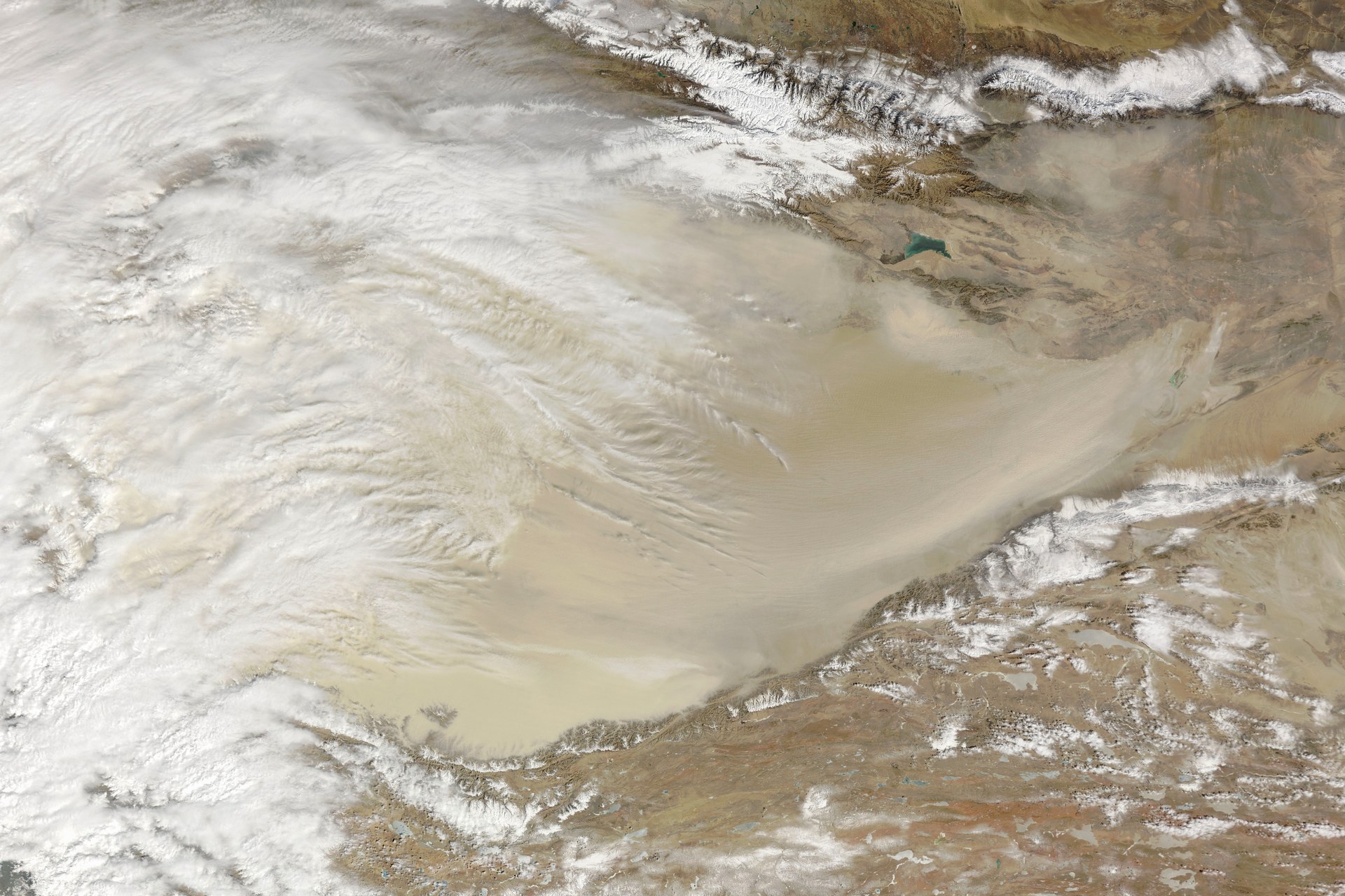
For a century the Tarim mummies carried a story: fair-haired, tall, woven into twill, buried in a Chinese desert four thousand years ago, and therefore, people said, migrants out of the west. In 2021 thirteen genomes came back from Nature and dismantled it. The Bronze Age population of the Tarim Basin was not a migrant people at all. It descended from an Ancient North Eurasian group that had been genetically isolated for thousands of years, sitting in a bowl walled by mountains on every side. They were local, and they had been local a very long time. Meanwhile the civilisation that actually lived there later, Buddhist, multilingual, and the source of the oldest surviving drama in any Indo-European language after Greek, is the part almost nobody can name.
The bodies came out of the sand looking wrong. Tall, some of them fair-haired, wrapped in woven woollen cloth, buried four thousand years ago under a desert in what is now the far west of China. They had not been embalmed. The basin had simply dried them, the way it dries everything, and left faces and eyelashes and textile weave intact across four millennia. From the moment Europeans began photographing them, one explanation attached itself and would not come off: these people must have come from the west. Somebody had walked an enormous distance, and here was the proof of it.
In 2021 that explanation was tested directly, with ancient DNA from thirteen of them, and it did not survive. The result is stranger and better than the story it replaced, and it is worth saying plainly before anything else: they had not come from anywhere. This article is about what the evidence actually shows, about a very old misreading of these bodies that our own research file marks debunked and politically motivated, about the civilisation that lived in the same basin two thousand years later and that almost nobody can name, and, at the end, about a prediction we wrote down before checking our own sources and then watched break.
01Thirteen Genomes
They were not migrants. They were local, and had been for thousands of years. Ancient DNA from thirteen Bronze Age individuals of the Tarim Basin, dating to roughly 2100 to 1700 BCE, was published in Nature in 2021. The finding: they were genetically distinct from every neighbouring population, carrying a predominantly Ancient North Eurasian profile rather than the Afanasievo or Yamnaya steppe ancestry that everyone had assumed. In our file's own words, the early Tarim population derived from a genetically isolated southern Siberian gene pool. Ancient North Eurasian is a very deep ancestry, a population that had been sitting apart for a very long time. The people in those coffins were not the end of a journey. They were the descendants of people who had stopped moving long before.
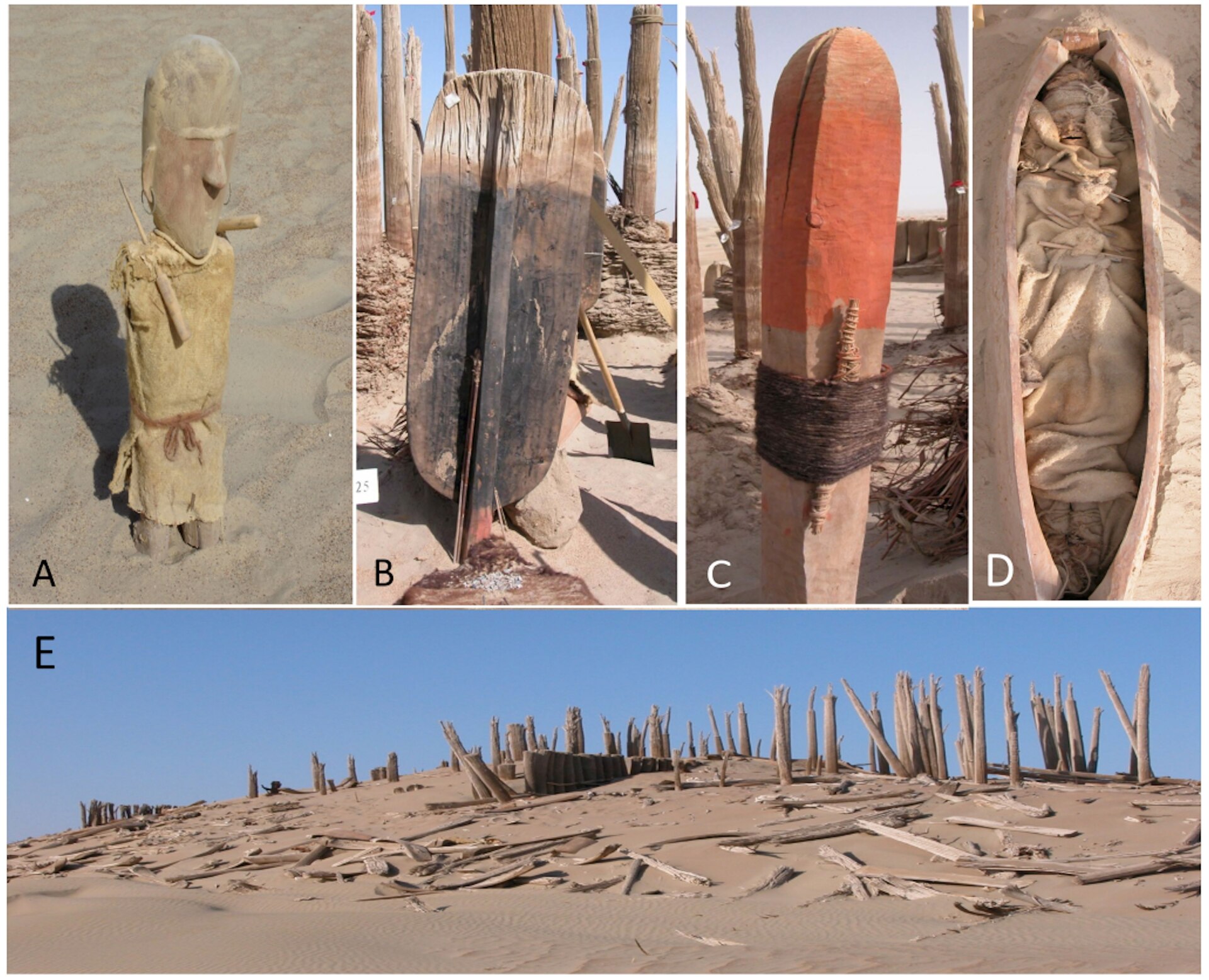
An earlier study found early mixing, and the two results fit together. In 2010, Li and colleagues published evidence in BMC Biology that a West-East admixed population lived in the Tarim Basin as early as the early Bronze Age. Victor Mair, who has done more than anyone to bring these bodies to public attention, is among its authors. Read the two papers together and the picture is neither of the two slogans on offer. It is not that westerners walked east and founded the place, and it is not that nobody ever moved. It is that the basin held a population which was mixed early, and whose deepest layer was a local, long-isolated northern Eurasian ancestry rather than an incoming steppe migration.
Nobody embalmed them. The earliest Tarim mummies come from Xiaohe, also called Small River Cemetery 5, and from Gumugou, and date to about 2000 to 1500 BCE. They are naturally mummified. Much of this basin receives under twenty-five millimetres of rain a year, and that is the whole mechanism: the bodies dried faster than they could rot. The same aridity that makes the region almost uninhabitable is the reason we have the bodies, the textiles, the wooden grave markers and, two thousand years later, the manuscripts.
02The Misreading, Named Plainly
The mummies do not show that Europeans colonised China, and the claim has a politics. Our research file marks this one debunked without softening it: sensationalised claims that the Tarim mummies prove Europeans or Caucasians colonised China are misleading and politically motivated. The populations were Central Asian with complex mixed ancestry, and, in the file's own sentence, Western Eurasian physical features do not equate to modern European identity. A second refusal follows immediately: the idea that Tocharian's existence proves a lost Aryan homeland in the Tarim Basin conflates a linguistic relationship with a racial category, which is not a scientific argument in any form. It is worth noticing that the 2021 genetics did not merely fail to support the older reading. It removed the migration that the reading depended on.
The summary of our research file inverts the finding its own evidence section reports. The file's opening summary says the ancient DNA work placed the Tarim populations within the broader context of Afanasievo and later Bronze Age migrations. Its Tier 1 section says the same paper found an Ancient North Eurasian profile rather than Afanasievo or Yamnaya ancestry as previously assumed. Its counter-arguments section agrees with Tier 1, saying the study showed minimal Afanasievo ancestry. So three parts of the document agree with each other and with the paper, and the summary contradicts all three. We are not settling this by our own authority; we are reporting that the file settles it three times and then unsettles it once. It matters more than an ordinary slip because a summary is the part that gets skimmed, and this one hands the reader exactly the claim the research overturned.
03The Wrong Language In The Wrong Place
Two thousand years after the mummies, this basin was speaking an Indo-European language. Tocharian A and Tocharian B are the easternmost members of the Indo-European family, spoken thousands of kilometres from their nearest linguistic relatives. They were identified as Indo-European in 1908 by Emil Sieg and Wilhelm Siegling, working on manuscripts the German Turfan expeditions of 1902 to 1914 had brought back from the Kucha and Agni oases. And the classification is the strange part. Tocharian is a centum language, and it appears more closely related to western branches such as Celtic and Italic than to Iranian and Indo-Aryan, which were spoken far nearer. Two languages, with two jobs: Tocharian B was the administrative and literary language of Kucha from roughly the 2nd to the 8th century CE, while Tocharian A served mainly as a Buddhist liturgical language in the kingdom of Agni.
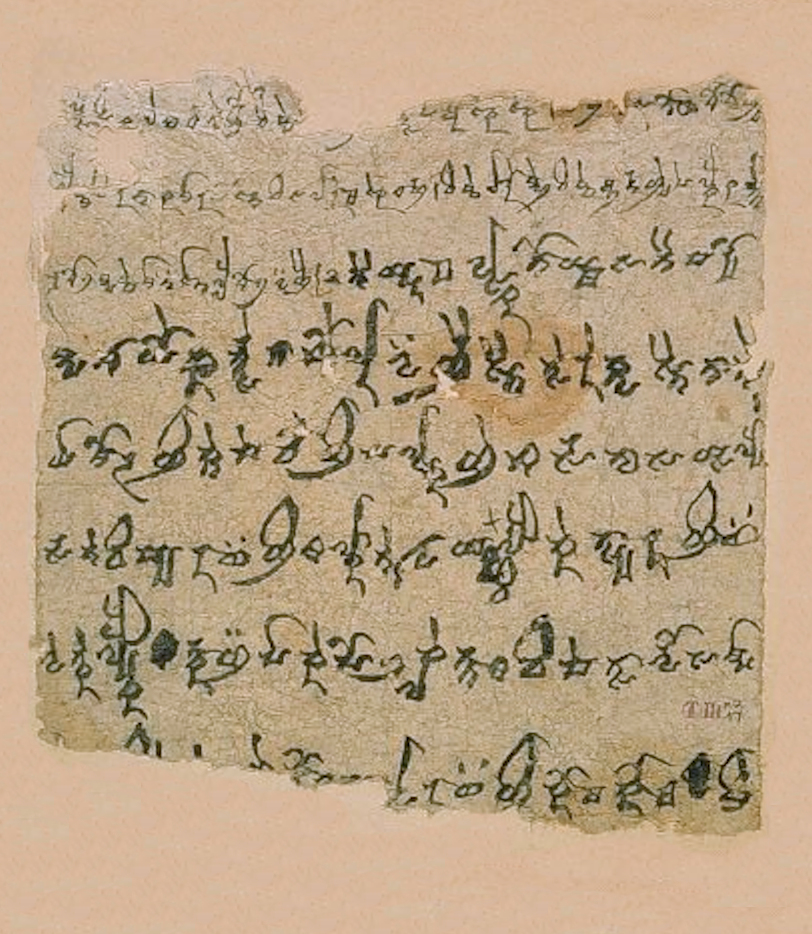
Did the mummies speak it? Nobody can say, and the honest answer is the interesting one. Our file uses the word unprovable, and gives the reason: the mummies predate written Tocharian by more than fifteen hundred years. Mair argued for linguistic continuity between the Bronze Age population and the later Tocharian speakers. The 2021 genetics complicated that, showing the genetic populations may not line up with the later speaking communities at all. So there are two mysteries here that happen to share a desert: a set of very old bodies, and a very oddly placed language recorded much later. Treating them as one story is precisely the habit that produced a century of misreadings.
Linguists cannot agree where Tocharian sits in its own family. One proposal makes it the most basal branch of Indo-European after Anatolian, meaning it split away before almost everything else did. Others place it nearer Italo-Celtic. Others treat it as an isolate inside the family. Our file names why the question resists an answer: Tocharian's centum character in an eastern location cuts straight across the traditional centum and satem division, which was supposed to run more or less west to east. A related and equally open question: the Yuezhi, driven west by the Xiongnu around 176 to 162 BCE and eventually founders of the Kushan Empire in northern India, have been proposed as Tocharian speakers on partial linguistic evidence. Our file records the proposal and marks it contested, which is the right weight.
04The Civilisation Nobody Can Name
Four oasis kingdoms, seven languages, and the road Buddhism took into China. Kucha, Khotan, Agni and Loulan flourished from about 200 BCE to 1000 CE as critical nodes on the Silk Road. They held cosmopolitan populations, they carried Buddhism from India into China, they cut vast cave temple complexes into cliffs, and they produced texts in at least seven languages. The mummies get the documentaries. This is the part that changed Asia.
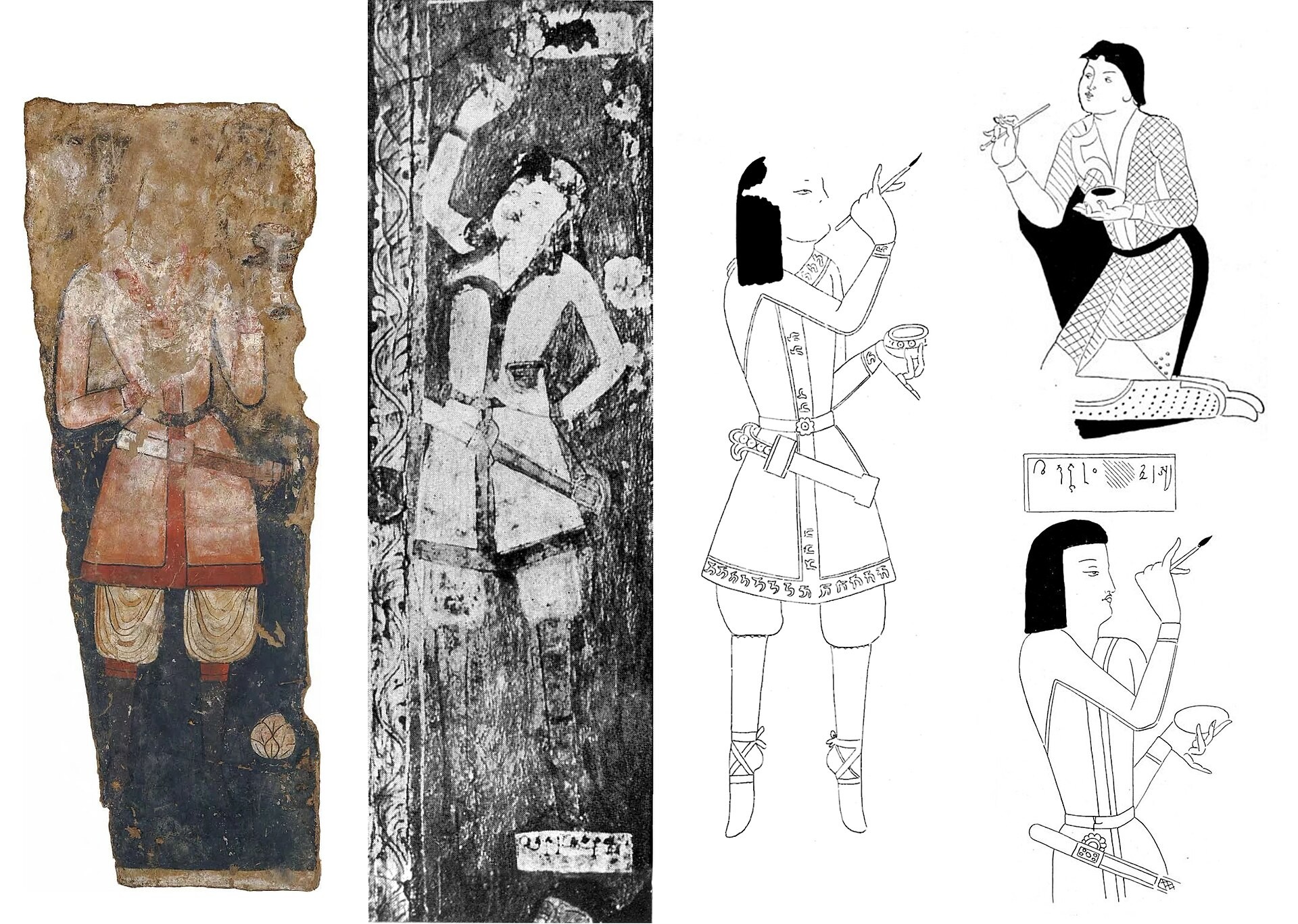
More than three hundred and thirty-nine caves, and a chapter our file does not soften. The Kizil cave temples near Kucha comprise over 339 caves with wall paintings dating from about the 3rd to the 8th centuries CE, among the most important Central Asian Buddhist art complexes anywhere. And then the other half of the sentence: Albert von Le Coq and subsequent German expeditions removed significant murals, which are now in Berlin's Museum für Asiatische Kunst. That is how a good deal of what survives came to survive, and also how it came to be somewhere else. Both things are true and our file states them together rather than choosing one.
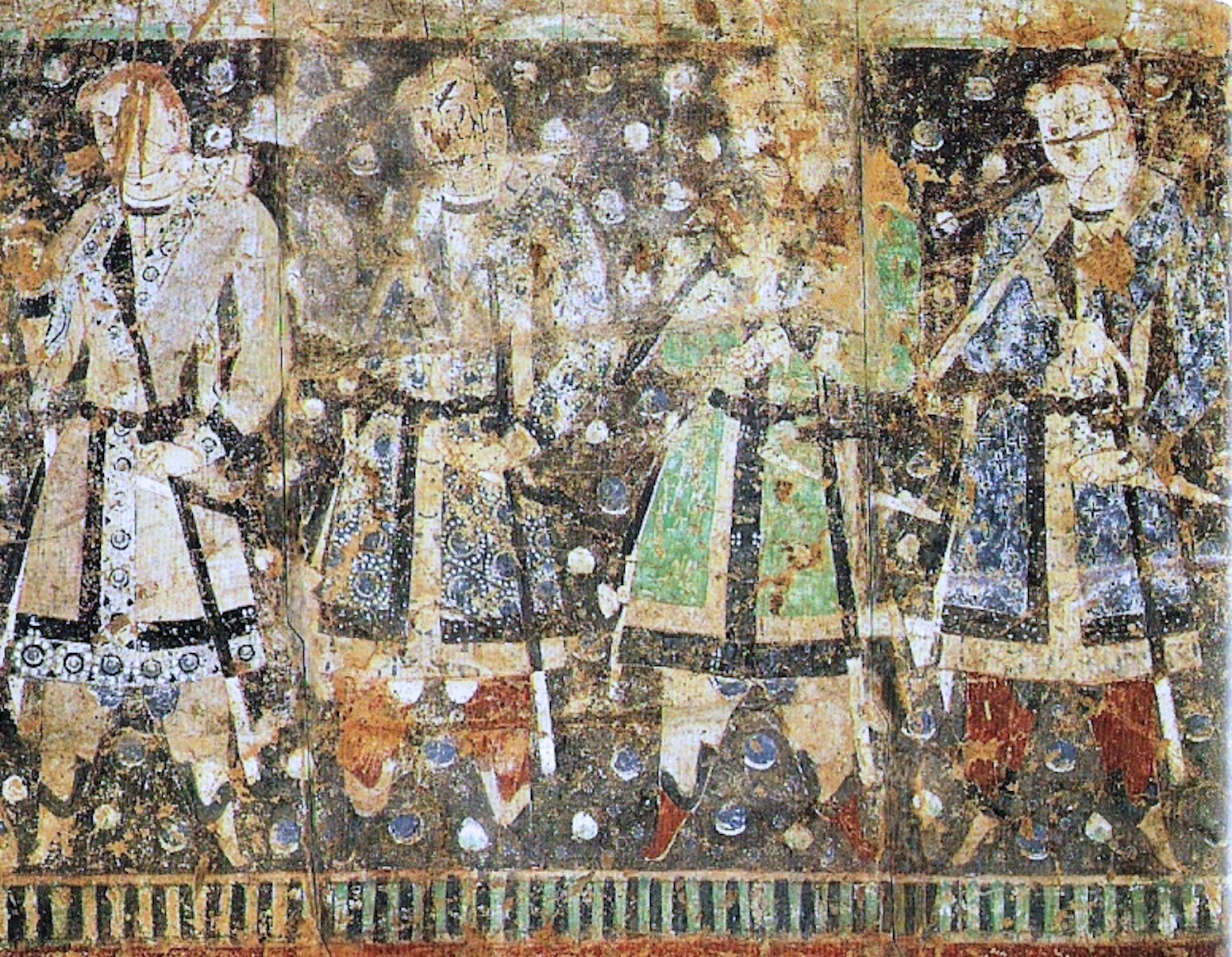
A man from Kucha wrote the Chinese Buddhist texts still in use today. Kumārajīva, 344 to 413 CE, was born in Kucha of mixed Kuchean and Kashmiri parentage. Working at Chang'an from 401 CE, he became one of the most influential translators of Buddhist scripture from Sanskrit into Chinese, and his versions of the Lotus Sutra, the Vimalakīrti Sūtra and the Diamond Sutra became the standard Chinese texts and remain the ones in use. Hold the distance in that. A man from an oasis kingdom that no longer exists, whose native language nobody has spoken for a thousand years, is being read aloud in temples this morning.
Kuchean music became court music in China, and brought two instruments with it. Chinese sources describe qiuci yue, the music of Kucha, as one of the official Nine Divisions of Music at the Sui and Tang courts. Our file names what travelled with it: the pipa, the bent-neck lute, and the bili, a double-reed pipe. Both became foundational to Chinese music. There is a related and larger claim in the same file about the art: the distinctive Kucha style, blending Gandharan, Gupta, Sasanian and Central Asian elements, has been identified as the intermediary stage in the chain that runs from Gandharan Buddhist art to the Chinese Buddhist art of Dunhuang and Longmen. The look of Chinese Buddhism passed through this basin and came out altered.
The oldest surviving drama in any Indo-European language after Greek is in Tocharian. The Maitreyasamitināṭaka, the Play of the Meeting with Maitreya, survives in Tocharian A and dates to about the 6th or 7th century CE. Our file's claim is not that it is the oldest drama in Central Asia. It is that it is the oldest known dramatic text in any Indo-European language after Greek drama. That is a large claim about a whole language family, and we are reporting it as our file's claim rather than as one we have tested; we did not go and check the dating of every early Indo-European dramatic text against it. What is not in doubt is the setting: a play, preserved by accident in a desert, in a language that stopped being spoken a thousand years ago.
They grew crops in a basin that gets under twenty-five millimetres of rain a year, by moving the water underground. The basin's aridity forced karez irrigation: underground channels that carry water from the mountain flanks to the oasis fields with almost nothing lost to evaporation on the way. Our file records that the technique was likely adopted from Iranian practice and maintained continuously from the early first millennium BCE. It is also worth saying that the basin was never one people or one language: Khotan, on the southern route, spoke Khotanese, an Iranian language rather than Tocharian, and kept its strongest ties with India and Tibet. What we call the Tarim Basin is a rim of separate kingdoms around an uninhabitable centre.
The neighbours wrote it down, at both ends. The Chinese dynastic histories record the Tarim oasis-states from the 2nd century BCE, when the Han incorporated them into the Western Regions protectorate system after Zhang Qian's embassy of 138 to 126 BCE. And the closing sequence is equally documented: absorbed by the Tang in the 640s under direct administration, then by the Tibetan Empire from the 670s to the 790s, then by the Uyghur Qocho Kingdom from about 866 CE. The Tocharian languages were extinct by about 1000 CE, replaced by Turkic. No catastrophe, no vanishing. A long absorption, and then a language that stopped having anyone to speak it.
The record is skewed by what stayed dry, and by who can dig. Our file puts both limits in its own text rather than leaving them to a critic. First, the preservation bias is extreme: only dry cave and desert sites survive, while lowland oasis settlements are mostly unrepresented, which means the documentary record is heavily monastic and Buddhist because those are the places that stayed dry. What we have is not a sample of this civilisation; it is a sample of its driest corners. Second, the political sensitivity of archaeology in Xinjiang, involving Uyghur, Chinese and international interests, has complicated access, publication and interpretive frameworks since the 1990s. Both belong in an honest account of how much anyone can currently know.
05A Note On Our Own Sources, And A Prediction That Broke
And the two that carry the science are the two that are right. This file's bibliography has fourteen entries, ten of them carrying an identifier: five article identifiers and five book ISBNs. Four are correct. Both genomics papers resolve exactly, which is the part that matters most, because they are the sources under the article's central claim. Adams's Tocharian dictionary and Hansen's Silk Road history have correct ISBNs down to the edition. The other six are wrong, and they fail in exactly two shapes: three identifiers that point to a review of the book cited, and three ISBNs belonging to a different edition of the book cited.
And this time the file forced the rule to discriminate. The last article in this series produced a rule about how bad citations fail: a wrong identifier on a book lands on a review of that book, and a wrong identifier on a journal article lands on the paper printed beside it. That file was entirely books, so the rule could only say one thing. This file is mixed, three journal articles and eleven books, so the rule had to predict different outcomes for different entries in the same bibliography. We wrote the per-entry prediction down before resolving anything: the three journal articles should be correct, the two books should fail as reviews. Four of five came back as predicted. Both books failed as reviews, exactly as called. And the fifth, which we predicted would be correct, is wrong.
One of them even wears its own nature in its title. The identifier on Mallory and Mair's The Tarim Mummies resolves to S. Zimmer reviewing it in Kratylos in 2003, and the record's title literally begins with the reviewed book's authors and full title, which is precisely why review records slip past a title match. The identifier on Mair's edited volume resolves to Nicola Di Cosmo reviewing it in Early China in 1998. And that second one does something useful on its way past: our file dates the volume 2010 and cites it that way repeatedly in the body. A review of it was published in 1998. A book cannot be reviewed twelve years before it exists, so the wrong pointer, followed properly, corrects the entry it was attached to. That is the second time in this run that a bad identifier has supplied a correction to its own citation.
We predicted the Ringe entry would resolve correctly, because our file presents it as a journal article. It is not one. The identifier resolves to a book review of an entirely unrelated work, La Bible en exil, in the Journal of the American Oriental Society volume 117, page 219, in 1997. Our bibliography says volume 116, pages 66 to 85, in 1996. So we went looking for the real thing. Ringe's work on the chronology of sound changes in Tocharian is a monograph. There is no book record for it in the registry at all, only two review records of it in the journal Language. And a search of the Journal of the American Oriental Society for any article by Ringe across the whole decade returns nothing. The journal, the volume and the page range in our bibliography do not exist for this work. A real author and a real title were given a container that was never theirs.
Classify the entry correctly and the rule predicts it perfectly. It is a book. The rule says a wrong identifier on a book lands on a review, and reviews are the only records of this work that exist anywhere. So the rule held. Our application of it did not, and the reason is worth more than the score: to predict how a citation will fail you must know what kind of object it points at, and we read that off the citation. The citation's own container field is one of the things that goes wrong. It is a circular trap and no amount of care with the rule escapes it. The only way out is to establish what a work actually is before reasoning about its identifier, which means the container has to be checked as a finding in its own right rather than accepted as background.
And found the neighbourhood was real, just not the one we assumed. Our file's identifier lands on page 219 of volume 117. We stepped through the identifiers immediately around it. The one two below gives page 216. The next gives 217. Ours gives 219. The next gives 220, and the next 221. All in the same volume, all in page order. These identifiers do preserve adjacency; the adjacency simply belongs to the archive's accession sequence rather than to the journal's own pagination, and that particular run happens to be the book-review section of a volume our file never cites. Which sharpens the rule rather than breaking it: a wrong identifier lands on whatever is next door in the namespace the identifier itself uses. For a publisher's identifier that neighbourhood is the journal issue. For an archive's, it is the shelf the archive built.
Three books, three wrong editions. Mallory and Mair's book is dated 2000 in our bibliography and carries the ISBN of the 2008 paperback. Zürcher's is dated 2007 and attributed to Brill, and carries the ISBN of a 1973 Humanities Press printing, a gap of thirty-four years and the largest we have found. Rhie's is dated 2002 and labelled volume 2, and its ISBN resolves to a 1998 publication. These are the sixth, seventh and eighth cases of this exact kind in the present run of articles. The underlying confusion is simple and worth naming: an ISBN identifies a printing, not a work. A bibliography that treats the two as interchangeable will get this wrong every single time a book has been reprinted, which is to say every time a book has been any good. We recovered the correct Brill identifier for Zürcher. For the other two we could not establish the right one and have not guessed.
| Our File's Entry | Predicted In Advance | What It Actually Returns |
|---|---|---|
| 3. Zhang et al 2021, Nature 599:256-261 [article] | CORRECT | Exact: Zhang, Ning, Scott, Fu and colleagues, Nature 599(7884):256-261, 2021. CORRECT |
| 4. Li et al 2010, BMC Biology 8:15 [article] | CORRECT | Exact: Li, Li, Cui and colleagues, including Victor Mair, BMC Biology 8(1), 2010. CORRECT |
| 2. Mallory & Mair 2000, The Tarim Mummies [book] | A review, in Kratylos | S. Zimmer reviewing the book, Kratylos 48(1):79-84, 2003. The record's own title begins with the reviewed book's authors and title |
| 5. Mair (ed) 2010, Bronze Age Peoples of Eastern Central Asia [volume] | A review, in a Cambridge journal | Nicola Di Cosmo reviewing the volume, Early China 23:339-352, 1998. Which also dates the volume to 1998, not 2010 |
| 11. Ringe 1996, JAOS 116:66-85 [filed as an article] | CORRECT. WE WERE WRONG | A book review of La Bible en exil, JAOS 117(1):219, 1997. And the entry is a MONOGRAPH given a journal, volume and page range that do not exist for it |
| 1. Adams 2013, Dictionary of Tocharian B [ISBN] | not predicted | Exact, including the revised edition: Rodopi, 2013, 964 pp. CORRECT |
| 12. Hansen 2012, The Silk Road: A New History [ISBN] | not predicted | Exact: Oxford University Press, 2012, 332 pp. CORRECT |
| 2. Mallory & Mair, ISBN alongside a 2000 date | not predicted | The 2008 Thames and Hudson paperback. Correct book, wrong printing |
| 9. Zürcher 2007, 3rd ed, Brill [ISBN] | SUSPECT: an older imprint's stem on a 2007 book | A 1973 Humanities Press printing. A thirty-four year gap. Recovered: the Brill identifier is 9789004156043 |
| 14. Rhie 2002, vol 2, Brill [ISBN] | not predicted | A 1998 publication. Wrong year and, on our file's own labelling, wrong volume. The right one was not established |
Fast Facts
- The mummies
- Earliest from Xiaohe (Small River Cemetery 5) and Gumugou, c. 2000 to 1500 BCE. Naturally mummified, not embalmed, in a basin receiving under 25 mm of rain a year
- The 2021 result
- Thirteen Bronze Age genomes, c. 2100 to 1700 BCE, published in Nature: a predominantly Ancient North Eurasian profile, genetically isolated, NOT Afanasievo or Yamnaya steppe ancestry
- The 2010 result
- Li et al. in BMC Biology: a West-East admixed population in the basin as early as the early Bronze Age. Victor Mair is a co-author
- The languages
- Tocharian A (Agnean) and Tocharian B (Kuchean), the easternmost Indo-European languages. Centum, with western affinities. Identified as Indo-European in 1908 by Sieg and Siegling
- The gap
- The mummies predate written Tocharian by more than 1,500 years. Whether they spoke an ancestral form of it is, in our file's word, unprovable
- Kizil
- Over 339 caves, murals c. 3rd to 8th century CE. Significant murals removed by Le Coq and later German expeditions, now in Berlin
- Kumārajīva
- 344 to 413 CE, born in Kucha. His Chinese translations of the Lotus, Vimalakīrti and Diamond sutras remain the standard versions in use today
- Oldest drama
- The Maitreyasamitināṭaka, Tocharian A, c. 6th to 7th century CE: the oldest known dramatic text in any Indo-European language after Greek
- Music
- Kuchean qiuci yue was one of the Nine Divisions of Music at the Sui and Tang courts, carrying the pipa and the bili into Chinese music
- The end
- Tang direct rule from the 640s, Tibetan Empire 670s to 790s, Uyghur Qocho from c. 866. Tocharian extinct by c. 1000 CE, replaced by Turkic
- Refused
- That the mummies show Europeans colonised China. Our file marks this misleading and politically motivated, and notes that Western Eurasian features do not equate to modern European identity
- Identifier audit
- 10 identifiers checked live 26 August 2026 against a prediction recorded in advance. 4 correct, 6 wrong, and 4 of 5 predictions right. The one that broke was the most useful
What We Can Actually Stand Behind
Thirteen Bronze Age Tarim genomes show a predominantly Ancient North Eurasian ancestry from a genetically isolated gene pool, not an Afanasievo or Yamnaya migration; both the 2021 Nature paper and the 2010 BMC Biology paper carry correct identifiers in our file. The mummies are naturally dried, from Xiaohe and Gumugou, c. 2000 to 1500 BCE. Tocharian A and B are genuinely Indo-European, genuinely centum, identified in 1908, and attested in manuscripts of the 5th to 8th centuries CE. Kizil has over 339 painted caves and German expeditions removed significant murals to Berlin. Kumārajīva's translations remain the standard Chinese texts. The oasis-states were absorbed by the Tang, then Tibet, then the Uyghurs, and Tocharian was extinct by about 1000 CE.
Karez irrigation adopted from Iranian practice and maintained from the early first millennium BCE. Khotan speaking an Iranian language rather than Tocharian. The Kucha style as the intermediary stage between Gandharan and Chinese Buddhist art. Kuchean music among the Nine Divisions at the Sui and Tang courts, bringing the pipa and bili with it. The Maitreyasamitināṭaka as the oldest Indo-European drama after Greek. And two limits our file states about itself: the record is biased toward whatever stayed dry, and archaeology in the region has been politically constrained since the 1990s.
Whether the Bronze Age population spoke an ancestral Tocharian is unprovable on current evidence, and the 1,500-year gap is the reason. Where Tocharian sits within Indo-European remains genuinely contested, with proposals ranging from the most basal branch after Anatolian to an Italo-Celtic affinity to an isolate. The identification of the Yuezhi as Tocharian speakers is a real proposal and is contested.
The mummies do not show that Europeans or Caucasians colonised China. Our file marks that claim misleading and politically motivated, notes that the populations were Central Asian with complex mixed ancestry, and states that Western Eurasian physical features do not equate to modern European identity. The related claim that Tocharian proves a lost Aryan homeland conflates a linguistic relationship with a racial category and is not a scientific argument. The 2021 genetics did not merely fail to support the older reading; it removed the migration the reading required.
Ten identifiers checked live on 26 August 2026 against predictions recorded beforehand: four correct, six wrong, four of five predictions right. Three wrong identifiers point at reviews of the books cited; three ISBNs belong to other editions, one of them thirty-four years off. One entry is a monograph given a journal, a volume and a page range that do not exist for it, and that entry is the one whose prediction we got wrong, because we trusted the file's own classification of it. One entry is misdated by twelve years, which the wrong identifier itself revealed. And the file's opening summary contradicts its own evidence section on the central finding, where three other parts of the document agree; we report that rather than adjudicating it. Treat four out of five as evidence that the rule predicts, not as proof that it is general.
Sources & further reading
The history and science above are drawn from our research library on Theories of Anything. Every identifier below was checked live on 26 August 2026, against a prediction recorded in advance. Where our file's identifier points at a review instead of the work, the review is listed for what it is. Where no correct identifier could be established, none is offered, and that absence is itself part of the finding. Open the full research file to check the sourcing and go deeper.
Image credits
- A curtain of dust over the Tarim Basin, 27 March 2025 NASA Earth Observatory image by Michala Garrison using MODIS data, via Wikimedia Commons (public domain). Public domain Source.
- The Xiaohe cemetery and burial goods, from the 2021 Nature paper Fan Zhang, Chao Ning, Ashley Scott, Qiaomei Fu and colleagues, via Wikimedia Commons (CC BY-SA 4.0). CC BY-SA 4.0 Source.
- Manuscript fragment in Tocharian B, identified by the Commons record as a love poem Writing 6th to 7th century, photographer undetermined, via Wikimedia Commons (public domain). Public domain Source.
- Painters from the Kizil caves, in surviving plaster and in line drawings Painter circa 500 CE; photographs and drawings by undetermined authors, via Wikimedia Commons (public domain). Public domain Source.
- Donor figures, Kizil caves Via Wikimedia Commons (public domain). Public domain Source.


