
Rongorongo: The Unread Script of Rapa Nui
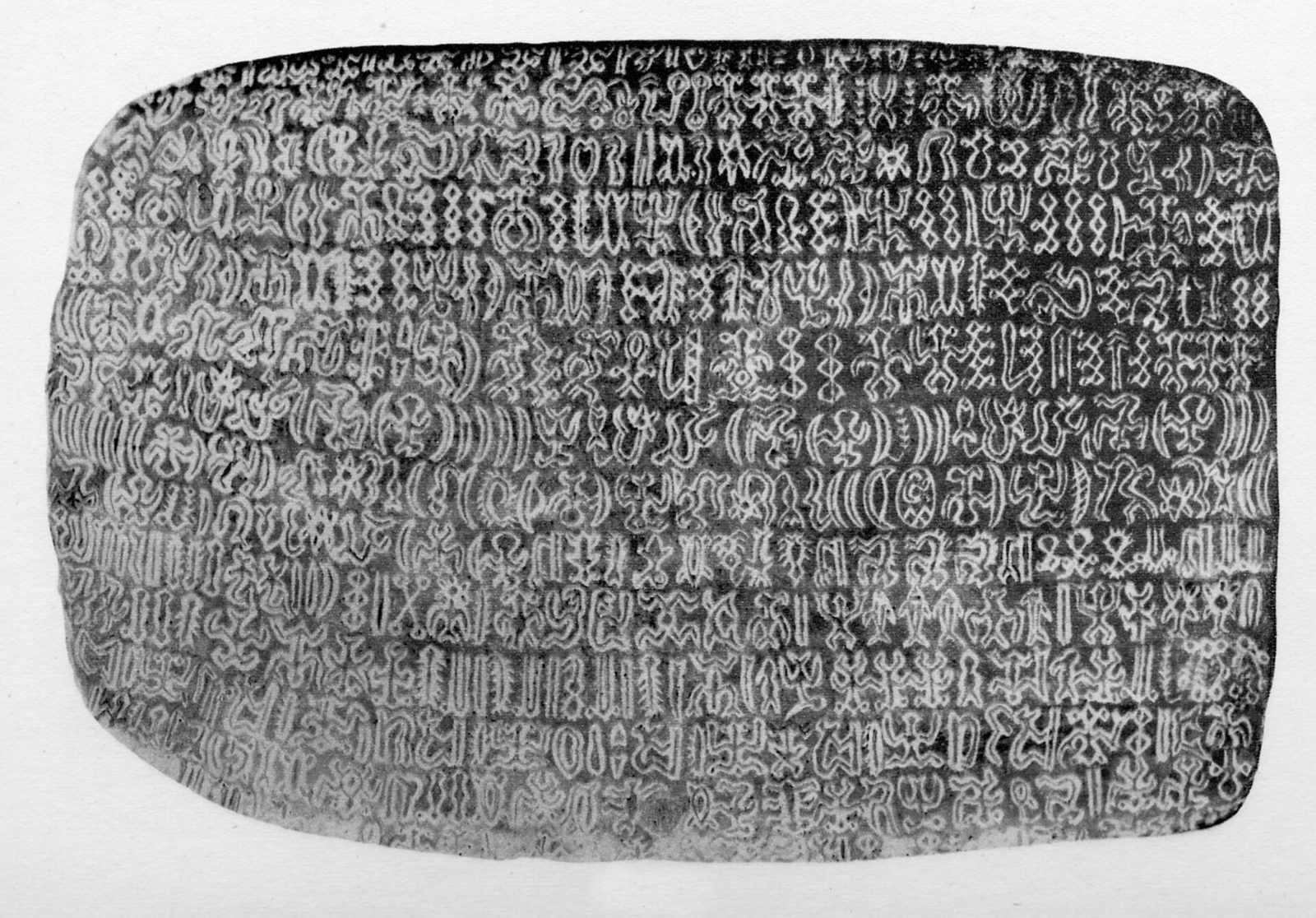
Roughly two dozen inscribed wooden objects carry a script nobody can read. One passage on one tablet is agreed, and it counts the nights of the moon. This page keeps what is established and what is merely proposed visibly apart, because almost everything written about rongorongo confuses the two.
In January 1864 a French lay brother named Eugene Eyraud landed on Rapa Nui, the island in the southeastern Pacific that outsiders call Easter Island. He was a member of the Congregation of the Sacred Hearts of Jesus and Mary, and he was the first Westerner to live there. In a letter written that year to his superior he reported something no outsider had described before: wooden tablets, covered in carved characters, kept in the island's houses. He is the reason we know the script existed as a living thing at all. Within a decade of his letter, nobody on the island could read it.
That is the whole shape of the problem, and it is worth stating plainly before anything else, because rongorongo attracts confident answers the way few subjects do. A great deal has been claimed about these objects. Almost none of it is settled. This page is written to keep two things visibly apart: the small number of facts that specialists agree on, and the much larger number of readings that have been proposed, published, argued over and, in nearly every case, rejected. Where a claim belongs to the second category, the person who proposed it is named in the same sentence that says it has not been accepted. That is not hedging. It is the actual state of the field.
01The Letter, And What Eyraud Saw
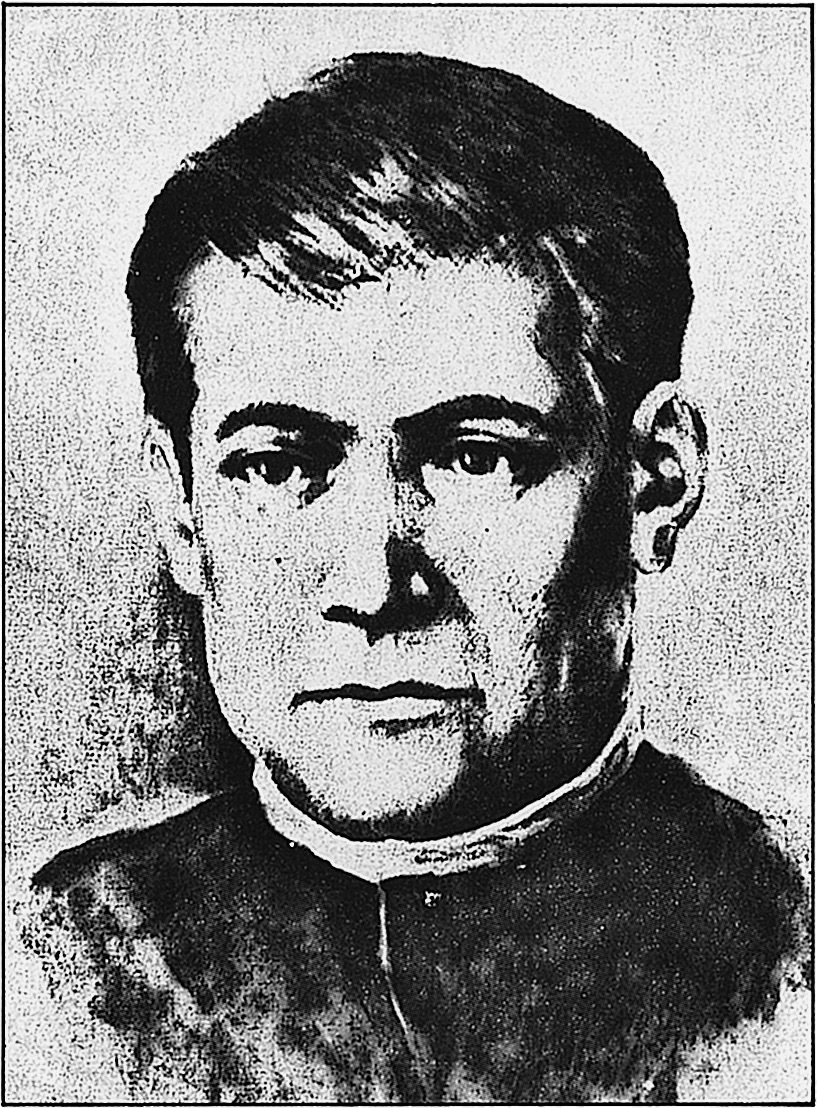
Eugene Eyraud (1820 to 23 August 1868) arrived on Rapa Nui in January 1864 and was the first outsider to report the inscribed wooden tablets. His letter of that year described wooden tablets covered with characters, found in the island's houses. The exact wording matters less than it might appear to, and this page does not quote him: his French original was not read for this article, and the English renderings in circulation differ from one another, some saying he found them in all the houses, others in many, others in nearly every household. What is not in dispute is that he saw inscribed wood, in numbers, in domestic settings, in 1864.
Many rongorongo signs are recognisable depictions. Human and human-like figures, birds, fish, lizards, plants and geometric shapes all appear. The glyphs are incised into the wood rather than painted or burned onto it, and according to Eyraud's own account the islanders cut them with a sharp stone. Popular accounts often specify obsidian flakes or shark teeth; that particular attribution was not verified for this article and is not asserted here. What can be said is that the marks are cut, and that a contemporary observer said a stone did the cutting.
02What Actually Survives
Thomas Barthel's 1958 study Grundlagen zur Entzifferung der Osterinselschrift established the standard catalogue that specialists still use: each surviving inscribed object carries a single-letter designation from A to Z, and Barthel's reference catalogue lists 599 sign shapes. The surviving corpus is roughly two dozen objects. Not one of them is on Rapa Nui. They are held in Santiago, Rome, London, Vienna, Berlin, St Petersburg, Washington, Honolulu, Paris and elsewhere, dispersed by the collecting of the nineteenth century.
The exact number is not fixed, and any page that gives you a confident single figure is overstating the case. Silvia Ferrara and colleagues, writing in 2024, say the script survives on twenty-seven wooden objects and elsewhere describe the total as fewer than thirty. Paul Horley's 2021 corpus edition is described in the review literature as covering the objects labelled A to Z plus one more. Tomi Melka and Robert Schoch argued in 2024 for a further piece. The safe and accurate statement is that roughly two dozen inscribed objects survive, with the exact count still moving as pieces are identified and argued over.
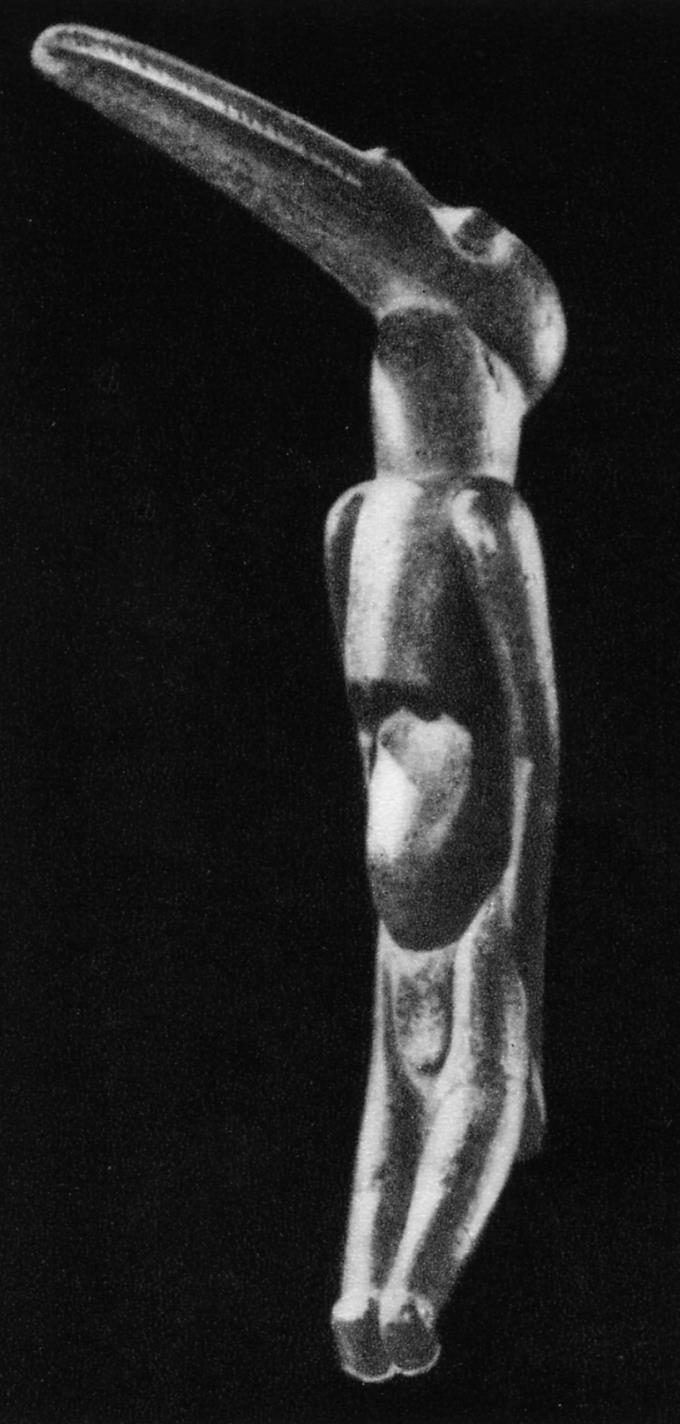
The common shorthand, the twenty-six tablets, is wrong in a way that matters for anyone trying to picture the corpus. It includes wooden tablets, yes, but also a staff (text I, the Santiago Staff), a birdman or tangata manu statuette (text X), two reimiro pectoral ornaments (texts J and L), and a snuffbox assembled out of an earlier tablet that somebody cut up. The material is wood throughout the canonical corpus. The script was carried on objects people wore, held and repurposed, not only on flat boards made for writing.
That last detail, the snuffbox, is easy to read past. Somebody took an inscribed tablet and made a container out of it. Whatever the writing meant, by the time that happened it no longer meant enough to stop the wood being reused.
03The Two Things Everyone Agrees On
Rongorongo is written in reverse boustrophedon, and this is one of the very few things about the script that is not in dispute. The reader begins at the bottom left of the object and reads to the right along a line, then rotates the object 180 degrees to read the next line, and alternates that way to the end. Alternate lines are therefore upside down relative to their neighbours. Note how the direction was established: not by anybody's testimony, but by the physical evidence of the same text recurring on three different objects (H, P and Q) with lines of different lengths, which constrains how the lines must run. It is an internal, structural result.
How many signs are there? The honest answer is a range, and the range exists because specialists genuinely disagree about how to count allographs (variant shapes of one sign) and ligatures (fused compounds). Barthel's 1958 catalogue lists 599 sign shapes. Our own research file gives roughly 120 basic elements combining into roughly 600 compounds. Konstantin and Igor Pozdniakov's statistical reduction arrives at about 52 basic signs accounting for 99.7 percent of the texts. Current summaries of Horley's 2021 corpus edition put the underlying inventory at roughly 130 basic shapes. Total glyph tokens across the whole corpus run to on the order of 14,000 to 15,000.
That range is not a failure of tidiness, and it is worth understanding why this page refuses to reduce it to one number. The lowest figure, about 52, is not a neutral count. It is the output of a specific method, and it lands close to the 54 or 55 syllables that Rapanui is usually counted as having, which is precisely the observation its authors use to argue that rongorongo is mainly syllabic. Two counts that were arrived at separately, and that happen to land near each other, are the entire basis of that argument. Quoting 52 on its own, without the method attached, smuggles a contested conclusion into what looks like a fact.
| The Figure | Whose, And When | What The Method Was, And Why It Matters |
|---|---|---|
| 599 sign shapes | Thomas Barthel, 1958, in the reference catalogue still used as the standard | A catalogue of distinguishable shapes as they appear on the objects. It does not claim that 599 are 599 separate signs; it is an inventory of forms to be referred to, which is a different job from deciding how many signs the system has |
| About 120 basic elements, about 600 compounds | Our own research file, ZG_1_16, following Barthel | Splits the corpus into base elements and the fused compounds built from them. The compound figure is close to Barthel's catalogue total, which suggests the two are counting much the same thing in different words |
| About 52 basic signs | Konstantin and Igor Pozdniakov, 2007 | A statistical reduction: 52 signs account for 99.7 percent of the texts. The authors note this is close to the 54 or 55 syllables of Rapanui and read it as evidence for a mainly syllabic system. The number and the hypothesis arrive together and should not be separated |
| About 130 basic glyph shapes | Current summaries of Paul Horley's 2021 corpus edition | A corpus-wide palaeographic treatment of the objects. Sits between Barthel's form-inventory and Pozdniakov's statistical floor |
| On the order of 14,000 to 15,000 glyph tokens | The usual figure across the literature; our own file says roughly 14,000, current summaries say roughly 15,000 | This is the total amount of text in existence. It is the number that decides whether decipherment is even possible, and section 07 is about what it means |
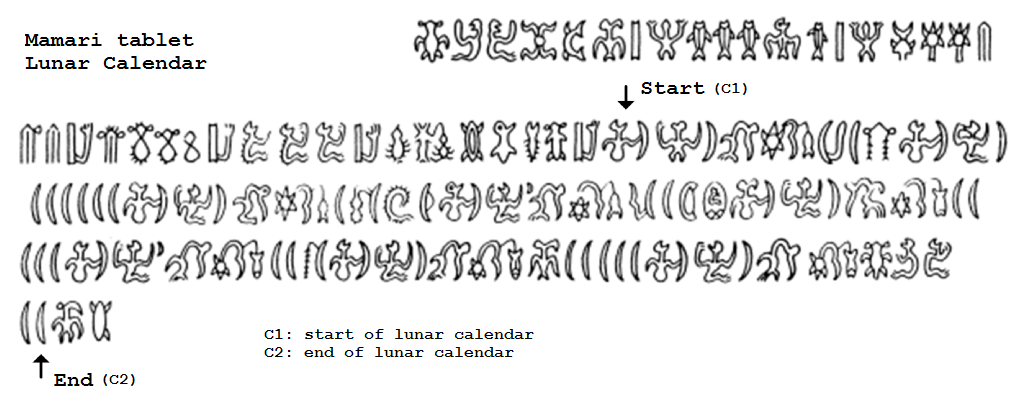
One passage, on one object, is read with broad specialist agreement. The Mamari tablet (text C) carries a sequence across lines Ca6 to Ca9, and some scholars include Ca5, in which a crescent glyph changes shape progressively across roughly 29 to 30 positions, punctuated by other glyphs. It is read as a lunar calendar, matching the nights of a synodic month. THOMAS BARTHEL identified it in his 1958 Grundlagen. JACQUES GUY (1990) reconstructed its structure and proposed phonetic readings for several of the accompanying signs. PAUL HORLEY (2011) argued that the calendar is a complete thirty-night sequence in full agreement with astronomy and with other Polynesian calendars. The attribution matters: the identification is Barthel's, and crediting it to Guy, as is sometimes done and as our own research file did until this page corrected it, is a factual error, and it sits on the one reading this whole subject is able to offer.
Broad agreement is not unanimity, and even here the details are still argued. Horley's own 2011 paper revises the earlier astronomical interpretation of the sequence. What is agreed is the general meaning: this stretch of glyphs is counting the nights of the moon. What is not agreed is exactly which glyph does what within it.
04The Readings That Did Not Hold
Everything in this section was proposed by a named person, published, and then not accepted. That is the pattern, and it has repeated for a century and a half. It is not a story about cranks. Several of the people below are serious scholars whose reference work is still cited and still useful. It is a story about a problem that defeats good methods.
Between 1869 and 1874 Bishop Florentin-Etienne Jaussen, known as Tepano Jaussen, worked in Tahiti with Metoro Tau'a Ure, a Rapanui man said to know the inscriptions, and recorded what Metoro chanted while looking at four tablets. It is tempting to treat this as the last living contact with the script, and popular accounts often present Metoro as the last man who could read rongorongo. Specialists have concluded otherwise: that Metoro was describing the pictures rather than reading a text, because his chanted lines do not hold up under later analysis. Jacques Guy devoted a 1999 paper in the Journal de la Societe des Oceanistes to the question of whether Metoro's testimony can be used to decipher the script at all, and the answer developed in the specialist literature is essentially no.
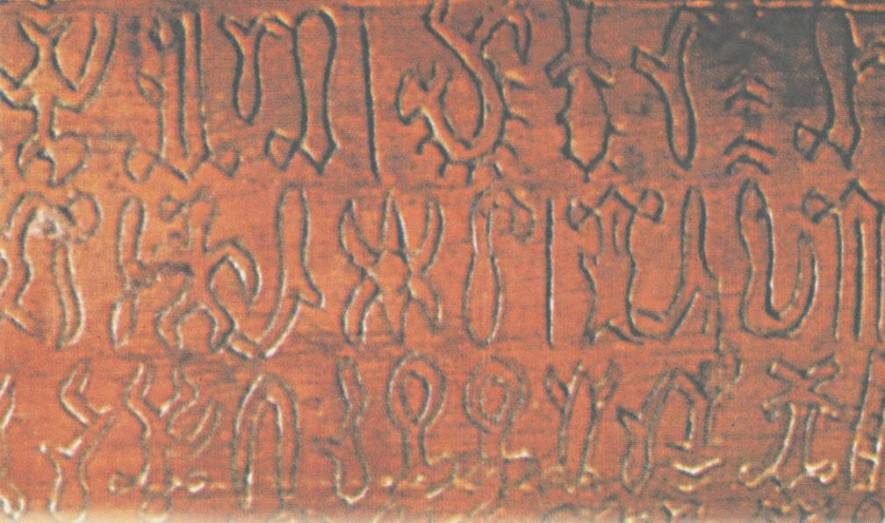
Steven Roger Fischer claimed a partial decipherment in his 1997 book Rongorongo: The Easter Island Script. Working from the Santiago Staff (text I) and from a cosmogonic chant recited in 1886 by Ure Vae Iko, he proposed that the texts are built from procreation triads of the form X copulated with Y: there issued forth Z. The claim was reported in the general and scientific press as a decipherment. It was refuted in print by Jacques Guy in the Journal de la Societe des Oceanistes in 1998, to which Fischer published a reply in the same journal, and it is rejected by most specialists. One point of correction that this page owes its own research file: the file states that Fischer's reading relied heavily on tablet G, the Small Santiago tablet. It did not. His key text was the Santiago Staff, text I, which is a staff and not a tablet and is a different object entirely. The criticism that the pattern is really only visible on one text is fair; the text named was wrong.
Fischer is worth treating carefully rather than dismissively. He published a seven-hundred-page reference work whose transcriptions are still cited by the people who reject his reading. The decipherment did not hold. That is a different verdict from the one the internet usually renders on him.
Most scholars think that if rongorongo is writing at all, it records Rapanui, an Eastern Polynesian language still spoken today. Konstantin and Igor Pozdniakov's statistical analysis (2007) reduced the sign inventory to about 52 basic signs covering 99.7 percent of the texts, observed that this is close to the 54 or 55 syllables of Rapanui, and read that as evidence for a mainly syllabic system with some word-signs. This is a real and respectable inference, and it is not a decipherment. A statistical resemblance between two inventory counts is suggestive; it does not tell you what any particular sign says.
Barthel, and later Paul Horley in papers of 2005 and 2007, argued from recurring glyph patterns that some texts may contain genealogical chants or creation narratives, which would be consistent with the widespread Polynesian practice of preserving genealogy by recitation. Repeated anthropomorphic glyphs occur in formulaic sequences that resemble the structure of Rapanui oral chants recorded by ethnographers. Nobody has read a genealogy off a tablet. The claim is that the structure looks like chant structure, which is a real published inference and is not a reading.
| The Proposal | Proposed By | Where It Stands |
|---|---|---|
| The Mamari lunar calendar, lines Ca6 to Ca9 of tablet C | Identified by Thomas Barthel (1958); analysed by Jacques Guy (1990) and Paul Horley (2011) | ACCEPTED in its general meaning, by broad specialist agreement. The details are still argued, and Horley's 2011 paper revises the earlier astronomical reading. This is the only one |
| Procreation triads on the Santiago Staff | Steven Roger Fischer (1997) | REJECTED by most specialists. Refuted in print by Jacques Guy (1998); Fischer replied in the same journal. Reported in the press at the time as a decipherment |
| A mainly syllabic system, from a reduced inventory of about 52 signs | Konstantin and Igor Pozdniakov (2007) | PROPOSED and unsettled. A statistical argument about inventory size, not a reading of any passage |
| Genealogical chants and creation narratives, inferred from formulaic patterns | Thomas Barthel; Paul Horley (2005, 2007) | PROPOSED and unsettled. An argument about structure resembling chant structure. No genealogy has been read off any object |
| The idea of writing arrived with the Spanish annexation signing of 1770 | Steven Roger Fischer | PROPOSED and contested, and in direct tension with the 2024 wood date discussed in section 06. Neither hypothesis closes the other |
| Rongorongo is a mnemonic system, not full writing | Martha Macri and others | PROPOSED, taken seriously, and discussed in section 07. If it is right, decipherment in the ordinary sense may be impossible |
| Full decipherment of the script | Multiple individuals, repeatedly, since the nineteenth century | REFUSED. None has been accepted. See the verdict at the foot of this page |
05What It Is Not
The claim that rongorongo is related to the Indus Valley script is refused. Guillaume de Hevesy proposed in 1932 that some forty rongorongo signs have counterparts in the Indus script and inferred a common origin. It was rejected by Alfred Metraux, whose Ethnology of Easter Island (1940) dealt with the comparison, and by Barthel. The two traditions are separated by roughly 4,000 years and half the planet, and no structural relationship survives systematic comparison. The visual overlap is exactly what one expects from any two independently developed sign systems drawing on a limited repertoire of distinguishable shapes. The same refusal applies to the wider family of claims that rongorongo resembles Chinese or Sumerian writing, or evidences trans-oceanic contact.
The claim that rongorongo encodes advanced astronomical calculations or mathematical systems is refused. No peer-reviewed support exists. This sits close to a real finding and the distinction is worth making carefully, because this page has already told you there is a lunar calendar on Mamari. Counting the nights of the moon is observation, and every seafaring people in the Pacific did it. Predictive or computational astronomy is a different claim altogether, and it has no support. No mathematical content has been identified by any rigorous analysis.
06The Wood Of One Tablet
In February 2024 a team led by Silvia Ferrara published radiocarbon dates for four rongorongo objects, and the result was reported around the world as evidence that the script predates European contact. That reporting is not quite right, and the gap between what was found and what was said about it is the most instructive thing on this page.
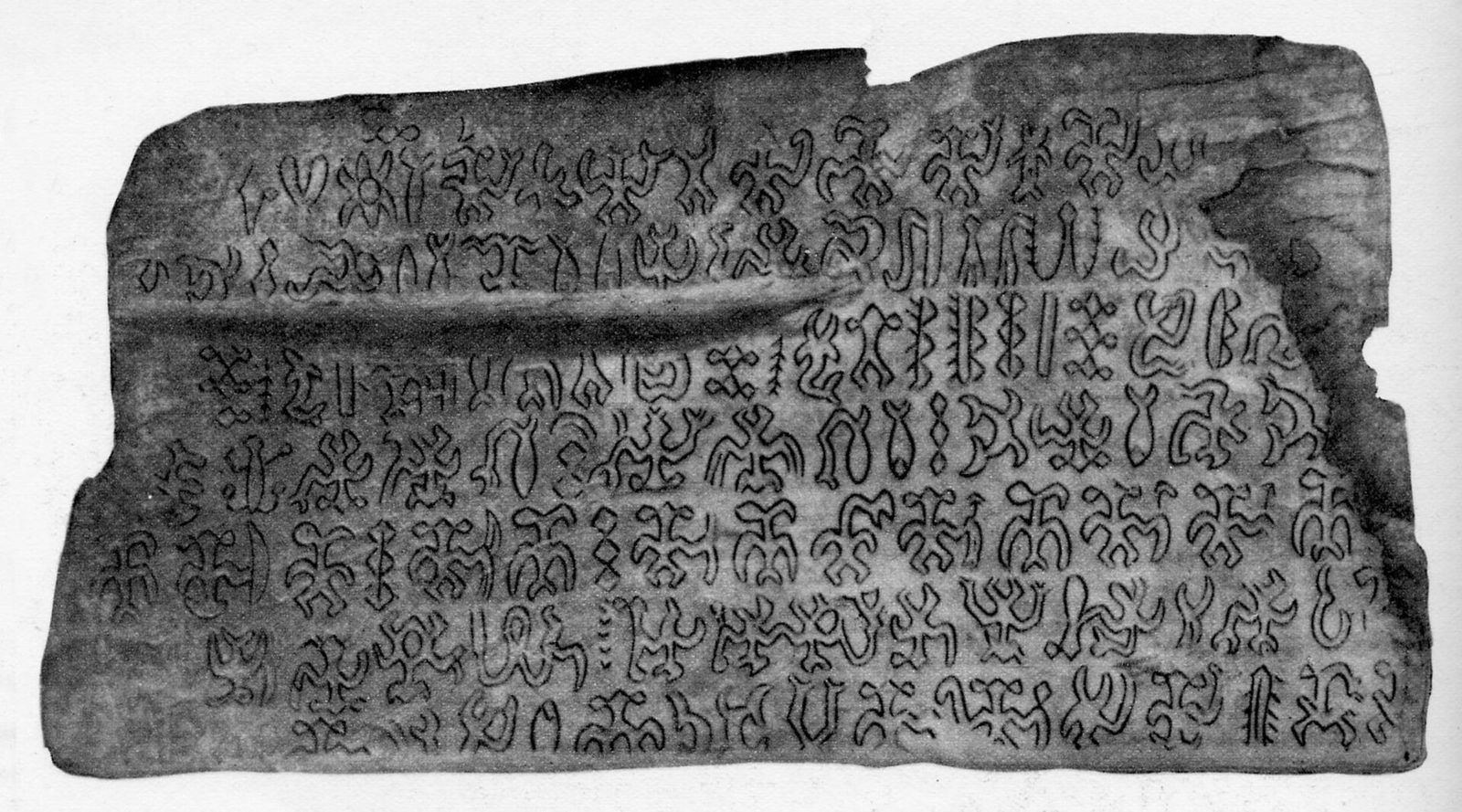
Silvia Ferrara and colleagues (Scientific Reports, 2 February 2024) radiocarbon dated four rongorongo objects held in Rome by the Congregation of the Sacred Hearts of Jesus and Mary: tablets A (Tahua), B (Aruku Kurenga), C (Mamari) and D (Echancree). Three returned dates in the eighteenth to twentieth centuries. Tablet D returned 1493 to 1509 cal AD at 68.3 percent probability, and 1483 to 1520 cal AD at 95.4 percent probability, roughly two centuries before the first European landfall on Rapa Nui in 1722. The wood species were identified as Fraxinus excelsior for A, Thespesia populnea for B and C, and Podocarpus latifolia for D.
Ferrara and colleagues state their limits explicitly, and those limits travel with the result. First, radiocarbon dates wood and never dates carving: the authors write that the wood's age serves primarily as a terminus post quem for the tablet's manufacture, and that the inscription may be more recent than the wood it is cut into. Second, the wood of tablet D, Podocarpus latifolia, is native to southeastern Africa and never grew on Rapa Nui, and the wood of tablet A is likewise foreign; the paper says both reached the island from elsewhere and that the driftwood hypothesis gains significant traction. Third, the authors phrase their own conclusion conditionally rather than as a finding.
So the honest sentence is longer than the headline and better than it. A single tablet was cut from a tree felled around 1500. That tree was an African species that never grew on the island and may have drifted there or been carried, and the carving itself cannot be dated at all. This is the strongest evidence yet that the script could be pre-contact. It does not establish that it is. A piece of African yellowwood felled around 1500 could have floated and lain and waited a very long time before anyone picked up a stone and cut the first glyph into it.
Before 2024 only one rongorongo object had ever been radiocarbon dated: text Q, the Small St Petersburg tablet. Catherine Orliac (Archaeology in Oceania, 2005) reported an age of 80 plus or minus 40 years BP, whose calibration gives three windows at 95 percent probability: AD 1680 to 1740, AD 1800 to 1930, and AD 1950 to 1960. The second window fits the tablet's documented acquisition in 1871. Orliac's botanical work identified the wood of the objects she examined as Thespesia populnea, Pacific rosewood, a tree of high ceremonial standing across eastern Polynesia, which counted against the idea that the tablets were made from salvaged driftwood. This page corrects our own research file on three points here: the dated tablet is Q, the Small St Petersburg tablet, not the Small Santiago tablet, which is G; Orliac identified Thespesia populnea and not toromiro; and her radiocarbon result pointed at the nineteenth century, not at a pre-contact origin.
Whether the script existed before Europeans arrived in 1722 is a live and genuinely important question, and as of 2026 the strongest evidence for a pre-contact origin is the tablet D wood date, carried with every caveat above. Direct dating of the glyphs is not possible: carving removes wood rather than adding datable material, and destructive sampling of museum objects is heavily constrained. Readers may encounter a claim that rongorongo originated between the thirteenth and sixteenth centuries. That range appears in our own research file, no source anywhere supports it, and this page does not assert it.
If rongorongo was invented on Rapa Nui with no model from any outside writing system, it would be one of a very small number of independent inventions of writing in human history, alongside Mesopotamian cuneiform, Egyptian hieroglyphs, Chinese script and Mesoamerican writing. Ferrara and colleagues draw exactly this parallel and treat the tablet D date as support for it, while framing the conclusion conditionally. The standard argument in its favour is the lack of structural resemblance to any known script.
Steven Roger Fischer proposed the alternative: that the idea of writing reached Rapa Nui in 1770, when a Spanish expedition asked island chiefs to sign a written declaration of annexation. Under this reading the islanders took the idea of marking meaning on a surface from that encounter and then built something entirely original in form. The 1770 document survives and the marks the chiefs made on it are preserved, and they are sometimes described as the earliest record of rongorongo-like signs made off the island, though that identification is itself argued. Do not read this as settled either way. A tablet whose wood was felled around 1500 sits awkwardly with an idea that arrived in 1770, but the wood is not the carving, so neither hypothesis closes the other.
The corpus is not closed. Tomi Melka and Robert Schoch published a description in 2024 of a previously undocumented piece, the Topaze stick fragment, a small inscribed wooden relic collected during HMS Topaze's 1868 visit to Rapa Nui. A separate object, the Rangitoki fragment, carries a rongorongo sequence in ink on bark cloth dated to 1869, a useful reminder that the script was not only incised into wood. Both are peripheral to the canonical A to Z corpus and neither is universally accepted as part of it. The right way to hold this is that new pieces still turn up, not that the corpus is now twenty-eight objects.
07Why It May Never Be Read
There is a structural reason nothing works, and it is not a lack of cleverness. With on the order of 14,000 to 15,000 glyph tokens spread across roughly two dozen objects, and no bilingual text of any kind, most computational and statistical decipherment methods cannot produce reliable results. Barthel himself acknowledged that the corpus sits near the minimum threshold for meaningful frequency analysis. Our own research file on writing systems puts the same point more bluntly: even if the correct reading were proposed tomorrow, it might be impossible to verify scientifically.
Martha Macri and others have argued that rongorongo may not be writing in the full sense at all, but a mnemonic system, comparable to the Naxi Dongba script, whose signs prompt a reciter who already knows the chant rather than encoding language sound by sound. If that is right, decipherment in the ordinary sense may be impossible, because what would be needed is not a key but the specific oral traditions the signs accompanied. Those traditions were broken in the 1860s, which is the subject of the final section.
It is worth sitting with what that would mean. Under the mnemonic reading, the tablets were never self-sufficient. They were never meant to be read the way this sentence is being read. They were meant to be held by someone who already knew what they said, as a prompt and a prop and an aid to memory. In which case the thing that was lost is not a code. It is a voice, and the tablets are the part of it that happened to be made of wood.
08The 1860s, And The People Who Are Still Here
No Rapanui islander could read the tablets when European missionaries asked in the late nineteenth century, and the reason is documented colonial violence rather than mystery. Peruvian slave raiders operating between October 1862 and 1863 removed a large part of the island's population, and a smallpox epidemic followed when the few survivors were repatriated. The precise scale is not settled between the sources: our own research file says approximately 1,500 islanders, roughly half the population, while Moreno-Mayar and colleagues, writing in Nature in 2024, say a third of the population was kidnapped. Those figures are not reconcilable from what was checked for this article, so this page gives the range and attributes it rather than picking one. The figure that is externally sourced and safe is the endpoint: the Rapanui population fell to an estimated 110 individuals.
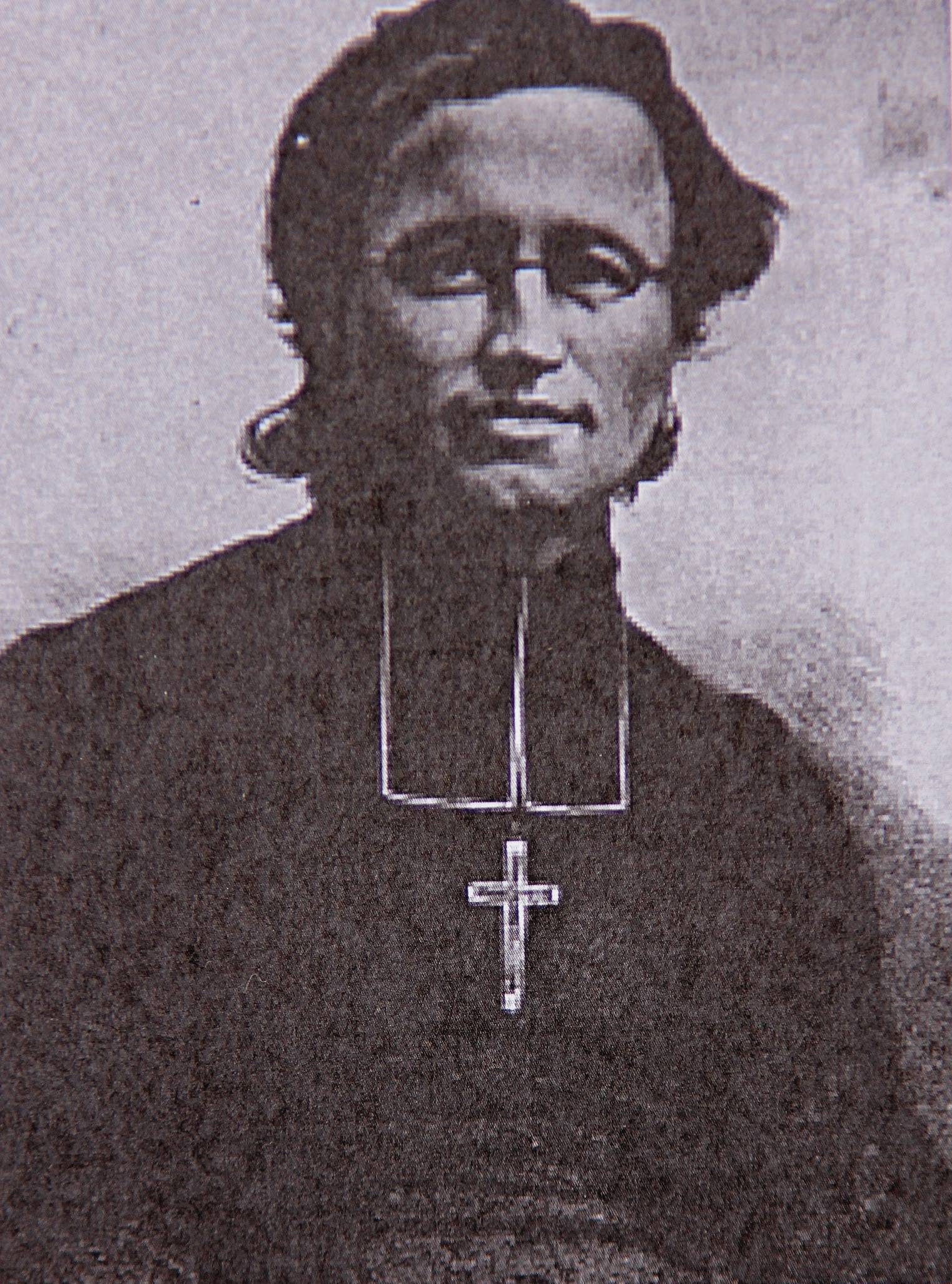
Florentin-Etienne Jaussen, the first Catholic bishop of Tahiti, received a rongorongo-inscribed object from Rapa Nui converts in 1868 and began collecting tablets and attempting to record their content. His Repertoire des signes was published in 1893, posthumously; he had died in 1891. The collecting and the catastrophe are the same decade. The objects left the island in the years the people who could read them were being taken off it.
This has to be said plainly, because the popular literature on Easter Island is saturated with a register that treats the island as a place of vanished mysterious islanders. It is not, and they did not vanish. Moreno-Mayar and colleagues sequenced the genomes of 15 ancient Rapanui individuals radiocarbon dated between 1670 and 1950 CE and concluded, in the paper's own words, that these results do not support a major population collapse on Rapa Nui after its initial peopling and before the 1800s, and rather suggest that the island was home to a small population whose effective size steadily increased until the 1860s. There was no pre-European ecological suicide. There was a slave trade and an epidemic, in one decade, and the population went from many to about 110. The Rapanui are alive today, numerous and self-governing, the island is a Chilean special territory with an elected Rapa Nui presence, and Rapanui is a language people speak.
The same 2024 study found that about ten percent of the Rapanui gene pool is of Indigenous American origin, from an admixture event the authors place in the fourteenth century. It is a genuinely striking peer-reviewed finding about Pacific voyaging. It is not evidence for any diffusionist claim about the script, and this page does not let the two touch.
Fast Facts
- What Survives
- Roughly two dozen inscribed wooden objects, catalogued A to Z by Barthel in 1958, with the exact count still moving as pieces are identified. None is on Rapa Nui
- Not All Tablets
- The corpus includes a staff (the Santiago Staff, text I), a birdman statuette, two reimiro pectoral ornaments, and a snuffbox assembled from a cut-up tablet
- How It Reads
- Reverse boustrophedon: left to right along a line, then the object is rotated 180 degrees for the next. Established by parallel texts on objects H, P and Q, not by any informant's testimony
- How Many Signs
- A range, not a number: 599 catalogued shapes (Barthel), about 120 elements with about 600 compounds, about 52 basic signs (Pozdniakov), about 130 (Horley 2021). The method decides the figure
- How Much Text Exists
- On the order of 14,000 to 15,000 glyph tokens in total, with no bilingual text of any kind. This is the number that makes decipherment so hard
- What Can Be Read
- One passage: the lunar calendar on lines Ca6 to Ca9 of the Mamari tablet. Identified by Barthel (1958), analysed by Guy (1990) and Horley (2011). Its general meaning is agreed; its details are not
- The 2024 Date, Stated Honestly
- The WOOD of one object, tablet D, dates to 1493 to 1509 cal AD. The carving cannot be dated. The wood is an African species that never grew on the island. The authors call it a terminus post quem and write their conclusion as a conditional
- Why The Reading Was Lost
- Peruvian slave raiding between 1862 and 1863 and the smallpox that followed. Estimates of the fraction taken range from a third to a half across sources; the population fell to about 110
- Who Is Still Here
- The Rapanui. Ancient-DNA work published in Nature in 2024 found no evidence of a pre-European population collapse. The language is spoken and the island is self-governing within Chile
What We Can Actually Stand Behind
The objects exist and are catalogued: roughly two dozen inscribed wooden pieces, A to Z after Barthel 1958, all held off the island, and not all of them tablets. The reading direction is reverse boustrophedon and is established by internal evidence from parallel texts. Eyraud reported inscribed wood in the island's houses in 1864. The reading tradition was broken in the 1860s by Peruvian slave raiding and the smallpox that followed, and the population fell to about 110. Four objects were radiocarbon dated in 2024 and one of them, tablet D, was cut from wood felled between 1493 and 1509. The Rapanui are a living people and no pre-European population collapse is supported by the ancient-DNA evidence.
The lunar calendar on lines Ca6 to Ca9 of the Mamari tablet is read, with broad specialist agreement, as counting the nights of a lunar month. Thomas Barthel identified it in 1958; Jacques Guy and Paul Horley analysed and revised it. Its general meaning is agreed. Its internal details are still argued, and Horley's own 2011 paper revises the earlier astronomical interpretation. This is the entire list of agreed readings.
That rongorongo is a mainly syllabic system recording Rapanui (Pozdniakov and Pozdniakov). That some texts contain genealogical or creation material, inferred from formulaic structure (Barthel, Horley). That the script was independently invented on Rapa Nui (supported by Ferrara and colleagues, framed conditionally by them). That the idea of writing instead arrived with the Spanish annexation signing of 1770 (Fischer). That rongorongo is a mnemonic system rather than full writing (Macri and others). Every one of these is published, argued and unresolved, and this page crowns none of them.
Whether the script predates 1722. The tablet D wood date is the best evidence yet that it could, and it is a date for a tree, not for a carving, on wood that grew in Africa. The glyphs themselves cannot be radiocarbon dated because carving removes material rather than adding it. Readers will find a thirteenth-to-sixteenth-century origin range in circulation, including in our own research file. No source supports it and this page does not assert it.
Rongorongo has not been deciphered. Multiple full and partial decipherments have been announced since the nineteenth century and none has been accepted, Fischer's 1997 procreation-triad reading included, which was refuted in print by Guy the following year. It is not related to the Indus script, to Chinese, or to Sumerian writing, and it is not evidence of trans-oceanic contact; de Hevesy's 1932 comparison was rejected by Metraux and by Barthel. It does not encode advanced astronomy or mathematics: counting the nights of the moon is observation, not computation. And the Rapanui did not vanish. They are here.
There is a particular kind of silence around an unread script, and it is worth being precise about what causes it. The tablets are not silent because the code is clever. They are silent because the corpus is tiny, because there is no bilingual, and above all because the people who knew what the marks were for were taken off the island in the space of about a year. The script did not decay. It was interrupted. Everything on this page that looks like a mystery is, on inspection, a consequence of that interruption, and the honest position after a century and a half of work is that one passage counts the nights of the moon and the rest is still waiting.
Sources & further reading
WHERE THIS WORKED FROM, AND WHERE IT CAN BE CHECKED. This article was written from one file in our own research library, ZG_1_16, and that file is where it worked from rather than where it can be checked. The 23 external entries below are what stands behind the claims. OUR OWN FILE IS CORRECTED ON THIS PAGE IN SIX PLACES, in the open, because most of the corrections here are to our own corpus rather than to anybody else's. ZG_1_16 credits the identification of the Mamari lunar calendar to Jacques Guy; Barthel identified it in 1958 and Guy analysed it in 1990, and since that is the single most quotable claim in the subject the misattribution is corrected in section 03. The file says the tablet Catherine Orliac dated is the Small Santiago tablet; the Small Santiago tablet is G and the tablet she dated is Q, the Small St Petersburg tablet. The file says Orliac argued from wood identification that tablets were carved from native toromiro before European contact; she identified Thespesia populnea, and her radiocarbon result pointed at the nineteenth century, so that sentence inverts her finding. The file dates her paper to 2008 with two authors; it is 2005, single-authored, in Archaeology in Oceania 40(3). The file floats a thirteenth-to-sixteenth-century origin for the script, for which no source was found anywhere, and it is not asserted here. The file states that Fischer's reading relied on tablet G; his key text was the Santiago Staff, text I, which is a staff and not a tablet. THREE IDENTIFIERS CARRIED BY OUR OWN FILE RESOLVE TO DIFFERENT WORKS and are not reproduced below: the DOI attached to Fischer 1997 resolves to a 2000 psychology-journal review, the DOI attached to Horley 2005 resolves to a 2023 Cryptologia review of a different book, and the DOI attached to Jaussen 1893 resolves to an unrelated museum book chapter. Jaussen is therefore cited by title and year only. WHAT IS NOT QUOTED AND WHY. Eyraud is paraphrased and never quoted: his French original was not read for this article and the English renderings in circulation differ from each other on the very phrase most often reproduced. WHAT IS DELIBERATELY GIVEN AS A RANGE. The sign inventory, because the low figure is itself an argument for the syllabary hypothesis and quoting it bare would smuggle in a contested conclusion. The number of surviving objects, because it is still moving. The fraction of the population taken by the slave raiders, because our own file says roughly half and the 2024 Nature paper says a third and the two cannot be reconciled from what was checked here. WHAT COULD NOT BE VERIFIED. Martha Macri's specific publication on the mnemonic hypothesis was not independently confirmed, so the position is attributed and no paper is cited for it. The claim that obsidian flakes or shark teeth were the carving tools is common in popular accounts, was not verified, and is not asserted. Eight sources named on this page carry no resolvable link and are therefore listed here without one. One of them is worth explaining, because the reason is not that no identifier was ever issued. Horley's 2005 Rapa Nui Journal paper, which stands behind the structural work in section 04, has no DOI, and the open-access deposit at the University of Hawaii repository that the research for this article verified on 13 August 2026 has since stopped resolving at the DNS level: the host itself no longer answers, twelve days later. The paper is real and its volume, issue and page range are given above; no link is offered because none could be confirmed at the time of publication, and a replacement was not invented. The others are Horley's 2007 Rapa Nui Journal paper, Wieczorek's 2011 Rapa Nui Journal paper, Fischer's 1998 reply to Guy, Jaussen 1893, Eyraud's 1866 published correspondence, Schoch and Melka's 2019 description of the Rangitoki bark-cloth piece, and Horley's 2021 corpus edition Rongorongo: Inscribed Objects from Rapa Nui (Rapanui Press), which is the current scholarly edition of the corpus and is cited throughout sections 02 and 03. Its ISBN, 9789569337581, returns no record from Open Library, so no link is given for it; its existence, imprint and pagination are confirmed by the Cryptologia review listed above, which resolved live.
Image credits
- Side a of the Mamari tablet, rongorongo text C, reproduced from a 1935 book plate From Stephen-Charles Chauvet, L'ile de Paques et ses mysteres (Paris, 1935); on-line translation by Ann M. Altman (2004), via Wikimedia Commons. CC BY-SA 3.0 / GFDL 1.2 or later Source.
- Portrait of Eugene Eyraud, the first Westerner to live on Rapa Nui Photographer unknown, sourced by the File page to Holy Cross Church, Hanga Roa, via Wikimedia Commons. Public domain Source.
- The tangata manu (birdman) statuette that bears rongorongo text X From Stephen-Charles Chauvet, L'ile de Paques et ses mysteres (Paris, 1935); on-line translation by Ann Altman (2004), via Wikimedia Commons. CC BY-SA 3.0 Source.
- A line redrawing of the lunar calendar sequence from the Mamari tablet, with typed English labels Redrawing by Mkim1963, via Wikimedia Commons. CC BY-SA 4.0 Source.
- A colour detail of incised glyphs on the Santiago Staff, rongorongo text I Photographer unknown, credited by the File page to isla-de-pascua.com, via Wikimedia Commons. Public domain Source.
- Side a of the Echancree tablet, rongorongo text D, a 1935 book plate with modern tracings overlaid on some glyphs From Stephen-Charles Chauvet, L'ile de Paques et ses mysteres (Paris, 1935); on-line translation by Ann Altman (2004), via Wikimedia Commons. CC BY-SA 3.0 / GFDL 1.2 or later Source.
- Portrait of Tepano Jaussen, first Catholic bishop of Tahiti, dated before 1891 Photographer unknown, via Wikimedia Commons. Public domain Source.


.jpg)

