
Remote Viewing: The Psychic Spies of the Cold War
For more than two decades the United States government paid people to close their eyes and describe places they had never been, from Soviet research facilities to a submarine. The program was real, it was funded, and it was declassified, all of that is beyond dispute. What it actually proved is not. When the government finally graded its own psychic spies, two experts read the identical results and reached opposite verdicts, and the field has never closed that gap. This is the file on remote viewing, opened claim by claim, each one wearing its evidence.
Start with the part that is not in dispute, because it is stranger than most people realize: the United States government really did spend more than twenty years and tens of millions of dollars trying to spy with the mind. This is not folklore. It is a documented program with a paper trail, named officers, and research published in serious scientific journals. The temptation is to leap straight to the exciting question, did it work, and the honesty of this whole subject depends on not doing that yet. First the facts that are solid, then the claims that are not, and then the split verdict the government reached about its own psychic spies. Let's open the file.
01A Real Government Program
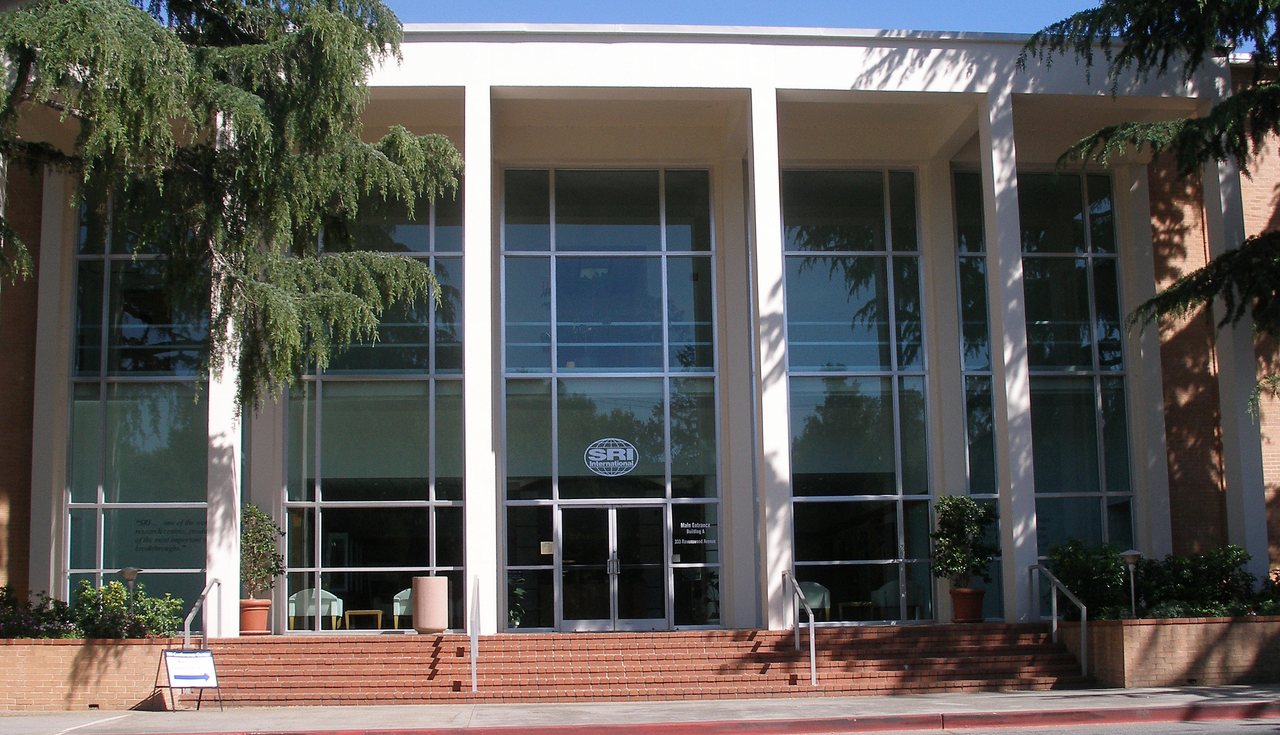
The program's existence is a matter of declassified record, not belief. Beginning in 1972 at the Stanford Research Institute, and running under a chain of code names, SCANATE, GONDOLA WISH, GRILL FLAME, CENTER LANE, SUN STREAK, and finally STARGATE, the effort spent on the order of twenty million dollars over roughly twenty-three years before it was shut down and declassified in 1995. Its founding research was not fringe self-publishing: Russell Targ and Harold Puthoff placed their first results in Nature in 1974, and a follow-up in the Proceedings of the IEEE in 1976. That the program existed, was funded, and produced peer-reviewed papers is simply true. What those papers proved is the argument.
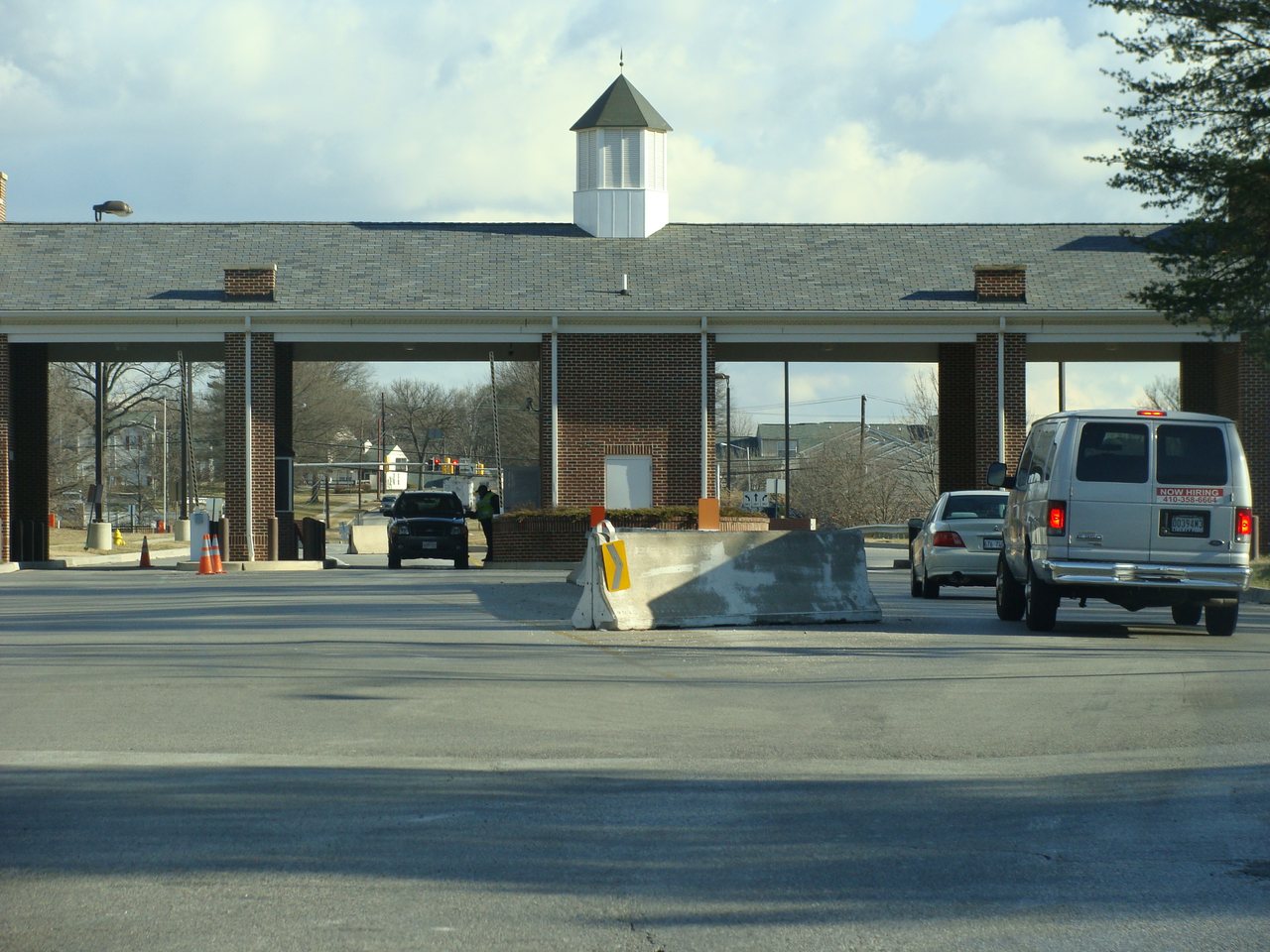
The work moved from the lab to the field. The Army's intelligence command and later the Defense Intelligence Agency ran operational units out of Fort Meade in Maryland, tasking viewers against real intelligence targets. Tens of thousands of pages about all of this were released through the Freedom of Information Act, and the CIA later put a vast trove of the files online. The program is one of the best-documented secret projects of the Cold War. The documentation is exactly why the honest questions are so sharp: we are not arguing about whether it happened, but about what the results inside those files actually show.
02The Viewers and Their Famous Cases

The viewers were real people with documented case files. Ingo Swann, a New York artist, was the program's marquee subject. Pat Price, a former police commissioner, is credited in the files with describing a Soviet research facility from map coordinates alone, a description the DIA is recorded as calling accurate. Joseph McMoneagle, an Army non-commissioned officer, ran hundreds of operational sessions and received the Legion of Merit, with a citation that referenced intelligence produced through remote viewing. These are the strongest cases the program itself put forward, and they are genuinely documented. Documented is not the same as proven, which the next card makes uncomfortably clear.
The single most cited success is Swann's 1973 session on the planet Jupiter, six years before Voyager 1 reached the planet and confirmed it had a faint ring. He is famous for describing that ring in advance. But the actual declassified transcript, which is worth reading rather than repeating, is more hedged than the legend. Swann's own words were that maybe the bands were like crystals, maybe like the rings of Saturn but very close within the atmosphere, a tentative comparison, not a clean prediction of a detached ring system. The same session also contained plain misses: a green corona, sand dunes and a mountain range on a planet with no solid surface. The honest version is a striking, documented, ring-adjacent remark surrounded by errors, which is exactly the kind of mixed record the whole program keeps producing.

03The Split Verdict
In 1995 the government commissioned an independent review to decide, finally, whether it had been buying real intelligence or expensive noise. The result is the honest heart of this article, and it did not settle anything.
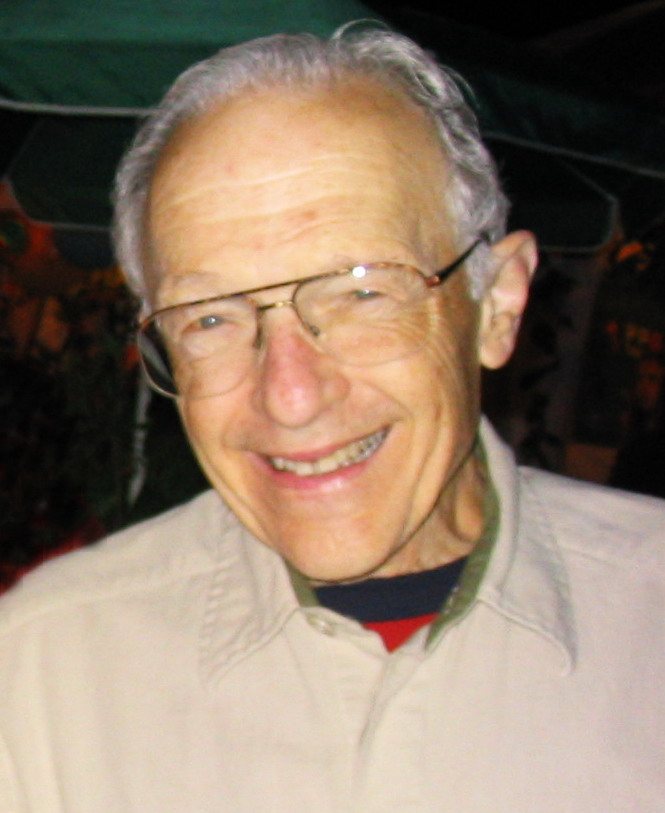
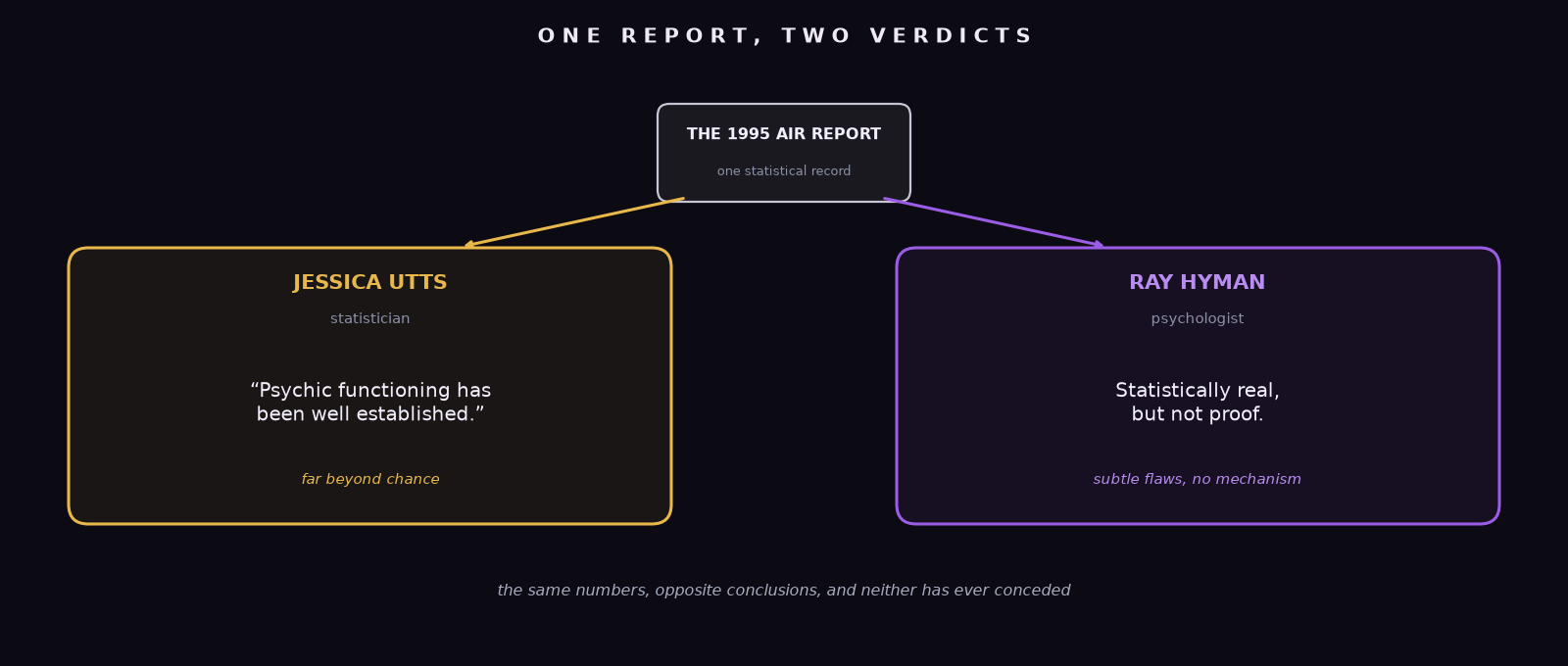
The review, produced by the American Institutes for Research, put two experts on the same data and got two verdicts. The statistician Jessica Utts wrote that the results were far beyond chance and that psychic functioning had been well established. The psychologist Ray Hyman agreed the numbers were statistically significant and then drew the opposite conclusion: significance is not proof, and the anomalies were better explained by subtle methodological flaws than by a real psychic signal, especially with no replicable protocol and no physical mechanism. Writing separately the next year, Utts put the effect size around 0.2, comparable to some medical effects; Hyman held that a departure from chance does not establish a new phenomenon. Both readings are still on the table.
Notice exactly what shut the program down, because it is routinely misreported. The government's operational conclusion was that remote viewing was not useful enough for intelligence work, the effects, real or not, were too small and unreliable to act on. That is a practical verdict, not a scientific disproof. The program did not close because someone proved it was impossible; it closed because it was not paying its way. Keeping those two claims separate, not useful and not real, is the single most important discipline in reading this whole subject honestly.
04The Debunker's Case, Fairly Stated
The skeptical case here is strong and deserves to be made at full strength, not waved at. The research documents themselves lay it out plainly.
Several ordinary problems can manufacture the appearance of psychic hits. Selective reporting: the striking successes get published and retold while the failures quietly do not, so the true operational hit rate may be far lower than the highlight reel suggests. Subjective judging: a remote-viewing transcript is often vague enough that more than one target could be made to fit it, unless strict blind judging is enforced, which it was not always. The file-drawer problem: an unknown number of null sessions were never written up at all. And the bluntest test of all keeps failing: in more than fifty years, no remote viewer has demonstrably and repeatedly predicted lottery numbers or beaten the stock market, the most obvious thing a real precognitive channel could do. A separate British Ministry of Defence study in 2001 and 2002 found no operational value at all, though that study, too, was later criticized as too brief to be decisive.
05Other Programs, and No Mechanism
The United States was not alone. The research documents describe Soviet programs, reportedly larger than the American one, running from the 1960s onward; a long-standing Chinese research effort into what it called exceptional human functions; and scattered, thinly documented claims of operational use elsewhere. These are real as programs, in the sense that governments spent money on them; their results are even less independently verifiable than the American files, and should be read as speculative, not as corroboration. That several states chased the same idea tells you the idea was tempting, not that it worked.
And there is the problem that sits underneath everything: there is no accepted mechanism. The proposals, non-local consciousness, quantum entanglement, retrocausality, are either untested or actively in tension with known physics; entanglement, for one, provably cannot transmit information. The research documents put it with unusual honesty: the phenomenon may be real without a theory to explain it. That is a coherent position, but it is also exactly what you would say if there were no phenomenon at all, only statistics and hope. For contrast, the separate laboratory tradition of parapsychology, the Princeton PEAR lab and its kin, reports similarly tiny, contested effects; that is a different story, told in its own file.
06Is It Still Going?
The story did not entirely end in 1995. The parapsychologist Dean Radin has said recently that unclassified government interest in psychic research continues, and has floated newer directions, including a search for genetic markers that might link psychic-functioning individuals to people reporting contact experiences. These are recent, uncorroborated public statements from one advocate rather than declassified records or peer-reviewed findings, and they belong here at the bottom of the evidence stack, noted honestly and weighted accordingly, not treated as a sequel to the documented program above.
Fast Facts
- The Program
- A US government remote-viewing effort, 1972 to 1995, final code name STARGATE
- The Cost
- On the order of 20 million dollars over roughly 23 years
- Where
- Founded at SRI International; operational units at Fort Meade, Maryland
- The Viewers
- Ingo Swann, Pat Price, Joseph McMoneagle and others
- Published In
- Nature (1974) and the Proceedings of the IEEE (1976)
- The Famous Case
- Swann's 1973 Jupiter session; his actual words were hedged, not a clean ring prediction
- The 1995 Verdict
- Utts: psychic functioning established. Hyman: real statistics, not proof. Unresolved.
- Why It Closed
- Judged not useful enough for intelligence, a practical call, not a disproof
What We Can Actually Stand Behind
The program was real, and that is documented past any doubt. The US government funded remote-viewing research for over two decades, spent on the order of twenty million dollars, ran operational units at Fort Meade, published founding results in Nature and the Proceedings of the IEEE, and declassified tens of thousands of pages. The 1995 review happened, and its two evaluators genuinely disagreed. None of this is in dispute.
Whether remote viewing actually works is not settled, and honest people land on both sides. The famous cases are documented, but the best of them, the Jupiter session, is more hedged in the original transcript than in the retelling. Utts read the statistics as a real effect; Hyman read the same statistics as unproven. The program closed for being operationally useless, which is not the same as being disproven. Anyone who tells you it definitely worked, or was definitely all nonsense, is ahead of the evidence.
The wider claims are weaker still. Foreign programs existed but their results are even less verifiable; the proposed mechanisms range from untested to physically incoherent, and there is no accepted theory of how remote viewing could work; recent claims that secret programs continue rest on one advocate's word. Take these as the speculative edges of the map, not as support for the core.
No, science has not proven that psychic powers are real. The strongest honest statement the data supports is a small, contested statistical anomaly with no mechanism, not a demonstrated ability. The obvious decisive test, consistently predicting lotteries or markets, has never been passed, selective reporting and loose judging can manufacture apparent hits, and a separate British study found no operational value at all. The overclaim runs well past the evidence.
So the file closes the way the government closed it, without a clean answer. Strip away both the true-believer glow and the reflexive sneer, and what is left is genuinely uncomfortable: a real, expensive, decades-long program, a pile of documented sessions with a maddening mix of hits and misses, and two qualified experts who looked at the same numbers and walked away certain of opposite things. It is easy to want this to be either obviously true or obviously fake, because either would let you stop thinking about it. The evidence will not cooperate. The most honest thing to say about the psychic spies of the Cold War is that we spent a fortune finding out, and the answer we bought was a question. If the effect was real, it was too faint to use. If it was not, it was faint enough to fool careful people for twenty-three years. Which of those is more unsettling is left to the reader.
Sources & further reading
Everything above is drawn from our research library on Theories of Anything. Open the full file to check the sourcing and go deeper.
Image credits
- Original diagram of the 1995 AIR report's split verdict: Jessica Utts reading the data as established psychic functioning, Ray Hyman reading the same data as statistically real but unproven Original diagram by Theories of Anything. CC BY-SA 4.0 Source.
- The headquarters of SRI International in Menlo Park, California, where the remote-viewing program began Coolcaesar, 2007, via Wikimedia Commons. CC BY-SA 3.0 / GNU Free Documentation License 1.2+ Source.
- The main entrance to Fort George G. Meade, Maryland, home of the Army and DIA operational remote-viewing units Sallicio (own work), 2009, via Wikimedia Commons. Public Domain Source.
- A NASA image of Jupiter with a white line marking the location of its faint ring, which Voyager 1 confirmed in 1979 NASA / NSSDC, 1979, via Wikimedia Commons. Public Domain Source.
- Portrait photograph of the physicist Russell Targ, co-founder of the SRI remote-viewing research Patricia Targ, via Wikimedia Commons. Public Domain Source.
- Portrait photograph of the psychologist Ray Hyman, skeptical evaluator of the 1995 AIR report Rouven Schafer, 2003, via Wikimedia Commons. CC BY-SA 3.0 Source.


