
The Quipu: An Empire Written in Knots
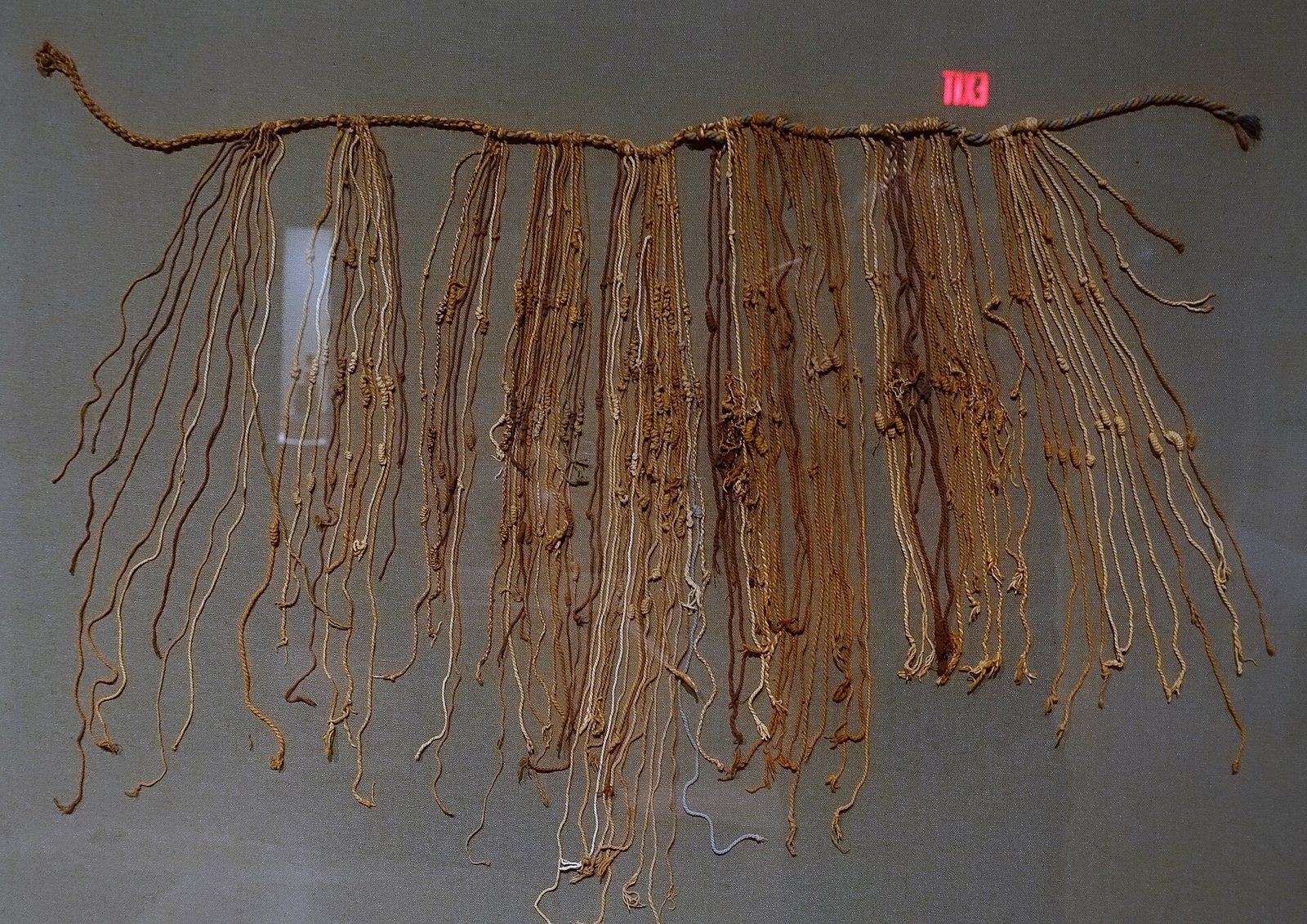
The Inca ran an empire of millions, stretched thousands of miles down the spine of the Andes, and they did it without writing a single word, or so it was long believed. Their records were kept instead on the quipu: bundles of knotted cords in which the kind of knot, its position, and the color and twist of the thread all carried meaning. We can now read the numbers on them with real confidence, a genuine deciphered code of hanging string. What we still cannot read, and what may or may not be there at all, is language: names, stories, history. This is what the quipu really was, what its knots are known to say, and the live and thrilling question of whether they also spoke.
The Inca built the largest empire in the ancient Americas, millions of people, thousands of miles of road, a bureaucracy that tracked every storehouse and census and tribute quota across the Andes, and they did it without writing, at least without any writing we would recognize. Or so the story went. In place of an alphabet they kept the quipu, a device of hanging knotted cords that a Spanish soldier might have taken for a mop or a tangle of string. It was nothing of the kind. On a quipu, the kind of knot, its position along the cord, and the color and twist of the fiber all carried information, and a trained official could read a bundle of it the way a clerk reads a ledger. Today we can read part of that code with real confidence: the numbers are genuinely deciphered. Whether the same cords also carried words, names, the story of a rebellion, a lineage, a song, is one of the most tantalizing open questions in the study of the human record. This is what a quipu is known to say, and what it may still be keeping to itself.
01Reading the Knots
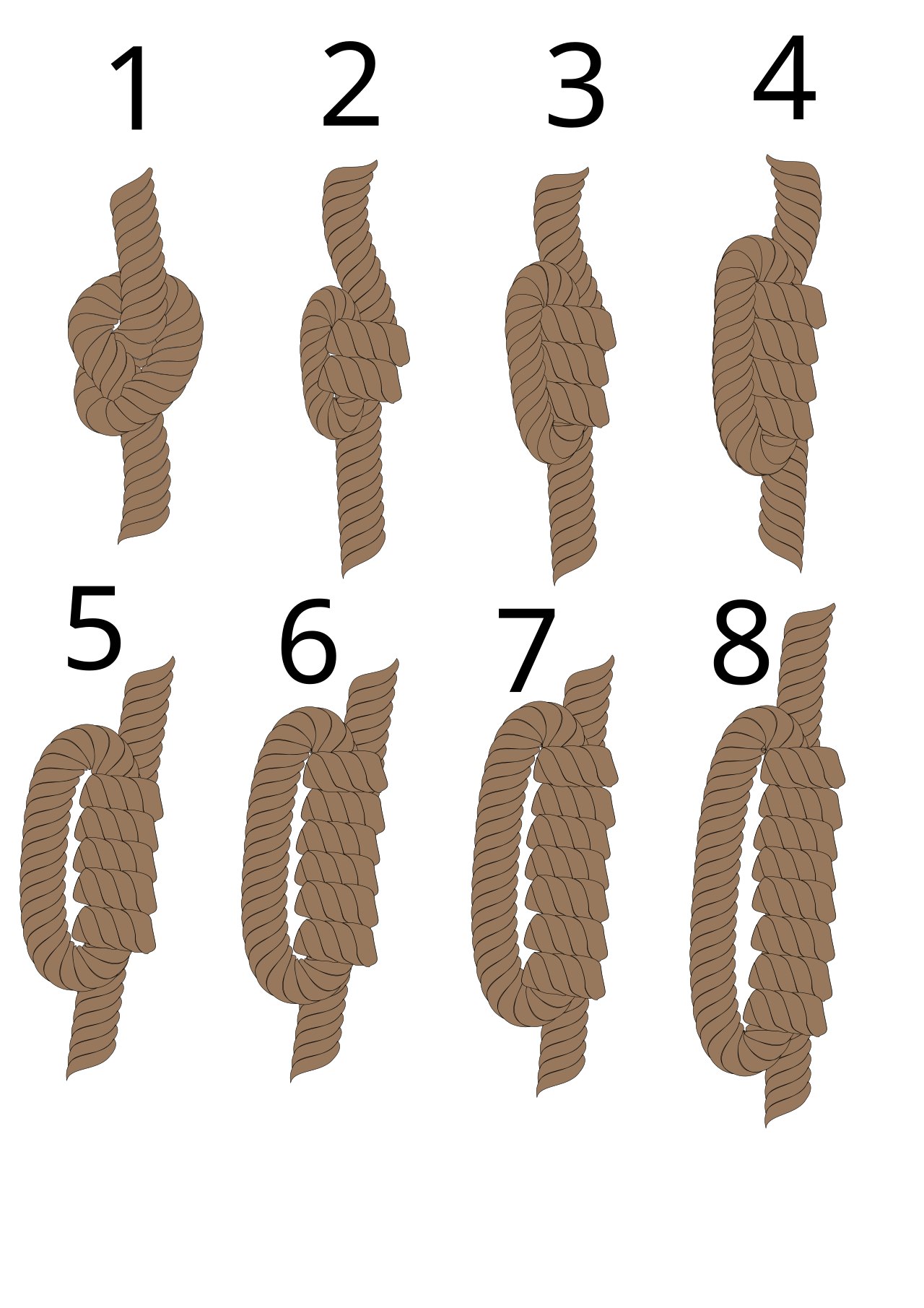
Begin with what is settled, because it is remarkable enough on its own. A quipu is built from a main cord, from which hang anywhere from a few to well over a thousand pendant cords, and those pendants can carry their own subsidiary cords, branching into a tree. The information sits in the knots. In 1923 an American scholar named Leland Locke proved that the knots encode numbers in a base-ten place system, the same in principle as our own. A cluster of knots high on the cord is the thousands, the next group down the hundreds, then the tens, then the units at the bottom, with the units digit spelled by a special figure-eight knot for one and a 'long knot' of two to nine turns for the rest, and an empty space where we would write a zero. Marcia and Robert Ascher confirmed and extended this in a systematic study of some two hundred quipus in 1981, showing that cords are grouped, summed, and subtotaled, that some cords are the arithmetic totals of others. And the reading checks out against the world: quipus recovered from administrative sites have been matched to Spanish colonial census and tribute records and found to agree. The number system is not a theory or a promising lead. It is a solved code, a working accountancy in hanging string.
02An Empire of Accountants
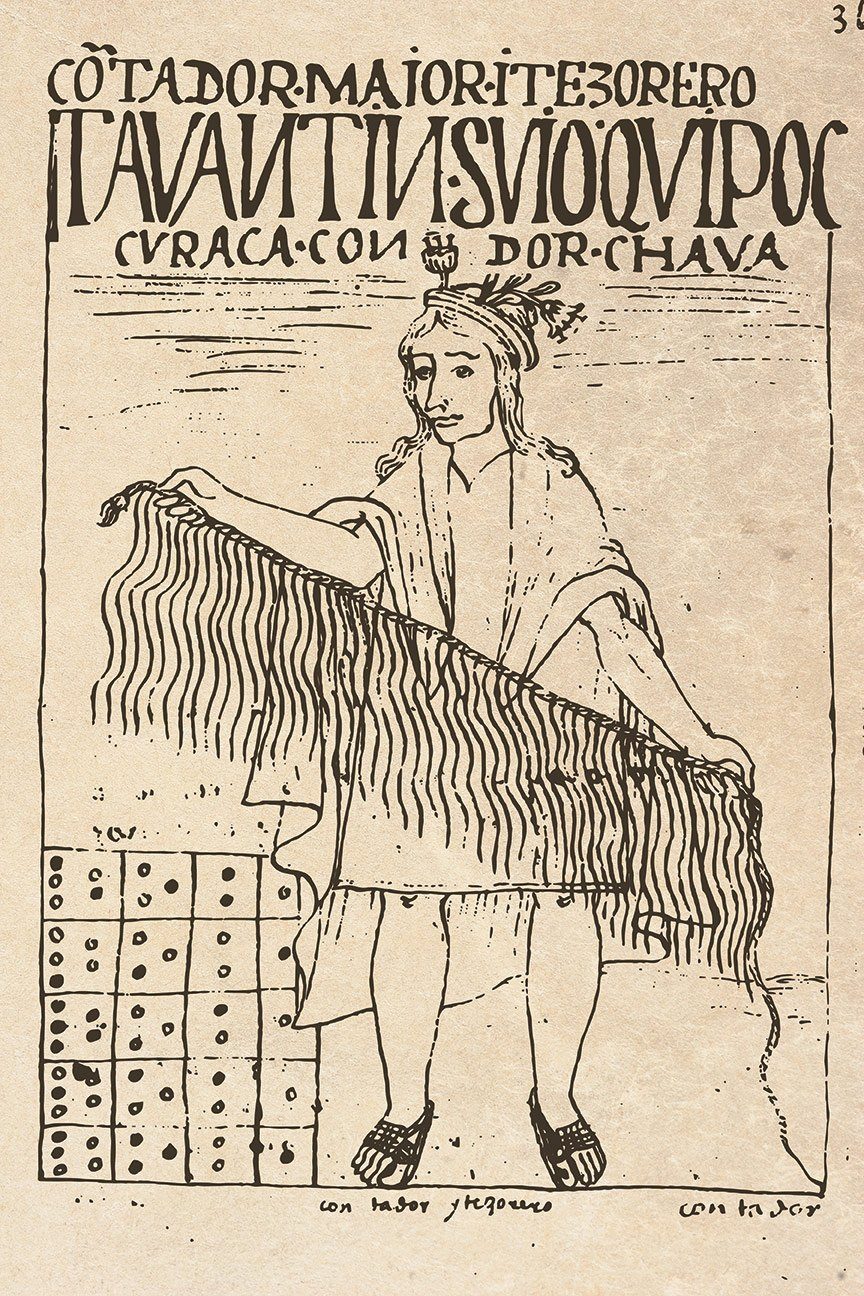
What the Inca did with this was run a continent. The empire, Tawantinsuyu, stretched some four thousand kilometers north to south, and it was administered by knot. Trained specialists called quipucamayoc, 'knot-keepers,' maintained the records of census, tribute, military supply, and storehouse contents, and their books were cross-checked against one another for error, as the Spanish chroniclers Garcilaso de la Vega and Cieza de Leon and the indigenous writer Guaman Poma all describe. The cords themselves travelled: a relay of runners called chasquis, posted every couple of kilometers along the imperial roads, could carry a quipu and its spoken gloss around two hundred and forty kilometers in a day, faster than a European post of the same era. And the technology was old before the Inca ever used it. Knotted-cord recording goes back at least to Caral on the Peruvian coast, around 3000 BCE, four thousand years before the Inca, and quipus survive from the earlier Wari civilization. The Inca did not invent the quipu. They standardized it and scaled it up to run an empire.
Two honest qualifications belong here. First, the numbers this system tracked are staggering but imprecise to us: the Inca population is often given as ten to twelve million, but that is really the middle of a wide and genuinely disputed range, with serious estimates running from around four million to more than thirty million depending on method, so the figure should be held loosely rather than quoted as fact. Second, color clearly mattered and clearly carried meaning, with different colors of cord lining up with different categories of thing counted, maize against potatoes against workers, but no universal color key has ever been recovered. The meanings seem to have shifted by region and era, and perhaps by the lineage of the knot-keeper, which is one reason no single Rosetta Stone for the quipu has ever been found.
03Beyond Numbers?
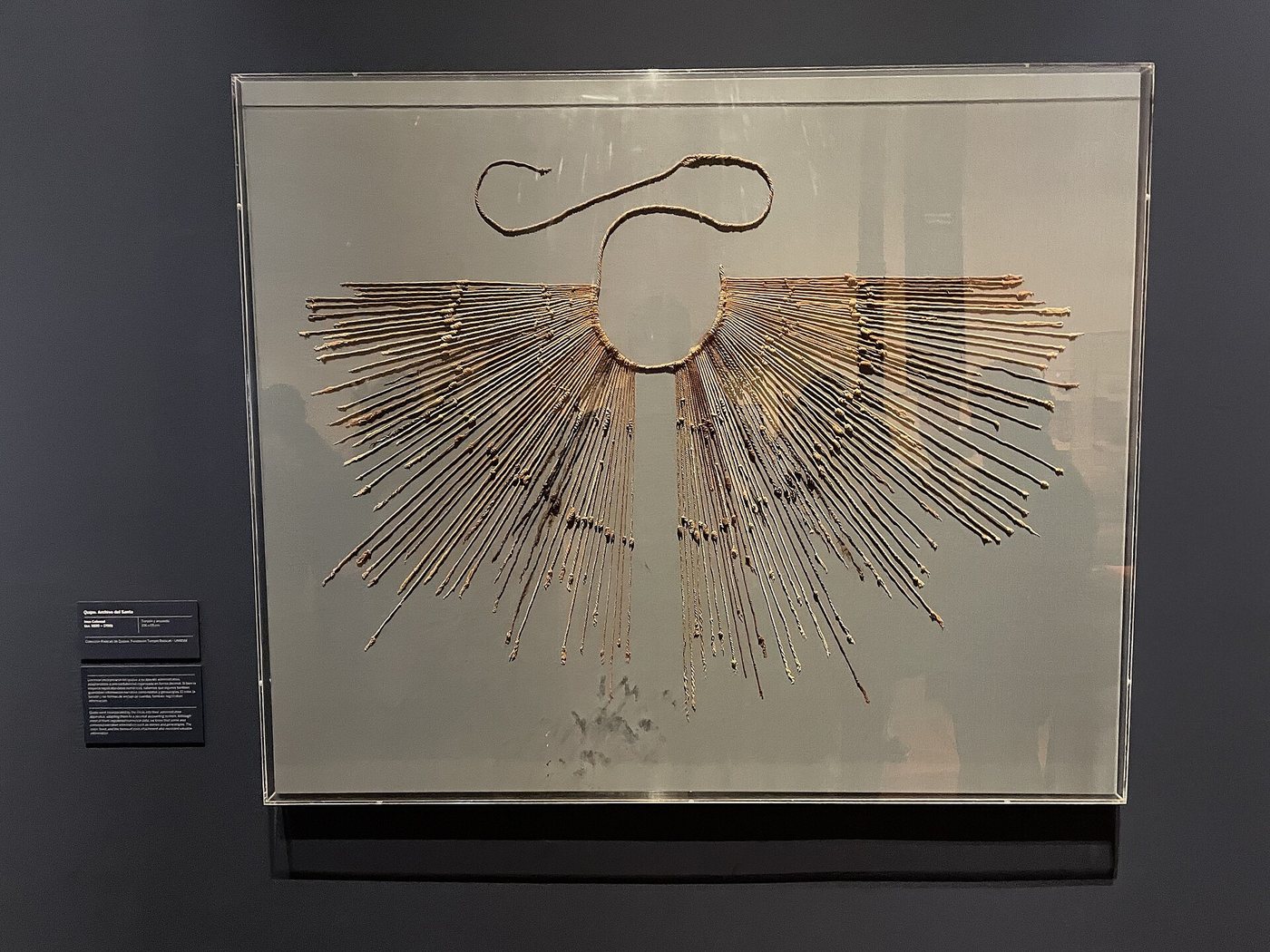
Which brings us to the real frontier, and the question that makes the quipu more than an abacus. Did the cords also record language, not just quantity? There are serious reasons to think they might. The anthropologist Gary Urton has argued that each knot involves a string of yes-or-no choices, of fiber and color and spin and knot type and direction, seven such choices in all, which would give a hundred and twenty-eight possible combinations per knot, enough, in principle, to encode syllables the way a handful of binary bits encodes a letter. Sabine Hyland, working with two 'narrative' quipus that villagers in San Juan de Collata had preserved for generations as the record of a rebellion, found ninety-five distinct cord-signs, consistent with a syllabic script for the local dialect. And Manny Medrano, as a Harvard undergraduate working with Urton, matched six khipus from the Santa Valley to a 1670 Spanish census and showed that the direction a cord is attached to the main cord, whether it comes off the front or the back, tracks which of two social groups a person belonged to, while the cords' colors seem to line up with their first names. These are real, specific, peer-reviewed advances, and they are genuinely exciting. But they must be held for exactly what they are. Each decodes a feature or two on a handful of particular cords tied to a known document; none of it is a general ability to read a quipu cold. The field's own honest verdict, which this article keeps, is blunt: no one can currently read a quipu the way one reads a page of text. The narrative question is not closed. It is open, and moving, and unsolved.
04The Burning
It is worth pausing on why so little is left to read. When the Spanish understood that the quipu was the backbone of Inca governance, and suspected it of preserving a religion they meant to erase, they set out to destroy it. The Third Council of Lima ordered quipus burned in 1583; the viceroy Francisco de Toledo replaced the knot-keepers with Spanish notaries. The destruction was thorough but not total: roughly nine hundred quipus survive today, scattered across museums, a small fraction of what once existed. And there is a cruel possibility folded into that number. If some quipus really did record history and narrative rather than tallies and totals, those are exactly the ones the Spanish would have most wanted gone, which means the surviving sample may be skewed toward the account books and away from the stories, and the richest evidence for the very question we most want to answer may be the evidence most deliberately lost.
05What It Was Not
Two opposite errors are worth refusing outright. The first, older and more insulting, is that the quipu was a 'primitive' counting toy, a knotted tally and nothing more. The evidence flatly contradicts it: a system that ran the census and tribute of more than eighty provinces, with hierarchical cords, categorical color, and multi-feature construction, is a genuine information technology, whatever else it may or may not turn out to be. The second error runs the other way: that the quipu has now been 'fully deciphered' as writing, or that the narrative-reading question is settled. It has not been, and it is not. The numbers are read; the language, if it is there at all, is not, and the honest, exciting truth is that we do not yet know how much a quipu can say. One last tidy story deserves refusing too: that the quipu must have been borrowed from some Old World knotted-string tradition, Chinese or Polynesian. It need not have been. Recording information in knotted cord is the kind of good idea different peoples reach independently, and there is no evidence of any contact. The quipu is an Andean invention, and its unsolved half is an Andean secret still.
Fast Facts
- What it is
- A device of knotted cords, a main cord with many hanging pendants; information sits in the knots, their positions, and cord color and construction
- The numbers (settled)
- A base-10 place system, deciphered by Leland Locke in 1923: a figure-eight knot for 1, long knots for 2 to 9, cluster knots for the higher places, a blank for zero
- Verified against records
- Administrative quipus have been matched to Spanish colonial census and tribute counts and found accurate
- Who read them
- Quipucamayoc ('knot-keepers'), trained specialists; the cords were carried by chasqui relay runners ~240 km per day across the empire
- Older than the Inca
- Knotted-cord recording goes back to Caral (~3000 BCE) and the Wari; the Inca standardized and scaled it up
- The open question
- Whether quipus also encoded LANGUAGE (Urton's binary theory, Hyland's and Medrano's specific findings) is an active, unsolved research program, not a settled reading
- The loss
- The Spanish ordered quipus burned (1583); ~900 survive, possibly skewed away from the narrative ones
- Refused
- 'Primitive tally'; 'fully deciphered as writing'; any Old World origin
What We Can Actually Stand Behind
The structure and the number system are documented and deciphered. A quipu is a main cord with hanging pendant (and subsidiary) cords; its knots encode numbers in a base-10 positional system, proven by Leland Locke in 1923 and systematized by the Aschers in 1981, and confirmed by matching administrative quipus to Spanish census and tribute records. Quipucamayoc kept the records; chasqui runners carried them ~240 km a day. The technology predates the Inca, reaching back to Caral (~3000 BCE) and the Wari, and about 900 quipus survive today.
Several broader points are strong but carry real caveats. The empire spanned roughly 4,000 km; its population is usually given as 10 to 12 million but honestly sits in a wide, disputed range (about 4 million to over 30 million by method). Cord color reliably carries categorical meaning, but no universal color key has been recovered, which is why no single translation key exists. And the Spanish colonial destruction of quipus is a documented policy (the 1583 Third Council of Lima), leaving only a fragment of the original corpus.
The central open question is whether quipus also encoded language. Urton's seven-choice binary hypothesis, Hyland's syllabic reading of two narrative quipus, and Medrano and Urton's decoding of moiety affiliation on six Santa Valley khipus are all real, specific, peer-reviewed advances, but each decodes a feature or two on a handful of cords tied to a known document. No general ability to read a quipu as text exists; per the field's own verdict, 'no one can currently read a quipu as one reads a text.' This is an active, partial, ongoing research program, not a solved decipherment.
Both extremes fail. The quipu is not a 'primitive' tally: a system running the census of 80-plus provinces with hierarchical, color-coded, multi-feature cords is a real information technology. And it has not been 'fully deciphered' as writing; the numerical code is solved, the linguistic question is open. Nor was it borrowed from any Old World knotted-string tradition; convergent invention needs no contact, and none is evidenced. The honest position holds both halves: a genuine, sophisticated recording system, half-read and half-mystery.
The quipu sits in a strange and moving place among the marks human beings have made: not lost like a dead language, not open like a living one, but half-read, a code we have cracked in one dimension and are still prying at in another. It asks us to loosen our grip on what writing has to be, a line of marks standing for sounds, and to allow that a people might record their world in the turn of a knot and the twist of a thread instead, in three dimensions and in color, in a way our page-bound eyes are only beginning to learn to read. Every year the reading gets a little further: a census matched here, a rebellion decoded there. Somewhere in the roughly nine hundred surviving bundles, on cords that outlasted the fire, there may still be Andean voices waiting, as the hieroglyphs waited, for someone to learn how to listen. Or there may only be the accounts. We do not yet know, and not knowing, held honestly, is its own kind of knowledge: the record admitting how much of the human past is still knotted shut.
Sources & further reading
Everything above is drawn from our research library on Theories of Anything. Open the full file to check the sourcing and go deeper.
Image credits
- Inca quipu, Dallas Museum of Art (Late Horizon, 1476-1534) Photograph by Daderot; CC0, via Wikimedia Commons. CC0 Source.
- Diagram of the quipu units-digit knot encoding Diagram by Wikimedia Commons user Tavin; CC0, via Wikimedia Commons. CC0 Source.
- A quipucamayoc, from Guaman Poma de Ayala's chronicle (c. 1615) Felipe Guaman Poma de Ayala, c. 1615 (Royal Danish Library); public domain, via Wikimedia Commons. Public Domain Source.
- One of the six Santa Valley khipus (Museo de Arte de Lima) Photograph by Wikimedia Commons user TaphonomyMan, via Wikimedia Commons. CC BY-SA 4.0 Source.
- Card crop of the Dallas Museum of Art quipu Photograph by Daderot; CC0, via Wikimedia Commons. CC0
,_a_main_cord_with_top,_subsidiary,_%26_tertiary_cords,_Inca,_Peru,_Late_Horizon,_1476-1534_AD,_cotton,_plant_%26_camelid_fiber,_indigo_%26_red_dye_-_Dallas_Museum_of_Art_-_DSC04704.jpg)


