
Eighty-Five Seconds to Midnight: The Ethics of the Bomb
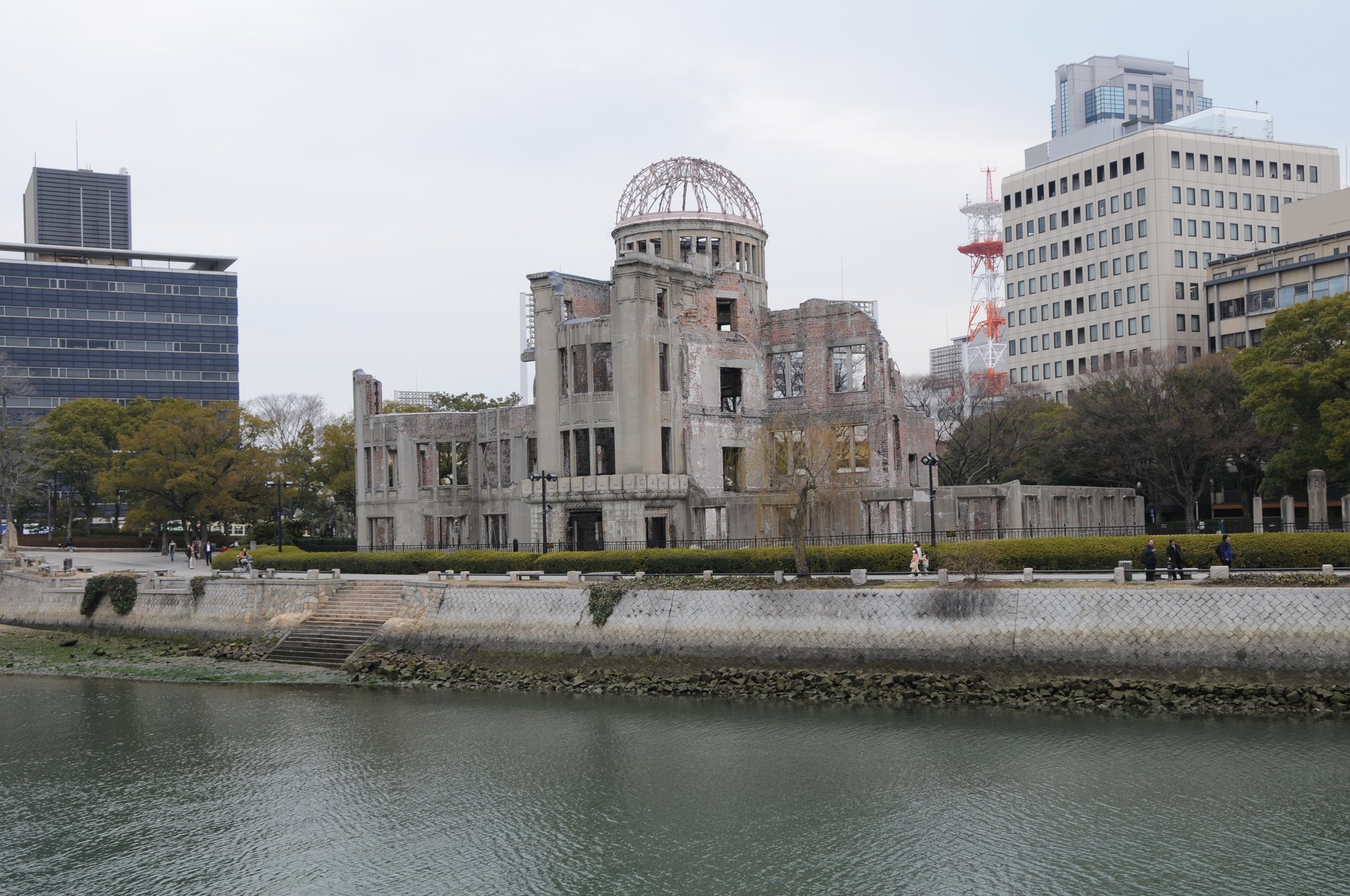
In January 2026 the Bulletin of the Atomic Scientists moved its Doomsday Clock to eighty-five seconds before midnight, the closest to catastrophe it has stood in its seventy-nine-year history. At the center of that clock is a moral paradox unlike any other: the entire logic of nuclear deterrence depends on our sincerely intending to do the one thing that, if we ever did it, could almost never be justified, the mass killing of civilians. This is the ethics of the bomb, the deterrence bargain and the philosophers who cannot untie it, the case for abolition, and the honest refusal to declare either the hawk or the abolitionist the settled winner.
Most of the moral questions in this wing are old. This one is barely eighty years old, and it is the only one where a wrong answer could end the story of our species in an afternoon. Nuclear weapons force a problem no earlier ethics ever had to face: a technology whose entire defensive value lies in the credible promise to use it, and whose use would violate nearly every principle those same ethics are built on. The result is a paradox that serious philosophers have worried at for decades without untying, and a set of moral positions, from 'deterrence is a tragic necessity' to 'any possession of these weapons is a standing crime,' held in good faith by thoughtful people who cannot all be right. This article lays out the paradox, the history that created it, and the arguments on every side, and it does not pretend to know which of them wins.
01The Only Two Times
On August 6, 1945, a uranium bomb called 'Little Boy' destroyed roughly five square miles of Hiroshima; three days later a plutonium bomb, 'Fat Man,' struck Nagasaki. These remain the only wartime uses of nuclear weapons in history. The human toll can only be given as an estimate, and an uncertain one: disrupted wartime records and bodies wholly destroyed in the blast mean no exact count has ever been possible, but credible figures put Hiroshima's dead at around 140,000 by the end of 1945 and Nagasaki's at around 70,000, with combined estimates across the two cities ranging from roughly 110,000 to 210,000. The survivors, the hibakusha, carried elevated rates of cancer, birth defects, and trauma for the rest of their lives. Whether the bombings were justified remains a genuinely live historical dispute. The official case is that they averted a land invasion of Japan projected to cost enormous casualties; critics, following the historian Gar Alperovitz, argue that Japan was already near surrender and that the bombs were meant partly as a demonstration of power to the Soviet Union. The article takes no side on that unresolved question.
What is clearer is what the great just-war thinkers concluded when they applied their own criteria to the bombings. Michael Walzer, in 'Just and Unjust Wars' (1977), and the philosopher Elizabeth Anscombe, who publicly opposed the bombings at the time, judged that they violated the two oldest rules of ethical warfare: distinction, the prohibition on deliberately targeting civilians, and proportionality, the demand that harm not exceed the military gain. Anscombe called it, flatly, the murder of the innocent. That verdict matters for everything that follows, because the modern doctrine of deterrence does not merely regret such acts; it requires the credible promise to commit them on a vastly larger scale.
02The Bargain: Deterrence and MAD
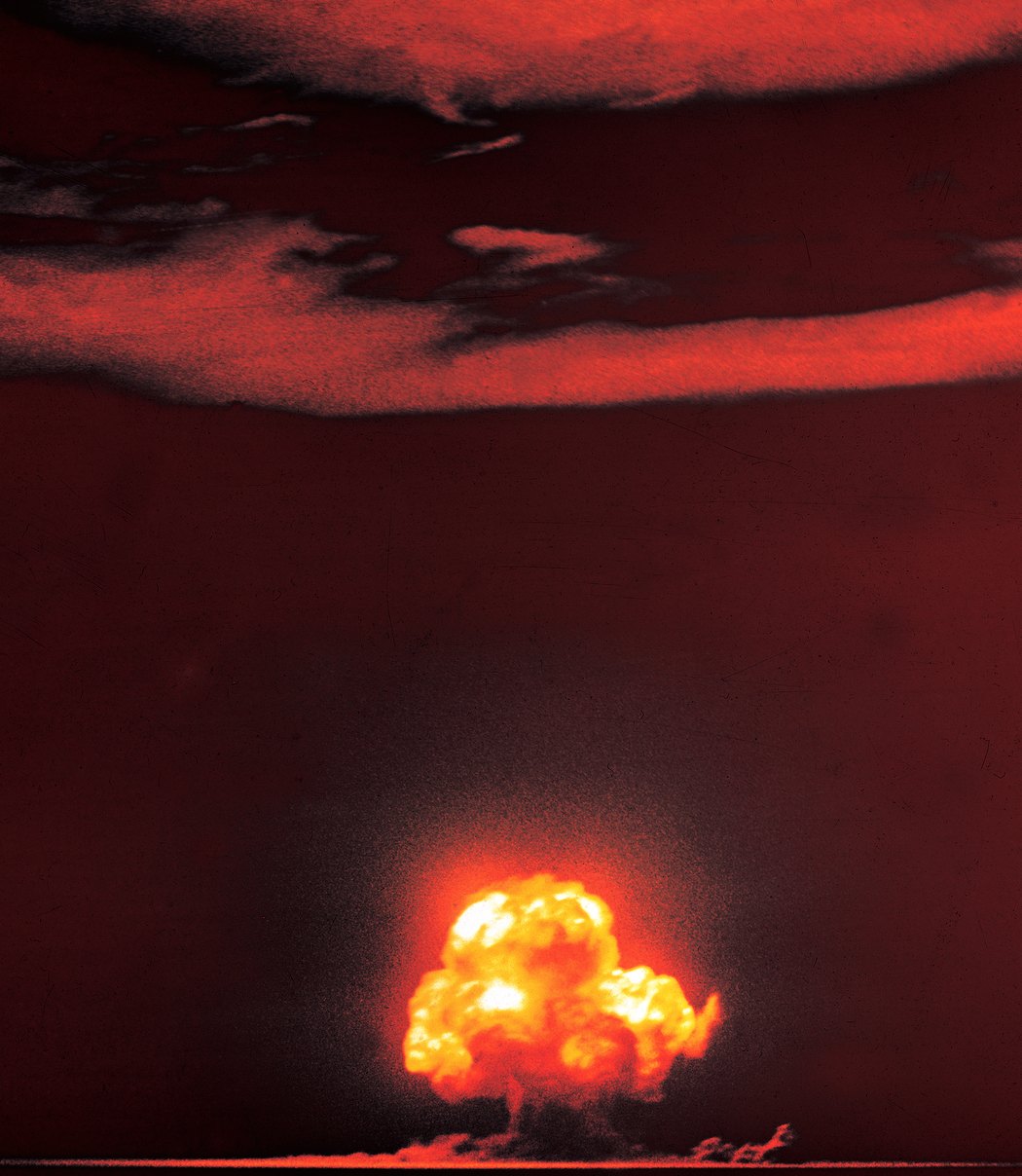
Out of that terror grew the central bargain of the nuclear age: deterrence, the idea that the threat of overwhelming retaliation prevents any attack in the first place. Its starkest form is Mutually Assured Destruction, the arrangement in which both sides keep enough surviving weapons to annihilate the other even after being struck first, so that a first strike becomes suicide and is therefore never launched. The strategic doctrine of assured destruction was articulated as US policy by Defense Secretary Robert McNamara in the 1960s; the now-famous acronym MAD was coined later, in 1971, by the strategist Donald Brennan, a critic of the doctrine who chose the spelling deliberately to mock it. And here the trap springs shut. Deterrence only works if the threat is believed, which means leaders must genuinely intend to carry out a retaliation that would kill millions of civilians, an act every one of them agrees would be monstrous. The philosopher Gregory Kavka named this 'the paradox of deterrence' in 1978: can it be moral to intend to do what it would be deeply immoral to do? Decades of philosophy have not produced a consensus answer. It is the knot at the center of the whole subject.
Worse, the bargain assumes a calm that history has repeatedly failed to supply. Deterrence presumes rational leaders, accurate warning systems, working command and control, and no accidents, and the record is full of moments when one or more of those failed. In 1983 the Soviet officer Stanislav Petrov correctly judged a satellite alarm showing incoming American missiles to be a false alarm, and declined to report a launch that doctrine said should trigger retaliation. That same year, the NATO exercise Able Archer 83 was reportedly read by frightened Soviet leadership as possible cover for a real first strike. In 2018 an emergency alert told the people of Hawai'i a ballistic missile was inbound; it was a mistake, sent by a worker who clicked the wrong option. The political scientist Scott Sagan has argued from cases like these that the stability of deterrence is far more precarious than its defenders assume. The peace it keeps is real. It is also a wager.
03What Just-War Theory Says
Set the strategy aside and ask the older question: can these weapons ever be used justly? Traditional just-war theory splits the question in two, and nuclear weapons fail both halves. On the right to go to war, no aggression seems grave enough to make the devastation of a nuclear exchange a proportionate response. On the conduct of war, nuclear weapons cannot honor distinction, since they inevitably kill civilians in enormous numbers, and cannot honor proportionality, since their destruction outruns any conceivable military objective; even a 'tactical' warhead spreads fallout and fire across the people nearby. Michael Walzer offered the one serious exception, and it is a narrow one: a 'supreme emergency,' a moment of genuine civilizational peril, in which the threat to use nuclear weapons might be reluctantly permitted even though their actual use almost never could be. Other just-war thinkers reject even that, arguing that a threat one may never rightly carry out cannot itself be righteous, and that Walzer's exception quietly dissolves the absolute ban on targeting the innocent that the rest of the theory is built to protect.
04The Scale of It Now, and the Clock
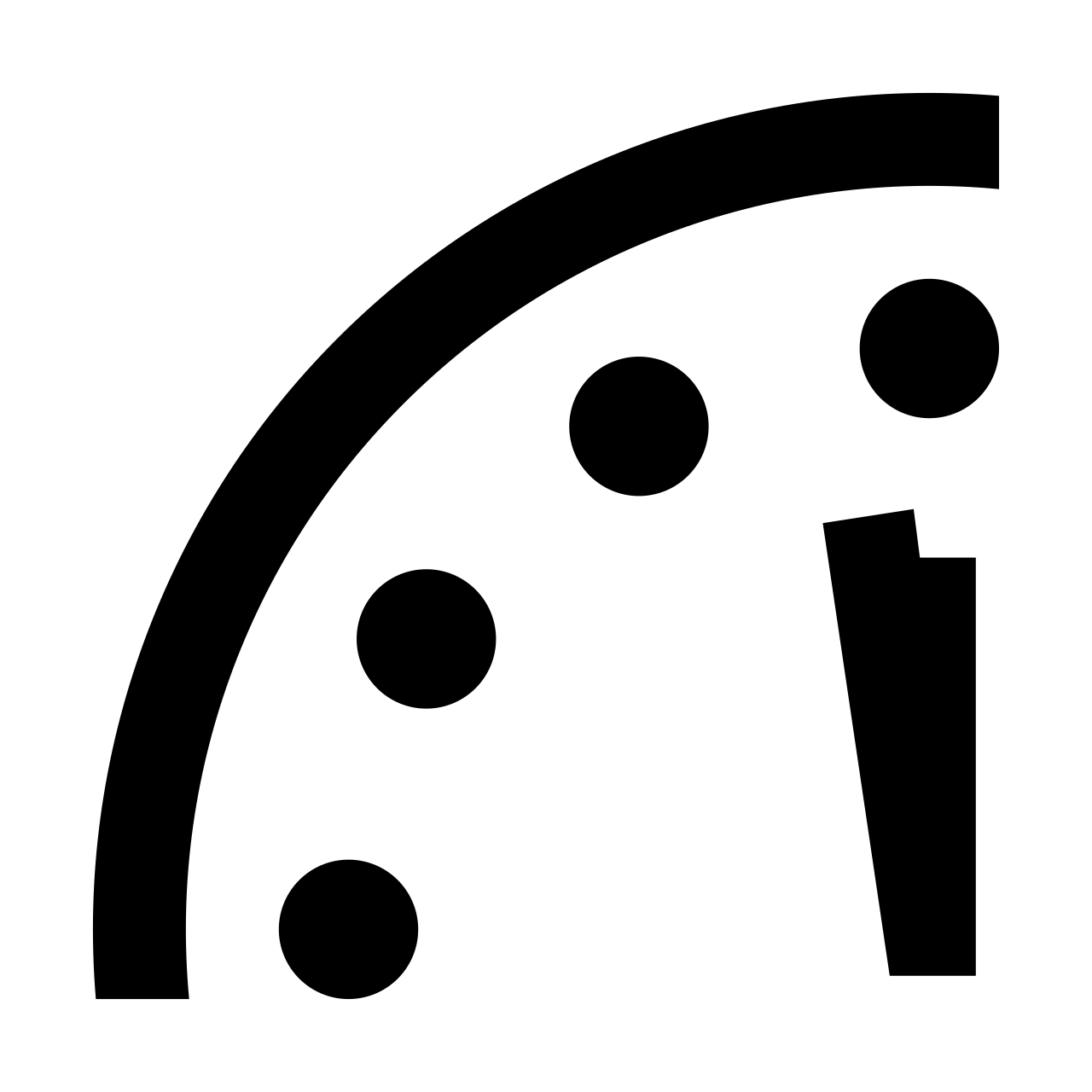
The weapons of 1945 were small by today's standards. A single modern US Trident submarine carries around twenty warheads of roughly 100 to 475 kilotons each, enough to destroy every major city in a medium-sized country from one vessel, and the world's stockpiles still run to many thousands of warheads (the Stockholm International Peace Research Institute counted roughly 12,200 as of early 2025, with the United States and Russia holding close to ninety percent). Scientists have also warned since the 1980s of nuclear winter: the soot from burning cities lofted into the upper atmosphere could block sunlight for years, and modern modeling suggests that even a 'limited' regional exchange, say a hundred Hiroshima-sized weapons between India and Pakistan, could cause global cooling and famine reaching billions who were never party to the war. It is against this backdrop that the Bulletin of the Atomic Scientists set its Doomsday Clock to eighty-five seconds to midnight in January 2026, the closest in its history, citing nuclear modernization, climate inaction, unregulated artificial intelligence, and a broad failure of leadership.
05The Case for Zero
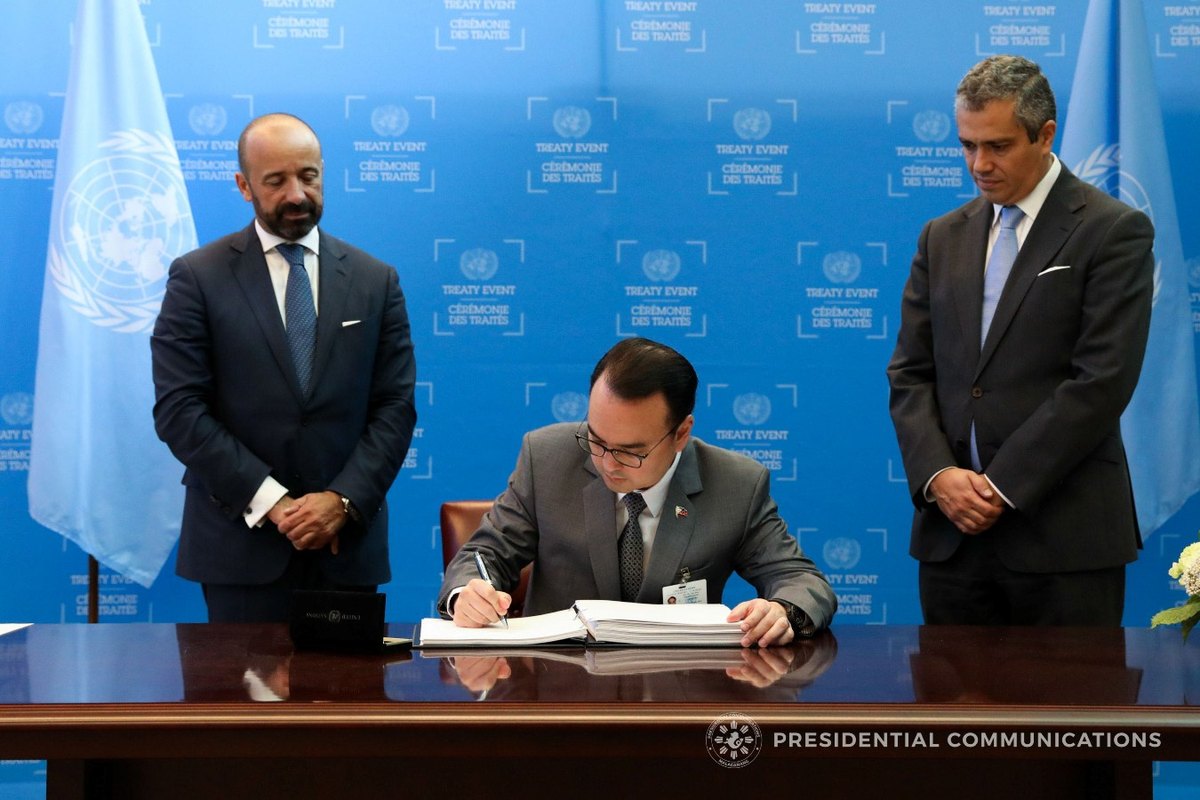
Against deterrence stands a serious and growing abolitionist case, and it is not a fringe one. In 2007 and 2008 four hard-nosed American statesmen, George Shultz, William Perry, Henry Kissinger, and Sam Nunn, men who had spent careers inside the nuclear system, argued in the Wall Street Journal that deterrence was becoming too unreliable to trust and that a world without nuclear weapons was both necessary and achievable. The Treaty on the Prohibition of Nuclear Weapons, adopted in 2017 and in force since 2021, makes their goal law for its parties, following the model that outlawed chemical and biological weapons; the campaign behind it, ICAN, won the 2017 Nobel Peace Prize. The churches have largely converged on the same side: the US Catholic bishops in 1983 granted deterrence only a 'strictly conditioned' acceptance as a step toward disarmament and never a permanent home, and during his November 2019 visit to Hiroshima and Nagasaki, Pope Francis went further, calling the use of atomic weapons in war a crime 'against the dignity of human beings and against any possible future for our common home,' and condemning even their possession as immoral.
How bad, exactly, is the worst case? Existential-risk researchers treat nuclear war as one of the few genuine candidates for ending human civilization, though the numbers are more modest and more uncertain than headlines suggest. In 'The Precipice' (2020), the philosopher Toby Ord put the probability that nuclear war causes an existential catastrophe in the next hundred years at roughly one in a thousand, a real and unacceptable risk, but an order of magnitude smaller than some looser claims imply. Whether a full exchange would truly cause human extinction, as opposed to a collapse that survivors eventually climbed out of, depends on contested nuclear-winter modeling and on how resilient scattered remnant populations would prove; this is honestly unresolved in either direction. Between the poles of current arsenals and total abolition, some strategists propose 'minimal deterrence,' cutting to one or two hundred survivable weapons to preserve the deterrent while lowering the odds of accident and arms racing, though critics doubt such a posture would stay minimal for long.
06The Two Overclaims
This is a subject that tempts confident verdicts from both directions, and both are overclaims. The first is the 'nuclear peace' thesis: that because no great powers have fought directly since 1945, nuclear weapons have abolished major war and are therefore simply good. It does not follow. The long peace has other plausible causes, nuclear-armed states have still fought each other at the edges (India and Pakistan clashed at Kargil in 1999), and a peace that rests on the permanent risk of accidental or irrational annihilation is not a guarantee but a bet that has not yet lost. A close cousin is the claim that modern weapons could be used 'surgically' without escalating; virtually every war game says otherwise. But the mirror overclaim is equally unearned: that any possession of nuclear weapons is, flatly and settledly, moral monstrosity with nothing more to discuss. That erases the serious, good-faith positions the record actually contains, Walzer's supreme-emergency exception, the Catholic Church's own conditional acceptance of deterrence as a bridge to disarmament, the abolitionists who argue policy rather than accusing every deterrence-minded leader of villainy. The honest verdict refuses both the hawk's certainty and the abolitionist's, and holds the paradox open, because it genuinely is.
Fast Facts
- The only uses
- Hiroshima (August 6, 1945) and Nagasaki (August 9, 1945); an estimated 110,000 to 210,000 dead across both cities by year's end
- Deterrence
- The threat of overwhelming retaliation prevents attack; its extreme form is Mutually Assured Destruction (MAD)
- The paradox
- Deterrence requires sincerely intending to do what it would be deeply immoral to actually do (Kavka, 1978)
- Just-war verdict
- Nuclear weapons violate distinction and proportionality; Walzer allows only a narrow 'supreme emergency' exception to the threat
- The scale now
- Roughly 12,200 warheads worldwide (early 2025); even a regional war could trigger global famine via nuclear winter
- The Clock
- 85 seconds to midnight (January 27, 2026), the closest ever; reset every January
- The double refusal
- Neither 'deterrence kept the peace and is therefore justified' nor 'any possession is settled moral monstrosity' is established
What We Can Actually Stand Behind
The facts are solid. Hiroshima and Nagasaki happened on the dates given and remain the only wartime nuclear uses; the just-war principles of distinction and proportionality are real and were judged violated by Walzer and Anscombe; the paradox of deterrence is a genuine, named philosophical problem (Kavka, 1978); the arsenals and the nuclear-winter modeling are real; and the Doomsday Clock stood at 85 seconds to midnight as of January 27, 2026. Casualty totals are given as estimates because the true figures are, and will remain, uncertain.
The major moral positions are live and seriously held: deterrence as a tragic necessity, the deontological wrongness of intending to kill civilians, Walzer's supreme-emergency exception, and the abolitionist case carried by senior former officials, the TPNW and ICAN, and most of the churches. Each is defended by thoughtful people and none has won a consensus. The historical dispute over whether the 1945 bombings were justified is likewise unresolved.
The magnitude of the worst case is genuinely uncertain. Toby Ord's estimate of a roughly one-in-a-thousand chance of nuclear war causing an existential catastrophe this century is a serious figure, but whether such a war would mean true human extinction rather than survivable collapse depends on contested modeling. 'Minimal deterrence' as a middle path is proposed and debated, not established as stable.
Both confident verdicts fail. No, nuclear weapons have not been shown to be simply a force for good that abolished war; the peace they keep is a wager that could still lose, and 'surgical' use is very likely a fiction. But equally, no, it is not an established fact that any possession of these weapons is flat moral monstrosity beyond discussion; that would erase the serious conditional and reluctant positions real thinkers hold. We refuse both certainties and leave the paradox standing, which is the honest thing to do with a knot no one has untied.
There is a reason the clock is the enduring image for all this, and not a scale. The other questions in this wing can wait for us; they will still be there, unresolved and interesting, in a thousand years. This one will not necessarily wait. The Bulletin's scientists reset their clock each January not because they have measured anything, but because they are trying to hold our attention on a danger that familiarity keeps trying to make invisible. Eighty-five seconds is not a prediction. It is a warning dressed as a timepiece, and its real message is the same one the ruined dome in Hiroshima has been sending since 1945: that we built a thing whose ethics we have never been able to solve, and that we are still, every single day, choosing to live beside it. The heart is on the scale here too. It is just that the scale is wired to the end of the world, and no philosopher has yet found the argument that lets us all breathe out.
Sources & further reading
Everything above is drawn from our research library on Theories of Anything. Open the full file to check the sourcing and go deeper.
Image credits
- The Genbaku Dome (Hiroshima Peace Memorial), Hiroshima Peace Memorial Park Photograph by OsakaJo, 2008, via Wikimedia Commons. CC BY 3.0 Source.
- The Trinity test, first nuclear detonation, July 16, 1945 (color photograph) Photograph by Jack W. Aeby, Manhattan Project, 1945; U.S. federal government, via Wikimedia Commons. Public Domain Source.
- Doomsday Clock illustrated face set at 85 seconds to midnight (the January 27, 2026 setting) Freedoxm, after RicHard-59, 2026, via Wikimedia Commons. CC BY-SA 4.0 Source.
- Signing of the Treaty on the Prohibition of Nuclear Weapons, United Nations Headquarters, 2017 Presidential Communications Operations Office of the Philippines (Karl Norman Alonzo), 2017, via Wikimedia Commons. Public Domain Source.
- Card crop of the Genbaku Dome, Hiroshima Photograph by OsakaJo, 2008, via Wikimedia Commons. CC BY 3.0


.svg)
