
Nag Hammadi: The Monks Were Reading Them
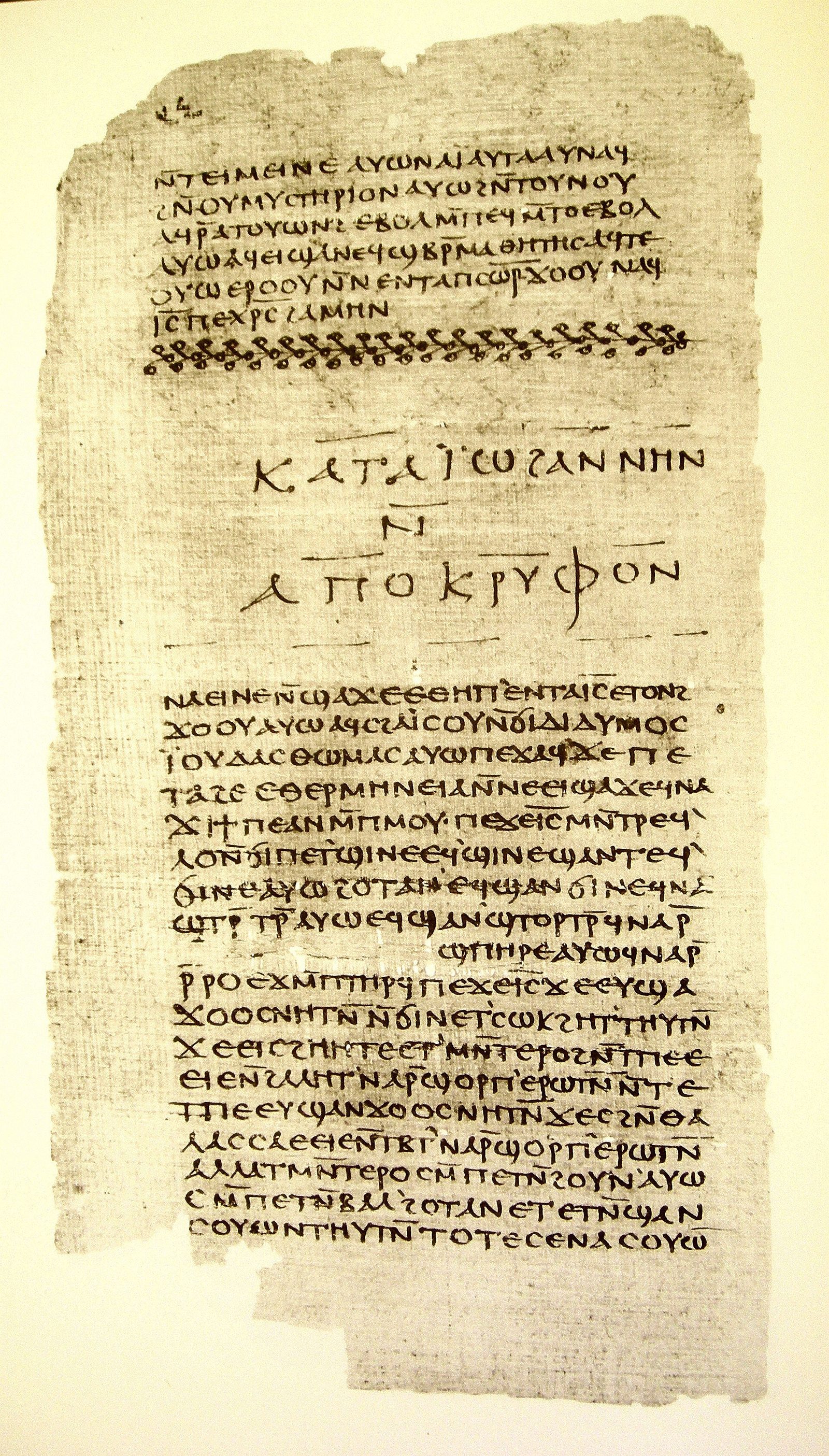
Fifty-two texts in a jar, buried in Egypt, found in 1945. The story everyone tells is that monks hid them from a Church that wanted them burned. The material evidence points somewhere stranger: the books were in the monastery's working library, being used for teaching and carried as protection against demons.
Here is the version you have heard. In December 1945 an Egyptian farmer digging for fertiliser near the Jabal al-Tarif cliffs broke open a sealed jar and found thirteen leather-bound books. They turned out to contain fifty-two texts in Coptic: gospels the Church had left out, a creation story in which the god of Genesis is a blind fool, and a reading of Eden in which the serpent is the hero. Monks had buried them, the story goes, to save them from an order to destroy everything outside the canon.
Almost every part of that is defensible and the last part is now the interesting one. Over the past few years scholars have stopped asking mainly who WROTE these texts and started asking who made, owned and handled the physical books. The answer coming back is not a story about smuggling. It is a story about a library.
01What Was In The Jar
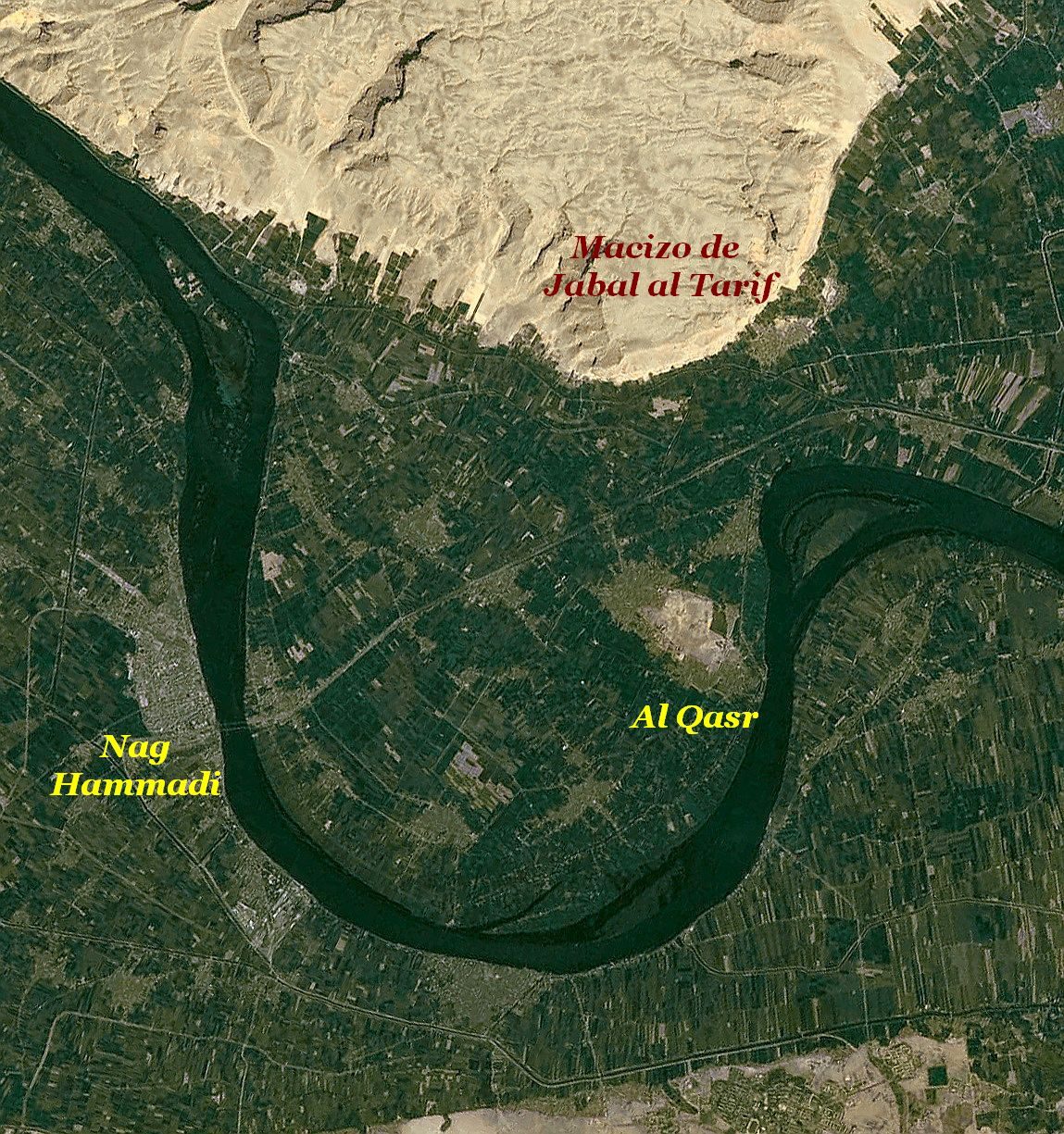
In December 1945, near Nag Hammadi in Upper Egypt, at the Jabal al-Tarif cliffs, a local farmer named Muhammad Ali al-Samman found a sealed red earthenware jar holding thirteen leather-bound papyrus codices containing fifty-two texts in Coptic, Egyptian written in Greek letters. Our research file dates the manuscripts to the third and fourth centuries CE and notes that the compositions they copy may be first or second century. All of that is our file's account and none of it was independently re-verified for this article.
Our file's timeline is unflattering to everyone: pages burned for fuel in 1945, texts circulating among antiquities dealers, Jean Doresse identifying them as Gnostic in 1948, most of the collection reaching the Coptic Museum in Cairo by 1956, a UNESCO project from 1966, and the complete Nag Hammadi Library in English only in 1977, thirty-two years after the find. It is very tempting to read that as more suppression, and our own file refuses to: the delay is more reasonably attributed to the sheer difficulty of conserving, photographing and translating fragile Coptic papyri, since work on ancient manuscripts routinely takes decades.
02What The Texts Actually Say
The core of it, as our file reports: the maker of the material world is not the true God. He is the Demiurge, called Yaldabaoth, or Saklas, which means fool, or Samael, which means blind god. He is born from Sophia's error, he is ignorant of the realm above him, and he announces that he is God and there is no other. He makes Archons, usually seven, one for each planetary sphere, described in the texts both as animal-headed beings and as psychological forces, whose job is keeping human souls in matter. And in several texts the serpent of Eden is a good figure: in On the Origin of the World it is sent by divine Wisdom, in the Hypostasis of the Archons the spiritual woman enters the serpent in order to teach Adam and Eve, and the Testimony of Truth asks what sort of God forbids knowledge. Our file marks all of this Tier 1 as text and Tier 3 as cosmology, which is exactly the right split.
It is worth resisting the phrase Gnostic library. Codex VI contains a Coptic translation of a passage from Plato's Republic alongside Hermetic texts. Codex XII contains the Sentences of Sextus, a set of ethical maxims that are not Gnostic in any sense. Our own file says this plainly in its Scholarly Cautions: not all the Nag Hammadi texts are Gnostic, the texts sometimes contradict each other, and reading them as a unified counter-theology imposes a coherence that may not exist. It goes further and repeats Michael Williams's 1996 argument that Gnosticism may be a modern scholarly invention rather than a thing that existed.
03The Question That Changed
For most of the eighty years since the find, the interesting question about these books has been what their texts mean and when the texts were composed. That is a question about authors. Recently a different question has been getting asked, and it is a question about objects: who cut this papyrus, who sewed this binding, who wrote in this margin, and what were they doing with it.
Hugo Lundhaug set out the shift in 2022. Most Nag Hammadi research, he writes, has been undertaken from the perspective of the texts' original authorship rather than of the time and place in which the surviving manuscripts were produced and used. The manuscripts are direct evidence of people who actually copied and read them, and for many of these texts they are the only such evidence. He adds a warning that is easy to miss and cuts deep: when a work survives in only a few copies, that hides the fluidity of its transmission and gives a misleading impression of textual stability.
In 2023 Paul Linjamaa published a study of the codices as physical artefacts, working from codicology, paratextual marks and scribal habits. His conclusion, in his own summary: the research supports the hypothesis that the Nag Hammadi texts had their origins in Pachomian monasticism, and shows how Pachomian monks used the texts for textual edification, spiritual development and pedagogical practices. It further finds that the texts were used for perfecting scribal and editorial practice, and that they were used as protective artefacts containing sacred symbols in the continuous monastic warfare against evil spirits. His own phrase for what this does is that it challenges preconceptions about ancient orthodoxy.
| The Question | What It Looks At | What It Yields |
|---|---|---|
| Who wrote these texts, and when? | The compositions: their theology, their relationship to the canonical gospels, their possible first- or second-century origins | The Demiurge, the Archons, the serpent as liberator, and a long argument about whether any of it predates the canonical gospels |
| Who made and used these books? | The papyrus, the bindings, the scribal hands, marginal marks, the covers and their stuffing | A Pachomian monastic setting, texts used for edification and teaching, scribal practice, and books carried as protection against demons |
| Why does the difference matter? | The first question can be answered without leaving the translation. The second requires the physical object | It moves the monks from rescuers of forbidden books to readers of them, which is a much harder thing for either side of the usual argument to absorb |
| What it does NOT settle | Composition dates, the theology, whether the texts were ever considered heretical by the people copying them | Our file's suppression chronology stands. Irenaeus, Athanasius and Theodosius are still in the record. The question is what a monastery's book chest tells you about how that played out on the ground |
Our file notes that the Apocryphon of John appears three times across Codices II, III and IV, and calls the duplicates significant for textual comparison. It says the Berlin Codex's fourth copy confirms textual stability across multiple manuscript traditions. And in the same breath it records that the Codex III version is SHORTER and the Codex IV version LONGER. Copies of different lengths are evidence of fluidity at least as readily as of stability. Which of the two they show is the question, not the answer, and this is precisely the move Lundhaug is warning about.
04The Suppression, Which Was Real
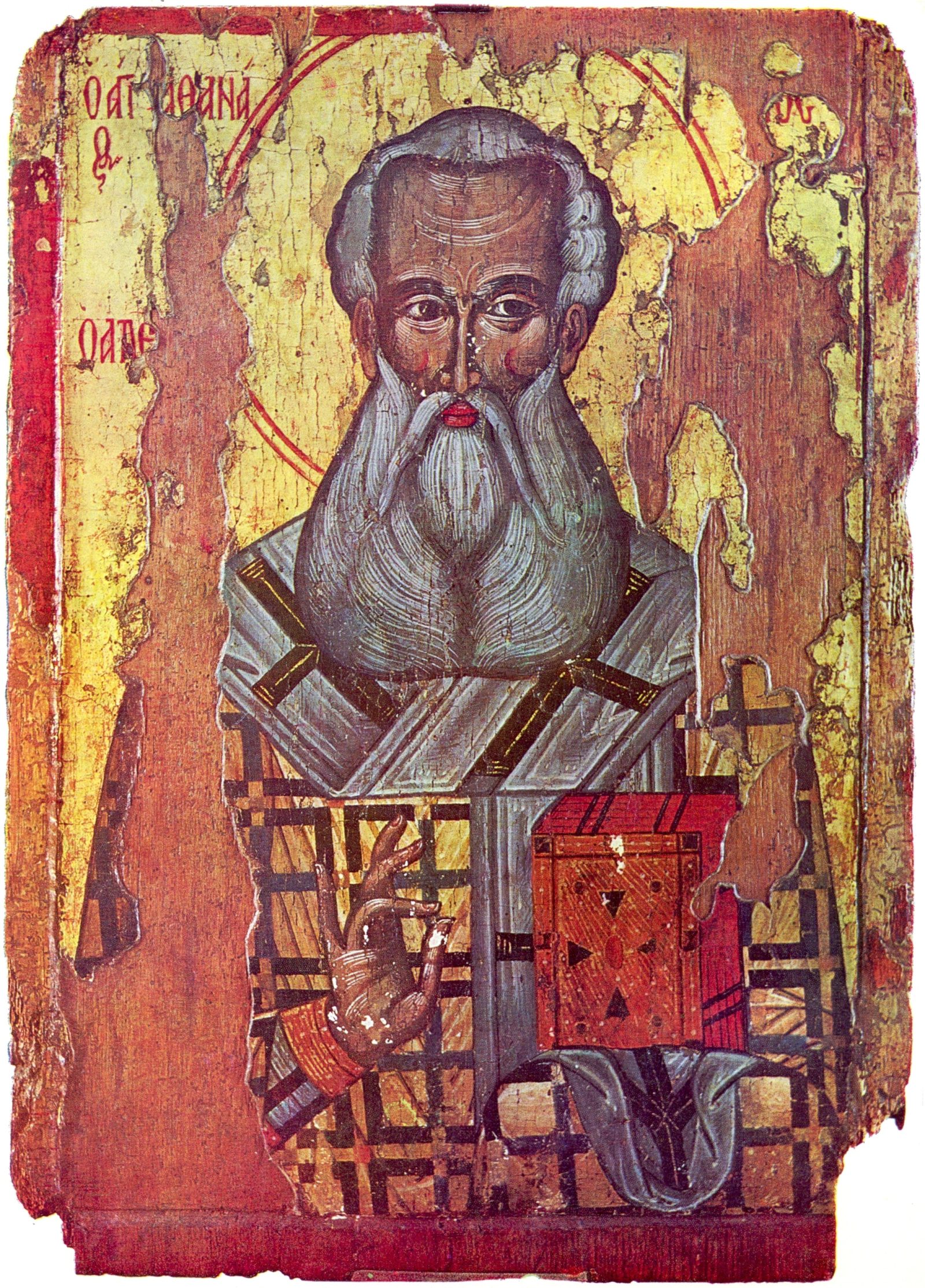
Our file's record of the campaign: Irenaeus's Against Heresies around 180 CE, the first systematic attack; Hippolytus's Refutation of All Heresies around 190 to 220, which documents the schools it condemns; Epiphanius's Panarion around 315, attacking eighty heresies including the Sethians, Naassenes and Ophites; the Council of Nicaea in 325; Athanasius's Easter Letter of 367; and Theodosius I's Edict of Thessalonica in 380, making Nicene Christianity the state religion. Hippolytus's Refutatio, as it happens, is the one entry in our file's bibliography whose identifier points at the right work.
And here is the sentence that should govern this whole subject, and it is our research file's own. On the claim that these texts are the truth, deliberately suppressed by a Church that knew it: this overstates the evidence. Suppression was real, systematic and documented, but the motivations were theological, political and institutional rather than necessarily conspiratorial. Then the line: reading them as the suppressed truth is as ideological as reading them as heresy. A document in a library like this one, refusing the most marketable version of its own subject, is worth more than any of the texts it summarises.
Our file draws a line from the Archon cosmology to modern prison-planet and simulation ideas, noting correctly that the Wachowskis have explicitly cited Gnosticism as an influence on The Matrix. There is now scholarship on exactly that move. Jan Kozák's 2023 analysis of gnostic films argues their cosmology bears a close similarity to the cosmology of conspiracy theories, and that the wave of such films around the turn of the millennium is part of the sociocultural development of the conspiracist mindset entering the mainstream. Which reframes the resemblance usefully: it is real, and it is evidence about the 1990s rather than about the fourth century.
05Our Own Bibliography, And Something Larger
| The Entry | What The Identifier Returns | The Failure |
|---|---|---|
| Robinson (ed.), The Nag Hammadi Library in English, 1978 | Robert M. Grant's 1990 review, in Church History, of The Jesus of Heresy and History by John Dart | A DIFFERENT BOOK, and a review of it. On the foundational edition of the field |
| Williams, Rethinking 'Gnosticism', 1996 | David Brakke's 1998 review of it in Church History | A review attached to the book it reviews |
| Pearson, Ancient Gnosticism, 2007 | Michael Kaler's 2009 one-page review in Studies in Religion | The same again |
| DeConick, The Thirteenth Apostle, 2007 | A 2008 one-page review in Religious Studies Review, written by Birger Pearson, who is himself entry 7 of this bibliography | The same again. The _42 in the identifier's suffix means item 42 of a bulk review section |
| 'Princeton University Press (corp.), 1999, Gnosticism / as a Category' | The chapter 'Gnosticism as a Category', pages 29 to 53 of Rethinking 'Gnosticism', which is already entry 6 | A chapter of another entry, promoted to a work, with the publisher listed as author and its title cut in half |
| 'Walter de Gruyter GmbH, Table of Tractates in the Coptic Gnostic Library' | A front-matter table of contents, pages i to xxii, registered as a dataset. The publisher is Brill, not De Gruyter | A table of contents cited as a source |
| Hippolytus, Refutatio Omnium Haeresium | Hippolytus, Refutatio omnium haeresium, the De Gruyter critical edition | CORRECT |
Our file ends with a Corrections block from the campaign that repairs this library's bibliographies. Two ISBNs were changed, each with the same reason: the previous number failed its check digit. NEITHER OLD NUMBER FAILED ITS CHECK DIGIT. Both compute clean, and both resolve. The Pagels number pointed at Los Evangelios Gnósticos, the Spanish translation, so the real fault was a wrong-language edition. The Irenaeus number pointed at a 1977 Brill monograph ABOUT Irenaeus rather than Irenaeus's own text, so the real fault was a wrong work. Both replacements are defensible and one is clearly better. The repairs were right. The reason given for them was not.
That sentence appears thousands of times in this library, so it was worth measuring rather than generalising from two cases. Every correction line was harvested and every number computed, by a script left behind so the figure can be re-checked. The result is more interesting than the accusation. Of 2,307 correction rows, 1,679 of them, 72.8 per cent, genuinely did have a failing check digit: the stated reason is TRUE in the large majority of cases. In 545, about 23.6 per cent, the old number was perfectly valid and something else was wrong with it. In 83 more, 3.6 per cent, the old and new values are the same string, so a repair was logged and nothing changed. And every single replacement computes clean. THE REPAIRS ARE SOUND; THE REPORTING IS NOT. One fixed sentence is emitted for at least three different situations, and it is wrong about the reason in 628 of 2,307 rows, 27 per cent.
Fast Facts
- Found
- December 1945, at the Jabal al-Tarif cliffs near Nag Hammadi, Upper Egypt, by a farmer named Muhammad Ali al-Samman. Our file's account
- What
- Thirteen leather-bound papyrus codices, fifty-two texts, in Coptic. Manuscripts of the third to fourth century CE
- Fully Published
- 1977, thirty-two years later. Our file attributes the delay to conservation difficulty, not suppression
- Not All Gnostic
- Codex VI holds Hermetic texts and a passage of Plato's Republic; Codex XII holds the Sentences of Sextus, a set of ethical maxims
- The Core Story
- The Demiurge, Yaldabaoth, makes the material world in ignorance; the Archons keep souls in it; the serpent of Eden is sent to help
- The New Question
- Not who wrote the texts but who owned the books. Linjamaa 2023 supports a Pachomian monastic origin and finds the texts used for teaching, for scribal practice, and as protection against demons
- The Category Problem
- Whether 'Gnosticism' names anything real is disputed. Williams argued in 1996 for dismantling it, and our own file repeats the argument
- The Other Collections
- The Berlin Codex, acquired 1896, published 1955, containing the Gospel of Mary. Codex Tchacos, found around 1978, published 2006, containing the Gospel of Judas
- What Our File Refuses
- That these are 'the suppressed truth'. Its own words: that reading is as ideological as reading them as heresy
What We Can Actually Stand Behind
Thirteen codices holding fifty-two Coptic texts were found near Nag Hammadi in 1945 and are held in Cairo. They contain the material our file describes: the Demiurge, the Archons, and a positive serpent. The suppression chronology is documented, from Irenaeus through Athanasius's Easter Letter of 367 to the Edict of Thessalonica in 380. Lundhaug set out the material-philology turn in 2022 and Linjamaa published the study of the codices as physical objects in 2023, supporting a Pachomian monastic setting and use for teaching, scribal training and protection. Markschies published a literary critique of the discovery stories in 2022, which this article names and did not read.
Whether the multiple copies of the Apocryphon of John show textual stability or textual fluidity: our file says stability and Lundhaug's argument says that impression is the trap. Whether 'Gnosticism' names a real ancient thing at all. And the composition dates, where some material, especially in the Gospel of Thomas, may be early and independent while most is probably later.
The Archons as literal non-human intelligences, which our file holds open between literal, psychological and symbolic readings. And the line from Archon cosmology to simulation theory, which is a real resemblance with a 2023 scholarly account attributing the film wave to the conspiracist turn of the 1990s.
An unbroken transmission line from Sumerian cosmology to Gnostic texts is not established, and our file says so. And these texts are not 'the suppressed truth': that framing is refused in our own document, in its own words, as being as ideological as calling them heresy. Also refused here: the idea that a bad bibliography means a bad document, or that a good one means a good document. This file's citations are mostly broken and its scholarly cautions are the best in the library.
What I did not expect was how much better the monastery reading is as a story. Forbidden books buried by dissidents is a thriller, and it flatters everyone: the heretics are brave, the Church is sinister, and the reader gets to be on the right side. Books in a working library, used by monks for teaching and copied out for practice and carried around as protection against demons, is not a thriller. It is a picture of people whose reading was wider and stranger than the categories we have built to sort them, in a century when nobody had yet decided which of these books was going to count. That is harder to film and much more like how anything actually happens.
Sources & further reading
WHERE THIS WORKED FROM, AND WHERE IT CAN BE CHECKED. This article worked from one file in our own research library, A_2_02, at Source Confidence 3 out of 5. All seven of its DOIs were resolved live against Crossref and ONE points at the work it names, the De Gruyter edition of Hippolytus. Section 05 lists the rest: four are reviews attached to the books they review, including one attached to James Robinson's Nag Hammadi Library in English, which is the foundational edition of the whole subject and whose identifier returns instead a 1990 review of an entirely different book; one is a chapter of another entry in the same bibliography, promoted to a standalone work with Princeton University Press listed as its author and its title split across two fields; and one is a front-matter table of contents registered as a dataset, credited to the wrong publisher. All ten external sources cited below were found independently this session and resolved before being cited. THE LARGER FINDING IS ABOUT OUR OWN MACHINERY, NOT THIS DOCUMENT. A_2_02's Corrections block records two ISBN repairs, each justified with the sentence 'The previous number failed its check digit'. Neither old number failed its check digit; both compute clean and both resolve, to a Spanish translation and to a monograph about Irenaeus rather than by him. Because that sentence appears 2,683 times across 1,176 documents in this library, every correction line was harvested and every number tested rather than generalising from two cases. Of 2,307 correction rows, 1,679 old numbers genuinely did fail their check digit, 545 did not, and 83 record a change between two identical strings. Every replacement computes clean. The repairs are sound; the reporting is not, and it is wrong about the reason in 628 rows, 27 per cent. The measurement is reproducible: `python _scripts/estate/audit_isbn_corrections.py`. Routed to the corpus hygiene campaign as a defect in its own output. WHAT THIS PAGE ADDS THAT OUR FILE PREDATES. Lundhaug's 2022 statement of material philology, Linjamaa's 2023 Cambridge study of the codices as physical objects, Markschies's 2022 literary critique of the discovery stories, Ashwin-Siejkowski's 2020 study of the Plato excerpt in Codex VI, and Kozák's 2023 analysis of gnostic films. ONE SMALL DISCREPANCY: our file lists the Plato passage as Republic 588a-589b; the 2020 study gives it as 588b-589b, in both its title and its abstract. WHAT IS CARRIED AS OUR FILE'S OWN, UNVERIFIED HERE. The discovery narrative, the codex and text counts, the manuscript dating, the publication timeline, the contents of each codex, the suppression chronology, and the Berlin Codex and Codex Tchacos details. ON THE IMAGES, AND ON WHAT IS MISSING. Three images, which is thin, and the reason is worth stating so that nobody infers the wrong thing from it: Wikimedia Commons holds almost no freely licensed photography of these manuscripts. Thirteen codices survive; essentially one page of one of them is available. Two candidates were fetched and dropped after being opened, a much later illuminated scroll in the Coptic Museum and a modern calligraphed artist's book, either of which a reader would have taken for a Nag Hammadi codex. A third, a Roman gem conventionally called Gnostic, was dropped on reasoning rather than pixels: our file never mentions such objects and no source was resolved connecting them to these texts.
Image credits
- Folio 32 of Nag Hammadi Codex II, Coptic Museum, Cairo Unknown scribe, 4th century, via Wikimedia Commons. Public domain Source.
- Satellite map of the Nag Hammadi discovery area, Upper Egypt NASA Gateway to Astronaut Photography of Earth, via Wikimedia Commons. Public domain Source.
- Saint Athanasius, icon from Sozopol, Bulgaria, late 17th century Unknown icon painter, via Wikimedia Commons. Public domain Source.


