
The Multiplanetary Leap: Humanity Leaves the Cradle
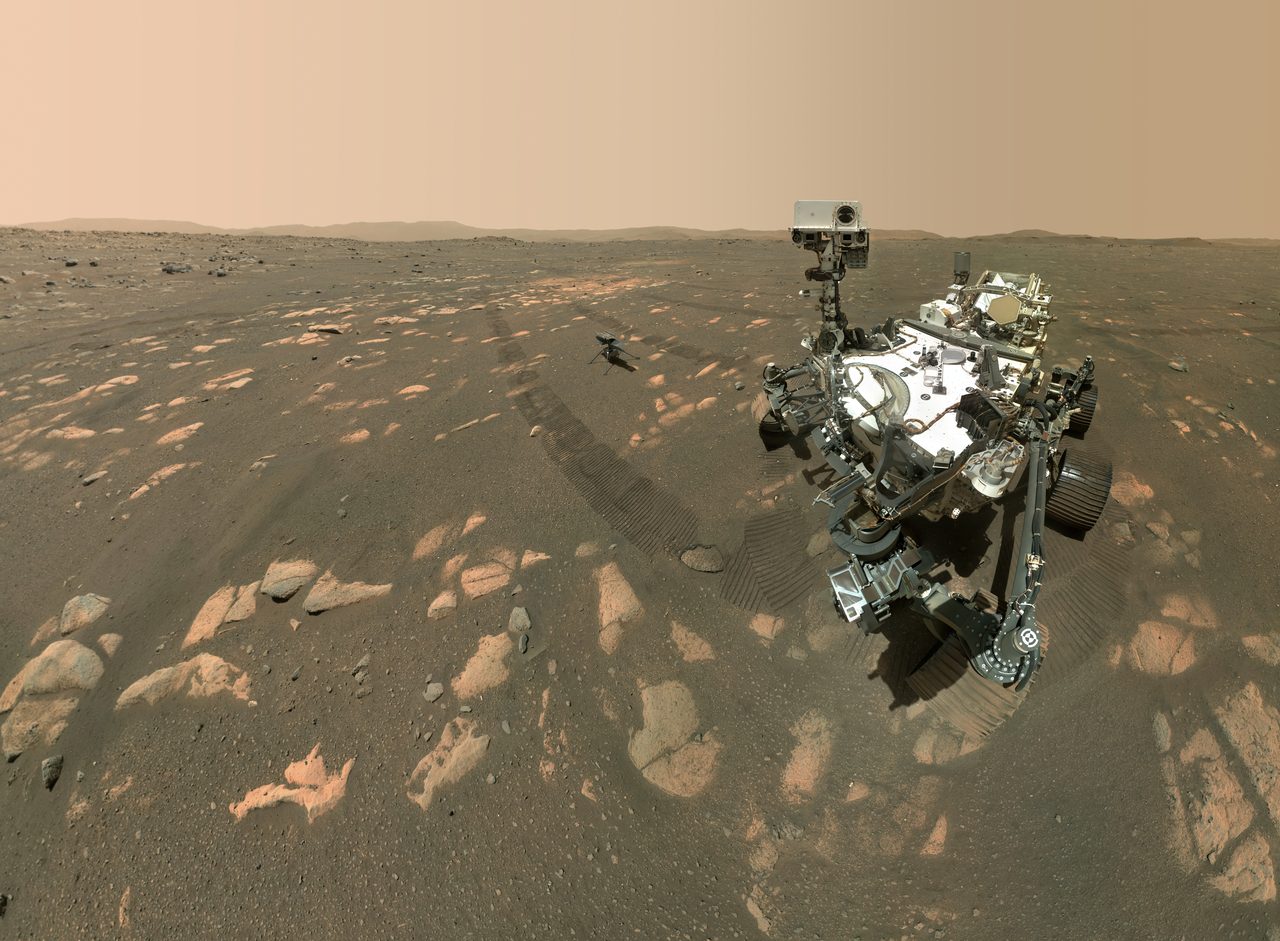
On February 18, 2021, NASA's Perseverance rover landed in Jezero Crater on Mars, and it was still working there as of May 2026. It has confirmed that the crater once held a lake, detected organic molecules in Martian rock, and cached samples for a later mission to collect. On January 8, 2026, a United States congressional spending package eliminated nearly all funding for that collection mission, and the cached samples are still on Mars with no confirmed funded plan to bring them home. Almost everything worth understanding about leaving Earth lives in the gap between the machine that works and the plan that does not. Here is the file, opened claim by claim, each one wearing its evidence, and every Mars settlement date left standing in the name of the agency or company that said it.
Every argument about humanity's future off Earth eventually becomes an argument about dates. It ought to be an argument about hardware. There are, right now, real machines on and around other worlds: one driving across a dry lakebed on Mars, one in cruise toward Jupiter, and pieces of an asteroid already sitting in a laboratory here. Those machines have done dated, checkable things. Beside them sits a second set of claims, about settlements and schedules and civilizations that command the output of stars, and those claims are of an entirely different kind. This file keeps the two apart line by line and says out loud which one each sentence is. Let's open the file.
01The Machines Already Out There
Start with what has actually flown, because it is the only part of this subject that is not a forecast.
NASA's Perseverance rover landed in Jezero Crater on Mars on February 18, 2021, carrying the Ingenuity helicopter. Its mission has since confirmed an ancient lake environment at the landing site, and it has detected organic molecules in Martian rock. Read that second finding at its real size: organic molecules are carbon chemistry of the kind life is built from, not evidence of life itself. Finding them in rock that sat at the bottom of a Martian lake is what makes a place worth going back to, which is precisely the problem section 02 is about.
The helicopter it carried outlived its own mission plan by a wide margin. Ingenuity was a technology demonstration built for five flights in thirty days. It flew 72 flights over nearly three years, more than 14 times farther than that original planned five-flight, 30-day demonstration, until its rotor blades were damaged on landing during the 72nd flight on January 18, 2024. NASA formally retired it on January 25, 2024. Our own research document's mission table still lists Perseverance and Ingenuity together, with no note of the retirement, and this article states the retirement because it was independently confirmed rather than because the file says so.
The rover itself is still working. As of May 8, 2026, Perseverance had operated on Mars for 1,854 Martian sols, or 1,905 Earth days, and it continues to function. It now reuses the Helicopter Base Station, the equipment originally built to communicate with Ingenuity, for new operations including autonomous localization. The gear built to talk to a dead helicopter was repurposed by the rover that delivered it.
Something has already come back from deep space. NASA's OSIRIS-REx mission returned approximately 121.6 grams of pristine material from the asteroid Bennu to Earth on September 24, 2023, the first US mission to return an asteroid sample. Analysis of that material found amino acids and hydrated minerals, which is consistent with the building blocks of life being common in the early solar system rather than rare. A robot went to an asteroid, took a handful, and sent it home.
China's Chang'e program has twice done something nobody had done before. Chang'e 4 achieved the first landing on the Moon's far side in 2019. Chang'e 6, in 2024, achieved the first sample return from the lunar far side, landing in the South Pole-Aitken Basin. Both are firsts on the record, and both matter here for a reason beyond the Moon. Sample return from another body has now been done, twice in this section alone, at the Moon and at an asteroid. Whether it happens at Mars turned on a spending vote, which is what the next section is about.
One spacecraft in this article is already in flight toward an ocean. NASA's Europa Clipper launched on October 14, 2024, on a SpaceX Falcon Heavy from Kennedy Space Center, four days later than its original October 10 target because of Hurricane Milton. It arrives at Jupiter in 2030 and will perform 49 flybys of Europa during a prime mission concluding in 2034. Its instruments include ice-penetrating radar and a mass spectrometer to sample any plume material it flies through. The mission's stated goal is worth quoting precisely rather than paraphrasing upward: it is to determine whether Europa has conditions that could support life. It is not to confirm life itself.
The next one is a confirmed program whose dates are still targets, which is exactly why it sits at Tier 2. NASA's Dragonfly is a nuclear-powered rotorcraft built to explore the organic-rich surface of Saturn's moon Titan and the prebiotic chemistry on it. NASA formally confirmed the mission in April 2024 for a July 2028 launch, with arrival at Titan expected in 2034 after a cruise of roughly six years, at an estimated total lifecycle cost of $3.35 billion. The confirmation is a fact of record. The launch date, the arrival date and the cost estimate are the mission's own current figures for a spacecraft that has not left the ground.
| Mission | The Date on the Record | What Is Verified | Where It Stands |
|---|---|---|---|
| Perseverance, NASA, Mars | Landed February 18, 2021 | Confirmed an ancient lake environment at Jezero Crater; detected organic molecules in Martian rock | Still operating. 1,854 Martian sols and 1,905 Earth days as of May 8, 2026 |
| Ingenuity, NASA, Mars | Final flight January 18, 2024 | 72 flights over nearly three years, against a planned five flights in thirty days | Retired January 25, 2024, after rotor blade damage on landing |
| OSIRIS-REx, NASA, asteroid Bennu | Sample delivered September 24, 2023 | Approximately 121.6 grams of pristine material; amino acids and hydrated minerals found in it | Complete. The first US mission to return an asteroid sample |
| Chang'e 4 and Chang'e 6, China, the Moon | 2019 and 2024 | The first landing on the lunar far side, then the first sample return from it, in the South Pole-Aitken Basin | Complete |
| Europa Clipper, NASA, Jupiter | Launched October 14, 2024 | The launch; ice-penetrating radar and a mass spectrometer aboard | In cruise. Jupiter arrival 2030, 49 Europa flybys, prime mission ends 2034 |
| Dragonfly, NASA, Titan | Confirmed by NASA April 2024 | The confirmation, and the $3.35 billion lifecycle cost estimate | Not flown. July 2028 launch and 2034 arrival are the mission's own current targets |
02The Samples With Nowhere To Go
One mission in that table has a hole in the middle of it, and it is the piece of current news this file weighs most heavily.
Perseverance's caching work was collected for Mars Sample Return, a program that no longer has money. A United States congressional minibus spending package passed on January 8, 2026 eliminated nearly all funding for Mars Sample Return, part of a broader administration push to redirect Mars resources toward eventual crewed missions instead. The practical consequence is plain, and this file will not soften it: the rock and regolith samples Perseverance carefully collected and cached are sitting on the surface of Mars with no confirmed funded plan to retrieve them. Separately, China's Tianwen-3 mission is targeting a 2028 launch with a 2031 sample return, which makes it the leading alternative route to Martian material in a laboratory on Earth. And our own research document carries a Last Updated stamp of February 28, 2026, about seven weeks after that vote, while its mission table still describes the samples as being collected for Mars Sample Return with no note of the funding collapse. The gap is flagged here rather than passed along.
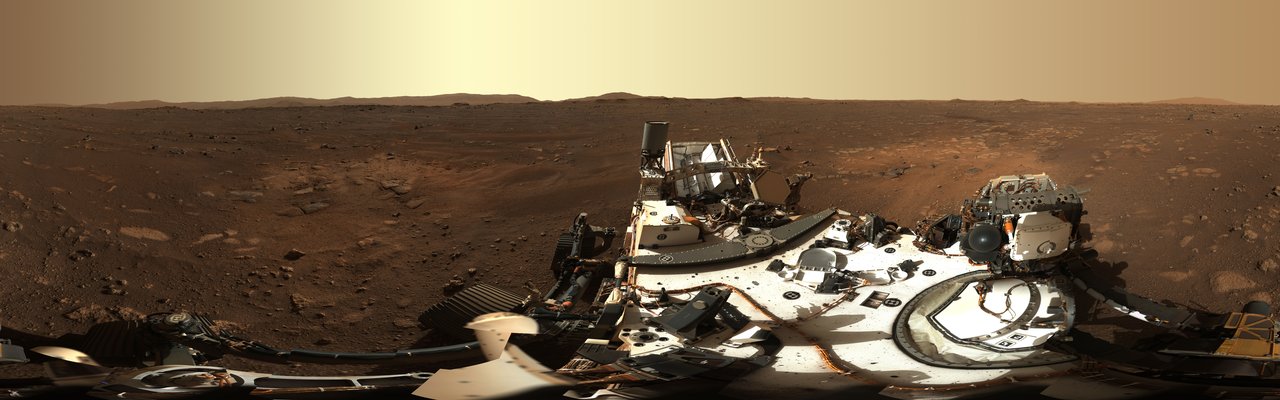
That is what a timeline actually looks like when it moves. Not a slip of a few months in a press release, but a funded plan becoming an unfunded one between one budget cycle and the next, with the hardware already on Mars and the samples already collected. Hold that in mind through section 06, where the dates get long and the numbers get round.
03Reading the Air of Other Worlds
Sample return is the most direct way to learn what another world is made of. The other way, and outside the solar system the only way, is to read the light that has passed through its atmosphere.
The number of known worlds is no longer a rounding error. As of February 26, 2026, the NASA Exoplanet Archive lists 6,128 confirmed exoplanets, with more than 8,000 additional unconfirmed candidates waiting behind them. Our own research file's figure, more than 5,600 confirmed as of 2025, was accurate for its stated date. This is the current one, and it carries its date for the same reason every number in this article does: it will go out of date, and a reader should be able to see when it was true.
The instrument doing the reading is the James Webb Space Telescope, launched in December 2021, which has performed atmospheric spectroscopy on exoplanets including the planets of the TRAPPIST-1 system and the sub-Neptune K2-18 b, where it detected carbon dioxide. What that means in practice is not a photograph of an alien world. It is the chemical fingerprint left in starlight after that light has passed through a planet's air.
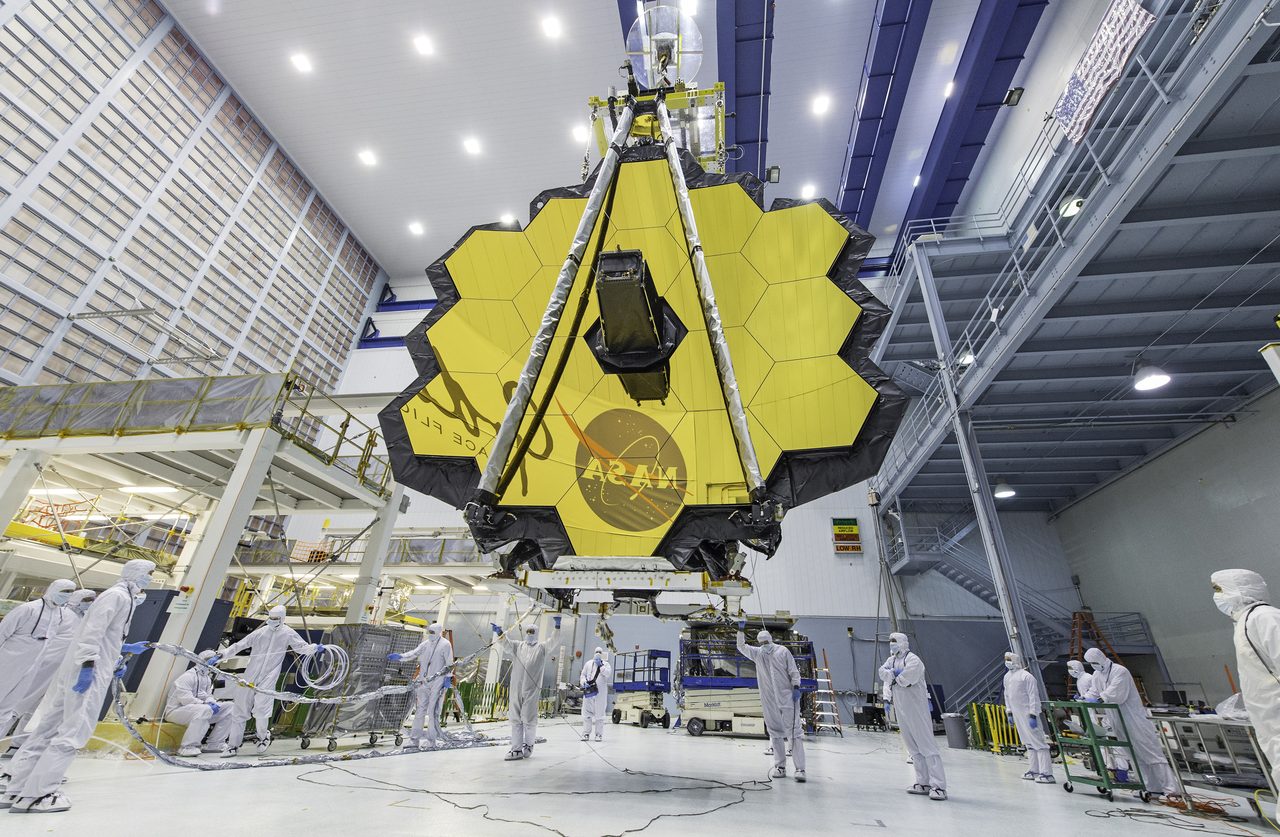
TRAPPIST-1 lies about 40 light-years from Earth and contains seven rocky planets, three of which orbit in the star's habitable zone, and JWST is actively studying their atmospheres. That distance defines the ceiling on this entire branch of the subject. These worlds can be studied only remotely, by spectroscopy, and no sample return is possible for any exoplanet with current or near-future technology. Whatever is ever learned about them will be learned from light, argued over by people who cannot go and check.
The early returns from that system have been negative, and negative results are results. A September 2025 JWST thermal phase-curve study found no evidence of a thick secondary atmosphere around TRAPPIST-1 b or TRAPPIST-1 c, the two innermost planets of the seven. That is not the method failing. That is the method working: a specific, testable question about two named worlds, answered no, on the record, at a stated date.
And then there is the claim that needs the most care in this entire article. In April 2025, a team led by Nikku Madhusudhan of the University of Cambridge reported a JWST detection, at roughly 3-sigma confidence, of dimethyl sulfide and dimethyl disulfide in the atmosphere of K2-18 b. On Earth those gases are produced exclusively by marine life, and the team framed the result as a possible biosignature. What happened next is the part that decides its status. Independent reanalyses through mid-2025, by Schmidt and colleagues, by Taylor, by Welbanks and colleagues, by Stevenson and colleagues, and by a NASA-led team in a July 2025 preprint, either failed to reproduce the dimethyl sulfide and dimethyl disulfide signal or found it statistically unsupported in the same JWST NIRISS, NIRSpec and MIRI data, while confirming that the planet does have a water-rich, methane-bearing atmosphere. So the honest status is not confirmed, and it is not merely controversial either. It is largely unreproduced by independent teams. Our own file calls it a possible dimethyl sulfide biosignature, controversial, which was accurate when it was written and is understated now.
04The Ocean Under the Ice
Inside the solar system, one of the most promising places to look for life is not a planet at all. It is a moon, and the reason is water that stays liquid where it has no business being liquid.
Europa holds a global subsurface ocean roughly 100 kilometers deep, estimated to hold two to three times the volume of all of Earth's oceans combined, beneath an ice shell 10 to 30 kilometers thick. What keeps it liquid is not sunlight but tidal heating, Jupiter's gravity working the moon as it orbits. The ocean's salt chemistry and its possible hydrothermal vents make Europa one of the solar system's most promising astrobiology targets. The same system that makes it interesting also makes it difficult: the radiation environment from Jupiter is extreme, and any life there would most likely be shielded deep beneath the ice, which is exactly where a flyby cannot look.
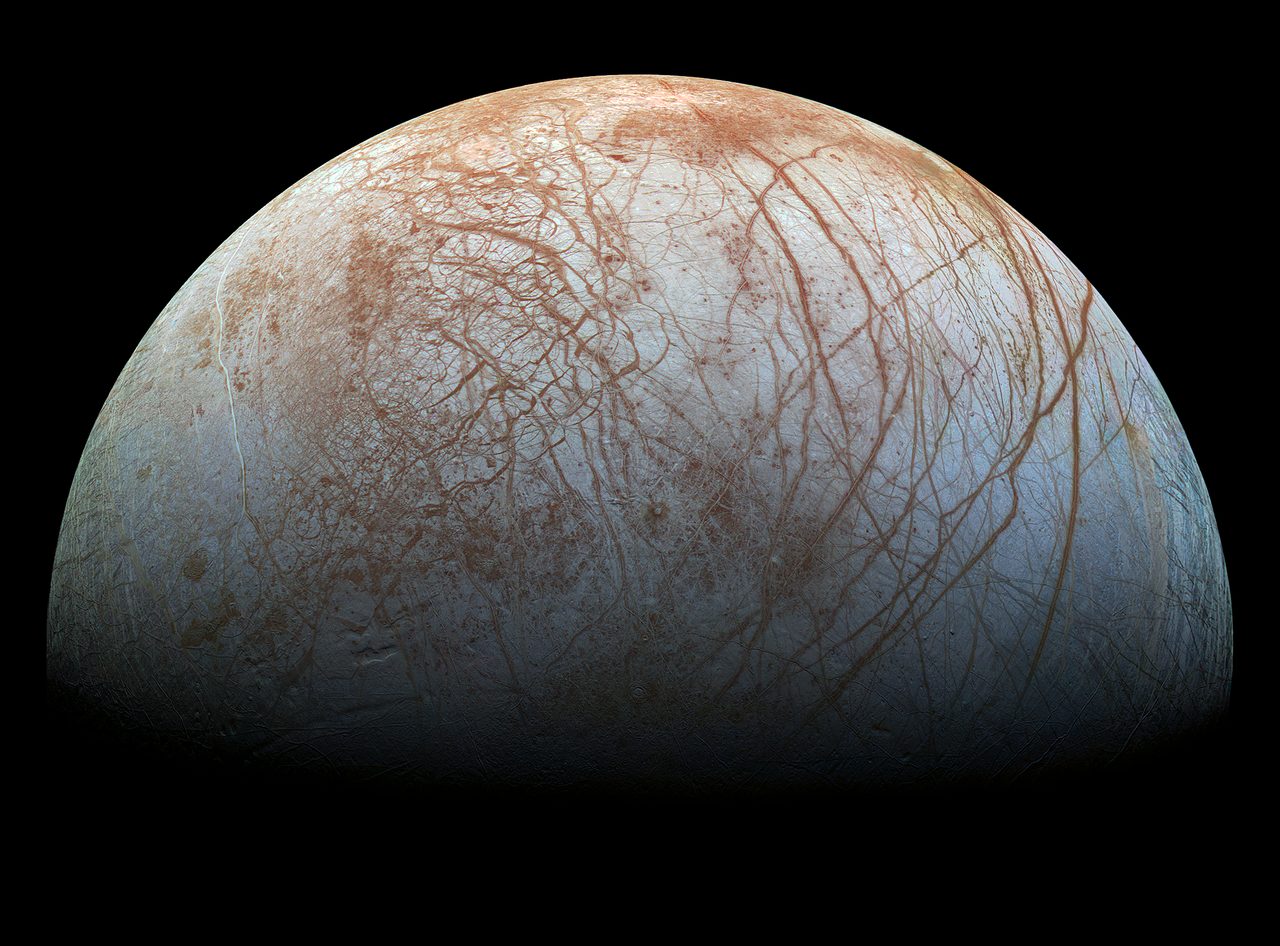
No photograph of Europa's ocean or any plume there exists yet; Europa Clipper does not arrive until 2030.
Saturn's moon Enceladus made its own case by throwing its ocean into space. Cassini's Ion and Neutral Mass Spectrometer detected molecular hydrogen in the plume erupting from the moon's south pole, reported by Waite and colleagues in Science in 2017. The most plausible source of that hydrogen is ongoing hydrothermal reaction between the moon's rocky core and its subsurface ocean, a chemical-energy source directly analogous to the hydrothermal vents that support life on Earth's ocean floor. A spacecraft flew through the spray of a hidden sea and came back with the exhaust of a chemistry that, here, feeds living things.
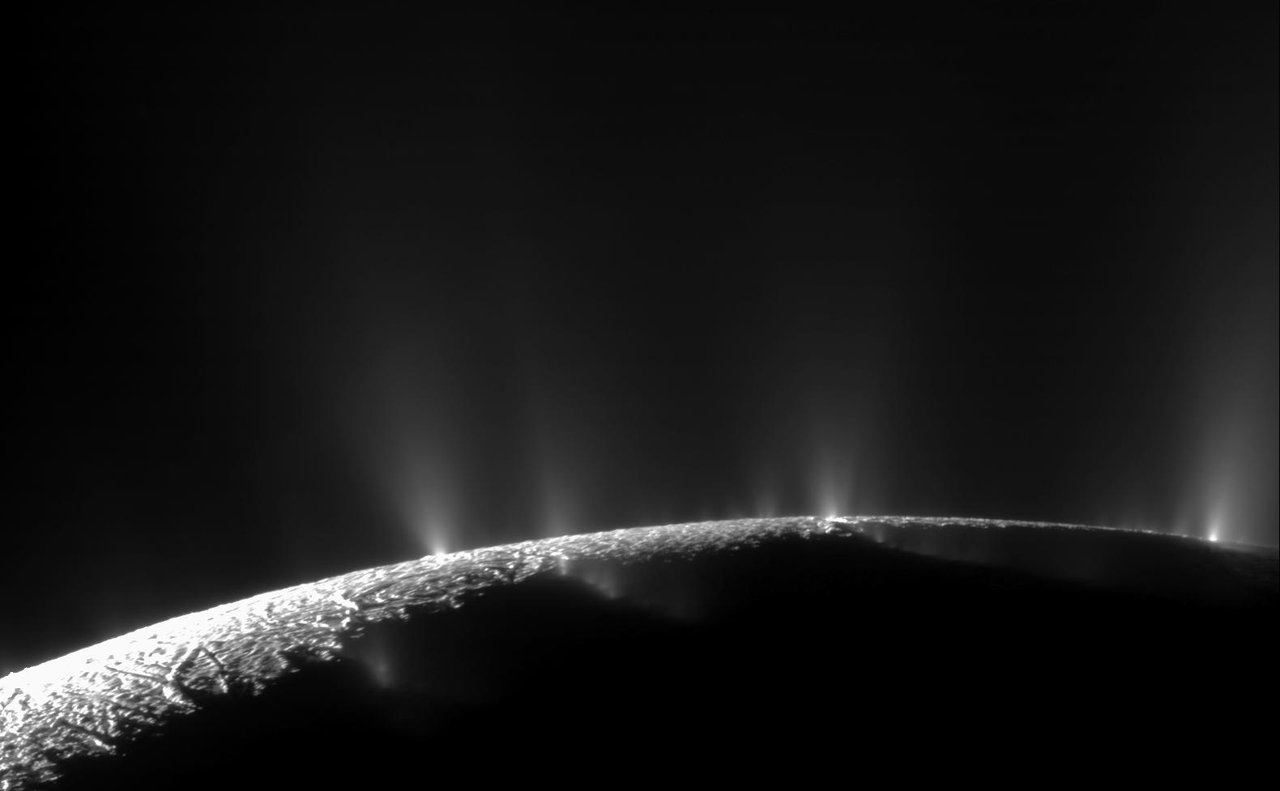
Titan's chemistry is the least Earth-like of the three, in precisely the way that makes it valuable. It has a thick nitrogen atmosphere and stable liquid on its surface, lakes and seas of liquid methane and ethane at a surface temperature of about minus 179 degrees Celsius. Liquid water is not stable there, so if life exists on Titan it would necessarily run on an entirely different biochemistry from any life on Earth. That is why the moon is a genuine prebiotic-chemistry laboratory whether or not anything is alive on it, and why Dragonfly is being sent to a world whose chemistry is interesting precisely because it is nothing like ours.
One target in the inner solar system remains unsettled, and this file does not settle it either. In September 2020, Jane Greaves and colleagues at Cardiff University reported phosphine, a possible biosignature gas, in the clouds of Venus. The detection was immediately and heavily contested on statistical and instrumental grounds, the sharpest objection being that sulfur dioxide absorbs at a nearly identical wavelength and could be misread as phosphine. Some follow-up work between 2022 and 2024 reported renewed or corroborating evidence at different atmospheric depths. The finding is not confirmed and it is not debunked. It is waiting on a dedicated Venus atmospheric probe, and until one flies, the detection and the doubt both stand exactly where they are.
Underneath all of it sits a framework, and it is why no single gas detection ever settles anything. The standard biosignature criteria, used to interpret both in-situ samples and remote spectra, are these. Oxygen and methane appearing together, a thermodynamically unstable combination on a planet without ongoing biological replenishment. Phosphine at concentrations with no known abiotic source. Molecular chirality, since life produces one-handed molecules, L-amino acids and D-sugars, while non-biological chemistry produces racemic mixtures of roughly 50/50. A complexity threshold that abiotic chemistry does not typically exceed. And isotope ratios, because biological processes preferentially incorporate lighter isotopes such as carbon-12 over carbon-13. Every dispute in the last two sections is an argument about whether one of these five has actually been met.
| World | What Makes It a Target | Where the Evidence Stands |
|---|---|---|
| Europa, moon of Jupiter | A global ocean roughly 100 km deep, estimated at two to three times all of Earth's ocean water, under 10 to 30 km of ice kept liquid by tidal heating | Ocean and ice shell verified. Extreme Jovian radiation, and any life likely shielded deep under the ice. Europa Clipper arrives 2030 |
| Enceladus, moon of Saturn | Plumes at the south pole carry material out of the subsurface ocean, where a spacecraft can fly through it | Cassini detected molecular hydrogen in the plume (Waite et al., Science, 2017); hydrothermal reaction is the most plausible source |
| Titan, moon of Saturn | A thick nitrogen atmosphere and stable surface liquid: methane and ethane lakes at about minus 179 degrees C | Verified. Liquid water is not stable there, so any life would need an entirely different biochemistry. Dragonfly targets a 2034 arrival |
| Mars | An ancient lake environment at Jezero Crater, with organic molecules in the rock | Confirmed by Perseverance. The cached samples have had no confirmed funded retrieval plan since January 8, 2026 |
| Venus | Phosphine, a possible biosignature gas, reported in the clouds in September 2020 | Genuinely unresolved. Contested on statistical and instrumental grounds; sulfur dioxide absorbs at a nearly identical wavelength |
| K2-18 b, a sub-Neptune exoplanet | JWST detected carbon dioxide; a 2025 team reported dimethyl sulfide and dimethyl disulfide | The carbon dioxide detection stands. The biosignature claim is largely unreproduced by independent teams |
| TRAPPIST-1, about 40 light-years away | Seven rocky planets, three of them in the star's habitable zone | JWST is studying the atmospheres. A September 2025 phase-curve study found no thick secondary atmosphere at planets b or c. No sample return is possible |
05The Body Is the Hard Part
Everything above is about robots, and robots are the easy case. They do not need to come home, they do not mind the dose, and they do not age on the way. Put a human being into the same trajectory and a different set of numbers takes over.
A 2013 Science paper by Cary Zeitlin and colleagues used Radiation Assessment Detector data gathered during Curiosity's 2011 to 2012 cruise to Mars aboard the Mars Science Laboratory spacecraft to measure what the journey costs a body. The estimate was a cumulative dose on the order of 0.66 sievert for the round-trip cruise phase alone, excluding any additional dose from a stay on the Martian surface. That exceeds NASA's career radiation exposure limits for astronauts and meaningfully raises lifetime cancer risk. No practical shielding solution has yet been demonstrated against the galactic cosmic ray component of that dose, which is the harder of the two sources to stop with mass, the other being solar energetic particles. A citation note belongs here, because this file's standard is that sourcing is checkable: our own research document names this paper in its own counter-arguments section and never gives it a bibliography entry anywhere. The full reference is Zeitlin, C., et al. (2013), Measurements of Energetic Particle Radiation in Transit to Mars on the Mars Science Laboratory, Science 340, pages 1080 to 1084.
That is one constraint, and it is the one with a published number attached to it. It is not the only one. The distance between a rover working for five years and a person living permanently on the same planet is not a matter of scaling up the same engineering, and the next section is where that distance usually gets crossed by a sentence instead of by a machine.
06Every Date on This Timeline Belongs to Somebody
Which brings the file to the part everybody actually wants, the schedule, and to the discipline this article holds hardest. There is a staged Mars settlement timeline. It is not a forecast this file makes, and it is not an outcome anyone has verified. It is the stated goal-timeline of NASA and SpaceX, and it appears here in their names and nowhere else.
The staged timeline, as NASA and SpaceX have stated it, runs in four phases. Robotic precursor missions and in-situ resource utilization demonstrations through the 2020s and 2030s. First short-stay human missions in the 2030s to 2040s, reached by way of NASA's Artemis program as a Moon-first stepping stone and by SpaceX's Starship. A permanent habitat, with local water, oxygen and fuel production and greenhouse agriculture, in the 2040s to 2060s. And a self-sustaining settlement, carrying governance questions of its own, from the 2060s onward. Every date in that chain is a stated aspiration by the named organization. Not one of them is a fact in evidence, and this article adopts none of them, in this section or anywhere else in the file.
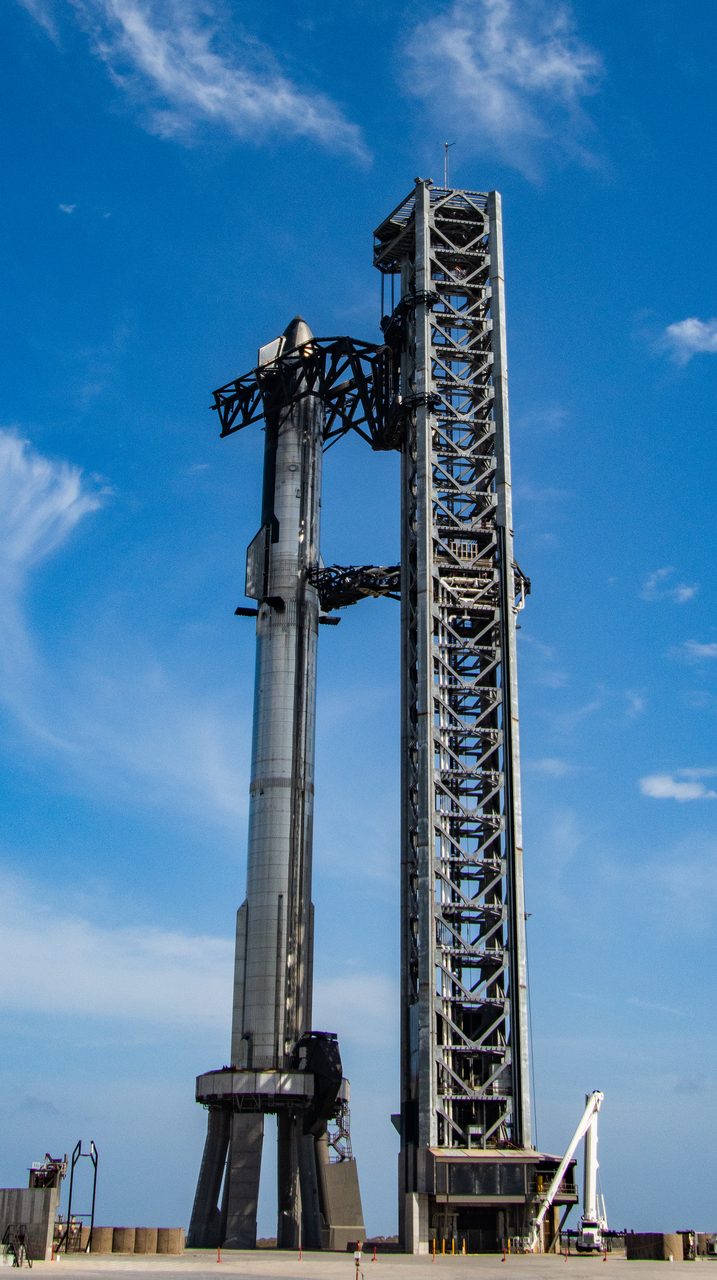
A real, flown test vehicle. The dates attached to what it will eventually carry are the company's own.
The stepping stone is real, it does not go to Mars, and it has already moved, including in what each mission is actually for. Our own research file describes Artemis III as the program's first crewed lunar landing; this article states the newer assignment because it was independently confirmed, not because the file says so. Artemis is NASA's program and it is explicitly the Moon-first precursor phase: Artemis II, Artemis III and Artemis IV are lunar missions. The program has faced repeated real delays and a real re-sequencing. Artemis II, a crewed flight around the Moon, slipped multiple times before it launched in April 2026. Artemis III was originally planned as the program's first crewed lunar landing, but NASA announced in February 2026 that it would instead fly as a docking demonstration in lunar orbit, testing the rendezvous between the Orion spacecraft and the commercial human landing systems under development, with no landing on this flight; it is now targeted for mid-2027, having itself slipped from an earlier late-2026 target. Artemis IV, targeted for 2028, is now the mission planned to carry out the first crewed Moon landing since Apollo 17 in 1972. Three missions, all to the Moon, a schedule that has already slipped in public, and a landing that has itself been reassigned to a later flight.
Two named positions frame the argument about whether any of the rest is achievable, and neither is a consensus. Robert Zubrin, in The Case for Mars, published in 1996 and revised in 2011, advocates rapid Mars colonization using present-day-derivable technology, in the architecture he calls Mars Direct. That is Zubrin's own advocacy position. It is not scientific consensus, it is not an agency plan, and it is filed here at Tier 3 for exactly that reason. It is an argument about what should be attempted, made with force by someone who has spent a career making it.
The counterweight comes from people just as close to the work. Louis Friedman, co-founder of The Planetary Society, and G. Scott Hubbard of Stanford University, a former NASA Mars Program Director, have argued that maintaining a permanent, self-sustaining Mars colony independent of Earth resupply is orders of magnitude harder than establishing a research outpost. Their objection is specific rather than gloomy: true independence would require in-situ manufacturing capabilities that do not yet exist at any meaningful scale. An outpost is a logistics problem. A colony is an industrial base, and nobody has built one anywhere off Earth. This file carries both positions at full strength and crowns neither.
| Stage | The Stated Date | Whose Claim It Is | What Has Actually Happened |
|---|---|---|---|
| Robotic precursors and in-situ resource utilization demonstrations | Through the 2020s and 2030s | NASA and SpaceX, stated goal | Perseverance is operating; its cached samples have no confirmed funded retrieval plan |
| Artemis II, crewed flight around the Moon | April 2026 | NASA | Launched, after multiple slips. A Moon mission, not a Mars mission |
| Artemis III, lunar-orbit docking demonstration (reassigned from landing, February 2026) | Mid-2027 | NASA | Not flown. Slipped from an earlier late-2026 target |
| Artemis IV, crewed lunar landing (first since Apollo 17, 1972) | 2028 | NASA | Not flown |
| First short-stay human missions to Mars | 2030s to 2040s | NASA and SpaceX, stated goal | Nothing flown. Artemis, the stated stepping stone, is a Moon program |
| Permanent habitat with local water, oxygen and fuel production, and greenhouse agriculture | 2040s to 2060s | NASA and SpaceX, stated goal | Nothing built |
| Self-sustaining settlement, with its own governance questions | 2060s onward | NASA and SpaceX, stated goal | Nothing built. Friedman and Hubbard argue independence needs in-situ manufacturing that does not exist at meaningful scale |
07A Planet, or a Cylinder
There is an entirely different answer to the settlement question, older than any current company and argued today by one of the richest people alive, and it says the planet was never the point.
The physicist Gerard K. O'Neill proposed, at Princeton in 1974 and in his 1977 book The High Frontier, that the right place to live off Earth is not a planetary surface but a large rotating cylinder, spinning to provide Earth-like artificial gravity. His largest proposed design, Island Three, would be 32 kilometers long and 6 kilometers in diameter, and could in principle house millions of people. The advantages he argued for are structural: a fully controllable environment, no planetary gravity well to escape every time resources move, and direct access to continuous solar energy and asteroid-derived materials. So are the challenges: enormous construction cost, radiation shielding, atmospheric containment, and the social and psychological factors of permanent space habitation, which remain unresolved because nobody has ever run the experiment.
Jeff Bezos has taken up that argument in public and by name. Blue Origin's headquarters building is called O'Neill, after Gerard O'Neill, and Bezos has explicitly and repeatedly advocated O'Neill cylinder space habitats over planetary colonization. He has said publicly that he would love to see a trillion humans living in the solar system, enabled by giant space stations, on the reasoning that planetary surfaces are just way too small, and that with a trillion people there would be, at any given time, a thousand Mozarts and a thousand Einsteins. That is Bezos's own stated vision, quoted here and attributed to him by name. It is not a Blue Origin engineering roadmap, it carries no dates, and this file does not treat it as one.
Set the two visions side by side and the disagreement is not really about engineering. It is about what a home is for. One camp wants a world with a horizon and a sky, at the cost of a gravity well, a radiation problem, and a soil nobody has farmed. The other wants a controlled volume with no weather and no wilderness, at the cost of building every cubic meter of it. Neither has been done. Both are arguments, and this file files them as arguments.
08The Distance Nobody Has Crossed
Beyond the solar system the argument stops being about money and starts being about arithmetic, and the arithmetic is not close.
Voyager 1 cruises at about 17 kilometers per second, the fastest speed any human-built chemical-rocket-derived spacecraft has actually achieved. Alpha Centauri is 4.37 light-years away. At that speed, a one-way trip there takes approximately 73,000 years, the published estimate for a cruise at Voyager 1's own rate. That number is not pessimism and it is not a projection. Chemical propulsion is demonstrated and flight-proven, and it is wholly impractical for interstellar distances.
One concept has always been the serious answer to that arithmetic, and what stops it is a treaty rather than a failure. Project Orion, a concept from the 1950s and 1960s, would propel a spacecraft with small nuclear-pulse detonations behind it. It was theoretically sound and could in principle reach roughly 3 percent of light speed. It was never built for interstellar use, and it is effectively barred in practice by the prohibition on nuclear detonations under the nuclear test ban treaties, not by any demonstrated engineering failure. Nothing about it was disproven. It was ruled out.
The modern occupant of that slot needs a correction our own research file does not carry. Breakthrough Starshot was announced in 2016 by the billionaire Yuri Milner with a pledged $100 million, to develop laser-pushed, gram-scale probes intended to reach roughly 20 percent of light speed for a transit to Alpha Centauri of about 20 years. The project's real current status, independently verified for this article: as of September 2025, reporting indicates Breakthrough Starshot has been placed on indefinite hold, having actually disbursed only about $4.5 million of the pledged $100 million across roughly 30 research contracts, with researchers describing years of effective radio silence from the initiative. Our own file describes it only as funded by Yuri Milner and facing major technical challenges. It is not an active ongoing program, and this article states the dormancy rather than the announcement.
The last concept is the one whose two halves have to be kept strictly apart, because collapsing them is how this entire subject gets misreported. Miguel Alcubierre's 1994 paper in Classical and Quantum Gravity describes a mathematically valid solution to Einstein's field equations in which a ship travels faster than light relative to a distant observer, by contracting space ahead of it and expanding space behind it, while never locally exceeding light speed itself. The mathematics is real, it is peer-reviewed, and it is not fringe. That is a Tier 1 statement, and it is a statement about a solution to a set of equations.
What that solution requires is where Tier 1 stops. The Alcubierre metric needs negative-energy, or exotic, matter, in quantities and configurations for which no known physical mechanism exists to produce or sustain it. There is no engineering path from the paper to a drive, and the gap is not a funding problem or a materials problem waiting on better fabrication. A valid solution to the field equations says what the equations permit. It does not say the thing can be built, and this file will not let the first sentence carry the second one on its back.
| Method | What It Would Do | Where It Actually Stands |
|---|---|---|
| Chemical propulsion, at Voyager 1's roughly 17 km/s | Approximately 73,000 years one way to Alpha Centauri, 4.37 light-years off | Flight-proven, and wholly impractical at interstellar distance |
| Project Orion, nuclear pulse, 1950s to 1960s | In principle roughly 3 percent of light speed | Theoretically sound, never built for interstellar use, barred in practice by the nuclear test ban treaties |
| Breakthrough Starshot, laser-pushed gram-scale probes, announced 2016 | Roughly 20 percent of light speed, an approximately 20-year transit to Alpha Centauri | On indefinite hold as of September 2025. About $4.5 million of the pledged $100 million actually disbursed |
| The Alcubierre metric, 1994 | Faster-than-light travel relative to a distant observer, by contracting space ahead and expanding it behind | The mathematics is real and peer-reviewed (Tier 1). It requires exotic negative-energy matter with no known production mechanism, so any engineering application is Tier 3 |
09The Energy Ladder, and How You Would Spot One
There is one more frame in the research file, and it measures a civilization rather than a mission. It is carried here for what it is, an energy classification and a detection method, and this article deliberately stops there.
The Kardashev scale, proposed by the astronomer Nikolai Kardashev in 1964, sorts civilizations by the total energy they use. A Type I commands roughly the entire energy output striking its home planet, about 1017 watts for the Earth and Sun. A Type II commands roughly its entire star's total output, about 1026 watts. A Type III commands roughly its entire home galaxy's output, about 1037 watts. It is a real, named framework, and it is worth being exact about what kind of thing it is: a way of classifying energy budgets, not a measurement of anything.
Where the scale places us is the output of a specific formula applied by a specific person. Carl Sagan's 1973 interpolation formula, K equals the base-ten logarithm of P minus 6, all divided by 10, with P the power used in watts, placed humanity at approximately Type 0.7 against that era's roughly 10 terawatts of global energy consumption. Applying the same formula to today's roughly 18 to 25 terawatts of global primary energy use gives approximately Type 0.73, which matches our own file's figure and was independently reconfirmed for this article. Read it as what it is: a named calculation applied consistently across half a century, not a physical measurement of civilizational status. The interesting part is not the number. It is how little it moved.
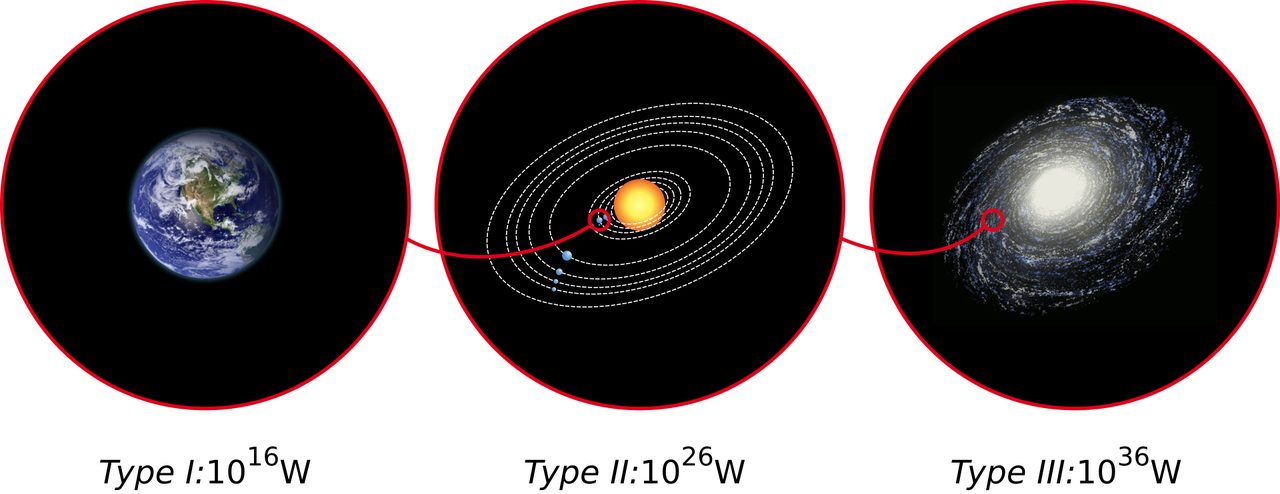
The scale beside it is Sagan's formula, applied to real energy-use figures.
The detection method attached to the ladder is older than the ladder. Freeman Dyson's 1960 paper in Science, Search for Artificial Stellar Sources of Infrared Radiation, proposed that a civilization converting a large share of its star's output into usable energy would radiate the waste heat as a detectable infrared excess. A Dyson swarm, many independent collectors in orbit, is generally considered more physically practical than a single solid shell. This article carries that as a detection method and stops at the method. What the absence of such a detection would mean, and why the sky is as quiet as it is, belongs to a different file in this wing, and it will get the whole of one rather than a paragraph borrowed at the end of this one.
There is exactly one case where that method met a real candidate in public, and it resolved. Tabby's Star, catalogued as KIC 8462852 and also called Boyajian's Star, showed irregular dimming of up to about 20 percent in Kepler space telescope observations, which briefly drew speculative alien megastructure attention in 2015 and 2016. A January 2018 study led by Tabetha Boyajian of Louisiana State University, with over 200 co-authors, observed the star from March 2016 through December 2017 and found the dimming was wavelength-dependent: stronger at shorter, ultraviolet wavelengths and weaker at longer, infrared ones. That is the signature of a dust cloud. A solid opaque structure would dim every wavelength evenly. The observation effectively ruled out the megastructure hypothesis for Tabby's Star specifically, and how it was ruled out is the part worth keeping: not by ridicule, but by two years of photometry and a wavelength dependence.
| Type | The Energy Commanded | Status |
|---|---|---|
| Type I | Roughly the entire energy output striking the home planet, about 10^17 watts for the Earth and Sun | Not reached |
| Type II | Roughly the star's entire total output, about 10^26 watts | Hypothetical. Dyson's 1960 proposal would make it detectable as an infrared excess from waste heat |
| Type III | Roughly the home galaxy's entire output, about 10^37 watts | Hypothetical |
| Humanity | Roughly 10 terawatts in Sagan's era; roughly 18 to 25 terawatts of primary energy today | Approximately Type 0.7 then and approximately Type 0.73 now, by Carl Sagan's 1973 interpolation formula. A calculation, not a measurement of status |
10What Our Own File Says About Its Own Confidence
The research document behind this article ends with something unusual: a table in which it grades its own claims. It is carried here because it is a better summary than anything this article could write over the top of it.
The document's counter-arguments section separates four major claims in this subject area by confidence level, and it does not flatter itself. That life almost certainly exists beyond Earth is graded Tier 1 to 2: scientific consensus leans probable, but zero confirmed detections exist, and the known sample size of life is exactly one, Earth. That Mars colonization is feasible within decades is graded Tier 2: technically plausible, timeline optimistic, long-term sustainability genuinely uncertain. That interstellar travel is physically possible spans the range, Tier 1 for uncrewed sub-light probes and Tier 3 to 4 for crewed interstellar travel. And that advanced civilizations should be detectable is graded Tier 2: non-detection is puzzling, with many possible non-exotic explanations. That last line is the file's own bridge to its Fermi Paradox cross-reference, and this article deliberately does not walk across it. That question has its own document, and it deserves an article of its own rather than a coda on this one.
| The Claim | The Tier It Is Given | Why |
|---|---|---|
| Life almost certainly exists beyond Earth | Tier 1 to 2 | Scientific consensus leans probable, but there are zero confirmed detections and the known sample size of life is exactly one: Earth |
| Mars colonization is feasible within decades | Tier 2 | Technically plausible, timeline optimistic, long-term sustainability genuinely uncertain |
| Interstellar travel is physically possible | Tier 1 through Tier 3 to 4 | Tier 1 for uncrewed sub-light probes; Tier 3 to 4 for crewed interstellar travel |
| Advanced civilizations should be detectable | Tier 2 | Non-detection is puzzling, with many possible non-exotic explanations. This is the file's own bridge to its Fermi Paradox cross-reference, which this article leaves to the document that owns it |
Fast Facts
- The Rover
- Perseverance, landed in Jezero Crater on Mars on February 18, 2021. Still operating at 1,854 Martian sols and 1,905 Earth days as of May 8, 2026
- The Helicopter
- Ingenuity: 72 flights over nearly three years against a planned five flights in thirty days. Retired January 25, 2024 after rotor damage on landing
- The Stranded Samples
- A United States congressional spending package on January 8, 2026 eliminated nearly all funding for Mars Sample Return. Perseverance's cached samples have no confirmed funded retrieval plan
- The Leading Alternative
- China's Tianwen-3, targeting a 2028 launch and a 2031 Mars sample return
- The Asteroid Sample
- OSIRIS-REx returned approximately 121.6 grams from Bennu on September 24, 2023. Amino acids and hydrated minerals were found in it
- The Ice Moons
- Europa's ocean roughly 100 km deep under 10 to 30 km of ice; molecular hydrogen in Enceladus's plume (Waite et al., Science, 2017)
- The Count of Worlds
- 6,128 confirmed exoplanets as of February 26, 2026, plus more than 8,000 unconfirmed candidates
- The Contested Biosignature
- Dimethyl sulfide and dimethyl disulfide reported at K2-18 b in April 2025 at roughly 3-sigma confidence. Largely unreproduced by independent teams through 2025
- The Unresolved One
- Phosphine in Venus's clouds, reported September 2020. Not confirmed and not debunked
- The Dose
- About 0.66 sievert for the round-trip Mars cruise phase alone (Zeitlin et al., Science, 2013), above NASA's career limits, with no demonstrated shielding against galactic cosmic rays
- Whose Timeline It Is
- Every Mars settlement date in this article is a stated aspiration of NASA or SpaceX, not a fact in evidence
- The Stepping Stone
- Artemis goes to the Moon, not Mars. Artemis II launched April 2026 after multiple slips; Artemis III (mid-2027) is now a docking demonstration, not a landing, reassigned in February 2026; Artemis IV (2028) carries the landing itself
- The Other Answer
- Gerard O'Neill's rotating cylinders. Island Three: 32 km long, 6 km across, millions of residents in principle. Advocated today by Jeff Bezos in his own name, without dates
- The Distance
- At Voyager 1's roughly 17 km/s, Alpha Centauri at 4.37 light-years is approximately 73,000 years away
- The Dormant Project
- Breakthrough Starshot: on indefinite hold as of September 2025, with about $4.5 million of the pledged $100 million actually disbursed
- The Ladder
- Nikolai Kardashev's 1964 scale. Carl Sagan's 1973 formula puts humanity at approximately Type 0.7 then and approximately Type 0.73 now
- The Megastructure That Was Not
- Tabby's Star's dimming is wavelength-dependent, the signature of dust rather than a solid structure (Boyajian et al., January 2018)
- What Has Not Happened
- No human has traveled to Mars. No sample has yet been returned from Mars. No confirmed detection of life anywhere but Earth
What We Can Actually Stand Behind
The off-world record is real and checkable. Perseverance landed in Jezero Crater on February 18, 2021, confirmed an ancient lake environment there, detected organic molecules in Martian rock, and was still operating at 1,854 Martian sols and 1,905 Earth days as of May 8, 2026. Ingenuity flew 72 flights against a planned five before its retirement on January 25, 2024. OSIRIS-REx delivered approximately 121.6 grams of asteroid Bennu to Earth on September 24, 2023, with amino acids and hydrated minerals in it. Chang'e 4 made the first landing on the lunar far side in 2019 and Chang'e 6 the first sample return from it in 2024. Europa Clipper launched on October 14, 2024. These are events and measurements, not projections.
The retrieval plan for Perseverance's samples no longer has money. A United States congressional minibus spending package passed on January 8, 2026 eliminated nearly all funding for Mars Sample Return, and the cached rock and regolith samples are sitting on Mars with no confirmed funded plan to bring them back. China's Tianwen-3 is targeting a 2028 launch with a 2031 sample return, which makes it the leading alternative. Our own research file, stamped February 28, 2026, about seven weeks after the vote, still describes those samples as being collected for Mars Sample Return. This article states the collapse rather than inheriting the framing.
Europa is one of the solar system's most promising astrobiology targets, and the reasons are measurable: a global ocean roughly 100 kilometers deep, estimated at two to three times the volume of all Earth's oceans, under an ice shell 10 to 30 kilometers thick, kept liquid by tidal heating. Cassini's mass spectrometer found molecular hydrogen in Enceladus's plume, reported by Waite and colleagues in Science in 2017, most plausibly from hydrothermal reaction between the rocky core and the ocean. Titan has a thick nitrogen atmosphere and stable methane and ethane lakes at about minus 179 degrees Celsius, where liquid water is not stable at all. And 6,128 exoplanets are confirmed as of February 26, 2026, with JWST reading atmospheres, including a September 2025 result finding no thick secondary atmosphere at TRAPPIST-1 b or c.
The journey is measurably dangerous to a human body. Zeitlin and colleagues, in Science in 2013, using Radiation Assessment Detector data from Curiosity's 2011 to 2012 cruise, estimated a cumulative dose on the order of 0.66 sievert for the round-trip cruise phase alone, before any Martian surface stay. That exceeds NASA's career radiation exposure limits for astronauts and meaningfully raises lifetime cancer risk, and no practical shielding has been demonstrated against the galactic cosmic ray component. Our own file names that paper in its text and never lists it in its bibliography, so the full citation is given in section 05 above.
Artemis goes to the Moon. Artemis II, Artemis III and Artemis IV are lunar missions, not Mars missions, and the program has faced repeated real delays and a real re-sequencing: Artemis II slipped multiple times before launching in April 2026, and Artemis III, once planned as the program's first crewed landing, was reassigned in February 2026 to a docking demonstration with no landing, now targeted for mid-2027 after an earlier late-2026 target. Artemis IV, targeted for 2028, is now the mission carrying the first crewed Moon landing since 1972. The stated first step toward Mars is a Moon program whose own dates, and whose own sequence of firsts, have already moved in public.
Two biosignature claims are live and neither is resolved. At K2-18 b, Madhusudhan's Cambridge team reported dimethyl sulfide and dimethyl disulfide at roughly 3-sigma confidence in April 2025; independent reanalyses through mid-2025, including a NASA-led July 2025 preprint, either failed to reproduce the signal or found it statistically unsupported in the same JWST data, while confirming a water-rich, methane-bearing atmosphere. The accurate word is unreproduced: not confirmed, and not debunked either. At Venus, the September 2020 Greaves detection of phosphine remains contested on statistical and instrumental grounds, with some 2022 to 2024 follow-up reporting renewed or corroborating evidence at different atmospheric depths, and it waits on a dedicated probe. Both stay open in this file.
Several things here are proposals and frameworks rather than results, and they are labelled as such. NASA confirmed Dragonfly in April 2024, and its July 2028 launch, its 2034 Titan arrival and its $3.35 billion lifecycle cost are the mission's own current figures for a spacecraft that has not flown. Gerard O'Neill's rotating cylinder habitats, Island Three at 32 kilometers by 6 kilometers, are a 1970s proposal, argued today by Jeff Bezos in his own name and with no dates attached. And the Kardashev scale is a classification: it is Carl Sagan's 1973 interpolation formula, not any measurement, that places humanity at approximately Type 0.73. Louis Friedman and G. Scott Hubbard's counter-position on Mars colonization, carried at Tier 2 in this same file, belongs in this group too: that a self-sustaining colony independent of Earth resupply is orders of magnitude harder than a research outpost, because it requires in-situ manufacturing that does not yet exist at any meaningful scale.
The staged Mars settlement timeline in this article, robotic precursors through the 2020s and 2030s, first short-stay human missions in the 2030s to 2040s, a permanent habitat in the 2040s to 2060s, and a self-sustaining settlement from the 2060s onward, is the stated goal-timeline of NASA and SpaceX. Every date in it is an aspiration stated by a named organization and not a fact in evidence, and this file adopts none of them. Robert Zubrin's Mars Direct, from The Case for Mars, is his own advocacy position rather than a consensus or a plan, carried at Tier 3 for exactly that reason. It does not stand unanswered: see the Tier 2 counter-position above.
Miguel Alcubierre's 1994 paper in Classical and Quantum Gravity is real, peer-reviewed mathematics: a valid solution to Einstein's field equations in which space contracts ahead of a ship and expands behind it, with no local excess over light speed. The mathematics is Tier 1. The drive is not. That solution requires negative-energy exotic matter in quantities and configurations with no known physical mechanism to produce or sustain, which puts any engineering application at Tier 3 and keeps it there. What the equations permit and what can be built are two different claims, and only the first one has been established.
No, life has not been detected anywhere but Earth. Not on Mars, where organic molecules are carbon chemistry rather than organisms. Not at Enceladus, where molecular hydrogen is a chemical-energy source rather than a metabolism. Not at Venus, where the phosphine claim is unresolved. Not at K2-18 b, where the dimethyl sulfide claim is largely unreproduced by independent teams. Our own file states it without softening: zero confirmed detections exist, and the known sample size of life is exactly one, Earth.
No, humanity is not a multiplanetary species yet, and nothing in this article says otherwise. No human has traveled to Mars. No permanent habitat exists anywhere off Earth. No sample has yet been returned from Mars, and the leading alternative route targets 2031. Every settlement stage in the timeline above is a stated intention held by an organization, and the program billed as its first step is a Moon program that has already slipped.
And no, Tabby's Star is not an alien megastructure, and Breakthrough Starshot is not an active program. The star's dimming is wavelength-dependent, stronger in the ultraviolet and weaker in the infrared, which is dust rather than a solid opaque structure, established by Boyajian and over 200 co-authors in a January 2018 study covering March 2016 through December 2017. Starshot, announced in 2016 with a pledged $100 million, is on indefinite hold as of September 2025, having disbursed about $4.5 million across roughly 30 research contracts. Neither of those is a reason for cynicism. They are simply what the evidence says, and saying it is the price of being believed about the rest.
So the file closes on a species that is genuinely, verifiably off its own planet, and nowhere near living anywhere else. The machines are real: a rover past its fifth year on Mars, an orbiter in cruise toward Jupiter, a rotorcraft confirmed for Titan, a telescope reading the chemistry of atmospheres forty light-years away, and about 121.6 grams of an asteroid sitting in a laboratory on Earth. That record is dated and it is checkable. And every single thing in this article that looks like a settlement is a sentence somebody said. NASA's and SpaceX's staged timeline, Zubrin's architecture, Bezos's trillion people in cylinders: stated intentions and named positions, not achievements, each one left standing here in the name of whoever said it. In the middle sits the sharpest fact in this file. A rover on Mars has already collected and cached the samples a laboratory on Earth would need in order to test whether that world ever held life, and since January 8, 2026 there has been no confirmed funded plan to go and get them. Which leaves the question this wing keeps arriving at from every direction. If the hardest part of leaving the cradle turns out not to be the physics or the engineering but the appropriation, what exactly are we measuring when we put a date on it?
Sources & further reading
Everything above is drawn from our research library on Theories of Anything, cross-checked against the primary sources named in the text, with every dated mission claim re-verified against original reporting. Full bibliographic details appear in the article itself; the links below are the sources carrying stable public identifiers. Two citation notes belong here rather than being passed along quietly. Our own file dates Ian Crawford's space-economy paper to 2014, while the paper's own DOI and the publisher's record put it at 2016, and the link below points at the paper. And our file's entry for Robert Zubrin's The Case for Mars carries an identifier that resolves to a library review-database record about the book rather than one issued for the book itself, so no link for it appears below. Open the full file to check the sourcing and go deeper.
Image credits
- Perseverance self-portrait with the Ingenuity helicopter, Jezero Crater NASA/JPL-Caltech/MSSS, via Wikimedia Commons (Public Domain). Public Domain (17 U.S.C. 105) Source.
- Mastcam-Z's first 360-degree panorama of Jezero Crater NASA/JPL-Caltech/ASU/MSSS, via Wikimedia Commons (Public Domain). Public Domain (17 U.S.C. 105) Source.
- James Webb Space Telescope primary mirror, clean room assembly NASA / Desiree Stover, via Wikimedia Commons (CC BY 2.0). CC BY 2.0 Source.
- Europa surface, realistic color mosaic (Galileo) NASA/JPL-Caltech/SETI Institute, via Wikimedia Commons (Public Domain). Public Domain (17 U.S.C. 105) Source.
- Dramatic plumes spraying water ice from Enceladus's south-polar tiger stripes NASA/JPL-Caltech/Space Science Institute, via Wikimedia Commons (Public Domain). Public Domain (17 U.S.C. 105) Source.
- SpaceX Starship, fully stacked pre-launch, Starbase Jenny Hautmann for Supercluster, via Wikimedia Commons (CC BY-SA 4.0). CC BY-SA 4.0 Source.
- Kardashev scale energy-consumption comparison diagram Wikimedia contributor Indif, via Wikimedia Commons (CC BY-SA 3.0). CC BY-SA 3.0 Source.
- Card crop of the Perseverance self-portrait NASA/JPL-Caltech/MSSS, via Wikimedia Commons (Public Domain). Public Domain (17 U.S.C. 105)
.jpg)

.jpg)

.jpg)

