
Mayan Glyphs: How The Maya Script Was Read Again
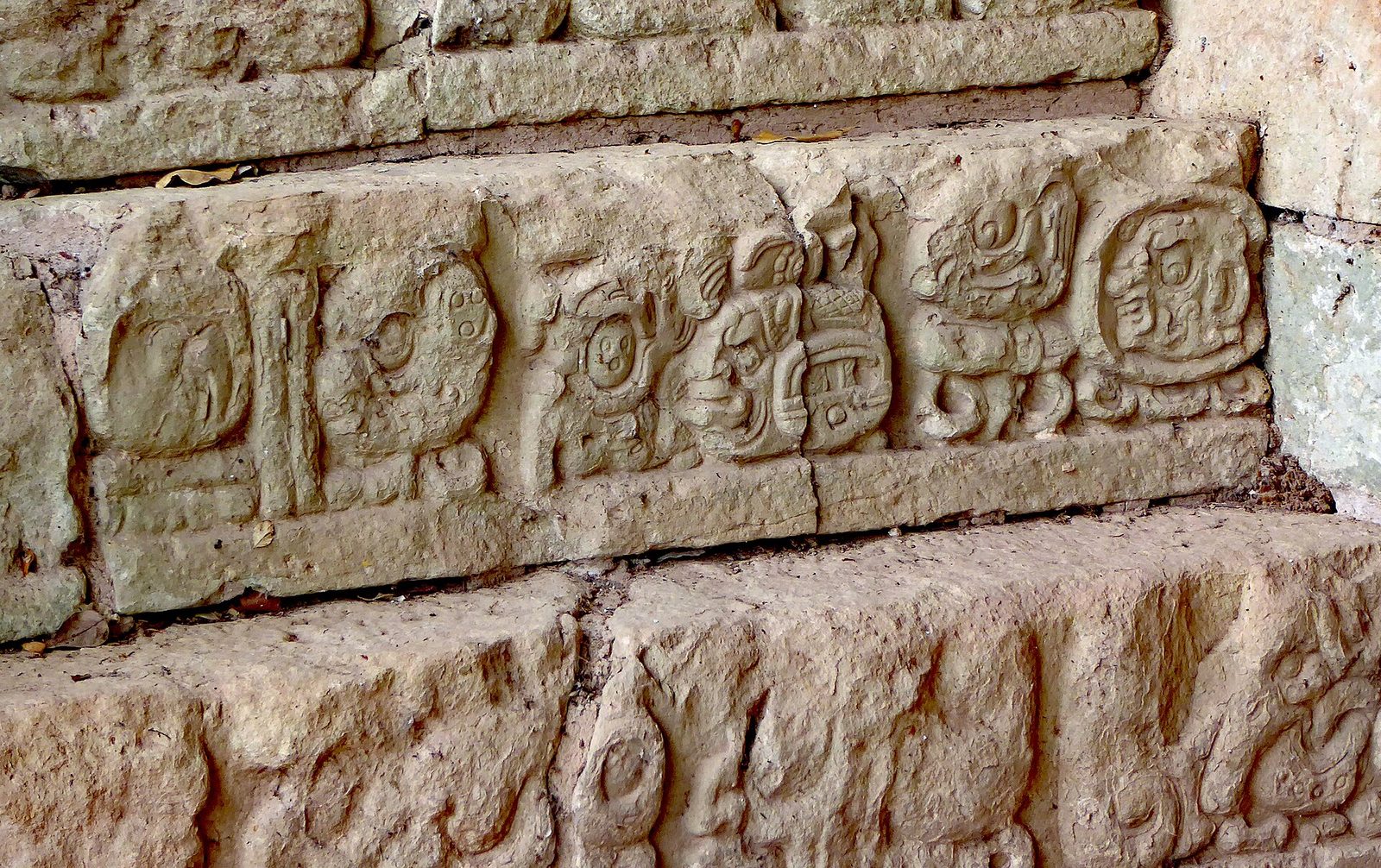
A bishop burned the books and wrote down the key. A Soviet linguist in Moscow read the key correctly and was disbelieved for twenty years. An architect proved the texts were history, a German expatriate found the place names, and the script came back. It is still not finished, and the people who wrote it are still here.
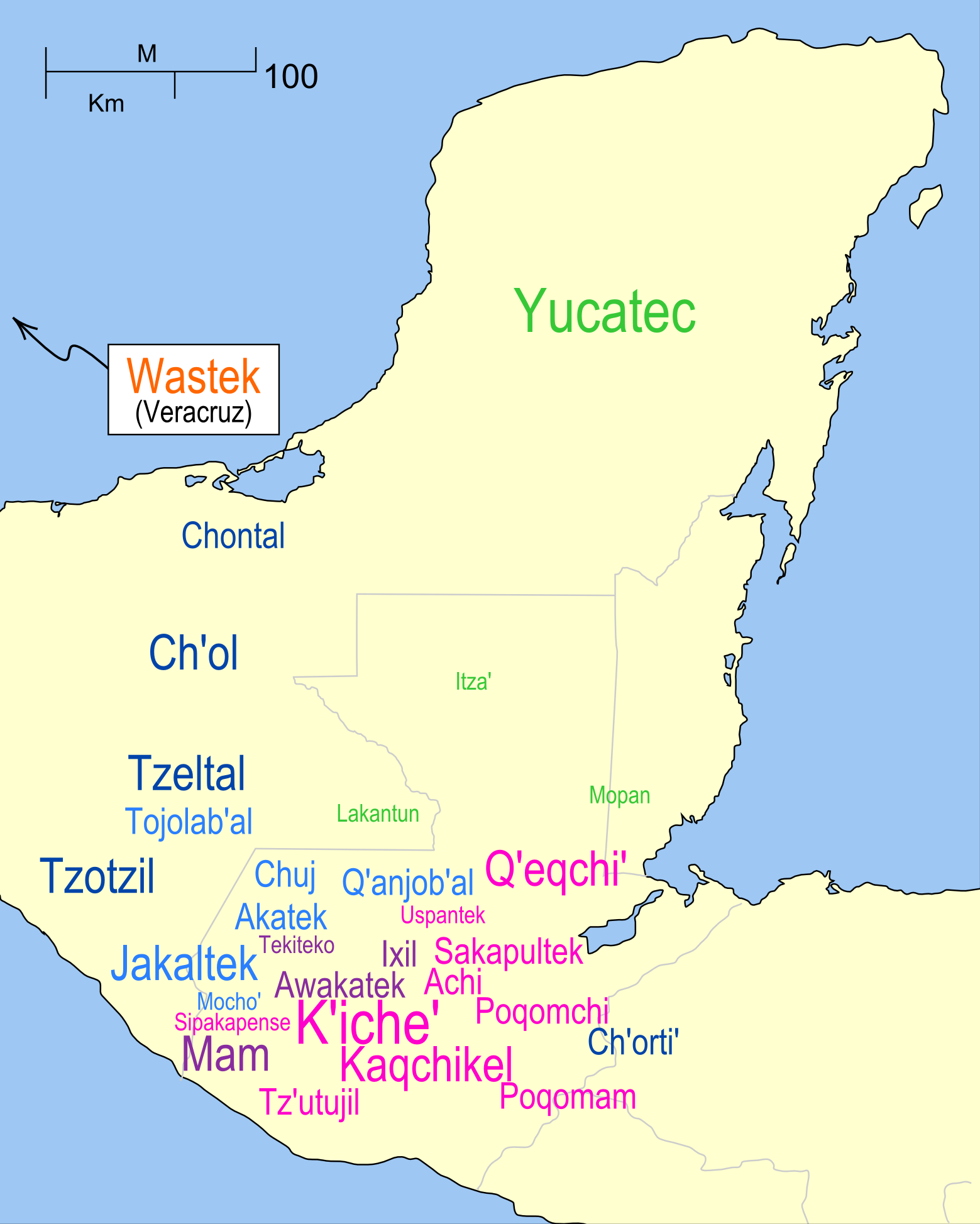
One note on words before anything else, because this page uses two that look like one. Scholars reserve Mayan for the language family, the roughly thirty languages spoken across Mexico, Guatemala, Belize and Honduras. Maya is the adjective for everything else: the people, the civilization, the script, the glyphs. So this article is about Maya writing, which records Mayan languages. The title keeps the popular form because that is what people search for; the body keeps the distinction, because the difference between the two words is most of what this subject gets wrong.
The story that gets told about Maya decipherment is a good story and it is not quite the true one. In the popular version a lone Soviet outsider cracks a code the Western establishment insisted was uncrackable, and the Cold War is the villain. Almost every element of that is real. Assembled that way, it is still wrong, because it drops the two people without whom Knorozov's insight would have produced a calendar read aloud in a language nobody could place, and it credits to geopolitics what was substantially the authority of one man. What follows is the version with the missing pieces put back.
01What The Script Actually Is
Maya writing is logosyllabic. It combines logograms, signs standing for whole words or morphemes, with syllabograms, signs standing for consonant-vowel syllables, along with semantic determinatives and phonetic complements. Our research file puts the total inventory at roughly 800 distinct signs, of which roughly 500 are logograms and roughly 200 syllabograms. It is the only Mesoamerican writing system known to represent spoken language fully, which is the fact everything else on this page depends on: these are not symbols standing for ideas, they are a script for a language.
Syllabograms follow a consistent consonant-vowel pattern: ba, ka, la, ma and so on. To write a word ending in a consonant, two syllabograms are used and the final vowel of the last one is not pronounced. So ba-la-ma writes balam, jaguar. The corpus calls this the rule of synharmony. A logogram is also often accompanied by a syllabogram that confirms the reading, a phonetic complement: the jaguar logogram with a -ma sign attached, telling the reader the word ends in an /m/. The system is a belt and braces arrangement, and that redundancy is part of why it could eventually be recovered.
Maya texts were written in paired columns, read left to right and top to bottom in paired glyph blocks. Each block typically carries a word or short phrase, with the individual signs fitted together inside the block in visually complex arrangements rather than strung out in a line. This is one of the reasons the script resisted reading for so long: a European eye looking for a row of letters finds instead a grid of dense, self-contained pictures, each of which is doing several jobs at once.
The script was in use among the ancient Maya of what is now southeastern Mexico, Guatemala, Belize and Honduras from at least the third century BCE through the sixteenth century CE. That is a span of roughly eighteen centuries of continuous literate practice, which ends not because the script failed but because of what arrived in the sixteenth century.
02Four Books, Out Of A Number Nobody Can State
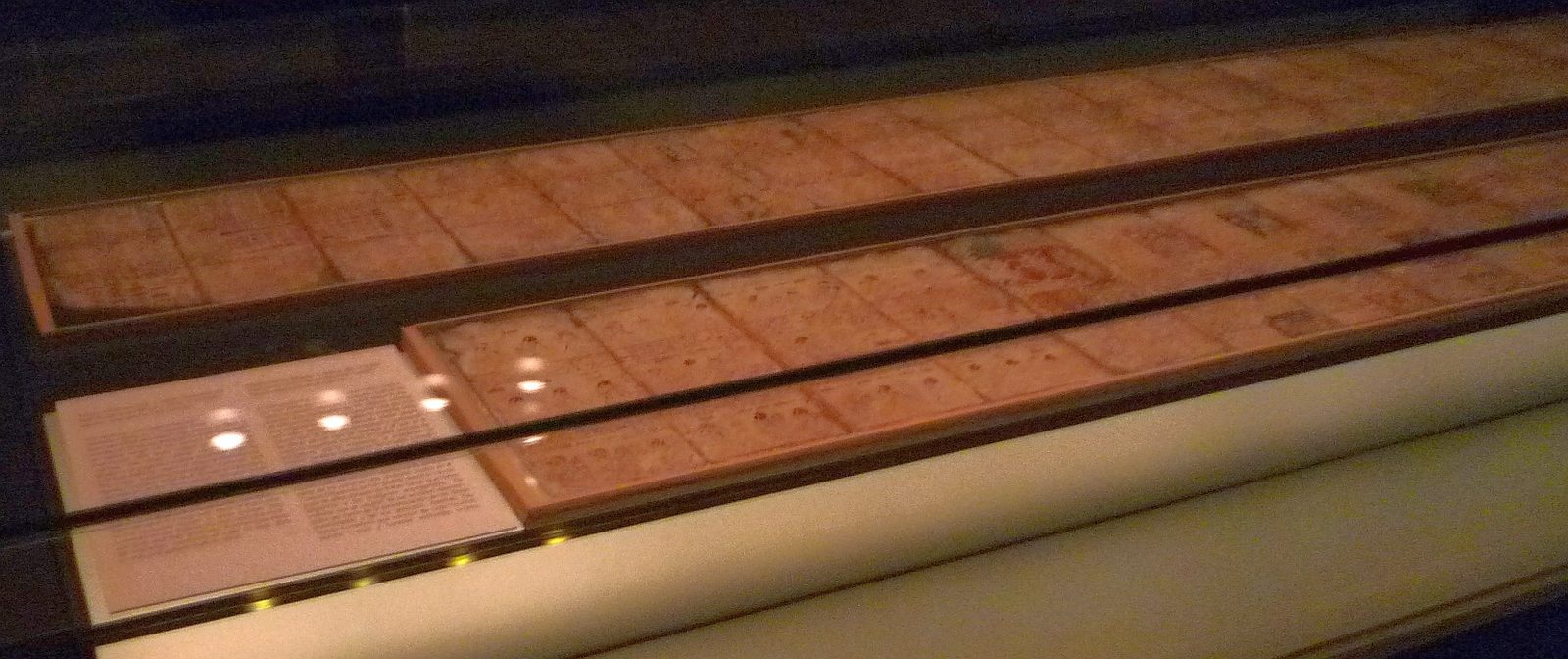
Only four Maya codices survive. The Dresden Codex, roughly 74 pages, the finest surviving pre-Columbian book, carrying Venus tables, eclipse tables, multiplication tables and divinatory almanacs. The Madrid Codex, roughly 112 pages of ritual almanacs and divination. The Paris Codex, roughly 22 badly damaged pages including a zodiacal almanac. And the manuscript formerly called the Grolier Codex, now the Maya Codex of Mexico, a Venus table.
Bishop Diego de Landa presided over a burning of Maya books at Mani in 1562, and other missionaries destroyed books elsewhere. An unknown number of codices carrying historical, astronomical, medical and ritual knowledge were destroyed. You will often see a specific figure for Mani, a precise count of books on a precise day. This page does not print one. That number descends from Landa's own account through four centuries of retelling and was not verified for this article, and the total destroyed across the whole campaign is simply unknown. What can be said is the shape of it: a literate civilization's library, reduced to four books.
| The Book | What It Contains | Where It Is Now |
|---|---|---|
| Dresden Codex | Roughly 74 pages. Venus tables, eclipse tables, multiplication tables and divinatory almanacs. Generally regarded as the finest surviving pre-Columbian book | The Saxon State and University Library (SLUB), Dresden, Germany, displayed in a protective case in the library's museum |
| Madrid Codex | Roughly 112 pages of ritual almanacs and divination | The Museo de America, Madrid. The object on public display is a replica |
| Paris Codex | Roughly 22 pages, badly damaged, including a zodiacal almanac | The Bibliotheque nationale de France, Paris |
| Maya Codex of Mexico, formerly the Grolier Codex | A Venus table. Its authenticity was contested for decades and is now substantially settled in its favour, discussed in section 08 | The Biblioteca Nacional de Antropologia e Historia, Mexico City, whose codex collection was inscribed on the UNESCO Memory of the World register in 1997 |
03The Bishop's Key
The same man is on both sides of this story. Landa's Relacion de las cosas de Yucatan, written around 1566, documented his understanding of Maya writing, calendar and culture, and became the key source for later decipherment. Our own research file puts it as a paradox, and the word is right, but the irony has to be stated accurately or it turns into a redemption arc it does not deserve. Landa did not save the script. He recorded data he had misunderstood, and the misunderstanding is what made the data usable three hundred years later.
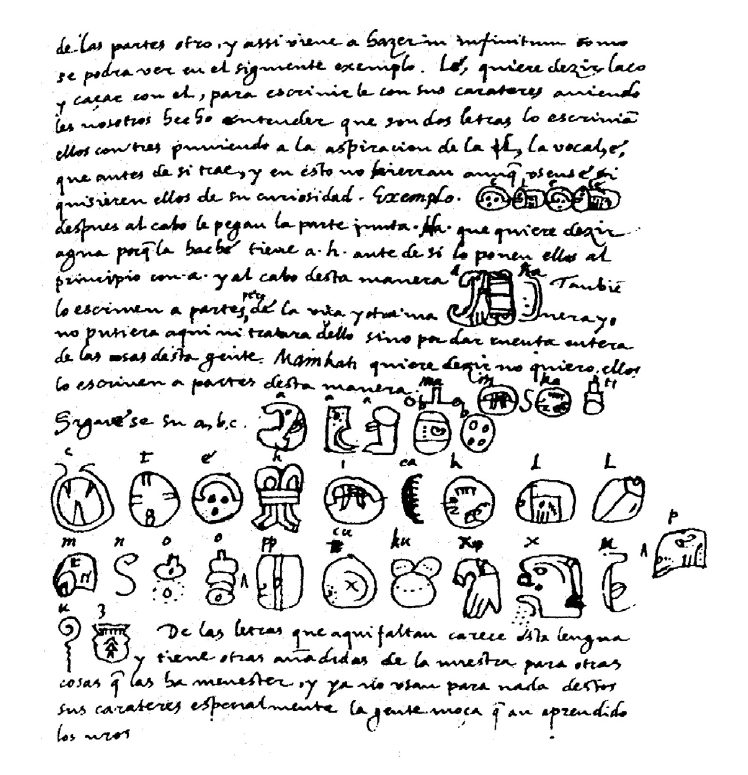
Landa's so-called alphabet is not an alphabet. It is a syllabary, and our research file says so flatly. The standard account of how it came to be recorded is this: Landa asked his Maya informant for the equivalents of Spanish letters, and what he was given were signs for syllables, because syllables are what the script had. Asked for the sign for the letter b, an informant hearing the Spanish letter-name bay would reasonably supply the sign for that sound. This mechanism is the standard telling and was not resolved to a specific page for this article, so take it as how the mismatch is generally explained rather than as a documented transcript. The consequence is not in doubt: the plate looked like nonsense to European readers for three centuries, and it worked the moment somebody read it as syllables instead of letters.
04Moscow, 1952
Yuri Valentinovich Knorozov (1922 to 1999), a Soviet epigrapher, published the foundational paper in 1952: Drevnyaya pis'mennost' Tsentral'noy Ameriki, Ancient Writing of Central America, in Sovetskaya Etnografiya, issue 3, pages 100 to 118. He demonstrated that Maya signs carried phonetic-syllabic values, taking Landa's sixteenth-century plate as a starting point, applying its assignments to known texts, and producing coherent readings. That is the breakthrough, and it is exactly as large as it sounds: he established that the marks were sound.
There is a famous story in which Knorozov, a Red Army soldier in Berlin in 1945, rescues a volume of Maya facsimiles from a burning library, and that book becomes the seed of the decipherment. This page does not tell it, because it is not established. Accounts by and about Knorozov place his wartime service away from the capture of Berlin, and he is reported to have denied the fire story himself. The true version is narrower and better: he did the decisive work in Moscow, from published facsimiles and printed sources, without having stood at a Maya site. Nor is the isolation permanent, which the legend usually implies. He travelled to Guatemala in 1990 and to Mexico from the early 1990s, and the Mexican government awarded him the Order of the Aztec Eagle in 1994.
One excuse can be removed immediately. Knorozov's argument was available in English, in the flagship American archaeology journal, within six years: The Problem of the Study of the Maya Hieroglyphic Writing, American Antiquity volume 23, issue 3, pages 284 to 291, in 1958. Western Mayanists were not unable to read him. They read him and did not accept him.
Our research file states that the phonetic approach was rejected for decades by the dominant figure in the field, J. Eric S. Thompson, who insisted Maya writing was ideographic, recording concepts and calendar computations rather than spoken language, and that Thompson's authority delayed acceptance until after his death in 1975. That is the mechanism, and it is worth being precise that the opposition was published rather than merely social: Thompson set out his methodological case in American Antiquity in 1959, and his book-length statement of the ideographic position is Maya Hieroglyphic Writing: An Introduction, first published in 1950. This was an argument conducted in print, by a serious scholar, and lost.
Our file also says the Cold War context exacerbated the dispute, that Western scholars dismissed Soviet scholarship, and that Knorozov could not travel to Maya sites or Western institutions. Hold that at its real strength and no higher. The Cold War is genuine context, and it is not the mechanism. What made the phonetic reading unpublishable in practice, for years, was one man's standing inside a small field, not a clean East-versus-West split. The distinction matters because the two explanations point at different lessons. One says politics can poison science from outside. The other says a discipline small enough to have a single dominant figure can be wrong for as long as he is, and that is the harder problem.
05Then The Texts Turned Out To Be History
Here is the part the popular version drops, and it is not a footnote. Knorozov established that the signs carried sound. That alone would have let you pronounce the inscriptions without knowing what they were about, and the prevailing assumption was that they were about calendars and astronomy. Two other people established what the texts were for.
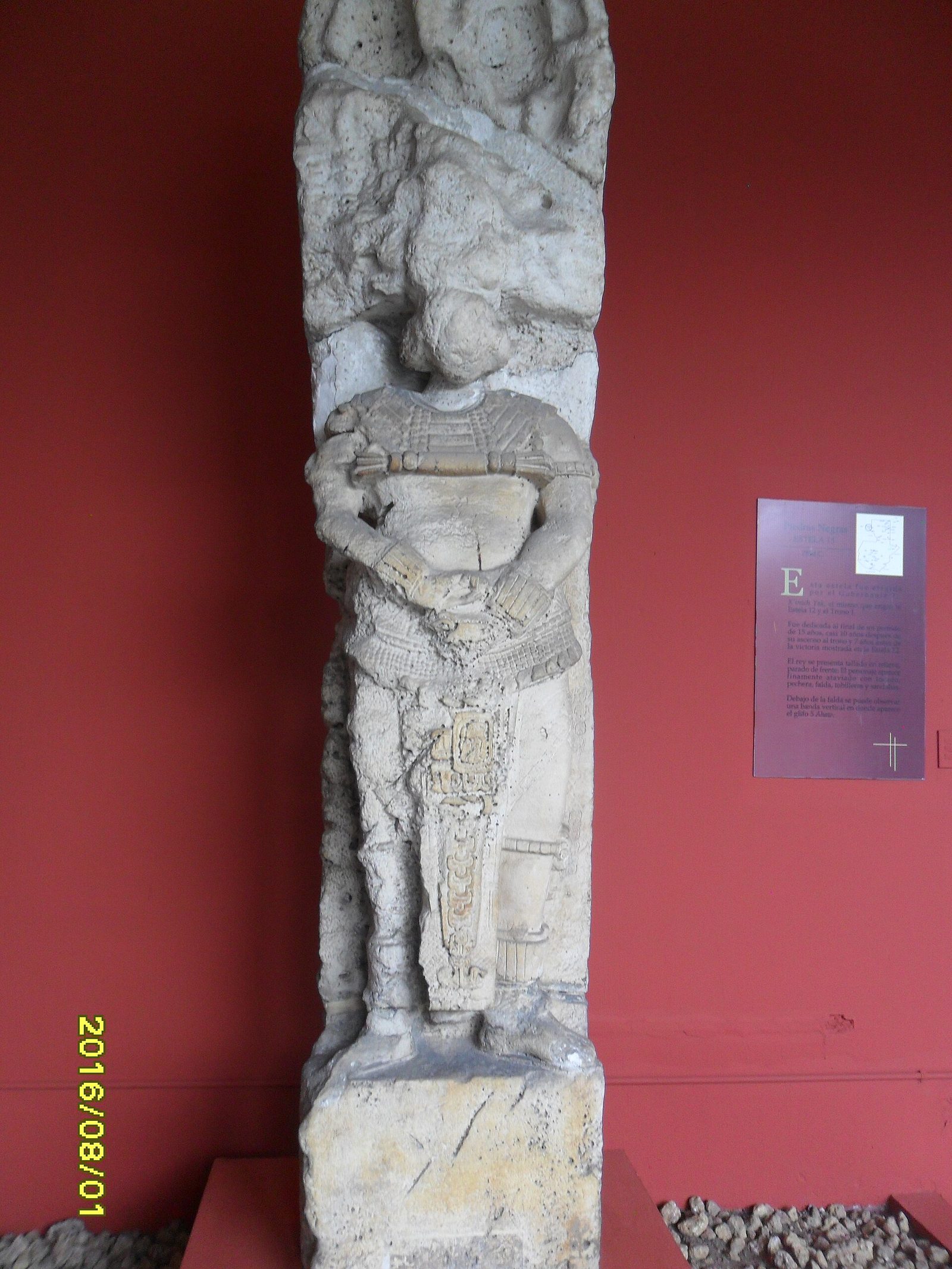
Tatiana Proskouriakoff's 1960 paper, Historical Implications of a Pattern of Dates at Piedras Negras, Guatemala, in American Antiquity 25(4), demonstrated that Maya inscriptions record dynastic history: sequences of births, accessions, conquests and deaths of named rulers. This overturned the prior assumption that the texts were purely calendrical and astronomical. She lived from 1909 to 1985, and her colleague Ian Graham published a memorial notice for her in the same journal in 1990. If Knorozov made the signs speak, Proskouriakoff established that what they were saying was about people, and an account of this decipherment that leaves her out has not simplified the story, it has broken it.
Heinrich Berlin, in 1958, identified emblem glyphs: title compounds attached to rulers, combining a site-specific main sign with a holy prefix, k'uhul, and the ajaw or lord title. Recognising them made it possible to map Maya political geography for the first time. Emblem glyphs have since been identified for Tikal (Mutal), Palenque (Lakamha'), Copan, Calakmul (Kaan), Caracol and Yaxchilan, and what they reveal is a landscape of competing city-states rather than a unified empire. Knorozov gave the texts sound, Proskouriakoff gave them people, Berlin gave them places. All three are required.
| Who | When | What They Established |
|---|---|---|
| Diego de Landa | c. 1566 | Recorded a sign-to-sound key while misunderstanding it as an alphabet. His Relacion became the essential source for everyone below |
| Yuri Knorozov | 1952, in English 1958 | That the signs carry PHONETIC-SYLLABIC values. The script writes a language rather than encoding concepts |
| Heinrich Berlin | 1958 | Emblem glyphs: that particular sign compounds name PLACES and the lords of those places. Maya political geography becomes mappable |
| Tatiana Proskouriakoff | 1960 | That the inscriptions record dynastic HISTORY, the births, accessions, conquests and deaths of named rulers, rather than being purely calendrical |
| Linda Schele and Peter Mathews | 1973, at the first Mesa Redonda de Palenque | The first full dynastic history of a Maya city, read straight off the monuments: king lists, dates and events at Palenque |
| David Stuart | from the 1980s | Sign-by-sign phonetic method at scale. Named a MacArthur Fellow in the class of March 1984, at age 18; his Ten Phonetic Syllables (1987) sets out the methodology |
At the first Mesa Redonda de Palenque in 1973, Linda Schele and Peter Mathews constructed the first full dynastic history of a Maya city, reading king lists, dates and events straight off the monument inscriptions at Palenque. This is the moment the method becomes ordinary work: not an argument that the texts could be read, but a room full of people reading them.
06Which Language Is It
The language recorded in Classic Period (250 to 900 CE) inscriptions has been identified as Classic Ch'olti'an, an ancestor of the modern Ch'ol and Ch'orti' languages rather than of Yucatecan. Ch'olan morphological patterns, ergative-absolutive alignment, verbal suffixes and possessive constructions, match the patterns observed in the glyphs. Our own research file files this as settled and then, in its own Counter-Arguments section, says the identification remains debated by scholars. Both halves are carried here, because printing only the first would be quoting our file against itself.
Pre-Classic inscriptions may record a different Mayan language, or a more archaic stage of one, and Late Postclassic texts from Yucatan, including the Madrid and Paris codices, show Yucatecan features. So the script was used to write more than one Mayan language across its life, which is what you would expect of a working writing system used for eighteen centuries over a large region, and which also means that reading a passage aloud correctly does not settle which language you are hearing.
07How Much Can Actually Be Read
You will see a figure of about 85 percent, and this page will not print it without saying what it is a percentage of, because the two available meanings differ sharply. Our research file says roughly 85 percent of KNOWN SIGNS can be read with confidence, with the remaining share covering rare or damaged signs and signs whose values are debated. The figure as it usually circulates in the wider literature means something else: roughly 85 percent of RUNNING TEXT, which is a much easier number to reach, because the commonest signs are the best understood and a small number of them carry most of any given inscription. A script can be 85 percent readable by the second measure while a large minority of its sign catalogue still has no secure reading. Both things are true at once and only one of them sounds like an ending.
The direction of error on this subject runs the opposite way from most of what this site covers. Usually the temptation is to overclaim mystery. Here it is to overclaim completion. Three things keep the file open. A substantial share of the sign catalogue still has no secure reading. The Classic language is dead, so a passage can be pronounced correctly and still not be understood, which is a stranger condition than being unable to read it at all. And the undeciphered remainder is not a random sample: our own file's honest-limits section notes that it may include whole semantic categories, which would mean the current framework is not merely incomplete but potentially skewed.
08Where It Came From, Still Argued
The earliest known Maya writing includes the San Bartolo murals at roughly 300 BCE, the Kaminaljuyu and El Porton stelae at roughly 400 to 200 BCE, and, more contentiously, the Cascajal Block. San Bartolo has a named primary publication, Saturno, Stuart and Beltran in Science in 2006, and the site produced a further result our research file has not caught up with: a 2022 paper in Science Advances by Stuart, Hurst, Beltran and Saturno reporting an early Maya calendar record from the same site.
How Maya writing relates to earlier Mesoamerican scribal traditions, particularly Zapotec at Monte Alban from roughly 500 BCE and Epi-Olmec or Isthmian from roughly 300 BCE to 200 CE, is genuinely debated. The script may share common roots with these systems in a broader Mesoamerican scribal tradition, or may represent independent development inside a shared cultural framework. Olmec marks on monuments at La Venta and San Lorenzo consist of isolated symbols whose status as true writing remains uncertain.
The Cascajal Block, published in Science in 2006 as the oldest writing in the New World, is contested more deeply than our research file records. Our file flags only that a Maya attribution is debated. In fact the object's authenticity and its status as writing at all were both challenged in print, in the same journal, within months: Bruhns and Kelker's technical comment, Did the Olmec Know How to Write?, appeared in Science in 2007. An object whose authenticity is in question cannot carry weight in an origins argument, and this page does not let it.
The fourth book is worth following, because a decades-long authenticity dispute actually resolved. The manuscript surfaced in private hands in the 1960s, was first exhibited at the Grolier Club in New York, and was doubted for decades. Coe, Houston, Miller and Taube argued the case for authenticity in The Fourth Maya Codex in 2015, Mexico's Instituto Nacional de Antropologia e Historia then ran a multidisciplinary study, and the manuscript is now recognised as genuine and renamed the Maya Codex of Mexico. The lesson is not that doubters are always wrong. It is that the dispute was settled by material analysis rather than by argument, which is the difference between this case and the Cascajal Block.
09What It Is Not
Thompson's long-dominant insistence that Maya signs were ideographic or calendrical rather than phonetic is refuted, and this page does not present it both-sidedly. It was definitively overturned by the successful syllabic reading of thousands of texts; the script records full spoken language in syntactic detail. This is a settled refutation and not a live debate. It is also, note, the only claim on this page that was ever the mainstream position, which is a useful thing to remember about mainstream positions.
Claims that Maya inscriptions encode secret messages about alien contact, Atlantis or future predictions are refused, and the refutation here is unusually direct: we can read the texts. They record dynastic history, warfare, ritual dedication, astronomical observation and divinatory practice. The content is culturally rich and historically grounded, and it is about the people who wrote it.
The notion that Maya inscriptions predicted catastrophe or transformation on 21 December 2012, the 13.0.0.0.0 Long Count station, is a modern fabrication. The Maya texts that mention the date treat it as the completion of a calendrical cycle, a milestone comparable to a millennium rollover, not as destruction. Two corrections to how this is usually reported. Our own file says only two ancient inscriptions mention the date; a second monumental reference was published in 2012, Block V of Hieroglyphic Stairway 2 at La Corona, Guatemala, excavated that spring, alongside the long-known Tortuguero Monument 6. And the date itself is printed two ways in serious Mayanist writing, 21 December and 23 December 2012, a two-day discrepancy that traces to the unresolved debate over how Long Count dates map onto the Gregorian calendar.
10The People Who Are Reading It Now
Millions of Maya people are alive today across Mexico, Guatemala, Belize and Honduras, and roughly thirty Mayan languages are spoken. This is not a coda. Nothing on this page is an elegy for a disappeared civilization, and the register that treats Maya writing as the relic of a vanished people is both false and, once you notice it, strange: the descendants of the people who cut these inscriptions can be asked. Mayan language communities are the subject of active revitalisation work, much of it led by Maya linguists themselves.
Maya people are participants in the epigraphy rather than only its object of study. The workshops teaching hieroglyphic writing to Maya people are documented in the mainstream anthropological literature, in a chapter of Maya Cultural Activism in Guatemala published by the University of Texas Press in 1996. A script that was read again by outsiders is now being read by the descendants of the people who wrote it, which is a better ending than the one where a code gets cracked.
How widely Maya writing was read beyond the elite scribal class is unclear. Some scholars argue literacy was restricted to specialists, the aj tz'ib, he of the writing. Others note that public monuments were designed to be seen by large audiences, which suggests at least partial visual literacy among non-elites, and that painted ceramics carrying hieroglyphic captions were widely distributed, possibly extending some text exposure beyond palace contexts. This is genuinely open and the evidence available does not settle it.
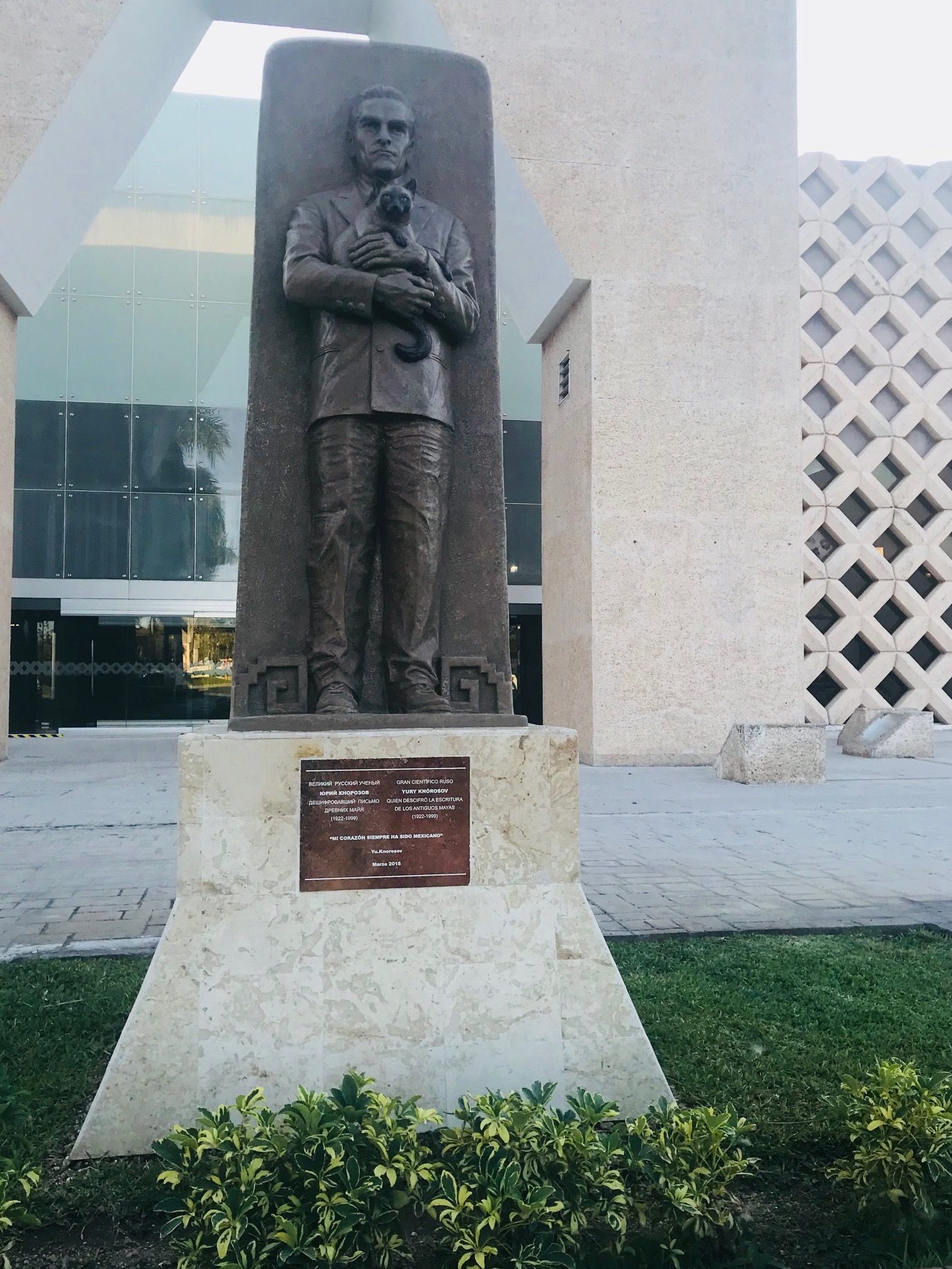
A monument to Yuri Knorozov stands in Merida, Yucatan. Its photographic record describes it as a gift from the Russian people to the Maya people of Yucatan, dated 2018. He read the script in Moscow decades before he saw the country it came from, and the statue is in the country, put there by one people for another.
Fast Facts
- Maya Or Mayan
- Mayan is the language family, roughly thirty languages still spoken. Maya is the adjective for the people, the civilization and the script. Maya writing records Mayan languages
- What Kind Of Script
- Logosyllabic: roughly 800 signs, of which roughly 500 are logograms and roughly 200 syllabograms, plus determinatives and phonetic complements. The only Mesoamerican script known to represent spoken language fully
- How Long It Was Used
- From at least the third century BCE to the sixteenth century CE, across what is now southeastern Mexico, Guatemala, Belize and Honduras
- What Survives
- Four codices. Dresden, Madrid, Paris, and the Maya Codex of Mexico. No count exists for how many were destroyed
- The Breakthrough
- Knorozov, 1952, in Sovetskaya Etnografiya: the signs carry phonetic-syllabic values. In English in American Antiquity by 1958, so the field could read him and did not accept him
- The Other Half
- Proskouriakoff, 1960: the inscriptions record dynastic history, not only calendars. Berlin, 1958: emblem glyphs name places. Neither is optional to the story
- The 85 Percent Figure, Stated Honestly
- Our file means roughly 85 percent of KNOWN SIGNS. The wider literature usually means roughly 85 percent of RUNNING TEXT, which is a much easier bar. A large minority of the sign catalogue still has no secure reading either way
- What Is Still Open
- The Classic language identification (Ch'olti'an, debated in our own file's own counter-arguments), the origins and relationship to Zapotec and Epi-Olmec traditions, the Cascajal Block's authenticity, and how far literacy extended beyond scribes
- Who Is Here Now
- Millions of Maya people, roughly thirty Mayan languages, active revitalisation led by Maya linguists, and workshops teaching the glyphs to Maya people
What We Can Actually Stand Behind
Maya writing is logosyllabic and records spoken language. Four codices survive and their holding institutions are documented. Landa's sixteenth-century plate is a syllabary and not an alphabet, and our own research file says so. Knorozov published the phonetic reading in 1952 and in English in 1958. Thompson's opposition was published, in American Antiquity in 1959 and in his 1950 book. Proskouriakoff established in 1960 that the inscriptions record dynastic history. Schele and Mathews read a full dynastic history off the Palenque monuments in 1973. David Stuart was named a MacArthur Fellow in the class of March 1984, at age 18. Millions of Maya people are alive and roughly thirty Mayan languages are spoken.
That the Classic inscriptions record Ch'olti'an rather than a Yucatecan language: mainstream, and disputed in our own file's own counter-arguments. Where the script came from, and how it relates to Zapotec and Epi-Olmec traditions. Whether the Cascajal Block is authentic and whether it is writing at all, both challenged in print in the same journal that published it. And the reading percentage, which is credible in both its forms and means two different things depending on which one you are quoting.
How far literacy extended beyond the scribal class. What governed a scribe's choice between logographic and syllabic spellings of the same word. Whether symbols on early Formative objects represent an even earlier Mesoamerican writing tradition predating the Maya, which would push Mesoamerican literacy centuries earlier if confirmed, on evidence that is currently fragmentary.
Maya signs are not ideographic. Thompson's position was refuted rather than superseded, by the successful syllabic reading of thousands of texts, and this page does not both-sides it. The inscriptions do not encode messages about aliens or Atlantis; we can read them, and they are about dynasties, war, ritual and astronomy. Nothing in them predicted a catastrophe in 2012, and the texts that name the 13.0.0.0.0 station treat it as a cycle completing. And the Maya did not vanish.
Three scope notes, so this page does not pretend to be four pages. The Long Count and the Tzolk'in have their own article in this library, as do Maya astronomy and the Venus tables, and the general discipline of decipherment is treated separately through Linear B and Ventris. They are named here and not taught here.
What stays with me about this one is how ordinary the failure was. There was no conspiracy and no suppression. There was a small field, a respected man who was wrong, a correct paper published in the field's own flagship journal in a language everyone in it could read, and twenty-odd years. The script came back not because one genius saw further but because four or five people each supplied a piece nobody else had, and then a generation of students treated the result as a normal skill to be learned rather than a controversy to be adjudicated. It is not finished. A large minority of the signs still say nothing to anyone, and that remainder may not be a random sample of what there is left to know.
Sources & further reading
WHERE THIS WORKED FROM, AND WHERE IT CAN BE CHECKED. This article was written from one file in our own research library, ZG_1_07, which is where it worked from rather than where it can be checked. The 27 external entries below are what stands behind the claims. OUR OWN FILE IS CORRECTED OR EXTENDED ON THIS PAGE IN SIX PLACES, in the open. It reports that roughly 85 percent of Maya glyphs can be read without saying 85 percent of WHAT, and since the two available meanings (of known signs, and of running text) differ sharply, this page prints neither figure without its denominator. It files the Classic Ch'olti'an identification as settled and then disputes it in its own Counter-Arguments section, so both halves are carried here. It says only two ancient inscriptions mention the 13.0.0.0.0 station; a second monumental reference, Block V of Hieroglyphic Stairway 2 at La Corona, was published in 2012. It flags the Cascajal Block only as debated in its Maya attribution, when the object's authenticity and its status as writing were both challenged in print in Science within months of publication. It does not carry the 2022 Science Advances paper on an early Maya calendar record from San Bartolo, which postdates nothing in its own scope and should be there. And it nowhere states that the Maya are a living people, which means an author working only from the file would not be reminded, so that fact is carded and carried here deliberately. TWO IDENTIFIERS CARRIED BY OUR OWN FILE RESOLVE TO DIFFERENT WORKS and are not reproduced below: the DOIs attached to Coe 2012 and to Schele and Freidel 1990. Both are cited here by ISBN instead. WHAT THIS PAGE DELIBERATELY DOES NOT PRINT. No count of books burned at Mani: the commonly repeated figure descends from Landa's own account through centuries of retelling and was not verified here, and the total destroyed across the whole campaign is unknown. No claim that Knorozov rescued a book from a burning Berlin library, which is disputed and which he is reported to have denied, and no claim that he never saw a Maya site, since he visited Guatemala in 1990 and Mexico from the early 1990s. No claim that David Stuart was the youngest MacArthur Fellow ever, which was not verified; what is verified is the class of March 1984, at age 18. The mechanism by which Landa's informant supplied syllable signs in answer to a request for letters is the standard account and was not resolved to a specific page, and it is presented on this page as the standard explanation rather than as a documented transcript. SCOPE. The Long Count and Tzolk'in calendars, Maya astronomy and the Venus tables, and the general history of decipherment each belong to their own articles in this library and are named rather than taught here.
Image credits
- A close view of carved glyph blocks on two risers of the Hieroglyphic Stairway at Copan, Honduras Hans Birger Nilsen, via Wikimedia Commons. CC BY-SA 2.0 Source.
- The Dresden Codex on display in its protective case at the Saxon State and University Library PictureTaken, via Wikimedia Commons. CC BY-SA 3.0 Source.
- The page from Diego de Landa's Relacion de las cosas de Yucatan setting Spanish letters beside Maya signs Reproducing Diego de Landa's sixteenth-century manuscript by way of Brasseur de Bourbourg's 1863 republication; no author is stated on the Commons file page, via Wikimedia Commons. Public domain Source.
- Stela 15 from Piedras Negras, Guatemala, at the Museo Nacional de Arqueologia y Etnologia in Guatemala City Luisfernandoid, via Wikimedia Commons. CC BY-SA 4.0 Source.
- A map of the present-day locations of the Mayan languages, name size indicating relative number of speakers Madman2001, via Wikimedia Commons. CC BY-SA 3.0 Source.
- The monument to Yuri Knorozov in Merida, Yucatan, dedicated March 2018 Yodigo, via Wikimedia Commons. CC BY-SA 4.0 Source.
.jpg)


