
The Knights Templar: The Order Destroyed on Friday the 13th
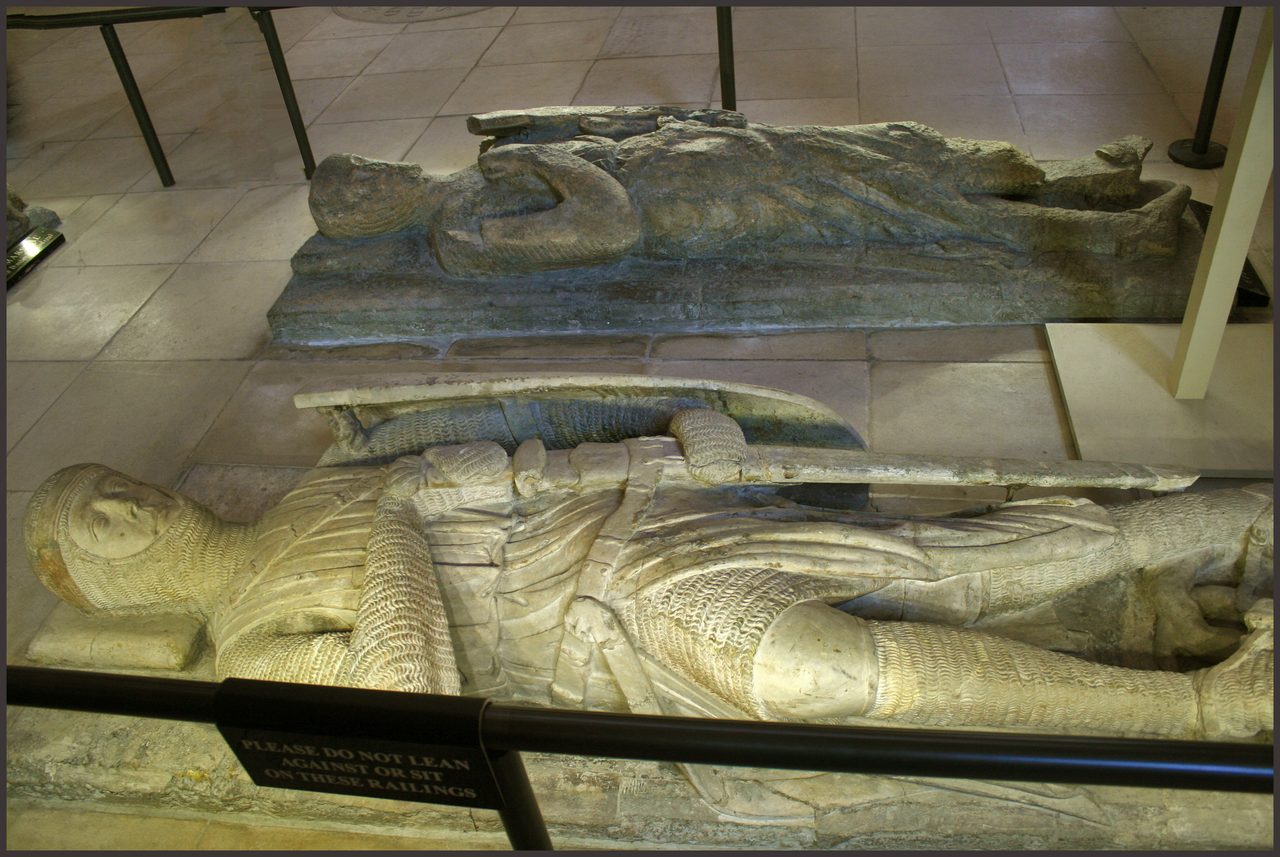
On Friday, October 13, 1307, the agents of Philip IV of France opened orders sealed a month earlier and arrested the Knights Templar across the whole kingdom on one morning. What followed was three years of torture and forced confession, a mass burning of men who took their confessions back, a dissolution that never convicted the Order of anything, and the execution of the last Grand Master in 1314. Our primary research file for this article, N_2_01, and its companion on the Order's finances, N_2_12, carry the whole arc: the founding around 1119 by Hugues de Payens and eight other French knights, headquartered on the Temple Mount, the papal privileges of 1139 that put the Order beyond the reach of kings and bishops, the letters of credit that let a pilgrim deposit money in Europe and draw it in the Holy Land, the loans to Louis VII and Henry III, the treasury of France administered out of the Paris Temple, and the parchment found misfiled in the Vatican Secret Archives in 2001 showing that Pope Clement V had privately absolved the Order's leadership in 1308 and dissolved it in 1312 anyway. That institutional history is this article's spine and most of it sits at Tier 1. The second act, which is what the Templars are better known for, is carried at the tier our files actually assign it: the Grail connection is literary and sits at Tier 3, the Freemason-descent claim sits at Tier 3 with a documented later borrowing of Templar symbolism at Tier 1 underneath it, and the bloodline, the Oak Island treasure, the pre-Columbus voyage and the New World carvings at Rosslyn are stated here as the Tier 4 noes they are. Two numbers in our own primary file are corrected below rather than repeated. That file credits the 1177 Battle of Montgisard to 500 Templars, and independent checking during the research pass puts the Order's own contingent at roughly 80 knights. That file also states the network at roughly 9,000 commanderies, and its own companion file, corroborated by independent checking, puts it at approximately 870.
Philip IV of France issued the arrest orders on September 14, 1307, in secret. On Friday, October 13, his agents carried them out, and Templars across the kingdom were taken on the same morning. Within days an order answerable to the Pope alone, exempt from local taxes, administering the French royal treasury out of its Paris house and wealthier at its peak than most European kingdoms, was in custody and beginning to confess. Five years later a pope dissolved it. Seven years after the arrests the last Grand Master was burned. Two corpus files were read in full for this article. Where the text below says our primary file it means N_2_01 and nothing else; where it says our companion file it means N_2_12, a separate document on Templar banking and financial innovation; where a fact came from independent checking during the research pass instead, it says so. And two numbers in our own primary file are corrected below rather than repeated. Both corrections make the Order smaller than that file claims it was, which is the direction corrections run on this subject in the sources and almost never run in the retellings.
01A Mosque They Called Solomon's Temple
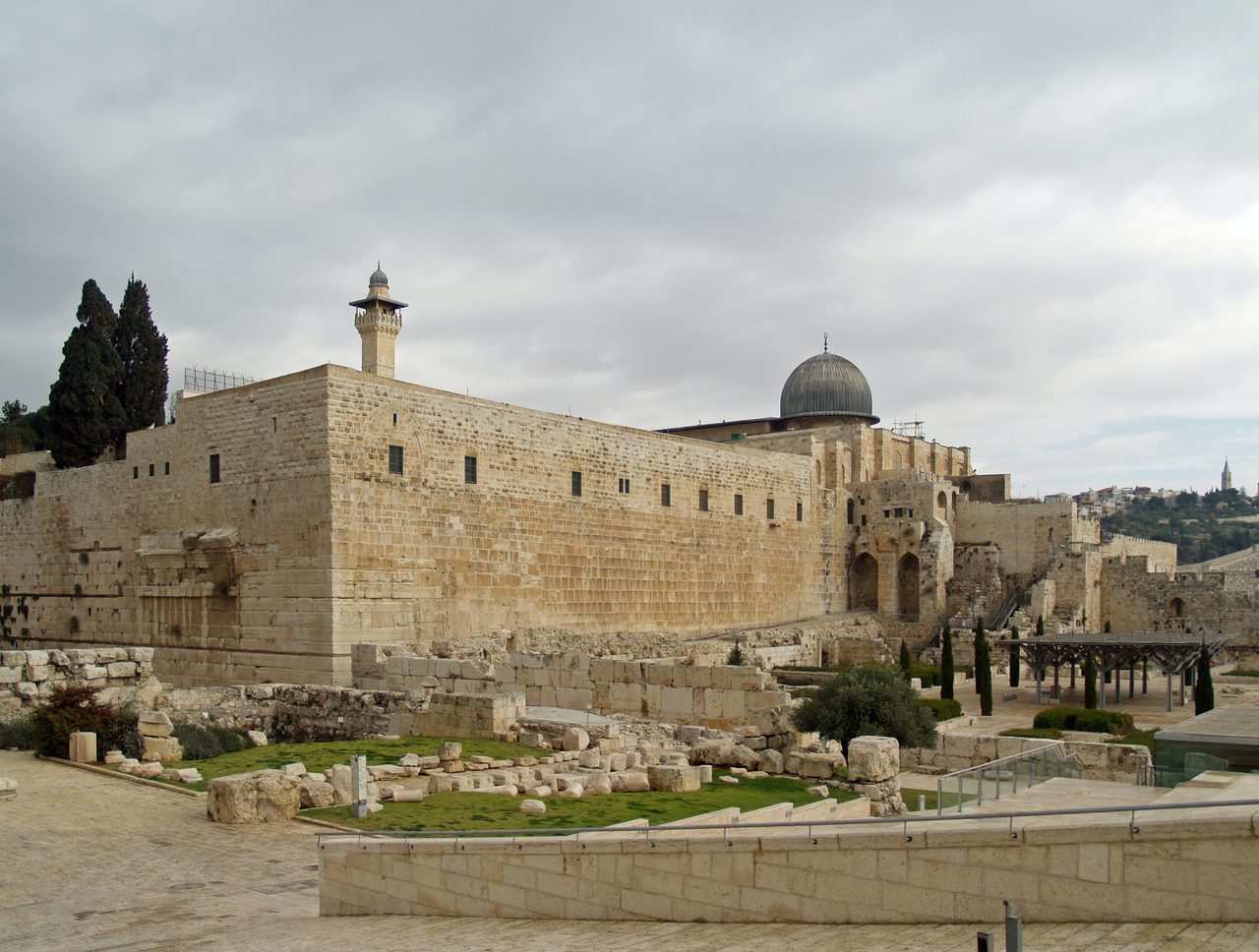
The Knights Templar, formally the Poor Fellow-Soldiers of Christ and of the Temple of Solomon, were founded around 1119 by Hugues de Payens and eight other French knights, with the original mission of protecting Christian pilgrims traveling to Jerusalem after the First Crusade of 1099. Our primary file notes that some sources put the founding at 1118 or 1120, and that hedge stays here. Their headquarters was the Al-Aqsa Mosque on the Temple Mount, which Crusaders believed stood on the site of Solomon's Temple, and that belief is the entire origin of the word Templar. The Order was not improvised into power afterward; it was chartered into it. The Council of Troyes endorsed it officially in 1129 and gave it a formal monastic Rule, likely authored or influenced by Bernard of Clairvaux, who around the same year wrote a powerful theological endorsement of the new institution, In Praise of the New Knighthood, in the Latin Liber ad milites Templi: De laude novae militiae. Then in 1139 Pope Innocent II's bull Omne Datum Optimum granted privileges worth reading slowly, because they explain both what the Order became and who came to resent it: exemption from local taxes, answerability to the Pope alone rather than to any king or bishop, the right to build their own oratories, and the right to keep the spoils of war. Our primary file states the consequence in one line, and it is the line the rest of this article turns on: those privileges fueled both the Order's power and the resentment it eventually drew.
From 1119 to 1187 the Order was headquartered on the Temple Mount itself, using the Al-Aqsa Mosque as its base and the underground vaults known as Solomon's Stables to stable horses. The mainstream, evidenced account our primary file carries is the undramatic one: King Baldwin II of Jerusalem offered them the site because it was a large, defensible compound, and there is no evidence of systematic excavation. Two archaeological data points are on the record and both are modest. Charles Wilson's Palestine Exploration Fund survey of 1867 to 1870 found Templar-era artifacts in tunnels beneath the Temple Mount, specifically a cross, a spur and a lance, which is evidence of the Order's presence rather than of any dig. The Israeli archaeologist Meir Ben-Dov separately found Templar-period structures in the area and no evidence of any concealed discovery. Our primary file's own assessment is the one this article keeps: the Templars were on the Temple Mount for roughly 70 years, and whether they found anything there beyond stable space and water cisterns is unknown and unverifiable. The louder version of this claim exists, it is in our file, and it is carried in section 08 at the lower tier the file assigns it.
Two things follow from that charter, and most of this article is about them. An order exempt from local taxes and answerable only to the Pope could hold property in every kingdom at once while owing local taxes to none of them, and answering to no bishop or king who might call it to account, which is the precondition for a network that moves money across borders. And an order with that standing had very few enemies capable of moving against it at all, which is part of why the one who eventually did had to move in secret, everywhere, on a single morning.
02The Bank That Was Not Allowed To Be a Bank
What historians consider Europe's first international banking system was built around a single instrument: the letter of credit. A pilgrim or a noble deposited money at a Templar commandery in Europe, received a coded document, and withdrew the equivalent sum at a Templar house in the Holy Land, which eliminated the need to carry gold along dangerous roads. Our companion file details what else the network sold, and the list is recognizably a bank. Safe deposit of valuables inside the Order's own fortified houses. Direct loans to named monarchs, including Louis VII of France during the Second Crusade and Henry III of England. Administration of the French royal treasury from the Paris Temple for much of the 13th century, which effectively made the Order the French crown's banker. Pension-like annuity arrangements. And, in the surviving Paris Temple records, regular deposits and withdrawals kept with running balances, which our companion file calls an early form of current-account banking. The Order lent to Philip IV of France as well, and our companion file names that debt explicitly as a documented factor in his motive for the arrests, alongside the simpler motive of seizing the assets outright.
| The Service | How It Worked | Who Used It | How This Is Carried Here |
|---|---|---|---|
| Letters Of Credit | A deposit at a Templar commandery in Europe bought a coded document; the equivalent sum came back out at a Templar house in the Holy Land, so nothing had to travel the roads as gold | Pilgrims and nobles traveling to the Holy Land | Tier 1, carried by both of our files |
| Safe Deposit | Valuables held inside the Order's own fortified houses | Crowns, nobles and private depositors | Tier 1, our companion file |
| Sovereign Lending | Direct loans to reigning monarchs | Louis VII of France during the Second Crusade, Henry III of England, and Philip IV of France | Tier 1, both files. Philip IV's own debt is named in our companion file as a documented factor in his motive for the arrests |
| Treasury Management | The French royal treasury administered from the Paris Temple for much of the 13th century | The French crown | Tier 1, our companion file, which says this effectively made the Order the French crown's banker |
| Current Accounts | Registers from the Paris Temple show regular deposits and withdrawals with running balances | The French crown, the English crown and numerous nobles | Tier 1, our companion file, which calls it an early form of current-account banking |
| Annuities | Pension-like arrangements paying out over time | Not itemized in our files beyond the existence of the arrangement | Tier 1, our companion file |
Christian canon law prohibited usury, meaning lending at interest, and the Templars plainly profited from financial transactions anyway. Our companion file sets out the mechanisms, and none of them is a loophole in the modern sense; each is a real service with a real margin inside it. A margin was built into currency-exchange conversions between regions. Service fees were charged for custody and for transfer. And mortgage arrangements were used in which land pledged against a loan generated income for the Order while the loan was outstanding. On top of those, the Order's standing as a religious order under direct papal protection gave it legal cover that secular moneylenders did not have. The file's own summary of where the boundary sat is the honest one, and this article borrows its phrasing rather than sharpening it: the line between legitimate profit and usury was constantly negotiated.
At their height in the mid-13th century the Templars held approximately 870 commanderies across Europe and the Levant, and the commanderies are why the financial network could exist at all: they were the fortified administrative headquarters where the money physically sat and where the records were kept. But our companion file is careful about which half of the business was the business. Land holdings generated the Order's primary revenue, in grain, wine and livestock, and the financial services were supplementary to them. The Paris Temple held deposits from the French crown, the English crown and numerous nobles simultaneously, which our companion file describes as an unmatched concentration of capital for medieval Europe. And the file states its own limit rather than estimating past it: the Order's total assets at dissolution cannot be precisely determined from the surviving records. Nobody knows what the Templars were worth. That is a stranger fact than any figure would be.
Here is the first of this article's two corrections to its own sources, and it is a factor-of-ten disagreement inside our own corpus. Our primary file, N_2_01, states that the network reached roughly 9,000 commanderies at its peak. Our companion file, N_2_12, which is the dedicated banking document and which cross-references the primary file directly, states approximately 870 commanderies by the mid-13th century. Same institution, same named unit, two figures an order of magnitude apart. Independent checking during the research pass came down on the smaller one: modern historical sources converge on approximately 870 for commanderies specifically, meaning fortified administrative headquarters, while the larger figure of roughly 9,000 does appear in popular-history sources but is more commonly attached to the broader and much less precise category of manors or estates that the network as a whole controlled, and even that broader figure is contested, with one source citing roughly 7,000 and another contrasting a Templar figure of about 9,000 against a Hospitaller 19,000. This article uses approximately 870 for commanderies and says so out loud. One further thing is worth noticing, as an observation about our own files rather than a new claim: the same figure of roughly 9,000 turns up again later in this article attached to a different unit entirely, the Templar properties Philip IV's men seized across France. Two different things counted with one number is exactly how an estate count becomes a commandery count, and this article keeps them apart.
Our companion file carries two claims about what the Templar system left behind, and it hedges both of them itself. The first: the Italian banking houses, the Bardi, the Peruzzi and the Medici, adopted and refined financial instruments the Templars had pioneered, and the bill of exchange, which became the primary instrument of later medieval and early-modern international commerce, evolved partly from Templar letters of credit. The file's own caveat is that the extent of direct Templar influence on Italian banking is debated, because Italian merchants were developing their own innovations at the same time. The second: the surviving Paris Temple records show detailed transaction registers, balance sheets and audit trails, and a triennial general chapter meeting required regional commanders to submit financial reports, giving centralized oversight of a dispersed financial network. Historians see in that a precursor to double-entry bookkeeping. That claim is contested too, because double-entry bookkeeping is more commonly credited to Italian merchants of the following century. Both stay at Tier 2, where the file puts them, and neither is upgraded here into a clean line of descent.
No, twice, and both corrections come from our own companion file rather than from a skeptic outside it. First: the Templars were genuinely important financial innovators, but they built on existing Roman, Jewish and Byzantine financial practices and on earlier Church financial management rather than inventing banking from scratch. The defensible framing is first known European international credit network, not first bank, and this article uses the narrower one throughout. Second, and this one matters more for a subject filed under secret societies: Templar banking was never secret. It was a publicly known, widely used service. Kings, nobles and pilgrims openly deposited money with the Order, and its financial role was a matter of public record. Whatever else this Order was, its bank was not a hidden conspiracy, and the pull toward reading it as one is a wrong inference our own sources head off before anyone else has to.
03The Fighting Half
The other half of the institution was elite heavy cavalry and fortification building, under a discipline our primary file states plainly: Templars could not retreat unless outnumbered three to one or more, and then only with the Grand Master's permission. Their mark from 1147, granted by Pope Eugenius III, was the red cross pattee on a white mantle. The documented military record runs from the Order's high point to its expulsion from the Levant. At Hattin in 1187 the Crusaders were catastrophically defeated, and Saladin ordered roughly 230 captured Templars executed en masse, a figure independently confirmed during the research pass. Jerusalem fell the same year, costing the Order the headquarters it was named for. A siege in 1191 helped recapture Acre, which became the new headquarters. And in 1291 Acre fell, Grand Master Guillaume de Beaujeu was killed, and the Crusader states in the Levant came to an end. The Order outlived the mission it had been founded to perform, and it kept the bank.
| The Engagement | The Year | What Our Files Record | How This Is Carried Here |
|---|---|---|---|
| Montgisard | 1177 | An outnumbered Christian force under Baldwin IV routed Saladin's reported army of 26,000 | Tier 1 for the battle and its outcome. The Templar contingent is CORRECTED here: our primary file's own table credits 500 Templars, and independent checking during the research pass puts it at roughly 80 knights from the Gaza garrison under Grand Master Odo de St Amand |
| Hattin | 1187 | A catastrophic Crusader defeat, after which Saladin ordered roughly 230 captured Templars executed en masse | Tier 1, our primary file, with the execution count independently confirmed during the research pass |
| The Fall Of Jerusalem | 1187 | The city fell the same year, costing the Order its original headquarters | Tier 1, our primary file. The Order took its name from that building |
| The Siege Of Acre | 1191 | The siege helped recapture Acre, which became the new Templar headquarters | Tier 1, our primary file |
| The Fall Of Acre | 1291 | Acre fell, Grand Master Guillaume de Beaujeu was killed, and the Crusader states in the Levant ended | Tier 1, our primary file. This is the end of the mission the Order was founded to perform, and it went on operating as a landholder and a bank until 1307 |
That table carries this article's second correction to its own primary file, and it is a real overstatement rather than a rounding difference. The file's own Tier 1 military table credits the 1177 Battle of Montgisard to 500 Templars plus a small force, defeating an army of 26,000 under Saladin. Independent checking during the research pass found that the Templar contingent was roughly 80 knights, led by Grand Master Odo de St Amand and drawn from the Gaza garrison, fighting inside Baldwin IV's larger relief force, which William of Tyre puts at roughly 375 knights plus infantry in the thousands. The figure of 26,000 for Saladin's army and the outcome of the battle both check out. So the correction does not remove the improbability of Montgisard; it relocates it. The astonishing thing was never that 500 Templars beat an army. It is that a few hundred knights of all factions together, of whom roughly 80 were Templars, routed one, and that our own file inflated the Order's share of it roughly sixfold. An order this well documented does not need the numbers rounded up in its favor, and rounding them up is how a documented institution slowly turns into a legend.
04One Morning In October
The destruction of the Knights Templar unfolded on a documented timeline, and the dates matter more than any single scene in it. Philip IV of France issued secret arrest orders on September 14, 1307. Templars across France were arrested simultaneously on Friday, October 13, 1307, which is the origin of the popular Friday the 13th association, carried at its own lower tier in section 07. Trials, torture and forced confessions followed from 1307 to 1310. Pope Clement V's cardinals privately heard the Templar leaders' confessions at Chinon Castle from August 17 to 20, 1308, which is section 05. On May 12, 1310, a date independently confirmed during the research pass where our primary file gives only the year, 54 Templars who had recanted their forced confessions were burned alive in Paris as relapsed heretics, a deliberate act of terror that pressured the remaining prisoners into not recanting. In 1312 the Council of Vienne saw Clement V dissolve the Order through the bull Vox in Excelso, explicitly without condemning it as heretical. And on March 18, 1314, independently confirmed during the research pass, the last Grand Master, Jacques de Molay, and Geoffroi de Charny were burned at the stake in Paris.
| The Date | What Happened | How This Is Carried Here |
|---|---|---|
| September 14, 1307 | Philip IV issues secret arrest orders | Tier 1, our primary file |
| Friday, October 13, 1307 | Templars across France are arrested simultaneously | Tier 1, our primary file. The origin of the popular Friday the 13th association, which section 07 carries at a lower tier |
| 1307 to 1310 | Trials, torture and forced confessions | Tier 1, our primary file |
| August 17 to 20, 1308 | Clement V's cardinals privately hear the Templar leaders' confessions at Chinon Castle | Tier 1, our primary file. The record of that hearing is the Chinon Parchment, in section 05 |
| May 12, 1310 | 54 Templars who had recanted their forced confessions are burned alive in Paris as relapsed heretics | Tier 1. Our primary file gives only the year; the exact date was independently confirmed during the research pass |
| 1312 | At the Council of Vienne, Clement V dissolves the Order through the bull Vox in Excelso, explicitly without condemning it as heretical | Tier 1, our primary file |
| March 18, 1314 | Jacques de Molay, the last Grand Master, and Geoffroi de Charny are burned at the stake in Paris | Tier 1, our primary file, independently confirmed during the research pass |
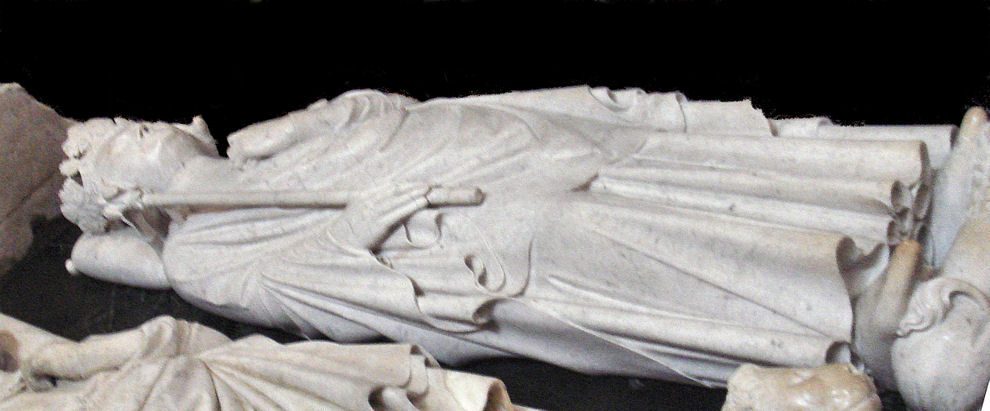
The charges brought by Philip IV and the Inquisition were denying Christ and desecrating the cross during initiation, worshipping an idol called Baphomet, homosexual practices, financial corruption, and secret dealings with Muslims. Every confession supporting them was obtained under torture, and multiple Templars recanted once they were removed from duress. Our primary file lays out why modern scholarship treats the entire proceeding as political rather than religious, and the reasons are cumulative rather than any single decisive one. The charges closely match a template of accusations Philip IV used against other targets he wanted suppressed, including Pope Boniface VIII. No physical evidence of idol worship was ever produced. And the simultaneous coordinated arrest of thousands of Templars across France, ordered a month in advance and executed in one morning, is not the shape of a heresy investigation; it is the shape of a seizure. The file states the resulting consensus directly, and this article carries it at the file's own tier: the Templar suppression was primarily politically motivated, driven by Philip IV's desire for the Order's wealth and by his wish to eliminate a power center he could not control, with the charges fabricated or grossly exaggerated.
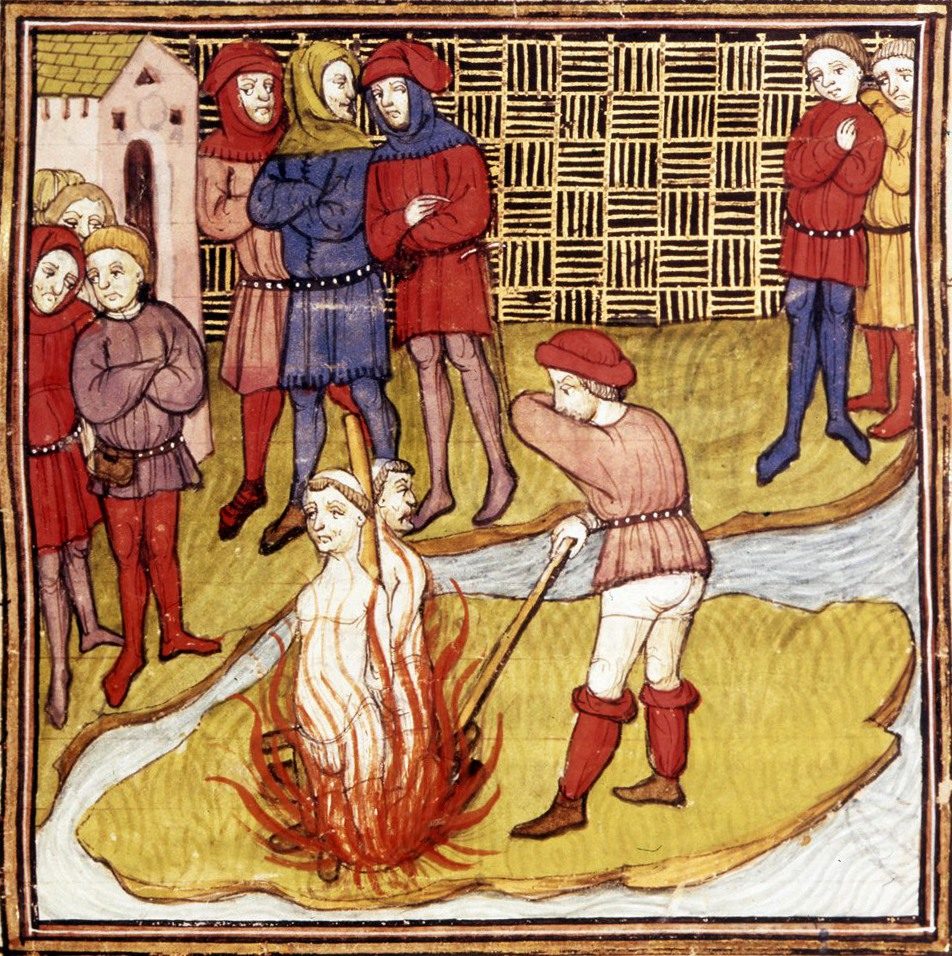
The illumination is a 14th or 15th-century French chronicle image, not a contemporary 1314 record; it is offered here as period-appropriate visual testimony to how the execution was remembered and depicted, not as an eyewitness sketch.
05The Parchment In the Wrong Box
In 2001 the Italian paleographer Barbara Frale found a document misfiled in the Vatican Secret Archives. It is the record of a papal commission held at Chinon Castle from August 17 to 20, 1308, at which Pope Clement V's cardinals privately heard confessions from Jacques de Molay and other Templar leaders, and at which the Pope absolved the Templar leadership of heresy. De Molay and the others had described the acts they confessed to, such as denying Christ during initiation, as ritualistic or symbolic rather than genuine apostasy, and the Pope accepted that explanation. Read those dates against the timeline in section 04 and the shape of it is unmistakable: the private absolution came in 1308, the public dissolution came in 1312, and the dissolution bull, Vox in Excelso, cites the Order's damaged reputation rather than proven heresy. Frale published her academic findings in the Journal of Medieval History in 2004, and that citation is one of the few identifiers in our two files that was independently resolved during the research pass and found to point at the actual article, so it is linked below. Independent checking also added the piece usually meant by the phrase the 2007 Vatican revelation: in 2007 the Vatican itself published the Chinon Parchment together with the full trial transcripts as a limited facsimile edition titled Processus Contra Templarios, restricted to 800 copies in total, being 799 numbered copies for sale plus one unnumbered copy reserved for Pope Benedict XVI. Our primary file describes the document as one of the most significant medieval document discoveries of the 21st century, and its significance is exactly this: it shows that the Pope privately knew the heresy charges were not genuine, and suppressed the Order under pressure from Philip IV regardless.
It is worth being exact about what the Chinon Parchment does and does not do, because it can be over-read in either direction. It does not establish that the Templars were innocent of everything alleged. The leaders confessed to acts and then characterized those acts as ritual rather than apostasy, and the parchment records a pope accepting that characterization. Nor does it overturn the 1312 dissolution, which stood then and stands now. What it does is close the gap between what the Church said publicly and what it had concluded privately, four years apart, inside the same pontificate. And it is worth noticing how the evidence was lost in the first place. Not destroyed, not sealed, not suppressed: misfiled. It sat in the wrong place in the Vatican Secret Archives until somebody read it.
06What Happened To the Survivors
After the fall of Acre in 1291 the surviving Templars relocated first to Cyprus and then across Europe. The Order maintained naval facilities at La Rochelle on the Atlantic coast of France, and our primary file is honest that the fate of that fleet after October 1307 is unclear in the historical record, a gap the legends in section 08 have filled enthusiastically. The better-documented outcome is far less mysterious and, read properly, far more interesting. Most Templars outside France were simply absorbed into other orders, principally the Knights Hospitaller. In Portugal they were not absorbed at all: they were refounded under a new name as the Order of Christ, which later genuinely helped finance the Portuguese Age of Exploration, including the voyages of Vasco da Gama and the patronage of Henry the Navigator. Our primary file draws the line between that documented continuity and the fleet-disappearance legends explicitly, and this article keeps the line where the file puts it. The Order did not vanish. In one kingdom it changed its name, and went on to help underwrite the opening of the sea routes.
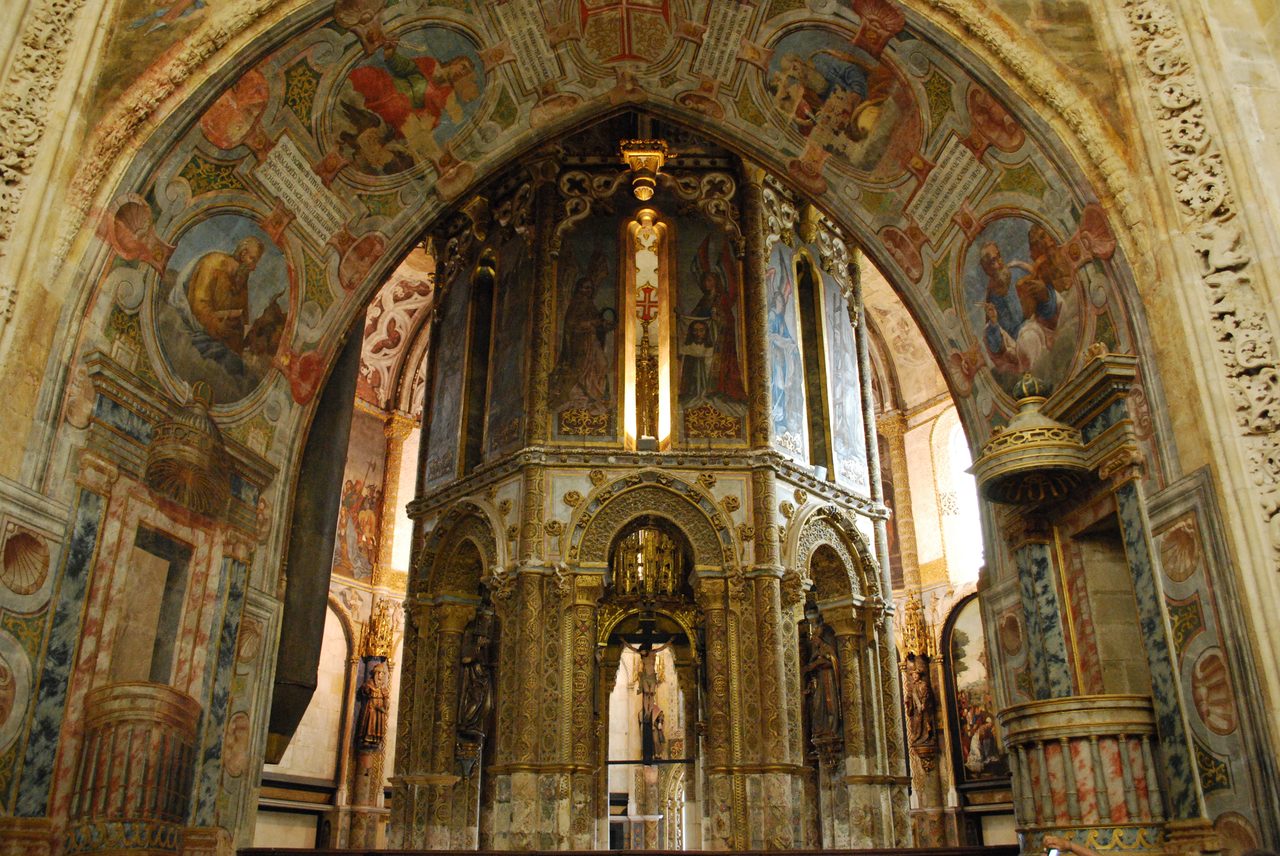
One scoping note belongs here, because the Portuguese continuation has a surviving building attached to it and buildings pull an article somewhere else. Where the surviving Templar church at Tomar, the Convento de Cristo, appears in this wing, it appears only as institutional continuity: the physical house of a documented Portuguese afterlife, rather than a rumor with a following. How that church was built, what its rotunda does, and where it sits in the history of construction are questions about a monument as engineering, and this site keeps monuments-as-engineering in a different wing, The Builders. This article does not borrow that territory, and naming the boundary is more honest than quietly crossing it.
07Friday the 13th
The arrest date is verified and sits at Tier 1 in section 04: Friday, October 13, 1307. The superstition is a separate claim, and our primary file separates the two carefully. The earliest documented reference treating Friday the thirteenth specifically as unlucky dates only to the 19th century, and Thomas W. Lawson's 1907 novel Friday, the Thirteenth is credited with popularizing the modern superstition. The two components are older on their own: the number thirteen was already unlucky through the Last Supper and through the Norse story of Loki as a thirteenth, uninvited guest, and Friday was already unlucky as the day of the Crucifixion. What our file will not support is the combination deriving from the Templar arrests. It reads instead as a superstition assembled later and retrojected onto a historical event that suited it. So the file assigns Tier 2 to the coincidence of the date itself, which is genuine and checkable, and Tier 3 to any causal link between the arrests and the superstition. This article does not upgrade the second one, and it does not upgrade it even though the title of this article is built on the association.
08The Second Act, and What Got Attached Afterward
Everything above is the Order as an institution: a charter, a ledger, a battle record, a trial and an execution, and most of it at Tier 1. What follows is the Order as a legend, and it is a much thinner file. This is not a detour into debunking for its own sake. The legends are why most readers arrive at this subject at all, they are genuinely in our primary file, and they carry tiers there, so they are carried here at those tiers and in this proportion: after the history, not instead of it.
Wolfram von Eschenbach's Parzival, written around 1210, is the first literary work to connect the Holy Grail to the Templars. It describes the Grail as guarded by templeisen and names it lapsit exillis, a phrase read variously as lapis exilis, a small stone, or lapis ex coelis, a stone from heaven, or as a garbled phrase whose original meaning is genuinely disputed. Set that date against the Order's own timeline before anything else. Parzival is a romance written while the Templars were a living institution, roughly a century before anyone accused them of anything, by a poet inventing a story. Our primary file then gives the better-evidenced account of where the Grail itself comes from: the legend has pre-Christian Celtic roots, the Cauldron of the Dagda and the Cauldron of Bran, Christianized during the 12th century. The file's own verdict is the one this article carries without softening it: the Templar connection to the Grail is literary, not historical. A poet attached a relic to the Order. Nothing in the historical record does.
The claim that Templar survivors merged with Scottish stonemason guilds after the 1312 suppression and eventually became Freemasonry rests on circumstantial evidence, and our primary file lists that evidence without inflating it: Scotland's excommunication in 1306 under Robert the Bruce as a possible refuge for men with nowhere legal to go, an undocumented legend that Templar cavalry intervened at the Battle of Bannockburn in 1314, disputed carvings at Rosslyn Chapel, which was built in 1446, and the Kirkwall Scroll, which is dated to either the 15th or the 18th century depending on the analysis. The file then supplies its own counterargument, which is the strongest thing in the section. David Stevenson's 1988 study traces Freemasonry's documented origins to Scottish stonemason guilds of the 1590s, which leaves a gap of roughly 280 years after the Templar suppression with no documentary evidence of any intervening Templar-descended organization. So the file splits the claim cleanly, and this article keeps the split exactly where the file makes it: direct organizational continuity from Templar to Freemason is Tier 3, possible but undocumented, while Freemasonry's later adoption of Templar symbolism and mythology during the 18th century is Tier 1, genuinely documented history. Freemasons really did take up Templar imagery. That is a fact about later Freemasons, not a fact about the Templars.
When Philip IV's agents reached the Paris Temple on October 13, 1307, they reportedly found it largely empty of treasure, which suggests advance warning and a prior removal of assets, and both of our files agree that the Order's Atlantic fleet departed La Rochelle the night before the arrests, possibly carrying portable wealth. Proposed destinations for a hidden treasury include Scotland, Portugal, where the Order genuinely did continue as the Order of Christ, and the Languedoc region of southern France, which is where the Rennes-le-Chateau legends attach. Philip's men did seize roughly 9,000 Templar properties across France. And then both files, independently of each other, reach the same deflating verdict, which this article carries at their tier: the Order's wealth was overwhelmingly held in property rather than portable gold, and no credible evidence supports the survival of any hidden treasury beyond what the transfer to the Hospitallers and Philip's own seizures already account for. A treasury made of farmland cannot be loaded onto ships in a night. Whatever could be moved was small next to what could not.
The other Temple Mount claim belongs here rather than in section 01, because it sits at a different tier. Alternative authors, principally Christopher Knight and Robert Lomas, and Graham Hancock in The Sign and the Seal of 1992, claim the Templars conducted secret excavations beneath the Temple Mount and recovered lost Solomonic treasures, the Ark of the Covenant, or Gnostic and Hermetic texts. Our primary file rates this Tier 3 and gives a specific reason: the claim is unfalsifiable and is primarily maintained by alternative-history authors. The file separately notes that any link to the Copper Scroll from Qumran is Tier 3 to 4 speculation with no documentary support. Set that beside the archaeology in section 01, which produced a cross, a spur and a lance, and the honest position is the one the file reaches: the Order held the site for roughly 70 years, and what if anything they found there is unknown and unverifiable. Unknown is not a synonym for hidden, and an unfalsifiable claim is not a claim that survived a test.
The Templars operated in the Levant for roughly 170 years, from 1119 to 1291, in documented contact with Islamic scholars, Eastern Christian traditions, Sufi mystics, Jewish Kabbalists and the Ismaili Assassins, the Hashashin, including recorded truces and alleged alliances near the Assassin fortress of Masyaf. Templar architecture shows some Islamic influence in pointed arches, dome construction and geometric patterns, and Arabic loanwords appear in Templar documents. Our primary file separates the two halves of this cleanly, and so does this article. That cultural exchange between Crusaders and Middle Eastern civilizations happened, broadly, is Tier 1 history. That the Templars specifically acquired esoteric Sufi, Hermetic or sacred-geometry knowledge through those contacts, or that any such knowledge shaped their architecture or some supposed network of ley lines, is unverifiable Tier 3 speculation. Roughly 170 years of proximity will leave loanwords and arches behind in any case. What it has not left, and what nobody has produced, is a document.
Under torture the Templars gave wildly inconsistent accounts of an idol called Baphomet. It was a bearded head, sometimes with two or three faces; it was a cat; it was a skull; it was a reliquary containing a human head. Some confessed to worshipping it, others denied any knowledge of it at all. Our primary file weighs three explanations at Tier 2 without crowning one, and this article does not crown one either. It may have been a fabrication by Philip IV, matching the template accusations he used elsewhere. It may have been a corruption of Mahomet, meaning Muhammad, which would fit the crypto-Islam charge sitting on the same indictment. Or it may reflect the entirely ordinary medieval Christian tradition of venerating head reliquaries, which would make the strangest item on the charge sheet the most conventional thing in the room. A fourth reading sits lower: Hugh Schonfield's The Essene Odyssey of 1984 applies the Atbash cipher to Baphomet and derives the Hebrew word for Sophia, meaning Wisdom, which our file calls clever but unverifiable and files at Tier 3. Then there is the correction that matters most, because it concerns the image everyone has already seen. The goat-headed Baphomet is a 19th-century creation by the occultist Eliphas Levi, published in Dogme et Rituel de la Haute Magie in 1856, more than five centuries after the Templar trials. It represents Levi's own philosophy of duality and equilibrium. It has nothing to do with any medieval Templar practice, and as a documented artifact of 19th-century esotericism it is perfectly real, which is a different claim from the one it is usually made to carry.
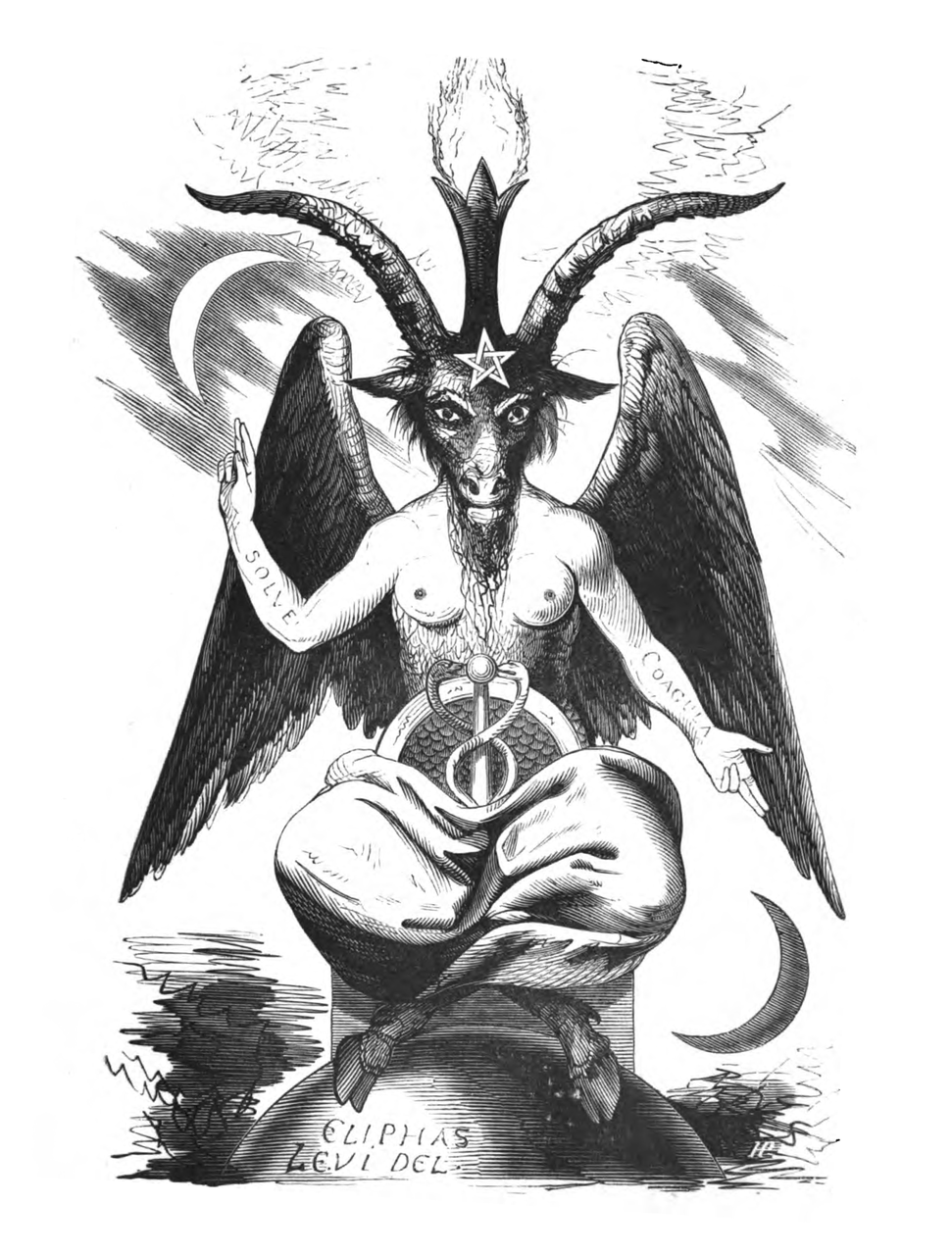
This is the image most people picture when they hear the word Baphomet. It depicts Levi's own philosophy of duality and equilibrium, worked out five centuries after the Order was destroyed, not anything the historical Templars confessed to or worshipped.
09Four Claims That Fail
No. The theory that Sangreal, the Holy Grail, really parses as Sang Real, royal blood, denoting a bloodline descended from Jesus and Mary Magdalene and supposedly protected by the Templars, is the basis of Baigent, Leigh and Lincoln's The Holy Blood and the Holy Grail of 1982 and, later, of Dan Brown's The Da Vinci Code of 2004. Our primary file debunks it on two independent grounds, and either one alone would finish it. The linguistic ground: the Old French graal derives from gradalis, a wide serving dish, so there is no blood etymology there to find. The documentary ground: the Priory of Sion documents used as evidence for the bloodline claim were confirmed forgeries, created by Pierre Plantard in 1956. A theory can survive a weak etymology. It cannot survive its own primary sources having been manufactured within living memory.
No. The claim that the Money Pit on Oak Island in Nova Scotia contains Templar treasure has no credible evidentiary or documentary support and relies entirely on speculative chains of reasoning. Our primary file's entry on it is brief, and the brevity is the finding: there is no evidence here to weigh, only a sequence of inferences each of which needs the previous one to have been true.
No. The claim that the La Rochelle fleet escaped ahead of the 1307 arrests and carried Templar survivors on a pre-Columbus voyage to the Americas is tied to the Henry Sinclair legend, in which the Earl of Orkney, who lived from roughly 1345 to 1400, allegedly voyaged to Nova Scotia around 1398. It rests on two supports and our primary file finds both unsound. The Zeno Map is assessed as a likely later fabrication. The Westford Knight carving in Massachusetts may be natural weathering rather than an intentional carving at all. No documentary evidence supports any Templar-connected transatlantic voyage before Columbus. Note carefully what this refusal does not touch: the fleet did leave La Rochelle, and where it went is genuinely unclear, which is the Tier 3 material in section 08. An unclear record is not a licence to fill in an ocean.
No. The claim that Rosslyn Chapel, built in 1446, contains carvings of New World plants such as maize or aloe, offered as proof of pre-Columbus Templar contact with the Americas, is debunked in our primary file on the plainest possible ground: the carvings in question are more plausibly stylized European plants, wheat among them, and botanical identification of stylized medieval stone carvings is inherently unreliable to begin with. A carved plant is a carving of a carver's idea of a plant. It is not a specimen, and it cannot be identified to a continent.
A word about the files themselves, since this article has leaned on them throughout and one thing in our primary file's own header would mislead a reader who went and checked. That header carries an overall label of Confidence: Low, glossed as largely speculative with minimal verification. Read against the document's actual contents, that label reads as a generic template tag rather than an accurate summary. The founding, banking, arrest and Chinon Parchment sections are populated, well-cited Tier 1 material, and the research pass independently corroborated the load-bearing parts of them, including the execution count after Hattin, the exact date of the 1310 Paris burnings, and the full publication history of the Chinon Parchment. The document's own per-claim tier labels are the ones to trust, and they are the ones this article used. The generic overall tag is not, and it is stated here for the same reason the two numeric corrections are: what our own files get wrong should be visible inside the article rather than only inside the file.
Fast Facts
- The Founding (Tier 1)
- The Poor Fellow-Soldiers of Christ and of the Temple of Solomon, founded around 1119 by Hugues de Payens and eight other French knights to protect Christian pilgrims traveling to Jerusalem after the First Crusade of 1099. Some sources say 1118 or 1120
- The Name (Tier 1)
- The headquarters was the Al-Aqsa Mosque on the Temple Mount, which Crusaders believed stood on the site of Solomon's Temple. That belief is the whole origin of the word Templar
- The Charter (Tier 1)
- The Council of Troyes endorsed the Order in 1129 with a Rule likely authored or influenced by Bernard of Clairvaux, who wrote In Praise of the New Knighthood, the Liber ad milites Templi: De laude novae militiae, around the same year
- The Privileges (Tier 1)
- Pope Innocent II's bull Omne Datum Optimum of 1139 granted exemption from local taxes, answerability to the Pope alone, the right to build their own oratories, and the right to keep the spoils of war. Our primary file records that these fueled both the Order's power and the resentment it drew
- The Instrument (Tier 1)
- The letter of credit: money deposited at a Templar commandery in Europe bought a coded document, and the equivalent sum came out at a Templar house in the Holy Land, so gold did not travel the roads. Historians consider the resulting system Europe's first international banking network
- The Clients (Tier 1)
- Direct loans to Louis VII of France during the Second Crusade and to Henry III of England; administration of the French royal treasury from the Paris Temple for much of the 13th century; safe deposit, annuities, and running-balance accounts recorded in the Paris Temple registers
- The Usury Problem (Tier 1)
- Canon law forbade lending at interest, so the returns came from margins built into currency exchange, service fees for custody and transfer, and mortgage arrangements where pledged land generated income during a loan. The Order's papal protection gave it cover secular lenders lacked, and our companion file says the line between profit and usury was constantly negotiated
- The Rule In Battle (Tier 1)
- Templars could not retreat unless outnumbered three to one or more, and then only with the Grand Master's permission. The red cross pattee on a white mantle was granted by Pope Eugenius III in 1147
- The Military Record (Tier 1)
- Hattin in 1187, after which Saladin ordered roughly 230 captured Templars executed; the fall of Jerusalem the same year; the 1191 siege that recaptured Acre, which became the new headquarters; and the fall of Acre in 1291, in which Grand Master Guillaume de Beaujeu was killed and the Crusader states in the Levant ended
- Montgisard, Corrected (Tier 1)
- Our primary file credits the 1177 battle to 500 Templars. Independent checking puts the Order's contingent at roughly 80 knights under Grand Master Odo de St Amand from the Gaza garrison, inside Baldwin IV's larger force of roughly 375 knights plus infantry, against Saladin's reported 26,000. The outcome and the 26,000 both check out; the Templar share does not
- The Destruction (Tier 1)
- Secret arrest orders on September 14, 1307; simultaneous arrests across France on Friday, October 13, 1307; trials and torture from 1307 to 1310; 54 recanting Templars burned alive in Paris on May 12, 1310; dissolution at the Council of Vienne in 1312 through Vox in Excelso, explicitly without a finding of heresy; Jacques de Molay and Geoffroi de Charny burned in Paris on March 18, 1314
- The Charges (Tier 1)
- Denying Christ and desecrating the cross at initiation, worshipping an idol called Baphomet, homosexual practices, financial corruption, and secret dealings with Muslims. All confessions were extracted under torture, many were recanted, no physical evidence of idol worship was produced, and the charges match a template Philip IV used against other targets including Pope Boniface VIII
- The Chinon Parchment (Tier 1)
- Found misfiled in the Vatican Secret Archives in 2001 by Barbara Frale. It records a commission at Chinon Castle from August 17 to 20, 1308, at which Clement V's cardinals heard the leaders privately and the Pope absolved them of heresy. Frale published in the Journal of Medieval History in 2004; the Vatican issued the facsimile Processus Contra Templarios in 2007 in 800 copies, 799 numbered for sale plus one for Pope Benedict XVI
- The Scale (Tier 2)
- Approximately 870 commanderies across Europe and the Levant at the mid-13th-century peak, with land holdings in grain, wine and livestock as the primary revenue and financial services supplementary. Total assets at dissolution cannot be precisely determined from surviving records
- The Temple Mount Tenancy (Tier 2)
- Headquartered there from 1119 to 1187, using Solomon's Stables to stable horses, on a site King Baldwin II offered them as a large defensible compound. Charles Wilson's Palestine Exploration Fund survey of 1867 to 1870 found a cross, a spur and a lance in tunnels beneath it; Meir Ben-Dov found Templar-period structures and no concealed discovery
- The Survivors (Tier 2)
- Relocation to Cyprus and then across Europe after 1291; naval facilities at La Rochelle with the fleet's fate after October 1307 unclear; most Templars outside France absorbed into other orders, principally the Hospitallers; and in Portugal a refounding as the Order of Christ, which later helped finance the voyages of Vasco da Gama and the patronage of Henry the Navigator
- The Financial Inheritance (Tier 2)
- The Bardi, Peruzzi and Medici adopted and refined Templar instruments, and the bill of exchange evolved partly from Templar letters of credit, though the extent of direct influence is debated because Italian merchants were innovating in parallel. The Paris Temple's registers, balance sheets and triennial audit reports are read as a precursor to double-entry bookkeeping, a contested claim
- Baphomet (Tier 2)
- Confessions described a bearded head with two or three faces, a cat, a skull, and a reliquary holding a human head, inconsistently and under torture. Competing explanations at Tier 2: a fabrication by Philip IV, a corruption of Mahomet, or ordinary head-reliquary veneration. Schonfield's 1984 Atbash-cipher reading yielding Sophia sits at Tier 3
- The Famous Image (Tier 1, About the Wrong Century)
- The goat-headed Baphomet is Eliphas Levi's illustration from Dogme et Rituel de la Haute Magie, 1856, more than five centuries after the trials, expressing Levi's own philosophy of duality and equilibrium. It is a real artifact of 19th-century esotericism and not a medieval Templar object
- Friday the 13th (Tier 2 and Tier 3)
- The arrest date is verified. The earliest documented treatment of Friday the thirteenth as unlucky dates only to the 19th century, with Thomas W. Lawson's 1907 novel credited for the modern superstition. Tier 2 for the coincidence, Tier 3 for any causal link to the arrests
- The Grail (Tier 3)
- Wolfram von Eschenbach's Parzival of around 1210 first links the Grail to the Templars, calling its guardians templeisen and the object lapsit exillis. The better-evidenced account gives the Grail pre-Christian Celtic roots, the Cauldron of the Dagda and the Cauldron of Bran, Christianized in the 12th century. The Templar connection is literary, not historical
- The Freemason Descent (Tier 3, With Tier 1 Inside It)
- Direct organizational continuity from Templar to Freemason is Tier 3, possible but undocumented; Stevenson's 1988 study traces Freemasonry to Scottish stonemason guilds of the 1590s, a gap of roughly 280 years. Freemasonry's later adoption of Templar symbolism during the 18th century is Tier 1, documented
- The Treasure (Tier 3)
- The Paris Temple was reportedly found largely empty, and the Atlantic fleet left La Rochelle the night before the arrests. Philip's men seized roughly 9,000 Templar properties across France. Both of our files conclude the wealth was overwhelmingly land rather than portable gold, and that no credible evidence supports a surviving hidden treasury
- The Esoteric Transmission (Tier 3)
- Roughly 170 years in the Levant, from 1119 to 1291, with documented contact with Islamic scholars, Sufi mystics, Jewish Kabbalists and the Ismaili Assassins near Masyaf, plus Islamic influence in pointed arches and geometric patterns and Arabic loanwords in Templar documents. The exchange is Tier 1; a specific esoteric or sacred-geometry acquisition is Tier 3
- The Bloodline (Tier 4)
- No. Old French graal derives from gradalis, a wide serving dish, not from any blood etymology, and the Priory of Sion documents behind the claim were confirmed forgeries created by Pierre Plantard in 1956
- Oak Island (Tier 4)
- No. The Money Pit claim has no credible evidentiary or documentary support and relies entirely on speculative chains of reasoning
- The Pre-Columbus Voyage (Tier 4)
- No. The Henry Sinclair legend rests on the Zeno Map, assessed as a likely later fabrication, and the Westford Knight carving in Massachusetts, which may be natural weathering. No documentary evidence supports any Templar-connected transatlantic voyage before Columbus
- The Rosslyn Carvings (Tier 4)
- No. The supposed maize and aloe at Rosslyn Chapel, built in 1446, are more plausibly stylized European plants such as wheat, and botanical identification of stylized medieval stone carvings is inherently unreliable
- First Bank, and Secret (Tier 4)
- No, and no. Our companion file states that the Templars built on existing Roman, Jewish and Byzantine practices rather than inventing banking, so the defensible framing is first known European international credit network. And Templar banking was never secret: it was a publicly known, widely used service and a matter of public record
- The Bibliography (Not a Tiered Claim)
- Independent checking during the research pass resolved every identifier in both files against CrossRef. Four in the primary file point at a review of the cited book rather than the book, two of those are repeated in the companion file, one in the companion file points at an entirely different and later book by a different author, and one points at a reprint volume rather than the stated journal. Five resolve correctly, and those five plus one chapter identifier that is correct only at the book level are the ones linked below
What Is Settled Here, and What Is Not
The Poor Fellow-Soldiers of Christ and of the Temple of Solomon were founded around 1119 by Hugues de Payens and eight other French knights, headquartered on the Temple Mount at the Al-Aqsa Mosque, endorsed by the Council of Troyes in 1129 with a Rule likely shaped by Bernard of Clairvaux, and granted by Pope Innocent II's bull Omne Datum Optimum in 1139 an exemption from local taxes, answerability to the Pope alone, the right to build their own oratories and the right to keep the spoils of war. Our primary file's own note on those privileges is the sentence that predicts the rest: they fueled both the Order's power and the resentment it eventually drew. Some sources place the founding at 1118 or 1120, and that hedge is kept.
A deposit at a Templar commandery in Europe bought a coded document redeemable at a Templar house in the Holy Land, which is the letter of credit, and around it the Order ran safe deposit, sovereign lending to Louis VII of France and Henry III of England, administration of the French royal treasury from the Paris Temple for much of the 13th century, annuities, and accounts kept with running balances. The returns were made without technically charging interest, through margins inside currency exchange, service fees for custody and transfer, and mortgage arrangements on pledged land, with papal protection as legal cover secular lenders did not have. Our companion file's own phrase for where the boundary sat is the one carried here: the line between legitimate profit and usury was constantly negotiated.
Secret arrest orders on September 14, 1307; simultaneous arrests of Templars across France on Friday, October 13, 1307; trials, torture and forced confessions from 1307 to 1310; 54 Templars who had recanted burned alive in Paris on May 12, 1310, as relapsed heretics, which is a date independent checking pinned where our primary file gives only the year; dissolution at the Council of Vienne in 1312 through the bull Vox in Excelso, explicitly without condemning the Order as heretical; and Jacques de Molay with Geoffroi de Charny burned at the stake in Paris on March 18, 1314. The charges were extracted under torture, matched a template Philip IV had used against other targets including Pope Boniface VIII, and produced no physical evidence of idol worship. Our primary file's stated scholarly consensus is carried here unchanged: the suppression was primarily political, driven by Philip IV's desire for the Order's wealth and by his wish to remove a power center he could not control, with the charges fabricated or grossly exaggerated.
The Chinon Parchment, found misfiled in the Vatican Secret Archives in 2001 by Barbara Frale, records a commission at Chinon Castle from August 17 to 20, 1308, at which Clement V's cardinals privately heard Jacques de Molay and other leaders and the Pope absolved the Templar leadership of heresy, accepting their characterization of the confessed acts as ritualistic or symbolic rather than apostasy. The 1312 bull that ended the Order cites its damaged reputation rather than proven heresy. Frale published in the Journal of Medieval History in 2004, and the Vatican itself published the parchment with the full trial transcripts as Processus Contra Templarios in 2007, in 800 copies, being 799 numbered for sale and one reserved for Pope Benedict XVI. What the document establishes is precise and worth stating precisely: not that the Templars were innocent of every allegation, but that the Pope privately knew the heresy charges were not genuine and suppressed the Order under pressure from Philip IV regardless.
Six things sit at Tier 2 rather than Tier 1 and are named as such. The network held approximately 870 commanderies across Europe and the Levant at its mid-13th-century peak, with land as the primary revenue and finance supplementary, and total assets at dissolution that cannot be precisely determined. The Order held the Temple Mount from 1119 to 1187, on a site King Baldwin II offered as a defensible compound, with Charles Wilson's survey of 1867 to 1870 producing a cross, a spur and a lance, and Meir Ben-Dov finding structures and no concealed discovery. The survivors went to Cyprus and then across Europe, most absorbed into other orders and principally the Hospitallers, while in Portugal they were refounded as the Order of Christ and later helped finance the voyages of Vasco da Gama and the patronage of Henry the Navigator. The financial inheritance is real while its line of descent is argued: the Bardi, Peruzzi and Medici refined Templar instruments and the bill of exchange evolved partly from Templar letters of credit, but the extent of direct influence is debated, and the reading of the Paris Temple's registers as a precursor to double-entry bookkeeping is contested against the Italian merchants of the following century. The fifth is the Friday the 13th coincidence, which is genuine and checkable because the arrest date is verified, while the earliest documented treatment of Friday the thirteenth as unlucky is 19th-century and Thomas W. Lawson's 1907 novel is credited with popularizing the modern superstition, so the causal link from the arrests to the superstition stays at Tier 3, and our own file leans against it rather than holding it open, reading the combination as assembled later and retrojected onto an event that suited it. And the sixth is Baphomet, where the confessions describing a bearded head, a cat, a skull and a reliquary holding a human head were inconsistent and extracted under torture, our primary file weighs three explanations at Tier 2 without crowning one, a fabrication by Philip IV, a corruption of Mahomet, or the ordinary medieval veneration of head reliquaries, and the goat-headed picture everyone already has in mind is Eliphas Levi's of 1856, more than five centuries after the trials and no evidence of any medieval Templar practice.
The Grail connection is literary: Parzival, written around 1210, first attached it, and the legend's better-evidenced roots are pre-Christian Celtic and Christianized in the 12th century. The Templar-to-Freemason descent is possible and undocumented, with our file's own counterargument, Stevenson's 1988 tracing of Freemasonry to Scottish guilds of the 1590s and the resulting gap of roughly 280 years, left standing rather than answered. The hidden treasury is unsupported: both files conclude the wealth was overwhelmingly land, and Philip's men seized roughly 9,000 properties across France, though the fleet did leave La Rochelle the night before the arrests and where it went is genuinely unclear. The secret excavations beneath the Temple Mount are rated Tier 3 by our own file on the explicit ground that the claim is unfalsifiable. And the esoteric transmission through roughly 170 years in the Levant separates into a Tier 1 half, that the contact and cultural exchange happened, and a Tier 3 half, that any specific esoteric or sacred-geometry knowledge was acquired or encoded. Speculative here means proposed and unconfirmed, not refuted, in all five cases.
No. The Sangreal as Sang Real reading, giving a bloodline descended from Jesus and Mary Magdalene under Templar protection, fails on two independent grounds in our primary file. The Old French graal derives from gradalis, a wide serving dish, so the etymology does not carry blood in it. And the Priory of Sion documents used as evidence were confirmed forgeries created by Pierre Plantard in 1956. The Holy Blood and the Holy Grail of 1982 and The Da Vinci Code of 2004 both rest on that foundation, and the foundation was manufactured within living memory.
No, on both counts. The Oak Island Money Pit claim has no credible evidentiary or documentary support and relies entirely on speculative chains of reasoning. The pre-Columbus voyage claim, tied to Henry Sinclair, Earl of Orkney, who lived from roughly 1345 to 1400 and allegedly sailed to Nova Scotia around 1398, rests on the Zeno Map, assessed as a likely later fabrication, and on the Westford Knight carving in Massachusetts, which may be natural weathering rather than a carving at all. No documentary evidence supports any Templar-connected transatlantic voyage before Columbus. The Rosslyn Chapel carvings offered as corroboration fail with it: the supposed maize and aloe in a building of 1446 are more plausibly stylized European plants such as wheat, and identifying stylized medieval stone carvings botanically is unreliable in principle.
No, and no, and both refusals come from our own companion file. The Templars were genuinely important financial innovators who built on existing Roman, Jewish and Byzantine practices and on earlier Church financial management, so the honest framing is first known European international credit network rather than first bank, and this article has used the narrower one throughout. And Templar banking was not a hidden operation: it was a publicly known, widely used service, kings and nobles and pilgrims deposited money openly, and the Order's financial role was a matter of public record. The most conspiratorial-sounding thing about the Templars is the one part of them that was conducted entirely in the open.
So here is the honest shape of the two files. An order of warrior monks was chartered in the 1120s, made answerable to nobody but the Pope, and grew into a landholding institution with houses from the Atlantic coast of France to the Levant, a credit instrument that moved money without moving gold, and the treasury of France under its administration. It lost the war it was founded for at Acre in 1291 and kept the bank. Sixteen years later the king who owed it money arrested the Order's members across his kingdom in a single morning, tortured confessions out of them, burned 54 of them alive for taking those confessions back, and had the Order abolished by a pope who had privately absolved its leadership four years earlier and whose own dissolution bull declined to call it heretical. What is genuinely still open is smaller and harder than the legends: what the Order did during roughly 70 years of occupancy on the Temple Mount, where the La Rochelle fleet went, and how much of the Italian bill of exchange is really Templar inheritance rather than parallel invention. And the last thing worth sitting with is the shape of the whole case. The evidence that the charges were not believed by the man who acted on them existed the entire time, in an archive, under the wrong heading, and it took until 2001 for someone to read it. The reputation of an institution destroyed in 1307 turned in part on a filing error that nobody corrected until 2001, and it is worth asking how much else about the Templars we are confident of only because the correcting document has not been opened yet.
Sources & further reading
Two corpus files were read in full for this article. The primary file is N_2_01, Knights Templar, whose own header records 18 bibliography entries, which is the figure in the source count above, with a weighted score of 28 and a source confidence of 3 out of 5. The companion file is N_2_12, Templar Banking and Financial Innovation, from the same folder, read in full because it genuinely adds material the primary file does not carry: the named sovereign loans to Louis VII and Henry III, the specific mechanisms used to profit without technically charging interest, the running-balance accounts in the Paris Temple registers, the debated Italian-banking and double-entry inheritance, and two explicit corrective claims used in this article's Tier 4 section. Where the text above says our primary file it means N_2_01 and nothing else; where it says our companion file it means N_2_12. Beyond both files, an independent verification pass was run against the most load-bearing dated and numeric claims, and its results are marked where they appear above rather than blended in. Two of those results are corrections to our own primary file and are the reason this article's figures differ from that file's. First, the commandery count. N_2_01 states roughly 9,000 commanderies at peak; N_2_12, the dedicated banking document that cross-references it directly, states approximately 870 by the mid-13th century. Independent checking found modern historical sources converging on approximately 870 for commanderies specifically, meaning fortified administrative headquarters, while the larger figure is more commonly attached to the broader category of manors or estates and is itself contested across sources, with figures such as roughly 7,000 and a contrast against a Hospitaller 19,000 also in circulation. This article uses approximately 870. Second, the Battle of Montgisard. N_2_01's own Tier 1 military table credits the 1177 engagement to 500 Templars against Saladin's 26,000. Independent checking against multiple sources put the Templar contingent at roughly 80 knights from the Gaza garrison under Grand Master Odo de St Amand, fighting inside Baldwin IV's larger relief force, given by William of Tyre as roughly 375 knights plus infantry, and confirmed both the 26,000 figure and the battle's outcome. This article uses roughly 80. Independent checking also confirmed or added several figures and dates the primary file states loosely or not at all: the roughly 230 Templars executed after Hattin in 1187, the exact date of May 12, 1310, for the Paris burning of the 54 who had recanted, the March 18, 1314 execution of Jacques de Molay and Geoffroi de Charny, and the full publication history of the Chinon Parchment, namely Barbara Frale's 2001 discovery in the Vatican Secret Archives, her 2004 article in the Journal of Medieval History, and the Vatican's own 2007 limited facsimile Processus Contra Templarios in 800 copies, being 799 numbered copies for sale plus one unnumbered copy reserved for Pope Benedict XVI. One framing correction belongs here too. N_2_01's header carries an overall label of Confidence: Low, glossed as largely speculative with minimal verification, which does not match the document's own contents: its founding, banking, arrest and Chinon sections are populated, well-cited Tier 1 material that independent checking corroborated. The document's per-claim tier labels are authoritative and were used; the generic overall tag was not. Now the identifier housekeeping, which belongs here rather than being passed along quietly. Every identifier-bearing citation in both files was independently resolved against CrossRef during the research pass. In the primary file, four entries carry an identifier belonging to a review of the cited book rather than to the book itself: Baigent, Leigh and Lincoln's The Holy Blood and the Holy Grail, Jonathan Cape, 1982, whose identifier resolves to a Journal of Interdisciplinary History discussion piece credited jointly to Charles T. Wood, the three original authors and Peter Partner; Malcolm Barber's The New Knighthood: A History of the Order of the Temple, Cambridge University Press, 1994, whose identifier resolves to Bede K. Lackner's review in Church History; Malcolm Barber's The Trial of the Templars, second edition, Cambridge University Press, 2006, whose identifier resolves to V. E. Woods's review in the Journal of Church and State; and Helen Nicholson's The Knights Templar: A New History, Sutton, 2001, whose identifier resolves to Jochen Burgtorf's review in Crusades. The companion file repeats the same two wrong identifiers on Barber 1994 and Nicholson 2001, and carries two further defects of its own. Jules Piquet's Des banquiers au Moyen Age: Les Templiers, Hachette, 1939, carries an identifier that resolves to an entirely different and later book, Les Templiers: Une chevalerie chretienne au Moyen Age of 2005, by a different author; that is worse than a review swap, because the identifier points at an unrelated work rather than at a discussion of the correct one. And Alan Forey's The Militarisation of the Hospital of St John, cited as Studia Monastica 26, 1984, pages 75 to 89, carries an identifier that resolves to a same-titled chapter in a different container, the Routledge and Variorum reprint collection Military Orders and Crusades, most likely a reprint-versus-original mismatch rather than a wrong work. Every one of those titles is named here by author, title, publisher and year, and none is linked, because a reader following those identifiers today lands somewhere other than the cited work. Five identifiers were checked and found correct, and all five are linked below: Frale's 2004 Chinon Chart article, Riley-Smith's 2012 Palgrave monograph on the Hospitallers in the Levant, Juliette Wood's 2005 review in Material Religion of Richard Barber's The Holy Grail and Karen Ralls's The Templars and the Grail, Zeydel's 1951 translation of Wolfram von Eschenbach's Parzival, and Rosalind Mitchison's 1989 Albion review of Stevenson's The Origins of Freemasonry. A sixth, D. M. Metcalf's 1980 chapter The Templars as Bankers and Monetary Transfers Between West and East in the Twelfth Century, is linked with a stated caveat: its identifier resolves correctly to the edited volume Coinage in the Latin East as a whole rather than to the chapter, which is an imprecision rather than a wrong work. Three further defects in our own files are logged here without alarm, since a hygiene note that only reports what it likes is not a measurement. N_2_01's header states a garbled last-updated value that reads as two date fragments run together, and its own footer names a different month. N_2_01's bibliography row for David Stevenson's The Origins of Freemasonry: Scotland's Century, 1590-1710, Cambridge University Press, 1988, has the book's subtitle date range sitting in the year column, with the real publication year displaced into the publisher field, which is a parsing slip rather than a sourcing error; the underlying citation is correct and it is the source of this article's strongest counterargument to the Freemason-descent claim. And N_2_12's cross-reference table labels its Venetian Oligarchy row with the document ID N_2_11, which is a real but unrelated document, while the path it actually points at is the correct N_4_12; a reader who follows the link lands in the right place, and only the displayed label is wrong. One image-sourcing note is recorded for the same reason: N_2_01's own images table lists a Chinon Parchment photograph under a Fair Use license, the only non-open-license row in it, and no freely licensed photograph of the actual parchment was found to exist, so this wing's imagery for that moment comes from verified public-domain medieval illuminations instead. The files' other named sources, none of them linked here, include Nicholson's The Knights Templar: A New History, Sutton, 2001; Barber's The New Knighthood, Cambridge University Press, 1994, and The Trial of the Templars, second edition, Cambridge University Press, 2006; Piers Paul Read's The Templars, Da Capo Press, 1999; Jonathan Riley-Smith's The Crusades: A History, third edition, Bloomsbury, 2014; Karen Ralls's The Templars and the Grail, Quest Books, 2003; Graham Hancock's The Sign and the Seal, Crown, 1992; Christopher Knight and Robert Lomas's The Hiram Key, Century, 1996; John J. Robinson's Born in Blood: The Lost Secrets of Freemasonry, M. Evans, 1989; Hugh Schonfield's The Essene Odyssey, Element Books, 1984; J. M. Upton-Ward's translation of The Rule of the Templars, Boydell Press, 1992; Alain Demurger's The Last Templar: The Tragedy of Jacques de Molay, Last Grand Master of the Temple, Profile Books, 2004; Peter Partner's The Murdered Magicians: The Templars and Their Myth, Oxford University Press, 1982; Evelyn Lord's The Knights Templar in Britain, Pearson Longman, 2004; Dominic Selwood's Knights of the Cloister, Boydell Press, 1999; the Burgtorf, Crawford and Nicholson edited volume The Debate on the Trial of the Templars, 1307-1314, Ashgate, 2010; Anne Gilmour-Bryson's Rebuttals and Denials: Templar Trial Testimony, Mediaeval Studies 68, 2006; and Charles G. Addison's The History of the Knights Templar, Longman, 1842. Open the full files to check the sourcing and go deeper.
Image credits
- Marble effigies of medieval knights, Temple Church, London Laima Gutmane, via Wikimedia Commons (CC BY-SA 3.0). CC BY-SA 3.0 Source.
- The Al-Aqsa Mosque, Temple Mount, Jerusalem David Shankbone, via Wikimedia Commons (CC BY-SA 3.0). CC BY-SA 3.0 Source.
- Tomb effigy of Philip IV of France, Basilica of Saint-Denis PHGCOM, via Wikimedia Commons (CC BY-SA 4.0). CC BY-SA 4.0 Source.
- The burning of Jacques de Molay, Chroniques de France ou de St Denis Workshop of the Virgil Master, British Library Royal MS 20 C vii, via Wikimedia Commons (Public Domain). Public Domain Source.
- Interior of the Charola, Convento de Cristo, Tomar Concierge.2C, via Wikimedia Commons (CC BY-SA 3.0). CC BY-SA 3.0 Source.
- Baphomet, Eliphas Levi's 1856 illustration Eliphas Levi, 1856, via Wikimedia Commons (Public Domain). Public Domain Source.
_-_panoramio.jpg)


.jpg)
