
The Kingdom of Kush: More Pyramids Than Egypt
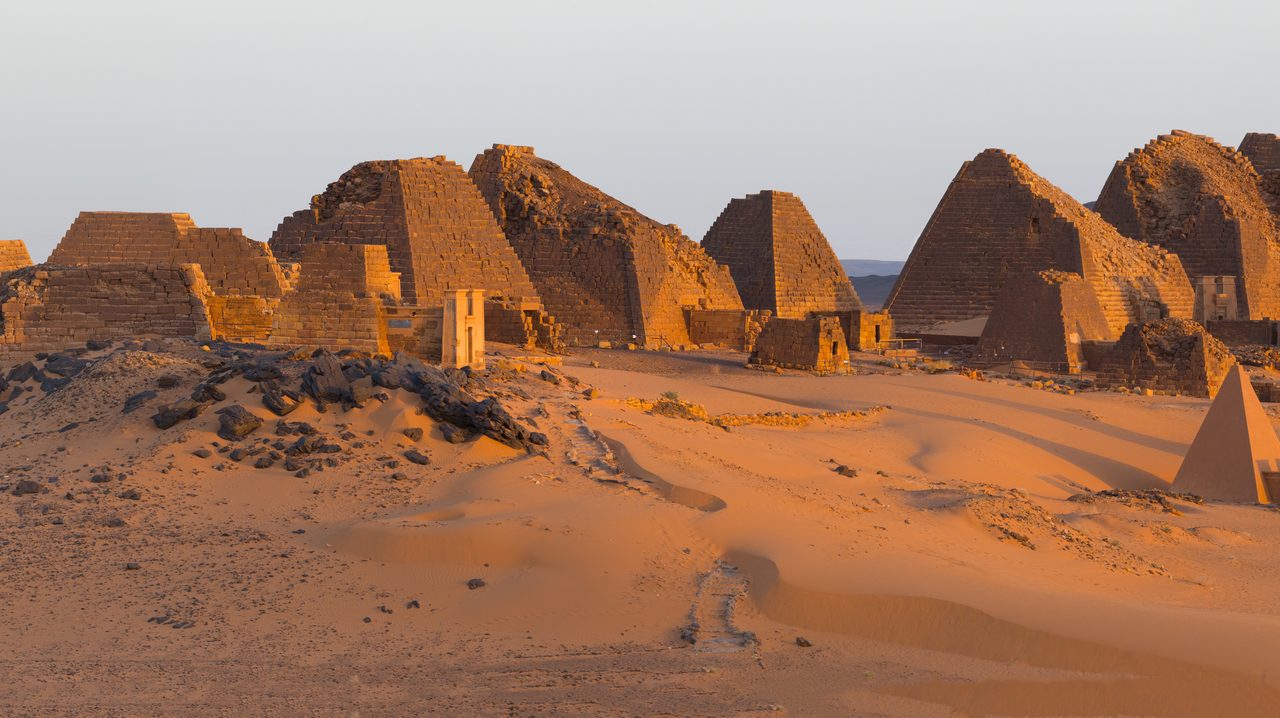
There are more pyramids in Sudan than in Egypt. The research file behind this article puts the Nubian total at over 255, documented across four royal cemeteries at El-Kurru, Nuri, Jebel Barkal and Meroe, with over 200 clustered at Meroe alone, and independent checking during this article's research pass found that figure well corroborated, with several sources converging on approximately 255. The Egyptian side of the comparison is the softer number, running from roughly 118 to roughly 138 depending on how ruined, uncertain and non-royal structures are tallied. So the form of the claim that holds under every source found is not a duel between two exact figures. It is that Sudan has more than twice as many pyramids as Egypt. The people who raised them are the Kingdom of Kush. Around 747 BCE their king Piye marched north and took Egypt, and Kushite pharaohs ruled the whole of it for nearly a century as its 25th Dynasty, with Taharqa, from 690 to 664 BCE, standing in our file's own words as one of the most prolific builders in Egyptian history. Assyrian invasion drove them south in 656 BCE, and Kush then continued as an independent kingdom for roughly another thousand years: crowning its kings at a sacred mountain, worshipping a lion-headed god our file says appears to have no Egyptian counterpart, sending a queen called a Kandake against Rome and to a treaty with Augustus, and writing in a script that was deciphered in 1911 and still cannot be read as a language. This article carries each of those at the tier our file assigns it, keeps the genuinely open questions open, and states the defects in our own file rather than passing them along quietly, including a bibliography in which five of the seven DOI-bearing entries point at reviews of the books rather than at the books.
There are more pyramids in Sudan than in Egypt. That sentence is the reason this article exists, so it goes first and gets checked first. Our research file for this article, W_3_02, puts the Nubian total at over 255, documented across four royal cemeteries: El-Kurru, Nuri, Jebel Barkal and, most spectacularly, Meroe, where over 200 stand clustered together in the desert. Independent checking during this article's research pass found that figure well corroborated, with several independent sources converging on approximately 255. The Egyptian side of the comparison is the softer number: reputable counts run from roughly 118 to roughly 138, depending on how ruined, uncertain and non-royal structures are tallied. So the comparison survives, and the honest form of it is not a contest between two exact figures. It is that Sudan holds more than twice as many pyramids as Egypt does. The rest of this article follows from the question that sentence provokes and does not answer, which is who built them. The answer is a kingdom that ruled Egypt itself for nearly a century, kept its own gods and its own queens, wrote in a script that can be pronounced and not understood, and continued as an independent state for roughly a thousand years after it lost Egypt. One file was read in full for this article. Where the text below says our file, it means W_3_02 and nothing else; where a fact came from independent checking during the research pass instead, it says so. Let's open it.
01The City At the Third Cataract
The Kerma culture flourished from approximately 2500 to 1500 BCE at the Third Cataract of the Nile, and it was excavated extensively by George Reisner from 1913 to 1916 and by Charles Bonnet from 1977 onward. The Western Deffufa, a massive mud-brick temple 60 feet high, dominates the site. Kerma burials contain thousands of sacrificial interments, with the largest tumulus holding over 300 individuals, along with elaborate pottery our file describes as found nowhere else, the distinctive Kerma beaker, and evidence of a complex, stratified society that developed independently of Egyptian influence in its earliest phases. Our file's own summary of what that adds up to is a precedence claim, and it is worth carrying in its exact scope rather than a larger one: Kerma is the oldest urbanized African civilization outside Egypt.
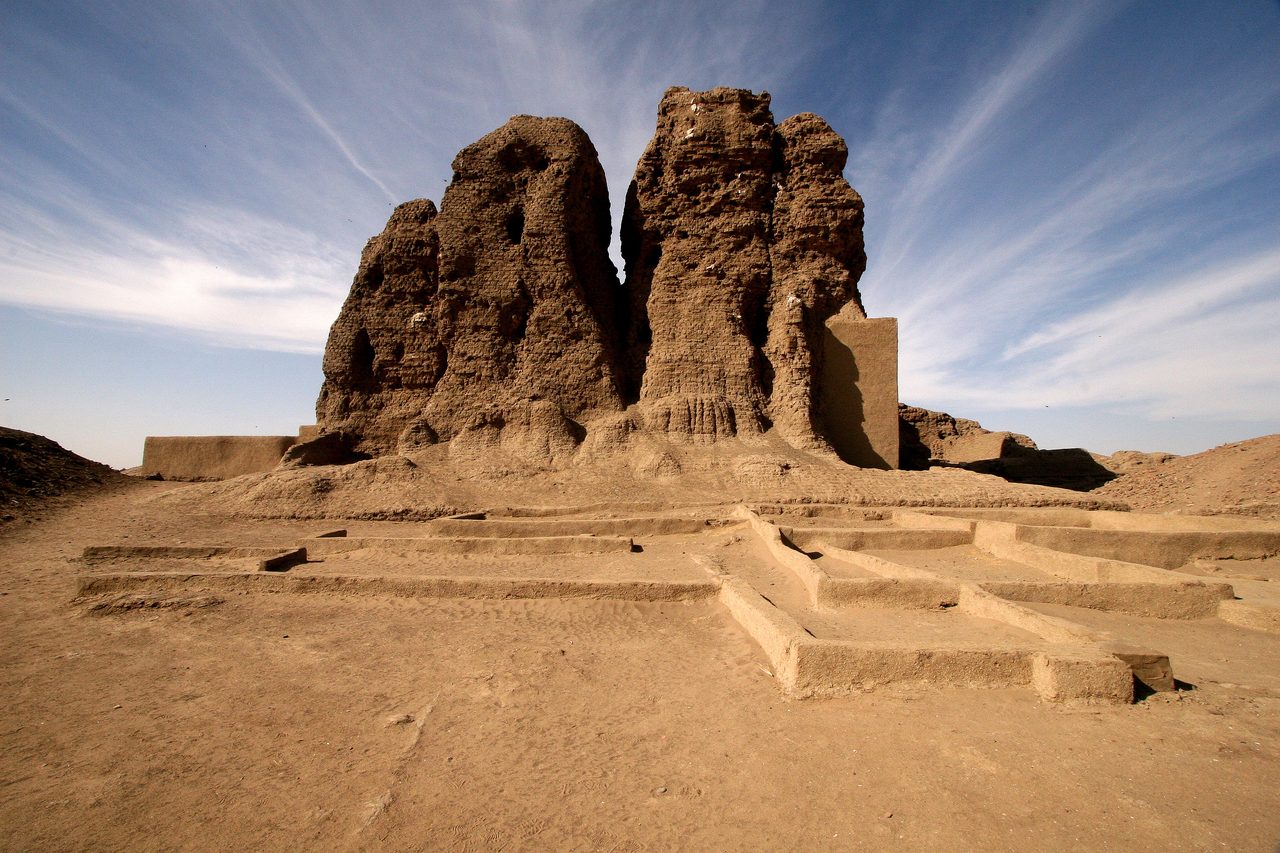
Independent checking during this article's research pass put a specific figure under our file's over 300. Reisner's own excavation recovered the remains of 322 individuals sacrificed as retainers in a single royal tumulus, the mound of the second Classic Kerma king, tumulus KX, which directly corroborates the file's rounder statement. Multiple independent sources also place several Kerma royal tumuli at nearly 300 feet, or 91 meters, in diameter. One precision note belongs here rather than in a footnote, because it concerns an excavation date this article states: our file gives Bonnet's involvement as 1977 to present, while independent sources most commonly cite his main excavation campaign as running 1977 to 2003. Continued association since then is plausible and was not independently confirmed during the research pass. That is a precision note, not a claimed error, and it is stated here so nobody has to discover the discrepancy on their own.
Researchers propose that Kerma's wealth and sophistication imply extensive trade connections deeper into Africa, in gold, ivory, ebony, incense and slaves, and those connections are poorly attested archaeologically. The presence of exotic materials at Kerma that are not of Egyptian origin supports the proposal. The specific routes and partners remain largely unknown. Note what kind of Tier 3 this is. It is not a fringe reading contradicted by evidence. It is an inference from wealth to a network, resting on materials that are physically present and provenance that is not, which is exactly the shape of a claim that stays speculative until somebody excavates the road.
02The Conquest, and Nearly a Century Of Kushite Pharaohs
Around 747 BCE the Kushite king Piye marched north and conquered Egypt, establishing the 25th Dynasty. His successors, Shabaka, Shebitku and Taharqa, ruled all of Egypt for nearly a century. Taharqa, from 690 to 664 BCE, is in our file's words one of the most prolific builders in Egyptian history, with monuments at Karnak, Jebel Barkal and Kawa. The Assyrian invasions under Esarhaddon and Ashurbanipal eventually drove the Kushites south in 656 BCE, but Kush continued as an independent kingdom for another thousand years. The 25th Dynasty restored and renewed Egyptian temple traditions, including the cult of Amun at Thebes and at Jebel Barkal. Read the geography plainly, because most popular accounts of Egypt and Nubia run the arrow the other way: this is a Nubian dynasty conquering Egypt and then rebuilding Egyptian religious institutions, roughly three centuries after Egyptian occupation of Nubia had ended.
Independent checking during this article's research pass tested our file's chronology against Britannica, Smarthistory and BlackPast.org, and it held exactly. Piye's reign is standardly dated approximately 747 to 716 BCE, and the 25th Dynasty's full span as 747 to 656 BCE, both matching our file. Taharqa's 690 to 664 BCE matches exactly. The research pass added one ruler our file's own list does not carry: Taharqa's successor Tanutamun briefly regained Egypt from 664 to 656 BCE, before Kushite control there ended in 656 BCE under Ashurbanipal's assault. Note that this addition changes nothing in our file's arithmetic. From 747 to 656 BCE is ninety-one years, which is what nearly a century means here.
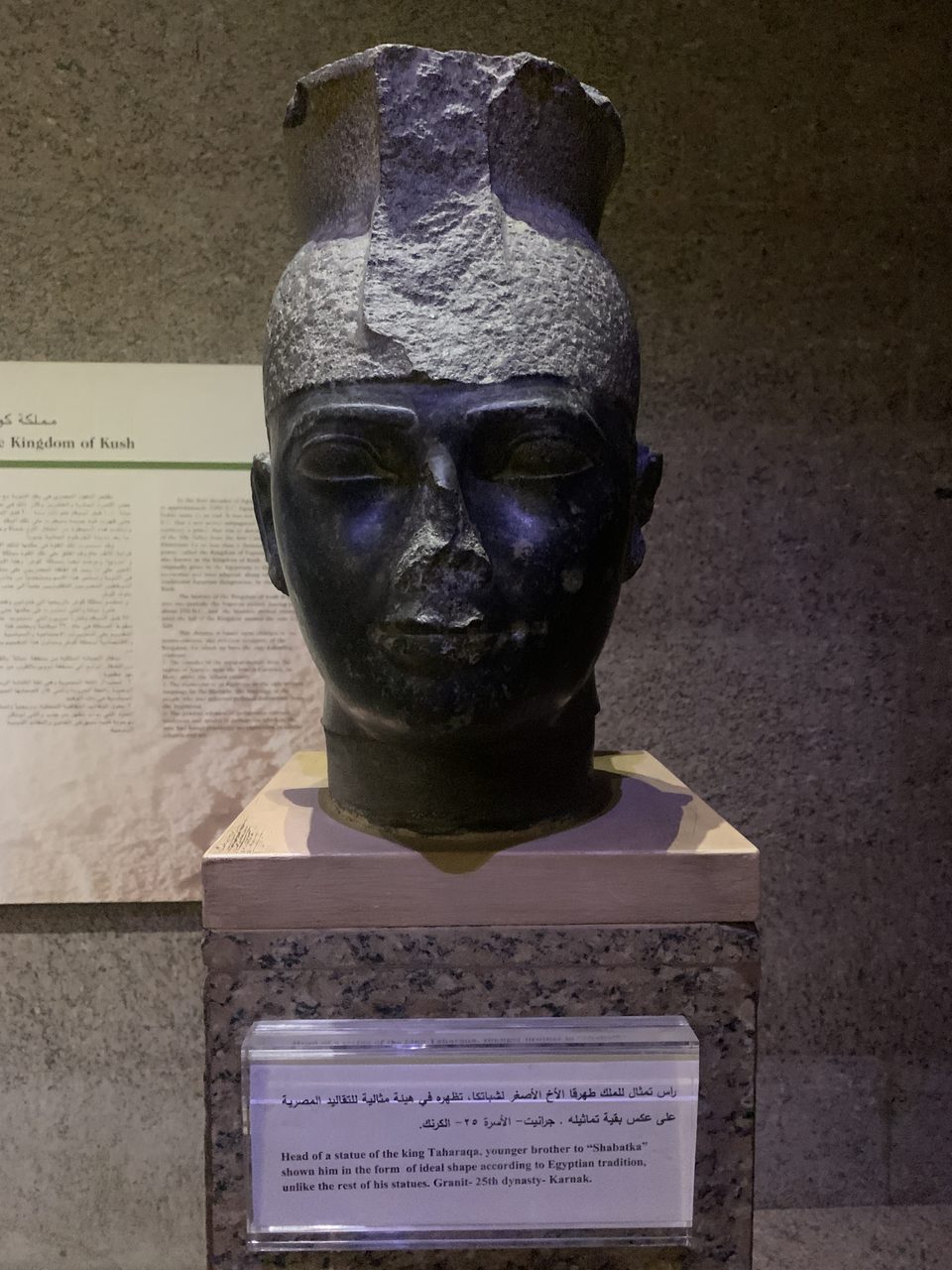
One word about the phrase that carries this dynasty in the modern literature, since variants of it appear in two of the book titles in our own file's bibliography: Robert Morkot's The Black Pharaohs: Egypt's Nubian Rulers (Rubicon Press, 2000) and Charles Bonnet and Dominique Valbelle's The Nubian Pharaohs: Black Kings on the Nile (American University in Cairo Press, 2006). Both titles are modern, and the phrase belongs to the modern literature rather than to any inscription cited in this article. It is useful for finding the subject and it is not evidence about it. What is evidence about it is the list of monuments in the previous claim, and the century of dates under them.
03The Mountain That Crowned Them
Jebel Barkal, also written Gebel Barkal, is a flat-topped sandstone butte in northern Sudan that was considered the southern residence of Amun and a cosmic axis mundi by Egyptians from the New Kingdom onward and by Kushites after them. The mountain's natural pinnacle was identified with the uraeus serpent, and major temples were carved into its base. For the Kushite kings it legitimized their claim to Egyptian royal authority; they were crowned there, and it served as a primary religious center for over 1,000 years. It has been a UNESCO World Heritage Site since 2003. The mechanism is worth stating in plain terms, because it explains the previous section: a Kushite king's right to rule Egypt was anchored to a mountain in Nubia that Egyptian theology itself had already made holy.
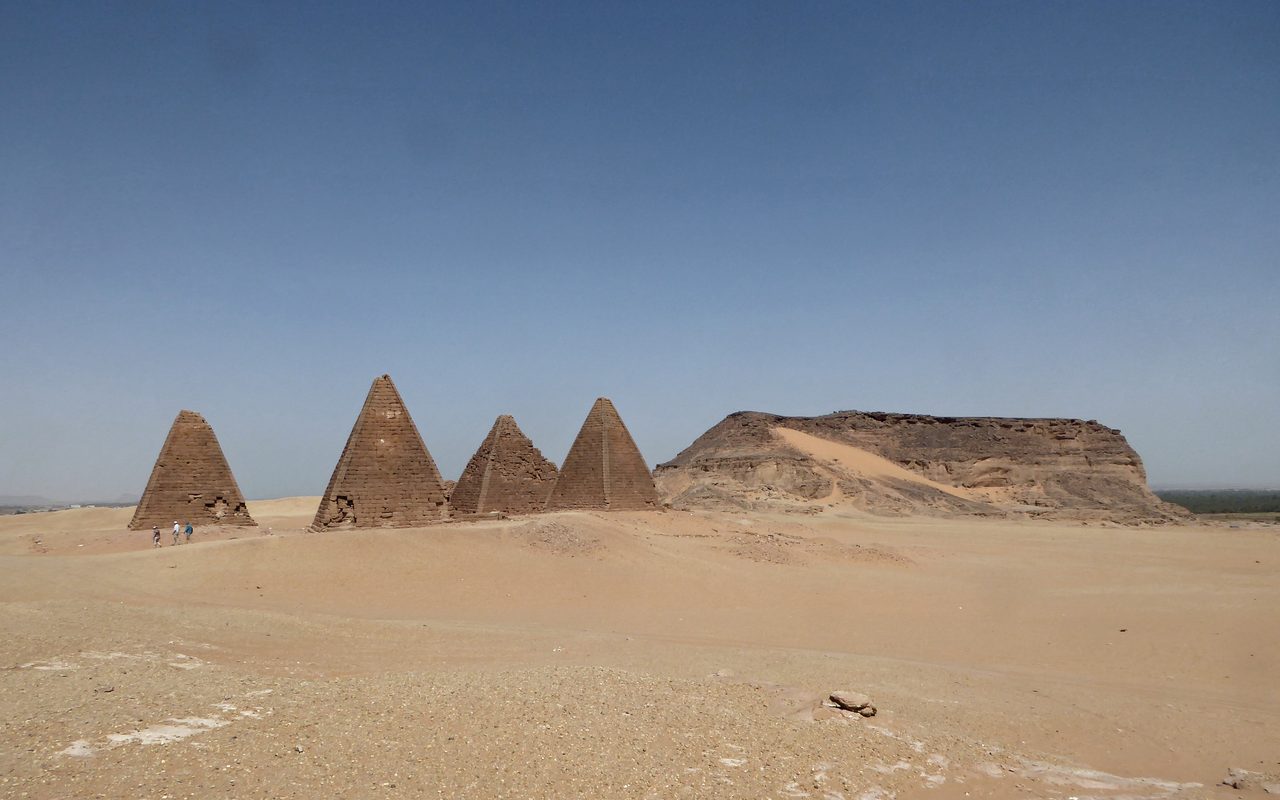
Independent checking during this article's research pass confirmed the inscription and filled in its shape. Gebel Barkal and the Sites of the Napatan Region was inscribed as a UNESCO World Heritage Site in 2003, matching our file exactly. The listing covers five components, Gebel Barkal, Kurru, Nuri, Sanam and Zuma, spanning roughly 60 km on both banks of the Nile near Karima, and it includes 13 temples, 3 palaces and at least 9 pyramids at Jebel Barkal itself, which is a separate and much smaller cluster than the pyramid field at Meroe discussed in the next section. The mountain stands approximately 104 meters, or 341 feet, tall, with the flat top that gives it its profile.
Kush adopted and adapted the Egyptian cult of Amun, centering it at Jebel Barkal and at the Temple of Amun at Meroe, and Kushite Amun worship then diverged significantly from Egyptian practice. The god's ram-headed form became predominant. Oracular selection of kings was central to royal succession, with the god choosing the king through a processional oracle. And local deities were integrated into the pantheon, particularly Apedemak, the lion-headed warrior god, who our file says appears to have no Egyptian counterpart and may represent a distinctly Nubian or Sudanic divine tradition. Keep both hedges in that last sentence where our file put them, appears and may. What the claim earns at Tier 2 is that the Kushite pantheon was not a copy, which the ram-headed emphasis, the oracle and Apedemak together support. What it does not earn is a settled account of where Apedemak came from.
04More Pyramids Than Egypt, and What the Sentence Actually Counts
Over 255 pyramids have been documented across the Nubian royal cemeteries: El-Kurru, Nuri, Jebel Barkal, and most spectacularly Meroe, where over 200 cluster in the desert. Nubian pyramids are characteristically steeper than their Egyptian counterparts, at approximately 70 degrees against approximately 52, smaller, typically 20 to 100 feet against Giza's 480, and later in date, running from the 8th century BCE through the 4th century CE. They feature attached offering chapels with decorated relief panels. Independent checking corroborated all three comparisons. The roughly 255 figure for Sudan is well supported across multiple independent sources, including a 2019 to 2020 archaeological survey covered by National Geographic. The slope comparison holds, with commonly cited ranges of roughly 70 to 80 degrees for Nubian pyramids against roughly 40 to 54 for Egyptian ones, our file's own 70 against 52 sitting squarely inside both. And the size figures check out specifically as a height comparison: independent sources give Nubian pyramid heights of roughly 10 to 30 meters, that is 33 to 98 feet, against the Great Pyramid of Giza at approximately 146.6 meters, or 481 feet.
Two different quantities hide inside the same word, and the difference between them is where this article's central fact is most easily misread. Pyramid can mean an individual structure, and by that count the Nubian total in our file is over 255, with over 200 of them at Meroe. Pyramid field can mean a cemetery, and by that count the number our file names is four: El-Kurru, Nuri, Jebel Barkal and Meroe. Hundreds of monuments standing in a handful of places, not hundreds of places. That is a denser and stranger landscape than 255 scattered across Sudan would be, and it is the one the evidence describes.
The comparison itself needs stating with the precision each side of it can carry, because the two sides are not equally firm. Sudan's figure clusters consistently around 255 across the independent sources found during the research pass. Egypt's does not: independently located counts range from approximately 118 to approximately 138, depending on how ruined, uncertain and non-royal examples are tallied. So this article does not put a single Egyptian number opposite the Nubian one and subtract, because the Egyptian number is not settled enough to be subtracted from. The framing used here is the one that holds under every source variant found: there are more than twice as many pyramids in Sudan as in Egypt. That is a weaker sentence than a precise ratio and a stronger claim than a precise ratio would be, because it is the version that cannot be knocked over by picking a different reputable count.
| The Measure | Nubian Pyramids | Egyptian Pyramids | How Firm the Comparison Is |
|---|---|---|---|
| How Many | Over 255 documented across El-Kurru, Nuri, Jebel Barkal and Meroe, with over 200 at Meroe alone | Roughly 118 to roughly 138, depending on how ruined, uncertain and non-royal structures are tallied | The Nubian figure is the firm one: our file says over 255 and independent survey figures converge on approximately 255. The Egyptian figure moves by source, which is why this article's claim is more than twice as many rather than any single subtraction |
| The Slope | Approximately 70 degrees in our file; commonly cited ranges run roughly 70 to 80 degrees | Approximately 52 degrees in our file; commonly cited ranges run roughly 40 to 54 degrees | Corroborated. Our file's own figures sit squarely inside the ranges independent comparative sources give |
| The Height | Typically 20 to 100 feet in our file; roughly 10 to 30 meters, that is 33 to 98 feet, in independent sources | The Great Pyramid of Giza at 480 feet in our file; approximately 146.6 meters, or 481 feet, independently | Corroborated as a height comparison specifically. It is not a base-width comparison: Nubian pyramids commonly run 20 to 90 feet per side at the base, against Giza's roughly 756 feet |
| When | The 8th century BCE through the 4th century CE | Earlier. Our file describes the Nubian pyramids as later in date than their Egyptian counterparts | Our file states the Nubian range directly. Egyptian pyramid chronology is not this article's subject and is not developed here |
| The Chapel | Attached offering chapels with decorated relief panels | Not treated in our file within this comparison | Stated by our file for the Nubian pyramids only. No claim about an Egyptian counterpart is made here |
Preliminary available evidence suggests the Meroe pyramid field may incorporate astronomical alignments, potentially stellar rather than solar, reflecting Kushite cosmological concepts. A systematic archaeoastronomical survey comparable to the Egyptian pyramid studies has not yet been completed. And our file adds a restraint that a weaker document would have skipped: the steep angle of the Nubian pyramids, while architecturally distinctive, has not been conclusively linked to specific astronomical observations. That is worth reading twice, because the temptation runs the other way. A striking geometric feature invites an astronomical explanation, and our file declines to supply one on the strength of the geometry alone.
One boundary belongs here, stated openly. How these structures were physically raised, the engineering of pyramid construction and the alternative-dating arguments that attach to it, is a different subject and lives in different documents: our file's own cross-reference index points at D_1_02, Pyramids Worldwide, which treats construction methods across multiple pyramid traditions worldwide, and at D_1_04, a complete pyramid catalog it cites for the 255-plus Nubian count. Neither was drawn on for any claim in this article. What belongs here is who raised these and why, and that question has a much better answer than the engineering one: they are royal tombs of a named dynasty, in named cemeteries, spanning more than a thousand years, and the next two sections are about the people buried under them.
05August 1834
The Italian treasure-hunter Giuseppe Ferlini destroyed the tops of Meroe pyramids in 1834 searching for gold. Independent checking during this article's research pass gives the count our file leaves vague. Ferlini's expedition, departing on 10 August 1834, used explosives and dismantled five, possibly six, pyramids at Meroe, starting with four smaller ones before demolishing the tallest in the necropolis, that of Kandake Amanishakheto, pyramid N6. He recovered a hoard of gold and silver jewelry from a chamber near that pyramid's apex, independently corroborated as including roughly 10 bracelets and 67 signet rings among other pieces, and later sold portions to Bavaria's King Ludwig I and to what is now the Egyptian Museum of Berlin. Our file's own word for the number of pyramids he destroyed is many, and many overstates it: the figure is five or six, not dozens. The core claim is fully verified. The quantifier is corrected here rather than repeated.
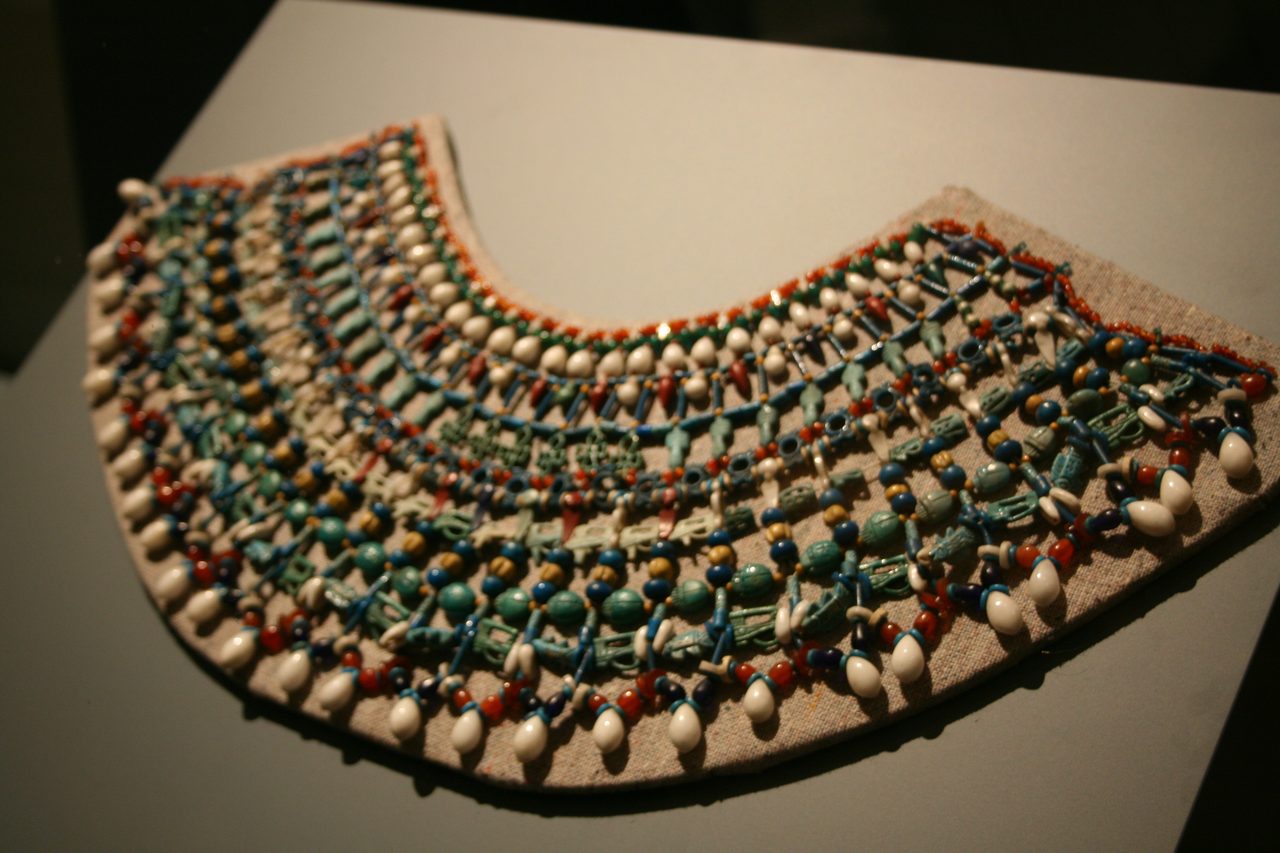
The treasure still exists, and it can be looked at. Amanishakheto's gold and beadwork survive today across two German collections, the Egyptian Museum of Berlin and Munich's Staatliche Antikensammlungen, with individual pieces including a beaded broad collar of faience, glass and carnelian under inventory number 22877 and a shoulder ornament separately catalogued and photographed at Berlin. This claim comes from independent verification during the research pass, not from our file, which carries the destruction without following the objects. It matters because it converts a general statement about Kushite wealth into a specific, physical, currently viewable one: a Meroitic queen's own jewelry, in a museum, with an inventory number. One caution goes with it, and this article observes it throughout: Amanishakheto and Amanirenas are two different, separately attested Kandakes, not one queen under two spellings.
06The Kandakes, Named Separately
The Meroitic title kdke, Kandake, Hellenized as Candace, designated a queen or queen-mother with significant political and sometimes military authority, and multiple Kandakes are depicted on temple reliefs in military postures, smiting enemies. Classical sources document Kandake Amanirenas leading Kushite forces against the Roman Empire under Augustus, from 25 to 22 BCE, resulting in the Treaty of Samos, a negotiated peace favorable to Kush. Independent checking during the research pass added a year our file's own text does not state, and detail around it. The war is conventionally described as beginning with a Kushite raid into Roman Egypt, variously dated 27 or 25 BCE, after a tax dispute with Aelius Gallus, Rome's second prefect of Egypt; the major Roman counter-campaign under the prefect Gaius Petronius is commonly dated to roughly 25 to 22 BCE, matching our file's window; and the Treaty of Samos itself was concluded in 21 BCE, negotiated directly with Augustus while he wintered on Samos during his eastern tour of 22 to 19 BCE. Under its terms Amanirenas secured full cancellation of Roman tribute demands, withdrawal of Roman forces from disputed border territory, and recognition of Kushite independence, in a peace that held Rome's African frontier for roughly three centuries and is generally read by modern historians as a Kushite diplomatic victory. The whole of this stays at Tier 2, including the parts independent checking filled in, because that is the tier our file assigns the Kandake material and nothing found this session raised it.
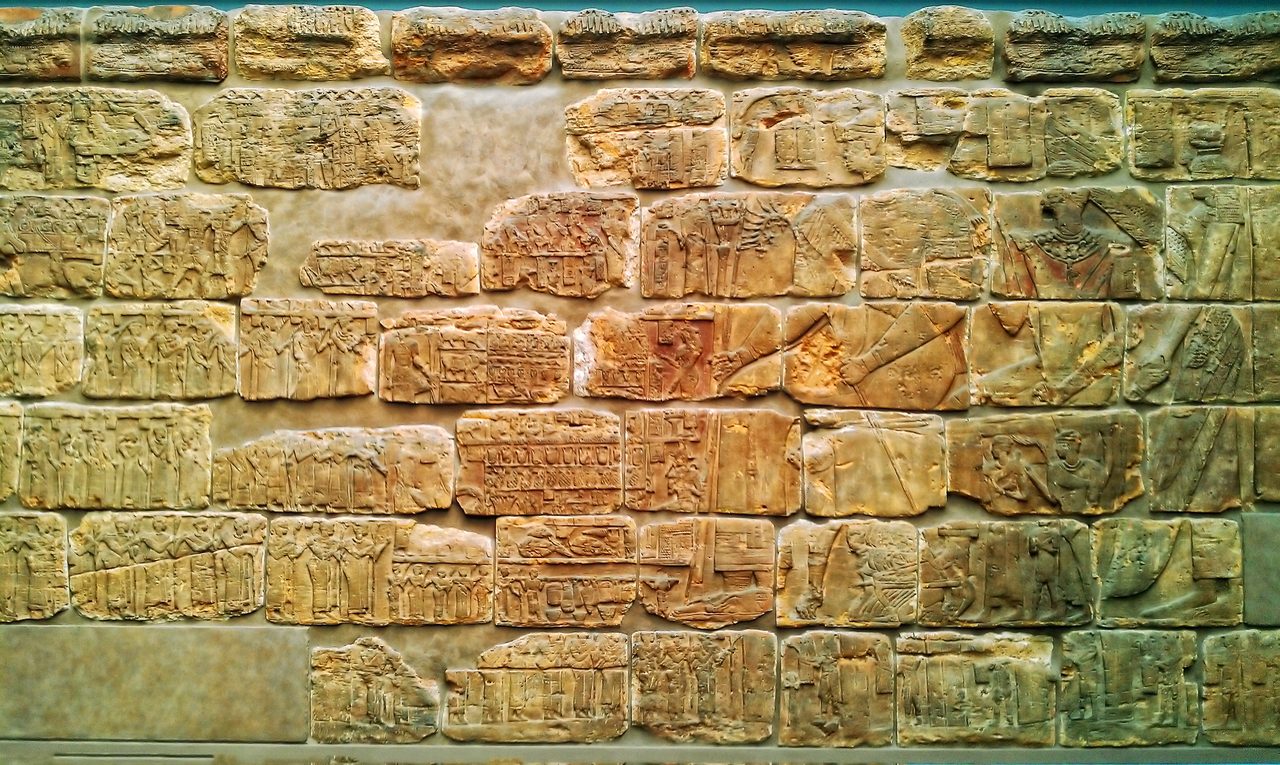
Amanirenas is not the only Kandake with surviving physical evidence behind her, and the plurality is part of what makes the institution remarkable rather than anecdotal. Queen Shanakdakhete, a Meroitic ruling queen of the 2nd century BCE, is independently attested by a surviving red sandstone relief from the interior of her funerary chapel at Pyramid N.11 at Meroe, one panel among the reassembled wall of chapel blocks now displayed at the British Museum: the queen enthroned with a prince behind her, both protected by the wings of Isis, alongside rows of attendant figures bearing palm branches. Independent sources describe her as probably the first of Meroe's ruling queens, predating Amanirenas by roughly a century and a half. Keep the hedge on probably where the sources put it. What is not hedged is that the relief exists, is catalogued, and shows a woman on a throne, even though the surviving photograph of the wall shows it as part of a much larger assembly of carved blocks.
| The Kandake | When | What Survives Of Her | How This Article Carries Her |
|---|---|---|---|
| Shanakdakhete | 2nd century BCE | A red sandstone relief from the interior of her funerary chapel at Pyramid N.11 at Meroe, one panel within the reassembled chapel wall now at the British Museum: enthroned, a prince behind her, both under the wings of Isis, beside rows of attendants bearing palm branches | Tier 1, from independent verification rather than from our file. Independent sources call her probably the first of Meroe's ruling queens, roughly a century and a half before Amanirenas |
| Amanirenas | War with Rome from 25 to 22 BCE; the Treaty of Samos concluded in 21 BCE | Classical sources documenting her command of Kushite forces against Rome under Augustus, and the treaty that ended the war: tribute demands cancelled, Roman forces withdrawn from disputed border territory, Kushite independence recognized | Tier 2, as our file assigns it. Our file gives the war window and the treaty's name; the 21 BCE year, the terms and the tax-dispute origin come from independent checking and stay at the same tier |
| Amanishakheto | Her pyramid at Meroe, N6, was the tallest in the necropolis when Ferlini reached it in 1834 | Her gold and silver jewelry, now split between the Egyptian Museum of Berlin and Munich's Staatliche Antikensammlungen; a beaded broad collar, inventory number 22877, and a shoulder ornament are separately catalogued at Berlin | Tier 1. The 1834 demolition and the treasure's discovery are our file's; the survival, the split and the present locations come from independent verification |
07A Script That Can Be Read Aloud
The Meroitic writing system, developed around the 2nd century BCE, exists in two forms, hieroglyphic for monuments and cursive for everything else. The phonetic values of the signs were deciphered by Francis Llewellyn Griffith in 1911, and the Meroitic language itself remains largely untranslated: word meanings, grammar and vocabulary are mostly unknown, with only a few words, personal names, titles and the word for water, reliably identified. Independent checking confirmed the date and filled in the method. Griffith, at Oxford, worked out the Meroitic sign values between 1909 and 1911 by comparing Meroitic royal names against parallel Egyptian hieroglyphic cartouches, publishing the phonetic decipherment in 1911. Multiple independent sources describe the resulting known vocabulary as extremely limited, with figures cited around 26 reliably identified words drawn from bilingual Egyptian and Meroitic texts, which is consistent with our file's only a few words.
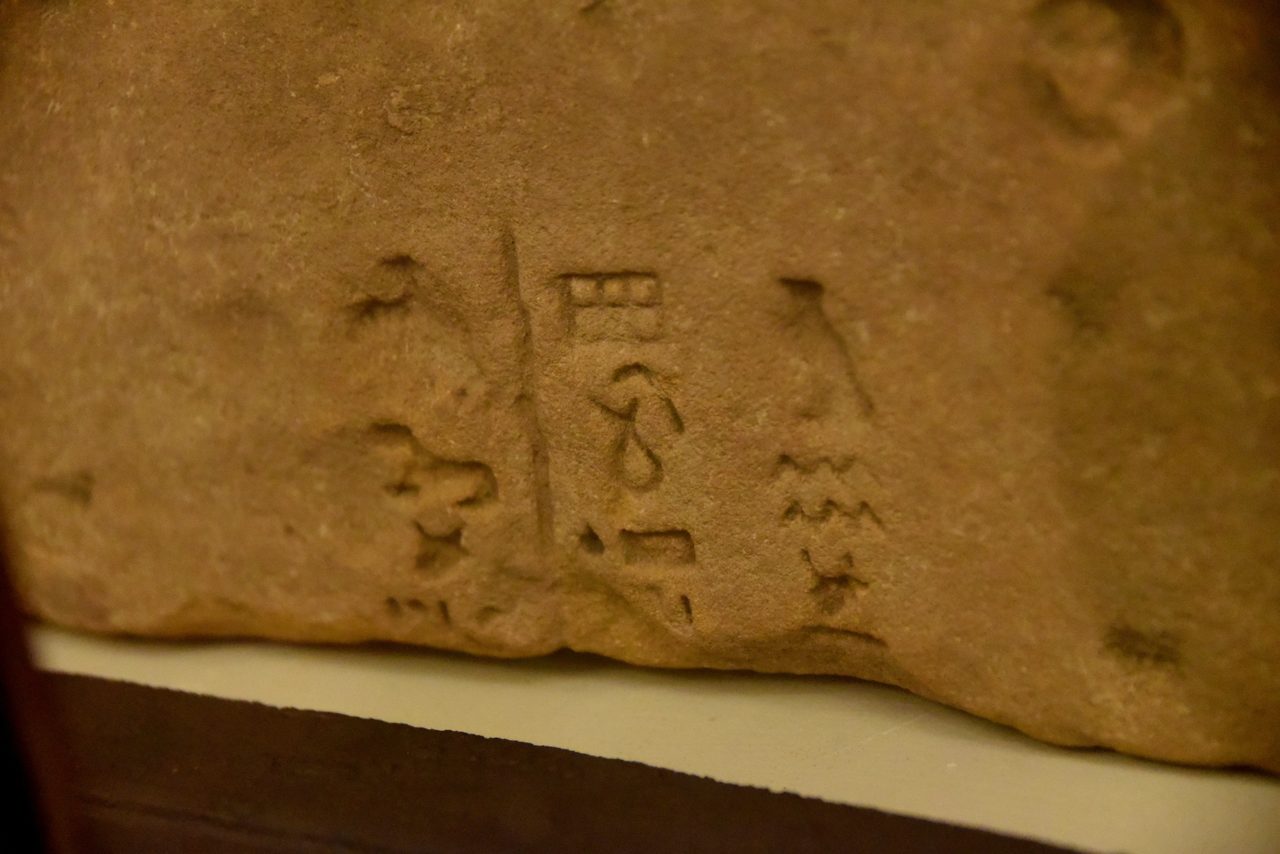
The Meroitic language's genetic affiliation is unknown. Proposals have linked it to Nilo-Saharan, specifically Eastern Sudanic, to Afro-Asiatic, specifically Cushitic, and to Niger-Congo, and none has achieved consensus. Claude Rilly's recent work favoring a Northern Eastern Sudanic connection is the most developed proposal, which is a statement about how far the argument has been carried rather than a statement that it has been won. Our file names the stake plainly: decipherment of the script's contents, if achieved, could transform understanding of Nubian history and its connections to broader African traditions. Hold that beside section 04. There are over 255 pyramids, a documented dynasty, named queens, an inscribed sacred mountain, and a written archive that has been legible as sound and illegible as language for well over a hundred years.
08The Birmingham Of Ancient Africa
Enormous slag heaps at Meroe led early researchers, Sayce and Shinnie among them, to label it "the Birmingham of ancient Africa," a major iron production center. The crucial debate is chronological: did iron smelting at Meroe develop independently, or was it introduced from Egypt or the Mediterranean? Some slag deposits appear to date as early as the 7th to 6th century BCE, roughly contemporary with iron's adoption in Egypt, which is precisely why the question is hard, since near-contemporaneity is compatible with either answer. Recent excavations by Jane Humphris and Thilo Rehren, published in 2014, have refined the dating without definitively resolving the question. The broader debate connects outward: African iron technology's origins are similarly contested for sites in Nigeria, Tanzania and Rwanda, with independent invention and diffusion both on the table. This article does not pick a side, because our file does not, and because the evidence as our file describes it does not separate the two hypotheses.
A citation problem attaches to that claim's only named study, and it is stated here rather than smoothed over, since it concerns the single work our file leans on for the current state of the dating. Our file cites Humphris and Rehren, 2014, as an article titled Iron Production and the Kingdom of Kush in the Journal of Archaeological Science, volume 45, pages 123 to 135. The research pass could not locate any Journal of Archaeological Science article matching that title and page range. What it did locate, independently, is a real 2014 publication by the same two authors with essentially that title: Iron production and the kingdom of Kush: an introduction to UCL Qatar's research in Sudan, a chapter in the edited volume Ein Forscherleben zwischen den Welten, edited by A. Lohwasser and P. Wolf, pages 177 to 190, published in Berlin as a Sonderheft of MittSAG. That is a different venue and a different page range entirely, a Festschrift chapter rather than a journal article. Both versions are named here and neither is asserted as settled. The claim above stands on what our file says the research found; the pointer to where that research was published is flagged as unreliable.
09The End, and the Kingdoms After It
The Meroitic kingdom declined during the 3rd to 4th centuries CE through a combination of environmental change, including shifting trade routes and possible desiccation, pressure from the Aksumite kingdom to the southeast, and the rising Noba people. An inscription by the Aksumite king Ezana, approximately 350 CE, records a campaign into Kush, and our file states that whether this was a cause or a consequence of Meroe's decline is debated. That is a distinction worth keeping sharp, because it is the difference between an invasion that ended a kingdom and an invasion that walked into one already ending, and the inscription alone does not decide between them. By the 6th century, the successor Nubian kingdoms of Nobatia, Makuria and Alodia had adopted Christianity, beginning a Christian Nubian civilization that persisted until the 14th to 15th centuries. Set that end date against Meroe's fall and the shape of the whole story changes: what followed Kush on that stretch of river was not a silence, it was the better part of another millennium.
| When | What | How It Is Carried Here |
|---|---|---|
| About 2500 to 1500 BCE | The Kerma culture at the Third Cataract: the Western Deffufa 60 feet high, thousands of sacrificial interments, the Kerma beaker | Tier 1, our file. The largest tumulus held over 300 individuals; independent checking gives 322 in one royal mound, tumulus KX |
| About 1500 to 1070 BCE | Egyptian New Kingdom occupation of Nubia, the period of strongest Egyptian cultural influence | Stated by our file inside its Tier 4 rejection of the colony model. The occupation is not the disputed part; reading Kush as a mere province is |
| The 8th century BCE through the 4th century CE | The Nubian pyramids are raised: over 255 across El-Kurru, Nuri, Jebel Barkal and Meroe, over 200 at Meroe alone | Tier 1, our file, with the count independently corroborated at approximately 255 |
| About 747 BCE | Piye marches north and conquers Egypt, establishing the 25th Dynasty | Tier 1, our file. Independent checking gives Piye's reign as approximately 747 to 716 BCE and the dynasty's span as 747 to 656 BCE |
| 690 to 664 BCE | The reign of Taharqa, with monuments at Karnak, Jebel Barkal and Kawa | Tier 1, our file, matched exactly by independent checking |
| 664 to 656 BCE | Tanutamun briefly regains Egypt | Tier 1, from independent checking. Our file names Shabaka, Shebitku and Taharqa, and does not carry this last recovery |
| 656 BCE | Assyrian invasion under Esarhaddon and Ashurbanipal drives the Kushites south; Kush continues as an independent kingdom for another thousand years | Tier 1, our file, matched by independent checking |
| As early as the 7th to 6th century BCE | The earliest slag deposits at Meroe, roughly contemporary with iron's adoption in Egypt | Tier 2, our file, with the independent-invention question explicitly unresolved |
| Around the 2nd century BCE | The Meroitic writing system appears, in a monumental hieroglyphic form and a cursive one | Tier 1, our file |
| 2nd century BCE | Shanakdakhete rules at Meroe and is buried at Pyramid N.11 | Tier 1, from independent verification, outside our file |
| 25 to 22 BCE, with the treaty in 21 BCE | Kandake Amanirenas leads Kushite forces against Rome; the Treaty of Samos cancels Roman tribute demands, withdraws Roman forces from disputed territory and recognizes Kushite independence | Tier 2, our file, with the treaty year and terms added by independent checking at the same tier |
| 3rd to 4th centuries CE | The Meroitic kingdom declines under environmental change, Aksumite pressure and the rising Noba | Tier 2, our file |
| About 350 CE | An inscription of the Aksumite king Ezana records a campaign into Kush | Tier 2, our file, which states that cause or consequence is debated |
| By the 6th century CE | Nobatia, Makuria and Alodia adopt Christianity; Christian Nubian civilization persists until the 14th to 15th centuries | Tier 2, our file |
| 1834 | Giuseppe Ferlini dismantles five, possibly six, pyramids at Meroe, including Amanishakheto's, and takes her gold | Tier 1. Our file says many; independent checking supplies the precise count and the objects' present locations |
| 1911 | Francis Llewellyn Griffith publishes the phonetic values of the Meroitic signs | Tier 1, our file, matched by independent checking, which dates the work itself to 1909 through 1911 |
| 1913 to 1916 | George Reisner excavates Kerma | Tier 1, our file |
| 1977 onward | Charles Bonnet excavates Kerma | Tier 1, with a precision note: our file says to present, while independent sources most commonly cite a main campaign of 1977 to 2003 |
| 2003 | Gebel Barkal and the Sites of the Napatan Region is inscribed as a UNESCO World Heritage Site | Tier 1, our file, matched by independent checking: five components across roughly 60 km, with 13 temples, 3 palaces and at least 9 pyramids at Jebel Barkal itself |
10What Kush Was Not
No. The outdated model positioning Kush as merely an Egyptian colony or a provincial backwater has been thoroughly discredited. Kerma developed independently and was a military rival of Egypt, including through the Hyksos-period alliance. Egyptian cultural influence was significant, especially during the New Kingdom occupation from 1500 to 1070 BCE, and Kush selectively adopted and transformed Egyptian elements within its own cultural framework. Note precisely what is being refused, because the refusal is narrower and sharper than a blanket rejection of Egyptian influence. The influence is not in dispute; our file states it in the same breath. What fails at Tier 4 is the sentence that turns a rival, a conqueror and a thousand-year successor state into a province of somebody else's history.
That Tier 4 ruling is the load-bearing one for this article, and it points at something our own file's cross-reference index makes explicit. The index carries a row linking this document to H_1_01, Suppression of Ancient Knowledge, with the stated connection being the chronic under-representation of Nubian achievements in global history. This article does not treat that connection as a tiered factual claim, because our file does not develop it into one and no claim card in the research packet carries it as one. What can be said at the tier the evidence supports is narrower and still substantial: a specific historical model, Kush as merely a colony or provincial backwater of Egypt, is rated by our own file as outdated and thoroughly discredited. Both of those words carry an implication worth stating rather than leaving implicit, which is that the model was once the standing one.
No. Claims that Meroitic iron smelting or Nubian pyramid construction required knowledge from lost advanced civilizations or extraterrestrial sources are baseless. Both technologies are well within the capabilities of documented Kushite engineering and metallurgy. It is worth saying what makes this Tier 4 rather than merely unfashionable. The alternative explanation is not needed: the metallurgy is attested on site in the slag, the tomb architecture is attested across four cemeteries with a documented dynasty in them, and the debate the specialists are actually having about Meroitic iron, recorded at Tier 2 in section 08, is about when the smelting started, not about whether Kushites could do it.
One further note about our file, since this article has been quoting it as an authority throughout. W_3_02 carries a section headed Counter-Arguments and Criticisms, and the research pass read it in full: it contains templated general skeptical-methodology framing, independent invention against diffusion, cognitive universals, environmental determinism, dating uncertainty for oral tradition, rather than any named rebuttal of any particular claim about Kush. It reads as reused framing from a comparative-mythology template rather than content written for this subject. That is not a factual error and nothing above depends on it. It is stated because a reader who opens the file expecting the counter-arguments to Kush will not find them there. The named disputes this subject actually carries are already above at their own tiers: the iron chronology in section 08, the affiliation of the Meroitic language in section 07, and whether Ezana's campaign was a cause or a consequence in section 09.
Fast Facts
- The Comparison
- Over 255 Nubian pyramids in our file, approximately 255 in the independent surveys checked; Egypt at roughly 118 to roughly 138 depending on the source. The framing that survives every variant: more than twice as many pyramids in Sudan as in Egypt
- Where They Stand
- Four royal cemeteries: El-Kurru, Nuri, Jebel Barkal and Meroe, with over 200 at Meroe alone. Hundreds of structures in a handful of places, not hundreds of places
- The Shape Of Them
- Approximately 70 degrees against Egypt's approximately 52, inside independently cited ranges of 70 to 80 against 40 to 54; typically 20 to 100 feet tall against the Great Pyramid's 480; attached offering chapels with decorated relief panels
- The Span
- The 8th century BCE through the 4th century CE, later than the Egyptian pyramids our file compares them to
- The Oldest Layer
- Kerma, about 2500 to 1500 BCE at the Third Cataract of the Nile. The Western Deffufa, a mud-brick temple 60 feet high, dominates the site. Our file calls Kerma the oldest urbanized African civilization outside Egypt
- The Retainers
- Kerma burials contain thousands of sacrificial interments, the largest tumulus holding over 300. Reisner's own excavation recovered 322 individuals from one royal mound, tumulus KX; several Kerma royal tumuli run nearly 300 feet, or 91 meters, across
- The Conquest
- Around 747 BCE Piye marched north and took Egypt, founding the 25th Dynasty. Independent checking gives his reign as approximately 747 to 716 BCE and the dynasty's span as 747 to 656 BCE
- The Builder
- Taharqa, 690 to 664 BCE, in our file's words one of the most prolific builders in Egyptian history, with monuments at Karnak, Jebel Barkal and Kawa
- The Expulsion
- 656 BCE, under the Assyrian invasions of Esarhaddon and Ashurbanipal. Tanutamun had briefly regained Egypt from 664 to 656 BCE. Kush then continued as an independent kingdom for another thousand years
- The Mountain
- Jebel Barkal: a flat-topped sandstone butte about 104 meters, or 341 feet, high, held to be the southern residence of Amun and a cosmic axis mundi, its pinnacle identified with the uraeus serpent. Kushite kings were crowned there; it served as a primary religious center for over 1,000 years
- The Listing
- Gebel Barkal and the Sites of the Napatan Region, UNESCO World Heritage Site since 2003: five components, Gebel Barkal, Kurru, Nuri, Sanam and Zuma, across roughly 60 km on both banks of the Nile near Karima, with 13 temples, 3 palaces and at least 9 pyramids at Jebel Barkal itself
- The Gods (Tier 2)
- Kushite Amun worship diverged from Egyptian practice: the ram-headed form predominant, kings chosen by a processional oracle, and Apedemak, the lion-headed warrior god, who our file says appears to have no Egyptian counterpart
- The Kandakes (Tier 2)
- The Meroitic title kdke, Hellenized as Candace: a queen or queen-mother with significant political and sometimes military authority. Multiple Kandakes appear on temple reliefs in military postures, smiting enemies
- The Treaty (Tier 2)
- Amanirenas fought Rome from 25 to 22 BCE; the Treaty of Samos, concluded in 21 BCE with Augustus wintering on Samos, cancelled Roman tribute demands, withdrew Roman forces from disputed border territory and recognized Kushite independence. It held Rome's African frontier for roughly three centuries
- Three Queens, Not One
- Shanakdakhete, 2nd century BCE, probably the first of Meroe's ruling queens, attested by her chapel relief at Pyramid N.11, now in the British Museum (Tier 1); Amanirenas, who fought Rome (Tier 2); and Amanishakheto, whose treasure survives in Berlin and Munich (Tier 1). Separately attested, and separate people
- 1834
- Giuseppe Ferlini, departing 10 August 1834, used explosives on five, possibly six, Meroe pyramids, four smaller ones first and then the tallest in the necropolis, Amanishakheto's N6. He took roughly 10 bracelets and 67 signet rings among other pieces from a chamber near its apex, later selling portions to Bavaria's King Ludwig I and to what is now the Egyptian Museum of Berlin. Our file's word many overstates the count
- The Script
- Meroitic, developed around the 2nd century BCE in a monumental hieroglyphic form and a cursive one. Griffith deciphered the phonetic values in 1911, working from 1909 by comparing royal names against parallel Egyptian cartouches
- The Words That Are Missing
- The language remains largely untranslated. Meanings, grammar and vocabulary are mostly unknown, with only a few words reliably identified, personal names, titles and the word for water; independent sources cite around 26 words secured from bilingual texts
- The Language Question (Tier 3)
- Meroitic's genetic affiliation is unknown. Nilo-Saharan (Eastern Sudanic), Afro-Asiatic (Cushitic) and Niger-Congo have all been proposed; Claude Rilly's Northern Eastern Sudanic proposal is the most developed, and no hypothesis has consensus
- The Iron (Tier 2)
- Enormous slag heaps at Meroe led Sayce and Shinnie to call it the Birmingham of ancient Africa. Some deposits appear to date as early as the 7th to 6th century BCE, roughly contemporary with iron's adoption in Egypt. Independent invention against diffusion remains unresolved; Humphris and Rehren's 2014 work refined the dating without settling it
- The Alignments (Tier 3)
- Preliminary evidence suggests the Meroe field may incorporate astronomical alignments, potentially stellar rather than solar. No systematic archaeoastronomical survey has been completed, and the steep angle has not been conclusively linked to any specific observation
- The End (Tier 2)
- Decline through the 3rd to 4th centuries CE under environmental change, Aksumite pressure and the rising Noba. Ezana's inscription of about 350 CE records a campaign into Kush; our file states that whether it was cause or consequence is debated
- What Came After (Tier 2)
- Nobatia, Makuria and Alodia, Christian by the 6th century, beginning a Christian Nubian civilization that persisted until the 14th to 15th centuries
- The Colony Model (Tier 4)
- No. Kush as merely an Egyptian colony or provincial backwater is thoroughly discredited in our file's own ruling. Kerma developed independently and was a military rival of Egypt, including through the Hyksos-period alliance
- The Lost-Civilization Story (Tier 4)
- No. Meroitic iron smelting and Nubian pyramid construction required no knowledge from lost advanced civilizations or extraterrestrial sources. Both are well within documented Kushite engineering and metallurgy
- The Bibliography
- Five of the seven DOI-bearing entries in our file attach a DOI belonging to a review of the book rather than to the book itself. Two check out and are linked below: Torok (1997) and Rilly and de Voogt (2012). One further identifier, an ISBN for Phillipson (2005), also checks out but is cited by ISBN only and not linked. One further bibliography entry appears to name the wrong venue entirely
What Is Settled Here, and What Is Not
Over 255 pyramids are documented across four Nubian royal cemeteries, El-Kurru, Nuri, Jebel Barkal and Meroe, with over 200 at Meroe alone, and independent survey figures converge on approximately 255. The Egyptian count is the unstable half of the comparison, running from roughly 118 to roughly 138 by source, so this article makes the claim in the form that holds under every variant found: Sudan has more than twice as many pyramids as Egypt. Two things are worth keeping separate afterwards. Over 255 counts structures. Four counts cemeteries. And the profile really is different: steeper, at approximately 70 degrees against approximately 52, smaller, typically 20 to 100 feet tall against Giza's 480, later, from the 8th century BCE to the 4th century CE, and built with attached offering chapels carrying decorated relief panels.
Around 747 BCE Piye marched north and conquered Egypt, establishing the 25th Dynasty, and his successors Shabaka, Shebitku and Taharqa ruled all of Egypt for nearly a century, which is ninety-one years from 747 to 656 BCE. Taharqa, from 690 to 664 BCE, stands in our file's own words as one of the most prolific builders in Egyptian history, with monuments at Karnak, Jebel Barkal and Kawa, and the dynasty restored and renewed Egyptian temple traditions including the cult of Amun at Thebes. Independent checking against Britannica, Smarthistory and BlackPast.org matched every one of those dates and added one ruler our file omits, Tanutamun, who briefly regained Egypt from 664 to 656 BCE before Ashurbanipal's assault ended Kushite control there. Kush then continued as an independent kingdom for another thousand years.
The Kerma culture flourished from approximately 2500 to 1500 BCE at the Third Cataract, excavated by Reisner from 1913 to 1916 and by Bonnet from 1977 onward, with the caveat that independent sources most commonly give Bonnet's main campaign as 1977 to 2003. Its Western Deffufa is a mud-brick temple 60 feet high. Its burials contain thousands of sacrificial interments, the largest tumulus holding over 300 individuals, with Reisner's own excavation recovering 322 from one royal mound. Its pottery, the Kerma beaker, our file describes as found nowhere else. Our file's ruling on what that makes Kerma is a precedence claim carried here in its exact scope: the oldest urbanized African civilization outside Egypt.
Shanakdakhete, a Meroitic ruling queen of the 2nd century BCE, is attested by a red sandstone relief from the interior of her funerary chapel at Pyramid N.11 at Meroe, part of a wall now reassembled and displayed at the British Museum, showing her enthroned with a prince behind her under the wings of Isis; independent sources describe her as probably the first of Meroe's ruling queens. Amanishakheto's gold and silver jewelry, blasted out of pyramid N6 by Ferlini in 1834, survives today across the Egyptian Museum of Berlin and Munich's Staatliche Antikensammlungen, with a beaded broad collar catalogued at Berlin under inventory number 22877. Those two are attested by surviving objects. Amanirenas is attested differently: at Tier 2, by classical sources documenting her command against Rome and the treaty that ended the war, not by an object in this article's own pool. Three separately attested women, not one figure under three spellings, and the Shanakdakhete relief and the survival of the Amanishakheto treasure both come from independent verification rather than from our file, which carries neither.
Meroitic, developed around the 2nd century BCE in hieroglyphic and cursive forms, had its phonetic values worked out by Francis Llewellyn Griffith between 1909 and 1911, published in 1911, by comparing Meroitic royal names against parallel Egyptian cartouches. The language behind those sounds remains largely untranslated: meanings, grammar and vocabulary mostly unknown, with only a few words reliably identified, personal names, titles and the word for water, and independent sources citing around 26 words secured from bilingual texts. This is the sharpest single fact in the article. The signs can be read aloud. The sentences cannot be read at all, and that has been true for well over a century.
Enormous slag heaps at Meroe led early researchers, Sayce and Shinnie among them, to call it the Birmingham of ancient Africa. The unresolved question is chronological rather than technical: whether iron smelting at Meroe developed independently or was introduced from Egypt or the Mediterranean. Some slag deposits appear to date as early as the 7th to 6th century BCE, roughly contemporary with iron's adoption in Egypt, which is exactly the timing that leaves both hypotheses standing. Humphris and Rehren's 2014 work refined the dating without definitively resolving it, and the same independent-invention-against-diffusion argument runs at sites in Nigeria, Tanzania and Rwanda. No winner is crowned here because our file crowns none, and because near-contemporaneity is compatible with either answer.
Three claims are carried at Tier 2 rather than Tier 1 and are worth naming as such. The Kandake institution: the Meroitic title kdke designated a queen or queen-mother with significant political and sometimes military authority, with Amanirenas leading Kushite forces against Rome from 25 to 22 BCE and securing the Treaty of Samos, concluded in 21 BCE, which cancelled Roman tribute demands, withdrew Roman forces from disputed border territory and recognized Kushite independence, in a peace generally read by modern historians as a Kushite diplomatic victory. Kushite religion: Amun adopted from Egypt and then diverged, ram-headed, oracular in its selection of kings, and hosting Apedemak, who our file says appears to have no Egyptian counterpart. And the end: decline through the 3rd to 4th centuries CE under environmental change, Aksumite pressure and the rising Noba, with Ezana's inscription of about 350 CE recording a campaign whose status as cause or consequence our file leaves explicitly debated, followed by Nobatia, Makuria and Alodia turning Christian by the 6th century and lasting to the 14th or 15th.
Kerma's wealth implies extensive trade deeper into Africa in gold, ivory, ebony, incense and slaves, supported by exotic non-Egyptian materials on site, with the specific routes and partners largely unknown. The Meroitic language's genetic affiliation is unknown, with Nilo-Saharan, Afro-Asiatic and Niger-Congo all proposed and Rilly's Northern Eastern Sudanic case the most developed rather than the most confirmed. And the Meroe pyramid field may incorporate astronomical alignments, potentially stellar rather than solar, though no systematic archaeoastronomical survey has been completed and the steep angle has not been conclusively linked to any specific observation. Speculative here means proposed and unconfirmed, not refuted, and in all three cases the missing thing is the same: fieldwork or a decipherment that has not happened yet.
No. The model positioning Kush as merely an Egyptian colony or a provincial backwater is, in our file's own words, thoroughly discredited. Kerma developed independently and was a military rival of Egypt, including through the Hyksos-period alliance. Egyptian cultural influence was real and significant, especially during the New Kingdom occupation from 1500 to 1070 BCE, and Kush selectively adopted and transformed Egyptian elements inside its own framework, which is what the ram-headed Amun and the Kushite pyramid profile both look like in practice. Be precise about the refusal. It is not a denial of Egyptian influence, which our file asserts in the same passage. It is a rejection of the specific reading under which a state that conquered Egypt, outlasted it as an independent kingdom by roughly a thousand years, and buried its rulers under more pyramids than Egypt raised, gets filed as somebody else's province.
No. Claims that Meroitic iron smelting or Nubian pyramid construction required knowledge from lost advanced civilizations or extraterrestrial sources are baseless. Both technologies are well within the capabilities of documented Kushite engineering and metallurgy. The evidence pattern is the reason this sits at Tier 4 rather than at Tier 3: the metallurgy is physically attested on site in the slag heaps, the tombs are attested across four cemeteries belonging to a dated dynasty, and the live specialist argument about Meroitic iron, carried at Tier 2 above, is about when the smelting began, not about whether Kushites were capable of it.
So here is the honest shape of the file. A civilization on the Nile above Egypt is documented from roughly 2500 BCE at Kerma to the 14th or 15th century CE in its Christian successor kingdoms, which is close to four thousand years of recorded life on one stretch of river, with a long Egyptian occupation inside it and a Kushite conquest of Egypt after that. It buried its rulers under over 255 pyramids in four cemeteries, more than twice the number in Egypt. It crowned its kings at a mountain, it sent a queen to a treaty with Augustus that held Rome's African frontier for roughly three centuries, and it left a written archive in a script we can pronounce and cannot read. What is not settled is smaller and harder than any of that. Whether Meroe's smelters worked iron out for themselves or learned it from the north is open, and our file says so. What the Meroitic texts actually say is open, and has been since 1911. Whether the pyramid field was laid out against the stars is open, and the survey that would answer it has not been done. Which leaves the question this article cannot answer and would not trust a confident answer to. Our own file's cross-reference index files this subject beside a document on the suppression of ancient knowledge, with the stated connection being the chronic under-representation of Nubian achievements in global history. If a kingdom this well evidenced, with this many standing monuments and this much surviving gold, could be read as a province of the neighbor it conquered, what is the mechanism that does that, and what else is sitting inside it right now?
Sources & further reading
One file was read in full for this article: W_3_02 (Nubian Kingdom: Kerma, Kush, Meroe), whose own header rates it Tier 1 to 2 with High confidence and a source confidence of 4 out of 5, carries 19 bibliography entries, which is the figure in the source count above, and was last updated on 28 February 2026. That header states its own limits plainly, and this article's tiering follows them: extensive archaeological record; Meroitic script partially undeciphered, which limits some interpretation; iron smelting chronology debated. Where the text above says our file, it means W_3_02 and no other document. No second corpus file was read, so nothing here is attributed to more sources than actually carry it. Beyond the file, an independent verification pass was run against its most load-bearing dated and numeric claims, and the results are marked where they appear above rather than blended in. Checked and confirmed: the Nubian pyramid count, at approximately 255 across multiple independent sources including a 2019 to 2020 survey covered by National Geographic; the slope and height comparisons, with our file's 70 against 52 degrees sitting inside the commonly cited 70-to-80 against 40-to-54 ranges, and the size figures confirmed specifically as heights, roughly 10 to 30 meters against the Great Pyramid's approximately 146.6, not as base widths; Piye, Taharqa and the 25th Dynasty's dates against Britannica, Smarthistory and BlackPast.org, all matching exactly; the 656 BCE Assyrian expulsion; Griffith's 1911 decipherment, with the working period 1909 to 1911 and the method of comparing royal names against parallel Egyptian cartouches; the 2003 UNESCO inscription and its five components; Kerma's sacrificial burial counts, where our file's over 300 resolves to 322 individuals in tumulus KX; and Ferlini's 1834 expedition. Added beyond the file by that pass, and marked as independent above: Tanutamun's brief recovery of Egypt from 664 to 656 BCE; the Treaty of Samos year of 21 BCE and its terms, which our file's own text does not state; the survival and present location of Kandake Amanishakheto's gold across the Egyptian Museum of Berlin and Munich's Staatliche Antikensammlungen, including necklace inventory number 22877; Queen Shanakdakhete's chapel relief from Pyramid N.11 in the British Museum, and her description in independent sources as probably the first of Meroe's ruling queens; and the Egypt-side pyramid count range of roughly 118 to 138 that makes the more-than-twice framing necessary. Two of our file's own statements were tightened rather than repeated. Its word many, for the number of Meroe pyramids Ferlini destroyed, resolves independently to five, possibly six, not dozens, with the gold coming from one of them, Amanishakheto's N6. And its excavation credit to Charles Bonnet, given as 1977 to present, is most commonly cited independently as a main campaign of 1977 to 2003; continued association since is plausible and was not independently confirmed, so it is stated as a precision note and not as an error. Now the identifier housekeeping, which belongs here rather than being passed along quietly, because the error rate is materially worse than this pipeline's typical one. Five of the seven DOI-bearing bibliography entries in W_3_02 attach to a book a DOI that in fact resolves to a published review of that book, each confirmed against CrossRef during the research pass. Welsby's The Kingdom of Kush (British Museum Press, 1996) carries one resolving to Bruce Williams's 1999 joint review notice in the Journal of Near Eastern Studies, pages 309 to 310. Bonnet and Valbelle's The Nubian Pharaohs (American University in Cairo Press, 2006) carries one resolving to Pascal James Imperato's 2008 review in African Studies Review 51(1), pages 192 to 193. Adams's Nubia: Corridor to Africa (Princeton University Press, 1977) carries one resolving to Gerald E. Kadish's December 1978 review in The American Historical Review. Lobban's Historical Dictionary of Ancient and Medieval Nubia (Scarecrow Press, 2004) carries one resolving to J. H. McIlwaine's 2005 review in African Research and Documentation. And Smith's Wretched Kush (Routledge, 2003) carries one resolving to Lana Troy's April 2005 review in the Journal of Anthropological Research 61(1), pages 113 to 114. Every one of those five works is named here by title, publisher and year, and none of them is linked, because a reader clicking those identifiers today lands on an unrelated short review rather than on the cited work. Two of the seven were checked and found correct, and both are linked below: Laszlo Torok's The Kingdom of Kush: Handbook of the Napatan-Meroitic Civilization (Brill, 1997) and Claude Rilly and Alex de Voogt's The Meroitic Language and Writing System (Cambridge University Press, 2012). One further identifier checked out cleanly, the only ISBN-bearing entry in the file: David Phillipson's African Archaeology, 3rd edition (Cambridge University Press, 2005), ISBN 9780521540025, confirmed as the 13-digit form of the paperback ISBN-10 for exactly that title, edition, publisher and year. It is cited here by that ISBN and not linked, since no verified URL for it was located during the research pass. Two more entries were investigated and are flagged rather than trusted. Humphris and Rehren's 2014 iron study, the single work our file cites for the current state of the Meroe smelting chronology, is given there as a Journal of Archaeological Science article, volume 45, pages 123 to 135; no such article was independently located, while a real 2014 chapter by the same authors with essentially the same title exists in a different venue entirely, Ein Forscherleben zwischen den Welten, edited by Lohwasser and Wolf, pages 177 to 190, Berlin, Sonderheft MittSAG. Section 08 names both versions and asserts neither. Fritz Hintze's Meroitic Chronology, cited as Meroitica 10, pages 49 to 61, could not be independently cross-confirmed in that exact title and venue combination during the research pass, which found a related but differently titled 1989 Hintze piece in Beitrage zur Sudanforschung 4 instead; that is flagged as worth a future citation check rather than called an error, because not enough was confirmed either way. Two structural defects in our file are also logged here rather than worked around. Its header cross-reference line carries an entry labeled as a Bantu Traditions document whose path actually resolves to C_5_07, a file on Hittite and Hurrian mythology and the Kumarbi cycle, a subject with no topical connection to Kush, while the genuine Bantu document, W_3_01, sits in the same folder as W_3_02 itself; no claim in this article draws on either. And that header lists six cross-references while the file's own footer index table lists eight, the two missing from the header being C_4_11 on Berber and Amazigh traditions and H_1_01 on the suppression of ancient knowledge, the latter being the row this article's closing paragraph quotes. A third, smaller defect is a text-integrity one: at the boundary between the file's two Tier 4 sections the sentence breaks off mid-word and runs straight into a section heading whose title is printed twice. The underlying claims on both sides of that break are intact and are carried above at Tier 4. All of these are logged for a future corpus-hygiene pass and none is corrected in place here. One scoping note, since it explains what this article does not attempt. Pyramid construction engineering, and the alternative-dating arguments that attach to it, belong to a different wing of this library and to different documents, D_1_02 (Pyramids Worldwide) and D_1_04 (a complete pyramid catalog), both of which our file cross-references and neither of which supplied a single claim here. This article's subject is who raised the Nubian pyramids and why, not how they were physically built. The file's other named sources, none of them linked here, include Shinnie's Meroe: A Civilization of the Sudan (1967), Kendall's Jebel Barkal and the Sites of the Napatan State (1997), Griffith's own Meroitic Inscriptions (1911 to 1912), Dunham's five-volume The Royal Cemeteries of Kush (1950 to 1963), Morkot's The Black Pharaohs (2000), Wildung's edited Sudan: Ancient Kingdoms of the Nile (1997), Edwards's The Nubian Past (2004, ISBN 978-0-415-36987-9), O'Connor's Ancient Nubia: Egypt's Rival in Africa (1993) and Lohwasser's Die koniglichen Frauen im antiken Reich von Kusch (2001). Open the full file to check the sourcing and go deeper.
Image credits
- The pyramids of Meroe at sunrise, Sudan Valerian Guillot, via Wikimedia Commons (CC BY 2.0). CC BY 2.0 Source.
- Card crop of the Meroe pyramid field at sunrise Valerian Guillot, via Wikimedia Commons (CC BY 2.0). CC BY 2.0
- The Western Deffufa, Kerma, Sudan Walter Callens, via Wikimedia Commons (CC BY 2.0). CC BY 2.0 Source.
- Head of a statue of King Taharqa, Nubian Museum, Aswan Marsupium, via Wikimedia Commons (CC BY 4.0). CC BY 4.0 Source.
- Jebel Barkal butte with its pyramid field Hans Birger Nilsen, via Wikimedia Commons (CC BY-SA 2.0). CC BY-SA 2.0 Source.
- Beaded broad collar of Kandake Amanishakheto, Egyptian Museum Berlin Sven-Steffen Arndt, via Wikimedia Commons (CC BY-SA 2.0). CC BY-SA 2.0 Source.
- Relief from the funerary chapel of Queen Shanakdakhete, British Museum Andres Rueda, via Wikimedia Commons (CC BY 2.0). CC BY 2.0 Source.
- Sandstone fragment with Meroitic hieroglyphic inscription, Petrie Museum Osama Shukir Muhammed Amin FRCP(Glasg), via Wikimedia Commons (CC BY-SA 4.0). CC BY-SA 4.0 Source.


_(34297326260).jpg)


