
One Monk, One Room, And Nobody Else Goes In
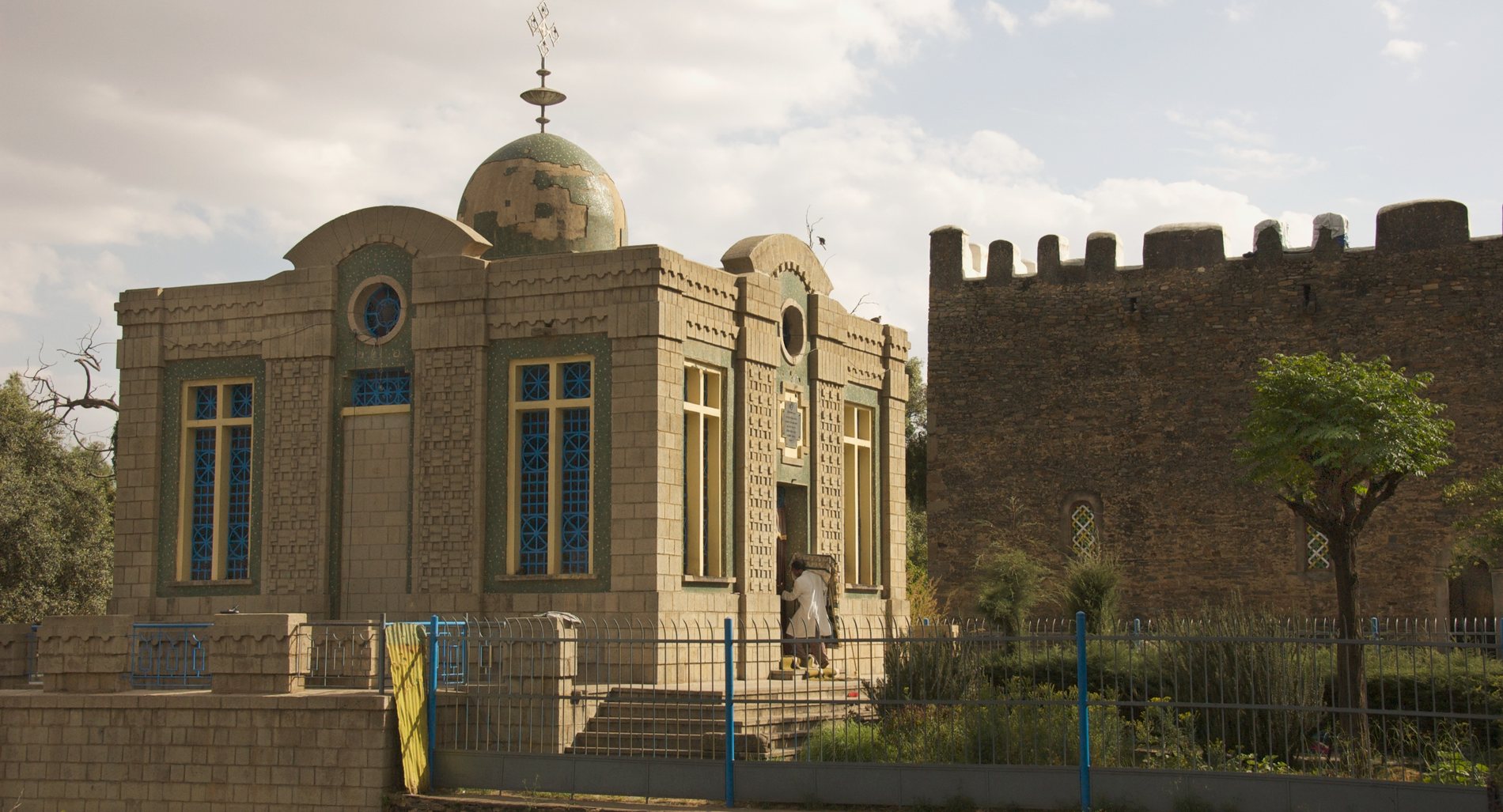
A fourteenth century Ethiopian book says the Ark of the Covenant was carried from Jerusalem to Aksum, and it is still there, in a small chapel, guarded by a single monk who never leaves and who is the only person permitted to see it. Not the Patriarch. Not the Emperor, when there was one. Here is what the book actually says, what the evidence can and cannot settle, and what we found when we audited every citation in our own file about it.
There is a building in northern Ethiopia that people have been arguing about for six hundred years, and the argument has never once involved anybody looking inside it. The Ethiopian Orthodox Tewahedo Church holds that the Ark of the Covenant is in there. One monk, the Guardian of the Ark, is appointed for life, does not leave, and is the only person alive permitted to see the object. Not bishops. Not the Patriarch. Not the Emperor, in the centuries when Ethiopia had one.
The claim comes from a book: the Kebra Nagast, the Glory of Kings, written in the fourteenth century. This article is about what that book actually says, which is stranger and more interesting than the summary version, and about what the evidence can settle and what it cannot. And at the end, as with every article in this series, we audited the citations in our own research file. That audit turned up something about our own instruments that matters more than anything we found in the file.
01The Book
The Kebra Nagast is a fourteenth century Ethiopian text in Ge'ez, the classical liturgical language, running to 117 chapters. The surviving text was compiled around 1314 to 1322 CE, during the reign of Amda Seyon I, by Yetbarek, the Nebura'ed of Aksum, reportedly working from an Arabic source which itself claimed to derive from a Coptic one. It is at once the foundation myth of Ethiopia's Solomonic dynasty and the spiritual charter of the Ethiopian Orthodox Church.
Makeda, Queen of Sheba, hears of Solomon's wisdom, goes to Jerusalem, and converts from sun worship to the God of Israel. Then Solomon tricks her into bed. She has sworn to take nothing from his house without permission, so he serves her spicy food and sets water beside the bed; when she drinks in the night, he declares the vow broken. She returns home pregnant and bears Menelik I. At twenty two, Menelik travels to Jerusalem; Solomon anoints him king of Ethiopia; and on the way home his companions steal the Ark of the Covenant and leave a replica in its place. When Solomon discovers the theft he is devastated, and then accepts it as God's will. The glory has passed from Israel to Ethiopia.
The text was written immediately after the Solomonic dynasty displaced the Zagwe in 1270. Its four working claims are that Ethiopia is divinely elected as the New Israel; that the Ark was transferred from Jerusalem to Aksum; that there is a direct bloodline from Solomon through Menelik to the emperors; and that Ethiopia has replaced Israel as God's chosen nation. A new dynasty needed a right to rule. This is the document that supplied one, and it does not disguise the fact.
02The Claim, And What Can Be Said About It
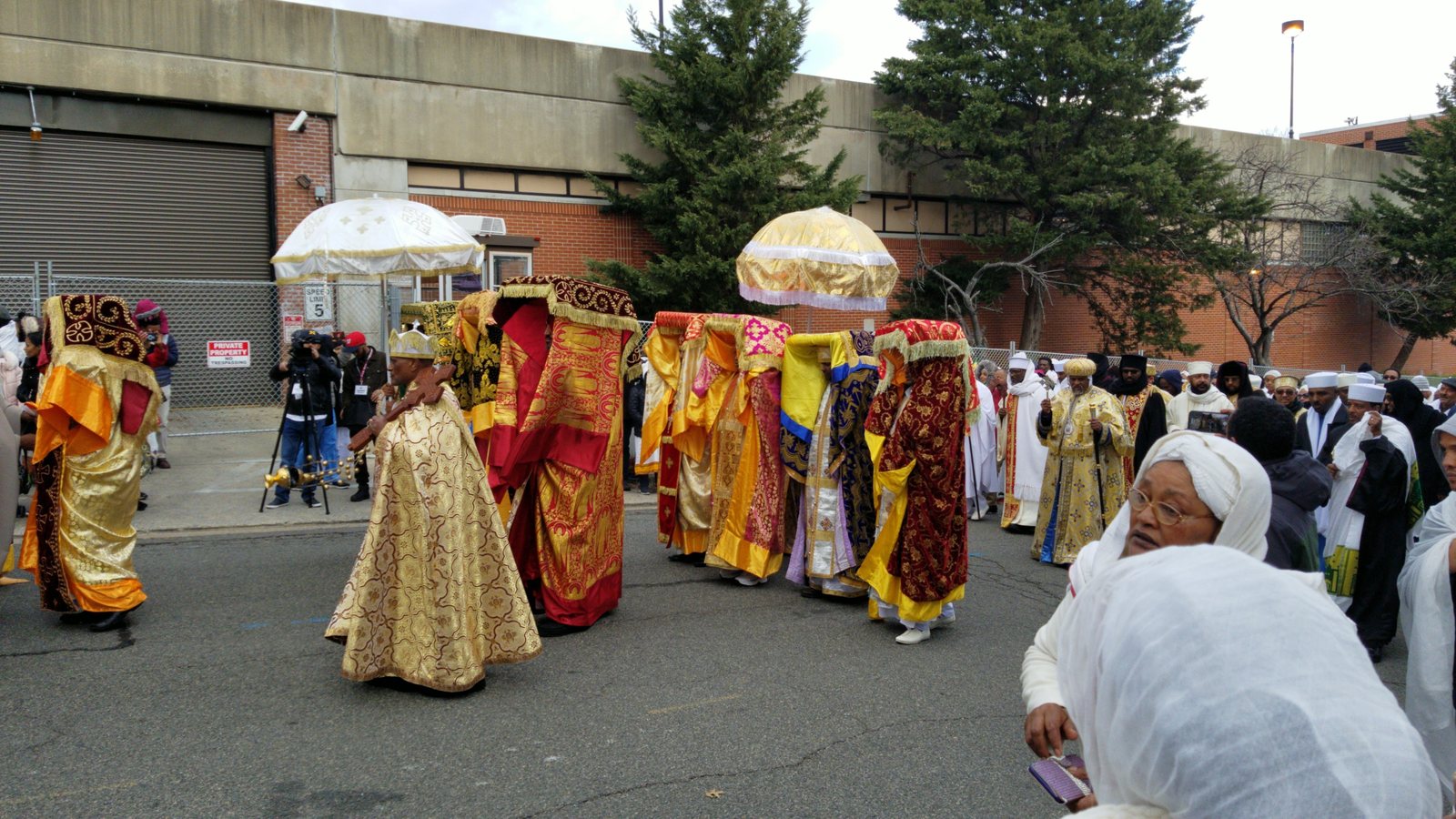
The Ark is held to be in the Church of Our Lady Mary of Zion at Aksum, in the Chapel of the Tablet. The Guardian is appointed for life and never leaves. Nobody else may see it, at any rank. And the practice is not confined to Aksum: every Ethiopian Orthodox church holds a tabot, a replica of the Tablets, in its own Holy of Holies. The claim is not a curiosity attached to one building. It is the organising principle of an entire liturgy.
On whether the Ark is really there, our own research file neither takes a side nor fudges. It states that no independent verification exists and that no outsider has been permitted to examine the object. And then it says the thing that most writing on this subject will not say: the refusal to allow examination is consistent either with genuine belief in the Ark's sacred inviolability, or with the absence of what they claim to possess. Both readings, given equal standing, in one sentence. We are not going to improve on that, so we are quoting it rather than resolving it.
Two people are usually cited, and our file gives the weakness of each. Graham Hancock's The Sign and the Seal (1992) argues the Ethiopian claim is plausible on textual, historical and architectural grounds; the file calls it widely read but not considered scholarly. Edward Ullendorff, a serious Ethiopicist, said he saw the object in 1941 during the British occupation and judged it a relatively late wooden cult object rather than the biblical Ark. That is the line sceptics quote, and our file immediately supplies the counter to its own preferred witness: it was not a controlled archaeological examination, and Ethiopian clergy reject the account. The mainstream position is that the evidential weight lies in the persistence of the tradition, not in inspection of the object.
03The Queen
1 Kings 10 and 2 Chronicles 9 record the visit and give no name. She arrives with a great caravan of camels bearing spices, gold and precious stones, tests Solomon with hard questions, and gives him 120 talents of gold. The Hebrew describing what Solomon gave her in return is ambiguous, and a sexual reading is possible. The name Makeda is Ethiopian tradition, not scripture. And on whether she existed, our file is blunt: no inscription and no archaeological evidence names the Queen of Sheba. Possible, unproven.
The strongest archaeological candidate for Sheba is South Arabian Saba, in modern Yemen: a wealthy incense trade kingdom of the eighth to second centuries BCE, attested by the Ma'rib dam, temples and inscriptions. Ethiopian tradition identifies Sheba with the state of D'mt, which genuinely did share Semitic language, monumental architecture and a similar script with South Arabia. And the two are not mutually exclusive. The Red Sea narrows to about thirty kilometres at Bab-el-Mandeb, and the cultures on both shores were interconnected. Asking whether she was Arabian or Ethiopian may be asking a question the period did not have.
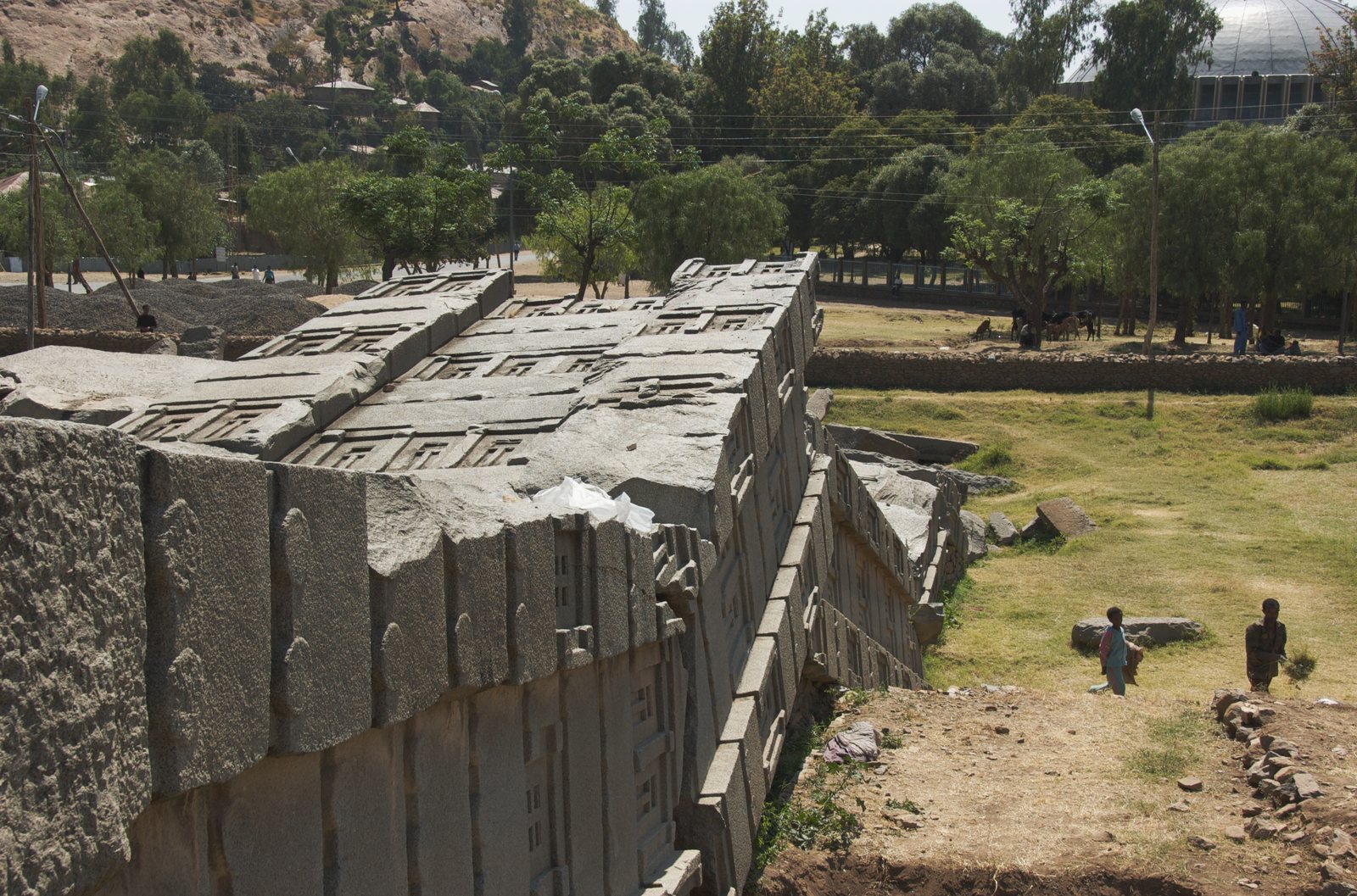
The dynasty the book built lasted until living memory. The Zagwe were held illegitimate for lacking Solomonic descent. Yekuno Amlak, reigning from 1270, claimed that descent and founded a line that ruled until 1974. Haile Selassie, reigning 1930 to 1974, styled himself Conquering Lion of the Tribe of Judah and claimed to be the 225th from Menelik. Our file holds two things at once and is right to: the 225 generation genealogy is almost certainly a political and religious construction, and separately, Ethiopian civilisation genuinely is ancient. A fabricated genealogy does not make a real history less real.
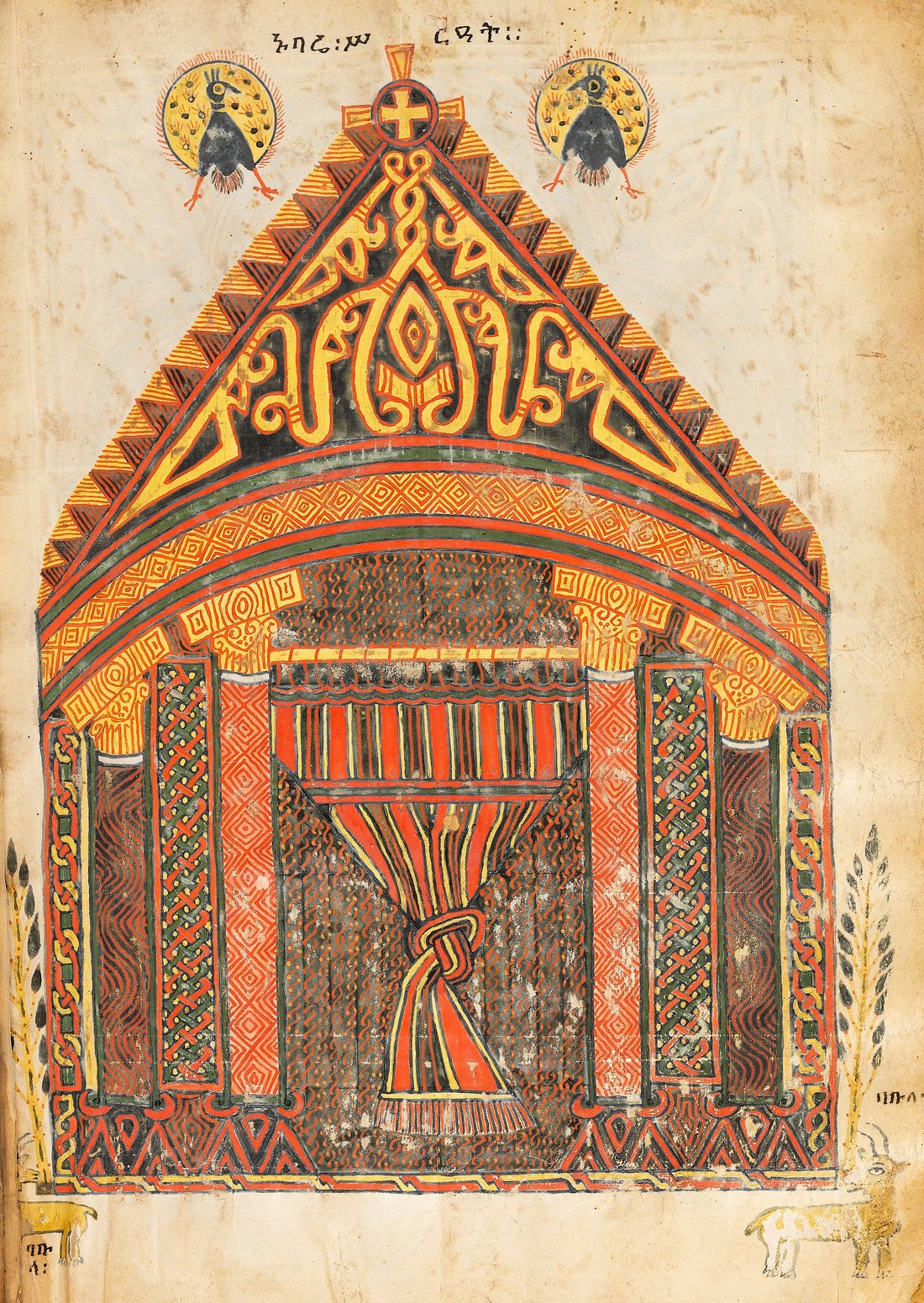
The Judaic practices in Ethiopia are real whether or not the story is. Ethiopian Christianity keeps dietary laws close to Levitical rules, circumcision on the eighth day, Sabbath on both Saturday and Sunday, and the tabot tradition. The Beta Israel practised a Judaism with animal sacrifice and purity law but no Talmud, which suggests separation from mainstream Judaism before about 200 CE. Around 85,000 were airlifted to Israel in Operation Moses in 1984 and Operation Solomon in 1991.
And our file supplies the genetic finding that complicates its own subject. DNA studies indicate the Beta Israel are genetically similar to other Ethiopian populations, which points to local conversion rather than descent from Israelite migrants. The file notes this remains debated. It would have been easy to leave out, and it is in.
04What Kind Of Book This Is
The Kebra Nagast does what founding myths do, and the parallels are precise. The Aeneid links Rome to Troy. The Kojiki links Japanese emperors to Amaterasu. Geoffrey of Monmouth links British kings to Troy through Brutus. The Kebra Nagast links Ethiopian emperors to Solomon. And the transfer of divine favour has its own family: translatio imperii running Rome to Byzantium to the Holy Roman Empire, and Islamic supersessionism. Each one legitimises a ruling class by handing it a divine genealogy and a cosmic destiny.
Having established all that, our file declines to draw the cheap conclusion, and the refusal is the best judgement in it. Its words: this does not reduce the text to mere propaganda. The Kebra Nagast is strongest read as a medieval Ethiopian synthesis of biblical tradition, royal ideology and ecclesiastical self understanding, rather than as courtroom proof that Menelik removed the Ark from Jerusalem. Showing that a text serves power is not the same as showing it is only a tool of power, and a great deal of writing about sacred texts makes exactly that slide.
Could there be a kernel? The scenarios our file records are that the Ark, or an early copy, left Jerusalem during the Babylonian destruction of 586 BCE and travelled by way of Egypt, which is at least geographically coherent given the Jewish community at Elephantine on the Nile, documented in the fifth century BCE; or that it left earlier, during the instability under the later kings of Judah, when the Temple was plundered more than once. One detail is genuinely suggestive rather than merely available: the text's own transmission runs Arabic to Coptic to Ge'ez, which is to say through Egypt, the same route the story claims for the Ark. That is not evidence for the journey. It is evidence that the story travelled that way.
And the book acquired a second life on another continent. The Rastafari movement, from 1930s Jamaica, took the Kebra Nagast as a central scripture: Haile Selassie as the returned Messiah, Ethiopia as Zion, the West as Babylon, and the Solomonic genealogy as a messianic lineage back to David. A fourteenth century Ge'ez dynastic charter became, six hundred years later, scripture for a movement on the other side of the Atlantic.
Unverified: that the Kebra Nagast proves Ethiopian possession of the Ark. It is a fourteenth century document with a clear ideological purpose. It may encode genuine memory, but without examination of the object the claim is faith rather than history, and that is a statement about evidence, not about the sincerity of anyone holding it. Oversimplified: that the Queen of Sheba was Ethiopian rather than Arabian. The strongest archaeological evidence points to South Arabia, and the interconnection of the two shores may make the distinction anachronistic. That is our own file correcting a claim in the direction its readers would least expect it to go, and it is worth pointing at.
05What We Found Auditing Our Own Citations
This file has the worst citations of the thirty we have audited in this series. Ten entries, eight carrying an identifier. Two are correct. Six are not. Five are reviews standing in for the books they review, in the Journal of the Royal Asiatic Society twice, The Classical Review, Africa, and Social Forces. The sixth is an ISBN that reaches a completely different book which happens to share its title. The two entries with no identifier at all turn out to be the two that are correctly blank.
We wrote down what each identifier would resolve to before running a single lookup, and got all eight. Four journals were named from the strings alone, three of them with volume and page. Budge's Oxford book carries a Cambridge prefix and the ISSN of the Journal of the Royal Asiatic Society. Munro-Hay's carries that journal's third series ISSN, and the returned volume number of 2 confirms the series restarted its count. Phillipson's reads Classical Review, volume 49, page 288, and we also predicted there would be no date paradox there, because volume 49 is 1999 and the book is 1998. There was none. And Levine's reads Social Forces, volume 54, page 707, a volume published in 1976, twenty four years before the second edition cited. So we predicted it would be reviewing the 1974 first edition. It is.
One entry shows the same mechanism working on an ISBN. Kitchen's chapter is cited as appearing in Solomon and Sheba, published in London by Thames and Hudson. The ISBN's prefix belongs to St. Martin's Press in New York, which was the reason to doubt it. It resolves to Solomon and Sheba by Faye Levine, St. Martin's Press, 1986. Not another edition of the cited book. A different book that shares its title, by a different author, from a different publisher, twelve years apart. After thirty articles of tracing wrong identifiers, here is the pattern in its plainest possible form: a title collision.
| Section Of The Library | Files | Correct | Wrong | Correct |
|---|---|---|---|---|
| Genetics and Origins | 1 | 15 | 0 | 100% |
| Molecular Biology | 2 | 9 | 1 | 90% |
| Oceanography | 2 | 15 | 3 | 83% |
| Biology and Evolution | 2 | 18 | 4 | 82% |
| Ecology and Biology | 2 | 18 | 6 | 75% |
| Lost Connections | 2 | 4 | 4 | 50% |
| World Civilizations | 8 | 21 | 35 | 38% |
| Foundations and Scripture | 5 | 14 | 30 | 32% |
| Secret Societies | 5 | 7 | 22 | 24% |
| The sciences together | 9 | 75 | 14 | 84% |
| The humanities together | 20 | 46 | 91 | 34% |
| Everything together | 29 | 121 | 105 | 54% |
This file's disputes section is neither missing nor empty, and it is still useless. It has nine bullets across three subsections, and every one is generic boilerplate with the document's own full title mechanically inserted into running prose seven times, parenthetical included: claims about Kebra Nagast: The Glory of Kings (Ethiopian) reflect modern preoccupations. It names no scholar. It cites no work. It warns about carbon dating and stratigraphy for a fourteenth century manuscript. And it says nothing whatever about the actual dispute, which is whether this text preserves older tradition or is a dynastic charter written in the 1300s, even though the scholars on both sides of that question sit in its own bibliography.
Measuring that shape broke our detector, and fixing it changed the number this series has quoted most often. A first scan reported zero templated sections across the whole library, which was plainly wrong with one sitting in front of us. The cause: our section reader stopped at the next heading of any level, so a disputes section organised into subsections had its body cut to nothing and was scored as empty. Its own documentation had always claimed it stopped at the same or higher level. The code never did. Correcting that single line moves the figures: documents that deny having counter-arguments directly above their own populated list of them go from 43 to 86. Exactly double. The hard structural total goes from 262 to 301.
That number has now moved three times in a single day, always upward. We published 43 in the morning. Then a document whose disputes were not filed under a counter-arguments heading showed the detector was measuring the heading rather than the document, and the structural total became 262. Then this file showed the section reader was stopping at its own first subheading, and it became 301. Not one of those three corrections came from new evidence about the library. All three came from defects in the tool doing the counting. Which is where thirty articles of this work have arrived: the checking layer is the largest single source of false information in this estate, and that emphatically includes every instrument we built to measure it.
The same repair also produced the most encouraging number in the whole campaign, and it would be dishonest to bury it. With the section reader corrected, 1,479 documents have a genuinely populated counter-arguments section, and only 20 of them are the generic template. Ninety nine per cent name real, specific disputes. The count of healthy documents, those carrying real disputes and no denial at all, rises from 1,128 to 1,540. The disputes sections in this library are overwhelmingly real. The failure is concentrated in one boilerplate sentence and a handful of files, not spread across the whole. That is a materially better picture than this series has been painting, and we could only see it because an instrument was wrong and got fixed.
Fast Facts
- The text
- Kebra Nagast, Glory of Kings. 117 chapters in Ge'ez, compiled about 1314 to 1322 CE by Yetbarek, Nebura'ed of Aksum
- What it claims
- Menelik I, son of Solomon and the Queen of Sheba, brought the Ark of the Covenant from Jerusalem to Aksum, and divine favour passed from Israel to Ethiopia
- Why it was written
- The Solomonic dynasty had just displaced the Zagwe in 1270 and needed a divine right to rule
- The Ark claim today
- Held in the Chapel of the Tablet at Aksum, guarded by one monk appointed for life who never leaves, and seen by nobody else at any rank
- The tabot
- Every Ethiopian Orthodox church holds a replica of the Tablets of the Law in its Holy of Holies, central to the liturgy
- What scripture says
- 1 Kings 10 and 2 Chronicles 9 record the visit, give no name, and mention 120 talents of gold. No inscription anywhere names the Queen of Sheba
- Where Sheba was
- Archaeology favours South Arabian Saba in modern Yemen. Ethiopian tradition says D'mt. The Red Sea is about 30 km wide at Bab-el-Mandeb and both shores were connected
- The dynasty
- Yekuno Amlak from 1270 to Haile Selassie, deposed 1974. Selassie claimed to be the 225th from Menelik
- Beta Israel
- Practised Judaism without the Talmud, suggesting separation before about 200 CE. About 85,000 airlifted to Israel in 1984 and 1991. Genetics point to local conversion
- The one witness who looked
- Edward Ullendorff said he saw the object in 1941 and judged it a late wooden cult object. It was not a controlled examination and Ethiopian clergy reject the account
- Citations in the source file
- 10 entries, 8 with an identifier. 2 correct, 5 are reviews standing in for books, 1 is a different book with the same title. The 2 blanks are correctly blank
What We Can Actually Stand Behind
The Kebra Nagast exists, is a fourteenth century Ge'ez text of 117 chapters, and was compiled around 1314 to 1322 immediately after the Solomonic dynasty took power. Its purpose as a charter of dynastic legitimacy is explicit in its own content.
The Ethiopian Orthodox Church holds the Ark claim as an article of faith, the Chapel of the Tablet at Aksum is guarded as described, and every Ethiopian church holds a tabot. The tradition is real, continuous, and observable. None of that is in question.
Whether the Ark is in that building. No outsider has examined it. Our own file's formulation is the correct one and we are not going past it: the refusal is consistent either with genuine belief in the object's inviolability, or with the absence of what is claimed. Ullendorff's 1941 recollection is the only account of a look inside, and it was not a controlled examination.
Ethiopian Christianity carries genuine Judaic practice: Levitical-style dietary law, eighth day circumcision, a double Sabbath, the tabot. The Beta Israel's Judaism without the Talmud points to early separation. These connections are real regardless of whether the Menelik narrative is.
The text functions as dynastic legitimation in exactly the manner of the Aeneid, the Kojiki and Geoffrey of Monmouth. And that does not reduce it to propaganda: it is a medieval synthesis of scripture, royal ideology and church self-understanding, which is a different and more interesting thing.
Historical-kernel scenarios involving 586 BCE and an Egyptian route. Geographically coherent, supported by the Elephantine community, and unevidenced. The transmission of the text through Egypt is suggestive about the story, not about the object.
That the text proves present possession of the Ark: a fourteenth century charter cannot establish that, whatever it encodes. And that the Queen of Sheba was Ethiopian rather than Arabian: the archaeology favours South Arabia, and the distinction may be anachronistic anyway. That correction is our own file's, pointing away from the answer its readers would prefer.
Sources & further reading
The history above is drawn from our research library on Theories of Anything. Every identifier in that file's bibliography was resolved live against Crossref and OpenLibrary on 26 August 2026. Six of its eight identifiers turned out not to reach the work they name. The five reviews are listed here as what those entries actually reach, because a reader following them should know what they will land on.
Image credits
- The Chapel of the Tablet, Aksum, Ethiopia. Cropped by us from a wider photograph A. Davey, via Wikimedia Commons (CC BY 2.0), cropped by Theories of Anything. CC BY 2.0 Source.
- Priests carrying wrapped tabots in a Timkat procession, Washington DC Joe Castleman, via Wikimedia Commons (CC BY-SA 4.0). CC BY-SA 4.0 Source.
- An Ethiopian illuminated Gospel of the late fourteenth to early fifteenth century, showing a shrine with the curtain knotted shut Unknown Ethiopian scribe, via Wikimedia Commons (public domain). Public domain Source.
- The Great Stele at Aksum, fallen and broken into sections A. Davey, via Wikimedia Commons (CC BY 2.0). CC BY 2.0 Source.
.jpg)


.jpg)