
Great Zimbabwe: The Kingdom Europe Refused to Believe
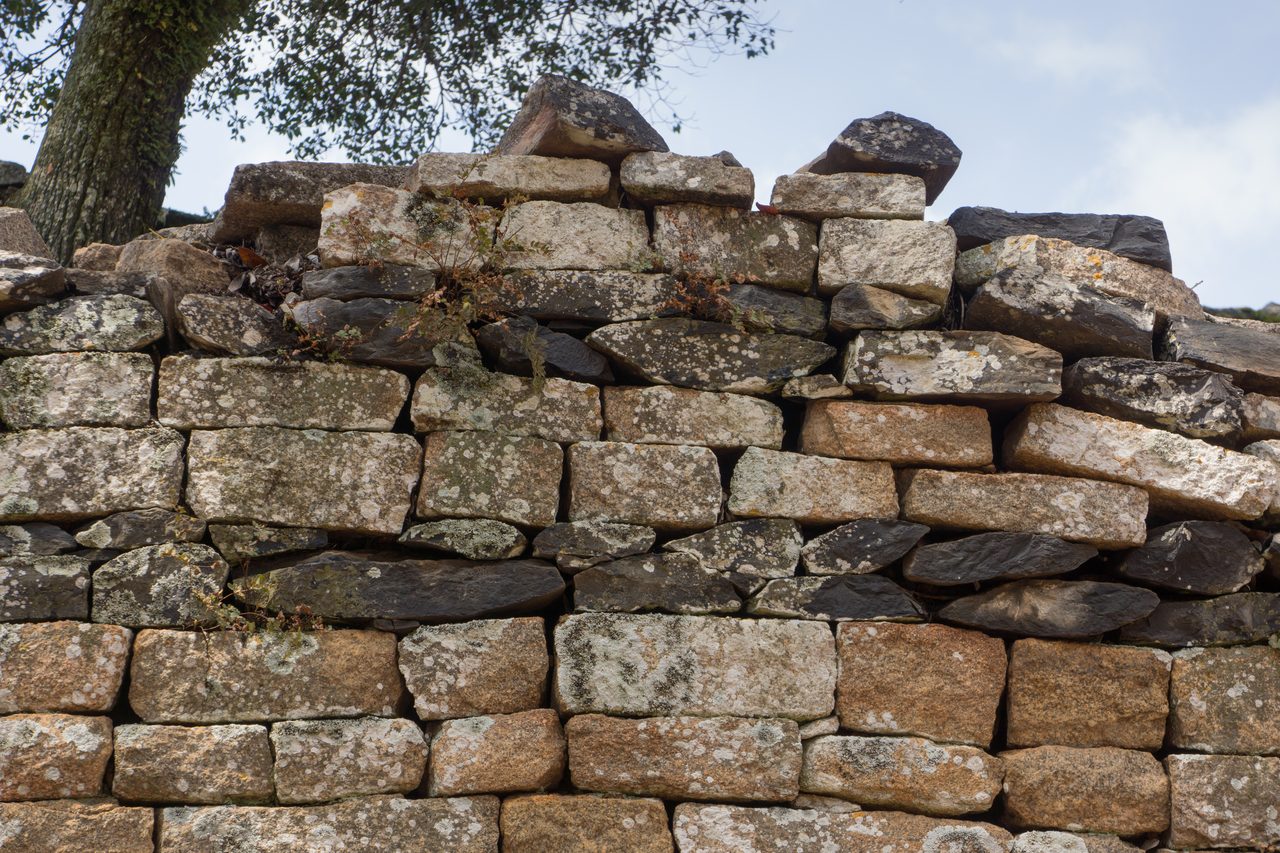
Between the 11th and 15th centuries CE a Shona-speaking civilization in southeastern Zimbabwe built a capital out of shaped granite laid without mortar: a hilltop complex, a great walled enclosure approximately 820 feet in outer circumference with walls up to 36 feet high, and a valley of smaller enclosures below. Gold, cattle, and the Indian Ocean trade paid for it. In the 15th century the capital emptied. When 19th-century Europeans reached the ruins they decided Africans could not have built them, and that decision was defended for more than a century: by cleared stratigraphy, by an archaeologist who left the country in protest, and finally by a government rule that any article crediting African builders had to carry an equal number of words suggesting somebody else. Archaeology answered the question over a century ago and has kept confirming the answer since. This article is about the kingdom, the eight soapstone birds carried out of it, the refusal, and the closing beat that did not exist until this year: on 14 and 15 April 2026 the last of those birds came home.
Most files in this wing open with a place nobody can find. This one opens with a place anybody can visit. Great Zimbabwe is standing in southeastern Zimbabwe, its walls are measured, its pottery is sequenced, its charcoal is radiocarbon dated, and the people who built it are known. What went missing here was not the city. It was the willingness to say who made it. For more than a century after an explorer walked in and decided he had found the Land of Ophir, the story of Great Zimbabwe was written by people who had settled the answer before they picked up a trowel, and that settlement was defended with cleared archaeological deposits, with an archaeologist who left the country in protest, and eventually with a censorship rule counted in words. So this article does two jobs at once. It lays out the kingdom, claim by claim, at the tier the evidence earns. And it lays out what was done to that evidence, which is its own documented story. Let's open the file.
01What Is Actually Standing There
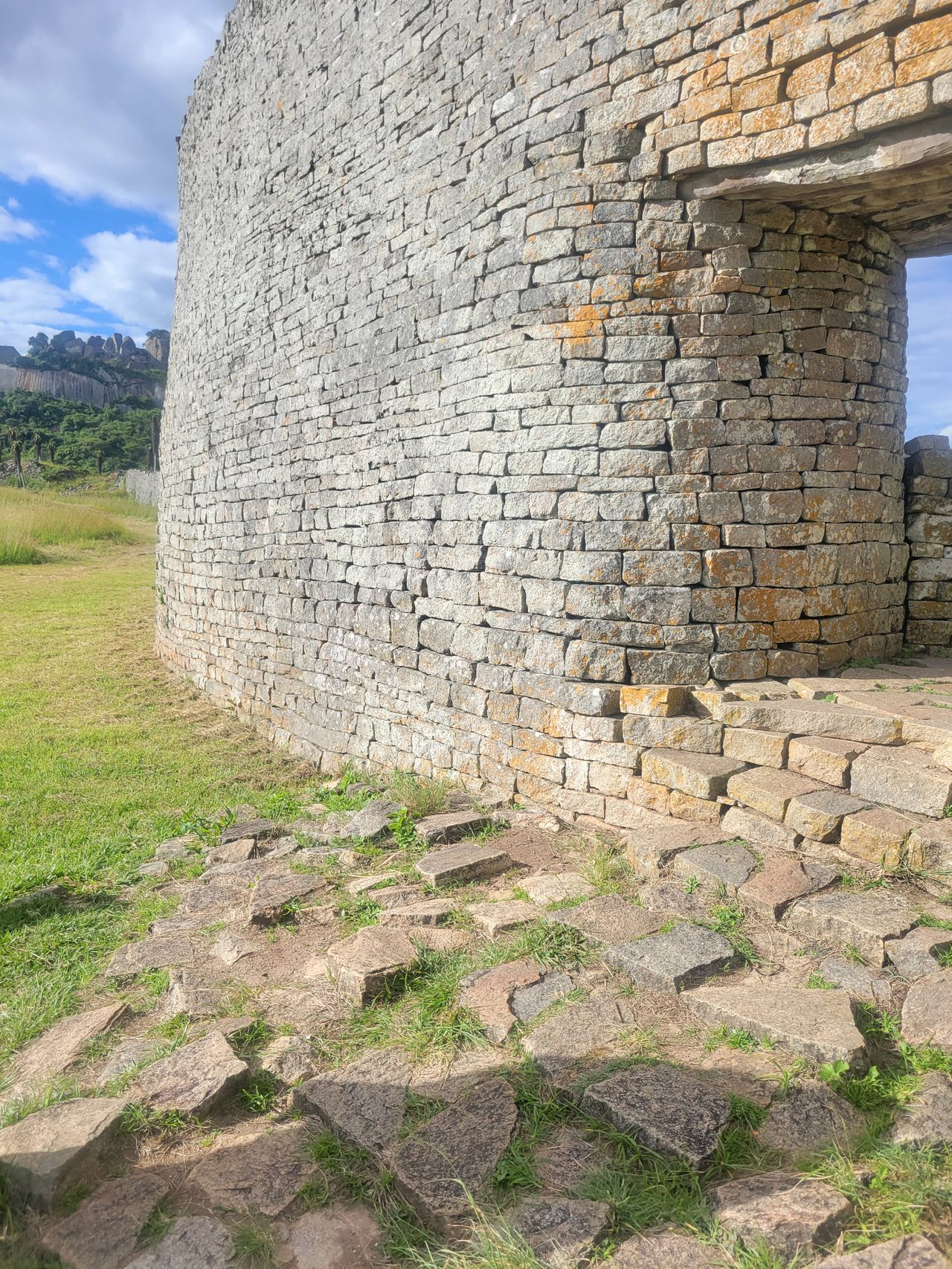
Great Zimbabwe, in southeastern Zimbabwe, was the capital of a prosperous Shona-speaking civilization that flourished from the 11th to the 15th centuries CE, and our file records it as the largest stone structure in sub-Saharan Africa south of the Ethiopian highlands. It has three main areas. The Hill Complex is a hilltop enclosure with religious and political functions. The Great Enclosure is the largest single structure on the site, approximately 820 feet in outer circumference, with walls up to 36 feet high and 17 feet thick. The Valley Ruins are residential, a spread of smaller enclosures below the hill. That is the site itself, before anyone starts arguing about it.
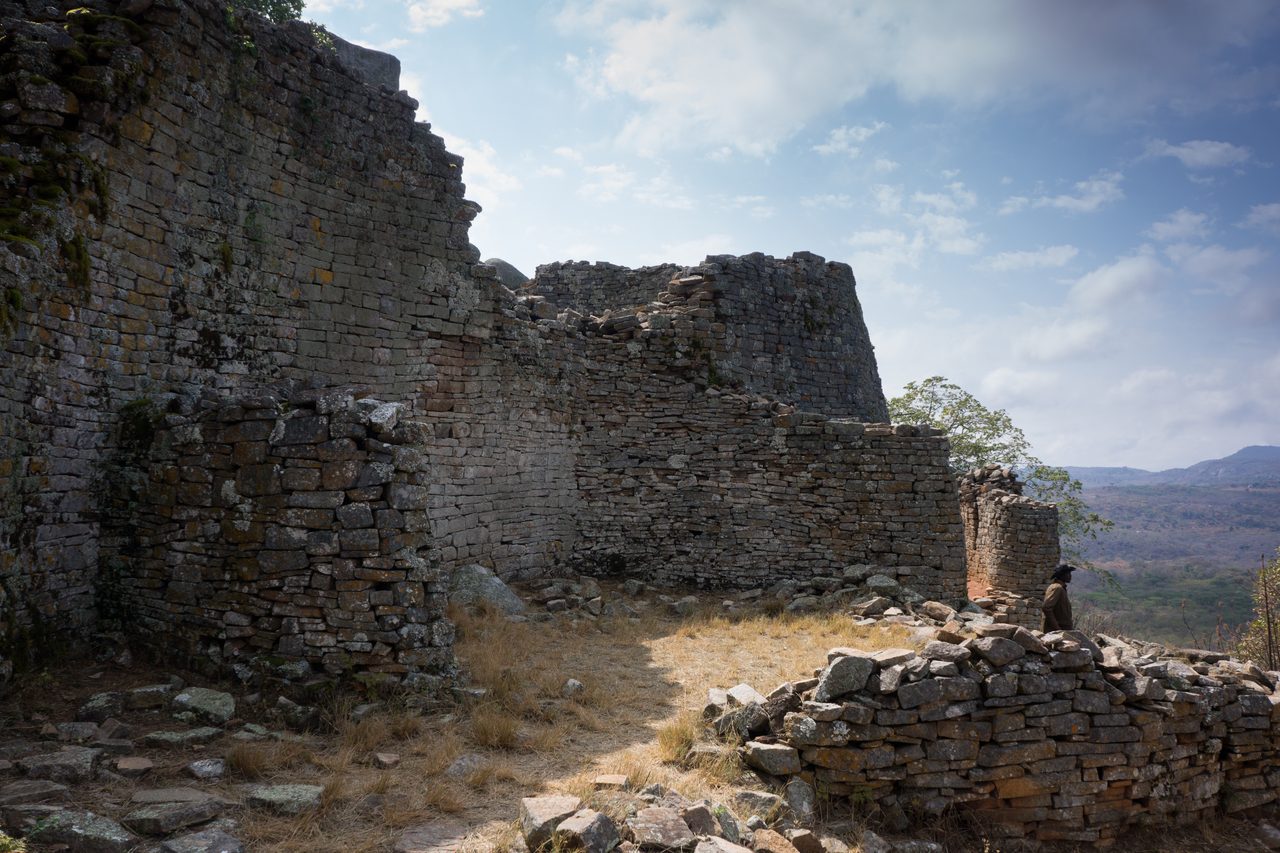
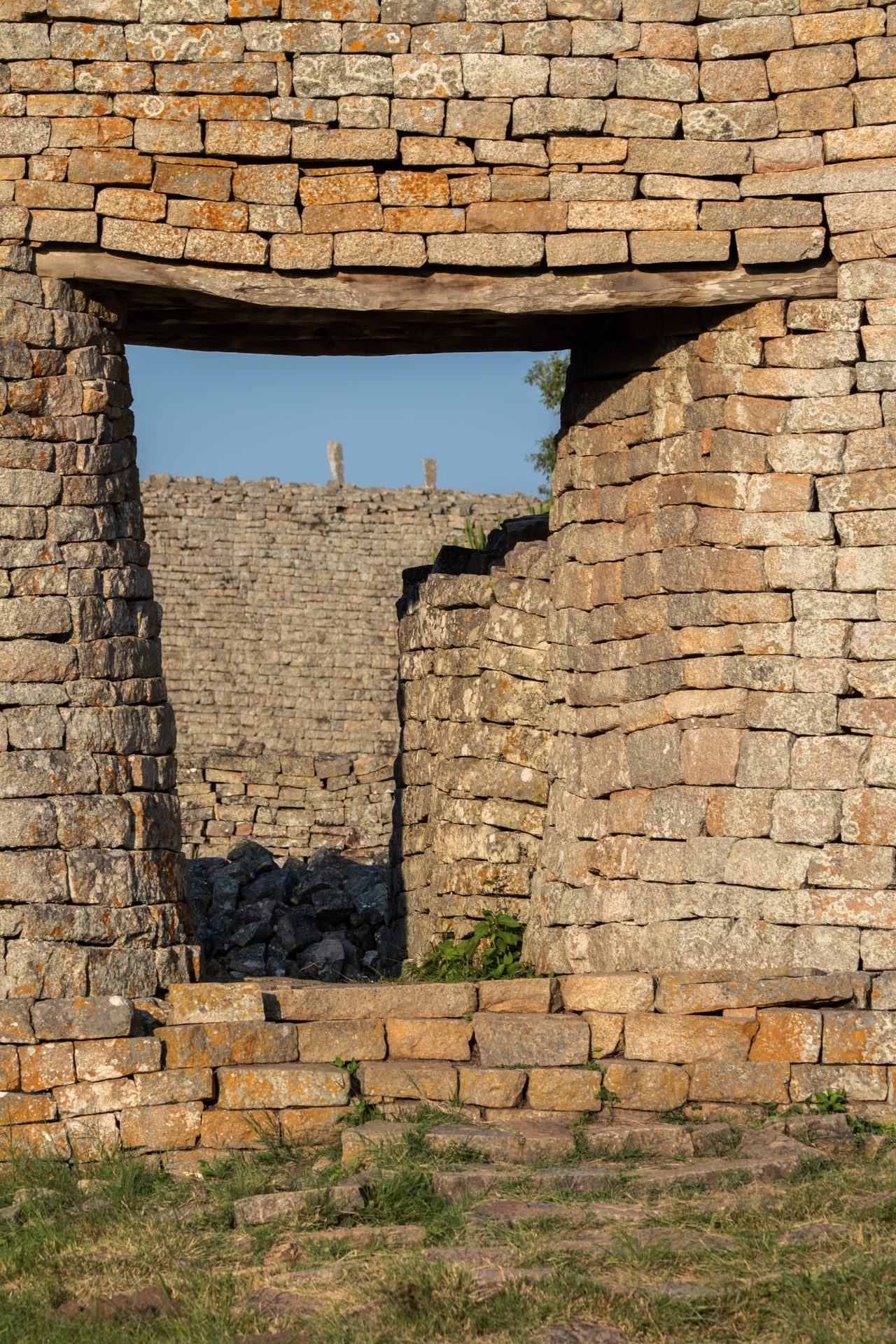
The walls are dry-stone: carefully shaped granite blocks laid without mortar, worked by exploiting the natural fracture patterns of the local granite through controlled heating and cooling. This article does not build itself around that technique, because the technique is not what the argument was ever really about. What matters here is the context the site sits in. Over 300 similar stone-walled sites exist across Zimbabwe, Mozambique, and South Africa. Great Zimbabwe belongs to a broad regional architectural tradition; our file is explicit that it is not a unique or isolated structure. Hold on to that number. Section 08 is where it does its work.
| Feature | What Our File Records |
|---|---|
| The Hill Complex | A hilltop enclosure with religious and political functions. The eight soapstone birds came from here |
| The Great Enclosure | The largest single structure: approximately 820 feet in outer circumference, walls up to 36 feet high and 17 feet thick |
| The Valley Ruins | Residential areas made up of smaller enclosures |
| The Construction | Dry-stone walling with no mortar; shaped granite worked along the rock's natural fracture patterns through controlled heating and cooling |
| The Wider Tradition | Over 300 similar stone-walled sites across Zimbabwe, Mozambique, and South Africa, which is why the site belongs to a tradition rather than standing as an isolated one-off |
| The Dates | Flourished from the 11th to the 15th centuries CE; the capital declines in the 15th century |
| World Heritage | Inscribed by UNESCO as Great Zimbabwe National Monument in 1986 |
02Gold, Cattle, and What Came After
The wealth came out of gold and trade. Over 4,000 ancient gold mines have been documented in Zimbabwe. Excavation at Great Zimbabwe itself has produced gold artifacts, Indian Ocean glass beads whose chemistry has been traced to origins in India, Southeast Asia, and the Middle East, Chinese celadon ceramics, and Near Eastern glass. Those objects place the capital inside the broader Indian Ocean commercial network, reached through the Swahili coast ports of Sofala and Kilwa. A city holding celadon and chemically traced glass is a city with reach, and the objects say where the reach went.
Population estimates for Great Zimbabwe at its peak in the 13th and 14th centuries range from 10,000 to 20,000, which our file says would make it one of the largest settlements in sub-Saharan Africa in that period. The economy combined cattle pastoralism, agriculture in sorghum and millet, gold mining, the ivory trade, and long-distance commerce. What is not settled is how the capital actually held its position: whether through tribute, a trade monopoly, redistribution, or some mixture of the three remains debated, and our file carries the whole cluster at Tier 2 rather than Tier 1 for that reason.
The 15th-century decline correlates with the rise of successor polities rather than with a disappearance. The Mutapa state rose to the north, and the Portuguese encountered and documented it from the 1500s. The Torwa or Butua state rose to the southwest and was later succeeded by the Rozvi. Both continued the traditions Great Zimbabwe is known for: stone building, gold trade, sacred kingship. Portuguese records, including Duarte Barbosa and Joao de Barros, give early European documentation of these kingdoms, and their descriptions of stone-built capitals clearly reference the same building tradition. Keep that in view for section 05, because it sets up the strangest fact in this file. Europeans were writing about southern African kingdoms that built in stone more than three centuries before other Europeans decided southern Africans could not build in stone.
03The Eight Birds On the Hill
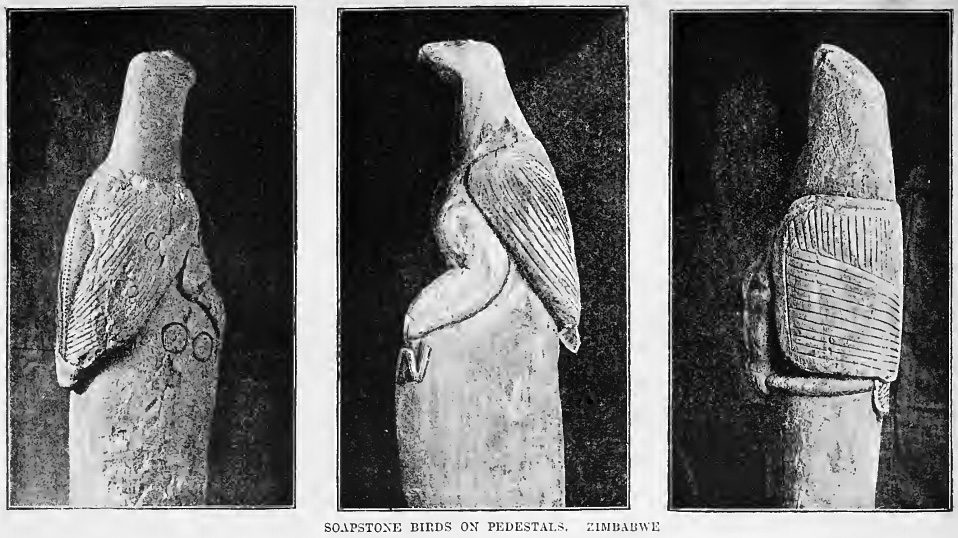
Eight carved soapstone birds were recovered from the Hill Complex, each approximately 13 to 16 inches tall and mounted on pedestals about three feet high. They were taken primarily by two men: Willi Posselt in 1889 and Theodore Bent in 1891. Our file records them as unique, with no comparable objects found elsewhere. What they represent is a real open question, and the readings on offer are worth stating at full strength rather than collapsing into one. They may be totemic eagles, with the bateleur eagle the identification our file names. They may be messenger figures moving between the living community and the ancestral world, which is consistent with Shona religious concepts. They may be symbols of royal authority. The file does not choose, and neither does this article.
Those two dates, 1889 and 1891, matter beyond provenance. Bent, whose expedition carried birds off the hill, is the same Bent who attributed the ruins to Phoenicians. Where the birds went afterward, and when they came back, is section 09. It is the part of this story that changed this year.
04Before Great Zimbabwe: Mapungubwe
Mapungubwe sits at the confluence of the Limpopo and Shashe rivers in what is now northern South Africa, and it preceded Great Zimbabwe as a major center of power and wealth. Our files call it the first complex state society in southern Africa, demonstrating the earliest evidence of class-based social stratification south of the Sahara: elite residence on the hilltop, separated from commoner settlement below. Excavations by Thomas Huffman and the University of the Witwatersrand through the 1990s and 2000s resolved that into a three-tier settlement hierarchy, with the hilltop for elite and sacred leadership, the hillside for retainers, and the lowlands for commoners, the earliest class-based spatial segregation documented in southern Africa. Our files call that spatial template the one Great Zimbabwe later elaborated, which is why a file about one kingdom cannot honestly leave out the other; section 08 is where the question of how deliberately that elaboration was intended gets its own tier.
The dating needs one honest note. Our Great Zimbabwe file gives Mapungubwe as 1075 to 1220 CE. Our Mapungubwe file gives about 1075 to 1290 CE and then breaks it into phases from its own sources: the K2 settlement at about 1030 to 1220 CE and the Mapungubwe Hill summit occupation at about 1220 to 1290 CE, on Huffman in 2000 and Calabrese in 2007. The shorter span appears to capture the earlier phase and stop at the transition, omitting the hilltop-summit phase the other file documents in more depth. This article uses the phased dating. The discovery has two defensible dates as well, and they are not a contradiction: a prospecting party led by E.S.J. van Graan, guided by a local informant, came upon stone walls and gold and iron artifacts on Mapungubwe Hill on 31 December 1932, and Leo Fouche of the University of Pretoria began the formal scientific excavation in the 1933 and 1934 seasons. One file says 1932 and one says 1933. Both are reading the same two-stage event.
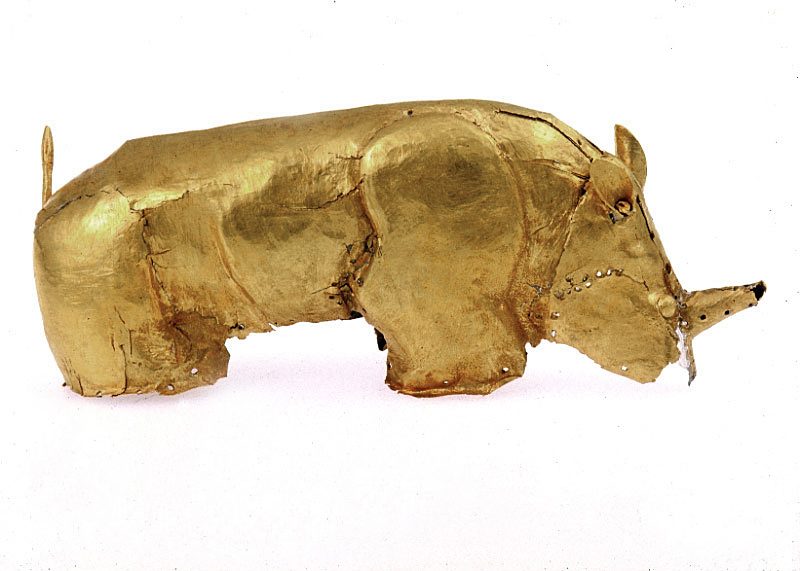
Here is a correction, stated in the body rather than applied quietly. Our Mapungubwe file's own summary claims over 100 gold burials on Mapungubwe Hill. Its own Tier 1 section says something different, 23 elite burials with gold grave goods. During this article's research pass the independently corroborated figure turned out to match neither headline exactly: 23 graves in total were excavated on Mapungubwe Hill in the 1930s, of which only three were the gold-rich royal burials. The Golden Rhinoceros of Mapungubwe, along with a gold bowl and a gold sceptre, came from the third of those three royal graves, excavated in 1933. This article uses 23 graves and three royal burials, not the file's own over-100 figure. The rhinoceros itself is gold foil tacked over a carved wooden core, shown by spectroscopic analysis published by Oddy in 1984, and gold-working at the site involved both alluvial gold collection and cold-working technique. Three graves, and a state visible inside them.
Over 26,000 glass beads were recovered from Mapungubwe, sourced from the Indian Ocean trade network. Wood in 2000 and Robertshaw and colleagues in 2010 identified chemical signatures linking them to South Asian and Middle Eastern workshops by way of Kilwa and other Swahili ports. The Robertshaw paper is one of the few citations in either of our two files whose DOI was checked and found correct, and it is linked at the foot of this article. The Mapungubwe Cultural Landscape was inscribed as a UNESCO World Heritage Site in 2003, recognizing its value as evidence of Africa's earliest state formation.
Population estimates run from 3,000 to 5,000 for the broader Mapungubwe polity at its peak around 1250 CE. Huffman proposed in 2009 that the abandonment around 1290 CE followed climatic desiccation, reduced summer rainfall as the Medieval Climate Anomaly gave way to the Little Ice Age, pushing population and trade routes north to the better-watered Zimbabwe Plateau, which would make Mapungubwe's ending a direct precursor to Great Zimbabwe's rise. His Sacred Leadership model reads the hilltop and lowland separation as the prototype for the Zimbabwe culture pattern of sacred kingship later elaborated at Great Zimbabwe, and faunal remains reported by Voigt in 1983, showing elite preferential access to cattle while commoner diets carried more small stock and wild game, support hierarchical food distribution. This model is contested, and our own file says so in its own counter-arguments: Chirikure and colleagues argue that the spatial organization can be explained by multiple factors rather than by one ideological template. Both readings are carried here at strength. The evidence has not chosen between them, so this article does not either.
| Item | The Figure, As This Article Uses It |
|---|---|
| Location | The confluence of the Limpopo and Shashe rivers, northern South Africa |
| Dating | About 1075 to 1290 CE: K2 settlement about 1030 to 1220, Mapungubwe Hill summit occupation about 1220 to 1290 |
| Peak Population | 3,000 to 5,000 for the broader polity, around 1250 CE (Tier 2) |
| Graves On the Hill | 23 excavated in the 1930s, of which three were the gold-rich royal burials. Our file's own summary says over 100; the corrected figure is used here |
| The Golden Rhinoceros | Gold foil tacked over a carved wooden core, from the third royal grave, excavated in 1933 |
| Glass Beads | Over 26,000, chemically linked to South Asian and Middle Eastern workshops via Kilwa and other Swahili ports |
| The Discovery | Stone walls and gold and iron artifacts found on 31 December 1932 by E.S.J. van Graan's party with a local guide; formal excavation by Leo Fouche from the 1933 season |
| The Suppression | Classified by the apartheid-era South African government, which our Great Zimbabwe file describes as classification as a national secret; full academic access restored only after 1994 |
| World Heritage | Mapungubwe Cultural Landscape, inscribed by UNESCO in 2003 |
05The Refusal
Everything above is the kingdom. What follows is what was done with it. This is the part of the file that has to be handled carefully, because the standing discipline on a site like ours is to give both sides of a question a fair hearing at full strength. That discipline is right almost everywhere in this Athenaeum, and it does not apply here, for one specific reason: one of these two sides ran out of evidence over a century ago and kept talking anyway. What follows is not a debate. It is a record.
Karl Mauch reached Great Zimbabwe on 5 September 1871, guided by Karanga tribesmen, and left with a theory: the Land of Ophir, the Queen of Sheba, Phoenician builders. Part of what convinced him was an error he made himself. He identified timber found in the ruins as cedar, the wood associated with Solomon's Temple in Jerusalem. Cedar does not grow in the region. The mistake sat inside his own reasoning, and it fed his conclusion that non-Africans must have built the place. The founding claim of a century of denial rests, in part, on a misidentified piece of wood.
Our file rates the interpretation history of Great Zimbabwe at Tier 2 and describes it as a case study in ideological suppression. Theodore Bent, whose expedition book The Ruined Cities of Mashonaland was published in 1892, attributed the ruins to Phoenicians. Richard Hall, from 1902, removed archaeological layers he believed had contaminated a Semitic site with African material, destroying irreplaceable stratigraphic evidence. And the Rhodesian government between 1965 and 1979 actively censored archaeologists who affirmed African origins: Peter Garlake left the country, which our file describes as being forced out, and museum displays were altered to suppress the conclusion. Our file calls this among the best-documented cases of political distortion of archaeology, which is a careful phrase, and this article keeps it careful. The Tier 2 rating belongs to that overall characterization. Several of its components were independently checked during this article's research pass and stand on their own at Tier 1, and they are the next claims.
Richard Nicklin Hall was appointed curator of Great Zimbabwe in 1902, and his own stated purpose is on the record. He wrote that he wished to free the site from the filth and decadence of the Kaffir occupation. The word he used for the descendants of the people who built the place is a racial slur; it is reproduced once here, in his words and not ours, because the sentence is the primary evidence for the mindset that drove what he did next. Searching for proof of non-African builders, he cleared roughly twelve feet, about 3.6 meters, of stratified archaeological deposits. A visiting archaeologist described his methods as reckless blundering, worse than anything he had ever seen. Hall was subsequently dismissed from his post as curator.
06The Archaeologists Who Kept Saying No
The refutation is old and it is plural. Systematic archaeological investigation by David Randall-MacIver in 1905, by Gertrude Caton-Thompson in 1929, by Peter Garlake in 1973, and by Thomas Huffman from the 1970s into the 2000s has conclusively demonstrated that Great Zimbabwe was built by ancestors of the Shona-speaking peoples. Four separate lines of evidence point the same way: ceramic sequences, radiocarbon dates, cultural artifacts, and architectural technique. Our file states, without hedging, that this conclusion was established over a century ago, has been repeatedly confirmed, and that there is no legitimate archaeological debate on the point. Read that sentence precisely. It does not say the question is closed because experts agree. It says the question was answered by evidence, and the earliest of the systematic investigations our file names is dated 1905.
Mapungubwe got the same treatment and the same outcome. Colonial-era attribution of Mapungubwe, and later of Great Zimbabwe, to Phoenician, Arab, or other non-African builders is definitively refuted by stratigraphic analysis, material culture continuity, and pottery sequences. And the response to that refutation was administrative rather than scientific: the apartheid-era South African government classified Mapungubwe's findings for decades, specifically to avoid acknowledging pre-colonial African state complexity. Our Great Zimbabwe file puts it more bluntly still, recording the site as classified as a national secret. Full academic access was restored only after 1994.
07Censorship, Counted In Words
The Rhodesian censorship of Great Zimbabwe's African origin has a date and a method. It was formalized in 1970. Official publications were barred from stating African origin as established fact. And after Rhodesia's Unilateral Declaration of Independence in 1965, any article crediting African builders had to carry an equal number of words suggesting alternative builders: Portuguese, Phoenicians, or the Queen of Sheba. That is not a figure of speech for bias. It is a word count, applied to an archaeological finding, by a state. Peter Garlake left the country in protest in 1970. He worked first at Ife in Nigeria, then as a senior lecturer at University College London from 1976 to 1981, and returned to Zimbabwe in 1981, after the transition to majority-rule government.
That rule is worth reading backwards, for what it concedes. An equal-words requirement is not a scientific objection to a finding; it is an administrative one, and it was adopted more than sixty years after Randall-MacIver's fieldwork and more than forty after Caton-Thompson's. Whatever else it was, it is a document about the state of the argument in 1970, and it was written by the side that had to legislate.
| Year | What Happened | Where It Stands |
|---|---|---|
| 1871 | Karl Mauch reaches the site on 5 September, guided by Karanga tribesmen, and identifies it as the Land of Ophir and the Queen of Sheba's city, partly on his own misidentification of local timber as cedar | Tier 4 for the attribution. Cedar does not grow in the region, and the error sat inside his own reasoning |
| 1889 and 1891 | Willi Posselt and Theodore Bent remove soapstone birds from the Hill Complex; Bent attributes the ruins to Phoenicians and publishes The Ruined Cities of Mashonaland in 1892 | Tier 1 that the birds were taken, and that Bent's own 1891 count records eight of them, six large and two small. Tier 4 for the Phoenician attribution |
| 1902 | Richard Hall, appointed curator, clears roughly twelve feet of stratified deposits searching for non-African builders, and is later dismissed from the post | Tier 1 that it happened, independently verified. Our file calls the destroyed stratigraphic evidence irreplaceable |
| 1905 | David Randall-MacIver's systematic investigation | Tier 1. Indigenous African construction; the earliest of the systematic investigations our file names |
| 1929 | Gertrude Caton-Thompson's systematic investigation | Tier 1. The same conclusion, reached independently |
| 1965 to 1979 | The Rhodesian government censors archaeologists who affirm African origins, and museum displays are altered | Tier 2 as our file's overall characterization of the period |
| 1970 | Censorship formalized: official publications barred from stating African origin as established fact, and any article crediting African builders required an equal number of words for alternatives. Peter Garlake leaves the country in protest | Tier 1, independently verified during this article's research pass |
| 1973 | Peter Garlake publishes Great Zimbabwe | Tier 1 among the investigations our file names as demonstrating indigenous construction |
| 1981 | Garlake returns to Zimbabwe after the transition to majority-rule government | Tier 1 |
| 1986 | UNESCO inscribes Great Zimbabwe National Monument as a World Heritage Site | Tier 1, verified against the World Heritage listing |
08What the Evidence Settled, and What It Did Not
No. Great Zimbabwe was not built by Phoenicians, by the Queen of Sheba, by King Solomon's miners, or by any other non-African builders. Over a century of professional archaeology has definitively refuted that attribution. It originated in colonial-era racism and biblical literalism, with Mauch's 1871 Land of Ophir identification as its founding move, and our file records that it persists only in fringe literature and has no evidentiary support. There is no version of this that is still open.
No, the architecture did not require advanced technology beyond African capability. That claim is contradicted from two directions at once. Experimental archaeology has demonstrated the feasibility of dry-stone construction with the materials and techniques available. And the 300-plus related stone-walled sites represent a continuous building tradition rather than a single inexplicable object dropped into a landscape. The claim fails on the technique and it fails on the context, which is why this article gave those 300 sites a paragraph in section 01 rather than a footnote.
What the political system actually was is a live question rather than a settled one. Our file's Tier 2 reading is a divine or sacred kingship, with the ruler mediating between the living community and ancestral spirits. Thomas Huffman's model proposes that the site's spatial organization encodes Shona cosmological principles: the Hill Complex as the domain of the king and the ancestral spirits, connected to rain-making and fertility; the Great Enclosure as a space for royal wives and initiation; the Valley as the commoner residential zone. Our file calls this cognitive archaeological interpretation debated but influential, and this article carries it exactly that way. It is the most interesting reading on offer, and it is not established. Both of those are true at once.
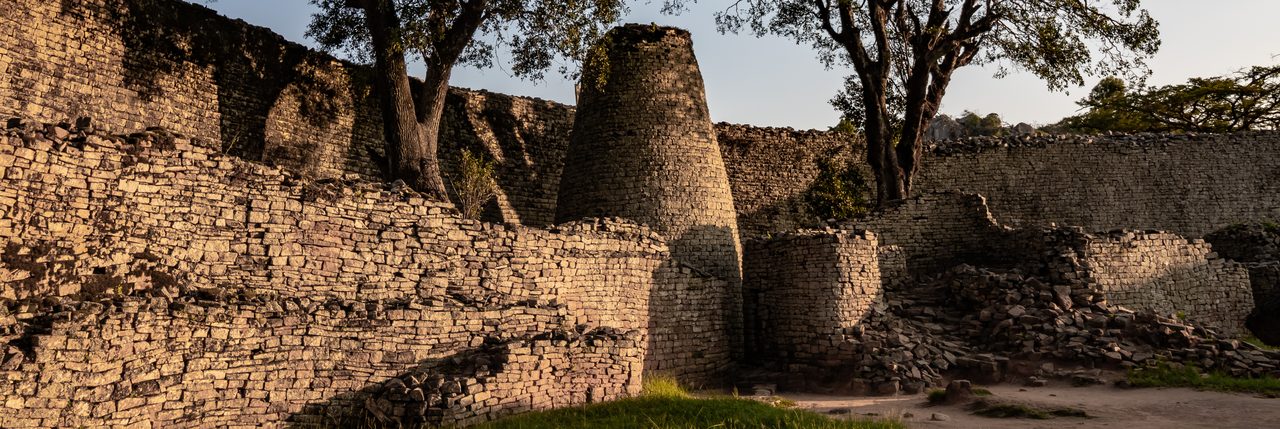
Researchers have proposed that the conical tower inside the Great Enclosure, the chevron pattern on the outer wall, and certain architectural alignments serve astronomical functions, potentially marking solstices, stellar risings, or agricultural calendar events. Systematic archaeoastronomical analysis has not definitively confirmed specific alignments. The conical tower's own function remains debated, with grain silo, symbolic phallus, and ritual monument all still on the table. Tier 3 is where our file puts this, and Tier 3 is what it means here: proposed, unconfirmed, and not refuted either.
The full extent of Great Zimbabwe's gold production and export is difficult to quantify. Some estimates suggest hundreds of thousands of ounces were mined and traded over the site's lifespan. Whether the capital controlled a trade monopoly or operated inside a more decentralized exchange network is unresolved, which is the same open question that keeps the economic picture in section 02 at Tier 2.
Why the capital emptied in the 15th century is not settled. Environmental factors are candidates: overexploitation of local resources, including wood for fuel and construction, game depletion, and soil exhaustion, alongside a possible climatic shift and political fragmentation. Our file notes that the Little Ice Age's effects in southern Africa are not well characterized, and that disentangling environmental from political causes of decline requires further research. What is not open is whether the people vanished. They did not. The Mutapa and Torwa states in section 02 are where the tradition and the trade went, and the Portuguese wrote about them.
09The Birds Come Home
Here is the removal and return record for the birds, independently verified during this article's research pass. Per Theodore Bent's own 1891 count, the Hill Complex held eight soapstone birds, six large and two small. Multiple birds were removed from Zimbabwe during the colonial period. The one Willi Posselt recovered in 1889 was sold to Cecil Rhodes and displayed at his Cape Town estate, Groote Schuur. A separate bird's stone pedestal was acquired by a missionary and sold to Berlin's Ethnological Museum in 1907, and was reunited with its upper portion for a 1997 exhibition in Belgium, Legacies of Stone. In 1981, one year after Zimbabwean independence, South Africa returned four of the birds to Zimbabwe in an exchange for a collection of Hymenoptera specimens: wasps, bees, and ants. Germany repatriated the Berlin pedestal in 2003. And the single remaining bird stayed at Groote Schuur until 14 and 15 April 2026, when South Africa formally returned it together with eight sets of ancestral human remains. The headline facts of that return are directly re-fetched and firm; the officials, venues, and quoted line that follow are gathered by search and softer, as the next paragraph explains. The handover was led by South Africa's Minister of Sport, Arts and Culture, Gayton McKenzie, at the Iziko South African Museum in Cape Town, following a repatriation directive from President Cyril Ramaphosa. President Emmerson Mnangagwa presided over the receiving ceremony at State House, describing the bird's return as signifying the return of a national icon that epitomises our sovereignty. All eight birds are now reunited at the Great Zimbabwe site museum for the first time since their removal.
The sourcing on that paragraph deserves stating precisely rather than being waved through, because half of it is firmer than the other half. The headline facts, that the last bird was returned in April 2026, that eight sets of ancestral remains came with it, and that all eight birds are now reunited, were confirmed by directly re-fetching the source during this article's research pass. The named officials, the ceremony venues, and the quoted line come from April 2026 news coverage gathered by search, including Xinhua, IOL, and an address published by South Africa's Department of Sport, Arts and Culture, and those were not each re-fetched individually. Both halves are carried at Tier 1. The second half is the softer one, and it is labelled here rather than promoted quietly to the footing of the first.
| When | What Happened |
|---|---|
| 1889 | Willi Posselt recovers a bird; it is sold to Cecil Rhodes and displayed at his Cape Town estate, Groote Schuur |
| 1891 | Theodore Bent's expedition; his own count records eight birds at the Hill Complex, six large and two small |
| 1907 | A separate bird's stone pedestal, acquired by a missionary, is sold to Berlin's Ethnological Museum |
| 1981 | One year after Zimbabwean independence, South Africa returns four birds in an exchange for a collection of Hymenoptera specimens |
| 1997 | The Berlin pedestal is reunited with its upper portion for the Legacies of Stone exhibition in Belgium |
| 2003 | Germany repatriates the Berlin pedestal |
| 14 and 15 April 2026 | South Africa formally returns the last bird, held at Groote Schuur, together with eight sets of ancestral human remains. All eight birds are now reunited at the Great Zimbabwe site museum for the first time since their removal |
Our Great Zimbabwe file was last updated on 28 February 2026, and it still describes the birds' return as an unresolved and sensitive cultural issue. Roughly six weeks after that update, it stopped being unresolved. This article does not fault the file for that; the event postdates the writing, which is what a current-events gap looks like in a research library honest about its own dates. It flags it because the distance between those two states is the point. The birds were carried off the hill in 1889 and 1891, and the last one came back in April 2026. That is roughly 135 to 137 years, which is the true length of this story: longer than the century of scholarly denial that usually gets counted, because the denial was answered by archaeologists decades before the objects themselves were made whole.
Fast Facts
- The Site
- Southeastern Zimbabwe; capital of a Shona-speaking civilization that flourished from the 11th to the 15th centuries CE. Our file records it as the largest stone structure in sub-Saharan Africa south of the Ethiopian highlands
- The Great Enclosure
- The largest single structure on the site: approximately 820 feet in outer circumference, with walls up to 36 feet high and 17 feet thick
- The Building Method
- Dry-stone walling with no mortar; shaped granite worked along the rock's natural fracture patterns through controlled heating and cooling
- Not An Isolated Object
- Over 300 similar stone-walled sites across Zimbabwe, Mozambique, and South Africa, forming the architectural tradition Great Zimbabwe belongs to
- Who Built It (Tier 1)
- Ancestors of the Shona-speaking peoples, on ceramic sequences, radiocarbon dates, cultural artifacts, and architectural technique. Established over a century ago, repeatedly confirmed, with no legitimate archaeological debate on the point
- The Wealth
- Over 4,000 documented ancient gold mines in Zimbabwe; excavated gold artifacts, Indian Ocean glass beads traced to India, Southeast Asia, and the Middle East, Chinese celadon, and Near Eastern glass, reached via the Swahili ports of Sofala and Kilwa
- Peak Population (Tier 2)
- 10,000 to 20,000 in the 13th and 14th centuries; the mechanism of political and economic control, whether tribute, trade monopoly, or redistribution, remains debated
- The Birds
- Eight carved soapstone birds from the Hill Complex, approximately 13 to 16 inches tall on pedestals about three feet high, taken primarily by Willi Posselt in 1889 and Theodore Bent in 1891. Our file records no comparable objects found elsewhere
- Mapungubwe (Tier 1)
- At the Limpopo and Shashe confluence in northern South Africa; about 1075 to 1290 CE; the first complex state society in southern Africa, and the spatial template Great Zimbabwe elaborated. UNESCO World Heritage Site, 2003
- The Mapungubwe Correction
- Our file's summary claims over 100 gold burials; its own Tier 1 section says 23. The independently corroborated figure is 23 graves in total, of which three were gold-rich royal burials. This article uses the corrected figure
- The Golden Rhinoceros
- Gold foil tacked over a carved wooden core, from the third of the three royal graves, excavated in 1933; spectroscopic analysis published by Oddy in 1984
- Mauch, 1871
- Reached the site on 5 September, guided by Karanga tribesmen, and declared it the Land of Ophir, partly on his own misidentification of local timber as cedar. Cedar does not grow in the region
- Hall, 1902
- Curator who cleared roughly twelve feet, about 3.6 meters, of stratified deposits searching for non-African builders. A visiting archaeologist called his methods reckless blundering; Hall was subsequently dismissed
- The 1970 Rule (Tier 1)
- Official Rhodesian publications barred from stating African origin as established fact, and any article crediting African builders required an equal number of words suggesting Portuguese, Phoenician, or Queen of Sheba builders
- Peter Garlake
- Left the country in protest in 1970; worked at Ife in Nigeria, then as a senior lecturer at University College London from 1976 to 1981; returned to Zimbabwe in 1981 after the transition to majority-rule government
- Non-African Builders (Tier 4)
- No. Definitively refuted by over a century of professional archaeology. The claim originated in colonial-era racism and biblical literalism and persists only in fringe literature, with no evidentiary support
- Beyond African Capability (Tier 4)
- No. Experimental archaeology demonstrates dry-stone construction is feasible with the available materials and techniques, and the 300-plus related sites show a continuous building tradition
- Still Genuinely Open (Tier 3)
- Proposed astronomical alignments remain unconfirmed by systematic analysis; the conical tower's function is debated; total gold output is unquantified; the causes of the 15th-century abandonment are unresolved
- World Heritage
- Great Zimbabwe National Monument inscribed by UNESCO in 1986; the Mapungubwe Cultural Landscape in 2003
- The Birds Come Home (Tier 1)
- Four returned by South Africa in 1981, one year after Zimbabwean independence; the Berlin pedestal repatriated by Germany in 2003; the last bird returned from Groote Schuur on 14 and 15 April 2026 together with eight sets of ancestral human remains. All eight are now reunited at the Great Zimbabwe site museum for the first time since their removal
What Is Settled Here, and What Is Not
Great Zimbabwe was the capital of a Shona-speaking civilization that flourished from the 11th to the 15th centuries CE, with a Hill Complex, a Great Enclosure approximately 820 feet in outer circumference with walls up to 36 feet high and 17 feet thick, and residential Valley Ruins below. It was built by ancestors of the Shona-speaking peoples, demonstrated by ceramic sequences, radiocarbon dates, cultural artifacts, and architectural technique, across systematic investigations by Randall-MacIver in 1905, Caton-Thompson in 1929, Garlake in 1973, and Huffman from the 1970s into the 2000s. Our file states there is no legitimate archaeological debate on this point and that the conclusion was established over a century ago. The site is also not an isolated object: over 300 related stone-walled sites stand across Zimbabwe, Mozambique, and South Africa.
Over 4,000 ancient gold mines are documented in Zimbabwe, and the site itself has yielded gold artifacts, Indian Ocean glass beads chemically traced to India, Southeast Asia, and the Middle East, Chinese celadon ceramics, and Near Eastern glass, connecting the capital to the Indian Ocean network through the Swahili ports of Sofala and Kilwa. These are objects in the ground rather than inferences about them, which is why this line sits at Tier 1 while the questions about how the trade was controlled sit a tier lower.
Mapungubwe, at the Limpopo and Shashe confluence, preceded Great Zimbabwe: the first complex state society in southern Africa, showing the earliest evidence of class-based stratification south of the Sahara, with a three-tier settlement hierarchy documented by Huffman and the University of the Witwatersrand, and over 26,000 glass beads tying it to the Indian Ocean trade. It was inscribed by UNESCO in 2003. One correction is carried in the body rather than applied quietly: our own file's headline figure of over 100 gold burials does not survive checking and contradicts that same file's Tier 1 section. The corroborated figure is 23 graves in total on Mapungubwe Hill, of which three were gold-rich royal burials, and the Golden Rhinoceros came from the third of those three, excavated in 1933.
Karl Mauch reached the site on 5 September 1871 and identified it as the Land of Ophir, partly on his own misidentification of local timber as cedar, which does not grow in the region. Richard Nicklin Hall, curator from 1902, wrote that he wished to free the site from what he called the filth and decadence of the occupation, using for its builders a racial slur quoted once, in section 05, because the sentence itself is the primary evidence for what drove him. He cleared roughly twelve feet of stratified deposits looking for non-African builders, was described by a visiting archaeologist as reckless blundering, and was dismissed. Rhodesian censorship was formalized in 1970: official publications barred from stating African origin as established fact, and any article crediting African builders required an equal number of words suggesting Portuguese, Phoenician, or Queen of Sheba builders. Peter Garlake left in protest that year and returned in 1981. South of the border, the apartheid-era government classified Mapungubwe's findings for decades, with full academic access restored only after 1994. The Mauch, Hall, and 1970 details were each independently verified during this article's research pass; the Mapungubwe classification is our own files' Tier 1 record.
Our file's overall characterization of Great Zimbabwe's interpretation history as a case study in ideological suppression, and among the best-documented cases of political distortion of archaeology, sits at Tier 2, even though several of its specific components verify at Tier 1. So do the readings of how the kingdom actually ran: a divine or sacred kingship with the ruler mediating between the living and ancestral spirits; Huffman's cognitive model reading the Hill Complex, Great Enclosure, and Valley as encoded Shona cosmology, which our file calls debated but influential; a peak population of 10,000 to 20,000 in the 13th and 14th centuries; and the successor sequence into Mutapa and Torwa or Butua, documented by the Portuguese from the 1500s. At Mapungubwe the same tier carries Huffman's Sacred Leadership model and his 2009 climatic-desiccation reading of the abandonment around 1290 CE, against the counter-argument from Chirikure and colleagues that spatial organization has multiple explanations rather than one ideological template. That one is carried here unresolved, with both sides at strength.
Astronomical functions proposed for the conical tower, the chevron pattern, and certain alignments have not been definitively confirmed by systematic archaeoastronomical analysis, and the conical tower's own function is still debated between grain silo, symbolic phallus, and ritual monument. The total gold produced and exported is not quantifiable from present evidence, with some estimates in the hundreds of thousands of ounces, and whether the capital held a monopoly or worked inside a decentralized network is unresolved. So are the causes of the 15th-century abandonment: resource overexploitation, game depletion, soil exhaustion, a possible climatic shift, and political fragmentation are all candidates, and our file notes that the Little Ice Age's effects in southern Africa are not well characterized. Speculative here means proposed and unconfirmed, not refuted.
No. The attribution of Great Zimbabwe to Phoenicians, the Queen of Sheba, King Solomon's miners, or any other non-African builders has been definitively refuted by over a century of professional archaeology. It originated in colonial-era racism and biblical literalism, traceable to Mauch's 1871 Land of Ophir identification, and it persists only in fringe literature with no evidentiary support. This is not an open question being held politely open. It is a closed one, and it was closed by fieldwork rather than by opinion.
No. Claims that Great Zimbabwe's architecture required advanced technology beyond African capability are contradicted by experimental archaeology demonstrating the feasibility of dry-stone construction with available materials and techniques, and by the existence of over 300 related stone-walled sites representing a continuous building tradition. A tradition with hundreds of members is not an anomaly in need of an outside explanation. It is a tradition.
Eight carved soapstone birds were taken from the Hill Complex, primarily by Posselt in 1889 and Bent in 1891, whose own count records six large and two small. South Africa returned four in 1981, one year after Zimbabwean independence, in an exchange for a collection of Hymenoptera specimens. Germany repatriated the Berlin pedestal in 2003. The last bird stayed at Cecil Rhodes's former Cape Town estate, Groote Schuur, until 14 and 15 April 2026, when South Africa formally returned it together with eight sets of ancestral human remains, at a handover in Cape Town and a receiving ceremony in Zimbabwe, per softer search-gathered coverage of the ceremony details. All eight birds are now reunited at the Great Zimbabwe site museum for the first time since their removal, which is the firmer, directly re-fetched half of this record. Our own file, last updated on 28 February 2026, still calls this an unresolved and sensitive cultural issue, and that framing is now out of date by roughly six weeks.
So this file closes in a place the rest of this wing rarely reaches. The kingdom is not lost in the sense of being unfound. Its capital is standing, its walls are measured, its economy is visible in beads and celadon and gold, its builders are known and confirmed on four separate lines of evidence, and the last of its birds is back at the site museum with the other seven. What went missing for more than a century was not information. Two systematic investigations had answered the question by 1929, the denial nonetheless ran through to the formalized 1970 rule and beyond, to 1979, and what ended it was a change of government rather than a change in the evidence. Mauch's cedar was a mistake anyone tired and hopeful might make. A required word count is not a mistake. Which leaves the question this file actually raises, and it is not who built Great Zimbabwe, because that was answered in 1905 and has been confirmed repeatedly ever since. It is this. If the record about a place this large, this thoroughly excavated, and this plainly visible could be held wrong on purpose for that long, how much of the rest of the record is still waiting for its April 2026?
Sources & further reading
Everything above is drawn from our research library on Theories of Anything, principally the Great Zimbabwe file W_3_03, whose own header rates it Tier 1 to 2 with high confidence and a source confidence of 4 out of 5, and secondarily the Mapungubwe file W_3_22, at 3 out of 5. Between them the two files carry 33 bibliography entries, 19 and 14, which is the figure in the source count above. Several things in this article come from independent checking during its research pass rather than from those files, and each is flagged where it appears. The largest is the completed return of the Zimbabwe Birds. Our Great Zimbabwe file was last updated on 28 February 2026 and still frames that return as an unresolved and sensitive cultural issue; the event postdates the writing. The headline facts, that the last bird came home in April 2026, that eight sets of ancestral human remains came with it, and that all eight birds are now reunited at the Great Zimbabwe site museum, were confirmed by directly re-fetching the source during the research pass, and it is linked below. The named officials, the venues, and the quoted line come from April 2026 news coverage gathered by search, including Xinhua, IOL, and an address published by South Africa's Department of Sport, Arts and Culture, and those were not each re-fetched individually. Second, our Mapungubwe file's own summary figure of over 100 gold burials does not survive checking and contradicts that file's own Tier 1 section, which says 23; the corroborated figure, cross-checked against South African History Online, SANParks, the Peace Parks Foundation, and southafrica.co.za coverage, is 23 graves in total with three gold-rich royal burials, and this article uses it and says so in section 04. Third, the concrete detail on Mauch's cedar error, Hall's clearance and dismissal, the 1970 censorship rule, and Garlake's departure and return was independently sourced, and those sources are linked below. Now the housekeeping, which belongs here rather than being passed along quietly. Across the two files, 8 of the 11 bibliography DOIs checked are wrong. Four in the Great Zimbabwe file follow one defect class: the DOI attached to a book resolves to a published review of that book rather than to the book itself. Those four are Garlake's Great Zimbabwe (1973), Huffman's Snakes and Crocodiles (1996), Beach's The Shona and Zimbabwe, 900-1850 (1980), and Caton-Thompson's The Zimbabwe Culture: Ruins and Reactions (1931). This is the same defect class found on our Moai of Rapa Nui file during this same build session, which makes it a pattern rather than a one-off. Four more, in the Mapungubwe file, are wrong in a harder way: the DOI on Calabrese (2007) returns a 404 and resolves to no registered work at all, while the DOIs on Chirikure and colleagues (2014), on Oddy (1984), and on Denbow and colleagues (2015) each resolve to an entirely unrelated article, one of them a paper on Tiwanaku ritual practice and another a review of adhesion to gold. One ISBN is wrong as well: the Hall and Stefoff Great Zimbabwe (2006) carries an ISBN belonging to a different author's book about the soapstone birds. And one entry could not be verified to exist at all, a 2013 Chirikure title in the Great Zimbabwe file that no search this session could locate, and which may be a garble of two real and different Chirikure papers. Every one of those works is therefore named by title, author, and year and is not linked here. No wrong identifier has been carried forward, and none has been replaced with a guess. Three identifiers were checked and found correct, and all three are linked below: Pikirayi's The Zimbabwe Culture (2001), Robertshaw and colleagues on southern African glass beads (2010), and Chirikure, Manyanga, Pikirayi and Pollard on new pathways of sociopolitical complexity (2013). A fourth, the ISBN on Fauvelle's The Golden Rhinoceros (2018), was also verified correct and is named here without a link. Two more items for the record. The Great Zimbabwe file's cross-reference to a Bantu-traditions document points instead at a real but entirely unrelated file on Hittite and Hurrian mythology, and two rows of its footer index carry IDs matching no document in the corpus; the Mapungubwe file's footer links an Aksumite document under an ID that does not exist anywhere. And the Great Zimbabwe file has a markdown break inside its own Tier 4 section, where a sentence is cut off mid-word and collides into a duplicated heading; the claim content there was still legible and was used. The two files also disagree slightly on Mapungubwe's dates, 1075 to 1220 against about 1075 to 1290, which section 04 states rather than smoothing over. All of this is collected for a future corpus pass, not corrected in the corpus here. The files' other named sources include Garlake's Great Zimbabwe Described and Explained (1982), Randall-MacIver's Mediaeval Rhodesia (1906), Bent's The Ruined Cities of Mashonaland (1892), Fouche's Mapungubwe: Ancient Bantu Civilisation on the Limpopo (1937), Huffman's Mapungubwe (2000), Voigt's archaeozoological interpretation of the Mapungubwe community (1983), Ndoro's Great Zimbabwe in Scientific American (1997), Sinclair on eastern African chronology (1991), Summers's Ancient Mining in Rhodesia (1969), and Fontein's The Silence of Great Zimbabwe (2006). Open the full files to check the sourcing and go deeper.
Image credits
- The Great Enclosure exterior wall, Great Zimbabwe Fanny Schertzer, via Wikimedia Commons (CC BY 3.0). CC BY 3.0 Source.
- The Hill Complex, Great Zimbabwe Fanny Schertzer, via Wikimedia Commons (CC BY 3.0). CC BY 3.0 Source.
- The western entrance passage into the Great Enclosure Andrew Moore, via Wikimedia Commons (CC BY-SA 2.0). CC BY-SA 2.0 Source.
- The Golden Rhinoceros of Mapungubwe Sian Tiley-Nel, University of Pretoria Museums, via Wikimedia Commons (CC BY-SA 4.0). CC BY-SA 4.0 Source.
- A general view of the Great Zimbabwe ruins Trinapee, via Wikimedia Commons (CC BY-SA 4.0). CC BY-SA 4.0 Source.
- The Conical Tower inside the Great Enclosure Andrew Moore, via Wikimedia Commons (CC BY-SA 2.0). CC BY-SA 2.0 Source.
- 1892 photographic plate of the soapstone Zimbabwe Birds, from Bent's expedition book James Theodore Bent, via Wikimedia Commons (Public Domain). Public Domain Source.
- Card crop of The Great Enclosure exterior wall, Great Zimbabwe Fanny Schertzer, via Wikimedia Commons (CC BY 3.0). CC BY 3.0
.jpg)
.jpg)


.jpg)
