
The Epic of Gilgamesh: The Oldest Story Ever Written
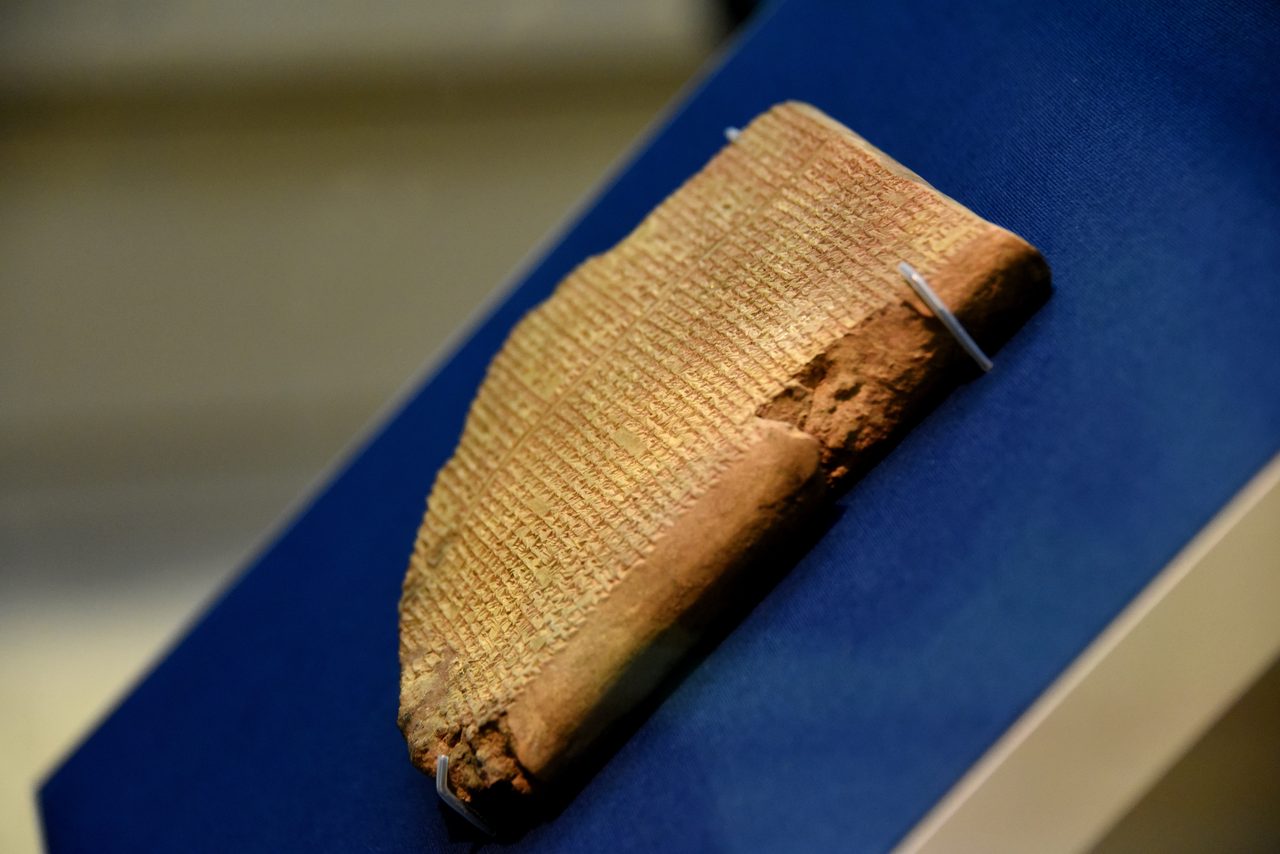
Humanity's first great poem already has all of it: a god who warns one man to build a boat, a flood that ends when the birds stop coming back, a serpent that steals immortality out of a man's hands while he is bathing, and a king who cannot stop thinking about dying. Our primary research file for this article, A_1_08, tracks the surviving versions across more than 1,500 years, from five Sumerian poems about Bilgames at roughly 2100 to 1800 BCE, through the first unified Akkadian narrative at 1800 to 1600 BCE, to the twelve-tablet Standard Babylonian edition whose Nineveh copies were made in the 7th century BCE, and it counts over 200 fragments from more than 73 manuscripts recovered across Iraq, Syria, Turkey and Israel. Those tablets came out of the ground at Nineveh in modern Iraq in 1853, and nobody could say what Tablet XI meant until 1872, when a self-taught British Museum assistant named George Smith worked it out and read it aloud in London to an audience that independent sources report included the sitting Prime Minister. This article carries the poem at the tiers our files assign it. The manuscript tradition, the twelve tablets, the flood account, the serpent and the excavated walls of Uruk sit at Tier 1. Sin-leqi-unninni's authorship, Siduri's advice, Enkidu's meaning and the real cedar economy behind the Humbaba episode sit at Tier 2. The historical-flood proposals, the underworld tablet and the archaeoastronomical readings sit at Tier 3. Gilgamesh as a literal alien-human hybrid or a literal giant, the plant of youth as a real drug or device, and the story that his tomb was found in 2003 sit at Tier 4, and are stated here as the no they are. One thing this article deliberately does not do is put a number on how much older the Gilgamesh flood account is than the biblical one, because the research behind it supplies no date for the composition of Genesis. It also states the defects in our own files rather than passing them along quietly, including a combined bibliography in which ten of sixteen DOI-bearing citations resolve to something other than the work they are attached to.
In 1872 a self-taught assistant at the British Museum stood up in front of the Society of Biblical Archaeology in London and read a flood story off a broken clay tablet. His name was George Smith, he had no formal academic training, and the tablet had come out of the ground at Nineveh, in modern Iraq, nineteen years earlier. What he read described a man warned by a god to build a boat, a storm, a mountain the boat came to rest on, and birds released one after another to test whether the water had gone down. Our primary research file for this article, A_1_08, puts the consequence of that evening in a single line: it was a sensation that challenged the uniqueness of the biblical flood narrative. The tablet is Tablet XI of the Epic of Gilgamesh, and the poem it belongs to is the subject here. Two corpus files were read in full for this article. Where the text below says our primary file it means A_1_08 and nothing else; where it says the companion file it means A_1_17, a separate document on the same epic; where a fact came from independent checking during the research pass instead, it says so. Nothing below is attributed to both files unless both actually carry it, and exactly one claim in this article is.
01December 3, 1872
Hormuzd Rassam discovered the library of Ashurbanipal at Nineveh, modern Kuyunjik in Iraq, in 1853. In 1872 George Smith of the British Museum deciphered Tablet XI, the Flood Tablet, and announced it to the Society of Biblical Archaeology, a sensation that challenged the uniqueness of the biblical flood narrative. That gap between the two dates is the part worth holding on to. The tablets came out of the ground in 1853, and it was 1872 before anyone could say what the most famous one of them actually said. The excavation and the reading are two separate achievements, nineteen years apart, and the second one is the one that made the news.
Independent checking during this article's research pass put a date and a room around our primary file's bare 1872. Smith's reading took place specifically on December 3, 1872, in London, before the Society of Biblical Archaeology, and the audience is reported across multiple independent sources to have included the Prime Minister, William Ewart Gladstone. Smith himself was a self-taught British Museum assistant rather than a formally trained academic, which is itself part of what made the discovery a public sensation. On the excavation side the same pass found that independent sources most specifically date the North Palace library-room discovery at Kuyunjik to December 20, 1853, with a separate and earlier 1852 Rassam discovery of a second palace and tablet group also reported by some sources, so 1853 for the library itself is the best-supported single date and it matches our primary file exactly. Keep the hedge on Gladstone where the sources put it. He is reported to have been there; that is a stronger statement than a rumor and a weaker one than a minute-book entry, and this article does not upgrade it.
One naming correction belongs here rather than in a footnote, because this article says the man's name repeatedly and a reader who opens our own second file will find it written differently. The companion file, A_1_17, calls him George Henry Smith. Independent checking during the research pass against Britannica, the Linda Hall Library's biographical profile and a third encyclopedia source found no attested middle name for the Assyriologist George Smith, who lived from 1840 to 1876; every source checked names him simply George Smith. The most plausible source of the error is a conflation with Henry Creswicke Rawlinson, a real and different contemporary Assyriologist who mentored Smith. Our primary file, A_1_08, has it right. This article uses George Smith throughout, and the error is logged in the sources note below for a future corpus-hygiene pass rather than repeated.
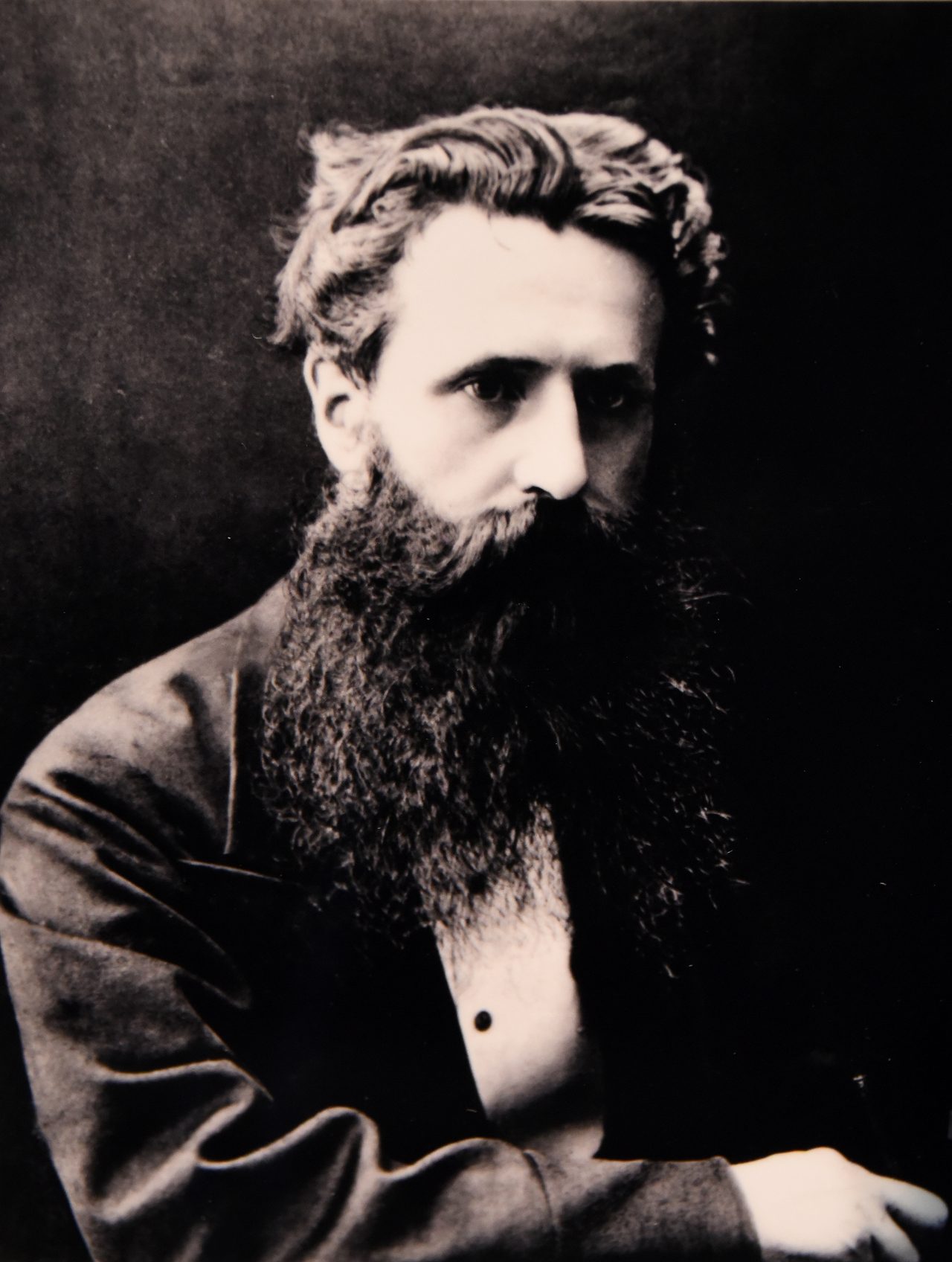
This is a modern photograph of a historical portrait on display, taken in 2016, not a nineteenth-century photograph of Smith himself. The portrait is the historical object; the photograph is only a record of it.
02What Came Out Of the Ground
The epic exists in multiple versions spanning over 1,500 years. The Sumerian poems, in Sumerian, run from approximately 2100 to 1800 BCE and consist of five independent poems about Bilgames rather than one continuous story. The Old Babylonian version, in Akkadian, runs from approximately 1800 to 1600 BCE and is the earliest unified narrative, titled Surpassing All Other Kings. The Middle Babylonian version, also Akkadian, runs from approximately 1400 to 1200 BCE and survives in fragments from Hattusa the Hittite capital, from Megiddo and from Ugarit, and the spread of those find spots is itself the evidence that the poem had already traveled well beyond Mesopotamia. The Standard Babylonian version was composed approximately 1200 BCE, with the Nineveh copies dating from the 7th century BCE, and it is the twelve-tablet edition. Over 200 fragments from more than 73 manuscripts have been identified across Iraq, Syria, Turkey and Israel. New fragments continue to be discovered: the Sulaymaniyah Museum tablet, recognized in 2011, added 20 previously unknown lines to Tablet V, the Cedar Forest episode.
| The Version | When | Language and Form | How This Is Carried Here |
|---|---|---|---|
| The Sumerian Poems | Approximately 2100 to 1800 BCE | Sumerian. Five independent poems about Bilgames, not yet a single narrative | Tier 1, our primary file |
| Old Babylonian | Approximately 1800 to 1600 BCE | Akkadian. The earliest unified narrative, titled Surpassing All Other Kings | Tier 1, our primary file. This is also the version that carries the fuller Siduri passage quoted in section 08 |
| Middle Babylonian | Approximately 1400 to 1200 BCE | Akkadian. Fragments from Hattusa the Hittite capital, from Megiddo and from Ugarit | Tier 1, our primary file. The find spots are the evidence that the poem had already traveled well beyond Mesopotamia |
| Standard Babylonian | Composed approximately 1200 BCE; the Nineveh copies date from the 7th century BCE | Akkadian. The twelve-tablet edition, and the one Tablet XI belongs to | Tier 1 for the version, its dates and its twelve tablets. The attribution of this edition to a named editor is a separate claim, carried at Tier 2 in the next block |
The Standard Babylonian version is attributed to Sin-leqi-unninni, described as a scholar-priest, a tupsar, of the Kassite period, approximately 1200 BCE. He is the earliest named literary author in world history whose name is attached to a surviving work. His editorial achievement, synthesizing the Sumerian poems, the Old Babylonian narrative and new compositions into a unified twelve-tablet epic, represents one of the foundational acts of world literature. Note the exact shape of that claim, because it is easy to inflate. It is not that Sin-leqi-unninni invented the story; the story is centuries older than he is, as the version table above shows. It is that he is the first person whose name has stayed attached to a text we can still read, and our primary file carries the attribution at Tier 2 rather than Tier 1, which is where this article leaves it.
A word about this article's own title, since honesty about our own framing is the point of the tier system. The oldest story ever written is our primary file's framing, and its own document title is Epic of Gilgamesh: Oldest Literary Work. What the claim cards behind this article actually support is narrower and, read carefully, more interesting. The Sumerian Bilgames poems at roughly 2100 to 1800 BCE are older than the unified epic, which means the superlative belongs to a tradition rather than to any single manuscript. And the strongest precedence claim in the file is not about age at all but about authorship, at Tier 2. So the honest version of the headline is narrower than the headline. What our primary file establishes is a literary tradition attested continuously across more than 1,500 years of manuscripts, and, at Tier 2, an author's name attached to it that is the earliest such name in world history. Neither of those is the same sentence as the oldest story ever written, and this article does not pretend otherwise.
03The Twelve Tablets, In Order
The Standard Babylonian version runs across twelve tablets in a fixed narrative order, and the table below is our primary file's own tablet-by-tablet summary of it. Read the sequence and the structure is unmistakable. The first half is two men becoming inseparable and killing two monsters together. The seventh tablet condemns one of them for it. Everything after that is the survivor refusing to accept what has happened, crossing the Waters of Death to argue with it, and losing the argument. The flood story that made George Smith famous sits at position eleven of twelve, inside a frame that is not about a flood at all.
| Tablet | What Happens In It | How This Is Carried Here |
|---|---|---|
| I | Gilgamesh is introduced as king of Uruk and builder of the city walls, and the gods create Enkidu as his counterpart | Tier 1, our primary file. The walls are also a real excavated structure, at Tier 1, in section 09 |
| II | Shamhat the temple priestess civilizes Enkidu; Enkidu and Gilgamesh fight, then become inseparable friends | Tier 1 for the narrative. What the civilizing scene means is a separate question, carried at Tier 2 in section 04 |
| III | Preparation for the journey to the Cedar Forest, with Ninsun, Gilgamesh's mother, praying to Shamash | Tier 1, our primary file |
| IV | The journey itself, and Gilgamesh's five dreams | Tier 1, our primary file |
| V | The battle with Humbaba, guardian of the Cedar Forest, who is killed despite his pleas | Tier 1, our primary file. This is the tablet the 2011 Sulaymaniyah find added twenty lines to, in section 05 |
| VI | Ishtar proposes marriage, Gilgamesh refuses, Ishtar sends the Bull of Heaven, and Enkidu and Gilgamesh slay it | Tier 1 for the narrative. A reading of the Bull as the constellation Taurus is a separate claim, at Tier 3 in section 10 |
| VII | The gods decree that Enkidu must die for the killing of Humbaba and the Bull, and Enkidu falls ill | Tier 1, our primary file. This is the hinge of the poem |
| VIII | Enkidu's death and Gilgamesh's lament, which our primary file calls one of the oldest literary expressions of grief | Tier 1, our primary file, with its own hedge kept: one of the oldest, not the oldest |
| IX | The terrified Gilgamesh journeys to find Utnapishtim, the immortal flood survivor | Tier 1, our primary file. The terror is the text's, not this article's gloss |
| X | The crossing of the Waters of Death with the ferryman Urshanabi, and the tavern-keeper Siduri's counsel | Tier 1 for the narrative. The fuller wording of Siduri's counsel belongs to the Old Babylonian version and is carried at Tier 2 in section 08 |
| XI | The flood narrative, and the loss of the Plant of Youth to the serpent | Tier 1, our primary file. This is the tablet George Smith read aloud in 1872 |
| XII | A Sumerian-derived appendix in which Enkidu's shade describes the underworld | Tier 1 that the appendix is there and what it contains. Its origin and what it reflects are carried at Tier 3 in section 10 |
04Enkidu, and What Civilization Costs
Enkidu is created by the gods as a wild man who lives with animals, eats grass and drinks at watering holes. His civilizing through sexual initiation with the temple priestess Shamhat marks the transition from nature to culture, and the animals flee from him afterward. Our primary file records that this has been interpreted as both a celebration and a critique of civilization: Enkidu gains wisdom and friendship but loses his unity with nature, and ultimately dies because of civilization's violence, which is to say because of the Cedar Forest quest. Thorkild Jacobsen, in The Treasures of Darkness of 1976, reads the whole epic as a meditation on the costs of civilization itself. Both readings are in the file, neither is crowned, and this article does not crown one either, because the text supports the ambivalence rather than resolving it.
The companion file, A_1_17, adds three named interpretive frameworks for Enkidu that our primary file does not carry. The nature-to-culture reading is Jeffrey Tigay's, from 1982, in which Enkidu's transformation through the encounter with Shamhat represents the Mesopotamian understanding of civilization as a departure from nature. The noble-savage reading treats Enkidu as one of the earliest literary representations of the uncorrupted natural human, with the important caveat that the text ultimately validates civilization, since Enkidu becomes stronger through culture rather than weaker. And the shadow reading, drawing on Campbell's 1949 work The Hero with a Thousand Faces, treats Enkidu in Jungian terms as Gilgamesh's shadow or double, the instinctual counterpart to an over-civilized king. Attribute these to A_1_17 and not to our primary file; they are one of the genuine reasons the second document was worth reading in full.
05The Cedar Forest, and a Tablet Bought In 2011
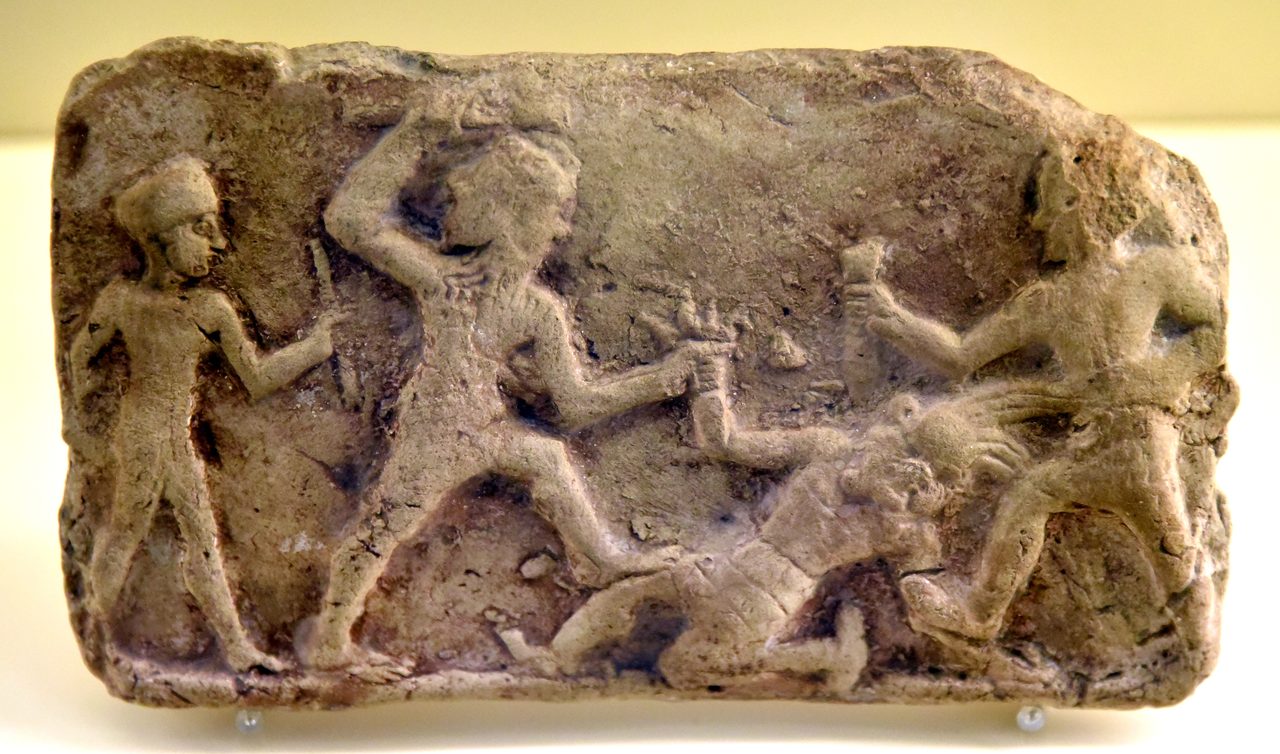
Mesopotamia was timber-poor, and the Cedar Forest, located in Lebanon or the Amanus mountains, was a real and vital source of building material. Sumerian and Akkadian royal inscriptions document actual military expeditions to acquire cedar from the Levant. Our primary file's reading follows from that: the Humbaba figure, also written Huwawa, may represent indigenous mountain populations or environmental guardians of the cedar forests. Hold the may where the file puts it. What is solid at this tier is that the poem's most fantastical-looking episode sits on top of a documented resource problem and a documented pattern of expeditions to solve it. What is not established is that Humbaba stands for any particular people.
Independent checking during this article's research pass reconstructed the 2011 discovery in detail, and it is the least mythological story in this article. The Sulaymaniyah Museum bought a lot of roughly 80 to 90 unprovenanced cuneiform tablets from a dealer in late 2011 for a reported 800 dollars. Farouk Al-Rawi of the School of Oriental and African Studies at the University of London spotted the significance of one large tablet in the lot, still caked in mud, catalogued as T.1447, and recognized it as a missing piece of Tablet V, the Cedar Forest episode. His analysis with Andrew George added roughly twenty new lines and resolved a longstanding gap in the text, and it was published in 2014 in the Journal of Cuneiform Studies, volume 66, pages 69 to 90, which matches our primary file's own bibliography exactly. That citation is also one of the six identifiers across our two files that was independently checked and found to resolve correctly.
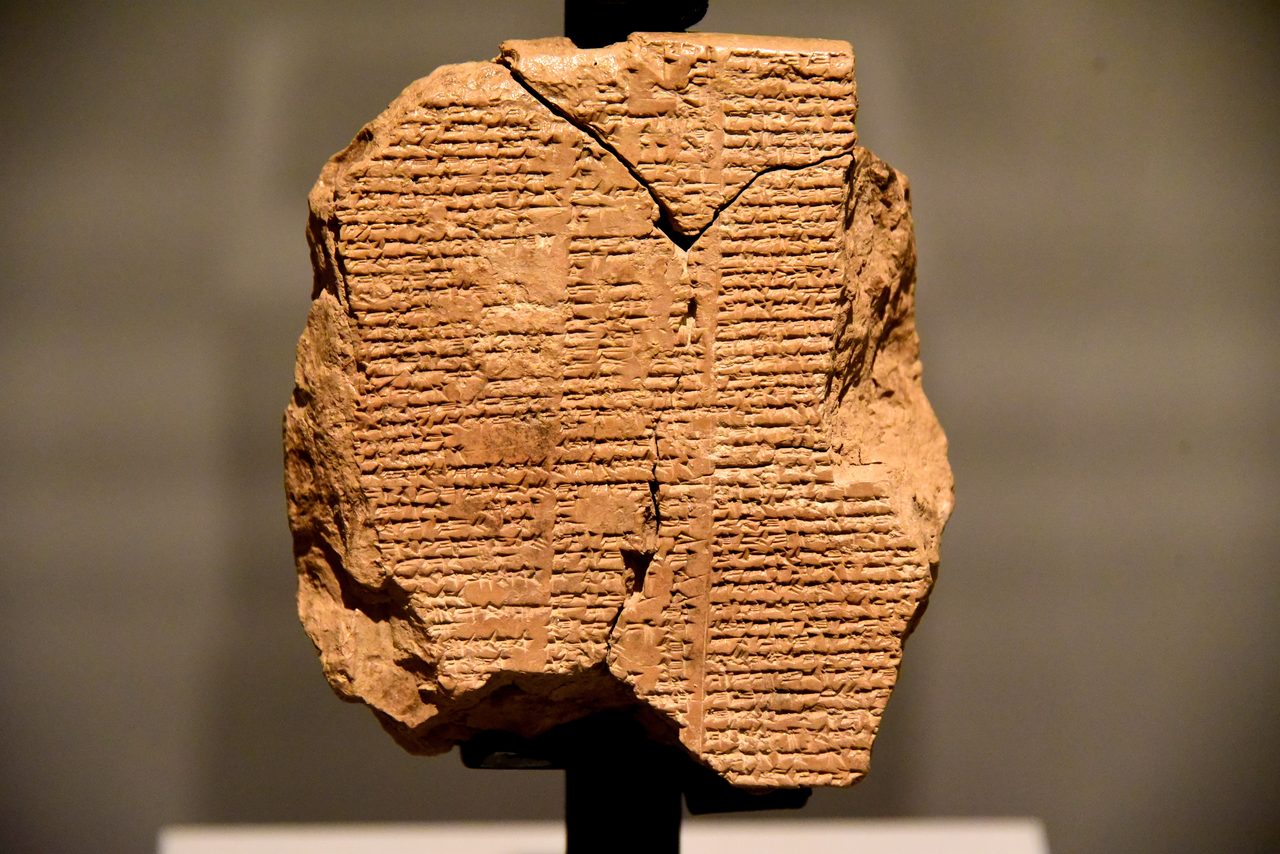
Unlike the Flood Tablet above, which came out of a documented excavation in 1853, this tablet came out of an undocumented dealer's lot in 2011, with no record of where in Iraq it had originally been unearthed. Its identification as part of the epic rests entirely on what Al-Rawi and George could read on its surface.
What those twenty lines say is carried at a lower tier than the fact that they exist. Our primary file records that the 2011 tablet expands the Cedar Forest description, including Humbaba as warden of a vast ecosystem with diverse fauna, possibly reflecting genuine ecological knowledge. That last clause is the file's own hedge and it stays. A poem describing a noisy forest full of animals is compatible with real ecological observation and also compatible with good writing about a place the writers had only heard of, and nothing in our files separates the two.
06Tablet XI, and the Comparison That Started the Sensation
In the Gilgamesh flood account, Utnapishtim tells Gilgamesh how the god Ea, also called Enki, warned him of the gods' plan to destroy humanity with a flood. He built a boat, given as a perfect cube 120 cubits on each side in the Babylonian version, and loaded his family, craftsmen and animals. The storm lasted six days and seven nights, and the boat landed on Mount Nimush, also written Nisir. He released a dove, which returned; a swallow, which returned; and a raven, which did not return, indicating dry land. The gods then granted Utnapishtim and his wife immortality as a unique exception, settling them at the mouth of the rivers. That last detail is the one the rest of the poem turns on. Immortality in this story is not available. It was awarded once, to one couple, and the award is described in the text as an exception.
| The Element | The Epic of Gilgamesh, Tablet XI | Genesis 6 to 9 | The Atra-Hasis Epic | How This Is Carried Here |
|---|---|---|---|---|
| The Divine Warning | Ea warns Utnapishtim | God warns Noah | Enki warns Atra-Hasis | Tier 1, our primary file's own comparison |
| The Boat | A cube, 120 cubits on each side | An ark, 300 by 50 by 30 cubits | A boat, mentioned but less detailed | Tier 1, our primary file's own comparison. The shapes are genuinely different, which is part of why the comparison is interesting rather than trivial |
| The Duration | Six days and seven nights | Forty days and nights of rain | Seven days and seven nights | Tier 1, our primary file's own comparison |
| The Birds | Dove, swallow, raven | Raven, then dove twice | Birds mentioned | Tier 1, our primary file's own comparison. The order and the species differ; the method does not |
| The Landing Site | Mount Nimush | Mount Ararat | A mountain | Tier 1, our primary file's own comparison |
| The Survivor's Reward | Immortality, granted as a unique exception | A covenant, marked by the rainbow | Eternal life | Tier 1, our primary file's own comparison. This row is where the accounts diverge most in meaning rather than in detail |
One restraint belongs here, and it is the reason this article does not print the sentence a reader may be expecting. It would be easy to write that the Gilgamesh flood is a thousand years older than the Genesis flood. This article does not write it, for a simple reason: the research behind this article carries no date for the composition of Genesis, so there is no honest arithmetic to do. What our primary file does state is dated and checkable on the Mesopotamian side alone. The Standard Babylonian version was composed approximately 1200 BCE, its Nineveh copies were made in the 7th century BCE, and behind it stand the Old Babylonian narrative at 1800 to 1600 BCE and the Sumerian poems at 2100 to 1800 BCE. And what our primary file says about the effect of the 1872 reading is that it challenged the uniqueness of the biblical flood narrative. Uniqueness is the word the file uses, and uniqueness is a claim about being the only one, not about being the first one. That is the claim this article carries.
Archaeological evidence of major flooding at Ur, from Leonard Woolley's work in 1929, and at Shuruppak, modern Fara, at approximately 2900 BCE, has prompted proposals that the literary flood tradition reflects a catastrophic historical flood in southern Mesopotamia. The convergence of the Sumerian account with Ziusudra, the Akkadian accounts with Atra-Hasis and Utnapishtim, and the biblical account with Noah has been read as suggesting a common historical or cultural memory. William Ryan and Walter Pitman's Black Sea deluge hypothesis, proposed in 1997 and set out in their 1998 book Noah's Flood, offers the Mediterranean's breach into the Black Sea at approximately 5600 BCE as a possible ultimate source. Our primary file then states the limit plainly, and this article states it just as plainly: no single geological event has been conclusively identified as the historical flood, and Woolley's flood stratum at Ur is now understood to be local, since it does not appear at other Sumerian sites at the same stratigraphic level. That is the whole reason this material sits at Tier 3 and not higher. There is a real flood layer. It is the wrong shape to be the one in the poem.
That is deliberately as far as this article takes the comparative question, and the boundary is worth naming rather than leaving as an unexplained stop. The full survey of deluge traditions across cultures, and the argument about whether they spread from a common source or arose independently, is the subject of a separate article in this same wing, The Great Flood, built on corpus document C_3_01. The flood material above is here because Tablet XI is a tablet of this poem and the 1872 reading of it is this article's opening scene. Everything past that, the catalog of flood stories continent by continent and the diffusion argument underneath it, belongs to that article and is not re-litigated here.
07The Serpent Takes It Back
After the flood story, Utnapishtim tells Gilgamesh of a plant at the bottom of the sea that restores youth, called The-Old-Man-Becomes-Young-Again. Gilgamesh retrieves it by tying stones to his feet and diving. On the return journey, while he bathes in a pool, a serpent smells the fragrance of the plant, steals it, and sloughs its skin as it slithers away. Our primary file records this as one of literature's oldest associations between serpents and rejuvenation or immortality, and notes that the motif parallels the Genesis serpent's role in humanity's loss of immortality, cross-referencing the corpus document on biblical serpent references, A_2_01. In both traditions a serpent mediates between humans and the possibility of eternal life. Note what the scene actually costs him. He does not fail to find the plant. He finds it, holds it, and puts it down.
The companion file, A_1_17, adds a name and a citation to that scene. It gives the plant as samu nikitti, the plant of heartbeat, or in its other rendering the old man becomes young again, and it connects the theft to widespread serpent-renewal symbolism, cross-referencing the corpus document on the Ouroboros, A_2_09. It also names the scholarship behind the Genesis comparison: the parallel with Genesis 3, in which the serpent likewise mediates humanity's relationship with immortality and divinity, has been extensively analyzed by Forsyth in The Old Enemy of 1987. That citation is one of the six across our two files whose identifier was independently checked and found to resolve to the actual book, so it is linked below. What stays at Tier 2 is the interpretive weight of the parallel, not the existence of the two scenes, which is Tier 1 above.
08What Siduri Told Him
In the Old Babylonian version, distinct from the Standard version, the tavern-keeper Siduri offers Gilgamesh counsel that our primary file quotes directly and this article quotes in the pull line below. Our file's reading of it is that this is one of the oldest known statements of carpe diem philosophy, predating Epicurus by over a millennium and paralleling Ecclesiastes 9 verses 7 to 9. And it records an editorial fact that is more interesting than the parallel: the passage was significantly reduced in Sin-leqi-unninni's Standard edition, which suggests an editorial shift toward a more somber conclusion. Somebody editing this poem into its standard form, around 1200 BCE, read the cheerful advice in the middle of it and decided there should be less of it.
A translation note, because our two files handle this passage differently and a reader comparing them could easily conclude there are two speeches. There are not. Our primary file and the companion file quote the same underlying Old Babylonian passage from different scholarly editions, in different published wordings, and both wordings are legitimate translations of the same lines. This article quotes one of them, our primary file's, and says so, rather than printing both and letting them look like separate evidence. That is a small thing, and it is exactly the kind of small thing that turns one source into two in a reader's memory.
The companion file frames the epic's central arc as a king who has everything except permanence, and calls it humanity's first extended literary meditation on death, meaning and the limits of human achievement. Its reading of the ending is the part worth carrying: the resolution is a distinctly Mesopotamian answer to the mortality question, in which Gilgamesh returns to Uruk, contemplates its walls, and finds meaning in the enduring monuments of civilization, the achievement that outlasts the individual. Set that beside Siduri, and the poem contains two different answers to the same problem, an Old Babylonian one about enjoying the day and a Standard Babylonian one about building something that stays. The second one is the one the editor kept.
09Was There a Real Gilgamesh?
The Sumerian King List records Gilgamesh as the fifth king of the First Dynasty of Uruk, reigning for 126 years. Inscriptions from later kings reference Gilgamesh and the walls of Uruk: Utu-hegal at approximately 2100 BCE, and Anam at approximately 1821 BCE. Archaeological excavation of Uruk, modern Warka in Iraq, confirmed massive walls of approximately 9.5 kilometers in perimeter, consistent with the epic's description. Our primary file's conclusion is carefully bounded and this article keeps the boundary: a historical Gilgamesh likely ruled Uruk circa 2700 to 2600 BCE, though the literary portrayal is highly mythologized. Read those four facts as a set and the shape of the evidence is clear. Later kings treated him as a real predecessor. The city is real and its walls are excavated. A 126-year reign is not a biography. Likely is doing real work in that sentence and is not removed here.
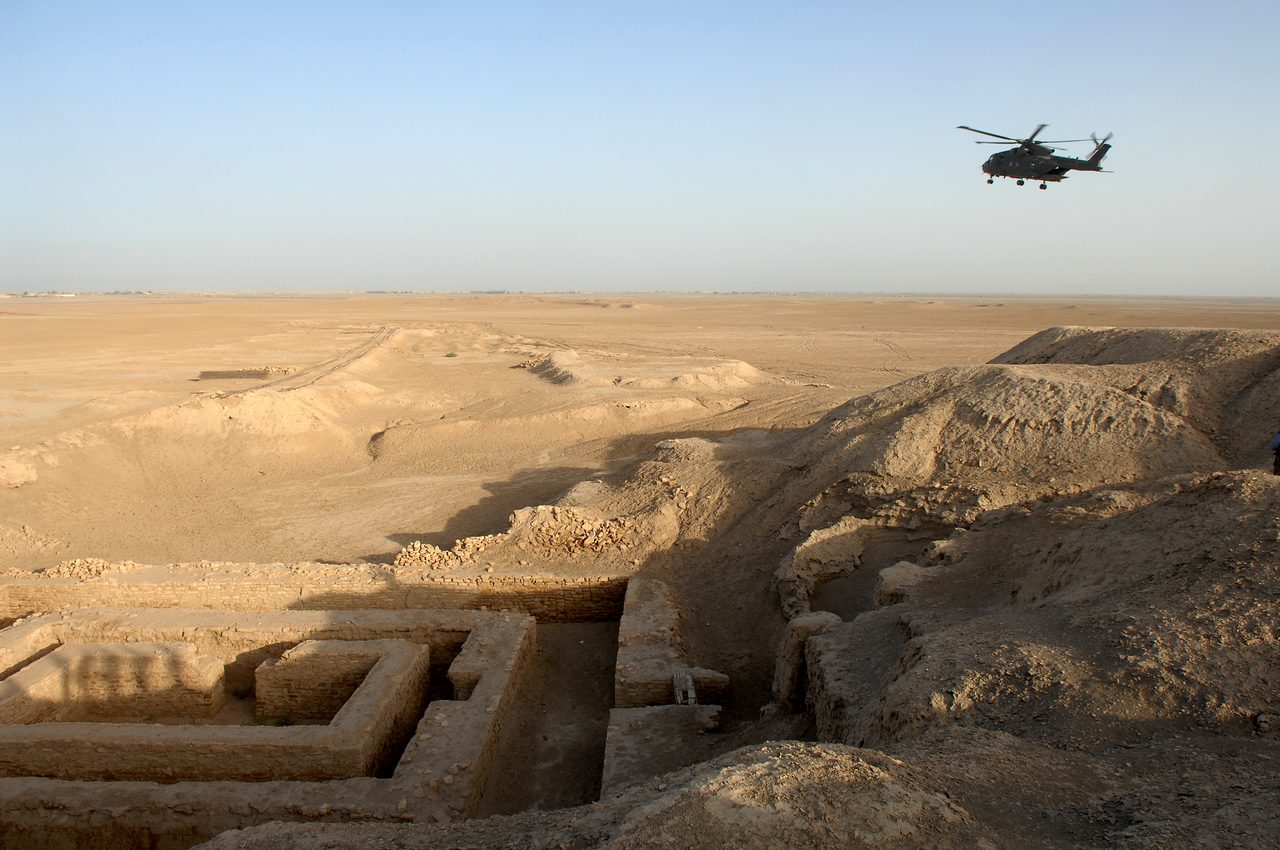
One scoping note, since the 126 years is the sort of number that pulls a reader somewhere else. The Sumerian King List's larger problem, the antediluvian rulers with reigns running to tens of thousands of years and the question of what those numbers were for, is a separate subject with its own corpus document, A_1_18, and its own future article in this wing. The single fact used here is the one needed to answer this article's own question, which is whether the epic's king existed: the list places him fifth in the First Dynasty of Uruk and assigns him 126 years. Everything else about the list is out of scope, and this article does not borrow its authority for anything beyond that one line.
10The Underworld Tablet, and the Readings Held Open
Tablet XII, a direct Sumerian translation appended to the Akkadian epic likely by later scribes, describes Enkidu's shade ascending through a hole in the earth to report on conditions in the underworld. The dead there are organized by social status and by manner of death: those with many sons fare well, while the unburied wander restlessly. Our primary file records that researchers have compared this to cross-cultural underworld-access traditions, and then declines its own comparison in the same breath, noting that the text is more consistent with standard Mesopotamian mortuary theology than with any specific external parallel. That is a document arguing against its own most quotable reading, which is worth noticing, because it is the behavior that makes the rest of the file's Tier 1 material trustworthy.
The companion file, A_1_17, carries an astronomical reading of the epic that our primary file does not mention at all. Several scholars have proposed that elements of the poem encode astronomical knowledge: that the twelve tablets may correspond to the twelve months or the zodiacal constellations, discussed but not proven, in work by Papke of 1993; that the westward journey to the Cedar Forest has been tentatively connected to solar mythology; and that the Bull of Heaven in Tablet VI may reference the constellation Taurus, with Gilgamesh and Enkidu's defeat of it possibly encoding the precessional shift away from the Age of Taurus, a reading associated with de Santillana and von Dechend's Hamlet's Mill of 1969. The companion file's own verdict on all of it is quoted here rather than softened: these readings "remain speculative and are not accepted by mainstream Assyriology, though they are taken seriously in archaeoastronomical studies." This article carries it at exactly that weight, as a clearly labeled Tier 3 reading and never as settled fact.
One further Tier 3 reading from the companion file is named here and parked rather than pursued, because pursuing it would mean writing two other articles inside this one. The Sumerian King List places Gilgamesh after the flood and assigns impossibly long reigns to the rulers before it, which has led to speculation that the list preserves garbled memories of real pre-flood dynastic periods, with the antediluvian kings representing genuine historical memory compressed and mythologized over millennia if the flood corresponds to a real inundation event. The companion file frames this as genuinely unresolved and explicitly speculative, and this article does no more than record that it exists at that tier. The King List itself belongs to corpus document A_1_18 and its own future article; the flood-event question belongs to The Great Flood and corpus document C_3_01. Naming a boundary is more honest than quietly crossing it.
11Two-Thirds God, One-Third Man
The epic describes Gilgamesh as two-thirds god and one-third man, and that line has been interpreted speculatively as reflecting a tradition of divine-human hybridization. Our primary file notes the obvious problem with reading it biologically, which is that a two-thirds and one-third split is not something standard biology can produce, and then gives the Assyriological answer. W.G. Lambert suggests the formula instead reflects a theological statement of extraordinary status rather than a biological claim: both Gilgamesh's father, Lugalbanda, a deified king, and his mother, Ninsun, a goddess, contributed divine lineage, producing an asymmetric fraction that signals more divine than human without claiming full divinity. The formula is rhetorical, not genealogical. The claim card behind this sits at Tier 3, so Lambert's explanation is carried as the best available reading rather than as a settled fact, but note which way the file's own hedge points: the speculative label is on the hybridization reading, and Lambert's explanation is the file's answer to it.
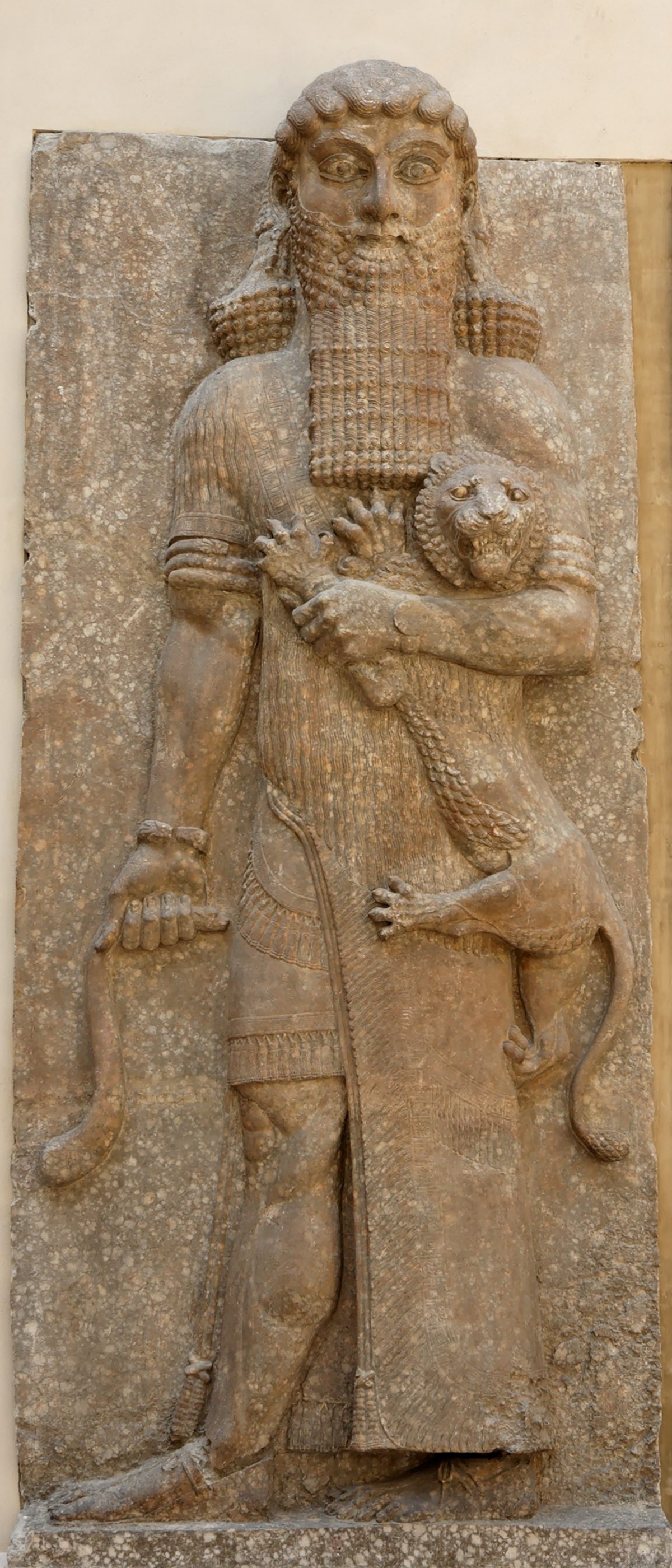
The Louvre's own material makes the same hedged sometimes identified with Gilgamesh attribution for this relief's companion piece from the same palace facade, which suggests the hedge reflects a standing museum convention for a recurring hero-and-lion motif at Khorsabad rather than a claim specific to this one carving.
No. This is the one claim in this article that both of our files carry, and they agree. Ancient-astronaut and Nephilim-hybrid interpretations claiming Gilgamesh was a literal alien-human hybrid or a giant conflate mythological language with modern science fiction. The text employs standard Mesopotamian divine-royal theology, in which kings routinely claim divine parentage as a legitimation device rather than as a biological assertion. The companion file adds the specific rebuttal for the size version of the claim: while the text does describe Gilgamesh as extraordinarily large, this is standard heroic hyperbole in Mesopotamian royal literature, and there is no archaeological evidence for literal giants at Uruk. Be precise about what is being refused. Nobody is denying that the poem calls him two-thirds divine and enormous. It plainly does. What fails at Tier 4 is the move from a legitimation formula inside a royal literature to a claim about the biology of a real body.
A boundary note, since that Tier 4 ruling sits next to territory this article does not enter. Our primary file's own Tier 3 sections cross-reference two other corpus documents, B_2_03 on underground creatures and myths and B_2_06 on the Nephilim and giants, as comparative pointers. No claim in this article draws on either. The reason is a scoping rule this wing observes deliberately: the subject here is a text and the history of how it has been read, not a profile of an entity. Where the semi-divine language of the epic comes up above, the claims stay about what those words are doing inside Mesopotamian royal literature and what modern readers have done with them, which is a question about the poem and its readers, and answerable from the poem and its readers.
12The Tomb That Was Never Dug
No. Periodic claims circulate online that Gilgamesh's tomb has been discovered in Iraq, and the companion file carries the claim marked unverified by its own text. Independent checking during this article's research pass found the real event underneath it, and the real event is smaller and more careful than the story. In April 2003 a German-led team directed by Jorg Fassbinder of the Bavarian State Department for Historical Monuments in Munich reported a non-invasive geophysical survey, a magnetometer mapping of over 100 hectares of Uruk's ancient cityscape including streets, gardens and palaces, which revealed the outline of a tomb-like structure beneath the dry former bed of the Euphrates, roughly where the epic describes Gilgamesh's burial. Fassbinder himself hedged it to the BBC: "I don't want to say definitely it was the grave of King Gilgamesh, but it looks very similar to that described in the epic." The site was never excavated, the 2003 Iraq War interrupted further work, and no peer-reviewed confirmation exists. One correction is required and is stated here rather than left to the reader. Some popular retellings claim a giant skeleton was found and retrieved. Independent sourcing during the research pass found no support for that at all: the 2003 event was a survey result on a magnetometer map, and nothing was excavated or physically recovered.
No. Claims that the flower of youth represents an actual pharmacological substance or alien technology are unsupported. Our primary file's reading is the ordinary literary one: the narrative functions as a device exploring the inevitability of mortality, with the serpent's association with cyclical renewal riding on the observable fact that snakes shed their skin. Notice that the story does not need a real substance in order to work. The plant is on the page for about the length of a swim, and the poem's point is what happens the moment its owner sets it down.
One further note about our two files, since this article has been leaning on them as authorities throughout. Both carry a section headed Counter-Arguments and Criticisms, and the research pass read both in full. Our primary file's is templated general skeptical-methodology framing, non-standard translations that mainstream scholars dispute, the fragmentary-text reconstruction problem, confirmation-bias risk, cultural-context arguments and disputed dating, rather than any named rebuttal of any particular Gilgamesh claim. The companion file's is differently worded and similarly generic, and adds only two genuinely specific notes: the textual-reconstruction caveat that no single complete manuscript of the Standard Babylonian version exists, and Michalowski's caution against over-reading modern existentialist concerns into the text. Neither is a factual error and nothing above depends on either section. It is stated because a reader who opens either file expecting to find the specific counter-arguments to the epic's claims will not find them there. The real disputes this subject carries are already above at their own tiers: what Enkidu's civilizing means in section 04, whether Humbaba stands for a real population in section 05, which flood event if any lies behind the tradition in section 06, and what the twelve tablets encode in section 10.
Fast Facts
- The Rediscovery (Tier 1)
- Hormuzd Rassam discovered the library of Ashurbanipal at Nineveh, modern Kuyunjik in Iraq, in 1853. In 1872 George Smith deciphered Tablet XI, the Flood Tablet, and announced it to the Society of Biblical Archaeology, a sensation that challenged the uniqueness of the biblical flood narrative
- The Evening Itself (Tier 1)
- Independent checking dates the reading to December 3, 1872, in London, with the audience reported to have included Prime Minister William Ewart Gladstone. Independent sources also date the North Palace library-room discovery at Kuyunjik specifically to December 20, 1853
- The Reader (Tier 1)
- George Smith was a self-taught British Museum assistant rather than a formally trained academic, which is part of what made the discovery a public sensation. No source checked attests a middle name; our companion file's George Henry Smith is an error this article does not repeat
- The Span (Tier 1)
- Versions across more than 1,500 years: Sumerian poems about Bilgames at approximately 2100 to 1800 BCE, Old Babylonian at 1800 to 1600 BCE, Middle Babylonian at 1400 to 1200 BCE, and the Standard Babylonian twelve-tablet edition composed at approximately 1200 BCE with Nineveh copies from the 7th century BCE
- The Count (Tier 1)
- Over 200 fragments from more than 73 manuscripts, identified across Iraq, Syria, Turkey and Israel. There is no single complete manuscript of the Standard Babylonian version
- The Newest Piece (Tier 1)
- The Sulaymaniyah Museum tablet, catalogued T.1447, recognized in 2011 from a lot of roughly 80 to 90 tablets bought from a dealer for a reported 800 dollars, added 20 previously unknown lines to Tablet V. Farouk Al-Rawi of SOAS spotted it; he and Andrew George published it in the Journal of Cuneiform Studies, volume 66, pages 69 to 90, in 2014
- The Twelve Tablets (Tier 1)
- The Standard Babylonian sequence, from the creation of Enkidu on Tablet I to his shade's report from the underworld on Tablet XII. Enkidu is condemned on Tablet VII and dies on Tablet VIII; the flood is Tablet XI
- The Flood (Tier 1)
- Ea warns Utnapishtim; the boat is a cube 120 cubits on each side; the storm lasts six days and seven nights; the landing is Mount Nimush; a dove and a swallow return and a raven does not; Utnapishtim and his wife are granted immortality as a unique exception and settled at the mouth of the rivers
- The Serpent (Tier 1)
- The plant called The-Old-Man-Becomes-Young-Again grows at the bottom of the sea. Gilgamesh ties stones to his feet, dives, gets it, and loses it to a serpent that smells it while he bathes and sloughs its skin as it goes
- The Walls (Tier 1)
- Excavation of Uruk, modern Warka in Iraq, confirmed massive walls of approximately 9.5 kilometers in perimeter, consistent with the epic's description. The Sumerian King List makes Gilgamesh the fifth king of the First Dynasty of Uruk with a reign of 126 years, and later kings Utu-hegal, at approximately 2100 BCE, and Anam, at approximately 1821 BCE, reference him and the walls. A historical Gilgamesh likely ruled circa 2700 to 2600 BCE, with the literary portrayal highly mythologized
- The Author (Tier 2)
- The Standard Babylonian version is attributed to Sin-leqi-unninni, a scholar-priest or tupsar of the Kassite period at approximately 1200 BCE, the earliest named literary author in world history whose name is attached to a surviving work
- The Advice (Tier 2)
- Siduri's counsel in the Old Babylonian version is one of the oldest known statements of carpe diem philosophy, predating Epicurus by over a millennium and paralleling Ecclesiastes 9 verses 7 to 9. It was significantly reduced in the Standard edition, suggesting an editorial shift toward a more somber conclusion
- The Wild Man (Tier 2)
- Enkidu lives with animals and is civilized through initiation with the priestess Shamhat, after which the animals flee from him. Read as both a celebration and a critique of civilization, with Jacobsen's 1976 reading of the epic as a meditation on civilization's costs in our primary file, and Tigay's 1982 nature-to-culture reading, the noble-savage archetype and Campbell's 1949 shadow reading in the companion file
- The Cedar (Tier 2)
- Mesopotamia was timber-poor and the Cedar Forest, in Lebanon or the Amanus mountains, was a real source of building material, with royal inscriptions documenting actual expeditions to the Levant. Humbaba may represent indigenous mountain populations or environmental guardians of the forests
- The Point Of It (Tier 2)
- The companion file's framing: a king who has everything except permanence, in humanity's first extended literary meditation on death and the limits of human achievement, resolved when Gilgamesh returns to Uruk, contemplates its walls, and finds meaning in what outlasts the individual
- The Historical Flood (Tier 3)
- Flood evidence at Ur, from Woolley in 1929, and at Shuruppak at approximately 2900 BCE has prompted proposals of a real southern Mesopotamian flood behind the tradition, with Ryan and Pitman's Black Sea deluge hypothesis of 1997 as a possible ultimate source. No single geological event has been conclusively identified, and Woolley's Ur stratum is now understood to be local
- The Underworld Appendix (Tier 3)
- Tablet XII, a direct Sumerian translation appended likely by later scribes, has Enkidu's shade report that the dead are organized by social status and manner of death. Our primary file judges it more consistent with standard Mesopotamian mortuary theology than with any specific external parallel
- The Fraction (Tier 3)
- Two-thirds god and one-third man. W.G. Lambert reads it as a theological formula for extraordinary status rather than a biological claim, with a deified father, Lugalbanda, and a divine mother, Ninsun, producing an asymmetric fraction that signals more divine than human. Rhetorical, not genealogical
- The Sky Reading (Tier 3)
- Proposals that the twelve tablets encode twelve months or zodiacal constellations (Papke 1993), that the westward Cedar Forest journey is solar, and that the Bull of Heaven encodes Taurus and the precessional shift (de Santillana and von Dechend, 1969). The companion file's own verdict: speculative, not accepted by mainstream Assyriology, taken seriously in archaeoastronomical studies
- The King List Reading (Tier 3)
- That the Sumerian King List's impossibly long antediluvian reigns may preserve garbled memory of real pre-flood dynasties, if the flood corresponds to a real inundation. Named here at its tier and deliberately not developed; the King List belongs to corpus document A_1_18 and the flood-event question to C_3_01
- The Hybrid Story (Tier 4)
- No. Ancient-astronaut and Nephilim-hybrid readings of Gilgamesh as a literal alien-human hybrid or giant conflate mythological language with modern science fiction. The text uses standard Mesopotamian divine-royal theology, where divine parentage is a legitimation device; the size language is standard heroic hyperbole, and there is no archaeological evidence for literal giants at Uruk
- The Plant As Technology (Tier 4)
- No. Claims that the flower of youth represents a real pharmacological substance or alien technology are unsupported. It functions as a literary device about the inevitability of mortality, with the serpent's renewal symbolism riding on the fact that snakes shed their skin
- The Tomb (Tier 4)
- No confirmed identification of Gilgamesh's tomb has been published in peer-reviewed literature. The real 2003 event was a non-invasive magnetometer survey of over 100 hectares at Uruk led by Jorg Fassbinder, which showed a tomb-like outline under the dry former bed of the Euphrates; Fassbinder himself declined to call it the grave, the site was never excavated, the war interrupted the work, and no giant skeleton was found or recovered
- The Bibliography (Not a Tiered Claim)
- Across both files, 16 unique DOI-bearing citations were independently checked and only 6 resolve to the work they are attached to. Seven wrong ones sit in our primary file and four in the companion file, one of them the same wrong identifier in both. A separate row lists two different books under one identical ISBN. The six that check out are linked below; nothing wrong was carried into this article's own citations
What Is Settled Here, and What Is Not
The Epic of Gilgamesh survives in versions spanning over 1,500 years: five Sumerian poems about Bilgames at approximately 2100 to 1800 BCE, the first unified Akkadian narrative at 1800 to 1600 BCE under the title Surpassing All Other Kings, Middle Babylonian fragments from Hattusa, Megiddo and Ugarit at 1400 to 1200 BCE, and the Standard Babylonian twelve-tablet edition composed at approximately 1200 BCE with Nineveh copies from the 7th century BCE. Over 200 fragments from more than 73 manuscripts have been identified across Iraq, Syria, Turkey and Israel, and the text is still growing: the Sulaymaniyah Museum tablet recognized in 2011 added twenty previously unknown lines to Tablet V. Independent checking filled in that last story precisely, from the roughly 80 to 90 tablets bought from a dealer for a reported 800 dollars, through Farouk Al-Rawi's recognition of T.1447 in the lot, to the 2014 publication with Andrew George in the Journal of Cuneiform Studies.
Hormuzd Rassam found the library of Ashurbanipal at Nineveh, modern Kuyunjik, in 1853, and in 1872 George Smith of the British Museum deciphered Tablet XI and announced it to the Society of Biblical Archaeology, which our primary file records as a sensation that challenged the uniqueness of the biblical flood narrative. Independent checking dates the reading to December 3, 1872, in London, reports Prime Minister William Ewart Gladstone in the audience, and confirms Smith as self-taught rather than academically trained. It also dates the North Palace library-room discovery specifically to December 20, 1853. Two hedges survive into this verdict rather than being quietly dropped: Gladstone's presence is reported rather than documented here, and the man's name is George Smith, with no attested middle name, notwithstanding our own companion file.
Tablet XI has Ea warn Utnapishtim, a cube-shaped boat 120 cubits on each side, a storm of six days and seven nights, a landing on Mount Nimush, a dove and a swallow that return and a raven that does not, and immortality granted to Utnapishtim and his wife as a unique exception. The same tablet has the plant called The-Old-Man-Becomes-Young-Again retrieved by diving with stones and lost to a serpent that steals it during a bath and sloughs its skin as it leaves. The element-by-element comparison with Genesis 6 to 9 and with Atra-Hasis in section 06 is our primary file's own table and is carried at Tier 1 throughout. What this article does not do, and will not do, is state how much older the Gilgamesh account is than the biblical one, because the research behind this article carries no date for the composition of Genesis. Our file's claim is about uniqueness, not priority, and that is the claim carried.
The Sumerian King List records Gilgamesh as the fifth king of the First Dynasty of Uruk with a reign of 126 years; later kings, Utu-hegal at approximately 2100 BCE and Anam at approximately 1821 BCE, reference him and the walls of Uruk in their own inscriptions; and excavation at Warka confirmed massive walls of approximately 9.5 kilometers in perimeter, consistent with the epic's description. Our primary file's conclusion is that a historical Gilgamesh likely ruled Uruk circa 2700 to 2600 BCE, though the literary portrayal is highly mythologized, and this verdict does not upgrade likely to certainly or treat a 126-year reign as a biography. The evidence supports a remembered king, a real city and real walls. It does not support the life story attached to them.
Three things sit at Tier 2 rather than Tier 1 and are worth naming as such. The Standard Babylonian version is attributed to Sin-leqi-unninni, a scholar-priest of the Kassite period at approximately 1200 BCE, described as the earliest named literary author in world history whose name is attached to a surviving work. Siduri's counsel in the Old Babylonian version is read as one of the oldest known statements of carpe diem philosophy, predating Epicurus by over a millennium and paralleling Ecclesiastes, and it was significantly reduced in the Standard edition, which suggests an editorial shift toward a more somber conclusion. And Enkidu's arc from wild man to civilized warrior to dead friend is read as both a celebration and a critique of civilization, with Jacobsen's 1976 meditation-on-civilization reading in our primary file and Tigay's 1982 nature-to-culture reading, the noble-savage archetype and Campbell's 1949 shadow reading in the companion file. The companion file's framing of the ending belongs here too: a king who has everything except permanence, who goes home and finds meaning in walls that outlast him.
The historical-flood proposals, resting on Woolley's 1929 Ur evidence and the Shuruppak layer at approximately 2900 BCE, with Ryan and Pitman's Black Sea deluge hypothesis as a possible ultimate source, remain unresolved, and our primary file itself records that no single geological event has been conclusively identified and that Woolley's Ur stratum is now understood to be local. Tablet XII's underworld report has been compared to cross-cultural traditions and is judged by that same file to be more consistent with standard Mesopotamian mortuary theology. The two-thirds-god formula reads best as Lambert's theological statement of status rather than as biology, and the card behind it sits at Tier 3. The astronomical encodings, the twelve tablets as zodiac and the Bull of Heaven as Taurus and precession, are carried at the tier the companion file itself assigns them, a tier it justifies by stating these readings are not accepted by mainstream Assyriology. And the antediluvian-kings-as-memory reading is named at its tier and deliberately left to the articles that own it. Speculative here means proposed and unconfirmed, not refuted, in all five cases.
No. Ancient-astronaut and Nephilim-hybrid interpretations claiming Gilgamesh was a literal alien-human hybrid or giant conflate mythological language with modern science fiction. This is the one claim both of our files carry, and both give the same answer: the text uses standard Mesopotamian divine-royal theology, in which kings routinely claim divine parentage as a legitimation device rather than as a biological assertion, and the companion file adds that the text's description of Gilgamesh as extraordinarily large is standard heroic hyperbole in Mesopotamian royal literature, with no archaeological evidence for literal giants at Uruk. The refusal is precise. The poem's language is not in dispute; the leap from a legitimation formula to a genome is.
No. Claims that the flower of youth represents an actual pharmacological substance or alien technology are unsupported. Our primary file's reading is the literary one: the episode explores the inevitability of mortality, and the serpent's association with cyclical renewal comes from the ordinary observable fact that snakes shed their skin, which is exactly what the text has it do as it leaves. Nothing in the narrative requires a real compound to exist, and no evidence for one is offered anywhere in either file.
No. No confirmed identification of Gilgamesh's tomb has been published in peer-reviewed literature. The real event behind the recurring online claim was reconstructed by independent checking during this article's research pass: in April 2003 a German-led team under Jorg Fassbinder of the Bavarian State Department for Historical Monuments in Munich ran a non-invasive magnetometer survey over more than 100 hectares of Uruk's ancient cityscape and mapped a tomb-like outline beneath the dry former bed of the Euphrates, roughly where the epic describes Gilgamesh's burial. Fassbinder declined to call it the grave in his own words to the BBC. The site was never excavated, the 2003 Iraq War interrupted the work, and no peer-reviewed confirmation exists. The popular embellishment that a giant skeleton was found and retrieved has no support at all: a magnetometer maps buried structures and recovers nothing, and nothing was recovered.
So here is the honest shape of the two files. A poem exists, in Sumerian and then in Akkadian, across more than 1,500 years and more than 73 manuscripts, about a king who watches his only friend die and then walks to the edge of the known world to argue with mortality and comes home having lost. Inside it, at position eleven of twelve, sits a flood account that a self-taught museum assistant read aloud in London in 1872 and that our primary file says challenged the uniqueness of the biblical flood narrative. The city is real; the excavated walls at Warka run roughly 9.5 kilometers around. The king is probably real, and a 126-year reign is not a biography. The alien hybrid, the miracle plant and the discovered tomb are all no, at Tier 4, each for a stated reason. What is genuinely open is smaller and harder: which flood, if any, is underneath the story, and whether the twelve tablets were ever meant to mean twelve of anything. And the companion file's reading of the ending leaves the last question standing. Gilgamesh's own answer to death was the wall, the thing that outlasts the man who built it. What actually outlasted him was neither the wall nor the man but the copy, and the copy is still incomplete. In late 2011 the Sulaymaniyah Museum bought a lot of roughly eighty to ninety tablets from a dealer for a reported eight hundred dollars, and one of them, still caked in mud, carried twenty previously unknown lines of Tablet V. If the oldest story we have could grow by twenty lines because somebody looked carefully at a cheap lot of tablets, how much of it is still sitting unread in a drawer?
Sources & further reading
Two corpus files were read in full for this article. The primary file is A_1_08, Epic of Gilgamesh: Oldest Literary Work, whose own header rates it Tier 1, with the stated reason that it treats an archaeologically recovered primary text with extensive scholarly apparatus, at High confidence, a source confidence of 4 out of 5, a weighted score of 40, and 20 bibliography entries, which is the figure in the source count above; it was last updated on March 6, 2026. The companion file is A_1_17, The Gilgamesh Epic: Complete Analysis and Legacy, whose own header rates it primary Tier 1 to 2, with 16 bibliography entries, a weighted score of 29 and a source confidence of 3 out of 5, last updated on March 11, 2026. Several of its bibliography entries duplicate the primary file's, so the two counts are not additive, and the stat above reports the primary file's own 20 rather than a summed figure. Where the text above says our primary file it means A_1_08 and nothing else; where it says the companion file it means A_1_17. Exactly one claim in this article is attributed to both, the Tier 4 ancient-astronaut and Nephilim-hybrid refusal, because both documents genuinely carry it. Beyond the files, an independent verification pass was run against the most load-bearing dated and numeric claims, and its results are marked where they appear above rather than blended in. Checked and confirmed, or added, by that pass: George Smith's reading dated specifically to December 3, 1872, before the Society of Biblical Archaeology in London, with the audience reported to have included Prime Minister William Ewart Gladstone, and with Smith confirmed as a self-taught British Museum assistant rather than a formally trained academic; the Rassam discovery at Kuyunjik dated most specifically to December 20, 1853, with a separate earlier 1852 discovery of a second palace and tablet group also reported by some sources, which leaves the file's own 1853 as the best-supported single date for the library; and the full circumstances of the 2011 Sulaymaniyah acquisition, namely a lot of roughly 80 to 90 unprovenanced tablets bought from a dealer for a reported 800 dollars, the recognition of T.1447 by Farouk Al-Rawi of the School of Oriental and African Studies, and the joint publication with Andrew George in the Journal of Cuneiform Studies volume 66, pages 69 to 90, in 2014, which matches the primary file's own bibliography exactly. One popular claim was checked and corrected rather than repeated. The recurring story that Gilgamesh's tomb was found in Iraq traces to an April 2003 German-led geophysical survey at Uruk directed by Jorg Fassbinder of the Bavarian State Department for Historical Monuments in Munich, a magnetometer mapping of over 100 hectares that revealed a tomb-like outline beneath the dry former bed of the Euphrates; Fassbinder hedged the identification himself to the BBC, the site was never excavated, the 2003 Iraq War interrupted further work, and no peer-reviewed confirmation exists. Independent sourcing found no support whatsoever for the widespread embellishment that a giant skeleton was recovered, and this article states that correction explicitly rather than leaving it implied. Now the identifier housekeeping, which belongs here rather than being passed along quietly, because the error rate is materially worse than this pipeline's typical one. Across both files, 16 unique DOI-bearing citations were independently resolved against CrossRef during the research pass, and only 6 resolve to the work they are attached to. In the primary file, seven entries carry a DOI belonging to something else. George's Penguin Classics translation of 2003 carries an identifier that resolves to a chapter inside an entirely different book, Fleming and Milstein's The Buried Foundation of the Gilgamesh Epic, which is item 20 of the same bibliography, so it is a cross-attachment between two rows of one list. George's two-volume Oxford critical edition of 2003 carries one that resolves to Alhena Gadotti's review of that exact title. Dalley's Myths from Mesopotamia, Oxford University Press, 1989 and revised 2000, carries one that resolves to W.G. Lambert's review of it. Jacobsen's The Treasures of Darkness, Yale University Press, 1976, carries one that resolves to Elizabeth Bellefontaine's review of it. Lambert's essay Gilgamesh in Literature and Art, in the edited volume Monsters and Demons in the Ancient and Medieval Worlds, Philipp von Zabern, 1987, carries one that resolves to Dominique Collon's review of the host volume rather than to the essay itself. Ryan and Pitman's Noah's Flood, Simon and Schuster, 1998, carries one that resolves to Vincent Sarich's joint review of it. And Helle's Gilgamesh: A New Translation of the Ancient Epic, Yale University Press, 2021, carries one that resolves to Michael Streck's review of it. In the companion file, four more: the same wrongly attached identifier on George's Oxford critical edition, a different wrong one on Dalley's revised 2000 edition that resolves to a review article in The Classical World, one on Lambert and Millard's Atra-hasis, Clarendon Press, 1969, that resolves to J. Renger's joint review, and one on de Santillana and von Dechend's Hamlet's Mill, Gambit, 1969, that resolves to Jaan Puhvel's review. Those eleven bibliography rows carry ten distinct wrong identifiers, since one of them appears in both files, which is what the ten of sixteen figure above counts. Every one of those works is named here by title, publisher and year and none of them is linked, because a reader clicking those identifiers today lands on a short review, or in one case on a different book's chapter, rather than on the cited work. The six that were checked and found correct are all linked below: Abusch's 2001 interpretive essay in the Journal of the American Oriental Society, Al-Rawi and George's 2014 Tablet V publication, Dickson's 2007 article on the wall of Uruk, Gadotti's own 2014 De Gruyter book, Forsyth's The Old Enemy from the companion file, and George Smith's own Assyrian Discoveries of 1875, whose identifier necessarily belongs to the modern Cambridge Library Collection reprint since the original predates DOIs entirely, which is not an error. A separate identifier defect sits in the primary file's bibliography: Kovacs's translation, Stanford University Press, 1989, and Foster's Norton Critical Edition, W.W. Norton, 2001, are listed under an identical ISBN. That number matches the Norton Critical Edition format and is plausibly Foster's own, which means a reader hunting Kovacs's Stanford translation by it would be misdirected to Foster's book instead. Both are cited here by title, publisher and year only. A cosmetic third defect is logged without alarm: several bibliography rows in both files split a multi-word author or publisher name across the table's trailing columns, so that Andrew R. George and Sara J. Milstein each appear fragmented; every underlying citation is still identifiable and each was resolved correctly during the research pass, so this reads as a table-generation artifact rather than a sourcing problem. One date discrepancy inside the companion file is also noted rather than resolved: its counter-arguments text dates Michalowski's caution to 2010 while its own bibliography lists his chapter, Masters of the Four Corners of the Heavens, in The Oxford Handbook of Cuneiform Culture, Oxford University Press, as 2011. This article names that caution without a year for exactly that reason. There is a clean result worth stating alongside the defects, since a hygiene note that only ever reports failures is not a measurement. Both files' cross-reference lists were checked against each other and against the corpus on disk during the research pass, and every listed document exists where it is said to: A_1_01 on Sumerian texts and tablets, A_1_07 on the Enuma Elish, C_3_01 on global flood stories, A_2_01 on biblical serpent references, A_2_09 on the Ouroboros, C_1_04 on the Orpheus underworld descent, C_1_01 on cross-cultural patterns, P_1_02 on philosophical frameworks of meaning, E_4_01 on the precession of the equinoxes, ZB_2_05 on the biology of aging, B_2_04 on ancient rulers' lifespans, and B_2_03 and B_2_06 in the entity pool. No broken or mismatched cross-reference was found in either file, which is not the norm for this pipeline and is worth recording. Two scoping notes explain what this article deliberately does not attempt. The comparative survey of flood traditions across cultures, and the diffusion argument underneath it, belong to this wing's own separate article, The Great Flood, on corpus document C_3_01, and the flood material above is confined to Tablet XI as a fact about this poem. The Sumerian King List, its antediluvian reign lengths and what those numbers were for belong to corpus document A_1_18 and its own future article; the single fact borrowed here is the 126-year reign that establishes the epic's king as a remembered figure. Two further cross-references in the primary file's own Tier 3 sections, B_2_03 on underground creatures and B_2_06 on the Nephilim and giants, supplied no claim in this article by design, because this wing keeps text-history material separate from entity profiles. The files' other named sources, none of them linked here, include Tigay's The Evolution of the Gilgamesh Epic, University of Pennsylvania Press, 1982; Damrosch's The Buried Book: The Loss and Rediscovery of the Great Epic of Gilgamesh, Henry Holt, 2007; Woolley's Ur of the Chaldees, Ernest Benn, 1929 and revised 1982; Kramer's History Begins at Sumer, University of Pennsylvania Press, third revised edition 1981; Black and colleagues' The Literature of Ancient Sumer, Oxford University Press, 2004; Fleming and Milstein's The Buried Foundation of the Gilgamesh Epic, Brill, 2010; Campbell's The Hero with a Thousand Faces, Pantheon, 1949; and Maul's Das Gilgamesch-Epos, C.H. Beck, 2005. Open the full files to check the sourcing and go deeper.
Image credits
- The Flood Tablet, Tablet XI of the Epic of Gilgamesh Osama Shukir Muhammed Amin FRCP(Glasg), via Wikimedia Commons (CC BY-SA 4.0). CC BY-SA 4.0 Source.
- Portrait of George Smith Osama Shukir Muhammed Amin FRCP(Glasg), via Wikimedia Commons (CC BY-SA 4.0). CC BY-SA 4.0 Source.
- Gilgamesh and Enkidu slaying Humbaba at the Cedar Forest, terracotta relief plaque Osama Shukir Muhammed Amin FRCP(Glasg), via Wikimedia Commons (CC BY-SA 4.0). CC BY-SA 4.0 Source.
- The 2011 Sulaymaniyah Tablet V discovery Osama Shukir Muhammed Amin FRCP(Glasg), via Wikimedia Commons (CC BY-SA 4.0). CC BY-SA 4.0 Source.
- Uruk archaeological site at Warka, Iraq SAC Andy Holmes (RAF), UK Ministry of Defence, via Wikimedia Commons (Open Government Licence v1.0). Open Government Licence v1.0 Source.
- Hero mastering a lion, Khorsabad relief, Louvre AO19862 Jastrow (photograph, 2006), via Wikimedia Commons (Public Domain). Public Domain Source.


