
The Eleusinian Mysteries: The Secret Greece Kept for 2,000 Years
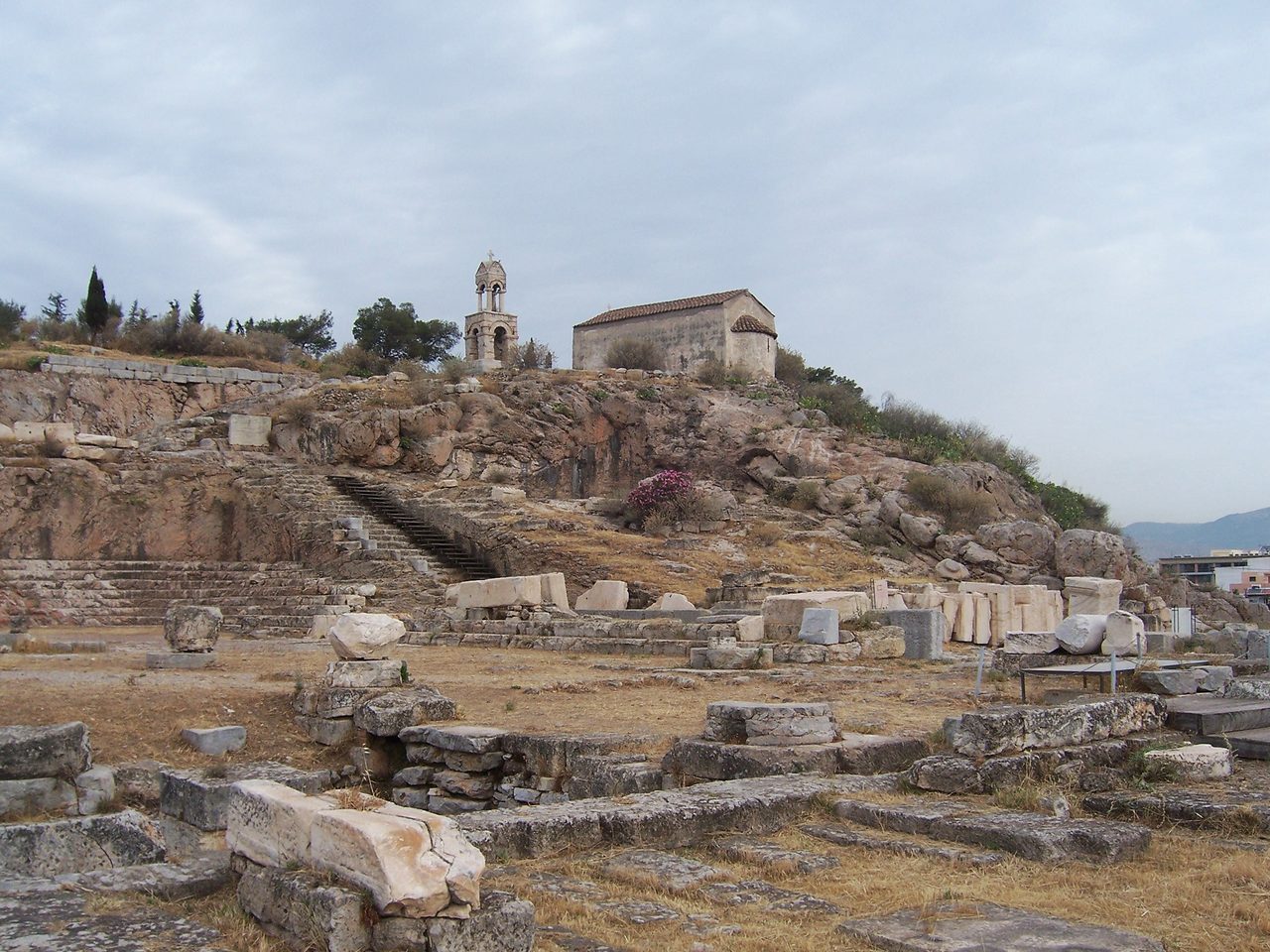
For most of two thousand years, people walked about 20 km from Athens to a hall at Eleusis, went inside at night, saw something, and never said what it was. Our primary research file for this article, N_1_04, dates the earliest evidence at the site to the Mycenaean period, circa 1500 to 1100 BCE, and records continuous operation until 392 CE, a span its own Quick Summary rounds to approximately 2,000 years. Pindar was initiated, and Sophocles, and Cicero, and the emperors Hadrian, Marcus Aurelius and Julian. Revealing the rites was punishable by death, one of the few instances in Athenian law where a religious transgression carried capital punishment, and the rule held: despite millions of initiates, nobody today knows what was shown inside the Telesterion. Admission was unusually wide for the ancient world, open to anyone who spoke Greek and had not committed murder. This article carries the institution at the tiers our files assign it. The site and its buildings, the run itself, the Demeter and Persephone myth, the Homeric Hymn that preserves it, the two-phase Lesser and Greater structure, the nine-day autumn schedule and the Telesterion's architecture sit at Tier 1. What was done, said and shown inside, the testimonial record across roughly a thousand years, and the death penalty that protected it sit at Tier 2. This article's second act is the argument over the kykeon, the barley drink initiates took after a day of fasting, and whether it was psychoactive; the Wasson, Hofmann and Ruck ergot thesis of 1978 is carried at Tier 2, exactly where our files put it, with the counter-arguments at full strength and no winner crowned. The Minoan-origin proposal and the question of Eleusinian influence on early Christianity sit at Tier 3. Advanced technological or extraterrestrial knowledge encoded in the rites, and any modern group's claim to have reconstructed the actual initiation, sit at Tier 4 and are stated here as the no they are. One thing this article deliberately does not do is imply that ergot has ever been chemically found at Eleusis. It has not. The one real chemical detection of ergot alkaloids in a mystery-cult vessel comes from Mas Castellar, a Greek colonial site in Spain, and the Eleusinian version of the argument remains an inference from texts, reported symptoms and analogy.
The rule was simple and it was enforced with death. You could say that you had been initiated at Eleusis. You could not say what you saw. Our primary research file for this article, N_1_04, records that revealing the Mysteries was punishable by death, one of the few instances in Athenian law where a religious transgression carried capital punishment, and that despite millions of initiates we still do not know exactly what was shown inside the hall. Pindar went through it, and Sophocles, and Cicero; the emperors Hadrian, Marcus Aurelius and Julian went through it too. They wrote, at length and in public, about what it had done to them. None of them wrote what it was. Two further corpus files were read for this article, and they are named rather than blended. Where the text below says our primary file it means N_1_04 and nothing else. Where it says our secondary files it means Y_1_02, on ergot and sacred pharmacology, and Y_1_03, on entheogens in classical antiquity, both read for their Eleusis and kykeon sections specifically. Those two files carry their own tier headers, and this article states which file a claim comes from and at whose tier, rather than folding a second document's confidence into the first one's.
01Twenty Kilometers From Athens
Eleusis, modern Elefsina, sits about 20 km northwest of Athens on the Saronic Gulf, connected to Athens by the Sacred Way, the Hiera Hodos. The sanctuary complex included the Telesterion, the great initiation hall; the Sacred Court; the Greater Propylaia and the Lesser Propylaia; several temples; storage facilities; and the Plutonion, a cave entrance to the underworld. That last item is worth pausing on before anything else in this article, because it sets the register of the whole place. The sanctuary did not merely tell a story about a goddess who went down into the earth and came back. It had a cave on the premises that the story pointed at, and the road from the city ran straight to it.
The Mysteries operated for approximately 2,000 years. The earliest evidence at the site dates to the Mycenaean period, circa 1500 to 1100 BCE, and the sanctuary remained active through the Greek Archaic, Classical and Hellenistic periods and throughout the Roman era, until 392 CE. It began as a local Eleusinian cult and became a pan-Hellenic institution under Athenian administration after Eleusis was absorbed into the Athenian state, circa 600 BCE. Under Rome it became a pan-Mediterranean phenomenon, and Roman emperors including Hadrian, Marcus Aurelius and Julian were personally initiated. Set that beside anything else in the ancient world and the number is the claim. Not a movement, not a dynasty, not a philosophical school, but one rite performed at one place on one calendar, running from the Mycenaean age into the Christian empire, and still drawing Roman emperors through its Roman centuries.
One number in this article's own title deserves the arithmetic done out loud, because a reader who checks will do the subtraction and should not have to wonder whether we did. From 1500 BCE to 392 CE is approximately 1,892 years, which is closer to 1,900 than to a literal 2,000. The rounding is our primary file's own: its Quick Summary states the Mysteries were practiced continuously for approximately 2,000 years, from about 1500 BCE to 392 CE, with the word approximately doing the work, and this article's title inherits that rounded figure. Nothing is being corrected here and no source is being contradicted. The round number is a round number, the file itself flags it as approximate, and the precise span is stated above so both are on the page. A second, smaller discrepancy belongs in the same paragraph rather than in a footnote. Our primary file dates Eleusis's absorption into the Athenian state to circa 600 BCE. Our secondary file Y_1_02, describing what reads as the same transition, dates the cult's incorporation into the Athenian state religious calendar to approximately 650 BCE. Neither file flags the other. Fifty years is not a large error and it is a real one, and this article uses the primary file's figure while naming the gap rather than quietly picking a side.
| When | What Happened | How This Is Carried Here |
|---|---|---|
| Circa 1500 to 1100 BCE | The earliest evidence at the site, from the Mycenaean period | Tier 1, our primary file |
| Circa 600 BCE | Eleusis is absorbed into the Athenian state, and a local cult becomes a pan-Hellenic institution under Athenian administration | Tier 1, our primary file. Our secondary file Y_1_02 dates the same incorporation to approximately 650 BCE; the fifty-year gap is named above and not resolved here |
| Circa 480 BCE | The sanctuary is damaged by the Persians during Xerxes' invasion, and subsequently rebuilt | Tier 2, our secondary file Y_1_02, which carries this timeline at its own Tier 2. Our primary file does not have this event at all |
| Circa 430 BCE | Pericles' building program expands the Telesterion, designed by Iktinos, the same architect who designed the Parthenon | Tier 2, Y_1_02 for the date and the Parthenon connection. Our primary file independently names the same architect for the Classical rebuilding, spelling him Ictinus, at Tier 1 |
| 170 CE | The sanctuary is damaged by the Costoboci and rebuilt by Marcus Aurelius himself | Tier 2, Y_1_02. Our primary file carries only a generic Roman restorations at Tier 1, so the emperor's personal role here is the secondary file's contribution |
| 392 CE | Theodosius I bans all pagan rites, including the Mysteries, in their final celebration | Tier 1 that the institution's run ends in 392 CE, our primary file, whose own summary names Theodosius I. The final-celebration framing is Y_1_02's, at that file's Tier 2 |
| 396 CE | Alaric the Goth's forces destroy the sanctuary outright, four years after the ban | Tier 2, Y_1_02. Our primary file does not carry the destruction at all, only the closure |
02The Myth They Were Told
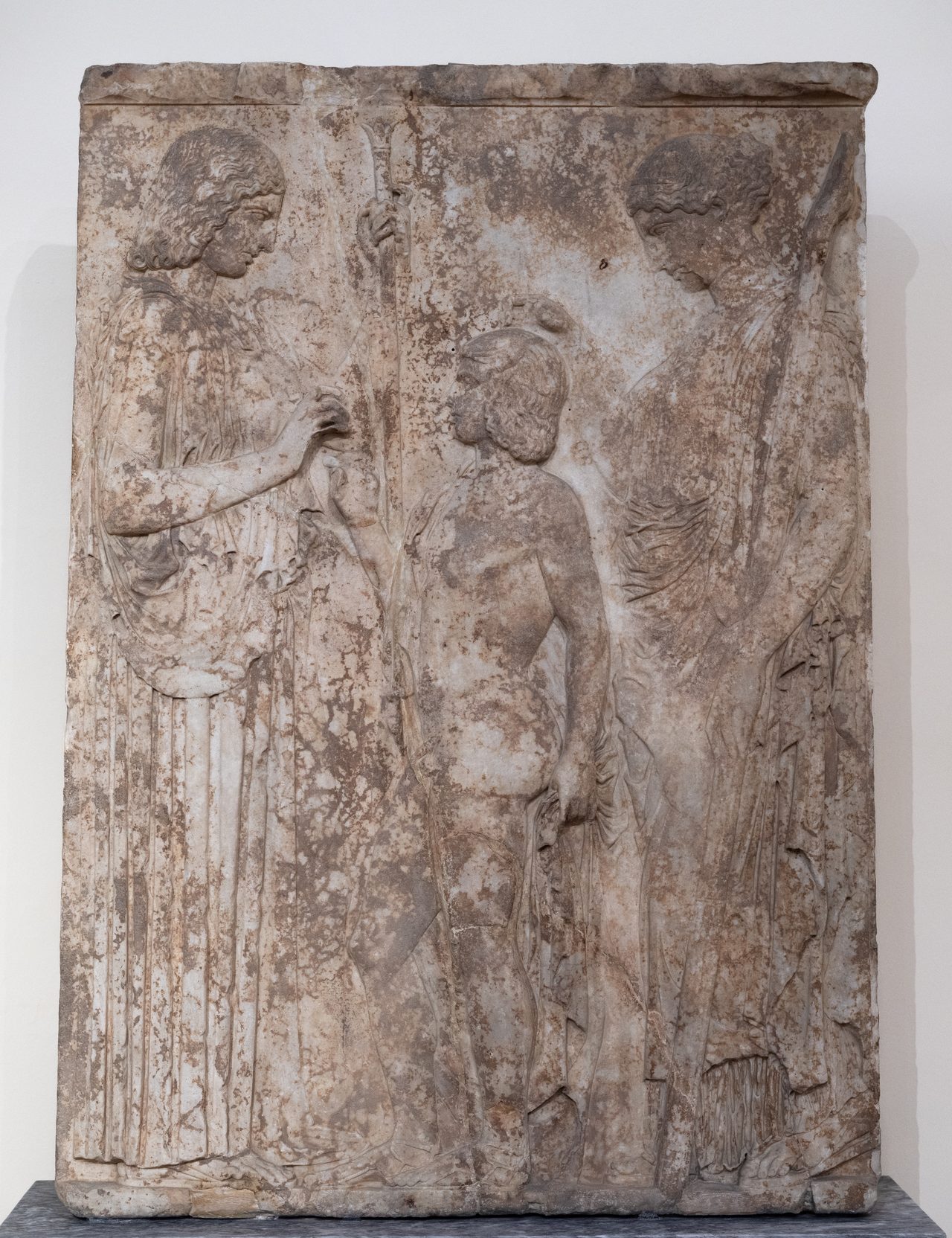
The Mysteries were grounded in the myth of Demeter, goddess of grain and harvest, and her daughter Persephone, called Kore, the Maiden. Hades abducts Persephone. Grief-stricken Demeter searches the earth, and during her mourning the crops cease to grow, causing global famine. Demeter arrives at Eleusis disguised as an old woman and is received into the household of King Celeus and Queen Metaneira. Zeus eventually negotiates Persephone's partial return, so she spends two-thirds of the year above ground, in spring and summer, and one-third below, in winter. Before departing Eleusis, Demeter teaches the Mysteries to the Eleusinian royal family, to Triptolemos and Eumolpos, and gives humanity the gift of grain cultivation. Be precise about what sits at Tier 1 here. It is that this is the myth the institution was built on and taught, not that any of it occurred. Our primary file reads the story as encoding the seasonal agricultural cycle, the relationship between death and renewal, and the promise that death is not final, and it identifies that last promise as the core message of the initiation.
The Homeric Hymn to Demeter is the article's founding-myth text and the sole ancient source that specifies the kykeon's ingredients, which makes it load-bearing for both halves of this article. It was composed circa the 7th century BCE. Its only surviving manuscript witness is a medieval codex, formerly known as the Codex Mosquensis, discovered in Moscow by Christian Friedrich Matthiae in 1777 and now held at Leiden University Library as manuscript BPG 33 H, and that manuscript was itself copied in the first half of the 15th century CE, roughly 2,000 years after the Hymn's composition. Hold both ends of that sentence at once. The recipe for the drink at the centre of act two of this article, and the myth at the centre of act one, survive because one late-medieval scribe copied a poem that was already roughly 2,000 years old in his own day, and because nobody lost that one book.
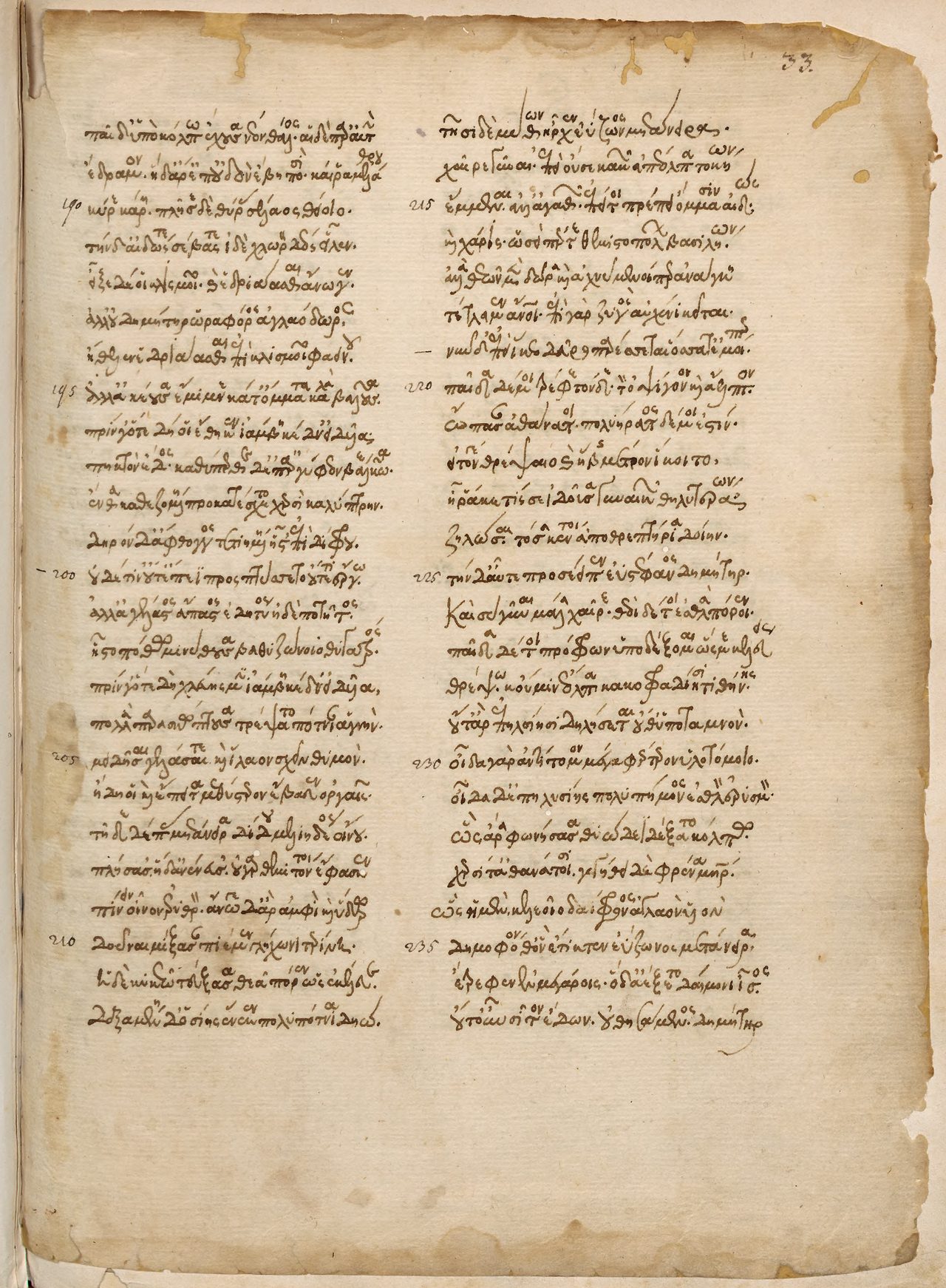
This page, not a tablet or a scroll, is the reason both halves of this article exist at all: the myth above and the kykeon recipe discussed later both survive because this one copy survived.
03Two Mysteries, and the Small One Came First
The Mysteries had a required two-phase structure. The Lesser Mysteries, the Myesis, were held in spring, in the month of Anthesterion, roughly February to March, at Agrai, a suburb of Athens on the Ilissos River. They served as preliminary purification and preparation, including ritual bathing, sacrifice, and instruction in the mythological background, and participation in them was required before an initiate could proceed. The Greater Mysteries, the Teletai, were held in autumn, in the month of Boedromion, roughly September to October, as a nine-day festival. Read that as a schedule rather than as a ceremony. Nobody walked in off the road and was initiated. You prepared in one season, in one suburb, and returned in another season, to another town, and the highest grade of all required coming back a second year, which is section 07 below.
For a rite whose central secret was never broken, the surrounding festival is documented in remarkable detail, and the table below is our primary file's own day-by-day schedule of it. Notice the shape of the nine days as you read them. Everything public happens first: the objects travel, the candidates are named aloud, the city sacrifices, the crowd bathes in the sea, the procession walks 20 km along the Sacred Way trading ritual insults and arrives after dark by torchlight. Then the crowd stops eating, drinks the kykeon, and goes into a building at night, and the record goes quiet for exactly as long as the initiation lasts, and then resumes for the libations and the closing ceremonies. The silence in the middle of that list is not a gap in the evidence. It is the thing the evidence was designed to produce.
| Day | What Happened | How This Is Carried Here |
|---|---|---|
| Day 1, Boedromion 15 | The sacred objects, the hiera, are carried from Eleusis to Athens by priestesses | Tier 1, our primary file |
| Day 2 | Proclamation and assembly, with candidates publicly declared eligible: Greek speakers only, and no murderers | Tier 1, our primary file. What that rule did and did not exclude is section 05 |
| Day 3 | Sacrifice and purification | Tier 1, our primary file |
| Day 4 | The sacred procession begins and the initiates bathe in the sea, at the cry To the sea, mystics! | Tier 1, our primary file |
| Day 5 | The great procession along the Sacred Way from Athens to Eleusis, about 20 km, carrying the sacred objects back, with ritual exchanges of insults, the aischrologia, at the bridge over the Kephisos, and a torchlit arrival at Eleusis after dark | Tier 1, our primary file |
| Day 6, Boedromion 20 | A fasting day and preparation, including consumption of the kykeon | Tier 1 that the drink was taken here, our primary file. What was in it is this article's second act, from section 08 |
| The Night Of Days 6 To 7 | The central mystery: the initiation itself, inside the Telesterion | Tier 1 that it happened here and when. What happened inside is Tier 2 at best, and in its most important part is simply unknown |
| Days 8 and 9 | Libations for the dead, the Plemochoai, and concluding ceremonies | Tier 1, our primary file |
04The Hall That Faced Inward
The Telesterion was a large, roughly square hall, about 54 by 54 meters in its final form, designed to hold up to 3,000 initiates simultaneously. Its architecture was unusual. Stepped seating was carved directly into the bedrock around the interior perimeter, creating an amphitheater-like arrangement, but inward-facing, centered on the Anaktoron, a small stone chamber in the centre that only the Hierophant, the chief priest, could enter; from within it he revealed the sacred objects and performed the culminating revelation. The hall was rebuilt multiple times, across a Mycenaean phase, an Archaic expansion under Peisistratos, a Classical rebuilding under Pericles with the architect Ictinus, and Roman restorations. Its ceiling was supported by a forest of internal columns, creating a disorienting, labyrinthine interior experience, especially by torchlight. Take the direction seriously, because it is the one piece of the secret that survives in stone. Thousands of people sat on steps cut into rock, facing in, at a small box in the middle of a columned dark, that exactly one man was permitted to open.
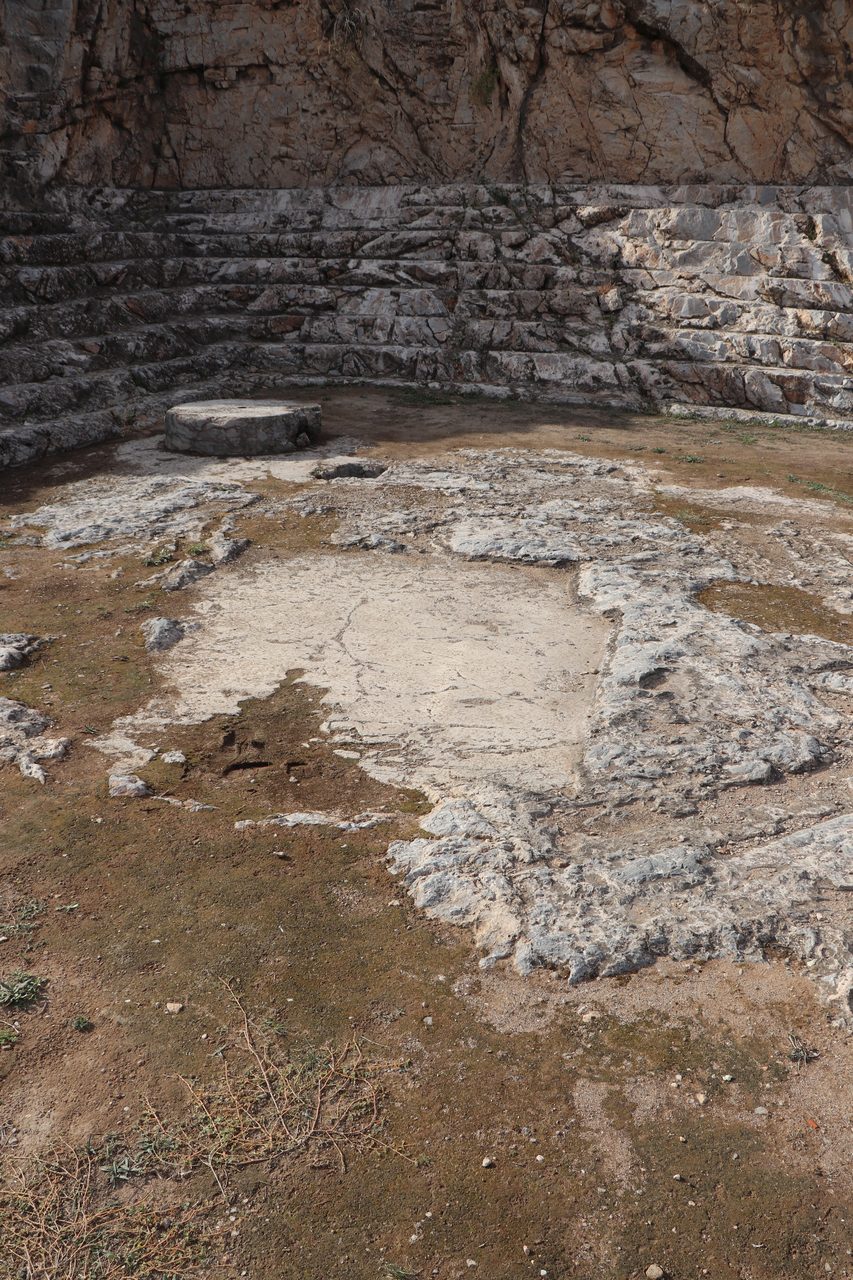
This is the floor, not a reconstruction. The columns that once held the roof are gone; what remains is the layout the initiates actually stood on.
05Who Was Allowed In
On Day 2 of the Greater Mysteries, candidates were publicly declared eligible, and our primary file states the criteria in full: Greek speakers only, and no murderers. That is the whole test as the file records it. Not citizenship, not property, not birth, not an Athenian father, and not a priesthood, but language and a clean record on the one crime that mattered. The proclamation was public, which means the standard was public too, and it was declared in front of the assembled candidates.
Our secondary file Y_1_02 extends that rule in a direction our primary file does not, and the extension is carried here as that file's claim rather than promoted into the primary file's Tier 1. Citing Kevin Clinton's Sacred Officials of the Eleusinian Mysteries of 1974, Y_1_02 states the Mysteries were open to all Greek speakers regardless of status or sex, barring murderers. Two things follow from stating it that way. The first is that if the extension holds, the admission policy was strikingly wide for the ancient world, since it would put enslaved people and free people, women and men, foreigners who spoke Greek and Athenian citizens, through the same door on the same night under the same rule. The second is that our primary file, the document that governs this article, does not carry the status-and-sex clause at all, so the widest and most quotable version of the inclusiveness claim rests on a secondary file citing a single named study. This article states the narrow version as verified and the wide version as sourced, which is a smaller sentence than the one it would be pleasant to write.
06A Thousand Years Of the Same Report
Ancient initiated figures consistently testified to the life-changing nature of the experience across roughly a thousand years, and the witnesses are not a single school or class but intellectuals, warriors, emperors and poets. Pindar, in the 5th century BCE, wrote that blessed is he who has seen these things before he goes beneath the earth, for he understands the end of mortal life and the beginning given of God. Sophocles, circa the 5th century BCE, wrote the line quoted in the pull below. Cicero, in the 1st century BCE, wrote that we have been given a reason not only to live in joy but also to die with better hope. Marcus Aurelius, in the 2nd century CE, left no such quotation but continued imperial patronage and personally undertook restoration of the sanctuary, which is testimony of a different and more expensive kind. Our primary file carries this testimonial set at Tier 2 rather than Tier 1, and the tier is right: the quotations are transmitted through the manuscript tradition like any other ancient text, and what they report is an inner state, which is exactly the sort of claim that cannot be checked. What can be observed is the consistency. Across a thousand years, from poets and intellectuals to warriors and emperors, the people who went in came out saying the same thing about death.
| Who | When | What Survives | How This Is Carried Here |
|---|---|---|---|
| Pindar | 5th century BCE | Blessed is he who has seen these things before he goes beneath the earth; for he understands the end of mortal life, and the beginning given of God | Tier 2, our primary file |
| Sophocles | Circa 5th century BCE | Thrice blessed are those among mortals who, having seen these Mysteries, go down to Hades. Only for them is there life; all the rest will have nothing but suffering | Tier 2, our primary file. Quoted in the pull line above |
| Cicero | 1st century BCE | We have been given a reason not only to live in joy but also to die with better hope | Tier 2, our primary file |
| Marcus Aurelius | 2nd century CE | No quotation. Continued imperial patronage, and personally undertook restoration of the sanctuary | Tier 2, our primary file. Our secondary file Y_1_02 makes the restoration specific: damage by the Costoboci in 170 CE, rebuilt by the emperor himself, at that file's own Tier 2 |
| Plato and Aristotle | Not dated in our files | Named as attested or claimed initiates on the strength of Plato's Phaedrus 250b to c and fragments of Aristotle's On Philosophy preserved by Synesius | Carried as our secondary file Y_1_02's extension of the primary file's list, with its own attested or claimed hedge kept exactly as our research packet states it |
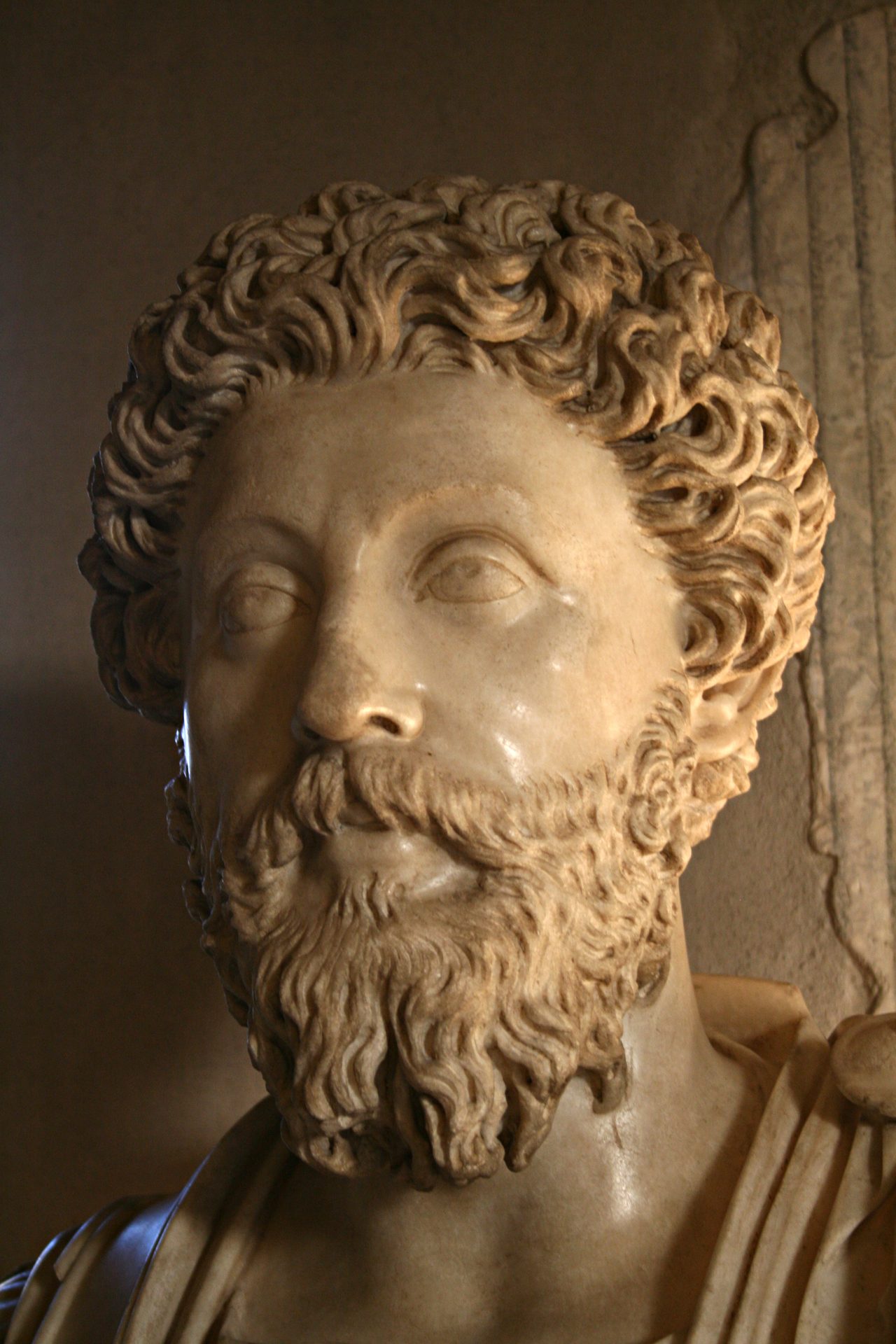
An emperor who commanded an empire's resources chose to spend some of them rebuilding this specific hall. That is testimony too, just not the kind that quotes.
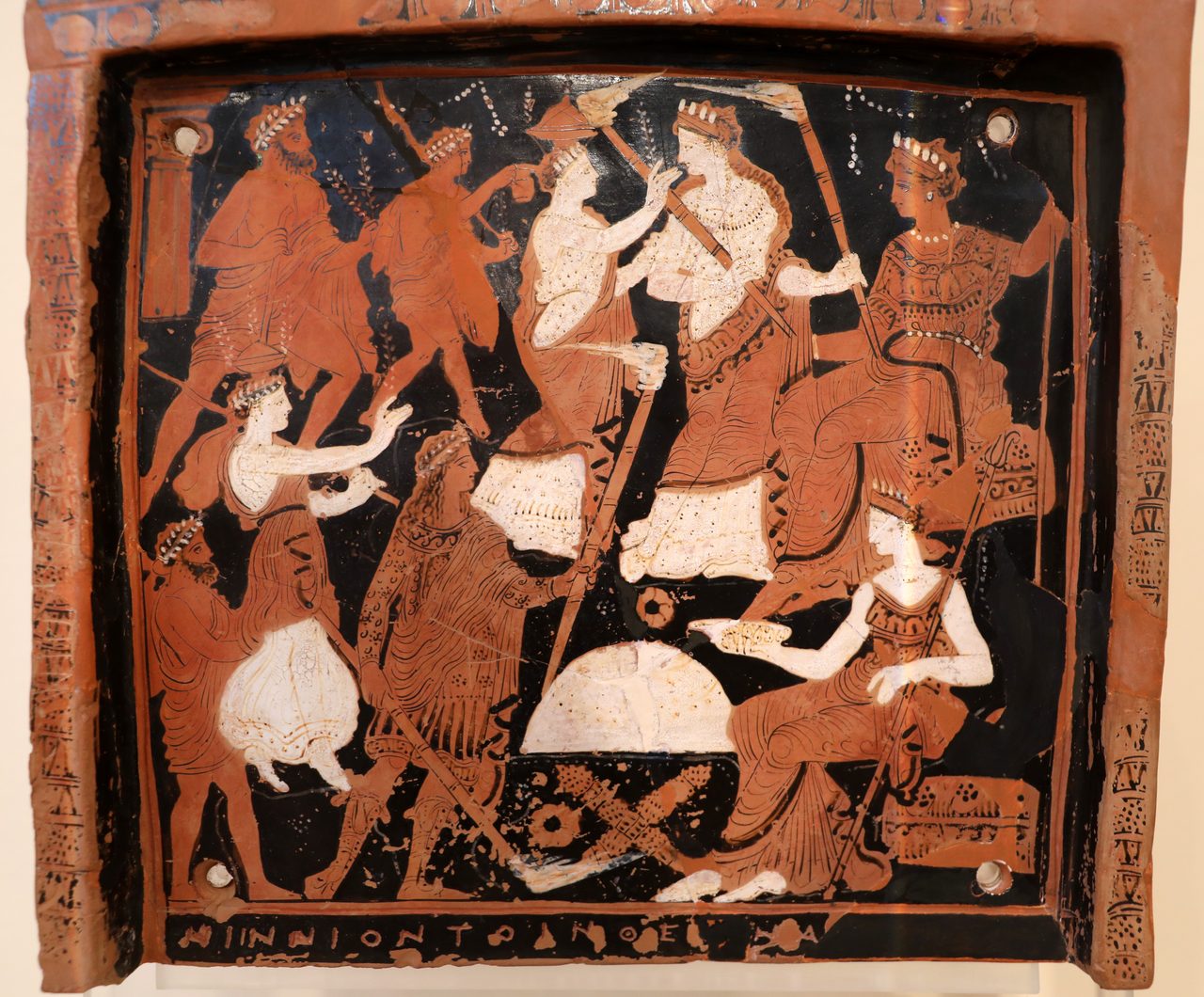
Revealing the Mysteries was punishable by death, one of the few instances in Athenian law where a religious transgression carried capital punishment. The famous test case is the Alcibiades scandal of approximately 415 BCE, in which the Athenian general was accused of profaning the Mysteries by performing a mock initiation at a private party; the accusation contributed to his exile and to the political crisis that weakened Athens during the Peloponnesian War. The playwright Aeschylus was reportedly accused, and acquitted, of revealing mystery content in his tragedies. And then the fact that this whole article is arranged around: despite millions of initiates over that entire run, we still do not know exactly what was shown inside the Telesterion. The initiates kept the secret. Weigh what that means as a piece of historical evidence rather than as a romantic detail. This was a city that accused its own most famous general of profaning these very rites, an accusation that contributed to his exile, and that reportedly hauled a playwright into court on the same charge and acquitted him, and the Mysteries were open to anyone who spoke the language. The secret sat in the memory of every initiate alive, a hall's worth at a time and millions of them in the end, and it did not come out.
07What Was Done, Said, and Shown
Ancient sources, principally Clement of Alexandria quoting earlier traditions, describe the initiation as consisting of three elements. The dromena, the things done: ritual actions, possibly including a reenactment of Demeter's search for Persephone and a passage through darkness into light. The legomena, the things said: sacred words and liturgical formulas. And the deiknymena, the things shown: sacred objects revealed by the Hierophant at the climactic moment. What was actually shown is where the evidence stops. Our primary file lists the candidates rather than choosing among them: an ear of grain symbolising the return of life from death, sacred relics, light effects, or some combination, and it states plainly that it remains unknown. One further structural detail is documented. The final stage of initiation, the epopteia, meaning having seen, was the highest grade, achieved by returning a second year after the initial myesis, and the epoptai witnessed the ultimate revelation. So the record gives us a three-part shape, a two-year path, a named officiant, a named chamber, a list of guesses about the object, and no answer. Every popular account that fills in the middle with confidence is filling it in from somewhere other than this evidence.
08The Drink
The rest of this article is about one item on Day 6, and a scope note belongs here before it starts. A separate wing of this Athenaeum, The Doors of Perception, owns the sacrament-identity question as its own subject, and it had planned an Eleusis piece of its own from the chemistry side. This wing's thesis is the institution: the run, the secrecy, the rite as a functioning part of Greek and Roman public life. The two wings genuinely collided over Eleusis, and the collision was resolved deliberately rather than by whoever wrote first: the planned companion was ceded to this wing in a cross-wing deduplication pass, and per this wing's own blueprint this article absorbs the kykeon-ergot debate as its second act and carries it in full. So the second act below is not half of a pair, and no reader is being pointed at a chemistry article elsewhere on this site, because none was written. That is exactly why the debate is carried here whole rather than deferred, and it is carried at the tiers our files assign it, which for the central claim is Tier 2 and not higher.
The kykeon, whose name simply means mixture, was a ritual drink consumed by initiates during the Greater Mysteries, after a day of fasting. Its composition, per the Homeric Hymn to Demeter, was barley, the alphita, plus water and pennyroyal, the glechon, a mint-family herb. That is the entire ancient recipe, and its source is the poem discussed in section 02, composed circa the 7th century BCE and surviving in a single 15th-century-CE manuscript copy. Three ingredients, one text, no analysis. Everything in the next four sections is an argument about what a fourth ingredient might have been doing in that cup without anyone writing it down, and the honest starting position is that the only ingredient list we have does not mention one.
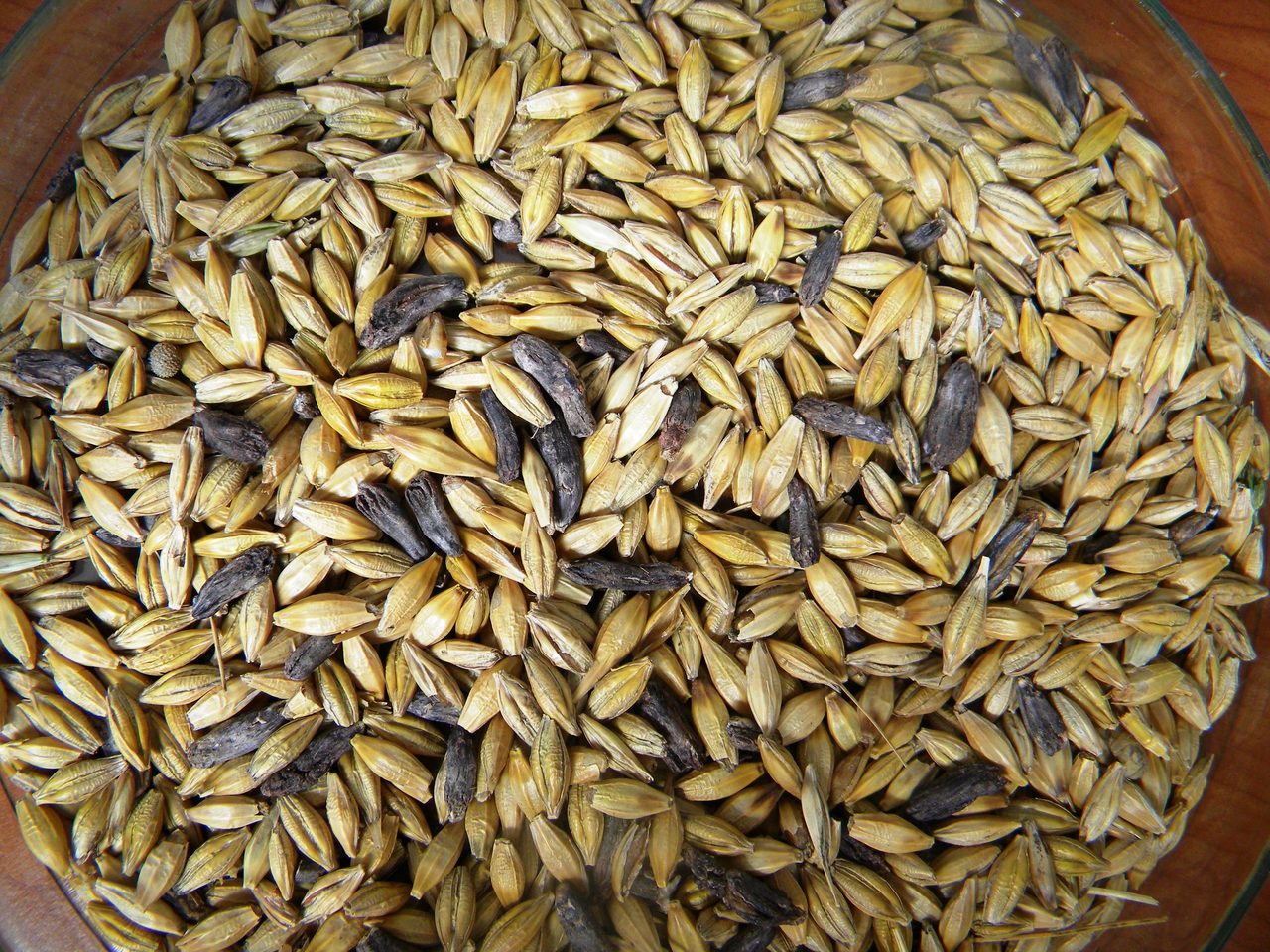
In 1978, in The Road to Eleusis: Unveiling the Secret of the Mysteries, R. Gordon Wasson, an ethnomycologist, Albert Hofmann, the discoverer of LSD, and Carl A.P. Ruck, a classicist, proposed that the barley in the kykeon was parasitized by ergot fungus, Claviceps purpurea, which contains ergotamine, a precursor to lysergic acid. Their argument was that natural ergot alkaloids in the kykeon produced a psychedelic experience, and that this is what the initiates were reporting. The proposal is not fringe and it is not proven, and both halves of that sentence matter. It comes from an ethnomycologist, the chemist who first synthesized LSD, and a working classicist, which is part of why our files treat it as a serious proposal rather than a fringe one. It also rests on no residue, no vessel and no analysis from Eleusis, which is why nothing here carries it higher. Our primary file frames it as a credible claim under active debate, and this article does not move it in either direction.
09What Ergot Actually Is
Ergot, Claviceps purpurea, produces several distinct alkaloid groups, and they do not all do the same thing. Ergotamine-type alkaloids are powerful vasoconstrictors and are responsible for the gangrenous form of ergotism. Clavine alkaloids include ergine, also called LSA or lysergic acid amide, a psychoactive compound structurally related to LSD. Ergometrine, also called ergonovine, stimulates uterine contractions and is also psychoactive at certain doses. All the major ergot alkaloids share a lysergic acid core, the same core Albert Hofmann worked from when he synthesized LSD-25 in 1938 at Sandoz Laboratories. Specific to the kykeon argument, Hofmann himself proposed the mechanism the thesis needs: that an ancient aqueous preparation of ergot-infected barley could plausibly isolate the water-soluble psychoactive alkaloids, primarily LSA and ergonovine, while leaving behind the water-insoluble toxic vasoconstrictive alkaloids, ergotamine and ergotoxine. That is how a barley-and-water drink could be visionary without also being poisonous. Now the distinction this article insists on. The Tier 1 here is our secondary file Y_1_02's own header tier for pharmacology and chemistry, and it covers what ergot alkaloids are, what they do, and what a water extraction can separate. It does not transfer to the claim that any of this was in the cup at Eleusis. Verified chemistry plus an unverified premise is still an unverified conclusion, and the premise is the entire argument.
| The Alkaloid Group | What It Does | How This Is Carried Here |
|---|---|---|
| Ergotamine-Type | Powerful vasoconstrictors, responsible for the gangrenous form of ergotism. Water-insoluble, on Hofmann's account of the extraction, and therefore left behind by it | Tier 1 as chemistry, our secondary file Y_1_02 |
| Clavine Alkaloids, Including Ergine (LSA) | Psychoactive. Lysergic acid amide is structurally related to LSD. Water-soluble, and therefore carried into an aqueous preparation on Hofmann's account | Tier 1 as chemistry, our secondary file Y_1_02 |
| Ergometrine (Ergonovine) | Stimulates uterine contractions, and is also psychoactive at certain doses. Water-soluble on the same account | Tier 1 as chemistry, our secondary file Y_1_02 |
| All Of the Major Alkaloids | Share a lysergic acid core, the same core Albert Hofmann worked from when he synthesized LSD-25 in 1938 at Sandoz Laboratories | Tier 1 as chemistry, our secondary file Y_1_02. The shared core is what makes the Eleusis argument thinkable, and it is not by itself evidence for it |
10The Case For and the Case Against
The supporting arguments our primary file records are these. Ergot is common on cultivated barley in the Mediterranean, and barley was the kykeon's base, so the drink's own grain could harbor the fungus. The intense, transformative experiences described by initiates are consistent with psychedelic states. And ancient sources emphasize seeing, a visual revelation, as the core experience, which is a specific thing to emphasize about a night in a dark hall. Read as a set, the case for is a convergence argument rather than a chain of proof: the right grain, the right region, the right kind of reported experience, and a technical mechanism from a chemist qualified to propose one. Convergence is worth something. It is not the same as a finding.
The counter-arguments our primary file records are equally concrete, and this article gives them the same room. Ergot alkaloids are notoriously variable and often produce toxic rather than psychedelic effects, and ergotism means gangrene and convulsions, not visions. Controlled dosing from wild ergot contamination would be extremely difficult, which is a serious problem for a rite that admitted up to 3,000 people at once, year after year, on a fixed calendar. The pennyroyal, the one ingredient in the recipe that is not grain or water, serves no obvious psychedelic function. And many scholars consider the transformation fully explicable through the power of ritual context, expectation, fasting and social pressure, with no pharmacological intervention required at all. That last objection is the strongest one, because it does not merely doubt the ergot; it explains the reported experience by other means that are independently documented and that the rite demonstrably contained.
| The Point At Issue | The Entheogenic Reading | The Case Against | How This Is Carried Here |
|---|---|---|---|
| The Grain | Ergot is common on cultivated barley in the Mediterranean, and the kykeon's base was barley, so the drink could harbor it | Common in a region is not present in a given cup, and no direct residue evidence from Eleusis exists in either direction | Tier 2 both ways. The left column is our primary file's own supporting list; the right column's residue point is our secondary file Y_1_03's |
| The Reported Experience | The intense, transformative experiences initiates describe are consistent with psychedelic states, and the sources emphasize seeing as the core of it | Fasting, a 20 km pilgrimage, purification, theatrical staging, mythological framing and individual readiness can produce a profound, genuinely transformative experience with no pharmacological agent at all | Tier 2 both ways. The left column is our primary file; the right column is Y_1_03's own critical assessment |
| The Dosing | An aqueous preparation could isolate the water-soluble psychoactive alkaloids and leave the toxic ones behind, which is Hofmann's own proposed mechanism | Ergot alkaloids are notoriously variable and often toxic rather than psychedelic, and controlled dosing from wild contamination would be extremely difficult | The mechanism is Y_1_02, Tier 1 as chemistry and Tier 2 as an Eleusinian claim; the variability objection is our primary file, Tier 2 |
| The Third Ingredient | Our files record no entheogenic account of the pennyroyal at all | The pennyroyal serves no obvious psychedelic function | Tier 2, our primary file, which lists this among its counter-arguments. The blank in the left column is a real blank, not an omission here |
| The Physical Evidence | Ergot alkaloids have been chemically detected in a vessel type associated with mystery-religion contexts at Mas Castellar, a Greek colonial site in Catalonia, Spain | Mas Castellar is not Eleusis. It is a different site in a different country, and no direct residue evidence from Eleusis or from the kykeon itself exists | The detection is Tier 1, Y_1_03's own established-facts section. Its application to Eleusis is an inference from texts, symptoms and analogy, and is never carried here as evidence from Eleusis |
11Mas Castellar Is Not Eleusis
Our secondary file Y_1_03 keeps a section on what is independently established in the broader literature on entheogens in antiquity, and three things sit in it. Ancient Mediterranean wine was routinely mixed with a variety of additives, some of them psychoactive. Numerous psychoactive plants were well documented in ancient pharmacological texts, in Dioscorides and in Pliny. And ergot alkaloids have been chemically detected in a vessel type associated with mystery-religion contexts at Mas Castellar, a Greek colonial site in Catalonia, Spain. That third finding is real, and it is genuinely important: it is independently established evidence that ergot-laced ritual drinks existed somewhere in the broader Greek mystery-religion world, which moves the Eleusis hypothesis from imaginable to demonstrably possible. It is not evidence from Eleusis. It is a different site, in a different country, associated with mystery-religion contexts generally rather than with the Eleusinian rite specifically. Our own file states the limit in its own words: no direct residue evidence from Eleusis exists, and the kykeon-ergot thesis remains an inference from texts, reported symptoms and analogy, not a chemically proven fact.
This article will not print the sentence that is easiest to print here, and the refusal is worth stating plainly rather than performing by omission. The sentence is: chemists have found ergot in the sacred drink of the Mysteries. Every word of it is nearly true and the whole of it is false. Chemists found ergot alkaloids, in a vessel type, associated with mystery-religion contexts, at a Greek colonial settlement in Spain. Nobody has found ergot at Eleusis, in a kykeon vessel, or in any residue connected to the rite this article is about. The distance between those two statements is the distance between a real archaeological result and a headline, and it is exactly the distance a reader deserves to be told about instead of quietly stepped across. If direct evidence from Eleusis ever appears, the tier on this claim moves. Until then it does not, and this article's second act is an argument, presented at strength on both sides, rather than a discovery.
12The Reductionism Problem
Our secondary file Y_1_03's own critical assessment places the claim that the Eleusinian kykeon contained ergot-derived psychoactive compounds at its Tier 2, plausible but unproven, matching our primary file's framing exactly. Its standing caution has a name: pharmacological reductionism. Ancient rituals involved elaborate preparation, including fasting, a 20 km pilgrimage and purification, plus theatrical staging, social context, mythological framing and individual psychological readiness, all of which can produce a profound, genuinely transformative experience even without any pharmacological agent at all. Modern psychedelic research shows that set and setting matter as much as the substance itself, and it is entirely possible that some ancient rituals used pharmacological agents and that ritual context was equally or more important than any drug. So the honest framing, and the one this article adopts, is that the entheogenic thesis complements rather than replaces the ritual-context explanation. Neither our primary file nor its cross-referenced sources treat the debate as resolved in either direction, and there is a specific temptation being refused here. Reducing a religious institution that ran for approximately 2,000 years to they were on drugs is itself an interpretive move with content, not a neutral finding, and it would have to answer for the nine days, the two-year path, the architecture, the penalty and the calendar, none of which a chemical explains.
More recent work has expanded the entheogenic hypothesis beyond ergot. Ruck, in 2006, and Samorini, in 2019, proposed possible additions of psilocybin mushrooms or other psychoactive plant materials to the kykeon or to related rites. Brian Muraresku's The Immortality Key, in 2020, explored archaeological evidence for psychoactive agents in ancient ritual beverages more broadly, beyond Eleusis specifically. That last clause is doing real work and is kept here deliberately. The most widely read popular book in this territory is not an Eleusis result, and citing it as though it were is the commonest way the argument gets inflated in general circulation. What these three add up to is a live research programme with more proposals than findings, carried at Tier 2 because that is where proposals sit until something is measured.
13Where It Came From, and What It May Have Left Behind
Archaeological evidence at Eleusis dates to the Mycenaean period, circa 1500 BCE, and some scholars propose that the Mysteries originated in Minoan Crete, where a grain-goddess cult is attested. On this reading, the Demeter myth may encode the agricultural transition from wild grain gathering to cultivation, with Eleusis as a key node in the spread of agriculture to mainland Greece. Our primary file states the obstacle in the same breath as the proposal, which is why the tier holds: Minoan connections are plausible but difficult to confirm, because the written record of Minoan religion is limited and Linear A remains undeciphered. That is an unusually clean example of what Tier 3 means on this site. The proposal is not silly, it is not refuted, and there is a specific, nameable reason it cannot currently be settled, sitting in a script nobody can read.
Some scholars, notably Karl Kerenyi, have argued that Eleusinian themes influenced early Christian theology and liturgy: death and resurrection, communion through ritual food and drink, and the promise of eternal life. The supporting observations are that the timing of the closure alongside Christianity's rise as state religion is suggestive of competitive replacement, and that the grain symbolism, an ear of wheat as death and rebirth, parallels Christian eucharistic theology. Direct influence is debated, and our primary file leaves it debated. It also records the detail that makes this section worth writing at all: some early Church Fathers explicitly criticized the Mysteries as demonic counterfeits of Christian truth, which, as the file notes, ironically confirms their awareness of, and belief in, a real structural similarity. Hold what that does and does not establish. Hostile ancient readers saw the resemblance and were bothered enough to explain it away, which is decent evidence that the resemblance is not a modern invention. It is not evidence about which way, if either, the influence ran.
14Two Refusals
No. Claims that the Mysteries encoded advanced technological or extraterrestrial knowledge have no supporting evidence, and our primary file gives the reason rather than merely the ruling: the rites are fully explicable within Greek religious, agricultural and philosophical contexts. Be precise about the refusal, because the mystery in the middle of this article is genuine and it is easy to launder one kind of unknown into another. What is unknown is what object the Hierophant showed and what words were spoken over it. That unknown lives inside a fully documented Greek agricultural festival, with a grain goddess, a harvest calendar, a myth about seasons, and a promise about death, all of which are ordinary features of Greek religion and all of which the rite openly displayed for eight of its nine days. A gap in the record is not a space that any explanation may occupy; it is a gap in a record that has a very well understood shape around it.
No. No modern group claiming to have reconstructed the exact Eleusinian initiation ritual has credible evidence for doing so. Our primary file's reasoning is the same fact this whole article turns on, used in the other direction: the core secret was successfully kept, and the archaeological and textual record is insufficient for a precise reconstruction. There is no route by which a modern reconstruction could be verified even if one happened to be right, because the standard against which it would be checked is the thing that does not survive. Note what is not being refused. Modern people may of course hold ceremonies at Eleusis, or write liturgies inspired by it, or find the myth meaningful; none of that is in question here. What fails at Tier 4 is the specific historical claim that a modern rite reproduces what was done in the Telesterion, which no available evidence could support.
One note about our own primary file belongs here rather than in the sources block, because a reader who opens N_1_04 will hit it immediately and could easily read it as settling something. The file carries a Counter-Arguments and Criticisms section, and that section states, in substance, that no significant counter-arguments exist in the scholarly literature for the core claims presented, and that the topic represents established knowledge with no active scholarly dispute over the fundamental claims in the document. That is true of what it is actually about, which is the institutional history: the duration, the ritual structure, the architecture and the closure date really are uncontested. It is not a verdict on the kykeon. The same document, in its own section on credible claims, sets out the ergot hypothesis, its supporting arguments and its counter-arguments at length and explicitly frames it as a live debate. The two passages sit side by side in one file, and reading the general boilerplate as though it covered the specific debate would invert the file's own position. This article treats the institutional history as uncontested because our file says so, and the kykeon as unresolved because the same file says that too.
Fast Facts
- The Place (Tier 1)
- Eleusis, modern Elefsina, about 20 km northwest of Athens on the Saronic Gulf, connected to Athens by the Sacred Way, the Hiera Hodos. The complex held the Telesterion, the Sacred Court, the Greater and Lesser Propylaia, several temples, storage facilities, and the Plutonion, a cave entrance to the underworld
- The Run (Tier 1)
- Earliest evidence from the Mycenaean period, circa 1500 to 1100 BCE, with continuous operation until 392 CE. Our primary file's own Quick Summary rounds that to approximately 2,000 years; the literal arithmetic from 1500 BCE to 392 CE is approximately 1,892 years, and the rounding is the file's own, flagged there as approximate
- The Reach (Tier 1)
- A local Eleusinian cult became a pan-Hellenic institution under Athenian administration after Eleusis was absorbed into the Athenian state, circa 600 BCE, and a pan-Mediterranean phenomenon under Rome. Our secondary file Y_1_02 dates that same incorporation to approximately 650 BCE, the fifty-year gap named in section 01 and left unresolved here. Hadrian, Marcus Aurelius and Julian were personally initiated
- The Myth (Tier 1)
- Hades abducts Persephone; Demeter's grief stops the crops and brings famine; she is received at Eleusis by King Celeus and Queen Metaneira; Zeus negotiates a partial return, two-thirds of the year above ground and one-third below; before leaving, Demeter teaches the Mysteries to Triptolemos and Eumolpos and gives humanity grain cultivation
- The Founding Text (Tier 1)
- The Homeric Hymn to Demeter, composed circa the 7th century BCE, is the founding-myth source and the only ancient source naming the kykeon's ingredients. Its sole surviving manuscript witness is Leiden University Library BPG 33 H, formerly the Codex Mosquensis, found in Moscow by Christian Friedrich Matthiae in 1777 and itself copied in the first half of the 15th century CE
- The Two Phases (Tier 1)
- The Lesser Mysteries, the Myesis, in spring, in Anthesterion, roughly February to March, at Agrai on the Ilissos River: purification, ritual bathing, sacrifice and instruction, and required before proceeding. The Greater Mysteries, the Teletai, in autumn, in Boedromion, roughly September to October, over nine days
- The Nine Days (Tier 1)
- The hiera carried to Athens; the public proclamation of eligibility; sacrifice and purification; bathing in the sea; the 20 km procession along the Sacred Way with ritual insults at the Kephisos bridge and a torchlit arrival; a fasting day with the kykeon; the initiation itself on the night spanning Days 6 and 7; then the Plemochoai libations for the dead and the closing ceremonies
- The Hall (Tier 1)
- The Telesterion, roughly square, about 54 by 54 meters in its final form, built to hold up to 3,000 initiates. Stepped seating cut into the bedrock around the perimeter, facing inward at the Anaktoron, a small stone chamber only the Hierophant could enter. A forest of internal columns; rebuilt across a Mycenaean phase, an Archaic expansion under Peisistratos, a Classical rebuilding under Pericles with the architect Ictinus, and Roman restorations
- The Admission Rule (Tier 1)
- Greek speakers only, and no murderers, declared publicly on Day 2. Our secondary file Y_1_02, citing Kevin Clinton's Sacred Officials of the Eleusinian Mysteries of 1974, extends this to open regardless of status or sex; our primary file does not carry that extension, so the wider version is stated here as sourced rather than as verified
- The Shape Of the Rite (Tier 2)
- Three elements, per Clement of Alexandria quoting earlier traditions: the dromena, things done; the legomena, things said; and the deiknymena, things shown. The epopteia, having seen, was the highest grade, reached by returning a second year
- The Secret (Tier 2)
- Revealing the Mysteries was punishable by death, one of the few religious transgressions in Athenian law that carried capital punishment. Alcibiades was accused of profaning them at a private party around 415 BCE, which contributed to his exile; Aeschylus was reportedly accused and acquitted. Despite millions of initiates, we still do not know what was shown
- The Witnesses (Tier 2)
- Pindar in the 5th century BCE, Sophocles circa the 5th century BCE and Cicero in the 1st century BCE all describe the experience as changing what death meant to them; Marcus Aurelius in the 2nd century CE continued imperial patronage and personally undertook restoration of the sanctuary
- The Drink (Tier 2)
- The kykeon, meaning mixture, taken after a day of fasting. Per the Homeric Hymn to Demeter its composition was barley, the alphita, plus water and pennyroyal, the glechon, a mint-family herb. That is the only ancient ingredient list in existence
- The Ergot Thesis (Tier 2)
- In The Road to Eleusis of 1978, R. Gordon Wasson, Albert Hofmann and Carl A.P. Ruck proposed that the kykeon's barley was parasitized by ergot, Claviceps purpurea, whose ergotamine is a precursor to lysergic acid, and that natural ergot alkaloids produced a psychedelic experience
- The Chemistry (Tier 1, As Chemistry Only)
- Ergot produces distinct alkaloid groups: ergotamine-type vasoconstrictors, responsible for gangrenous ergotism; clavine alkaloids including ergine, LSA, psychoactive and structurally related to LSD; and ergometrine, ergonovine, which stimulates uterine contractions and is psychoactive at certain doses. All share a lysergic acid core, the core Albert Hofmann worked from when he synthesized LSD-25 in 1938 at Sandoz Laboratories. Hofmann argued an aqueous preparation could isolate the water-soluble psychoactive alkaloids and leave the toxic insoluble ones behind
- The Physical Evidence, and Where It Is Not From (Tier 1)
- Ergot alkaloids have been chemically detected in a vessel type associated with mystery-religion contexts at Mas Castellar, a Greek colonial site in Catalonia, Spain. That is a different site in a different country. No direct residue evidence from Eleusis or from the kykeon exists, and the Eleusinian thesis remains an inference from texts, reported symptoms and analogy
- The Case Against (Tier 2)
- Ergot alkaloids are notoriously variable and often produce toxic rather than psychedelic effects, meaning gangrene and convulsions; controlled dosing from wild contamination would be extremely difficult; the pennyroyal serves no obvious psychedelic function; and many scholars consider the transformation fully explicable through ritual context, expectation, fasting and social pressure, with no pharmacological intervention
- The Reductionism Caution (Tier 2)
- Our secondary file Y_1_03 names pharmacological reductionism as its standing caution: elaborate preparation, theatrical staging, social context, mythological framing and individual readiness can produce a profound experience without any agent, set and setting matter as much as substance, and the entheogenic thesis complements rather than replaces the ritual-context explanation
- The Later Proposals (Tier 2)
- Ruck in 2006 and Samorini in 2019 proposed possible additions of psilocybin mushrooms or other psychoactive plant materials to the kykeon or related rites. Brian Muraresku's The Immortality Key of 2020 explored archaeological evidence for psychoactive agents in ancient ritual beverages more broadly, beyond Eleusis specifically
- The Origins Question (Tier 3)
- Some scholars propose an origin in Minoan Crete, where a grain-goddess cult is attested, with the Demeter myth encoding the transition from wild grain gathering to cultivation. Plausible but difficult to confirm: the written record of Minoan religion is limited and Linear A remains undeciphered
- The Christian Question (Tier 3)
- Karl Kerenyi and others argue Eleusinian themes influenced early Christian theology and liturgy, with the closure alongside Christianity's rise read as competitive replacement and the ear-of-wheat symbolism paralleling eucharistic theology. Direct influence is debated. Some early Church Fathers attacked the Mysteries as demonic counterfeits, which our primary file notes ironically confirms their belief in a real structural similarity
- The Technology Claim (Tier 4)
- No. Claims that the Mysteries encoded advanced technological or extraterrestrial knowledge have no supporting evidence; the rites are fully explicable within Greek religious, agricultural and philosophical contexts
- The Reconstruction Claim (Tier 4)
- No. No modern group claiming to have reconstructed the exact Eleusinian initiation has credible evidence for it. The core secret was kept, and the archaeological and textual record is insufficient for a precise reconstruction
- The Bibliography (Not a Tiered Claim)
- Of the five DOI-bearing book citations in our primary file's bibliography, four carry an identifier that resolves to something other than the book, three of them to contemporary reviews of it and one to an epigraphic database entry, all checked against CrossRef during the research pass; only Kerenyi's resolves correctly. One ISBN is wrong, one is inconclusive, four rows are garbled by a table-formatting defect, and one entry was missing an identifier that the research pass located and verified. None of the wrong identifiers were carried into this article
What Is Settled Here, and What Is Not
The Eleusinian Mysteries were a real, continuously operating institution at a real place. Eleusis, modern Elefsina, sits about 20 km northwest of Athens on the Saronic Gulf, joined to the city by the Sacred Way, and its sanctuary held the Telesterion, the Sacred Court, the Greater and Lesser Propylaia, several temples, storage facilities and the Plutonion. The earliest evidence there is Mycenaean, circa 1500 to 1100 BCE, and the rite ran until 392 CE, which our primary file's own Quick Summary rounds to approximately 2,000 years and which works out arithmetically to approximately 1,892. It began as a local cult, became pan-Hellenic under Athenian administration after Eleusis was absorbed into the Athenian state circa 600 BCE, and became pan-Mediterranean under Rome, with Hadrian, Marcus Aurelius and Julian personally initiated. Our secondary file Y_1_02 adds a more granular chronology at its own Tier 2, and it is carried here at that tier and not promoted: Persian damage under Xerxes around 480 BCE, the Periclean expansion by Iktinos around 430 BCE, damage by the Costoboci and a rebuild by Marcus Aurelius himself in about 170 CE, and destruction by Alaric approximately four years after the ban.
The founding myth is documented as the myth: Hades takes Persephone, Demeter's grief stops the harvest, she is received at Eleusis by Celeus and Metaneira, Zeus negotiates a two-thirds and one-third year, and Demeter teaches the rite to Triptolemos and Eumolpos and gives humanity grain. The text carrying it, the Homeric Hymn to Demeter of circa the 7th century BCE, survives in a single manuscript witness, Leiden BPG 33 H, copied in the first half of the 15th century CE. The structure is documented: Lesser Mysteries in spring at Agrai, required first, and Greater Mysteries over nine days in autumn, from the carrying of the hiera through the sea bathing, the 20 km procession, the fast, the kykeon, the night inside, and the closing libations. And the building is documented: roughly 54 by 54 meters, up to 3,000 initiates, rock-cut seating facing inward at the Anaktoron that only the Hierophant entered, a forest of columns, rebuilt from the Mycenaean phase through Peisistratos, Pericles and Ictinus to the Roman restorations. What we have, in other words, is everything except the middle.
For roughly a thousand years the initiated said the same thing. Pindar in the 5th century BCE, Sophocles circa the same century and Cicero in the 1st century BCE all describe having seen something that changed what dying meant; Marcus Aurelius in the 2nd century CE left patronage and a restoration instead of a sentence. Our primary file carries the testimonial set at Tier 2, which is right, since the reports are transmitted texts describing inner states. The rite's three-part structure, the dromena, legomena and deiknymena reported through Clement of Alexandria, and the epopteia as a second-year grade, sit at the same tier, and the crucial part of it does not survive at any tier: what the Hierophant actually showed is listed as candidates, an ear of grain, sacred relics, light effects or some combination, and stated by our own file to be unknown. Revealing the Mysteries carried the death penalty, one of the few religious transgressions in Athenian law that did; Alcibiades was accused of profaning them around 415 BCE and Aeschylus was reportedly accused and acquitted. Despite millions of initiates, the secret held, and it is still holding.
The kykeon was real and its ancient recipe is known: barley, water and pennyroyal, per the Homeric Hymn, taken after a day of fasting. Whether it was psychoactive is not known. The Wasson, Hofmann and Ruck thesis of 1978 holds that the barley was parasitized by ergot and that its alkaloids produced the visionary experience, and our files carry that at Tier 2, credible and debated, which is where this article leaves it. The case for is a convergence: ergot is common on Mediterranean barley, the reported experiences are consistent with psychedelic states, the sources stress seeing, and Hofmann supplied a plausible extraction mechanism. The case against is equally concrete: ergot alkaloids are notoriously variable and often toxic rather than visionary, controlled dosing from wild contamination would be extremely difficult, the pennyroyal has no obvious psychedelic role, and many scholars find the transformation fully explicable through ritual context, expectation, fasting and social pressure. Our secondary file Y_1_03 adds the caution it calls pharmacological reductionism and concludes that the entheogenic thesis complements rather than replaces the ritual-context explanation. No side is crowned here because no side has won.
Two things in act two are Tier 1 and must not be allowed to carry the conclusion. The first is the chemistry, at our secondary file Y_1_02's own header tier for pharmacology: ergot produces ergotamine-type vasoconstrictors responsible for gangrenous ergotism, clavine alkaloids including the psychoactive ergine or LSA, and ergometrine, all sharing the lysergic acid core Albert Hofmann worked from when he synthesized LSD-25 in 1938 at Sandoz Laboratories, and Hofmann's argument that an aqueous preparation could carry the soluble psychoactive alkaloids while leaving the insoluble toxic ones behind. The second is the archaeology, at our secondary file Y_1_03's own established-facts tier: ancient Mediterranean wine was routinely mixed with additives, some psychoactive; psychoactive plants are well documented in Dioscorides and Pliny; and ergot alkaloids have been chemically detected in a vessel type associated with mystery-religion contexts at Mas Castellar, a Greek colonial site in Catalonia, Spain. Say the location out loud, because it is the whole point. Mas Castellar is not Eleusis. No direct residue evidence from Eleusis or from the kykeon exists, and this article never states or implies otherwise.
Two proposals are named at their tier and left open. The first is a Minoan origin: archaeological evidence at Eleusis reaches back to the Mycenaean period, circa 1500 BCE, and some scholars propose the Mysteries began in Minoan Crete, where a grain-goddess cult is attested, with the Demeter myth encoding the shift from gathering wild grain to cultivating it. Our own file names the obstacle in the same sentence as the proposal, and it is a good obstacle: the written record of Minoan religion is limited and Linear A remains undeciphered. The second is Eleusinian influence on early Christianity, argued notably by Karl Kerenyi, resting on shared themes of death and resurrection, communion through ritual food and drink, and eternal life, on the timing of the closure alongside Christianity's rise as state religion, and on the grain symbolism. Direct influence is debated, and the most interesting supporting datum comes from hostile witnesses: some early Church Fathers attacked the Mysteries as demonic counterfeits, which confirms they saw the resemblance without telling us which way anything ran. Speculative here means proposed and unconfirmed, in both cases, and not refuted.
No. Claims that the Mysteries encoded advanced technological or extraterrestrial knowledge have no supporting evidence, and our primary file's stated reason is that the rites are fully explicable within Greek religious, agricultural and philosophical contexts. The refusal is narrow and deliberate. Something genuinely unknown does sit at the centre of this article, and that is exactly why the boundary has to be drawn carefully rather than loosely: the unknown is which object was lifted and which words were said over it, inside a harvest festival for a grain goddess, on a fixed agricultural calendar, with a myth about seasons and a promise about death, all of which were performed in public for eight of the nine days. An unread page in an otherwise legible book does not become a licence to write anything on it.
No. No modern group claiming to have reconstructed the exact Eleusinian initiation ritual has credible evidence for doing so. Our primary file's reason is this article's own thesis turned around: the core secret was successfully kept, and the archaeological and textual record is insufficient for a precise reconstruction. Add the structural point, which is stronger than the evidential one. Even a reconstruction that happened to be correct could not be shown to be correct, because the only standard that could confirm it is the very thing that did not survive. Modern ceremony, liturgy and meaning-making at Eleusis are not what is refused here; the historical claim that a modern rite reproduces what was done inside the Telesterion is, and it fails for want of anything that could ever verify it.
So here is the honest shape of it. A sanctuary about 20 km from Athens ran the same rite on roughly the same spot for something close to 1,900 years, and its own summary in our files rounds that to 2,000. Every autumn the objects went to the city and came back along the Sacred Way, and people bathed in the sea and walked the road and traded insults at a bridge and arrived after dark, and fasted, and drank barley and water and pennyroyal, and went into a hall built for as many as 3,000 with its seats cut into rock facing inward at a stone box in the middle. Then they went home and told everyone that they were no longer afraid of dying, and did not say why. We have the road, the calendar, the building, the myth, the penalty and the names. We do not have the middle. The best-known modern proposal about the missing middle is that the drink was psychoactive, and it deserves the tier it has and not a step more: it is credible, argued by serious people, supported by real chemistry and by a real detection of ergot alkaloids in a mystery-cult vessel at Mas Castellar in Spain, and it has never once been confirmed by anything found at Eleusis. And the question the whole thing leaves standing is not really pharmacological. Pindar, Sophocles and Cicero said the same thing about the same night, centuries apart, in a culture that accused its own most famous general of profaning these very rites, and every one of them kept the rule. What would a thing have to be, for millions of people to agree it was worth having, and for not one of them to write it down?
Sources & further reading
The primary research file for this article is N_1_04, Eleusinian Mysteries Deep Dive, read in full during the research pass. Its own header rates it Tier 1 to 3, with the stated reason that historical existence is Tier 1 while ritual details range from documented to speculative, at Medium-High confidence, a source confidence of 4 out of 5, a weighted score of 34, and 18 bibliography entries, which is the figure in the source count above; it was last updated on February 28, 2026. Two secondary corpus files were read for their Eleusis and kykeon sections specifically, and each is cited above at its own file's stated tier rather than at the primary file's: Y_1_02, Ergot, Sacred Pharmacology, and History, whose header rates it Tier 1 for chemistry and pharmacology, Tier 2 for the Eleusinian and Soma identifications, and Tier 3 for an unrelated Salem ergotism thesis, with 15 sources and a weighted score of 27; and Y_1_03, Classical Antiquity Entheogens Synthesis, rated Tier 2 to 3 overall, with 11 sources and a weighted score of 19. Those two files independently corroborate the primary file's core historical claims, including the span from about 1500 BCE to 392 CE, the Alcibiades scandal date and the Pindar, Sophocles, Cicero and Marcus Aurelius testimonial set, and they supply detail the primary file does not carry at all: the Persian damage around 480 BCE, the Costoboci raid of 170 CE with Marcus Aurelius's own rebuilding, the destruction by Alaric in 396 CE, the ergot alkaloid chemistry, Hofmann's extraction argument, and the Mas Castellar detection. Four further corpus documents named in the primary file's own cross-reference index were confirmed to exist on disk but were not deep-read: N_1_01 on mystery schools, N_1_03 on the Pythagorean Brotherhood, H_3_02 on the suppression of Gnostic and heterodox Christianity, and W_1_02 on the Minoan bull cult. No claim above rests on any of the four. Now the identifier housekeeping, which is stated here rather than passed along quietly. Five of the primary file's bibliography entries carry a DOI, and four of the five were independently resolved against CrossRef during the research pass and found to point at something other than the work they are attached to, in three cases a contemporary review of that work and in the fourth a database entry: Mylonas's Eleusis and the Eleusinian Mysteries, Princeton University Press, 1961, whose identifier resolves to Saul S. Weinberg's 1963 review in Art Journal; Wasson, Hofmann and Ruck's The Road to Eleusis, Harcourt Brace Jovanovich, 1978, whose identifier resolves to N.J. Richardson's review in The Classical Review; Burkert's Ancient Mystery Cults, Harvard University Press, 1987, whose identifier resolves to B.C. Dietrich's review in the same journal; and Clinton's Myth and Cult: The Iconography of the Eleusinian Mysteries, Swedish Institute at Athens, 1992, whose identifier resolves to a Supplementum Epigraphicum Graecum dataset entry. The fifth, Kerenyi's Eleusis: Archetypal Image of Mother and Daughter, was checked the same way and is correct, so it is the one book identifier linked below; it belongs to the Princeton University Press edition distributed on a modern platform, since the 1967 first English edition predates DOIs entirely, which is not an error. Two ISBN problems sit alongside the DOIs. Graf and Johnston's Ritual Texts for the Afterlife, second edition, Routledge, 2013, is listed with an ISBN that does not match the real one for that edition, independently confirmed during the research pass as 9780415508032. Plutarch's De Iside et Osiride is listed with a valid ISBN that the research pass could neither confirm nor rule out, since a second, also-valid ISBN was found attached to what appears to be the same title and series; it is recorded as inconclusive rather than wrong. By contrast Bremmer's Initiation into the Mysteries of the Ancient World, De Gruyter, 2014, carries an ISBN that was independently verified and is correct. There is also one genuinely useful repair rather than only defects: Samorini's 2019 article had no identifier at all in the file, and the research pass located and verified its real DOI, which is linked below and can be added to the corpus document. A separate formatting defect affects at least four bibliography rows, where a comma or period inside a citation's own parenthetical has been read as a table-column boundary, splitting a publisher name or a date across cells. The underlying citations are all correct once reassembled, but one of them matters to this article's content: the buried parenthetical in the Foley entry is where the primary file records that the Homeric Hymn to Demeter was composed circa the 7th century BCE, a date that is currently unreadable as ordinary prose anywhere in that document's body and that both secondary files state cleanly in their own main text, which is how this article carries it. Two further hygiene findings are logged here for a future corpus pass rather than acted on in this article. The primary file dates Eleusis's absorption into the Athenian state to circa 600 BCE while Y_1_02 dates the same incorporation to approximately 650 BCE, and neither file flags the other; this article uses the primary file's figure and names the gap in section 01. And Y_1_03's own cross-reference index points a reader seeking the full treatment of the Mysteries as a religious institution at document C_1_04, which is not an Eleusis document at all but the Orpheus descent archetype; the document it should cite is N_1_04, the primary file behind this article. One scoping note explains what this article deliberately does and does not attempt. A separate wing of this Athenaeum, The Doors of Perception, owns the sacrament-identity question as its own subject, and both wings planned an Eleusis article on the same day with different primaries and different theses, that wing's built on Y_1_02 and centred on the kykeon chemistry. That companion was never written. In a cross-wing deduplication pass on July 22, 2026, the Eleusis entry was struck from The Doors of Perception's own blueprint and marked as ceded to this wing, and per this wing's blueprint this article absorbs the kykeon-ergot debate as its second act in full, which is why sections 08 through 12 above are here rather than deferred to a piece that does not exist. This article is the Athenaeum's whole treatment of Eleusis, and there is no companion chemistry article to send a reader to. One wrinkle in that account is disclosed rather than smoothed: this article's own research pass, run four days after the cession, still described the ceded companion as a live article, and on that one point this note follows the struck blueprint entry rather than the research pass. The files' other named sources, none of them linked here, include Mylonas's Eleusis and the Eleusinian Mysteries, Princeton University Press, 1961; Wasson, Hofmann and Ruck's The Road to Eleusis, Harcourt Brace Jovanovich, 1978; Burkert's Ancient Mystery Cults, Harvard University Press, 1987; Clinton's Myth and Cult, Swedish Institute at Athens, 1992, and his chapter The Sanctuary of Demeter and Kore at Eleusis in Greek Sanctuaries: New Approaches, Routledge, 1993, and his Sacred Officials of the Eleusinian Mysteries, American Philosophical Society, 1974, which is the study our secondary file cites for the admission rule; Cosmopoulos's Bronze Age Eleusis and the Origins of the Eleusinian Mysteries, Cambridge University Press, 2015; Sourvinou-Inwood's chapter Festival and Mysteries in Greek Mysteries, Routledge, 2003; Ruck's Sacred Mushrooms of the Goddess: Secrets of Eleusis, Ronin Publishing, 2006; Muraresku's The Immortality Key, St. Martin's Press, 2020; Bowden's Mystery Cults of the Ancient World, Princeton University Press, 2010; Graf and Johnston's Ritual Texts for the Afterlife, Routledge, 2013; Bremmer's Initiation into the Mysteries of the Ancient World, De Gruyter, 2014; Parker's Polytheism and Society at Athens, Oxford University Press, 2005; Foley's edition of The Homeric Hymn to Demeter, Princeton University Press, 1994; Clement of Alexandria's Protrepticus, circa 200 CE; and Plutarch's De Iside et Osiride, circa 100 CE. Open the full files to check the sourcing and go deeper.
Image credits
- General view of the sanctuary of Demeter and Kore, Eleusis Carole Raddato, via Wikimedia Commons (CC BY-SA 2.0). CC BY-SA 2.0 Source.
- The Great Eleusinian Relief, National Archaeological Museum of Athens Gleb Simonov, via Wikimedia Commons (CC0 1.0). CC0 1.0 Source.
- Homeric Hymn to Demeter, Leiden University Libraries BPG 33 H, folio 33r Leiden University Libraries, via Wikimedia Commons (CC0 1.0). CC0 1.0 Source.
- The preserved floor of the Telesterion, Eleusis Furius, via Wikimedia Commons (CC0 1.0). CC0 1.0 Source.
- Portrait bust of Marcus Aurelius, Capitoline Museums Jean-Pol Grandmont, via Wikimedia Commons (CC BY-SA 3.0). CC BY-SA 3.0 Source.
- The Ninnion Tablet, National Archaeological Museum of Athens Francesco Bini, via Wikimedia Commons (CC BY-SA 4.0). CC BY-SA 4.0 Source.
- Barley infected with ergot fungus, Claviceps purpurea Dominique Jacquin, via Wikimedia Commons (CC BY-SA 2.5). CC BY-SA 2.5 Source.
,_center_for_the_Eleusinian_Mysteries,_Eleusis_(8191841684).jpg)


.JPG)

