
The Bronze Age Collapse: The Fifty Years the Old World Came Apart
Between about 1200 and 1150 BCE nearly every palace civilization of the eastern Mediterranean and the Near East stopped existing. Mycenae fell. Hattusa was abandoned. Ugarit was destroyed and never reoccupied. Only Egypt came through, and badly weakened. The famous date for all of this, 1177 BCE, is the title of a book, and the man who put it on the cover says in his own words that it is shorthand. Our own research file never assigns a single event to that year. What it carries instead is a window of roughly fifty years, destructions its own counter-arguments call non-synchronous, and a field of rival explanations spread across all four evidence tiers, every single-cause version of them refused outright. This is the file opened claim by claim, with when kept separate from why, and no suspect convicted.
Around 1200 BCE the eastern Mediterranean held a connected world. Egyptian pharaohs, Hittite great kings, Mycenaean palaces, Cypriot copper towns and Syrian ports wrote to each other, traded with each other and married into each other, and the letters and the cargoes survive to prove it. About fifty years later most of that was gone: burned, abandoned, or reduced to something much smaller and much poorer. That much is not in dispute. Almost everything else is. When each place fell, in what order, and above all why, are three separate questions, and the last one has a field of standing answers that our own library files across all four levels of confidence. The tidiest version of the story is a single year, so that is the first thing this article has to take apart. Let's open the file.
01The Year That Is A Book Title
Most readers arrive here already holding a number: 1177 BCE, the year civilization collapsed. It is one of the most successful titles in popular archaeology, and it is a title. In the whole of our primary research file the number 1177 appears exactly once, inside the title of Eric Cline's 2014 book, and the document assigns no event whatsoever to that year. The same holds across the three sister files in our library on this subject. The file's own window is c. 1200 to 1150 BCE, and the nearest real dated event to 1177 is an Egyptian battle a year on the other side of it.
The Late Bronze Age Collapse is dated c. 1200 to 1150 BCE, and within approximately fifty years it destroyed or severely diminished virtually every major palace-based civilization in the eastern Mediterranean and the Near East. That fifty-year window is our file's own headline timing, and it is the only collapse date range this article will lead with.
Cline himself has said plainly that the year on his cover is a device. In a published interview he explains that '1177 BCE is a good reference point, for it is in that year that the Sea Peoples invaded Egypt for the second time', and that 'I use 1177 BCE as shorthand for the entire Late Bronze Age Collapse, just as we commonly use 476 CE as shorthand for the fall of the Roman Empire; we know that neither took place entirely in exactly that year.' On causation he is equally direct: the urge to find one explanation 'seems to come from a modern human need for an easy explanation', and 'it took much more than a single cause to bring down the Bronze Age civilizations'. Nobody here is being straw-manned. The tidy year was never claimed as a date.
Our file's counter-arguments section goes further, and it is arguing against the framework the same document otherwise endorses. A truly interconnected system should show synchronous collapse. The destructions actually span about fifty years with considerable local variation. Any sentence about this event that implies a single year, a single season or a simultaneous fall is contradicted by our own primary source before any outside critic gets involved.
A sister file puts a name to the same objection. Jan Driessen argued in 2009 that the destruction horizon across Mycenaean sites may not be synchronous at all: improved radiocarbon dating suggests the destructions occurred over several decades rather than simultaneously, which weakens the cascade narrative that the single-year framing depends on.
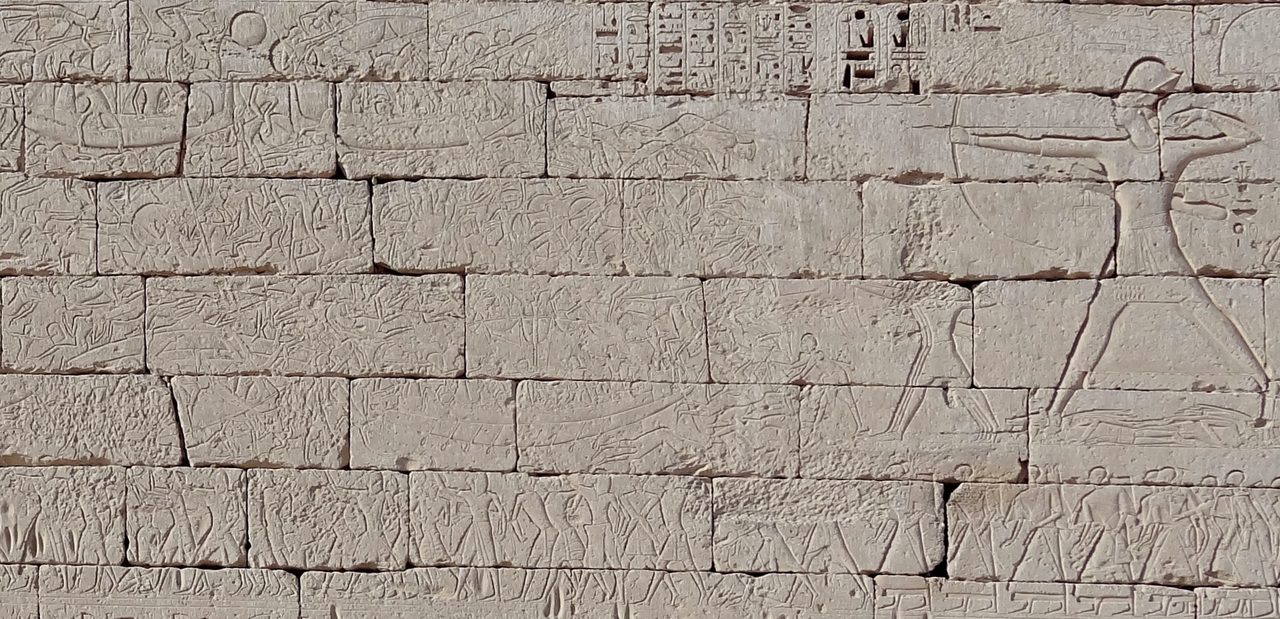
So what is the nearest real thing to 1177? Ramesses III, who reigned c. 1186 to 1155 BCE, repelled the Sea Peoples at the Battle of the Delta at c. 1178 BCE and in a simultaneous land battle in Djahi, in southern Canaan, and recorded both victories at Medinet Habu. That is the second Sea Peoples attack on Egypt, and it is the event Cline's title points at. It is the date of one Egyptian battle. It is not the date of a collapse.
02The Sequence, Site By Site
The most useful thing anyone can do for a reader on this subject is refuse to average the dates. Laid out in order, the destruction record is not a moment. It is a sequence with different end dates in different places, and with stressors that begin before it and outlast it.
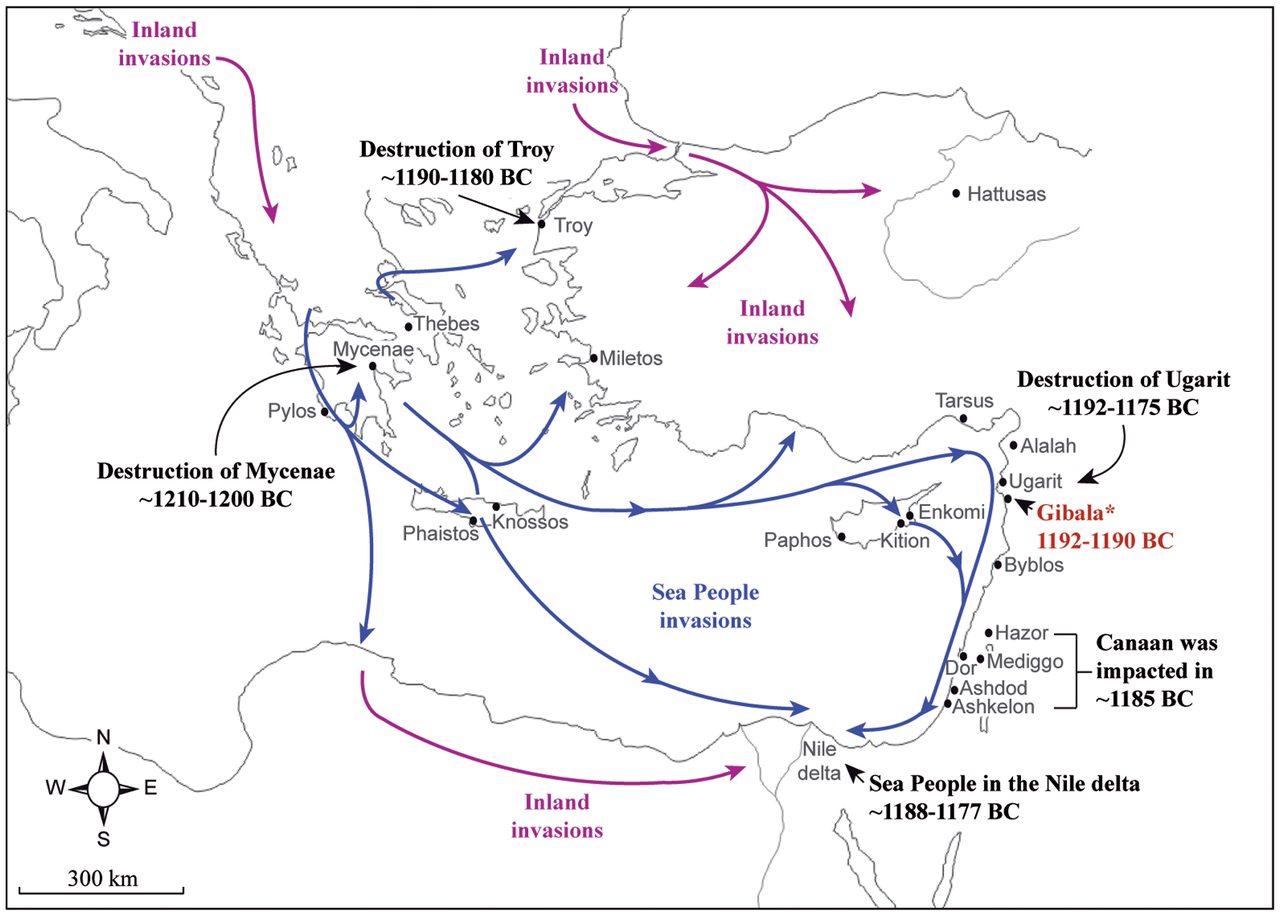
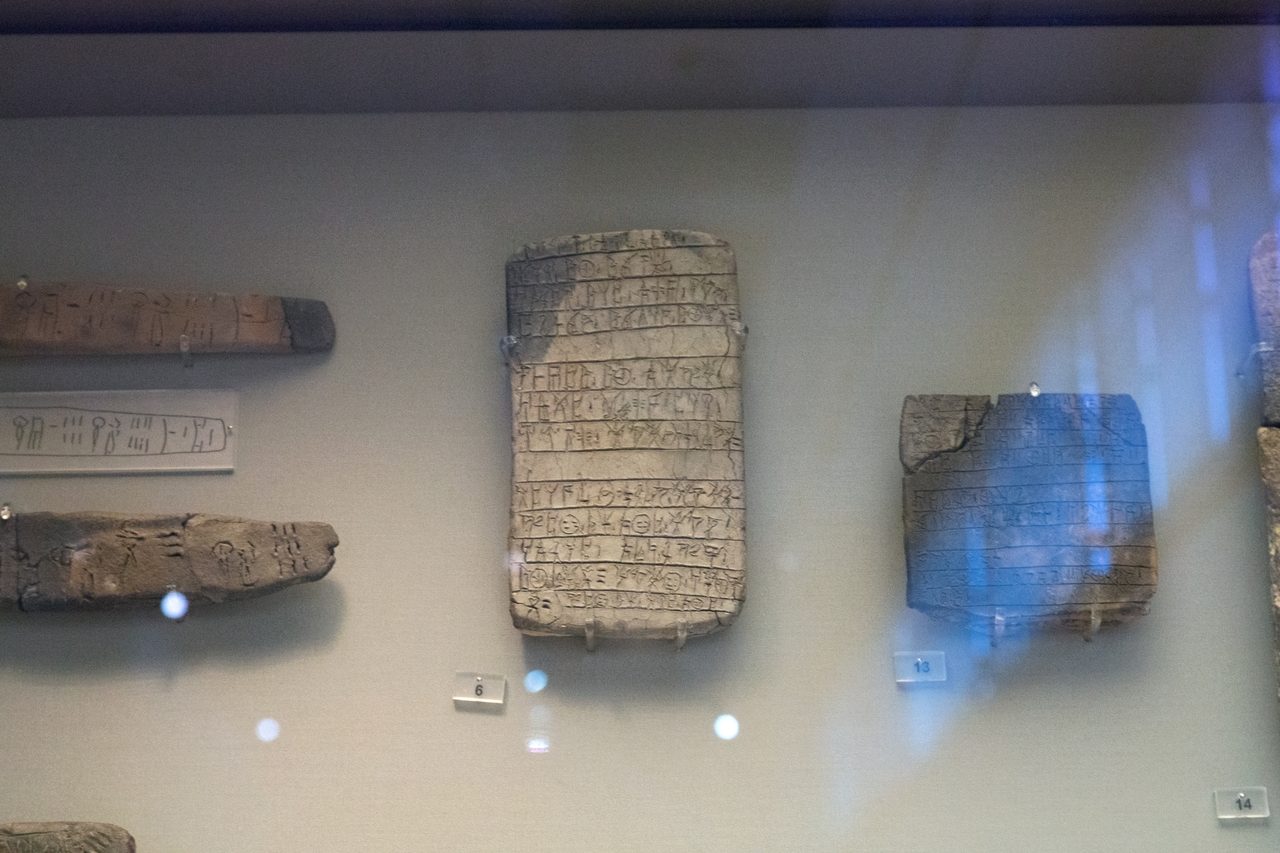
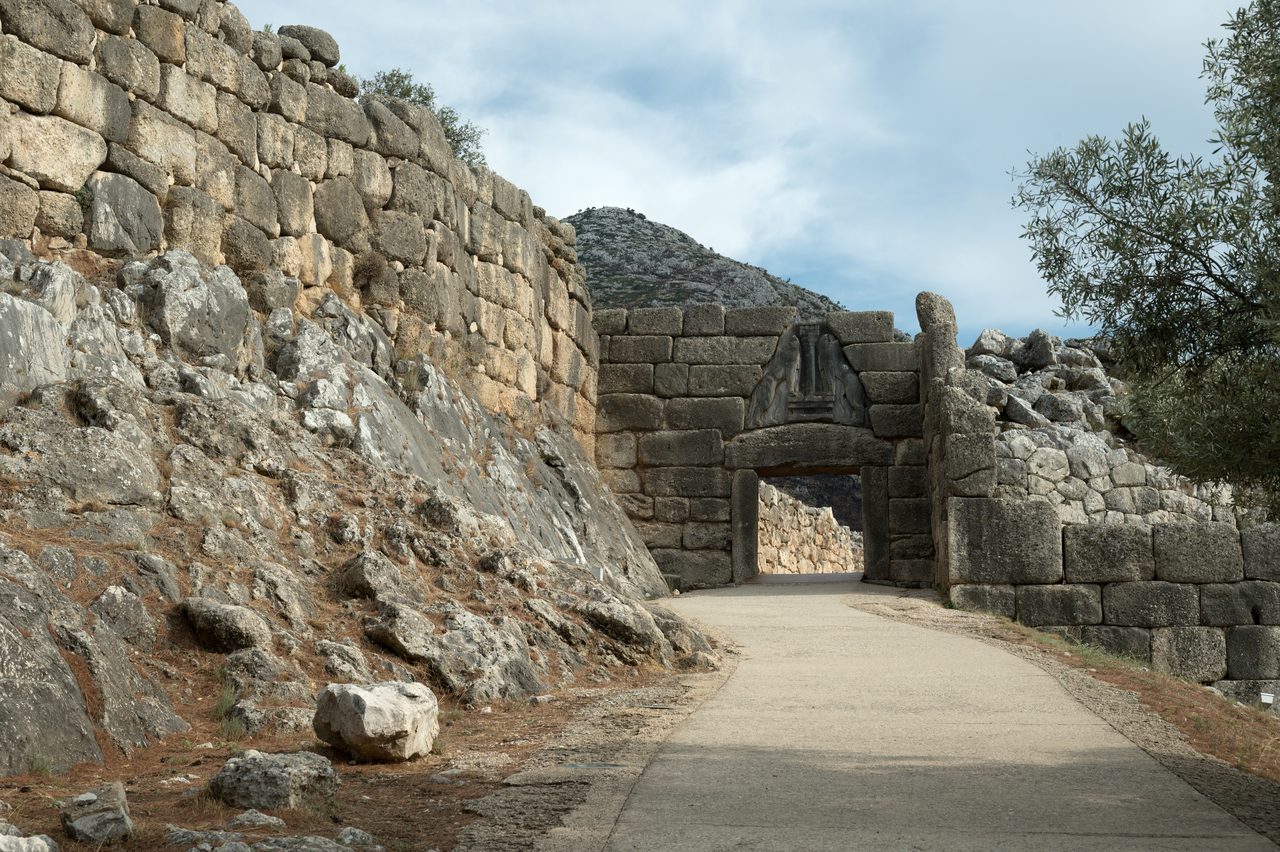
In the Aegean: the citadel of Mycenae and its surrounding settlement were destroyed c. 1190 to 1180 BCE. The Palace of Nestor at Pylos was burned c. 1180 BCE, and the fire that ended it is the reason its Linear B archive exists, since the flames baked the clay tablets that would otherwise have dissolved. Among those tablets are records of coastal watchtower deployments, which our file reads as suggesting the rulers anticipated an attack. Anticipated, not identified: the tablets are evidence that someone was watching the sea, not evidence of who came over it or why. Tiryns suffered major destruction and was then partly reoccupied on a reduced scale, and our file gives it no absolute date.
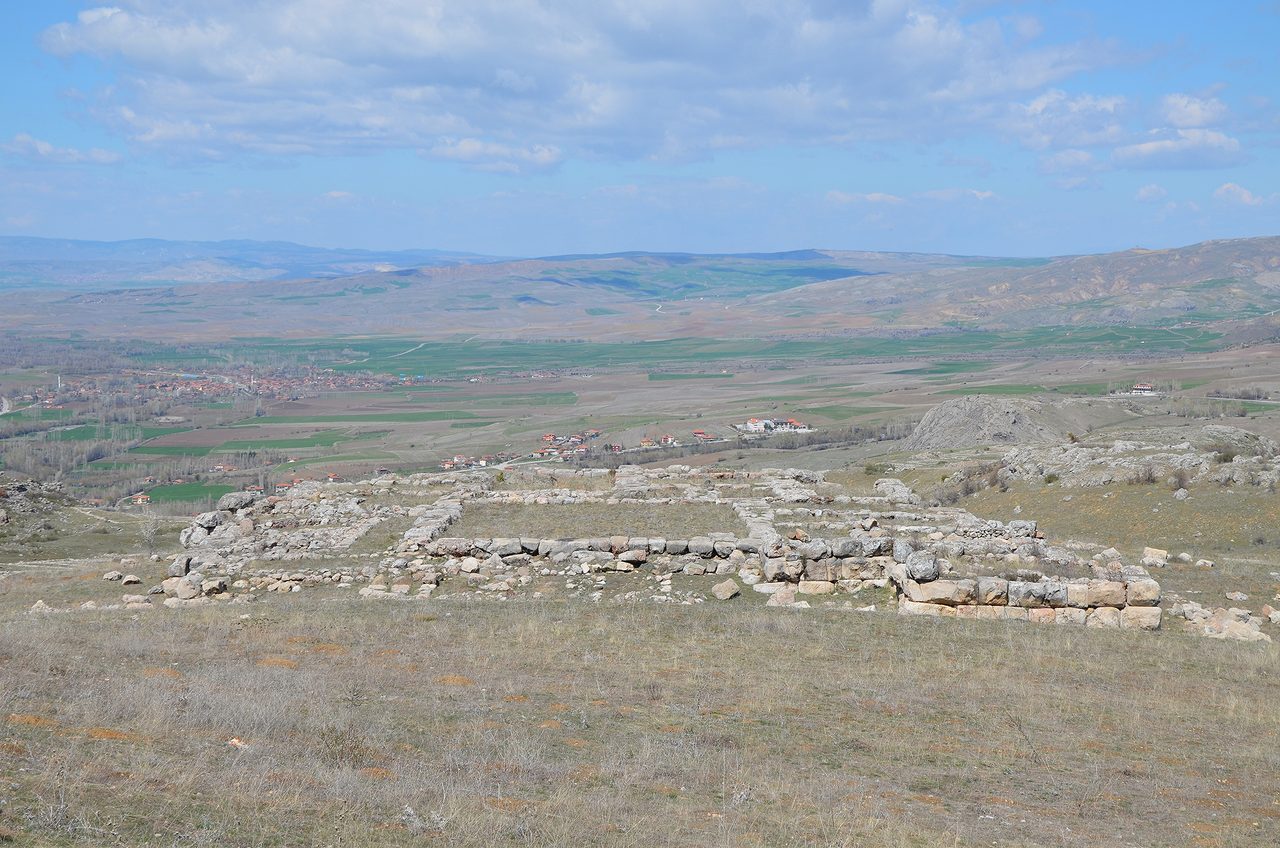
In Anatolia and the Levant: Hattusa, the Hittite capital at modern Bogazkale, was burned and abandoned c. 1180 BCE, and the last Hittite king, Suppiluliuma II, simply vanishes from the record. An empire that had rivalled Egypt for two centuries collapsed entirely. Troy level VIIa was destroyed by fire c. 1180 BCE. Ugarit, a wealthy trading city on the Syrian coast, was destroyed c. 1185 BCE and never reoccupied. Megiddo carries a destruction layer between its Late Bronze and Iron I strata, with no absolute date given in our file.
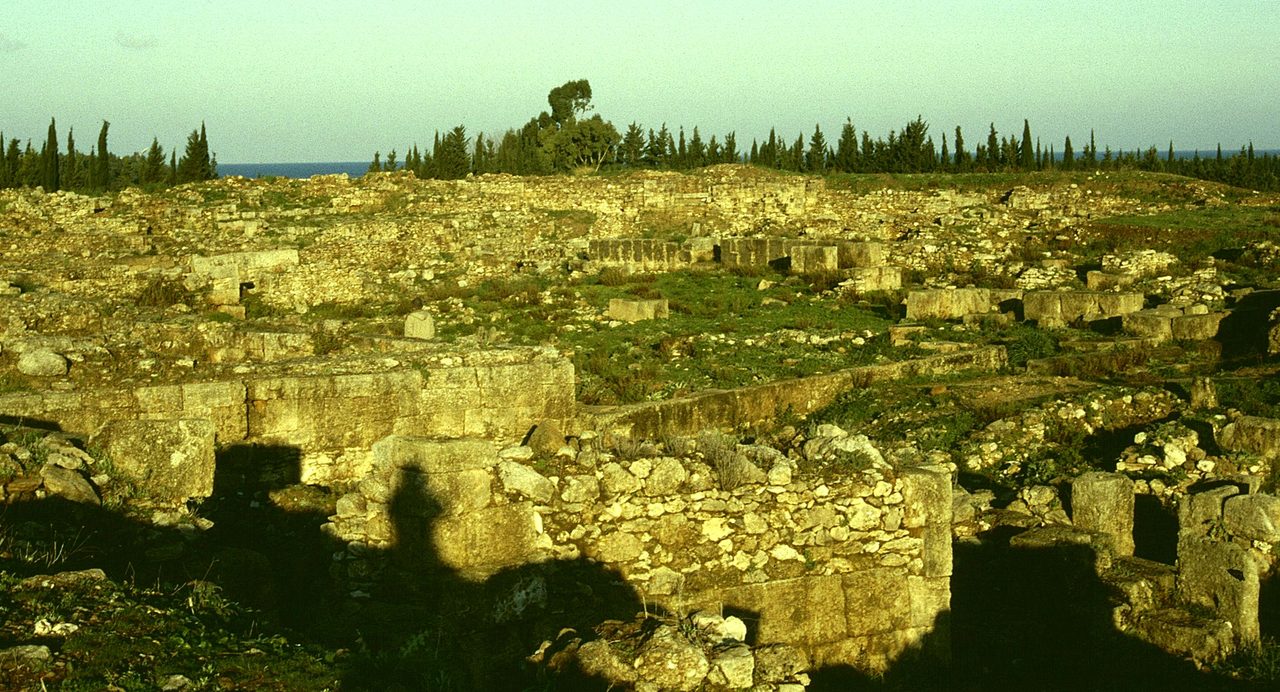
Ugarit's last letters were preserved in the same clay the city died in, and they include desperate pleas for military aid. The most quoted line of them is a single sentence: 'the enemy ships are already here, they have set fire to my towns.' Our own file attaches that line to a specific tablet number and a popular nickname, and independent checking places that nickname on a different group of texts entirely, so this article quotes the line as what it certainly is, the famous surviving plea from Ugarit's final days, and does not attach it to a catalogue number.
Further out: Cyprus was devastated, with Enkomi and other cities destroyed, and the Kassite dynasty in Babylon fell. Our file gives dates for neither, and a sister file reads Cyprus the other way entirely. That disagreement is ours, and it is handled in section 10 rather than smoothed over here.
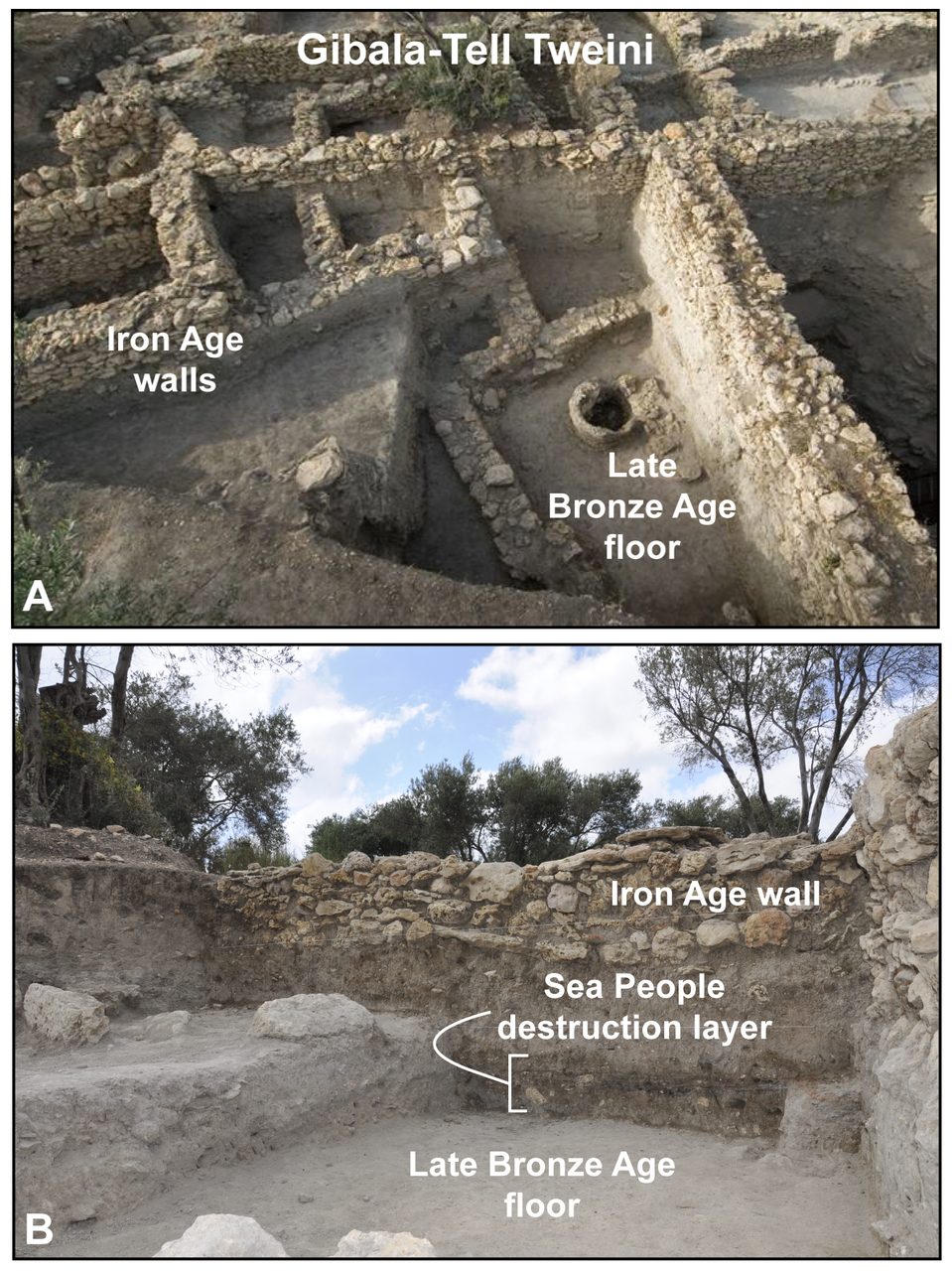
The field can now date one destruction horizon far more sharply than our library does. Kaniewski and colleagues, publishing in PLOS ONE in 2011, used stratified radiocarbon-based archaeology at Gibala-Tell Tweini on the coast of Syria, anchored to epigraphic and literary sources and to astronomical observations, and established an absolute age range of 1192 to 1190 BC for the terminal destructions and cultural collapse in the northern Levant. Note what that is and is not. It is a three-year-wide window for one region, arrived at by excavation. It is not a Mediterranean-wide date, and it is not 1177.
That precision comes with a warning from inside the field, and it should be read in the same breath. Knapp and Manning, in a 2016 review in the American Journal of Archaeology, examine what they call 'the coherence of climatic explanations and overprecise chronologies', and observe that there has never been any overarching explanation to account for all the changes, some of which occurred at different times from the mid to late 13th throughout the 12th centuries BCE. Sharper dating of individual horizons and over-reading of sharp dates are two different things, and the same specialists are pushing for the first while warning about the second.
| When | What | Where It Comes From |
|---|---|---|
| c. 1250 BCE | Severe aridification begins in the Sea of Galilee pollen record and persists for centuries | Langgut et al. 2013, via our file E_5_01 |
| c. 1250 BCE | Earthquake damage at Troy VIh and at Mycenae. Troy VIh is a different destruction from the Troy VIIa fire below | Our sister file E_2_23 |
| c. 1208 BCE | Merneptah defeats a coalition including Lukka, Sherden and Ekwesh. The Egyptian record of these attacks begins about thirty years before the main destruction horizon | Our file E_5_01 |
| c. 1200 BCE | Earthquake damage at Tiryns and at Enkomi on Cyprus | Our sister file E_2_23 |
| c. 1200 to 850 BCE | The megadrought, about 300 years of it, read from pollen cores at the Larnaca Salt Lake on Cyprus | Kaniewski et al. 2013 |
| c. 1198 to 1196 BCE | Three consecutive years of severe drought in central Anatolia, read from juniper tree rings and carbon isotope ratios, coincident with the abandonment of the Hittite capital | Manning et al. 2023, Nature; cited by no file in our library |
| 1192 to 1190 BCE | An absolute radiocarbon range for the terminal destructions in the northern Levant, from stratified excavation at Gibala-Tell Tweini in coastal Syria | Kaniewski et al. 2011; cited by no file in our library |
| c. 1190 to 1180 BCE | The citadel of Mycenae and its surrounding settlement are destroyed | Our file E_5_01 |
| c. 1185 BCE | Ugarit is destroyed and never reoccupied | Our file E_5_01 |
| c. 1180 BCE | Hattusa is burned and abandoned; the last Hittite king, Suppiluliuma II, vanishes from the record | Our file E_5_01 |
| c. 1180 BCE | The Palace of Nestor at Pylos burns, and the fire preserves its Linear B archive | Our file E_5_01 |
| c. 1180 BCE | Troy level VIIa is destroyed by fire | Our file E_5_01 |
| c. 1178 BCE | Ramesses III repels the Sea Peoples at the Battle of the Delta and in Djahi, recording both at Medinet Habu. This is the closest real date in the file to the number 1177 | Our file E_5_01 |
| No date in our files | Tiryns destroyed and partly reoccupied on a reduced scale; Megiddo's destruction layer between the Late Bronze and Iron I strata; the devastation of Cyprus; the fall of the Kassite dynasty in Babylon | Our file E_5_01 gives no absolute date for any of these |
| c. 1150 to 900 BCE | The Dark Age | Our file E_5_01 |
| c. 1114 to 1076 BCE | Tiglath-Pileser I rules a Middle Assyrian Empire that is growing, not collapsing | Our file E_5_01, in its own counter-arguments |
03The Sea Peoples: A Tier 1 Record, Not A Tier 1 Cause
The most famous suspect is also the clearest illustration of the distinction this whole article turns on. What is extremely well evidenced about the Sea Peoples is that the Egyptians wrote about them. What is not established is that they caused the collapse. Those are different claims, and they do not share a tier.
Egyptian records, principally the Medinet Habu inscriptions of Ramesses III at c. 1178 BCE, name a coalition of peoples who attacked Egypt by land and by sea: Peleset, Tjeker, Shekelesh, Denyen and Weshesh. That the inscriptions exist and say this is Tier 1. It is also worth noticing what kind of document it is. Medinet Habu is a pharaoh's own account of his own victory, carved on his own mortuary temple.
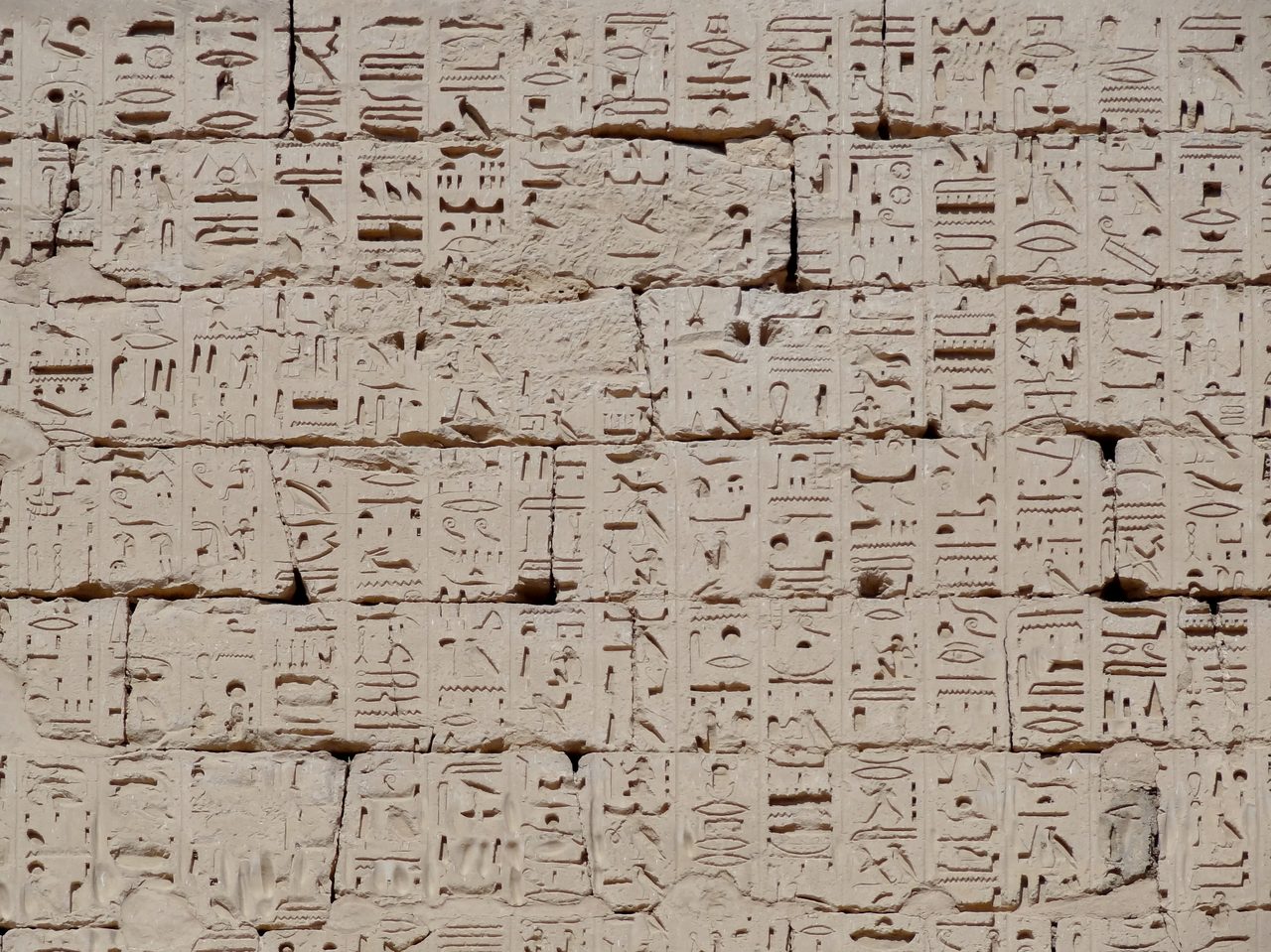
Who these people actually were remains partly unknown, and our file marks its own uncertainty with punctuation. Its identifications read Tjeker (Sikels?), Shekelesh (Sicilians?), Denyen (Danaans?), Sherden (Sardinians?) and Ekwesh (Achaeans?). Only Peleset (Philistines) and Lukka (Lycians) carry no question mark. Those question marks are the file's own and they survive into this article intact.
The Egyptian record also starts earlier than the destructions do. Merneptah, at c. 1208 BCE, defeated a coalition including Lukka, Sherden and Ekwesh. Whatever was happening in the eastern Mediterranean was already producing armed movements toward Egypt roughly thirty years before Mycenae, Hattusa and Ugarit fell.
One group can be followed to where it settled. Archaeological evidence confirms the Peleset settled in Canaan, in the Gaza Strip region, becoming the biblical Philistines. Excavations at Ashkelon, Ekron and Ashdod reveal Aegean-style pottery and architecture in early Iron Age levels.
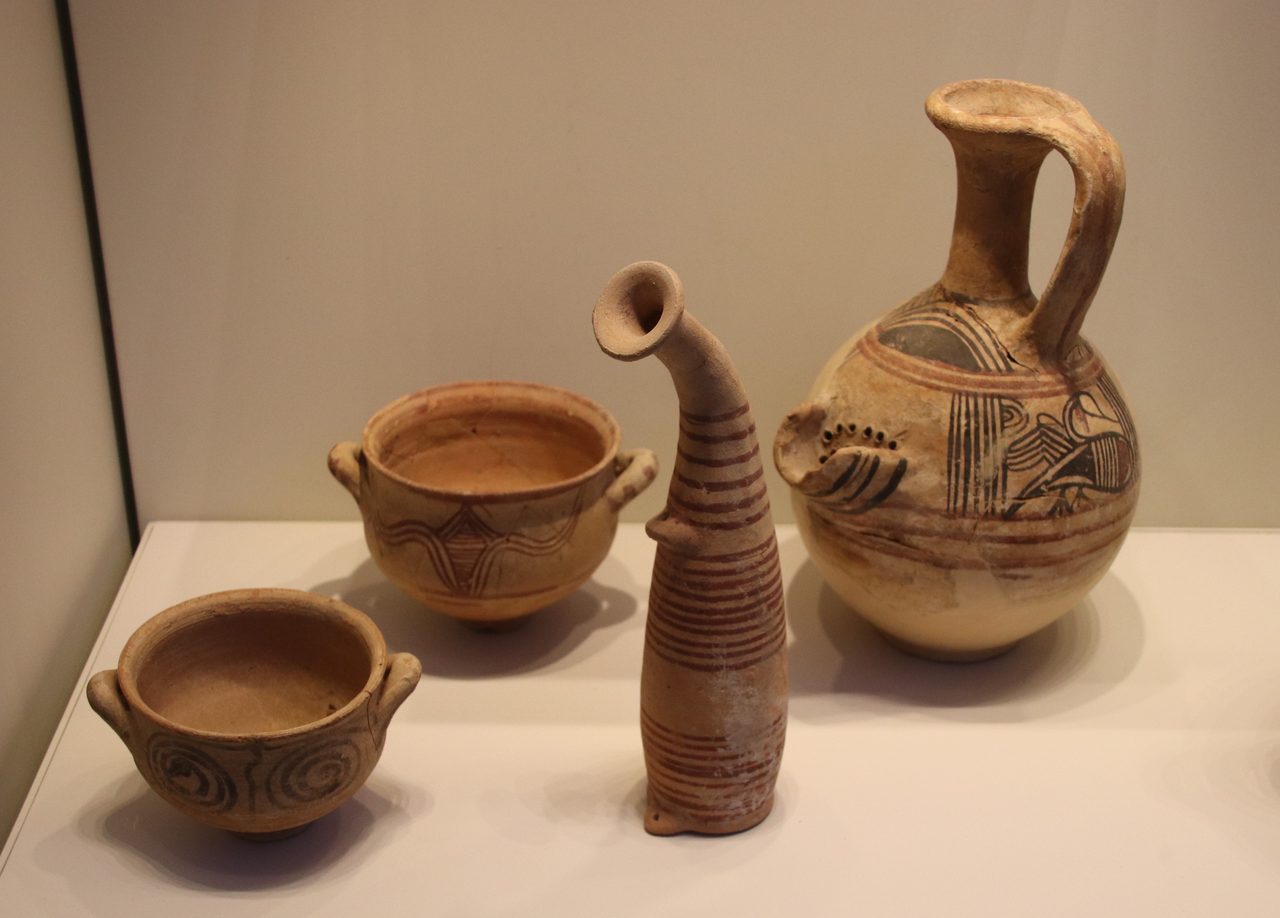
Ancient DNA has entered this argument, and the careful statement of the result is narrower than the popular one. Feldman and colleagues, publishing in Science Advances in 2019, reported European or Aegean genetic input in Philistine burials at Ashkelon. One of our sister files calls that a confirmation of the identification; another states it in the weaker form, and the weaker form is the right one. Genetic input into a population is not the same thing as a confirmed migration narrative, and the study's own framing is of a transient gene flow.
Then there is the reading that turns the whole story around. Israel Finkelstein and others have argued that the Sea Peoples were as much refugees from the collapse as they were causes of it: displaced populations from Aegean and Anatolian societies that were already failing, moving east and south because home had stopped working. On that reading the ships in the Egyptian reliefs are a symptom of the collapse arriving in Egypt, not the mechanism that produced it elsewhere.
One ancient correspondent had the same suspicion at the time. Independent sources describe a group of three letters from the Rap'anu archive at Ugarit, exchanged between Ammurapi, the city's last king, and Eshuwara, a senior functionary of Alashiya on Cyprus. Ammurapi reports an enemy fleet of twenty ships sighted at sea. The Alashiyan reply asks where Ammurapi's own troops and the enemy fleet actually are, and includes the suggestion that the attackers may have been 'the people from your country and your own ships'. That is a complication of the pure external-invasion reading and nothing more. One functionary's suspicion, reported at a distance and known to us through secondary summaries rather than a primary edition, is not evidence that the raiders were local.
Popular claims linking the Sea Peoples to refugees from Atlantis have no archaeological, textual or geographic support. That is the whole of what this article has to say about it.
04The Drought, And A Range Our Own Files Cannot Settle
The climate evidence is the strongest single body of physical data in this file, and it is also where our own document contradicts itself. Both facts belong in the open.
David Kaniewski and colleagues, publishing in PLOS ONE in 2013, documented a drought lasting about 300 years using pollen cores from the Larnaca Salt Lake on Cyprus, which record a dramatic shift from Mediterranean woodland to dry steppe. A note on the number, because our own file gives two different answers to the same question: its quick summary dates the drought c. 1200 to 850 BCE, while the section that carries the attribution says c. 1200 to 900 BCE. The published paper's own abstract gives 1200 to 850 cal yr BC. The summary matches the source and the attributed section does not, so this article uses c. 1200 to 850 BCE and states why.
Dafna Langgut and colleagues, publishing in Tel Aviv in 2013, found the parallel signal in pollen records from the Sea of Galilee: severe aridification beginning c. 1250 BCE and persisting for centuries. That timing matters more than it usually gets credit for. The drought opens about fifty years before the destruction window does, and it is still running long after the last palace has burned. It is not synchronous with the collapse. It brackets it.
Brandon Drake, in 2012, confirmed widespread drought across the eastern Mediterranean using speleothem records, that is, cave stalagmites, from Soreq Cave in Israel. A sister file in our library broadens the proxy base further: Dead Sea levels dropped dramatically during the drought window, confirmed by shore-terrace stratigraphy, alongside the Soreq oxygen-isotope shift to arid conditions and the pollen cores from the Sea of Galilee and Cyprus indicating agricultural decline. Four independent lines of physical evidence, from three different kinds of archive, agreeing.
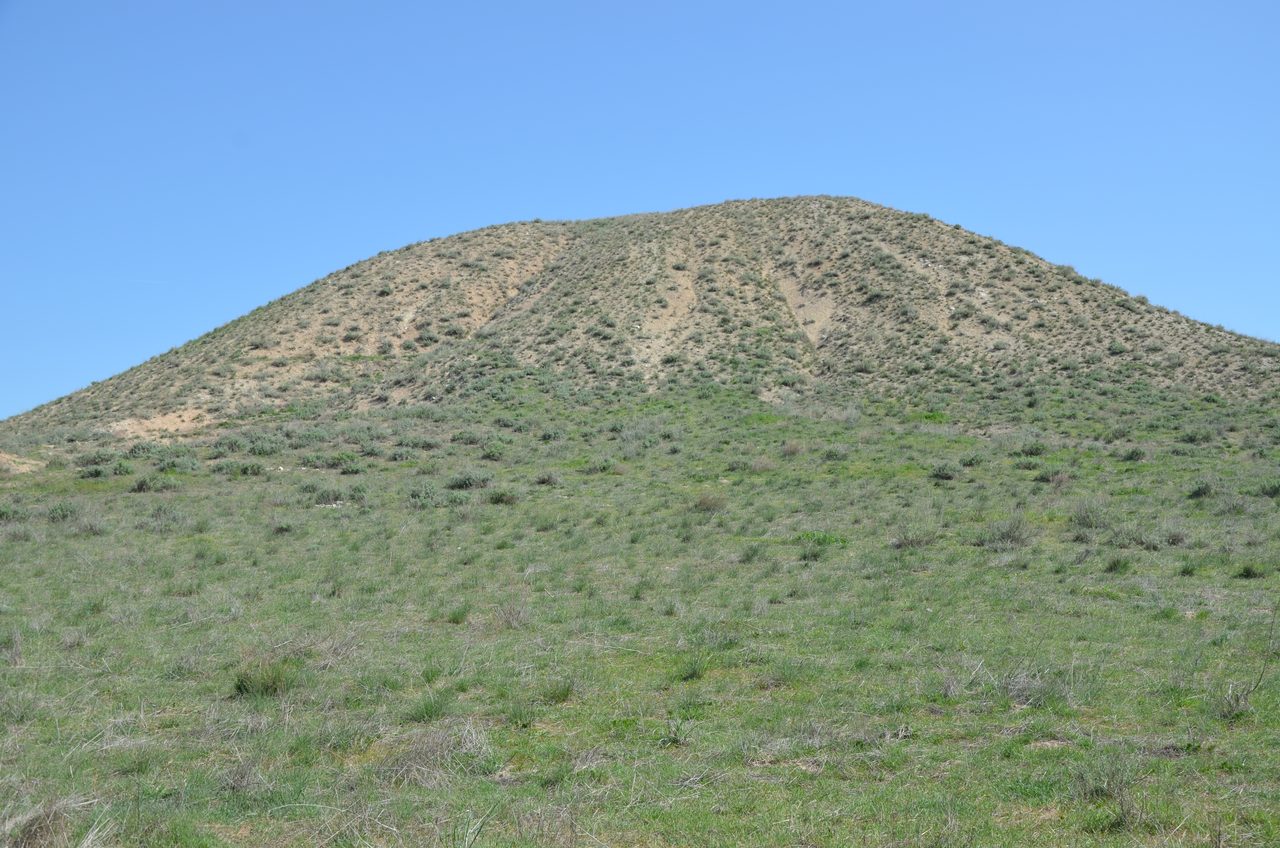
The sharpest result of all is very recent and appears in none of our four files on this subject. Manning, Kocik, Lorentzen and Sparks, publishing in Nature in 2023, took juniper timbers from the Midas Mound Tumulus at Gordion in central Turkey, combined tree-ring widths with carbon-13 to carbon-12 isotope ratios, and identified three consecutive years of severe drought at approximately 1198 to 1196 BCE, give or take three years, inside an already dry period, coincident with the abandonment of the Hittite capital. Read the title's verb carefully: coincident with, not caused. Manning's own stated position is that severe climate events may not have been the sole reason for the Hittite Empire's collapse, and that this drought may have been a tipping point, at least for the Hittites. This is the finest resolution yet achieved for one stressor at one polity. It is not the answer to the question.
05The Ground Moves
The second physical suspect is the one the region supplies for free. The eastern Mediterranean sits on active plate boundaries, and it always has.
Amos Nur, of Stanford, documented in 2008 that clustered earthquake sequences, which he calls earthquake storms, can devastate multiple cities within decades. It is a real seismological phenomenon rather than a convenience, and it does something no other single suspect manages: it produces destruction across a wide area over exactly the kind of multi-decade span our timing evidence shows.
Some of that damage is dated. A sister file records earthquake damage at Late Bronze Age destruction layers at Troy VIh at c. 1250 BCE, Mycenae at c. 1250 BCE, Tiryns at c. 1200 BCE and Enkomi on Cyprus at c. 1200 BCE. Two of those are half a century before the destruction window opens, and the Troy horizon is a different event from the Troy VIIa fire at c. 1180 BCE. Merging them would manufacture a synchrony the evidence does not contain.
More broadly, archaeological evidence of earthquake damage is documented at Mycenae, Tiryns, Midea, Knossos and various Levantine sites, though dating individual earthquake events precisely remains difficult. That difficulty is not a rhetorical hedge. It is the reason this suspect sits at Tier 2 while the drought sits at Tier 1: the events are real, and pinning any one of them to any one destruction is another matter.
Our file then writes the sharpest sentence in the entire document, and it is a sentence against its own suspect. The earthquake storm hypothesis explains physical destruction but not the failure to rebuild. Cities in this region had been knocked down and put back up for two thousand years. What is different about this episode is not that things fell. It is that so many of them stayed down.
06The Sword, And The Subject
The remaining two suspects do not arrive from outside at all. One is about how wars were fought, and the other is about who was inside the walls.
Robert Drews argued in 1993 that the palaces were beaten by a change in tactics. On his account a military revolution, the shift from chariot-based warfare to infantry using javelins and long swords, made palatial armies obsolete and left them vulnerable to mobile raiders. It is a genuinely testable proposal about equipment and battlefield practice, and it carries an internal complication our library should own: our primary file and one sister file carry Drews at Tier 2 as a contributing factor, while another sister file files the same thesis at Tier 4 and marks it debunked, on the ground that he proposed it as the sole cause. Read as a contributing factor it is credible. Read as the whole answer it falls under the same Tier 4 refusal every other single cause does.
The texts also hint that some of the trouble was domestic. The Pylos tablets reference deployments against unspecified threats, and Hittite texts mention provincial rebellions in the empire's final years. Neither says who the threat was, which is exactly why the material is suggestive rather than decisive.
From that our file draws the possibility that some destructions may represent internal revolts against palace elites rather than external invasions. A burned palace does not record who lit it. That single fact is why this suspect cannot be ruled out and cannot be convicted, and it sits underneath the whole invasion narrative like a question the ash cannot answer.
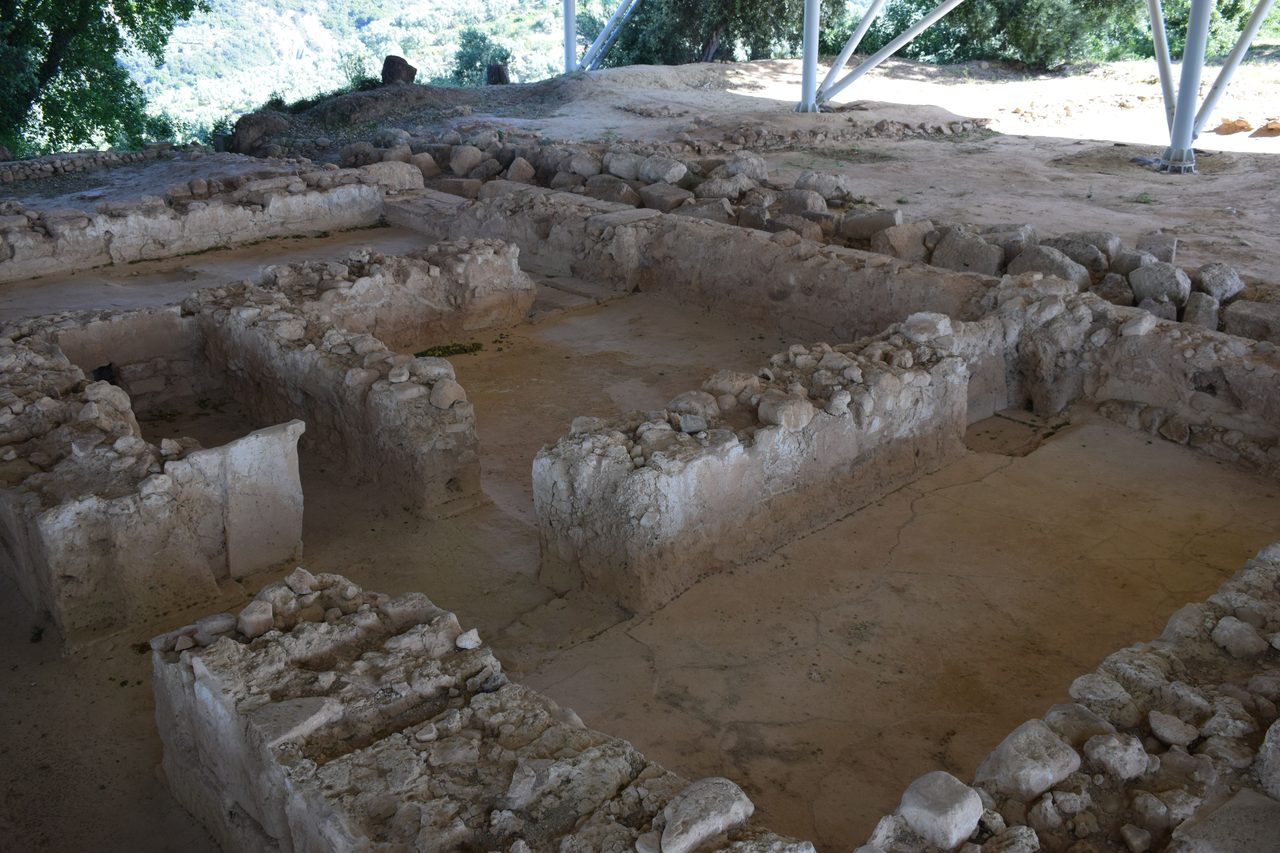
07The Network, And The Metal It Could Not Do Without
The reason a regional shock could become a systemic one is that the Late Bronze Age had built something genuinely fragile: an economy in which the material that defined the age had to be imported from the other side of the known world.
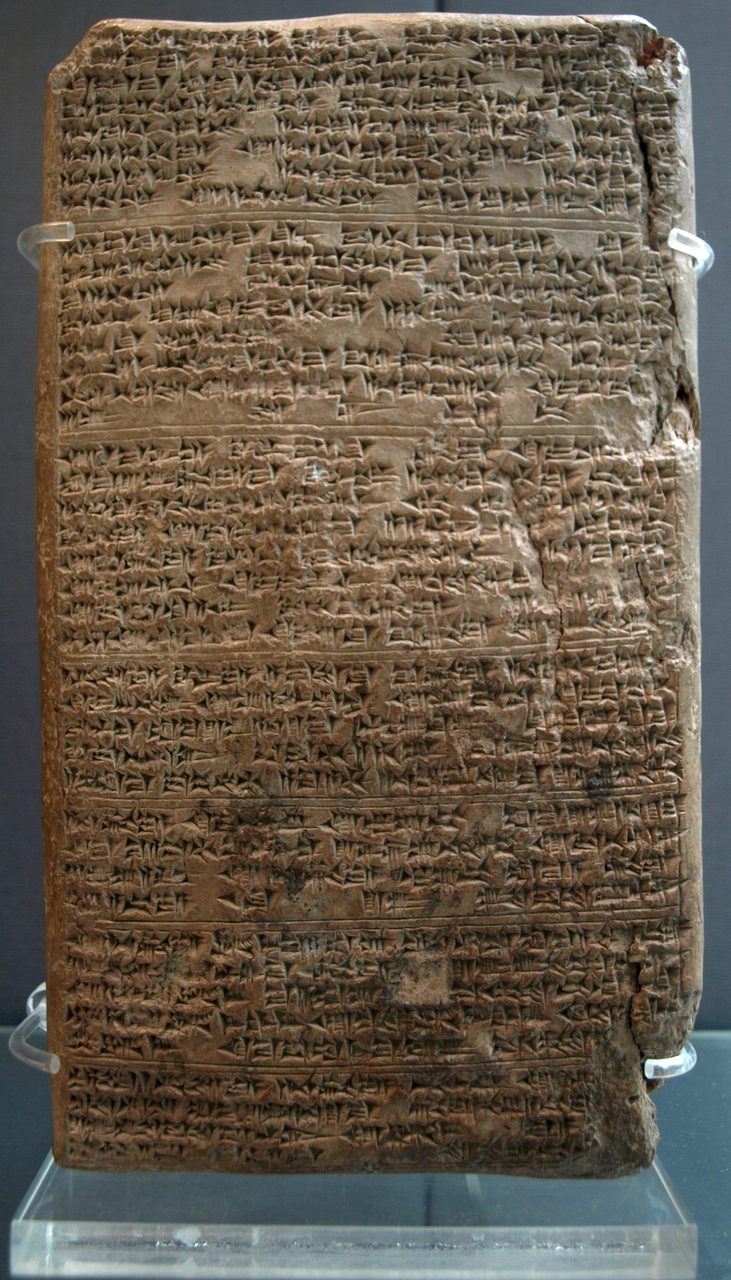
The Late Bronze Age was characterised by an extensive international trade system exchanging tin, copper, gold, ivory, glass, textiles, oil and grain across routes connecting Egypt, the Levant, Anatolia, Cyprus, Crete and mainland Greece. This is not inferred from absence. It is documented from the cargoes and the correspondence.
The Uluburun shipwreck, c. 1300 BCE, off the coast of Turkey, excavated by George Bass and the Institute of Nautical Archaeology, contained goods from at least seven cultures in a single hull. The Amarna Letters, c. 1350 to 1330 BCE, document extensive diplomatic correspondence and gift exchange between Egypt, Babylon, Mitanni, Hatti and Alashiya. One is the freight of the system and the other is its diplomacy, and they describe the same world.
Bronze is the weak link, and specifically the tin in it. Tin makes up typically about 10 percent of the alloy, and none of it is local: our library sources it to Afghanistan, naming Badakhshan, to Cornwall in Britain, and possibly to central Asia. A Mycenaean or Hittite armoury depended on a supply chain running thousands of kilometres through polities it did not control. The collapse severed those networks, depriving dependent economies of critical resources.
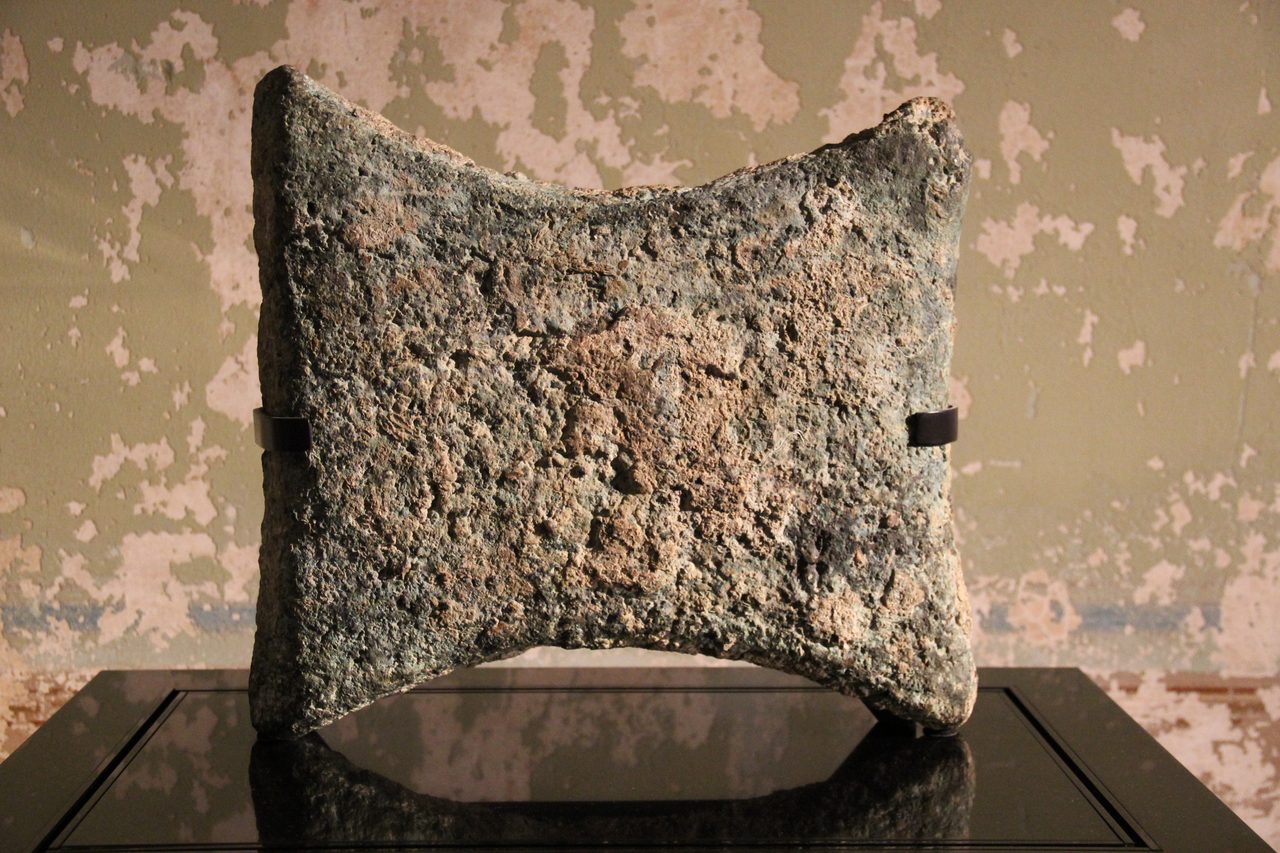
That the tin supply failing was a trigger of the collapse, rather than a consequence of it, is a much weaker claim than the dependency itself, and one of our sister files files it that way explicitly: direct evidence is limited. The route and the dependency are Tier 1. Tin disruption as a cause is Tier 3, and the distinction is not pedantry, because a severed network is exactly what a collapse produces as well as what it might produce a collapse from.
08The Softer Suspects, And One Claim We Are Withdrawing
Three further candidates appear in the literature at lower confidence. Two of them our file carries as speculative and this article carries the same way. The third our file should not have carried at all, and saying so is part of the job.
The eruption of Hekla 3 in Iceland, dated variously to about 1159 or 1021 BCE, has been proposed as a contributing factor through climate cooling, a volcanic winter. The dates remain too imprecise to establish a clear link with a collapse onset at c. 1200 BCE, and the honest way to say that is blunter: both dates offered are later than the onset, so this hypothesis fails on chronology before anybody tests it on physics. One of our sister files files the volcanic trigger a full tier lower than this, at Tier 4, on the grounds that it confuses chronologies.
Ancient texts mention plagues and epidemics, including Hittite plague texts describing outbreaks during the empire's decline, and scholars have speculated that epidemic disease contributed to population decline. No specific pathogen has been identified and the evidence is fragmentary. A sister file puts it slightly more sharply: the proposal lacks direct bioarchaeological evidence for the period around 1200 BCE. Neither statement is a refutation. Both are a description of what is missing.
The third candidate is not carried here at all, and the reason is a defect in our own document. Our file's section on cosmic causes attributes to Marie-Agnes Courty, of the CNRS, a proposal that a cosmic impact around 1200 BCE triggered the collapse, based on unusual microspherules in archaeological sediments at Tell Leilan in Syria. Independent checking during research placed her actual published impact hypothesis at about 2350 BCE, attached to the 4.2 ka climate event and the collapse of the Akkadian empire at that same site, roughly 1,150 years before the Late Bronze Age Collapse. The scholar is right, the institution is right and the site is right. The event and the date are wrong by more than a millennium. That verification rests on consistent secondary and encyclopedic sourcing rather than a direct reading of her papers, which is why this is stated as a correction to our file rather than as a claim about her work, and it is why this article tells you no CNRS geologist proposed a cosmic trigger for the Bronze Age Collapse. The correction has been logged against the corpus document.
One more thing this event is not. It is not Thera. Our primary file never mentions the eruption at all; of the sister files, one raises it only inside its own dubious tier, to say that linking the collapse to Thera confuses chronologies, and the other states at its speculative tier that the eruption, dated to c. 1628 or 1530 BCE, predates the collapse by several centuries and is not directly relevant. The corpus's own answer is that there is no usable connection, and the eruption has its own file and its own article in this wing, where the dating is the whole argument.
09Six Suspects, One Frame, And Two Attacks On The Frame
Here is where the file's structure gets genuinely subtle, and where most retellings flatten it. Our document rejects every single-cause explanation at its lowest tier, endorses a multi-causal framework as a key finding, and then files that framework two tiers above the rejection rather than beside it. All three of those things are true at once, and the gap between them is the honest shape of this subject.
No, it was not one thing. Attributing the collapse to any single cause, whether the Sea Peoples alone, drought alone or earthquakes alone, is rejected by current scholarship. The evidence demonstrates multiple simultaneous stressors interacting within an interconnected system. Note what that does to the rivals: it does not retire them. It refuses each of them as a complete explanation while accepting several of them as real, well-evidenced stressors.
Eric Cline, of George Washington University, synthesised the multi-causal model in 2014, arguing that no single factor, not drought, earthquakes, Sea Peoples, internal revolt or trade disruption, was sufficient to cause the collapse alone, but that their simultaneous convergence overwhelmed interconnected systems. The model draws on complexity theory and on Joseph Tainter's 1988 work on societal collapse, which argues that complex societies experience diminishing marginal returns on investment in complexity, and so become vulnerable to stressors they could once have absorbed.
Our file marks one implication as a key finding while keeping the hedge in its own wording: the Bronze Age collapse may be the earliest well-documented example of systemic cascading failure in interconnected civilizations, a concept with relevance to modern globalized systems. Relevance is the word the file uses, and this article will not upgrade it into a lesson. A cascade at the far end of the Bronze Age is an object worth studying, not a verdict on the present one.
The first attack on the framework is that it may not be falsifiable. Our file states the critique and leaves the critics anonymous: scholars argue the systems collapse model is too vague and potentially unfalsifiable, explaining everything and therefore explaining nothing. The named source for exactly that critique is sitting unused in the same document's own bibliography. Knapp and Manning, in the 2016 American Journal of Archaeology review already quoted above, write that explanations for the crisis are numerous, that there has never been any overarching explanation to account for all the changes, and that there is no final solution, concluding instead that the collapse presents multiple material, social and cultural realities demanding continuing collaborative attention. That is a real position held by named people, and this article names them rather than writing 'some scholars'.
| Suspect | How Good Is The Evidence That It Happened | How Good Is The Evidence That It Caused The Collapse | Where Our Files File It |
|---|---|---|---|
| Sea Peoples raids and migration | Tier 1. Egyptian royal inscriptions at Medinet Habu name the coalition, and Aegean-style pottery and architecture appear in early Iron Age levels at Ashkelon, Ekron and Ashdod | Not established. Finkelstein and others read the Sea Peoples as refugees from the collapse as much as causes of it, which reverses the arrow | The record is Tier 1; as a sole cause, Tier 4 debunked |
| Megadrought | Tier 1. Pollen at the Larnaca Salt Lake, pollen at the Sea of Galilee, speleothems at Soreq Cave, and Dead Sea shore terraces in a sister file | Strong as a stressor, not established as the cause. It begins about fifty years before the destructions and outlasts them by centuries | The evidence is Tier 1; as a sole cause, Tier 4 debunked |
| Earthquake storm | Tier 2. Damage documented at Mycenae, Tiryns, Midea, Knossos and Levantine sites, though individual events are hard to date | Partial by our file's own admission: it explains physical destruction but not the failure to rebuild | Tier 2 |
| Military revolution | Tier 2. Robert Drews argued in 1993 that a shift from chariot warfare to infantry using javelins and long swords made palatial armies obsolete and vulnerable to mobile raiders | Credited as a contributing factor, rejected as a total explanation | Tier 2 in our primary file and in E_2_23; Tier 4 debunked in E_3_07, which reads it as a sole-cause claim |
| Internal revolt | Tier 2. The Pylos tablets reference deployments against unspecified threats, and Hittite texts mention provincial rebellions in the empire's final years | Possible for some destructions. Our file's own wording is that some may represent internal revolts against palace elites rather than external invasions | Tier 2 |
| Trade network failure and the tin supply | Tier 1 for the network and for its severing. The Uluburun cargo and the Amarna Letters give the scale; tin came from Afghanistan and Cornwall | Tier 3 as a trigger. A sister file says direct evidence for tin disruption as a cause is limited | Network Tier 1; trigger Tier 3 |
| Hekla 3 volcanic winter | The eruption is real, dated variously to about 1159 or 1021 BCE; our file carries the volcanic-cooling proposal at Tier 3 | Fails on chronology before it is tested on physics: both dates offered are later than the collapse onset | Tier 3; Tier 4 in E_2_24, which says it confuses chronologies |
| Epidemic disease | Hittite plague texts describe outbreaks during the empire's decline; our file carries the epidemic proposal at Tier 3 | No specific pathogen identified, and the evidence is fragmentary | Tier 3 |
| Multi-causal systems collapse | Tier 2. The frame the field converged on, synthesised by Cline in 2014 and drawing on Tainter on complexity | It is a frame rather than a mechanism, and its own critics say a model that explains everything explains nothing | Tier 2, with named dissent |
| Any single cause at all | Not applicable | Rejected outright by current scholarship | Tier 4 debunked |
10The Second Attack: What Did Not Fall
The other objection to the framework is not theoretical at all. It is a list of places that were inside the same interconnected system and did not collapse, and our own file raises it in its own voice.
Assyriology specialists note that Assyria actually grew in power during this period, under the Middle Assyrian Empire of Tiglath-Pileser I, who ruled about 1114 to 1076 BCE. The file's own reading of why is the most useful sentence it has on the subject: the collapse primarily affected palace economies dependent on international trade, while less-complex societies adapted. If the system was so interconnected that its failure cascaded everywhere, a major power inside it should not have been expanding on the far side of the cascade.
A sister file makes the same point across the map, and in doing so contradicts our primary file. It records that the collapse was not uniform: Egypt survived though weakened, Cyprus experienced transformation rather than destruction, and some Levantine coastal cities, Byblos and Sidon among them, continued operating, which suggests differential resilience based on geographic and economic factors. Our primary file's summary says instead that Cyprus was devastated. Those are two of our own documents reading the same island the opposite way, and this article carries the disagreement rather than choosing one silently.
Guy Middleton went after the word itself. Our sister file attributes to him, in 2012, a criticism of the collapse framework as privileging elite palatial perspectives: for the rural farming population, roughly 80 percent of people, the end of the palaces may have represented liberation from exploitative palatial redistribution systems rather than catastrophe. Whether or not one accepts that, it exposes something structural about the evidence base. What we can see collapsing is what left archives, and archives were kept by palaces. A world in which nobody was writing anything down looks emptier than it necessarily was.
11What The Dark Made
Whatever it was that happened, the shape of the aftermath is well documented, and it lasted a great deal longer than the collapse did.
The collapse ushered in a prolonged Dark Age, c. 1150 to 900 BCE, characterised by population decline, loss of literacy, reduced long-distance trade and simpler material culture. The literacy loss is stark and specific: Linear B disappeared, and Hittite cuneiform ceased. Two writing systems in use for centuries stopped being written.
The one solid number for the human scale of it comes from a sister file. Population estimates for the Argolid, the Mycenaean heartland, show a decline of about 75 percent in the centuries following the collapse, a figure our file attributes to Dickinson in 2006. That is one region, measured across centuries rather than across a season, and it should be read as exactly that rather than as a Mediterranean-wide death toll.
What eventually came out of the dark is the world most readers think of as antiquity. The collapse created the conditions for the emergence of Iron Age societies: the Greek poleis, the Phoenician maritime network, and the kingdoms of Israel and Judah.
Recent archaeology has also nuanced the word 'dark'. There was genuine decline in material complexity and literacy, and at the same time some regions, particularly Cyprus and parts of the Levant, show continuity and even innovation during the early Iron Age. The period saw the invention of the alphabet, out of Phoenician consonantal script, and the spread of iron technology. A world losing two syllabic scripts was simultaneously acquiring a writing system that almost anyone could learn.
That the collapse caused those innovations is a further and weaker claim, and a sister file says so directly: the framing that the collapse enabled them is a historiographic interpretation rather than an empirically demonstrable cause-and-effect chain. This article therefore describes what followed and does not assert that the collapse produced it.
Iron is the one suspect whose arrow our library points firmly downstream. The development and adoption of iron technology, which does not require tin, accelerated after the collapse and eventually displaced bronze, which suggests that tin scarcity was a factor in the technological transition. Iron is what the collapse produced, not what produced the collapse.
Fast Facts
- The Event
- The Late Bronze Age Collapse: the destruction or severe diminishment of virtually every major palace-based civilization of the eastern Mediterranean and the Near East
- The Window
- c. 1200 to 1150 BCE, approximately fifty years, with considerable local variation and destructions our own file calls non-synchronous
- The Famous Year
- 1177 BCE is the title of Eric Cline's 2014 book and appears in our primary file exactly once, inside that title. The file assigns no event to that year
- Closest Real Date To It
- c. 1178 BCE, Ramesses III's Battle of the Delta and the land battle in Djahi, recorded at Medinet Habu
- Destroyed
- Mycenae c. 1190 to 1180 BCE; Ugarit c. 1185 BCE, never reoccupied; Hattusa c. 1180 BCE; Pylos c. 1180 BCE; Troy VIIa c. 1180 BCE; Megiddo and Tiryns undated in our file
- Survived
- Egypt, weakened; Cyprus, transformed rather than destroyed on one of our files and devastated on another; Byblos and Sidon, still operating; Assyria, growing
- The Drought
- About 300 years of it, c. 1200 to 850 BCE on Cypriot pollen, with aridification in the southern Levant beginning c. 1250 BCE. Four independent proxy lines
- The Sharpest Date
- Three consecutive drought years at approximately 1198 to 1196 BCE in central Anatolia, from juniper tree rings and carbon isotopes, coincident with the abandonment of Hattusa (Manning et al. 2023)
- The Trade System
- Tin, copper, gold, ivory, glass, textiles, oil and grain, from Egypt to mainland Greece. Tin, about 10 percent of bronze, came from Afghanistan and Cornwall
- The Rival Causes
- Sea Peoples, drought, earthquake storm, military revolution, internal revolt, trade collapse, plus volcanic cooling and disease at lower confidence; a cosmic impact appears in our file and is withdrawn here, see section 08
- The Verdict On Single Causes
- Tier 4, debunked. Every one of them is rejected as a complete explanation
- The Frame
- Multi-causal systems collapse, carried at Tier 2 in our own file, with named dissenters against it
- After
- A Dark Age c. 1150 to 900 BCE; Linear B and Hittite cuneiform both cease; the Argolid loses roughly 75 percent of its population over the following centuries
What We Can Actually Stand Behind
The destructions happened and they are dated. Mycenae c. 1190 to 1180 BCE, Ugarit c. 1185 BCE and never reoccupied, Hattusa and Pylos and Troy VIIa all around c. 1180 BCE, with Megiddo, Tiryns and Kassite Babylon in the same episode but undated in our file, and Cyprus carried here as contested rather than settled, see section 10. Egypt alone among the great palace powers survived, weakened, after Ramesses III's battles at c. 1178 BCE; what else came through sits at Tier 2 below. A megadrought is documented on four independent physical proxies, pollen at the Larnaca Salt Lake and at the Sea of Galilee, speleothems at Soreq Cave and Dead Sea shore terraces. The Egyptian records naming the Sea Peoples exist and say what they are reported to say, and the Peleset can be followed archaeologically to their settlement in Canaan. The trade system and its severing are documented from cargoes and correspondence, not inferred from silence.
The explanation is a different matter from the evidence, and everything at this level is argued rather than settled. Multi-causal systems collapse is the frame the field converged on, and our own file carries it at Tier 2 while marking it a key finding, which is the tension this whole article sits inside. Its critics are real and named: Knapp and Manning say there has never been any overarching explanation and warn about overprecise chronologies; Driessen says the destructions are spread over decades rather than simultaneous; Middleton says the word collapse itself encodes a palace-eye view of a world where roughly 80 percent of people were farmers. Our file's own counter-arguments add that Assyria grew under Tiglath-Pileser I, at about 1114 to 1076 BCE, inside the same system that was supposedly cascading. The earthquake storm, the military revolution and internal revolt all sit here too, credible and unproven, and the earthquake case carries our file's own limit: it explains destruction but not the failure to rebuild.
Three candidates have not earned more than a hearing. A Hekla 3 volcanic winter, on dates given variously as about 1159 or 1021 BCE, both of them later than the collapse onset, which means it fails on chronology before physics is even reached. Epidemic disease, attested only through Hittite plague texts, with no pathogen identified and no direct bioarchaeological evidence for the period. And the proposition that tin scarcity triggered the collapse rather than following from it, which one of our own files marks as thinly evidenced. Likewise the reading that the collapse enabled the alphabet and the Iron Age is a historiographic interpretation, not a demonstrated chain.
No, it was not one thing, and it was not one year. Every single-cause explanation, the Sea Peoples alone, drought alone, earthquakes alone, is rejected by current scholarship; the destructions span roughly fifty years with considerable local variation, and 1177 BCE is a book title rather than a date on which anything fell. No, the Sea Peoples were not refugees from Atlantis: that claim has no archaeological, textual or geographic support. No, the eruption of Thera is not part of this story; our library places it several centuries too early and treats the link as a chronological confusion. And no, this article does not carry the cosmic-impact proposal our own file attributes to Marie-Agnes Courty, because the hypothesis under her name belongs to a different collapse about 2350 BCE.
So the file closes on an asymmetry rather than an answer. The evidence in this case is unusually good. We can date individual fires to within a decade and one destruction horizon to within three years, read a drought out of pollen, stalagmites and lake terraces, count the tree rings of three bad harvests in Anatolia, and read the last letters of a city while it burned. What none of that yields is a cause. The strongest evidence and the strongest explanation are not the same thing here, and they never converge: the drought is Tier 1 as a climate fact and unproven as a cause, the Sea Peoples are Tier 1 as an Egyptian record and unproven as a mechanism, and the framework that holds all of it together is carried at Tier 2 by our own document and attacked in that same document for explaining too much. Perhaps that is what a systems failure looks like from this distance in time: every part of it visible, and the thing itself not locatable in any one of them. Which leaves the question the file keeps returning to its readers. If we can date the fires this precisely and still cannot say what lit them, what exactly are we claiming to know when we say we understand why a civilization ended?
Sources & further reading
Everything above is drawn from our research library on Theories of Anything: the primary file E_5_01, together with three sister files on the same subject, E_2_23, E_2_24 and E_3_07, which supplied the Dead Sea shore terraces, the tin fraction and its Afghan source, the dated earthquake horizons, the Argolid population figure, the Philistine ancient-DNA result, and the named dissents from Middleton and Driessen. Five external works are named in the prose and were verified against CrossRef during research: Manning, Kocik, Lorentzen and Sparks (2023) on the Gordion tree-ring drought; Kaniewski et al. (2011) on the absolute dating of the northern Levant destructions; Knapp and Manning (2016) on the absence of any overarching explanation; Feldman et al. (2019) on Philistine ancient DNA; and Middleton (2012). The first two are cited by no document in our library at all, and have been logged for corpus sync. The Cline quotations in section 01 come from a published interview with World History Encyclopedia, fetched directly during research and corroborated in substance across further independent interviews and reviews; they are not taken from the book itself, so they are cited here by name rather than linked. Two citation problems in our own file need stating in the open, because they change what can be linked here. Our file's identifier for Cline's 1177 B.C. resolves not to the book but to Christoph Bachhuber's review of it in The Historian, so the link below instead uses the Princeton identifier carried by our sister file E_3_07, which resolves to the publisher's record for the revised and updated edition. Our file's identifier for Robert Drews's The End of the Bronze Age (Princeton, 1993) resolves to Carol G. Thomas's review of it in the American Historical Review, and the identical wrong identifier appears in three of our documents, so Drews is cited here by author, title and year and deliberately left unlinked rather than pointed at a review. For the earthquake-storm hypothesis the link below is Nur and Cline (2000), the peer-reviewed statement of the argument, which our primary file does not carry although it cites the later trade book. Nur and Burgess (2008), Tainter (1988), Bryce (2005), Sandars (1985), Pulak (2008), Finkelstein and Silberman (2001), Yasur-Landau (2010) and Liverani (2014) carry no independently rechecked stable identifier in our files and are named rather than linked. One claim in our file is withdrawn rather than carried: see section 08. Open the full file to check the sourcing and go deeper.
Image credits
- The battle against the Sea Peoples, northeast wall, mortuary temple of Ramesses III, Medinet Habu Olaf Tausch, own work, via Wikimedia Commons. CC BY 3.0 Source.
- Ruins of Temple 3 in the Temple District of the Upper City at Hattusa, Bogazkale, Turkey Carole Raddato, Frankfurt, Germany, via Flickr and Wikimedia Commons. CC BY-SA 2.0 Source.
- The ruin field at Ugarit, Ras Shamra, Syria, photographed December 1987 Wikimedia Commons user Ziegler175, own work. CC BY-SA 3.0 Source.
- The harbour town Gibala-Tell Tweini and the destruction layer, Figure 2 of Kaniewski et al. (2011) David Kaniewski, Elise Van Campo, Karel Van Lerberghe, Tom Boiy, Klaas Vansteenhuyse, Greta Jans, Karin Nys and Harvey Weiss, PLOS ONE 6(6): e20232, via Wikimedia Commons. CC BY 2.5 Source.
- Map of the Sea People invasions in the Aegean and eastern Mediterranean, Figure 1 of Kaniewski et al. (2011) David Kaniewski, Elise Van Campo, Karel Van Lerberghe, Tom Boiy, Klaas Vansteenhuyse, Greta Jans, Karin Nys and Harvey Weiss, PLOS ONE 6(6): e20232, via Wikimedia Commons. CC BY 2.5 Source.
- Relief carrying the Sea Peoples hieroglyphs, first court, mortuary temple of Ramesses III, Medinet Habu Olaf Tausch, own work, via Wikimedia Commons. CC BY 3.0 Source.
- Philistine painted pottery, twelfth to eleventh century BCE, Israel Museum, Jerusalem Gary Todd, via Flickr and Wikimedia Commons. CC0 1.0 Source.
- Tumulus MM, the Midas Mound, at Gordion, central Turkey Carole Raddato, Frankfurt, Germany, via Flickr and Wikimedia Commons. CC BY-SA 2.0 Source.
- The archaeological site of the Palace of Nestor near Pylos, Messenia, Greece Jean Housen, own work, via Wikimedia Commons. CC BY-SA 4.0 Source.
- Amarna letter EA 19, Tushratta of Mitanni to Amenhotep III, British Museum WAA 29791 Wikimedia Commons user CaptMondo, own photograph. CC BY 2.5 Source.
- Ancient Cypriot copper ingot, Ancient Cyprus Gallery, Neues Museum, Berlin Gary Todd, via Flickr and Wikimedia Commons. CC0 1.0 Source.
- Linear B tablets from Pylos, National Archaeological Museum, Athens Wikimedia Commons user Zde, own work. CC BY-SA 4.0 Source.
- The Lion Gate at Mycenae, Greece Wikimedia Commons user Zde, own work. CC BY-SA 4.0 Source.
- Card crop of The Lion Gate at Mycenae, Greece Wikimedia Commons user Zde, own work. CC BY-SA 4.0 Source.


.jpg)


.jpg)

