
The Assassins: A Real State Buried Under a Better Story
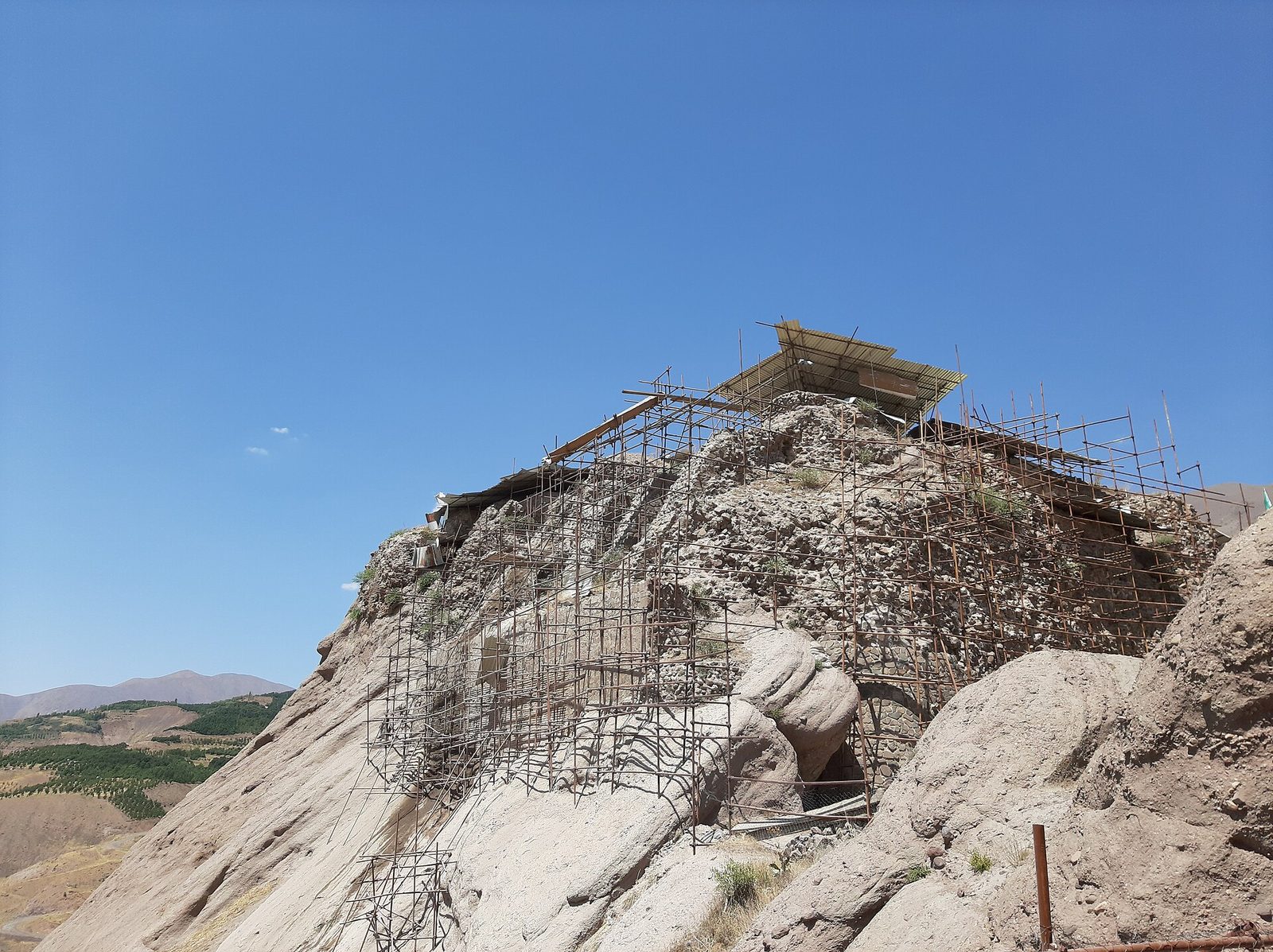
For a hundred and seventy years the Nizari Ismailis held a chain of mountain fortresses against every empire that came for them. Then Europe gave them a name that means drug addicts, invented a garden full of women, and remembered that instead.
There was a state. It held mountains in northern Iran and in the hills above the Syrian coast, it lasted about a hundred and seventy years, it produced libraries and astronomers, and it was finally destroyed by the Mongols in 1256. Almost nobody outside the field could tell you any of that.
What almost everybody can tell you is that its members were called Assassins, that they were drugged, and that there was a garden. All three of those come from their enemies.
01The Name Is The Insult
The word came into European languages through Crusader-era contact, from the Arabic hashishin, hashish users. Our research file's position is that this was propaganda: hostile Sunni writers used it to paint the Nizari as drug-addled deviants, no Ismaili source mentions hashish in any ritual or military role, and a force that depended on precision, discipline and months of infiltration would be impaired rather than helped by cannabis. Farhad Daftary, the leading modern historian of the Ismailis, considers the association entirely fabricated by enemies. An alternative derivation from asasiyyun, people of the foundation, is linguistically possible and less widely accepted.
That argument is not just our file's. Farhad Daftary published a review article in Iranian Studies in 2006 with the title "The 'Order of the Assassins:' J. von Hammer and the orientalist misrepresentations of the Nizari Ismailis", volume 39, issue 1, pages 71 to 81. NO ABSTRACT IS AVAILABLE FOR IT AND NOTHING IS CLAIMED HERE ABOUT ITS CONTENTS, only what its title states on the record: that the phrase "the Order of the Assassins" is a misrepresentation, that the misrepresentation is orientalist, and that Joseph von Hammer is where it comes from. Our own file does not cite it.
Nor does it cite Shafique Virani's 2021 article in the journal Iran, volume 61, pages 272 to 284. That one has a published abstract, and two sentences of it are worth quoting exactly. "Modern scholarship, however, has demonstrated that these are a fanciful history of the Nizari Ismaili Muslims of the state of Alamut." And: "More surprising, the offensive 'assassin' moniker and its associated images are strangely resilient within academia itself, long after Orientalist portrayals of the Muslim world stopped being fashionable." The abstract traces the trope from medieval fables to what it calls the multi-billion dollar Assassin's Creed video game franchise.
That is worth stating rather than tidying away. Our research file explains in its own section 2.1 that hashishin was an insult, and its title, keywords and file name all use it anyway. This article does the same, for the same reason a library does: it is the name under which people look. But it is the name Virani calls strangely resilient, and the resilience runs through us too.
02What Was Actually There
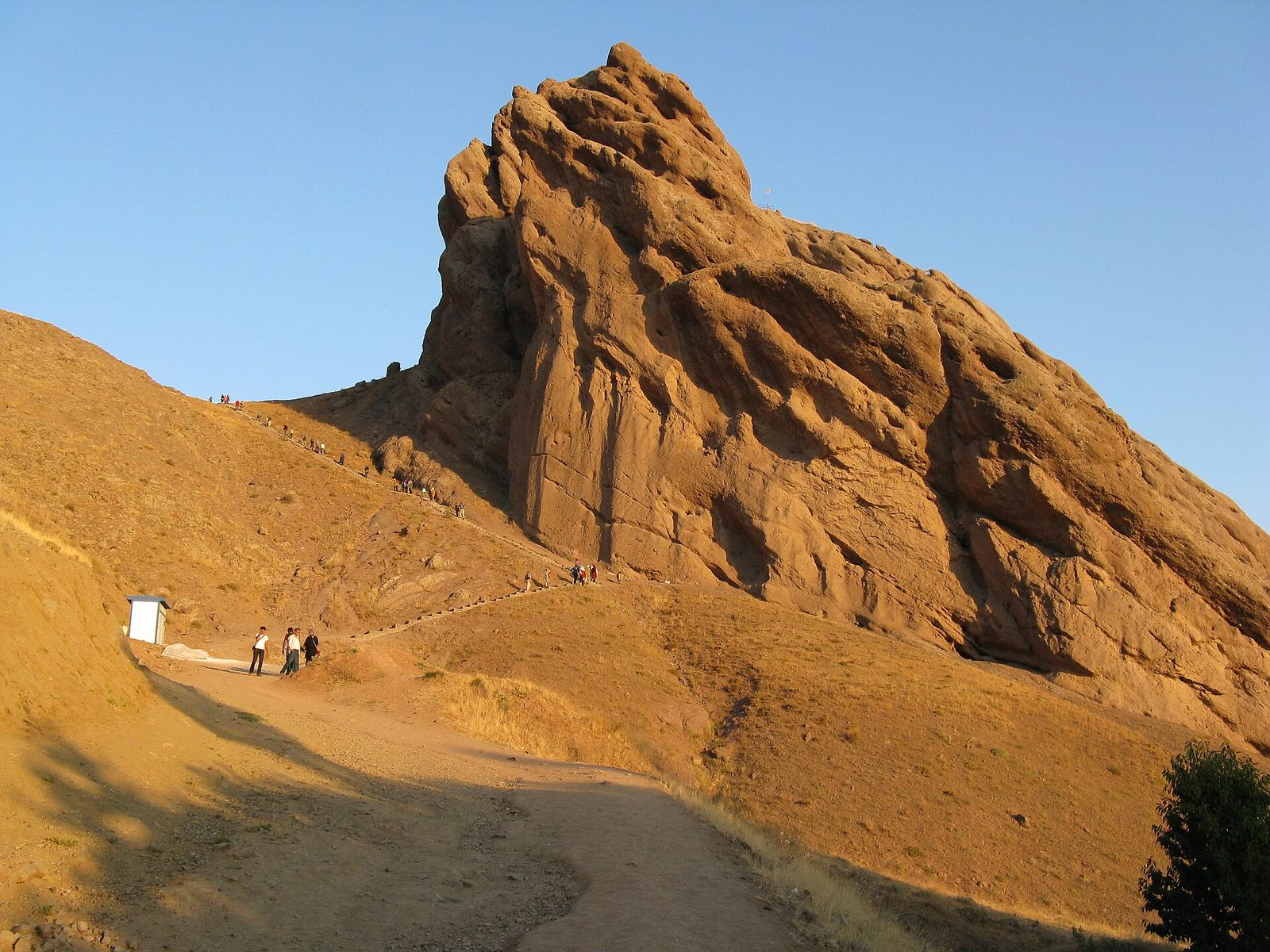
Hassan-i Sabbah, about 1050 to 1124, was a Persian da'i, a missionary, who had studied Ismaili theology in Cairo. In 1090 he took Alamut, the Eagle's Nest, a fortress at roughly 2,163 metres in the Rudbar district commanding a narrow valley and effectively impregnable to medieval siege engineering. He took it by missionary work and infiltration, reportedly converting the garrison before demanding that the Seljuk governor leave. And then he never went outside again: our file records that he spent the remaining thirty-four years of his life inside it, on scholarship, administration and directing operations, austere to the point that he had his own sons executed for breaches of discipline.
He took Alamut in 1090. The schism that gave the movement its name came four years later. When the Fatimid caliph al-Mustansir died in 1094 the succession split between his sons Nizar and al-Musta'li, and the faction that recognised Nizar and his descendants as the rightful imams became the Nizari. The fortress came first and the name came after.
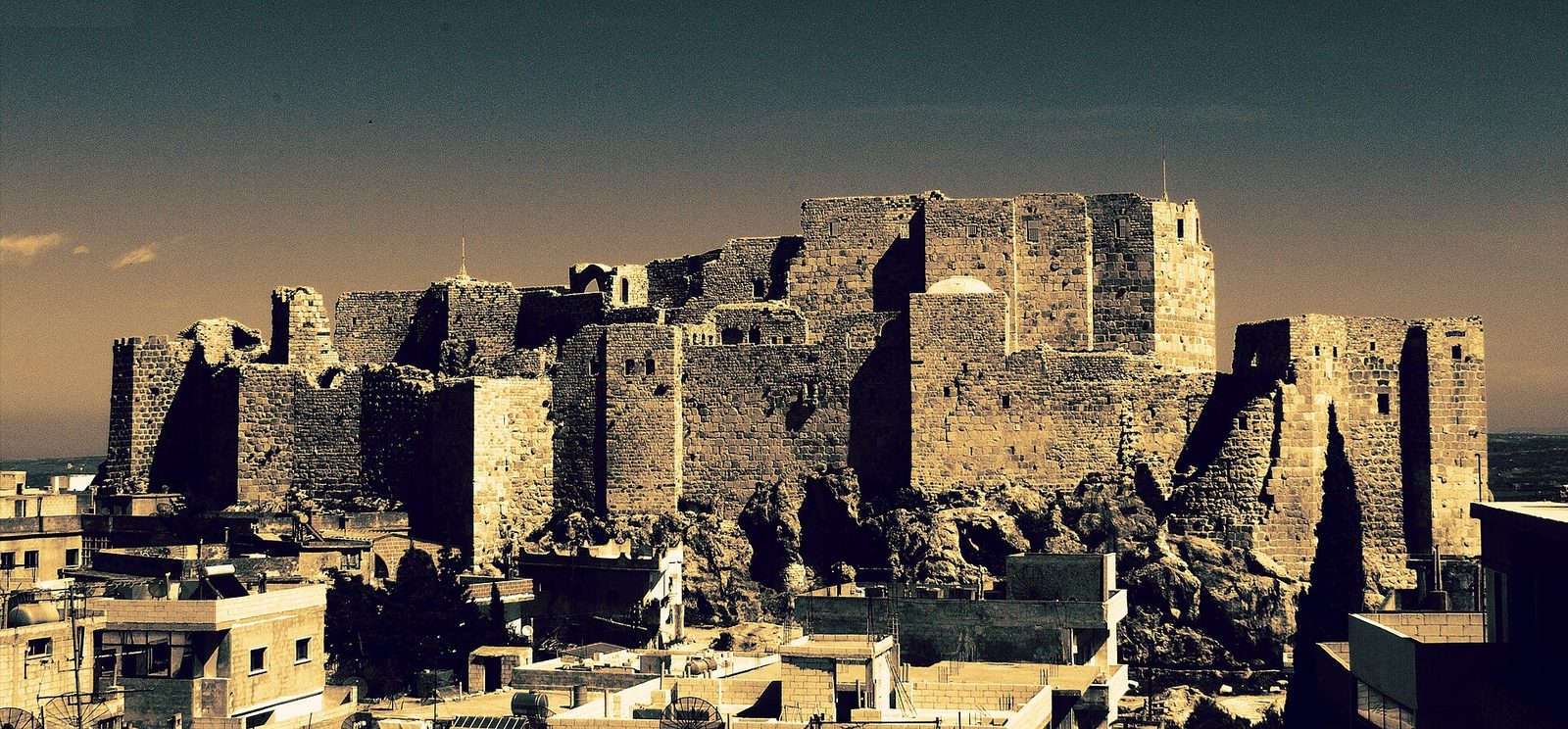
From Alamut the Nizari built a dispersed state inside hostile territory. In Iran: Lamasar, reported larger than Alamut and the last to surrender in 1258; Maymundiz, where the final imam was living when he gave himself up; and Girdkuh, which held out against the Mongols for over fifteen years, roughly 1256 to 1270, one of the longest sieges in medieval history. In the Jabal Ansariyya in Syria: Masyaf, Qadmus, Kahf, Khawabi and Rusafa. The fortresses had cisterns and rainwater collection sized for long sieges, granaries for multi-year resistance, and positions concealed from below, and they were linked across hundreds of kilometres by messengers and signal fires.
Alamut held a library of Ismaili theological and scientific texts, astronomical instruments and administrative archives, renowned across the Islamic world. Nasir al-Din Tusi, 1201 to 1274, one of the greatest scientists in the history of Islam, spent about twenty-five years in Nizari fortresses writing on astronomy, ethics and theology. That is the part the word assassin has to displace in order to work.
03The Killing, And What It Was For
The fidai, meaning those who sacrifice themselves, used a dagger at close range and often in public. Escape was not expected and many died during or after the mission. Our file's own estimate of the total is perhaps several dozen confirmed killings across a hundred and seventy years. The logic is arithmetic: a small, poor sect cannot beat empires in the field, so it kills the people who make the decisions, in the open, where everyone can see. The deterrent was worth far more than the deaths.
Nizam al-Mulk, the Seljuk vizier and one of the most powerful men in the Islamic world, was stabbed at court in 1092. That is the first major political killing attributed to the order. Conrad of Montferrat, king-elect of Jerusalem, was killed at Tyre in 1192, attributed to the Syrian Nizari, and our file records the commission as genuinely disputed: possibly Sinan's order, possibly Richard the Lionheart's, possibly Saladin's.
Rashid al-Din Sinan led the Syrian Nizari from Masyaf from about 1162 to 1193, and the Crusaders called him the Old Man of the Mountain, Vetulus de Montanis. He ran a working foreign policy, by turns allied with, neutral toward and hostile to both the Crusader states and Saladin. Two attempts on Saladin, in 1175 and 1176, are recorded by multiple sources; afterwards, our file records, Saladin slept only in a wooden tower, and in time reached an accommodation with the Nizari. Documented contacts include tribute paid to the Templars for a period and an attempted conversion to Christianity that may have been a diplomatic manoeuvre.
04The Garden
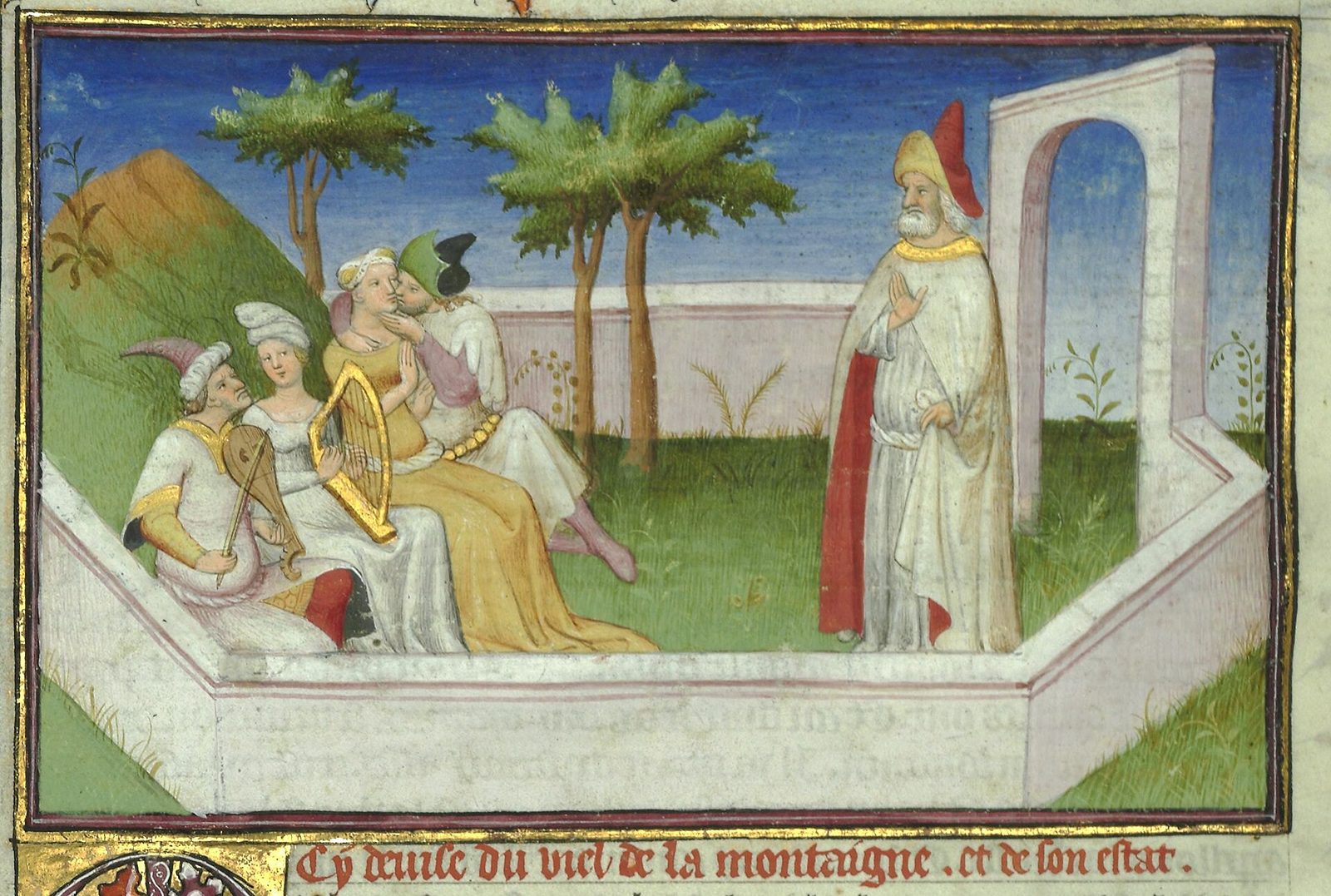
Marco Polo, writing around 1300 about things he says he was told, describes a Garden of Paradise at Alamut: young men drugged, laid among beautiful women, told they had been to paradise, promised a return ticket if they killed on command. Our file gives four reasons it is fiction or wild exaggeration. Marco Polo never visited Alamut, which was destroyed before his journey. No archaeological evidence of any garden there has been found. The story closely mirrors Quranic descriptions of paradise, turned around and used as a slander. And it was written decades after the events, for a Western readership hungry for the exotic.
The image above is filed on Wikimedia Commons under the name Hassan-i Sabbah. It is not him. Hassan-i Sabbah died in 1124, and the rubric painted underneath the miniature itself names "le viel de la montaigne", the Old Man of the Mountain, which in the Western tradition is Sinan and the Syrian branch. THE FILENAME IS ITSELF AN INSTANCE OF THE CONFUSION THIS PAGE IS ABOUT, and our own copy was renamed before publishing so as not to carry it forward. The Commons record also dates the picture "circa 1310 (?)", with the question mark, which is a date for Marco Polo's text rather than for this painting, so no date is asserted here for the picture. What can be said from the picture itself is enough: it is French, its caption is in French, and its paradise is furnished in French.
05The Mongols, And What Did Not End
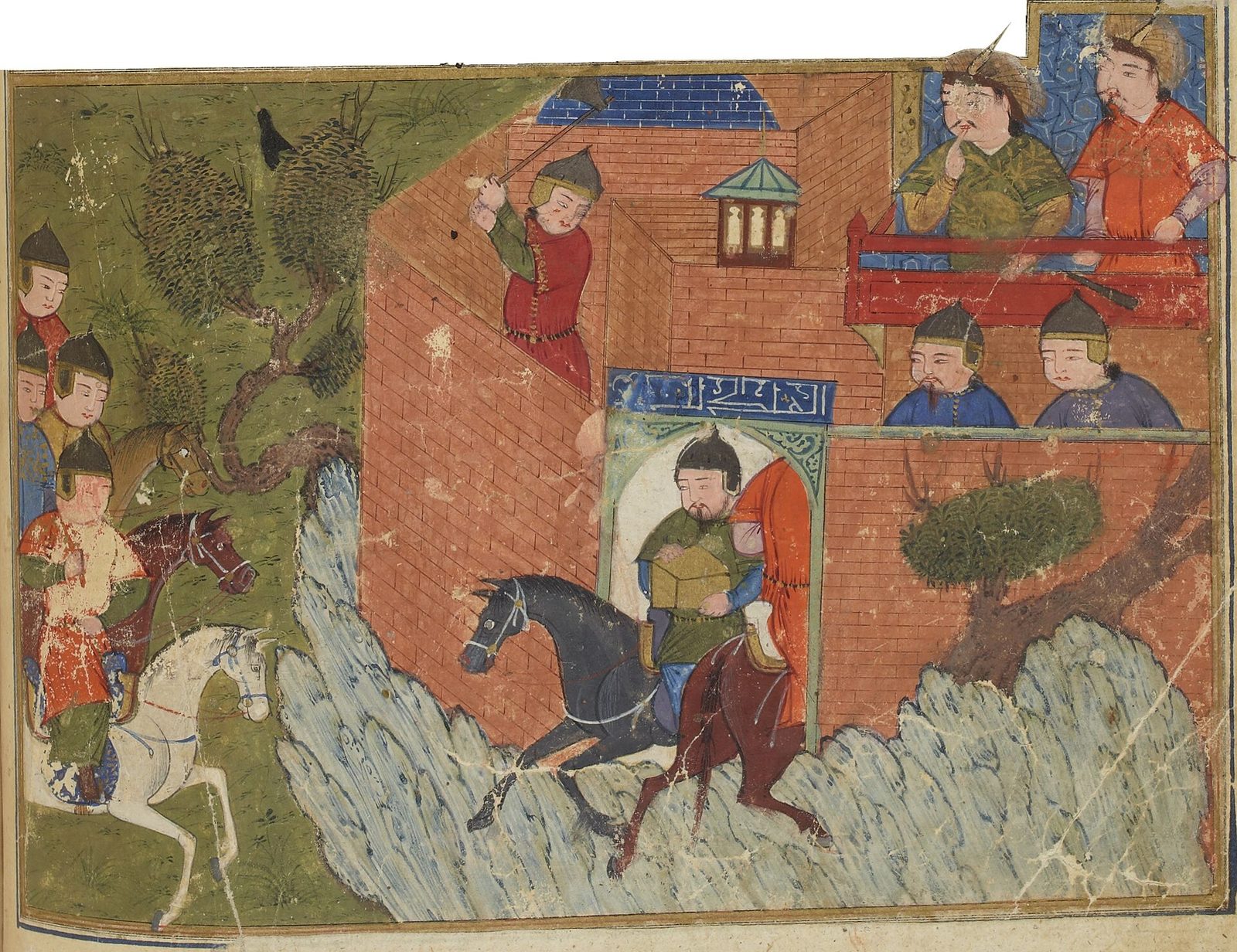
Hulagu Khan, grandson of Genghis, was tasked by the Great Khan Mongke with destroying two things: the Nizari state and the Abbasid Caliphate. He got both. Alamut surrendered in 1256 once siege engines were placed on the heights around it. The last lord, Rukn al-Din Khurshah, surrendered and was later executed. Girdkuh fought on until 1270.
The Mongol historian Juvayni describes ordering the burning of the heretical texts at Alamut while setting aside the astronomical and scientific works. Our file notes the same man acknowledged the library's value in the act of recording its destruction. That is the single most human sentence in the whole subject: the man writing the account of the fire is the man deciding what goes in it.
Our file says the Nizari community survived underground and later reemerged publicly, and gives no source for it. One exists, by an author the file already cites for a different book: Shafique Virani, "The Eagle Returns: Evidence of Continued Ismaili Activity at Alamut and in the South Caspian Region Following the Mongol Conquests", Journal of the American Oriental Society, volume 123, number 2, pages 351 to 370, 2003. NO ABSTRACT IS AVAILABLE AND NOTHING IS CLAIMED HERE BEYOND WHAT THE TITLE AND THE RECORD STATE. The Nizari Ismaili community today numbers roughly 15 million people, is led by the Aga Khan, and is known for philanthropy and interfaith work.
Our file's section 3.2 says the destruction of the Alamut library makes it impossible to fully evaluate the content of the highest-level teachings. Virani's 2021 abstract describes the opposite process under way, verbatim: "The study also introduces several little-known works, often newly discovered, which emanate from the state centred at Alamut. These allow us a rare glimpse into the community's self-perception. The steady recovery of such long-lost sources sheds new light on the Nizaris, revealing the life of a community that is equally fascinating, if less fantastic, than the 'assassins' of Marco Polo's imagination." Impossible is too strong. Slow and partial is the honest word.
06A Note On Our Own Sources, Which Is Not A Small One
Every article in this series resolves the identifiers in the research file it works from, live, against the public registries, and reports what comes back. This file produced the worst result so far, and one finding of a kind not seen before.
N_2_04's bibliography carries five DOIs. NONE OF THEM POINTS AT THE WORK IT IS ATTACHED TO. Four are reviews of the cited book: Patrick Franke on Daftary's Assassin Legends in Die Welt des Islams, 1995; J. A. Boyle on Bernard Lewis in the Journal of the Royal Asiatic Society, 1969; S. M. Stern on Hodgson in Oriens, 1958; Valerie Gonzalez on Peter Willey in the Revue des mondes musulmans et de la Mediterranee, 2008. The fifth, given for Marco Polo's Il Milione of about 1300, resolves to a two-page chapter in a Routledge volume published in 2014. The books are real and correctly named. The pointers all land next to them.
The identifier given for Bernard Lewis's 1967 book resolves to a review of it by J. A. Boyle. J. A. Boyle is the translator of Juvayni's Tarikh-i Jahangusha, which is entry 7 of the same bibliography. Follow entry 3's link and you arrive at entry 7's translator, reviewing entry 3. Nobody arranged that. It is what happens when identifiers are attached by search rather than by checking.
Entry 18 reads: Stronach, David; Ali Mousavi, "Alamut Castle Excavation", Iran 45:151-168, 2007. THERE IS NO SUCH ARTICLE. Volume 45 of the journal Iran is indexed complete, twenty-three items, with continuous pagination from page 1 to page 318. Page 151 is the last page of Sarah Stewart's "Worship According to the Yasts", which runs 137 to 151. The next item begins at 153 and the one after at 161. THERE IS NO SLOT AT 151 TO 168, and there is no article about Alamut anywhere in that volume. No work of that title appears in Crossref or OpenAlex under either name. Both scholars are real, both work on Iranian archaeology, and they have genuinely collaborated. The paper has not been found.
| Our File's Entry | The Identifier It Carries | What It Actually Returns |
|---|---|---|
| 1. Daftary 2007, The Isma'ilis: Their History and Doctrines, 2nd ed. | none | A REAL ONE EXISTS and should be added: 10.1017/cbo9780511497551, the Cambridge monograph itself. This is the file's most-used source and it was the one entry left without a pointer |
| 2. Daftary 1994, The Assassin Legends | 10.1163/1570060952597932 | Patrick Franke reviewing it, Die Welt des Islams, 1995, pages 134 to 136 |
| 3. Lewis 1967, The Assassins: A Radical Sect in Islam | 10.1017/s0035869x00127662 | J. A. Boyle reviewing it, Journal of the Royal Asiatic Society, 1969, pages 171 to 172. Boyle is entry 7's translator |
| 4. Hodgson 1955, The Order of Assassins | 10.2307/1578962 | S. M. Stern reviewing it, Oriens, 1958, page 279. The record's author field reads "S. M. Stern, G. S. Hodgson", so the reviewed author is fielded as a co-author of the review, with Marshall dropped |
| 5. Willey 2005, Eagle's Nest | 10.4000/remmm.5213 | Valerie Gonzalez reviewing it, Revue des mondes musulmans et de la Mediterranee, 2008, pages 297 to 301. Her review gives the book as 2006 rather than 2005; both years circulate for it and no correction is asserted here |
| 6. Marco Polo, Il Milione, about 1300 | 10.4324/9780203340646-8 | A two-page chapter, pages 23 to 24, in a Routledge volume of 2014, with no author field |
| 18. Stronach and Mousavi, "Alamut Castle Excavation", Iran 45:151-168, 2007 | none | NOTHING. The volume is indexed complete and has no such article and no such page range |
Across eleven articles this series has now found forty bad identifiers in the corpus it draws on. EVERY ONE OF THEM POINTED AT SOMETHING REAL: a review instead of the book, an anthology instead of the original, a publisher fielded as an author. A pointer aimed slightly wrong is a clerical failure and it is repairable in an afternoon. A source that is not there is a different thing, and it was the only archaeological citation in a document that makes physical claims about a building.
The invented citation places an Alamut paper in the journal Iran in 2007. Iran really did publish the definitive recent article on this subject: Virani's "An Old Man, a Garden, and an Assembly of Assassins", volume 61, pages 272 to 284, in 2021. Right journal, wrong everything else, and it appeared in 2021 rather than 2007. And the real one is by a scholar our file already cites for a different book.
This was expected, which is the mildly encouraging part. Every research file in this library carries a Source Confidence rating out of five, and a measurement taken earlier in this series found that the rating predicts identifier health: files rated 4 or 5 ran at 91 per cent of identifiers correct, while files rated 2 or 3 ran at 29 per cent. N_2_04 is rated 3. The caveats printed with that measurement still stand: a dozen documents, one run, chosen by roster position rather than at random, and a rating never designed to measure citation accuracy. It is a triage signal, not a study. It called this one correctly.
One more thing, because it is the same failure in a different place. N_2_04's Counter-Arguments section reads, verbatim: "No significant counter-arguments exist in the scholarly literature for the core claims presented here... with no active scholarly dispute over the fundamental claims presented in this document." The same document's own sections on the hashish etymology and on Marco Polo's garden ARE counter-arguments, and the modern literature on this subject is very largely an argument about how it has been represented. A boilerplate sentence saying there is no dispute, sitting three screens below the dispute.
Fast Facts
- The State
- Roughly 1090 to 1256, about 170 years, from Alamut in northern Iran to Masyaf in Syria
- The Founder
- Hassan-i Sabbah, about 1050 to 1124. Took Alamut in 1090 and never left it again
- The Height
- Alamut sits at about 2,163 metres, commanding a narrow valley
- The Longest Siege
- Girdkuh held out against the Mongols for over fifteen years, to 1270
- The Body Count
- Our file's own estimate: perhaps several dozen confirmed killings in 170 years
- The Scientist
- Nasir al-Din Tusi spent about 25 years in Nizari fortresses writing on astronomy and ethics
- The Name
- From hashishin, hashish users. Enemy propaganda, on our file's own account and on Daftary's
- The Garden
- Marco Polo, about 1300. He never went there. Nothing has ever been dug up
- Today
- About 15 million Nizari Ismailis worldwide, led by the Aga Khan
- Our File's Identifiers
- Five DOIs, five wrong. One further source could not be found to exist. One real identifier recovered
What We Can Actually Stand Behind
The Nizari Ismaili state existed, ran from 1090 to 1256, held fortresses across Iran and Syria, and used targeted killing as a deliberate strategy against far stronger enemies. Alamut held a substantial library and Nasir al-Din Tusi worked there. Nizam al-Mulk was killed in 1092 and Conrad of Montferrat in 1192. Hulagu took Alamut in 1256, Girdkuh held to 1270, and the community survived. And on our own sources: five of five identifiers resolve to the wrong work, one cited article cannot be found to exist, and one correct identifier was recovered.
That the hashish etymology is enemy propaganda rather than description. That Sinan ran genuine independent diplomacy with the Crusader states and with Saladin. That the Source Confidence rating on these research files predicts how good their citations are, on a small and non-random sample.
Marco Polo's Garden of Paradise, which our file rates Tier 3 and which four independent reasons argue against. And the reconstruction of what the highest grades of Ismaili initiation actually taught, which is being slowly recovered from surviving texts rather than settled.
Drug-enhanced super-soldiers. A secret order still operating inside modern governments. Both are refused by our own file, and the modern Nizari Ismaili community is a mainstream, public Islamic denomination whose leader gives interviews.
The strange thing about this subject is that the true version is not less interesting. A community with no army holds a chain of mountains for a hundred and seventy years by making the cost of attacking it personal. It keeps a library at the top of a cliff and lets one of the great astronomers of the age work there for twenty-five years. It negotiates with Crusaders and with Saladin as a state, because it is one. Then a Venetian who was never there writes down a story about a garden, and the garden is what survives. Not because it is better. Because it is easier to picture.
Sources & further reading
WHERE THIS WORKED FROM. One file in our own research library, N_2_04, at Source Confidence 3 out of 5, last updated 28 February 2026, plus eight external records resolved live on 25 August 2026. THE SUBSTANCE OF THIS PAGE IS OUR FILE'S. The chronology, the fortress network, the 2,163 metre elevation, the fifteen-year Girdkuh siege, the several-dozen estimate for the killings, Tusi's twenty-five years, the Juvayni detail, the etymology argument, the four reasons against Marco Polo's garden and the two Tier 4 refusals all come from it, and it gets them right. WHAT THE PAGE ADDS. Three papers our file does not cite: Daftary 2006 in Iranian Studies on the orientalist manufacture of "the Order of the Assassins", Virani 2021 in Iran on the persistence of the label, and Virani 2003 in the Journal of the American Oriental Society on continued Ismaili activity at Alamut after the Mongol conquests. ONLY VIRANI 2021 HAS A RETRIEVABLE ABSTRACT AND IT IS THE ONLY ONE QUOTED. The other two are cited for what their titles, authors, journals, volumes and pages establish on the record, and nothing more. THE IDENTIFIER AUDIT IS SET OUT IN FULL IN SECTION 06 with a table, so a reader can repeat every line of it. Five DOIs resolved to reviews or extracts rather than to the works they are attached to; one bibliography entry, Stronach and Mousavi in Iran 45:151-168, could not be found to exist, and the test that shows why is printed rather than summarised; and one real identifier, the Cambridge monograph DOI for Daftary 2007, was recovered for an entry that had none. NONE OF THAT IS AN ARGUMENT AGAINST THE FILE'S CONTENT. It is an argument about the layer between the content and the reader. ON THE IMAGES. The manuscript miniature in section 04 is filed on Wikimedia Commons under the name Hassan-i Sabbah, which it is not; our copy was renamed before publication and the reason is given on the page. One further photograph of Alamut was fetched, opened and dropped for redundancy rather than for any defect, the page already carrying two views of the same hill.
Image credits
- Alamut Castle, Qazvin province, Iran, under conservation ImanFakhri, via Wikimedia Commons (CC0). CC0 Source.
- The Alamut crag from below, with the visitor path Alen Ištoković, via Wikimedia Commons (CC BY 3.0). CC BY 3.0 Source.
- Masyaf Castle above the town of Masyaf, Hama governorate, Syria Nabih Farkouh, via Wikimedia Commons (CC BY-SA 3.0). CC BY-SA 3.0 Source.
- The Old Man of the Mountain and his garden, Livre des merveilles, BnF ms. fr. 2810, folio 16v (filed on Commons under the name Hassan-i Sabbah, which it is not) Unknown illuminator, via Wikimedia Commons (public domain). Public domain Source.
- The taking of Alamut, 1256, Persian manuscript painting Sayf al-Vâhidî, Hérât, via Wikimedia Commons (public domain). Public domain Source.

.jpg)


.jpeg)