
The Younger Dryas Impact: Did a Comet Reset the Ice Age?
About 12,800 years ago the Earth was climbing out of the last Ice Age when the warming stopped dead. Within perhaps a single decade the Northern Hemisphere slammed back toward glacial cold, held there for twelve centuries, then warmed again just as fast. In that same window most of North America's great beasts went extinct and the Clovis hunters who tracked them vanished from the record. That much is settled beyond dispute. What caused it is not: one camp says a comet did it, and after more than fifteen years of fighting the science is genuinely unresolved. This is that file, opened claim by claim, each one wearing its evidence.
Start with what is not in dispute, because everything contested hangs off it. Roughly 12,800 years ago the planet was well into its climb out of the last Ice Age. The great northern ice sheets were retreating, temperatures were rising, and then, in the space of something like a human lifetime, the warming reversed. The Northern Hemisphere fell back toward glacial cold and stayed there for twelve centuries before snapping back to warmth just as fast. This reversal is called the Younger Dryas, and it is one of the most abrupt climate events in the entire geological record. That it happened is beyond argument. Why it happened is one of the loudest unresolved fights in the earth sciences. Let us open the file.
01The Thaw That Stopped
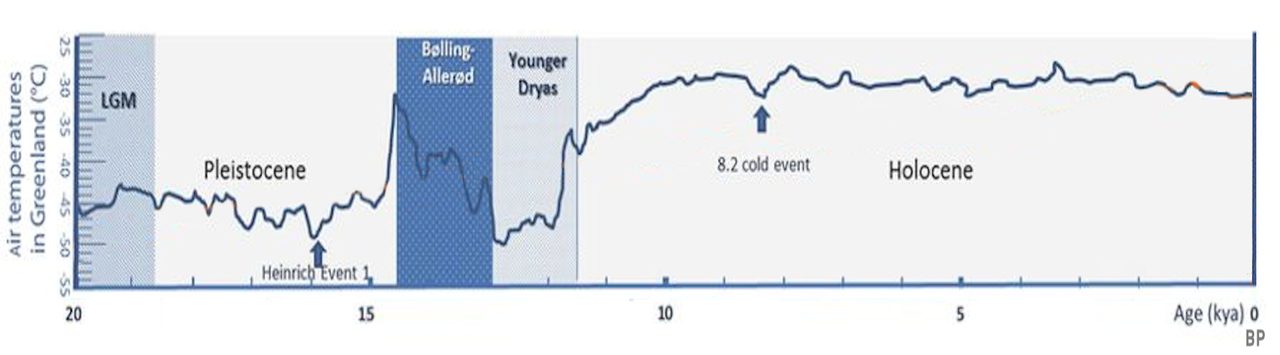
The Younger Dryas has a beginning and an end, both sharp. It began about 12,800 years ago, around 10,800 BCE, and it ended about 11,600 years ago, around 9,600 BCE, a cold interval roughly 1,200 years long. Those dates come from ice cores and radiometric dating, and they are as solid as anything in deep-time chronology.
The cold was severe and it arrived fast. Greenland ice cores record a temperature drop of 7 to 10 degrees Celsius; mid-latitude regions cooled by 2 to 6 degrees. The onset may have taken as little as a single decade, which would make it one of the fastest climate shifts ever found in the record. The same ice cores show the cold ending just as abruptly as it began.
The event is named for a flower. Dryas octopetala is an Arctic-alpine plant, and its pollen reappears in European sediments right through the cold interval, a botanical marker of a continent that had turned back to tundra. Northern forests gave way to cold-ground vegetation, sea ice spread dramatically, and the warming that had been ending the Ice Age simply stopped, then resumed 1,200 years later as if a switch had been thrown twice.
| Measure | What the Evidence Gives |
|---|---|
| Onset | About 12,800 years ago (around 10,800 BCE) |
| End | About 11,600 years ago (around 9,600 BCE) |
| Duration | Roughly 1,200 years |
| Cooling, Greenland | 7 to 10 degrees Celsius (ice cores) |
| Cooling, mid-latitudes | 2 to 6 degrees Celsius |
| Speed of onset | Possibly within a single decade |
| Evidence tier | Tier 1: ice cores, radiometric dating, global stratigraphy |
02The Great Dying of the Ice Age
The cold did not come alone. It arrived alongside two of the most dramatic discontinuities in the record of life and people in the Americas, both of them landing on the same horizon.
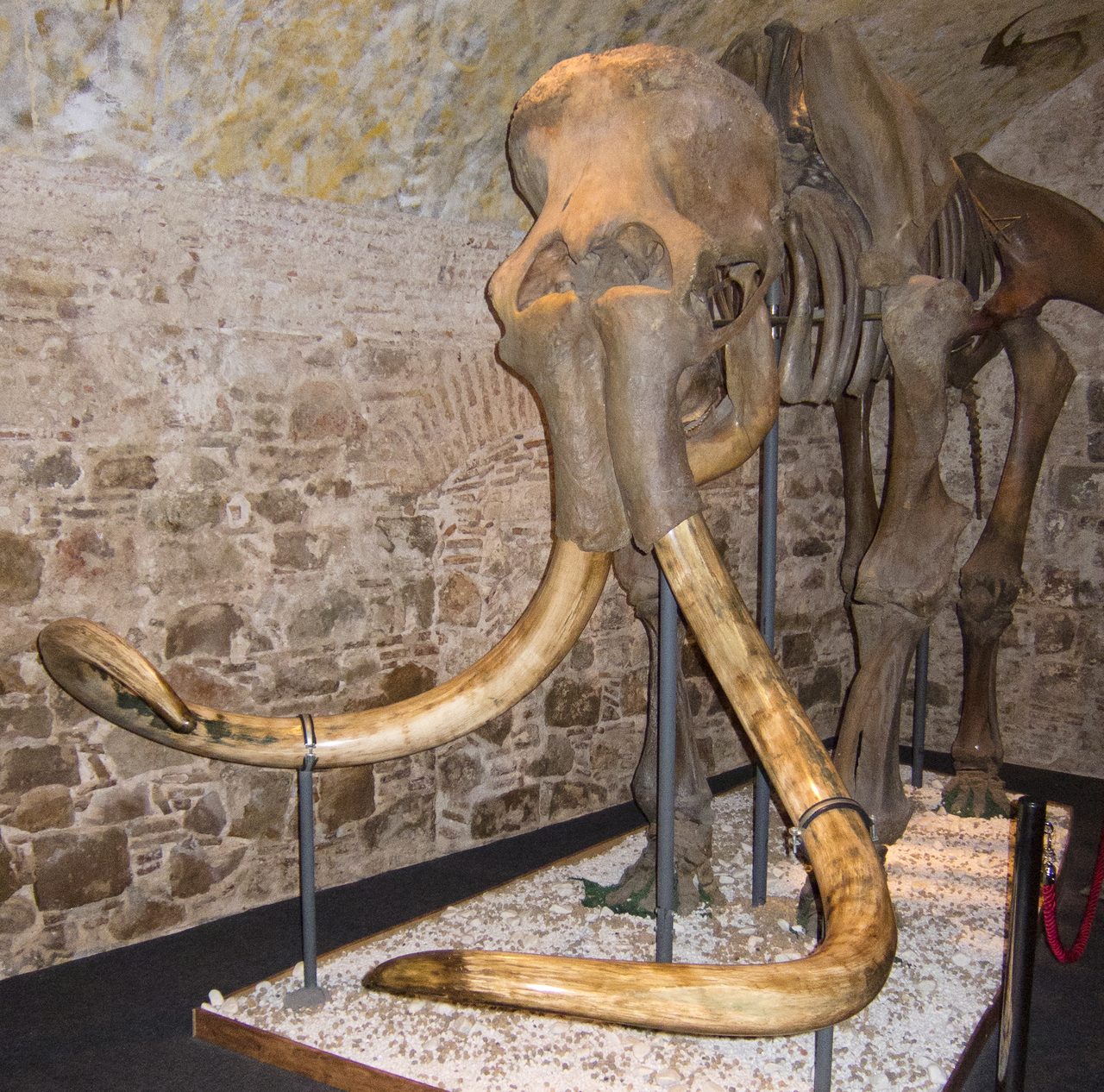
As the cold set in, North America lost its giants. At least 35 genera of megafauna went extinct on the continent during and just after the onset, and more than 70 percent of North America's large mammals were gone within about a thousand years.
The roll call reads like a lost bestiary: the woolly mammoth, Mammuthus primigenius, around 6,000 kilograms; the mastodon, Mammut americanum, about 4,500; the giant ground sloth Megatherium, roughly 4,000; the armored Glyptodon, around 2,000; the short-faced bear Arctodus simus, some 900; the American camel Camelops, near 800; the saber-toothed cat Smilodon fatalis, about 400; the giant beaver Castoroides, around 100; the dire wolf Aenocyon dirus, about 68; and several native Equus horse species. Nearly all of them disappear at or near the same boundary.
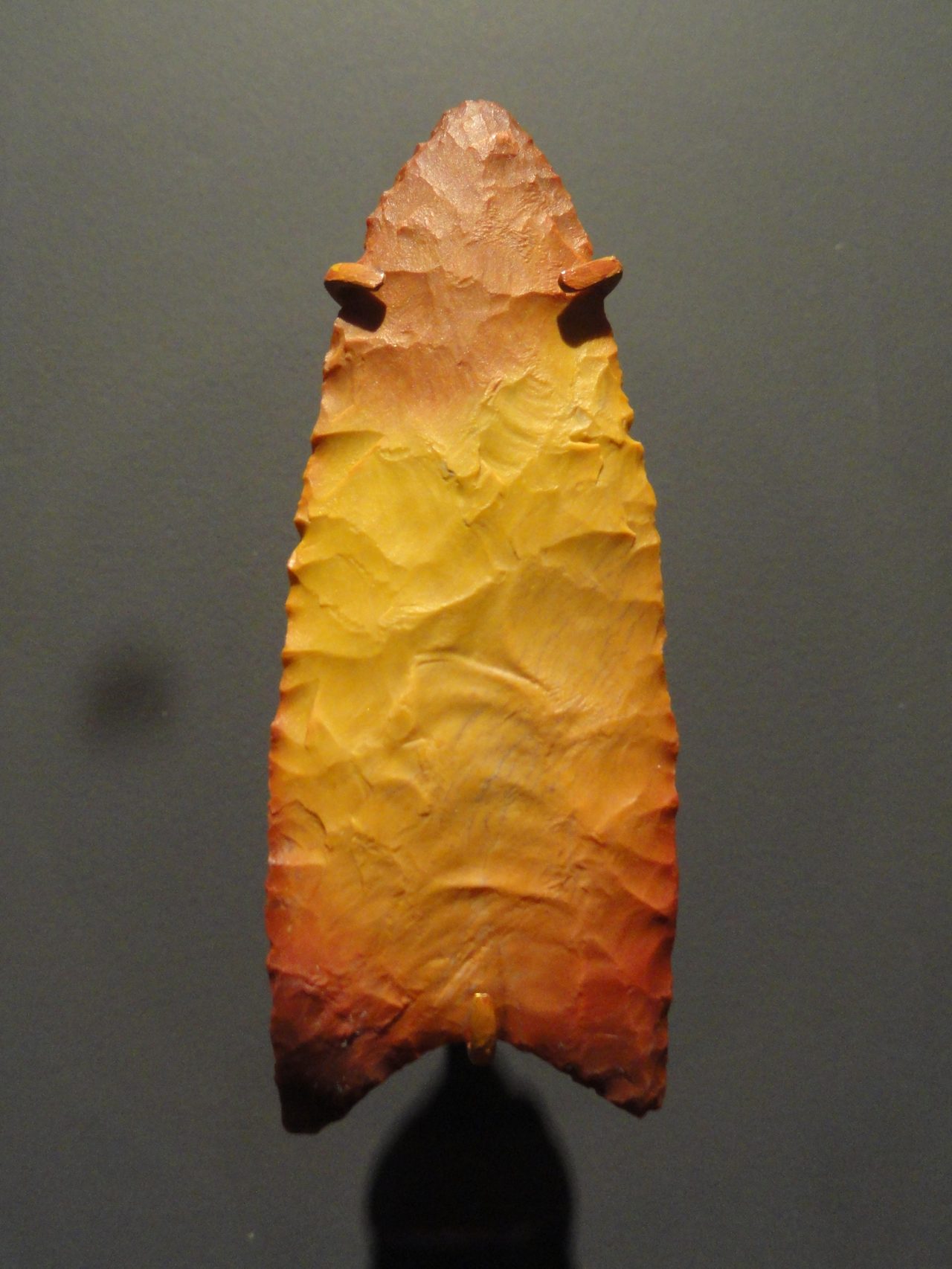
The people vanished too, or at least their signature did. The Clovis culture, active from about 13,400 to 12,800 years ago, was the most widespread early human culture in the Americas, known by its distinctive fluted stone points. At the Younger Dryas boundary those points disappear from the archaeological record and are replaced by distinctly different tool traditions. The cultural break lines up precisely with the proposed impact date.
03The Comet Hypothesis
So we have a fast, brutal climate reversal, a wave of extinctions, and a cultural rupture, all clustered on the same layer. Something happened. In 2007 a team put forward the boldest possible answer for what.
The founding paper is Firestone, West, Kennett and twenty-three colleagues, published in the Proceedings of the National Academy of Sciences in 2007 under the title 'Evidence for an extraterrestrial impact 12,900 years ago that contributed to the megafaunal extinctions and the Younger Dryas cooling.' Twenty-six authors across many institutions argued that fragments of a comet struck the Laurentide Ice Sheet, and that the strike, not coincidence, drove the cold snap, the extinctions, and the human break.
Their case rested on a suite of markers they reported at the Younger Dryas boundary across North America, Europe, and the Middle East: nanodiamonds, microscopic diamonds formed under extreme pressure and heat; magnetic microspherules, iron-rich beads of melted and rapidly cooled rock; melt glass requiring temperatures of 1,700 to 2,200 degrees Celsius, hotter than any forest fire or volcano; a platinum anomaly, since platinum is rare in Earth's crust but enriched in some meteorites and comets; carbon spherules and soot they read as the residue of continent-wide fire; an iridium anomaly, the same element that fingerprinted Chicxulub; and shocked quartz, the classic pressure-scarred mineral of an impact.
| Claimed Marker | What It Would Record |
|---|---|
| Nanodiamonds | Microscopic diamonds formed under impact-level pressure and heat |
| Magnetic microspherules | Iron-rich beads of melted, rapidly cooled rock |
| Melt glass | Glass needing 1,700 to 2,200 C, above fire or volcanic temperatures |
| Platinum anomaly | Elevated platinum, rare in the crust but enriched in some meteorites and comets |
| Carbon spherules and soot | Residue read as continent-wide wildfire |
| Iridium anomaly | The same extraterrestrial element that fingerprinted Chicxulub |
| Shocked quartz | Planar deformation, the classic impact indicator |
It is worth knowing what a proven impact looks like in the rock, because that is the bar these claims are measured against. The Cretaceous-Paleogene boundary, the layer left by the Chicxulub asteroid, carries an unambiguous suite: a global iridium spike enriched 30 to 160 times above background, and shocked quartz found worldwide and at some 200 confirmed impact structures. That is the gold standard, and no one disputes it. It is also worth saying plainly that impacts are not behind every catastrophe: of all the great mass extinctions, only the K-Pg is definitively impact-caused.
The Younger Dryas boundary claims do not yet reach that standard, and everyone in the debate knows it. Proponents have compiled datasets from dozens of sites on five continents, but no crater has been found, and several lines of the claimed evidence have been challenged on how the minerals were identified or whether the results reproduce. Airbursts, atmospheric explosions that leave no crater, like Tunguska in 1908 or Chelyabinsk in 2013, can in principle produce some markers without a hole in the ground, which is precisely what makes the case so hard to close in either direction.
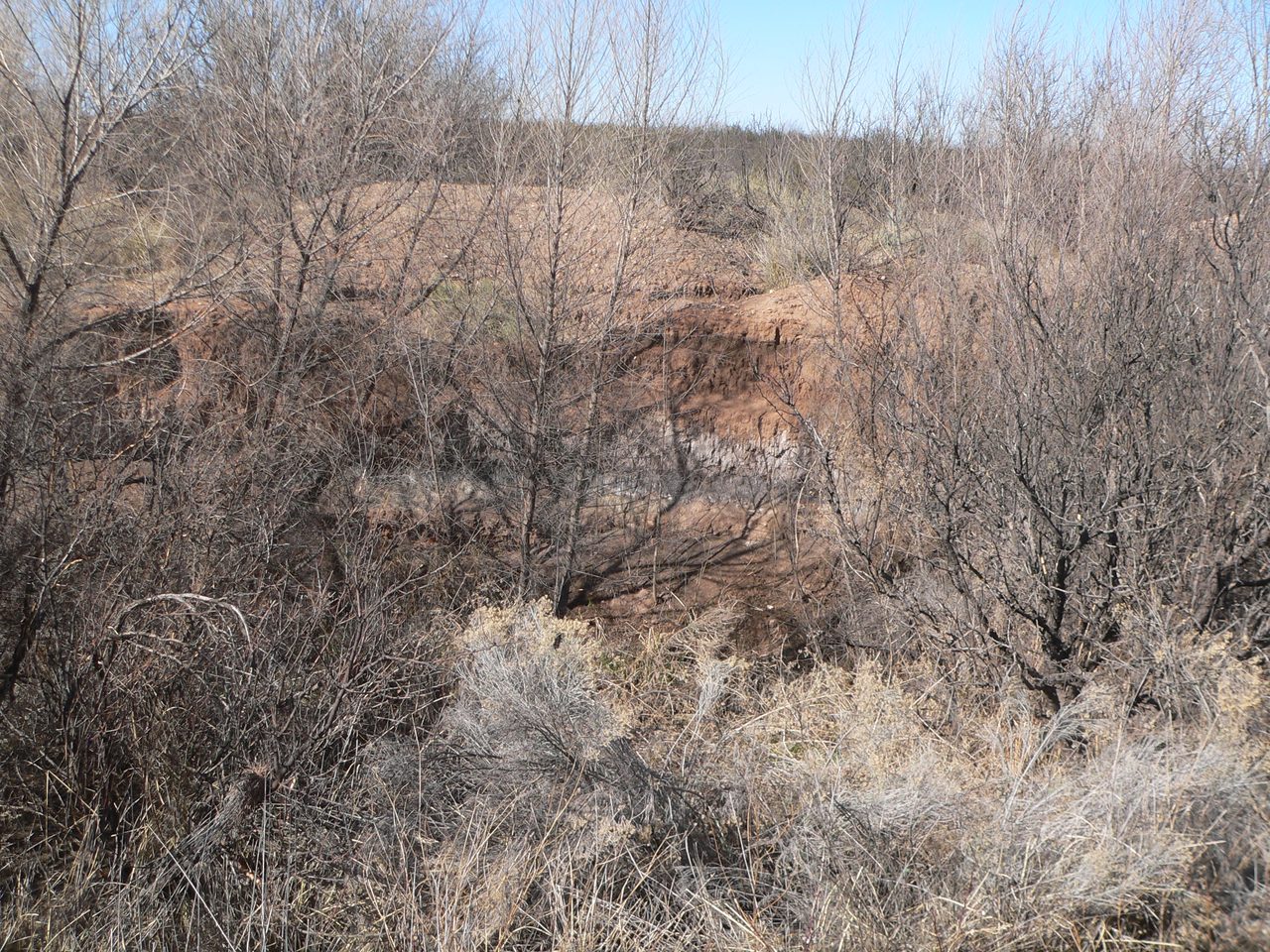
There is a real, physical layer at the center of all this. C. Vance Haynes Jr. published the definitive survey in 2008, documenting a dark, organic-rich 'black mat' at more than 70 Clovis and post-Clovis sites across North America, from Murray Springs in Arizona to Blackwater Draw in New Mexico to Topper in South Carolina. Where it is well dated, it clusters between about 12,900 and 12,700 years ago, squarely at the Younger Dryas onset. The layer itself is not in doubt.
It is what the mat means that is fought over. Below it: Clovis points and mammoth bones. Within it, proponents report the impact proxies, platinum and charcoal and nanodiamonds and microspherules. Above it: no Clovis points, no mammoths. The correlation in time is verified across more than 50 sites on four continents. Whether the cause was a comet or an ordinary climate mechanism is exactly the contested question.
The claimed evidence is geographically vast. Murray Springs, Topper and Gainey in North America; Lommel in Belgium and Lingen in Germany; Abu Hureyra in Syria; Pilauco in Chile and Wonderkrater in South Africa. If the markers are what proponents say they are, the event touched much of the planet at once.
04The Strongest Site, and the Crater That Wasn't
The single best piece of the puzzle, by the primary research file's own assessment, sits at Abu Hureyra in Syria, one of the earliest known farming settlements. In a 2020 Scientific Reports paper, Moore, Kennett and colleagues described melt glass at the Younger Dryas layer that would require temperatures near 2,200 degrees Celsius, far beyond a wildfire or a volcano, carrying minerals that only form under such heat. The settlement was occupied both below and above the melt layer, consistent with a single catastrophic high-temperature event. It is the hypothesis's strongest single site. It is also localized and contested.
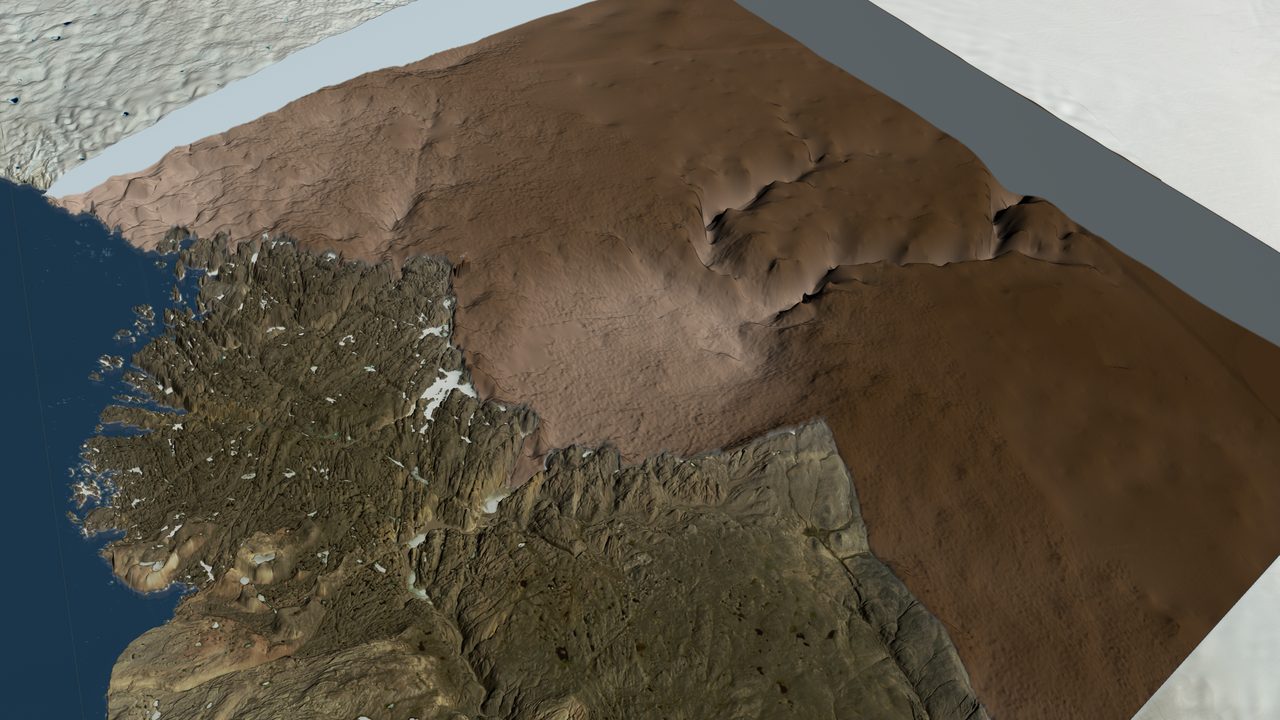
For a few years it looked as though the missing crater had turned up. In 2018 a radar survey found a 31-kilometer crater buried under the Greenland ice sheet, the Hiawatha structure, one of the 25 largest known on Earth, and it was floated as a possible Younger Dryas culprit. Then the dating came in. In 2022 the crater was dated to about 58 million years old, Late Paleocene, which rules it out as a Younger Dryas candidate by a factor of thousands. It was a promising lead that did not pan out. What it did prove is that a major crater can hide completely beneath an ice sheet, which is why the search is not over.
05The Refutation
If this were a settled discovery, the file could close here. It is not, because the hypothesis has met sustained, heavyweight, peer-reviewed opposition, and some of its original evidence has not survived contact with it.
In 2023 the critics fired their heaviest shot. Holliday, Daulton, Bartlein, Boslough and colleagues published a 'Comprehensive refutation of the Younger Dryas Impact Hypothesis' in Earth-Science Reviews, a synthetic review pulling together chronology, mineral identification and reproducibility, and concluding that the hypothesis is 'not supported by the bulk of high-quality, independently reproducible evidence.'
Two of the original marquee markers have taken the hardest hits, and our own files tag them debunked. The nanodiamond evidence failed to replicate in Tyrone Daulton's studies of 2010 and 2016; Jay Melosh showed that an airburst could not generate enough pressure to make such diamonds; and Andrew Scott identified some of the claimed carbon spherules as fungal matter or insect fecal pellets. The continent-wide wildfire claim has fared no better: Jennifer Marlon and colleagues analyzed charcoal records across the 10,000-to-15,000-year window and found no spike at the Younger Dryas boundary at all, with a rise in charcoal actually predating the onset.
There is a deeper problem with the nanodiamonds even setting replication aside: nanodiamonds by themselves are not diagnostic of a cosmic impact. They can form from lightning strikes, forest fires, and certain metamorphic or hydrothermal processes, so they carry weight only alongside other, cleaner indicators, which is exactly what the Younger Dryas boundary has struggled to supply.
The black mat is not exotic either. Jeffrey Pigati and colleagues surveyed 13 sites in Chile's Atacama Desert in 2012 and found black-mat layers of wildly different ages, from modern to more than 40,000 years old, none of them tied to the Younger Dryas, concluding that such mats form wherever shallow groundwater saturates fine sediment. Quade and colleagues had shown the same for the American Southwest. The layer is a routine hydrological feature, not by itself a fingerprint of catastrophe.
So the claim that the black mat is a unique, one-time catastrophe deposit does not survive the wider record. Pigati's spread of ages undercuts the single-event reading; Todd Surovell's team failed in 2009 to reproduce Firestone's magnetic-mineral spike; Nicholas Pinter and colleagues concluded in 2011 that the purported impact markers were 'misreported and misinterpreted'; and Holliday's 2023 review catalogued 'flawed methodologies, inappropriate assumptions, questionable conclusions, misstatements of fact, misleading information, unsupported claims, irreproducible observations, logical fallacies, and selected omission of contrary information.'
The critiques are specific and they come from named researchers. Mark Boslough of Sandia National Labs argued the physics does not work: a Tunguska-scale airburst devastates about 2,000 square kilometers, not a continent. Pinter's 2011 review, pointedly subtitled 'A requiem,' held that each evidence line, nanodiamonds, microspherules, iridium, carbon spherules, had been non-replicated, misidentified, or otherwise explained. Surovell's team found no statistically significant microspherule enrichment above background. And Vance Holliday and David Meltzer argued that the Clovis-to-Folsom transition and the megafaunal extinction are more simply explained by climate change and human hunting than by any comet.
06A Question of Credibility
One more thread belongs in the file, and it has to be handled precisely, because it is easy to misuse in either direction.
James Powell argued in 2022, in Science Progress, that the hypothesis had been 'prematurely rejected,' and counted more than 60 published papers supporting various lines of Younger Dryas impact evidence. Set against that are two documented facts. The Comet Research Group, which promotes the hypothesis, has had two papers retracted by Scientific Reports: the Tall el-Hammam paper in 2025 and a Hopewell-culture airburst paper in 2023. And in a 2011 Pacific Standard investigation, reporter Rex Dalton revealed that its co-author Allen West, under his earlier legal name, had been charged with two felonies for falsely presenting himself as a state-licensed geologist and pled no contest to a single misdemeanor of false advertising in 2002, a case his own co-authors did not know about until the reporter told them.
Both parts of that need care. The Younger Dryas Impact Hypothesis is not one person's idea: the founding paper carried 26 authors, and more than 100 peer-reviewed papers now fill the debate on both sides. A co-author's undisclosed legal history over misrepresented credentials, and two retractions of related airburst papers, are facts a reader deserves when weighing who is making the case. They are not, by themselves, a verdict on the rocks, which is where the hypothesis will finally stand or fall.
The Tall el-Hammam paper is worth one line of context, and only as history. It had proposed, in 2021, that a Tunguska-sized airburst destroyed a Middle Bronze Age city in the Jordan Valley, a site some have linked to the biblical Sodom. Scientific Reports retracted it on April 24, 2025, citing errors in its analyses, data, and methods. The city itself is real. The cosmic-airburst reading of it no longer rests on any standing peer-reviewed publication, and it is no evidence for the Younger Dryas hypothesis or for airbursts in general.
07What the Proponents Still Have
For all that, the hypothesis is not dead, and the honest reason is that it still holds cards the critics have not taken. The debate has swung back and forth for years, and it is worth seeing that swing laid out.
| Year | What Happened |
|---|---|
| 2007 | Firestone et al. publish the hypothesis; immediate controversy |
| 2010 to 2012 | Heavy criticism; several key markers cannot be reproduced |
| 2013 to 2015 | New studies reconfirm some markers (nanodiamonds, platinum) |
| 2018 | The Hiawatha crater is discovered under the Greenland ice |
| 2019 | Pilauco (Chile) and Wonderkrater (South Africa) extend the claimed evidence south |
| 2020 | The Abu Hureyra melt-glass paper, the strongest single site, is published |
| 2022 | Hiawatha is dated to about 58 million years and ruled out |
| 2023 | Holliday et al. publish their comprehensive refutation |
| 2022 to 2026 | New candidate sites keep appearing; the debate continues |
The proponents' strongest card is platinum. A platinum anomaly has now been detected at more than 28 sites across four continents, and the Greenland GISP2 ice core shows a platinum peak around 12,900 years ago running roughly 100 times above background. Platinum enrichment of that kind is characteristic of certain meteorites and is difficult to produce by ordinary earthbound processes, though critics counter that enhanced cosmic dust or volcanism could do it. Our own files call it currently the single strongest line of evidence for the hypothesis.
The proponents have also answered back in print. Since 2023, Sweatman and others have published statistical rebuttals to the Holliday review, particularly on whether the platinum spike reproduces at the boundary, and new platinum data from South America and the Middle East have strengthened that geochemical signal. The leading version of the hypothesis is now airburst-only, no crater required, which reframes the old 'where is the crater' objection as beside the point. Our files are explicit that this exchange is live and unsettled, with peer-reviewed argument continuing through 2024 and 2025.
08The Ordinary Explanations
None of this is the mainstream account of why the Younger Dryas happened, and honesty requires naming what is. The competing explanations do not need a comet at all.
The leading mainstream explanation is meltwater, not impact. As the ice sheets retreated, the vast glacial Lake Agassiz is thought to have drained suddenly into the North Atlantic, freshening the ocean and stalling the circulation that carries heat north, which would chill the Northern Hemisphere on its own. Wallace Broecker made that case in 2006; its one soft spot is what triggered so sudden a drainage. For the extinctions there is the overkill hypothesis, that human hunters finished the megafauna, to which impact proponents answer that people and megafauna had coexisted for millennia and the die-off is suspiciously synchronous with the cold. And the Clovis break, real as it is, is not total: David Meltzer notes some cultural continuity across the boundary even as the toolkit changes sharply.
A newer challenge points at volcanoes. Sun and colleagues found in 2020 that osmium isotopes in Younger Dryas boundary sediment at Hall's Cave, Texas, matched volcanic rather than meteoritic sources, and a 2025 study found the Greenland platinum spike arrived about 45 years after the cold began and lasted only 14 years, a timing that fits sustained Icelandic fissure eruptions better than an instantaneous impact. If that reading holds, the platinum, the proponents' strongest card, may have an earthbound explanation.
09The Object and the Cascade
Suppose, for the length of this section, that the impact did happen. What was the object, and what would have followed from the blow?
The hypothesis has a candidate. The Taurid meteor stream is the debris of Comet 2P/Encke, or of a larger parent comet that fragmented some 20,000 to 30,000 years ago. The wider Taurid Complex, Encke plus a scatter of asteroid-sized fragments and a vast debris stream, is something Earth crosses every autumn as the Taurid meteor shower. At certain intervals the planet passes through denser knots of the stream, a Taurid Resonant Swarm, and the hypothesis proposes that around 12,800 years ago Earth ran into a particularly dense one. Bill Napier, and before him Clube and Napier in their 1982 book The Cosmic Serpent, argued the stream still carries large fragments and still poses periodic risk.
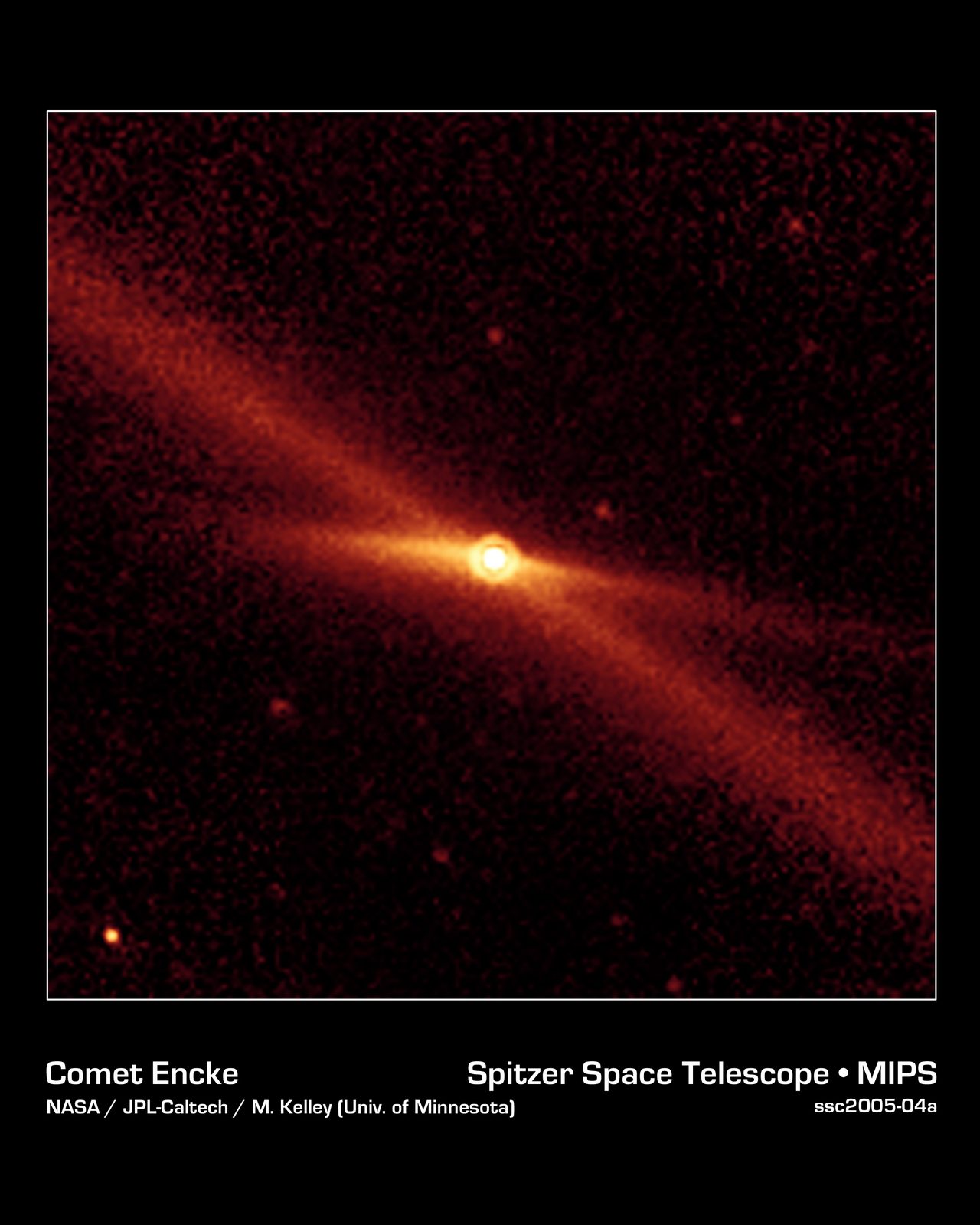
Clube and Napier went further, suggesting that the serpent and dragon imagery so common in ancient sky-lore may record a real thing: a giant fragmenting comet crossing the heavens as a bright, sinuous object, which would explain why so many cultures tie serpents to both cosmic catastrophe and creation. It is an evocative idea and an unproven one.
The proposed chain runs like this: an airburst or airbursts over the Laurentide Ice Sheet, a sudden pulse of meltwater into the Atlantic, the circulation stalling, the Northern Hemisphere plunging into cold, coastlines drowning as the ice let go, and fires sweeping the land. The dates that bracket the interval cluster suggestively. The Younger Dryas ends about 11,600 years ago; Gobekli Tepe's builders raise their first stones about 11,500 years ago; and Meltwater Pulse 1B, a rapid 15-to-28-meter rise in sea level, lands about 11,300 years ago. More than 500 human cultures carry a flood tradition, and a single global catastrophe around this time would, if real, give many of them one physical cause. That last link is the most seductive and the least provable, and our files rate it exactly that way.
The scale such a cascade would demand is not science fiction. This wing's Missoula Floods file documents how catastrophic glacial-lake floods carved the Channeled Scablands of Washington State in a matter of days: channels cut 300 feet into basalt, current ripples 50 feet tall, boulders weighing hundreds of tons carried for miles, and a former waterfall, Dry Falls, five times the width of Niagara. And that came from just one drainage of one ice sheet. The Laurentide, blanketing most of North America and up to three kilometers thick, held vastly more water.
Randall Carlson has spent decades mapping flood scars from the Great Lakes to the Gulf of Mexico and argues their scale matches what a cosmic impact on that ice sheet would produce. That is an interpretation laid over the evidence, not a link the evidence compels.
10The Lost-Civilization Question
Beyond the science sits a larger, more famous story, and it deserves to be named plainly, neither mocked nor endorsed.
The dates line up in a way that is genuinely striking. The Younger Dryas ends about 11,600 years ago; Gobekli Tepe's construction begins about 11,500 years ago; the site is deliberately buried around 10,000 years ago; and farming spreads through the surrounding region between about 10,000 and 8,000 years ago. The great stone site rises right as the cold releases its grip. (Gobekli Tepe's own story belongs to this Athenaeum's Builders file; here it is only a coincidence of chronology.)
One reading pushes further. Sweatman and Tsikritsis argued in 2017 that the animal symbols carved on Gobekli Tepe's Pillar 43, the Vulture Stone, encode a date around 10,950 BCE, inside the proposed impact window. Mainstream archaeologists dispute the reading. It is offered here only as a chronological-coincidence claim, not as an established decoding.
The most ambitious version of all is Graham Hancock's, and the research file tags it plainly as speculative. Hancock proposes that a sophisticated maritime civilization flourished during the Ice Age on coastlines that were then about 120 meters lower and are now underwater; that the Younger Dryas impact destroyed it about 12,800 years ago; and that the survivors became the sages, gods, and Watchers of later myth, seeding the sudden knowledge that appears at sites like Gobekli Tepe.
The circumstantial case for it points to monumental architecture predating agriculture, the disputed water-erosion dating of the Sphinx argued by Robert Schoch, the roughly simultaneous appearance of farming in about 10 regions within 2,000 years of the Younger Dryas ending, claimed shared megalithic techniques across unconnected cultures, and submerged structures such as Yonaguni and Dwarka. Each point is interpretive, and each has ordinary explanations too.
The evenhanded verdict is not mockery and it is not endorsement. It is that there is, so far, no archaeological support for any technologically advanced civilization before roughly 12,000 BCE. Plato's traditional date for the destruction of Atlantis, about 11,600 years ago, falls hauntingly close to the Younger Dryas termination, but that is a coincidence of a legend's internal chronology, not a recovered city. The idea is a real, named, popular thesis. It is not archaeological consensus, and no lost civilization has been dug up.
11The Carolina Bays
One more strand of the hypothesis is worth a short look, because it shows how a testable prediction fares when the evidence is actually gathered.
Scattered across the Atlantic Coastal Plain, from New Jersey to Florida, are roughly 500,000 shallow elliptical depressions called the Carolina bays, their long axes lined up to the northwest. First mapped systematically from aircraft in the 1930s, they range from 50 meters to 11 kilometers long, with sandy rims raised best on their southeastern margins.
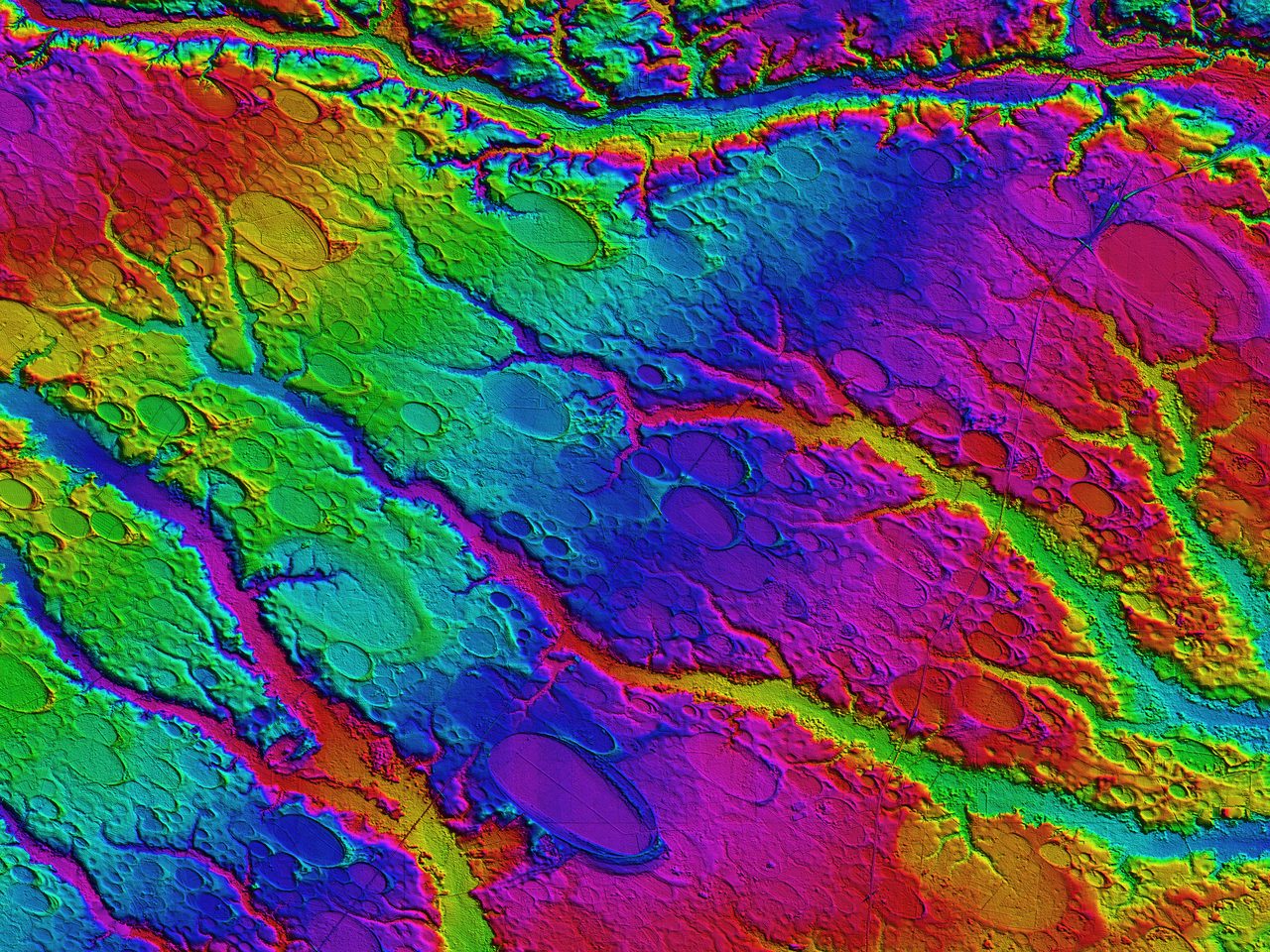
Firestone, West and Kennett's 2007 paper floated the bays as possible secondary features, ejecta scars from the same ice-sheet impact, and the independent researcher Antonio Zamora has argued their orientations converge on the Great Lakes, consistent with debris thrown from a strike on the ice. The hypothesis is testable, which is exactly why it can be checked.
The evidence has not cooperated. Optically stimulated luminescence dating by Brooks and colleagues in 2010 spread the bays' rim ages from about 80,000 to 12,000 years ago, most of them between 40,000 and 15,000, which cannot be squared with a single formation instant. Moore and colleagues found the same variability in 2016.
And the bays carry none of the fingerprints of an impact. No shocked quartz, no iridium anomaly, no high-pressure mineral phases, and no meteoritic material have been found in bay sediments despite targeted searches, which is the single strongest piece of evidence against any impact or ejecta origin. The older idea that each bay is itself a meteorite crater is ruled out by their shape alone: they lack the depth, the central peaks, and the deformation that real craters have. The explanation most Coastal Plain geologists favor needs no comet: Douglas Johnson's 1942 model of spring-fed, wind-and-wave-shaped depressions, later combined with a thermokarst origin in which many bays began as permafrost-thaw hollows during the last glacial period.
Fast Facts
- The Event
- The Younger Dryas cold period and the contested Younger Dryas Impact Hypothesis
- When
- About 12,800 to 11,600 years ago (a roughly 1,200-year cold snap)
- The Cooling
- 7 to 10 C in Greenland, 2 to 6 C at mid-latitudes, onset possibly within a decade
- What Died
- At least 35 genera of North American megafauna; the Clovis toolmaking tradition
- The Hypothesis
- Firestone, West, Kennett et al. (2007), 26 authors: a comet struck the Laurentide Ice Sheet
- Strongest Evidence For
- The platinum anomaly (28+ sites) and the Abu Hureyra melt glass (near 2,200 C)
- Strongest Evidence Against
- No confirmed crater; failed replication of key markers; the Holliday et al. (2023) refutation
- The Crater That Wasn't
- Hiawatha, Greenland, found 2018, dated 2022 to about 58 million years, ruled out
- Current Status
- Contested Tier 2: active scientific debate, neither confirmed nor refuted
What We Can Actually Stand Behind
The Younger Dryas is real and its outline is not in doubt. About 12,800 years ago the Ice Age thaw reversed into roughly 1,200 years of near-glacial cold, arriving possibly within a decade and ending just as abruptly. In the same window at least 35 genera of North American megafauna went extinct and the Clovis toolmaking tradition disappeared from the record. All of this rests on ice cores, radiometric dating, and the fossil and archaeological record.
Whether a comet or its airburst caused any of it is unresolved, and honestly so. Impact markers are reported at more than 50 sites on four continents; the platinum anomaly is a real and reproducing signal; Abu Hureyra's melt glass is a genuinely hard-to-explain high-temperature event. Against that stand a comprehensive 2023 refutation, no confirmed crater, competing meltwater and volcanic explanations, and repeated failures to reproduce several markers. The primary research file's own instruction is to treat the hypothesis as Tier 2, controversial and mixed, no longer fringe and not established. Neither side has landed a knockout.
The larger stories hung on the event are worth thinking about and are not established: a lost Ice Age civilization destroyed by the impact, a date encoded in Gobekli Tepe's Pillar 43, the continent's flood scars or the Carolina bays as impact ejecta. These rest on circumstantial timing and contested readings, not on recovered evidence.
And some specific claims have been tested and have failed. The nanodiamond evidence and the continent-wide wildfire claim are debunked in our own files, and nanodiamonds by themselves are not diagnostic of an impact anyway. There is no archaeological evidence of any technologically advanced civilization before roughly 12,000 BCE. And the Carolina bays are not impact or ejecta craters: they carry no shocked quartz, no iridium, and no high-pressure minerals, and their rims date across tens of thousands of years, not a single event.
So the file stays open, and that is the honest end of it. The Younger Dryas itself is beyond doubt: a fast, brutal, 1,200-year cold snap that reset the end of the Ice Age, killed the great mammals of North America, and broke the Clovis world. Whether a comet lit the fuse is, after more than fifteen years of argument, still undecided. The platinum has pulled some skeptics part of the way toward taking the idea seriously; the missing crater and the failed replications keep it from crossing the line. Neither side has landed a knockout. What would finally settle it is not more rhetoric but one of two things: a crater of the right age, or a platinum and impact-marker signal that reproduces cleanly, everywhere, the way Chicxulub's iridium does. Until one of those turns up in the rock, the comet at the end of the Ice Age stays exactly what our files call it: not proven, and not dismissible. Which will the next decade of drilling and sampling deliver?
Sources & further reading
Everything above is drawn from our research library on Theories of Anything. Open the full file to check the sourcing and go deeper.
Image credits
- younger-dryas-impact-murray-springs-black-mat.jpg Ammodramus, own work (CC0 1.0 Universal Public Domain Dedication). CC0 1.0 Universal Public Domain Dedication Source.
- younger-dryas-impact-gisp2-temperature-graph.jpg Daniel E. Platt, Marc Haber, Magda Bou Dagher-Kharrat, Bouchra Douaihy, Georges Khazen, Maziar Ashrafian Bonab, Angelique Salloum, Francis Mouzaya, Donata Luiselli, Chris Tyler-Smith, Colin Renfrew, Elizabeth Matisoo-Smith, and Pierre A. Zalloua (CC BY-SA 4.0). CC BY-SA 4.0 Source.
- younger-dryas-impact-woolly-mammoth-skeleton.jpg Thomas Quine, photographed April 2011 (CC BY-SA 2.0). CC BY-SA 2.0 Source.
- younger-dryas-impact-clovis-point-utah.jpg Daderot, own work (CC0 1.0 Universal Public Domain Dedication). CC0 1.0 Universal Public Domain Dedication Source.
- younger-dryas-impact-hiawatha-crater-dem.jpg NASA Scientific Visualization Studio (Public Domain). Public Domain Source.
- younger-dryas-impact-comet-encke-debris-trail.jpg NASA/JPL-Caltech/M. Kelley (University of Minnesota), NASA's Spitzer Space Telescope (Public Domain). Public Domain Source.
- younger-dryas-impact-carolina-bays-lidar.jpg Cintos (Michael Davias), generated with Global Mapper GIS software from USGS LiDAR data (Public Domain). Public Domain Source.
- younger-dryas-impact-murray-springs-black-mat.jpg (card crop) Ammodramus, own work (CC0 1.0 Universal Public Domain Dedication). CC0 1.0 Universal Public Domain Dedication Source.


.jpg)


