
The Whirling Dervishes: Spinning Into the Divine
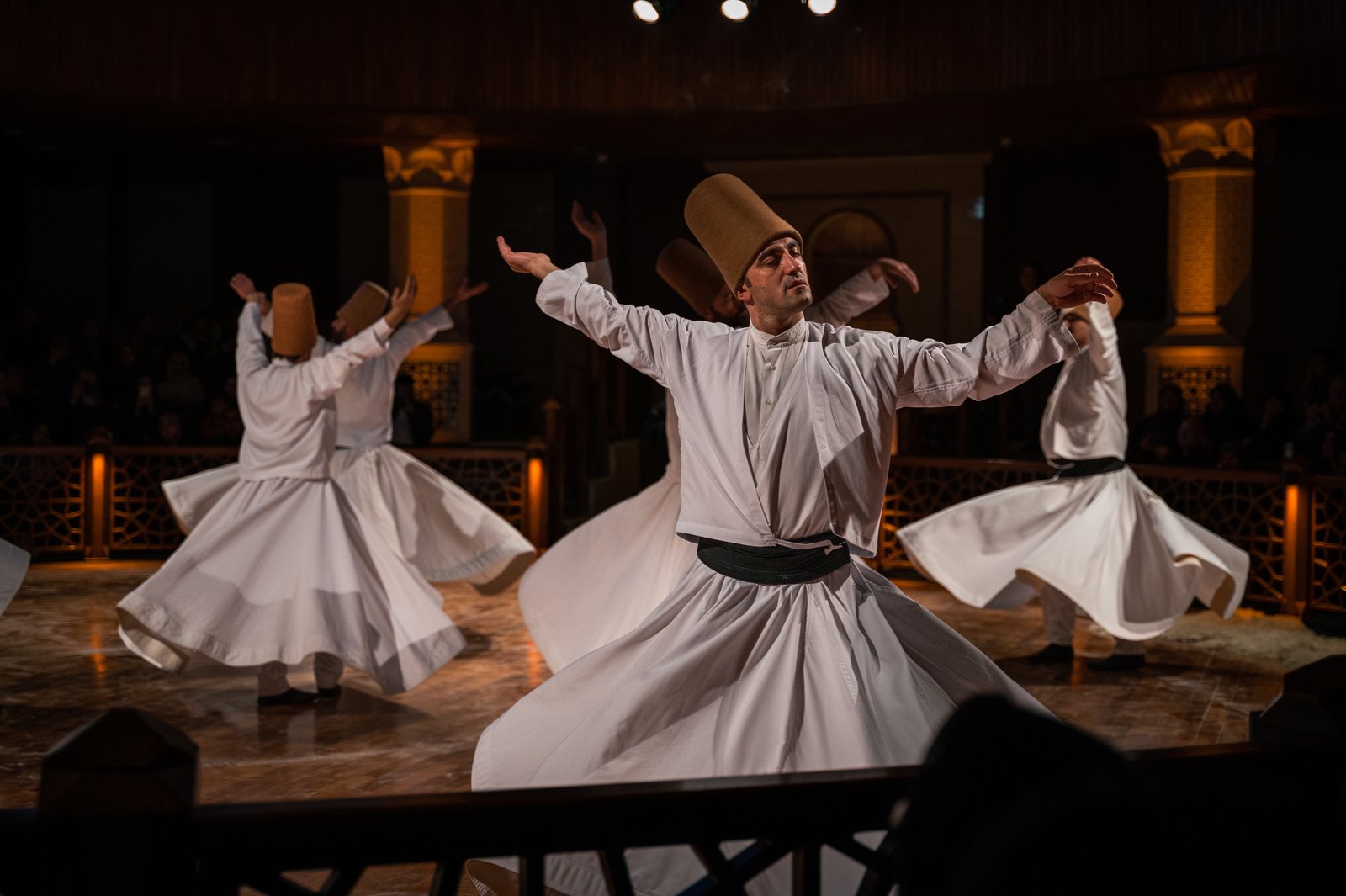
For nearly eight centuries, Sufi mystics have spun in slow, deliberate circles, one hand raised to heaven and one turned to earth, until the self is said to dissolve. The practice is real, documented, and now protected by UNESCO; it grew out of one grieving poet's love for a vanished friend. What honest inquiry can say is this: the whirling reliably produces a genuine altered state that practitioners describe as the annihilation of the ego in God. Whether that state is union with the Divine or the mind and inner ear doing what spinning does to them is a question the ceremony itself does not settle, and neither will this article. Here is the sema honored as the living faith it is, and measured as carefully as everything else in this wing.
It begins, as a surprising number of the world's spiritual movements do, with grief. In 1244 a respected and rather conventional Islamic jurist in the city of Konya met a wild wandering mystic named Shams of Tabriz, and the meeting undid him in the best way. The jurist was Jalal al-Din Rumi, and under Shams's influence he was transformed from a scholar into an ecstatic poet. When Shams vanished a few years later, Rumi's longing had nowhere to go, so he poured it into poetry, into music, and into turning slowly in circles until the boundary of himself grew thin. Out of one man's heartbreak came a practice that eight centuries later is protected by UNESCO and still performed every winter. This is the story of the whirling dervishes, told with equal respect for the faith and for the facts.
01The Poet Who Started Turning
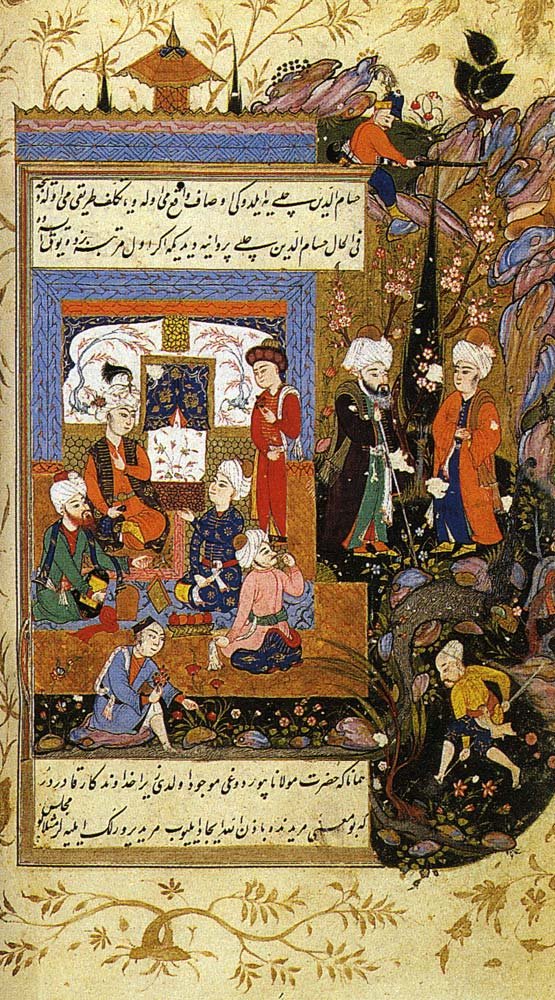
The history here is solid and documented. Jalal al-Din Rumi, known to his followers as Mevlana, lived from 1207 to 1273. Born in Balkh, in what is now Afghanistan, he settled in Konya, then part of the Seljuk Sultanate of Rum, in central Anatolia. His 1244 encounter with the mystic Shams-e Tabrizi turned him from a jurist into a poet; after Shams disappeared around 1247, Rumi's grief found its outlet in verse and in whirling. He did not found an order himself. After his death, his son Sultan Walad and his disciple Husam al-Din Chelebi organized his followers into the Mevlevi order, a Sufi tariqa centered in Konya and known for its devotion to music, poetry, dance, and scholarship. Its lodges, called mevlevihane, eventually spread across the Ottoman Empire.
Rumi's poetry is not decoration on top of the practice; it is the practice's philosophy. His six-volume Masnavi, so revered that some in the tradition call it 'the Quran in Persian' (a characterization, it should be said, not a formal doctrinal claim), frames the entire universe as something that turns. Atoms, planets, and galaxies all spin, and love is the force that keeps creation in motion. To whirl, in this view, is not to perform but to join what everything else is already doing. The dervish spinning on the floor is a small model of a turning cosmos, which is why the practice reads as devotion rather than dance to the people inside it.
02The Ceremony, Step by Step
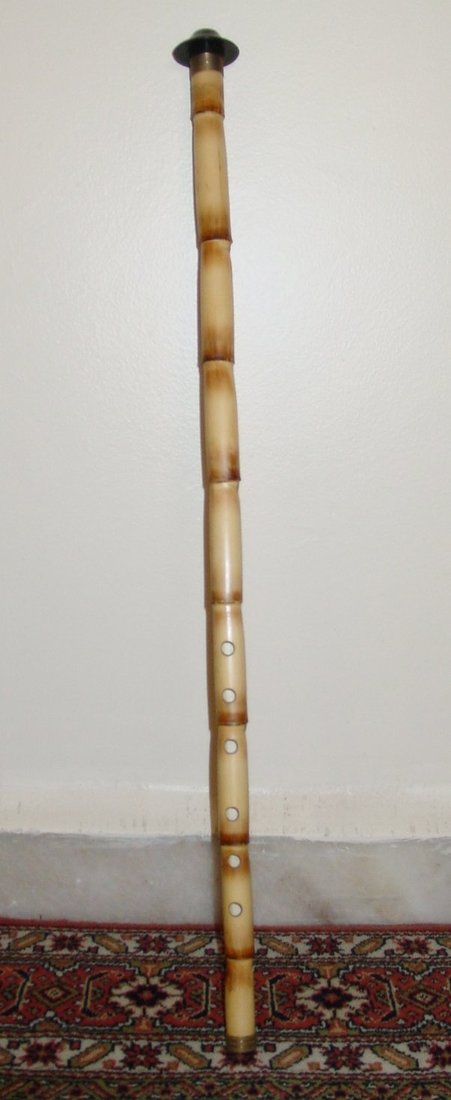
The sema is not improvised spinning; it is a fixed, six-part liturgy. It opens with the Nat-i Sherif, a sung praise of the Prophet Muhammad, followed by a drumbeat on the kudum that represents the divine command 'Be!' Then comes the ney taksim, the reed-flute solo. Next the dervishes make the Sultan Veled Walk, three slow processions around the hall representing three stages of knowledge. Only then come the Four Selams, the whirling proper, in four rounds each carrying its own spiritual meaning, before the ceremony closes with a recitation from the Quran and prayers. Every element is prescribed. The spinning that outsiders come to photograph is one movement within a much larger sacred structure.
The posture itself is a piece of theology made physical. As the dervish turns, the right hand is held palm-up to receive grace from above, and the left is turned palm-down to pass that grace to the earth; the head is tilted slightly, and the whole body rotates counterclockwise around its own axis while also orbiting the floor. The dervish is at once a planet turning on itself and a planet orbiting its sun, or a soul circling the Divine. Nothing about the movement is arbitrary, which is exactly why reducing it to dizziness misses most of what is happening.
03What the Spinning Does to the Body
Now the honest part, where the reverence and the science have to share a room. Sustained rotation does real and well-understood things to the human body, and understanding them takes nothing away from the practice; it just clarifies what we can and cannot claim.
Spinning stimulates the vestibular system, the balance apparatus of the inner ear, whose fluid-filled semicircular canals and otolith organs sense rotation and acceleration. When you turn at a constant speed for long enough, the fluid in those canals catches up to the motion and reaches equilibrium, and the sensation of spinning fades. This is basic, uncontroversial physiology, true of anyone on a turntable, not something unique to dervishes. It is the mechanical floor beneath the whole experience: a body turning steadily for many minutes is a body whose sense of motion, orientation, and self-location is being systematically altered.
On top of that floor sits a skill. Trained Mevlevi practitioners report that after an initial period of dizziness, the sensation settles into something stable and practiced, and that fixing the gaze and tilting the head helps suppress nystagmus, the reflexive flicking of the eyes that normally accompanies spinning. This is credible and consistent with what we know, but it should be flagged honestly: it rests on practitioners' own reports and on general physiology, not on a controlled study of dervishes themselves. The claim that trained whirlers master their own vestibular response is believable. It is not, at present, measured.
04The Altered State, and How Much We Really Know
Put the ingredients together, repetitive movement, vestibular stimulation, focused intention, the entraining rhythm of ney and drum, and the charged sacred setting, and something reliable happens: participants report a distinctive altered state, marked by a felt dissolution of the ego, emotional release, and a deep sense of peace. This is a real and reportable phenomenon, and it is not unique to Sufism; it belongs to a wide family of movement-induced altered states found across cultures, from ecstatic dance to the Italian tarantism tradition to Candomble possession dances. That the sema produces such a state in its practitioners is about as well supported as a subjective claim can be, because so many people report it so consistently.
But here is where careful writing matters most, because the tempting next sentence, that brain scans prove the dervishes enter a measurable trance, is not something the evidence supports. A landmark review of the psychobiology of altered states (Vaitl and colleagues, 2005) points out that neuroimaging of spinning and rotational practices is badly confounded: the movement itself creates electrical and imaging artifacts, samples are tiny, and you cannot blind a participant to whether they are spinning. The claimed increases in theta brain-wave activity during whirling are extremely hard to separate from the electrical noise the spinning itself generates. So the subjective altered state is well attested; the objective brain-signature of a 'whirling trance' is not yet demonstrated. Honesty requires holding those two facts apart.
And what do the practitioners themselves say the state is? The Mevlevi word is fana: the annihilation of the ego, its dissolving into God. Dervishes describe the deepest moments of the turn as being 'turned by' rather than 'turning,' the sense of a personal self doing the spinning giving way to something larger doing it through them. This is the tradition's own theology and its own lived interpretation, and it deserves to be reported as exactly that: the meaning practitioners give their experience. It is not an independently verified claim that a literal union with the Divine, or access to a cosmic consciousness, actually occurs. The felt dissolution of self is real and reported. What it ultimately is remains, as it has for centuries, a matter of faith rather than measurement.
The same caution applies to the neurochemistry. It is often said that whirling floods the brain with endorphins, endocannabinoids, and altered serotonin activity, and that would be a reasonable guess given what movement and exertion do generally. But, as the research itself notes, these specific changes have not actually been measured during the sema. They are plausible extrapolations from exercise science, not findings. The mechanism may well turn out to be roughly that. We just do not get to say so yet.
05The Skeptics and the Guardians
There are two ways to get the whirling dervishes wrong, and they pull in opposite directions. One is to oversell the mysticism; the other is to flatten a living religion into a curiosity. The serious critics are worth hearing precisely because they guard against the first without committing the second.
The skeptical case is real. Some researchers argue that the perceptual distortions of prolonged spinning, the vertigo, the autonomic shifts, the altered sense of self, are a sufficient physiological explanation for what gets described as transcendence, with no mystical union required. Historians add a second, sobering layer: the Mevlevi lodges were not only houses of prayer but centers of Ottoman political patronage, elite networking, and prestige (Lifchez, 1992), a worldly dimension that romantic accounts tend to airbrush away. And a third critique cuts at the modern practice directly: much of what tourists watch in Konya and Istanbul today has been adapted for the audience, with applause, photography, and shortened ceremonies, raising a fair question of how closely the show resembles the historical rite.
And yet the opposite error is just as real, and the research marks it clearly: treating the sema as 'just entertainment' is misleading. Yes, staged tourist performances exist. But for practicing Mevlevis the ceremony remains a living act of worship, embedded, as the scholar Carl Ernst warns, in a specific Islamic framework of Quranic interpretation, spiritual lineage, and etiquette that Western appropriation tends to strip away. To reduce the sema to a folk-dance photo opportunity is to make the same category error as overselling it, just from the other side. The honest posture holds both: a real religious practice, with a real and only partly understood psychology, that also became, at various times, a tourist attraction and a node of imperial power. All of that is true at once.
06Banned, and Reborn
The order's survival was not guaranteed. In 1925, as part of the new Turkish Republic's drive toward secularization, Mustafa Kemal Ataturk's government passed Law No. 677, which closed the country's Sufi lodges, tombs, and dervish houses, over fifteen thousand of them, and banned mystical titles. The Mevlevi order was formally dissolved. For nearly three decades the sema went effectively underground. Then, beginning in 1953, public performances were permitted again, this time officially framed as a cultural rather than a religious event, a careful compromise that let the ceremony survive within a secular state.
Today the ceremony is both protected and celebrated. It is performed each December during Seb-i Arus, the anniversary of Rumi's death, which the Mevlevis call his 'wedding night,' the night of his final union with God. And in a striking turn for a practice that was once outlawed, UNESCO first proclaimed the Mevlevi Sema a Masterpiece of the Oral and Intangible Heritage of Humanity in 2005, then formally inscribed it on the Representative List of the Intangible Cultural Heritage of Humanity in 2008. A practice born of one poet's grief, banned by a modern state, now carries an international seal of protection.
Fast Facts
- The founder
- Jalal al-Din Rumi (Mevlana), 1207 to 1273, poet of Konya
- The trigger
- His grief after the disappearance of the mystic Shams-e Tabrizi, around 1247
- The order
- The Mevlevi, a Sufi tariqa, organized after Rumi's death by his son and disciple
- The ceremony
- The Sema: a fixed six-part liturgy ending in the Four Selams, the whirling
- The posture
- Right hand up to receive grace, left hand down to give it to the earth
- The goal
- Fana, the annihilation of the ego in God, in the practitioners' own words
- Banned
- 1925, under Turkish Law No. 677; public performance allowed again from 1953
- Protected
- UNESCO Masterpiece 2005; inscribed on the Intangible Cultural Heritage list 2008
What We Can Actually Stand Behind
The tradition is real and richly documented. Rumi lived, the Mevlevi order was founded in his name, the sema has a fixed and ancient structure, the practice was banned in 1925 and revived from 1953, and UNESCO recognized it in 2005 and 2008. That spinning steadily for many minutes profoundly alters the inner ear's sense of motion and self-location is straightforward physiology. None of this is in doubt.
The sema reliably produces a genuine altered state. Practitioners across generations consistently report ego dissolution, emotional catharsis, and deep peace, and this fits a well-known cross-cultural pattern of movement-induced altered states. As a subjective, reportable phenomenon, this is about as solid as such things get. The worldly history is real too: the lodges were centers of power and prestige as well as prayer.
What the state ultimately is remains a matter of faith. Fana, the dissolving of the self into God, is the Mevlevi order's own interpretation of the experience, and it is reported with remarkable consistency, but it is not an independently established fact of union with the Divine. The specific neurochemistry often invoked (endorphins, endocannabinoids) is a plausible guess that has not actually been measured during the ceremony. These are the practitioners' meaning and reasonable hypotheses, not proven mechanisms.
Do not oversell it, and do not flatten it. There is no demonstrated brain-signature of a 'whirling trance'; the EEG evidence is confounded by the motion itself, so claims that scans prove a measurable trance run past the data. But the opposite error is just as wrong: the sema is not 'just entertainment.' Staged tourist versions exist, yet the ceremony remains a living act of worship embedded in a specific religious tradition. Both the mystical overclaim and the dismissive shrug get it wrong.
So what are we watching when the dervishes turn? On the most honest account, all of these at once: a piece of thirteenth-century grief still moving through the world; a precisely choreographed act of Islamic worship; a reliable technique for altering human consciousness whose deepest claim about itself we cannot verify and have no standing to mock; and, yes, sometimes, a show for tourists with cameras. The spinning does something real to the body and something real to the sense of self. Whether it also does something real to the soul is not a question our instruments are built to answer. The dervishes are not waiting for our answer. They have been turning for nearly eight centuries, one hand open to the sky and one to the ground, and they intend to keep turning, whether or not anyone ever measures what happens when they do.
Sources & further reading
Everything above is drawn from our research library on Theories of Anything. Open the full file to check the sourcing and go deeper.
Image credits
- Sufi dervishes of the Mevlevi order performing the Sema ceremony together in Konya, Turkey Baltazar Faunback (Baltaborg), 2022, via Wikimedia Commons (Wiki Loves Folklore 2023). CC BY-SA 4.0 Source.
- A 16th-century Ottoman miniature depicting Rumi with his disciple Husam al-Din Chelebi, from manuscript M.466 Unknown 16th-century Ottoman painter; Morgan Library & Museum (MS M.466), via Wikimedia Commons. Public Domain Source.
- A Turkish ney, the end-blown reed flute central to Mevlevi ceremonial music Nerval, 2006, via Wikimedia Commons. CC BY-SA 3.0 / GNU Free Documentation License Source.
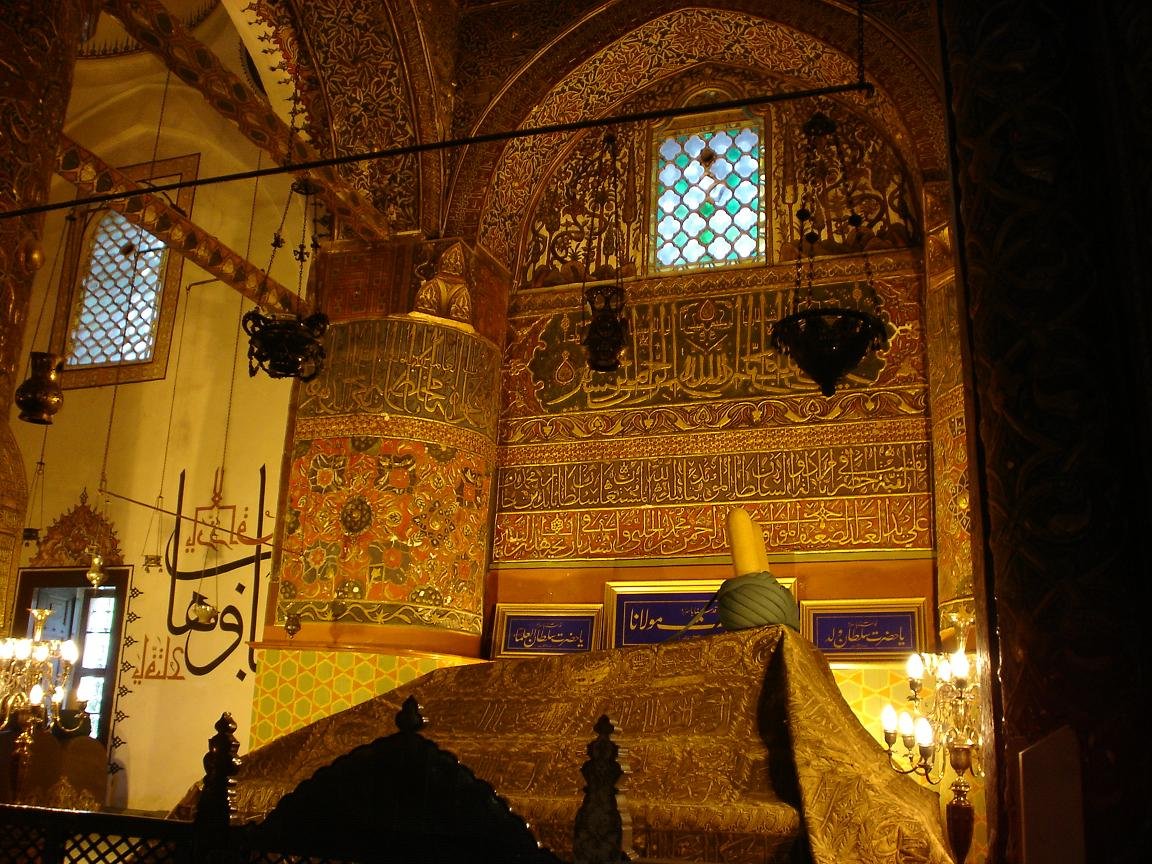
- The interior of the tomb chamber of Jalal al-Din Rumi inside the Mevlana Museum in Konya Aboww, 2006, via Wikimedia Commons. Public Domain Source.
- Card crop of the Konya Sema ceremony photograph Baltazar Faunback (Baltaborg), 2022, via Wikimedia Commons. CC BY-SA 4.0


