
Trepanation: The Oldest Surgery
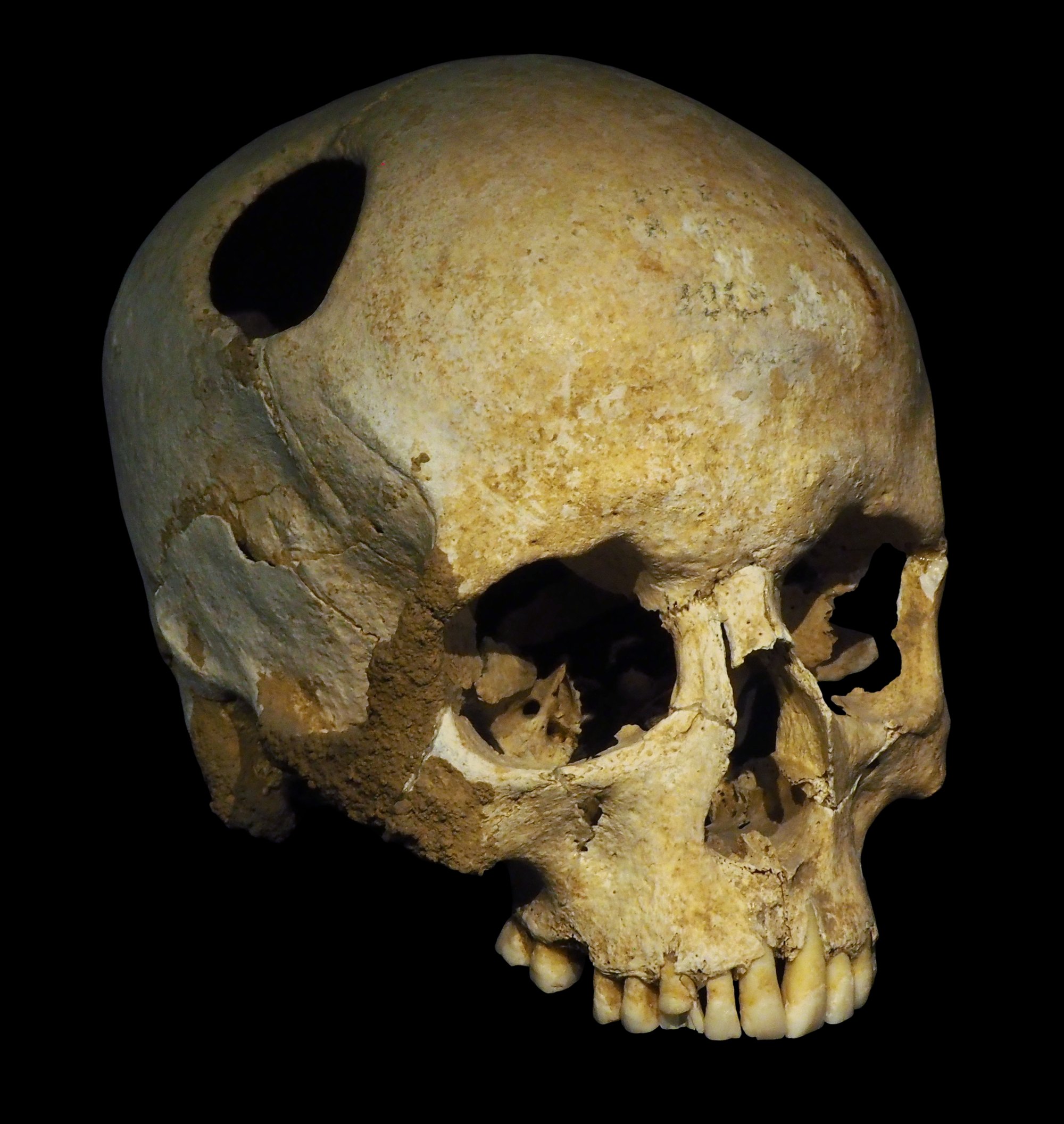
Thousands of years before there was writing, before metal tools, before any germ theory or anesthesia, human beings were cutting holes in the skulls of living people. And the most astonishing part is not that they did it, but that the patients survived. Healed bone around the openings proves it, again and again, across nearly every ancient culture on Earth. In late pre-Columbian Peru, survival rates may have reached beyond ninety percent, outperforming cranial surgery in the American Civil War. This is the story of humanity's oldest operation: what the evidence really shows, why they may have done it, and why the honest wonder of it needs no ancient aliens or lost technology to explain.
Some facts about the human past are so strange they take a moment to absorb. This is one of them: for at least the last seven thousand years, and quite possibly longer, human beings have been deliberately cutting holes in the skulls of other living human beings. Not after death, not on enemies, but as a considered act performed on patients, with tools of stone and bronze, by people who left no written record of why. The procedure is called trepanation, the opening of the skull, and it is the oldest surgical operation we can document anywhere on Earth. What lifts it from the merely macabre to the genuinely astonishing is the evidence, carved into the bone itself, that it worked often enough for the patients to live. Around the edges of a great many of these ancient openings, the bone has grown back. That regrowth can only happen in a living body over time, which means the person on the table did not die that day. They got up, and healed, and carried on, sometimes for decades, with a hole in their head. This is what we actually know about that operation, how we know it, why our ancestors may have done such a thing, and where the sober wonder of it gives way to fantasy.
01A Hole in the Living Head
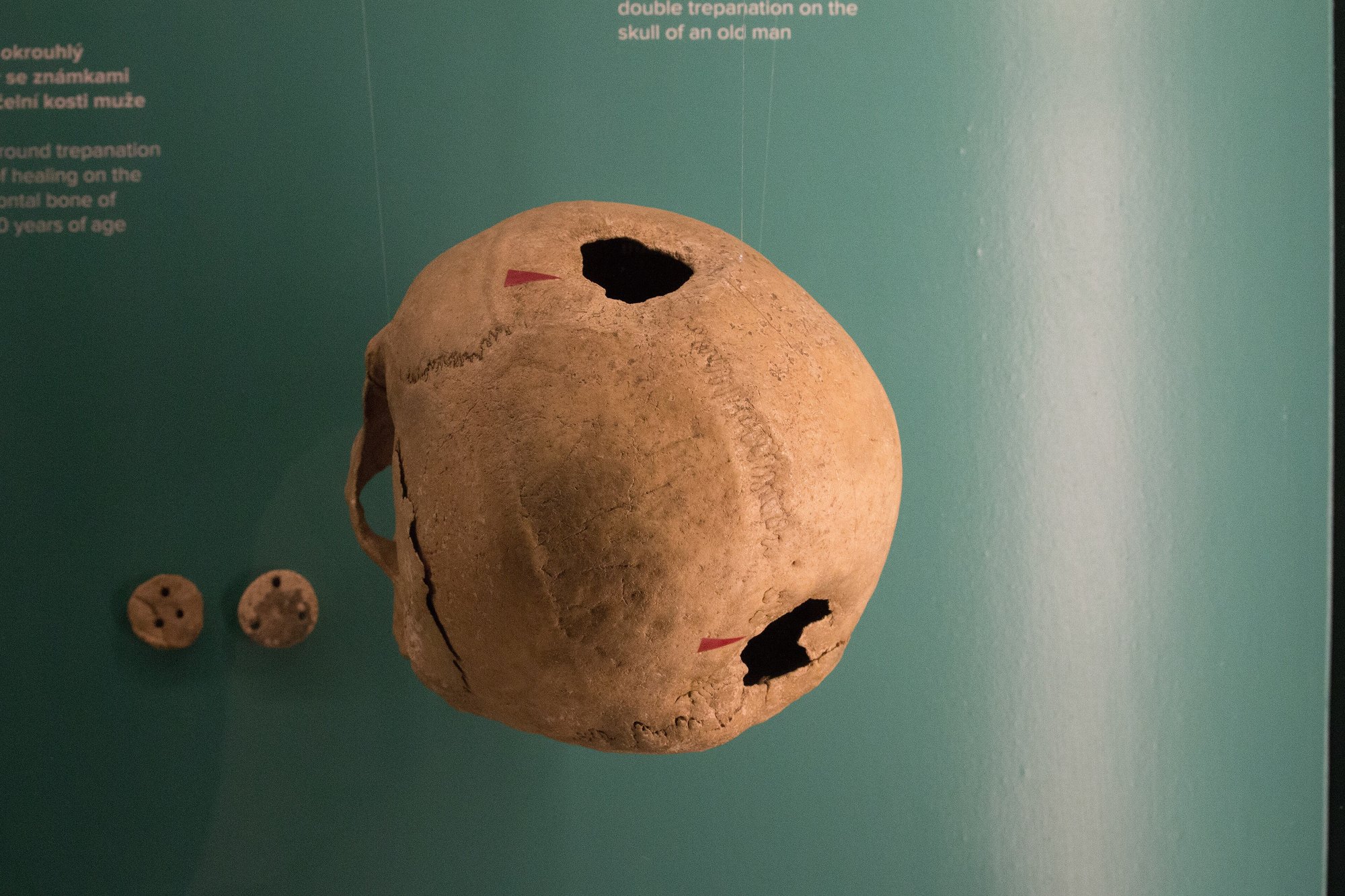
The single most important thing to understand about trepanation is how we can possibly know a Stone Age patient survived it, and the answer is beautifully simple: healed bone. When a hole is cut in a living skull and the person lives, the raw edges of the opening slowly remodel, growing smooth and rounded as the body heals, a process that takes months to years and cannot occur after death. A completely sharp, unhealed edge tells the opposite story, a patient who died during or soon after the operation. This one distinction, healed versus unhealed margins, lets archaeologists read survival directly from a skull thousands of years old. And the practice was astonishingly widespread. Trepanned skulls have been found across Neolithic Europe, in ancient China, in the Caucasus, throughout the Americas, everywhere humans settled except, as far as we know, Australia. Because these cultures had no contact with one another, trepanation was not a single invention that spread; it was discovered independently, many separate times, by different peoples who each arrived at the same extraordinary idea. The oldest securely dated example comes from a Neolithic grave at Ensisheim, in the Alsace region of France, dated by its grave goods to roughly 5100 to 4900 BCE, more than seven thousand years ago. The skull belonged to a man of about fifty who had been trepanned not once but twice; the smaller opening had healed completely, and remarkably, the skull shows no sign of the injury or illness that might have prompted either surgery.
02The Masters of Peru
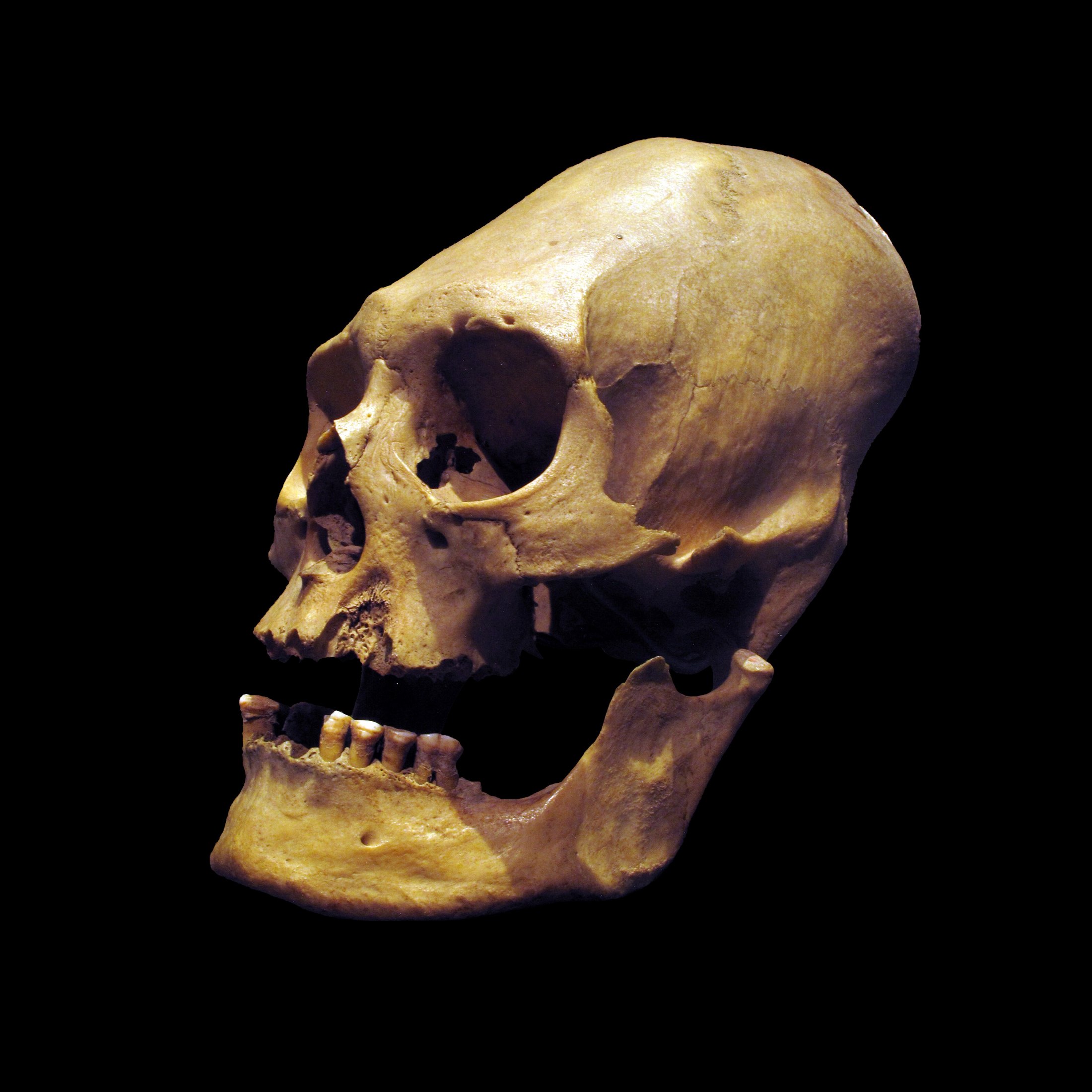
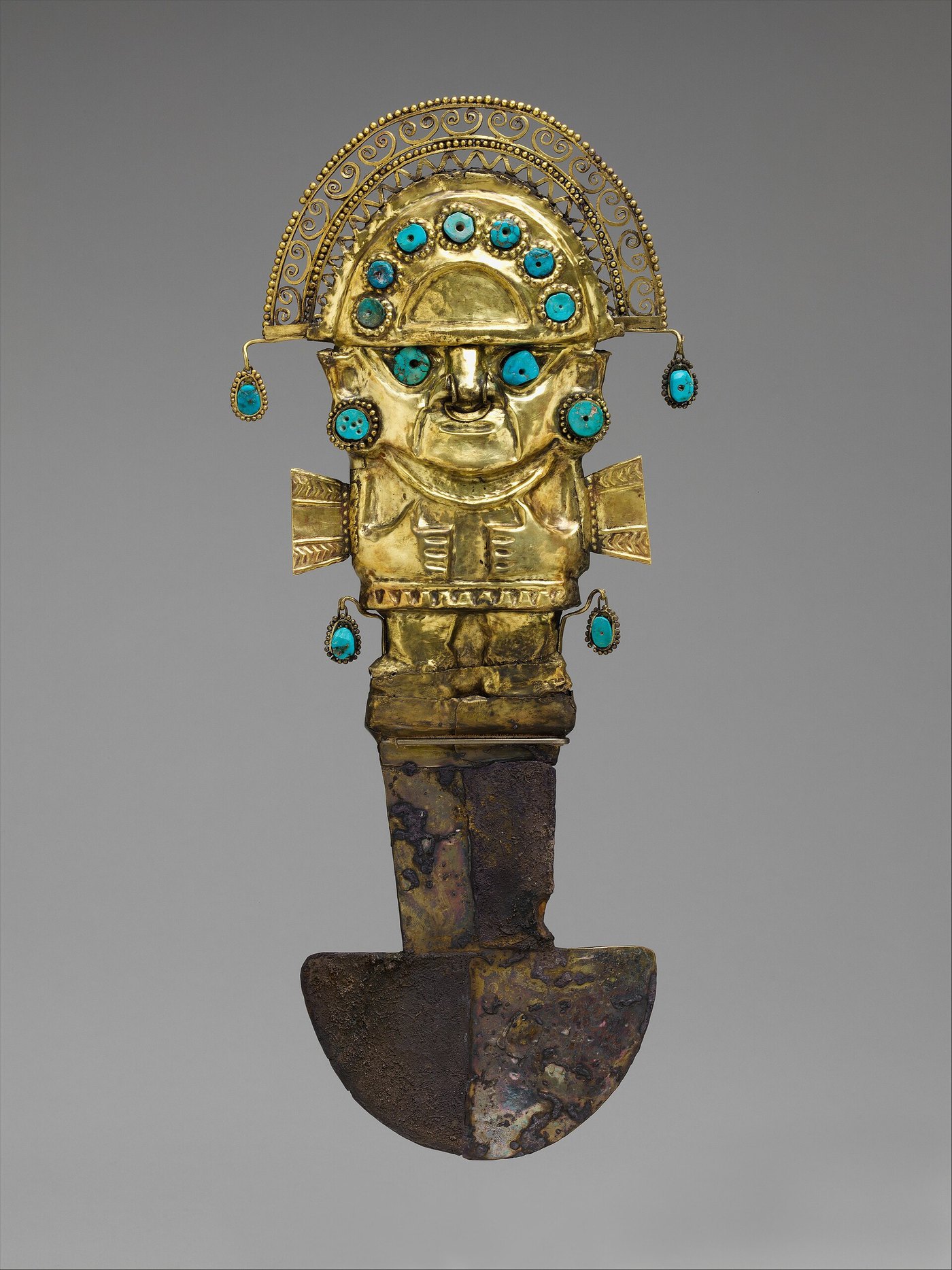
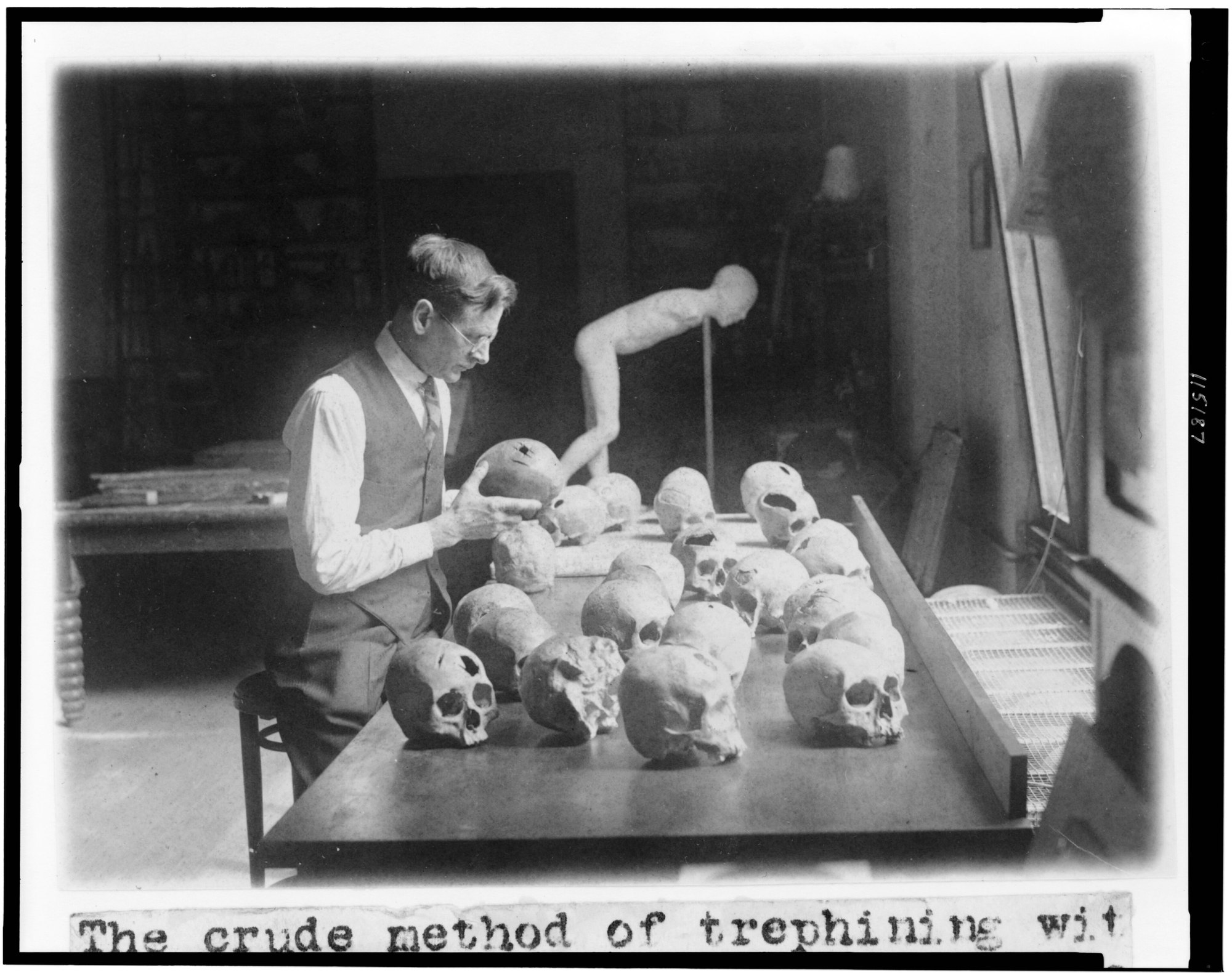
No place on Earth practiced trepanation like ancient Peru, which has yielded more trepanned skulls than the rest of the world combined. The leading modern authority is John Verano, a physical anthropologist who has personally examined more than eight hundred of them, spanning roughly two thousand years from about 400 BCE to the Inca period. His data tell a genuinely stirring story of a craft being learned. In the earliest samples, survival, inferred from healed bone, sits around 40 percent. But it climbs steadily over the centuries as technique improved: to as high as 91 percent in skulls from 1000 to 1400 CE, and averaging 75 to 83 percent during the Inca era. To feel the weight of those numbers, set them beside a far more recent benchmark. Cranial surgery during the American Civil War, in the 1860s, performed with steel instruments and some awareness of cleanliness, killed roughly half its patients, a survival rate of only 44 to 54 percent. Inca surgeons, working with no metal finer than bronze and no germ theory at all, were bringing patients through skull surgery at rates their better-equipped counterparts would not match for centuries. That comparison sounds like exaggeration, and it is not; it has been carefully worked out from the skulls themselves. How they did it is partly visible in their tools. The earliest Andean surgeons cut with blades knapped from obsidian, volcanic glass that fractures to an edge finer than modern surgical steel; later cultures used a curved bronze or copper knife called a tumi. They seem to have worked in the open air and, tellingly, not to have reused tools between patients.
03How We Know, and What We Cannot
The scientific study of trepanation began with a puzzle and a great anatomist. In 1867 the French scientist Paul Broca examined a trepanned skull from Peru and grasped what the healed edges meant: that prehistoric people had performed surgery, and that patients had lived. Broca and his colleagues went on to establish the whole field, though his own early theory of why, that Neolithic people trepanned to release the spirits believed to cause childhood convulsions, has long since been set aside. It is a useful reminder that our reading of these skulls has shifted enormously over a century and a half, and remains, in places, a work in progress. Two honest cautions matter here. The first is a subtle statistical trap called the osteological paradox: because only survivors leave healed bone, a high 'percentage of healed skulls' measures survival among the operations we can detect, not necessarily every operation ever attempted. The evidence is real, but it must be read with care. The second is a striking absence. Ancient Egypt, for all its documented surgical sophistication, seems barely to have practiced trepanation at all; the anatomist Grafton Elliot Smith reportedly examined some fifteen thousand Egyptian skulls and found no clear cases, and the Edwin Smith Papyrus, Egypt's great surgical text from around 1600 BCE, does not describe the procedure. Trepanation was not universal after all; it flourished in some cultures and was nearly unknown in others, for reasons we still cannot fully explain.
04Why Did They Do It?
Here we reach the real limit of the evidence, and honesty requires admitting it plainly: for most trepanations, we simply do not know why they were done, and often we never will. A skull can show that an operation happened and that the patient survived, but it rarely reveals the reason. The leading candidates are all plausible and none is provable across the board. Some trepanations sit right beside a healed skull fracture, strongly suggesting they were a response to head injury, perhaps to relieve pressure or clean a wound, and this is the most medically intelligible motive. Others may have aimed at epilepsy, chronic headaches, or conditions we can only guess at. And some were likely ritual or spiritual: in certain cultures the disc of bone removed during the operation, the roundel, was kept and worn as an amulet, which points to meaning well beyond straightforward treatment. The question of pain is just as open. There is no evidence of true surgical anesthesia anywhere in the ancient record. Some researchers suspect Andean surgeons may have used chicha, a fermented maize beverage, to relax the patient; Verano himself doubts that chewing coca leaf, a mild stimulant, offered any real pain relief. With no written records from these cultures, such ideas remain informed guesses, not established facts. The astonishing courage this implies, on the part of patient and surgeon alike, is left almost entirely to the imagination. And the practice was not always safely locked in the distant past: trepanation survived as a living tradition among the Gusii people of Kenya into the twentieth century, documented by a physician-researcher in the late 1950s, performed without anesthesia and, by his record, survived by roughly nineteen of every twenty patients.
05What It Was, and What It Wasn't
Because the facts here are so startling, they attract two opposite distortions, and both should be named and set aside. The first is to over-romanticize the medicine: to take a high survival rate as proof that trepanation 'worked,' that it was effective treatment in the modern clinical sense. It was not, and the distinction is crucial. Surviving the surgery is not the same as being cured by it. There was no anesthesia beyond, at most, a fermented drink, no understanding of germs, no antiseptic technique; and in many cases the operation likely did nothing at all for whatever condition prompted it, even when the patient lived through the procedure itself. A remarkably high proportion of people survived having their skulls opened, which is a genuine testament to skill; it is not evidence that doing so healed them. The second distortion runs the other way, into pseudo-archaeology: the claim that survival rates like Peru's must reflect some lost advanced technology, secret knowledge, or non-human assistance. This is simply false, and it insults the people who actually did the work. There is no mystery requiring aliens or Atlantis here. There is something far more impressive: ordinary human beings, with obsidian and bronze and steady hands, learning a difficult craft by observation and practice across many generations, and getting genuinely, measurably good at it. Modern neurosurgery does still open the skull, in the burr hole and the craniotomy, to relieve pressure or reach the brain. But it does so guided by imaging, under anesthesia, in sterile conditions, for a clear reason established in advance, a world away from the ancient operation. The thread of 'cutting a hole to help the head' runs unbroken across seven thousand years, and the two ends of it are not the same thing at all.
Fast Facts
- What it is
- Trepanation: cutting or scraping an opening in the living skull. It is the oldest documented surgical procedure, attested from the Neolithic across nearly every inhabited continent, invented independently many separate times
- How we know patients survived
- Healed, rounded bone around the opening, which can only form in a living body over months to years. Sharp, unhealed edges indicate the patient died. Many skulls show survival; some individuals survived trepanation twice
- The oldest
- A skull from Ensisheim, France, dated to about 5100 to 4900 BCE (more than 7,000 years old): a man of ~50, trepanned twice, one opening fully healed, with no visible injury to explain why
- Peru's record
- More trepanned skulls than the rest of the world combined. Survival (from healed bone) rose from ~40 percent early to as high as 91 percent by 1000 to 1400 CE and 75 to 83 percent in the Inca era, better than the 44 to 54 percent survival of American Civil War cranial surgery
- The tools
- Obsidian blades (an edge finer than surgical steel) and the crescent bronze or copper tumi, now the emblem of the Peruvian Academy of Surgery. No metal finer than bronze, and no germ theory
- Why they did it
- Genuinely uncertain. Candidates: head-injury treatment (some sit beside healed fractures), pressure relief, epilepsy or headache, and ritual (bone roundels were sometimes worn as amulets). Bone rarely reveals the reason
- Refused
- That trepanation 'worked' as medicine by modern standards (surviving the surgery is not being cured by it), and that its success implies lost advanced or non-human technology (it does not: it reflects human skill learned over generations). This is history, not medical advice
What We Can Actually Stand Behind
The core facts are solid. Trepanation is the oldest documented surgery, practiced independently across nearly every inhabited continent from the Neolithic onward. Healed bone around many openings proves patients survived, sometimes twice in one lifetime (the Ensisheim skull, ~7,000 years old; a Celtic skull with two healed openings). And Peru's record, built from John Verano's study of 800-plus skulls, shows survival rising to as high as 91 percent, outperforming American Civil War cranial surgery. These are established facts.
The details are real but carry honest caveats. The exact survival percentages depend on method and are read only from detectable, healed cases (the osteological paradox means they measure survival among operations we can see, not every attempt). The tools (obsidian, the tumi) and the discovery history (Broca, from 1867) are well documented, as is the striking near-absence of trepanation in ancient Egypt despite its surgical sophistication.
The motives are genuinely open. Why any given trepanation was performed (head injury, pressure relief, epilepsy, headache, or ritual) usually cannot be recovered from bone alone, though some sit beside healed fractures and some produced amulet roundels. Whether and how patients were sedated is unknown; chicha is a plausible relaxant, coca an unlikely anesthetic. With no written records, these remain informed guesses.
Both distortions are refused. Trepanation did NOT 'work' as medicine by modern standards: surviving the operation is not the same as being cured of whatever prompted it, and there was no anesthesia, antisepsis, or germ theory. And high survival does NOT imply lost advanced or extraterrestrial technology: it reflects ordinary human skill, learned by practice over generations. The wonder is real and entirely human. This article is history, not medical advice.
Trepanation opens The Healing Arts because it sets the honest terms for the whole wing, whose story runs from a hole scraped in a Neolithic skull to the gene edited in a living cell. The awe is real: that our distant ancestors, with stone and nerve and hard-won skill, could open a human skull and bring the patient through, again and again, is one of the most quietly staggering facts in the human story. And the answer is human. There is no need to reach for lost civilizations or visitors from the sky to explain it, and doing so only steals the achievement from the people who earned it, the anonymous surgeons of Neolithic France and Iron Age Slovakia and Inca Peru who learned, patient by patient, how far they could go. What we owe them is the truth, told carefully: not that they had secret knowledge we have forgotten, and not that their surgery cured what ailed their patients, but that they were brave and skilled and human, and that the long, stumbling, magnificent human effort to heal one another began, as far as we can see, with a hole in the head and a hand that did not shake.
Sources & further reading
Everything above is drawn from our research library on Theories of Anything, with the specific studies below. Open the full file to check the sourcing and go deeper.
Image credits
- Trepanned Neolithic skull, Corseaux, Switzerland (~3500 BCE) Rama, via Wikimedia Commons (CC BY-SA 3.0 France / CeCILL). CC BY-SA 3.0 France Source.
- Double-trepanned Celtic (La Tene) skull, National Museum, Prague Zde, via Wikimedia Commons (CC BY-SA 4.0). CC BY-SA 4.0 Source.
- Deformed and trepanned skull, Peru (13th to 16th century CE) Rama, via Wikimedia Commons (CC BY-SA 3.0 France / CeCILL). CC BY-SA 3.0 France Source.
- Sican (Lambayeque) ceremonial tumi knife, Peru (~900 to 1100 CE) Metropolitan Museum of Art, Open Access (CC0). CC0 Source.
- Peruvian trepanned skulls examined, 1926 photograph National Photo Company Collection, Library of Congress (public domain). Public domain Source.
- Card crop of the Corseaux Neolithic trepanned skull Rama, via Wikimedia Commons (CC BY-SA 3.0 France / CeCILL). CC BY-SA 3.0 France


_MET_DP214165.jpg)
_with_the_sharpened_edge_of_a_stone_practiced_by_peoples_living_in_Peru_some_500_or_600_years_ago_is_revealed_by_the_skulls_at_the_National_Museum_LCCN95519350.jpg)