
The Psychedelic Renaissance: What the Trials Actually Show
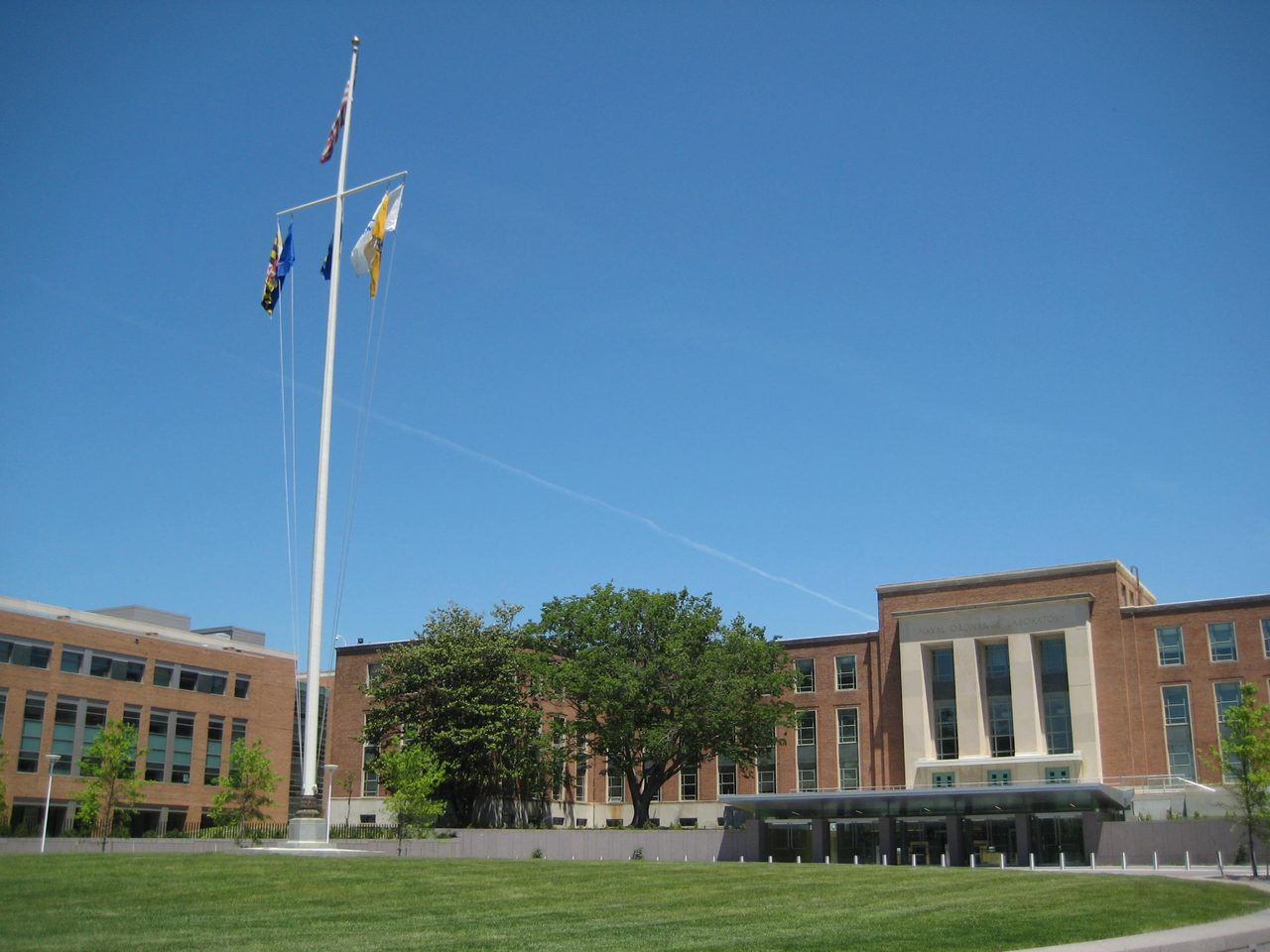
In 1970 the Controlled Substances Act placed psychedelics in Schedule I and nearly all legitimate research in the United States stopped for decades. It has restarted. Since 2000 a small number of universities and companies have run these compounds through the ordinary machinery of drug development, and the work has reached Phase 3 for two different compounds. It has also collided with that machinery: in August 2024 the FDA rejected MDMA-assisted therapy for PTSD and asked for an entirely new trial. This is what the clinical record supports, claim by claim, with approvals kept separate from applications and with what these substances still cannot do said plainly. It is not medical advice.
A class of compounds that has sat in Schedule I since 1970 is now moving through the same machinery as a blood pressure drug: randomized trials, primary endpoints, advisory committees, applications that are approved or are not. Some of what has come back from that machinery is genuinely strong. One part of it has already failed, publicly and recently. The honest way to read this field is to hold those two facts in the same room without letting either settle the other, because the most consequential single event in the whole story is the day a set of positive trial results turned out not to be enough. What follows is the therapeutic and regulatory record, claim by claim, each carrying the evidence it actually has. None of it is advice to anyone about what to take.
01What Stopped in 1970
The word renaissance points at something that ended, so it is worth being exact about what ended and why.
The Controlled Substances Act of 1970 classified psychedelics as Schedule I substances, and nearly all legitimate psychedelic research in the United States halted for decades. That is the gap the word is pointing at, and our own research file frames the current wave of work explicitly as a reversal of that multi-decade research prohibition. It is a useful frame as long as it is not read as a story about a wronged science that was simply switched back on.
Because prohibition was not the only thing that killed the first wave. Psychedelic therapy research in the 1950s and 1960s also collapsed under poor methodology, inadequate safety protocols, and unethical practices in some of that era's studies. Our research file makes the point against itself: the current renaissance has to avoid repeating those failures. Hold on to that sentence. It reads very differently after 2024, when a modern regulator turned down a modern application over concerns from exactly this family of problems.
02The Study That Restarted It
The restart has a date and a paper.
In 2006 Roland Griffiths and colleagues published the first rigorous double-blind psilocybin study in nearly forty years, in the journal Psychopharmacology. A high dose, 30 mg per 70 kg of body weight, produced mystical-type experiences in 72 percent of participants, and at a fourteen-month follow-up 67 percent rated the session among the five most personally meaningful experiences of their lives. Note carefully what that paper did and did not establish. It reported the character of an experience and how much it still mattered more than a year later. It did not report a clinical outcome in a patient population. Its importance is that it was rigorous, published, and possible at all, which reopened a door rather than proving anything through it.
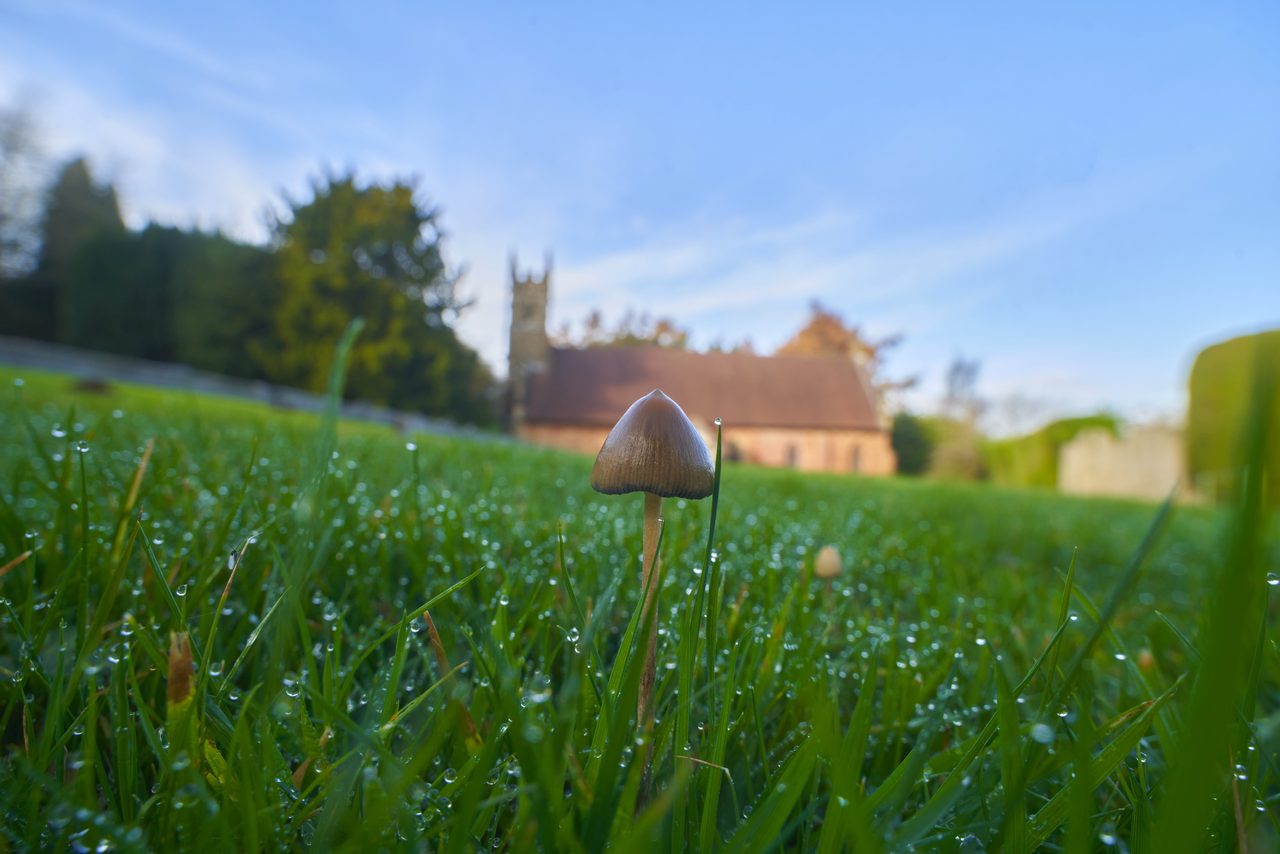
The distinction matters for the trials, not for the chemistry: psilocybin is psilocybin regardless of source, but a clinical dose is a controlled pharmaceutical product, not a plant someone picked.
The institution came next. Johns Hopkins formally established its Center for Psychedelic and Consciousness Research in 2019, building on a research program that had launched in 2000. Roland Griffiths, who lived from 1946 to 2023, led the Hopkins program until his death.
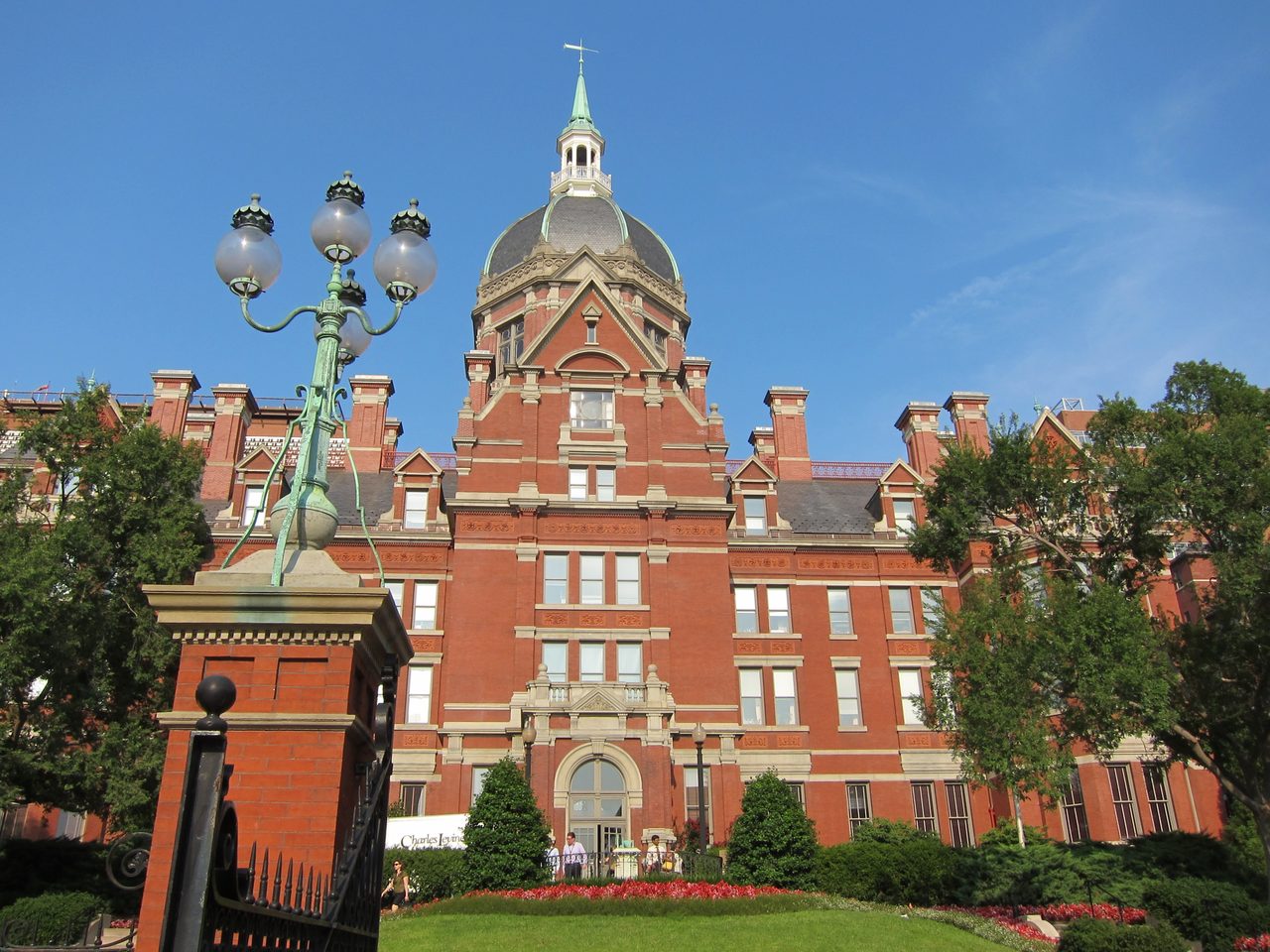
The dome is shown here for the institution it represents, not as a photograph of the research itself.
03Psilocybin and Depression
The first serious patient results came out of the same institution.
A randomized controlled trial run at Johns Hopkins in 2020, published as Davis and colleagues in JAMA Psychiatry in 2021, tested psilocybin-assisted therapy against major depressive disorder in 24 participants. It found rapid and sustained symptom reduction: 71 percent of participants showed a greater than 50 percent reduction in GRID-HAMD scores at four weeks, maintained at twelve months. The reported effect size, a Cohen's d of 2.3, substantially exceeded that of conventional antidepressants. Both halves of that description are load-bearing. An effect that size is a genuine finding and would be an extraordinary one if it holds. Twenty-four people is a small trial, and small trials carrying unusually large effects are precisely the ones that most often shrink when the work is repeated at scale.
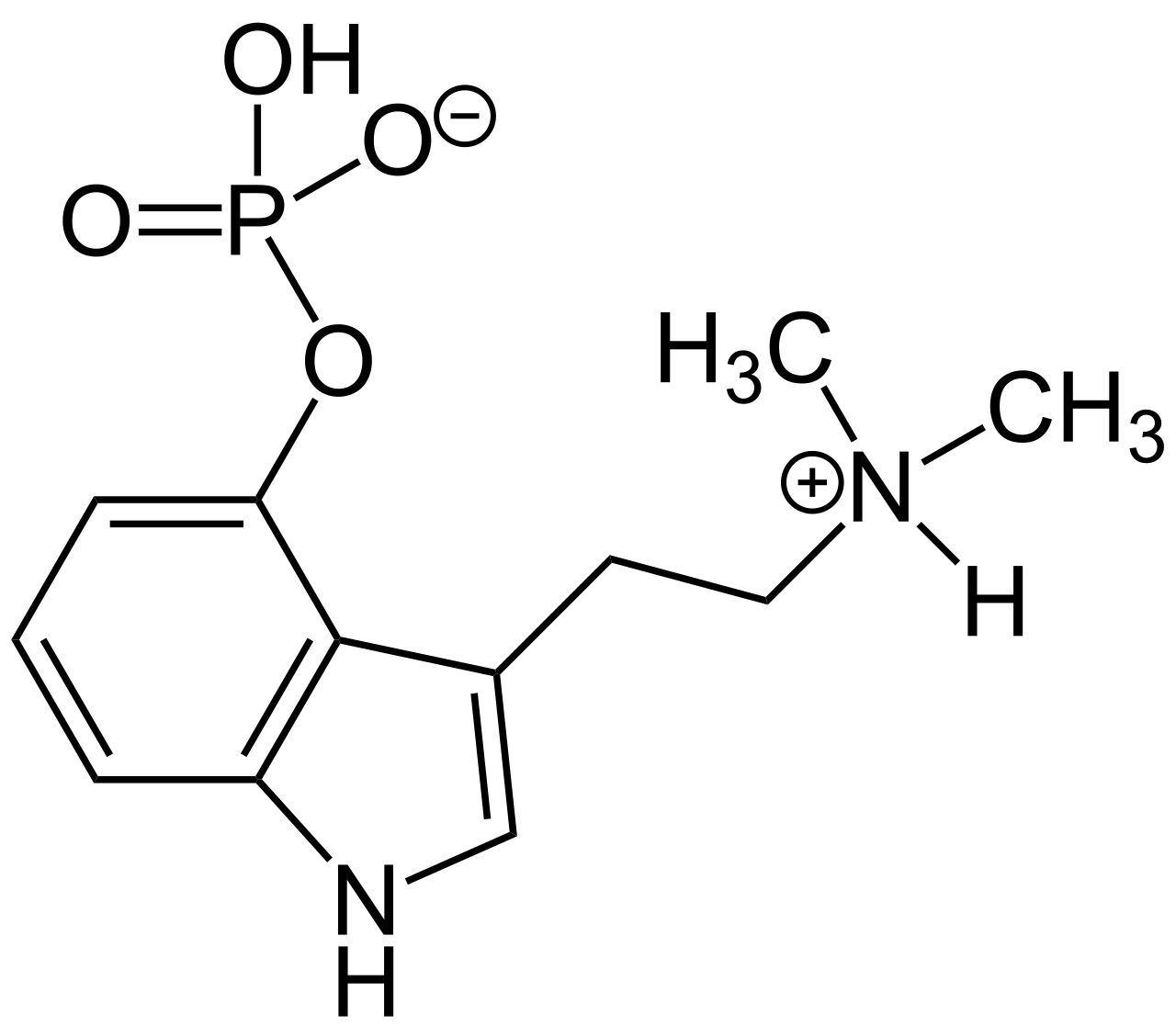
The molecule does not change between a smoking-cessation trial, an alcohol-use trial and a depression trial. What changes is the population being tested and the outcome being measured.
Larger trials have since arrived, in a related indication. COMPASS Pathways' synthetic psilocybin formulation, COMP360, at a 25 mg dose, met its primary endpoint in two consecutive Phase 3 trials for treatment-resistant depression. COMP005 dosed 258 participants and reported topline results in 2025. COMP006 dosed roughly 581 and announced its primary endpoint on February 17, 2026: a statistically significant reduction on the MADRS depression scale against a 1 mg comparator dose, at p less than 0.001. In COMP006, 39 percent of the participants receiving 25 mg reached a clinically meaningful response, defined as an improvement of 25 percent or more on MADRS, against 25 percent reported for COMP005. A 26-week durability readout from COMP006's Part B followed on July 7, 2026, reporting treatment effects sustained after one or two doses.
Those are large trials and a real evidentiary advance over the small studies that defined the early 2020s. They are also, as things stand, company-announced topline statistics rather than complete peer-reviewed publications, and psilocybin is not approved for anything. A large positive Phase 3 result and an approved medicine are two different facts. This article keeps them apart everywhere, and three sections from here is the reason why.
04The Addiction Trials
Depression is not the only target, and the other trials are smaller than the Phase 3 programs.
An open-label pilot study of psilocybin for smoking cessation at Johns Hopkins, led by Matthew Johnson and published in 2014, found 80 percent biologically confirmed abstinence at six months. The figure usually quoted beside it is roughly 35 percent for varenicline, the standard comparator drug. The number that decides how much weight this can carry is neither of those: the sample was fifteen people, and the study was open-label, which means nobody involved was blinded to anything. It is a striking pilot result, and a pilot result is a reason to run the real trial rather than a substitute for having run it.
Alcohol has a stronger study behind it. A randomized controlled trial published in JAMA Psychiatry in 2022, by Bogenschutz and colleagues, gave psilocybin-assisted therapy to 93 participants with alcohol use disorder and compared it against an active placebo, diphenhydramine, with matched therapy on both sides. Heavy drinking days fell by 83 percent at eight months in the psilocybin group, against 51 percent in the active-placebo group. Note the active placebo, and note that both groups got the therapy. That design is the field's main defense against a problem this article comes to shortly, and it is only a partial defense.
05MDMA, PTSD, and Two Positive Trials
MDMA arrived at the clinic by a different road, and it is not the same kind of drug.
MDMA, or 3,4-methylenedioxymethamphetamine, was first synthesized in 1912 by the Merck chemist Anton Köllisch, and patented as a chemical precursor compound rather than as a psychoactive drug. It was rediscovered for possible therapeutic use by the chemist Alexander Shulgin in the 1970s, and an estimated 500,000 therapists and clients had used it before it was classified as Schedule I in 1985. Psychedelic research did not have one shutdown. It had two, fifteen years apart.
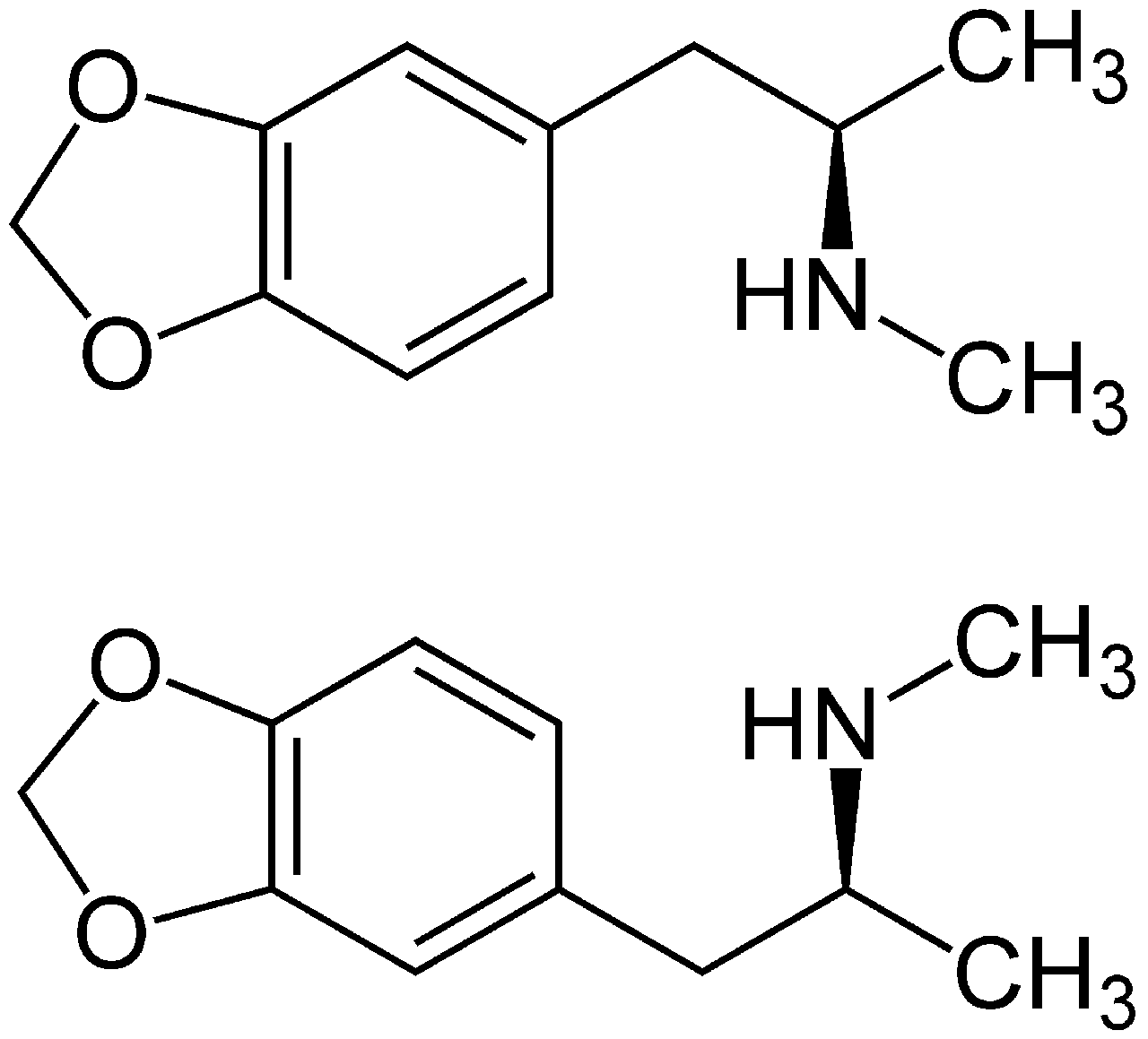
The trial results that follow all concern this molecule administered in a controlled clinical dose, under supervision, inside a trial.
Its pharmacology is also distinct from psilocybin's, which matters to what it is being tested for. MDMA's core action is a massive presynaptic release of serotonin, roughly 80 percent, dopamine, roughly 15 percent, and norepinephrine, roughly 5 percent, together with increased oxytocin secretion. That is a different pathway from psilocybin's serotonin-receptor agonism and its effects on the default mode network. MDMA is classed as an entactogen, a category named for the feelings of emotional closeness and trust it produces, rather than as a classic serotonergic psychedelic.
The Phase 3 program built on that. The first Phase 3 trial of MDMA-assisted therapy for PTSD, run by MAPS and published as Mitchell and colleagues in Nature Medicine in 2021, known as MAPP1, randomized 90 participants after a psychiatric medication washout to either MDMA with therapy or placebo with the same therapy. After three MDMA sessions plus preparatory and integration psychotherapy, 67 percent of the MDMA group no longer met the diagnostic criteria for PTSD, against 32 percent in the placebo-with-therapy group.
A second Phase 3 trial followed. MAPP2, published by Mitchell and colleagues in Nature Medicine in September 2023, also met its primary endpoint, and it enrolled a more diverse population than MAPP1: people of color made up roughly half of its sample. So both Phase 3 trials of MDMA-assisted therapy were positive on efficacy. That is the fact which makes what happened next difficult, and it is the fact most often dropped from both of the popular versions of this story.
One structural detail is needed before the rejection, because it decides who was rejected. MAPS PBC, the public benefit corporation MAPS founded in 2014 to carry MDMA-assisted therapy through FDA approval, was renamed Lykos Therapeutics in January 2024 following a 100 million dollar Series A financing round. MAPS keeps governance ties, holding 10-to-1 voting power and appointing six of Lykos' eight board seats, but Lykos operates as a legally separate for-profit entity from the MAPS nonprofit. Lykos is the entity the FDA's letter was formally issued to.
| Study | Compound And Condition | Participants | Reported Result |
|---|---|---|---|
| Davis et al. 2021, JAMA Psychiatry (randomized, Johns Hopkins) | Psilocybin-assisted therapy for major depressive disorder | 24 | 71 percent showed a greater than 50 percent reduction in GRID-HAMD scores at 4 weeks, maintained at 12 months, with a reported effect size of Cohen's d = 2.3 |
| Johnson et al. 2014 (open-label pilot, Johns Hopkins) | Psilocybin for smoking cessation | 15 | 80 percent biologically confirmed abstinence at 6 months, against roughly 35 percent for varenicline, the standard comparator drug |
| Bogenschutz et al. 2022, JAMA Psychiatry (randomized, active placebo) | Psilocybin-assisted therapy for alcohol use disorder | 93 | Heavy drinking days reduced by 83 percent at 8 months, against 51 percent for diphenhydramine with matched therapy |
| Mitchell et al. 2021, Nature Medicine (MAPP1, Phase 3) | MDMA-assisted therapy for severe PTSD | 90 | 67 percent no longer met PTSD diagnostic criteria after three MDMA sessions with psychotherapy, against 32 percent on placebo with the same therapy |
| Mitchell et al. 2023, Nature Medicine (MAPP2, Phase 3) | MDMA-assisted therapy for moderate to severe PTSD | Not carried in our sources; people of color were roughly half of the sample | Met its primary endpoint, in a more diverse population than MAPP1 |
| COMP005 (Phase 3, COMPASS Pathways) | Synthetic psilocybin, COMP360 at 25 mg, for treatment-resistant depression | 258 dosed | Met its primary endpoint; topline results reported in 2025 |
| COMP006 (Phase 3, COMPASS Pathways) | Synthetic psilocybin, COMP360 at 25 mg, for treatment-resistant depression | About 581 dosed | Met its primary endpoint on February 17, 2026: a statistically significant MADRS reduction against a 1 mg comparator dose, p less than 0.001, with 39 percent of 25 mg recipients reaching a 25 percent or greater MADRS improvement, against 25 percent reported for COMP005 |
Every row in that table carries the same asterisk, and it is not a small one. In a trial where the drug announces itself, the people in it can usually tell which arm they are in. Two sections from here, that asterisk becomes the story.
06August 2024: The Rejection
Then the machinery answered.
On June 4, 2024, an eleven-member FDA Psychopharmacologic Advisory Committee voted 9 to 2 that the available data do not show MDMA-assisted therapy's effectiveness for PTSD, and 10 to 1 that its benefits do not outweigh its risks. The committee's stated concerns were specific rather than atmospheric: functional unblinding, meaning that participants could tell whether they had received MDMA; the particular form of psychotherapy the drug was paired with; and ethical concerns about documented misconduct in some MAPS-sponsored trials.
On August 9, 2024, the FDA issued a Complete Response Letter rejecting Lykos Therapeutics' New Drug Application for MDMA-assisted therapy for PTSD. The agency stated that the application could not be approved based on data submitted to date, and requested an entirely new Phase 3 trial. As of July 2026, MDMA remains federally Schedule I, with no FDA-approved use outside clinical trials and FDA Expanded Access, and no public resubmission date has been announced.
Two readings of that letter circulate, and this article refuses both. The first calls it a technicality, a piece of bureaucratic obstruction standing between patients and a medicine that works. It was not. An eleven-member advisory committee voted 9 to 2 against effectiveness and 10 to 1 against a favorable balance of benefit and risk, and the agency then demanded an entirely new Phase 3 trial. That is a serious scientific and regulatory setback for the whole field, not a footnote and not a paperwork problem. The second reading calls it proof that MDMA does not work. It was not that either: both Phase 3 trials met their primary endpoints, and the agency's stated objection was to how that evidence was generated, not to the direction it pointed. Refusing one of these framings does not commit you to the other. And the field's own history, the one in section 01, says concerns about trial conduct in this particular research tradition are the kind worth taking seriously.
07The Blinding Problem
The committee's first stated concern is not a quirk of one company's trials. It is the structural problem of the entire field.
A psychedelic's subjective effects are usually unmistakable to the person having them. That makes a genuinely blind placebo-controlled trial very difficult to run, because participants, and often the clinicians observing them, can tell who received the drug. The field calls this functional unblinding, and it is not a marginal critique from outside the tent: it was explicitly one of the FDA advisory committee's reasons for its 2024 vote, and Muthukumaraswamy and colleagues argued in 2021 that published effect sizes across the field may be inflated by expectancy bias. If people know they received the real thing, and they entered the trial hoping it would work, some unknown portion of the result is that hope. Active placebos are the partial answer: niacin, a low dose of psilocybin, or diphenhydramine, as in the alcohol trial above. They narrow the gap. They do not close it, and the researchers using them do not claim otherwise.
08What the Drugs Do in the Brain
The mechanism question is separate from the efficacy question, and it is less settled than the trial results are.
Neuroimaging studies using fMRI during psilocybin sessions show decreased activity and decreased connectivity in the default mode network, the brain system associated with self-referential thought. Robin Carhart-Harris, at Imperial College London, proposed that this disruption is what mediates psilocybin's ego-dissolution effects and its therapeutic ones, in work published with colleagues in PNAS in 2012. The imaging finding is solid. The claim that the disruption is the mechanism of a clinical benefit is a hypothesis attached to that finding, and the two deserve different amounts of confidence.
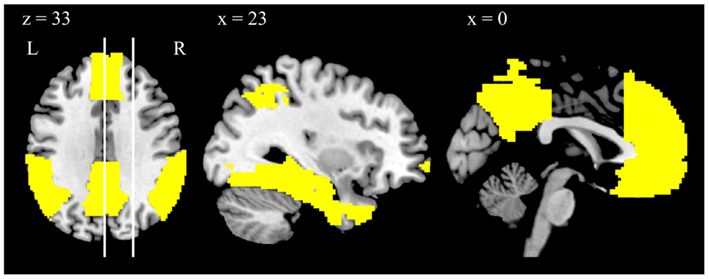
A diagram of a network is not a diagram of an experience. The two are related by hypothesis, not by identity.
The broader version is the entropic brain hypothesis, put forward by Carhart-Harris in 2014: that psychedelics increase neural entropy, meaning signal diversity, temporarily destabilizing rigid and maladaptive patterns of brain activity and allowing a therapeutic reorganization to follow. It is consistent with measured increases in neural-complexity measures under psilocybin. The mechanistic details remain genuinely debated in the literature, and this article carries that debate open rather than choosing the tidiest available version of it.
There is one further finding here that is easy to misuse, so it is stated narrowly. Multiple studies support what the field calls the mystical experience hypothesis: that therapeutic outcomes correlate with the intensity of the mystical-type experience during a session rather than with the drug's pharmacological action alone. Griffiths and colleagues found in 2008 that mystical-experience scores predicted long-term positive changes in attitudes, mood and behavior. Used precisely, this is a clinical-outcome predictor and nothing more: a score on a questionnaire that turns out to forecast who improves.
Used imprecisely, it becomes something else. Some researchers argue that psychedelic experiences deliver genuine metaphysical insight, the position usually filed under perennial philosophy. That claim cannot be evaluated by clinical trial methodology at all, which places it outside medical research and outside this file. This library carries it elsewhere, in the article on ego dissolution in The Doors of Perception wing. Here the experience is a variable in a study, and it stays one.
09The One Compound That Is Approved
Through all of this, one compound in the neighborhood has been an approved medicine since 2019.
On March 5, 2019, the FDA approved SPRAVATO, esketamine, a nasal spray for treatment-resistant depression in adults, to be used in conjunction with an oral antidepressant. It was the first approved medication for depression with a genuinely novel mechanism of action, antagonism at the NMDA receptor, since fluoxetine in 1987. It is dispensed and administered only at clinics certified under a Risk Evaluation and Mitigation Strategy, because of the risk of sedation and dissociation and because the drug carries abuse potential.
Esketamine is not the same thing as the ketamine given at ketamine clinics, and the two get merged constantly in ordinary conversation. Esketamine is the S-enantiomer, one of the two mirror-image forms of the molecule, delivered as an FDA-approved nasal spray inside that REMS framework. The racemic ketamine used off-label at infusion clinics for depression, anxiety and other conditions is a 50/50 mixture of both mirror images, typically given intravenously. Racemic ketamine is FDA-approved as an anesthetic and for no psychiatric indication at all. Its use for depression is off-label, generally not covered by insurance, and outside the specific REMS framework that governs esketamine.
| Compound | Status Under U.S. Federal Law |
|---|---|
| Esketamine (Spravato) | FDA-approved since March 5, 2019 for treatment-resistant depression in adults, used with an oral antidepressant, administered only at REMS-certified clinics |
| Racemic ketamine | FDA-approved as an anesthetic only. Its use for depression at infusion clinics is off-label, generally not insurance-covered, and outside the esketamine REMS framework |
| Psilocybin | Schedule I. Two large positive Phase 3 trials, a priority voucher, and a rolling New Drug Application targeted for completion in Q4 2026. Not approved |
| MDMA | Schedule I. New Drug Application rejected on August 9, 2024, with an entirely new Phase 3 trial requested. Not approved |
Here is the whole regulatory position in one paragraph, because it is the part most often gotten wrong. As of July 2026, psilocybin and MDMA both remain Schedule I controlled substances under United States federal law. No classic psychedelic, meaning psilocybin, MDMA, LSD or DMT, holds FDA approval for any indication. Esketamine is the only FDA-approved compound anywhere near this class, and it is chemically and legally a dissociative anesthetic derivative rather than a classic serotonergic psychedelic. Reading esketamine's approval as evidence that psychedelics are now approved medicine is a factual error, and a common one.
10Where the Law Actually Stands
That said, the ground under all of this has moved recently, and it has moved in one direction.
The FDA granted Breakthrough Therapy designation to COMPASS Pathways' psilocybin for treatment-resistant depression in October 2018, and to MAPS' MDMA-assisted therapy for PTSD in August 2017. The designation is granted when preliminary clinical evidence indicates a drug may show substantial improvement over an existing therapy on a clinically significant endpoint, and it expedites the agency's development and review process. It is not a marketing authorization and it is not an approval. The proof of that is what became of these two designations: one was rejected in 2024, and the other is still pending.
On April 18, 2026, President Trump signed an executive order titled Accelerating Medical Treatments for Serious Mental Illness, directing the FDA and the DEA to establish accelerated pathways for psychedelic drug development and review. It included Commissioner's National Priority Vouchers for drugs holding Breakthrough Therapy designation, which could shorten review periods from months to weeks, and allocated 50 million dollars for federal and state collaboration on serious mental illness research.
Six days later, on April 24, 2026, FDA Commissioner Marty Makary announced that the agency had issued three Commissioner's National Priority Vouchers under the new pathway: to COMPASS Pathways' psilocybin, COMP360, for treatment-resistant depression; to the Usona Institute's psilocybin for major depressive disorder; and to Transcend Therapeutics' methylone, TSND-201, for PTSD.
Two states got there first, by a route that has nothing to do with the FDA. Oregon's Measure 109, passed in 2020, created a state-regulated pathway in which adults aged 21 and over may use psilocybin at licensed service centers under supervision, with no medical prescription and no diagnosis required. Colorado's Proposition 122 decriminalized personal psilocybin possession statewide and established licensed healing centers beginning in 2025. Neither state has legalized MDMA. These are state-level regulated-access models, legally and procedurally distinct from federal drug approval, and neither one is evidence about the other.
| Date | What Happened | What It Did Not Do |
|---|---|---|
| August 2017 | The FDA granted Breakthrough Therapy designation to MAPS' MDMA-assisted therapy for PTSD | Breakthrough Therapy designation expedites development and review. It is not a marketing authorization |
| October 2018 | The FDA granted Breakthrough Therapy designation to COMPASS Pathways' psilocybin for treatment-resistant depression | Same. Nearly eight years later, the compound is still not approved |
| March 5, 2019 | The FDA approved esketamine (Spravato) for treatment-resistant depression, used with an oral antidepressant, under a REMS program | This is a genuine approval, and it is not an approval of psilocybin, MDMA, or any classic psychedelic |
| June 4, 2024 | An FDA advisory committee voted 9 to 2 that the data do not show MDMA-assisted therapy's effectiveness for PTSD, and 10 to 1 that its benefits do not outweigh its risks | It did not by itself reject the application. The Complete Response Letter came a little over two months later |
| August 9, 2024 | The FDA issued a Complete Response Letter to Lykos Therapeutics, stating the application could not be approved based on data submitted to date, and requested an entirely new Phase 3 trial | It did not find that MDMA does not work. Both Phase 3 trials had met their endpoints; the stated concerns were about how that evidence was generated |
| February 17, 2026 | COMPASS Pathways announced that COMP006, its second Phase 3 psilocybin trial, met its primary endpoint | A company-announced topline is not a complete peer-reviewed publication, and it is not an approval |
| April 18, 2026 | An executive order, Accelerating Medical Treatments for Serious Mental Illness, directed the FDA and DEA to build accelerated pathways for psychedelic drug development | A faster pathway is not a verdict on any particular drug |
| April 24, 2026 | The FDA issued three Commissioner's National Priority Vouchers, to COMPASS's psilocybin, Usona's psilocybin and Transcend's methylone | A voucher can shorten a review. It does not decide the outcome of one |
| July 7, 2026 | COMPASS reported 26-week durability data from COMP006 Part B, with treatment effects sustained after one or two doses | Durability at 26 weeks is not durability at ten years, and it is still not an approval |
The right-hand column of that table exists to refuse one specific move, made constantly in coverage of this subject. A Breakthrough Therapy designation is not an approval. A positive Phase 3 topline announcement is not an approval. A submitted or rolling New Drug Application is not an approval. A priority voucher is not an approval. As of July 2026 the only FDA-approved compound in this article is esketamine, and no favorable trial result and no favorable regulatory wind changes that. The next time a headline says psychedelics have been approved, the question that settles it is narrow: approved for what indication, by which agency, on what date.
11What the Evidence Refuses
Three more claims recur in this subject and none of them survives the record, on top of the two this article has already refused above. One of the three points in the opposite direction from the other two, and it is included for exactly that reason.
The first is that psychedelics are safe. They are not universally safe, and the trial protocols themselves are the evidence. MDMA carries real cardiac contraindications, through serotonergic cardiotoxicity. In people with a personal or family history of psychotic disorders there is a risk of prolonged psychosis. Cases of Hallucinogen Persisting Perception Disorder, in which perceptual disturbance persists after the drug has gone, are rare and documented. These substances are studied with extensive screening and with therapist support present throughout precisely because they are not safe for everyone, and that screening is not a formality that a supervised setting could dispense with.
The second refusal runs the other way, against an old fear rather than a new hope, and honesty requires carrying it too. The claim that psilocybin or LSD cause chromosome damage, brain lesions, or persistent psychosis in healthy populations came out of methodologically flawed studies from the 1960s and 1970s. Modern controlled published evidence demonstrates no lasting cognitive impairment and no genetic damage at clinical doses, as Johnson and colleagues set out in Neuropharmacology in 2018. Read the qualifiers, because they are what make the two refusals compatible: healthy populations, and clinical doses. The old scare literature was wrong. The screening criteria in the paragraph above are still there for a reason.
The third is the one this article works hardest against, because it is the one the coverage keeps manufacturing. These are not miracle cures, and nothing here should be described as a cure for depression, for PTSD, for addiction, or for anything else. Every efficacy result above arrives attached to a sample size, a comparison group and a methodological caveat, and a cure framing erases all three at once. There is no approved psychedelic-assisted therapy for PTSD, for major depressive disorder or for alcohol use disorder. The one approved compound in the neighborhood, esketamine, is approved as an addition to an oral antidepressant for treatment-resistant depression specifically, which is to say for people whom other treatments have already failed. That is a real and useful thing to have. It is not a cure, and it is not shaped like one.
12Six Hours of a Therapist's Time
Suppose all of it works. There is still a constraint the trials cannot lift, because it is not a scientific constraint.
Therapeutic psilocybin requires six to eight hours of therapist support for every dosing session, on top of intensive screening and separate preparation and integration sessions. An estimated cost of 10,000 to 25,000 dollars per treatment course follows from that structure. Without insurance coverage or policy reform, access may be limited to affluent patients. This is an access and equity concern distinct from the science, and it is worth naming separately, because a treatment that works and cannot be delivered at scale is a different kind of success from the one the headlines imply.
13What Nobody Knows Yet
Durability is unanswered. Most published follow-up data extends only twelve to eighteen months, so the long-term durability of a single course or a few sessions, at ten years and beyond, is simply unknown. Whether periodic booster sessions would be needed to hold a benefit is an open clinical question with no current answer. The 26-week readout from COMP006, useful as it is, does not touch that question.
One frequently trailed application has no human evidence behind it at all. The idea that psychedelic therapy might address neurodegenerative conditions such as Alzheimer's or Parkinson's through enhanced neuroplasticity is an emerging hypothesis with a preclinical basis: Ly and colleagues showed in 2018 that psilocybin promotes dendritic spine growth and BDNF release in mice. Human clinical evidence for neurodegenerative applications is entirely absent. Mice are not a small trial. They are not a trial.
Which leaves the question the whole field is currently waiting on. COMPASS Pathways is targeting completion of a rolling New Drug Application in the fourth quarter of 2026, with a possible FDA decision in late 2026 or early 2027. An approval would be the first the FDA has ever granted to a classic psychedelic. Whether it will come is genuinely open rather than a formality, and the reason it is open sits two years behind it in this same article: MDMA-assisted therapy, from a closely related drug class, also cleared two positive Phase 3 trials and was rejected anyway. Positive Phase 3 data alone did not guarantee approval for MDMA, and there is no certainty it will prove sufficient for psilocybin.
Fast Facts
- The Shutdown
- The Controlled Substances Act of 1970 placed psychedelics in Schedule I and nearly all legitimate United States research stopped for decades. MDMA was scheduled separately in 1985, after an estimated 500,000 therapists and clients had used it
- The Restart
- Griffiths and colleagues published the first rigorous double-blind psilocybin study in nearly forty years in 2006. Johns Hopkins formally established its Center for Psychedelic and Consciousness Research in 2019, on a program begun in 2000
- The Depression Result
- Davis and colleagues, JAMA Psychiatry 2021: 71 percent of 24 participants showed a greater than 50 percent reduction in GRID-HAMD scores at four weeks, maintained at twelve months, with a reported Cohen's d of 2.3. Twenty-four people is a small trial
- The Phase 3 Psilocybin Trials
- COMPASS Pathways' COMP360 met its primary endpoint in COMP005 (258 dosed, topline 2025) and COMP006 (about 581 dosed, announced February 17, 2026), both in treatment-resistant depression. Both are company-announced toplines rather than complete peer-reviewed publications, and psilocybin is not approved
- The MDMA Trials
- MAPP1 (Mitchell et al., Nature Medicine 2021, 90 participants): 67 percent no longer met PTSD criteria, against 32 percent on placebo with the same therapy. MAPP2 (Nature Medicine, September 2023) also met its primary endpoint, in a more diverse population
- The Rejection
- June 4, 2024: an FDA advisory committee voted 9 to 2 against effectiveness and 10 to 1 against a favorable risk-benefit balance. August 9, 2024: a Complete Response Letter to Lykos Therapeutics, requesting an entirely new Phase 3 trial
- The Blinding Problem
- A psychedelic's effects are usually unmistakable to the person having them, so a genuinely blind trial is very hard to run. Muthukumaraswamy and colleagues argued in 2021 that published effect sizes may be inflated by expectancy bias. Active placebos help only partially
- The Only Approval
- Esketamine (Spravato), approved March 5, 2019 for treatment-resistant depression alongside an oral antidepressant, administered only at REMS-certified clinics. It is not the racemic ketamine used off-label at infusion clinics, which is FDA-approved as an anesthetic only
- The 2026 Tailwind
- An executive order on April 18, 2026, and three FDA priority vouchers on April 24, 2026, to COMPASS's psilocybin, Usona's psilocybin and Transcend's methylone. A faster review is not an approval
- The State Route
- Oregon's Measure 109 (2020) and Colorado's Proposition 122 created supervised psilocybin access outside the FDA entirely. Neither state legalized MDMA, and neither is a federal approval
- The Cost
- Six to eight hours of therapist time per dosing session, plus screening, preparation and integration, at an estimated 10,000 to 25,000 dollars per treatment course
- Refused
- That any of this is a cure; that a designation, a topline, an application or a voucher is an approval; that the August 2024 rejection was a technicality; and that these compounds are safe for everyone. Also refused, in the other direction: the 1960s chromosome-damage and brain-lesion claims. This article is not medical advice
What We Can Actually Stand Behind
The history and the regulatory record are settled. The Controlled Substances Act of 1970 halted the research; Griffiths' 2006 paper restarted rigorous work; Johns Hopkins formally established its center in 2019 on a program begun in 2000. Esketamine has been FDA-approved since March 5, 2019 for treatment-resistant depression alongside an oral antidepressant, dispensed only under REMS. Both MDMA Phase 3 trials, MAPP1 in 2021 and MAPP2 in 2023, met their endpoints, and COMPASS Pathways' psilocybin met its primary endpoint in both COMP005 and COMP006. On June 4, 2024 an FDA advisory committee voted 9 to 2 and 10 to 1 against, and on August 9, 2024 the agency issued a Complete Response Letter to Lykos Therapeutics asking for an entirely new Phase 3 trial. Psilocybin and MDMA are both still Schedule I.
The efficacy signals are real, and each one travels with its limits. Psilocybin for depression: 71 percent responding in a 24-person Hopkins trial, and two Phase 3 trials in treatment-resistant depression, 258 and about 581 dosed, whose results stand as company-announced toplines rather than complete peer-reviewed publications. Psilocybin for alcohol use disorder: heavy drinking days down 83 percent against 51 percent on an active placebo, in 93 people. Psilocybin for smoking: 80 percent abstinence at six months in an open-label pilot of fifteen. MDMA for PTSD: 67 percent against 32 percent, in 90 participants. Every one of those numbers sits on top of functional unblinding, the field's structural inability to run a genuinely blind trial, which the FDA itself named and which Muthukumaraswamy and colleagues argue may have inflated effect sizes across the literature. The default mode network and entropic brain accounts of mechanism are credible, and their details are genuinely debated.
The questions that matter most are open. Nobody knows whether benefits last beyond twelve to eighteen months, because that is where the published follow-up stops, or whether booster sessions would be needed to hold them. Nobody knows whether psychedelics do anything for neurodegenerative disease; that hypothesis rests on dendritic spine growth in mice and has no human clinical evidence at all. And nobody knows whether COMPASS Pathways' psilocybin application, targeted for completion in the fourth quarter of 2026 with a possible decision in late 2026 or early 2027, will be approved. The honest read on the field as a whole lands here: real, better evidenced than it has ever been, genuinely promising, and not there yet. The 2024 MDMA rejection is why that last clause stays in the sentence.
No, none of this is a cure. Every efficacy figure above carries a sample size, a comparison group and a caveat, and cure framing erases all three; there is no approved psychedelic-assisted therapy for PTSD, major depressive disorder or alcohol use disorder, and esketamine is approved as an addition to an oral antidepressant for treatment-resistant depression, not as a first-line cure for anything. No, a Breakthrough Therapy designation, a positive Phase 3 topline, a submitted New Drug Application and a priority voucher are not approvals: as of July 2026 esketamine is the only FDA-approved compound in this article. No, the August 2024 rejection was not a technicality; a 9 to 2 vote against effectiveness, a 10 to 1 vote against a favorable risk-benefit balance, and a demand for an entirely new Phase 3 trial is a serious setback for the whole field. No, these compounds are not safe for everyone: MDMA carries cardiac contraindications through serotonergic cardiotoxicity, there is a real risk of prolonged psychosis where a personal or family history of psychotic disorders exists, and Hallucinogen Persisting Perception Disorder is rare and documented. And no, in the other direction, the 1960s and 1970s claims of chromosome damage, brain lesions and persistent psychosis in healthy people do not hold up: that literature was methodologically flawed, and modern controlled evidence finds no lasting cognitive impairment and no genetic damage at clinical doses. This article is evidence review and history. It is not medical advice, and nothing in it is an encouragement to use any substance it describes.
The Healing Arts is the long war against pain, plague and death, and this file is a live front in it rather than a finished campaign. What makes the psychedelic renaissance worth watching is not the size of the effect sizes. It is that a field which once collapsed partly under its own methodological failures came back and submitted itself to the strictest evidentiary machinery we have built, and that the machinery said no the first time it was seriously asked. That is not a story about suppression. It is what a working standard looks like from the inside, and it is why the next answer, whenever the psilocybin decision arrives, will mean something whichever way it falls. The question worth holding until then is not whether these compounds do something. It is whether what they do can be demonstrated to a standard that does not depend on the patient already believing.
Sources & further reading
Everything above is drawn from our research library on Theories of Anything, together with the published studies below and, for the 2024 to 2026 regulatory record, primary announcements from the FDA, the White House and COMPASS Pathways checked during research. Open the full file to check the sourcing and go deeper.
Image credits
- FDA Buildings 1 and 21, White Oak campus U.S. Food and Drug Administration, via Wikimedia Commons (public domain). Public Domain Source.
- Psilocybe semilanceata (liberty cap) mushrooms Lukas Large, via Wikimedia Commons (CC BY-SA 2.0). CC BY-SA 2.0 Source.
- Johns Hopkins Hospital's historic dome, Billings Administration Building Art Anderson, via Wikimedia Commons (CC BY-SA 3.0). CC BY-SA 3.0 Source.
- Psilocybin molecular structure diagram Jü, via Wikimedia Commons (public domain). Public Domain Source.
- MDMA molecular structure diagram (both enantiomers) Jü, via Wikimedia Commons (public domain). Public Domain Source.
- Anatomically defined Default Mode Network Yang, Bossmann, Schiffhauer, Jordan and Immordino-Yang, via Wikimedia Commons (CC BY 3.0). CC BY 3.0 Source.
.jpg)
.jpg)


