
Synaesthesia: The People Who Taste Words and See Sound
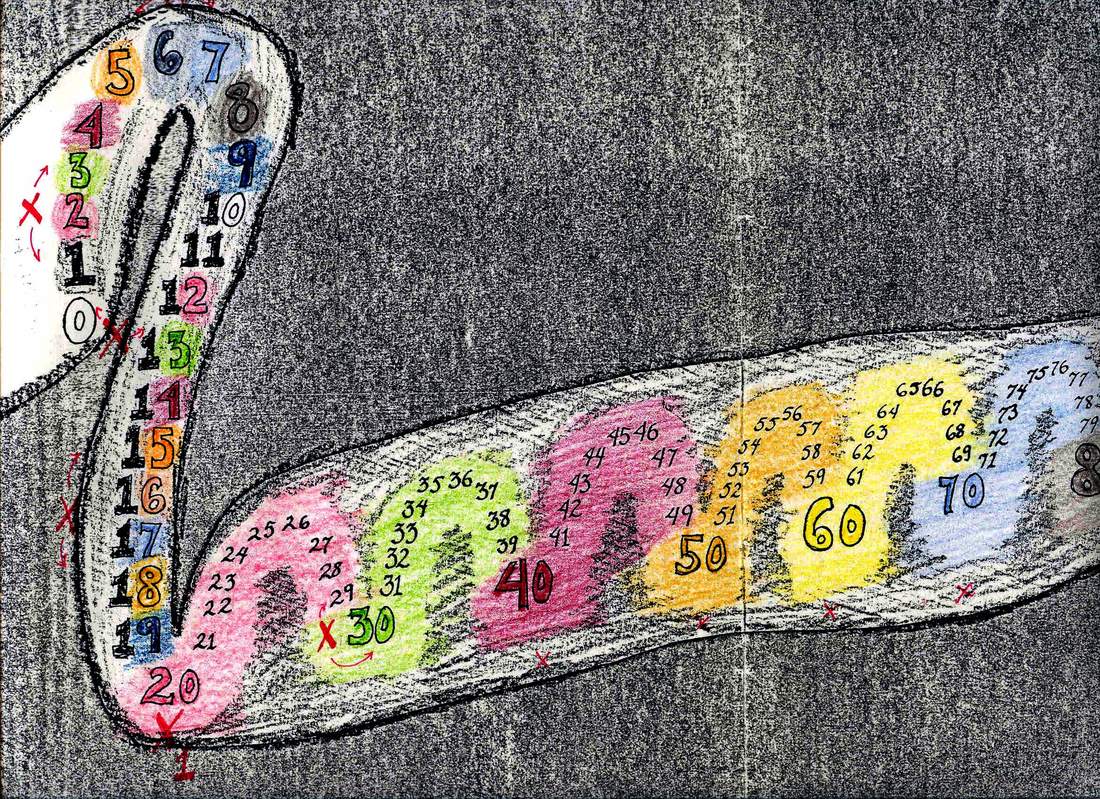
For something like 1 to 2 percent of people, the letter A has a color, and it is the same color it was decades ago. Others taste spoken words, or see the numbers laid out along a fixed path in space. The obvious objection is that this is metaphor, or vivid imagination, or a childhood alphabet set remembered too well, and it is exactly the right objection to make about anybody's report of their own private experience. The reply that turned synaesthesia into a science is not an argument but a test: come back in a year and name the colors again. This is the file on synaesthesia, opened claim by claim, each one wearing its evidence.
Ask a synaesthete what color the letter A is and the answer comes back without a pause, in the tone you would use for the color of a fire engine. Ask again years later and it comes back the same. That second fact is the entire reason this subject sits in a science file rather than a poetry one, because the first fact on its own proves nothing at all. Anyone can decide that A feels reddish. The interesting question about synaesthesia has never been what it is like from the inside, which is precisely the thing nobody else can check. It is how anyone established that there was anything there to check. Let's open the file.
01What Synaesthesia Actually Is
Synaesthesia is involuntary and automatic. The experience arrives without effort or intention, and the synaesthete cannot suppress it. That is the first line of the definition and it already does real work, because it separates the phenomenon from a preference or a habit of thought. You do not decide that the letter A is red, and you cannot decide to stop.
The experiences are percept-like rather than merely thought. Synaesthetes report seeing, tasting or feeling the concurrent sensation, though not always projected outward into the world: for many it happens in the mind's eye rather than out on the page. They are also usually unidirectional. The inducer triggers the concurrent, so the grapheme brings the color, but the color does not bring back the grapheme.

There is no single synaesthesia. Over 60 types have been documented, and essentially any pairing of sensory or cognitive dimensions can in principle produce one. Grapheme-color synaesthesia, in which letters and numerals carry colors, is the most studied variant by a wide margin. Day-color and month-color forms are common, as are spatial forms in which a sequence occupies a fixed arrangement in space.
A few of the names are worth having in advance. Chromesthesia is sound triggering color, the form Kandinsky described in himself as color hearing. Lexical-gustatory synaesthesia is words triggering tastes, and it matters later, because the two brain regions involved are nowhere near each other. Spatial-sequence synaesthesia is the number line or the calendar experienced as a shape. Mirror-touch synaesthesia our own research file names as a type and then says nothing further about, and we will treat it with the same restraint further down.
02The Verification Problem
Here is the problem that makes this subject worth an article. Every piece of evidence for synaesthesia begins life as a report about a private experience, and reports are cheap. A person who says the letter A is red might be a synaesthete, or might be reaching for a metaphor, or might be remembering a colored alphabet set from childhood, or might simply enjoy the attention. None of those can be told apart by listening harder. What the field did instead was stop listening and start measuring.
The documentation is older than the modern research program. In 1881 Francis Galton published a paper called Visualised Numerals in the Journal of the Anthropological Institute, collecting and printing diagrams from his own subjects showing how each of them mentally saw a sequence of numbers arranged in a fixed spatial form. It is one of the first scientific documentations of what is now called number-form or spatial-sequence synaesthesia, and it arrived more than a century before any of the imaging work below.
The gold-standard diagnostic is consistency over time, and it is a genuinely good test because it is hard to fake and simple to score. Give a synaesthete a list of letters and ask for the color of each. Then do it again after a long delay. Baron-Cohen, Harrison, Goldstein and Wyke reported in 1993 that a synaesthete's pairings hold above 90 percent consistency even when years separate the two sittings, with a measured 92.3 percent one-year retest figure across their nine subjects. Control subjects, deliberately asked to memorize an arbitrary set of pairings and then retested, manage roughly 30 to 40 percent, and they were retested after only a few weeks. The gap is not subtle. It is the difference between a perception and an association.
Which is why the flat dismissal fails. The claim that synaesthesia is just imagination, just metaphor, or just a learned association is not merely disputed, it is contradicted. Three independent lines converge on the same answer: behavioral consistency across time, interference effects of the Stroop type, in which one automatic response measurably obstructs another, and neuroimaging. Our own research file tiers the dismissal at Tier 4, and that is where we carry it.
Two honest limits on that machinery. A consistency test proves that a person's pairings are stable and involuntary, and it says nothing whatever about what the color is like for them, which stays exactly as unreachable as it was before. And the tests are variant-specific. The colors of letters are easy to score; a taste that arrives with a spoken word is a great deal harder. It is worth noticing that the variant with the cleanest numbers is also the easiest one to measure.
03How Many People, and Why the Number Keeps Moving
How common is synaesthesia? The published figures span from about 1 in 2,000 up to a composite estimate of at least 4.4 percent, and the spread is not sloppiness. Each number measured a different thing on a different kind of sample. The differences between them are more instructive than any single percentage.
The old figure was about 1 in 2,000, roughly 0.05 percent. It comes from Baron-Cohen, Burt, Smith-Laittan, Harrison and Bolton in 1996, who estimated prevalence from people responding to a magazine advertisement, and who also reported a female-to-male ratio of about 6 to 1. Both numbers carry the signature of the method that produced them. If you find your subjects by asking who will come forward, what you learn about first is who comes forward.
The modern figure comes from Simner and colleagues in 2006, and it is the study most often quoted and most often described wrongly, including by us. The paper was built specifically to avoid self-referral: a large, non-self-referred sample drawn from the general public at a public science event, adults and children, tested directly with an objective color-matching task. What it measured directly was grapheme-color synaesthesia, at about 1.1 percent. The widely quoted headline of at least 4.4 percent is a composite lower-bound estimate for synaesthesia of any type, assembled by combining that one measured rate with published rates for other variants drawn from the wider literature. Our own research file describes the study as a screening of 500 university students, which is close to the one thing it was designed not to be, and we correct that here. One point of genuine remaining uncertainty, named rather than smoothed over: secondary sources disagree on the sample size, most describing roughly 1,190 participants and at least one giving 500, and this could not be resolved against the paper's own methods text.
For grapheme-color synaesthesia specifically, the working estimate is 1 to 2 percent. That is the figure to reach for if you need one, and it comes with a label attached: it describes a single variant, the most studied one, and not synaesthesia as a whole.
The early female predominance has largely dissolved. It was reported in the first wave of studies, but it may reflect ascertainment bias, since self-referral skews toward the people who volunteer to be studied, disproportionately women in those samples. When Simner and colleagues looked at a sample that had not selected itself, prevalence came out roughly equal between the sexes.
| The Figure | Where It Comes From | How the Sample Was Gathered | What Was Measured | How To Read It |
|---|---|---|---|---|
| About 1 in 2,000, roughly 0.05 percent | Baron-Cohen, Burt, Smith-Laittan, Harrison and Bolton, 1996 | Self-referred: people who responded to a magazine advertisement | Synaesthesia of any type, among those who came forward | Superseded. Self-referral is precisely the bias the next generation of work was built to remove, and the same study's 6 to 1 female skew has not survived either |
| About 1.1 percent | Simner and colleagues, 2006 | Non-self-referred general public, recruited at a public science event, adults and children | Grapheme-color synaesthesia only, by an objective color-matching task | The one figure this study measured directly, and the most methodologically secure number on this table |
| At least about 4.4 percent | Simner and colleagues, 2006, as it is usually quoted | The 1.1 percent direct measurement combined with published rates for other variants from the wider literature | Synaesthesia of any type | A composite lower-bound estimate, not a single measurement. It is not the same kind of number as the row above it, and quoting the two side by side without saying so misleads |
| 1 to 2 percent | The working estimate for grapheme-color synaesthesia | Multiple independent samples | Grapheme-color synaesthesia only | Stable across studies. The closest thing to a usable single number, and it covers one variant out of more than sixty |
So the honest answer to how common synaesthesia is has a shape rather than a value: about 1 to 2 percent for the most studied variant, at least about 4.4 percent for all types combined as a floor rather than a measurement, and a firm no to any source that offers one confident percentage without naming the variant and the sampling method behind it.
04What Might Be Happening in the Brain
There are two accounts of what produces the crossed connection, and our research file crowns neither. They are not quite rivals, because each is strongest about a different part of the phenomenon.
Ramachandran and Hubbard proposed in 2001 that grapheme-color synaesthesia arises from structural cross-activation between two neighboring pieces of cortex: the grapheme-recognition area in the posterior fusiform gyrus and the color-processing area, V4 and V8. The proposal's strength is its simplicity. Those two regions are anatomically adjacent, and adjacency is exactly where an extra connection would be least surprising.
The imaging supports it. In fMRI, grapheme-color synaesthetes shown black-and-white letters activate V4, the color area, and non-synaesthetes shown the same letters do not (Hubbard and colleagues, 2005). Diffusion tensor imaging finds increased white-matter connectivity between the grapheme and color areas in synaesthetes (Rouw and Scholte, 2007). One is a functional signature and one is a structural signature, both of them measurements taken in a scanner rather than a model drawn on an outline of a brain, and both point at the wiring the model predicts.
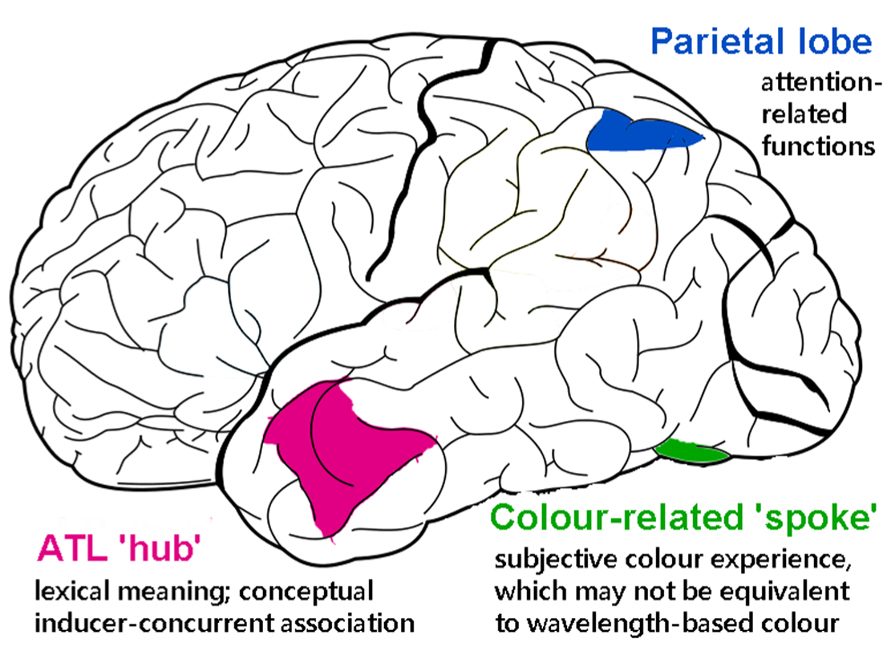
Where would the extra connections come from? Maurer and Mondloch proposed in 2005 that normal development involves the selective pruning of cross-modal connections that are more widely present at birth, and that adult cross-activation may be what incomplete pruning leaves behind. Note carefully what this claim is: a proposed developmental mechanism for the adult wiring. The stronger claim that every newborn is actively synaesthetic is a different proposition, tiered lower, and it appears further down.
The alternative is disinhibited feedback, proposed by Grossenbacher and Lovelace in 2001. On this account nothing extra is wired in. Higher cortical areas constantly send feedback signals down to lower sensory areas, that feedback is normally inhibited below the threshold of awareness, and in synaesthetes the inhibition is reduced so the signal becomes consciously expressed. Its advantage is coverage. It accounts for the variants that link brain areas nowhere near each other, such as lexical-gustatory synaesthesia, where a word produces a taste. Anatomical adjacency cannot explain that one, because there is none.
| The Model | Proposed By | The Mechanism | What It Handles Well | Where We Tier It |
|---|---|---|---|---|
| Structural cross-activation | Ramachandran and Hubbard, 2001 | Extra connections between the grapheme-recognition area of the posterior fusiform gyrus and the adjacent color area, V4 and V8, possibly left behind by incomplete developmental pruning | Grapheme-color synaesthesia, where the two regions really are neighbors. It is the model with direct fMRI and diffusion-imaging support behind it | Tier 1, with the pruning origin carried as a proposal rather than a finding |
| Disinhibited feedback | Grossenbacher and Lovelace, 2001 | No extra wiring. Ordinary top-down feedback from higher areas to lower sensory areas, normally inhibited, becomes consciously expressed because the inhibition is reduced | Variants that link anatomically distant regions, such as lexical-gustatory synaesthesia, where words trigger tastes and no adjacency exists to appeal to | Tier 2 |
The fair reading is that each model owns a different stretch of the territory, rather than that one of them is quietly winning. A single mechanism covering more than sixty variants was always an ambitious hope.
05The Inheritance
Synaesthesia runs in families. Early pedigree work by Baron-Cohen and colleagues in 1996 suggested autosomal dominant inheritance with incomplete penetrance, which is to say the pattern can be passed on and still not appear in a given family member.
Then the genome looked back. Asher and colleagues ran a genome-wide linkage study in 2009 on families with auditory-visual synaesthesia and identified suggestive loci on chromosomes 2q24, 5q33, 6p12 and 12p12. No single synaesthesia gene has been identified. The condition appears polygenic, and different forms may involve different genetic variants entirely, which sits comfortably with the picture the mechanism section leaves behind: not one thing, several.
06The Gift Question
Now the part every popular account leads with. Synaesthesia has a reputation as a gift, a hidden channel wired directly to creativity and genius, and that reputation is doing considerably more work than the evidence licenses. There is a real association here. It is Tier 2, and it does not establish what the popular version says it does.
Multiple studies report an association between synaesthesia and artistic or creative ability. The paper cited for it in the sources below is Rothen and Meier's Higher Prevalence of Synaesthesia in Art Students, from 2010, and it is worth being exact about which half of the usual sentence that paper actually carries. What it reports is a prevalence gap: grapheme-color synaesthesia at roughly 7 percent among art students against roughly 2 percent in a non-art-student control group. Our own research file additionally credits Rothen and Meier with the separate finding that synaesthetes score higher on measures of visual imagery and creativity, and with the statement that synaesthesia is over-represented among artists, musicians and writers. Those are different claims from the one the titled paper carries, we could not tie them to a specific publication in this pass, and we name the join rather than let one link stand for all of it. What none of this establishes is the direction of causality or the cognitive mechanism connecting the two, both of which our own file records as debated.
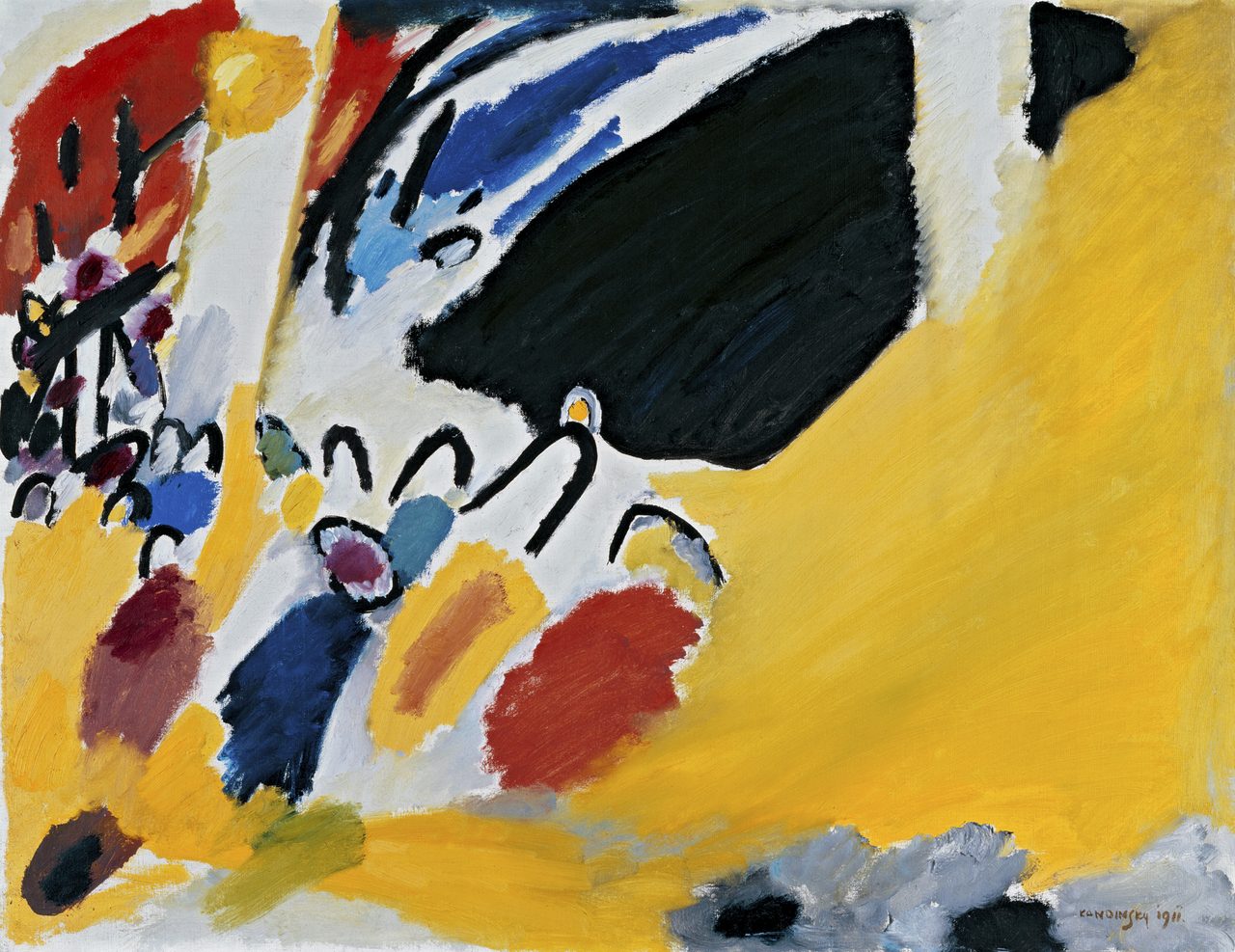
The famous names need taking apart. Our own research file lists, in a single flat sentence, the composers Liszt, Messiaen and Scriabin, the artists Kandinsky and Hockney, and the physicist Feynman. Checked individually, those six cases are nowhere near equal in evidentiary weight. Two are strongly documented in the subject's own words. One is actively contested in the scholarly literature. One rests on a secondhand anecdote. One was not independently verified in our own checking. And one is a memoir passage from a man who was never tested.
| The Name | The Claim | What It Rests On | How It Should Be Read |
|---|---|---|---|
| Messiaen | Bidirectional sound-color synaesthesia | He stated directly and repeatedly that he experienced it, and built a specific compositional method around rendering it | The strongest case on the list |
| Kandinsky | Chromesthesia, which he called color hearing | He described it in his own words, combined color, sound, touch and smell in his own theoretical writing, and painted Impression III (Concert) in January 1911, the day after attending an Arnold Schoenberg concert, explicitly as a record of what the music produced for him | Strongly documented, with a dated artifact attached to it |
| Scriabin | A color-tone system, used for the 1911 tone poem Prometheus | Contested. Galeyev and Vanechkina argued in Leonardo in 2001 that the system was more likely a deliberate theoretical and theosophical construction, influenced by Blavatsky's writing and the period fashion for color music, than a spontaneous neurological synaesthesia | Scholarly-contested, and described as one of the most durable myths in music history. Flag it or drop it, but never list it flat |
| Liszt | Asked an orchestra for a little bluer, please, gentlemen | A secondhand contemporary anecdote, with no documented first-person account and no consistency testing of any kind | An anecdote, and it should be carried as one |
| Hockney | Synaesthesia referenced in art-world commentary on his stage-design work | Not independently verified in depth in our own research pass | Unverified here, and named as unverified rather than quietly included |
| Feynman | Colored equations, in his own words | A first-person passage in his memoir Surely You're Joking, Mr. Feynman! He was never a research subject and no consistency protocol was ever run on him | A documented self-report, which is evidence of a report and not a diagnosis |
That passage is worth precisely what it is worth. It is a genuine, directly attributable, first-person description from a named individual with no reason to invent it. It is also a description, not a measurement. Feynman was never a subject in any of the studies this article cites, and nobody ever ran the retest on him. Testimony of this kind is evidence that a person reports an experience. It is not, on its own, evidence about what is happening in a brain, and the entire architecture of the consistency test exists because that gap is real.
Which brings the gift framing back to size. Nothing in the diagnostic machinery measures talent. The consistency test asks whether your colors are stable, not whether they are interesting. And notice what a 1 to 2 percent prevalence implies, as arithmetic rather than as a finding: whatever the over-representation among artists, musicians and writers, the great majority of people with grapheme-color synaesthesia are none of those things, because there are not enough of those things to go around. The association is real and repeatedly reported. Its direction is unknown. And the roll of famous names, once opened, contains two solid cases, one contested case, one anecdote, one unverified mention, and one memoir.
One more flattering story deserves the same restraint. Mirror-touch synaesthesia is the variant most often tied to empathy research, and the tie is genuinely unresolved. Some published work finds mirror-touch synaesthetes scoring higher on empathy measures, with a hypothesized relation to mirror-neuron systems in motor cortex. Other published work finds no significant relationship between mirror-touch synaesthesia and empathy at all. Our own research file names the variant and makes no empathy claim about it whatsoever, and until the literature agrees with itself, neither will we.
07The Edges of the Map
Two ideas at the edge, both interesting, both unestablished, and both labeled as such in our own file rather than by us.
The strong version of the pruning story says that all neonates are synaesthetic, living in a blooming, buzzing confusion of cross-modal activation that development gradually refines away. It is a suggestive idea and it fits neatly onto the mechanism above. It is also very difficult to test directly, because the subjects cannot yet tell you anything, and that is exactly why it sits at Tier 3 while the pruning mechanism it extends sits at Tier 1. Fit is not evidence.
Psychedelic drugs, including LSD, psilocybin and mescaline, commonly produce temporary synaesthetic experiences: hearing colors, seeing sounds. The proposed connection is disinhibition, with serotonin 2A receptor activation reducing cortical inhibition in something like the way the disinhibited-feedback model describes for developmental synaesthesia. Whether the drug-induced and the developmental forms actually share identical neural mechanisms is unconfirmed by our own file's account, and the resemblance between two descriptions is not evidence that one process underlies both.
08What It Is Not
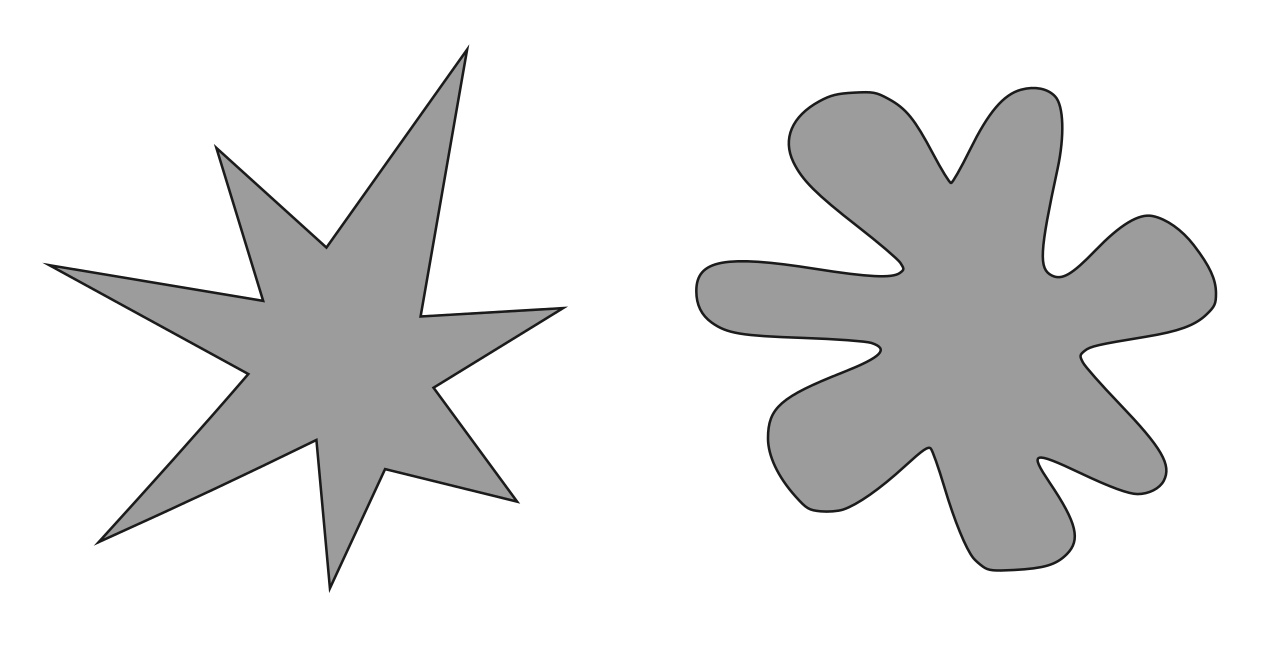
The claim that everyone is secretly synaesthetic is overstated, and it is overstated in an interesting way, because the thing it points at is real. Cross-modal correspondences do exist across the general population. High pitch associates with bright and with small. The bouba/kiki effect, in which invented words are consistently matched to particular shapes, is robust. But these are statistical tendencies in judgment, not the involuntary, percept-like, temporally consistent experiences that define synaesthesia. The difference is the whole content of the machinery this article opened with: a tendency is not a percept, and a preference tested once is not a pairing that survives a decade.
09What It Does and Does Not Show
Finally, what our own research file says synaesthesia means, and how far each of those framings can honestly be pushed.
The file's framing is that synaesthesia matters to consciousness studies because it demonstrates that subjective conscious experience, qualia, can differ dramatically between individuals perceiving the same physical stimulus: the word Tuesday triggering a specific shade of blue for one person and no color at all for another. That framing is worth examining rather than swallowing. What synaesthesia establishes, uncontested, is that different people have measurably different, consistent, involuntary cross-modal perceptual responses to the same stimulus. Whether that difference amounts to proof that qualia differ, in the loaded philosophical sense of that word, is a further step, and it is not a step this file argues for. It belongs to the qualia debate proper, where the terms are fought over rather than assumed, and that debate has its own article in this wing, Qualia: The Redness of Red and the Limits of Science, which carries the fight between realism and illusionism in full. We point there rather than re-run it here.
The second framing is that synaesthesia is a natural experiment in cross-modal binding, a case of the brain's normal integration process reaching features it usually keeps apart. That is our file's own description and it is a fair one, but it is worth being exact about what stands behind it. Our companion research file on the binding problem, K_2_08, defines cross-modal binding generally, as the integration of information across the senses, with the McGurk effect and the rubber-hand illusion as its standard examples, and it does not mention synaesthesia once: a full-text search of that document returns zero matches for the word. That is a fact about our own shelf and not a survey of the wider literature, which we have not made here. The bridge between the two files is a reasonable inference, and it is ours, not a finding imported from somewhere stronger.
Fast Facts
- The Diagnostic
- Test-retest consistency over time: above 90 percent for synaesthetes with years between sittings, against roughly 30 to 40 percent for controls who memorized pairings only weeks earlier
- The First Record
- Francis Galton, 1881, Visualised Numerals: published diagrams of his subjects' fixed mental number forms
- The Number of Types
- Over 60 documented, and in principle any pairing of sensory or cognitive dimensions
- The Most Studied Variant
- Grapheme-color synaesthesia, at an estimated 1 to 2 percent of people
- The Composite Figure
- At least about 4.4 percent for synaesthesia of any type, assembled from several variants as a lower bound, not measured in one pass
- The Leading Mechanism
- Cross-activation between the grapheme area and the adjacent color area V4, supported by fMRI and diffusion tensor imaging
- The Rival Mechanism
- Disinhibited feedback, which covers the distant pairings like words triggering tastes that adjacency cannot reach
- The Genetics
- Familial and apparently polygenic. Suggestive linkage on chromosomes 2q24, 5q33, 6p12 and 12p12, and no single synaesthesia gene
- The Strongest Named Cases
- Messiaen and Kandinsky, both documented in their own words. Scriabin is scholarly-contested and Liszt rests on a secondhand anecdote
- The Myth
- That everyone is secretly synaesthetic. The bouba/kiki effect is real and is a different phenomenon
What We Can Actually Stand Behind
Synaesthesia is real, and the reason we know is not testimony. It is involuntary, automatic, percept-like and usually unidirectional, and a synaesthete's pairings hold above 90 percent consistency in retests separated by years, against roughly 30 to 40 percent for controls who memorized theirs weeks earlier. Over 60 types are documented. The cross-activation mechanism has both functional and structural imaging behind it. One caution belongs in this same box: there is no single trustworthy headline prevalence number. About 1 to 2 percent is the figure for grapheme-color synaesthesia specifically, and the widely quoted 4.4 percent is a composite lower bound across many variants rather than a measurement.
The mechanism is not settled. Cross-activation and disinhibited feedback each explain a different part of the range, and our file crowns neither. The genetics are familial and apparently polygenic, with suggestive loci and no identified gene. The creativity association is repeatedly reported and its causal direction is unknown. The mirror-touch and empathy link has published findings pointing in both directions. And of the six famous synaesthetes named in one flat list in our own file, only two hold up as strongly documented cases.
That all neonates are synaesthetic is a suggestive extension of a solid pruning mechanism, and it is close to untestable in pre-verbal infants. That drug-induced synaesthesia shares identical neural mechanisms with the developmental kind is plausible, proposed by way of serotonin 2A disinhibition, and unconfirmed. Both are worth thinking with. Neither is worth banking.
No, synaesthesia is not imagination, metaphor, or a learned association. Consistency testing, Stroop-type interference and neuroimaging all contradict that dismissal, and it should be retired rather than repeated. And no, everyone is not secretly synaesthetic. Cross-modal correspondences such as bouba/kiki are genuinely present in the general population and are a different thing: a statistical tendency in judgment, not an involuntary percept that survives a decade of retesting.
What makes synaesthesia worth a file is not the strangeness. It is that a private, unverifiable, first-person report was dragged into the range of measurement without anyone ever having to look inside another head. Ask again in a year is a small, unglamorous instrument, and it settled in one stroke a question that a century of listening to descriptions could not. But look carefully at what it settled and what it left alone. We can now show that one person's letter A is reliably, involuntarily, lifelong red. We still cannot say one word about what that red is like for them, and the very instrument that proved the pairing exists is silent about the experience it points to. Which leaves the question the synaesthete has been putting to the rest of us from the other side all along: how would you ever know whether your red and mine are the same?
Sources & further reading
Everything above is drawn from our research library on Theories of Anything. Open the full file to check the sourcing and go deeper.
Image credits
- A synaesthete's number form Cytowic and cheloVechek, via Wikimedia Commons. CC BY-SA 3.0 Source.
- A synaesthete's days of the week Kelley, via Wikimedia Commons. CC BY 2.0 Source.
- Proposed regions for grapheme-colour synaesthesia Chiou R and Rich AN, via Wikimedia Commons. CC BY 3.0 Source.
- Kandinsky, Impression III (Concert), 1911 Wassily Kandinsky, via Wikimedia Commons. Public domain Source.
- The bouba and kiki shapes Bendž and Qef, via Wikimedia Commons. CC BY-SA 3.0 Source.
- Card crop of A synaesthete's number form Cytowic and cheloVechek, via Wikimedia Commons. CC BY-SA 3.0 Source.


_-_GMS_78_-_Lenbachhaus.jpg)
