
Sleep and Dreams: The Nightly Voyage Out of Waking
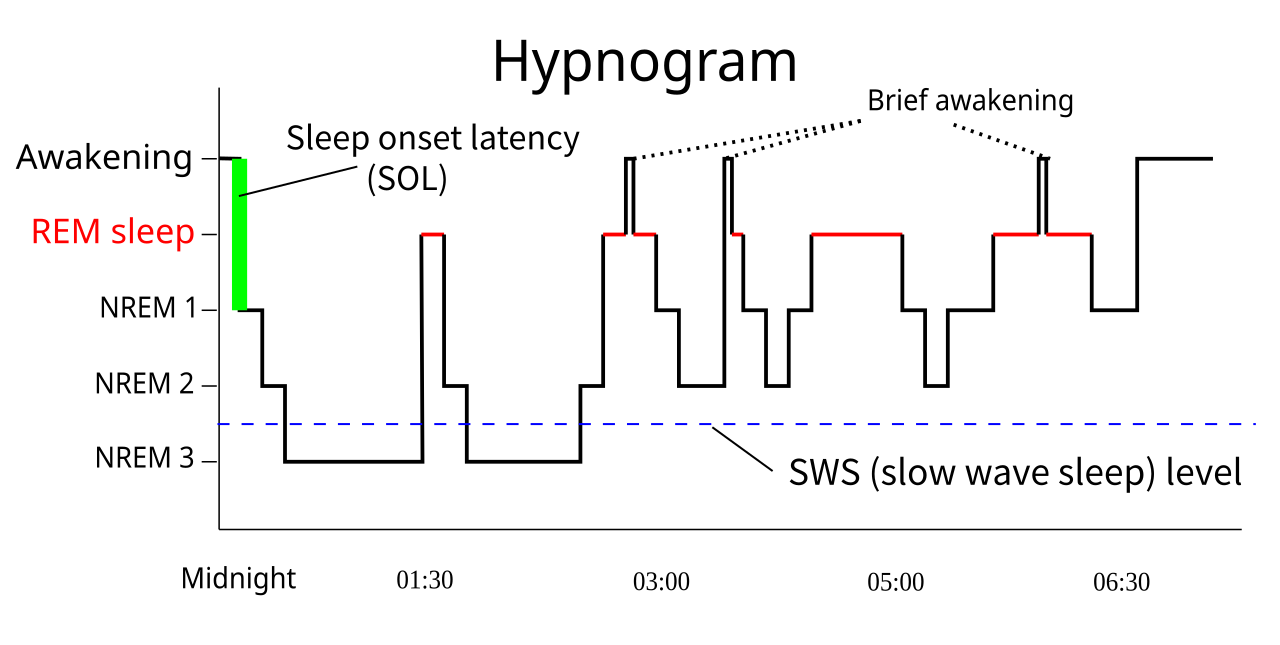
The familiar figure is that sleep takes close to a third of a human life, which is arithmetic rather than a measurement, and the thing itself was not formally mapped until 1953, when Eugene Aserinsky and Nathaniel Kleitman published the first description of rapid eye movement sleep. What came out of that mapping deserves to be read precisely. The famous stage diagram is a set of scoring conventions applied to recorded signals, and those conventions have been rewritten. REM is not the dreaming stage. And almost everything known about what dreams contain is known from what people said after they woke up. Here is the architecture of a night, and here is where the evidence stops.
Every night you stop responding to the world for hours at a time, and the arrangement is so ordinary that it takes an effort to notice how strange it is. The formal science of it is young. Sleep was not mapped from the inside until the middle of the twentieth century, and the diagram most people carry from that mapping, the one with the labeled stages stacked up the side of a chart, is routinely read as a fact about brains when it is in large part a fact about scoring. This article carries two things: what a night of sleep is actually made of, and what is and is not known about the dreaming that happens inside it. The first is measured well. The second is where the popular story runs a long way out ahead of the evidence.
01The Night Nobody Had Measured
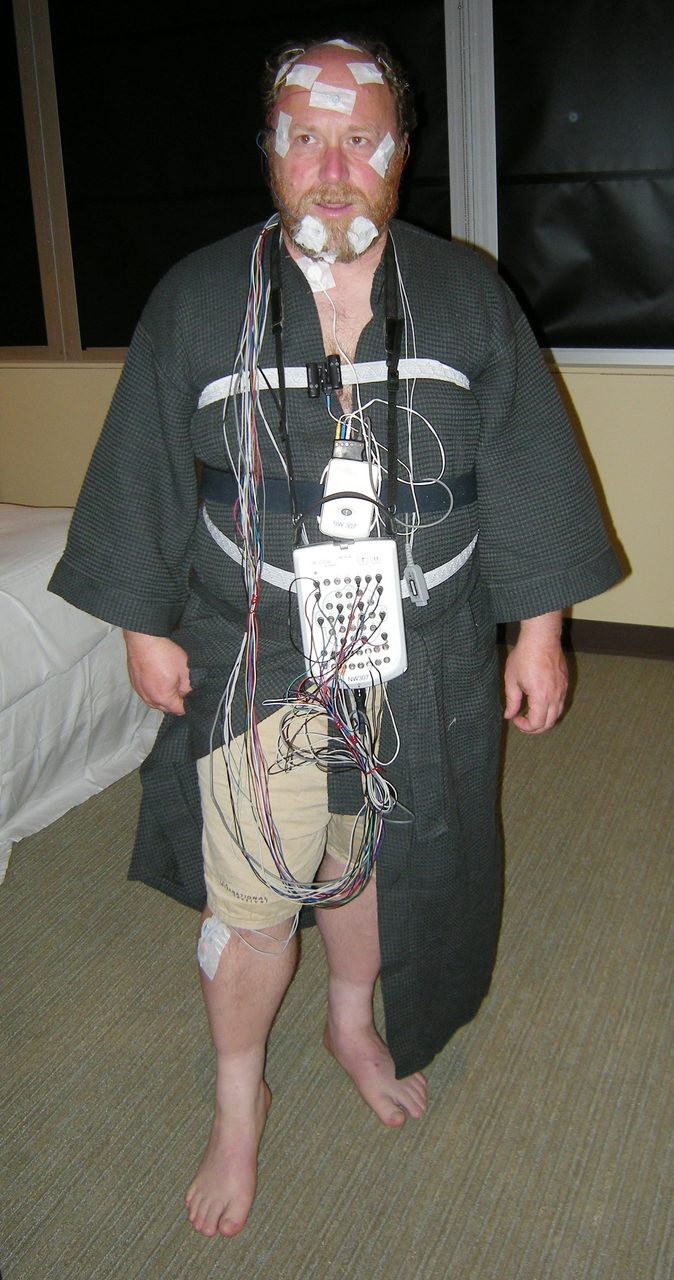
On September 4, 1953, Eugene Aserinsky and Nathaniel Kleitman published a paper in Science titled 'Regularly Occurring Periods of Eye Motility, and Concomitant Phenomena, During Sleep.' Working from EEG and EOG recordings of infant and adult subjects, they described intervals in which a sleeper's eyes moved rapidly beneath closed lids, documented that those intervals recurred cyclically through the night, and reported their association with dreaming. The finding that matters is not the eye movement itself. It is that sleep turned out to have an internal structure, running on a schedule, that an instrument could see from the outside.
The figure everyone reaches for is that sleep takes about a third of a life. Our own research file states it as approximately one-third of human life, roughly 26 years against an average lifespan of 79 years, and it is worth being exact about what kind of figure that is. It is arithmetic, not measurement: 8 hours in every 24, held flat across an entire lifespan, multiplied out. No study followed anybody for 79 years counting hours. Real sleep duration moves with age, culture and era. Infants sleep far more than a third of the day, and many adults report averaging well below the 8 hours the sum assumes. Read the one-third figure as a clean illustration of scale, which is what it is, and not as a result.
02A Stage Is A Scoring Rule, Not A Place
This is the correction that does the most work for a general reader, and it costs nothing to absorb. The stages of sleep are not rooms the brain walks between and announces on arrival. They are categories that a human scorer, or a scoring algorithm, assigns to a recording after the fact, according to rules written down in a manual.
The rules are written down, and they have been rewritten. From 1968 the standard was the Rechtschaffen and Kales manual, which cut sleep into five stages: NREM stages 1, 2, 3 and 4, plus REM. In 2007 the American Academy of Sleep Medicine published a revised scoring manual that reduced those five to four. Stage 1 became N1. Stage 2 became N2. Stages 3 and 4 were merged into a single stage, N3. REM became R. The AASM system is the standard used in clinical and research polysomnography today, which is why modern charts show four stages and older ones show five. Nothing about anybody's brain changed in 2007. What changed was the rule for cutting a continuous set of signals into named pieces, and two stages that had been counted separately under the older manual stopped being counted separately.
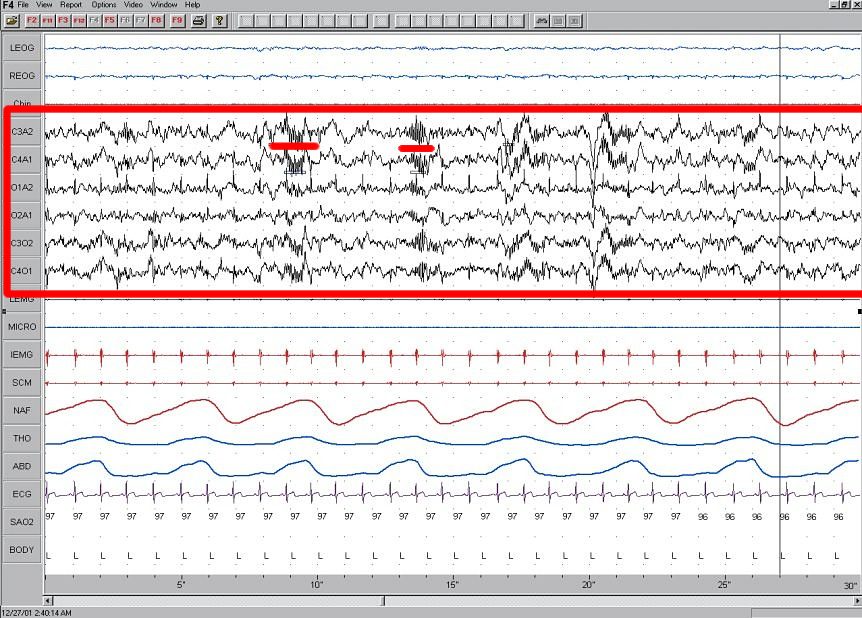
What the scorer is reading is a small set of recorded signals: chiefly the EEG trace of cortical electrical activity and the EOG record of eye movement, with muscle tone entering the definition of REM. Each stage has a signature. N1 is light sleep, carrying theta waves at 4 to 7 Hz. N2 carries sleep spindles, thalamocortical bursts at 12 to 14 Hz, together with K-complexes, and it takes the largest share of total sleep time. N3 is slow-wave sleep, delta oscillations from 0.5 to 4 Hz, and the highest-amplitude EEG activity of any state, asleep or awake. REM shows rapid eye movements, near-total skeletal muscle atonia, and a desynchronized low-amplitude EEG that looks remarkably like wakefulness. A full night typically runs through 4 to 6 of these ultradian cycles at roughly 90 minutes each, with slow-wave sleep concentrated in the first third of the night and REM periods lengthening toward morning.
| Stage (AASM, 2007) | Former Name (Rechtschaffen and Kales, 1968) | The Signal Signature | Where It Falls In The Night | Where We Tier It |
|---|---|---|---|---|
| N1 | Stage 1 | Light sleep, with theta waves at 4 to 7 Hz | The way in, at the edge of waking | Tier 1 |
| N2 | Stage 2 | Sleep spindles, thalamocortical bursts at 12 to 14 Hz, plus K-complexes | The largest share of total sleep time | Tier 1 |
| N3 | Stages 3 and 4, merged into one in 2007 | Slow-wave sleep: delta oscillations from 0.5 to 4 Hz, the highest-amplitude EEG activity of any state, asleep or awake | Concentrated in the first third of the night | Tier 1 |
| R | REM | Rapid eye movements, near-total skeletal muscle atonia, and a desynchronized low-amplitude EEG resembling wakefulness | Periods lengthen toward morning | Tier 1 |
The consequence is worth stating plainly, because the diagram invites the opposite reading. A hypnogram is a picture of how a night was scored. It is a true picture, built from real signals by a documented procedure, and it is still a picture of a convention laid over a continuous process. Stages are how sleep is measured. They are not what sleep announces.
03What Puts You Under
Alexander Borbely formalized the modern account in 1982: sleep is driven by the interaction of two processes. Process S is homeostatic, the pressure that builds the longer you stay awake and discharges while you sleep. Process C is circadian, an internal oscillation that pushes for sleep and for waking at particular points in the day whatever your recent history. The framework has held up through decades of sleep deprivation studies, through forced desynchrony protocols, and through the molecular identification of adenosine accumulation as the biochemical substrate of Process S. Two clocks, one of them counting how long you have been up and the other counting the day.
One boundary is worth marking here, because two states look alike from outside and are not alike underneath. Sleep and general anesthesia are both reversible conditions in which a person stops responding, and there the resemblance ends. Sleep is endogenous and cyclical, governed by that two-process interaction: homeostatic pressure mediated by adenosine, working against a circadian oscillation of approximately 24.2 hours driven by the suprachiasmatic nucleus. General anesthesia is drug-induced, acts on specific molecular targets including GABA-A and NMDA receptors, and works by disrupting long-range cortical connectivity and thalamocortical information transfer. It has no ultradian cycling, no alternation of REM and NREM, and no relationship to time of day or to how long you have been awake. The mechanism of anesthesia has its own article elsewhere in this library. The point here is only that being put under is not being put to sleep.
04The Work Of The Night
Something is being done up there. Three of the best candidates for what have very different evidential profiles, and lining them up beside each other is the quickest way to see where this science is firm and where it is still arguing.
Xie and colleagues demonstrated in Science in 2013 that the interstitial space in the mouse brain expands by approximately 60 percent during sleep, or under anesthesia, and that this expansion facilitates a cerebrospinal-fluid-driven clearance of metabolic waste, including amyloid-beta. This is the glymphatic system model, developed by Nedergaard's group, and it has since been confirmed in human subjects through MRI-based techniques. The brain appears to open its own drainage while the person using it is offline.
The glymphatic picture is not closed. The open question is how much of the transport is convective bulk flow and how much is ordinary diffusion, and whether what holds in a mouse brain holds in a much larger human one. Hladky and Barrand argued in 2014, in Fluids and Barriers of the CNS, that the evidence for bulk flow in human brains, as against mouse brains, remains inconclusive. That the brain clears waste during sleep is well supported. The specific hydraulics of how it does so in a human skull are still argued over.
Staresina and colleagues used intracranial recordings in epilepsy patients, published in Nature Neuroscience in 2015, to demonstrate a temporal coupling between three rhythms: neocortical slow oscillations, thalamic sleep spindles, and hippocampal sharp-wave ripples. The three nest hierarchically inside one another. This triple coupling is the strongest mechanistic support for the active systems consolidation model, in which memory is transferred during sleep. Note carefully what is solid here and what is not. The coupling is measured directly, in human brains, with electrodes in them. Exactly how that coupling carries any particular memory from one place to another is a further claim, and a less settled one.
Tononi and Cirelli proposed, in 2003 and again in 2006, that net synaptic strength increases across waking and decreases during slow-wave sleep, so that one function of deep sleep is renormalization: turning the gain back down before it saturates. The supporting evidence is varied and real. Molecular markers such as Homer1a and Arc track the predicted pattern, electrophysiological recordings show reduced synaptic responses after sleep, and de Vivo and colleagues reported in Science in 2017 that electron microscopy finds smaller synaptic interfaces after sleep than before it. The objection is equally real: Marcos Frank argued in 2012 that sleep also involves synaptic potentiation, not downscaling alone. Synaptic homeostasis is a leading account of what slow-wave sleep is for. It is not the settled answer to that question.
05REM Is Not The Dreaming Stage
If you take one correction away from this article, take this one. Equating REM sleep with dreaming is the most common error in the popular understanding of sleep, and the field itself has been correcting it.
Siclari and colleagues reported in 2017 that dreaming during NREM sleep is associated with local decreases in low-frequency EEG activity in a posterior region of cortex, a 'hot zone.' That result cuts directly against the older REM-centric view. What it supports instead is that dreaming is a graded phenomenon occurring across sleep stages, with REM dreams being more vivid and more narrative, but not qualitatively unique. REM is a stage of sleep. Dreaming is something the brain does in more than one of them, and the two are not the same category of thing.
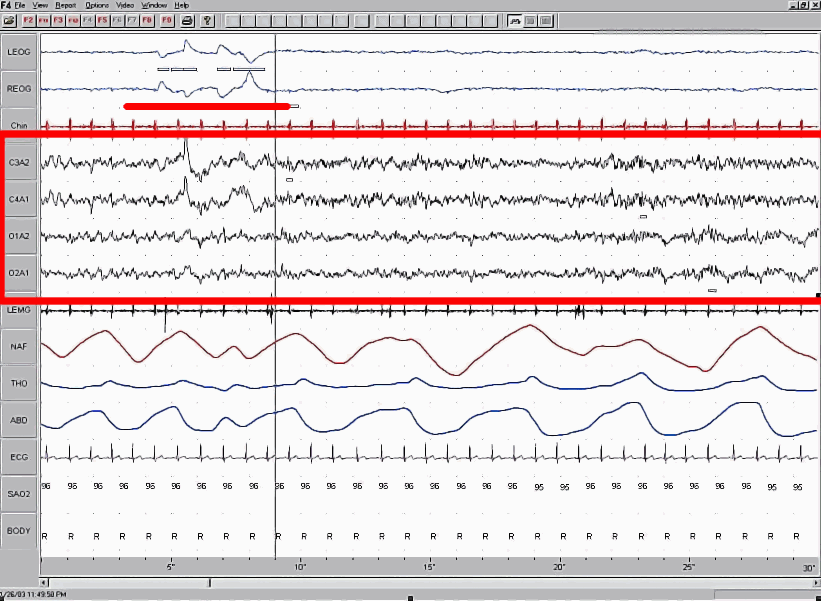
Here is the supporting statistic, which should be read as support and not as a contradiction of what was just said. Approximately 80 percent of awakenings from REM sleep produce a dream report, and approximately 20 to 50 percent of awakenings from NREM sleep also produce one. The NREM reports tend to be shorter, less vivid and more thought-like. REM reports are characterized by visual imagery, emotional intensity, especially fear, anxiety and anger, narrative structure, incorporation of recent waking experience, and rapid forgetting on waking. The right reading of those percentages is a difference of degree. A fifth to a half of NREM awakenings yielding a dream report is not the profile of a stage in which dreaming does not happen.
06Everything Known About Dream Content Is A Report
There is a structural limit sitting under every sentence ever written about what dreams contain, and it is not a limit that better instruments will lift. It is worth naming once, clearly, because after that it colors everything that follows.
Every figure in the paragraph above, and in every study of dream content anywhere, comes from the same procedure: wake a sleeping person and ask what was going through their mind. The datum is the report. The report is a memory of an experience, produced by a brain that has just changed state, and the same research notes rapid forgetting on waking as a defining feature of the material being recalled. This is not a reason to dismiss the work, which is careful and has produced real, replicated numbers. It is a reason to keep the word 'reported' in the sentence. When a study says that dreams contain some proportion of a category of content, what has been measured is the proportion in what people said.
What can be measured without a report is the brain state underneath. PET and fMRI studies of REM sleep show high activation in the pontine brainstem, the thalamus, the visual association cortex, the amygdala, the hippocampus and the anterior cingulate cortex, together with low activation in the dorsolateral prefrontal cortex, the region most associated with executive control, working memory and reality-monitoring. Maquet and colleagues confirmed that pattern with PET imaging in work published in 1996 and 2000. It is a good explanation of two familiar features of dreaming: dreamers accept bizarre content uncritically, with the DLPFC offline, and dreams run emotionally hot, with limbic structures including the amygdala hyperactivated. The pattern also overlaps substantially with the default mode network. Note the shape of that explanation. It accounts for the character of dreaming. It does not read the dream.
One small case shows how much that report layer matters. The belief that people once dreamed in black and white and now dream in color is not a finding about dreams. Most people dream in color, confirmed by laboratory dream reports, though some do report grayscale dreams. The black-and-white claim appears to track the era of black-and-white television and film, which makes it a cultural influence on how dreams were reported rather than a change in what was dreamt. The reporting channel has a history of its own, and that history can be mistaken for the phenomenon.
One state deserves a pointer rather than a chapter. Lucid dreaming, becoming aware during a dream that you are dreaming, has been verified in the sleep laboratory, and it is a real exception to the rule that a dreamer cannot signal from inside the dream. What is verified there is the state, not the content: the account of what the dream contained still arrives after waking, so the standing limit named above holds. It has its own article elsewhere in this library, and the history, the neuroimaging and the induction literature belong there rather than here.
07What Dreaming Is For, And Why Nobody Has Won
Here the article has to slow down, because this is the part the popular account gets most confidently wrong. There is no established function of dreaming. There are rival accounts, each with genuine support and a genuine problem, and the honest thing is to lay them out side by side at their real weight and crown none of them.
Hobson and McCarley proposed the activation-synthesis hypothesis in 1977: dreams are generated when the cortex attempts to interpret what Hobson and McCarley described as random neural signals arriving from the brainstem, particularly the pontine reticular formation, during REM sleep. The dream, on this reading, is the narrative gloss the cortex puts on activity it did not itself originate. Hobson later revised the idea into the AIM model, organized around activation, input source and modulation. The criticism the source literature itself carries is aimed at one word. Describing the incoming activation as random is overstated, because dream content is not random: it shows consistent patterns reflecting waking concerns, emotional preoccupations, and memory processes.
Revonsuo proposed in 2000 that dreams evolved as an offline threat simulation system, rehearsing responses to threatening situations in a safe virtual environment. The evidence offered is that threatening events are overrepresented in dream content relative to waking life, across published cross-cultural findings on being chased, attacked, falling, and social threat. The criticism the source literature carries is direct and hard to wave away: not all dreams are threatening, and the theory has difficulty accounting for mundane, positive, or creative dreams. Note also what the supporting evidence is made of. It is content data, which means it is report data, with the limit named in the previous section attached to it.
The third account is that dreaming plays a role in memory consolidation and integration. Specific dream content correlates with recently learned material, and hippocampal replay of waking experience during sleep is well documented. Walker and Stickgold argued in 2004 that sleep benefits memory consolidation, and that REM sleep may particularly benefit emotional memory consolidation and creative problem-solving. The gap in this account is precise and should not be papered over: the relationship between neural replay and conscious dream content is unclear. That sleep consolidates memory is well supported, and that is a claim about sleep. That dreaming does the consolidating is a further claim about experience, and it is the part that is not established.
A near relative of that third account gets far more airtime than its evidence supports. Anecdotal reports of scientific discoveries arriving in dreams, Kekule's benzene ring in 1865 and Mendeleev's arrangement of the periodic table in 1869, are offered as evidence of a problem-solving function. Stickgold has provided experimental evidence, published in 2005 and 2009, that sleep facilitates insight and creative restructuring on memory tasks. That is a real finding about sleep. Whether dreaming specifically, as against sleep-stage physiology, is what drives it remains unclear. And the two famous stories are anecdotes, which is a description of their evidential class, not an insult to them.
Two more positions belong on the table. Domhoff's neurocognitive theory of dreaming is named by our secondary source document as a live fourth position, though without a tier of its own there, so it is named here and not developed. And there is the null answer, which deserves stating because it is a real possibility rather than a rhetorical one: dreaming may have no adaptive function at all, and may simply be what a sufficiently complex cortex produces when it is running, offline, without external input. Neither source document names that position as its own claim, so it carries no tier here either. It is on the table because a contest with several entrants and no null option is not an honest contest.
| The Account | Proposed By | The Claim | The Standing Objection | Where We Tier It |
|---|---|---|---|---|
| Activation-synthesis | Hobson and McCarley, 1977, later revised as the AIM model | The cortex builds a narrative out of what Hobson and McCarley called random signals arriving from the brainstem during REM sleep | Calling the incoming activation random is overstated. Dream content shows consistent patterns tied to waking concerns, emotions and memory | Tier 2 |
| Threat simulation | Revonsuo, 2000 | Dreaming evolved as an offline rehearsal system for threatening situations, run in a safe virtual environment | Not all dreams are threatening, and mundane, positive and creative dreams are hard to fit into the account | Tier 2 |
| Memory consolidation and integration | Walker and Stickgold, 2004, among others | Dreaming participates in consolidating and integrating memory, with REM sleep possibly favoring emotional memory | The link between documented neural replay and conscious dream content is unclear. Sleep consolidating memory is not the same claim as dreaming doing it | Tier 2 |
| The neurocognitive account | Domhoff | Named by our secondary source document as a live position on what dreaming is | Not separately tiered in that document, and deliberately not developed here | Named, not tiered |
| No function at all | Not attributed as its own position by either source document | Dreaming may be a by-product: what an offline but active cortex produces, with no adaptive job to do | No positive evidence is offered for it either. It is the position the other accounts have to beat, not a finding | Carries no tier here |
08What The Evidence Refuses
The Freudian account, that dreams are disguised wish-fulfillments expressing unconscious desires, remains influential in psychoanalytic circles and lacks empirical validation. The part of it that survives is modest and real: some dream content clearly reflects emotional concerns. The specific machinery Freud proposed, the symbolism and the disguise, is not supported.
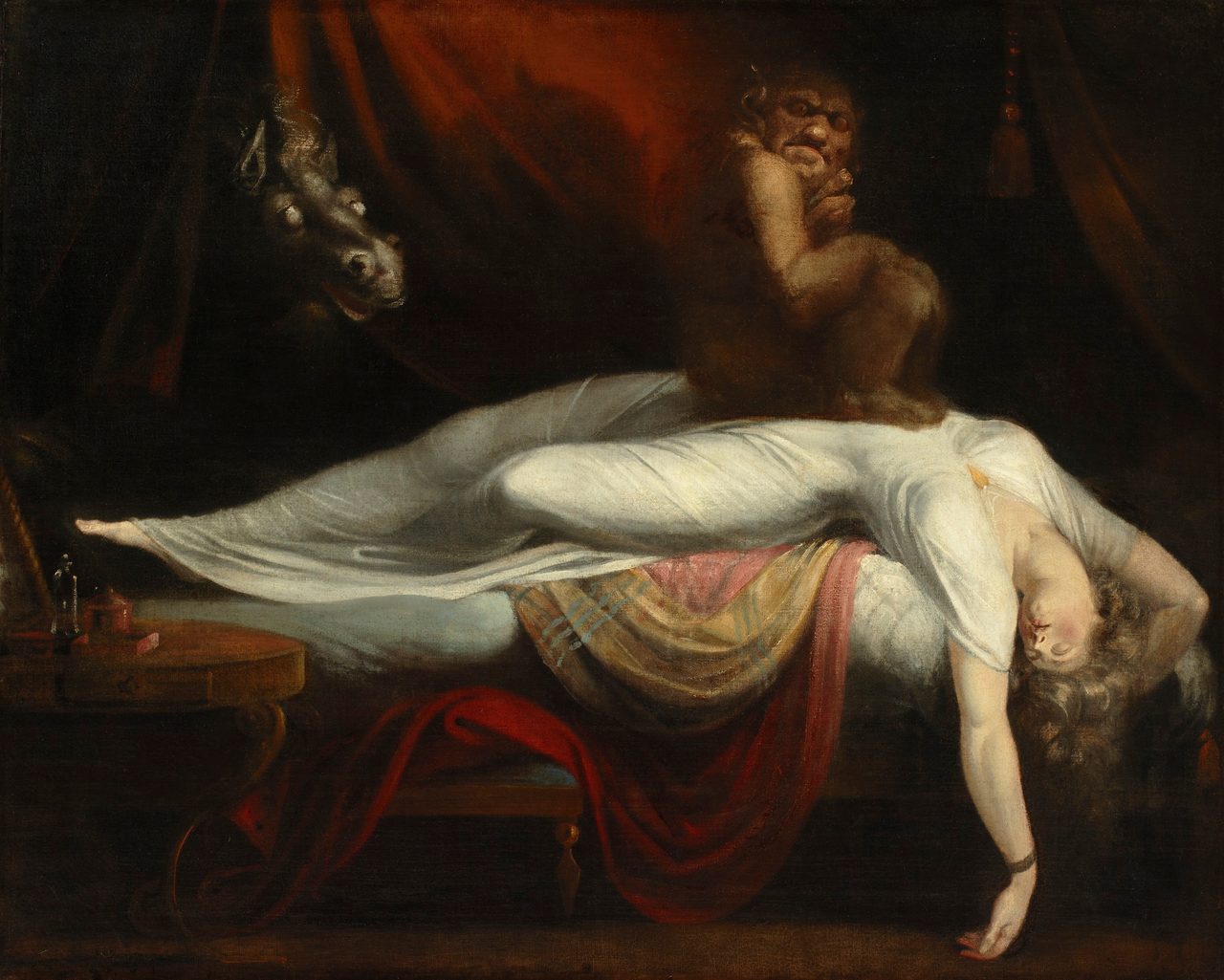
Pre-modern interpretive frameworks read dreams as prophetic messages from gods or spirits. Modern neuroscience identifies them instead as products of endogenous brain activity, with content shaped by recent experience. Freud named that in 1900 as day residue, and our research file states that approximately 65 percent of dream content incorporates fragments from the prior one to seven days. One caution on that figure, offered because this article would rather be exact than tidy: the file does not name the specific modern studies behind it, and it was not traced to a single named source when this article was researched. Take it as the file's own stated number, consistent with a well-established day-residue literature, rather than as a figure independently re-verified here.
Anecdotal reports of dreams predicting future events are common across cultures and have no controlled empirical support. The standard explanation is coincidence, selective memory, and the sheer number of dreams a person has across a lifetime. That explanation has not itself been proven in a controlled setting, which is why this sits where it does rather than being called closed. What can be said is that nothing in the controlled literature supports the alternative.
The overstatement runs in the other direction too, and it is the one an enthusiastic reader of activation-synthesis is most likely to make: that dreams are meaningless noise. They are not. Dream content is not random. It shows systematic relationships to waking concerns, emotional state, and recent experience. Dreams have structured content even where their generation involves bottom-up noise. A brain assembling a story partly out of noisy input still produces a story that is about something.
09How Much Sleep, And What Happens Without It
This is the part of the subject most contaminated by confident public messaging, and it runs off the rails in both directions at once. Three distinct claims routinely get blended into one story, and they are not the same kind of claim at all.
The population guideline is real, named and recent. Watson, Badr, Belenky and colleagues published a joint consensus statement of the American Academy of Sleep Medicine and the Sleep Research Society in 2015, in the Journal of Clinical Sleep Medicine. A panel of 15 experts reviewed over 5,300 scientific articles and concluded that adults should sleep 7 or more hours per night on a regular basis to promote optimal health, and that regularly sleeping less than that is associated with adverse health outcomes. Note the figure the consensus actually supports: seven or more, not a fixed eight. The popular round number is not what the panel wrote.
The laboratory dose-response finding is a different kind of claim, and a bounded one. Van Dongen and colleagues published in Sleep in 2003 that restricting sleep to 6 hours a night for 14 nights produced cognitive deficits equivalent to approximately 48 hours of total sleep deprivation, and that subjects were often unaware of their own impairment, which is the sleep-debt phenomenon in one sentence. Matthew Walker's 2017 book Why We Sleep carried that class of finding to a general audience. Read the study at its own size: a specific restriction schedule, in one cohort, against a defined outcome measure. It is real, replicated work on a dose-response relationship. It is not a statement that everybody needs exactly eight hours.
The famous extreme case is the third kind of claim, and the one that needs the most care. Randy Gardner, a 17-year-old high school student in San Diego, stayed awake for 264 hours, 11 days, from January 28 to February 8, 1964, as a science-fair project. It was monitored by Stanford sleep researchers, including William Dement, and by a US Navy physician. Cognitive decline, mood swings and hallucinations appeared well before the end. He recovered after roughly 15 hours of sleep with no documented lasting damage. The record was broken repeatedly afterward, until Guinness World Records stopped accepting sleep-deprivation attempts in 1997 for safety reasons. What this case is: one closely monitored subject. What it is not: a controlled study, or evidence about what anybody else can safely do.
The short-sleeper claim, that some people simply need very little sleep, is the rare piece of folk wisdom with a real genetic basis that still does not mean what it is usually used to mean. A mutation in the DEC2 gene, also called BHLHE41, identified by He, Jones, Fujiki and colleagues and published in Science in 2009, does produce genuine short sleepers. It affects fewer than approximately 1 percent of the population. For the vast majority of people, chronic sleep restriction below 7 hours produces measurable cognitive and health deficits. The variant is real, and the Tier 4 badge on this block grades the folk inference rather than the 2009 finding. The odds that any particular person who says they get by on very little is carrying that variant are small.
One more thing belongs in this section, because leaving it out would be exactly the sort of tidiness this article is against. Some of Matthew Walker's claims in Why We Sleep have been challenged, by Alexey Guzey in a 2019 piece and by others, for overstating effect sizes and citing the literature selectively. Walker has acknowledged some corrections while maintaining his core arguments about the risks of sleep deprivation. The underlying science of sleep deprivation is not overturned by that exchange. The popular presentation of it was, in places, sharper than the evidence, and that is worth knowing whenever you meet a confident sleep statistic out in the world.
| The Claim | Where It Comes From | What Kind Of Evidence It Is | What It Does And Does Not License | Where We Tier It |
|---|---|---|---|---|
| Adults should sleep 7 or more hours a night | Watson and colleagues, 2015, the joint consensus statement of the American Academy of Sleep Medicine and the Sleep Research Society | A 15-expert panel review of over 5,300 published scientific articles | A population-level guideline. It does not fix any individual's exact requirement, and it is not the popular eight-hour figure | Tier 1 |
| 6 hours a night for 14 nights produces deficits equivalent to about 48 hours awake | Van Dongen and colleagues, Sleep, 2003 | A controlled laboratory dose-response study in one cohort | A real dose-response relationship, plus the finding that subjects underestimate their own impairment. It does not generalize into a universal nightly requirement | Tier 2 |
| A person stayed awake 264 hours and recovered | Randy Gardner, 1964, monitored by Stanford researchers and a US Navy physician | A single closely observed case, not a study | That the case happened and was documented. It licenses nothing about what any other person can safely attempt | Tier 1, and a single case |
Fast Facts
- The First Map
- Aserinsky and Kleitman, Science, September 4, 1953: the first description of REM sleep, from EEG and EOG recordings
- The Current Scoring System
- The AASM manual of 2007: N1, N2, N3 and R, replacing the five-stage Rechtschaffen and Kales scheme of 1968 by merging stages 3 and 4
- A Night's Shape
- Typically 4 to 6 ultradian cycles of roughly 90 minutes, with slow-wave sleep concentrated early and REM periods lengthening toward morning
- The Deepest Signal
- N3 slow-wave sleep: delta oscillations from 0.5 to 4 Hz, the highest-amplitude EEG activity of any state, asleep or awake
- What Drives It
- Borbely's two-process model of 1982: homeostatic Process S, with adenosine as its substrate, working against circadian Process C
- The Correction That Matters Most
- REM is not the dreaming stage. Dreaming is graded across sleep stages, per Siclari and colleagues in 2017
- Dream Recall
- Approximately 80 percent of REM awakenings and approximately 20 to 50 percent of NREM awakenings produce a dream report
- The Dreaming Brain
- High limbic and visual-association activation with the dorsolateral prefrontal cortex quiet, per Maquet and colleagues in 1996 and 2000
- The Function Of Dreaming
- Unsettled. Activation-synthesis, threat simulation and memory consolidation are rivals at Tier 2, with a no-function null position left open
- The Real Sleep Guideline
- 7 or more hours a night for adults, from the 2015 consensus statement, and not a fixed eight
- The Standing Limit
- All dream-content data are reports given after waking, never observations of a dream
What We Can Actually Stand Behind
The architecture of sleep is real, measured, and not in dispute. REM sleep was described in 1953 and the cyclical structure of a night has been confirmed ever since. Sleep is driven by the interaction of a homeostatic and a circadian process, with adenosine identified as the substrate of the first. Deep sleep is accompanied by measurable clearance of metabolic waste from the brain, and by a precise hierarchical nesting of slow oscillations, spindles and hippocampal ripples that is the strongest mechanistic support for the active systems consolidation model of memory transfer. The nesting is the part that is measured. The model it supports is the part still being argued. Dream reports come from both REM and NREM awakenings. All of that is solid ground, and it is a great deal of ground.
The interpretations sitting on top of that architecture are live science, not settled science. Whether slow-wave sleep exists in order to renormalize synaptic strength is a leading account with a serious published objection attached to it. How much glymphatic transport in a human brain is bulk flow rather than diffusion is genuinely open. And the function of dreaming has three named rivals, activation-synthesis, threat simulation and memory consolidation, each with real support and a real problem, alongside a fourth position named without a tier and a null option with no positive evidence for it either. This article crowns none of them, because the literature has not.
The romantic readings are not established. That dreaming specifically solves problems, as against sleep improving insight, is not shown, and the famous discovery stories are anecdotes. Freud's disguised wish-fulfillment machinery has no empirical support, though the modest claim that dream content reflects emotional concerns does. Prophetic dreams have no controlled support at all, and the standard deflationary explanation for them has not been proven either, which is where this has to be left.
No, a sleep stage is not a natural kind the brain announces, and no, REM is not the dreaming stage. Both are refused here plainly. Stages are scoring conventions applied to recorded signals, the conventions were rewritten in 2007, and not one sleeping brain changed when they were. Dreaming occurs across sleep stages. Three further refusals belong beside those. Dreams are not messages from outside the sleeper: they are endogenous brain activity shaped by recent experience. Dreams are not meaningless noise either, since their content shows systematic relationships to waking concerns. And no, the short-sleeper variant does not excuse the rest of us, since it affects fewer than approximately 1 percent of the population.
What survives all of this is stranger than the mythology it replaces. You spend a large share of your life in a condition whose parts can only be named by agreeing in advance how to read a signal, doing work that is partly measured and partly still inferred, and generating experiences nobody has ever observed from the outside. The instruments have become very good at describing the room the dream happens in. They still cannot open the door. Every dream that has ever entered the scientific record entered it the same way: somebody woke up, and said something. It is a strange foundation, and the knowledge built on it is real, and neither of those facts cancels the other.
Sources & further reading
Everything above is drawn from our research library on Theories of Anything. Open the full files to check the sourcing and go deeper.
Image credits
- Hypnogram of a night's sleep RazerM, via Wikimedia Commons. CC BY-SA 3.0 Source.
- Fitted with sensors for a clinical sleep study Joe Mabel, via Wikimedia Commons. CC BY-SA 3.0 Source.
- Polysomnogram, stage 2 sleep MrSandman, via Wikimedia Commons. Public domain Source.
- Polysomnogram, REM sleep MrSandman, via Wikimedia Commons. Public domain Source.
- Henry Fuseli, The Nightmare, 1781 Tulip Hysteria / Go to albums, via Wikimedia Commons. CC BY 2.5 Source.
- Card crop of Hypnogram of a night's sleep RazerM, via Wikimedia Commons. CC BY-SA 3.0 Source.


,_The_Nightmare,_1781.jpg)