
The Permian Extinction: When Earth Almost Died
About 252 million years ago, at the wall between the Paleozoic and the Mesozoic, life on Earth came closer to running out than at any other moment the fossil record holds. The traditional figure is 96 percent of marine species lost, and what that number actually measures is not what most retellings assume. Volcanism in Siberia, on a scale nothing since has matched, is the accepted driver. This is the file on the Great Dying, opened claim by claim, each one wearing its evidence.
There is a line in the rock. Below it, sea floors crowded with trilobites and corals and brachiopods, and a land held by the therapsids, the animals that would eventually give rise to mammals. Above it, almost nothing. The line is thin, the change across it is close to total, and it is the wall between the Paleozoic and the Mesozoic, between what geologists named ancient life and middle life. Paleontologists call what happened at that line the Great Dying, and it is worse, by every measure in the record, than the extinction that killed the dinosaurs. Let's open the file.
01The Boundary Where Almost Everything Stops
The boundary has a date, and it is one of the more precisely fixed moments in deep time. High-precision uranium-lead dating of zircon at Meishan in China, the global reference section for the boundary, brackets it between 251.941 million years ago, with a stated uncertainty of 0.037, and 251.880 million years ago, with a stated uncertainty of 0.031. That is usually rounded to 251.9 million years, and more loosely still to 252. It replaced an earlier figure from Bowring and colleagues in 1998 of 251.4 million years, uncertainty 0.3. Where this article says 252 million years ago, that is a convenience for reading and not a measurement.
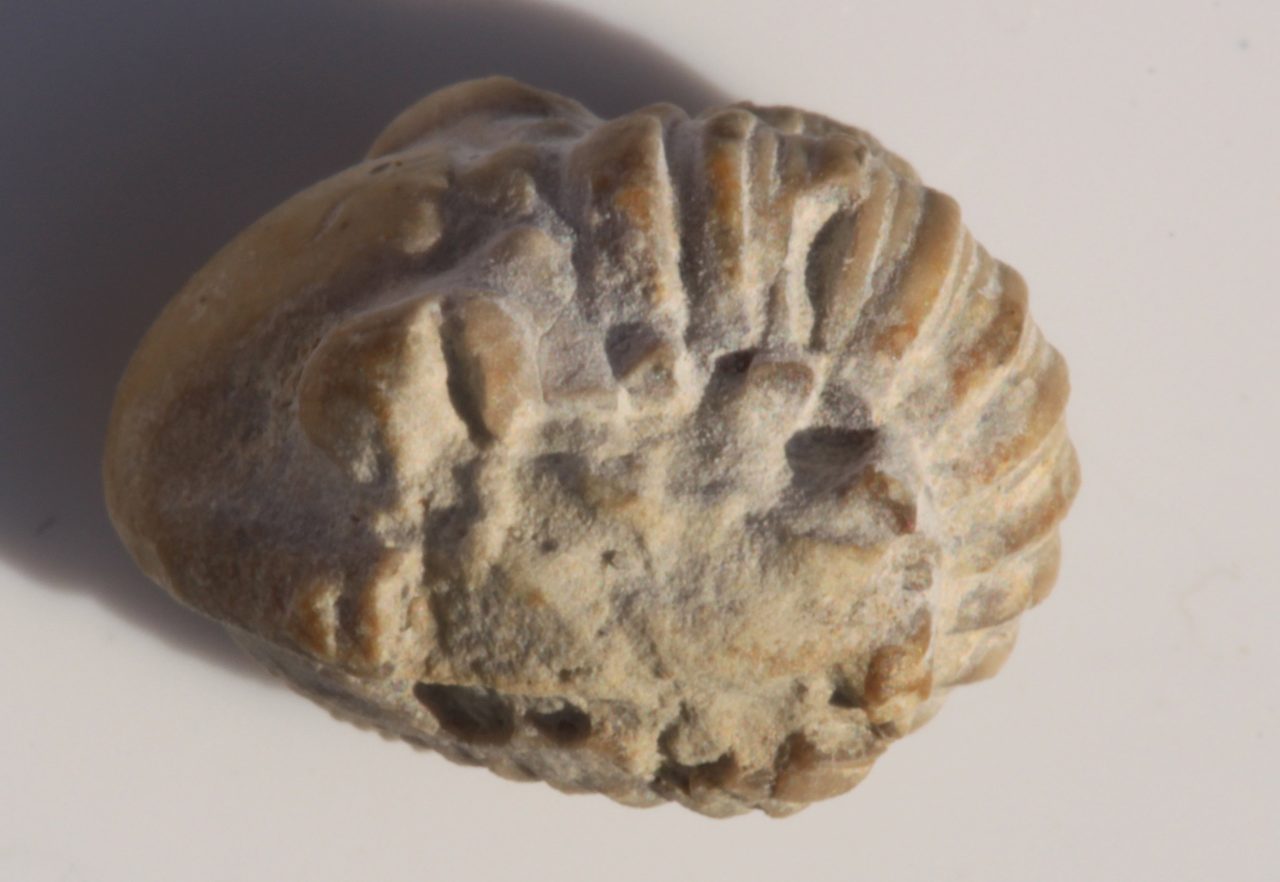
At that boundary the marine fossil record empties. The figure carried by our own research file, and by the standard accounts, is that roughly 96 percent of marine species died. The trilobites ended here, after surviving three earlier mass extinctions. So did the tabulate and rugose corals, most brachiopods, the fusulinid foraminifera, and the blastoid echinoderms.
On land the toll was roughly 70 percent of terrestrial vertebrate species. Most therapsids, the lineage that would eventually produce mammals, were lost, along with most large amphibians and most early reptile lineages.
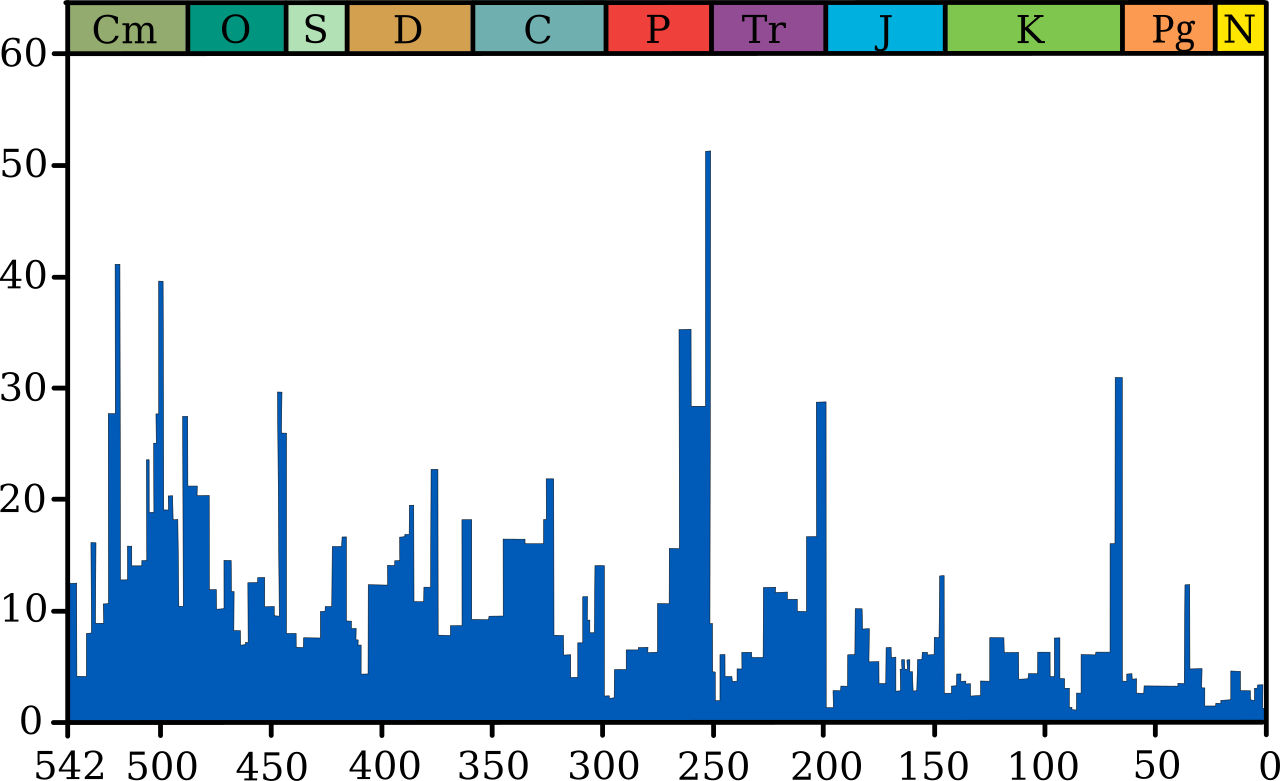
The insects took the only mass extinction their record has ever registered: roughly 57 percent of insect families gone. Plant losses were severe but uneven, with the Glossopteris flora collapsing across Gondwana and the lycopsid forests devastated. Counted at the higher ranks, about 57 percent of all biological families and about 83 percent of all genera disappeared, more families than any other extinction event has taken.
Recovery was the slowest on record. Reef ecosystems essentially ceased to exist and did not return for 10 million years. The boundary is not simply a bad interval in the strata. It is the division between the Paleozoic and the Mesozoic eras, the seam where one world of life ends and another begins.
| What Was Counted | What The Record Gives |
|---|---|
| When | About 252 million years ago; the boundary itself dated to 251.9 million years |
| Marine species | About 96 percent lost on the traditional figure (see the caveat in section 02) |
| Terrestrial vertebrate species | About 70 percent lost |
| Insect families | About 57 percent lost, the only mass extinction of insects in the fossil record |
| Biological families overall | About 57 percent lost, more families than any other extinction event |
| Genera overall | About 83 percent lost |
| Named marine casualties | Trilobites (their final extinction), tabulate and rugose corals, most brachiopods, fusulinid foraminifera, blastoid echinoderms |
| Named terrestrial casualties | Most therapsids, most large amphibians, most early reptile lineages |
| Reef ecosystems | Effectively gone; no recovery for 10 million years |
02The Most Quoted Number, And What It Measures
That 96 percent deserves a section of its own, because it is repeated everywhere and examined almost nowhere. It is not a count of species. It could not be: nobody holds a census of Permian marine species to set against a census of Triassic ones. It is the output of a statistical method applied to a coarser dataset, and which method was used matters, because a different one gives a materially different answer.
The figure traces back to Raup's 1979 rarefaction analysis, which extrapolated a species-level extinction from genus-level extinction data. The genus-level numbers underneath it are themselves a range, roughly 55.7 to 82 percent of marine genera lost depending on the dataset. The 90 to 96 percent species figure is what the extrapolation produces from those genus counts. It has been the standard citation ever since, and both our own research file and our overview of the mass extinctions carry it.
In 2016 Stanley reassessed the whole family of estimates in PNAS, using methods that separate mass-extinction loss from ordinary background extinction and correct for clustering effects in the rarefaction procedure. The conclusion was that the true species-level loss was closer to 81 percent than to 90 or 96, and that the traditional figure overstates the event once background extinction is subtracted out. Both estimates remain in active use in the literature. So the honest statement of this article's headline number is a range and a caveat: somewhere between roughly 81 percent and 96 percent of marine species depending on which method is applied, derived from genus-level fossil data by extrapolation rather than counted.
03The Fire In Siberia
The cause is not seriously in dispute. In central Siberia, at almost exactly the time the fossil record collapses, the ground opened and stayed open for a very long time.
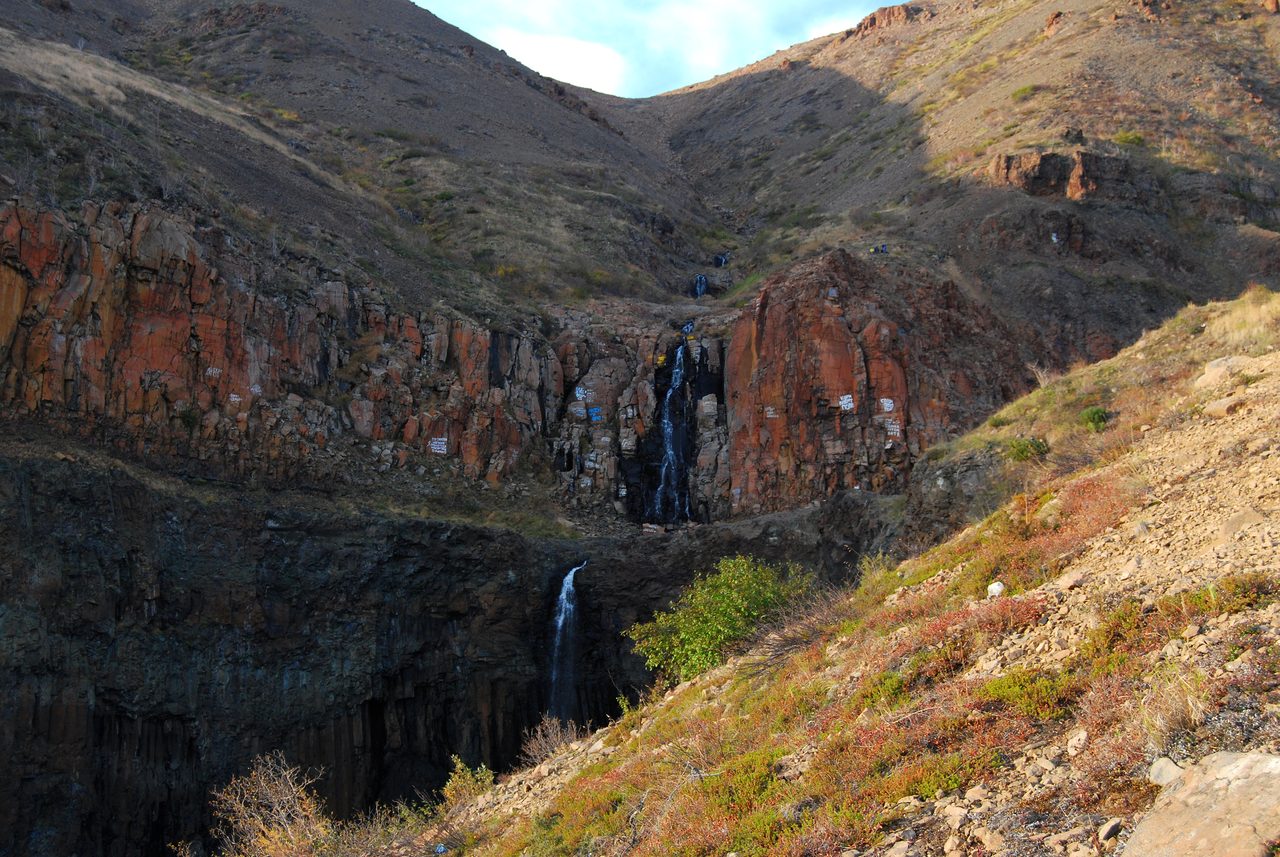
The Siberian Traps, in central Siberia, Russia, are the primary cause of the extinction. Lava originally covered something like 7 million square kilometers, of which about 2 million square kilometers remain exposed today after erosion. The erupted volume is put at about 4 million cubic kilometers, some estimates higher. The eruptions ran for roughly 2 million years, with peak activity concentrated into about 300,000 years at the boundary itself.
What the eruptions put into the air matters more than the lava. Estimated volatile release runs to about 170,000 gigatonnes of carbon dioxide and about 7,800 gigatonnes of sulfur dioxide, plus fluorine, chlorine, and mercury. Uranium-lead dating places the onset of the eruptions in precise coincidence with the onset of the extinction, the result published by Burgess, Bowring and Shen in 2014.
The detail that turns a very large eruption into a planetary emergency is what the magma passed through on its way up. The Siberian magmas intruded coal, carbonate, and evaporite deposits and cooked them. Contact metamorphism of the coal alone may have released about 100,000 gigatonnes of carbon dioxide, dwarfing the lava's own direct emissions. The province did not simply erupt. It baked a continent's worth of buried carbon and vented it into the sky.
Two chemical signatures tie the extinction to that volcanism directly, without relying on timing alone. Mercury anomalies appear in boundary sediments worldwide, first identified by Sanei and colleagues in 2012, and nickel isotope anomalies in the boundary layers trace to Siberian magmatism. This is the volcano's own material, found in the rock that records the dying.
The numbers carry real uncertainty and it is worth saying where. Published estimates of the erupted volume span roughly 1 to 16 million cubic kilometers, depending on how much erosion and sedimentary burial each estimate corrects for, with 2 to 4 million cubic kilometers the common working figure. Estimates of the original area reach about 5 million square kilometers in the wider literature against the 7 million square kilometers our file gives. So much of the province is buried or eroded that the original extent is not fully recoverable. One caution on the arithmetic, since this article has to be honest about its own library: our overview file on the mass extinctions states the Siberian Traps volume as 7 million cubic kilometers, which appears to be the area figure wearing the wrong unit. Area and volume are different quantities, and this article keeps them apart.
| Measure | What The Evidence Gives |
|---|---|
| Location | Central Siberia, Russia |
| Area originally covered | About 7 million square kilometers; about 2 million remain exposed |
| Erupted volume | About 4 million cubic kilometers in our file; published estimates span roughly 1 to 16 million, with 2 to 4 the working range |
| Duration | About 2 million years, with peak activity over about 300,000 years |
| Carbon dioxide released | About 170,000 gigatonnes from the volcanism, plus perhaps 100,000 more from cooked coal deposits |
| Sulfur dioxide released | About 7,800 gigatonnes, plus fluorine, chlorine, and mercury |
| Timing | Onset coincides with extinction onset by uranium-lead dating (Burgess, Bowring and Shen, 2014) |
| Independent confirmation | Global mercury anomalies (Sanei et al., 2012) and nickel isotope anomalies traced to Siberian magmatism |
04How To Kill An Ocean
Lava does not kill a planet's oceans. Everything the eruptions did to the air and the water did, and the research file sets that out as a cascade of seven linked mechanisms. This is also where the evidence steps down a tier. Each mechanism has real proxy evidence behind it. The order in which they ran, and how much of the killing each one did, are not settled.
Start with heat. Oxygen isotope data show tropical sea surface temperatures reaching about 40 degrees C, lethal for most marine life. For the global mean rise our own sources disagree, and this article will not pretend otherwise: the primary research file for this event gives 5 to 8 degrees C, while our overview of the mass extinctions gives 8 to 10 degrees C for the same event. Both ranges appear somewhere in the primary literature, depending on whether tropical sea surface or true global mean temperatures are meant and which proxy dataset is used. The disagreement is real and it has not been adjudicated here.
Then the oxygen goes. Uranium isotopes, framboidal pyrite, and black shales record widespread oxygen depletion in the oceans and euxinic, hydrogen-sulfide-bearing conditions in shallow water. The anoxia developed over roughly 100,000 years and peaked at the extinction. An anoxic ocean is not a stressed habitat. For most of what lived in it, it is not a habitat at all.
The boron isotope proxy records a fall in ocean pH of about 0.7 units, coinciding with the carbon dioxide pulse. That is ocean acidification, and it falls hardest on exactly the organisms that build carbonate skeletons, which is to say the corals and shelled invertebrates that dominate the list of the marine dead.
Above the water, sulfur isotope anomalies, vegetation collapse, and spikes in soil erosion point to acid rain driven by episodic pulses of volcanic sulfur dioxide. Separately, malformed spore tetrads in boundary sediments carry a signature of ultraviolet-B damage, consistent with an ozone layer thinned by the halogens the eruptions released.
Two entries close the list. A large negative carbon isotope excursion records a massive input of light carbon, from methane clathrates or from thermogenic gas cooked out of the coal, or both. And polycyclic aromatic hydrocarbons and charcoal layers at some localities record wildfire.
One hypothesis proposes that the worst of the carbon did not come from the volcano at all. Rothman and colleagues argued in 2014 that Siberian volcanism seeded the oceans with nickel, lifting a nutrient limit on methanogenic archaea, and that a proliferation of Methanosarcina then produced methane in quantities no eruption could match, amplifying the warming far beyond what volcanism alone could achieve. The carbon isotope excursion is consistent with biogenic methane, and a nickel concentration spike in South China sits where the argument needs one. It is an elegant hypothesis and a genuinely difficult one to test, which is exactly why it sits at Tier 2 and not higher.
05How Long It Took
The popular image of the Great Dying is a single catastrophic moment. The rock does not support that, and the correction is more interesting than the myth. This is also a place where our own research file went wrong, and being precise about how is part of the file being worth reading.
Burgess, Bowring and Shen dated the extinction interval itself at Meishan in 2014, bracketing it between two volcanic ash beds. The interval lasted 60,000 years, with an uncertainty of 48,000. That is the duration of the documented extinction as a whole. In geological terms it is an instant. In any other terms it is a very long emergency.
Within the crisis, the extinction came in two distinct pulses, an initial phase and a more severe second one. That is a separate finding from a separate paper: Song and colleagues identified two pulses of marine extinction in the fossil record in China in 2013 and put roughly 180,000 years between them. Our own research file attributes the two-pulse separation to the 2014 dating paper and gives the gap as 60,000 years, which merges two different measurements from two different studies under one citation. The 60,000 year figure is the length of the whole documented interval. The gap between the pulses is a different number from a different source.
The two published figures are not straightforwardly compatible with each other, and this article does not reconcile them. They are not measuring the same thing: Burgess, Bowring and Shen timed a stratigraphic interval bracketed by two dated ash beds, while Song and colleagues measured the spacing between two extinction pulses read from fossil occurrences. Neither paper reports the other's number, and how the one sits inside the other is not something our sources settle. What can be said cleanly is that the version in our file, which fuses them into a single citation, is not what either paper reported.
So no, this was not one sudden catastrophe. The research file's own Tier 4 section names that framing as a popular misconception and corrects it: the extinction unfolded over 60,000 years or more, in at least two pulses. Geologically fast is not the same as instantaneous, and the difference is not a technicality. This was not a bad afternoon. It was a crisis with a beginning, a pause, and a second and worse act.
06The Spores In The Boundary Clay
One line of evidence from the boundary is more vivid than any other, and it is the one this article has to handle most carefully, because our own research file states it with a confidence the current literature does not share.
In boundary sections around the world, in Australia, Greenland, Israel and India, the fossil record shows a dramatic spike in spores, chiefly of the genus Reduviasporonites. The standard reading is that these are fungi, and that the spike records fungal decomposers dominating ecosystems after a mass die-off of plant and animal biomass on a scale that left the world covered in dead material. The spore-dominated interval lasted tens of thousands of years.
That reading is genuinely disputed. Multiple studies, gathered in a 2016 review in Paleogeography, Paleoclimatology, Paleoecology, argue on geochemical and morphological grounds that Reduviasporonites may be a fossil alga rather than a fungus at all. The spike is not found in every studied boundary section, and where it is found it does not always sit precisely at the boundary. None of that makes the spore layer unreal or unimportant. It does mean that a planet given over to fungus is an interpretation with a live rival, not a settled fact, and our file presents it as settled.
07The Rival Suspect
Every mass extinction attracts the question of whether something hit us. At the K-Pg boundary the answer turned out to be yes, and Chicxulub has its own file in this wing. Here the same question was asked with real evidence behind it, and it has come out the other way.
In 2001, and again in 2004, Becker and colleagues reported evidence for an asteroid impact at the Permian-Triassic boundary: fullerenes carrying trapped extraterrestrial noble gases, and shocked quartz. They proposed the Wilkes Land structure in Antarctica, a gravity anomaly roughly 500 kilometers across, as the impact site. The first of those papers ran in Science. This was a serious claim, seriously made.
It has not held. The fullerene results were not reproduced in independent analyses of boundary sections in China, Canada and Austria, and the extraterrestrial fullerene signature is equivocal in any case, since fullerenes also occur in volcanic ash. The reinterpretation of the shocked quartz is disputed and the Wilkes Land structure is poorly dated. The current consensus is that there is no convincing evidence for a major impact at this boundary and that Siberian Traps volcanism is sufficient to explain the extinction on its own. The impact hypothesis remains a minority position rather than an excluded one, and the distinction is worth keeping.
The status of Wilkes Land can be put more sharply than poorly dated. The structure lies buried under the Antarctic ice sheet with no bedrock samples available, so the diagnostic tests for an impact cannot be run at all. And at Permian-Triassic boundary outcrops in the Transantarctic Mountains there is no well-defined ejecta layer, which is what an impact of the proposed scale should have left behind. Some micrometeorite evidence in the boundary beds at Graphite Peak has been offered as a possible link. Possible is as far as it goes. This is unconfirmed, not refuted.
08The Shape Of The World That Died
Beyond the mechanisms lies a second set of questions: not how the extinction killed, but why this one was the worst. The answers are coherent, widely held, and untestable, because there is exactly one Permian-Triassic boundary and no control planet to run it against. This is Tier 3, and it deserves its strongest statement before its weakness.
At the time of the extinction every continent was assembled into the single supercontinent Pangaea. The argument is that this geography amplified everything. A supercontinent has far less continental shelf than scattered continents, and shallow marine habitat is where most marine diversity lives. A single continuous ocean lets a toxin or an anoxic water mass reach everywhere. And a continental interior that far from any coast has a climate no fragmented landmass produces. Our research file names this a plausible but untestable counterfactual, which is the correct label for it.
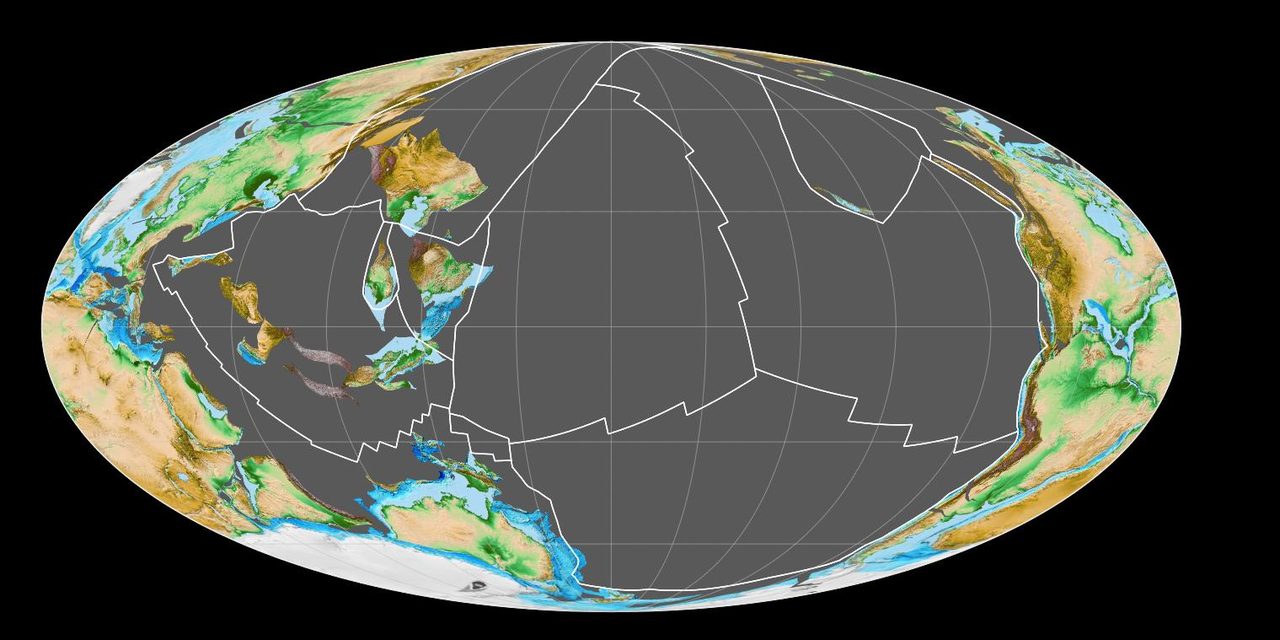
Some models sharpen the picture. They give a Pangaean world of extreme seasonality, monsoon-dominated, with desert cores in the continental interiors, and marine life concentrated in the Panthalassic Ocean and the Tethys Sea, exposed to a single ocean-wide anoxic event with far fewer refugia than today's fragmented oceans offer. It is a coherent reconstruction and it follows from the geography. It is also a model result, and no model of Permian climate can be checked against a Permian measurement.
The strongest version of this material is the cascade reading: that the extinction was not one mechanism but a sequence of tipping points, each stage making the next more likely. Volcanism drives warming; warming releases methane; methane drives more warming; ocean circulation shuts down; anoxia spreads; hydrogen sulfide accumulates; the ozone layer is destroyed. Read that way, the Great Dying is not a larger version of an ordinary extinction but a different kind of event, a runaway. Modern climate science recognises cascade risks of the same shape at far lower magnitude, and the Permian-Triassic event may be the worst case the planet has on file for carbon-cycle disruption. It is a compelling account. It is also, so far, a story fitted to the evidence rather than one the evidence compels.
09The Mirror, And What It Actually Shows
The reason a 252 million year old event turns up in modern climate policy discussion is not rhetorical. The mechanism is recognisable, and that is precisely why it has to be stated with care.
The same fundamental mechanism operates today: carbon dioxide driven warming, leading to ocean acidification and ocean anoxia. The scale is much smaller and the rate appears to be much faster. Ocean dead zones are already expanding. The Permian-Triassic extinction is increasingly cited in climate policy discussion as a deep-time analogue for unmitigated emissions, and as an analogue it does real work, because it is the one case where the whole cascade actually ran to completion.
The comparison needs one correction, and it is a citation problem rather than an argument problem. Our research file supports its rate claim with a paper it dates to 2021, by Cui and colleagues, on slow carbon release during the Paleocene-Eocene Thermal Maximum. That paper is real, but it was published in 2011, and it is about the PETM, a warming event roughly 56 million years ago and an entirely different episode from the one this article covers. It cannot support a Permian-Triassic rate claim, and this article does not use it. The paper that does address the comparison is Cui and Kump, 2015, in Earth-Science Reviews, and its finding is sharper than the blanket version: the peak rate of carbon addition during the end-Permian extinction was likely smaller than the present rate of fossil fuel burning, while the total carbon budget released across the whole event exceeds the entire modern fossil fuel reservoir. Slower, and far larger. That is the comparison worth making, and it is not the one usually made.
10Where The Claims Run Past The Evidence
An event this extreme attracts overstatement in both directions, and the research file's own Tier 4 section names two of them. They are worth stating plainly, because overstating a real catastrophe is how it turns into a cartoon.
No, Earth was not nearly sterilized. The claim that the planet came close to becoming lifeless overstates what happened. The extinction was devastating, and significant biodiversity survived in all major ecosystems; life was severely reduced but never close to total extinction. This article's own title says Earth almost died, and that is a figure of speech about how near the biosphere came to collapse, not a claim about sterilization. The honest superlative is that nothing else in the fossil record comes this close, not that life nearly ended.
No, there is no alien hand in this. Fringe claims connecting the Permian-Triassic extinction to alien intervention or to directed panspermia have no supporting evidence and are not taken seriously in any scientific context. There is nothing here to weigh, and saying so is not a dismissal, it is the state of the evidence.
Fast Facts
- The Event
- The Permian-Triassic mass extinction, the Great Dying
- When
- About 252 million years ago; the boundary dated to 251.9 million years
- The Driver
- Siberian Traps volcanism, central Siberia, Russia
- The Scale Of It
- About 7 million square kilometers covered; about 4 million cubic kilometers erupted
- Eruption Duration
- About 2 million years, peaking over about 300,000 years
- Marine Species Lost
- About 96 percent on the traditional figure; roughly 81 percent on a 2016 reassessment
- Terrestrial Vertebrates Lost
- About 70 percent of species
- Extinction Interval
- About 60,000 years, uncertainty 48,000 (Burgess et al. 2014); at least two pulses, spaced about 180,000 years apart on a separate study, see the timing section
- Kill Mechanisms
- Warming, ocean anoxia, acidification, acid rain, ozone loss, methane, wildfire (Tier 2: each evidenced, the sequence unsettled)
- Recovery
- Reefs absent for 10 million years, the slowest recovery of any mass extinction
- The Rival Suspect
- An asteroid impact at Wilkes Land: proposed, unreproduced, unconfirmed
What We Can Actually Stand Behind
The extinction is real, dated, and driven. About 252 million years ago, with the boundary fixed at 251.9 million years by uranium-lead dating at Meishan, the marine and terrestrial fossil records collapse together, and the losses run to roughly 70 percent of terrestrial vertebrate species and about 57 percent of all biological families. Siberian Traps volcanism is the driver, confirmed not only by timing but by its own chemistry in the boundary rock: mercury anomalies worldwide and nickel isotope anomalies traced to Siberian magmatism. Reefs did not return for 10 million years. Nothing else in the record is this bad.
The kill mechanisms are individually well evidenced and collectively unsettled. Warming, ocean anoxia, acidification, acid rain, ozone loss, methane release and wildfire all carry proxy evidence; the sequence, the weighting, and even the size of the temperature rise are open. Our own sources give the global mean rise as 5 to 8 degrees C in one file and 8 to 10 in another, still debated and deliberately not resolved here. The headline extinction figure belongs in this tier too: the traditional 96 percent is an extrapolation from genus-level fossil data rather than a count, and a 2016 reassessment puts the species-level loss closer to roughly 81 percent. Both numbers stay in active use. And the methanogen amplification hypothesis is elegant, consistent with the carbon isotope record, and very hard to test.
Whether Pangaea's geography amplified the extinction, whether monsoon and desert interiors concentrated marine life into a single vulnerable ocean, and whether the whole event is best read as a runaway cascade of tipping points, are plausible, widely held, and untestable. There is one Permian-Triassic boundary and no control planet. The modern analogue sits here as well: the mechanism is genuinely the same, the scale and the rate are not.
No, Earth was not nearly sterilized. Significant biodiversity survived in all major ecosystems, and the phrase in this article's own title is a figure of speech about how near the biosphere came, not a claim about a lifeless planet.
No, this was not a single instantaneous catastrophe. The documented extinction interval at Meishan is dated to about 60,000 years, and the crisis ran in at least two distinct pulses, on figures from two studies that do not sit together simply, as the timing section sets out. Geologically fast is not instantaneous, and the popular framing gets this backwards.
No, there was no alien intervention and no directed panspermia. Those claims carry no supporting evidence of any kind and are not taken seriously in any scientific context.
So the plain account is worse than the myth in one direction and smaller in another. Earth was not sterilized, and the dying was not a single afternoon. What actually happened is that a continent's worth of magma cooked a continent's worth of buried carbon over roughly 2 million years, the ocean and the air carried the consequences to every part of the planet, and it was 10 million years before a reef grew again. The parts of that story we can measure are measured well. The parts we cannot are exactly the ones the present keeps asking about: how fast the carbon really went in, how the mechanisms chained together, and what the 96 percent figure is truly counting. And there is a smaller, sharper thing still open. The most vivid image in the whole file, a planet handed over to fungus, may turn out to be algae. If the spores are not what we took them for, what else in the boundary clay have we been reading as a story rather than as a measurement?
Sources & further reading
Everything above is drawn from our research library on Theories of Anything. Three citations in the underlying file needed handling before use, and they are handled in the open: one is dropped entirely (a real paper about the Paleocene-Eocene Thermal Maximum, a different event, cited in support of a Permian-Triassic claim), one carried the wrong publication year and is listed below in its corrected form, and one carried a DOI that resolves to a review of a book rather than to the book itself, so it is not linked here. Four further sources named in the prose (Raup 1979, Song and colleagues 2013, Stanley 2016, and Cui and Kump 2015) were verified in this article's research pass but come with no stable identifier in our own file, so they are cited by name rather than linked. Open the full file to check the sourcing and go deeper.
Image credits
- Krasnye Kamni columnar basalt, Siberian Traps, near Norilsk Timur V. Voronkov, via Wikimedia Commons (CC BY 3.0). CC BY 3.0 Source.
- Enrolled Permian trilobite, Ditomopyge decurtata Dwergenpaartje, via Wikimedia Commons (CC BY-SA 3.0). CC BY-SA 3.0 Source.
- Phanerozoic extinction intensity, marine animal genera Smith609, via Wikimedia Commons (CC BY-SA 3.0), data from Rohde and Muller (2005) after Sepkoski. CC BY-SA 3.0 Source.
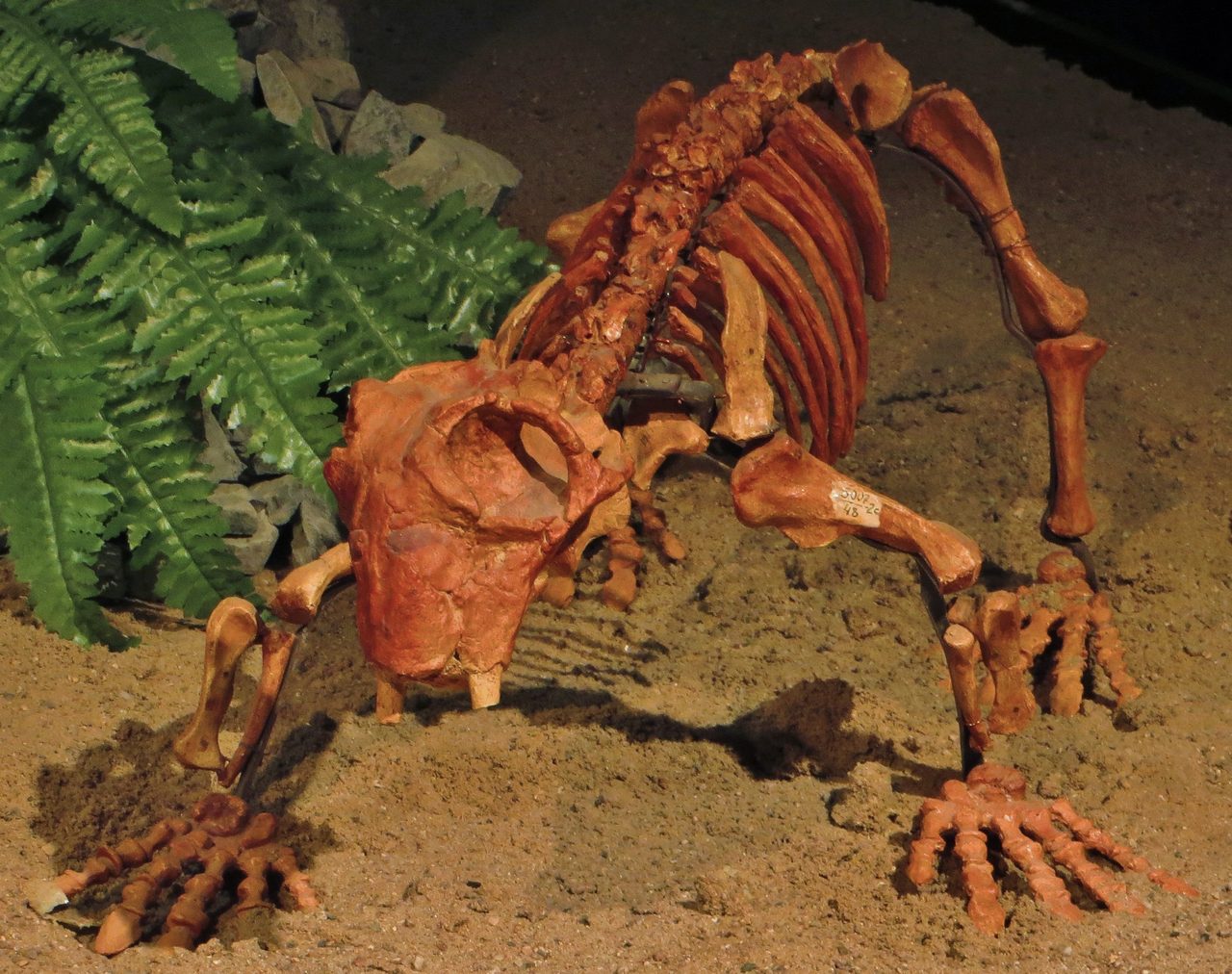
- Mounted Lystrosaurus georgi skeleton, Dinosaurium, Prague Ghedoghedo, via Wikimedia Commons (CC BY-SA 4.0). CC BY-SA 4.0 Source.
- Pangaea and Panthalassa at approximately 250 Ma, Mollweide projection Fama Clamosa, via Wikimedia Commons (CC BY-SA 4.0). CC BY-SA 4.0 Source.
- Card crop of the Krasnye Kamni columnar basalt, Siberian Traps Timur V. Voronkov, via Wikimedia Commons (CC BY 3.0). CC BY 3.0 Source.


